Goop's Posts
Nairaland Forum › Goop's Profile › Goop's Posts
1 2 (of 2 pages)
 Culture › List Of American Instruments Of African Origin That Survived The TST. by Goop(op): 1:36am On Nov 18, 2012*. Modified: 2:52pm On Nov 18, 2012 Culture › List Of American Instruments Of African Origin That Survived The TST. by Goop(op): 1:36am On Nov 18, 2012*. Modified: 2:52pm On Nov 18, 2012 |
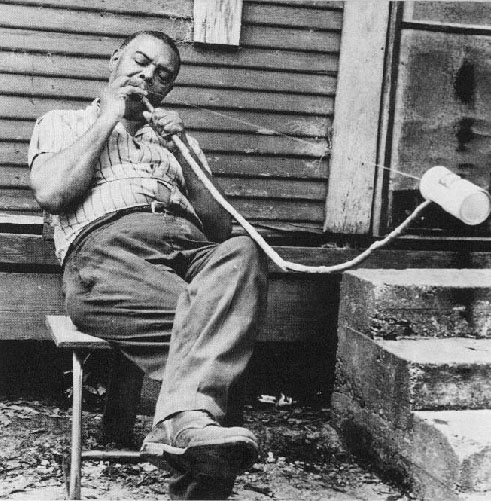
Banjo https://www.americanbanjomuseum.com/sites/banjo/uploads/images/about_page/B40-16_Slave1.jpg The banjo is a four-, five- or six-stringed instrument with a piece of animal skin or plastic stretched over a circular frame. Simpler forms of the instrument were fashioned by Africans in Colonial America, adapted from several African instruments of similar design. http://en.wikipedia.org/wiki/Banjo Mouth bow https://www.polarityrecords.com/uploads/7/9/7/0/7970819/1212463_orig.jpg In the United States, the musical bow was apparently introduced by African slaves. Today, it is primarily found in the Appalachian Mountains, where it is called a mouthbow or mouth bow. http://en.wikipedia.org/wiki/Musical_bow Diddley bow https://aliciapatterson.org/sites/default/files/styles/node_image/public/Steber07_3.jpg The diddley bow is a string instrument of African origin made popular in America, probably developed from instruments found on the Ghana coast of west Africa. There, they were often played by children, one beating the string with sticks and the other changing the pitch by moving a slide up and down. The instrument was then developed as a children's toy by slaves in the United States. They were first documented in the rural South by researchers in the 1930s. http://en.wikipedia.org/wiki/Diddley_bow The Quills(pan pipes) https://images.ookaboo.com/photo/m/P1000950cropped_m.jpg The Quills are a early American folk panpipe, first noted in the early part of the 19th century among Afro-American slaves in the south. They are aerophones, and fall into the panpipe family. They are assumed to be of African origin, since similar instruments are found in various parts of Africa, and they were first used by 1st and 2nd generation Africans in America. http://www.sohl.com/Quills/Quills.htm Washtub bass [img]http://3.bp..com/_t8glaxypSYk/SvnNWC4HpVI/AAAAAAAADzU/psoM0PTMFoA/s320/blueswashtub-bass.jpg[/img] Ethnomusicologists trace the origins of the instrument to the 'ground harp' - a version that uses a piece of bark or an animal skin stretched over a pit as a resonator. The ang-bindi made by the Baka people of the Congo. http://en.wikipedia.org/wiki/Washtub_bass 1 Like |
| Culture › Re: African American: Ask Me Anything....I Think...lol! by Goop: 1:03am On Nov 18, 2012 |
[quote author=*Kails*]Whoa! Where have i been? Ill be back asap to read watch and respond..  Thanks bro.[/quote]lol Don't mention it. |
| Culture › Re: List Of Surviving Creole Languages Spoken By African-americans Today. by Goop(op): 9:42pm On Nov 15, 2012*. Modified: 11:54pm On Dec 23, 2012 |
ifyalways: No mention of Sierra Leone Krio ?Really? https://www.otbva.com/o/images/smilies2/th_stephenareallyskip.png Nah, j/p lol  But, while Sierra Leone Krio does have influence from Gullah spoken by the freed slaves from America that repatriated to Africa, it was not ever spoken by any AAs in America. But, while Sierra Leone Krio does have influence from Gullah spoken by the freed slaves from America that repatriated to Africa, it was not ever spoken by any AAs in America. Although linguist agree that Sierra Leone Krio is almost non-disnerable to the untrained ear from AA Afro-Seminole creole. English: Where did those women hear that you didn’t want to go to John’s house with us? ASC: duh wisseh de ooman-dem bin yeddy she humuh nuh oin wan’ fuh go tuh John house wit we? Krio: nuh usie de ooman – dem bin yerry she una no bin wan’ foh go nuh John ho’se wit we? |
| Culture › Re: List Of Surviving Creole Languages Spoken By African-americans Today. by Goop(op): 9:33pm On Nov 15, 2012*. Modified: 6:12am On Nov 18, 2012 |
[quote author=*Kails*]Very interesting stuff. I like your posts. You and I seem to be on the same level in terms of our appreciation for western black history. I am definitely going to follow your handle. [/quote]Thanks. There just doesn't seem to be enough focus on the anthropological study the true historical and cultural aspects of the diaspora, particularly the African American ethnicity. I like you have grown tired of the constant "race politic" hustlers that AA/black scholars tend to spawn and the unrealistic afro/blackcentrist romanticist ie "street scholars" who seriously think they are or have a connection to Egyptians, Moors, Hebrew Israelites, Nubians, Asiatics, Olmecs etc etc. Instead of taking time to learn and appreciate their true roots.But, back to the topic. My maternal grand father is a native Louisiana creole speaker, and even uses a few phrases from it in his regular English that I know. https://www.youtube.com/watch?v=jXId-5dYJjE ^^^^Here's some wondrous zydeco music(Afro-creole music) sung in creole. Notice the African influence of the style of beadwork and suit construction in the mardi gras costumes. For those that don't know, the Uptown style suit reflect Niger-Delta influences while the Downtown style suit reflect BaKongo influences. |
| Culture › Re: African American: Ask Me Anything....I Think...lol! by Goop: 9:18pm On Nov 15, 2012*. Modified: 8:59am On Nov 16, 2012 |
[quote author=*Kails*]this shyt is awesome!  [size=18pt]Brazilian martial art, Capoeira[/size] https://www.youtube.com/watch?v=InFcgpOKNFE [size=18pt]central african martial arts demonstration.[/size] https://www.youtube.com/watch?v=5lHdQwY1Uw8 from the comments: Anyway, I think the brazilians did a better job of demonstrating it since they did it much faster which is how it is during real combat. The name zumbi is also what the word "Zombie" comes from. Did you know that? [/quote]Yes, Engolo also gave birth to another less well known secret fighting style of the Gullahs in North America called Knocking and Kicking.https://www.youtube.com/watch?v=PVmaxACZAPA It's appears similar to Capoeira expect it utlizes striking with more parts of the body in headbutts, knees, and elbows. http://www.amazon.com/Fighting-Honor-Atlantic-Carolina-Lowcountry/dp/1570037183 ^^^^There's a good book on it that I would recommend reading. Here's a practical application of Capoeria being used in a kick boxing match. https://www.youtube.com/watch?v=7rKNeXBluj8 https://profile.ak.fbcdn.net/hprofile-ak-ash3/23283_126783667340417_3545_n.jpg ^^^The only words I have for that. lol And I've known about King Zumbi of the Quilombo for a while, but I didn't know that's were the word "Zombie" came from. lol DAMN! |
| Culture › Re: African American: Ask Me Anything....I Think...lol! by Goop: 8:29pm On Nov 15, 2012*. Modified: 7:05pm On Nov 16, 2012 |
[quote author=*Kails*]GBAM!! I have always said it that central Africans have the heaviest influence on us in the diaspora. Not because they were many or better but because they were more fierce. They led most of the rebellions in the west which is why their cultures have survived for so long. From the 1500s up until now, you can still see evidence of their influence on us. And yes, the Afro Brazilian martial arts are Central African in origin.[/quote]Yes, absolutely. You have to take into account that that for the context in which europeans first arrived in Africa. In west Africa from the time they landed they knew it was prime for slave trading and colonization, in fact the first slave sold to the Portuguese was by a West AFrican Guinea slave trader(traitor). Whereas in CenAfr the Portuguese were for the most part subservient merchants to the laws of the Kingdom of Kongo, who although they practiced indentured servitude, were against the Atlantic slave trade. Most of the slaves the Portuguese got from CenAfr were true captives, illegally stolen from there land. This in part would compel the Kingdom of Kongo to go to war with the Portuguese in 1622 and all but banish them from the CenAfr region. So, it's no surprise the CenAfr captured against their will, for the most part of unbeknownst reasons, would be more enraged by it than West African that were already serfs to a chiefs and kings that were in cahoots with Europeans slave traders the whole time. [quote author=*Kails*]The first Africans in the west were central African Angolan-Kongolese..I forgot which documentary I watched but it discussed the hell they gave the whites. And as you mentioned so much so, they ppl were afraid to purchase slaves of central African descent.In fact many south carolinian blacks have direct relationships with Jamaicans because of our Angolan ancestors. Again I forgot the name of the documentary (was on the history channel) which explained how one group in particular that were fierce warriors from North West Angola who were tricked and separated. Some were sent to North America while others, the caribbean. When the ones in Jamaica revolted and it was printed in the papers, those in south carolina revolted as well. Their tactics were the exact same. They would behead the first whites they would see and display them on posts as a "warning". Unfortunately because they were in the west and therefore could not escape after their deed many would be captured, tried and executed. Exactly. Our national heroes were mostly Akan-Ashanti and central African in origin. Nanny of the Maroons and her brothers Kofi and Cudjoe were born in Ghana. But their muscle men were central Africans mostly.[/quote]Wow, I didn't know that. To kick off a revolt in the exact same manner as another group on an island thousands of miles away shows one hell of a dedication the people had towards their tradition and a consistent mental fortitude. I theorize that most of the black seminoles warrior were derived from CenAfrs as well, as there was a prominent black seminole settlement in Florida that the warriors themselves called *ANGOLA*. Sadly it was later destroyed by Creek slave raiders working for the the US army. Although, many of the the black seminole then and still to this day go by West AFrican naming practices, and some have actual West African surnames TODAY! [quote author=*Kails*]Interesting...but you do know a lot of the origins of the Louisiana creoles were of Haitian descent. And we know that Haitians were one of the most rebellious in the new world. It's sad though what happened that some Creoles were ashamed of their roots and yet the had a rich history.[/quote]Ehh, while there's no denying that there were a lot of the slaves and free man immigrants from Haiti that came to came to New Orleans in the late 18 century, did leave a cultural impact, thus a lot of AAs from the region are partly descendant from them(me included), Louisiana was already a thriving French hub for slavery with direct connections to Africa in it's own right. I notice sometimes people tend to overstate the amount of black slaves that came from Africa, but via the Caribbean sometimes, especially conserning that of Louisiana. Most the Africans that came to America came DIRECTLY from Africa, just like any other place in the diaspora, I think people sometimes confuse the slave trader stopping in an island such as Hispaniola as a resting point to refuel, before heading to North America, with them dropping off all of the African slaves in the Caribbean, and taking the Caribbean born slaves to America, and such was not the case for the most part. And people also tend to forget that there were plenty of America born slaves(essentially AAs) that ended up in the Caribbean in the 18th and 19th century. I kid you not the Bahamas had 3 to 4 different significant migrations of AAs to the island in the 18th & 19th century, hell there is a black seminole community on Andro Island in the Bahamas TODAY. There are also black seminole and regular Gullah descendants in Cuba. There was a significant migration of AAs(slaves and free) from Louisiana that spoke Louisiana Creole, practiced voodoo, were catholic etc etc, so they assimilated in Haiti pretty well. There are a group of AA descendants in Trinidad called the Merikens(how the Trini people interpreted the pronunciation of "Americans" by heavy AA vernacular english speakers) and another group of AA descedants in the Dominican Republic called Sanama Americans today. Let us not forget that there was an AA presence in Jamaica during the 18th and 19th century as well one of which was a pastor/abolitionist who founded the First African Bapist church in Georgia in 1773, named George Lisle. He would later leave for Jamaica as a missionary and organize the Baptist church chain movement there, that of which gave rise to Jamaica's great Bapist revolutionary deacons such as Sam Sharpe and Paul Bogle. Many of the Creole ship revolters in 1841 were taken to Jamaica upon landing in the Bahamas as well. So, yes many(not most) AAs do have African ancestry via Afro-Caribbeans, but many(not most) Afro-Caribbeans draw their African ancestry via African Americans as well. Also, there's a difference in what is considered culturally creole, and racially creole in Louisiana. Racially creole are basically what we called now tri-racials ie Apprx.(%33 African/Native/Euro) For the ones I know they either are assimilated into the general AA population(since anglos imposed the one drop rule on them after the Louisiana purchase) or they make up there own communities and tend to mostly identify with French culture, and sometimes native, while shunning Africanisms. Culturally creole in Louisiana is mostly what is practiced by that of black Louisianians, and reflect strong African cultural retentions in Louisiana, such is why Louisiana creole is considered a BLACK/AA language and not that of mixed people.(I could make a whole thread about that alone, so I'll move on for now lol). 3 out of 4 of my grandparents come from a Louisiana creole background, although I consider myself an Afro-Texan(which in itself it heavily influence by Afro-Louisiana culture), because I was born here and it reflects by paternal heritage, and it's only natural for a male such as myself to identify more with their paternal side- I'm only one fourth TRUE Afro-Texan(a descendant of slaves born in Texas). [quote author=*Kails*]Exactly. The Fulani who were sent to Jamaica and Brazil were very intelligent people. They were the most literate of Africans in the west. And they did revolt true enough. But this as you said was long after the central African revolts which spooked the hell out of whites. [/quote]Yes, there were many famous Fulas in America as well, know for there literacy in Arabic among other languages as well. It is also heavy theorized that Fulani cattle herding and calvary techniques are what gave birth to the cowboy culture in America, as the patterns match up directly with that used by fulas, and not the spanish as once though. In fact after the abolishment of the slave trade in America in 1808. Texas(my state), became a hot spot for illegal trafficking of most fula slaves to work on ranches in the new anglo settlements(as Texas was not officially apart of the union yet), through the port of Galveston and the Sabine Estuaries(I used to go fishing with my pops as a kid in BOTH of those places!). They were smuggled in with cattle from AFrica which lead to another fun fact. DId you know that the world famous Texas Longhorn is basically just a domesticated cousin of West African Red cattle(used by Fulanis)? Same genetic species and everything. [quote author=*Kails*]Hmmmm....I need to read about this...very interesting stuff! But central African slaves were so feared that our Kumina (Congolese) dances in Jamaica and bantu style drumming in Jamaica and Brazil were outlawed! The slavers claimed the drumming invited bad karma on them, which is partly true because many times the drumming was like an energy boost and a representation of "home" for the slaves who would become enraged and revolt.[/quote]Yes, unfortunately these traditions in North America were quickly stomped out by then experienced Anglo settlers. The akan drum was probably the last of the percussion instruments from Africa to survive, you can see water color depictions of plantation slaves playing it as late as the mid 18th century, and also a REAL one in the museum of Virginia. Although there were many string and wind instruments from AFrica in America today that survived the transatlantic slave trade(I will probably make a post about that later ). The ring shouting and jazz music that was born in a place called Congo square in New Orleans is probably the most tangible Kongo influences that we have in Louisiana. The rest are senegambian derived mostly. 2 Likes |
| Culture › Re: Are Black Women Realy Always Angry? by Goop: 7:31am On Nov 11, 2012*. Modified: 8:59am On Nov 11, 2012 |
rhymz: Nigerian males are far from perfect, in fact, I have seen my own parents quarrel several times and get angry at eachother but my Dad will be the last person to just leave us and our mum.You sure it ain't something a little more severe than that, bud? Between half and two thirds of Nigerian women are subject to domestic violence in their homes. http://thinkafricapress.com/nigeria/domestic-violence-problem-pervading Is there something personal you want to confide in us? We're all ears. 1 Like |
| Culture › Re: Are Black Women Realy Always Angry? by Goop: 7:17am On Nov 11, 2012*. Modified: 2:24pm On Nov 11, 2012 |
rhymz: What do you expect from a woman who has got to play both her roles and those of the male counter-parts in the family. Black people constitute about 13% of American population yet they have a huge presence in the prison complexes,Oh, and by the way.......... "More Blacks(Caribbeans and Africans) Jailed In Great Britian Proportionally Than In US" http://www.detroitraw.com/main/index.php?option=com_content&view=article&id=149%3Amore-blacks-jailed-in-great-britian-proportionally-than-in-us&catid=29%3Aart-culturefoodtechnology&Itemid=41 I thought recent immigrant groups were suppose to have a certain motivational drive about them to improve upon the lives that they left behind in their home countries. Apparently not in this case. 1 Like |
| Culture › Re: Are Black Women Realy Always Angry? by Goop: 7:06am On Nov 11, 2012 |
rhymz: Nigerian males are far from perfect, in fact, I have seen my own parents quarrel several times and get angry at eachother but my Dad will be the last person to just leave us and our mum. You think you guys have it bad, come to Nigeria and see what what they face, yet very few take to drugs, bail out on their families, or give lame excuses for castigating their owb women. Everyone is limited in knowledge by their experiences and exposure not whether you are American or not. Flaunting America's equality laws does not make the realities go away, cussing does not make one smarter either.Nigerian soldiers leave 250,000 Children Abandoned in Liberia! http://allafrica.com/stories/201008020260.html ^^^Ever heard of AA men doing something like that? And just as a response to the predictable answers I'm sure you will give I will point out that non-wed father =/= absent from child's life, and also provide some comprehensive scholastic research on the true dynamics of AA fathers with their children just to amplify my point. "For instance, Danziger and Radin (1990) and Wattenberg (1993) found that unwed minority teen dads are more involved than unwed white teen dads in their children's lives." "Lerman (1993) found that black unwed fathers were more likely to live close by and visit their children than were Hispanic and white fathers, and they had a higher frequency of paying child support" "If this 10-father sample were representative, it would indicate that black fathers are more likely than white fathers to take on full parental responsibilities for daughters." "While I wouldn't want to conclude that full-time single parenting be the modus operandi for all single black fathers, it is clear that for this group of men, such a role was "a good thing." http://epublications.marquette.edu/cgi/viewcontent.cgi?article=1003&context=socs_fac "Apparently, black non-resident fathers have a higher rate than white and Hispanic non-resident fathers of visiting their children and partaking in primary care duties. In addition, they are more likely to give child support payments" http://findarticles.com/p/articles/mi_go2877/is_2_25/ai_n28889704/ And finally a more recent study conduct in 2008 by Boston University professor Rebekah Levine Coley that states the following.... "The Coley study also found that black fathers who don't reside in the home are more likely to sustain regular contact with their children than fathers of any other racial group." http://www.newsweek.com/2008/05/10/o-father-where-art-thou.html 1 Like |
| Music/Radio › Re: What Music Are You Listening To Right Now? by Goop: 6:06am On Nov 11, 2012 |
Dopeass song combining two of African American's most significant musical innovations, Rock & Roll and Hip Hop. Plus, it's got my boy Mystikal and the homie Trae from dat H lol. TX to LA stand up! https://www.youtube.com/watch?v=h4CEdeE8D5Q |
| Culture › Re: African American: Ask Me Anything....I Think...lol! by Goop: 5:35am On Nov 11, 2012*. Modified: 6:58am On Nov 11, 2012 |
"The negroes, from the commencement of the Florida war, have, for their numbers, been the most formidable foe, more blood-thirsty, active, and revengeful, than the Indian .... For them to surrender would be servitude to the whites; but to retain an open warfare, secured to them plunder, liberty, and importance." -- Lieutenant John T. Sprague http://ufdc.ufl.edu/UF00101389/00001/20j https://www.otbva.com/o/images/smilies2/th_emmittcrying.png *PAGAN 9JA sheds a tear* LMAAAO! 3 Likes |
| Culture › Re: African American: Ask Me Anything....I Think...lol! by Goop: 10:53pm On Nov 10, 2012*. Modified: 3:45am On Nov 11, 2012 |
[quote author=*Kails*]Exactly. Central and southern africans WENT IN on their wars against the europeans. Of course traitors were their downfall. And some of our ancestors DID fight to the death, at least those who were on the ships and in the new world. And even then they were mostly akan and again central africans. But i cant think of any continental west africans who did other than the FEW...i repeat, FEW TRUE AND HEROIC West Africans who tried to save our ancestors.... thats pretty damn sad.[/quote]What you are saying is true, you don't even need to mention the obviousness of what the zulus did to the british or how the Kongo Empire handled the Portuguese on the continent. One only has to point to the marital arts of the African diaspora that were birthed from Central African Engolo fighting style that struck fear in the hearts of slavers at the time- The Capoeira of Bahia, Brazil(the most well known); The knocking and kicking of Lowland country Georgia & South Carolina; and I forget what the names were in Jamaica and Cuba because they are extinct, as far as I can tell. These would become the some of the main reasons slave traders, began to deviate from bringing captives from CenAfr and began to look towards the W.Afr who they saw as more docile and obedient than the CenAfr Bantus. In fact runaway slave advertisements in South Carolina in the 1730s noted that %57 were of Angolan-Kongo ancestry, although they only made up about %40 of the total amount of Africans shipped to SC at the time. They were clearly the rebels of the bunch. Although like you said the Akan were shown to be no pushovers in the new world as well, as seen in the Maroons(who are mostly derived from Akan slaves) of Jamaica who won their freedom in a somewhat similar fashion to the Black/Gullah Seminoles of America. It should also be noted that the Bambara people of Upper West Africa in the Senegambia Region who were the ones who kicked off the L’Annibal french vessel revolt while the ship was headed to Louisiana killing all but four of the whites on the ship, then escaping on land and intermingling with the natives(this strong African cultural retention, mixed with native and french practices would eventually create what we now know as louisiana creole culture aka MY heritage ) , and it would be Senegambians and their descedants that were either maroons or plantation slaves with native that would once again commence to completely destroying the French fort in Louisiana of St. Rosalie in the Natchez Massacre, of 1729. Like you, I can't think of any resistance of Europeans coming from the Niger-Delta region, or any of the other West African regions or by their descendants in any significance, expect maybe the few skirmishes put up by the Fula based calvary against the British in what is today Northern Nigeria, and that was in the 20th century AFTER the slavery and the slave trade in the New World. *Side Note*- The L'Annibal ship revolt of African(Bambara) captives heading to Louisiana is not to be confused with another successful rebellion, the Creole Ship revolt of American born AA slaves in 1841 of a ship coming from Virginia to Louisiana, but never made it, and instead landing in the Bahamas. 1 Like |
| Culture › List Of Surviving Creole Languages Spoken By African-americans Today. by Goop(op): 4:23pm On Nov 10, 2012 |
Louisiana creole = French + Native American + African(Bambara, Wolof, Fon) http://www.ethnologue.com/show_language.asp?code=lou Gullah/Geechee = English + African(Mandinka, Wolof, Bambara, Fula, Mende, Vai, Akan, Ewe, Yoruba, Igbo, Hausa, Kongo, Umbundu, Kimbundu) http://www.ethnologue.com/show_language.asp?code=gul Afro-Seminole = Similar to Gullah, but less English, and no Mende influence. http://www.ethnologue.com/show_language.asp?code=afs 1 Like |
| Culture › Re: African American: Ask Me Anything....I Think...lol! by Goop: 4:18pm On Nov 10, 2012 |
buzzedoffbeauty: Hmmm, good question. As strong Africans....I don't know why they didn't fight to the death.They did. (continental)West Africans didn't. |
| Culture › Re: African American: Ask Me Anything....I Think...lol! by Goop: 5:20pm On Nov 09, 2012 |
[quote author=PAGAN 9JA]THEY WERE NOT MAJORITY! DONT LIE AND EXAGGERATE! YOU FELLOWS ARE BEING PATHETIC!  [/quote]Official documented quote from General Thomas Jeusp to the Acting Secretary of War Benjamin Butler. -(Volusia), Flordia December 9, 1836 [/quote]Official documented quote from General Thomas Jeusp to the Acting Secretary of War Benjamin Butler. -(Volusia), Flordia December 9, 1836 "If I should not succeed in dislodging Powell [Osceola], I can on returning to this place, strike Micanopy, Philip, and Cooper, who are about a day's march from each other, each with from one hundred and twenty to two hundred Indian and negro warriors -- the latter, perhaps, the more numerous. My object will be to strike them in succession, and prevent them from congregating" http://books.google.com/books?id=cYgFAAAAQAAJ&lpg=RA2-PA52&dq=If%20I%20should%20not%20succeed%20in%20dislodging%20Powell&pg=RA2-PA52#v=onepage&q=If%20I%20should%20not%20succeed%20in%20dislodging%20Powell&f=false Knowing that posting this info makes you and "your's" feel inadequate, I will risk the emotional backlash from it anyway for the sake of the rest of the sensible readers that stroll this forum.  Peace! Peace! 1 Like |
| Culture › Re: African American: Ask Me Anything....I Think...lol! by Goop: 5:49pm On Nov 08, 2012*. Modified: 7:52am On Nov 23, 2012 |
[quote author=PAGAN 9JA]THIS IS OUTRAGEOUS AND COMPLETE DITORTION OF HISTOR! THE NARRATOR HIMSELF IS A BLACK SUPERMACIST! LOL @ BLACKS HAVING CONTROLLING INFLUENCE OVER NATIVE TRIBAL CHIEFS!!!!!! [/quote]Is this native/white woman giving the scholastic peer reviewed narrative the accounts of the black/gullah seminoles(who were the MAJORITY of the "seminole warriors" as noted by whites exploring central florida at the time) essentially defeating the American army a "black supremacist" too? LMAA(African American)AO!https://www.youtube.com/watch?v=5E0j8xgxjTY And if you want to read the whole story you can check out this research essay drafted by a commitee of PH.D scholars at Indiana University on the black/gullah seminoles. All facts documented & sourced....... https://scholarworks.iu.edu/dspace/bitstream/handle/2022/7603/umi-indiana-1694.pdf?sequence=1 Amazing how a group of African American slaves could have gathered the courage to not only escape slavery, but settle on a land totally foreign to them and their ancestors, gather arms together within Seminole indian territory, take on and BEAT the American army in NUMEROUS battles, eventually forcing the hand of one of America's most mighty generals, Thomas Jesup-"Father of the Modern Quartermaster Corps", to formally emancipate them to their freedom in the West. It would be this event along with the creole ship revolt(another succuessful AA slave revolt) that would greatly influnce the call for the emancipation of slaves in America. Meanwhile, West Africans were letting Britain and France waltz right into THEIR LAND, draw up fake boards, siphon their most valuable resources, impose an imperialist rein that would last for decades over them, and not even break a sweat in doing so...........Talk about pathetic 3 Likes |




1 2 (of 2 pages)