Who Are The Edo People? - Politics (13) - Nairaland
Nairaland Forum › Nairaland General › Politics › Who Are The Edo People? (36935 Views)
1 2 3 ... 10 11 12 13 14 Reply (Go Down)
| Re: Who Are The Edo People? by macof(m): 3:03pm On Oct 21, 2015 |
Radoillo:Ok, this is a good one. But how are the Agbor people at making brass? I remember the Portuguese report states that the Oghane sent a brass crown to the new Oba of Benin |
| Re: Who Are The Edo People? by Nobody: 3:12pm On Oct 21, 2015*. Modified: 3:28pm On Oct 21, 2015 |
macof:There was no brass-casting school at Agbor, as far as anyone knows. Although some of their traditions claim that some of their famous kings in the distant past had brass-casters in the King's court. Anyway, I do not think the Dein of Agbor is a contender for the Ogane. I made that post for a different reason. Bokohalal mentioned that he had heard that Ewuare had a 'home eastwards', and in my post I was only saying that that 'home eastwards' may have been Agbor, if we go by Agbor traditions. 1 Like |
| Re: Who Are The Edo People? by bokohalal(m): 4:03pm On Oct 21, 2015 |
Thanks, Radoillo, for the scholarly work of Alan Ryder you had sent. I have read it once and will make a response,if any,after reading it again and digesting the whole. However, I did note that we seemed to be in agreement that Ewuare was a usurper. 1 Like |
| Re: Who Are The Edo People? by Nobody: 9:12pm On Oct 21, 2015 |
bokohalal:I think he was a usurper. The violent manner in which he took over power suggests it. One also notices that after his death, some of his heirs who would have succeeded him were assassinated. Could the assassinations of Ewuare's heirs be attempts to extinguish the line of the 'pretender' Ewuare and return the kingship to the 'rightful' line? That is plausible. 1 Like |
| Re: Who Are The Edo People? by Ubenedictus(m): 10:35am On Oct 29, 2015 |
Radoillo:someone once said the nri guy migrated from 'the east' and may have passed through present day yorubaland wen going east, although he claimed d yorubas hadn't occupied d land then. But there is a relationship btw d ibo and yoruba language and i still cant xplain. |
| Re: Who Are The Edo People? by Ubenedictus(m): 10:41am On Oct 29, 2015 |
bokohalal:usurper is such a heavy word. 'The gods favour d strong'. |
| Re: Who Are The Edo People? by Nobody: 2:12pm On Oct 29, 2015 |
Ubenedictus:I think what that person said is geographically illogical. Assuming the Nri migrated from the east, why/how would they pass through Yorubaland before reaching southeastern Nigeria? The migration pattern would have had to be haphazard and very random for it to make sense. In any case, the Nri point to the northwestern corner of Anambra State (=Aguleri) as the point from where their migration began, and from there they moved in a southeasterly direction to the present location of Nri towns. I fail to see how Yorubaland comes into the picture. 3 Likes |
| Re: Who Are The Edo People? by Ubenedictus(m): 4:02pm On Oct 29, 2015 |
Radoillo:maybe the guy was wrong. He claimed the ibos migrated from around d present day middles east to eastern Nigeria. |
| Re: Who Are The Edo People? by Nobody: 4:46pm On Oct 29, 2015 |
Ubenedictus:Ah, okay. The Middle East Theory. Well, many Igbos believe they are descendants of Middle Eastern immigrants. I don't find the basis for that theory convincing, or even persuasive. 1 Like |
| Re: Who Are The Edo People? by baby124: 5:04pm On Oct 29, 2015 |
I believe Yoruba is the original language of the southerner's that Igbo, Benin and other tribes come from. Of course the languages are different but there are many similarities at the foundation of such Languages and Yoruba seems to be the oldest because you can trace some unique words back to the Yoruba language. But you can't find a conversation of full Yoruba sentences. The little misplaces words here and there are evidence that they have a common history. It takes a few thousand years to lose the Yoruba language. A case in point is the Itshekiri. Yes, it may have taken thousands of years for these new languages to develop, and accents also play a heavy role in the change of these languages. But if you listen closely, they are almost fundamentally similar. I don't say this because I am Yoruba. I say it because it is what I have observed. There must have been another tribe which we can no longer identify existing in Nigeria with the Yoruba which had more consonants in their language as Yoruba have vowels. That tribe and Yoruba must have mixed to form some new languages or tribes we hear today. For instance the Igalla and Igbo. It may also have been a tribe from Cameroon in present day Igboland, cross river and akwa ibom. Ijaw however, I have not had the opportunity to study the language |
| Re: Who Are The Edo People? by Nobody: 5:20pm On Oct 29, 2015 |
baby124:An Igbo man will also say his language is the original language of Southern Nigeria. And I'm sure an Edo man could say the same thing, too. In fact, not too long ago, I had a long argument on this forum with an Igbo brother who posited that Igbo language was the source of Yoruba language. I agree that the languages are related, but not in the way you think. 1 Like |
| Re: Who Are The Edo People? by baby124: 5:42pm On Oct 29, 2015 |
Radoillo:All these other languages are made up of consonant and vowels. While Yoruba is consistent with vowels mostly. How come? And the identifiable words here and there are obviously Yoruba because they hardly contain those misplaced consonants. For example, you can easily find words in Igbo and other Languages that start with MP, KH and double consonant. Never with Yoruba. And the similar words of each Language is similar to how Yoruba will spell or pronounce it with vowels. Ear is Igbo is Nti, Yoruba is Eti. Nose is imi in Igbo and imu in Yoruba. Mouth is Onu in Igbo and Enu in Yoruba. How come Yoruba does not have similar words in these Languages that start with the funny consonants. The similar words of any language to Yoruba is always quite intelligible. Not something like MPKI 1 Like |
| Re: Who Are The Edo People? by Nobody: 8:17pm On Oct 29, 2015 |
baby124:I read this carefully, and quite honestly, I don't see how the idea expressed here in your post supports the statement that Yoruba is the original language of southern Nigerians. I understand that Yoruba does not have the 'double consonants' at the beginning of words like 'Nk-', 'Mp-' etc, and Igbo does. But the point you tried to make that the absence of this feature in Yoruba qualifies Yoruba as the original language doesn't hold up. I can equally make the assertion that this feature is an ancient feature which the Igbo have preserved and which the Yoruba have lost. In any case this feature is found in Ibibio-Efik, Cross River languages, as well as the whole of Bantu Africa - a fact that signifies that this must be an ancient linguistic feature. Also when you said And the similar words of each language is similar to how Yoruba will spell or pronounce is with vowels, you were wrong, as even one of your examples show: Ear...Nti (Igbo) ; Eti (Yoruba). Notice that the Igbo form is not 'similar to how Yorubas will spell or pronounce it with vowels'. Instead of a vowel at the beginning, the Igbo form has a consonant 'N'. If I was more knowledgeable in Yoruba, I'm sure I'll find more examples where a cognate word in Igbo follows the 'double consonant at the beginning' pattern. But I can think of at least one other example: Staff...mkpa (Igbo) ; Opa (Yoruba). So, you see, the similar words in both languages, are not always 'pro-vowel' for the Igbo. They can also have the Mkp- and Ng- format. It is just that the ones that are 'pro-vowel' are more quickly recognized as cognates. What if I argue that Igbo was the original language, and that the Yorubas were the ones who simplified this ancient feature by substituting the 'M' and 'N' with vowels at some point in their history? What if I begin to ask why mainstream Yoruba appears to lack the following sounds: ch, gw, kw, but Igala, a Yoruboid language geographically close to Igbos have them? What if I conclude that these sounds originated in Igboland and was passed to the Yoruboid languages, but that the Yoruba lost them as they migrated westwards, but the Igala (a branch of the Yoruba that didn't go west) have managed to preserve them? What if I begin to ask why a lot of words in Akoko dialects (spoken in Ondo State) are closer to Igbo than to mainstream Yoruba? 1. Tongue is ire or ere in Akoko-Ondo, depending on which dialect. It is ire in Igbo. In the rest of Yorubaland, it is awo/aho 2. Back is osu in Akoko-Ondo. In Igbo it is azu. In the rest of Yoruba it is ehin. It doesn't take a genius to see that 'azu' is closer to 'osu' than 'ehin' is. 3. Bone is ekpe/ikpi in Akoko-Ondo. In Igbo it is okpukpu. In the rest of Yoruba, it is egugu. What is responsible for the -kp- retention in both Igbo and Akoko, but its loss in the rest of Yoruba? 4. Pepper in Akoko-Ondo is eshe/ese/ete. In Igbo, it is ose. In the rest of Yoruba, it is ata. Need I add to this? 5. Money in Akoko-Ondo is okuba...or ego (Afa dialect) or ewo/evo. In Igbo it is ego - the same exact term used in Afa dialect. In Yoruba, it is owo. Now, why does Akoko have many words that are closer to Igbo than to other Yoruba? The Akoko and the Igbo are not even neighbours. What if I begin to say that Igbo is the original language of southern Nigeria, and that the farther people moved away from the east towards the west, the language lost some of its Igboness, but some groups on the eastern fringes of the Yoruba (such as the Igala and the Akoko) retained some of that Igboness as I have demonstrated. I'm sure you don't buy this; same way I don't buy the idea of Yoruba being the original language of all of us in the south. My point was just to show you that I can equally make the same sort of claims you've made, but this time substituting Igbo for Yoruba. Our languages are related, but one did not give rise to the other. Rather our languages descend from a common proto-language. One can draw a language tree with a proto-language (called YEAI) at the base of the tree, and with Yoruboid, Edoid, Akokoid, and Igboid forming the branches. 5 Likes |
| Re: Who Are The Edo People? by Nobody: 8:33pm On Oct 29, 2015 |
bokohalal:And you believed the fairy tale... Your parents must be a good orator... Lol |
| Re: Who Are The Edo People? by Nobody: 8:42pm On Oct 29, 2015 |
vicadex07:Bini spans yoruba... Deal with it... |
| Re: Who Are The Edo People? by baby124: 8:46pm On Oct 29, 2015 |
Radoillo:for Igbo it's simple, their language arrangements can never exist in Yoruba language and migratory patterns all support a move from Yoruba land into places like Igalla and even Ika through Benin. There may have been reverse migrations as well in the case of Akoko. By the way, most of those migrant Yoruba groups that spread all over the south are probably indigenous to the Ondo of today. For example, those Lukumi people and some Itshekiri. So it will make sense that some of them got to igboland. The Yoruba language is diverse, but no where will we find words that are arranged MKP, that is an abberration to Yoruba language in general but seems to exist in Igbo language and tribes the border Cameroon. For places like Benin with the GH's, it sound more like an accent issue gone wild. |
| Re: Who Are The Edo People? by baby124: 9:10pm On Oct 29, 2015 |
According to Basil Davidson the roots of the empire of Edo, like those of the Yoruba states, lie deep in the forgotten past. It seems that the first rulers of Benin, a trading settlement and afterwards a city of the Niger Delta, acquired their power soon after the forming of the first Yoruba states, or perhaps at about the same period.http://www.raceandhistory.com/historicalviews/edoofbenin.htm |
| Re: Who Are The Edo People? by bigfrancis21: 9:17pm On Oct 29, 2015 |
baby124: bigfrancis21:https://www.nairaland.com/2616350/igbos-vs-yorubas-similarities-diversity 1 Like |
| Re: Who Are The Edo People? by bigfrancis21: 9:18pm On Oct 29, 2015 |
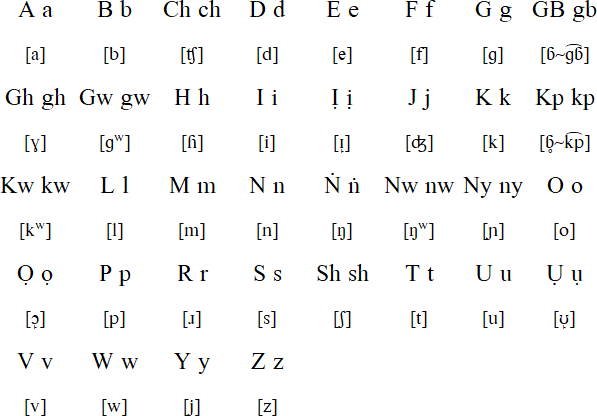
scholes0:What you just put up there is further evidence that supports the Yoruba from Igbo hypothesis. Analyze this: In Igbo alphabet, there are 28 solid consonants. As we more upwards-westwards towards the extreme western flank of Yoruba land, we first encounter Igala which has 23 consonants (as provided by you), then Olukwumi 21 consonants and lastly Yoruba with 18 consonants on average. This is in line with the consonant-dropping feature of children languages from the original parent language I had earlier mentioned and the character-dropping characteristic of children languages during an evolution from a parent language. Igbo>Igala>Olukwumi>Yoruba. The fact that Olukwumi (old Yoruba) has more consonants than proper Yoruba itself further suggests a likely evolution of yoruba proper from Olukwumi, which may have developed right within Igboland. Igbo language ranks highest of all these languages in the number of consonants that it possesses. If at all there was a proto-language, it is more likely Igbo language is closest to this language than Yoruba, Igala, Idoma etc. Take a look at this image evidence below comparing Latin words (parent words) with the children language words and notice the remarkable shortening of the words present in the children languages or dropping of certain consonants present in Latin altogether by these children languages. https://i.stack.imgur.com/5Qg4x.png Of all Romance languages, Italian is said to be the closest to Latin in context and vocabulary as can be seen in the image above, just as Igbo may be the closest to the so-called proto parent language of southern Nigeria languages. Igbo Alphabet: 36 letters (28 consonants and 8 vowels) https://www.omniglot.com/images/writing/igbo.gif Yoruba Alphabet: 25 letters (18 consonants and 7 vowels) https://pbs.twimg.com/media/Bv5h_rbCIAEZJtR.png 3 Likes |
| Re: Who Are The Edo People? by baby124: 11:55pm On Oct 29, 2015 |
bigfrancis21:Not possible. Olukumi and even Igala are Yoruboid languages. Olukumi can trace their heritage to Ondo. Olukumi means my friend in owo type of Yoruba. That is where they originate from. |
| Re: Who Are The Edo People? by bigfrancis21: 1:01am On Oct 30, 2015 |
baby124:The facts laid out point to a possible evolution of Yoruba from an ancient Igbo dialect. Comparing Yoruba with Igbo, we notice a lot of over-simplification in the language and this is characteristic of children languages derived from parent languages. 1 Like |
| Re: Who Are The Edo People? by baby124: 1:48am On Oct 30, 2015*. Modified: 3:15am On Oct 30, 2015 |
bigfrancis21:Simplification of a language does not mean that the language is the not the original. Matter of fact, like the Igala, we can see that only about 30% of the language is traceable to Yoruba. Itshekiri is about 80%. So it's obvious that the longer removed, the more the language evolves. For these 2 languages to still have a connection with Yoruba after centuries of separation shows that the language is quite original. By the way, Yoruba language is not simple. It is the OYO dialect that is simple. And that is because it is the central language which was adopted as a result of the OYO Empire. Have you heard the Ijebu and Ondo dialect? I am Yoruba and I don't understand it one bit. Those are the strangest Yoruba languages and they are the set of people that traveled the most. It also happens that those two groups are the progenitors of the Itschekiri and Olukumi. This same Ondo is very close to Akoko, so it's no coincidence given the dialects the Akoko speak. If an Ijebu speaks their dialect you will go into shock. Hahaha. This is why the OYO dialect was needed to bring all these related people together. Even an Itshekiri can understand the OYO dialect. Yoruba dialects vary widely. So Yoruba is not as simple as you think. Some Yoruba Dialects Wó̩ n ǹḿ rè̩ n nóru - this is Ijebu for they don't go out at night. Éè s̩ e fífò̩ Ìyábò̩ fò̩ fò̩ múè̩ n - Ikale meaning Iyabo did not do all the talking Èlú we eé ètó̩? - Ondo for how much are you selling it Bàbá gháà fé̩ o̩ mo̩ ìn hunkún - introduction of the 'GH's' - that is the Okun people. Surprisingly Ijesha has this as well and the "wen" and "ren" Edo people use. Same with Ondo on the 'wen' and 'ren' Omà ghá néè hó̩nkùn - ilaje with the 'GH' which they use. This means your child is crying. Now compare all these different dialects with the OYO dialect you know. If they speak will you understand? Yoruba language is quite diverse and the accents as well. Even Ekiti is different 3 Likes |
| Re: Who Are The Edo People? by Nobody: 6:25am On Oct 30, 2015 |
baby124:I'm still not understanding why the absence of 'MKP-' and similar formations in Yoruba makes it the original language. We have already demonstrated that this is a very widespread and ancient feature in Bantu and some Eastern Nigerian Languages (Igbo, Ibibio, etc). Why would the absence of this ancient feature in Yoruba make it the original language? It doesn't make philological sense. In fact, from the point of view of phonetic complexity, I can make the argument that Igbo is a more ancient language than Yoruba. Linguists know that ancient languages have a greater deal of phonetic complexity than 'younger' languages which often show signs of having been simplified. 3 Likes |
| Re: Who Are The Edo People? by macof(m): 12:08pm On Oct 31, 2015 |
Radoillo:In one of your previous posts u were talking about the absence of "kp" in yoruba. Well, "kp" exists as "P" in writing. Anyone that reads yoruba knows that you pronounce "p" as "Kp". But I do agree that Igbo is older than the mainstream yoruba dialect.... western yoruba dialects are also considered less complex than the eastern, probably cus of the greater exposure to the Oyo dialect |
| Re: Who Are The Edo People? by Nobody: 1:03pm On Oct 31, 2015 |
macof:I didn't say the sound 'kp' (written as 'p') doesn't exist in Yoruba. Perhaps you didn't understand what I was saying there, or maybe my statement was somewhat ambiguous. I very well know that such Yoruba words as 'pele' and 'pepeye' are pronounced as 'kpele' and 'kpekpeye'. Similar to how Yorubas would often write 's' but pronounce it as 'sh' (Segun, Sodeinde, Osun, Sango, etc). 1 Like |
| Re: Who Are The Edo People? by baby124: 1:50pm On Oct 31, 2015*. Modified: 2:06pm On Oct 31, 2015 |
Radoillo:Lol you obviously do not know that Yoruba is actually more phonetic than Igbo. One word could mean 20 different things, so there is great emphasis on the phonetics. Matter of fact in learning Yoruba formally, you are first thought the phonetic sounds. Do re mi, mi mi re do and so on and so forth. If it was less phonetic why is the Yoruba language always assaulted with accent marks. You obviously don't know the language at all, So I can't be arguing with you. It's obviously a tribal thing for you. Will it not make sense that the younger language will have a trace of these MKP's if it evolved from the older language? Yet, nothing like that exists, but when it comes to words spoken in Yoruba and how Yoruba will pronounce we have similarities, not vice versa. Yoruba subgroups show also that it is very hard for the language to be influenced and evolve. Case in point the lucumi, the Itshekiri and the Igala. And the lucumi have been surrounded by Igbo's and Edo for centuries. Yet they still speak Ondo. Also note that the white men have been trading with Itshekiri since the 16th century. So they just didn't move to their Area. The Igala have been removed for much longer and history says they are the father's of some Igbo groups. Matter of fact they are indigenous to Igbo land. So no, Yoruba is a very ancient language and must have been the first in Southern Nigeria. If not, it would include some prefixes which the Igbo's use. |
| Re: Who Are The Edo People? by Nobody: 2:11pm On Oct 31, 2015 |
baby124:Hahaha. No, sir, it is not a tribal thing for me. If it was, I would be here saying that Igbo is the mother language. But I'm not saying that. What I'm saying is that Yoruba and Igbo are sister-languages descended from a common mother language. You are the one making some unfounded claims for your language, and when your 'facts' are challenged for being scientifically unsound you turn around and accuse me of being tribal? Bruh! It is clearly a tribal thing for you. None of your arguments has any linguistic/philological logic to it, and it's easy to see that you are looking at this from a biased Yorubacentric point of view, being Yoruba yourself and Yoruba being the language you are most familiar with and your point of reference. I may not be a professional linguist, but I have studied the subject extensively privately, and I can tell you do not know the first thing about historical linguistics. I'm being objective and scientific in my approach. Don't think I can say the same for you, really. And I maintain, Igbo is phonetically more complex than Yoruba. Phonetic complexity increases in Yoruba the further you move towards the east. It's not a tribal thing. It's a fact. Post all the sounds used in all the Yoruba dialects that you know, and I will post all the sounds used in all the Igbo dialects that I know. That should settle quickly the issue of phonetic complexity for both languages. 3 Likes |
| Re: Who Are The Edo People? by bigfrancis21: 5:11am On Nov 02, 2015 |
baby124:I just had time now to respond to your post. @bold...That's totally false. In actuality, oversimplification has been identified as a characteristic of derivative languages from the original languages. Several world examples have demonstrated this characteristic, Spanish, French, Italian etc. are oversimplified versions of the parent language, Latin. It is a well-known fact that when a people new to a language try to learn the language, they often simplify certain words or drop them entirely they find difficult to pronounce or assimilate and this naturally-occurring phenomenon leads to variance in a language or dialects of a language. Two pieces of scholarly evidence show the oversimplification of Yoruba language compared to Igbo language. First: in the book, How Yoruba and Igbo became Different Languages, by Bolaji Aremo, the author juxtaposed hundreds of Igbo and Yoruba words together and the images show a consistently steady oversimplification in Yoruba words compared to Igbo words. In his article, the author tried to show a similarity between Igbo and Yoruba languages by using over a hundred of similar Igbo and Yoruba words and, while not admitting or inferring that one language could be derived from the other or that one (especially Igbo) could be closer to the parent language than the other (Yoruba), he stopped short at concluding they are sister languages of a parent language with no mention of such proto-language or how it existed. In another article, A Comparative Phonology of the Olùkùmi, Igala, Owe and Yoruba Languages, by Arokoyo, Bolanle Elizabeth, an author of Yoruba origin, she identifies Olukwumi, Igala etc. having consonant features Yoruba lacks and admits to oversimplification in the Yoruba language. http://llacan.vjf.cnrs.fr/fichiers/nigercongo/fichiers/arokoyo_paper.pdf https://books.google.com/books?id=OiynbBvMblcC&pg=PA13&source=gbs_toc_r&cad=4#v=onepage&q=simplification&f=false English language is an Indo-Germanic language, having evolved from the language of the Angles and Jutes, an ancient Germanic tribe that settled in the Britain area, together with the Saxons and gave the name, Aengland, to the area they settled in, meaning land of the 'angles'. The article in the link below explains the process of evolution of several modern day Indo-Germanic languages, including English, and mentions the oversimplification of Germanic and Latin words to simpler words in English language. To be honest, I am still yet to understand how the examples you gave above 'proves' or 'shows' Yoruba to be the 'original' language. You merely listed out dialectical variations in the Yoruba language which exists in thousands in Igbo language as well. Tons of dialectical varying examples exist in Igbo language that almost totally differ from each other, which only in the end is only an indication of the dialectical richness of the Igbo language and should not be considered 'proof' of it being the 'original' language. Dialectical variations exists in nearly almost all languages in the world. Tens of thousands of them, from English to German to Italian to French to Portuguese to Spanish etc. Spanish speakers from Mexico and Guatemala complain that the Spanish spoken by certain countries in Central America is very difficult to understand, yet they speak the same Spanish. In such view, it would not be sensible to conclude that Spanish is the original language just because it has often mutually-unintelligible dialects. While I am not declaring that Yoruba derived from Igbo language, or that if such parent language of Igbo and Yoruba existed that Igbo must be closer to this parent language than Yoruba, I am only proposing a hypothesis of Igbo vs. Yoruba which follows in the similar trends of world languages such as Latin vs. Spanish/French or Ancient German vs. English language etc., which needs to be further researched into. 1 Like 1 Share
|
| Re: Who Are The Edo People? by cyrilamx(m): 12:13pm On Oct 01, 2016 |
We need to start chasing the Biafruds out of Benin lands thank God, we have a incoming no nonsense Monarch coming. Moheat: |
| Re: Who Are The Edo People? by cyrilamx(m): 12:28pm On Oct 01, 2016 |
The binis have no culture? You dreaming. If the yorubas n igbo cultures were superior to that of bini as you ignorantly claim, then why do Festac '77 has the face of Bini Queen Mother headmask? The coronation of the Oba of Benin is forthcoming, the British Queen will b represented. We are small in population but we still one respected Kingdom in the world...truly we unique. tonychristopher: |
| Re: Who Are The Edo People? by Etogist: 12:40pm On Oct 01, 2016 |
tonychristopher:You are very correct. Iguedo is the only daughter of Eri not Nri. She beget Umueri, Akwuzu, Nando, Igbariam, Ogbunike and some part of Onitsha. |



Kindness Okpe, 22-Year-Old SSA To Obaseki, The Edo State Governor (Photos) • Ize-Iyamu's Message To Edo Residents After The Edo Election (pic, Video) • PDP Posts Video Ridiculing Oshiomhole/APC, Edo People React • 2 • 3 • 4
Photos Of Boko Haram Members Who Surrendered To The Nigerian Army Today • PDP Presidential Campaign Rally In Borno • Dickson,alamieyeseigha Ordered Out Of Jonathan's Meeting With PDP Board Of Trust