Discoveries's Posts
Nairaland Forum › Discoveries's Profile › Discoveries's Posts
1 2 (of 2 pages)
 Nairaland General › A Graduate? by discoveries(op): 5:20am On Sep 01, 2017 |

|
| Art, Graphics & Video › Re: 15 Facts About The Last Supper Painting You Probably Didn’t Know by discoveries(op): 10:31pm On Aug 14, 2017 |
14. It’s been mimicked for centuries. Fine art and pop culture have paid tribute to The Last Supper with a cavalcade of imitations and parodies. These range from a 16th century oil painting reproduction to new interpretations from Salvador Dali, Andy Warhol, Susan Dorothea White, and Vik Muniz, who made his out of chocolate syrup. Recreations of The Last Supper’s distinctive tableau can also be found in the Mel Brooks comedy History of the World, Part 1, Paul Thomas Anderson’s stoner-noir Inherent Vice, and Luis Buñuel’s Viridiana, which was declared “blasphemous” by the Vatican. It’s also been a plot point in The Da Vinci Code and Futurama. 15. Want to see The Last Supper in person? Better book (way) in advance. Though The Last Supper is one of Italy’s must-see sites, the convent in which it is located was not built for big crowds. Only 20 to 25 people are allowed in at a time in visiting blocks of 15 minutes. It is recommended visitors book tickets to see The Last Supper at least two months in advance. And be sure to dress conservatively, or you may be turned away from the convent. http://www.jesusdaily.com/stories/last-supper-paintings-hidden-truth-jesus-judas/ 1 Like |
| Art, Graphics & Video › Re: 15 Facts About The Last Supper Painting You Probably Didn’t Know by discoveries(op): 10:29pm On Aug 14, 2017 |
13. The Last Supper also inspired popular fiction. And not just The Da Vinci Code. A pervasive part of the painting’s mythology is the story that da Vinci searched for ages for the right model for his Judas. Once he found him, he realized it was the same man who had once posed for him as Jesus. Sadly, years of hard-living and sin had ravaged his once-angelic face. As compelling a story as this is, it’s also totally false. How do we know this story isn’t true? For one thing, it’s believed that da Vinci took about three years to paint The Last Supper, mostly due to the painter’s notorious tendency to procrastinate. For another, stories of spiritual decay manifesting itself physically have long existed. It’s likely that someone along the way decided to saddle The Last Supper with a similar narrative in order to give its moral message a sense of historical credibility. |
| Art, Graphics & Video › Re: 15 Facts About The Last Supper Painting You Probably Didn’t Know by discoveries(op): 10:26pm On Aug 14, 2017 |
11. The meaning of its food is up for debate. The spilled salt before Judas has been said to represent his betrayal, or alternately, is seen as a sign of his bad luck in being the one chosen to betray. The fish served has similarly conflicted readings. If it is meant to be eel, it might represent indoctrination and thereby faith in Jesus. However, if it’s herring, then it could symbolize a nonbeliever who denies religion. 12. It’s inspired some wild theories. In The Templar Revelation, Lynn Picknett and Clive Prince propose that the figure to the left of Jesus is not John, but Mary Magdalene, and that The Last Supper is key evidence in a cover-up of the true identity of Christ by the Roman Catholic Church. Musicians have speculated that the true hidden message in The Last Supper is actually an accompanying soundtrack. In 2007, Italian musician Giovanni Maria Pala created 40 seconds of a somber song using notes supposedly encoded within da Vinci’s distinctive composition. Three years later, Vatican researcher Sabrina Sforza Galitzia translated the painting’s “mathematical and astrological” signs into a message from da Vinci about the end of the world. She claims The Last Supper predicts an apocalyptic flood that will sweep the globe from March 21 to November 1, 4006.
|
| Art, Graphics & Video › Re: 15 Facts About The Last Supper Painting You Probably Didn’t Know by discoveries(op): 10:24pm On Aug 14, 2017 |
8. Renovations eliminated a portion of The Last Supper. In 1652, a doorway was added to the wall that holds the painting. Its construction meant that a lower central chunk of the piece—which included Jesus’ feet—was lost. 9. The Last Supper’s Judas may have been modeled after a real criminal. It is said that the look of every apostle was based on a real-life model. When it came time to pick the face for the traitorous Judas (fifth from the left, holding a bag of telltale silver), da Vinci searched the jails of Milan for the perfect looking scoundrel. 10. There may be a biblical Easter Egg here. To the right of Jesus, Thomas stands in profile, his finger pointing up in the air. Some speculate that this gesture is meant to isolate Thomas’s finger, which becomes key in a later Bible story when Jesus rises from the dead. Thomas doubts his eyes, and so is entreated to probe Jesus’ wounds with his finger to help him believe. |
| Art, Graphics & Video › Re: 15 Facts About The Last Supper Painting You Probably Didn’t Know by discoveries(op): 10:21pm On Aug 14, 2017 |
6. Very few of da Vinci’s original brushstrokes remain. Although the painting itself was beloved, da Vinci’s tempera-on-stone experiment was a failure. By the early 16th century, the paint had started to flake and decay, and within 50 years, The Last Supper was a ruin of its former glory. Early restoration attempts only made it worse. Vibrations from Allied bombings during World War II further contributed to the painting’s destruction. Finally, in 1980, a 19-year restoration effort began. The Last Supper was ultimately restored, but it lost much of its original paint along the way. 7. A hammer and nail helped Da Vinci achieve the one-point perspective. Part of what makes The Last Supper so striking is the perspective from which it’s painted, which seems to invite the viewer to step right into the dramatic scene. To achieve this illusion, da Vinci hammered a nail into the wall, then tied string to it to make marks that helped guide his hand in creating the painting’s angles.
|
| Art, Graphics & Video › Re: 15 Facts About The Last Supper Painting You Probably Didn’t Know by discoveries(op): 10:18pm On Aug 14, 2017 |
5. Da Vinci used a brand new technique on his future masterpiece. In order to spend all the time he needed to perfect every detail, da Vinci invented his own technique, using tempera paints on stone. He primed the wall with a material that he hoped would accept the tempera and protect the paint against moisture.
|
| Art, Graphics & Video › Re: 15 Facts About The Last Supper Painting You Probably Didn’t Know by discoveries(op): 10:16pm On Aug 14, 2017 |
2. The Last Supper captures a climactic moment. Everyone knows the painting depicts Jesus’ last meal with his apostles before he was captured and crucified. But more specifically, da Vinci wanted to capture the instant just after Jesus reveals that one of his friends will betray him, complete with reactions of shock and rage from the apostles. In da Vinci’s interpretation, the moment also takes place just before the birth of the Eucharist, with Jesus reaching for the bread and a glass of wine that would be the key symbols of this Christian sacrament. 3. You won’t find it in a museum. Although The Last Supper is easily one of the world’s most iconic paintings, its permanent home is a convent in Milan, Italy. And moving it would be tricky, to say the least. Da Vinci painted the religious work directly (and fittingly) on the dining hall wall of the Convent of Santa Maria delle Grazie back in 1495. 4. Although it’s painted on a wall, it’s not a fresco. Frescos were painted on wet plaster. But da Vinci rejected this traditional technique for several reasons. First off, he wanted to achieve a grander luminosity than the fresco method allowed for. But the bigger problem with frescos—as da Vinci saw it—was that they demanded the painter rush to finish his work before the plaster dried. |
| Art, Graphics & Video › Re: 15 Facts About The Last Supper Painting You Probably Didn’t Know by discoveries(op): 10:11pm On Aug 14, 2017 |
1. It’s bigger than you think. Countless reproductions have been made in all sizes, but the original is about 15 feet by 29 feet.
|
| Art, Graphics & Video › 15 Facts About The Last Supper Painting You Probably Didn’t Know by discoveries(op): 10:10pm On Aug 14, 2017 |
“The Last Supper” by Leonardo da Vinci is one of the most famous paintings in history but there is still a lot of mystery surrounding it. Here are 15 facts about The Last Supper painting via Mental Floss. Leonardo da Vinci’s The Last Supper is one of the most admired, most studied, and most reproduced paintings the world has ever known. But no matter how many times you’ve seen it, we’ll bet you don’t know these details. |
| Science/Technology › Re: Discoveries Show That Galilee And Jerusalem Are Far Older Than Once Believed by discoveries(op): 2:56pm On Aug 05, 2017 |
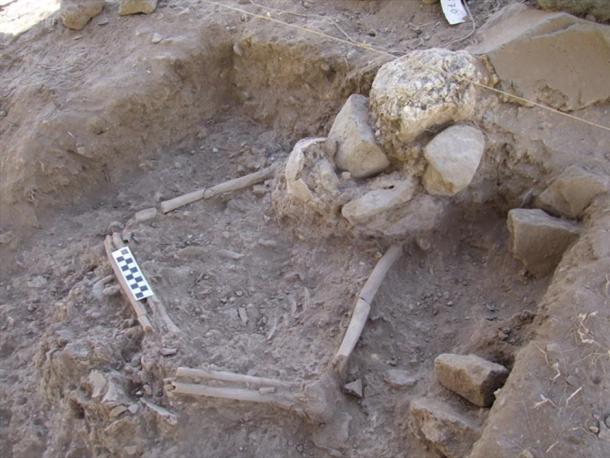
Haaretz reports that the site discovered by the Hebrew University archaeological team headed by Leore Grosman, unearthed the big village by the Sea of Galilee. Their discovery is proof that at least some people remained settled during that time. Furthermore, it is estimatedthat at least 100 people lived in the 1,200 square meter (three acre) area. https://www.ancient-origins.net/sites/default/files/styles/large/public/The-NEG-II-site.jpg The NEG II site in the Jordan Valleywhere archaeologists from the Hebrew University have discovered the remains of a 12,000-year-old settlement. ( Austin (Chad) Hill/Leore Grosman) Grosman suggests that it is possible that the Dryas cold may have completely skipped over this region of the Jordan Valley (part of the Great Rift Valley.) This may explain why the people who lived in the village stayed. “There is a model that claimed that what pushed people to agriculture was climate crisis and scholars tried to match up rainfall graphs with cultural change. But at least in the African Rift, it does not seem that there was such great distress, and this changes the picture somewhat,” Grosman said to Haaretz. https://www.ancient-origins.net/sites/default/files/Some-of-the-artifacts.jpg Some of the artifacts uncovered at the NEG II site: 1: Perforated Piece; 2–5: Decorated objects; 6: Green Stone Spacers; 7: Shell Bead; 8–10: Disc Beads; 10, 12–14: Disc Beads Pre-forms. ( Grosman et al.) In the paper, A Late Natufian Community by the Sea of Galilee published in the journal Plos ONE, Grosman explains that the Late Natufians were generally thought to have been a largely mobile population that coped with reduced resources caused by climate stress. The new research provides another side to the story. During the excavations, archaeologists unearthed a cemetery with human remains, which will be tested in the near future. Other artifacts include: animal bones, flint objects, shells, beads, and small pieces of art. https://www.ancient-origins.net/sites/default/files/styles/large/public/Human-remains.jpg?itok=KY8KdDhK Human remains found at the NEG II siteby the Sea of Galilee. ( Grosman et al.) Amongst the animal remains are the bones of a barbell fish from the Sea of Galilee. Grosman expectsthat some of the perforated objects found at the site may be associated with a basic knowledge of fishing technology, perhaps as weights for a primitive fishing net. http://www.ancient-origins.net/news-history-archaeology/discoveries-show-galilee-and-jerusalem-are-far-older-once-believed-005372?nopaging=1 |
| Science/Technology › Re: Discoveries Show That Galilee And Jerusalem Are Far Older Than Once Believed by discoveries(op): 2:48pm On Aug 05, 2017 |
A Prehistoric Village in Galilee Research published on February 16, 2016, suggests that the history of Galilee is also far older than previously believed. Evidence for the longer past comes in the form of an impressive-sized prehistoric village dating back 12,000 years, which was discovered by the Sea of Galilee. https://www.ancient-origins.net/sites/default/files/Nahal-Ein-Gev.jpg Location of the 12,000 year old site Nahal Ein Gev II (NEG II) in the Southern Levant. ( Grosman et al.) This find has other repercussions, as it demonstratesthat the theory claiming that people in the Levant had reverted to a nomadic existence of hunting and gathering because of climate stress in the late Natufian period (12,500 BC — circa 9,500 BC) is untrue. |
| Science/Technology › Re: Discoveries Show That Galilee And Jerusalem Are Far Older Than Once Believed by discoveries(op): 1:33pm On Aug 05, 2017 |
Many of the recently uncovered artifacts are shedding new light on Jerusalem’s past. Lupo told the Times of Israel: “This discovery represents a highly significant addition to our research of the city and the vicinity. Apart from the pottery, the fascinating flint finds attest to the livelihood of the local population in prehistoric times: Small sickle blades for harvesting cereal crops, chisels and polished axes for building, borers and awls, and even a bead made of carnelian (a gemstone), indicating that jewelry was either made or imported. The grinding tools, mortars and pestles, like the basalt bowl, attest to technological skills as well as to the kinds of crafts practiced in the local community.” Image: A basalt bowl dating back 7,000 years, found during archaeological excavations in the Shuafat neighborhood, northern Jerusalem. ( Israel Antiquities Authority)
|
| Science/Technology › Re: Discoveries Show That Galilee And Jerusalem Are Far Older Than Once Believed by discoveries(op): 1:31pm On Aug 05, 2017 |
According to Newsweek Europe, the excavations unearthed two houses with well-preserved remains and floors. The houses contained various installations as well as pottery vessels, flint tools, and a basalt bowl. Ronit Lupo, the director of excavations for the IAA at the site, says that the discovery, which includes complicated architectural structures and a range of different tools, points to a thriving settlement. The site also yielded animal bones, which will provide more information on the diet and economic habits of people who lived there. Image: Polished flint axe and blades and a gemstone bead discovered in the excavation in Jerusalem. (Assaf Peretz, Israel Antiquities Authority)
|
| Science/Technology › Re: Discoveries Show That Galilee And Jerusalem Are Far Older Than Once Believed by discoveries(op): 1:24pm On Aug 05, 2017 |
Jerusalem is at Least 2,000 Years Older The Israel Antiquities Authority (IAA) announcedon February 17, 2016 the discovery of the oldest known remains of an ancient settlement on the site of modern-day Jerusalem, dating back some 7,000 years. This means that the beginning of one of the most important cities in the world dates back to the period of the Chalcolithic era, also known as the Copper Age. Dr. Omri Barzilai, head of the IAA’s Prehistory Branch, declaredthat this finding is the oldest proof of human settlement in the Jerusalem area. It was known before that Galilee, Goland and Negev existed during the Chalcolithic period, but it was not known that Jerusalem was also an important site at the time. Some settlements in Judea Hills and Jerusalem were thought to exist, but they were believed to have been very sparse. Image: Archaeological excavations conducted at the northern Jerusalem site. (Israel Antiquities Authority)
|
| Science/Technology › Discoveries Show That Galilee And Jerusalem Are Far Older Than Once Believed by discoveries(op): 1:19pm On Aug 05, 2017 |
https://www.ancient-origins.net/sites/default/files/field/image/Excavations_0.jpg Discoveries regarding two of the most important archaeological sites in Israel – Galilee and Jerusalem, suggest that the sites are far older than commonly believed. Teams of archaeologists have found a giant village from 12,000 years ago in Galilee and a 7,000-year-old ancient settlement in Jerusalem. Until now, it was thought that the oldest settlements in this part of the world were located in Jericho, which date back 11,000 years (c. 9,000 BC). In the case of Jerusalem, it was previously believed that the oldest settlement comes from c. 5,000 BC. As for Galilee, in 2015 archaeologists discovered fava seeds dated to between 10,125 and 10,200 years ago. The recently announced findings are changing the history of this area. |
| Nairaland General › Re: 12 Weird Plural Words You Never Knew Existed by discoveries(op): 10:36pm On Aug 02, 2017 |
| Nairaland General › Re: 12 Weird Plural Words You Never Knew Existed by discoveries(op): 10:35pm On Aug 02, 2017 |
#12. Similarly, (and awesomely) the singular form of confettiis one piece of confetto, same goes with graffiti — it’s graffito.
|
| Nairaland General › Re: 12 Weird Plural Words You Never Knew Existed by discoveries(op): 10:34pm On Aug 02, 2017 |
#11. Did we confuse you? Plankton is indeed its plural form, we just flipped the script a bit.
|
| Nairaland General › Re: 12 Weird Plural Words You Never Knew Existed by discoveries(op): 10:32pm On Aug 02, 2017 |
#10. Prius is actually a Latin word meaning “first” or “original”, or “superior”. It was Toyota who officially announced that “Prii” is the new plural word after more than 1.8 million people voted for it in 2011.
|
| Nairaland General › Re: 12 Weird Plural Words You Never Knew Existed by discoveries(op): 10:30pm On Aug 02, 2017 |
#9. So technically, you should be ordering lasagne from the bistro.
|
| Nairaland General › Re: 12 Weird Plural Words You Never Knew Existed by discoveries(op): 10:29pm On Aug 02, 2017 |
#8. You might mistake it with “octopi”. Octopi is actually a Latin plural word, while “octopus” is Greek.
|
| Nairaland General › Re: 12 Weird Plural Words You Never Knew Existed by discoveries(op): 10:28pm On Aug 02, 2017 |
#7. Same with mothers-in-law, fathers-in-law, postmasters general and the like.
|
| Nairaland General › Re: 12 Weird Plural Words You Never Knew Existed by discoveries(op): 10:26pm On Aug 02, 2017 |
#6. It was only coined in 1951 and we don’t want this word to disappear.
|
| Nairaland General › Re: 12 Weird Plural Words You Never Knew Existed by discoveries(op): 10:25pm On Aug 02, 2017 |
#5. In French, it means “bottom of a sack”, so if it’s plural, it’s “bottoms of a sack”. That’s a lot of bottom.
|
| Nairaland General › Re: 12 Weird Plural Words You Never Knew Existed by discoveries(op): 10:23pm On Aug 02, 2017 |
#4. It’s literally translated from the Latin for “two-headed” because each of your biceps connects to the upper arm via two heads.
|
| Nairaland General › Re: 12 Weird Plural Words You Never Knew Existed by discoveries(op): 10:22pm On Aug 02, 2017 |
#3. Though “sphinxes” is also acceptable.
|
| Nairaland General › Re: 12 Weird Plural Words You Never Knew Existed by discoveries(op): 10:14pm On Aug 02, 2017 |
#2. An opera is more than one opus. Who knew?
|
| Nairaland General › 12 Weird Plural Words You Never Knew Existed by discoveries(op): 10:11pm On Aug 02, 2017 |
#1. If you’re talking about arguments between celebs on Twitter, then those are beefs, FYI. 1 Like
|
| Science/Technology › Re: Researchers Shut Down AI That Invented Its Own Language by discoveries(op): 2:58pm On Jul 30, 2017 |
AI language translates human ones In a separate case, Google recently improved its Translate service by adding a neural network. The system is now capable of translating much more efficiently, including between language pairs that it hasn’t been explicitly taught. The success rate of the network surprised Google's team. Its researchers found the AI hadsilently written its own language that's tailored specifically to the task of translating sentences. If AI-invented languages become widespread, they could pose a problem when developing and adopting neural networks. There's not yet enough evidence to determine whether they present a threat that could enable machines to overrule their operators. They do make AI development more difficult though as humans cannot understand the overwhelmingly logical nature of the languages. While they appear nonsensical, the results observed by teams such as Google Translate indicate they actually represent the most efficient solution to major problems. http://m.digitaljournal.com/tech-and-science/technology/a-step-closer-to-skynet-ai-invents-a-language-humans-can-t-read/article/498142 1 Like |
| Science/Technology › Re: Researchers Shut Down AI That Invented Its Own Language by discoveries(op): 2:55pm On Jul 30, 2017 |
Negotiating in a new language As Fast Co. Design reports, Facebook's researchers recently noticed its new AI had given up on English. The advanced system is capable of negotiatingwith other AI agents so it can come to conclusions on how to proceed. The agents began to communicate using phrases that seem unintelligible at first but actually represent the task at hand. In one exchange illustrated by the company, the two negotiating bots, named Bob and Alice, used their own language to complete their exchange. Bob started by saying "I can i i everything else," to which Alice responded "balls have zero to me to me to me…" The rest of the conversation was formed from variations of these sentences. While it appears to be nonsense, the repetition of phrases like "i" and "to me" reflect how the AI operates. The researchers believe it shows the two bots working out how many of each item they should take. Bob's later statements, such as "i i can i i i everything else," indicate how it was using language to offer more items to Alice. When interpreted like this, the phrases appear more logical than comparable English phrases like "I'll have three and you have everything else." English lacks a "reward" The AI apparently realised that the rich expression of English phrases wasn’t required for the scenario. Modern AIs operate on a "reward" principle where they expect following a sudden course of action to give them a "benefit." In this instance, there was no reward for continuing to use English, so they built a more efficient solution instead. "Agents will drift off from understandable language and invent code-words for themselves," Fast Co. Designreports Facebook AI researcher Dhruv Batra said. "Like if I say 'the' five times, you interpret that to mean I want five copies of this item. This isn't so different from the way communities of humans create shorthands." AI developers at other companies have observed a similar use of "shorthands" to simplify communication. At OpenAI, the artificial intelligence lab founded by Elon Musk, an experiment succeeded in lettingAI bots learn their own languages. 6 Likes 2 Shares |
| Science/Technology › Researchers Shut Down AI That Invented Its Own Language by discoveries(op): 2:52pm On Jul 30, 2017 |
An artificial intelligence system being developed at Facebook has created its own language. It developed a system of code words to make communication more efficient. Researchers shut the system down when they realized the AI was no longer using English. The observations made at Facebook are the latest in a long line of similar cases. In each instance, an AI being monitored by humans has diverged from its training in English to develop its own language. The resulting phrases appear to be nonsensical gibberish to humans but contain semantic meaning when interpreted by AI "agents." 9 Likes 4 Shares |






1 2 (of 2 pages)