MudRaker's Posts
Nairaland Forum › MudRaker's Profile › MudRaker's Posts
1 2 3 4 5 6 7 8 ... 28 29 30 31 32 33 34 35 36 (of 36 pages)
 Politics › Re: .... by MudRaker: 1:58pm On Nov 02, 2014 Politics › Re: .... by MudRaker: 1:58pm On Nov 02, 2014 |
arewafederation:If you [Muslims] are under their [non-Muslims'] authority, fearing for yourselves, behave loyally to them with your tongue while harboring inner animosity for them … [know that] God has forbidden believers from being friendly or on intimate terms with the infidels rather than other believers—except when infidels are above them [in authority]. Should that be the case, let them act friendly towards them while preserving their religion. Keep deceiving your father 1 Like |
| Politics › Re: .... by MudRaker: 1:53pm On Nov 02, 2014 |
arewafederation:Taqiyya in full display. You Muslims are bloody liars who will lie that the sun is the moon. Islam must seem a paradoxical religion to non-Muslims. On the one hand, it is constantly being portrayed as the religion of peace; on the other, its adherents are responsible for the majority of terror attacks around the world. Apologists for Islam emphasize that it is a faith built upon high ethical standards; others stress that it is a religion of the law. Islam's dual notions of truth and falsehood further reveal its paradoxical nature: While the Qur'an is against believers deceiving other believers—for "surely God guides not him who is prodigal and a liar"[1]—deception directed at non-Muslims, generally known in Arabic as taqiyya, also has Qur'anic support and falls within the legal category of things that are permissible for Muslims. Muslim deception can be viewed as a slightly less than noble means to the glorious end of Islamic hegemony under Shari'a, which is seen as good for both Muslims and non-Muslims. In this sense, lying in the service of altruism is permissible. In a recent example, Muslim cleric Mahmoud al-Masri publicly recounted a story where a Muslim lied and misled a Jew into converting to Islam, calling it a "beautiful trick." Taqiyya offers two basic uses. The better known revolves around dissembling over one's religious identity when in fear of persecution. Such has been the historical usage of taqiyya among Shi'i communities whenever and wherever their Sunni rivals have outnumbered and thus threatened them. Conversely, Sunni Muslims, far from suffering persecution have, whenever capability allowed, waged jihad against the realm of unbelief; and it is here that they have deployed taqiyya—not as dissimulation but as active deceit. In fact, deceit, which is doctrinally grounded in Islam, is often depicted as being equal—sometimes superior—to other universal military virtues, such as courage, fortitude, or self-sacrifice. Yet if Muslims are exhorted to be truthful, how can deceit not only be prevalent but have divine sanction? What exactly is taqiyya? How is it justified by scholars and those who make use of it? How does it fit into a broader conception of Islam's code of ethics, especially in relation to the non-Muslim? More to the point, what ramifications does the doctrine of taqiyya have for all interaction between Muslims and non-Muslims? The Doctrine of Taqiyya According to Shari'a—the body of legal rulings that defines how a Muslim should behave in all circumstances—deception is not only permitted in certain situations but may be deemed obligatory in others. Contrary to early Christian tradition, for instance, Muslims who were forced to choose between recanting Islam or suffering persecution were permitted to lie and feign apostasy. Other jurists have decreed that Muslims are obligated to lie in order to preserve themselves,[2] based on Qur'anic verses forbidding Muslims from being instrumental in their own deaths.[3] This is the classic definition of the doctrine of taqiyya. Based on an Arabic word denoting fear, taqiyya has long been understood, especially by Western academics, as something to resort to in times of religious persecution and, for the most part, used in this sense by minority Shi'i groups living among hostile Sunni majorities.[4] Taqiyya allowed the Shi'a to dissemble their religious affiliation in front of the Sunnis on a regular basis, not merely by keeping clandestine about their own beliefs but by actively praying and behaving as if they were Sunnis. However, one of the few books devoted to the subject, At-Taqiyya fi'l-Islam (Dissimulation in Islam) makes it clear that taqiyya is not limited to Shi'a dissimulating in fear of persecution. Written by Sami Mukaram, a former Islamic studies professor at the American University of Beirut and author of some twenty-five books on Islam, the book clearly demonstrates the ubiquity and broad applicability of taqiyya: Taqiyya is of fundamental importance in Islam. Practically every Islamic sect agrees to it and practices it … We can go so far as to say that the practice of taqiyya is mainstream in Islam, and that those few sects not practicing it diverge from the mainstream … Taqiyya is very prevalent in Islamic politics, especially in the modern era.[5] Taqiyya is, therefore, not, as is often supposed, an exclusively Shi'i phenomenon. Of course, as a minority group interspersed among their Sunni enemies, the Shi'a have historically had more reason to dissemble. Conversely, Sunni Islam rapidly dominated vast empires from Spain to China. As a result, its followers were beholden to no one, had nothing to apologize for, and had no need to hide from the infidel nonbeliever (rare exceptions include Spain and Portugal during the Reconquista when Sunnis did dissimulate over their religious identity[6]). Ironically, however, Sunnis living in the West today find themselves in the place of the Shi'a: Now they are the minority surrounded by their traditional enemies—Christian infidels—even if the latter, as opposed to their Reconquista predecessors, rarely act on, let alone acknowledge, this historic enmity. In short, Sunnis are currently experiencing the general circumstances that made taqiyya integral to Shi'ism although without the physical threat that had so necessitated it. The Articulation of Taqiyya Qur'anic verse 3:28 is often seen as the primary verse that sanctions deception towards non-Muslims: "Let believers [Muslims] not take infidels [non-Muslims] for friends and allies instead of believers. Whoever does this shall have no relationship left with God—unless you but guard yourselves against them, taking precautions."[7] Muhammad ibn Jarir at-Tabari (d. 923), author of a standard and authoritative Qur'an commentary, explains verse 3:28 as follows: If you [Muslims] are under their [non-Muslims'] authority, fearing for yourselves, behave loyally to them with your tongue while harboring inner animosity for them … [know that] God has forbidden believers from being friendly or on intimate terms with the infidels rather than other believers—except when infidels are above them [in authority]. Should that be the case, let them act friendly towards them while preserving their religion.[8] Regarding Qur'an 3:28, Ibn Kathir (d. 1373), another prime authority on the Qur'an, writes, "Whoever at any time or place fears … evil [from non-Muslims] may protect himself through outward show." As proof of this, he quotes Muhammad's close companion Abu Darda, who said, "Let us grin in the face of some people while our hearts curse them." Another companion, simply known as Al-Hasan, said, "Doing taqiyya is acceptable till the Day of Judgment [i.e., in perpetuity]."[9] Other prominent scholars, such as Abu 'Abdullah al-Qurtubi (1214-73) and Muhyi 'd-Din ibn al-Arabi (1165-1240), have extended taqiyya to cover deeds. In other words, Muslims can behave like infidels and worse—for example, by bowing down and worshiping idols and crosses, offering false testimony, and even exposing the weaknesses of their fellow Muslims to the infidel enemy—anything short of actually killing a Muslim: "Taqiyya, even if committed without duress, does not lead to a state of infidelity—even if it leads to sin deserving of hellfire."[10] Deceit in Muhammad's Military Exploits Muhammad—whose example as the "most perfect human" is to be followed in every detail—took an expedient view on lying. It is well known, for instance, that he permitted lying in three situations: to reconcile two or more quarreling parties, to placate one's wife, and in war.[11] According to one Arabic legal manual devoted to jihad as defined by the four schools of law, "The ulema agree that deception during warfare is legitimate … deception is a form of art in war."[12] Moreover, according to Mukaram, this deception is classified as taqiyya: "Taqiyya in order to dupe the enemy is permissible."[13] Several ulema believe deceit is integral to the waging of war: Ibn al-'Arabi declares that "in the Hadith [sayings and actions of Muhammad], practicing deceit in war is well demonstrated. Indeed, its need is more stressed than the need for courage." Ibn al-Munir (d. 1333) writes, "War is deceit, i.e., the most complete and perfect war waged by a holy warrior is a war of deception, not confrontation, due to the latter's inherent danger, and the fact that one can attain victory through treachery without harm [to oneself]." And Ibn Hajar (d. 1448) counsels Muslims "to take great caution in war, while [publicly] lamenting and mourning in order to dupe the infidels."[14] This Muslim notion that war is deceit goes back to the Battle of the Trench (627), which pitted Muhammad and his followers against several non-Muslim tribes known as Al-Ahzab. One of the Ahzab, Na'im ibn Mas'ud, went to the Muslim camp and converted to Islam. When Muhammad discovered that the Ahzab were unaware of their co-tribalist's conversion, he counseled Mas'ud to return and try to get the pagan forces to abandon the siege. It was then that Muhammad memorably declared, "For war is deceit." Mas'ud returned to the Ahzab without their knowing that he had switched sides and intentionally began to give his former kin and allies bad advice. He also went to great lengths to instigate quarrels between the various tribes until, thoroughly distrusting each other, they disbanded, lifted the siege from the Muslims, and saved Islam from destruction in an embryonic period.[15] Most recently, 9/11 accomplices, such as Khalid Sheikh Muhammad, rationalized their conspiratorial role in their defendant response by evoking their prophet's assertion that "war is deceit." A more compelling expression of the legitimacy of deceiving infidels is the following anecdote. A poet, Ka'b ibn Ashraf, offended Muhammad, prompting the latter to exclaim, "Who will kill this man who has hurt God and his prophet?" A young Muslim named Muhammad ibn Maslama volunteered on condition that in order to get close enough to Ka'b to assassinate him, he be allowed to lie to the poet. Muhammad agreed. Ibn Maslama traveled to Ka'b and began to denigrate Islam and Muhammad. He carried on in this way till his disaffection became so convincing that Ka'b took him into his confidence. Soon thereafter, Ibn Maslama appeared with another Muslim and, while Ka'b's guard was down, killed him.[16] Muhammad said other things that cast deception in a positive light, such as "God has commanded me to equivocate among the people just as he has commanded me to establish [religious] obligations"; and "I have been sent with obfuscation"; and "whoever lives his life in dissimulation dies a martyr."[17] In short, the earliest historical records of Islam clearly attest to the prevalence of taqiyya as a form of Islamic warfare. Furthermore, early Muslims are often depicted as lying their way out of binds—usually by denying or insulting Islam or Muhammad—often to the approval of the latter, his only criterion being that their intentions (niya) be pure.[18] During wars with Christians, whenever the latter were in authority, the practice of taqiyya became even more integral. Mukaram states, "Taqiyya was used as a way to fend off danger from the Muslims, especially in critical times and when their borders were exposed to wars with the Byzantines and, afterwards, to the raids [crusades] of the Franks and others."[19] Taqiyya in Qur'anic Revelation The Qur'an itself is further testimony to taqiyya. Since God is believed to be the revealer of these verses, he is by default seen as the ultimate perpetrator of deceit—which is not surprising since he is described in the Qur'an as the best makar, that is, the best deceiver or schemer (e.g., 3:54, 8:30, 10:21). While other scriptures contain contradictions, the Qur'an is the only holy book whose commentators have evolved a doctrine to account for the very visible shifts which occur from one injunction to another. No careful reader will remain unaware of the many contradictory verses in the Qur'an, most specifically the way in which peaceful and tolerant verses lie almost side by side with violent and intolerant ones. The ulema were initially baffled as to which verses to codify into the Shari'a worldview—the one that states there is no coercion in religion (2:256), or the ones that command believers to fight all non-Muslims till they either convert, or at least submit, to Islam (8:39, 9:5, 9:29). To get out of this quandary, the commentators developed the doctrine of abrogation, which essentially maintains that verses revealed later in Muhammad's career take precedence over earlier ones whenever there is a discrepancy. In order to document which verses abrogated which, a religious science devoted to the chronology of the Qur'an's verses evolved (known as an-Nasikh wa'l Mansukh, the abrogater and the abrogated). But why the contradiction in the first place? The standard view is that in the early years of Islam, since Muhammad and his community were far outnumbered by their infidel competitors while living next to them in Mecca, a message of peace and coexistence was in order. However, after the Muslims migrated to Medina in 622 and grew in military strength, verses inciting them to go on the offensive were slowly "revealed"—in principle, sent down from God—always commensurate with Islam's growing capabilities. In juridical texts, these are categorized in stages: passivity vis-á-vis aggression; permission to fight back against aggressors; commands to fight aggressors; commands to fight all non-Muslims, whether the latter begin aggressions or not.[20] Growing Muslim might is the only variable that explains this progressive change in policy. Other scholars put a gloss on this by arguing that over a twenty-two year period, the Qur'an was revealed piecemeal, from passive and spiritual verses to legal prescriptions and injunctions to spread the faith through jihad and conquest, simply to acclimate early Muslim converts to the duties of Islam, lest they be discouraged at the outset by the dramatic obligations that would appear in later verses.[21] Verses revealed towards the end of Muhammad's career—such as, "Warfare is prescribed for you though you hate it"[22]—would have been out of place when warfare was actually out of the question. However interpreted, the standard view on Qur'anic abrogation concerning war and peace verses is that when Muslims are weak and in a minority position, they should preach and behave according to the ethos of the Meccan verses (peace and tolerance); when strong, however, they should go on the offensive on the basis of what is commanded in the Medinan verses (war and conquest). The vicissitudes of Islamic history are a testimony to this dichotomy, best captured by the popular Muslim notion, based on a hadith, that, if possible, jihad should be performed by the hand (force), if not, then by the tongue (through preaching); and, if that is not possible, then with the heart or one's intentions.[23] 1 Like |
| Politics › Re: El-rufai Accuses FG Of Plot To Kill Tambuwal by MudRaker: 1:42pm On Nov 02, 2014 |
Rockyheight:They all have d1ck issues these janjawiid losers |
| Politics › Re: .... by MudRaker: 1:40pm On Nov 02, 2014 |
Rexxie:You beat me to it 1 Like |
| Politics › Re: .... by MudRaker: 1:30pm On Nov 02, 2014 |
menabadoo:Even at that, Jonathan supporters are not blind sheeples like the APC touts here who want Nigeria to return to the time of their bankrupt fathers who slaved for the north. 2 Likes |
| Politics › Re: .... by MudRaker: 1:28pm On Nov 02, 2014 |
barcanista:You have no reason why Buhari should be president. Not one single one other than that you will prefer an ab0ki government than an igbo dominated one. You are full of hate and jealousy. Useless janjawiid 2 Likes 1 Share |
| Politics › Re: .... by MudRaker: 1:24pm On Nov 02, 2014 |
arewafederation:Go and recite Arabic that you don't understand |
| Politics › Re: .... by MudRaker: 1:22pm On Nov 02, 2014 |
barcanista:And voting in the most despotic military ruler who toppled an elected civilian government is a sign of patriotism? |
| Politics › Re: .... by MudRaker: 1:20pm On Nov 02, 2014 |
arewafederation:Coming from a goat farker like you. |
| Politics › Re: .... by MudRaker: 1:19pm On Nov 02, 2014 |
ba7man:It goes a long way to prove that Jonathan supporters are not blind sheeps. They will ciritisize their president objectively. They are not follow follow clowns like you janjawiids. |
| Politics › Re: .... by MudRaker: 1:16pm On Nov 02, 2014 |
barcanista:No it is all about posting lies on the Internet daily for your APC masters. It's a paid position. 1 Like |
| Politics › Re: .... by MudRaker: 1:10pm On Nov 02, 2014 |
barcanista:Shatap he left because he couldnt stand Ebola Thiefnibu. When FFK denounced your party when he was still a member mentioning sherrif as one of the reasons he can't be in the APC anymore did you not denounce him? Sherrif left your party but he made sure he slapped that kleptomaniac Thiefnibu first. 1 Like |
| Politics › Re: .... by MudRaker: 1:07pm On Nov 02, 2014 |
ba7man:Shilling in a shill thread by a shill for another shill. This is some inception sh1t 3 Likes |
| Politics › Re: .... by MudRaker: 1:06pm On Nov 02, 2014 |
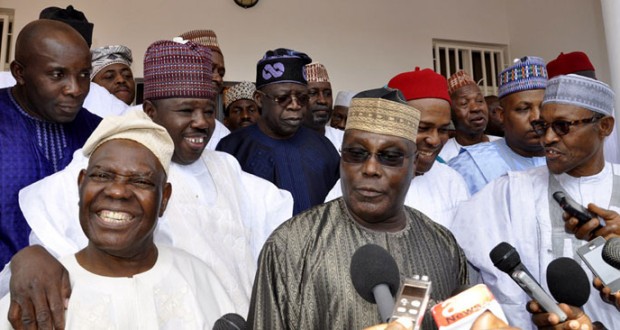
https://informationng.com/wp-content/uploads/2013/12/Atiku-with-APC-Members.jpg From left: smirking bisi Akande, janjawiid and boko founder Amoudu Sherrif, Athiefu Atiku, eBola Thiefnibu and Gen Buhari 2 Likes |
| Politics › Re: .... by MudRaker: 1:00pm On Nov 02, 2014 |
MudRaker:Bastard knicker why are you avoiding my response? 1 Like |
| Politics › Re: .... by MudRaker: 12:54pm On Nov 02, 2014 |
arewafederation:I thought I told you ab0ki that it is haram to internetz? Go and recite your Koran 4 Likes |
| Politics › Re: .... by MudRaker: 12:53pm On Nov 02, 2014 |
barcanista:First of all you are a liar for you have no father. Secondly, did you Just mention sherrif? Was he not a founding father of your satanic APC? https://informationng.com/wp-content/uploads/2013/12/Atiku-with-APC-Members.jpg Pissures they say don't lie. 2 Likes |
| Politics › Re: Today's Pictures From Bariga, Lagos State by MudRaker: 12:45pm On Nov 02, 2014 |
oment3:Hey slowdown... Not all Yorubas are dirty. Some of them are smelly as well. 5 Likes |
| Politics › Re: .... by MudRaker: 12:41pm On Nov 02, 2014 |
vedaxcool:How can a m0r0nic brain engage in any sensible discuss? 1 Like |
| Politics › Re: .... by MudRaker: 12:40pm On Nov 02, 2014 |
barcanista:I can now confirm that you are fatherless bastard who grew up without guidance. For if you were not an orphaned bastard you would have consulted your father on who Buhari was as a military head of state. 3 Likes |
| Politics › Re: .... by MudRaker: 12:36pm On Nov 02, 2014 |
vedaxcool:Stop mentioning me until you evolve a functional reasoning brain. |
| Politics › Re: .... by MudRaker: 12:34pm On Nov 02, 2014 |
barcanista:So we should now see Jonathan as the new iman Mahdi? God you people will not have sense one day. Why did you omit the prominent igbo Christians in his cabinet? Jonathan is so pro islam that he is the first president of this country to visit Israel? This action has made his fellow Muslims in the north angry. Your hatred is consuming that primate brain of yours 6 Likes |
| Politics › Re: Today's Pictures From Bariga, Lagos State by MudRaker: 12:30pm On Nov 02, 2014 |
Obinoscopy:Isn't it always his fault? According to janjawid mumus here who tinubu is milking dry by the day 3 Likes |
| Politics › Re: .... by MudRaker: 12:28pm On Nov 02, 2014 |
samflexxy:They will not succeed for come 2015 it will be Jonathan again till 2019 and if them make am vex he will hand over to a woman and an Igbo one for that matter and there isn't a damn thing they can do. 4 Likes |
| Politics › Re: .... by MudRaker: 12:25pm On Nov 02, 2014 |
vedaxcool:I can never figure out how you daft janjawieds reason. So Jonathan alongside CAN with MEND are behind boko haram? Lest we forget that the north over time had been a festering ground for religious fanatics and their extreme views. Lest we forget that the north has witnessed severally inter annual reoccurring secular riots. It will be thus highly daft not to also conclude that a 99.9% of boko haram members are Muslims from hausa Fulani and kauri extraction. I know ediots like you and OP are paid opinion crafting shills with no conscience and moral compass as to the level of lies and deciet you hope to spread on behest of your masters in the APC but what you fail to understand is that not everyone posting here on nairaland is a gullible fool to believe these blatant lies and smears from your camp. Enjoy your 30 silver coins. Judas 9 Likes |
| Politics › Re: .... by MudRaker: 12:18pm On Nov 02, 2014 |
barcanista:Shameless shill 1 Like |
| Politics › Re: .... by MudRaker: 12:17pm On Nov 02, 2014 |
2 Likes |
| Politics › Re: .... by MudRaker: 12:12pm On Nov 02, 2014 |
Obiagelli:I see the touts are converging 4 Likes |
| Politics › Re: Sam Nda-isaiah Declares For Presidency by MudRaker: 12:11pm On Nov 02, 2014 |
Token Christian candidate to make the satanic party of Allah seem diverse. |
| Politics › Re: Sam Nda-isaiah Declares For Presidency by MudRaker: 12:11pm On Nov 02, 2014 |
Token Christian candidate to make the satanic party of Allah appear diverse. |
| Politics › Re: .... by MudRaker: 12:09pm On Nov 02, 2014 |
barcanista:Sell me your Buhari and leave Jonathan for me. Tell me why I should entrust the next 4 years of my life and that of my household to a confirm religious bigot whose hands are soaked with blood of innocent Nigerians 7 Likes |
| Politics › Re: Ozekhome, NBA, Other Lawyers Blast Withdrawal Of Tambuwal’s Security Aides by MudRaker: 12:01pm On Nov 02, 2014 |
Subtle advertisement and application to represent dishonorable Tambuwal in court  2 Likes |


1 2 3 4 5 6 7 8 ... 28 29 30 31 32 33 34 35 36 (of 36 pages)