Pilgrim1's Posts
Nairaland Forum › Pilgrim1's Profile › Pilgrim1's Posts
1 2 3 4 5 6 7 8 9 10 (of 215 pages)
 Christianity Etc › Re: Don't Let The Catholic Faith Deter You From The Christian Faith by pilgrim1(f): 5:55pm On Jun 25, 2009 Christianity Etc › Re: Don't Let The Catholic Faith Deter You From The Christian Faith by pilgrim1(f): 5:55pm On Jun 25, 2009 |
@Omenuko, I already explained that my assumption initial was wrong and my fault - [quote author=pilgrim.1 link=topic=284000.msg4088801#msg4088801 date=1245947801]Thank you again for contextulaizing your question. Indeed, the expression ‘does not feature’ may be misleading, and I’m willing to acknowledge that it was my fault there.[/quote]Inspite of that, it is plain that Catholicism has "done away with" the 2nd commandment - and that's what I want to show you, in response to your question: "How has the Catholic Church done away with the 2nd commandment?" Indeed, the Catholic Church has done away with the 2nd Commandment - and I'm going to show you HOW. Does that clarify issues now for you? ___________________ addendum: Omenuko:I understand you; and I cannot give any excuses there - my wording was patently misleading, and I'll take the time to show you my answer to your question. |
| Christianity Etc › Re: Don't Let The Catholic Faith Deter You From The Christian Faith by pilgrim1(f): 5:50pm On Jun 25, 2009 |
Omenuko: Omenuko:The question has been explained - if you're feeling insecure, re-read my explanation and exercise the patience to see my answer to your question as stated: [list] Omenuko:[/list] It is not a matter that rests on DIFFERENT NUMBERING on the list; but rather HOW Catholicism had "done away with" the 2nd commandment. Is that clear enough now? |
| Christianity Etc › Re: Don't Let The Catholic Faith Deter You From The Christian Faith by pilgrim1(f): 5:44pm On Jun 25, 2009 |
The 10 Commandments in General Outline Before we go on, it may help at this point to give a rough outline of what are regarded as the Decalogue - the 10 Commandments. These are found in Exodus 20:1-17 and Deuteronomy 5:6-21. Below is a sketch of how the Decalogue is generally outlined in the Biblical faith: https://www.ghandchi.com/iranscope/Anthology/TenCommandments.jpg Please note: the commandment forbidding the making of graven images does not stand alone - it is rather expressly stated as to why God forbade it: “you shall not bow down to them or worship them” for this very thing (bowing down to them in worship) is what constitutes that very act as “idolatry”. In so many instances where we read of this connection, we find that idolatry is expressed in hard evidence of people worshipping images, however fashioned. Let’s review some of them: ● Exodus 32:8 - ‘they have made them a molten calf, and have worshipped it’ ● Exodus 34.15 - ‘they go a whoring after their gods, and do sacrifice unto their gods’ ● Leviticus 26:1 - ‘You shall not make idols for yourselves or erect an image or pillar, and you shall not set up a figured stone in your land to bow down to it, for I am the LORD your God.’ It is not simply the making of any image or figurine in and of itself that completes the commandment forbidding idolatry - it is its connection with any expression of worship that gives that commandment its meaning. Catholic Catechism and the 2nd Commandment Various sources reproduce the verses Exodus 20:2-5 on the warning against idolatry, and some of these sources for Catholic listing also quote the entire verses: _________________________________________________________ "I am the LORD your God, who brought you out of the land of Egypt, out of the house of bondage. You shall have no other gods before me. You shall not make for yourself a graven image, or any likeness of anything that is in heaven above, or that is in the earth beneath, or that is in the water under the earth; you shall not bow down to them or serve them." The first commandment according to the Catechism of the Catholic Church _________________________________________________________ source: Wikipedia; and also Catechism of the Catholic Church The quote above is what the Catholic Church makes provides as her own 1st commandment in her list. Question is whether that commandment is retained or has been “dropped” or "done away with" in Catholicism, so that Catholics are expressly violating that commandment. |
| Christianity Etc › Re: Don't Let The Catholic Faith Deter You From The Christian Faith by pilgrim1(f): 5:36pm On Jun 25, 2009 |
Omenuko:@Omenuko, Thank you again for contextulaizing your question. Indeed, the expression ‘does not feature’ may be misleading, and I’m willing to acknowledge that it was my fault there. If I may explain, it was used in the sense that the Catholic Church does not give the 2nd commandment its due respect - hence why it is not “featured” in the sense it is lacking its due “special treatement” in Catholicism. This again was why I noted in my previous post that the 2nd commandment has been “dropped” in Catholicism - [list] It's funny how you want to wriggle from this issue. BOTH Christians and Jews agree on the same things in the Decalogue - they also quote the 2ND COMMANDMENT. Not so with the Catholic Church that deliberately dropped the 2nd commandment in order to keep bowing to idols[/list] In consequence thereto, you asked an important question: ‘how does the Catholic Church drop the 2nd commandment?’ . . which again has been asked more pointedly: 'How has the Catholic Church done away with this commandment?' I should have been clearer in my response, which I failed to do; but if you may, I shall now discuss it to show HOW the Catholic Church has “dropped” or not “featured” or "done away with" the 2nd commandment in the sense of no longer obeying that command. Omenuko:The source you cited does not give that particularly listing as "Catholic numbering" - perhaps you meant the list below that where various lists are compared. Hang on patiently - inbetween my busy schedule, I shall sort this out for you, as I'm quite aware where you might have been coming from.  |
| Christianity Etc › Re: Don't Let The Catholic Faith Deter You From The Christian Faith by pilgrim1(f): 4:16pm On Jun 25, 2009 |
Hi Omenuko, Omenuko: Omenuko:Okay, if you say so. However, although some contend that the numbering differs between various listing, the fact is that the 2nd commandment is not contained in the Catholic list. Specifically, it is the very commandment that forbids the bowing down to graven images as an expression of worship. Taking from chukwudi44's referral to Wikipedia, the 2nd Commandment in particular that is being spoken of here is this one: ___________________________________________________________ "Do not make an image or any likeness of what is in the heavens above, " This prohibits the construction or fashioning of "idols" in the likeness of created things (beasts, fish, birds, people) and worshipping them. ______________________________________[source: Wikipedia]______ While this commandment is featured in the various other lists regardless of the numbering system, it simply does not feature in Catholic listing. Instead, what has happened is that the Catholic list divide the 10th commandment into two and then made one single commandment into #9 and #10 to have a "10 commandment" list. |
| Christianity Etc › Re: Don't Let The Catholic Faith Deter You From The Christian Faith by pilgrim1(f): 11:57am On Jun 25, 2009 |
chukwudi44:I see. If the Catholic Church was taking money from people on pretext of false doctrines, as long as it is not tithes, you're quite at home to celebrate Catholic money-grabbing charade? chukwudi44:False. Patently false. We know that Roman Catholicism does not have any list of the 10 commandments where the 2nd commandment features. chukwudi44:WHY is that very commandment dropped from the Catholic list of the Decalogue? chukwudi44:Why is the 2nd commandment not in Catholic list? chukwudi44:Did either Moses or Solomon bow down in worship to them? chukwudi44:Nope, not all of us are guilty of bowing down to images - the very thing that Catholicism enjoys and without which is will self-destruct. chukwudi44:Do they bow down to the images - ALL of them? chukwudi44:I criticize your shameless duplicity - live with it. It is not today that Catholics have been shouting that non-Catholics are not Christians and are not saved. That is no news - but the OP opened a thread asking that Christians should not let Catholicism deter them from the Christian Faith. You can knock your head a million times and make many false assertions - they will be bleached as many times as you want them. chukwudi44:I don't have pastors that dragoon tithes from people, just as there are MANY Catholic churches that explicitly state that they are a "tithing" church or parish. If tithing is your worry, start from your Catholic priests who are still tithing before worrying over others. chukwudi44:Sorry, Malachi was not about the Law - the Law made absolutely NO MENTION of any storehouse. And I know many Catholic Churches that also mention Malachi when preaching tithes. _______________________________ chukwudi44:It's funny how you want to wriggle from this issue. BOTH Christians and Jews agree on the same things in the Decalogue - they also quote the 2ND COMMANDMENT. Not so with the Catholic Church that deliberately dropped the 2nd commandment in order to keep bowing to idols. chukwudi44:I did not make any such claims. If you're going to be insolent all your days because Catholicism is making you sweat for your wea defences, I can well bear with you. As for your arrant trash about Wikipedia, I've addressed it well in another thread. Dress well if you're still struggling to excuse your weak defences for the Popery. |
| Christianity Etc › Re: Did Jesus Have Brothers? by pilgrim1(f): 11:39am On Jun 25, 2009 |
@chukwudi4,, chukwudi44:I don't remember either of us (me or No2Atheism) saying what you said up there. Nobody has said here that Wikipedia is "no longer a reliable internet link". The point of exchange between us was straight forward - ● 'not everything at Wiki is erroneous' ● 'you should be careful about the things you reference on Wikipedia' ● 'Hence that something is on wikipedia does not mean it is true' More to the point is that anything you source from Wikipedia could be "created and altered by anybody" (quoting No2Atheism) - and I agree there's substance to that statement. It is a fact, as well, that Various organisations such as the Vatican and Secret Services intentionally contribute their own forms of truth to the website. If you are quite in the know, you should not find these matters difficult to grasp; but I'll point you to a few issues that buttress our point of view: ● Wikipedia Founder Discourages Academic Use of His Creation Wikipedia, an online encyclopedia compiled by a distributed network of volunteers, has often come under attack by academics as being shoddy and full of inaccuracies. Even Wikipedia’s founder, Jimmy Wales, says he wants to get the message out to college students that they shouldn’t use it for class projects or serious research. Speaking at a conference at the University of Pennsylvania on Friday called “The Hyperlinked Society,” Mr. Wales said that he gets about 10 e-mail messages a week from students who complain that Wikipedia has gotten them into academic hot water. “They say, ‘Please help me. I got an F on my paper because I cited Wikipedia’” and the information turned out to be wrong, he says. But he said he has no sympathy for their plight, noting that he thinks to himself: “For God sake, you’re in college; don’t cite the encyclopedia.” [source: Chronicle of Higher Education] ______________________________ ● It's on Wikipedia, So It Must Be True Last week provided another fascinating chapter in the evolving story of Wikipedia, the almost-anybody-can-edit-it online encyclopedia . . On the show, Colbert praised what he called "Wikiality," the idea that if you claim something to be true and enough people agree with you, it becomes true. It was Colbert's jibe at the online encyclopedia, which does not rely on formal peer review to proof its entries. Wikipedia's peer review comes from a coterie of interested parties -- citizen editors -- on particular topics, and each person can have conflicting interpretations of fact. Such problems have led to Wikipedia recently barring new or anonymous users from editing the entry on Israel, for instance. [source: The Washington Post] ______________________________ ● It's online, but is it true? In many ways, Wikipedia, which lets anonymous users add encyclopedia entries and update entries by others, continues to reach that ambitious goal. It was rated the top reference site by Hitwise, and has versions in 82 languages and more than 850,000 articles in English. In October, 16.3 million people visited the site, says Internet measurement company Nielsen/NetRatings. . . . But a high-profile incident last week is making some people rethink their faith in the type of anonymous collaborative information gathering that Wikipedia relies on — and is reminding them that just because something looks authoritative, doesn't mean it necessarily is. . . While much of Wikipedia's information is correct, some is not. And sometimes people lie or are "vicious." ~~ [source USA TODAY] ______________________________ ● Online encyclopedia tightens rules following false article SAN FRANCISCO — Wikipedia, the online encyclopedia that allows anyone to contribute articles, is tightening its rules for submitting entries following the disclosure that it ran a piece falsely implicating a man in the Kennedy assassinations . . . The episode demonstrates the lack of accountability that often comes with articles posted by anonymous people over the Internet. Unlike content included in magazines, books and other traditional media, online material can be submitted by just about anyone, often without having to volunteer any identifying information. ~~ [source USA TODAY] ______________________________ ● A false Wikipedia 'biography' "John Seigenthaler Sr. was the assistant to Attorney General Robert Kennedy in the early 1960's. For a brief time, he was thought to have been directly involved in the Kennedy assassinations of both John, and his brother, Bobby. Nothing was ever proven." — Wikipedia This is a highly personal story about Internet character assassination. It could be your story. ~~ [source USA TODAY] I could go on and provide you with so many other considerations until you 'belleful', you hear? The point in our (me and No2Atheism) exchange was not that everything at Wikipedia is erroneous, but that one should be careful when citing materials from there to "prove" or buttress anything. In one word: THINK! chukwudi44:Sidon look. Just scroll up and read those entries and make your own inference - I trust you can think for yourself.  chukwudi44:And after you read the "scriptures" written by 'early church fathers', they become more authoritative to you than the very Scriptures written by the apostles, not so? You're simply mispunching the air and fighting a lost cause. chukwudi44:Sorry, you're going down - ALONE!  You had enough time and conscience to gather yourself, pull up your Catholic socks and consider what others have shared on your questions and assertions. If you rejected them all without good reasons just because you emptied your faith on 'writings' of the 'church fathers', whose fault is it? There are many people who quite simply gathered themselves together and examined the assertions of the Popery (oops, sorry - I mean 'Roman Catholicism') - after all said and done, they understood there were far too many things wrong that could not be sustained intelligently in light of the Scriptures themselves. Consequently, they left - nevermind the persecutions to death that ensued. Is it any wonder that while folks like you are still struggling to find grounds for Catholicism in the Bible, you typically react with 'I don't practise sola scriptura' and duck further from the searching light of your conscience? Or, when you have no more corners to cut, you want to drag everyone down with "we are all going down". .?? Sorry, the "we" in your desire there probably includes just you, and I pray it does not become a fact in your life. chukwudi44:In other words, since the 'church fathers' disclosed the names of those documents, then automatically the documents themselves were written by the same 'church fathers'? I no fit laugh, abeg eh? Just find us another tidy excuse - that one is now weathered. chukwudi44:Clap for you. The 'early church fathers' wrote the books of the Bible, abi? And for all your shakara, you don't practise 'sola scriptura' - so that you can continue to 'fabu' anyhow!  chukwudi44:Yea, I agree with you - there were liars unlimited among the Papacy. At least, the Jews were more dignified, because the same Bible you distrust clearly said many times that the Jews trusted in Christ - try these: John 2:23; 10:42 and 12:42 for now. Got more interesting excuses? |
| Christianity Etc › Re: Don't Let The Catholic Faith Deter You From The Christian Faith by pilgrim1(f): 10:38am On Jun 25, 2009 |
@chukwudi44, Are you now so desperate about the things you read on Catholicism that your best defence is to drub about with your under-utility grade invectives? People are seeking to hold discussions here, even though on sensitive issues sometimes reactions may be too forward; but you guys are not making a good cause for your defences if these yowlings are your first-aid. chukwudi44:The Catholic Church is known for materialism as well. While many believers across board (Catholic and non-Catholic) deplore these excesses, we know it's no news that Catholics also seek to build the most expensive cathedrals in their various locations - an example give below: https://www.calcatholic.com/newsimages/OaklandCathedral.jpg "the most expensive in American history" ~ California Catholic Daily We all have our various compliants, chukwudi44; but if the only thing you can be concerned about as the bastion of your Catholocism is to keep pointing accusing fingers at others, there's more bad news from Catholic quarters than you may realise - wake up and smell the coffee. chukwudi44:Most people who tithe are not depending on the Law to make themselves straight with Christ. This very unintellectual harrumph has been dribbled in to make it sound as if that is the case with tithers - another duplicity to your feathered and weathered cap and cape. On the other hand, have you ever asked yourself why the Catholic Church (ie., Roman Catholicism) has a different listing of the 10 Commandments than what the Bible teaches? Why have they conveniently hidden the expressly forbidden idolatry in the 2nd commandment so they can keep bowing down to idols? disclaimer: I don't mean to be offensive to other Catholics; but if chukwudi44 and his brainless harpers cannot behave, they would keep creating an environment for non-Catholics to bring up issues which Catholicism does not want the public to be aware of. chukwudi44:We don hear - which is why you just go and sleep and leave them for God. Or, you can keep banging your head on the wall about what others are doing when you have a bigger nightmare to settle in Roman Catholic backyard.https://forums.catholic.com/images/smilies/ani/ani_banghead3.gif |
| Christianity Etc › Re: Did Jesus Have Brothers? by pilgrim1(f): 7:26pm On Jun 24, 2009 |
No2Atheism:Thank you so very much. The highlighted taught me a very bitter lesson I will never forget in a long time - I had used some citations from Wikipedia for a Philosophy course (was lazy at the time and submitted my research almost late). Cut long story short, I had a bold "F". When we sat in our next class, I had to admit that I was naive to have rushed to Wikipedia. Although, yes, not everything at Wiki is erroneous, I have since learnt to tread softly and carefully. ______________________________________ tpiah:Quite true. |
| Christianity Etc › Re: Did Jesus Have Brothers? by pilgrim1(f): 7:07pm On Jun 24, 2009 |
tpiah:Just leave am to be running round and round - e no see where to ferret excuses from, that is why he finds it difficult to see the plain statements in those references. I can sympathize with him. . . he's probably wondering what would happen to his "infallible" Catholicism if he has to admit that Mary had other children. |
| Christianity Etc › Re: Did Jesus Have Brothers? by pilgrim1(f): 7:05pm On Jun 24, 2009 |
chukwudi44:Sorry, I didn't make any claims as to the invention of a Greek word for "cousin" - you made that claim, and we're waiting excitedly for you to show when, how, by who, and where it was first used. After doing so, please go on and show us how you conveniently dribbled in your own idea to make Jesus' brothers his "cousins" while forgetting your claim for the "later invention". chukwudi44:Both these particular James and Jude were identified as Jesus' brothers in Matthew 13:55-56 - in those verses, they were not called 'slaves' or 'cousins'. In Galatians 1:19, this same James is called "James the Lord's brother", not the Lord's "slave" or "cousin". Relationships in family are not the same as positions in service. Hence, if Jude referred to himself as servant instead of "brother" or "cousin", it does not negate what was stated about Jesus' brothers in matthew 13:55-56. chukwudi44:You first quoted Luke 3, please show us the verse where it says what you're claiming up there. chukwudi44:What does it matter if anything is "proven" to you? I showed you from the English translations and compared the Greek to show what I did. If the Greek word συγγενής (suggenēs) was not evidently in use at the time of the NT, please proceed and demonstrate your magic. That would be such a performance and quite entertaining. The same Greek word is translated variously in our English Bibles as either "cousin", "kinsfolk" or "kinsmen" - which is not the same word used for someone's "brother" in the NT. What is more amazing is that even the English version Douay Rheims favoured by Roman Catholics uses the word "cousin" in Luke 1:36 (check it up here). I didn't make your claim for you: since you claimed it was a later "invention", please put some more substance to your claim and show something more cogent to that same claim. The Catholic translators must have forgotten your own "later invention" when using the word "cousin" in Luke 1:36, no? chukwudi44:Ezekiel 44:2 was not referring to the Incarnation in any way. chukwudi44:I didn't confuse them; and if you have got some more substance and not reading your ideas into the body of the references, you can see you got it all mixed up before I helped sorted you out. |
| Christianity Etc › Re: Don't Let The Catholic Faith Deter You From The Christian Faith by pilgrim1(f): 6:43pm On Jun 24, 2009 |
Omenuko:It is not my 'claim', but was quoted as is. I already gave you snippets of the background of the Dictionaries (both Merriam-Webster and Webster) - for one thing, it is said that the Webster "established an authoritative source for American English" (see it at Wikipedia again). What then is your cark for faulting the Webster Dictionary - aside the complaints without substance that it is an "outdated" dictionary? Omenuko:How does the quote from Merriam-Webster differ from the substance of what Webster dictionary states? Compare them and let me know. Omenuko:The Merriam-Websters highlights several definitions of the word 'catholic' as capitlaized: (a) often capitalized : of, relating to, or forming the church universal; (b) often capitalized : of, relating to, or forming the ancient undivided Christian church or a church claiming historical continuity from it ; (c) capitalized : roman catholic I'm sure even at cursory glance these all are not referring to the same thing. Nor does the Merriam-Webster assert that the only definitions and contexts of the term 'catholic' are the ones it gave (as "often" capitalized). For other considerations, look at other sources to see how the distinctions between 'catholic' (small 'c') and 'Catholic' (capital 'C') are used and understood - even in Roman Catholic circles. A few below: [list][li]When we say that the Church is “catholic,” we mean that she is “universal.” Our Lord uses the image of the dragnet to indicate the universal character of His Church: “The kingdom of heaven is like a net thrown into the sea, which collects fish of every kind” (Mt 13:47). Of course, “Catholic” (capital “C”) also functions as a title for the Church and a way of distinguishing her from denominations or other churches. But it is only an accident of history that the Church of Christ bears the title “Catholic.” So, while Christ’s Church is indeed the Catholic Church, she is first of all “catholic” (small “c”). In short, Christ’s Church is both [b]C[/b]atholic and [b]c[/b]atholic. source: Catholic Exchange[/li][/list] Basically, this simple outline permeates most Catholic (ie, Roman Catholic) sources; although several of them are too shamefaced to admit the facts and want to run into technical jingoism to excuse them. Even when you check up some other readily available sources, you find that there are at least 5 contextual meanings and applications of the word; some very few or scarce others give more than 5 - on the whole, these various definitions and usages incorporate the ideas already shared above. An example is given below from Fr. John Hardon's Modern Catholic Dictionary carried in various Catholic websites - this one from Catholic Culture: [list]CATHOLIC Its original meaning of "general" or "universal" has taken on a variety of applications in the course of Christian history. First used by St. Ignatius of Antioch (A.D. 35-107) (Letter to the Smyrneans, 8, 2), it is now mainly used in five recognized senses: [li]1. the Catholic Church as distinct from Christian ecclesiastical bodies that do not recognize the papal primacy;[/li] . [li]2. the Catholic faith as the belief of the universal body of the faithful, namely that which is believed "everywhere, always, and by all" (Vincentian Canon);[/li] . [li]3. orthodoxy as distinguished from what is heretical or schismatical;[/li] . [li]4. the undivided Church before the Eastern Schism of 1054; thereafter the Eastern Church has called itself orthodox, in contrast with those Christian bodies which did not accept the definitions of Ephesus and Chalcedon on the divinity of Christ.[/li] . [li]In general, today the term "Catholic" refers to those Christians who profess a continued tradition of faith and worship and who hold to the Apostolic succession of bishops and priests since the time of Christ. (Etym. Latin catholicus, universal; Greek katholikos, universal.)[/li][/list] Rather than stay hung up on just one source, does it hurt to explore several sources to see the various ways some use the term 'catholic', especially those sources that distinguish between a small 'c' and capital 'C' of the term in ecclesiatical circles? In all these, is it not clear that an admission is made that the Roman Catholic Church appropriated the term 'Catholic' to specifically refer to their own Church with the Papacy at Rome as its distinctive? Was that how the apostles in Scripture might have spoken of the Church which is the Body of Christ? Omenuko:Lol, are you guys hard of hearing? I already know these quotes and might surprise you to quote MANY others far beyond your reach. Trust me and dare me. BUT. . the point in our discussion is not whether or not some quotes are saying this, that or the other; rather, HOW did they use the term as distinct from what Roman Catholicism is now using it? It is not so much the quotes that I'm after; afterall, what does it benefit you to keep repeating quote after quote and yet unable to make sense from what you're quoting? Omenuko:Okay, another general term would be. . Popery? Let me know if that ione too is shallow - there are at least 53 more I could try. Roman Catholics are at home to address others as "heretics", I no complain - what is wrong with a recognized term that easily identifies Roman Catholicism? Okay, 'romish' will be stayed from addressing you - I can't guarantee the same for rascally Catholics though. Omenuko:It is inconsequential what the Roman Catholic Church claims when it comes to using our hearts and minds to sift through the cosmetic assertions often waved in our faces. For one, I have taken the time to show you from CATHOLIC sources that the things I've been pointing out are not peculiar to 'protestant' ideas - they are the very things which ROMAN CATHOLIC sources affirm as well. Omenuko:None of those epistles were addressing or buttressing Roman Catholicism. Just reading the word 'catholic' upon them does not translate them into Roman Catholic property. As a matter of fact, those epistles actually deflate Roman Catholicism - which should be a note of interest to RCC members who have the mistaken idea that anything 'catholic' has to be bent backwards to Rome. Cheers. |
| Christianity Etc › Re: Don't Let The Catholic Faith Deter You From The Christian Faith by pilgrim1(f): 6:43pm On Jun 24, 2009 |
@Omenuko, Abeg no vex bo. I was a bit occupied and only just got time to focus on this reply. So here goes. Omenuko:In what sense is the Webster Dictionaries (1824 and 1913) "outdated" - because they were not written by Catholics fawning over Romish rites? It does not seem that your excuse here is a good reason to disregard the Webster dictionary - because the same would evidently apply to the source you cited as well. Omenuko:That is not my argument - either way it may be true or false, depending on what context someone is reviewing issues surrounding the term. It is even queer that you'd allege that it was 'false', for even you had inferred basically the same thing as in that Dictionary. let me remind you: 'From the first century, the christian community called this Church, the Catholic Church . .' . . and in response to my specific question about what you mean by 'they were part of one church (aka the Catholic Church)' 'Jesus founded one Church. This Church is located in various geographical regions and cultures. Although the Church was located in different places, it was one, holy, catholic, and apostolic.' [click here] Now, if the Webster Dictionary says that term 'Catholic' was used for the Christian church in general, how is that 'false' when you had categorically inferred just about the same thing? Even the Merriam-Webster source you cited said just about the same thing ('of, relating to, or forming the ancient undivided Christian church'). Why is everything for the typical Roman Catholic "false" simply because it does not bear an insignia from Rome? Yet, it is not my focus at the moment to 'approve' or 'falsify' the Webster Dictionary - what is far more important is what is said, not the date it was published or why it does not slave over the rites of the RCC. Omenuko:It may not have given the dates, but as a dictionary it clearly states the fact. Does that in itself (without giving dates) negate the fact of the very matter? Lol, it amazes me how very tenuous these excuses are. Omenuko:I don't know of any other source that uses 'romish' for any other church than the Roman Catholic Church. On the other hand, while it was not my intention to be deliberately offensive, I merely quoted the Dictionary in full unedited as I found the statements - I didn't write the Webster Dictionary even though I cited it. However, while not wanting to be derogatory, how is it that Roman Catholics complain about what terms Protestants use to describe Roman Catholicism, when Catholics themselves are at ease and at home to refer to non-Catholics as heretics? |
| Christianity Etc › Re: Don't Let The Catholic Faith Deter You From The Christian Faith by pilgrim1(f): 6:41pm On Jun 24, 2009 |
chukwudi44:Could you also prove to us through your vatican 'bull' that Catholic priests should have been sexually abusing children across the globe while you attended Latin mass? You guys are so shamelessly clueless when pointing accusing fingers at others. This thread is seeking a discussion, not the brash vacuous rants you often display. |
| Christianity Etc › Re: Don't Let The Catholic Faith Deter You From The Christian Faith by pilgrim1(f): 2:38pm On Jun 24, 2009 |
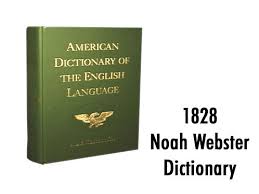
Hi Omenuko, How body? Omenuko:Thank you for sustaining a calm poise in your response, and I'll try and emulate you in that manner to respond to your enquiries. Omenuko:I understand why it signals red flags to you, although it wasn't my intention to be deliberately offensive. Other than that, I only quoted it as found in the Webster dictionary cited to make the point of the distinction between the various usages of the term 'catholic'. I shall refer you to the source in a moment.Catholic:For that definition to have words like 'Romish Church' signals red flags for me. Omenuko:No, I wouldn't be asking that you "presume" anything. I already saw your source (Merriam-Webster) for defining the term 'catholic', but that is not to be confused for "Webster Dictionary". Let me first clear the thin smoke and then point you to the source in my earlier reply. Webster Dictionary and Merriam-Webster Dictionary Merriam-Webster: [list][li]Merriam–Webster, which was originally the G. & C. Merriam Company of Springfield, Massachusetts, is an American company that publishes reference books, especially dictionaries that are descendants of Noah Webster’s An American Dictionary of the English Language (1828). Merriam–Webster is a subsidiary of Encyclopædia Britannica, Inc. source: [url=http://en.wikipedia.org/wiki/Merriam%E2%80%93Webster]Wikipedia[/url]; and this is what answers to the source you had used. https://www.merriam-webster.com/images/hdr_mw_logo_area.gif[/li][/list] [list]_ _ _ _ _ _ _ _ _ _ _ _ _ _ _ _ _ _ _ _ _ _ _ [/list] Webster Dictionary: [list][li]Webster's Dictionary is the name given to a common type of English language dictionary in the United States. The name is derived from lexicographer Noah Webster and has become a genericized trademark for this type of dictionary. Although Merriam–Webster dictionaries are descended from the original work of Noah Webster, many other dictionaries bear his name, such as those published by Random House and by John Wiley & Sons. It established an authoritative source for American English. source: Wikipedia; and answers to the source I used. [img]http://tbn1.google.com/images?q=tbn:1E0hMiYlnO5OtM:http://i179.photobucket.com/albums/w308/Adamh0199/noah_webster_dictionary_1828_small.jpg[/img] [img]http://tbn3.google.com/images?q=tbn:s_-7qNl_MG3gRM:http://1828.mshaffer.com/images/noah_webster_dictionary_1828.jpg[/img] [/li][/list] So, what was "the source I used" as regards the WEBSTER dictionary? Let me share: [list] catholic[list] Catholic (catholic)I hope these are helpful and sort out what sources I used? "Webster" and not "Merriam-Webster". But let me also clear this one up for you: Omenuko:There are other sources besides the Webster's Dictionary (1824 and 1913) which use the well-known epithet (descriptive word or phrase) as 'Romish Church' in reference to the Roman catholic Church. Here are a few: Rom"ish (?), a. romish - Collaborative International Dictionary of English v.0.48 : Romish (romish)Cheers. |
| Christianity Etc › Re: Don't Let The Catholic Faith Deter You From The Christian Faith by pilgrim1(f): 10:12am On Jun 24, 2009 |
[quote author=~Lady~ link=topic=284000.msg4078377#msg4078377 date=1245803358]There was never a thing as 'catholic' and 'Catholic'. It was started by those who are not a part of the ONE, HOLY, CATHOLIC, and APOSTOLIC CHURCH.[/quote]Yep, and by that it should be the Roman catholic Church, not so? Which again explains why you will never find the term "Catholic" for the Church in the epistles of the apostles. [quote author=~Lady~ link=topic=284000.msg4078377#msg4078377 date=1245803358]You're still proving my point. Notice the dictionary is webster's 1828, the Catholic Church existed before then.[/quote]Nope, I did not make your point. The dictionary states a fact in history irrespective of its being published in 1828. Your excuses are weak, if you're hung up on what date a reknowned source is published. [quote author=~Lady~ link=topic=284000.msg4078377#msg4078377 date=1245803358]Also notice that the Catholic referred to the church in Rome, after the Reformation, we know that this same church that is now referred to as catholic after the reformation, existed before the reformation, what was it called before then? Was it called a denominational catholic?[/quote]Please be honest to yourself. Catholics (such as Omenuko) had quipped that "the way they are using the term is the exact same way the Catholic Church uses it today" - and I wondered if this meant the Roman Catholic Church - having pointed to the Wikipedia source that clarifies this point. Was it used before the reformation as an OFFICIAL title before the reformation? [quote author=~Lady~ link=topic=284000.msg4078377#msg4078377 date=1245803358]Ok did you read any of the posts at all? Or do you just have talking points to spew out or is it that you want to use selctive amnesia?[/quote]If you have nothing to say stop acting an unscripted drama. [quote author=~Lady~ link=topic=284000.msg4078377#msg4078377 date=1245803358]I remember specifically pointing out to you that the Roman Catholic Church is not officially known as the Catholic Church, that the Eastern and Western Catholic churches are officially known as the Catholic Church.[/quote]Not my worry - the fact that the Roman Catholic Church is OFFICIALLY known as such weighs heavily against your exculpations. [quote author=~Lady~ link=topic=284000.msg4078377#msg4078377 date=1245803358]Please do not be so childish for me to repeat myself again and again. Learn to pick up a thing or to, seriously.[/quote]You've been singing the lullaby of a child, and it's either one has to patiently follow your gabble until you realise how tenuous your excuses are, or otherwise ignore your incessant vacuous assertions. [quote author=~Lady~ link=topic=284000.msg4078377#msg4078377 date=1245803358]Why should I tell you when you already made an assertion as if you already knew? If you didn't know why would you make such a claim? Answer my question please. You don't see anything from scripture.[/quote]Aww, I knew you'd come up with such an excuse. In other words, what you can't establish in Scripture is to be excused away? Brilliantly romish. [quote author=~Lady~ link=topic=284000.msg4078377#msg4078377 date=1245803358]Was the Church divided with different beliefs?[/quote]Nope - until Roman Catholicism divided the Church with their heresies. What other reason has the same Roman Catholic Church sought to murder those who rejected her heresies and sought to discredit other churches with dubious pretences? [quote author=~Lady~ link=topic=284000.msg4078377#msg4078377 date=1245803358]Did anyone get up and start preaching on his/her own? or were they commissioned by the apostles to places to preach the gospel?[/quote]I can't believe you have no clue that there were people throughout the Christian history that went to places to preach the Gospel without waiting to be "commisioned" by any apostle? Haba!  In Acts 8:5, which one of the apostles "commissioned" Philip before he went down to Samaria to preach the Gospel? Please tell us. Oh, look back just one verse in Act 8:4 - "Therefore they that were scattered abroad went every where preaching the word". Who "commissioned" these believers before they could preach the Gospel? Please tell us, and tell us from Scripture rather than the magical 'bull' of the vatican. Who were these examples waiting for to be "commissioned" to preach the Gospel - the Papacy? [quote author=~Lady~ link=topic=284000.msg4078377#msg4078377 date=1245803358]Was the Church Un-Holy? Was the Church in only one place?[/quote]How do these exculpations answer the question of your several claims yet unsubstantiated? Excuses are the tools of the frantic people. Whenever people have asked questions and pointed to the Bible, Catholics will frantically rush to quotes from so-called 'church fathers' to fill the gaps. This is why I'm rather "requesting" that you help us trace your assertions back to the Bible so we see the Popery of the RCC there. Is that a taboo that continues to prove elusive for Catholics? |
| Christianity Etc › Re: Don't Let The Catholic Faith Deter You From The Christian Faith by pilgrim1(f): 10:10am On Jun 24, 2009 |
[quote author=~Lady~ link=topic=284000.msg4078377#msg4078377 date=1245803358]I was really trying to avoid this, but it seems this might be what makes it clear for you, and it's not meant to be an insult, it is meant to make a distinction.[/quote]Nothing new - meant as an insult or not, it won't change anything either ways. [quote author=~Lady~ link=topic=284000.msg4078377#msg4078377 date=1245803358]You guys in the formal term are heretics[/quote]Aww, you're so sweet, you know! And thank you so very much. Formally or informally, it's nice to be labelled as such just for not accenting to the system of the Popery.[quote author=~Lady~ link=topic=284000.msg4078377#msg4078377 date=1245803358]If you were to hold the belief you do today in the time of Peter, Paul, and the other apostles, you would be called blatantly a heretic.[/quote]How flattering! Although I'm a late comer to the gracious salvation of Christ (having converted from Islam), I would've been so joyful to hold the belief of non-Catholics today if they held them in the days of Paul and Peter. Are you forgetting that most of the doctrines of Popery had nothing to do with the apostles? We've discussed this before in other threads on 'Catholics', and there's no denying the fact that what sustains the Popery of the RCC have nothing to do with the apostles. On the contrary, the apostles themselves urged that - if anyone preached a different Gospel from what they had preached, let them be anathema - Galatians 1:8-9 if anyone preached or taught differently from what the apostles taught, Godly Christians should separate themselves and reject such doctrines that have no bearing with what the apostles have taught - 2 Tim. 2:19-21. Most of the doctrines of the Papacy not only have nothing to do with the apostles, they were also brought into Christianity centuries later and directly opposed to apostolic teaching. If these new heresies have no place in Biblical Christianity, what does it matter that the RCC is busy accusing other Christians with the charge of 'heretic' in the mistaken idea that the apostles would have sanctioned Popery? [quote author=~Lady~ link=topic=284000.msg4078377#msg4078377 date=1245803358]If you were to do some research and look at the beliefs of the early christians, and you can find this through non-catholic sources, some universities have this in their databases, you will see that the things YOU condemn today are the things they sacrificed their life for.[/quote]Such as. . .? Where did the apostles sacrifice their lives for the heresy of Mariolatry? When did the veneration of angels and dead saints begin? Where did any apostle bow down to images, and why do we not find any apostle doing so anywhere? Database or no, Christians today reject and condemn these post-apostolic heresies because there's no shred of authentic evidence that they were practised by the apostles and Christians during their time. [quote author=~Lady~ link=topic=284000.msg4078377#msg4078377 date=1245803358]So basically you guys are actually OUTSIDE of the Church, as in you are not a part of the Body of Christ. But the Church holds the belief that there are those who are not aware of the full teachings of the Church, and therefore have not rejected the Church, and so they have the opportunity of making it in to heaven. But if you are fully aware of the teachings of THE CHURCH and are blatantly against them, then you're on your own.[/quote]I can't tell you how very weak that sounds. The Popery of Rome likes to think itself the authentic Body of Christ so as to make non-RCC believers to be OUTSIDE the Body of Christ. They have forgotten that it is not in their power to save or add anybody to the Body of Christ - for it is the Lord Himself who saves and adds believers to His Body (Acts 2:47 - "the Lord added to the church daily such as should be saved" . Rome can shout as much as they feel like, they can do no more than that, for the Body of Christ is not the system of the Vatican nor can they effect any grace upon any soul anywhere in the universe. Ask Catholics to point to the Bible for their many post-apostolic heresies and the default response is they do not practise sola scriptura - like that is supposed to be a neat sustitute for their inability to defend Romish heresies. This is why I can confidently reject the Popery - for it was not the RCC that saved me, but it was the Lord Jesus Christ. |
| Christianity Etc › Re: Don't Let The Catholic Faith Deter You From The Christian Faith by pilgrim1(f): 10:10am On Jun 24, 2009 |
[quote author=~Lady~ link=topic=284000.msg4078377#msg4078377 date=1245803358]No sensible Catholic will tell you that Catholic is a denomination. It is not a denomination and the Catholic Church as you know it today is NOT a denomination. If it is called a denomination, it is called a denomination by non-catholics as in you. Which is the reason why I say that we catholics amongst ourselves refer to the Church as THE CHURCH because we know that it is the same Church founded by Christ spoken of by the apostles.[/quote]It's not only Catholics that like to say that the 'Catholic Church' is not a denomination - that is what they won't claim, just as many other groups would not claim of their own groups. Yet, we know that 'the Catholic Church' as used widely today is undeniably a seperate denomination from other Christian groups - 'The Roman Catholic Church, officially known as the Catholic Church' [here]. When the early writers used the word 'catholic' in reference to the Church, were they all speaking about the Roman Catholic Church? [quote author=~Lady~ link=topic=284000.msg4078377#msg4078377 date=1245803358]I really wish I could draw a diagram on this board. I will try my best to visually show you how it is the same church. THE CHURCH by Christ spoken of by the apostles(catholic) [East and West together]--------------> THE CHURCH (catholic) [East and West in schism], so now you have the East Orthodox (still catholic but not in union), and the West Catholic (still in union so it is still the "origianal" catholic). So from the West Catholic came the Protestant denomination with its own new set of beliefs not based on the Bible. The West Catholic and some of the East Catholic come back together in union. So it is still basically what it was in the beginning THE CHURCH by Christ spoke of by the apostles.[/quote]Please. Neither Christ nor the apostles spoke about the system of the Romish papacy. When Catholics are asked to show where Christ and the apostles spoke about the Catholic Church (ie., the Roman Catholic Church), you guys will duck that one and start shouting you do not appeal to the Bible. [quote author=~Lady~ link=topic=284000.msg4078377#msg4078377 date=1245803358]THE CHURCH is not a denomination, it is only a denomination in the minds of non-catholics. Catholics will tell you that the Church is not a denomination.[/quote]The Church as the Body of Christ is NOT a denomination nor is it the Romish papacy system. Your problem here is equating the Popery with the Church which the apostles identified as the Body of Christ, so that it is convenient for you to refer to non-Catholics (non-Roman Catholics) as heretics. [quote author=~Lady~ link=topic=284000.msg4078377#msg4078377 date=1245803358]Catholic is not a name or a denomination, it is a description of the Church, you might as well call the Church the ONE CHURCH, or the HOLY CHURCH, or the APOSTOLIC CHURCH. We've never and still do not consider ourselves a denomination. Therefore the Church spoken of by Ignatius and others, still refers to the Church that YOU know today as the Catholic Church, that I know today as THE CHURCH.[/quote]That is interesting. Do we then take it that 'Ignatius and the others' were speaking of the Popery of the 'Roman Catholic Church' in reference to the '[b]c[/b]atholic Church'? You don't see any distinctions and all are the very same thing, yes? It is of little consequence whether you use the term 'denomination' or not, it is a fact that Roman Catholicism is a separate group on its own as is every other group that do not call themselves a 'denomination'. [quote author=~Lady~ link=topic=284000.msg4078377#msg4078377 date=1245803358]The problem in this discussion, is that you think the Catholic church today is a denomination. We didn't 'denominate' (i'm not sure that's actually a word, but if it gets the point across, good) from anything, you guys 'denominated' from us. Therefore you guys are the denominations we are not. Does that clarify it for you?[/quote]Nope, that is where you're getting it all 'Romishly' wrong! What you're thinking of is 'sectarianism' - and which Christian group would go about self-identifying as a 'sectarian' group? No, not the Roman Catholic Church, nor any non-Catholic church (as far as I know). But a 'denomination' in this case would be 'a group of religious congregations having its own organization and a distinctive faith' (Concise English Dictionary) - is that not true of the Roman Catholic Church inspite of whatever you may protest? Is that not why 'Catholics' go about with the cognomen of 'Our Catholic faith' (qv); and the same reason why other 'Catholics' see the Roman Catholicism of the Vatican as 'actually a counterfeit “Catholic” sect' (qv)? I wasn't using 'denomination' in the sectarian sense nor as a name of any church; and it inconsequential whatever protests you may offer. [quote author=~Lady~ link=topic=284000.msg4078377#msg4078377 date=1245803358]So let it be clarified that the way in which Ignatius identifies the Church, is the same way we identify ourselves today. The Church is universal, and meant to be universal.[/quote]The way Catholics identify their own Church is nothing less of the 'Roman Catholic Church' [here] - if that's what Ignatius was speaking about, it all the more makes my point in the body of my discussions. |
| Christianity Etc › Re: Don't Let The Catholic Faith Deter You From The Christian Faith by pilgrim1(f): 7:28am On Jun 24, 2009 |
[quote author=~Lady~ link=topic=284000.msg4078389#msg4078389 date=1245803686]I've also been asking you who wrote the Bible if Catholics didn't write it. I asked that question from page 2, we're on page 6 and you've done nothing but dodge it. Why should anyone answer you when you yourself refuse to answer anyone's questions? That's called hypocrisy madam, if you didn't know. Answer the questions that you've been asked yourself and stop beating down someone to do the very thing you refuse to do.[/quote]The hypocrisy is yours, thank you. I've discussed this issue at length and asked several times for anyone with more than the breeze you blow to show how the authors of the Bible are Catholics. You guys just restate it over and over again like a broken record, unable to show anything aboyut it and now crawl in here looking to plaster your own caterwaul on others. If you're not going to discuss until such attitude rises in your vein, what is my worry? You never take the time to understand the words you use that is why you assume at face value that those who WROTE the Bible are Catholics - everything has to be bent backwards to Rome or it doesn't make sense to you. |
| Christianity Etc › Re: Don't Let The Catholic Faith Deter You From The Christian Faith by pilgrim1(f): 1:03am On Jun 24, 2009 |
[quote author=~Lady~ link=topic=284000.msg4078292#msg4078292 date=1245800424]The only denominations out there are those who broke from the Catholic church. The Catholic Church is simply just THE CHURCH. People who want to make a distinction with catholic and Catholic are those who are still too stubborn to accept the truth. They want to justify their beliefs, they refuse to believe that they've been wrong all along. If they were right all along, why did they even bother to start calling themselves 'catholic,' they could've just continued with how things were. Why try to call themselves catholic?[/quote]There's no need to be accusative, for there's good reason to see a difference between '[b]c[/b]atholic' and '[b]C[/b]atholic' - we have seen this confirmed among Catholics on this forum. The term 'catholic' in its basic meaning is 'universal' without any denominational attachment as identifying any particular group. However, those who hold on to Catholicism under the papacy system have taken that term as a proper 'name' to themselves in which the 'Catholic Church' is none other than Roman Catholicism. Catholic: Universal or general; as the Catholic church. Originally this epithet was given to the Christian church in general, but is now appropriated to the Romish church, and in strictness there is no Catholic church, or universal Christian communion. The epithet is sometimes set in opposition to heretic, sectary or schismatic. ~~ Websters 1828 Dictionary Catholic: Applied to the Church in Rome c.1554, after the Reformation ~~ Etymological Dictionary It's interesting that Omenuko observes this as regards the term 'Catholic' -- "the way they are using the term is the exact same way the Catholic Church uses it today". I wonder HOW they use the term today if it differs from the fact that it simply is alluding "The Roman Catholic Church, officially known as the Catholic Church" [here]. [quote author=~Lady~ link=topic=284000.msg4078292#msg4078292 date=1245800424]And then you Pilgrim.1 rather than just accepting that ok the early christian writers did call the Church, Catholic you decide to make it what it isn't. It's called denial, and I smell a lot of denial from you.hmmmmm.[/quote]I didn't deny anything; rather I asked what they MEANT. [quote author=~Lady~ link=topic=284000.msg4078292#msg4078292 date=1245800424]What's the difference in the sense he identified catholic and the sense we identify catholic today?[/quote]You Catholics should tell us and demystify the 'official' from what we see from Scripture. |
| Christianity Etc › Re: Don't Let The Catholic Faith Deter You From The Christian Faith by pilgrim1(f): 12:47am On Jun 24, 2009 |
@Omenuko, If you were adjudicating a legal case (judging from the strain in your repertoire), you would be presenting a very weak case for your advocacy. The whole point in my observations to you was not about me - the facts do not stand or fall by what anyone asserts of deduces; rather, when one makes a quote or claim, they should be ready to defend that claim rather than expect anyone to just swallow what they say gullibly. For that reason, I took only Cyril of Jerusalem as an example from your quote; examined his assertion; and having discussed it, I also asked you some questions - the very same thing that No2Atheism has observed - how do you apply a term for 'universal' to a locality? Do you suppose that people should just swallow quotes without reading for themselves? But no, rather than discuss them, you just rushed again to pour forth the same thing - no careful examination of what you're quoting. Omenuko:Nope, I was not quoting anything to negate chukwudi44's quote; merely drawing forth from his quote to show you examples of what I observed among Catholics. Omenuko:I asked how you understand and use the term 'catholic' - and what was your reply? This: "the way they are using the term is the exact same way the Catholic Church uses it today". Upon this, I wondered how that applies in the case of someone using a term pointing to 'universal' to apply to a small region. That was not my belief; but even when people read vacuous statements from so-called church fathers, are we to throw our thinking behind us and just swallow what they assert like zombies? Omenuko:Perhaps you either are of short memory and have forgotten the point I've repeatedly made: the writers of the Bible are NOT 'Catholic' - they were not those you identify with a Romish papacy system. Period. You go on and show me that the writers of the Bible are Roman Catholics, and let's have a discussion on that - why has that very point eluded you? Omenuko:No, omenuko. Much as your ideas are mixed up, let me calmly ask you to go back and re-read my posts. Not in one inference did I force the word 'catholic' to mean what you guys are driving it to mean - which was why I started asking questions as to how you use that term, repeatedly citing such quotes as from faith69 and others who confuse the term the way they did and tried to bend it backwards to Catholicism. That is what needs sorting out from your camp, not assuming I made any such driven assertions, sorry. Omenuko:Does this not demonstrate that you're making the inference that 'catholic' has assumed a denominational title than what it should be? How can you have a "universal" church in a locality? The several 'universal' churches would then mean there were MORE THAN ONE 'universal' church. Please try not bother us with the weathered idea that 'Catholic' was the name of the Church - that idea has been thrown out, and I have not seen you defend that idea. I also posted you an observation where another catholic pointed out that 'Catholic' was not the name of the Church founded by Jesus Christ - what is it with you Catholics that you're not able to hold a consistent view on just one matter? Omenuko:You're beginning to flail. I did not discard any quotes "because" it was written in the 4th century - rather, I discussed it and showed how empty and facetious such a quote was, for one thing: none of you have been able to make any sense from it other than repeat the quote verbatim and yet have no clue what it was implying. Omenuko:It is not ridiculous to ask where one could find the term 'Catholic' as a name of any Church in the Bible, since that has been the claim dominant among Catholics on the forum. If that was the name of the same Church that the apostles knew, WHY is it they never knew it by that name at all in any single verse? It is not as if the term 'catholic' in its derivatives is absent from the Bible - rather, I asked in what connection it was used. Omenuko:Do you mind waking up and refrain from reading your loser mentality into other people's posts? Where did anyone argue that the Bible just appeared from no where? Omenuko:No worries, we also came here to wake you guys up from making blank statements you can't defend. Omenuko:Did Catholics WRITE the Bible? That has been the question, stop confusing yourself. |
| Christianity Etc › Re: Don't Let The Catholic Faith Deter You From The Christian Faith by pilgrim1(f): 9:28pm On Jun 23, 2009 |
@Omenuko, I didn't ignore your reply [here - post #147]; but as I didn't want to drag on and on to lengthy posts, I made this reply [here - post #149] to capture the essence of your you had stated: Omenuko:Using 'Catholic' as the actual name of any church was dubious - which was why I explained by using the example of Cyril of Jerusalem in your earlier quote. When we quote someone, we ought to be careful to think for ourselves and not just swallow anything and everything they assert just because they said so. Many of the quotes of the so-called 'church fathers' have been demonstrated to be quite naive and far removed from Biblical Christianity - in some cases, one wonders whether such quotes were deliberately made to perpetuate great heresies with Romish authoirty, as in this quote from chukwudi44: [list] chukwudi44:[/list] Bottomline is that no Christian church was named "Catholic" by any of the apostles anywhere. Even among those who used it to falsely claim that it was the name of the Church, one wonders what kind of ojoro they were waving in people's faces to name a local church with a 'universal' term. How could someone be speaking of the "Catholic Church which is in Smyrna", as if Smyrna was larger than a small locality? Or, how do you explain the assertion in your quote "the doctrine of the Catholic Church, in the church of Rome", as if Rome was the 'universe' and larger than its locality? Remember, you had stated that: "the way they are using the term is the exact same way the Catholic Church uses it today." In other words, the Catholic Church uses the term 'Catholic' today to speak of a system of the papacy with its seat in Rome, no? This was one reason why I repeatedly quoted faith69 - [list] faith69:[/list] Or, how else does this differ from the fact that many people TODAY understand the term 'Catholic Church' in reference to Roman Catholicism? Were the apostles going about with the stretched and unfounded system of Romish papacy and Catholicism as their message? One should not just believe everything gullibly, especially where what these so-called church fathers make statements which have no bearing whatsoever on what the apostles taught. |
| Christianity Etc › Re: Did Jesus Have Brothers? by pilgrim1(f): 8:47pm On Jun 23, 2009 |
chukwudi44:When was the Greek word for "cousin" invented - by who and where? How does that change anything in the fact that those names mentioned were actually the siblings of Jesus Christ - proving that Mary had other children? If there were no Greek word for 'cousin/cousins', where did you get your own invention to make them the cousins of Jesus instead of His brothers as spelt out in those references? Why were you comfortable using the 'later invention' to force-fit your own ideas into the texts where they did not say what you wanted them to say? You see, it's convenient to sit back and make denials here and there; but your excuses do not change anything from the fact that Mary had other children as identified in those verses reviewed. chukwudi44:And. . .? that was supposed to "prove" he was a "cousin" of a 'later invention' to Jesus? What's the connection of that excuse got to do with the gist of my reply? chukwudi44:Okay, are you admitting they were not His cousins as you previously made out, but were actually His brothers - His siblings? chukwudi44:You're playing the card of a joker! Nowhere did that James or Jude deny being Jesus' brethren; and if they were His cousins, why did they not also instead write "cousins of Jesus Christ" to suit your objection? Don't put words in their mouth - they stated what they did about themselves, and what they stated in no way denied that they were Jesus' brothers. chukwudi44:And what about that? Na you marry Mary for Joseph? Na you pay her dowry?  hehe. . , dear chukwudi44, think of stronger objections to deny wetin Scripture talk, you hear?chukwudi44:Did any verse tell you that Mary started having those children 12 years after Jesus was born? chukwudi44:I cannot read into the text; but we can read plainly that even after the Cross and Resurrection, James was still known as "James the Lord's brother" (Galatians 1:19). chukwudi44:A denial does not erase what is written - and what is written in Scripture is that those names (James, Joses, Simon, and Judas) were His brothers, not cousins or any "later invention" to help you deny the fact. |
| Christianity Etc › Re: Don't Let The Catholic Faith Deter You From The Christian Faith by pilgrim1(f): 8:20pm On Jun 23, 2009 |
No2Atheism:Ah, you have put it even more soundly than I could manage. I was wondering about the same thing: how does the term 'universal' apply to a small region? Just because some people (so-called church fathers) make all sorts of pretentious claims to make it so does not mean they got it right! Nor were they able to logically make their deductions from any teaching of the apostles. Cyril of Jerusalem is not alone in making unfounded statements about this; but the interesting thing is that his statement is patently false - and those repeatedly quoting such vacuous statements are perpetuating such false ideas. |
| Christianity Etc › Re: Don't Let The Catholic Faith Deter You From The Christian Faith by pilgrim1(f): 8:16pm On Jun 23, 2009 |
Omenuko:Okay.2. Please give us your definition of the Roman Catholic Church.The Church of Christ in Rome. Omenuko:It's good to know you see things this way; even so, it is quite another thing how Catholics use the term 'catholic' when speaking about the Church (the Body of Christ). Many times, Catholics use that term as if it speaks about their own denomination with the papacy - and that is what needs to be addressed.3. Is there a different between the words Roman Catholic and catholicThe Roman Catholic Church is the Catholic Church in Rome. Catholic means universal (roughly translated). Omenuko:Here again is a misnomer: you cannot make something UNIVERSAL to be constrained to just a limited location! Rome is NOT a universal location, so what's this talk about 'Catholic Church' in Rome? It sounds really weak and quite confused for anyone to use the term in quite that fashion, which is the huge mistake many people have made and continue to perpetrate to this hour. Any wonder then why the idea that "Catholic" was the "name" of the Church cannot be soundly defended by those who make such claims?4. What is the relationship between your definition and the present day Roman Catholic church.Like I said, the Roman Catholic Church is the Catholic Church in Rome. Omenuko:That's quite suspicious - Catholics who claim to have the faith and also that they gave the Bible to the world are the same people who cannot point to the same Bible for what they affirm? That's seriously defective; but you have your right to what you practise. The simple thing is that you're demonstrating that non-Catholics cannot take the Catholic Church (denomination) any seriously - it does not surprise anyone that Catholicism did not begin with the apostles.5. Show via the bible:Sorry, I don't practice 'sola scriptura'. . . .which is unbiblical by the way. |
| Christianity Etc › Re: Don't Let The Catholic Faith Deter You From The Christian Faith by pilgrim1(f): 7:59pm On Jun 23, 2009 |
@Omenuko, No vex, abeg indulge me again. Let me point out something from a line in your reply: Omenuko:Before I go on, let me quote from ~Lady~ [quote author=~Lady~ link=topic=284000.msg4076759#msg4076759 date=1245779139]1. The Catholic Church is what it is today. The Universal Church. Catholic meaning Universal, all Christians meaning Universal. But Catholic isn't the name of the Church Christ founded, Catholic is a description and it remains today one of the descriptions of the Church contrary to what non-catholics believe.[/quote]The point is that 'Catholic' was NOT a name of any church or even the Church founded by Christ. The term 'catholic' today is used as a denominational appellation to describe the system headed by the Papacy; yet, that was not what we find in the work of the apostles at any time. Men who came much later may make a lot of claims here and there - such as Cyril of Jerusalem in your quote; but where did Cyril get the idea that 'Catholic' was the "peculiar name" of the Church Christ brought into existence? Second, anyone quoting Cyril as above to buttress anything in this regard is playing a queer game. Nowhere did the apostles teach such a thing as that the Church is "the mother of us all". That appellation ('the mother of us all') is found in Galatians 4:26 and describes "Jerusalem which is above" and not the Church. The Church is the Body of Christ, composed of every born-again Christian throughout the history of Redemption in Christ, and is itself prophetically the bride of Christ. So, dear Omenuko, how could we as the Church be at the same time our own mother to be called 'the mother of us all'? This is why when we quote so-called church fathers, we ought to put on our thinking caps and not just swallow whatever they say hook-line-and-sinker. Cyril of Jerusalem got it wrong there, and his false statement is still false long after his death! If the best that any Catholic can do is reharsh such fallacies in abject disregard of the teachings of the apostles, we no longer have to wonder why Catholics just swallow anything even when it is patently false and yet cannot be able to buttress such claims from Scripture. However, I shall take the time to make some outline as to the distinction between 'catholic' and 'Catholic'. The Church founded by Christ has nothing to do with the Romish Papacy - absolutely nothing. It does not matter how many so-called church fathers have made unsubstantiated claims in abject denial and contradiction to apostolic teaching - whatever such claims may be, where they are false, nothing can be waved as cosmetic to cover them: they are quite simply FALSE. Cyril didn't get everything wrong; but that line in your quote supposedly ascribed to him is patently false - 'Catholic' was never appended as a "peculiar name" to the Church (the Body of Christ). |
| Christianity Etc › Re: Don't Let The Catholic Faith Deter You From The Christian Faith by pilgrim1(f): 7:37pm On Jun 23, 2009 |
@No2Atheism, No2Atheism:The thing tire me sometimes, but it's okay. . because the one thing one could do to help them is perhaps to endure meaningless repetitions even when they're saying absolutely nothing. All this ojoro wey dem dey play since is what amazes me - anything that does not square with Catholicism must by heresy, but whatever answers to Catholicism (whether wrong or outright false) is "perfect logic". No2Atheism:Lol, which was why I would just like them to make up their minds. Anyhow, I admire your resolve to outline issues and point back to Scripture for your own replies. Cheers. |
| Christianity Etc › Re: Don't Let The Catholic Faith Deter You From The Christian Faith by pilgrim1(f): 7:28pm On Jun 23, 2009 |
@chukwudi44, chukwudi44:Where did they tell you that they founded any church and plastered the name "Catholic" on it? There's something you have forever been missing out on: the term 'catholic' [lower case 'c'] is not to be confused for the 'Catholic church' with the system of the papacy. You would have to decide which of the two between Paul and Peter assumed a papacy in any church they founded - and show this from their own epistles. chukwudi44:Lol, are we to take that as a comic relief? I can't understand who exactly you're promoting as the founders of the church of Rome - make up your mind: was it Peter or Paul?The kind of assertions you make as the above is borne out of tradition, not out of a balanced and fair reading of the epistles from the pens of the apostles themselves. Read Paul's epistle to the Romans - did he inidcate that he went there to found the Church there together with Peter? When? Where? How? Indeed, there were many different expressions of the faith between the first and fourth centuries - and many of these Christians were concerned to see Paul's prophecy in Acts 20:29-30 being fulfilled before their very eyes, and that was partly why they held councils to sort out heresies. Is it not queer that the Roman Catholic church had sought to discredit some of those who refuted her heresies? Where and when did Mariolatry begin - from the first century apostles? Where did the many peculiar doctrines of Catholicism emerge that have found no expression from Scripture - did they begin with the apostles? chukwudi44:I understand you; however, what do you understand by the term 'catholic' before assuming to plaster that title on the apostles? Until you sort that out, you will still have problems grasping this simple matter. Has it ever occured to you that no single individual was referred to as 'catholic' in discourses of the first century church history? WHY? |
| Christianity Etc › Re: Don't Let The Catholic Faith Deter You From The Christian Faith by pilgrim1(f): 7:09pm On Jun 23, 2009 |
@Omenuko, Omenuko:Yes, you may - I could endure a conversation any day with someone who able to engage in one. Omenuko:I believe the Lord Jesus Christ started a Church - the same which is known as the Body of Christ. What is antithetical to this is the idea that the said Body of Christ has anything to do with Catholicisim. That was why I asked a few questions earlier in the previous page to sort this issue out. I haven't seen any Catholic come forward to discuss them. Omenuko:Well said. Omenuko:I'm sorry, many Catholics here and elsewhere are the ones confusing "[b]c[/b]atholic" for "[b]C[/b]atholic" - and that was why I have repeatedly quoted faith69's allusion to bend this to mean 'Roman Catholic', and therefore asked Catholics on Nairaland to sort out this issue for themselves. The term 'catholic' was not used as a denominational title such as we have the 'Catholic Church' referring to the Roman Catholic institution - that is where the problem is, and until this is sorted, I'm afraid Catholics will continue to wave that weak excuse endlessly around. Omenuko:Ignatius did not identify the term 'catholic' to the Church in the sense that Catholics do today. Omenuko:The Body of Christ among the apostles did not give the Church any such names - A. D. 350 is far removed from the apostles - and is it any wonder that we don't find any such terms ('catholic') so plastered as a NAME of any church in the BIBLE? Men who come later and claiming all sorts are not authority when they claim things which they nowhere can substantiate in Scripture. So much for Cyril to claim that it was called this and that - whereas the apostles nowhere made such a claim anywhere. NONE. Omenuko:Thank you, Omenuko - that was precisely what I've been asking catholics to sort out. Now can you see why your inital assertion was unbalanced and why I appreciate you coming back to contextualize it on the previous page? And can you see why I deliberately asked those questions and repeatedly quoted faith69's assertion as to how Catholics are mixing issues up for themselves? Omenuko:Apt. Omenuko:Two things here: (a) The 'Catholic Church' with the papacy could be taken from yours to mean that it did not start as that denomination from the onset - I take this from the highlighted words ("began to be" ;(b) there were churches that developed independently from other churches yet had fellowship one with another as far as keeping the faith was concerned. The Church as the Body of Christ was 'catholic' in the sense of its being 'universal' across geography and time - that is a different thing from its being 'Catholic' as an institution. Omenuko:Oh c'omon, Omenuko. We know that Peter was no Pope anywhere - it is the institution of the Papacy that tried to make Peter its "pope". Biblical and apostolic Christianity knows nothing of the papacy in Catholicism, and the claim that Peter was the first Pope is as false as the many unsubstantiated claims of the Vatican. Omenuko:Take the example of Acts 15 for such a council - who was the "pope" there that was presiding over the meeting and had the last say? |
| Christianity Etc › Re: Don't Let The Catholic Faith Deter You From The Christian Faith by pilgrim1(f): 6:48pm On Jun 23, 2009 |
[quote author=~Lady~ link=topic=284000.msg4076759#msg4076759 date=1245779139]This is only your opinion, there are those who would disagree with you, and as such your opinion is extrememly irrelevant. Keep that in mind as you reply to me.[/quote]You didn't realize it was merely your opinion you were hastily replying to and yet mixing up issues for yourself, no? You should always bear that in mind, as the several times I appealed for calm and resolve simply went overboard. [quote author=~Lady~ link=topic=284000.msg4076751#msg4076751 date=1245779036]Can you not read, and can you not comprehend the english language anymore? If you can't you should go and demand all your school fees back. I stated that the location doesn't have anything to do with whether or not Peter was Pope, he could be in Nigeria and still be Pope. I then went on to state "AND EVEN AT THAT" as in even if the location of Rome had anything to do with Peter being Pope he would still be Pope because he is shown as being in Rome because he wrote 1&2 Peter from Rome. Take the time to read, or do I have to break it down for ya?[/quote]How has that said anything between location and being a pope? |
| Christianity Etc › Re: Athiest A Question For U! by pilgrim1(f): 9:19am On Jun 23, 2009 |
[quote author=Tudór link=topic=284043.msg4073118#msg4073118 date=1245743450]What tonyeb said about the pink flower is all too true,she has a penchant for veering offtopic and find a bizarre way to relate it to her stance. Just look at the 'why i'm not an atheist thread'- she just kept going round and round recycling the same ol' same ol'[/quote]I don't think it's worth even trying to back-pat on this matter. You know what tonyeb said in his mistaken assumption is patently false, and to make that a thread to hang your trousers only puts you in a sob cublicle. [quote author=Tudór link=topic=284043.msg4073118#msg4073118 date=1245743450]@pilgrim glad you finally truthfully dismissed my point admitting you don't agree instead of mis-quoting me in japanese.[/quote]What are you talking about? Do you know Japanese before assuming I was misquoting you in that language? Lol, I did not dismiss your point (sorry if you read it so) - I rather discussed it. And if you were unable to cope, try not being so hysterical as to write off a thread hastily. . better thing to do is observe, scratch your head, and move on. |