Technical Discussions On International Military Equipments Doctrines Tactics Etc - Foreign Affairs (16) - Nairaland
Nairaland Forum › Nairaland General › Politics › Foreign Affairs › Technical Discussions On International Military Equipments Doctrines Tactics Etc (1164908 Views)
1 2 3 ... 13 14 15 16 17 18 19 ... 669 Reply (Go Down)
| Re: Technical Discussions On International Military Equipments Doctrines Tactics Etc by Nobody: 6:48am On Aug 14, 2016 |
| Re: Technical Discussions On International Military Equipments Doctrines Tactics Etc by Nobody: 6:53am On Aug 14, 2016 |
| Re: Technical Discussions On International Military Equipments Doctrines Tactics Etc by Nobody: 6:58am On Aug 14, 2016 |
| Re: Technical Discussions On International Military Equipments Doctrines Tactics Etc by Nobody: 7:17am On Aug 14, 2016 |
| Re: Technical Discussions On International Military Equipments Doctrines Tactics Etc by Nobody: 7:19am On Aug 14, 2016 |
https://defence-blog.com/wp-content/uploads/2016/08/Co1T3ZKXEAAzNmy-696x464.jpg VBCI infantry fighting vehicle fitted with CTA40 40mm turret weapon |
| Re: Technical Discussions On International Military Equipments Doctrines Tactics Etc by Nobody: 7:22am On Aug 14, 2016 |
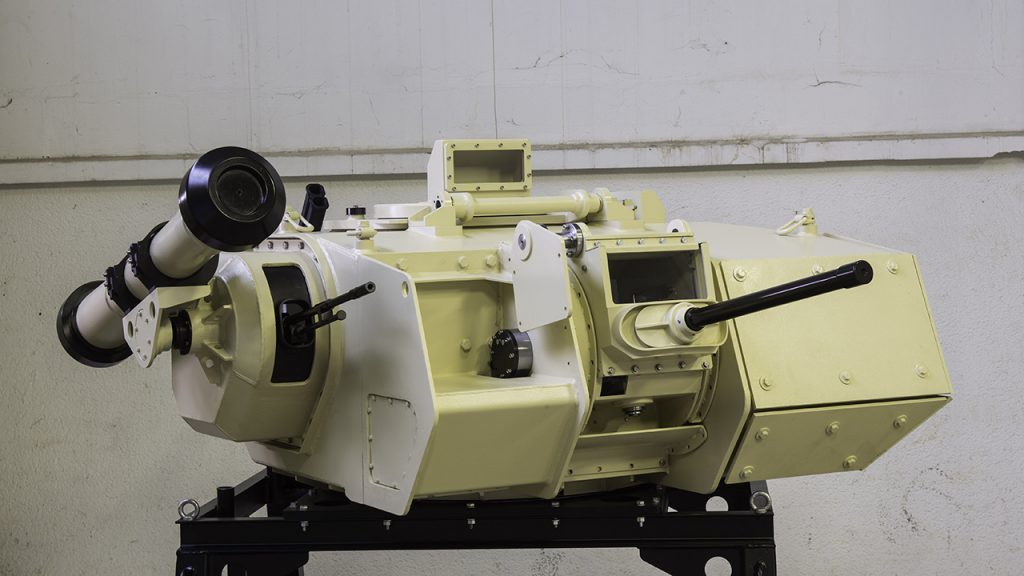
https://defence-blog.com/wp-content/uploads/2016/07/02-1024x576.jpg The STRATO, Milos Milosavljevic s.p. together with partners from Slovenian mechanical industry developed and produced new Asgard 127 weapon system. The Asgard 127 is a one man turret from Valhalla family remote control weapon stations. The new turret designed for installation on current, future light, medium armoured combat vehicles. |
| Re: Technical Discussions On International Military Equipments Doctrines Tactics Etc by Nobody: 7:24am On Aug 14, 2016 |
| Re: Technical Discussions On International Military Equipments Doctrines Tactics Etc by Nobody: 7:25am On Aug 14, 2016 |
P-500 Bazalt 4K-80 SS-N-12 Sandbox SS-N-12 Sandbox is a Russian supersonic speed cruise missile with a range of 550 km carrying a payload of 1,000 kg. The P-350 Bazalt [industrial code 4K-77] was the successor to the P-35 Bazalt, which was started in 1963 and subsequently cancelled. It evolved into the P-500 Bazalt [industrial code 4K-80] which was the production version of the original P-350 Bazalt. Developed to replace the SS-N-3 Shaddock anti- ship missile, it was initially deployed on Kiev-class aircraft carriers in the mid-1970s. The Slava-class cruisers carry an advanced version with an improved sophisticated guidance system, an autopilot that can be programmed for mid-course maneuvers, and an enhanced engine. The P-700 Granat [SSN-19 Shipwreck] was developed as a more successful turbojet alternative to the SSN-12 Sandbox, from which it was derived. Contractor Chelomey Entered Service 1973 Total length 11.70 meters Diameter 0.90 meters Wingspan 2.60 meters Weight 5,000 kg Warhead 1,000 kg high-explosive or 350 kiloton nuclear Propulsion liquid-fueled rocket [turbojet according to some sources] Maximum Speed Mach 2.5 Maximum effective range 550 km Guidance mode mid-course missile guidance radar on lamuch platform active or passive terminal homing Circular Error Probable (CEP) 300-700 m
|
| Re: Technical Discussions On International Military Equipments Doctrines Tactics Etc by M14A1: 7:28am On Aug 14, 2016 |
nemesis2u:Noted  |
| Re: Technical Discussions On International Military Equipments Doctrines Tactics Etc by Nobody: 7:39am On Aug 14, 2016 |
AGM-119 Penguin Primary Function Helicopter launched anti-ship missile. Contractor Kongsberg Vaapenfabrikk (Norway) Power Plant Solid propellant rocket motor and solid propellant booster Length 120.48 inches (3.06 meters) Launch Weight 847 pounds (385 kilograms) Diameter 11.2 inches (28.45 centimeters) Wing Span 30 in's folded, 55 in's Deployed Range 25 nautical miles / 35 km Speed 1.2 Mach maximum Guidance Inertial and infrared terminal. Warhead 265 lbs gross, 110 lbs High Explosive, semi armor piercing derivative of the Bullpup missile Date Deployed Fourth quarter 1993 The PENGUIN missile is a short-to-medium range inertially guided missile with infrared (IR) terminal homing. The missile consists of a seeker, navigation and control section, warhead,rocket motor, four folding wings and four canards. It is capable of gravity drop launches at low speeds and altitudes. Ships and surfaced submarines are the missiles primary targets. A principal operational advantage of Penguin is its relatively long operational range, which permits a helicopter armed with Penguin to remain outside the launch envelopes of potential targets. ThePenguin missile has an indirect flight path to target. It is also operated in "fire-and-forget" mode to allow multiple target aqusition. The Penguin is fired from a launcher or a stage weighing approximately 1100 pounds (500 kilograms). The Penguin is a uniquely capable weapon against small combatants and surfaced submarines in the littoral environment. The IR seeker head is effective against a wide range of targets and its profile is hard to defend against. It is a short-to-medium range inertially guided missile and is capable of gravity drop launches at low speeds and altitudes. A "fire-and-forget" missile, the Penguin has a 360 degree arc, autonomous search, acquisition and track during terminal phase, discriminates between target decoys and is resistant to IR countermeasures. Penguin is a fully digitized missile with canard control. The high resolution, passive infrared seeker provides a high degree of discrimination and target selection, and ensures efficient operation in confined, as well as open waters. The high accuracy, inertial navigation system ensures the missile's capability of target detection, and provides the flexibility of mid-course trajectory via pilot-designated way-point. An efficient 120 kg warhead, with an impact point close to the target's waterline, will inflict serious damage to medium size surface combatants or other targets. The missile is powered by a solid propellant two stage rocket motor. The Penguin can be adapted to helicopters, fixed wing patrol aircraft as well as fighter aircraft. The missile system is software integrated into the aircraft avionic system. with the use of existing equipment for suspension, control and operation.
|
| Re: Technical Discussions On International Military Equipments Doctrines Tactics Etc by Nobody: 7:49am On Aug 14, 2016 |
| Re: Technical Discussions On International Military Equipments Doctrines Tactics Etc by Nobody: 7:51am On Aug 14, 2016 |
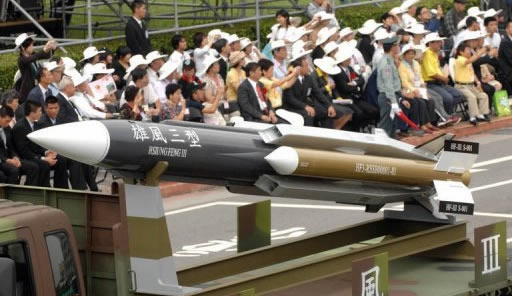
Hsiung Feng III (HF-3) https://defense-update.com/wp-content/uploads/2012/06/Hsiungfeng3.jpg Country Taiwan Range Disputed, Possibly 130-300 kilometers Speed mach 2.2-2.5 Modes Anti-ship, Anti-radar, Land attack Length 6 meters IOC 2007 Power Plant Ramjet Guidance Inertial with terminal X-band homing Weight 1.5 tons Diameter .5 meters The Chungshan Institute of Science and Technology Second Institute is engaged in follow-up research and development projects, including preparatory research and development of the Hsiung Feng III anti-ship and/or land attack cruise missile weapon system, concerning which few details have been made public. When the missile was unveiled, it was revealed as having solid propellant booster rockets and a ramjet sustainer engine The Hsiung Feng III anti-ship missile has a range of 130km, and perhaps even as much as 300km. It is a more powerful anti-ship weapon than the Sunburn anti-ship missiles that China has bought from Russia. In 2002, President Chen ordered that a budget of more than NT$20 billion be allotted to research and development on this advanced weapon. If US and Chinese Nationalist Party (KMT) legislators do not create further obstacles, the Hsiung Feng III might serve as a tool for attacking Chinese aircraft carriers. In January 2005 it was reported that Taiwan successfully test-fired the Hsiung Feng III supersonic anti-ship missile. Several Hsiung Feng III missiles were fired from southern Taiwan in the direction of the Pacific in December 2004 in the presence of Defense Minister Lee Jye. The missile has been under development for a decade and failed several early tests The Hsiung Feng III has a range of 300 kilometers (187.5 miles), enough to hit China, 160 kilometers (100 miles) across the Taiwan Strait. The new missile is believed to outperform a similar weapon in China's arsenal, the Russian-made Sunburn. In January 2008 Taiwan for the first time installed home-developed anti-ship missiles on a warship in a significant boost of its naval defence against rival China. The supersonic Hsiung-feng (Brave Wind) 3 missiles were seen on the Perry-class Cheng Kung frigate in the southern port of Tsoying. The United Daily News quoted commander-in-chief Admiral Wang Li-shen as saying that defence authorities will determine how to deploy the missiles and on which warships after testing is completed. It also cited an unnamed navy official as saying that the authorities hope to wrap up testing by the end of the year. Analysts say the Hsiung-feng 3 can be fitted with a variety of guidance systems and can function as a ship-to-ship, land-attack or anti-radar missile. With a range of at least 130 kilometers (80 miles), the Hsiung-feng 3 has been designed to counter the Russia-made SS-N-22 Sunburn bought by China. Taiwan first unveiled the Hsiung-feng 3 missiles to the public in a rare military parade on October 10, 2007, which was seen as a reminder to China that it has the weaponry to defend itself. Beijing has repeatedly warned of an invasion should Taiwan declare formal independence. In his New Year speech, Taiwan's President Chen Shui-bian warned that China had increased the number of tactical ballistic missiles targeting Taiwan from 200 in 2000 to more than 1,300 by 2008. |
| Re: Technical Discussions On International Military Equipments Doctrines Tactics Etc by chinese8107: 7:53am On Aug 14, 2016*. Modified: 11:31am On Aug 14, 2016 |
M14A1:Yes. of course, if the price and reliablity is competitive it can replace the alpha jet's role. |
| Re: Technical Discussions On International Military Equipments Doctrines Tactics Etc by Nobody: 7:55am On Aug 14, 2016 |
| Re: Technical Discussions On International Military Equipments Doctrines Tactics Etc by Nobody: 7:59am On Aug 14, 2016 |
AGM-65F Primary Function: anti-ship Contractors: Hughes Aircraft Co., Raytheon Co. Power Plant: Thiokol TX-481 solid-propellant rocket motor Stabilizer Wings/Flippers Propulsion Boost Sustain Service US Navy Launch Weight: (286 kg) 670 lbs Diameter: 1 foot (30.48 centimeters) Wingspan: 2 feet, 4 inches (71.12 centimeters) Range: 17+ miles (12 nautical miles/27 km) Speed: 1150 km/h Guidance System: infrared homing Warhead: 300 pound (135 kilograms) delayed-fuse penetrator, heavyweight Deployed on: F/A-18, AV-8B. P3C Designed specially for US Navy, it uses a modified Maverick D infrared guidance system optimized for tracking ships fitted onto a Maverick-E body and warhead..AGM-65F (infrared targeting) used by the Navy has a larger (300 pound; 136 kg) penetrating warhead vice the 125 pound (57 kg) shaped charge used by Marine and Air Force) and infrared guidance system optimized for ship tracking.
|
| Re: Technical Discussions On International Military Equipments Doctrines Tactics Etc by chinese8107: 8:05am On Aug 14, 2016 |
Even Taiwan develops some trainer, light fighter.the AT-3 .XAT-5 .However,the technology mainly rely on US, probably for home-use only not exportable competitive.
|
| Re: Technical Discussions On International Military Equipments Doctrines Tactics Etc by chinese8107: 8:41am On Aug 14, 2016*. Modified: 9:17am On Aug 14, 2016 |
nemesis2u:Indonesia once consider this,in rescue or special operation,however,due to bad weather,this plane can not landing on sea as its anti-seawave capability not very good. Indonesia then trun to Japan want some ShinMaywa US-2 and TOT,got stucked.
|
| Re: Technical Discussions On International Military Equipments Doctrines Tactics Etc by chinese8107: 11:00am On Aug 14, 2016*. Modified: 1:51pm On Aug 14, 2016 |
nemesis2u:Taiwan is not an independent country by any standard,not even US recognize it as a country,their policy was mainly influnced by US,if US don't allow them,they don't have balls to do anything. |
| Re: Technical Discussions On International Military Equipments Doctrines Tactics Etc by tdayof(m): 12:31pm On Aug 14, 2016 |
| Re: Technical Discussions On International Military Equipments Doctrines Tactics Etc by tdayof(m): 12:32pm On Aug 14, 2016 |
The game changer. https://www.raytheon.com/news/rtnwcm/groups/gallery/documents/digitalasset/rtn_219833.jpg 1 Like |
| Re: Technical Discussions On International Military Equipments Doctrines Tactics Etc by chinese8107: 2:20pm On Aug 14, 2016*. Modified: 8:00pm On Aug 14, 2016 |
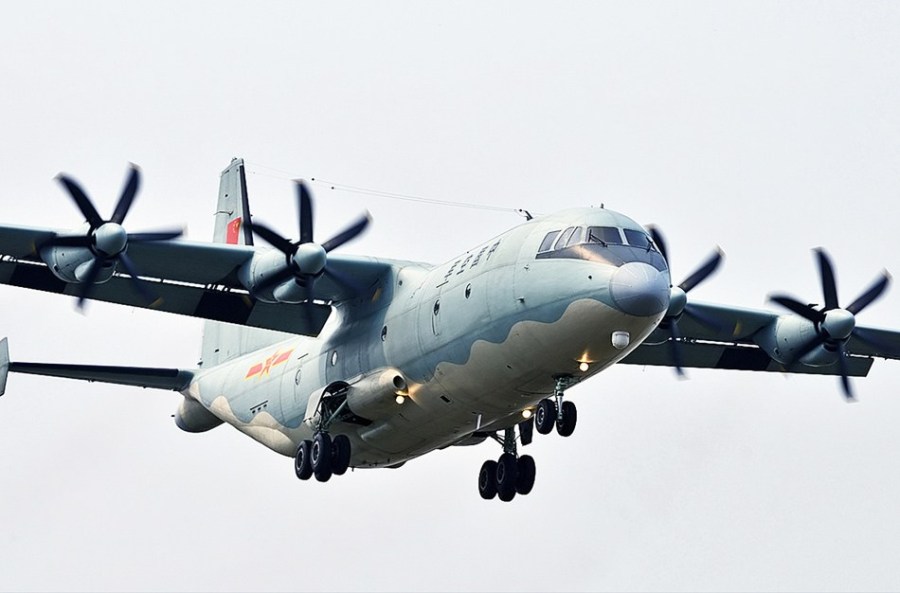
https://images.china.cn/news/attachement/jpg/site3/20130530/2760693184952027945.jpg Y-9 The Chinese version C-130J . https://hdimages.takungpao.com/2013/1129/20131129022741685.jpg and it's little brother Y-8 (left),together with Venezuela air force C-130(right) https://photocdn.sohu.com/20140809/Img403281396.jpg Y-8 as bomber gunship making sure there is no SAM on the ground before using gunship. |
| Re: Technical Discussions On International Military Equipments Doctrines Tactics Etc by MikeCZA: 2:35pm On Aug 14, 2016 |
ValerianSteel:Explain please. |
| Re: Technical Discussions On International Military Equipments Doctrines Tactics Etc by MikeCZA: 2:46pm On Aug 14, 2016 |
nemesis2u:The sea variant of the Rooivalk which was proposed in the late 90s was going to carry this missile instead of the Mokopa. |
| Re: Technical Discussions On International Military Equipments Doctrines Tactics Etc by Nobody: 3:17pm On Aug 14, 2016 |
Pak Fa T 50 prototype 1 Like
|
| Re: Technical Discussions On International Military Equipments Doctrines Tactics Etc by chinese8107: 3:27pm On Aug 14, 2016*. Modified: 6:31am On Aug 15, 2016 |
https://img10.itiexue.net/1535/15352558.jpg Y-7 variant bomber /gunship trainer HYJ-7 Y-7 is a 5 -10 tons payload cargo plane it's gunship variant HYJ-7 can carry scouting/ FLIR pod / bombs/missles, canon or troops /cargo.landing or taking off from unpaved road.this plane is used to train bomber or tranport plane pilots by PLA max taking off weight:24 tons empty weight :13.7tons. max range:1200km service celling:8500 m PAYLOAD:5 -10 tons speed: 420-500 km/hour https://zgjunshi.com/Article/UploadFiles/200479223354734.jpg @Odunayaw @MikeCZA @frumentius this is more fit for an unconventional war for it's low cost long air endurance,and multi-function . 1 Like
|
| Re: Technical Discussions On International Military Equipments Doctrines Tactics Etc by Nobody: 8:58pm On Aug 14, 2016 |
| Re: Technical Discussions On International Military Equipments Doctrines Tactics Etc by Nobody: 8:59pm On Aug 14, 2016 |
| Re: Technical Discussions On International Military Equipments Doctrines Tactics Etc by Nobody: 9:02pm On Aug 14, 2016 |
| Re: Technical Discussions On International Military Equipments Doctrines Tactics Etc by Nobody: 9:19pm On Aug 14, 2016 |
[img]http://4.bp..com/-8097eui2Zf4/Tj1d37i-UZI/AAAAAAAAAwo/TXWinWJasKQ/s1600/F-111+Aardvark+012.jpg[/img] thats a huge load  1 Like |
| Re: Technical Discussions On International Military Equipments Doctrines Tactics Etc by Nobody: 9:29pm On Aug 14, 2016 |
| Re: Technical Discussions On International Military Equipments Doctrines Tactics Etc by Nobody: 9:33pm On Aug 14, 2016 |
2 Likes |
| Re: Technical Discussions On International Military Equipments Doctrines Tactics Etc by Nobody: 9:39pm On Aug 14, 2016 |
P3T Sea Eagle Type: Aircraft-launched anti-ship missile IOC/Retired: 1985/Still in service Guidance: Strapdown inertial plus Plessey radar altimeter for the midcourse phase and Marconi active radar for the terminal phase Warhead: 500 lb (226.8 kg) Royal Ordnance impact-fused semi-armor-piercing blast/fragmentation Powerplant: One Microturbo TRI 60-1 Model 067 turbojet rated at 787 lb st (3.50 kN) Dimensions: Diameter 1 ft 3.75 in (0.40 m); length 13 ft 7 in (4.14 m); span 3 ft 11.3 in (1.20 m) Weight: Total round 1,325 lb (601 kg) Performance: Speed more than 595 kt (685 mph; 1102 km/h); range 70 nm (81 miles; 130 km) from a high-altitude launch The Sea Eagle was designed from 1976 as the P3T, and the structural and aerodynamic basis of the missile was found in the BAe/Matra Martel missile in service with the British and French air forces and the type to be replaced by the new weapon in the anti-ship role. The origins of the type can be found in the Ministry of Defence’s 1973 Air Staff Target 1226, which demanded a weapon possessing considerably greater range than the AJ.168 version of the Martel. The P3T was therefore designed with an air-breathing powerplant in the form of a turbojet aspirated through a ventral inlet whose front was sealed from the airflow by a fairing discarded only after the missile’s release from its launch warplane. The missile is otherwise of ‘classic’ air-launched anti-ship missile configuration, with a cylindrical body terminating forward in the ogival radome for the antenna of the active radar terminal guidance package, a mid-set cruciform of cropped delta wings, and a close-coupled cruciform of cropped delta control fins mounted near the tail and indexed in line with the wings. The Sea Eagle has a thoroughly modern guidance system, and data on the target's position, bearing, course and speed are loaded into this just before the Sea Eagle is launched. After release and engine ignition, the missile accelerates to Mach 0.85 and descends to sea-skimming height under control of its inertial guidance package with height data provided by a radar altimeter: the low-altitude cruise reduces the chances of the missile being spotted by electromagnetic or visual means. The active radar terminal guidance package is activated at a distance of 9.7 nm (11.2 miles; 18 km) from the target, and the missile then completes its attack. The weapon is controlled via an advanced digital computer, and this allows varying attack heights, the flying of random evasive maneuvers in the closing stages of the attack, final attack from any bearing, the detection and ignoring of decoys and countermeasures, and on longer-range missions a short climb, when about 16.2 nm (18.6 miles; 30 km) from the target’s anticipated position, for use of the active radar to fix the missile’s position relative to the target before a descent once again to sea-skimming height. The missile is notable for its good speed and range, and was planned mainly for warplane launch platforms such as the BAe Sea Harrier which can carry two missiles, and also the BAe Buccaneer and Panavia Tornado which can each carry four missiles. The basic missile was also been developed as the Sea Eagle SL (P5T) surface-launched version for use by coastal batteries or warships, but this has not been ordered. This model is fitted with a pair of jettisonable solid-propellant booster rocket motors of the type developed to provide the missile with helicopter-launch capability for the Indian navy's Westland Sea King Mk 42s. The Sea Eagle is operated by Chile, India, Saudi Arabia and the UK.
|










President Zuma Had Telephonic Discussions With President Trump • Photos: Heavy U.S Military Equipments Arrives Germany Against Russian. • @elbinawi Tweets On International Qudsday • 2 • 3 • 4
Russia-Ukraine War: World News, Weapons & Battlefield Discussions - Live • American Politics Thread: Trump Is The 47th President! • Battle Field Discussion (picture/video) Of African Military .