WilliamC1's Posts
Nairaland Forum › WilliamC1's Profile › WilliamC1's Posts
1 (of 1 pages)
 Christianity Etc › Re: Why I Am Not An Atheist by WilliamC1: 4:53pm On Jun 10, 2009 Christianity Etc › Re: Why I Am Not An Atheist by WilliamC1: 4:53pm On Jun 10, 2009 |
Hi pilgrim.1 I have been busy for the last 72 hours and I can see that the discussion has taken a new twist but it is still very interesting. |
| Christianity Etc › Re: Why I Am Not An Atheist by WilliamC1: 1:31am On Jun 07, 2009 |
pilgrim.1:Atheism is lack of belief in god, by god I mean the god head of the trinity as described in the bible since that is what we are talking about here. After looking at the evidence provided by those who are championing that idea I have come to the conclusion that such a god does not exist and hence my disbelief. Such an assertion ("there is no god"I don't think it does, I say that there is no God because I have never seen any God make a proclamation that he exists. People are the ones that brought the idea of existence of God to my knowledge and people are the ones that have been making such proclamations all the time. So once again I can only disprove their proclamations since I have never seen any god make any proclamation about his existence. However, your reason for disbelief is said to be on arguments about the nature of theology - that is, you reject theism because you have difficulties reconciling the Biblical accounts concerning creation, etc. The example you gave that there are 'two creation stories in Genesis' already falls flat on its face, for there is only one. Between Genesis 1 and 5, the creation narratives are consistent; but one comes up with two creation narratives because they are assuming such ideas into the texts ([b]eise[/b]gesis) and not reasoning out of it ([b]exe[/b]gesis). Again, such ideologies do not disprove theism or the existence of God; and consequently you don't have sufficient grounds for affirming your disbelief.I believe that there are two different creation accounts having gone through the history of how both of them were written and what the message that the two different authors were trying to convey. Whether there are two different accounts in genesis or not is irrelevant because some of what is said has been disproved by science for example genesis 1 talks about God creating two lights, one to rule over the night(moon) and one to rule over the day(sun), Science has shown that the moon is not light but the light that comes from the moon is only a reflection of the light from the sun. The sun indeed is light but the moon is not. If you look at the earth from the moon in the night the earth looks just like the moon looks from the earth because it gives out light because the earth reflects light from the sun, does that mean that the earth is light? The people that wrote the creation accounts in genesis thought that the moon produced its own light that is why they wrote that God created two lights one to rule over the day(sun) and the other to rule over the night (moon). If they knew that the earth when viewed from the moon in the night looks very similar to the moon when viewed from the earth I believe that they would not have written that part. https://upload.wikimedia.org/wikipedia/commons/thumb/a/a8/NASA-Apollo8-Dec24-Earthrise.jpg/180px-NASA-Apollo8-Dec24-Earthrise.jpg Earth as viewed from the Moon during the Apollo 8 mission, Christmas Eve, 1968. Source-Wikipedia. Okay, since the atheist cannot disprove the existence of God, all other arguments will just be non-essentials at the moment.The atheist can not disprove the existence of God because no God has ever told the atheist that he exist, The atheist can disprove some of the assertions and evidence provided for the existence of God. Lol, that is quite an ambitious statement.If a person says that his heart disease has been healed through a miracle, doctors can check and see the process that lead to the healing, if proper medication was involved(which is always the case) then that miracle claim becomes null because we know that proper medication leads to healing of medical ailments all the time. If a person was involved in a car accident and the person says that he/she was saved by the miracle hands of angels, that claim can be checked, if the air bag and the seat belts are what saved the person from dying then that miracle claim becomes null because air bag and seat belts are meant to save lives when people are involved in accidents. The fact that there are atheist who believe in ghost does not mean that ghost are any real, This is the same as me asserting and pointing to the big bang as true because there are theist that believe in it. Maybe, maybe not. If the basic claim so far that I've been addressing to the atheist's attention is the supernatural, has science also proven the supernatural wrong?Science has proven some of the assertions of the supernatural to be false. The Noah's flood for example which was said to have happened with God(supernatural) taking a major role in it. There is a lot of scientific evidence to show that the claim is purely a mythical assertion. The rainbow is another example. Keep in mind that the supernatural has never made a case for its self, people tagged their experiences and what they see around them as supernatural. Those claims can be looked into and debunked scientifically where necessary. There are people that believe that evil spirits have the ability to cause diseases, science has debunked that claim. Of course, you're right that we don't see things from the same perspective. That is why I'm presenting issues that take the atheist to where he should be met. If you were presented with such evidence as in Safran's experience, what would you say?If I was presented with the Safrans experience and I believe it is genuine then I will reconsider my position, I don't believe the Safrans experience because I believe that he was acting up because so many people have done stuffs like that before only to confess later, others confessed on their dead beds that what they did long time ago was only a gimmick, others died without confessing but left notes, while others gimmicks were revealed by very close friends or partners involved in the gimmick. Here is what a friend said on another blog. "If God showed himself to everyone against the sky and moved the stars to form words that said, "I am the lord thy God," that would make an impression. I would say that an unequivocal miracle would be a good start. I have said before, the one thing I think would convince me is if God goes to every human at the same time, wherever they are, and tells us all something in our own language that we don't know but could verify for ourselves, like the secret to cold fusion." If any such thing happens then I will completely Change my beliefs. This is quite amusing, please excuse me. If you were not trying to provide proof or evidence for the non-existence of God, what then do we make of your assertion that "there is no God"? Are we now to just take such statements and score them a good pass and expect nothing to prove your ground? Granted that you seek some traits to be exhibited in believers, but just what are those traits? You may have "reasons" for your disbelief; and so far what I see do not constitute any sound reason to disbelieve in the supernatural. Not being able to see some expected traits in the people you've come across does not therefore constitute a cogent argument against the supernatural.I make my assertion only based on the evidence provided to me. No God has ever told me that he exists, people are the ones that have been telling me and based on their evidence and arguments I came to that conclusion. The bible makes a lot of promises and talks a lot about God interfering in the lives of his own(those that believe) in one way or the other that can be seen even by unbelievers so they too can know of the existing power of the Christian God. The fact that I don't see this happening in the lives of the believers is an evidence against the claims of the supernatural in this case the Christian God. Good points you raised, but they sadly tend to what I've called the fallacious logicum. You seem to have made up some idea that Christians should be cast in a certain way, and if you don't find those features, then for you that automatically disproves the existence of God or the supernatural. I could also make up any number of fallacious logic and adduce the weakness of your disbelief - would that even come close to reality? Now, if theism claims that no theists can be affected by suffering, you might have a point in your disbelief; but does theism make such a claim as you had cast for your disbelief? No. So, where do you lead your own ideas to?You are now beginning to sound like professor William Craig.  . I did not make up the Idea that Christians should be cast in a certain way, The bible and Christians themselves make that argument most of the time quoting verses from the bible to buttress their claims. If Christianity is true then those claims should see the light of the day, the fact that I don't see those claims is an evidence against the Christian claims and a very good one. As for your last point, some sect of Christians make that claim(The prosperity preachers) I know that there is a division in theology in the Christian community with regards to that but their position is very well founded and supported by the bible. Thanks for your rejoinder, and you are also welcomed. . I did not make up the Idea that Christians should be cast in a certain way, The bible and Christians themselves make that argument most of the time quoting verses from the bible to buttress their claims. If Christianity is true then those claims should see the light of the day, the fact that I don't see those claims is an evidence against the Christian claims and a very good one. As for your last point, some sect of Christians make that claim(The prosperity preachers) I know that there is a division in theology in the Christian community with regards to that but their position is very well founded and supported by the bible. Thanks for your rejoinder, and you are also welcomed. |
| Christianity Etc › Re: Why I Am Not An Atheist by WilliamC1: 9:06pm On Jun 06, 2009 |
pilgrim.1:Thank you so much for the cordial reception. Indeed, religion and faith are very sensitive issues which people are seeking to understand. It so happens that those who self-identify as 'non-religious' often tend to regard the contents of the various worldviews and belief systems in a simplistic fashion, which leads to huge misunderstandings. To offer a tidy reply, I'd rather assume the essence of your 'disbelief' instead of treating every single line in your post. Then sometime later as needs be, I'd come back to address the underlying presumption of your type of atheism by seeking to understand how atheism is defined by several atheist thinkers. So enjoy.Nice, I quite agree with some of what you have written. I think most of what is going on here is a misunderstanding of the positions of what atheism is. Atheism is the lack of belief in God. It is not a proof for the existence of God but its a state of disbelief based on the reasons provided for the existence of God. You can not disprove the existence of God, you can only disprove the evidence provided by those who believe in God for the existence of God. For example Scientist can not disprove the existence of the God of the bible but the scientist can disprove the creation accounts of the bible. Here is what a friend of mine said in another blog "As science learned more and more about the universe, some of the stories in the Bible became impossible. For example, the two creation stories in Genesis are now taught as "poetry about the creation of the universe" by the Catholic church. They didn't USED to teach it that way, but sooner or later, when science had filled in the gap in human knowledge regarding the start of all things to such an extent that the Genesis stories were ridiculous, the church "moved the goalposts" and started calling the stories "poetry" or parables, etc." I can not prove that the Christian God does not exist but I can prove by providing historical and archaeological evidence that the exodus story in the bible is pure myth. I can provided historical evidence that prove that so many of the stories in the bible are either myths or grossly exaggerated or never happened at all(Noah's flood, conquest of Canaan etc). The atheist can not disprove the existence of God but he can disprove some of the stories that supports the idea of God who participated in most of the events that were told. One is tempted to offer terse answers to each concern above and still come back to the basic point: you haven't "proven" anything for your disbelief. At best, your concerns are typically polarised towards atheism and reveal huge gaps which may lead one to believe that you haven't really studied issues objectively. Suffering, wars, frauds, irreconcilable differences, fundamentalism, child abuses, flaws in disbeliefs, discrimination, wasteful of resources in secular evangelism, one's subjective experiences - all these and more can be well-articulated in atheism as well; and then what do you do? At the end of the day, you'd discover you made a case that is no case at all; and what you'd have left is an utter non-starter.I can provide some evidence for my disbelief, I can not disprove the existence of God but when the Christian believer tells me that the bible is the word of a divine and supernatural God and everything that it contains is true, I can provide evidence to show that some of what he says are not true, or did not happen as the bible said or never happened at all. No body can disprove any of the gods, but the evidence provided in terms of religious text, personal experiences like miracles, prayers can be disproved or explained through other ways that are empirically verifiable. Take the quip in yours that: "science has proved religion wrong". Such statements are made out-of-hand because one is not asking the right questions and merely flirting with a huge presumption. The typical trend you've followed here is what I regard as one among the many fallacious logic that springs from the "need to disprove" the worldviews of others. This type of logic tends to point accusing fingers at other beliefs as the basis for one's own 'disbelief'. The funny thing is that we all use this type of logic in common debates - Christians against Muslims; atheists against theists; democrats against republicans; liberals against conservatives; etc.Sorry for putting it as a direct statement, I will now re-phrase it by saying that science has proved some of the assertions and claims of religions to be wrong. The hard truth behind all these is that such fallacious logicum do not actually "disprove" anything. Its basic weakness is that it is intellectually lazy, as it really has no concrete outlook at the reality of issues which disturb one's disbelief. My style here is to move on beyond this trend of fallacious logic (and the "need to disprove"I think I will be right if I say we don't see things from the same perspective. I am quite open minded if I see evidence that points to the other direction I will accept it. I can well bear with you; however, this again is not sufficient evidence or proof for the non-existence of God or gods. It even does not constitute evidence for a "lack of" or non-existence of God's love for humanity. At best, it presupposes only one thing: you simply have not experienced that love for yourself.I think you are think I am trying to provided evidence or proof for the non existence of God, That is not what I am doing, I am simply stating my reasons for disbelieving. When I look at the life of Christians who claim to be in a personal relationship with God and are experiencing his love, I don't see that they are better than those who are without that claim. I will expect a Christian believer who is in a personal and loving relationship with a divine entity to exhibit some different traits since he is associated with a supernatural being but I don't see that. That is also part of my reasons for disbelief that there is a supernatural being that engages with in a personal and loving relationship with human. If there is a supernatural being that engages himself in a loving relationship with Christians then you should expect Christians to suffer less than non Christians since they are in a loving relationship with a supernatural being that loves them, such a being should always protect them since they are his own and he loves them. He should have the ability to make them suffer less, but that is not the case. Christians and non Christians suffer the same faith all over the world, harm affects us all on the same level. No evidence to show that there is a supernatural being that protects Christians more than non Christians. A supernatural being that is in a loving relationship with Christian believers will protect them more than others and the evidence should be there for all to see but that is not the case. I very much doubt your distrust is based on reason or objectivity. I would refer to this as typically a case where someone is operating from the bias of a need to disbelieve than of open, objective enquiry.LOL, I said I distrust the bible as the word of a supernatural and divine being because it contains a lot of historical and scientific errors. Some of its assertions are also contrary to what I see happening around me. Now, now. . . where's dalaman?!?I said I have no choice if I'm to be honest with myself, I must say: There is no god based on the evidence I see around me. The evidence that the believers have provided to me lead me to this conclusion. Based on the evidence so for that have been provided to me, I have to concluded that there is no God based on the evidence that the believers have provided. Now, the simple question theists are asking is this: HOW do you know? You'd have to provide "scientific" evidence and proof for your extraordinary claim that "there is no god". That claim does not stand simply because an atheist asserts it repeatedly and proceeds to offer "arguments" as substitutes for his 'evidence or proof'.I don't have scientific evidence and proof for the non existence of God because I am not a scientist, I can only provide arguments against the claims of believers who say that there is a God. Keep in mind that the believers have not provided any scientific evidence or prove for the existence of God. We are eagerly awaiting the so-called 'mountain of evidence' for your claim. Mere assertions from arguments of fallacious logic will not do.I say this because the believer presents the bible as the mountain of evidence for his claim to the existence of God, but there are so many evidence and proof to show that so many of the bible assertions are false. This is what amazes me. How could one conclude with a tone of finality that "there is no god" and then wait for 'really amazing facts' to contradict his conclusion(s)? This attitude has often been intelligently challenged; and that's why I wondered if anyone has thought about the revisionism of Dawkins' "there is no God" to the now terse "there is probably no God"?Perhaps you don't understand what I am saying here, I reached to a conclusion based on the very unsatisfactory evidence that has been provided to me for the existence of God, but I am still willing and able to change my mind if I see evidence that points to the contrary Lol, I don't think there's mental freedom expressed there. Trust me. You're happy to assert your convictions only in terms of the non-proof of your claim; and that in itself does not consititute hard evidence for the non-existence of God or the supernatural.Let me say again that this is not simply a prove or disprove argument, but me simply stating why I disbelieve. As regards telepathy at work, some researchers like the British biologist (or biochemist and plant physiologist), Dr. Sheldrake Rupert (Ph.D) has some credit in this field. Interestingly, he sees his research on telepathy as a paranormal phenomenon (see his website). In other cases of evidences presented on phenomena which are inexplicable by naturalism, it does not appear that naturalists have been able to provide satisfactory counter-claims.I will study the link first before making any remark. Thanks for the link. However, in subsequent discourses (I hope to engage you in many more), I'd be looking at how atheists tend to define atheism and also how they react to evidence for what is beyond their worldview of naturalism. Thank you for sharing, and once again welcome to Nairaland.Thanks very much for the cordial welcome, Atheism is simply the lack of belief in God. If concrete evidence is provided to me that shows the existence of something beyond my world view I will have no choice but to embrace it or at least reconsider my previous position. Thank you. |
| Christianity Etc › Re: Why I Am Not An Atheist by WilliamC1: 12:45am On Jun 06, 2009 |
Hello Every body, I am new here, I have been through this debate and I can see the tension it has already generated, dalaman who is a good friend was kind of speaking for me. When I first saw him going through the post of the OP I just gave out some talking points to him and he wrote some of them and posted them here. I have been looking forward to the weekend when I will be less busy so that I can register and speak for myself. Religion and faith are very sensitive issues so I want to be very civil and make sure that I don't offend any body. I know that I can't make any body see things my way but I just want to state my case for why I disbelieve in God. I have already stated this on another forum which I am a frequent member but I will also state it here again. I am not a believer when I take into account. * he unnecessary suffering around the world * the stupidity of religious wars * how science has to work so hard to uncover the knowledge we need for progress and to relieve suffering * what our collective scientific ignorance is doing to the planet - while religions are mostly silent on sustainability * the ways science explains nature more adequately than any religion * that science has proved religion wrong, over and over through history * the fact that many gods and religions have come and gone * the fact that greatly differing religious affiliations and beliefs depend more on geography and cultural heritage than content * all the nutty things wrapped in religion - including how quite similar sects differ irreconcilably over petty issues * the absolute whackjobs telling me to believe, and what will happen if I don't * the evangelists exposed as fraudsters * the child molestation and coverups that go on within the "walls" of religion * the flaws in the bible, and all other written accounts of god I bothered to read * the contorted reasoning of religions to maintain discrimination against women and homosexuals * all the good works of secular charities and NGOs that waste no resources on evangelizing * my own experience as a christian compared with the real views of close friends who have eventually had the courage to be totally honest about their "faith" - they are going along with religion because others around them do - they are effectively conning each other through superficial behaviors covering up inner disbelief. I have no option but to say that if there was a god who loved me in a way that is relevant to me, then that god would find a way to communicate more effectively with me. So far, I've heard nothing but silence from god, instead everything else I experience points directly away from god. I've given a long list (by no means exhaustive) of reasons I don't believe in god. On the other side of the equation there are some statements in the bible saying that I must believe to achieve salvation. But the bible quite clearly does not make any sense in so many ways , I cannot trust it. I have no choice if I'm to be honest with myself, I must say: There is no god. To say anything else would lack integrity. It would lack courage. I'd be kidding myself. How could I be at ease with myself if I believed in god with such a mountain of evidence to the contrary? If facts turn up that contradict my conclusion, I will reconsider. But they'll have to be really amazing facts to reverse my certainty. Meanwhile I'm more than sufficiently convinced that there is no god, and quite happy about the mental freedom that conclusion brings. Below is also a reason some other member on the other blog gave as his reasons for disbeliving and I very much agree with what he had to say. may not speak for everyone, but i do not believe 100% a god does not exist, there is a possibility but it is an extremely slight possibility. that said, the chances of this god being the god of the bible, quran, verda, or whatever holy book are even more minuscule. pilgrim.1:Please I just want to know if you have any examples or evidence of telepathy at work. Personally I have never heard of anybody that talks about having experienced it but that doesn't mean that there are people out there who haven't, all I am saying is that this it self is not an evidence for the supernatural. |


 goes beyond the terse idea that one lacks a belief in God, more so because such a person would be saying that they know that there is no God anywhere and at anytime. Question: how do you know? Even considered at face value, the same person could not be making two stretced statements at the same time. Consider these:
 We trust you would enjoy the discussions that drew you to register and participate, and thank you for a cordial start.
 Although he'd said earlier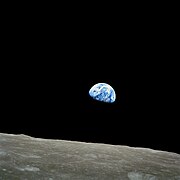
1 (of 1 pages)