 Health › Re: 6 Causes Of Swollen Legs And Feet And Ways Of Handling Them by WILLINSTILLS: 1:01pm On Mar 20, 2023 Health › Re: 6 Causes Of Swollen Legs And Feet And Ways Of Handling Them by WILLINSTILLS: 1:01pm On Mar 20, 2023 |
Sleep Like a Baby Again with this Before-Bed Recipe: A Natural Sleep Aid https://healthhues./2023/03/20/sleep-like-a-baby-again-with-this-before-bed-recipe-a-natural-sleep-aid/TashbaanHerbal:
Swollen legs and feet are a common health problem that affects people of all ages. The condition is characterized by an abnormal buildup of fluid in the tissues of the legs and feet, causing them to appear puffy and swollen. Swollen legs and feet can be caused by a wide range of factors, including medical conditions, lifestyle habits, and injury. In this article, we will discuss six common causes of swollen legs and feet and ways of handling them.
1. Edema
According to Healthline. Edema is a medical condition that causes excess fluid to accumulate in the body's tissues, resulting in swelling. The condition can be caused by several factors, including kidney disease, heart failure, and liver disease. Other causes of edema include hormonal changes, certain medications, and prolonged periods of standing or sitting.
To manage edema, it is essential to identify and treat the underlying cause of the condition. For example, if edema is caused by heart failure, treatment may involve medications that help to reduce fluid buildup in the body. Other treatment options for edema include compression stockings, exercise, and dietary changes.
2. Venous Insufficiency
Venous insufficiency is a medical condition that occurs when the veins in the legs are unable to properly circulate blood back to the heart, resulting in swelling. The condition can be caused by factors such as obesity, pregnancy, and prolonged periods of standing or sitting.
To manage venous insufficiency, it is essential to improve blood circulation in the legs. Treatment options include compression stockings, regular exercise, and weight management. In severe cases, surgery may be necessary to correct the underlying problem.
3. Lymphedema
Lymphedema is a medical condition that occurs when the lymphatic system is unable to properly drain lymph fluid from the body, resulting in swelling. The condition can be caused by factors such as cancer treatment, infection, and injury.
Treatment options for lymphedema include compression therapy, exercise, and massage. In severe cases, surgery may be necessary to remove excess tissue and improve lymphatic drainage.
4. Pregnancy
During pregnancy, the body undergoes several changes that can cause swelling in the legs and feet. The growing uterus can put pressure on the veins in the pelvis, leading to fluid buildup in the legs. Hormonal changes during pregnancy can also cause the body to retain more fluid, further contributing to swelling.
To manage swelling during pregnancy, it is essential to maintain a healthy weight, wear comfortable shoes, and avoid standing or sitting for prolonged periods. Regular exercises, such as walking or swimming, can also help to improve circulation in the legs.
5. Injuries
Injuries such as sprains, strains, and fractures can cause swelling in the legs and feet. The body's natural response to injury is to increase blood flow to the affected area, which can result in swelling.
To manage to swell caused by injuries, it is essential to rest and elevate the affected leg or foot. Applying ice to the affected area can also help to reduce swelling and inflammation.
6. Medications
Certain medications, such as blood pressure medications, hormone replacement therapy, and nonsteroidal anti-inflammatory drugs (NSAIDs), can cause swelling in the legs and feet as a side effect.
To manage to swell caused by medication, it is essential to speak with a healthcare provider about the possibility of changing or adjusting the medication. In some cases, medication may be necessary to manage an underlying medical condition, in which case other treatment options such as compression stockings or dietary changes may be necessary to manage the swelling.
www.tashbaanherbs.com |
| Health › Re: Lady Who Transitioned To Male Is Now De-transitioning To Female, Regrets Action by WILLINSTILLS: 12:59pm On Mar 20, 2023 |
https://healthhues./2023/03/20/sleep-like-a-baby-again-with-this-before-bed-recipe-a-natural-sleep-aid/PremiumTech:
By Madaki R.
https://i0.wp.com/thebureau.com.ng/wp-content/uploads/2022/05/Alia-Male2.jpg?w=736&ssl=1
Alia Ismail is de-transitioning to female after six years of medical transitioning to male.
Alia, from Michigan, came out as trans at the age of 18, adopting male pronouns and dressing more masculinely.
Alia changed her name to Issa in the years after, and at the age of 20, she began a medical transition that included taking male hormones to boost testosterone and having a double mastectomy.
"Socially, at 18 years old, I came out, used male pronouns, and dressed masculine," Alia explained.
"When I was 20 years old, I went through a medical transition in which I took hormones and legally changed my name in August 2015, and subsequently had a double mastectomy in 2016." My grandparents were accepting but not understanding of my transition, and as time went on, my mother began to understand my sentiments better."
Alia, now 27, felt that her new identity didn't truly reflect who she was after the transition, and after much thought, she opted to de-transition to female and now uses they/she pronouns.
"I have no regrets about having surgery or taking hormones," Alia said. That was a pivotal point in my development into the person I am today.
"My family was emotionally apathetic. They knew I was strong enough to take this uncertain road again, and they were proud of me for remaining loyal to myself. I no longer take hormones and have undergone laser hair removal. I have no immediate plans to do anything else, but I am aware that things may change in the future.
"My testosterone level dropped dramatically, but my oestrogen level remained unchanged." I've only been off hormones for a year, after roughly seven years on testosterone. My body only needs time to adjust, and we'll see if I need to take anything to increase my oestrogen levels later."
"I believe that those who do not understand do so out of ignorance and a lack of empathy," Alia continued.
"Decisions are difficult no matter what they are, and I hope that instead of projecting our fears and judgments, we can all remain open-minded to understand why."
"There will always be those who misinterpret me, but I can't let that destroy me." By sharing my experiences, I've been able to assist many others who were wondering their sexuality and gender.
"I've received numerous messages from people seeking advice, and I like building a sense of trust in others."
Source: The Bureau |
| Webmasters › How To Set Up Your Bio On Instagram by WILLINSTILLS(op): 2:45pm On Jul 31, 2019 |
Have you heard of the saying 'First impression matters'? Yes, it does.
Your bio is the first thing people look out for when they visit your page. It helps a visitor decide if they should follow you or not.
An Instagram Bio is a little piece of information about you that appears on the top left corner of your Instagram page, directly below your logo. The information on your bio like I said earlier affects the decision people make when they visit your page. So it's important you use the right information that will turn those visitors into followers.
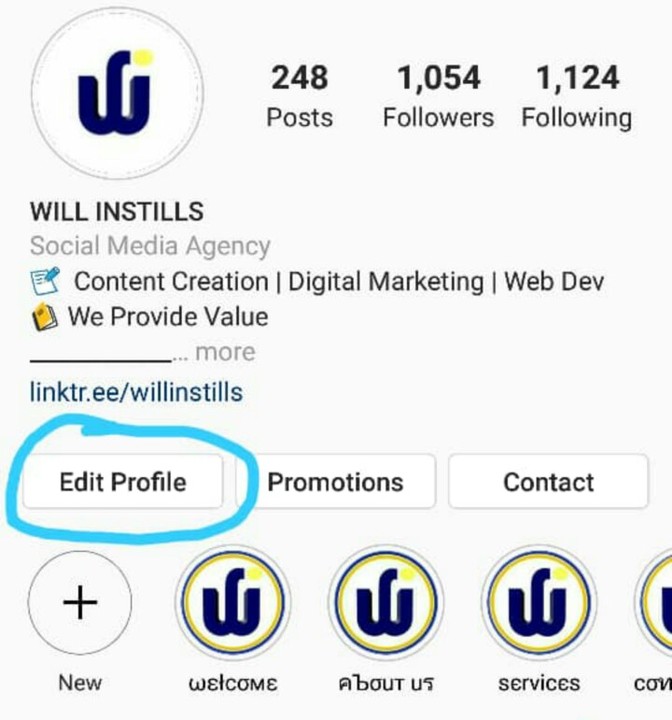
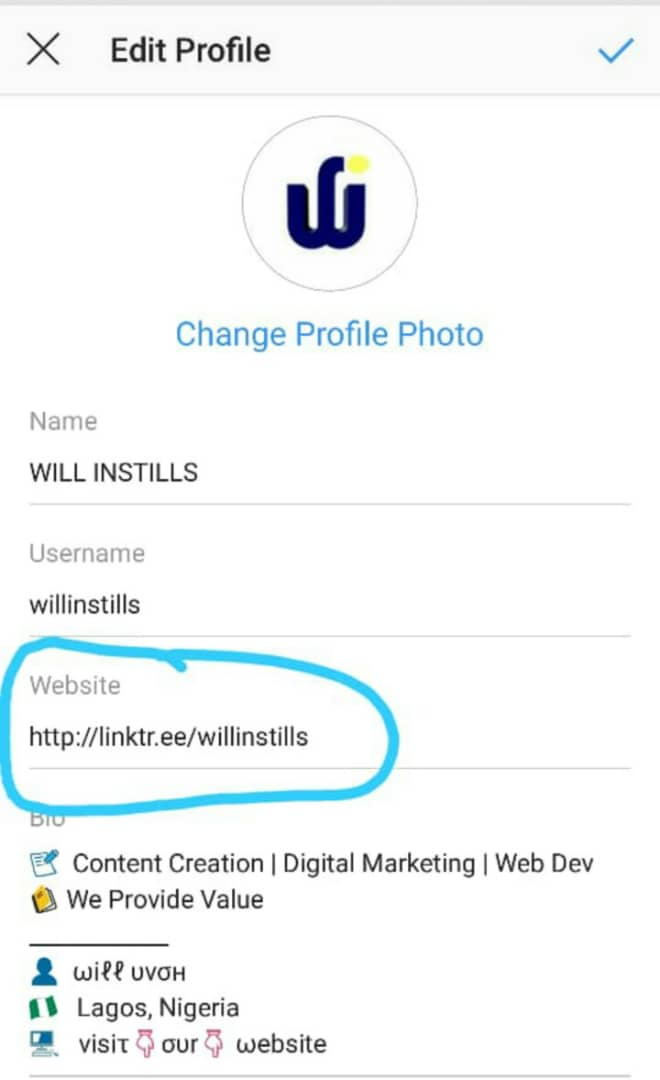
To begin, click on 'Edit Profile' just below your bio. There you will find your Name, Username, Website, and Bio. I believe you already have your Name and username set up already. For Website, this is where you can have the only clickable link on Instagram apart from tags and hashtags. You might want to make the best use of it.
If you have a website you can paste your URL there, but if you don't have a website you can type your phone number there using this format ' /234YOURNUMBER (For Nigerians). When done this way your number appears as a link and once it is clicked, it automatically drives people to your Whatsapp to start a conversation with you.
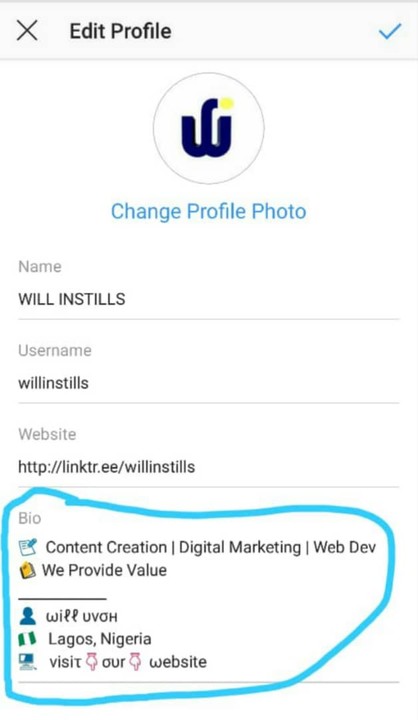
Now that you have successfully created a clickable link we can now proceed to create the perfect bio. You can only use a few words in your bio so you need to come up with a strategy that gives a quick summary about you and what you do.
The first line of your bio should contain keywords on what you do. If it's a business account, the second line should tell people your name. The third line should tell people your Location to attract the right people to you. The fourth line could have a call-to-action(CTA), telling people to click the link below as the link you set up earlier will appear last.
And there you have it, you can now successfully set up your bio. If you have any challenges don't hesitate to drop a comment. You can also follow me on Instagram → @WillInstills
willinstills.com 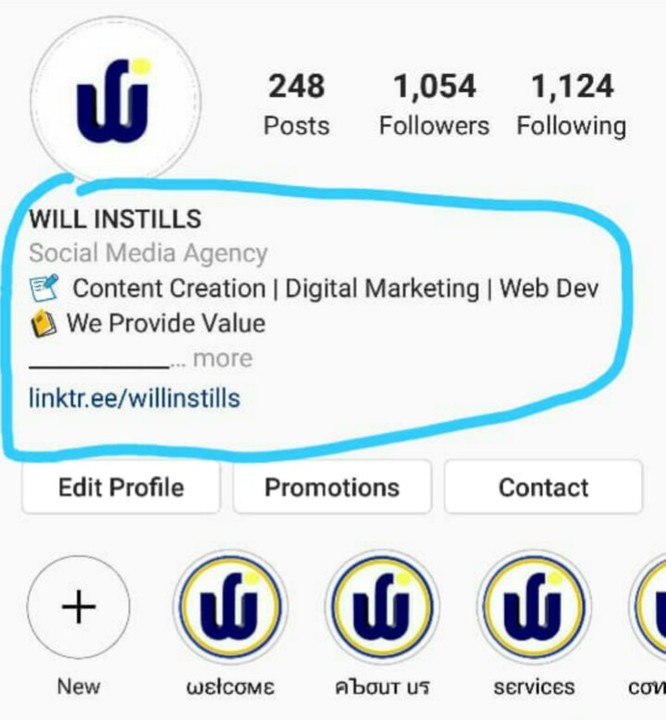
|
| Career › How Do You Define Success? by WILLINSTILLS(op): 6:14pm On Jul 30, 2019 |
Is it by having your name enlisted in Forbes alongside people like Dangote, Otedola, or Bill Gates?
Or could having Money, Power, or Fame mean success to you? Well, success for me involves;
having a balanced life both physically and spiritually;
having a healthy life and a healthy relationship;
Happiness;
having enough finances to have what I want when it is time to have them.
How do you define success?
willinstills.com |
| Webmasters › How To Protect Your Social Media Accounts From Hackers by WILLINSTILLS(op): 2:47pm On Jul 19, 2019 |
When it comes to social media, most people focus on engaging with family and friends. Others focus on how to increase sales, how to make more money, how to satisfy their customers. But have you sat down to think about what could happen if your account gets hacked by cybercriminals?
They could get their hands on confidential information about you that they could exploit. They could get their hands on your card details as most of us engage in online transactions. You know what happens next when they get their hands on it. But what can you do to prevent this from happening?
Do you use the same password for all your social media accounts? Well if you do, you need to start using different passwords for your social media accounts and also your email and any other confidential platforms you have.
Using different passwords helps to prevent your account from hackers. If one of your accounts is hacked then others will be hacked as well.
Another great way to protect your social media accounts is by using two-factor authentication. Two-factor authentication will require you to enter not just your login credentials, but also a unique code that will be sent to your phone. This makes it impossible for hackers to gain access to your accounts. If you are just hearing about two factor authentication for the first time and you are unable to set it up just type interested in the comment section and I’ll be happy to help you out.
willinstills.com |
|


