Igbo In The 1700's - Culture (4) - Nairaland
Nairaland Forum › Nairaland General › Culture › Igbo In The 1700's (43812 Views)
| Re: Igbo In The 1700's by Dindera(m): 3:22pm On Sep 11, 2014 |
This is really interesting! |
| Re: Igbo In The 1700's by londoner: 3:44pm On Sep 11, 2014 |
Interesting indeed. Also, its interesting to read up on the Eboe landing, which involved slaves who had committed suicide after arriving in Georgia, USA as slaves. It seems the name Eboe was used for them, as well as "Red Eboe" as some slaves became known as. |
| Re: Igbo In The 1700's by Nobody: 4:28pm On Sep 11, 2014 |
Dolemite: Yes please.These are the ibo alphabets...a b ch d e f g gb gh gw h i. ị j k kp kw l m n ń nw ny o. ọ p r s sh t u ụ v w y z. Uhm ,let's not derail the thread,send me a pm |
| Re: Igbo In The 1700's by Nobody: 4:29pm On Sep 11, 2014 |
.... |
| Re: Igbo In The 1700's by tonychristopher: 4:43pm On Sep 11, 2014 |
THESE ARE CENTURIES OLD STORIES DOCUMENTED BY A GREAT IGBO SON...THESE ARE OF OF THE VERY MANY REASONS I KEEP THANING GOD FOR CREATING ME AN IGBO MAN HATERS DIE LOVERS LIVE chukwuawka: The Life of Olaudah Equiano |
| Re: Igbo In The 1700's by tonychristopher: 4:45pm On Sep 11, 2014 |
CodeineJunkiee: I can't read this long epistle. Summarize accordinglyBECUSE YOUR HIGH AS A JUNKIE, TRY REHAB OR YABA LEFT |
| Re: Igbo In The 1700's by Nobody: 4:47pm On Sep 11, 2014 |
IYANGBALI: Igbo means forest or indian hempPls who resurrected this old thread,..... why dont ppl leave igbos to ponder over their existance.... Iya Gba sira... u don matd ni eh |
| Re: Igbo In The 1700's by Nobody: 4:54pm On Sep 11, 2014 |
Dolemite: The Igbos I have come across weren't cool, but I still love Igbo anyway, anyone wanna teach me Igbo? pleeeease?Yes .....if you ve not come across any cool then meet the First coolest guy  .... .... So lets start kedu....make it easy by sending me ur phone number...PM |
| Re: Igbo In The 1700's by chibecanglobal(m): 5:21pm On Sep 11, 2014 |
emeka94: (though I have known the males to betroth themselves).He tries to say that used to choose their wives themselves unlike the women who were usually givwn away by their parents or wards. |
| Re: Igbo In The 1700's by mandarin: 5:49pm On Sep 11, 2014 |
Such is the imperfect sketch my memory has furnished me with of the manners and customs of a people among whom I first drew my breath. [/b]we have to first bear in mind that we can count on this account but with a small degree of variance. I have divided his view to cover some aspects of his sociocultural environment: [b]LOCATION This kingdom is divided into many provinces or districts: in one of the most remote and fertile of which, called Eboe, I was born, in the year 1745, in a charming fruitful vale, named Essaka. The distance of this province from the capital of Benin and the sea coast must be very considerable; 'His province in Benin Kingdom was called Eboe' Let's look at his story with today's map and consider some salient points: His village was within the Benin(Benem) Empire and he had never seen the sea. His own native town? was Essaka(or Etsako?) Of these the most considerable is the kingdom of Benen, both as to extent and wealth, the richness and cultivation of the soil, the power of its king, and the number and warlike disposition of the inhabitants. It is situated nearly under the line, and extends along the coast about 170 miles, but runs back into the interior part of Africa to a distance hitherto I believe unexplored by any traveller; and seems only terminated at length by the empire of Abyssinia, near 1500 miles from its beginning. This kingdom is divided into many provinces or districts: in one of the most remote and fertile of which, called Eboe, I was born, in the year 1745, in a charming fruitful vale, named Essaka. The distance of this province from[i] the capital of Benin and the sea coast must be very considerable; for I had never heard of white men or[/i] [b]Europeans, [i]nor of the sea:[/i][/b] and our subjection to the king of Benin was little more than nominal; for every transaction of the government, as far as my slender observation extended, was conducted by the chiefs or elders of the place This could mean that Essaka(or Etsako) was considerably far from the sea and that could be a hinterland settlement obviously not toward the coast. I suspect this man may have been an Olukumi and his description can fit into today's Etsako down to Northern Delta State but far removed from Bini City. PEOPLE My father was one of those elders or chiefs I have spoken of, and was styled Embrenche(tribal marks ); a term, as I remember, importing the highest distinction, and signifying in our language a mark of grandeur. This mark is conferred on the person entitled to it, by cutting the skin across at the top of the forehead, and drawing it down to the eye-brows; and while it is in this situation applying a warm hand, and rubbing it until it shrinks up into a thick weal across the lower part of the forehead. Most of the judges and senators were thus marked DRESSING It is extracted from a berry, and is brighter and richer than any I have seen in Europe. Besides this, our women of distinction wear golden ornaments; which they dispose with some profusion on their arms and legs. When our women are not employed with the men in tillage, their usual occupation is spinning and weaving cotton, which they afterwards dye, and make it into garments. They also manufacture earthen vessels, of which we have many kinds. Among the rest tobacco pipes, made after the same fashion, and used in the same manner, as those in Turkey MARRIAGE CUSTOM [b]Their mode of marriage is thus: - both parties are usually betrothed when young by their parents, (though I have known the males to betroth themselves). On this occasion a feast is prepared, and the bride and bridegroom stand up in the midst of all their friends, who are assembled for the purpose, while he declares she is thenceforth to be looked upon as his wife, and that no other person is to pay any addresses to her. This is also immediately proclaimed in the vicinity, on which the bride retires from the assembly. Some time after she is brought home to her husband, and then another feast is made, to which the relations of both parties are invited: her parents then deliver her to the bridegroom, accompanied with a number of blessings, and at the same time they tie round her waist a cotton string of the thickness of a goose-quill, which none but married women are permitted to wear: she is now considered as completely his wife; and at this time the dowry is given to the new married pair, which generally consists of portions of land, slaves, and cattle, household goods, and implements of husbandry. These are offered by the friends of both parties; besides which the parents of the bridegroom present gifts to those of the bride, whose property she is looked upon before marriage; but after it she is esteemed the sole property of her husband. The ceremony being now ended the festival begins, which is celebrated with bonefires, and loud acclamations of joy, accompanied with music and dancing. [/b] KITCHEN Our manner of living is entirely plain; for as yet the natives are unacquainted with those refinements in cookery which debauch the taste: bullocks, goats, and poultry, supply the greatest part of their food. These constitute likewise the principal wealth of the country, and the chief articles of its commerce. The flesh is usually stewed in a pan; to make it savoury we sometimes use also pepper, and other spices, and we have salt made of wood ashes. Our vegetables are mostly plantains, eadas, yams, beans, and Indian corn RELIGION As to religion, the natives believe that there is one Creator of all things, and that he lives in the sun, and is girted round with a belt that he may never eat or drink; but, according to some, he smokes a pipe, which is our own favourite luxury. They believe he governs events, especially our deaths or captivity; but, as for the doctrine of eternity; I do not remember to have ever heard of it: some however believe in the transmigration of souls in a certain degree. Those spirits, which are not transmigrated, such as our dear friends or relations, they believe always attend them, and guard them from the bad spirits or their foes. For this reason they always before eating, as I have observed, put some small portion of the meat, and pour some of their drink, on the ground for them; and they often make oblations of the blood of beasts or fowls at their graves. I was very fond of my mother, and almost constantly with her. When she went to make these oblations at her mother's tomb, which was a kind of small solitary thatched house, I sometimes attended her. There she made her libations, and spent most of the night in cries and lamentations. I have been often extremely terrified on these occasions. The loneliness of the place, the darkness of the night, and the ceremony of libation, naturally awful and gloomy, were heightened by my mother's lamentations; and there, concurring with the cries of doleful birds, by which these places were frequented, gave an inexpressible terror to the scene There are sometimes visited by stout mahogany-coloured men from the south west of us: we call them Oye-Eboe, which term signifies red men living at a distance. They generally bring us fire-arms, gunpowder, hats, beads, and dried fish. The last we esteemed a great rarity, as our waters were only brooks and springs. These articles they barter with us for odoriferous woods and earth, and our salt of wood ashes. They calculated our time, and foretold events, as their name imported, for we called them Ah-affoe-way-cah, which signifies calculators or yearly men, our year being called Ah-affoe I remember we often had them at my father's and my uncle's, and their families have been present. Some of our offerings are eaten with bitter herbs. We had a saying among us to any one of a cross temper, ' That 'if they were to be eaten, they should be eaten with bitter [/i]herbs.' IMPORTANT We practised circumcision like the Jews, and made offerings and feasts on that occasion in the same manner as they did. Like them also, our children were named from some event; some circumstance, or fancied foreboding at the time of their birth.[i] I was named Olaudah, which, in our language, signifies vicissitude or fortune also; one favoured, and having a loud voice and well spoken. I remember we never polluted the name of the object of our adoration; on the contrary, it was always mentioned with the greatest reverence; and we were totally unacquainted with swearing, and all those terms of abuse and reproach which find their way so readily and copiously into the languages of more civilized people. The only expressions of that kind I remember were ' May you rot, or may you swell, or may a beast take you.' BURIAL I have before remarked that the natives of this part of Africa are extremely cleanly. This necessary habit of decency was with us a part of religion, and therefore we had many purifications and washings; indeed almost as many, and used on the same occasions, if my recollection does not fail me, as the Jews. Those that touched the dead at any time were obliged to wash and purify themselves before they could enter a dwelling-house. Every woman too, at certain times, was forbidden to come into a dwelling-house, or touch any person, or any thing we ate. I was so fond of my mother I could not keep from her, or avoid touching her at some of those periods, in consequence of which I was obliged to be kept out with her, in a little house made for that purpose, till offering was made, and then we were purified. |
| Re: Igbo In The 1700's by kingston277(m): 5:49pm On Sep 11, 2014 |
tonychristopher: THESE ARE CENTURIES OLD STORIES DOCUMENTED BY A GREAT IGBO SON...THESE ARE OF OF THE VERY MANY REASONS I KEEP THANING GOD FOR CREATING ME AN IGBO MANThis is amazing. Always wondered why there were so few first hand African accounts of those times(i'm sure nsibidi records might help us out aswell if they physically survived the test of time). I wonder if Benin, Oyo or any other urbanized kingdom has honest first hand accounts like this. |
| Re: Igbo In The 1700's by tonychristopher: 6:28pm On Sep 11, 2014 |
kingston277: This is amazing. Always wondered why there were so few first hand African accounts of those times(i'm sure nsibidi records might help us out aswell if they physically survived the test of time). I wonder if Benin, Oyo or any other urbanized kingdom has honest first hand accounts like this.I DOUBT, BUT WE LET THE SLEEPING DOGS LIE JUST TO PROUD OF IGBO NATURE OF ME |
| Re: Igbo In The 1700's by CodeineJunkiee(m): 7:02pm On Sep 11, 2014 |
tonychristopher: BECUSE YOUR HIGH AS A JUNKIE, TRY REHAB OR YABA LEFTLmao.. U nor well o |
| Re: Igbo In The 1700's by bigfrancis21(mod): 11:04pm On Sep 11, 2014 |
mandarin: Such is the imperfect sketch my memory has furnished me with of the manners and customs of a people among whom I first drew my breath. [/b]we have to first bear in mind that we can count on this account but with a small degree of variance. I have divided his view to cover some aspects of his sociocultural environment:1) How about the fact that he mentioned that his father belonged to an age group called 'mbrenche' which is actually an Igbo age group called 'mgbirichi', and we have a village off Owerri town today also named 'mgbirichi'? 2) How about the fact that he mentioned that one year in his language was 'afoe' which corresponds to 'afo' in Igbo? Is year called 'afoe' in Etsako? 3) How about the fact that he mentioned that man is called 'weka' in his language which is actually 'nwoke'/'woke' in Igbo? Is man called 'nwoke/woke' in Etsako? 4) What about the fact that he referred to himself as 'eboe' not Etsako? Are you saying someone who was intelligent enough to write an all-perfect autobiography of his would not know the name of his tribe? 5) What about the fact that he actually spoke Igbo and was often called in to quell groups of protesting Igbo slaves by speaking Igbo to them? How could he have spoken Igbo to them if he was actually Etsako? Or if you still want to insist that he was an Igbo-speaking Etsako man would you be willing to agree with me that ancient Igboland extended to Etsako in the 1700s? I'd be glad if you agreed readily to this.  6) How about all the similar atriking hebraic customs of his people he mentioned in his work. Have Etsakos ever been rumored to have hebraic connections, customs or manners? Please point out which of the customs he listed are common with the Etsakos. Meabwhile all the customs he listed out are being practised/habv been practised in the past by Igbos. If you can show me at least a 90% correlation of the customs of his people he mentioned in his book with the customs of Etsakos, then we can actually start discussing on a different level. 7) Does the name, 'Olauda Ikwuano' sound Etsako to you? Does Olauda mean 'heavy voice' in Etsako? 8.) Is Etsako land the only place in Nigeria far from the sea? Anambra and Imo states are equally far from the sea. 9) Noticed he spelt 'i' pronouncing words with an 'e' as in 'eboe' for 'ibo, 'equiano' for 'ikwuano', mbr e nc e for 'mgbur i ch i' and 'e' prnouncing words with an 'a' as in 'wek a ' for 'nwok e '. Following his spelling logic, common sense you would tell that Olaudah the 'essaka' was actually referring to is 'isseke', and there is a village, Isseke, in Ihiala LGA of Anambra state which is said to be the village Olaudah was referring to. http://www.sbnnigeria.com/category/anambra/location/anambra/ihiala/isseke/ 6 Likes |
| Re: Igbo In The 1700's by IYANGBALI: 11:26pm On Sep 11, 2014 |
CHESSBOARD: Pls who resurrected this old thread,..... why dont ppl leave igbos to ponder over their existance.... Iya Gba sira... u don matd ni eh  |
| Re: Igbo In The 1700's by bigfrancis21(mod): 11:33pm On Sep 11, 2014 |
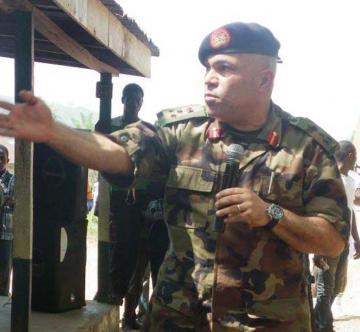
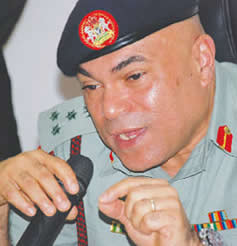
londoner: Interesting indeed. Also, its interesting to read up on the Eboe landing, which involved slaves who had committed suicide after arriving in Georgia, USA as slaves. It seems the name Eboe was used for them, as well as "Red Eboe" as some slaves became known as.Yea, during the slave trade nature found a way to distinguish the Igbo slaves from other slaves by their 'yellowish'/'reddish colour which was quite common mainly amongst the Igbo, hence any light-skinned Igbo was referred to as 'red' and the name 'red eboe' came to be. The name stuck since then and today several caribbean nations and black americans use 'red eboe' or 'red bone' to refer to any light-skinned black person. A typical example of a red eboe today would be the former NYSC Director General, Nnamdi Okore Afia from Abia state. https://img.thenigerianvoice.com/images/content/brig.gen.nnamdiokoreaffia.jpg https://informationng.com/wp-content/uploads/2013/03/NYSC-DG.jpg Below are snapshot images from a book, 'The Igbo Response to Enslavement in America' in which the author listed out several adverts of runaway Igbo slaves, and about half of the adverts he listed out detailed the physical characteristics of the runaway slave by the slave master and many of the Igbo slaves can be seen as described as having 'yellowish skin'. http://books.google.com/books?id=ssQOIgZpTaoC&pg=PA117&lpg=PA117&dq=mullins+writes+that+the+igbo+were+viewed+everywhere+as+%27suicidally+despondent%27&source=bl&ots=RKPj_pqBhS&sig=-78FLciyGo4V0WWpxYTO6JwiZBI&hl=en&sa=X&ei=mx8SVKy7GPOBsQTg-IL4BA&ved=0CCAQ6AEwAA#v=onepage&q=mullins%20writes%20that%20the%20igbo%20were%20viewed%20everywhere%20as%20%27suicidally%20despondent%27&f=false This, however, does not mean there were no dark-skinned Igbo slaves. There were many of them but the prominence of light skinned ones among the Igbo slaves, more preponderant than in other slave tribes, singled the Igbo tribe out. 2 Likes 1 Share
|
| Re: Igbo In The 1700's by IceMan85(m): 3:40am On Sep 12, 2014 |
This show that Igbo's are the missing Jews. Our bravery and skills are only associated with the jews. |
| Re: Igbo In The 1700's by mandarin: 4:50pm On Sep 12, 2014*. Modified: 5:06pm On Sep 12, 2014 |
bigfrancis21: 1) How about the fact that he mentioned that his father belonged to an age group called 'mbrenche' which is actually an Igbo age group called 'mgbirichi', and we have a village off Owerri town today also named 'mgbirichi'?Thanks Francis. I always love critical assessment of any historical fact(may not be the truth) and if we take this write up as a fact then there are salient issues to be examined: 1.If it were to be Anambra there would have been a big river to cross in River Nigers which Olaudah would have at least heard of from his kinsmen that had traelled to the imperial Benen(Benin) 2. The translation of his name which probably he wrote by himself have meaning in different languages within the old Benin Empire as it was not only Igbo I was named Olaudah, which, in our language, signifies vicissitude(expression of fortune that transform which in some language could me my wealth has come, I made it , my wealth has increased or multiply etc) or fortune also; one favoured, and having a loud voice and well spoken Is Ola wealth or fortune in Igbo or is it someone favoured, or of great repute.....that is to have a loud voice or brilliant, is that Ola in Igbo? That was why I said this man is a mixture of culture because his name is olukumi. Francis please dispute this. He never talked about ....udah(good, well and remeber he would stich with the fame he was known with by the slave masters) or Ikweano(why not Iku or Ikwu?) as you said giving everything your own translation. Let what he wrote be the fact. 3.Due to the cosmopolitan nature of the Benin Empire stretching from Anambra through present day Delta and at certain times Ondo and Ekiti states of today there were mixed cultural lives of the people and acculturation would obviously filter in( Take Ukwu would fit in as death in some Yoruba/Edoid dialets and Olukumi may be also Igbo but would be Ikwu in Oyo Yoruba). From the knowledge of African culture I have, his cultural orientation encompassed three African culture/societies all in parts due to the admixture of culture in which he grew. 4. He talked about a people who actually came to help them with the calender and I can almost give you a translation, not just in Igbo but in other similar languages e.g 5. Accordin to him '' This kingdom is divided into many provinces or districts: in one of the most remote and fertile of which, called Eboe, I was born, in the year 1745, in a charming fruitful vale, named Essaka'' He believed his native province was remote( backside of the Kingdom or far removed), his native province /district was called Eboe and his village was Essaka. You believed Eboe was right but Essaka would be Isakka or what did you call it? I just want to be factual; wealth or fortune in Igbo is AKU but you are at liberty to take me on on this. If by what he wrote is to be factual Essaka is like pro-Edo Olukumi word and I suspected and suggested Esako area of Edo or Olukumi of Delta. 6.There are sometimes visited by stout mahogany-coloured men from the south west of us: we call them Oye-Eboe, Who would you put the Oye-Eboe people he so referred? what is the meaning of Oye in Igbo? 7. 3) How about the fact that he mentioned that man is called 'weka' in his language which is actually 'nwoke'/'woke' in Igbo? Is man called 'nwoke/woke' in Etsako? You talked about 'Weka' that is Edo where we have 'Iweka' and its more comprehensible than 'nwoke' which is a masculine term while Iweka or weka is a name of a person. I didn't come here to change your orintation or the faith Igbo kinsmen have been holding to but obviously 'Olaudah' obviously did not come from anywhere east of the Niger and in 1775 a whole lot would have changed by 1900. Igbo itself mean what in Igbo? There is a tribe called Ugbo Kingdom in Ondo State ...more soon They calculated our time, and foretold events, as their name imported, for we called them Ah-affoe-way-cah, which signifies calculators or yearly men, our year being called Ah-affoe - Francis, you will concur that some people often came as calender year and the name they called those people was in the transliteration of their own native language 'Ah-affoe-way-cah' or counting on your fingers? They derived their own calender from what they learned fromthose men....... I have a meeting will get back to you later. |
| Re: Igbo In The 1700's by Nobody: 6:20pm On Sep 12, 2014 |
mandarin: Thanks Francis.your argument lacks merit, Ola is an igbo word, Igbos still bear it as a name, eg Olaedo which mean gold, ola means something that is treasure in my Igbo (my town)have u heard ola aka ie bangle, so I find your argument baseless. Pls no insult intended |
| Re: Igbo In The 1700's by Nobody: 8:31pm On Sep 12, 2014*. Modified: 1:16am On Sep 15, 2014 |
mandarin. your argument sounds really nonsensical. I suspect you need to first learn the language of the eboes first...there's a reason i didn't say igbos. then learn the dynamics of english writing/elocution i.e orthography over the centuries, and learn a bit of real history of slavery and the cultural history of the alternative people you're assuming to be the genuine roots here. at best, you sound so far and lost. and i say this without any intention of being disrespectful NB; oye in igbo, means: the second day of the four-day week (Oye or Orie in some dialects), Oye( a rotational market day and title of same market diety/oracle), Onye --Oye(enugu/wawa enunciation, meaning 'person of or from...') Oye(bearing in mind archaic English enunciation which must have been intended to sound as Oyi, awyee and meaning: friend, mate, '..in semblance of a given kind of people', cold, a kind of person from a given place, class or trade/profession...) etc |
| Re: Igbo In The 1700's by Nobody: 9:21pm On Sep 12, 2014 |
Olaudah left enough ethnographic detail in his book for us to know he was describing an Igbo society. (Whether it was an eye-witness account or not is another matter.) Didn't we have this discussion sometime last year? https://www.nairaland.com/1430104/description-18th-century-nigeria-nigerian#17978852 Funny enough someone on that thread also brought in this Etsako line, and someone else argued that the society Equiano described resembled Edoid more than Igbo...even though he couldn't identify a single distinctly Edo cultural trait in the book. People should at least read the book, and then familiarise themselves with Igbo culture before making up these stories about Etsako and Edo, and (from what I see on this thread), Olukumi and Ugbo in Ondo State. 1 Like |
| Re: Igbo In The 1700's by pazienza(m): 11:01pm On Sep 12, 2014*. Modified: 11:26pm On Sep 12, 2014 |
I think, the problem you lots have is trying to to make Olaudah a South Eastern. Olaudah was Igbo, but he wasn't a South Easterner, he was from the part of Igboland that was under Bini influence, he even gave the name as Essaka. It can easily be seen that Olaudah was from Anioma part of Igboland, and that the Ukwuani town, Ashaka, could easily be the Esaka he speaks of. And not some far fetched town in Ihiala or Imo. Ola= Jewelery/wealth, Udah= sound/noise/loud. Olaudah= Wealth that resonates, a kind of great wealth( fortune). 1 Like |
| Re: Igbo In The 1700's by Nobody: 1:03am On Sep 13, 2014*. Modified: 1:46am On Sep 15, 2014 |
pazienza: I think, the problem you lots have is trying to to make Olaudah a South Eastern. Olaudah was Igbo, but he wasn't a South Easterner, he was from the part of Igboland that was under Bini influence, he even gave the name as Essaka.my further suggestions bolded you have a point. However, i wonder why his captors didn't take the river niger route down the creeks and headed towards badagry, instead the further west they took him into Benen, the more he encountered people who spoke his language and lived like his eboe people. I also wonder why calabar slaveport where they probably journeyed to wasn't/isn't in Benen(Benin). and i hope u do know that Olu-uda-- Oluda means loud voice. (if some anglicisation happened to Ikwuano--Equiano, why won't it also affect the notation of his firstname?) i won't know, but your Ashaka notion sounds implausible tho |
| Re: Igbo In The 1700's by bigfrancis21(mod): 4:31am On Sep 13, 2014*. Modified: 5:32pm On Sep 13, 2014 |
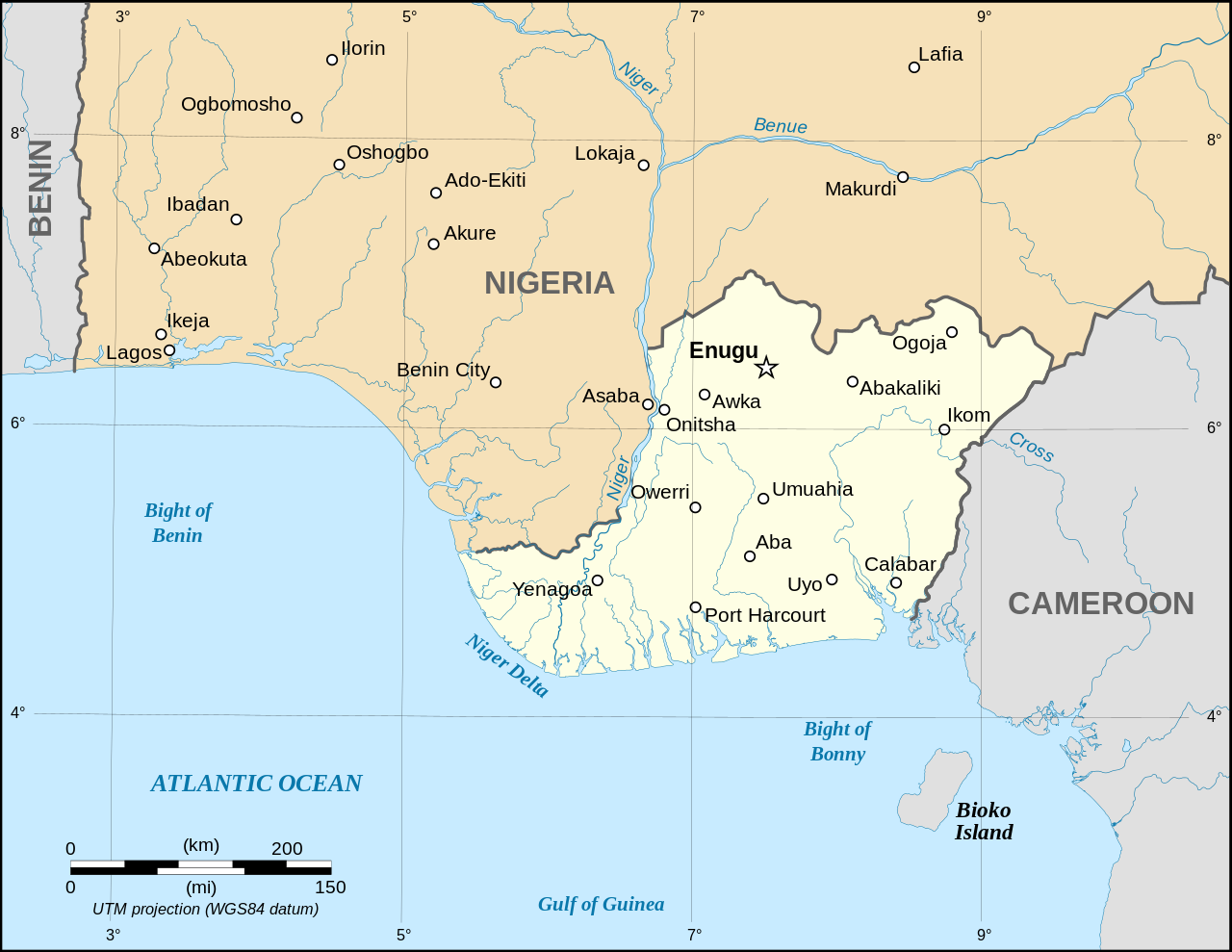
mandarin: Thanks Francis.1) In his memoir, Olaudah never mentioned coming across a sea until he got to the atlantic ocean where he sighted the huge slave ship. Let us assume for a minute that he was truly from Etsako. If he was, then there are two possibilities of what bight he was sold out from - bight of benin at lagos or bight of bonny at calabar or opobo. He could not have been sold at Calabar or Opobo(bight of biafra) if he was captured around Benin city which is closer to Lagos than it is to Calabar or Opobo. Now, Olaudah mentioned that his journey from the day he was kidnapped till the time he arrived the sea took about 6 months and as he travelled downwards he kept coming across villages and people who spoke similar dialects to his own native language and over the course of his exchanging hands from master to master he acquired several dialects along the line. A journey of foot spanning over 6 months would logically tell you that the area covered in that 6 months with similar relating dialects had to be a big land consisting of the same-language speaking people. If this is so, does Etsako land fit this description of an ever-expansive area which can't be covered by foot in at least 3 months? If Olaudah was in modern day Benin, he most likely would have been taken westwards towards Lagos and sold at the Bight of Benin which seems unlikely as he would have come across several different ethnic groups, the Ijaws, Urhobos, Itshekiris, and Yorubas who all speak entirely different non-similar languages to Etsako, thus cancelling out that possibility of Etsako origin. The area of Igbo-speaking peoples stretches out over hundreds of kilometres from Anambra all the way down south towards the atlantic ocean. Since records have it that most slaves captured east to the Niger were sold at either calabar or opobo, then most slaves were moved eastwards, and not westwards towards lagos. Olaudah in his memoir did not encounter a river or sea somewhat till he got to the sea. Travelling from Anambra, Enugu, Imo, Abia, Ebonyi state towards Opobo or Calabar one would not encounter any sea or water bed, which Olaudah confirmed in his memoir thus validating his origins in south east. He could not have been from Ashaka in Delta state as he would definitely have mentioned crossing the river niger from asaba to onitsha in a boat or something during his journey to the slave port but he never did. And it is unlikely that he was a delta Igbo on the other side of the river since he would have had to be moved westwards towards lagos and slave records have not reported Igbo slaves to be sold at the port of lagos. Since all Igbo slaves, including Olaudah and his sister, were sold at either calabar or bonny, and he also did not ever mention crossing the river niger first before reaching the slave port, then his origin has to be in south east Igboland. https://upload.wikimedia.org/wikipedia/commons/thumb/e/ef/Biafra_independent_state_map-en.svg/1280px-Biafra_independent_state_map-en.svg.png Not all areas of Anambra were under benin occupation or rule. Excepting the much speculated onitsha area in anambra state, entirely other Igbo villages were independent of Benin rule. Ihiala LGA, though in Anambra state, is a stonethrow away from nearby imo state and very far from Onitsha, being on the opposite end of Anambra state, isolated from bini kingdom and with little or no links to the Bini at all, thus making it more plausible why he never heard of the Bini kingdom from his elders. 2) Olaudah himself gave the meaning of his name as 'having a loud voice and well spoken', which is the exact one meaning of his name in Igbo language, which also has other meanings outlined by Pazienza above. Do not act blind to the fact that a name can have many meanings. The Igbo name, Eke, means 'creation' or 'eke' the snake depending on the context of usage. The name, 'Ugochukwu' literally means 'God's eagle' and symbolically means 'God's magnificence or greatness', a symbolic meaning deriving from the magnificence of the eagle bird. Olauda literally means 'loud voice' and symbolically derives from one who is significantly wealthy whose voice/influence, as a result of his wealth, resonates heavily across the town. If you think Olaudah was Etsako, or moreso other eboe-sounding words he listed why don't you tell us their meanings in Etsako instead of just countering what is already obviously the truth? 3) Wealth in Igbo has several names not just aku but also uba, ego, and ola(treasure). 4) Follow his spelling logic and figure out that he might actually have meant 'isseke' and not 'Etsako'. 'i' sounding words were spelt as 'e' just as 'Igbo' was spelt as 'eboe', 'mgbirichi' as 'mbrenche', 'ikwuano' as 'equiano' etc. Remember that he wrote his book at a time when no official standardized Igbo orthography had been produced and hence followed the anglicized spellings of Igbo names, like for example spelling the 'gb' consonant as simply 'b' instead in 'mgbirichi'. With the modern Igbo spelling orthography, the proper renderings of Igbo names have been established. 5) '...They calculated our time, and foretold events, as their name imported, for we called them Ah-affoe-way-cah, which signifies calculators or yearly men, our year being called Ah-affoe...'Please, 'imported' in his usage does not mean something introduced from a different place, ie 'affoh weka' as a name was imported by his people from the Igbo people and hence his people referred to the calculator men by the name they called themselves natively. The word, 'Imported' also means 'implied' and that is what he was referring to when he used that word. I would suggest that you expand your vocabulary on the other meanings of a word to acquaint yourself with their possible usages. Replace that word, 'imported' with 'implied' and get the intended meaning of what he was trying to say. our year being called Ah-affoe... Tell me you didn't see that one solid evidence pointing to an Igbo culture. Or maybe you purposely chose to play blind to that fact. He mentioned clearly that 'year' is called 'afo' in his language and 'year' in Etsako is 'ukpe' while in Igbo it is 'afo'. http://etsakolanguage.com/times.html Please tell us what 'man' is called in Etsako? 6) You have failed to answer this question, how about the fact that he was Igbo speaking and spoke Igbo in the diaspora to his 'townsmen' he met during his sojourn? How about the fact that he was called in severally to calm down protesting groups of eboes because he spoke Igbo language and not Etsako? How can an Etsako born be speaking Igbo and not Etsako? We all know that language is a major identifier of one's origins and Igbo tribes of yore were not won't to colonizing other peoples and imposing their languages on them, hence any person who spoke Igbo as first language had to be truly Igbo himself. The meaning of his name has been given in Igbo - Olauda(one having a loud voice). Ikwuano LGA exists today in Abia state. If you think he was Etsako, then come up with the meaning of his name in Etsako. Olaudah left several evidence that point to his Igbo origin: Language: he mentioned clearly that he spoke the Igbo and not any other language. Tribesmen: he constantly referred to other eboes in london and america as his 'fellow townsmen'. Linguistic evidence: he left a lot of linguistic words that all point to an Igbo origin such as 'afo', 'weke', 'mbrenche' etc which are not Etsako words in anyway. Cultural: he described typical Igbo traditions and customs in his memoir some of which are still pactised in Igboland today. Personal identity: most importantly, he identified himself as eboe and mentioned specifically that he spoke the eboe language. Since the man identified himself as Igbo and not Etsako why would you want to impose a different identity on him just because it suits your idiosynchrasy? So far none of the evidence, linguistic, cultural etc left behind by Olauda points to an Etsako origin. In published books and on online materials he is recognized as Igbo born and it still stands today. The fact that he mentioed bight of benin does not discredit all other massive evidence he dropped pointing to the Igbo culture and not one ever, not even one, to the Etsako culture. Far advanced researchers and historians alike know this and would not tow that line of error which you are towing. Olaudah Ikwuano was an intelligent black man, who wrote an intelligent memoir of his Igbo culture, and some people like you deem it fit to claim him as theirs because of the outstanding feat which he performed.
|
| Re: Igbo In The 1700's by Ihuomadinihu: 9:25am On Sep 13, 2014 |
The fact is that nobody can take away Olaudah Ikwuano from Igbo history and narrative no matter how hard they try. Estako ko? Lol. Olaudah was the first person to attempt writing igbo words,how many did he write in Estako. These confusionist are the same people that cause friction between Anioma and their Igbo relatives. Smh!! |
| Re: Igbo In The 1700's by Nobody: 11:16am On Sep 13, 2014 |
pazienza: It can easily be seen that Olaudah was from Anioma part of Igboland, and that the Ukwuani town, Ashaka, could easily be the Esaka he speaks of. And not some far fetched town in Ihiala or Imo.There is no evidence at all in the book to support an Ukwuani origin for Olaudah. Everyone is laying too much emphasis on his casual reference to the kingdom of Benin and ignoring everything else he said in the book about cultural practices among his people. Benin was a kingdom of far-reaching influence, and its influence (in some capacity) was also felt East of the Niger. Even before Olaudah’s book was published, a European missionary called Oldendorp interviewed Igbo slaves in the Caribbean, around the 1760s. The Igbo slaves told him that the Ibibio lived right next to them. That there was a place called Alo (Aro?) not far away, and that Igbo traders went there to purchase guns, gunpowder, cloth etc. That they (Igbos) were engaged in perpetual war with some cannibal tribes called Igan and Evo (probably the Cross River groups whom the Eastern Igbo were fighting with for much of the pre-colonial period). And that – now this is the interesting part – they (the Igbos) were ruled by a king called the oba! If we take the allusion to ‘the oba’ in the testimony of these slaves, we might be tempted to conclude that they were Western Igbos, under the suzerainty of the Oba of Benin. But I cannot imagine an 18th century Anioma man saying he lived next to the Ibibios and close to Arochukwu; I doubt the Aniomas of that period even know of the existence of the Ibibios to start with. The people Oldendorp spoke with were therefore almost certainly Southeastern Igbos. So we have a group of Southeastern Igbos in the 18th century (same century as Olaudah) telling Europeans that they were under the rule of an Oba, who is almost certainly the Oba of Benin! This should be an indication that making reference to Benin Kingdom or its political authority cannot be an index for determining where in Igboland Olaudah came from, since we have Southeastern Igbo slaves in the same century as Olaudah also making similar claims to being ruled by the Oba of Benin. I’m not saying the Oba of Benin ruled any portion of the Southeast. In fact, there’s no evidence that he even ruled any part of Ukwuani. But the Oba certainly featured prominently in the lore of the people both east and west of the Niger for them to fit him into their worldview, one way or the other. And that is exactly what Olaudah did – fit this distant ruler into the worldview of his people. It is in no way evidence that Olaudah came from Ukwuani. On the other hand, we have many indicators that make it very unlikely that Olaudah came from Ukwuani. Take the linguistic evidence, for instance. ‘Year’ in Ukwuani is not ‘Ah-affoe’ or ‘Afo’, but ‘ashua’. I don’t know how they say ‘Ola’ (ornament) or ‘Olu’ (voice) in Ukwuani, but based on what I know of the N/L principle as it applies to Ukwuani language, my guess is that they would say ‘Ona’ or ‘Onu’. Mgburuichi or cutting of the ichi marks on people’s foreheads is not associated with Ukwuani, as far as I know. The only people west of the Niger that practised ‘igbu ichi’ to an extent were the people of Aniocha/Oshimili axis. Olaudah also spoke about snakes as ‘thick as a man’s calf’ which his people did not kill, an obvious reference to the sacred python in the Idemmili and neighbouring areas of the Southeast. The Ukwuanis I know say they don’t have a ‘python tradition’. I do not know of any Western Igbo community that reveres the python. It appears (to me) that the python cult is limited to certain communities in Anambra and the northern section of Imo. Olaudah says fish were ‘a great rarity’ in his village. Doesn’t that sound strange if he was from a riverine clan such as Ukwuani? Ashaka is on the banks of the Ase River, isn’t it? A lot of fishing still goes on in that general area. I can’t imagine fish being a great rarity there in the 18th century. Ashaka and Ukwuani are right there on the southern end of the Igbo-speaking world. If, indeed, Olaudah was taken from there, one would expect that in moving him south, it wouldn’t be too long before his captors got him out of Igboland. But Olaudah told us that much of the territory he passed through for many months before finally reaching the coast spoke languages that were very close to his own, and that he had little difficult in understanding them. These languages that were close to his own and which he had little difficulty understanding were probably different Igbo dialects. So, Olaudah was taken through different Igbo dialect zones before he finally reached the coast. Olaudah himself told us that his captors took him south. How does one moving southwards from Ashaka pass through different Igbo dialect zones (and for many months) before finally reaching non-Igbo-speaking territory? Isn’t Ukwani the LAST ‘Igbo’ dialect zone before one gets to Ijaw/Isoko/Urhobo non-Igbo-speaking areas? Taking all the evidence in the book, the most likely hypothesis is that he came from the ‘north central’ Igbo area, covering southern Anambra and northern Imo States. The nearest match for ‘Essaka’ that we can find in that area is Isseke in Southern Anambra. The ethnographic evidence (and to some extent, the geographic evidence) in the book points to that general area. 3 Likes |
| Re: Igbo In The 1700's by Nobody: 11:24am On Sep 13, 2014 |
Radoillo: There is no evidence at all in the book to support an Ukwuani origin for Olaudah. Everyone is laying too much emphasis on his casual reference to the kingdom of Benin and ignoring everything else he said in the book about cultural practices among his people. Benin was a kingdom of far-reaching influence, and its influence (in some capacity) was also felt East of the Niger.perfect. |
| Re: Igbo In The 1700's by ezeagu(m): 8:06pm On Sep 13, 2014 |
Radoillo: There is no evidence at all in the book to support an Ukwuani origin for Olaudah. Everyone is laying too much emphasis on his casual reference to the kingdom of Benin and ignoring everything else he said in the book about cultural practices among his people. Benin was a kingdom of far-reaching influence, and its influence (in some capacity) was also felt East of the Niger.Vassa was kidnapped around age 11 and wrote the book in his 40s, he openly admitted to having reconstructed parts of his description of 'Eboe' from the accounts of his fellow 'Eboe' 'countrymen'. It could have been that Vassa had unknowingly adopted some false memories from the tales of his comrades which is why it's so difficult to pinpoint where he could have come from. There could have been an Essaka that no longer exists because it was either wiped out or incorporated into another population and forgotten (by the wider world). It's also possible that it could have been a smaller hamlet than in Gustavus memory, or that he mispronounced the name or got the name wrong. My opinion is that he's from the West because he explained crossing a massive river that of which had a body of water he had never seen before, (which I believe is the Niger), and I believe his captors were travelling towards the south east and were coming down to the region between Brass and Bonny. I think it's even likely that he was held around the Abonnema/Buguma Kalabari people who were the ones that he stayed with and liked. From here he would have been taken to the coast. The people with 'harsh' scars were probably the people we now know as Ijo in the Yenagoa are. |
| Re: Igbo In The 1700's by bigfrancis21(mod): 9:50pm On Sep 13, 2014 |
ezeagu: Vassa was kidnapped around age 11 and wrote the book in his 40s, he openly admitted to having reconstructed parts of his description of 'Eboe' from the accounts of his fellow 'Eboe' 'countrymen'. It could have been that Vassa had unknowingly adopted some false memories from the tales of his comrades which is why it's so difficult to pinpoint where he could have come from. There could have been an Essaka that no longer exists because it was either wiped out or incorporated into another population and forgotten (by the wider world). It's also possible that it could have been a smaller hamlet than in Gustavus memory, or that he mispronounced the name or got the name wrong.@bold 1...i'd like you to quote the pages from his memoir he said that. @bold 2...That large sea body was the atlantic ocean or middle passage. Olaudah never mentioned crossing any water bed or river until he got to the slave port at the atlantic ocean where he was sold. If he was from the west and sold at the bight of bonny(opobo or calabar), he would have encountered the first river, river niger, crossing from asaba to onitsha, travelling on foot for some months and then finally meeting the atlantic ocean where he was sold off. Or better still, he would have ridden in a boat along river niger down to brass/opobo where he would meet the slave ship and be finally sold off. But this seems unlikely because of two reasons: 1) Olaudah mentioned that he travelled on foot till he got to the atlantic ocean. He never encountered any water body before that time. 2) The only time Olaudah mentioned meeting a river body and the slave ship that carried him was when he arrived the atlantic ocean at either opobo or calabar. The slave ship docking at river Niger seems totally unlikely as the river Niger would have had to be dredged to permit the huge slave ship of several layers of cabinet, huge enough to fit thousands of slaves, to dock there. Till today, the river Niger still needs to be dredged to enable direct ship docking there. Moreso, slave masters did not venture directly into the Igbo heartland area scouting for slaves - Igbo slaves were captured from the heartland and transported southwards to Opobo and Calabar to be sold off to the enslavers. Because if you claim the river Olaudah met was river Niger, then you are implying that slave ships ventured deep into the Igbo heartland at Onitsha/Asaba to dock there where Olaudah was sold. No slave record has shown that slaves were bought at the River Niger. 1 Like |
| Re: Igbo In The 1700's by bigfrancis21(mod): 10:05pm On Sep 13, 2014 |
I'm thinking, a hollywood/nollywood movie needs to be acted on the story of Olauda Ikwuano, if one has not been acted yet. This is a great storyline for a movie. |
| Re: Igbo In The 1700's by Ihuomadinihu: 11:54pm On Sep 13, 2014 |
ezeagu: Vassa was kidnapped around age 11 and wrote the book in his 40s, he openly admitted to having reconstructed parts of his description of 'Eboe' from the accounts of his fellow 'Eboe' 'countrymen'. It could have been that Vassa had unknowingly adopted some false memories from the tales of his comrades which is why it's so difficult to pinpoint where he could have come from. There could have been an Essaka that no longer exists because it was either wiped out or incorporated into another population and forgotten (by the wider world). It's also possible that it could have been a smaller hamlet than in Gustavus memory, or that he mispronounced the name or got the name wrong.Guy,are you igbo at all. So all the igbo culture and words in his narrative links up with Western Nigeria? I have a lot to write but i will start from the harsh scars. Have you read about the Nri igbos and the scarification? These scars were for noble men known as Mgburuichi. Ichi marks were done on men who venerated the Sun called Anyanwu in Igbo. |


Ebira Has Elements Of Igbo In It Or Am I Wrong • Where Can I Learn Igbo In NYC? • The Home Of The Igbo In Nigeria • 2 • 3 • 4
Stop Electing Leaders Without Education To Public Offices – Sanusi • Tear Gas Fired At Ooni Of Ife During Sowore's Visit (PHOTOS) • Some Misconception About Warri And Her People