JagabanB: When you are trying to analyze a problem, analyze that problem with points that when addressed, most of the problems will be solved, your points even when addressed doesn't solve most of the problems that's the message I'm passing to you, a proper research and critical thinking will go a long way. Irrespective of the fact that I'm not in support of teachers caning students and my reason is because it stresses the teacher, there is a sharp difference in behavior of a student who experienced caning and the one who didn't, the one who experienced learnt that there are consequences to actions that he takes and the one who didn't is highly unaware of consequences, this doesn't hold in all cases but that's a general over view, you can handpick students from the two classes and see the difference. In a nutshell, caning is not what is wrong with the system so it should be a side point not a main point.
I don't have the statistics to prove or disapprove that "most Nigerian schools" has computers or not, but that's not the argument, you made your presentation like you won't find a school in the whole of Nigeria that uses computers for practicals, that's what I'm against. Whatever you will learn for transformation in the real world is never learnt in a computer class, engineering is a different field on it's so that analogy does not hold. Students in Nigeria in many many many many schools use computers for lessons hands on, some schools have computer lab, I am sure of that because I have seen several schools with properly functioning computer labs. Another thing you should understand is that u don't just walk up into a computer lab in primary and secondary schools simply because you are free, computer classes are moderated, even in universities, I will use Russia as an example here, in the university, you don't just wake up, pick ur protective gadgets and walk into the lab because u have free time, you have to meet with the instructor in charge of that rig and explain what you want to do in the lab to him, he will ask you series of questions and if u don't answer them satisfactorily u won't be allowed to operate in the lab. In Nigeria here, students don't even follow lab instructions, ordinary "put on a lab coat" if teachers and instructors don't employ corporal and hard punishments, students down to the university level can't adhere to such simple instructions, those of u complaining about corporal punishments, are you in tune with the society at all? Do u interact with students and schools at various levels or u just watch the west and start critîcizing? There are over 200m Nigerians in Nigeria, you can't find 1/4 of that number of Nigerians outside Nigeria. In the 200m, over 120m can afford migration yet they decide to live in Nigeria, only few of my family members did migrate, some to UK, some to US some to Canada, if the rest of us wants to migrate, we will do so but we all prefer living here, even the ones born in the UK spend more time in Nigeria than the UK, there millions of Nigerians who went out to school and the moment they finish they rush back home, the ratio of Nigerians that are hungry for migration to those who are not is less that 1:4, that is to say, out of 200m Nigerians, not even 50m are hungry for migration so ur analyses of "most" is wrong.
Hi, thanks for replying. I’ve addressed someone of what you mentioned in my previous posts so I won’t address everything you wrote here.
To your first point, I’m not sure what you mean that someone must analyze problems in a way the problems are solved. The point of my post was not to give solutions or policies that will solve Nigeria’s problems but to call out the fact that things are wrong, with some particular examples in order to lead to conversation on those matters and further our understanding. Not every post has to be an analysis of the problem in question with the particular solutions to it like you seem to suggest.
To your next point. That children can sometimes seem well behaved in order for them to avoid being flogged does not mean they are more mature or that they know the difference between what is right and wrong in the specific matter. It means that they know doing one thing will lead to the horrible treatment of their teachers and the other will not. What do you think might happen if the teacher is no longer there to flog the child? The child would probably immediately regress. Let’s say the teacher flogs the child and imparts so much fear in the child that even when the teacher cannot longer flog the child for doing a certain thing, the child will still not do it because the fear has derived him of his autonomy to do so. Well… you mentioned critical thinking in your post, my question to you is how does this encourage critical thinking? How does making a child so afraid of what will happen if he does anything but a particular thing encourage in the child the ability to think critically and deeply about the matter? That is to think about why the matter is even so in the first place.
You’re right that computers in primary and secondary schools, even Universities are moderated. I’m very aware of this and my point in my previous post is not intended to be against this. However, to my knowledge the system in many western schools is very advanced that the students do not need a supervisor by their side when using the computer if that is what you are suggesting. They sometimes do not even need to notify a supervisor. Rather the computers are programmed to moderate what the user can do with it and who can log in therefore use the computer. The schools typically have an online platform requiring a student ID and password that are used to log in to these computers. If any issues arise there may be a supervisor/helper in the room that they can meet or nearby. Chemistry labs and similar are not the same as this and I did not mention that in my post. They do not have a way to moderate them as easily and require greater care to not lead to danger.
Yes I have interacted with students in schools both in Nigeria and in the west. Not only that, I have gone to school in both places (Nigeria and U.S). And to say that students who were not raised with corporal punishment do not know that there are consequences to their actions is very inaccurate and seems to me like you would have to be very out of tune with such people to make such a statement. You should understand that corporal punishment is not the only way to discipline or correct a child.
Your last claim I believe of saying that 120 million Nigerians can afford to go abroad (the U.S and other 1st world countries and afford it in the way I described in my previous post) but simply choose not to because they prefer their home is very incorrect. The barrier of relocating via immigration alone is something that 120 million Nigerians will not pass. Then the cost of living in the U.S and other first world developed countries is higher and even extremely higher than here in Nigeria. Nigerians who even make it to the U.S don’t go there and are living large immediately but still suffer a lot trying to make a living, many times even more than they did in Nigeria but they go through it knowing the result will be better at the end.
JagabanB: The big probIem with Nigerià is making analyses with points that are pointless. Was Albert Einstein a kid when he made those discoveries, were discoveries made by kids, 16 year olds are in various universities, are they using cane on them? The cane analysis is pointIess when talking about educational system. Another pointless point is making analysis with someone doing theory of computer and others doing practicals, there are tons of schools in Nigeria using computers for practicals and whatever you need to cause transformation in the world today is not learnt in the classroom, another pointless point. Another pointless point is saying it's lack of means keeping Nigerians in Nigeria, millions of Nigerians can afford migration cost yet they are here in Nigeria because there's no place like home, that's another pointless point, you folks should visit Quora and learn how to communicate with substantial point, you are trying to convey an important message that's delivered with so many pointless points and u ended up passing no message or rather misleading people who are alien to Nigeria with this analyses, the only thing you got spot on here is the health sector, educationaI system is not right but ur analysis about it are totally off point because those things u mentioned are not actually what is wrong with the system.
Hi,
Thanks for your reply. I will address some points you raised below.
As for my Albert Einstein analogy with fear of the cane, I was simply making the point that it is not fear that drives someone to work devotedly on something.
There are many issues with beating a child I.e corporal punishment that have been proven by several studies. I can describe them here but I do not feel the need to, you can easily search and find this yourself. However, if you cannot find them yourself, you can ask me and I will link them here.
Also, I agree that great accomplishments do not typically happen in the levels where corporal punishment is practiced i.e up to Secondary School. However, it should be obvious that how someone is treated at a young age can have significant effects on how they will perform later in life. Corporal punishment can have very negative effects to the individual even still later in life whether the person is aware of it or not.
Another point you mentioned is that many Nigerian schools have computers for practical use. My question to you is do *most* Nigerian schools have updated computers for practical use? Do they allow the students to practice with it in his free time? You support your point by saying that whatever is used to cause transformation in the world today is not learnt in the classroom. Your point to me is like saying that because they don’t teach one new innovations in engineering in the classroom, that the algebra and various things one learns in the classroom is not useful for these innovations to come about. That is not true.
Now on your claims about the usefulness of children having computers to practice, specifically. Having computers available at schools for children to practice, provides them with the opportunity to build a strong foundation in digital literacy and the use of the computer in general which can in turn spark great interest and passion for computers in a child that will of course influence the child’s later activities. There are also many computer softwares that children can practice with which provide the opportunity to not only nurture critical thinking but nurture it using applications that are currently used professionally in real life. Imagine the head start this child would hav by the time he enters University. There is so much benefit. I can give real life examples of this that I have noticed with students from other countries but I don’t think it’s necessary.
Lastly you said millions of Nigeria can afford the cost to migration but they choose to stay because Nigeria is their preference. First I will point out that I said means is preventing “most” Nigerians and Nigeria is a country of over 200 million people. So while there might be millions of Nigerians that choose to stay in Nigeria, there are millions that have relocated from Nigeria and many millions that would do the same if they really had the means…
Also let me point out that, someone being rich in Nigeria does not mean they can afford to live an equivalent level of lifestyle in the US or UK, or that they can even afford to live there at all for an extended period of time. The cost of living is significantly higher and getting a good paying job there as a foreigner from a country where the degrees are not really recognized is also very very difficult even if the person has superb positive experience in their own country. So unless the person has some very good plans to live there, they would be surprised to find they do not actually have the means to do so.
There are of course Nigerians who choose to stay in Nigeria. I’m not doubting that. I know of some that went to U.S for University and even earned a living there then moved back to Nigeria later. However, it is not to broaden their horizons or for the sake of exploring the world that made them move out of Nigeria in the first place…
In my opinion, most Nigerians if they really had the means would indeed relocate, even if temporary, for school, for work etc because they would simply have better opportunities for doing so.
I am not lying. Ok you tell me why Muslims and Christians cannot live in peace with each other per se.
I’m not saying America is perfect or that they don’t have their issues on this matter but Muslims and Christians often participate in school, work and other non-religious activities together in America without religious quarrel. They respect each and leave each other alone with their own faith. So I really don’t see why people of different religion cannot get along as long as neither of them are trying to prevent the other from going his way.
ShinjaWWest: Head slammers are the people dragging this country backward...
This country can and will never develop till we divide this country ..
Christians and Muslims can't remain in one country ..
We r two different people
Hi,
I don’t really see why a country can’t work effectively with both Christians and Muslims. America has both Christians and Muslims and the economic state of America is better than Nigeria. Christians can do their own thing with themselves and Muslims can do their own thing. In my opinion there is no need for arguing between religions.
This post is like the topic says, where is Nigeria going? Indeed where can it go? What is our plan for the future of this country? The economic state is terrible, the political state is terrible and the social state is terrible.
Look at our education system! We are still beating children to teach them. I don’t think anyone needs to have a degree in education to see problems with this. Was it fear of cane that drove Albert Einstein to make all his discoveries? In addition our education systems are heavily underfunded. Yet we expect students to arise from here and make great progress in the nation… Why should a child who only has theoretical knowledge in computer do better than a child that has both practical on theoretical knowledge?
I don’t think the mystery is so much why is Nigeria so terrible but that how can we so shamelessly endure being this terrible of a country? It looks as if we are severely lacking in economic pride or patriotism.
Our healthcare systems are also underfunded. Where are we going?? Corruption is rampant and we keep putting in politicians that steal millions and billions from us then they build a few roads with cheap materials and everybody claps when what they should have contributed should have been vastly more.
When will it get better and how? What are the things that will lead to real improvement in this country and how are we trying to get there?
At this point it is only a lack of means keeping most Nigerians in Nigeria, if most of us had the option we would have relocated to America, UK or somewhere else and there will be so little Nigerians in Nigeria to make it a country. Is that the state of a country?
What do you all think the right thing to do for a brain dead patient is, from a spiritual perspective? Do you think they should be left on life support or should be removed from life support or some other thing? Please share.
nairalanda1: And there is Mexico, where the violence is even ten times worse, and even the USA...which has a lot of issues.
Every country got issues.
I agree every country has its issues and are far from perfect. However we black people are almost unanimously behind. Every large community of black people in the world is behind. Mexicans come to the U.S and do better than black Americans. I don’t think we can really say Mexico has 10 times more violence than Nigeria because the crimes in Nigeria are less monitored than they are in Mexico and more go unaccounted for than they do in Mexico.
Kushites: Agreed. But in Africa, there was no impetus in any ethnic group to conquer the entire continent, which would have meant killing millions of people. It just wasn't considered.
The inhospitable terrain, from desert here to thick mangrove forest there, likely also was a disincentive to large-scale conquest of the continent.
Plus Africans were egalitarian people who accepted the multiplicity of states and kingdoms.
So will you say that it’s nature that puts us behind the world? That we have just been dealt a bad hand? I don’t think I can agree with that because even today, in my experience, we still lack that zest to develop ourselves as a people.
nairalanda1: There are also videos and stories of non-black people threatening judges as well...and then there is the case of a prisoner who orchestrated the kidnap of a prosecutor's father from jail (was caught , and the father was freed...prisoner was sent to a higher security prision as punishment.).
And then there is Italy, where the Mafia has been known to bomb judges. All of em white.
Of course there are bad white people and bad black people. This is even a least example of crime given the man’s situation. I just use to say how we look as a people. Look at Italy, look at Nigeria. We in Nigeria don’t need to go as far bombing, the judges can easily be bought. Then we have Boko Haram…
Look at a video of a black man beating a judge that just happened this year in the U.S. How do we think people will take this and how it will shine on the black community? Instead of seeing successful black people reinvesting millions into the development of their community, which should be the main headline concerning black people given how behind we are. What we see is crime, crime, crime. Where are we going?!
Catapault: 12 Amazing African Inventions That Created The Civilized World
1 Speech
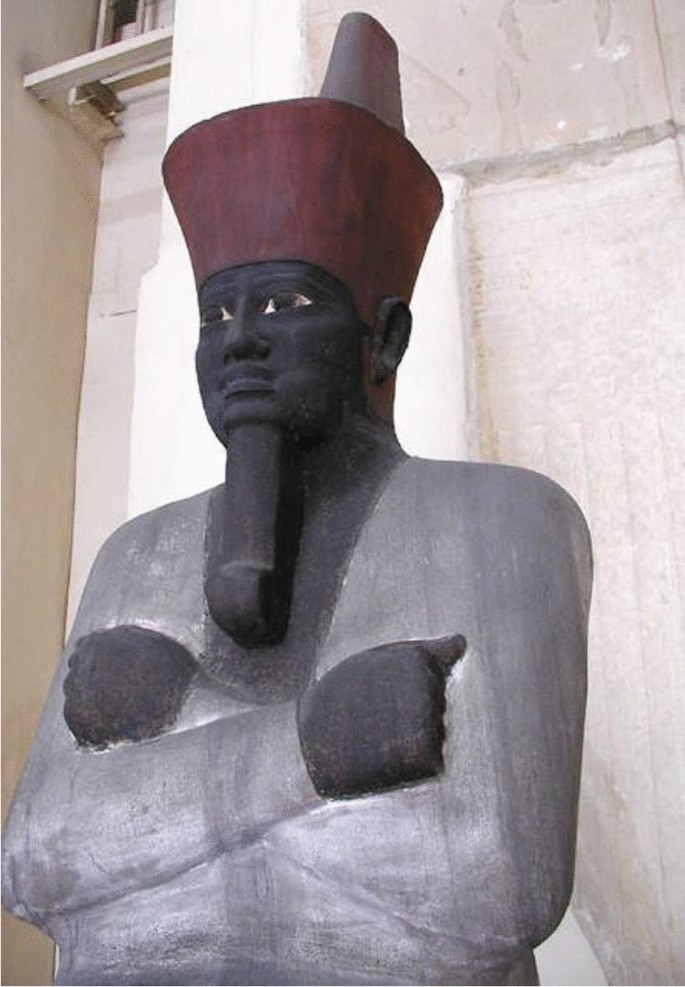
The first words by humans were spoken by Africans.
''Using statistical methods to estimate the time required to achieve the current spread and diversity in modern languages today, Johanna Nichols — a linguist at the University of California, Berkeley — argues that vocal language must have arisen in our species at least 100,000 years ago. Using phonemic diversity, a more recent analysis offers directly linguistic support for a similar date. Estimates of this kind are independently supported by genetic, archaeological, palaeontological and much other evidence suggesting that language probably emerged somewhere in sub-Saharan Africa during the Middle Stone Age, roughly contemporaneous with the speciation of Homo sapiens.''
In 1999, Archaeology Magazine reported that the earliest Egyptian hieroglyphs date back to 3400 BCE which "...challenge the commonly held belief that early logographs, pictographic symbols representing a specific place, object, or quantity, first evolved into more complex phonetic symbols in Mesopotamia."
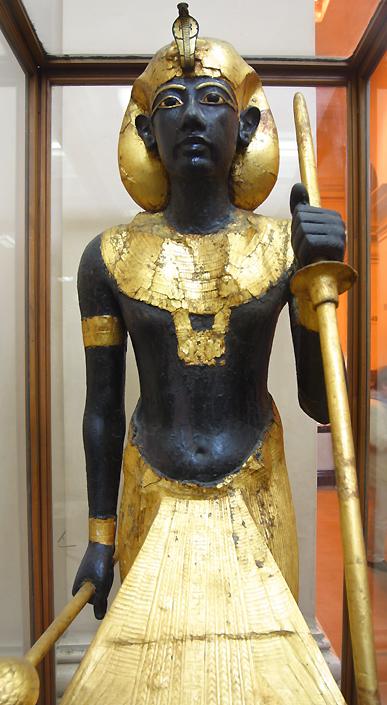
Who were these original Egyptians?
The Greek historian Herodotus.. described the Colchians of the Black Sea shores as "Egyptians by race" and pointed out they had "black skins and kinky hair."
Apollodorus, the Greek philosopher, described Egypt as "the country of the black-footed ones" and the Latin historian Ammianus Marcellinus said "the men of Egypt are mostly brown or black with a skinny desiccated look."
In his book 'Egypt', British scholar Sir E.A. Wallis Budge says: "The prehistoric native of Egypt, both in the old and in the new Stone Ages, was African and there is every reason for saying that the earliest settlers came from the South." He further states: "There are many things in the manners and customs and religions of the historic Egyptians that suggests that the original home of their prehistoric ancestors was in a country in the neighborhood of Uganda and Punt [present day Somalia]."
''Greek historian Diodorus Siculus devoted an entire chapter of his world history, the Bibliotheke Historica, or Library of History (Book 3), to the Kushites ["Aithiopians"] of Meroe. Here he repeats the story of their great piety, their high favor with the gods, and adds the fascinating legend that they were.. the founders of Egyptian civilization, invented writing, and had given the Egyptians their religion and culture.''
(1st century B.C., Diodorus Siculus of Sicily, Greek historian and contemporary of Caesar Augustus, Universal History Book III. 2. 4-3. 3)
"Ancient Egypt was a Negro civilisation. The history of Black Africa will remain suspended in the air and cannot be written correctly until African historians connect it with the history of Egypt. The African historian who evades the problem of Egypt is neither modest nor objective nor unruffled. He is ignorant, cowardly and neurotic. The ancient Egyptians were Negroes. The moral fruit of their civilisation is to be counted among the assets of the Black world."
- Cheikh Anta Diop, The African Origin of Civilisation.
''The earliest known surgery was performed in Egypt around 2750 BC.... The Ebers papyrus (1550 BC) is full of incantations and foul applications meant to turn away disease-causing demons, and also includes 877 prescriptions. It may also contain the earliest documented awareness of tumors..
Homer (800 BC) remarked in the Odyssey: "In Egypt, the men are more skilled in medicine than any of human kind" and "the Egyptians were skilled in medicine more than any other art". The Greek historian Herodotus visited Egypt around 440 BC and wrote extensively of his observations of their medicinal practices. Pliny the Elder also wrote favourably of them in historical review. Hippocrates (the 'father of medicine'), Herophilos, Erasistratus and later Galen studied at the temple of Amenhotep, and acknowledged the contribution of ancient Egyptian medicine to Greek medicine.
The African empire of Egypt developed a vast array of diverse structures and great architectural monuments along the Nile, among the largest and most famous of which are the Great Pyramid of Giza and the Great Sphinx of Giza
The pyramids, which were built in the Fourth Dynasty, testify to the power of the pharaonic religion and state. They were built to serve both as grave sites and also as a way to make their names last forever. The size and simple design show the high skill level of Egyptian design and engineering on a large scale. The Great Pyramid of Giza, which was probably completed c. 2580 BC, is the oldest and largest of the pyramids, and is the only surviving monument of the Seven Wonders of the Ancient World. The pyramid of Khafre is believed to have been completed around 2532 BC, at the end of Khafre's reign.
The invention of mathematics is placed firmly in African PRE-HISTORY
''The oldest known possibly mathematical object is the Lebombo bone, discovered in the Lebombo mountains of Swaziland and dated to approximately 35,000 BC. It consists of 29 distinct notches cut into a baboon's fibula. Also prehistoric artifacts discovered in Africa and France, dated between 35,000 and 20,000 years old [respectively], suggest early attempts to quantify time.
The Ishango bone, found near the headwaters of the Nile river (northeastern Congo), may be as much as 20,000 years old and consists of a series of tally marks carved in three columns running the length of the bone. Common interpretations are that the Ishango bone shows either the earliest known demonstration of sequences of prime numbers or a six month lunar calendar.
Also, Predynastic Egyptians of the 5th millennium BC pictorially represented geometric designs.
''Numeral systems have been many and diverse, with the first known written numerals created by Egyptians in Middle Kingdom texts such as the Rhind Mathematical Papyrus.
The earliest uses of mathematics were in trading, land measurement, painting and weaving patterns and the recording of time. More complex mathematics did not appear until around 3000 BC, when the Egyptians and Babylonians began using arithmetic, algebra and geometry for taxation and other financial calculations, for building and construction, and for astronomy''
The oldest known mine on archaeological record is the "Lion Cave" in Swaziland, which radiocarbon dating shows to be about 43,000 years old. Much later on, the Africans of Egypt mined malachite....Quarries for turquoise and copper were also found at "Wadi Hamamat, Tura, Aswan and various other Nubian sites"..The gold mines of Nubia were among the largest and most extensive in the world, and are described by the Greek author Diodorus Siculus. He mentions that fire-setting was one method used to break down the hard rock holding the gold. One of the complexes is shown in one of earliest known maps. They crushed the ore and ground it to a fine powder before washing the powder for the gold dust.
Iron smelting is a form of extractive metallurgy; its main use is to produce a metal from its ore. This includes production of silver, iron, copper and other base metals from their ores. Smelting uses heat and a chemical reducing agent to decompose the ore, driving off other elements as gasses or slag and leaving just the metal behind.
Early iron smelting:
''Where and how iron smelting was discovered is widely debated, and remains uncertain due to the significant lack of production finds.. [but] there is a further possibility of iron smelting and working in West Africa by 1200 BC. In addition, very early instances of carbon steel were found to be in production around 2000 years before the present in northwest Tanzania, based on complex preheating principles. These discoveries are significant for the history of metallurgy.''
Greek historian Diodorus Siculus. From his own statements we learn that he traveled in Egypt around 60 BC. His travels in Egypt probably took him as far south as the first Cataract. He wrote about the ''Ethiopians'' south of Egypt.
"They further write that it was among them that people were first taught to honor the gods and offer sacrifices and arrange processions and festivals and perform other things by which people honor the divine. For this reason their piety is famous among all men, and the sacrifices among the Aithiopians are believed to be particularly pleasing to the divinity,"
9 Laws
Stephanus of Byzantium, who is said to represent the opinions of the most ancient Greeks, says:
"Ethiopia was the first established country on the earth, and the Ethiopians were the first who introduced the worship of the Gods and who established laws." Quoted by John D. Baldwin, Prehistoric Nations, p. 62.
10 International Trade
In 1825, Arnold Hermann Heeren (1760-1842), Professor of History and Politics in the University of Gottengen and one of the ablest of the early exponents of the economic interpretation of history, published, in the fourth and revised edition of his great work Ideen Uber Die Politik, Den Verkehr Und Den Handel Der Vornehmsten Volker Der Alten Weld, a lengthy essay on the history, culture, and commerce of the ancient Ethiopians, which had profound influence on contemporary writers in the conclusion that it was among these ancient Black people of Africa and Asia that international trade was first developed. He thinks that as a by-product of these international contacts there was an exchange of ideas and cultural practices that laid the foundations of the earliest civilizations of the ancient world. Heeren in his researches says: "From the remotest times to the present, the Ethiopians [ancient name for blacks south of the Sahara] have been one of the most celebrated, and yet the most mysterious of nations. In the earliest traditions of nearly all the..civilized nations of antiquity, the name of this distant people is found. The annals of the Egyptian priests are full of them, and the nations of inner Asia, on the Euphrates and Tigris, have interwoven the fictions of the Ethiopians with their traditions of the wars and conquests of their heroes; and, at a period equally remote, they glimmer in Greek mythology. When the Greeks scarcely knew Italy and Sicily by name, the Ethiopians were celebrated in the verses of their poets, and when the faint gleam of tradition and fable gives way to the clear light of history, the lustre of the Ethiopians is not diminished."
Philosophy is the study of general and fundamental problems, such as those connected with reality, existence, knowledge, values, reason, mind, and language. Philosophy is distinguished from other ways of addressing such problems by its critical, generally systematic approach and its reliance on rational argument.
Philosophy in Africa has a rich and varied history, dating from pre-dynastic Egypt, continuing through the birth of Christianity and Islam. Arguably central to the ancients was the conception of "ma'at", which roughly translated refers to "justice", "truth", or simply "that which is right". One of the earliest works of political philosophy was the Maxims of Ptah-Hotep, which were taught to Egyptian schoolboys for centuries...Ancient Egyptian philosophers made extremely important contributions to Hellenistic philosophy, Christian philosophy, and Islamic philosophy.
When you feel inferior, you will only see the bad things in Africa and the black world.
The minute you rid yourself of racial inferiority complex, you will start to see the things that MILLIONS of FOREIGNERS who visit and settle in Africa and the black world every year, see in us, from our food to our culture, to our hospitality, to our vibrant cities, picturesque rural regions, fast-growing economies with vast opportunities for business and investment, to our music and film industries exploding in popularity across the world.
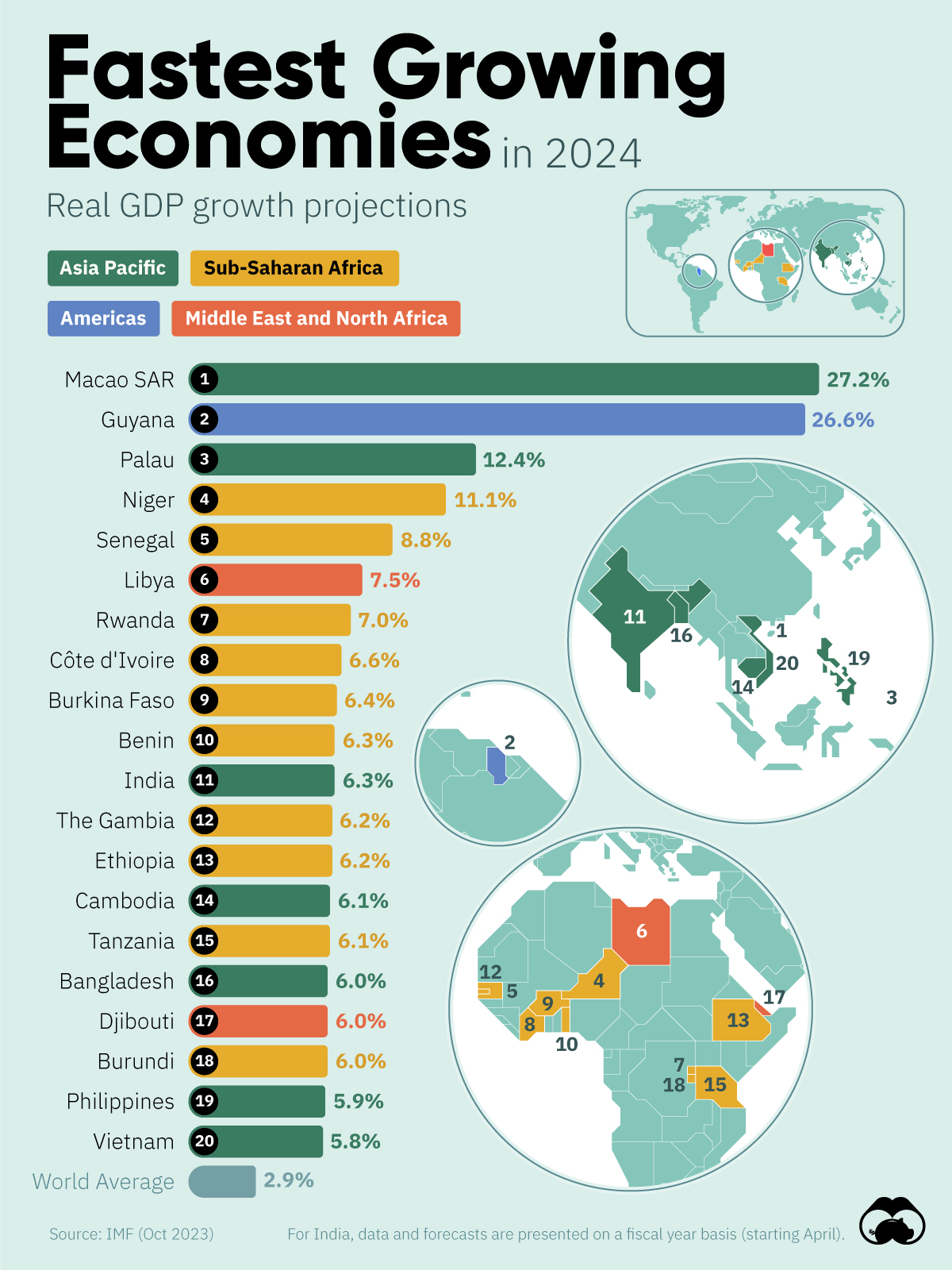
Today, 11 of the 20 fastest growing economies in the world are black African or black Caribbean.
As we speak, 20,000 black Americans have left the USA to live in Ghana just in the last 2 to 3 years.
They don't have your inferiority complex which says everything black is bad and ''behind the world'' and such rubbish.
Or they would have moved to Norway.
Use your time and energy to help build up and promote your continent instead of feeling inferior.
Thanks for this. The reality is that visiting somewhere as a tourist is not the same experience as living there. Even moving to a third world country from a first world country is not the same experience as the third world people who grew up there. The cost of living is lower in third world countries meaning these immigrants are living a much better life there than the locals. They know what they are doing. They are not moving to third world countries so they can have the same experience as the average local. They are checking out on the money they’ve made/make from the first world countries.
Many African countries do have a lot of opportunities and are seen as a good place for investments. Even President Trump of all people said something similar. However, our large room for opportunities is also because of our lack of development unfortunately. I see a lot of businesses starting to boom in Nigeria that look a lot like things you see in America. At first you look happy and shout on you Nigeria is becoming good o, like the same level as America. Then you ask yourself who owns these businesses, you find that most of them are non-black people. Unfortunately, many look at these things and say that Nigeria is really developing, in my opinion, the truth is that other countries are developing in Nigeria. How does very successfully businesses developed by white people show that black people are also developing successful business?
Respectfully. While I think 20,000 black Americans moving to Ghana is good per se. I really don’t see why it is anything special. If they take their money and use it right in Ghana which has a lower cost of living then that I can agree with. If they waste it and continue with many crimes like it happens in the US, then what is the advantage to Ghana?
Difrent: Calm down bro Don't be too hard on yourself as a black man There are poor European countries too And many homeless Europeans and Americans While There are also very rich black countries like Nigeria Nigeria is not a poor country but a rich country with poor leadership. If Africans get leadership right then theres hope for Africa....
I am not saying that Nigeria is a poor country. It is a rich country with many resources. Many other African countries too are rich in resources from what I know. It makes it more embarrassing how behind we are in my opinion.
Why is every large community of black people in this world behind? Africa is a country with a majority of black people and it is known all around the world as a third world continent and is used as an example of world hunger.
In America here, black people are only about 14% of the population yet they are responsible for over 50% of the crimes committed. Yes I know we have dealt with racism and colonization but can this really give such a hard blow to an entire people like this? Moreover, why did we suffer from colonization and slavery in the first place. What was it with us that we could not stand strong as a nation? Was it really a bad hand that led to almost an entire people being colonized or enslaved?
You look at Italy, they are known highly for many things like their food, art and architecture. Germany is known for many things including technology, philosophy. Japan is also known for many things such as it’s advanced technology. What is Nigeria known for?
Today look at Nigeria and other black African countries economically, how do they fare to European countries? It is only their will that is stopping them from conquering us again.
Other peoples promote themselves and their people. They are at least somewhat not too narrow-minded to see that the state of affairs of their people also affects them.
I know no people is anywhere near perfect and you can argue that other countries are actually worse but it is less obvious. Still I will say why is it us that must shine as the examples of inferiority for the world?
 Politics › Re: Where Is Nigeria Going? by Sunnyconvo(op): 4:16am On Apr 17, 2024