No wonder Canadians get touchy when people mistakenly call them Americans, it's in their history. Sort of like the Scots and the English or even Pakistanis and Indians.
This short video's quite educational, especially in Nigeria where they'd all be "Americans" to most folk:
In late March, a report commissioned by the Colombian government claimed that US military soldiers and contractors had sexually abused at least 54 children in Colombia between 2003 and 2007, emphasising that the perpetrators had not been brought to justice on account of diplomatic agreements between the US and Colombia which protect US military personnel from prosecution.
While this report made some headlines in Latin America, the US and European media barely mentioned the story - nor did international human rights organisations. Yet last week's revelations that French troops sexually abused children in the Central African Republic in 2014 have drawn global media attention. This scandal has raised diplomatic tensions, led to the suspension of a senior UN official - and the reason for the widespread outrage is that it appears the United Nations sought to bury an internal report detailing the abuses.
France intervened in the Central African Republic in December 2013, months after a rebel group took over the capital and overthrew President Francois Bozize.
The subsequent violence between Muslim and Christian militias led to the displacement of hundreds of thousands of people, into neighbouring states, but also into makeshift camps for those internally displaced.
Sex acts for food
It is in one such camp near the airport of the capital Bangui where the alleged abuses took place. A United Nations report that came to light last week alleges that between December 2013 and June 2014, 14 French soldiers and five troops from Chad and Equatorial Guinea forced children to perform sex acts in exchange for food or money.
Ten victims were interviewed in May and June 2014 by a UNICEF official and a member of the Office of the High Commissioner for Human Rights, and the ensuing report was submitted to officials within the Office of the High Commissioner for Human Rights in Geneva.
When the UN did not take action, a high-ranking UN official by the name of Anders Kompass handed the report - titled "Sexual Abuse on Children by International Armed Forces" - to the French authorities who then launched their own investigation.
Since The Guardian broke this story, French officials have responded quickly.
"If some soldiers behaved badly, I will be merciless," declared President Francois Hollande, "If this information is confirmed, there will be exemplary sanctions."
Likewise the French Minister of Defence Jean-Yves Le Drian stated that upon being alerted by the UN, he gave the report to French court prosecutors and had the army carry out an internal investigation in August 2014. But he also conceded that "very few" perpetrators had been identified, and he asked to them to turn themselves in.
But the story is no longer simply about the misconduct of French troops, but also about how the UN responds to cases of sexual abuse. UN officials claim that their peacekeeping troops and the UN mission started after the French mission began, and that the French troops were not under UN control. That is true, but UN troops were sent in to support French soldiers, and UN officials were aware of the abuse but simply sat on the report.
Since the story came to light, Anders Kompass, the Swedish UN official who leaked the internal report to the French government, has been suspended for sharing confidential information and breaching UN protocol - a decision endorsed by Zeid Raad al-Hussein, the high commissioner for human rights, and Susana Malcorra, the current United Nations chef de cabinet to the executive office.
UN officials claim that what he leaked was a draft that had the unredacted names of victims and informants who could be endangered.
Diplomatic crisis
A diplomatic crisis is now brewing between Sweden and the UN, as earlier this month the Swedish ambassador to the United Nations cautioned senior UN officials that "it would not be a good thing if the high commissioner for human rights forced" Kompass to resign. The Swedish government has not issued a statement since Kompass' dismissal.
Various NGOs are now arguing that Kompass was suspended because the UN tried to bury the report, and because of a past record of peacekeepers engaging in sexual abuse in the Congo, Haiti, and Sudan. Activists are calling for an independent commission inquiry.
Paula Donovan, co-director of the advocacy group Aids Free World, declared: "The UN's instinctive response to sexual violence in its ranks - ignore, deny, cover up, dissemble - must be subjected to a truly independent commission of inquiry with total access, top to bottom, and full subpoena power."
Raad al-Hussein is, after all, the author of the 2005 Zeid Report, which presented a detailed analysis of sexual exploitation in UN peacekeeping missions, and laid out the organisation's zero tolerance policy for sexual abuse by UN peacekeepers.
But this policy does not apply to troops not fighting under UN umbrella as was the case with the French in CAR. The UN after all does not have the ability to prosecute troops even those under UN control - it is the member states that are responsible for prosecution.
What this scandal actually reveals is how difficult it is for the UN to deal with abuse committed by the troops of a powerful state, and a permanent member of the Security Council, on whom the international organisation relies for funds and manpower. The UN, lest we forget, is not an independent actor but reflects and is constrained by the interests and capacities of myriad states.
The French soldiers accused of raping orphan boys at a camp for internally displaced people in the Central African Republic (CAR) say their actions have been misunderstood, French authorities said in a statement on Wednesday.
“The soldiers thought the boys were 15 years or older and had given consent for sodomy, but the boys had clearly lied about their age during sex-for-food negotiations,” said Jean-Claude La’Marre, spokesperson for the French army.
The age of consent in France is 15. Most of the boys raped by French soldiers were younger than 10.
The latest developments come after a confidential UN document detailing the sexual exploitation of young children in Bangui by French troops was leaked to French prosecutors.
Reports suggest the whistle-blower who sent the report to French prosecutors out of frustration with the UN’s lack of response to the incident, has since been suspended by the UN.
On Sunday French soldiers were expected to visit orphans and “clarify the situation”.
“Not only did they agree to being touched, we gave them buttered croissants and macaroons,” one soldier said.
The French government said it would find ways to redeem their tainted image on the African continent.
“I guess French citizenship is better than being screwed for nothing,” said President Francois Hollande’s spokesperson, Gené Seppah.
GENEVA — A UN tribunal has ordered the reinstatement of Swedish official Anders Kompass who was suspended for leaking a report to France about child abuse by French peacekeepers in the Central African Republic.
The ruling of the internal tribunal was delivered on Tuesday and Kompass "has thus resumed his service," a spokesman for the UN human rights office said.
Mr Kompass will however continue to face an internal United Nations probe following accusations that he passed on confidential information, including the names of the alleged victims, without getting the go-ahead of his superiors.
"We remain extremely concerned that copies are circulating of the confidential unredacted preliminary notes of the interviews with the children," the spokesman said.
The UN tribunal said the fact that Mr Kompass had resumed his job would not affect the investigation underway.
Mr Kompass, a director of operations at the UN human rights office, was put on administrative leave with full pay on April 17 for having passed on the confidential report to France in July last year.
You can now check the status of your National e-ID card on your phone, tablet or computer, conveniently and without hassle, by simply going to http://touch.nimc.gov.ng/cs and typing in your names and the last 6 digits of your National Identification Number (NIN).
lovat: I saw this coming with the massive defeat suffered by BH, they were being routed out of their foxholes now they are looking for ways to survive by joining ISIS. Nigerian need to brace upfor the level of atrocities that will be carried out by ISIS, we need to forget political affiliations and rally ourselves to fight this monster
Exactly.
1. What took BH so long if they really shared the same ideology with ISIS?
2. It would actually make ISIS' reputation doubtful amongst the muslim recruits they seek if they accept BH - ISIS likes to show support from people it says it governs, BH likes to burn houses, bomb markets and bus stops with no military targets then loot.
3. It has everyone now thinking BH is really afraid of Nigeria's forthcoming elections for some reason. Are they looking for alternate sources of funds now or what? Like earlier mentioned, why did it take them so long to declare allegiance to people they've been trying hard to copy for so long?
4. Going back to BH's all too obvious copying of ISIS (not to look like hired thugs), what happens to BH's 'caliphate' now? Having a different 'caliphate' from ISIS to start with meant BH's was supposed to be different from ISIS'.
6. As usual BBC's frirnds are wuick to advertise BH (remember the days BH were unkown and untraceable but always calling BBC using mobile phones?
7. ISIS is suspected to have some Western powers behind it in the quest for oil. A lot of its fighters are encouraged over from Western countries using a similar technique (reverse psychology) to Castro's sending boatloads of Cuban criminals as refugees escaping to America's democracy in the 1980s (remember the movie 'Scarface' with Tony Montana?). Nigeria also has oil so...
8. Neither BH nor ISIS determine who people want to lead them. You can terrorise but if you don't win hearts (something ISIS online propoganda seeks), your exit will still he around the corner.
By Tor Vande-Acka (Makurdi) and Francis Onoiribholo (Benin City)
The Benue State Police Command has arrested two suspects with about 13, 000 Permanent Voter Cards (PVCs) in Makurdi, the state capital.
The police made the arrest on Thursday based on a tip off.Also, seven persons suspected to be members of one of the leading political parties were, on Thursday, arrested at Oba Market, Benin City, for allegedly purchasing PVCs from market women.
The Resident Electoral Commissioner (REC) in the state, Mike Igini, who confirmed the incident to journalists, raised an alarm that politicians, who are in collaboration with ICT experts, are sabotaging the efforts of the Independent National Electoral Commission (INEC) in conducting credible elections through PVC cloning. This is even as the All Progressives Congress (APC) in Edo State has accused the Peoples Democratic Party (PDP) of purchasing PVCs from people with a view to rigging the polls and appealed to the police to investigate seriously and prosecute those arrested.
Meanwhile, in Makurdi, Daily Independent gathered that the suspect, Aliyu Yerima, was arrested with over 4, 000 PVCs while his accomplice, Terseer Wuar, was arrested in possession of over 8,000 PVCs.
We further gathered that the police had last Tuesday arrested three other suspects for being in possession of over one thousand PVCs, while the fourth suspect who happened to be Yerima was then at large.
Daily Independent also learnt that when Waur was picked up by the police at about 6:30am along King Shuluwa road, Makurdi, he confessed that he was working with Yerima, who was waiting for him on Monday morning at a popular motor park to freight the “merchandise” out of town.
The paper further gathered that from in their confessional statements, the two suspects allegedly said they were working for someone at the Presidency.
The suspects were still in detention at the command headquarters at the time of compiling this report.
cheruv: to be great, Nigeria needs to die and resurrect again.Nigeria is presently constituted like the Russian empire, with the President as the Tsar. when Nigeria is reborn, she becomes the Union of Nigerian associative republics (UNAR) or Mmekorita Njiko Ohaneze Naijiria in Igbo. with at least 20+ associative republics developing at their pace,Nigeria would be better off
Right now, the situations in South Sudan and Libya come into mind.
- before US military instructors were allowed to come "train" Nigerian soldiers, our boys were successfully tackling rebel militias and warring factions in places like Liberia and Sierra Leone
- after US instructors were allowed to come "train" Nigerian soldiers in "counter-insurgency", our boys were running away from rag-tag hitmen (in exactly the same way US-trained Iraqi soldiers run away from insurgents) until local hunters and vigilantes come to help.
Boko Haram is based in northeast Nigeria, the most populated country and largest economy in Africa. Nigeria is the largest oil producer of the continent with 3.4% of the World’s reserves of crude oil.
In May 2014, African Renaissance News published an in-depth report on Boko Haram, wondering whether it could be another CIA covert operation to take control of Nigeria:
[T]he greatest prize for AFRICOM and its goal to plant a PAX AMERICANA in Africa would be when it succeeds in the most strategic African country, NIGERIA. This is where the raging issue of BOKO HARAM and the widely reported prediction by the United States Intelligence Council on the disintegration of Nigeria by 2015 comes into perspective…(Atheling P Reginald Mavengira, “Humanitarian Intervention” in Nigeria: Is the Boko Haram Insurgency Another CIA Covert Operation? Wikileaks, African Renaissance News, May 08, 2014)
In the 70′s an 80′s Nigeria assisted several African countries “in clear opposition and defiance to the interests of the United States and its western allies which resulted in a setback for Western initiatives in Africa at the time.” (Ibid.)
Nigeria exerted its influence in the region through the leadership of the Economic Community of West African States Monitoring Group (ECOMOG, right), an army consisting of soldiers from various African countries and set up by the Economic Community of West African States (ECOWAS) and which intervened in the Liberian civil war in the 90′s. Liberia was founded in 1821 by the US and led by American-Liberians for over a century.
The Western powers, first and foremost the US, are obviously not willing to let Africans have a multinational army in which they have no leading role. ACRI, which later became Africom, was formed in 2000 to contain Nigeria’s influence and counter ECOMOG, thus avoiding the emergence of an African military force led by Africans.
According to Wikileaks reports mentioned in Mavengira’s article above, the US embassy in Nigeria serves as an
“operating base for wide and far reaching acts of subversion against Nigeriawhich include but [are] not limited to eavesdropping on Nigerian government communication, financial espionage on leading Nigerians, support and funding of subversive groups and insurgents, sponsoring of divisive propaganda among the disparate groups of Nigeria and the use of visa blackmail to induce and coerce high ranking Nigerians into acting in favour of US interests.” (Mavengira, op., cit., emphasis added)
Mavengira is part of the GREENWHITE Coalition, “a citizen’s volunteer watchdog made up of Nigerians of all ethnic groups and religious persuasions.” He writes that the ultimate goal of the American clandestine operations in his country is “to eliminate Nigeria as a potential strategic rival to the US in the African continent.” (Ibid.)
An investigation into Boko Haram by the Greenwhite Coalition revealed that the “Boko Haram campaign is a covert operation organized by the American Central Intelligence Agency, CIA and coordinated by the American Embassy in Nigeria.” The U.S has used its embassy for covert operations before. The one in Benghazi was proven to be a base for a covert gun-running operation to arm the mercenaries fighting against Bashar Al-Assad in Syria. As for the embassy in Ukraine, a video from November 2013 emerged recently showing a Ukrainian parliamentarian exposing it as the central point of yet another clandestine operation designed to foment civil unrest and overthrow the democratically-elected government.
The Greenwhite Coalition report on Boko Haram reveals a three stage plan of the National Intelligence Council of the United States to “Pakistanize” Nigeria, internationalize the crisis and divide the country under a UN mandate and occupying force. The plan “predicts” Nigeria’s disintegration for 2015. It is worth quoting at length:
The whole [National Intelligence Council] report actually is a coded statement of intentions on how [by] using destabilization plots the US plans to eventually dismember Nigeria.
Stage 1: Pakistanizing Nigeria
With the scourge of Boko Haram as an existential reality, in the coming months the spate of bombings and attacks on public buildings are likely to escalate.
The goal is to exacerbate tension and mutual suspicion among adherents of the two faiths in Nigeria and leading to sectarian violence [...]
Stage 2: Internationalizing the Crisis
[T]here will be calls from the United States, European Union and United Nations for a halt to the violence. [...] For effect, there will be carpet bombing coverage by the International media on the Nigerian crisis with so-called experts discussing all the ramifications who will strive to create the impression that only benevolent foreign intervention could resolve the crisis.
Stage 3: The Great Carve out under UN Mandate
There will be proposals first for an international peace keeping force to intervene and separate the warring groups and or for a UN mandate for various parts of Nigeria to come under mandated occupying powers. Of course behind the scenes the US and its allies would have secretly worked out which areas of Nigeria to occupy guided as it were by naked economic interests.
South Sudan’s government promised an investigation on Wednesday after a British aid worker was shot dead in the country’s capital.The Briton, who worked for the Carter Centre, was killed in Juba on Tuesday night. Although South Sudan has suffered over a year of civil war, there has been no fighting in the capital itself for several months.
The unnamed man was killed when he drove home after dark on Tuesday, according to Ateny Wek Ateny, an official spokesman.The Briton was shot as he entered a compound in Juba where aid workers live.
“He got out of the car, then while walking he was shot," said Mr Ateny, according to Agence France Presse news agency. The government condemned the crime “in the strongest terms possible” and an investigation would take place, added Mr Ateny.
But nothing appears to have been stolen, suggesting that the Briton was not the victim of an armed robbery. Instead, the circumstances raise the possibility of a targeted killing.
South Sudan’s government has been critical of foreign aid workers, accusing them of stirring up the civil war.
Last year, President Salva Kiir alleged that the United Nations was deliberately concealing rebels inside refugee camps and allowing them to amass weapons.
The Carter Centre is an American aid agency founded by the former president, Jimmy Carter.
The Foreign Office confirmed the death of a British national in South Sudan, adding that it was "ready to provide consular assistance to the family".
(Bloomberg) -- As if the collapse in crude prices, forthcoming elections and an Islamist insurgency weren’t enough, investors in Nigeria have another matter to worry about: deciding whether the new central banker is his own man.
Godwin Emefiele, appointed in June after President Goodluck Jonathan suspended predecessor Lamido Sanusi almost a year ago, has focused on stemming currency declines that could damage the government of Africa’s biggest oil producer and economy ahead of Feb. 14 elections. Emefiele is “putting off painful and inevitable adjustments” in the exchange rate until after the vote, Bank of America Corp. economists Oyin Anubi and Turker Hamzaoglu in London wrote in a Jan. 21 report.
“It’s only natural to think there’s less independence at the central bank,” Kevin Daly, a fund manager overseeing $13 billion of developing-market debt at Aberdeen Asset Management Plc, said by phone from London on Jan. 27. “He replaced arguably the most effective and outspoken central bank governor that we’ve seen in African emerging markets for some time.”
Daly said he hasn’t held government bonds in naira since about October, partly because of concern he might not be able to easily sell assets in the currency.
Emefiele, 53, said that politics doesn’t affect any of his decisions. “The central bank remains a very independent institution, just like it was under my predecessor,” he said by phone from Abuja on Thursday. “We have never been influenced by any political consideration. No politician talks to us to try and influence us.”
... While oil producers with falling exchange rates from Russia to Malaysia have avoided imposing currency controls, Emefiele’s measures cut daily trading of the naira to less than a tenth of previous levels last month, according to Standard Chartered Plc.
The restrictions prompted JPMorgan Chase & Co. to warn Jan. 16 that it may remove Nigeria from bond indexes tracked by more than $200 billion of funds. Foreign holdings of domestic debt have fallen by half since 2013, according to Standard Chartered.
“It’s difficult for policy makers to ignore that political backdrop,” Ayodele Salami, who oversees about $200 million of Nigerian equities as chief investment officer of Duet Asset Management, said by phone from London on Feb. 4.
Investor caution has helped drive yields on local government bonds to 15.4 percent, the highest since August 2012 and steepest among 31 emerging markets tracked by Bloomberg. The stock market is posting the world’s worst losses this year...
... The central bank spent $5 billion defending the exchange rate in the last three months of 2014, reducing reserves to a three-year low of $34 billion, while devaluing the midpoint of the official exchange rate to 168 per dollar from 155 and raising the benchmark borrowing cost to a record 13 percent.
Trading restrictions introduced in December were needed to cut “spurious or speculative demand” for dollars, Emefiele said in an interview last month. “Any investor that wants to go out is able to do so freely, without any hindrance.”
While Sanusi cut the the amount of foreign currency banks can hold without assigned buyers to 1 percent of shareholders’ funds from 5 percent, Emefiele set the amount at zero on Dec. 17, before allowing a 0.1 percent so-called net open position on Jan. 13.
The effect was to reduce daily trading to less than $30 million from $300 million to $500 million and foreign holdings of government bonds in naira to 14 percent of the total from as much as 27 percent in 2013, according to Samir Gadio, Standard Chartered’s head of African strategy. By contrast, Sanusi liberalized Nigeria’s markets by lifting a requirement for foreign investors to hold local-currency debt for at least one year.
That resulted in JPMorgan adding the nation’s bonds to its GBI-EM local-currency indexes in 2012. Foreigners increased their holdings of the securities almost fivefold in the next year, according to Bank of America.
“Sanusi had high credibility in the international markets and both the nature of his exit and the context resulted in an increase in Nigerian risk premium, which has remained,” Jim O’Neill, the former chairman of Goldman Sachs Asset Management, who now works as a Bloomberg View columnist, said in e-mailed comments from London on Jan. 28...
... JPMorgan, placing Nigeria on “index watch negative,” said the drop in currency and bond trading “challenges the ability of foreign investors to replicate the benchmark.” The New York-based lender will make a decision within five months. Craig Macdonald, a spokesman for JPMorgan in London, declined to comment.
The central bank’s decision to boost the net-open position limit to 0.5 percent of funds on Jan. 22, shortly after JPMorgan’s warning, increased daily trading volumes to about $250 million to $300 million, Emefiele said on Thursday...
"Unfortunately we have a lot of cowards. We have people who use every excuse in this world not to fight," Sambo Dasuki, the top security adviser to President Goodluck Jonathan, told an audience at the Chatham House think-tank in London.
But, he stressed, "there is no high-level conspiracy within the army not to end the insurgency."
It is highly unusual for senior Nigerian security officials to comment on the counter-insurgency campaign, especially at the level of Dasuki, but it pointed to discontent within the security establishment with the conduct of the fight.
Dasuki denied that the army was under-equipped, as critics have asserted, calling this an "excuse."
And others have pointed to the fact that BH are well-sponsored and backed by people in power:
According to the report, a Nigerian soldier in Borno state confirmed that Boko Haram attacked Gamboru Ngala in their presence but their commander asked them not to repel the attack. The soldier told BBC Hausa Service that choppers hovered in the air while the attacks were ongoing. 300 people were killed, houses and a market burnt while soldiers watched and were ordered not to render assistance to those being attacked. The soldier said that the Boko Haram insurgency will end when superior officers in the army cease to fuel it.
And occasionally well organized BH attack plans being ruined by pesky Nigerian vigilantes:
Abdulkadir said there were signs Boko Haram’s leader, Abubakar Shekau, was planning a wider campaign against the vigilantes.
“They actually fear the civilian JTF more than the army. From the [statements] of Abubakar Shekau that we have monitored, there seems to be a vehement hatred against members of the civilian JTF. So I think there are going to be further attacks on the civilian JTF anywhere they might be. It is going to be an ongoing trend,” he said.
Also coupled with the fact that BH and the foreign media are scared about upcoming Nigerian elections for some reason (get ready for more dangerous BH attacks news from foreign media indirectly asking you not to go out and vote):
The U.S. State Department on Wednesday said Nigeria’s election in February could be a factor behind the sharp increase in attacks by Boko Haram Islamist militants in the north of the country.
Spokeswoman Marie Harf said, however, that the February 14 presidential election should go ahead in spite of the violence which has forced about 20,000 Nigerians to flee to neighbouring countries in recent weeks.
“There has been a sharp escalation in the number of reported casualties. We do believe the election is a factor,’’ Harf told a daily briefing. Harf said Boko Haram previously used events such as elections to stir up tensions.
Now we have a South African expert telling us oil is the real reason behind BH attacks:
The recent upsurge of attacks by Boko Haram militants across Nigeria's northeastern Borno State has little to do with religion; rather, it is motivated by oil greed, according to a South African expert on Islam and militancy.
"The motivation here has little if anything to do with religion," Andrea Brigaglia, a lecturer of Islamic studies at the University of Cape Town and director of the Center for Contemporary Islam, told The Anadolu Agency in an exclusive interview.
"The town of Baga, where the last killings occurred, as well as Kawuri, Menari and Gamboru-Ngala, where other such massacres occurred in earlier months, are inhabited almost entirely by Muslims," said the expert.
Boko Haram militants staged a daring attack on the Multinational Joint Task Force stationed in Baga, a densely populated town located some 160km from Maiduguri, provincial capital of Borno State, earlier this month.
Amnesty International asserted that the attacks on Baga and on the adjacent town of Doron Baga had caused "devastation of catastrophic proportions." It said satellite images of Baga showed that 620 structures had been damaged or completely destroyed, while more than 3,100 structures had been damaged or destroyed in Doron Baga, a town located 2.5km away.
"There haven't been major attacks to churches in big urban centers recently, as there used to be between 2010 and 2011," noted Brigaglia. "Some of the mountainous villages of Adamawa that were the theater of similar massacres, on the contrary, are inhabited mainly by Christians," he said. "There is a territorial strategy at place here."
For the last five years, Nigeria has battled a fierce Boko Haram insurgency that has ravaged the country's volatile northeast and claimed thousands of lives. The year 2014 proved to be the insurgency's bloodiest year yet, with increasingly frequent attacks, higher death tolls and a deluge of displaced persons. A seemingly emboldened Boko Haram recently stepped up its militant activity, seizing several areas of Adamawa, Yobe and Borno states, where it has since declared an "Islamic caliphate."
Boko Haram has taken Gwoza, a local government area of Borno, as the headquarters of its self-styled "caliphate." "The area under attack coincides with the location of what seemed to be the richest new oil reserve discovered in Nigeria over the last few years," Brigaglia suggested.
"One cannot exclude, therefore, that these events might be connected with the internal Nigerian struggle for the control of oil and the politics of Borno State – or even with the regional geo-politics for control of oil," said the expert.
In September 2012, Nigeria announced the discovery of crude oil on its side of the Lake Chad Basin – an area that falls within Borno State, the epicenter of the Boko Haram insurgency.
The lake is surrounded by Chad, Nigeria, Niger and Cameroon.
Since then, huge budgetary allocations have been made to facilitate exploration based on a survey carried out by experts from the state-controlled Nigerian National Petroleum Corporation (NNPC).
Not much has been heard of the exploratory mission since, due largely to violence in the area, which, the NNPC says, has served to frighten off workers.
No other oil finds have been reported in Nigeria's northeastern region.
Ideological Failure
Prof. Brigaglia, meanwhile, described Boko Haram's recent use of young girls to carry out suicide bombings as evidence of the militant group's ideological bankruptcy.
"With all its tragic sadness, the use of little girls for suicide operations shows how the movement has been ineffective in raising ideological support for its project," he told AA.
"It seems that many of the few thousands of militants fighting in the ranks of Boko Haram at the moment are mercenaries," said the expert. A number of suicide attacks have recently been carried out by teenage girls, each of which has claimed several lives and caused numerous injuries. At least three suicide attacks were reported in Maiduguri last December alone: two in Potiskum in Yobe State, two in Kano State and at least one each in Bauchi and Gombe states.
Militants probably prefer suicide missions in towns to avoid confrontations with security forces and possible arrest, experts say.
Brigaglia also cited increasing hostility towards Boko Haram among Nigeria's Muslim community.
"The campaign by Muslim scholars to delegitimize the movement has been very strong and effective," he told AA. "In most mosques, at least in the main Muslim urban centers, Boko Haram is presented to the Muslim public as the expression of a conspiracy against Islam," said the expert.
"Although these conspiracy theories are not necessarily true, they have effectively created a climate of hostility that is preventing the group's propaganda in support of their 'jihad'," he asserted.
Brigaglia also cited Boko Haram's recent suicide attack on a major mosque in the northwestern city of Kano that left more than 120 worshippers dead. "In the Muslim north, Kano is one of the oldest and most prestigious emirates," he noted.
"The mosque that was attacked is attached to the palace of the emir of Kano, who normally leads Friday prayers there," said the expert. Sanusi Lamido Sanusi, a former central bank governor, was appointed emir of Kano in June of 2014.
"Only a few days before the attack, he had delivered a speech in which he had said that the people of Kano should be ready to defend themselves from Boko Haram without expecting anything from the present government," Brigaglia said.
"When I say the attack on Sanusi was perceived in Kano as an attack on the opposition party, this does not necessarily imply the involvement of the federal government," he stressed.
"Kano State is presently ruled by the opposition All Progressive Congress party, but the ruling People's Democratic Party is also very active in the state, being supported by influential figures such as former Governor Ibrahim Shekarau and Muhammad Abacha, son of former head of state Gen. Sani Abacha," Brigaglia explained.
Salafis, Sufis targeted
Prof. Brigaglia also noted that, while Boko Haram originally had its roots in Salafism, it later parted ways with conventional Salafist groups.
"Over the years, the founder of the [Boko Haram] movement, Mohamed Yusuf, broke with the leadership of Nigeria's mainstream Salafist groups," he told AA.
"Some popular Salafist scholars in the country who spoke out against the movement were murdered by Boko Haram," added the expert.
He cited the recent murder of Sufi scholar Sheikh Adam al-Nafati, who was killed along with his family a couple of months ago.
Sheikh Dahiru Bauchi, another Sufi scholar, recently escaped a suicide bombing attempt that killed 32 people at the closing session of his annual Ramadan tafsir, which is typically attended by thousands of people. Both al-Nafati and Bauchi belong to the Tijaniyya Sufi order.
Okay, so I've recently taken to following the National Identity Management Commission (NIMC)'s blog which can be educative/amusing (they should cut down on some of the big English though). A Nairaland post on getting the NI number led me to this blog.
Now it's proven a good way to see how Nigeria's funds are well-utilised or wasted by NIMC.
The pictures are amusing though. Behold, NIMC's awards/dinner night:
The technology to fry the cells of the remote control button is easily available. I also believe it can be used to triangulate and trace the source of the remote signal. some types are even used by some VIP convoys in Nigeria. but i guess for them, its too good to be used in protecting ordinary "worthless" Nigerians. That's why we must vote wisely
Even simple use of security cameras will prevent a lot of these attacks on innocent people.
azzima: 20 years in office.mhen this African leaders she. He deserves a coup for sure. Another mugabe
And like Mugabe, the same people who were his friends selling him weapons now need to cut their costs by striking a deal with someone else cheaper (and dumber) in power.
Paris (AFP) - A Malian described as a "hero" after he helped hostages at a Jewish supermarket hide during last week's Paris attacks will be awarded French nationality Tuesday, Interior Minister Bernard Cazeneuve said.
Lassana Bathily, who has lived in France since 2006 and applied for French nationality in July of last year, was praised for his "bravery" in a statement by Cazeneuve, which also said the 24-year-old Malian's naturalisation will be granted at a ceremony on Tuesday.
As the hostage-taking siege by jihadist Amedy Coulibaly began January 9, Bathily -- an employee at the kosher store in eastern Paris -- ushered a group of trapped customers into a cold storage room, shut off the refrigeration system, and closed the terrified people inside for protection.
"I heard shots and I saw my colleagues and clients running down," Bathily recalled later. "I told them 'Come, come,' (and) got them into the freezer."
Bathily proposed helping the hiding clients escape the supermarket through its delivery lift. But when no one wanted to take that risk, Bathily fled alone, flagged down the police, and provided them information on the layout of the store that was vital to the assault that ended the siege.
A practising Muslim whose heroism drew wide praise -- and 220,000 signatures on an online petition calling for his naturalisation -- Bathily has said his actions were those that any human should take for others facing threats from a common enemy.
"We're brothers. It's not a question of Jews, Christians or Muslims," he told French news channel BFMTV. "We're all in the same boat, and we have to help one another to get out of this crisis."
I happened to read someone's (from what I gather the person's not even Nigerian/African) article on bombings in Nigeria and the person raised an interesting question -why are the media (foreign especially) so keen to advertise boko haram and "suicide bombers" in Nigeria?
Indeed, recent eyewitness accounts point towards bombs strapped to people being remotely detonated by someone else close by in the area having just the right imported technology and technical know-how.
The Nigerian ambassador to the U.S. will be honoring Michelle Obama this week, as well as former Secretary of State Hillary Clinton, even though Obama failed in her campaign to free the kidnapped Nigerian girls.
For some reason the media keeps calling the girls suicide bombers when it is obvious they have been forced to be human bombs.
There is at least one eyewitness report the bombs are being remotely detonated.
“But the young ages of some — such as the girl in Maiduguri — and the actions of a 15-year-old who was one of Sunday’s bombers in Potiskum, strongly suggest coercion.
“A civilian vigilante who witnessed the Maiduguri bombing said of the girl: “I doubt if she actually knew what was strapped to her body.”
“Another eye-witness said it appeared that the bomb was remote-controlled, which chimes with testimony from other attacks across the wider north of Nigeria.
“In Potiskum, a security official involved in the rescue operation said: “The second bomber was terrified by the explosion and she tried to dash across the road but she also exploded.”
True enough a lot of the media report these incidents as involving young "suicide bombers" i.e. people willingly killing themselves. A Google search reveals for instance, the BBC's original report on the recent Potiskum bombings:
BBC News - Nigeria violence: Female suicide bombers hit ...
www.bbc.com/news/world-africa-30772028 4 days ago - Two female suicide bombers blow themselves up at a crowded market in north-east Nigeria, killing at least four other people and injuring ...
I watched BBC on TV earlier this week and they reported exactly the same thing that "female suicide bombers blew themselves up".
After complaints started spreading around the Internet, the BBC apparently updated its report. Now what they say is:
Two female suicide bombers struck a crowded market in north-east Nigeria on Sunday, killing at least four other people and injuring dozens....
A security official told AFP news agency that it appeared the bombs had been remote-controlled.
"The second bomber was terrified by the explosion and she tried to dash across the road but she also exploded," he said.
Other media outlets have also been now cautiously reporting:
A civilian vigilante who witnessed the Maiduguri bombing said of the girl: "I doubt if she actually knew what was strapped to her body."
Another eye-witness said it appeared that the bomb was remote-controlled, which chimes with testimony from other attacks across the wider north of Nigeria.
In Potiskum, a security official involved in the rescue operation said: "The second bomber was terrified by the explosion and she tried to dash across the road but she also exploded."
It can be difficult to get a clear picture of what is going on in areas of conflict in Nigeria, but I believe it would be better to take foreign news with a pinch of salt because they just want to cater mainly to audiences in their home countries so they know they are better than everyone else around the world.
If these bombs are actually set off remotely by someone else wielding the controls then a good start to combating these hired bh hitmen is to find ways of detecting and even neutralizing such controls - given our defense budget the necessary technology shouldn't be hard to obtain.
She has to be careful with the CIA and co. before they set her up. But UNICEF should cover her. All these kids and people should have excited stories to tell for a while.
Two U.S. citizens are facing charges for their alleged role in last week's coup attempt in the West African nation of Gambia.
The U.S. Justice Department says Cherno Njie, 57, and Papa Faal, 46, are both in custody after making their initial court appearances Monday - Njie in Baltimore, Maryland, and Faal in Minneapolis, Minnesota.
Both men are charged with conspiracy to violate the U.S. Neutrality Act as well as a firearm charge.
According to the Justice Department, Njie and Faal traveled to Gambia in December with the purpose of overthrowing the government.
The criminal complaint says ahead of their trip, Faal and other co-conspirators purchased weapons including M4 semi-automatic rifles, and shipped them to Gambia for use in the coup attempt.
It says the conspirators expected Njie would have served as Gambia's interim leader had the plot to overthrow President Yahya Jammeh succeeded.
A Federal Bureau of Investigation search of Faal's Minnesota home turned up M4 manuals, receipts, and Google satellite images of Gambia in a folder marked "top secret," the Justice Department charged.
FBI agents who searched Njie's residences in Austin and Lakeway, Texas, found handwritten documents, a spreadsheet for weapons and equipment, and a document outlining transition plans for Gambia, the complaint said.
The Justice Department says when the coup attempt was foiled, both men returned to the U.S. .....
Njie is a U.S. citizen of Gambian descent and a resident of Austin, Texas. Njie is the president of Songhai Development Co. LLC in Austin, which specializes in multi-family housing developments, including retirement communities.
Faal is a dual U.S.-Gambian citizen and a resident of Brooklyn Center, Minnesota. A Pentagon official said Faal had been an Army sergeant who served a tour in Afghanistan and left the military in 2012....
Janet Jackson, 48, is the youngest child of the famed Jackson family, and a sister of late king of pop Michael Jackson.
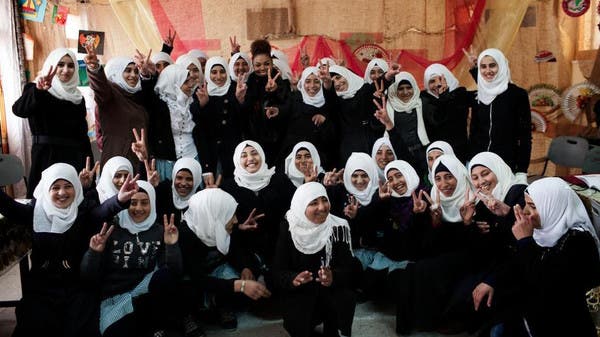
In her recent visit to occupied Palestine as part of her work as a UNICEF Goodwill Ambassador, Jackson visited a school in Yata, a Palestinian city south of Hebron.
She posted a photo from her visit on her Twitter account saying: "Peace. Yatta High School, West Bank with @UNICEF. Beautiful Palestinian students."
Shortly before that, she posted a photo from her visit to a herding family. She commented on Twitter: "Peace. A group of young Palestinian boys from a herding family in Bi'r al 'Id, South Hebron Hills, with @UNICEF."
Jackson's visit was not advertised beforehand. She entered the West Bank from Jordan where she visited the Zatari and Syrian refugees camps. "With @UNICEF Syria’s beautiful children. Their openness and love... so wonderful," she commented next to the photo on Twitter.
The National Identification Management Commission (NIMC) is calling on all Nigerians and legal residents who have successfully enrolled for their NIN and have received text message notifications to proceed to the NIMC offices indicated in the SMS to collect their e-ID Cards. Ag. GM Corporate Communications,
Mr. Abdul-Hamid Umar stated this in an interview with the News Agency of Nigeria (NAN).
"Many Nigerians have been enrolled in the National Identity Database, NIDB and those who have received text messages personalized to them, with the information that their e-ID Cards are ready, should come to our centres for collection."
On getting to the card collection centres, applicants will be required to do the following:
1. Go to the NIMC Collection Centre indicated in the SMS sent to you. (Take your NIN/Transaction Slip along).
2. Biometric Verification: Receive your e-ID Card in a sealed envelop. Open it, sign on the space provided at the back and do a Biometric Verification to activate your Card. This confirms that the card has been personalized by NIMC.
3. Pin Selection: After this you will enter a four digit number chosen by you to activate the e-ID Card.
4. Fund Loading: There is provision for Card loading at the Collection Centre and at any branch of Access Bank nationwide.
N/B; i. Please ensure that you come along with your NIN SLIP or your TRANSACTION SLIP.
ii.You cannot collect e-ID Card on behalf of anyone and to qualify for a Card you ought to have been registered. Only those who have received an SMS can come forward to collect their cards.
December 31, 2014 (ADDIS ABABA) - In a move seen to be in preparation for the next phase in the one-year-old conflict, South Sudan’s former vice-president, Riek Machar, who leads the SPLM-In-Opposition has for the first time established a military command for the rebel group.
In a 22 December order seen by Sudan Tribune, Machar said the “General Staff Command” would now command and control the rebel forces.
“Pursuant to December 6-12, 2014 Pagak conference resolutions, in reorganizing the SPLM/SPLA forces and its command and control, the SPLA Staff Command is hereby established per this order,” partly reads the circular issued by the rebel leader.The new military command is composed of a chief of general staff, with five deputies for administration, operations, logistics, training and moral and orientation.Names of the senior commanders to be put in charge of the new assignments are yet to be revealed. Rebel sources however said General Gatwech Dual, from Jonglei state, is likely to take up the assignment as the chief of general staff.The rebel group had been fighting for the past year unorganised, scattered and without a central command.The new development comes amid reports that the opposition fighters might be receiving sophisticated weapons to face president Salva Kiir’s government.
21 STATES CREATED
In a separate order, Machar also dissolved the current 10 states in South Sudan and created 21 federal states mainly on the basis of the former old districts, which were created by the British colonial administration.
These are 1) Fashoda state, 2) Adar (North East Upper Nile) state, 3) Sobat state, 4) Lich state, 5) Jonglei state, 6) Bieh state, 7) Phow state, 8 ) Pibor state, 9) Kapoeta state, 10) Imatong state, 11) Central Equatoria state, 12) Yei River state, 13) Mid-West Equatoria state, 14) Western Equatoria state, 15) Warrap (Tonj) state, 16) Lol state, 17) Lakes state, 18) Rumbek state, 19) Northern Bahr el Ghazal state, 20) Wau state and 21) Western Bhar el Ghazal (Raga) state.In the new administrative units, Upper Nile state is divided into three separate states.
Jonglei state is divided into four states.Eastern, Central and Western Equatoria states are each divided into two states. Also split into two is Warrap state.Lakes and Western Bhar el Ghazal states divided into two states each, while Northern Bhar el Ghazal and Unity states remain undivided, with the latter’s name changed to Lich state.As former greater regions, Greater Bahr el Ghazal is divided into seven new states, instead of four; Greater Upper Nile into eight states, instead of three; and Greater Equatoria divided into six states, instead of three.
The new states are officially the administrative units for the opposition faction with rebel sources hinting that provisional military governors will as well be appointed.
 Politics › Why Canadians Don't Like Being Called Americans - Video by abdnMe(op): 7:20am On May 16, 2015