Anonymous6's Posts
Nairaland Forum › Anonymous6's Profile › Anonymous6's Posts
1 2 3 4 5 6 7 8 ... 39 40 41 42 43 44 45 46 47 (of 156 pages)
 Culture › Re: BBC's Documentary On The 'Bronze Cast Head Of The Ife King' by anonymous6(op): 4:15pm On Feb 04, 2013*. Modified: 4:37pm On Feb 04, 2013 |
Egypt, Nigeria, Peru And Other Countries Want Their Cultural Artifacts Back https://www.nairaland.com/1002983/egypt-nigeria-peru-other-countries America Returns 11 Cultural Artifacts To Nigeria https://www.nairaland.com/1002959/america-returns-11-cultural-artifacts Egypt, Nigeria, Peru And Other Countries Want Their Cultural Artifacts Back https://www.nairaland.com/1002983/egypt-nigeria-peru-other-countries Boston's Museum Of Fine Arts Urged To Return Looted Artifacts To Nigeria http://www.huffingtonpost.com/2012/07/20/bostons-museum-of-fine-ar_n_1690062.html |
| Culture › Re: France Returns Smuggled Nok Artefacts To Nigeria by anonymous6(f): 4:00pm On Feb 04, 2013 |
another thread on this: https://www.nairaland.com/1184645/france-returns-stolen-artefacts-nigeria |
| Culture › Re: France Returns Stolen Artefacts To Nigeria by anonymous6(f): 3:59pm On Feb 04, 2013 |
This is the third country now that has begun to return at least some of the african, particularly Nigerian artifacts back to Nigeria. To me it is about time America Returns 11 Cultural Artifacts To Nigeria https://www.nairaland.com/1002959/america-returns-11-cultural-artifacts Egypt, Nigeria, Peru And Other Countries Want Their Cultural Artifacts Back https://www.nairaland.com/1002983/egypt-nigeria-peru-other-countries |
| Fashion › Re: IGBO Vs YORUBA Women,who Is Prettier???? by anonymous6(f): 1:41am On Feb 04, 2013 |
neena adjei: IGBOThis lady is not igbo she is Yoruba and her name is Funke Fowler Funke Fowler https://www.hautefashionafrica.com/wp-content/uploads/2008/04/funke-fowler.jpg https://cdn.bellanaija.com/wp-content/uploads/2010/03/Funke-Fowler-Style-Spotlight-Bella-Naija0010-379x600.jpg [img]http://3.bp..com/-pWL3-JGWtkk/TgLod4PDROI/AAAAAAAACaE/ToQzwAEgbGM/s1600/funke.jpg[/img] Funke Fowler http://www.hautefashionafrica.com/2008/04/10/interview-owner-of-new-upscale-boutique-leila-fowler-lagos-nigeria-funke-fowler/ http://www.namywedding.com/news/174-funke-fowler-set-to-wed-chief-bayo-kukus-son |
| Celebrities › Re: Who Are The Top 10 Most Beautiful Nollywood Actresses? by anonymous6(op): 8:35pm On Jan 30, 2013 |
you welcome |
| Politics › Re: BBC News Special On Nigeria's Impact On The Rest Of Africa by anonymous6(op): 7:57pm On Jan 30, 2013 |
mojounited: This thread kinda put a smile on my faceYup it lets us know how far Nigeria has progressed despite it's problems, but we still have a long way to go in a way in Nigeria |
| Culture › Re: France Returns Smuggled Nok Artefacts To Nigeria by anonymous6(f): 7:56pm On Jan 30, 2013 |
This is the third country now that has begun to return at least some of the african, particularly Nigerian artifacts back to Nigeria. To me it is about time America Returns 11 Cultural Artifacts To Nigeria https://www.nairaland.com/1002959/america-returns-11-cultural-artifacts Egypt, Nigeria, Peru And Other Countries Want Their Cultural Artifacts Back https://www.nairaland.com/1002983/egypt-nigeria-peru-other-countries |
| Culture › Re: Do Africans Hate Black American Media? by anonymous6(op): 5:06pm On Jan 25, 2013 |
suyu: I never seen africans beg to be part of the black american media to get their point across any way........so is it by forceExactly and that is what I am saying, also I already know that Nigeria has a media lol but they are not internationally known like Inside Africa for example, so for now I guess for now media outlets like BBC, Inside Africa, and etc are ones for now that Africans can at least depend on for some positive from African countries. Nigerian Media Profile http://www.bbc.co.uk/news/world-africa-13949549 |
| Foreign Affairs › Re: What Some Racist Whites Have To Say About The Inauguration - Assassination by anonymous6(f): 11:04am On Jan 25, 2013 |
It is obvious these people are sick and racist, they just need to accept that majority of Americans voted for Obama, they don't have to like him but thye should learn to show respect |
| Travel › Re: The World's 10 Most Dangerous Airlines by anonymous6(op): 11:41pm On Jan 24, 2013*. Modified: 11:05am On Jan 25, 2013 |
panafrican: Helpful. You could also add Royal Air Maroc.I am guessing Nigeria is in that list based on your criteria |
| Culture › How 'afropreneurs' Will Shape Africa's Future - CNN by anonymous6(op): 11:37pm On Jan 23, 2013 |
[b]" His full name is Idris Ayodeji Bello, but you might just call him "Afropreneur." That's the buzzword adopted by the young Nigerian to describe the bright, independent and tech savvy entrepreneurs using creative thinking and the power of innovation to take over Africa's economic destiny. "Over time Africa has relied on government and big multinationals for solutions -- but they're not coming," explains Bello. "But of recent you're seeing a new wave of young men and women who have access to all the global networks, who've studied either within the continent or outside and have this passion for change -- these are the people Africa's change is going to come from, these are the people I call 'Afropreneurs.'" And Bello is certainly leading by example. At just 33 years old, he has already been involved in several tech initiatives aimed at encouraging entrepreneurship and empowering communities across Africa. Connecting solutions to problems Early last year, Bello co-founded the Wennovation Hub in Nigeria, a technology space enabling ambitious entrepreneurs to come together and develop their trailblazing ideas into successful businesses. The Lagos-based hub, one of the many innovation centers that have recently mushroomed across Africa, has so far incubated the efforts of more than 100 entrepreneurs, providing them with space, support and consultin "Part of our own responsibility is to connect the talent to the opportunity," says Bello. "We took the "i" out of innovation and replaced it with the "we" and came up with the Wennovation Hub -- the problems of Africa are huge, they cannot be solved by one person alone, so it requires people coming together." Access is key Born in Nigeria to a family of academics, Bello says he learned from an early age the importance of access to information. Growing up, he says, he was surrounded by books. "We had a mantra in our house," remembers Bello. "My dad would always say 'never get caught without a book,' so whether you had lunch or you were sleeping, you always had to have your book." Bello went on to study computer science in Nigeria before moving to the United States and the UK to further his academic knowledge in entrepreneurship and global health. Along the way, his entrepreneurial spirit kicked in -- he worked for multinationals such as Procter & Gamble and Chevron and also got involved in a number of startups. But Africa was always bound to be central to Bello's work. Passionate about his continent, he quickly ventured into what he describes as "the business of technology in health and education." 'An app a day keeps the doctor away' As a result, Bello co-founded AfyaZima, a health technology and management startup that leverages the rise of mobile phones and other low-cost technologies across Africa to provide access to vital health information. The startup won the 2012 Dell Technology Award -- in collaboration with the Oxford Engineering World Health Group -- for Blood Pressure MCuff, a low-cost device that enables blood pressure monitoring and data transmission via mobile phones. The technology hence acts as a communication channel for doctors to remotely send treatment recommendations to their patients. The concept is this: at the moment you put mobile phone on everybody's hands, how can it comes to that ... instead of people going to the hospital, the hospital comes to you,"Bello says. "Growing up, they used to tell us an apple a day keeps the doctor away, now it's more like an app a day keeps the doctor away." AfyaZima, which comes from a Swahili word for complete health, is also working to create a cloud-based service that will receive the mobile phone data and store them in an electronic health record. 'Bringing online education to an offline world' But perhaps Bello's most daring project to date is YoKwazi: an ambitious initiative aiming to change Africa's education landscape by putting learning resources to the hands of students and teachers across the continent. Bello explains that due to broadband constraints many young Africans are losing out in the major shift toward open education in parts of the developed world, where massive open online courses are offered for free. "That's where I step in," he says. "I come from the developing world but I have had access to this good education and so my goal is to bridge that gap -- to knock down that barrier of broadband." Still at testing stage, YoKwazi aims to deploy OTGPlaya, an offline wireless cloud device, in key community areas to house and host online educational tools. The device, which was incubated at the Wennovation Hub, will do a one-time download, store the content and make it available for people nearby to access it through their wi-fi enabled devices. "It's about bringing online education to an offline world," says Bel Legacy of 'Afropreneurs' Multifarious and passionate, Bello says his mission as an "Afropreneur" is to enable access to information so that people can tap into their own creativity to solve their problems without having to rely on government. "A lot of times we're focused too much on trying to solve people's problems. But people are the ones who best know their own problems but often can lack the tools they need," he says. "When you give people access to health education, they will take better care of their health; when you give people access to education, you will see people even do greater things," adds Bello. "We enable people to access -- when they know, they will solve their problems. That my proposition."[/b] http://www.cnn.co.uk/2012/09/17/tech/idris-bello-afropreneur-technology/index.html |
| Travel › Re: The World's 10 Most Dangerous Airlines by anonymous6(op): 8:01pm On Jan 23, 2013 |
Aizebioje: At least we didn't make top 10 here. Mcdondayan: *Takes a deep breath* i tot i wiil see my darling naijaLOL, True but you guys have a point |
| Culture › Re: History Of Eyo Festival by anonymous6(f): 7:46pm On Jan 23, 2013 |
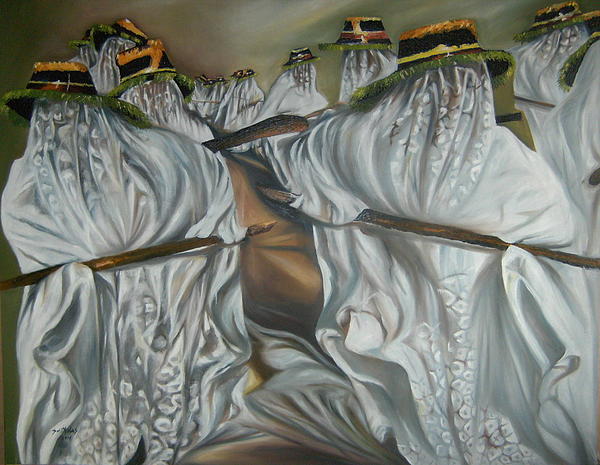
https://images.fineartamerica.com/images-medium/eyo-masquerade-smith-olaoluwa-martins.jpg http://fineartamerica.com/featured/eyo-masquerade-smith-olaoluwa-martins.html 1 Like |
| Travel › The World's 10 Most Dangerous Airlines by anonymous6(op): 7:05pm On Jan 23, 2013 |
Flying was less deadly in 2012 than in any year since 1945, but that does not mean all airlines are equally safe. The Jet Airliner Crash Data Evaluation Centre (JACDEC), which collects information about aviation accidents and safety, has published its annual Airline Safety Ranking. The ratings take into account the number and deadliness of the hull losses (destroyed airplanes) they have suffered in the past 30 years, how they have fared more recently, and have many flights they have flown without incident. The results do not take into account the cause of the hull losses, or whether the airline is at fault, so they are not a perfect measure of how safely an airline behaves. Of 60 ranked airlines, here are the ten with the worst safety records, including the number of hull losses since 1983, and how many fatalities they caused: #10 SkyWest Airlines: 3 hull losses; 22 dead #9 South African Airways: 1 hull loss; 159 dead #8 Thai Airways International: 5 hull losses; 309 dead #7 Turkish Airlines: 6 hull losses, 188 dead #6 Saudia: 4 hull losses; 310 dead #5 Korean Air: 9 hull losses; 687 dead #4 GOL Transportes Aéreos: 1 hull loss; 154 dead #3 Air India: 3 hull losses; 329 dead #2 TAM Airlines: 6 hull losses; 336 dead #1 China Airlines: 8 hull losses; 755 dead http://finance.yahoo.com/news/worlds-10-most-dangerous-airlines-171800816.html |
| Culture › Re: Which Side Has The Biggest Influnce When People From Different Cultures Marry by anonymous6(f): 7:01pm On Jan 23, 2013 |
[quote author=black_panther25]Thats very true. But i was specifically referring to the traditional wedding aspect.[/quote]I have noticed that when it comes to traditional wedding 99% of the time, it is done for a Nigerian women when she marry's out but with a Nigerian man most of the time it is done when he marry's out, but since traditional weddings, you do what the brides household does you will see it more with nigerian women then men but when it comes to the wedding it depends. |
| Culture › Re: Is There Any Country In Africa That Does Not Hate Nigerians by anonymous6(f): 6:54pm On Jan 23, 2013 |
Sexily Endowed: I don't know if it is just me but i have noticed that Nigeria is not really close to any other West African or African country like for example: Kenya and Tanzania, South Africa and Botswana and Mozambique and Angola. Is there an African country that loves us and can relate to us and vice verse? I know alot hate us like South Africa but surely there is a country that does not hate us? Any thoughts?BBC News Special On Nigeria's Impact On The Rest Of Africa http://www.bbc.co.uk/news/world-africa-11429067 https://www.nairaland.com/777550/bbc-news-special-nigerias-impact In this article it mentions the African countries that admire Nigeria due to Nollywood, it brought out more positive image to Nigeria 1 Like |
| Culture › Re: Which Side Has The Biggest Influnce When People From Different Cultures Marry by anonymous6(f): 2:58am On Jan 23, 2013*. Modified: 7:17pm On Jan 23, 2013 |
[quote author=black_panther25]Ok I get you. So what abt nigerian women marrying from outside? Does the same apply?[/quote]It depends it isnt clear cut with nigerian women when it comes to interracial but with other african men most of the time they follow the rule who ever the father is, that is where they lie but they have in direct influence. For example kofi annans first wife is Nigerian(yoruba), the women who had his kids. All his kids have ghanain names and are part of Ghanian society but their cultural influence is equal between Nigeria/Ghana to a extent which shows since his daughter ended up marrying a wealthy nigerian man . However i feel if they were raised in Nigeria they would have more affinity to Nigerian culture. |
| Culture › Re: Which Side Has The Biggest Influnce When People From Different Cultures Marry by anonymous6(f): 11:54pm On Jan 22, 2013 |
Tolexander: 3. The environment they stay also has an influence. E.g if the family live in the society where the women rules, there is a likely tendency for the couple to try to blend with the society cos they may not want to be odd. E.g if a yoruba(man)-igbo(woman) couple i.e interethnic couple stay in Abba there is a like tendency for them to practise igbo culture.I agree with this statement 1 Like |
| Culture › Re: Which Side Has The Biggest Influnce When People From Different Cultures Marry by anonymous6(f): 11:51pm On Jan 22, 2013 |
[quote author=Miss_3v3]Yvonne's father was living there already so he really did not adapt and he had other wife's so they were brought up mostly by their mom but she still acknowledges her nigerian side.[/quote]Yeah, I never said she never acknowledges her nigerian side but she is culturally Ghanian though and leans toward that side more |
| Culture › Re: Which Side Has The Biggest Influnce When People From Different Cultures Marry by anonymous6(f): 11:50pm On Jan 22, 2013 |
[quote author=black_panther25]I see but I disagree with the interacial part. Most interacial couples I know who got married followed the guys side.[/quote]Followed the nigerian guys side?, in America I rarely saw that, it was the white or non-black mother that the nigerian men who married them followed, unless they are in Nigeria. When it comes to interracial most of the time it is the mothers who rule the household culturally based on my observation and the father follows, the kids may take the fathers name but the culture they are more influenced by are the mothers(unless raised in Nigeria). |
| Culture › Re: Which Side Has The Biggest Influnce When People From Different Cultures Marry by anonymous6(f): 9:57pm On Jan 22, 2013 |
ifyalways: ^Ghana and some other W. African countries(CIV) pratise matriarchy so there's nothing special with Yvonne's case. The dad didn't adopt Ghana or whatever, its just a matriarch country. Even in a purely GH marriages, the women owns the child.Well you have a point Ghana is a matriarchy society but I never knew other west african countries followed the matriarchy way, interesting |
| Culture › Re: Which Side Has The Biggest Influnce When People From Different Cultures Marry by anonymous6(f): 8:50pm On Jan 22, 2013 |
[quote author=black_panther25]when a women or a man marries a white for example, majority of times they(male/female) follow the Nigerian traditional side( which is understandable as a lot of whites do not have that culture) but what happens when a Nigerian man marries a Ugandan for example. Does the man go with the women's traditional culture or does the lady go with the man's side or do we incorporate both aspect into the engagement. Has anyone been to an intercultural engagement and wedding and what is the right way to go about this?[/quote]Only in Nigeria is when they almost always follow the the Nigerian cultural side, and interracial marriages in Nigeria are not high but are alot in Europe and other countries of the western world like America and if the woman is non-Nigerian, I have always always seen that side over rule especially since they are in the womens homeland but if the women is Nigerian it tends to be 50/50 at times. When it comes to black africans marrying other black african countries from other cultures, depending on where they are from, their is a common rule among Africans that who ever the father is that is the culture they follow, especially in the olden days of Africa but in todays age things have changed. For example if a Nigerian marrys a Ghanian women it maybe equal since women roles in that country are different, for example Ghollywood/Nollywood actress Yvonne Okoros mother is Ghanian and father is Nigerian, and her father adapted to the mothers side and lived there, and Yvonne herself leans more toward her Ghanian side then her nigerian side, since she was raised there. |
| Culture › Re: Do Africans Hate Black American Media? by anonymous6(op): 10:38am On Jan 22, 2013*. Modified: 12:00am On Jan 23, 2013 |
Afam4eva: I guess in your mind this negative impression is only one-sided, right? Hypocrisy.exactly when it comes to the article though should africans make it a duty to seek out black american media, stay as they are or as I say venture and rely on their own way(ex. African media) |
| Culture › Re: Do Africans Hate Black American Media? by anonymous6(op): 1:58am On Jan 22, 2013 |
Afam4eva: Chimamada Ngozi Adichie addressed the dangers of a single story in one of her speeches. I'll partly blame it on the ignorance of African Americans who instead of picking up a book especially those written by Africans to learn more about the Africa that they won't see in mainstream media. Africans should also learn to tell their stories by making materials available.I so agree, Africans need to stop relying on westernized media instead of theres which is improving, to me even though Nollywood is improving, I feel Nollywood will be instrumental in telling Black african stories from Africans not from Europeans, Americans(regardless of race) and etc in the future. Also I am talking about Nollywood that is creating international movies like IJE not backward ones. That is why when Africans complain particularly on American media I feel like why is this a surprise to africans when that media comes from a country that has a negative stereotype of Africans in the first place. Only Black africans can fix this not any other community. |
| Culture › Re: Do Africans Hate Black American Media? by anonymous6(op): 1:22am On Jan 22, 2013 |
Afam4eva: Why the need to educate Black Americans about Africa? Is there something to gain from it? If the want to learn about Africa then they should pick a book.I don't see it as a priority and a particular gain for Africans but the article brought out a subject that I never felt was a issue in the first place, as you say though any one that wants to know of Africa they should pick up a book. |
| Culture › Re: Soyinka Takes Osun Groove Water For Brazilian Worshippers by anonymous6(f): 11:56pm On Jan 21, 2013 |
well that's good of him, interesting  |
| Culture › Do Africans Hate Black American Media? by anonymous6(op): 11:50pm On Jan 21, 2013 |
[b]" When the average American thinks of Rwanda, there are two thoughts that come to mind—genocide and gorillas. During the early 1990s, Rwanda killed almost 1 million of its own people in a brazen display of ethnic cleansing. As with the Jewish Holocaust, the world stood idly by and pretended that they saw nothing. Rwanda is also known to contain an estimated 1/3 of the world’s mountain gorillas. This is the extent of knowledge most Americans have about Rwanda. Americans are partly to blame for this lack of knowledge, but I put the biggest blame on the country of Rwanda itself. Rwanda has a very appealing story to tell, but like most African countries, they display little understanding of the importance of engaging in direct dialogue with the American people. Better to have friends and not need them, than to need friends and not have them. Rwanda has made tremendous progress on several fronts since the genocide of 1994. Transparency International, an anti-corruption watchdog group, has listed Rwanda as one of the least corrupt countries in Africa. They are also connected to the underwater fiber optic cable off the coast of Kenya that enables them to have faster, more reliable Internet connectivity. And they have been cited as one of the top 10 African countries to invest in. Last December, U.S. Trade Representative Ron Kirk and Rwandan Minister of Trade and Industry, Francois Kanimba ratified the U.S.-Rwanda Bilateral Investment Treaty (BIT). The U.S.-Rwanda BIT was signed in Kigali in 2008 and the United States Senate unanimously approved the treaty on September 26, 2011. The treaty provides investors with legal protections that underscore the two countries’ shared commitment to open investment and trade policies. These protections include non-discriminatory treatment of investors and investments; the right to freely transfer investment-related funds; prompt, adequate, and effective compensation in the event of an expropriation; freedom from specified performance requirements, such as domestic content or technology transfer requirements; and provisions to ensure transparency in governance. It also gives investors in all sectors the right to bring investment disputes to neutral, international arbitration panels. USTR and the Department of State co-led the negotiation of this treaty. The critics of Rwanda continue to site the human rights abuses by the Rwandan President Paul Kagame (as reported by Amnesty International). The country is also criticized for its lack of a free press and the jailing or murder of those who speak out against Kagame. Most Western diplomats in the region are well aware of Kagame’s alleged role in fostering conflict in and stealing minerals from the Democratic Republic of Congo. Most Americans don’t follow Rwanda enough to discern the truth about it. That’s why I am puzzled that neither Kagame or his government ever interacts with the media when in the U.S., especially the Black media. Africans constantly complain about the way Africa is portrayed in the U.S. media (war, famine, corruption), but yet they do nothing to change that portrayal. They constantly call us “brother,” then they go to CNN. They tell us to “come home” (meaning come to visit Africa), but they go visit the U.S. Chamber of Commerce, the Corporate Council on Africa, or the Council on Foreign Relations (all mostly White organizations). Can you remember the last time an African president has given a speech at a Black university, met with Black businessmen, or met with Black media? You can substitute any other African country for Rwanda and the storyline would be the same. Rwanda and Kagame have a worthwhile story to tell, so I am dumbfounded that they don’t take advantage of the interest Americans have in beginning a dialogue with Rwanda. Can you imagine Michael Jordan hitting the game winning shot and then asking the media not to say anything? Or Barak Obama winning the presidential election and refusing to talk about his victory? Or you discovering the cure for cancer, but not wanting anyone to know? So, my challenge to Kagame and Rwanda is to begin a dialogue with the American people beyond that of the White power structure. There are over 200 Black owned newspapers in the U.S. who would be thrilled to have an on-the-record conversation with Kagame. There are hundreds of Black-owned businesses from every sector who can be a great vehicle for the sharing of ideas, but also possible investors. If the Rwandan brand wants to move beyond the genocide and gorillas, then they must educate the American people about the progress made in their country. The only way to do that is to begin a dialogue with the various centers of influence (COI) within the U.S.—Black media, businessmen, universities, etc. Currently, Rwanda is viewed very negatively within the U.S. and that will be difficult to change until Kagame and his whole government decides to engage the American people. That must begin with Kagame reaching out well beyond the White America that he is so accustomed to engaging with. Kagame must set the tone, then his ministers, and finally those in the embassy here in the U.S. This type of initiative will not only help with Rwanda’s political agenda, but also create more possibilities for increased investment in the country. In marketing terms, Rwanda is a damaged brand. The only way to improve Rwanda’s brand is by initiating a strategic, well thought out dialogue with the American people. Kagame has never explained to the American people why we should care about Rwanda, what Rwanda has to offer America, or why Rwanda is in America’s vital national security interests. Two fundamentals in any educational campaign are: to build market awareness and then give a call to action. Kagame has a real opportunity to show other African leaders how to engage the American people in a way that leads to more investment in and understanding of his country. An educated America is his best ally. Maybe it’s time for Rwanda to rebrand it’s approach to the American people."[/b] http://politic365.com/2012/05/03/do-africans-hate-black-american-media/ |
| Culture › Re: The Myth About The Left Hand by anonymous6(f): 11:34pm On Jan 21, 2013 |
it is considered disrespectful and I heard to some muslims it is considered disrespectful because that is the hand used for washing the behind 1 Like |
| Crime › Re: Mistress Strangles Lover’s 4 Children In Anambra by anonymous6(f): 9:34pm On Jan 20, 2013 |
megareal: When married men are adviced to steer clear of extra marital affairs: they laugh and claim it is a man's world forgetting the likely danger they may be putting their families into. My sympathy goes out to the innocents who have borne the result of their father's misdeeds. Stories of wicked mistresses abound but will they ever listen?cosign 100% |


1 2 3 4 5 6 7 8 ... 39 40 41 42 43 44 45 46 47 (of 156 pages)