Christianity Etc › Re: Is Self Servicing A "SIN" For A Couple Whose Partner Is Hardly Around? by ayrahmon: 11:01pm On Sep 05, 2015 Christianity Etc › Re: Is Self Servicing A "SIN" For A Couple Whose Partner Is Hardly Around? by ayrahmon: 11:01pm On Sep 05, 2015 |
what did mean by "if she is a christian". if she is a muslim nko |
| Politics › Re: N338b Loans For Ekiti, Oyo, Kwara, Ondo, Osun, Others by ayrahmon: 10:12pm On Aug 31, 2015 |
I tries hard to remember who pop is before i recollected that his somne is L olly. What does lolly pop know than to pop cjampagne |
| Celebrities › Re: Toyin Aimakhu's Husband Begs Her For Forgiveness On Instagram, Says He Messed Up by ayrahmon: 9:59pm On Aug 26, 2015 |
Kilomode mo |
| Politics › Re: Photos Of Orji Uzor Kalu & Buhari Laughing Hard @d Nat. Security Sumit Today by ayrahmon: 9:48pm On Aug 26, 2015 |
If Mr President catch u e go flog u |
| Education › Re: Katsina Orders Withdrawal Of Children From Private Schools by ayrahmon: 9:34pm On Aug 26, 2015 |
Dear Aminu Katsina, how many children do u have in public scbool |
| Education › Re: GUYS! Who Still Remembers The Title Of This Book? - SEE PHOTO! by ayrahmon: 7:07pm On Aug 25, 2015 |
Reader 4 |
| Phones › Subsidy Is Affecting MTN Zone by ayrahmon(op): 8:32pm On Jun 23, 2015 |
For the past two weeks, MTN has failed to zone us 4k and 8k in my area. i reside Ilorin Kwara state.
Let us know if u also experience the same in ur states for us decide on whether we continue or walk away |
| Family › Re: I've Been Combing My Conscience,was I Wrong? I Need Someone To Help Analyse This by ayrahmon: 10:27pm On May 12, 2015 |
What a pathetic story. its one of d reasons some gals pray for d
death of dia mother in-law b4 moving in. However, ds person na IBO. Haha! Is 13months child spacing not too much.
NO TIME |
| Food › Re: Common Nigerian Foods And Their Recipes by ayrahmon: 5:16pm On Apr 23, 2015 |
missclasssy:
This is a list of the common Nigerian Dishes.
SOUPS
~Soups are very essential to Nigerian food recipes. All Nigerian soups can be served with Eba (Garri), Agidi, Amala, Semolina, Tuwo Shinkafa, Pounded Yamor Cassava Fufu.
Egusi Soup
https://family3ree.com/wp-content/uploads/2014/10/image32.jpg
Ingredients
*.Egusi (Melon) seeds - 3 cigar cups | 600g
*.Red Palm Oil – 2 cooking spoons
*.Beef – Best cut and Shaki (cow tripe)
*.Fish – Dry Fish and Stock Fish
*.Crayfish
*.Pepper and Salt to taste
*.Vegetable – Pumpkin leaves or Bitter leaf(optional)
*.Seasoning cubes
Edikang Ikong Soup
https://www.avartsycooking.com/wp-content/uploads/2011/06/edikaikong-600x398.jpg
The Nigerian Edikang Ikong soup or simply Vegetable Soup is native to the Efiks, people from Akwa Ibom and Cross River states of Nigeria. It is a general notion that the Edikang Ikong soup is very nutritious and this is very much so. Prepared with a generous quantity of pumpkin leaves and water leaves, this Nigerian soup recipe is nourishing in every sense of the word.
Ingredients for Edikang Ikong Soup
*.1kg Pumpkin leaves
*.500g Water leaves(Talinum Triangulare)
*.600g Beef, Kanda, shaki and Dry fish
*.Pepper, Salt and ground Crayfish: to taste
*.200ml Palm oil
*. Periwinkle- 1 cup
*.2 medium bulbs onions
*.2-3 Stock cubes
Bitterleaf soup( Ofe Onugbu)
[img]http://4.bp..com/-hrf4ltGO2jw/VFbqk9FIVqI/AAAAAAAAGqA/a5FBphnwUG8/s1600/egusi%2Bsoup.JPG[/img]
Bitterleaf soup – Ofe onugbu (as the Igbos like to call it) is very delicious.
This soup is popular because it could be made in more than five different ways and can also be refrigerated for a very long time (even though I recommend two weeks at most for most Naija soups)
Ingredients
*2kg Meat of choice (beef, chicken, pork, turkey)
*Bitter leaf (wash to desire)
*Half cup of ground Crayfish
*Maggi or knorr seasoning (3 cubes
*Ogiri (a product of castor seeds)(optional)
*Dry fish (2 medium sizes)
*Stock fish head (1 big size)
*Palm oil (about 25cl)
*Salt and pepper to taste.
*Cocoa-yam (pounded) or
*4 cups of Egusi (if you choose to make bitter leaf soup with egusi)
Pepper soup
https://www.mercycatering.co.uk/wp-content/uploads/2014/08/pepper-soup.jpg
The Nigerian Pepper soup is a popular Nigerian soup recipe. It is such a versatile recipe as it can be prepared with different types of meat and fish. Thus there is the Chicken Pepper Soup, the Catfish Pepper Soup(popularly known as Point & Kill), the Goat Meat Pepper Soup, the Cow Foot Pepper Soup and the Assorted Beef Pepper Soup.
Ingredients
*.Chicken | Cow Foot | Assorted Beef - 1 kg
*. Ehu or Ariwo or Calabash Nutmeg- 4 seeds
*. Chilli Pepper(to taste)
*. Dry Uziza- 2 teaspoons (optional)
*.Onions - 2 medium bulbs
*.Salt - to taste
*.Seasoning - 3 Maggi / Knorr cubes & 1 teaspoon of Thyme (for chicken pepper soup)
Ogbono Soup
https://jadeafrican.com/wp-content/uploads/2014/12/0ogbono-soup_1-954x426.jpg
Ogbono Soup or Draw Soup, is a popular Nigerian soup recipemade with Ogbono Seeds(wild African bush mango seeds). This is one of the first soup given to kids when trying to introduce them to Nigerian soups.
Ogbono soup has a mucilaginous (slimy).
*.Ogbono Seeds: 2 handfuls
*.Okra: 200g
*.Assorted Meat and Fish: Beef, Shaki, DryFish, Stock Fish
*.Palm Oil: 3 Cooking spoons
*.Vegetable: Frozen Spinach (you can also use Pumpkin leaves or even Bitterleaf)
*.Crayfish: 1 handful
*.Pepper and Salt - To taste
*.1 medium size Onion
*.2 Stock cubes (Maggi)
Gbegiri soup
https://www.allnigerianrecipes.com/images/gbegiri-soup.jpg
Gbegiri Soup (the yellow one in the image) takes a bit of getting used for those who are not used to eating soup cooked with beans. The combination of the Gbegiri Soup, Ewedu Soup and the stew will surely tease and challenge your tastebuds!
Ingredients for Gbegiri Soup
*.150g Black Eyed or Brown Beans
*.1 small smoked Mackerel/Titus
*.1 tablespoon ground crayfish
*.1 big stock cube
*.1 cooking spoon palm oil
*.Pepper and salt (to taste)
Efo Riro
https://www.dooneyskitchen.com/wp-content/uploads/2014/08/IMG_3892_watermarked-644x320.jpg
Efo Riro is a rich vegetable soup that is native to the Yorubas of Western Nigeria. The vegetables that can be used to cook this soup are water leaves and pumpkin leaves.
Igredients
*.Assorted meat and fish. For my Efo Riro, I used:
*.Beef
*. Shaki (cow tripe)
*.Smoked fish
*. Dry fish
*.Stock fish
*.Palm Oil: 20 cl
*. Frozen Spinach: 1 kg
*.Crayfish: a handful
*.Onions: 1 medium bulb
*.3 big stock cubes (spinach needs more seasoning)
*.Salt & Habanero / Scotch Bonnet pepper
Okra soup
https://www.allnigerianrecipes.com/images/okra-soup.png
Okra Soup is one of the quickest and easiest Nigerian soups to prepare. This soup is known as Miyan Kubewa in Hausa
Some argue that a lot of work goes to the cutting of the two vegetables used in preparing this recipe. Yes but once the vegetables are ready; it cooks in no time at all.
*.Okra: 250g
*.Red Palm Oil: 3 cooking spoons
*.Beef: Best cut
*. Shaki - Cow Tripe(Optional)
*.Fish: Iced Fish (Mackerel/Titus), Dry Fish, Stock Fish
*.Crayfish
*.Pepper and Salt to taste
*.Onions - Optional
*.Vegetable – Pumpkin leaves or Spinach (Washed & Frozen)
*.Seasoning cubes
Edo Esan (Black soup)
https://southpawgroup.com/iqfoodplatter/wp-content/uploads/2013/06/nigerian-black-soup.jpg
Black soup is a popular and tasteful Edo (Benin) soup, it is quite delicious and easy to prepare.
Ingredients
*4 piecesSnails
*4 pieces Beef
*1 medium size Smoked Fish
*12 pieces Smoked Shrimps
*4 tablespoon ground Crayfish
*1 cooking spoon Palm Oil
*1 small bunch Scent leaves( effirin)( ground, 1 cooking spoon)
*2 balls washed Bitter leaves ( ground, 1/2 cooking spoon)
*1 small bunch Uziza leaves( ground 1 cooking spoon)
*1 bunch Ugwu (optional) ( ground, 1 cooking spoon)
*2 seasoning cubes
*1 tablespoon dry Pepper
*Chopped fresh pepper for garnishing
Oha Soup
https://www.allnigerianrecipes.com/images/ora-soup.jpg
Ora (Oha) soup is native to the South Eastern Nigeria. It is a very traditional soup similar to the bitterleaf soup but cooked with Ora leaves. Ora (Oha) Soup is special because the tender ora leaves used in preparing this soup recipe are seasonal unlike their bitterleaf counterpart which can be found all year round
Ingredients.
one ingredient can make in a recipe.
Ingredients for Ora (Oha) Soup
*.Vegetable - Ora leaves
*. Cocoyam– 8 small corms
*.3 cooking spoons Red Palm Oil
*.Assorted Beef: Includes best cut, shaki (cow tripe)
*.Assorted Fish: Dry Fish and Stock Fish
*.Chilli Pepper, Salt and Crayfish (to taste)
*.2 Stock cubes
*.1 teaspoon Ogiri Igbo
Miyan Taushe (Nigerian Pumpkin Soup)
[img]http://eafrique.tv/wp-content/uploads/2015/01/IMG_0729-600x400.jpg[/img]
Miyan Taushe is a Pumpkin souppopular among the Hausas in Nigeria (Northern parts of Nigeria). It is prepared with ripe pumpkin meat and enjoyed by both young and old.
There are different species of Pumpkin, but the Gourd type is very common in Nigeria, nevertheless, feel free to make use of any specie you can get as long as it is ripe.
Ingredients for Miyan Taushe (Nigerian Pumpkin Soup)
This recipe is for 10 servings
*1 small sized ripe Pumpkin( about 250 grams)
*1 kilo Meat of Choice(beef, cowfeet, goat meat, soft cow bones, chicken, tripe(shaki), oxtail)
*1 medium Dried or Smoked Fish
*1 small bunch Yakwa(yakuwa)(sorrel leaves)(use spinach or ugwu as a substitute)
Ewedu soup
https://foodstantly.com/product_image/big/139626004048421.JPG
Ewedu soup is a delicious soup indigenous to the people of Yoruba
Ingredients:
*Ewedu leaves (corchorus olitorius) 300g
*1/2 teaspoon of powdered potash
*1.5 cups of water
*Ewedu Broom or a blender
*Salt to taste
*Maggi (1 or 2 cubes)
*Chilly Pepper to taste
*4-5 spoons of ground crayfish
Banga soup
https://www.allnigerianrecipes.com/images/banga-soup.jpg
The Nigerian Banga Soup or Ofe Akwu is native to the Niger Delta and the South Eastern parts of Nigeria. In the Niger Delta areas, Banga soup is commonly eaten with various fufu recipes: Starch, Pounded Yam, Semolina, Garri and Cassava Fufu.
Ingredients
*.1 kg Palm Fruitsor 800g tinned Palm Fruit Concentrate
*.Beef
*.Dry Fish
*.Vegetable: Scent Leavesfor Ofe Akwu or dried and crushed bitterleaves for Delta-style Banga Soup
*.2 medium onions
*.A handful crayfish or 2 tablespoons of ground Crayfish
*.Salt and Chilli Pepper (to taste)
*.Ogiri Okpei (Iru)
*.1-2 big stock cubes
Before you cook the Nigerian Banga
Afang soup
[img]http://1.bp..com/-XJV8spPJBvs/U613aTVnDQI/AAAAAAAADWw/LWT32Y4pqhc/s1600/Afang+soup+2.JPG[/img]
The Nigerian Afang Soup, like the Edikang Ikong soup, is native to the Efiks, people of Akwa Ibom and Cross River states of Nigeria but enjoyed by all Nigerians. It is also very nutritious as the soup consists mainly of vegetables. Afang Soup is prepared with a generous quantity of Water leaves and the wild herbal Okazi leaves.
Ingredients
*.400g sliced Okazi/Afang leaves| about 4 handfuls
*.250g Water leaves
*.20 - 25 cl Palm oil (about 1 drinking glass)
*.Beef, Kandaand Dry fish
*.2 tablespoons Crayfish
*.Pepper, Salt and Crayfish - to taste
*.2 seasoning cubes
Ofe nsala
https://lilafrica.com/img/nsala%20soup%20-%20white%20soup.jpg
Ofe Nsala (Nsala Soup) is a delicious soup, popular in the eastern part of Nigeria. It is also known as ''white soup'' because of its light color , due to the absence of palm oil.
The authentic Nsala soup recipe calls for fresh whole Cat Fish, which gives this soup its unique taste. But in the absence of whole catfish, catfish fillets or conger eel can be used.
Ingredients
*1 medium sized Cat Fish (use conger eel if you can't find Catfish in your area, they taste almost the same)
*5 small sized raw Yam cubes OR Yam Powder (Potato Puree can also be used)
*2 tablespoonful chopped Utazi Leaves or parsley(optional)
*1 tablespoonful groud crayfish
*1 teaspoonful Ogiri or Iru (fermented locust beans)
*1 tablespoonful chopped Onions(optional)
*Chili pepper/chopped Scotch bonnet peppers (to taste)
*1-2 Stock/Seasoning cubes(maggi, knorr etc)
*Salt (to taste)
OTHER DISHES
Tomato Stew
https://www.realepicurean.com/wp-content/uploads/2010/09/Beef-Stew-014.jpg
This is a stew used to serving and preparing the Nigerian Jollof Rice recipes: Jollof Rice, Coconut Rice, Rice & Beans, etc. This tomato stew also forms the base for the Nigerian Beef & Chicken Stew.
Ingredients for Nigerian Tomato Stew
*.Fresh Plum Tomatoes(referred to as Jos Tomatoes in Nigeria,tomate perain Spanish andpomodoro perain Italian) – 1.5kg
*.Tinned tomato paste: 600g (or watery tinned Tomato Puree: 1.2kg)
*.Vegetable Oil: a generous quantity (see the video below)
*.Onions 1 to 2 medium bulbs
Important notes on the ingredients
Jollof rice
https://cdn3.volusion.com/dydfh.aylvq/v/vspfiles/photos/JFC-1001-4.jpg?1401510715
The Nigerian food recipe discussed here is the classic Nigerian Jollof Rice prepared at parties. This is the most popular Nigerian rice recipe. This is why you will always see it in parties. It is quite easy to prepare if you follow the simple steps.
Ingredients
Mixed Vegetable Jollof Rice
Rice and Beans
Ingredients
*.2 cigar cups | 500g (1.1 lbs) long grain white rice
*. Tomato Stew500 mls
*.Chicken (whole chicken, drumsticks or chicken breast)
*.Pepper and salt (to taste)
*.2 medium onions
*.3 seasoning cubes
*.2 teaspoons thyme
Fried rice
https://www.allnigerianrecipes.com/images/nigerian-fried-rice.jpg
Fried rice is one of the most widely eaten Nigerian food; it is accepted by almost every Nigerian both at home and in Diaspora. The process of making fried rice is a bit complicating but gets easier with time.
Ingredients for Nigeria fried rice
*4 cups of rice
*Cabbage medium size
*Carrot {about 3 big sizes}
*Green beans {2 cups}
*Peas {half cup}(optional)
*Green pepper {1 big size}
*Liver {0.3kg}
*Meat {1 to 2kg}(chicken, beef or goat meat)
*Vegetable oil {15cl}
*Onions {2 big Bulbs}
*Curry powder (coloring spice) {2 T/spoons}
*Salt and pepper to taste
.
Moi moi
https://www.avartsycooking.com/wp-content/uploads/2010/01/moi-moi.steamed-on-plate-600x450.jpg
Moi Moi (also Moin Moin) is a great dish accessory in Nigeria. It is commonly seen accompanying Jollof Rice, Fried Rice, Fried Plantain, Custard, Akamu (Pap, Ogi) etc. It can even be eaten alone as a snack with a soft drink to wash it down.
Ingredients.
Each bag weighs 420g.
*.3 cigar cups or 750g Beans (Brown/Black eyed)
*.5 tablespoons ground crayfish
*.4 big stock cubes
*.1 habanero pepper
*.2 teaspoons ground nutmeg
*.3 tatashe peppers or 800g watery tomato puree (sold outside Nigeria)
*.2 big onions
*.20cl vegetable oil
*.2 litres of cool or warm water
*.Salt (to taste)
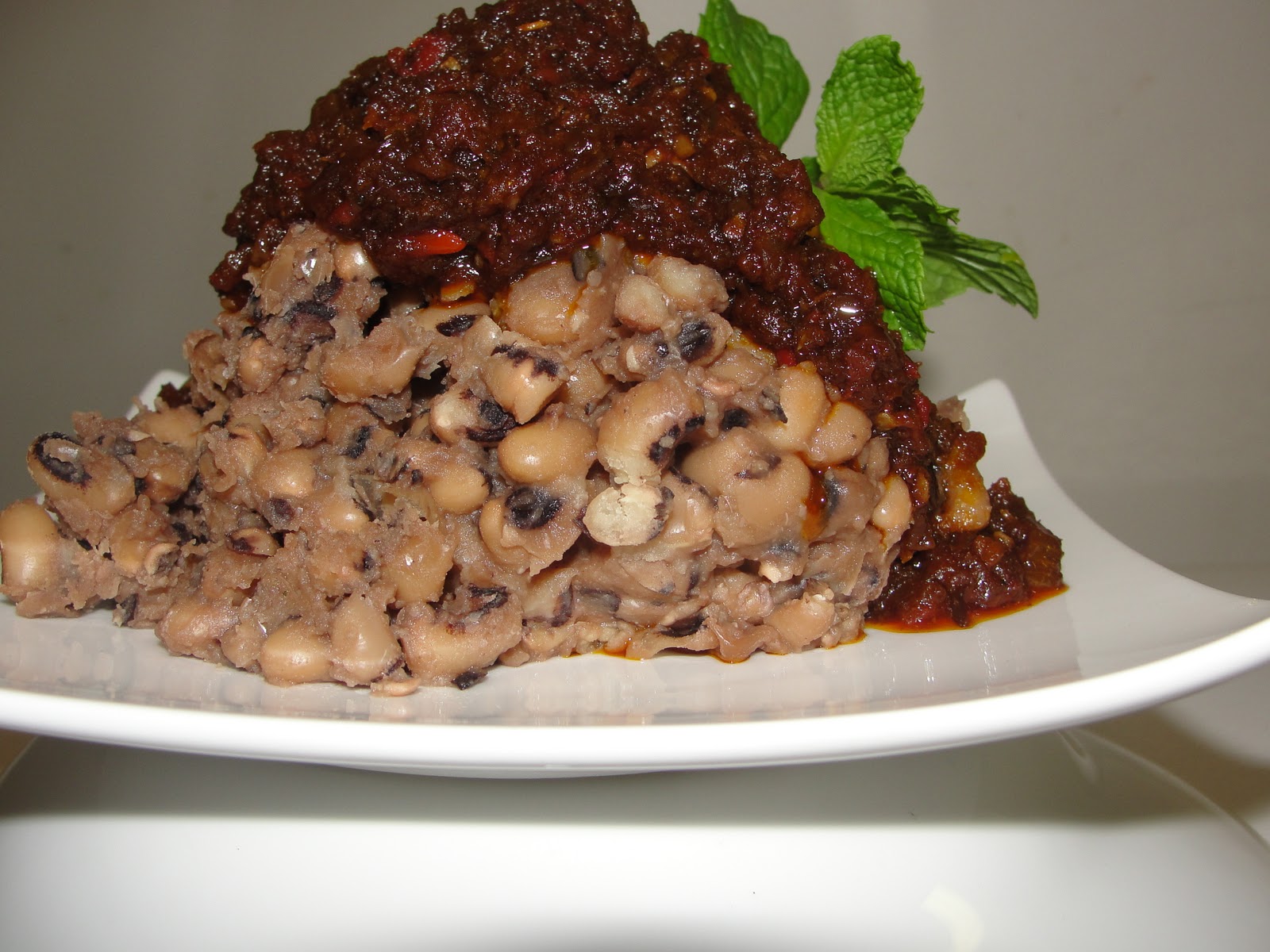
Ewa Agonyi
https://www.travelstart.com.ng/blog/wp-content/uploads/2014/03/Ewa-Agoyin.jpg
Ewa Agonyi simply means plain boiled beans eaten with pepper sauce
It is a very delicious delicacy common among yorubas
Ingredients
*.Beans (Brown/Black eyed): 2 cigar cups | approx. 500g
*.Red Palm Oil: about 5 cooking spoons
*.Plum Tomatoes: 5 big ones
*.Crayfish (a handful)
*.Onions – 1 big bulb
*.Pepper & Salt to taste
*.Seasoning – 2 seasoning cubes
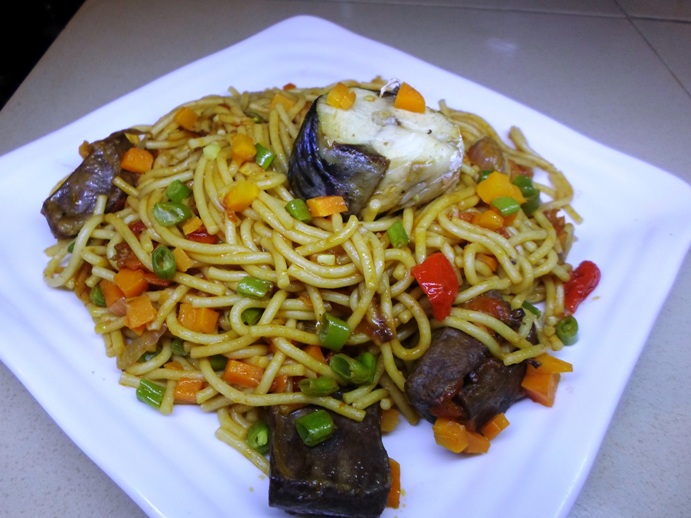
Spaghetti meal
https://allnigerianfoods.com/wp-content/uploads/2015/01/spaghetti-recipe.jpg
The delicious spaghetti/macaroni dish is a very popular Nigerian cuisine eaten in every part of the country.
Ingredients
*Spaghetti (1 sachet)
*1 small tin tomatoes.
*2 cups of onions
*Fresh tomatoes (see image below)
*Fresh pepper (as much as you can take)
*Ground Crayfish (3 spoons, optional)
*3 cube of knorr or maggi
*Salt to taste
*1 cup of sliced carrot.
*Green beans (1 cup)
*1kg Meat/fish (chicken, turkey, beef.. etc)
*Green pepper (optional).
Akara(bean cake)
https://www.avartsycooking.com/wp-content/uploads/2010/06/akara.draining-on-paper-towel-600x399.jpg
Akara, also known as Bean Cakes, Bean Balls, Bean Fritas or Acarajé in Portuguese is a Nigerian breakfast recipe made with beans.
To make Akara, you need to first of all remove the beans coat. You should remove the coat from the beans just before you make the Akara. This means that you can't use coatless beans that has been stored in the fridge or freezer to make Akara.
Ingredients.
*.1 cup of Beans(black-eyed or brown beans)
*.2 habanero chilli peppers
*.1 medium Onion
*.Salt to taste
*.Vegetable Oil for frying
Tools you will need:
*.Blender
*.Mortar and Pestle
*fryer
Yam porridge
https://townetworks.com/wp-content/uploads/2014/08/nigerian-plantain-Porridge-1.jpg
The Yam Porridge can also be referred to as yam soup. It is mainly yam cooked with ingredients and the resulting dish contains some soupy liquid.
Ingredients
*.1 kg (2.2 lbs) white yam
*.Red palm Oil (to colour)
*.1 smoked fish (titus/mackerel) OR dry fish
*.1 tablespoon ground crayfish
*.1 medium onion
*.Fresh green vegetable (eg pumpkin, parsley, scent
EBA
https://clubsputnik.org/images/P4060059_Eba.jpg
This is a staple foodeaten in West Africa, particularly in the Southern parts of Nigeriamade from cassava(manioc) flour, known in West Africa as gari.
To make ẹbà, gariflour (which should be further pounded or ground if not already 'fine') is mixed into hot water and stirred well with a large wooden spoon until it becomes like a firm dough, firmer than, say, mashed potatoes, so it can be rolled into a ball and can keep its shape.
It is used in eating different soups.
Fufu Recipes
[img]http://africatherealpicture.files./2014/10/nigerian-food-fufu.jpg?w=560[/img]
Fufu recipes are eaten with the various Nigerian soup recipes. Fufu is derived by mashing starchy foods or mixing the processed starchy foods in hot water. Fufu is a generic name for food you swallow during the eating process. Fufu recipes are generally tastless on their own so they rely on the richness of the soups to make the meal delicious.
Suya
[img]http://eafrique.tv/wp-content/uploads/2015/03/Suya-1.jpg[/img]
Suya, is a spicy shish kebablike skewered meat which is a popular food item in various parts of Nigeria and is enjoyed as a delicacy in West Africa.(where it is called agashe). Suya is generally made with skewered beef, ram, or chicken.
It is traditionally prepared by the Hausa peopleof northern Cameroon, Nigeria, Niger, and some parts of Sudan (where it is called agashe). Suya is generally made with skewered beef, ram, or chicken. Innards such as kidney, liver and tripeare also used.
The thinly sliced meat is marinated in various spices which include peanut cake, salt, vegetable oil and other flavorings, and then barbecued.
Kilishii
https://www.rovinginsight.org/library/images/kilishipicweb/kilishi.jpg
Kilishiis a version of biltongor jerkythat originated in Hausaland. It is a dried form of Suya. Kilishiis a delicacy in Hausa Land, made from cow, sheep or goat meat after the removal of bone. Each of the selected muscles is then tediously sliced in to a sheet-like sizes of one metre or less for easy drying. The dried "sheets" of meat are then collected and kept for the next process.
A paste made from peanuts called "Labu" is diluted with enough water, spices, salt and grounded onions and perhaps sweeteners in addition like honey to add sweetness. The already dried "sheets" of meat are then inmersed one by one into the "Labu" paste to coat it, whereafter it is left to dry for hours before roasting on a wire mesh. Kilishi can be kept for months without much change to its taste.
Source: http://www.allnigerianrecipes.com/soups/
Cc
Lalasticlala
Ishilove
Emusmith [quote author=wman post=33026050]My oh my! They all look sumptuous. I'm feeling hungry. For your PC,Android and PSP games,1080p HD movies,T.V series and documentaries, tutorials, downloads of anything you need, check us out at https://www.nairaland.com/1035742/garnet-pc-games-sale-cheapestWe deliver all over Nigeria and we are tested and trusted. Full catalogue is available at j .mp/adlisting MK X, FIFA 15, GTA V now available[/ nice one. but somtin inevitable is missing. I need videos |
| Jobs/Vacancies › Re: Gregory University Massive Recruitment 2015 (over 100 Positions) by ayrahmon: 9:38pm On Apr 21, 2015 |
u no dey sell ticket? nd hw much is london visa |
| Romance › Re: Guys, Has A Lady Ever Deceived You About Being A Virgin ? Share Your Experiences by ayrahmon: 5:01pm On Apr 21, 2015 |
i cant stop laughing o |
| Health › Re: 6 Reasons Why You Should Shave Your Pubic Hair by ayrahmon: 4:42pm On Apr 21, 2015 |
Pubic hair helps in d stimulation of libido. if u dey draw d hair as if u b hair dresser.
mehn......... as dt gal |
| Politics › Re: Aisha Buhari: Why President-elect’s Wife May Not Be Nigeria’s Next First Lady by ayrahmon: 10:43pm On Apr 03, 2015 |
abeg o! no dey toast my first lady o |
| Politics › Re: FAKE Osinbajo's Daughter (kiki Osinbajo) Tweets Something Touching FAKE by ayrahmon: 11:11pm On Feb 13, 2015 |
pls i also want to bcom a celeb. go to ayrahmon#twitter.com nd copy paste anyting cos i knw ds is a planned faming attempt |
| Culture › Afon District Union. Afon Kwara State by ayrahmon(op): 4:01pm On Feb 08, 2015 |
AFON DISTRICT UNION
P. O. BOX 01, AFON
ASA LOCAL GOVERNMENT, KWARA STATE
TEXT OF THE PRESS CONFERENCE ORGANIZED BY THE AFON DISTRICT UNION ON THE RECENT GRADING AND UPGRADING EXERCISE OF TRADITIONAL RULERS IN KWARA STATE, HELD AT AFON ON WEDNESDAY, 28TH January, 2015
Protocols
PREAMBLE
With every sense of responsibility, we wish to register our indignation, pain and disappointment to the Kwara State government over the recent grading and upgrading exercise of traditional rulers in the state. In the said exercise, a total of 70 traditional rulers were either upgraded, with none from the whole Asa Local Government. The government of His Excellency, Dr. Abdul Fatah Ahmed did not take into consideration with a modicum of sympathy and love, the age long yearnings and aspirations of traditional Rulers of Yoruba extraction located in Asa, Moro, Ilorin West, Ilorin East and Ilorin south who are being perpetually relegated and submerged by the royal cabal of Ilorin, Our investigations revealed that the grading exercise was not intended to those area in Ilorin Emirate, and that the powers that be in the Emirate are opposed to the grading of any traditional ruler in our area. We pray this information was not true but events on ground confirm our fears.
HISTORICAL EXCURSION
It is pertinent to go down memory lane and to state emphatically that the people of Afon District are Yoruba with their rich and history, culture and tradition, and the Emirate system is anathema to Yoruba culture. There are many towns and settlements that constitute Afon District, each having its district traditional institution some of which even pre-dated the Ilorin Fulani dynasty being imposed on our people. The traditional institutions in Afon District include but not limited to;
1. Baale of Afon
2. Dado of okeso
3. Baale of Laduba
4. Baale of Sapati-Ile
5. Ologbondoroko of Ogbondoroko
6. Samu-Erin of Reke
7. Alaboto of Aboto-Oja
8. Onifoko of Foko-Oja
9. Olu-Ode of Odo-Ode
10. Alajagusi of Ajagusi
11. Aare of Ogele
12. Elegba of Egba
13. Alaran of Igbo-Aran
14. Baale of Olomada
15. Baale of Oguntoyinbo
16. Baale of Bello-Ira
17. Baale of Oniyere
18. Baale of Ajelanwa
19. Baale of Oloro
20. Baale of Alanta
21. Onila of Ila-Oja
22. Baa;le of Abayawo
23. Baale of BudoAiku
24. Baale of Aboto-Alfa
25. Baale of Budo-Agun
26. Baale of Ago-Oja
For example, history has it that Afon was founded some 200 years ago by Olulotan who migrated from Oyo-Ile. Olulotan was a warrior, fisherman and also a farmer. There is only one ruling house in Afon i.e. Olulotan Ruling House and the present Baale is the 5th Baale of Afon.
Similarly, Okeso was founded over 230 years ago by Olapetijiba Alade Ogo who was a prince from Ede in the present day osun state, during the reign of Alafin Abiodun who reigned in Oyo between 1770-1789. Prince Olapetijiba was a brave warrior and medicine man who had to migrate from Ede to establish Okeso having contested unsuccessfully for the throne Timi of Ede. Prince Olapetijiba was reported to have made a brief stop-over at Oyo Ile from where he finally came to settle at Okeso on the top of a hil. Ancient history says the founder was initially lonely, having no communication with the outside world. It was from this aspect of his history that the founder took his traditional title of “Dado” a shorten form of “Daduro” meaning “staying alone”.
The history of other towns in Afon District bear strong similarities with those analyzed above. How come these Yoruba towns are now categorized as fulanis which the Emirate system connotes. It is repugnant, unfair and retrogressive to tie the destiny of Yorubas to the ethics and values of another ethnic group other than their own. It won’t just synchronize
We have observed with regret that the Kwara State Government has been using two different laws to administer our traditional rulers. Out of the 16 locals Government Areas, 11 are having their separate traditional councils, whole the rest five- Ilorin West, Ilorin East, Ilorin south, Asa and Moro are lumped together to form Ilorin emirate council. This is unacceptable because Emirate system is strange to Yoruba custom, and the ADU vehemently protested this oppressive system during the Ekundayo chieftaincy Reform exercise of 1978, and subsequently after.
It is also on the record that this union protested in 1986 via a press conference when late Alhaji Alheri Balogun Fulani was to be imposed on us as a District Head. The then military Governor of Kwara State, Paul Col. Ahmed Abdullahi came up with the abolition of District Head on 17th December, 1987 through a council conclusion No. CM (87) 98 and the white paper on it
We also wish to inform the State Government that one of the drawbacks in the march toward progress and development of these communities was the aberration called native authorities which vested in Mogajis, Alanguas and Daodus unbridled powers. Through them, Ilorin Fulani Cabal was able to strengthen its grip on our people in apparent defiance of the people’s freedom, liberty and right.
We wish to recall here the speech of the first military Governor of Kwara State, Major D. L. Bamogboye (as he then was) on 17th December, 1968 during the first Local Government reform that abolished the native authority system. On page 4, the Military Government said:
“It is no longer a question of maintaining the status quo, where it use no longer meet the wishes of the people, but clearly it must be an object of policy where the people are developing their own ideas of progress, to help them to build up institution wish satisfy their wishes and are adequate for more modern needs’
On page 15, he spoke further:
''Chief and District Heads where the latter is applicable will no longer be imposed rather the local people will have and retain their inalienable right to select their own traditional Chiefs and rulers in accordance with their established Native Laws and customs".
Traditional institution in such communities as Ikotun, Ojoku, Ahogbada, Ira and a host of others were about a decade or two ago upgraded. Some of these communities i. e. Ikotun, Ojoku and Ahogbada were once part of Afon District before they were excised to Oyun Local Government on 17th December, 1968, and they used to pay their taxes through Dado of Okeso. If Ikotun and Ojoku would enjoy grading today, what ju8stifiable reason stops the Kwara State Government from grading traditional ruler in Afon District.
It would be strange therefore, if any of the Traditional Rulers in Asa and Moro are graded, after all we are in dynamic world where nothin is static. Moreso, such grading will help us to build up institutions, which will satisfy our wishes and which will be adequate for our more modern needs. We wish to remind the Kwara State Government that we are now in 21st Century and not 18th Century where someone could stand up to deny others their rights. There MUST be CHANGE. We pray our patience would not ne taxed.
OUR PRAYER
In view of the foregoing, the Afon District Union wishes to plead with the Kwara State Government to:
1. Grade our Traditional rulers in Afon District and others who apply from other Districts of Asa Local Government;
2. Create a seperate Traditional Council each for Asa and Moro Local Government Areas. This will give them their rightful status and paraphernalia; guarantee the regular payment of their salaries and emoluments; and give them absolute sense of belonging like their counterparts in the other 11 Local Government Areas in Kwara State;
3. Extend to our Local Government our Fair share of infrastructural development in order to improve the living standard of our people
CONCLUSION
It is gratifying that His Excellency, Dr. Abdul Fatah Ahmed recently assured the people of Kwara State that grading and upgrading of Traditional Rulers not cpvered in the first phase would be taken care of in the next phase. We consider the Governor's word as his bond, and we are hopeful that our prayers will receive the positive attention this time. We assure the Kwara State Government of our unalloyed loyalty. 
|
| Culture › Afon traditional rulers by ayrahmon(op): 2:47pm On Feb 08, 2015*. Modified: 4:50pm On Feb 08, 2015 |
the following are some of the ttraditional rulers in Asa (Afon)LG who are yet to be upgraded by the Kwara State govt:
baale of afon
baale of laduba
ologbondoroko of ohbondoroko
olu ode of odo ode
aare of ogele
alaran of igbo aran
baale of oguntoyinbo
baale of oniyere
baale of oloro
onila of ila oja
baale of budo aiku
baale of budo agun
dado okeso
baale of sapati ile
samu erin of reke
onofoko of foko oja
alajagusi of ajagusi
elegba of egba
baale of olomoda
baale of bello ira
baale of ajelanwa
baale of alata
baale of abayawo
baale of aboto alfa
baale of ago oja |