Ducii's Posts
Nairaland Forum › Ducii's Profile › Ducii's Posts
1 2 3 4 5 6 7 8 9 10 (of 29 pages)
 Politics › What Does Jafaru’s Release Say About Buhari’ One Sided Fight Against Curruption by ducii(op): 4:18pm On Jan 11, 2016 Politics › What Does Jafaru’s Release Say About Buhari’ One Sided Fight Against Curruption by ducii(op): 4:18pm On Jan 11, 2016 |
When Nigeria’s Economic and Financial Crimes Commission (EFCC) arrested ruling party, the All Progressives Congress (APC) chieftain Jafaru Isa, last week Friday, many thought things were about to change. It almost seemed as though President Buhari’s fight against corruption had become more believable considering Jafar Isa is a close friend of the president. However two days later there are reports that Jafaru Isa has been released on bail by the EFCC, raising a lot of concerns considering that some opposition members of the People’s Democratic Party (PDP) indicted in the same arms deal scam have spent longer than that in EFCC detention. Jafaru Isa was indicted in the ongoing $2 billion arms deal scam that originated from the office of Nigeria’s former National Security Adviser Sambo Dasuki. However, he was released after he returned N100 million from the N170 million allegedly given to him by Sambo Dasuki and the promising to return the rest. He claimed he received the money from Sambo Dasuki, who is his close friend, for the acquisition of a property in Kano. PDP spokesman Olisah Metuh was arrested by the EFCC six days ago for his involvement in the same scam. A week has gone by and he is still in the custody of the EFCC. The story is the same for Raymond Dokepsi, Nduka Obaigbena, Attahiru Bafarawa and many other core PDP chieftains who were arrested for their involvements in the scam. While in detention, they have received a lot of backlash from the Nigerian media. The smear campaign extended to social media with hashtags like #IstandwithBuhari, #Goharderbuhari trending on twitter, all in support of Buhari’s war against corruption. Jafaru Isa’s arrest and subsequent release has thrown up no such campaign. The PDP this morning declared his release a proof that Buhari is on a witchhunt. They may or may not have a point. EFCC has, before now, been accused of not having enough evidence before picking up suspects; reason why most of their indictments never make it to court. In their defence, the EFCC said they offered other people, who received money from Dasuki, the chance to return them but these people kept “… deploying tactics to avoid prosecution, while also going away with the loot”. The detention of the above PDP members has thrown up similar accusations. This is because in some cases they’ve had their bail applications denied even after admitting they received money from Sambo Dasuki (e.g. Raymond Dokpesi). EFCC’s arrest and persecution of PDP members therefore comes across as a deliberate attempt to weaken the opposition party. Shouldn’t everybody be afforded the same treatment regardless of political affiliation? And just how much does returning the money really exonerate them of their crimes? http://venturesafrica.com/jafaru-isas-release-is-buharis-fight-against-corruption-really-impartial/ 1 Like |
| Politics › Nigeria’s Inflation Rate Increased To 9.4 Percent. Here’s Why by ducii(op): 10:26am On Dec 15, 2015 |
Last week, the Nigerian Bureau of Statistics (NBS) released its monthly report on Nigeria’s inflation rate. According to the report, the rate of inflation in the country increased from 9.3 percent in October to 9.4 percent in November 2015. According to the report, these are the two main reasons why the inflation rate increased by 0.1 percent so far. Higher prices in food and beverages From the NBS report, the hike in the rate of inflation can be traced to higher prices within the food and non-alcoholic beverages sector. Food prices, as recorded by the Food Sub-Index, increased to the highest rate recorded this year. Despite relative moderation of these rates in the past three months, prices increased by 0.2 percent from October to 10.3 percent. The index was pushed higher as a result of increases recorded in the Fish, Bread and Cereals, Vegetable, Milk, Cheese and Meat Groups Fuel Scarcity The country was hit by a crippling fuel scarcity over the past month which is still unresolved. The average price of fuel has increased by 23.4 percent, from N93.4 in October to N115.35 in November, which is the highest average price paid by households this year. With the fuel price at N115.35, Nigerians paid more than 30 percent of the official pump price when compared to the open market price of N96.10. According to the NBS report, no Nigerian state in the month of November has sold fuel at the normal price of N87. Akwa Ibom had the highest pump price of N187.5 followed by Abia and Cross River with N146.59 and N140.4 respectively, while Ogun, Bauchi and Katsina had the lowest pump prices with N91.33, N91.33 and N91.5 respectively. In Lagos, Nigeria’s commercial capital, pump price was sold at an average of N103.84 which is 19 percent higher than the official price. Unfortunately, these factors have contributed to the increase in the rate of inflation across the country. http://venturesafrica.com/nigerias-inflation-rate-increased-to-9-73-percent-heres-why/ |
| Politics › The Umemployment Rate In Nigeria Has Increased From 8.2% To 9.9% Under- Buhari by ducii(op): 3:32pm On Nov 24, 2015 |
According to the Nigerian Bureau of Statistics (NBS), the country’s unemployment rate has increased to 9.9 percent in the third quarter of 2015, representing a fourth consecutive rise in the unemployment rate since the third quarter of 2014. The Bureau revealed that a total of 1,454,620 Nigerians are unemployed in this quarter compared to 529,923 in the second quarter and this has led to an increase from 8.2 percent in second quarter 2015 to 9.9 percent in third quarter 2015. This announcement comes as President Muhammadu Buhari is about to mark his sixth month as President of Nigeria. The NBS used the International Labour Organisation’s (ILO) definition to compute its unemployment details. This definition refers to people who work less than full time, which is 40 hours, but work at least 20 hours on average a week. It also includes those that work full time but are engaged in an activity that underutilizes their skills, time and educational qualifications. Drivers and cooks are considered employed since most of them fit into this time frame and their skills meet this methodology, while a farmer is underemployed if he only works during the planting season and remains idle until the harvest period. The active economic population rose from 102.8 million in first quarter of 2015 to 103.5 million in the second quarter and subsequently 104.3 million in the third. The increase in the labour force population was attributed to newly qualified graduates and farmers getting involved in more working hours as a result of the beginning of the planting season. From the survey, subsistence farmers in the rural areas also employ more hands on their farm thus accounting for over 70 percent increase in full time employment. Furthermore, agriculture created over 428,000 jobs in the third quarter of 2015 compared to just 83,000 in the second quarter of 2015. With more farmers entering into the category of fully employed people due to the beginning of planting season, the rate of underemployment will reduce slightly to 17.4 percent compared to the second quarter of 2015 which stood at 18.2 percent. Despite the creation of about 427000 new jobs in the third quarter of 2015, Nigeria’s unemployment rate increased to 9.9 percent which shows an inadequate space for over 1.9 million new entrants into the labour force. The ILO previously forecasted a global unemployment rate of 5.9 percent this year which implies that if Nigeria’s underemployment rate of 17.4 percent is subtracted from the current unemployed rate of 9.9 percent, her unemployment rate is higher than the global average. However, Nigeria’s 9.9 percent unemployment rate is better than that of 67 countries but still worse than 113 countries including 21 African countries whose unemployment rate is lower than 9.9 percent. http://venturesafrica.com/the-umemployment-rate-in-nigeria-has-increased-from-8-2-percent-to-9-9-under-president-buharis-watch/ |
| Sports › Background Of Golden Eaglets' Star Striker, Victor Osimhen: A Must Read by ducii(op): 5:00pm On Nov 12, 2015 |
Story of Eaglets ’ golden boy’s rise from LAGOS slum to world stage Golden Eaglets striker, Victor Osimhen, is the last of seven children of Mr. and Mrs. Patrick Osimhen, Saturday Telegraph learnt on a visit to the neighbourhood where he was born and grew up. He is another classic example of ‘grass to grace story.’ AJIBADE OLUSESAN reports Few sights in football inspire as much excitement and anticipation as an emerging youth talent and Nigeria, being a strong production line of youth stars, has tossed another youngster up to the world in Chile. After scoring eight goals in just five matches (before the semifinal clash with Mexico) in the ongoing FIFA U-17 World Cup, Victor Osimhen, has announced himself as one for the future. Nigeria won the last edition of the cadet tournament in United Arab Emirates two years ago where Kelechi Iheanacho and Taiwo Awoniyi dazzled the world with their skills and scoring prowess. And now another star has appeared on the horizon. Osimhen is like Iheanacho and Awoniyi rolled into one. He possesses that same exceptional balance that allows Iheanacho excellent control and the ability to dribble past defenders with ease and the physique and lethal finishing Awoniyi has displayed in abundance. He also has deft touches and all-round technical play; his maturity, vision, awareness are his greatest assets. Osimhen can create and score goals with exceptional composure. Eight goals and three assists in Chile are a testimony to the great potential he offers. The ongoing tournament has created an opportunity for him to ‘sell’ himself. Scouts all over the world are scrambling to get him sign for their clubs. In fact, he has been linked with topsides like Arsenal, Chelsea and even Manchester City. It is expected things will be like that, clubs must come after a potential winner of the Most Valuable Player of a FIFA competition. Probably at the moment, on his hotel room bed in Chile, Osimhen is in deep thought on how suddenly his life has transformed.He is probably playing back, through his mind’s eye, the memories of his life, his humble beginnings, how things were tough growing up and the beautiful future staring him in the face now. The house where Victor was born Olusosun is a small community around Oregun, Ikeja, Lagos, but it is popular because it accommodates one of the largest dumpsites in Africa. Olushosun landfill is a 100-acre dumpsite, which receives up to 10,000 tons of refuse each day. Inhabitants of this place are constantly worried about the stench that oozes from the site; incidentally, the next big thing in Nigerian football has emerged from this rather unlikely place. Although, it is just about few kilometres away from Lagos State Government House, many parts of the innermost of Olusosun still exhibit the features of an ancient town. The buildings are those Lagosians refer to as ‘faceme- I-face-you’ and there are still many mud houses on many streets in the neighbourhood. This writer almost lost his way trying to locate exactly where the emerging star player was born and grew up due to the awkward layout of the area until a guide took him to an old one storey building, painted green with a touch of yellow. A flag of the All Progressives Congress hoisted at the top corner of the house and several torn campaign posters adorning most parts of the wall show the owner is a politician. “Good morning, who are you looking for?” an elderly woman, selling confectioneries in front of the house queried. But immediately our correspondent revealed their identities and the purpose of their visit, a big smile appeared on the old woman’s face. Madam Adesoye who introduced herself as a neighbour of the Osimhens could not contain her excitement; she momentarily left her wares to beckon on other neighbours. “Victor was born here, “ Adesoye said excitedly. “ Virtually all the children were born here before they packed out early this year. He is a very gentle boy who does not like trouble. He is very respectful and willing to help. He does not complain when sent on errands, he used to help me fetch water sometimes. We are very happy about what he is doing, everyone in our area is happy. “There is a different feeling among the youth in this area because Victor’s story has inspired a lot of us to believe we can become anything we want in life,” Orji Joshua, a teenager, who was also born in the same compound, added his voice. “I know him to be a very humble person and quiet. It is always something like a carnival here anytime Nigeria is playing because we all want to see him score and by the grace of God they will bring the cup home.” Our correspondent was told that the Osimhens moved to the house in 1983 but relocated this year to somewhere in Ogba. Saturday Telegraph learnt that the landlord showed little or no understanding when the family was unable to pay rents regularly. “I am happy about what is happening to them through Victor because they really struggled,” a neighbour who did not want to be named said. As this writer was about to leave the environment, one of the neighbours pointed at a bread seller. “This is where Victor used to buy bread, he likes bread so much,” he said. We approached the bread seller and asked if truly she knew the player and his exploits at the U-17 World Cup. “He is my customer,” she answered. “He used to buy bread from me almost every day. In fact, he is still owing me N200, he did not pay for the last one he bought,” she added as everyone burst into laughter. “I have forgotten about the money though, because I was happy when I heard what he is doing. I can’t believe a boy buying bread here is on the television playing for Nigeria.” How mother used to strap him at the back to sell sachet water Many football stars in Africa never led lives of affluence before reaching stardom and little Osimhen was no different. He is from an impoverished background just like many kids in Africa; he was introduced to struggles in the streets even before he could correctly pronounce his name. According to the first born of the family, Andrew, the hardship they faced was so biting that little Victor, then a toddler, was made to face scorching sun in Lagos traffic where the mother used to sell sachet water to augment her paltry income as a civil servant. “My mum sold sachet water here after coming back from work, so also my sisters,” Andrew who is a newspaper vendor at Ojota told our correspondent. “Victor was very young and mum usually strapped him on her back running after vehicles to sell sachet water. Indeed, growing up was tough. “It became so tough and embarrassing when one of my sisters gained admission into secondary school and there was no money. Many times we didn’t have money to pay our rent, things were so tough. The little salary mum was earning usually finished within a week and the struggle would start all over Amidst that misery, life dealt another big blow on the family. Their enterprising mother lost her life about seven years ago. “It was a tough time for us, but life had to go on. It is unfortunate that mother is not here today to see what her son is doing,” Andrew said. I abandoned my education to care for Victor, others -Brother Victor admitted in an interview during the competition that he learnt many tricks from his elder brother who is also a footballer. Andrew was a local star at Olusosun and its environs but he said he had to abandon the game to face his newspaper business. He had to start the business and jettison the idea of furthering his education so that he could raise money to help his younger siblings. “I had to quit football and even schooling and hit the streets to ‘hustle’ so that I could take care of my younger ones. My mother was a civil servant and things were not going on well for my dad too. So, after my first year in secondary school I told myself I had to do something to help the family and so a brother introduced me to this business I am doing now. I left home after mum died, moved to Ikorodu but I was still monitoring the development of my young ones. “Victor is just like me on the field of play, he can run and score; I was a good striker but he has something that I don’t have and that is skills. The way he dribbles while running baffles me, I could not do that. “Victor likes being himself, he is a very reserved person just like me. He does not share his thought so easily with people. He is a calm boy.” He almost quit football – friend Osimhen knew that he had talent and could make something out of football but things were not going as he expected. He had to make ends meet, he needed to try his hands on something else. So, as someone who had other talents he was very close to abandoning the beautiful game for other endeavours. “I was worried, I knew he could make it in football because of his height, speed and skills,” Mayowa Olorunfemi, his closest friend and captain of his local club, the Ultimate Strikers FC, said. “But all my efforts to get him back to football almost failed until I begged our coach, Chinedu Ogbonna, to talk to him. And we thank God he listened and started coming to training again. “It was just about two months after that the coach gave us a note to go to a club in Abeokuta for exposure and from there one agent discovered him during a competition. We went for the U-17 screening after that. I am happy for him that he is someone we are celebrating today.” Possesses traits of a star – Coach Just like many kids, Osimhen started football at a very tender age and it was not long before his coaches noticed something special about him. Coach Paul Irikhewe was the first man to introduce him to organised football and he said he was not surprised to see the player turning into an international star. “I saw the potential in him right from time and that is why I usually encourage him and I think due to hard work, discipline and dedication he is excelling today, I am happy. “I started working with him right from kindergarten, just like most of the boys you see here (pointing at players who were at a training session). They all grew up together and we have been working with them since then. He was not a difficult person to work with and that is why I am not surprised he is doing well; he is very respectful, humble and hardworking. “He played a lot of youth competitions here with us but after sometime I moved him to play in Onigbongbo Junior League in order to face bigger challenges. I handed him over to the head coach there, Chinedu Ogbonna, and he never disappointed him. Even when he was selected for the U-17 team we were going to watch them during the qualifiers for the CAF tournament in Niger.” Family shocked at rise to stardom Pa Osimhen now walks tall among his peers today because of his son’s exploit. But according to Andrew, their father was unaware of his son’s talent before he became an international star. “Honestly speaking my dad is shocked about what Victor is doing, he did not even know the import of what is happening until people started knocking at his door saying ‘was that not your son we saw on TV now?’ Dad had never seen Victor play before; he doesn’t even own a generator to watch him in the ongoing U-17 World Cup in Chile. He relies on information from his other children and neighbours. In fact, despite the fact that I was a local star, he saw me play just once. So, Victor’s exploit is surprising to him. Victor’s sisters and the other male child in the family, Samson, are very surprised to see him at this level.” Striker endures sports festival snub by Lagos Osimhen probably would have been watching this tournament at home like most Nigerians if the coaches of Lagos State football team preparing for the National Sports Festival had not rejected him when he went there for a trial. “They sent him away not because he was not good enough,” a senior coach in Ultimate Striker FC who did not want his name mentioned said. “The coach told us that many influential individuals had brought their candidates and there was no way they could accommodate him. And now this same Lagos State has been calling us for discussions since the player has started doing well at the World Cup.” How he stole Amuneke’s heart in 10 minutes Osimhen has no godfather, no one gave him a note to Golden Eaglets coach, Emmanuel Amuneke, but the striker only needed 10 minutes to win the heart of his coach during a trial. According to Olorunfemi, they got information about the open screening going on in Lagos and they went there to try their luck. “We went there the first time but due to a large turnout it did not get to our turn. I could not go the second time because I was not feeling well, but Victor went. Luckily, he made it. He told me how coach Amuneke was dismissing strikers that were tested before him in just one minute and before he could get to his turn he was thinking aloud as to what the coach was looking for in those strikers that they could not give him. He noticed those ones were not marking very well and he went there to do just what he thought the coach wanted. He collected a ball from a defender in just few minutes on the pitch and scored from that, after just 10 minutes the coach asked him to go and sit down and since then he has been part of the team,” he said. Family prefers education Although they see football as profitable, many African parents still believe education provides the surest getaway from poverty. So, Osimen’ parents wanted their child to go in search of a sound education. “Initially I opposed the idea of him facing football squarely, I wanted him to take his education seriously because since I could not go to higher institution, I wanted my younger ones to especially our last born,” Andrew added. “So, I insisted he faced his studies but when my dad told me somebody had discovered him and promised to help him I had no choice but to succumb. “When he returned from the CAF U-17 tournament, I told him that whatever deal he would sign later I wanted education to be part of it. I told him he had to have something outside football to fall back on after retiring from the game.” He is Amuneke’s adopted son When Osimhen scored his first goal of the tournament in the 2-0 win over USA, he went straight to the coach and prostrated. He said after the match that: “I prostrated before coach Amuneke after the goal against USA to show appreciation for all what I have learned from him,” he stated. That is the extent of admiration the youngster has for the retired international. Andrew said: “Coach Amuneke obviously likes Victor. He told us he wanted our brother to be staying with him. I think he spent some time with him and I am happy Victor has such a legend to mentor him.” Where he plays football Olusosun Primary School serves as the melting pot for youngsters in the community. Every evening they gather for football. The youth in the area protested vehemently when they were barred from playing on the pitch due to a renovation work going at a time. That was where Victor honed his skills, Andrew was a hero on that pitch and although Victor was not as popular in the area as his elder brother, he also commands some followership. He always wants to win – friends Many of his friends testified to the fact that Osimhen is a gentle, reserved and almost an introvert, but some of them following close encounters have found out over the years that the striker usually loses his cool on the football pitch. “He is a fighter when playing football so we are not surprised to see him like that in the Nigerian team,” Orji said. “Whenever we are playing kick-about football in the community, you could incur his wrath if as a teammate you didn’t play well. He wants to win every game, he can shout at you, abuse you if you stop him from winning.” “He is a tough opponent as well as sometimes a difficult teammate. He wants you to give as much as he is giving to the team and if you fall short of that, he can pick up quarrel, that is the time you will see him in bad mood,” Dada Jimoh, another close friend added. Sports gene in the family Apart from being a footballer himself, Andrew confirmed that the sports gene runs in the family. Their father, Pa Oshimhen, was a popular local wrestler in the village, he also said their late mother was a sprinter and was also popular in her time in the village. Monitoring his development We have seen many precocious talents fizzle away after they dazzled the world at age-grade competition. They never actualised their potentials due to several reasons including wrong choice of clubs, loss of focus, overzealous parents, thieving football agents and lack of adequate monitoring. ”Many young footballers killed their careers before they even started because they went for money not for development when they signed for clubs in Europe,” Andrew said. “ I told Victor that I wanted him to play for a club with a good academy that helps to develop budding talents. Clubs in countries like Belgium and France have good academies; he can go to Arsenal or Barcelona because they also encourage young ones. When he told me about the agency stuff I told him he should be careful because I have read a lot about agents taking players to unknown destinations, abandoning them there, collecting certain fees and still leaving players stranded. I told him I wanted to know how things were going on with him.” http://news2.onlinenigeria.com/headline/440539-background-of-golden-eaglets-star-striker-victor-osimhen-must-read.html |
| Crime › Pix:update And Graphic Photos From Edo Sate Robbery Today by ducii(op): 6:28pm On Nov 04, 2015 |
Attempt by the robbers who robbed and killed scores in Igarra last night to escape enroute Makeke Ojah road met brink walls as vigilantes in Makeke town took up the role of the police to protect the people. The robbers who met resistance from the civilian security killed one of the vigilantes and escaped into the forest. Angered by the death of their colleagues, the vigilantes mobilized into the bush and confronted the robbers. Four of the robbers were reportedly killed by the vigilante. Also, the robbers abandoned 1 pump action and seven AK47 to enable them free movement. [img]http://1.bp..com/-C-29G5iKAa8/Vjo3yVGpUEI/AAAAAAAHNLU/J2mJpKI4rms/s1600/a.jpg[/img] [img]http://2.bp..com/-sQNq7JjyAKQ/Vjo3zrXAdzI/AAAAAAAHNLY/JihPlf0Oe1U/s400/b.jpg[/img] [img]http://1.bp..com/-hl91v85E5Z8/Vjo30ehKDjI/AAAAAAAHNLg/d-AYWP1AHbk/s400/c.jpg[/img] http://www.lindaikejisblog.com/2015/11/update-and-graphic-photos-from-edo-sate.html |
| Politics › Nigeria Poised To Become Africa’s Automobile Hub-pwc by ducii(op): 12:15pm On Oct 30, 2015 |
Nigeria has the potential to become the hub of Africa's automotive industry; this is according to a report released by PwC. The report adds that this will see imports of used cars into Africa’s largest economy fade out by 2050. Andrew Nevin, Partner Africa Strategy and Operations at PwC Nigeria said there was appetite for new cars in the economy urging the sector to improvise a workable model. “The reality is that Nigeria is the biggest economy in Africa, it has 14 million cars on the roads but there is only 100,000 new cars purchased every year. So people look at it as a small market,” he said. “Of those 100,000 cars about 50 thousand are imported. As the economy grows, people will not want to buy used cars but news cars. People want to buy cars but there are challenges with both income and credit gaps.” Nevin said there was need to offer credit to prospective new car buyers like most economies were doing. We think that one of the biggest barriers is lack of credit. Most of the economies do not sell cars through a cash basis but they buy through borrowing, this needs to be addressed in Nigeria,” added Nevin. He believes the government's policy clarity is set to boost the sector. “The government has now polices meant to actively encourage car production in Nigeria. The interesting thing about the car industry is that it is easy to get local production going by bringing semi knocked down kits (a kit containing parts needed to assemble a product) and complete knocked down kits,” he said. “The government policy around tariffs is going to push for the industry to have this semi knocked down and complete knocked down kits.” http://www.cnbcafrica.com/news/western-africa/2015/10/30/pwc-nigeria-automotive-industry/ |
| Politics › Nigerian Record-breaking Scholars Flying The Country’s Flag Overseas by ducii(op): 2:02pm On Oct 28, 2015 |
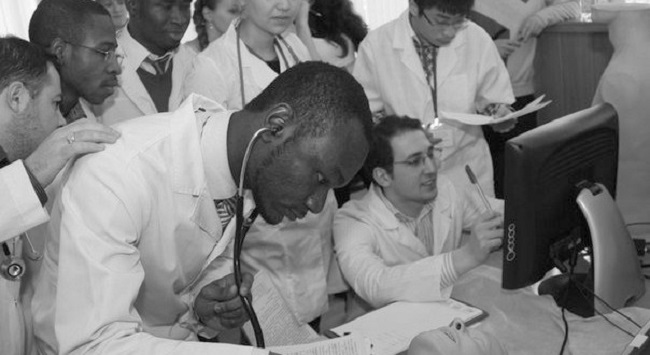
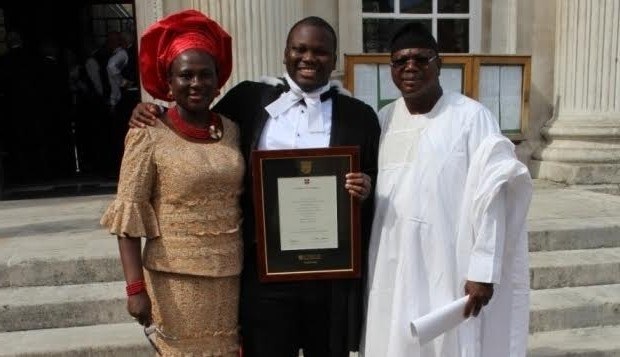
Genetically, Nigerians grasp knowledge easily,” said a Russian diplomat at an event organized to honour a young Nigerian doctor this year in Abuja. While that is subjective, it is a fact that Nigeria is blessed with exceptionally talented and brilliant individuals who have blazed the trail in various aspects of life, globally. From fashion, sport, to entertainment, and literature, the likes of Tiffany Amber, Kanu Nwankwo, Fela Anikulakpo Kuti, and Chinua Achebe have placed Nigeria on the international stage. However, in the last two years, a number of young Nigerians have made their marks in academia in different countries across the globe. Ufot Ekong https://venturesafrica.com/wp-content/uploads/2015/10/Ufot-Ventures-Africa.jpg In his first semester at Tokai University, Japan, Akwa Ibom native, Ufot Ekong, solved a mathematical puzzle that students have been unable to solve for three decades. The 24year old didn’t stop at that, he went on to break a 50 year old academic record by graduating the ‘Best All Rounder’ with a first-class degree in electrical engineering, and getting the highest grades the university had witnessed in 50 years. The remarkable young man didn’t achieve these feats on a gold platter, Ekong worked two jobs to pay his tuition through school, and runs a retail wears and accessories shop in Japan called Strictly African Japan. Ekong’s talents aren’t limited to academia; the young lad is also a linguist – fluent in Japanese, French, and Yoruba, and had won a Japanese language award for foreigners. Currently working for Nissan, while undergoing a Master’s Degree programme in Electric/Electronic Systems Engineering, Ufot Ekong already has two patents under his name for developing an electric car. Dr Victor Olalusi https://venturesafrica.com/wp-content/uploads/2015/10/Victor-Olalusi-ventures-africa.jpg Three months ago, Dr Victor Olalusi was honoured by the Federal Ministry of Education Nigeria for being an ambassador of excellence. As a medical student, Olalusi scored a 5.0 Cumulative Grade Point Average (GPA) for seven consecutive years at the Russian National Research Medical University (RNRMU), Moscow. This made him the best graduating student in the whole Russian Federation in 2013. Olalusi never fell below 5.0 in all the courses he took throughout his course of study, not even in the Russian language class. Prior to achieving this feat, this phenomenal young man had a string of notable achievements – Best WAEC result Nigeria, 2004, Cowbell Award in 2006, Highest Post UME score at the Obafemi Awolowo University (OAU) in 2006, OAU Medicine First Merit list in 2006. For his astounding academic performance, the RNRMU placed Olalusi in the institution’s hall of fame for academic excellence. At the event organized to honour Olalusi, Artem Romanov, a representative of the Russian Embassy, said that Nigerians are blessed with abundant human potential, “It has been acknowledged in the Russian Ministry of Education that Nigerians have a lot of exceptional talents.” Osarieme Omonuwa https://venturesafrica.com/wp-content/uploads/2015/10/Anita-ventures-africa.jpg At 22, Osarieme Anita Omonuwa bagged a first class honour at the University of Reading, United Kingdom, making her the first black woman to win the Reading University Chancellor’s Award in the history of the 121-year-old institution. Just like Ufot Ekong, Omonuwa was awarded a total of six prizes – Student of the year, Best female graduating student, Council of Legal Education Star Prize, amongst others. Omonuwa has always been a star child, always topping her class, right from her kindergarten days. In the 2008/2009 academic session at the Igbinedion education Centre, Benin City, she took home several prizes, including that of the best graduating student. On her arrival in the United Kingdom, Omonuwa received the University of Reading scholarship award in 2010, and was also recognized as the best student in the international foundation programme. The 22 year old was once described by her university chancellor, Sir John Madejski, as “a representative of our brightest and best students.” And to celebrate Nigeria’s centenary last year, Osarieme Omonuwa’s photographs donned the walls of the institution as a symbol of excellence. Oluwatobi Olasunkanmi https://venturesafrica.com/wp-content/uploads/2015/10/Tobi-Olasunkanmi-ventures-africa.jpg In July, 24 year old son of former Minister of Youth Development, Oluwatobi Olasunkanmi, was awarded the William Charnley Prize for excelling at the University of Cambridge, United Kingdom. Olasunkanmi graduated with the best First Class in Law at the renowned university, and was also the only black student in the graduating set. Dr Philip Johnson, a senior tutor at the university, congratulated Olasunkanmi, “Many congratulations on obtaining the best Hughes Hall First Class in your BA in Law. In recognition, the College has awarded you with the William Charnley Prize.” http://venturesafrica.com/did-you-hear-of-these-four-nigerian-record-breaking-scholars-flying-the-countrys-flag-overseas/ |
| Politics › MTN Evading Taxes in Nigeria by ducii(op): 5:57pm On Oct 27, 2015 |
MTN has reportedly been evading tax payment in Nigeria, using ‘Transfer Pricing’, which in this case involves making payments to two overseas companies located in tax asylums; MTN Dubai, and MTN International in Mauritius. Investigations leading up to this report show that MTN has carried out these dubious activities on the Nigerian economy from 2010, although they originally began in 2002. The telecommunications giant confessed to making unauthorised payments between 2010 and 2013 to MTN Dubai in the sum of N37.6 Billion, without the approval of the National Office for Technology Acquisition and Promotion (NOTAP), an organisation established to oversee such transfers in Nigeria. The transfers were then supposedly paid to MTN International in Mauritius, an outfit that is physically represented only by a post office box in Port Louis, and is devoid of any member of staff. An estimation of N90.2 billion has been reached as a total sum in management fees that has been transferred out of Nigeria since 2002. This is based on an earlier management fees agreement nullified by NOTAP, as well as on the basis of MTN’s reported revenues. Nigeria requires that management fees paid by multinationals are approved NOTAP. MTN’s previous agreement with NOTAP expired in 2010, and until then, MTN Nigeria agreed with MTN Dubai to pay 1.75% of revenues to the company for management, as well as royalties for the use of the MTN trademark. However, payments were reversed following the failure to renew an agreement with Nigerian regulators. According to MTN, the justification for paying management and technical services fees to a company without employees (MTN Dubai) is that the contracting party (MTN) has the choice of discharging its contractual obligations as it deems fit. The company’s financial activities, especially in the area of management fees, are currently being probed by various African tax authorities. In a statement made by Cyril Ramaphosa, the South African deputy president, “Tax evasion is not only a crime against the state; it’s also a crime against the people of our country, ordinary people.” Incidentally, Rhamaposa was a non-executive chairman on MTN’s board before becoming deputy president, suggesting he could be an ‘accomplice’ in the crime he openly condemned, in Nigeria. Even though it remains a crucial problem in international tax, transfer pricing – the method used by MTN in Nigeria – is not particularly illegal, except when it is in the form of ‘transfer mispricing’ which is manipulative and abusive, and occurs usually under ‘reinvoicing’. However it is still tax evasion, and poses a serious threat to the growth of any economy that it is practiced in. Developing countries are more susceptible to the economic risks that come with the practice of transfer pricing. Taxing multinationals is a general struggle that developing countries face. Therefore, in order to attempt a reform at transfer pricing, tax authorities need to establish a solid taxation system, complete with economic and legal preconditions and requirements. http://venturesafrica.com/just-how-much-has-nigeria-lost-from-mtns-tax-evasion/ |
| Politics › Someone Tell The Un Witchunting Albinos Is Not Common In Nigeria by ducii(op): 11:45am On Oct 27, 2015 |
The United Nations Refugee Agency (UNHCR) released an article yesterday about a Nigerian migrant family in Italy. Titled ‘A New Reason To Smile’, writer Alice Philipson tells the story of a Nigerian migrant family in Italy who claim they cannot return to Nigeria because their albino daughter would be kidnapped and used for rituals. The father, 43 year old Darlington claims village elders use albinos for rituals in his village in Southeast Nigeria, therefore it is not safe to return. In the article, Philipson uses examples of ritual killings in Tanzania and Democratic Republic of Congo to support the family’s claims. Perhaps, the article would be true if Tanzania was a state in Nigeria, or if Tanzania was another name for Imo state. However, that’s not the case. What the writer has managed to portray in this article is a hasty generalization of albinism and its socio-cultural reality in Africa. The reporter managed to convey the feeling that albinos are constantly hounded in Nigeria, just like in Tanzania and Democratic republic of Congo. However, Tanzania and Nigeria are thousands of miles apart and their cultures are simply not the same. This article does not adequately describe the current reality of albinos in Nigeria. While, albinos in Nigerian can suffer discrimination because of their skin color, they can also live freely like anyone else. This is not to say that discrimination has not taken shape in killings. In 2013, The Albino Foundation of Nigeria called attention to the reality of six million albinos in Nigeria. Founder and CEO Jake Epelle appealed to the Nigeria’s government in concern that albinos were being killed and going missing across the country. However, Nigeria has a National Committee on Albinism, and while studies indicate that about 600,000 of them have suffered discrimination at one time or the other from peers, schoolmates and employers, there are no mentions of killings. There is also a National Committee on Albinism created by Nigeria’s Ministry of Education in 2012, which emphasizes the seriousness Nigeria’s government places on albinism. While 70 albino killings have been reported since 2000 in Tanzania, none have been reported in Nigeria. Though historically in Nigeria, giving birth to an albino was perceived as a punishment from the gods, walking through the streets of Lagos or Port Harcourt today illuminates that Nigerians know better. This article joins the long list of media coverage, which describe Africa as if it were a country and not a continent with many nations. Philipson did not bother to investigate the nuances or cultural context of the family’s claim. Not one case was given of albino killings or kidnap in Nigeria in the article, which only drew on data from Tanzania as evidence. http://venturesafrica.com/someone-tell-the-un-witchunting-albinos-is-not-common-in-nigeria/ |
| Politics › Someone Tell The Un Witchunting Albinos Is Not Common In Nigeria by ducii(op): 11:38am On Oct 27, 2015 |
The United Nations Refugee Agency (UNHCR) released an article yesterday about a Nigerian migrant family in Italy. Titled ‘A New Reason To Smile’, writer Alice Philipson tells the story of a Nigerian migrant family in Italy who claim they cannot return to Nigeria because their albino daughter would be kidnapped and used for rituals. The father, 43 year old Darlington claims village elders use albinos for rituals in his village in Southeast Nigeria, therefore it is not safe to return. In the article, Philipson uses examples of ritual killings in Tanzania and Democratic Republic of Congo to support the family’s claims. Perhaps, the article would be true if Tanzania was a state in Nigeria, or if Tanzania was another name for Imo state. However, that’s not the case. What the writer has managed to portray in this article is a hasty generalization of albinism and its socio-cultural reality in Africa. The reporter managed to convey the feeling that albinos are constantly hounded in Nigeria, just like in Tanzania and Democratic republic of Congo. However, Tanzania and Nigeria are thousands of miles apart and their cultures are simply not the same. This article does not adequately describe the current reality of albinos in Nigeria. While, albinos in Nigerian can suffer discrimination because of their skin color, they can also live freely like anyone else. This is not to say that discrimination has not taken shape in killings. In 2013, The Albino Foundation of Nigeria called attention to the reality of six million albinos in Nigeria. Founder and CEO Jake Epelle appealed to the Nigeria’s government in concern that albinos were being killed and going missing across the country. However, Nigeria has a National Committee on Albinism, and while studies indicate that about 600,000 of them have suffered discrimination at one time or the other from peers, schoolmates and employers, there are no mentions of killings. There is also a National Committee on Albinism created by Nigeria’s Ministry of Education in 2012, which emphasizes the seriousness Nigeria’s government places on albinism. While 70 albino killings have been reported since 2000 in Tanzania, none have been reported in Nigeria. Though historically in Nigeria, giving birth to an albino was perceived as a punishment from the gods, walking through the streets of Lagos or Port Harcourt today illuminates that Nigerians know better. This article joins the long list of media coverage, which describe Africa as if it were a country and not a continent with many nations. Philipson did not bother to investigate the nuances or cultural context of the family’s claim. Not one case was given of albino killings or kidnap in Nigeria in the article, which only drew on data from Tanzania as evidence. These were some of the reactions on social media by some Nigerians who saw the article: [img] http://trib.al/mhrvVSe pic.twitter.com/L7KHKTlBak[/img] [img]trib.al/RGkDD8B pic.twitter.com/2mLNNkJmDh[/img] |
| Politics › Pics Of African And World Leaders Caught Napping In Public by ducii(op): 4:10pm On Oct 23, 2015 |
Africa Former President of Nigeria:Olusegun Aremu Obasanjo https://thebase.ng/wp-content/uploads/2015/10/5_politicians_who_were_caught_sleeping....png President Robert Mugabe Sleeping www.nairaland.com/attachments/1131806_mugabe_jpg8e760937642ac5c22961ca152a8464d1 World German Chancellor: Angela Mercle https://i2.cdn.turner.com/cnnnext/dam/assets/151022142045-angela-merkel-sleep-super-169.jpg Japanese Prime Minister: Shinzo Abe https://i2.cdn.turner.com/cnnnext/dam/assets/151022121835-shinzo-abe-sleep-super-169.jpg Former Italian Prime Minister: Silvio Berlusconi https://i2.cdn.turner.com/cnnnext/dam/assets/151022120152-silvio-berlusconi-sleep-3-super-169.jpg Former British Prime Minister: Gordon Brown https://i2.cdn.turner.com/cnnnext/dam/assets/151022105342-gordon-brown-sleep-super-169.jpg Pope Benedict XVI https://i2.cdn.turner.com/cnnnext/dam/assets/151022115030-pope-benedict-sleep-super-169.jpg Obama's Economic Adviser:Larry Summers https://i2.cdn.turner.com/cnnnext/dam/assets/151022144312-larry-summers-sleep-super-169.jpg Austrian President:Heinze Fiscer https://i2.cdn.turner.com/cnnnext/dam/assets/151022143814-heinz-fischer-sleep-super-169.jpg Former Peru Prime Minister: Alberto Fujimoro https://i2.cdn.turner.com/cnnnext/dam/assets/151022120755-alberto-fujimori-sleep-super-169.jpg http://edition.cnn.com/2015/10/22/politics/gallery/world-leaders-sleeping/index.html |
| Politics › Here’s How Ghana Plans To Settle Outstanding Gas Debts By February 2016 by ducii(op): 5:09pm On Oct 21, 2015 |
After the recently concluded meeting between Ghana and the Nigerian gas company concerning a convenient plan to settle outstanding debts, Ghana has till February next year to pay up. The Nigerian gas company has set the end of February 2016 as the deadline for Ghana’s Volta River Authority to clear its outstanding debt of $171.5m (N33.79bn). The Ghanaian government already settled $10 million last week. According to Kweku Sersah, a spokesperson for Ghana’s Ministry of Power, Ghana’s state power generating company, the Volta River Authority, will settle the debt to Nigeria’s N-Gas in three installments starting in November. However Sersah also stated that the terms for this were still being finalized. “The high-powered delegation that went (to the Nigerian capital, Abuja) was able to negotiate for Nigeria Gas (N-Gas) to continue to supply the country the needed gas.” Ghana’s deal with Nigeria was to receive a contractual 120 million standard cubic feet of gas daily. However Africa’s largest economy, which has so far been supplying Ghana with an excess of 140million standard cubic feet per day of gas, last week threatened to cut gas exports due to the government’s failure to settle outstanding debts to the Nigerian gas authorities. Ghana’s Minister for Power, Kwabena Donkor, led a government delegation to Abuja that began talks on last week with N-Gaz, a Nigerian consortium, and other stakeholders in a bid to avert the threat, said Harriet Wereko-Brobby, WAPCo spokeswoman. The power sector crisis in Ghana has created considerable consequences for the emerging economy. With nearly 25 percent of its supply coming from Nigeria, the threat to cut supply by nearly 70 percent would have worsened problems for a country which already faces electricity blackouts. It would also have raised the cost of supply. The supply received from Nigeria, although not enough, has greatly impacted power supply in Ghana over the last couple of weeks. Also, Ghana’s problems may be connected to a strain in its fiscal balance, one of the reasons why the country is currently partaking in an International Monetary Fund programme. The present situation in Ghana which is characterized by huge power infrastructure gaps and consequent sketchy power supply has raised the cost of doing business. This has caused mistrust between voters and President John Mahama’s government ahead of a highly contended re-election battle next year. N-Gas is owned by Shell Petroleum Development Company, Chevron Nigeria Limited in partnership with the Nigerian National Petroleum Corporation. http://venturesafrica.com/heres-how-ghana-plans-to-settle-outstanding-gas-debts-by-february-2016/ |
| Celebrities › Re: Photos Of Linda Ikeji's Mansion In Banana Island by ducii: 5:02pm On Oct 21, 2015 |
londoner:I totally agree with you 100% |
| Politics › Senate Summons Dg Of Customs To Explain His Decision To Lift Ban On Rice Import by ducii(op): 10:53am On Oct 21, 2015 |
In a bid to reduce the surge in the smuggling of rice through land borders, and also to facilitate the resuscitation of domestic industries, Nigeria’s Federal Government imposed a ban on rice importation four years ago. Smuggled imported rice was seen as a major threat to the development of Nigeria’s rice sector; while a 50kg bag of smuggled rice costs about N7000 then, which is about $35 now, locally produced rice costs way higher – about N12,000 ($60). Two weeks ago, Colonel Hameed Ali, Comptroller-General of Customs, ordered the removal of rice from import restriction list, and also re-introduced import duties at land borders, stating that the decision to ban rice was not an effective measure as people have found other means of smuggling the product. According to Mr. Wale Adeniyi Public Relations Officer of customs, the new measures will enable the Nigerian Customs Service (NCS) “reorganise their anti-smuggling operations in the border areas and also ensure that all those importers through the borders bring their rice through approved routes and pay their extant duty.” Following this announcement, the National Rice Millers Association of Nigeria, NRMAN, criticised Colonel Hameed Ali stating that he erred in his decision to lift the ban on importation of rice through the land borders. Mohammed Abubakar, Chairman of NRMAN said the NCS “overreached its statutory mandate as an enforcement agency in taking such a policy decision.” Mr. Abubakar said, the success of the custom’s decision would destroy Nigeria’s rice value chain attained by the previous administration. “First of all, the customs does not have the power to do that, it is a matter of national policy and customs do not make national policy.” He further said that the decision was an attempt by the customs to legitimise the smuggling of rice, “Anyone who gives such directive has smuggling intentions.” Mr. Abubakar promised that NRMAN would ensure the customs see patriotic reason and rescind the decision. And he very well may have done that as the Senate ad hoc Committee on Rice Waivers recently summoned Col. Ahmed Ali (rtd), to explain his decision to lift the ban on the importation of rice through the land borders. In a motion moved by Senator Adamu Aliero, he reiterated the statement of Mr Abubakar, saying the Comptroller-General did not have the power to unilaterally lift the ban, adding that the action would undermine local production of rice by Nigerian farmers. Senate President, Bukola Saraki, was in agreement, he stated that as long as policies could suddenly be reversed ‘in this manner’, promoting local production would remain an illusion. Prior to the implementation of the policy by the government in 2011, smugglers strove to evade the 20 percent customs levy, and therefore sold at a cheaper market price, or below market price, making business bad for genuine importers and local rice farmers. But the implementation of the ban created a level playing field for both local rice producers and genuine importers, thereby increasing the value chain of Nigeria’s number one staple food over the last few years. http://venturesafrica.com/senate-summons-comptroller-general- |
| Politics › Ghana May No Longer Need To Worry About Reduced Gas Supply From Nigeria by ducii(op): 4:55pm On Oct 20, 2015 |
Nigeria may no longer drastically cut gas supply to the Aboadze Thermal plant as the Ghanaian government has settled $10 million out of its $181 million debt, to the West African Gas Pipeline Company (WAPCo) and Nigeria Gas Association, NGA, following the first round of talks with the Nigerian authorities. A move which gives Ghana additional time to conclude negotiations to curtail the cut in gas supply from Nigeria. This comes after Africa’s largest economy, which supplies Ghana with an excess of 140million standard cubic feet per day of gas, threatened to cut gas exports from Friday due to the government’s failure to settle outstanding debts to the Nigerian gas authorities. The power sector crisis in Ghana has created considerable consequences for the emerging economy. The threat to cut supply by nearly 70 percent would definitely worsen problems for a country which already faces electricity blackouts. The supply received from Nigeria, although not enough, has greatly impacted power supply in Ghana over the last couple of weeks. Therefore both countries held an emergency meeting to discuss a payment plan which will be agreed on by other partners. Ghana’s Minister for Power, Kwabena Donkor, led a government delegation to Abuja that began talks on Thursday last week with N-Gaz, a Nigerian consortium, and other stakeholders in a bid to avert the threat, said Harriet Wereko-Brobby, WAPCo spokeswoman.“By next week we are expecting a way forward,” she told Reuters. “There appears to be a will by all the parties to resolve the issue without the flow of gas being cut off.” The present situation in Ghana which is characterized by huge power infrastructure gaps and consequent sketchy power supply has raised the cost of doing business. Thereby causing mistrust between voters and President John Mahama’s government ahead of a highly contended re-election battle next year. President John Mahama made a vow earlier this year to restore power supply in Ghana, with plans to double it’s power output by 2020. “The effect of this power crisis has affected all Ghanaians. We have been here before in 1998, 2007 and I do not intend to manage it, I intend to fix it. I John Mahama, will fix this challenge,” he asserted. The President informed the audience that he had authorized the Ministry of Power to acquire and feed 1,000MW of emergency power into the system as an immediate measure to resolve the current crisis, adding that “guarantees are currently being agreed for 450MW from Karpower ship (Turkey), 250MW from APR (UAE) and 300MW GE. He further revealed that the new Ministry of Power was working urgently on proposals to restructure the power sector beginning with the Volta River Authority (VRA) and the Bui Power Authority (BPA), hinting that the key objective was to bring the management of hydro plants under one entity. In West Africa, Ghana has held its own as a nation that enjoys significant levels of uninterrupted power supply, a feat that differentiates it from the rest of the region. However in recent times that reputation has seemingly vanished as its citizens now suffer a similar fate of epileptic power. http://venturesafrica.com/ghana-may-no-longer-need-to-worry-about-reduced-gas-supply-from-nigeria/ 1 Like |
| Celebrities › Video: Davido Debunks Claims He Is Worth $14M, Over 2 Billion Naira by ducii(op): 1:26pm On Oct 20, 2015 |
In an interview, the star discussed various topics on MTV Base Africa‘s Base Real Talk with Stephanie Coker. He was asked about his net worth and confirmed that it is not 14 million dollars as speculated on several websites. [img] https://www.youtube.com/watch?v=sv825hUS87c[/img] http://news2.onlinenigeria.com/entertainment/436665-davido-claims-he-is-worth-14m-over-2-billion-naira-video.html |
| Celebrities › Re: Photos Of Linda Ikeji's Mansion In Banana Island by ducii: 6:10pm On Oct 16, 2015 |
Atmmachine:You are an Idiot, poor as a church rat. Lets do a little math, say you work 10hrs a day(which by the way is impossible) multiply that by $20 = $200 a day. Multiply $480 by 5 days(you claim to work 5 days a week) = $1,000 a week Multiply that by by 4 weeks =$4,000 A MONTH Multiply that by 12 Months =48,000.00( and that is even before taxes) Not even close to $186,000 you claim to be making. so run off you have been busted clown. 5 Likes |
| Celebrities › Re: Photos Of Linda Ikeji's Mansion In Banana Island by ducii: 5:48pm On Oct 16, 2015 |
Atmmachine:yea clown in your dreams is $8,000 equal to 10 million naira. go do something better with your life, the money you claim you make in a year is what people are spending in a night out in Lagos Fool........ 7 Likes |
| Celebrities › Re: Photos Of Linda Ikeji's Mansion In Banana Island by ducii: 5:47pm On Oct 16, 2015 |
Atmmachine: |
| Sports › Super Eagles To Receive Cash Bonuses From Nigerian Banks by ducii(op): 12:42pm On Oct 15, 2015 |
The new financial cash policy of President Mohammed Buhari prompted the Nigerian Football Federation (NFF) to inform all players to open an account with Nigerian banks to receive their bonuses. “We have been asked to open foreign currency accounts with a bank where our bonuses will now be paid,” a player informed AfricanFootball.com This new development will take effect from next month’s World Cup qualifier against Djibouti or Swaziland. http://venturesafrica.com/affiliate/super-eagles-to-receive-cash-bonuses-from-nigerian-banks/ |
| Politics › Inflation Rises To 9.4% In September by ducii(op): 5:35pm On Oct 14, 2015 |
The National Bureau of Statistics (NBS) says the nation’s consumer inflation rose to 9.4 per cent year-on-year in September from 9.3 per cent in August 2015. The NBS made the disclosure in its September Consumer Price Index on Wednesday. The NBS attributed the increase to a result of higher food and non-food divisions which include alcoholic beverage, tobacco and kola; clothing and footwear; housing, water, electricity, gas and other fuels divisions. “While the Muslim holidays period may have contributed to higher food prices, the food sub-index as a whole recorded a marginal increase by 10.2 per cent (year-on-year) in September from 10.1 per cent in August. “Prices rose in major categories such as bread and cereals, meats, fish, oils and fats groups. “The fruits, vegetables and potatoes, yams and other tubers groups have, however, held constant or grown at a slower pace for three consecutive months, ultimately weighing on the index. “The advances recorded by the `all items less farm produce’ or core sub-index increased at a marginally slower pace in September relative to August,’ it said. The bureau said the core sub-index increased by 8.9 per cent in September (year-on-year), from 9.0 per cent in August. It said the core sub-index was weighted upon by slower increases in multiple groups and or divisions such as garments, fuels and lubricants for personal transport equipment, hotel accommodation services. The NBS said it also include other services in the communication and miscellaneous goods and services divisions. The bureau noted that the headline index was made up of the core index and farm produce items. It said, “On a month-on-month basis, the pace of increases of the headline index has held constant for the second consecutive month at 0.6 per cent, the lowest pace recorded this year. “Non-food divisions which weighted on the index include housing water, electricity, gas and other fuels; communication, education and miscellaneous goods and services’’. The NBS added that in September, the urban index increased by 0.3 per cent to from 9.2 per cent in August, while the rural declined to 9.3 per cent in September from 9.4 per cent in August. “On a month-on-month basis, the urban index edged higher from 0.6 per cent in August to 0.7 per cent in September. “The rural index increased for the fourth consecutive month, increasing by 0.5 per cent in September from 0.6 per cent in August. “The percentage change in the average composite CPI for the 12-month period ending in September was 8.7 per cent, marginally higher from the 8.6 per cent rate recorded in August. “The corresponding 12-month year-on-year average percentage change for the urban index increased marginally from 8.6 per cent to 8.7 per cent. “Also the corresponding rural index also went up to 8.6 per cent in September from 8.5 per cent in August,’’ the report added. It also said that food prices as observed by the food sub-index increased by 10.2 per cent from 10.1 per cent recorded in August. On a month-on-month basis, the food sub-index held at the same rate for the second consecutive month in September, increasing by 0.6 per cent. The average annual rate of change of the food sub-index for the 12-month period in September 2015 over the previous 12-month average was 9.6 per cent, the same rate for three consecutive months. http://www.vanguardngr.com/2015/10/inflation-rises-to-9-4-in-september/ |
| Politics › Dangote Cement To Expand Into Asia by ducii(op): 4:07pm On Oct 13, 2015 |
At the commissioning of the 3.0 million metric tonne per annum cement plant in Mgao Village, Mtwara, Tanzania, Africa’s richest man and Chairman Dangote Group, Aliko Dangote announced his plans to build cement plants in 18 African countries, to include a factory in Nepal, Asia. In 2013, the Nigerian cement producer had expressed interest in setting up a plant in Surkhet district in western Nepal and though several international investors approached the Investment Board of Nepal (IBN)with investment interests, Dangote was the first to have made a concrete push by formally tabling a proposal. Dangote Cement – Africa’s largest cement manufacturer –has been targeting a radical expansion plan across Africa. According to him, it is time for Africans to step up to the challenge by investing more. He also stated that the entire Africa firms, set to produce more than 80MTPA of cement, was in a bid to promote Africa as an export continent rather than import-dependent. “Our intention is to consolidate our cement assets into one company that will have the scale and resources to compete globally.” In order to make African nations less import-dependent, Dangote is poised to launch new plants throughout Africa to reach the capacity of 62 million tonnes a year in the next three years. The Tanzania plant has abundant natural raw materials that would keep the firm on for more than 49 years while boosting the country’s steady economic growth. For the host communities, the company had given out a 500,000 dollar grant to help fund small start-ups owned by the active poor while schools and markets would be built in the various communities. Dangote commended President Jakaya Mrisho Kikwete for providing such an enabling environment that has made the project possible. Dangote cement has so far built and commissioned cement plants in Ghana, Ethiopia, Cameroon, Nigeria, Zambia, while that of Senegal and South Africa are set to be commissioned at the end of the year. Africa’s biggest cement producer, the firm recorded a turnover of N386.2 billion ($2.3 billion) in 2013. Should Dangote succeed in his audacious expansion plans, his total cement production will climb to 60 million tons, by far the most in Africa. http://venturesafrica.com/nigerias-dangote-cement-to-expand-into-asia/ |
| Culture › Re: The Song ‘karishika’ Illuminates The Demonization Of Nigerian Women. Here’s Why by ducii(op): 9:25am On Oct 13, 2015 |
Chiwude:Thanks, but it's not mine, got it from a magazine publication |
| Politics › Ministerial Nominees: Cv's Of Amaechi, Fayemi, Amina Mohammed by ducii(op): 5:45pm On Oct 12, 2015 |
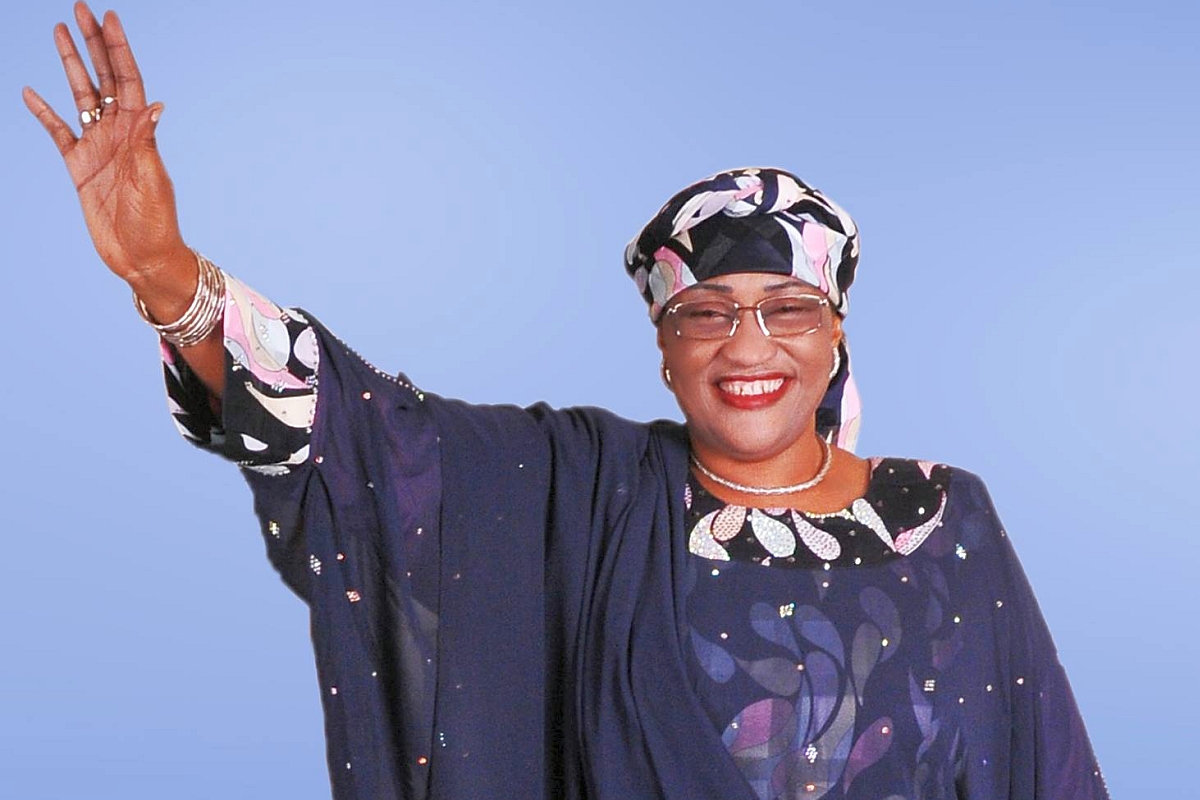
Rotimi Amaechi Rt. Hon. Chibuike Rotimi Amaechi was born May 27th, 1965 at Umuordu - Ubima, IkwerreLG of Rivers State. Amaechi attended St. Theresa's Primary School, Ubima & later Govt Secondary School,Okolobiri for his WASC in 1982. Amaechi studied at the University of Port Harcourt where he bagged a Bachelor of Arts Degree in English. Amaechi also got a Masters in English Literature from the same University of Port Harcourt. Amaechi exhibited leadership potentials & was elected National President of the National Union of Rivers State Students. It was at the University that young Chibuike Amaechi got exposed to practical politics, though at a learning stage. Upon graduation, Amaechi served as the PRO of Pamo Clinics & Hospital, Port Harcourt where he met Dr. Peter Odili. Amaechi's sojourn in politics started when he joined the National Republican Convention, the NRC. He served as the Secretary of the Party in Ikwerre LG & his associates found him a man of strong & consistent character. Amaechi's political efforts paid off when he was appointed SA to Rivers Governor, Chief Rufus Ada-George in 1992. He was also Personal Assistant to Deputy Governor of River State, Sir Dr. Peter Odili. He was also director at two state - owned companies; Risonpalm Limited and West African Glass Industries Limited. Amaechi formed the Ikwerre Forum & later joined the Democratic Party of Nigeria where he served as State Secretary. Amaechi joined the People's Democratic Party in 1999 and won a seat into the Rivers State House of Assembly. He represented Ikwerre Constituency, unanimously elected speaker and served for 8 unprecedented and unbroken years. Amaechi is involved in the Commonwealth Parliamentary Association& Nigeria Extractive Industry Transparency Initiative. In 2007, Amaechi was declared Governor of Rivers State by the Supreme Court and was subsequently re-elected in 2011. His milestones in Education, Health,Agriculture & Infrastructures as governor has won him National & International Accolades. In 2011 Amaechi was elected Chairman of the Nigeria Governors Forum, a position he held till he left office in 2015. In 2015, Chibuike Rotimi Amaechi also served as Director General of the APC Nigeria Presidential Campaign Committee. Amaechi is the Ochi Aliri 1 of Ikwerre Land and his hobbies include reading, travelling and making friends. Chibuike Rotimi Amaechi is a practising Christian, married to Judith Amaechi and blessed with three Sons. This is a summary of Rt. Hon. Chibuike Rotimi Amaechi's credentials and Curriculum Amina Mohammed From 1981-1991 Amina J Mohammed worked at Archon, Norman & Dawbarn a Multi-disciplinary firm of Architects, Engineers and Quantity Surveyors in Kaduna, Nigeria. From 1991-2000, Amina J Mohammed served as Co-Founder & Executive Director of Afri-Projects Consortium, Kaduna & Abuja. From 2000-2002 Amina J Mohammed served as Private Consultant & National Coordinator for CSACEFA, Abuja. From 2002-2005 Amina J Mohammed served as, National Coordinator EFA, Federal Ministry of Education. From 2005-2011 Amina J Mohammed served as the SSA to the President on MDGs; coordinating debt relief gains to Nigeria. To date Amina J Mohammed is an Adjunct Professor at Columbia University, New York (an Ivy League Institution). Notable references on Amina J Mohammed's Curriculum Vitae include Ban Ki Moon, Former President Olusegun Obasanjo, Prof. Jeffery Sachs, and Babagana Kingibe. This is a summary of Amina J Mohammed's credentials and Curriculum. Kayode Fayemi Dr. John Olukayode Fayemi was born in Ibadan, Oyo State on 02/06/1965. He was Governor of Ekiti State from 2010-2014. Prior to becoming a Governor, Fayemi was the Director of the Centre for Democracy & Development, a research institute. #Fayemi attended Christ's School, Ado Ekiti for his secondary school; Federal School of Arts & Science Ondo for his Higher School Certificate. Fayemi has degrees in History, Politics, and International Relations from UNILAG and University of Ife. Fayemi also has a doctorate in War Studies from King's College, London. He specialises in civil-military relations. Fayemi has worked as a lecturer, journalist, researcher, and strategy development adviser in Nigeria. Fayemi did his national year of service as a lecturer at Police College, Sokoto. Fayemi was a prominent leader of the Nigerian opposition to military rule in exile. Fayemi founded and managed opposition radio stations Radio Freedom, Radio Democracy International, and Radio Kudirat. Fayemi's legacies include his historic gubernatorial concession, and superintending the APC presidential primaries. Fayemi is a Commander of the Order of the Niger (CON). He is married to Olabisi Fayemi, and has one son, Folajimi. This is a summary of Dr. John Olukayode's credentials and Curriculum Vitae. http://www.lindaikejisblog.com/2015/10/ministerial-nominees-cvs-of-amaechi.html |
| Politics › Alleged Boko Haram Sponsorship: What It Says About Nigerians? by ducii(op): 5:16pm On Oct 12, 2015 |
“The truth is finally out. We have been vindicated. We have no hand in the Boko Haram insurgency. The raison d’etre of our party is the well-being and security of Nigerians.” That was a statement made last year, by Mr. John Oyegun, the national chairman of the All Progressives Congress commenting on the speculated list of Boko Haram sponsors. For years, the Islamic sect Boko Haram has unleashed terror in Nigeria, particularly in the North, threatening the security of the country, and placing it on the global terror watch list. Hundreds of thousands have lost their lives in the inhumane attacks of the sect, and up until now, blood is still been shed in the north. The Nigerian people have looked up to the government and the Nigerian army to put an end to the sect and their attack; something they have promised to do time and again. But so far, little has been achieved in eliminating the sect, as they have continued with their nefarious activities. Aside the exchange of words between the Nigerian army and the sect on whether or not the latter is being overpowered, there are recent speculations on the revealed identity of the sponsors of Boko Haram. On Sunday, the 4th of October, the Nigerian army reportedly said that they have obtained the names of the individuals who fund and support the activities of the sect, and promised that they would be “exposed in due course.” Major General Yushau Abubakar, the Commander of operation Lafiya Dole (peace is a must) hinted this while speaking with the News Agency of Nigeria (NAN) in Maiduguri. “We searched the houses of suspects and certain items that we recovered at the vicinity gave us some clues.” From the beginning of the group’s onslaught, there have been quite a number of reports on the acknowledgement of the identity of Boko Haram sponsors. The government has played the blame game for years, and the Nigerian people have been roped in. As politicians made Boko Haram sponsorship a party issue, the public made it tribal and regional. The past administration, ruled by the People’s Democratic Party (PDP), was accused of harbouring sponsors of the sect by the All Peoples Congress (APC). “The sponsors of Boko Haram are within the PDP and the Presidency. They are known friends of President Jonathan. He knows them and they know him,” said APC’s national chair in a press conference late last year. On the flip side, PDP accused APC of financing the terrorist group with the aim of destabilising their administration. While that happened at the administarial level, the people of Nigeria turned against one another: People from Southern, Eastern, and Western Nigeria accused top government officials from the north of backing the activities of the sect. Some even went as far as publishing names of the alleged sponsors, most of whom were governors and senators from northern states. Over the years, these alleged sponsors, remain ‘alleged’; the Nigerian Army has made no major progress on this issue, save of recent. On Tuesday, 6th of October, the army released a statement that a suspected sponsor has been arrested. “The 33 Artillery Brigade, Nigerian Army, has recorded another landmark success in the ongoing Operation Zaman Lafiyah as troops of the brigade recently arrested one Aliyu Hussaini popularly known as Colonel, a suspected Boko Haram terrorist and an impostor who has been parading himself as a Brigadier-General in the Nigerian Army.” There is yet to be a concrete, detailed information on this latest development, hopefully, it doesn’t die off as others have. The blame game needs to stop, as it is a shift from what is important. Apportioning blames has not helped Nigeria in any way, instead it speaks volumes of our attitude as a nation – tribalistic, divided, and unserious. http://venturesafrica.com/alleged-boko-haram-sponsors-what-it-says-about-nigerians/ |
| Politics › 64% Of Nigerian Households Experienced Significant Improvement In Power Supply by ducii(op): 1:04pm On Oct 12, 2015 |
Nigerian opinion polling and research organization, NOI polls, recently released a report stating that 64% of households across Nigeria “experienced tremendous improvement in power supply over the third quarter (Q3) of 2015 (July – September 2015)”. The opinion poll conducted from January 2013 till September 2015 was done through telephone interviews with a random sample of 33,000 people across Nigeria. The poll report titled “Nigerians Witness Significant Improvement in Power Supply over Q3 2015” indicates that this improvement was significant because it represented a 37% increase in power supply from the second quarter (Q2) of 2015 (April – June 2015). The report further attributed this improvement to a rise in the country’s power generation, with a maximum value of 4800 megawatts during this period. This data represents the highest improvement in power sector since it was privatized in 2013. However, the improvement in power supply within the Q3 of 2015 reduced from 62% in July to 60% in August, probably due to the shutdown of the Utorogu Gas plant, Trans Niger pipeline, and Nembe creek Trunkline. An average of 235 megawatts per hour daily was reported to have dropped within 6 days in August. The report also revealed that the North Central zone (geo-political) of Nigeria benefited more from the tremendous improvement in power supply with a 70% increase. In contrast, the South-South region recorded the lowest improvement with a 47% increase. Ola, a student based in Abuja commented on this, “It is true. We’ve had light almost 24/7 in my area since June … I think it is because of Buhari.” Nigerians in other parts of the country – Ibadan, Lagos and Port Harcourt – concurred with this statement, saying it was probably due to the fear of Buhari that power supply has become better. On the flip side, people in the South-South region have not benefited from this improvement. “It has generally been the same here. We have light for a day, and it is off for the next two days,” said Funmi from Warri. The same was said by people in Lokoja and Okada. Implications of this report The reduced use of power-generating sets – one of Nigeria’s alternative sources to power supply – will lead to a reduction in the volume of petrol bought to fuel them. Tolu, a banker in Ibadan said “servicing and maintenance alone was a big amount. I also used to spend about a thousand naira on fuel every two days which is approximately 3000 naira in a week. Imagine the amount in a month. I don’t spend that much on my NEPA (National Electric Power Authority) bills.” This means more savings for Nigerians. Noise and air pollution will also be curtailed, as the gases emitted from these generators are detrimental to human health. These are some of the advantages of the latest improvement in power supply. Will this trend continue? People have said that the fear of president Buhari, coupled with increased rainfall in the third quarter of 2015, is responsible for improved power supply. Nigerians are on a look out to ascertain whether or not this improvement will be long term; with institutions like the NOI polls, tracking the improvement of the power sector, this would not be a problem. https://venturesafrica.com/wp-content/uploads/2015/10/NOI-power-poll-ventures-africa.jpg http://venturesafrica.com/64-percent-of-nigerian-households-experienced-significant-improvement-in-power-supply-over-the-third-quarter-of-2015/ |
| Culture › Re: The Song ‘karishika’ Illuminates The Demonization Of Nigerian Women. Here’s Why by ducii(op): 12:30pm On Oct 12, 2015 |
macof:Yea, like a mermaid |
| Culture › The Song ‘karishika’ Illuminates The Demonization Of Nigerian Women. Here’s Why by ducii(op): 5:38pm On Oct 08, 2015 |
geria has the largest number of women in Africa, but if you listen to some people in the country—many of these women, particularly the very beautiful among them, shouldn’t be counted in a census because, well, they are not human. They are mostly marine spirits or Mammy Water in local parlance, serpentine demons, fallen angels or human witches who possess dual citizenship of the underworld where their true allegiance lie. All of these sub-sects are now popularly grouped into the trendy term Karishika. There are two widely known Karishikas in Nigeria. The first is Karishika, a character in a Nollywood blockbuster movie by the same name. An astonishingly beautiful woman by day and a bloodsucking demon by night, she is sent by the devil to earth to catch successful men, destroy their relationship with their spouse as well as their careers. As instructed by her master, Karishika gets her man, charms him–with her beauty and magical powers–into sending his wife away and proceeds to run him down financially and physically. However she does not fully succeed, as she is stopped in her tracks by the marathon prayers of her captured man’s dumped wife. Attacked by nollywood-esque thunderbolts of prayer, she turns into several kinds of ferocious wild animals, before finally disappearing back to her spirit land to fall and die. The second Karishika arises in the trendy hip hop jam by the same name, sang by the ladies’ love Falz featuring the Igbo’s favourite son Phyno. The Karishika here is not much different from the one in the movie, they are both damsels at day and demons at night. However, where the earlier Karishika chose to target married successful men, this one is after single men who have just began to succeed big time—characters that Falz and Phyno aptly represent. With funny anecdotes and witty lines, both rappers deliver a prayer to God to save them from the Karishika that is after them. At the tail end of the 4 plus minute song comes the cameo by popular female comedian Chigurl praying for the Karishika to fall and die. Thanks to the hit song, the word Karishika is popular across all social media platforms so much so that it has its own collection of smileys on BBM. However, just as popular as—or even more than—the groovy music, and the blockbuster movie before it, is the actual belief in the existence, and dare I say pervasiveness, of actual Karishikas. Ask the next Nigerian in a church or at a bar, and there’s a huge possibility that he or she will tell you that there are really many Karishikas out there on the prowl. Many might not use the term Karishika, but what they will describe will have the semblance of either of the two characters as presented in those two works of art. Certainly, the widely held belief of demons taking the form of beautiful ladies to chase after and pull down successful or succeeding men has long existed in Nigeria before either of the Karishikas. In fact, this belief fed into the conceptualization of both fictions and several other Nollywood movies of similar theme, like the classic Nneka the Pretty Serpent. However, apart from inspiring fictional stories, the belief also represents a real societal depiction of the womenfolk as parasitic leeches on men and the major cause of a man’s downfall and damnation. Virtually every adviser to a Nigerian man, from his parents to his pastor, friends to even chance acquaintances such as a one-time co-passenger in a public transport, routinely warns him to beware of the kind of women he “carries” lest he falls into the hands a marine spirit. The woman that he finally hooks up with is also usually tested for demonic possession, ogbanjeness or the existence of a spirit husband. Interestingly, the man is hardly ever put to such rigorous spiritual assessments. Oftentimes, the more beautiful the woman is, the more suspicious people are of her ‘dual citizenship’ with the underworld. It is why “Pretty” was the crucial element in the plot of Nneka the Pretty Serpent. In the movie, Nneka uses her beauty to charm her prey, before actually unleashing her demonic powers. In Nigeria, a woman’s beauty is the cause célèbre of a man’s immoral actions. Thus, when a man commits fornication or adultery with a woman, her beauty is the cause and not his desire. If he spends all his money on her, her charm is the cause and not his profligacy. Should he impregnate her then its because of her seductiveness and not his libido. And if he dumps his wife for her, she is the home-breaker not him. Then comes her demonic possession or citizenship of the marine world, as the cause of their childless marriage, the harbinger of her husband’s misfortune, or worse still, the instigator of his death. The latter is why the story of women forced to drink the water used in washing their dead husband remains true in Nigeria. Ironically, Nigerian women are not missing–and some would argue even more present—in the front row of this demonization of the female folk. In both Karishikas, as well as in Nneka the pretty serpent, it is a fellow woman that discovers the witch-of-a-woman and leads the campaign to destroy her, a role perfectly captured in Chigurl screaming ‘Karishika fall and die o!” It is in real life, where there’s no script writer to make up the whole plot, that this holy crusade against Karishikas bares its disturbing face. Wives battle concubines, girlfriends tackle side-chicks, mothers faceoff with daughter-in-laws, and all this time none of them takes a look at the man and his major role in all the events. Instead, resources are poured into—the offertory box of a church, goatskin bag of a juju priest, or pockets of chiefs and elders—making sure the Karishika falls and dies. Tragically, sometimes she really falls and dies while all the accusations against her remain more false than fiction. Unfortunately, popular fictions like the two Karishikas do not serve as catharsis for this societal blaming of women for the fall of men. Instead they further entrench it, not just as popular sentiment, but also a social norm. The consequence enables Nigerian men to revel in the transfer of blame and guilt for their misfortune, like Adam, and more Nigerian women cursed and condemned for a man’s fall, like Eve. [img] https://www.youtube.com/watch?v=NK-E82TcC04[/img] http://venturesafrica.com/the-karishika-illuminates-the-demonization-of-nigerian-women-heres-why/ |
| Sports › Why I Removed Enyeama As Super Eagles Captain - Oliseh by ducii(op): 1:08pm On Oct 08, 2015 |
Super Eagles coach Sunday Oliseh has described the altercation between him and goalkeeper Vincent Enyeama as a normal disagreement in a family. He has however explained why he stripped Enyeama of the Eagles captain’s band and handing it over to CSKA Moscow forward Ahmed Musa. Speaking on Brila radio, Oliseh said that the storm was over but insisted that Musa, the man who takes over as captain of Eagles have all the qualities of a good captain. ‘’I want a captain who is disciplined. A leader who can motivate other players. A player who comes to camp early. I want a young player not a retiring player as captain. And Ahmed Musa is that player. He is my captain’’, Oliseh said. "When you have a new government like our honourable president just came in, he’s picked his ministers. And you have your philosophy and you have your way of working. ''As a coach I have looked at the team and I have looked at Nigeria going forward. We need a captain who will think of staying with Nigeria for several years to come, who is regularly in the front. And Ahmed Musa did a great job for us in Tanzania under very difficult circumstance. He is a very responsible player and he is the captain of the team. So he is the captain of the team, there is no question of a tussle. “The fact that I would like to have somebody (as captain) who is thinking of playing now and not somebody who is preparing for retirement or thinking of life after-football. And I think it’s time we had peace and quiet around the Super Eagles. That is why I am glad that most of the players here are finding ways to work as a team because I get the feeling now that they are aware that they are representing 170 million people’’, Oliseh said on Brila. "’The players have shown their desire and we are working on stringing them together. It is unfortunate that the home-based players are yet to be given visas but we are hopeful that they will be here for the second match against Cameroon on Sunday’’ he said. http://news2.onlinenigeria.com/news/general/435166-why-i-removed-enyeama-as-super-eagles-captain-oliseh.html |
| Politics › Does President Muhammadu Buhari Have A Gender Problem? by ducii(op): 10:33am On Oct 07, 2015 |
On October 1st, the Senate president, Bukola Saraki announced that the list of Nigerian ministerial nominees was released to him for senate approval. The list, sent by President Muhammadu Buhari, contained the names of 20 instead of 36 appointees. However in the list, only 3 women were nominated as ministers. During his campaign, Buhari promised to implement the National Gender Policy, which allocates 35 percent of appointive positions for women. Specifically, ‘Objective 5′ states, “Adopt special measures, quotas and mechanisms for achieving minimum critical threshold of women in political offices, party organs and public life by pursuing 35% affirmative action in favour of women to bridge gender gaps in political representation in both elective and appointive posts at all levels by 2015.” But if out of the 20 names, women are only represented by 15 percent, it seems the President has a gender bias, which could be a big problem for him throughout the tenure of his presidency, especially considering the strides Nigeria has made in terms of women and political representation. Notably, President Jonathan brought about an increase in women’s political participation from 10% in 2011 to over 33% in 2013, with the appointment of 13 female Ministers out of 42, and four Special Advisers out of 18. While we await the names of the outstanding 16 nominees, here’s a bit more information on the three women Buhari selected. Amina Mohammed (#DOB. 1961) She was the former Senior Special Assistant to President Goodluck Jonathan on the Millennium Development Goals. During this period, she advised the presidency on macro-economic issues, sustainable development and poverty. She also established and implemented the Virtual Poverty Fund. Mohammed has served on international advisory boards such as the UN Secreatry General’s Global Sustainability Panel and the Gates Foundation. In June 2012, she was appointed as the Special Adviser on Post-2015 Development Planning to Ban Ki-moon, the United Nations Secretary-General. Kemi Adeosun (#DOB. 1967) Upon leaving her job at PricewaterhouseCoopers in 2002, she joined Denham Management and rose to the title of Managing Director. She was also the Managing Director of Quo Vadis Partnership, a position she held for about a year before she was appointed the Finance Commissioner in Ogun state in 2011. Adeosun has also been nominated by Governor Ibikunle Amosun to join the state’s cabinet. Aisha Alhassan (#DOB.1959) Alhassan, a retired Chief Registrar of the High Court of the Federal Capital Territory, was the Taraba state Commisioner for Justice and Attorney General before she was elected a Senator for the Taraba North constituency of the state. Aisha Alhassan became popular by being the first woman to run for a governorship position in Nigeria. https://venturesafrica.com/wp-content/uploads/2015/10/Amina-mohammed1.jpg https://venturesafrica.com/wp-content/uploads/2015/10/Mrs-Kemi-Adeosun-Ogun-State-Commissioner-for-Finance.jpg https://venturesafrica.com/wp-content/uploads/2015/10/Senator-Aisha-Jummai-Al-Hassan-Photo.jpg http://venturesafrica.com/does-nigerias-president-muhammadu-buhari-have-a-gender-problem/ |
| Politics › Re: Four Outstanding Ministers From President Goodluck Jonathan’s Administration by ducii(op): 12:40pm On Oct 05, 2015 |
chudionu58:and who is that? |
| Travel › Why Most Nigerians Go To Malaysia Instead Of Europe And America by ducii(op): 12:32pm On Oct 05, 2015 |
To know Malaysia is to love Malaysia. That is the slogan for Asian country, Malaysia which has become a bubbling and bursting melting pot of races and religions all over the world as millions of tourists visit the country yearly because of its enormous tourist attractions and colourful festivals. A country with diverse culture, one of the key attractions beyond the beaches is the towering skyscrapers looking down upon wooden houses built on stilts and five star hotels meters away from the ancient reefs. Kaula Lumpur, the capital city is well known to be a place of all round entertainment where people love to socialize and celebrate. With a population of 28 million, Malaysia has of lately become the ideal place for young Nigerians seeking greener pastures. On a daily basis hundreds of Nigerians relocates to Malaysia and to a lay man the question has always been what’s so special about Malaysia that a lot of young Nigerians prefer that place to Europe and America. We gathered that the reason many people are going to Malaysia is because it is easier to make money there than Europe and America whose economy recently suffered setback due to the global economy crunch. At the moment there are over 500,000 Nigerians living in Malaysia including children of rich Nigerians who are schooling in Malaysia. The children of rich Nigerians (mostly Hausa) live large in Nilai an outskirts of Kaula Lumpur and attend Lagenda College of the best schools while other Nigerians live in Kepong. Why many Nigerians are relocating to Malaysia has recently become a subject of discussion in the society. We gathered that most of the guys in Malaysia are either into drug business or internet fraud. While the ladies are into prostitution. For the ladies, they mostly enter the country with a student Visa and after they are granted their one year residential permit, they ply the trade which earns them an income of nothing less than $10,000 monthly. Countries like Bostwana, Kenya, Uganda and Tanzanian dominate the prostitution business but Nigerians play at the highest level and rather than hang out at clubs for customers, they have agents that love-vendor them for rich foreigners who visit Malaysia for business or Holiday. Sources disclosed that the recent influx of young Nigerian girls into Malaysia is alarming and this is because they make good money there. “In Malaysia there are about 3 women whose business is strictly to link the girls with the rich guys. You know Malaysia is just about 4 hours flight from Australia, so there are quite a lot of Caucasians who visit here on a regular basis. Also are some Americans and European who come to Malaysia a lot because of the tourist attraction and while they are here, they make do with our girls for company. They get paid @ least $500 per night and the lucky ones can make as much as $1000 per night. The very smart ones are also into Yahoo business and all they need to do is lay their hands on the credit card number of the white guy and the rest is history” Since Nigerians hardly get employed in Malaysia, most of the guys are either into drug or fraud business unlike Europe and America, Malaysians are a bit laid back and they are yet to realise the extent of to internet fraud and one of the reasons it is easy to make money in Malaysia is because a lot of foreigners go there and they make use of nothing but their credit card so getting information of their credit card is very easy. There are several types of internet fraud including telemarketing fraud, fraud alert, Nigerian letter or 419 fraud, impersonation/identity fraud, advance fee scheme, health insurance and redemption/bond fraud but in Malaysia the most common one is the credit card fraud. Nigerians connect with the Malaysians who work in a store, supermarket or shopping mall. The retailer (Malaysian) gets hold of customer’s credit card and swipe it under the counter where a machine containing a mobile phone SIM card receives the card’s information and transmits it to a Nigerian for reproduction. In some cases, they buy information from hackers on the internet for as much as $1000 and clone/duplicate it into another plastic with a cloning machine. After cloning the card, they put their own identity on it and go to the store to buy stuffs like laptops or mobile phones which they send back to Nigeria for sale. In most cases, they pose as business men buying Malaysian products in wholesale and bring it into Nigeria as imported goods to sell and that is one of the reasons we have a lot of Malaysian products in Nigeria. Since most of their victims are in America, the time difference allows them to spend as much as possible depending on the card limit before the owner gets an SMS alert from his/her financial institution. If they happen to get all the details of their victim such as social security no, date of birth and mother’s maiden name, they can break a bank if there is enough fund in the credit card. How? All they have to do is call the bank and give them all the details claiming they are the rightful owner of the card and since they are in Malaysia on holiday they would want to raise their daily limit to as much as $10,000″ sources disclosed. Besides the internet fraud another way Nigerians make money in Malaysia is drug trafficking. Despite the fact that there is death penalty on whoever is caught with drugs in Malaysia Nigerians still take the risk of engaging themselves in drug business. Quite a lot of Nigerians are in Malaysia prison awaiting trial while some have been sentenced to death through hanging. An instance is a Nigerian mother of 5 sentenced to death in 2005 after refusing to overturn her drug trafficking conviction. Also is a 29 years old Nigerian was arrested in march 2010 for trafficking drugs worth RM230,000 ($60,000) and recently was the case of a young Igbo man arrested for drug trafficking worth $40,000. Sources disclosed that, “Drug is the most lucrative business in Malaysia. “Some people export it from here but that is quite dangerous but for those that can do that they are either very desperate or have spiritual backing they believe will always work for them. You don’t have to take drugs to Malaysia, all you have to do is have the right connection and be at the right place at the right time. If things work out right one can make as much as $30000 per deal. Right now, so many Yahoo boys who got broke during the recession have since relocated to Malaysia. We learnt that securing a visa to Malaysia used to be very easy until lately when the Government of the country put an embargo on the number of Nigerians that should be allowed into the country on a daily basis. Apparently, there are two kinds of visa to Malaysia and they are student and social visa. The student visa is the easiest to get but takes about 2 months to finalize the documents. To secure a student visa, all one needs is a medical report , photocopy of passport pages and O’level result which will be sent to the school of choice. The school will then forward the documents to Immigration office for approval and after being approved the immigration approval and letter of offer will be sent back to the applicant after a sum of $800 must have been paid. The applicant will now go to the embassy in Abuja, pay a sum #2000 and being given a social visa with an indication below that he/she is billed to study in his her university of choice. A maximum of 3 months visa will be issued and if not used within the period admission is forfeited. On arrival at the point of entry only the school authority can clear the applicant in and this is strictly based on the fact that he/she has the school fee with him/her. The applicant will then be stamped to remain in the country for 2 weeks after which the applicant will submit his/her passport to the school authority which will then process a cover letter that will guaranty one year residential permit. The popular schools Nigerians attend there are Kuala Lumpur Metropolitan University, Islamic College, Segi University Rima University and City University of Science and Technology. Based on the fact that the student visa takes about 8 weeks, many Nigerians prefer to go for the social visa which takes less than 7 days. To secure the social visa few documents are needed and at the point of entry one must have a BTA of nothing less than $2500. The BTA used to be $1000 but based on the high number of Nigerians that storm the country on a daily basis it was increased. Many Nigerians who enter with a social visa later go to one of the schools with necessary documents to secure an admission and with that they get a cover letter to remain in the country for one year.” http://news2.onlinenigeria.com/news/general/434260-why-most-nigerians-go-to-malaysia-instead-of-europe-and-america.html |