Experience's Posts
Nairaland Forum › Experience's Profile › Experience's Posts
 Culture › Re: The True Extent Of Alaigbo (Igboland) by experience(m): 8:56pm On Sep 09, 2010 Culture › Re: The True Extent Of Alaigbo (Igboland) by experience(m): 8:56pm On Sep 09, 2010 |
ChinenyeN:A little more representation whilst maintaining viability.  |
| Culture › Re: The True Extent Of Alaigbo (Igboland) by experience(m): 8:25pm On Sep 09, 2010 |
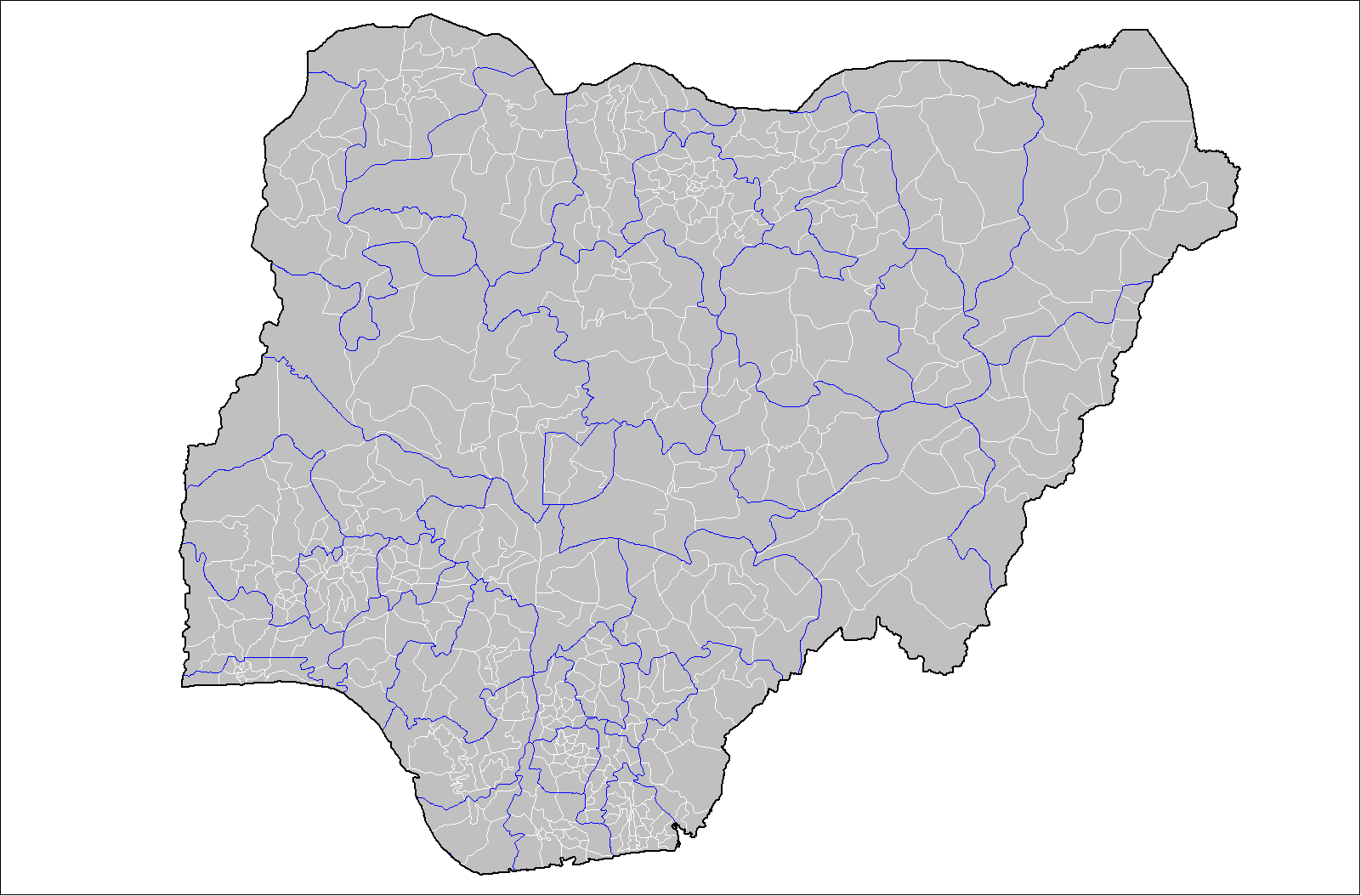
ezeagu:Nice one. I overlooked the people in Ebonyi. I updated the map. And 'Urashi' is now 'Orimili' (River Niger).Thanks. Good to know (bolded). Shaping up nicely. . . Any suggestions for capital yet? Methinks Enugwu. |
| Culture › Re: The True Extent Of Alaigbo (Igboland) by experience(m): 6:52pm On Sep 09, 2010 |
Update (from Ezeagu's map): 1. Abakeleke 2. Agbo 3. Ahagba 4. Aro 5. Ehugbo 6. Enugwu 7. Etche 8. Etiti 9. Idemili 10. Igbanke 11. Ika 12. Mbaise 13. Ngwa 14. Nsukka 15. Obigbo 16. Okigwe 17. Omabala 18. Onicha 19. Orlu 20. Owerre 21. Udi 22. Urashi Outpost/territories: 23. Bonny 24. Opobo So far so good. . . P. S. Could Abakeleke be further split into Izzi and Ezza? |
| Culture › Re: The True Extent Of Alaigbo (Igboland) by experience(m): 6:24pm On Sep 09, 2010 |
ezeagu:Sheer brilliance. RichyBlacK:Yeh, I too would like to learn. |
| Culture › Re: The True Extent Of Alaigbo (Igboland) by experience(m): 10:37am On Sep 09, 2010 |
Afam, are you a web designer/IT pro by any chance? |
| Culture › Re: The True Extent Of Alaigbo (Igboland) by experience(m): 10:35am On Sep 09, 2010 |
chyz:Good to have options from Cameroon, but don't see why we should stop buying from Hausa/Fulani. Even when we do produce all these ourselves it will still be good to have options and not burn bridges. |
| Culture › Re: The True Extent Of Alaigbo (Igboland) by experience(m): 9:41am On Sep 09, 2010 |
chyz:Northern Alaigbo especially the Abakeleke axis has a lot of fertile land. For beef and dairy, the Obudu cattle ranch by Okpara could also be replicated there or further south. Westernmost Alaigbo also has a lot of fertile land. |
| Culture › Re: The True Extent Of Alaigbo (Igboland) by experience(m): 9:13am On Sep 09, 2010 |
udezue:The bolded. Firstly, let us consider the ramification of nationhood*: |
| Culture › Re: The True Extent Of Alaigbo (Igboland) by experience(m): 9:10am On Sep 09, 2010 |
ChinenyeN:Onye Igbo won't be coerced into any conclusion  .Glad we are able to see reason here. .Glad we are able to see reason here. Thumbs up Ezeagu. |
| Culture › Re: The True Extent Of Alaigbo (Igboland) by experience(m): 9:05am On Sep 09, 2010 |
ezeagu:Update: 1. Omabala 2. Nri (covers Oka) 3. Onicha 4. Enugwu (covers Nsukka and Oji river) 5. Owerre (covers Orlu) 6. Ngwa (covers Aba) 7. Mbaise 8. Ugwuta 9. Aro 10. Igbene (covers Okigwe and Umuahia) 11. Igbanke 12. Ika (covers Agbo) 13. Ahagba 14. Ehugbo 15. Etiti 16. Abakeleke Outpost/territories: 17. Obigbo (covers Igwe Ocha and Opobo?) [buffer zones] Great job guys. Lets keep this going. |
| Culture › Re: The True Extent Of Alaigbo (Igboland) by experience(m): 12:32am On Sep 09, 2010 |
chyz:Patience nna chyz, perhaps he needs a little more reasons/insight as to why you say 1 clan to 1 province won't work. @ Chinenyen I would reply you tomorrow, eyes are heavy now. |
| Culture › Re: The True Extent Of Alaigbo (Igboland) by experience(m): 12:21am On Sep 09, 2010 |
Obiagu1: chyz:Done and done. |
| Politics › Re: Let's Have Your Complaints Here by experience(m): 12:19am On Sep 09, 2010 |
Please could the mod who moved this thread (The True Extent Of Alaigbo (Igboland)) kindly point out the reason why? If possible with quotes. There is an intellectual discourse going on there. Thanks |
| Culture › Re: The True Extent Of Alaigbo (Igboland) by experience(m): 11:52pm On Sep 08, 2010 |
Obiagu1:Bolded = very true. I love this thread. Disadvantages of clan/dialect-based provinces: (1) want to elevate their dialect to provincial level which will create problems (2) prevent those that are not member of the clan from running for positions in such provinces which will take away “merit” and the feeling of being an Alaigbo national from those affected (3) prevent non-members from owing important assets and influence in the province. Anyone with anymore. . . Chinenyen, fill us in on the advantages. |
| Culture › Re: The True Extent Of Alaigbo (Igboland) by experience(m): 11:29pm On Sep 08, 2010 |
Obiagu1:We are on the same page, hence all efforts concentrated on Alaigbo and its configuration while leaving the room open for other nations. Obiagu1:I think thats sums up the province/district criteria. 1. Viability 2. Culture group (clan/dialect). |
| Culture › Re: The True Extent Of Alaigbo (Igboland) by experience(m): 11:22pm On Sep 08, 2010 |
ezeagu:AND Obiagu1:(Forgive me for having enough of anglicizing of these names  ) )Thanks. Good evolution. Please keep them rolling. Any comments on these buffer zones? (the hot topic of this thread) |
| Culture › Re: The True Extent Of Alaigbo (Igboland) by experience(m): 11:10pm On Sep 08, 2010 |
Obiagu1:Bros, I am sure he was alluding to the United Biafra (essentially a confederacy or customs union) proposed on this thread that would include those other 'nations' rather than the within Alaigbo nation. |
| Culture › Re: The True Extent Of Alaigbo (Igboland) by experience(m): 11:04pm On Sep 08, 2010 |
chyz:Please post a link to the complaints thread. Obiagu1:I see. Please list the adjustments you would like to make. I am trying to dig up some vital docs now. Thanks.
|
| Culture › Re: The True Extent Of Alaigbo (Igboland) by experience(m): 9:47pm On Sep 08, 2010 |
chyz:The operative word is nations nna, thats why they would be their own leaders/presidents/PMs. |
| Culture › Re: The True Extent Of Alaigbo (Igboland) by experience(m): 9:21pm On Sep 08, 2010 |
udezue:Same here, but if the discussions here are to go by, the clan/dialect issue provides a good criteria for partitioning right after viability. Secondly, the 20 provinces had other nations as provinces. As Aliagbo nation its good we clear this up. Also, the nations in 'Old Biafara' were the folloiing (and more): Andoni, Anang, Abanyom, Anyima, Akajuk, Agbo, Adun, Odual, Boki, Degema, Ebani, Egbema, Ejagham, Eket, Ekoi, Efik, Etche, Ibibio, Ibeno, Igbo, Izon, Ikom, Iyalla, Kana, Mbembe, Mbube, Nkum, Okobo, Oron, Qua, Ukelle, Uyanga, Yako, etc. The Igbo are the largest entity, more than all the others combined. Even if dialects are removed, this is a tad much. Its one of the aims on here to straighten this out. |
| Culture › Re: The True Extent Of Alaigbo (Igboland) by experience(m): 8:35pm On Sep 08, 2010 |
By the way could the mod who moved this thread kindly point out the reason why? If possible with quotes. There is an intellectual discourse going on here. Thanks |
| Culture › Re: The True Extent Of Alaigbo (Igboland) by experience(m): 8:32pm On Sep 08, 2010 |
Original provinces 1. Aba (Mr. Moses Onwuma) 2. Abakaliki (Mr. Samuel Mgbada) 3. Annang (Chief Ekukinam Bassey) 4. Awka (Mr. Paul Nwokedi) 5. Calabar (Prof. Eyo Bassey Ndem) 6. Degema (Mr. S. N. Dikibo) 7. Eket (Mr. S. J. Edoho) 8. Enugu (Mr. Christian Chukwuma Onoh) 9. Nsukka (Mr. Frank Onyeke) 10. Ogoja (Mr. Frank Ugbut) 11. Oji River (Dr. Godwin A. Odenigwe) 12. Okigwe (Mr. Sam I. Mbakwe) 13. Onitsha (Mr. R. I. Iweka) 14. Opobo (Dr. S. J. Cookey) 15. Orlu (Mr. R. I. Uzoma) 16. Owerri (Mr. Duke Njiribeakor) 17. Port Harcourt (Mr. Emmanuel Aguma) 18. Umuahia (Mr. Simeon Ojukwu) 19. Uyo (Chief J. Udo-Affiah) 20. Yenegoa (Chief Frank Opigo) A bit off don't you think? |
| Culture › Re: The True Extent Of Alaigbo (Igboland) by experience(m): 1:07am On Sep 08, 2010 |
@ experience,From the documents I have read, the districts are more or less those present in a map I posted a while ago. There are about 24 or 25 in number. They also included the dreaded minorities. From the definitions I gave earlier about nation and union, the whole idea is to get a solid document letting these other nations (currently minorities) know that Ndigbo is not there to subjugate, claim or undermine them; they would be free to develop on their own in a full fledged nation without any decisions within Alaigbo affecting them (negatively) . Hence the focus on only Alaigbo and its border both internal and external. |
| Culture › Re: The True Extent Of Alaigbo (Igboland) by experience(m): 11:38pm On Sep 07, 2010 |
ezeagu:Dalu. This will serve as a provisional list till more revisions come. Welldone |
| Culture › Re: The True Extent Of Alaigbo (Igboland) by experience(m): 10:16pm On Sep 07, 2010 |
Beautiful. . . In the above system, Biafara can never have a head of state as in the image of the Western hNations, but it will have - 'a Council of States.' |
| Culture › Re: The True Extent Of Alaigbo (Igboland) by experience(m): 10:00pm On Sep 07, 2010 |
3 The Igbo man never begs. He is much too proud. He wants to pay for what he gets. The Igbo are wizards at saving money. When one of them gets a job, he starts saving right away: first for a bicycle, then for a transistor radio, and next for a bit of land. Then he builds a house on it, gets a wife and before the first child is born, he is already putting money for the kids school fees. The Igbos are mad for education. |
| Culture › Re: The True Extent Of Alaigbo (Igboland) by experience(m): 9:55pm On Sep 07, 2010 |
snip |
| Culture › Re: The True Extent Of Alaigbo (Igboland) by experience(m): 9:54pm On Sep 07, 2010 |
Chapter 1 |
| Culture › Re: The True Extent Of Alaigbo (Igboland) by experience(m): 9:53pm On Sep 07, 2010 |
More articles on leadership, courtesy of Ekwe-nche. Cannot post it all on here, seems the software can't handle it. |
| Culture › Re: The True Extent Of Alaigbo (Igboland) by experience(m): 9:49pm On Sep 07, 2010 |
abadaba:This. |
| Culture › Re: The True Extent Of Alaigbo (Igboland) by experience(m): 9:48pm On Sep 07, 2010 |
ChinenyeN:Can start by stating you province and its towns here. |
| Culture › Re: The True Extent Of Alaigbo (Igboland) by experience(m): 9:45pm On Sep 07, 2010 |
abadaba:Dalu nna. Here is a very long excerpt courtesy of Ekwe Nche [quote]Leadership Series – A Monogram Dedication This monograph is dedicated to the following individuals and groups. (1) To our ancestors who, through the numerosity of their oral and written words, taught us a lot about life and nature. They called humans mma ndu, beauty of life, and taught us to appreciate the goodness humans embody as well as love of self, family, and community. Numerous other positive legacies they left us, values which reinforce and stabilize our culture, are embodied in principles or sayings of wisdom, including ezi okwu bu ndu, true word is life; ofo na ogu, the emblem of authority for the signification of righteousness; egbe belu ugo belu, live and let live and the norm of equity; and odi bendi, the norm of deference to other peoples’ practices and ways of life. (2) To the memory of the 5 million Igbos of all age and gender, soldiers as well as civilians, who lost their lives defending Igboland against the genocidal war imposed upon us by the government of Nigeria and its foreign allies in evilness. (3) To the hundreds of thousands of our people whose lives were cut short, the result of the pogrom perpetrated against Igbos in parts of the country, particularly the north, in 1966. (4) To the government and peoples of Tanzania, the Ivory Coast (today Côte d’Ivore), Gabon, and Haiti. These countries all recognized Biafra’s right to secession in the face of her rejection by Nigeria and its independence as a sovereign nation-state. A friend in need is a friend indeed. Their courageous friendship gave us succor in our moment of need. (5) To humanitarian organizations like the World Council of Churches, and Caritas International. Be assured that your works of mercies saved many lives in Biafra. (6) To Igbos and friend of Igbos like Mr. Frederick Forsyth, Count Von Rossen, Dr. Nnamdi Azikiwe, Dr Akanu Ibiam, Dr. M.I. Okpara, Dr. Dennis Osadebe, Mazi Mbonu Ojike, Dr. Okechukwu Ikejiani, Dr Pius Okigbo, Professor G. Ezekwe, Gen. Philip Effiong and other individuals too numerous for mention who stood by Biafra in her most trying moment. (7) Last but not least, to Chi-Ukwu, God Almighty, Ama Ama Amasi Amasi, the Unknowable and Unfathomable but who knows and fathoms everything, for the miracle of our survival in the twentieth century despite relentless, well-orchestrated acts of violence against us. Preface This leadership monograph is an effort to (1) uncover, articulate and codify some essential values related to leadership which, in the past, regulated Igbo society; and (2) contribute to the wrenching search today all over Africa, in the wake of the widespread failure of the systems inherited from colonialism, of political systems built on indigenous values. The years since the end of the genocidal war from 1967 to 1970 in Nigeria have been characterized by steady erosion of Igbo values, norms, and institutions. It is time to arrest this erosion and rebuild our nation for posterity. As Ndigbo commence that rebuilding, it is important we examine mistakes of the past so that we can draw the proper lessons from those mistakes. Ndigbo now need to pay attention to our ancient traditional system that goes back thousands of years. Successful models today are those built on the indigenous. There is no great modern state in our time that does not draw from its ancient values and institutions. Every great Jewish project is enriched by the idea of the classical culture of the Torah, including the modern state of Israel. Every great European institution, including the United States of America, is molded in part in the image of the ancient Greco-Roman civilization. Countries in the Moslem world, such as Iran, draw from the classical Islamic civilization of the Middle Ages. Asian countries like Japan and South Korea base their political systems on their rich tradition and cultural heritage. Ndigbo must learn from these successful systems and likewise build their political system on Igbo cultural values and institutions. Our system is more ancient and time-tested and a number of the successful models, such as the United States’, were actually inspired by Igbo traditional values. Also, the foreign artificial systems bequeathed to us never took root and have failed woefully, despite every attempt to make them work. As we grapple with ills such as unabated political corruption, irresponsible leadership, moral depravity, environmental degradation, and a multiplicity of other evils, the result of consort in an unholy colonial state-construct, the only untried option begging for experimentation are Igbo traditional values and institutions. The work is organized into three main chapters, plus an introduction and a conclusion. Chapter 1, the introductory chapter, distinguishes leadership in period before the genocidal war (which we refer to as the golden era of Igbo civilization) from leadership since the end of the war to date. The idea is to bring into focus the distinction between the process of electing leaders through a democratic process that characterized the golden era with the process since the end of the genocidal war involving the imposition on Igbo people of “leaders” chosen by the Hausa/Fulani/Yoruba oligarchy. Chapter 2, dealing with Igbo identity, focuses on the important question of collective identity of Ndigbo. Who really do Ndigbo think themselves to be and what do others view them to be? The chapter brings together two components of Igbo identity; blends how Ndigbo see themselves with the way the world sees them; and finally pulls the two images together to paint a portrait of an intelligent, hard-working, enterprising, exceedingly forward-looking, and achievement-oriented people. Chapter 3 deals with the broad topic of leadership in Igbo society. Effective leadership was key to the reason Igbo society functioned and prospered in ancient times without the need for absolute monarchs or high walls to barricade themselves from their neighbors. This chapter discusses the character of leadership in society, the process of electing leaders, leader responsibility to the people, basis of leader authority and consequences for accountability to the led, as well as checks and balances designed to keep the focus of leaders on group interests and guard against abuse of power. Other critical questions analyzed in this chapter include an ex-ray of Igbo leaders since the end of the genocidal war in 1970 to the present, and the subversion of the Igbo system of selecting leaders and holding them accountable and replacement of that system with one of “leaders” controlled from outside who are “accountable” to Hausa-Fulani overlords rather than to the people. It shows how the psychology of defeat resulted in the acceptance and adulation of fake leaders and persuasively demonstrates the siege that not just Igbo society but also Igbo philosophy, culture, and ways of life society have been under since 1970. The fourth and final chapter analyzes the nature and modalities of political discourse in Igbo society from the smallest social unit (the family) to the largest (autonomous community or obodo). One notion that ties these various themes together is leadership, hence the denomination of this monograph as Leadership in Igbo Society. This monograph may, in its entirety, be viewed as a clarion call for Ndigbo to arise and throw off the yoke of the feeling of oppression that is the necessary precondition for organizing their society the way they want. Ekwe Nche believes critical study of Igbo philosophy and heritage is a path that could lead to solutions of numerous seemingly intractable problems today in Igboland. Part of the tragedies of Igbo sojourn in Nigeria is the distortion that has occurred in the study of Igbo history. Ndigbo have suffered enormously because of the rejection of our noble heritage and the wholesale embrace of Greco-Roman values and institutions, in spite of their shortcomings and limitations. At the expense of our indigenous cultural system, we have seen the history of Europe as the only value worthy of emulation in the design of our political system. It is time we reconsider the investment of our national fate on unworkable alien models. Does it make any sense to jettison our very own indigenous system which has been in existence for thousands of years and which served us so well in the past for alien European models that have been in existence for only hundreds of years and whose experimentation in our land have led to inequity and injustice, callousness and inhumanity, instability, and corruption, among many other distortions. To complete this preface, Ekwe Nche gratefully acknowledges the individual and collective contributions of the members of its Law and Order Committee whose diligent efforts made the production and publication of this monograph possible. Chapter 1 Introduction Since the end of the Biafra-Nigeria war in 1970, Ndigbo have been subjected to the most discriminatory treatment any people who lost a war in modern times have suffered. That Ndiigbo individually and collectively survived this brutal onslaught and managed at times to thrive in the face of every odd is attributable to the tenacity, ingenuity, creativity, strong willpower, and good work ethic of the Igbo person–all by the grace of God. But these qualities are under increasing challenge and while Ndigbo as individuals may have managed to survive, Ndigbo as a group fared less well. The reason for the state of affairs is poor leadership. Igbo society rose to its modern glory before and during the war largely because of extremely efficient, dedicated, visionary, selfless, and inspiring leadership at all levels of Igbo society. From the umunna (kindred) through village assemblies, town unions, to cultural organizations like the Igbo state union, divisional associations and improvement unions, Igbo leadership was stellar. The chosen leaders were those elected by their own people. They did the business of the people. They raised funds, built roads, bridges, hospitals, health centers, schools and colleges. They awarded scholarships to brilliant students and sent them out to distant lands for education. They organized cooperative ventures and provided capital for young traders and businessmen to start new enterprises and businesses. Most importantly, they accounted regularly to the people who elected them and if their stewardship was found wanting at any time, they were removed and replaced with more efficient and effective leaders. That was how Ndigbo took off on the road to success. Where is all that today? The Nigerian conquerors have totally destroyed this structure and replaced it with something weak of their making. Today men and women who have no credibility in their own villages and towns, who cannot win an election even in their own ward, parade themselves in Lagos and Abuja as "Igbo Leaders". They do so because they have donated large sums of money to political parties or because of their ties to northern and western overlords who have kept Ndigbo in bondage. These new “leaders” leap over the stringent hurdles the Igbo have put in place for choosing their leaders. Some of them are appointed by the oppressors in Abuja and Lagos to positions of authority like ministers, special assistants and the like, to the false approval of Ndigbo. But whose interest do these so-called “Igbo leaders” represent: that of Ndigbo or the "master" who appointed them? How much leverage do Ndigbo have in making these individuals embrace causes and agenda that are important to Ndigbo? To whom are these individuals accountable? The answer, of course, is to the oppressor who appointed them. This phenomenon is the order of the day at all levels: national, state, and local, but especially at the local level where in towns and autonomous communities, there have emerged a new breed of big money contractor/ supplier "Chiefs" and "Traditional Rulers," appointed and approved by Abuja. This is one of the reasons why nothing ever gets accomplished in Igboland in our time. Ndigbo need to evolve urgently, a strong and committed leadership accountable to no one but Ndigbo, ready and willing to rise to seize the moment when an emergency calls, as is bound to be the case unfortunately from time to time in unstable and violent Nigeria, requiring the protection of Igbo lives and properties. God forbids that Ndigbo will have to go through another holocaust in Nigeria. Chapter 2 Igbo Identity As we get ready to rise from over 30 years of coma, it is important for every Igbo man woman and child to remind himself or herself who he or she is. There is a good reason for such self-examination: when a people have been subjected to intense economic, social, psychological trauma or deprivation as Ndigbo have been, there is a tendency for them to lose perspective of who they are. They may stop believing in themselves. They may attack, fight and even kill one another. Worst of all they may begin to adopt a mentality of slaves vis-a-vis their oppressors. There are two possible ways of approaching the issue of Igbo identity, namely, in terms of: (1) How the world sees Ndigbo. (2) How Ndigbo see themselves. Let us start with how the world has seen Ndigbo. Michael Mok (quoting a reverend father in Biafra) said of the Igbo, The Igbo man never begs. He is much too proud. He wants to pay for what he gets. The Igbo are wizards at saving money. When one of them gets a job, he starts saving right away: first for a bicycle, then for a transistor radio, and next for a bit of land. Then he builds a house on it, gets a wife and before the first child is born, he is already putting money for the kids school fees. The Igbos are mad for education. Well this is the Igbo man at his best, hardworking, thrifty, and always putting something away for the future. The creativity and intelligence of the Igbo man is clearly celebrated in this statement: There was a time when it was impossible to have a car break down in Igboland. You would find yourself stuck somewhere way out in the bush and the first thing you know three loafers, two of whom had probably never peeked under the bonnet of an auto in their lives would saunter up to see what was the matter. In no time at all, using rags and string they would have you on your way again. John C. Merriam, after working with Operation Crossroads in Africa, had this to say about the three major ethnic groups. “The Ibos in Nigerian history were a relatively insignificant tribe, but their society had achievement based norms that adapted quickly to Westernization. All over Nigeria, they formed a merchant and professional class.” An engineer (The Harvard Crimson, Nov. 12, 1968) said, "If you are a businessman and you need engineers, you read applications and you don't look at tribes. Fifteen of the twenty men you hire will be Ibos (Igbo). The Yoruba fall somewhere in between but closer to the Ibos (Igbo) than the Hausa. They are literate, they are politically sophisticated, but they look at life with a grin." John de St. Jorre (The Brothers’ War) captured the essence of the Igbo when in response to a quiz as to why life inside Biafra kept going “in defiance of all the normal functional laws of the modern state,” Dr. Pius Okigbo, Biafra's chief economic planner explained to him that "it is the human factors and the context that matter here and they make nonsense of theoretical economics." St. Jorre then observed, improvisation was the order of the day. Electrical engineers and chemists were making rockets, hand grenades and the famous “Ogbunigwe" , Petrol was rationed but homemade refineries were soon to be put into operation and low sulfur oil was distilled in huge water tanks set upon trestles which kept essential transport moving. Ingenious cannibalization and mechanical miracles surmounted the dearth of spare parts and the Biafrans made several armored cars out of lorries and bulldozers. Government offices increasingly decentralized functioned normally. , civil servants had adopted themselves to their reduced circumstances , they seemed less like stiff marionettes. And what a galaxy of talent in Biafra. So many of Nigeria's top civil servants, diplomats, soldiers, academics, technicians , the envy of undermanned Black Africa , Outside the hospitals and refugee camps, life really did appear deceptively normal. Water, electricity, and even telephone functioned, if somewhat erratically. There were no beggars, people did not complain and there was an extraordinary feeling of togetherness. The natural vivacity and quick-witted charm of the Ibo people shone through their terrible adversities. There was a strong determination not only to survive, but also to survive with a flourish - to show the outsiders and themselves that life would go on , In Biafra virtually everything was in short supply, everything except human energy, ingenuity and an extraordinary collective and relentless will to struggle on. Writing in the Swiss Review of World Affairs, Edward C. Schwarzenbach spoke of the Igbo thus: The Ibo of the East have always spoken the most progressive language in Nigeria and been more or less leftist oriented. Precisely for this reason, they were of no long-range political interest to Moscow. To the Ibo with their egalitarian society, free of hierarchical structures, communism is by no means attractive and they are not susceptible to Soviet propaganda. He predicted, "Now that the Igbo have been overpowered and the North armed by England and Soviet Russia has defeated Biafra, the Yoruba of the Western part of the country may soon find themselves in trouble." Even people who hate Ndigbo sometimes truthfully acknowledge the sterling qualities of Igbo people. One such person is Lord Lugard who, in a foreword to the book African Women by Leith-Ross, said: , the essential characteristics of Igbo womanhood are little changed. She is ambitious, self-reliant, hardworking, and independent. Her interests are centered in love of her yam field coupled with a passion for trading and the desire to grow rich. She claims full equality with the opposite sex and would seem indeed to be the dominant partner. The women's councils, approved and trusted by the men, enact laws for the protection of crops, and enforce them by suitable penalties including ridicule. The alacrity with which they will abandon old ways for new is evident in the popularity of hospitals, courts of law, schools and post offices. And though they show little deference towards Europeans, they are intensely eager to obtain the education which Europeans have brought as a means of getting rich. Describing the political philosophy and organization of the Igbo, Cronje in his book The World and Nigeria (London: Sidgwick and Jackonson, 1972) stated as follows: "In the East indirect rule failed altogether. There were no big chiefs, emirates or empires which could be adapted to the needs of British administrators. The Eastern people lived in village groups administered by councils which were presided over by senior men who held office by virtue of their personal ability as much as by age or lineage." Focusing on traditional rulers, G. I. Jones (Report on the Position, Status and Influence of Chiefs and Natural Rulers in the Eastern Region of Nigeria, Government Printer, Enugu, 1957), commented as follows: The usual patterns is for public matters to be discussed at a general meeting at which every able-bodied male who is a full member of the community has a right to attend and to speak if he so wishes. , The community particularly in the Ibo area is not prepared to surrender its legislative authority to any chiefs, elders or other traditional office holders, Yoruba leader Chief Obafemi Awolowo (Path to Nigerian Freedom, Faber & Faber, London, 1947) stated: "The Ibos , cannot tolerate anyone assuming the authority of a chieftain over them." Jack Shepherd, senior editor of Look (Nov. 26, 1968) had this to say of Igbo: , The Biafran struggle centers on regional and economic rivalries that reach beyond the fighting. Ibos from Eastern Nigeria burst quickly into the 20th century developing as doctors, lawyers, engineers, and competing with (perhaps overwhelming) less educated Nigerians especially Hausas and Fulanis in the North. The rivalry and jealousy intensified. Ibo aggressiveness and ambition in commerce, public utilities and the civil service made them a hated people. They were called the Jews of Black Africa. Time magazine, in a feature article on the Nigerian Civil War (Aug. 23, 1968) compared Igbo to the two major ethnic groups in Nigeria thus: To the North living on flat grassland that backs up to the Sahara sands dwell the Hausa and Fulani, haughty, devout Moslem peoples governed locally by feudal emirs. The Western Region is the home of the Yoruba, a tribe known for its profusion of gods (more than 400) and its joie de vivre. To the East where they are now trapped, the ambitious and clever Ibo people thrived. Brought forcibly together under colonial rule, the three regions developed the hatreds and jealousies of totally different culture. Most hated of all and most envied by other Nigerians were the Ibos, quite possibly Africa's most capable people and by force of energy and intellect, the dominant tribe of newly independent Nigeria. Within their tribal culture lay unique seeds for Western-style self-improvement. Unlike many other tribes, they had no autocratic village chiefs. Instead, they were ruled by open councils of what sociologists called high achievers, successful yam farmers, warriors, public speakers. The titles a man earned were buried with him and his sons were forced unlike most Africans to make their own reputations. The Ibos welcomed missionaries because they brought schools and books. Before their secession from Nigeria the Ibos of Eastern Region were spending 40% of their public funds on education. Villagers often pooled their resources to send the most promising boy of college age off to study in Britain, those who stayed at home eagerly absorbed the mechanics of industry and government from British colonials who came to rely on willing Ibo hands to do their work, They became Nigeria's most cosmopolitan people whose traders and technicians spread throughout the country building factories, hospitals, and their inevitable cooperative self-improvement associations. After the British left, the Ibos in effect inherited the controls of modern Nigeria from civil service posts in the government to engine driver jobs in the railway. Commenting on the democratic credentials of Biafra, the influential weekly stated thus: For a country at war, and life and death struggle at that, Biafra is run in an amazingly democratic and efficient way. He (Ojukwu) runs Biafra as a war time democracy, frequently seeking the advice of Ibo elders. Biafra also has a functioning judiciary, a ministerial executive government and civil service. There will be no military dictatorship here he (Ojukwu) says. In a report to the United States Senate (the Goodell Report), Senator Charles Goodell who sponsored and led a study mission to Biafra and Nigeria stated thus: Biafrans and particularly Ibos were previously dispersed all over Nigeria. They stood out among inhabitants of West Africa in literacy, percentage of youngsters admitted to institutions of higher education and devotion to learning. Indeed many foreign observers have felt that envy was generated among Nigerians as a result of the high degree of education of the Ibos. Their occupation of a high proportion of the professional and managerial positions as a result of their education level was one of the psychological factors responsible for the civil outbreaks in Northern Nigeria in May - September, 1966. On governance in Biafra he remarked, What is remarkable and frankly surprising about the Biafrans is their sense of organization and their commitment to orderly procedures, both governmental and private in their current situation. The administrative or executive branch of Biafran government is departmentalized and functionally organized top to bottom , The central government relates more or less well to the provincial government offices, and the various departments of the central government cooperate with and sometimes oppose each other in the manner familiar to those who knew the Nigerian governmental procedures before the war, or for that matter, in the manner of most governments. The Consultative Assembly referred to earlier is a group of provincial and village leaders selected by their people and answerable to them for their decisions and recommendations. Goodell Report, Congressional Record, S 1985. We have been listening to how other people see and regard Ndigbo. The other part of the equation is how Ndigbo see and regard themselves. Let us review some of the things we know about Ndigbo. Philosophically, Ndigbo maintain a very delicate balance between individualism and communitarianism. Very early in the socialization process the Igbo child is taught that he is the master of his destiny. He learns that success in any task which s/he undertakes is his responsibility and that he will be equally personally responsible for any failures. He is instructed to strive for excellence, success and status and is taught that his status in society will be the result of his own personal achievement. His individual efforts are reinforced and encouraged and gradually he realizes that even among his age mates he has to compete for power, status and respect and that his social condition will depend almost exclusively on his individual efforts. Through encouragement and the abundance of modeling, he learns that failure is only a temporary setback which should provide even stronger motivation to overcome obstacles. The philosophy of individualism is also transmitted to the child through Igbo philosophy. Central to this individualistic philosophy is the concept of Chi which, broadly conceptualized, is the totality of the individual's being, his past history, present activities and future result. This belief system shapes his life and his activities during his lifetime. The importance of this life force is captured in Igbo proverbs which emphasize the complex interaction between the individual, his community, and his Chi. A few examples will help to illustrate this point: Onye kwe, Chi ya ekwe (if one says yes, his Chi also affirms). This proverb epitomizes personal responsibility and individual self-determination. Onye ya na Chi ya n'ije, ukwu adi akpo ya (one who embarks on a journey with his Chi does not strike his toe against a rock). Onye ka mmadu ka Chi ya (a person greater than another is greater than his Chi). Ofu nne n'amu mana ofu Chi adi eke. (same mother but different Chi). Okuko adi akpanye n'afo efi (a chicken does not put food in the stomach of a cow). This pattern of socialization helps individuals clearly establish their self-defined identity. Although individualistic, Igbo society also emphasizes communitarian relationship. Within the family children learn to support each other. In the neighborhood community children of different families learn to play together, to share food and simple chores like cleaning the village square or village stream. Soon they organize themselves into age mates preparatory to organizing themselves into age grades later in life. Irrespective of the economic status of their parents, they learn quite early that everyone needs everyone else for successful coexistence. When they organize themselves into age grades, they undertake community projects such as building roads, hospitals, civic centers, and health clinics. All these are meant to emphasize to the individual the indispensability of the group or community to his survival. The community is not seen as just a collection of individuals. Rather, it is the nucleus of a unique relationship in which the survival and happiness of the individual is intricately interwoven with the survival and happiness of the community to which the individual belongs. Beginning with the family and extending outward to umunne (extended family), umunna (kindred), Village (Ogbe) and town (Obodo, Ala), Igbo society is seen not as a collection of individuals each with his own rights and liberties in an atomistic manner but rather as collections of individuals in groups that systematically and progressively become enlarged. The structure can be likened to concentric circles that expand outward in a systematic manner, the larger circles containing the smaller circles and yet allowing them to maintain their identities and structures and at the same time using the identities and structures of the smaller circles to maintain the integrity and strength of the larger circles in a symbolic manner. Just as symbiotic relationship in living organisms requires careful maintenance of delicate balance for the survival of each organism, Igbo society requires careful maintenance of this delicate balance for survival. The importance of group affiliation in Igbo philosophy is captured in proverbs and idioms. We will illustrate with a few examples here. Ofu osisi adi eme ofia, a tree does not a forest make; ofu onye nie onwe ya aka ya aputagi ukwu aputa, if a person buries himself, one of his hands or legs must show above ground; onye gbara umu nna ya mgba isi n'ebu ya aja aja, he who wrestles with his kindred folk will have his head covered with sand; onye kwulu so ya, ijiji atagbue ya, he who stands alone will be devoured by flies. How is this seeming contradiction between individualism and communitarianism resolved? Individualism provides the philosophical base for individual achievement and the strive towards excellence, while communitarism acts as a counterweight to the temptation so often abundant in selfish, survival-oriented, individualistic, ascendancy-inspired activities (survival of the fittest philosophy) to trample upon and possibly destroy others in the scramble to get to the top. Because an individual sees himself as an integral part of the community, he or she feels obligated to protect the welfare, integrity and honor of that community by not engaging in any acts that will be prejudicial to the good of the community, and by doing those things that will promote the welfare and survival of the community. The community, on the other hand, spreads its wings of protection and care over the individual, but wastes no time in calling an erring member to order. On rare occasions it imposes such harsh sanction as ostracism or even outright banishment on an erring or recalcitrant member. This socialization enables an Igbo child early in life to develop the all-important principle of self-control in his daily activities. The delicate balance serves two purposes: (1) It preserves the integrity of the community by shielding it from external and internal intrigues and acts of sabotage aimed at destroying that integrity. (2) It protects the individual from destructive behaviors of other people as well as their own propensity towards self-destructive or community-destructive activities. Thus the community protects and preserves the individual just as the individual protects and preserves the community. Chapter 3 Leadership in Igbo Society Prologue Ndi Igbo, men, women and children, we salute you. The little boy or girl playing in front of papa's house; the young school child listening attentively to the teacher in an overcrowded classroom; the university (or other post-secondary) student reduced to the most minimal feeding schedule; the university graduate turned motor cyclist or wheelbarrow pusher because of joblessness; the market woman who wakes up before the cockcrow and toils at her market stall till sundown to scratch out money enough for a day’s food for her household; the man of the house who watches in despair and helplessness as the business he toiled all his life to build dissolves before his very eyes; the brilliant university professor whose means is so scarce such that he is unable to replace one burst tire in his rickety car; the trader in Aba, Umuahia, Onitsha, Enugu, Awka, Nsukka, Abakaliki, Lagos, Jos, Calabar, Port Harcourt, Benin, Makurdi, Maidugiri, Kano, Yola, Kaduna, Abuja, Sokoto, Zaria, Lome, Kumba, Cotonu, and other markets who travel all over the world to bring goods to his customers; the civil servant who continues to work on unlivable wages paid continually in arrears; the young Igbo man or woman who cannot marry and start a family, rent a flat, buy a car, build a house or even feed well because s/he has no job; the man who sings the praises of crocked “leaders”; the politician who constantly tells his people that things are or will be all right; the traditional ruler who sells titles to even people who perpetrated genocide against Ndigbo, Ekwe Nche salutes you all. Ekwe Nche has spent hundreds of hours studying and analyzing the life of Ndiigbo in Nigeria since the creation of the country in 1914. We have posed numerous questions and sought to understand certain things related to Ndigbo, things like: (1) Why do British governments hate Ndigbo? (2) Why have Ndigbo been victims of violent physical attacks and their properties targets of looting all across Nigeria (in Jos in 1945; Kano in 1953; all over northern Nigeria in 1966; Lagos and other parts of western Nigeria in 1967; mid-western Nigeria in 1967; Lagos in1993; and parts of the country in 1999)? (3) Why are Ndiigbo, of all ethnic groups in Nigeria, the most willing to spend huge amounts of personal fortune developing towns outside Igboland (Kaduna, Lagos, Zaria, Sokoto, Benin, Kano, Markudi, Jos, and other non-Igbo cities) building hospitals, schools, hotels, markets, industries, despite the fact that Ndigbo are not the wealthiest ethnic group in the country? (4) Why do Ndigbo spend so much money developing other people’s homes while leaving their homeland undeveloped? (5) Why are Igbo political leaders avid advocates of “one Nigeria” (and being the losers for it), while leaders of other ethnic groups espouse ethnic nationalism. For example, Dr. Nnamdi Azikiwe advocated a strong, united Nigeria, while Chief Obafemi Awolowo, the late Yoruba leader, and Sir Ahmadu Bello, late Sarduana of Sokoto never believed in Nigeria and wasted no time in sacrificing Nigeria on the altar of their respective ethnic-national interests. (6) Why do current Igbo political leaders tread similar path of “one Nigeria,” despite the hardship, suffering, and, need we say, deaths this orientation has brought Ndigbo? These are just a few of the hard questions we have been asking and seeking answers to. Why do we do this? Igbo kwuru si na onye amaghi ebe mmiri bido mawa ya, agaghi ama ebe onyakoro ahu (the Igbo say somebody who does not know whether the rain started beating him will not know when his body became dry). From the very birth of Nigeria, Ndigbo have been told if they work hard, acquire good education, technical skills, were honest, enterprising and above all believed in the unity of Nigeria, you will be rewarded and you will be successful and happy. And so Ndiigbo swarmed universities, polytechnics and colleges in Nigeria, Europe and the Americas and acquired Western education and technological skills in ways never before seen in Africa. You joined the civil service in large numbers moving and delivering letters intact and on time, you became railway engine drivers and made the trains run often-on time, technologists kept the water taps running and electricity supply constant, you became teachers and traveled long distances away from your homes to educate children of other ethnic origins. Often you challenged British imperialists who did not want certain parts of the country to be exposed to good education. You became engineers, technicians and laborers and built roads, bridges that opened up many interior parts of Nigeria. Often you worked under very harsh and difficult conditions. You fanned out to all parts of Nigeria delivering goods and services to people even at the remotest parts of the country. You took your wives and children with you. You built schools, hospitals, and industries and employed indigenes of the communities where you lived to work and earn a living. You learned and spoke their languages, adopted some of their customs and married their women. You did all these things because you honestly believed in “One Nigeria, One Nation, One Destiny.” No other ethnic group comes even close to making the effort to weld Nigeria into one nation as you did. Nigeria ironically rewarded your noble contributions by organizing the killing of Ndigbo and looting their properties in Jos in 1946 and Kano in 1953. They ironically rewarded your noble contributions by killing 100,000 men, women, and children in the most barbaric and systematic pogrom known in human history in May, July and September 1966. Their atrocities included the abomination of slitting open the bellies of pregnant Igbo women and then killing unborn fetuses. Nigeria rewarded you by chasing you out of the towns, schools, hospitals, and industries that you had built outside Igboland, by refusing you employment in civil services outside Igboland and giving those jobs in places like the North to expatriates, by looting your shops and other properties in northern and western Nigeria, by declaring your houses and industries “abandoned properties” everywhere, including places close to home like Port Harcourt. Yes, they rewarded you by forcing a genocidal war on you, the like of which until now has never been seen in Africa that claimed the lives of three million innocent Igbo, a good number of whom died through starvation shamelessly deployed by the Nigerian government “as a legitimate weapon of war.” They rewarded your contribution by paying you a flat twenty pounds irrespective of the value of your saving in Nigerian banks in 1970, making sure that you did not have any money to start life again after a brutal civil war. They rewarded your high educational achievement by chasing Igbo administrators away from higher institutions in places like Lagos and Ibadan and by starving your schools of funds and by institutionalizing policies that guaranteed employment to unqualified mediocres, rather than to qualified and competent Igbos. They have rewarded you by making sure that your sons and daughters will never rise to certain ranks in national government institutions such as the Army, Air force, Navy, Police, Immigration, and Customs. If they could, they would have restricted your movements in and outside Nigeria. Oh yes, Ndigbo see how Nigeria has rewarded you for your belief in One Nigeria, your educational attainment, your technical know-how, and your hard work and industry and entrepreneurial spirit. Ndigbo, Nigeria gave you these sour rewards because you are good good Nigerian nationalists who belief in “One Nigeria, One Nation, One Destiny.” Those who did not believe in one-Nigeria got a much better treatment than you did. Yoruba leader Chief Awolowo and his followers believed that Nigeria was a mere geographical expression and worked to protect Yoruba interests. For not believing in one-Nigeria, the Yoruba nation was rewarded with control of the Nigerian economy, the civil service, numerous industries, huge infrastructural investments in Lagos (expressways, flyovers, modern port facilities, and so on), and strong representation in the Nigerian army. Yoruba political parties and organizations, such as the AD and Afenifere, have made sure that Yoruba rewards continues to flow under the current Obasanjo administration. Chief Awolowo and his followers are Yoruba nationalists. Sir Ahmadu Bello, the Sarduana of Sokoto, and his followers believed that North should be for Northerners, West for Westerners, East for Easterners and what else still remains of the Federation for all. Most northern leaders today still follow this philosophy. The few exceptions are followers of Alhaji Aminu Kano and J.S. Tarka. Nigeria rewarded the Hausa/Fulani nationalists with control of the security services such as the army and police, control of the billions of dollars earned yearly from sale of crude oil and natural gas located in Eastern and Mid-Western Nigeria, control of a huge section of the civil service and scores of scores of industries. The crux of the matter is that western and northern Nigeria political leaders who did not believe in the unity of the Nigerian federation got control of the instruments of the national government while Eastern political leaders who are strong believers in one-Nigeria were shunted aside. Isn’t this utterly ironic and confusing? But you will not feel so confused, Ndigbo, if you pay close attention to what has been happening in Nigeria in the past 50 years. On many occasions the north threatened to break away from the federation if they were not given what they demanded. Each time they got exactly what they demanded. During the Lyttleton Constitution of 1954, the Northern House of Chiefs and the Northern House of Assembly passed an eight point resolution demanding that they be allocated 92 of the 184 seats in the Federal House of Representatives. They insisted Nigeria will, without delay, be transformed into a confederation or customs union in which each of the three regions will enjoy almost sovereign status with the right to make their own laws without federal government approval, maintain a separate judiciary and a separate public service, among other characteristics. The North dropped its demand for a loose union when British colonial authorities along with the governments of Western and Eastern Nigeria agreed. Northerner leaders blatantly rigged the federal election of 1959 and installed Sir Abubakar Tafawa Balewa prime minister. They did so again in 1964 and compelled Dr. Nnamdi Azikiwe, as ceremonial president, to install Abubakar prime minister. During the constitutional conference of 1966-67, northerner leaders chose a confederation but changed to a federation with a strong central government when British authorities advised them their position was pointless since they were already in control of the national government. In 1999 after the death of General Abacha, western Nigerian leaders made a veiled threat to break away from the federation if they did not assume power. The North complied by handing over the government to General Olusegun Obasanjo. When you Ndigbo demanded self- determination, basic freedom to be left alone in 1967, the North and the West teamed up and slaughtered millions of you like dogs. After the most horrible and humiliating experience of the past thirty something years since the end of the genocidal war, it is time to take a close philosophical and pragmatic look at the direction you have been going in Nigeria. For being the most patriotic Nigerians and consummate advocates of Nigerian unity, you have been discriminated against, your highly qualified sons and daughters been pushed out of their jobs, your houses and other property confiscated and distributed as war booty, your bank savings stolen by the government, your roads and bridges neglected to the point they were turned into death traps, your educational institutions neglected, your women sexually assaulted, your men slaughtered in the millions and those who remained alive deprived of education, among numerous other ills. The net of these systematic deprivations include that Igbo society has been pauperized with severe consequences for Igbo culture. Poverty, hunger, disease, squalor, insecurity of life and property, and premature death have become commonplace in Igboland. Igbo people, who abominate begging, have today been turned into beggars. Things have fallen apart and the center no longer holds. In no aspect of life are Igbos better today than they were in 1965. Ndigbo, when people tell you that things are getting better, ask them "better for who?"; when they say, don't worry, we are in charge now, ask them "in charge of what?"; when they say, our political party is in control and has power, tell them that is yet to be seen, given the stranglehold of Hausa-Fulani-Yoruba control over economic and political powers in Nigeria. When they tell you that power belongs to the political party, tell themvthat it is a lie. Tell them that in Igbo Society power belongs to the people. Ndigbo elect their own leaders and tell their leaders what to do and how to lead them. Consider that Ndiigbo have never accepted "rulers," not even when the British imposed warrant chiefs on them. It is time once again, Ndigbo, to set yourselves on the path of prosperity, progress, economic growth, commercial and industrial advancement, political and cultural emancipation and stability, social and economic justice, good health, abundant supply of food, individual freedom, liberty and respect of your human rights, intellectual, educational and technological achievement, the hallmark of Igbo society. Arise, Ndigbo arise, its time. Like the Israelites of Biblical times you have been in the wilderness for way too long. Rise and shine again ye people of the land of the rising sun! Leadership Question in Igbo Society Every honest Igbo man or woman who has visited and moved about extensively from Ehamufu to Opobo, and from Ezaa to Kwale, will agree with me that there is a very serious problem in Igbo society today. If you look at the millions of unemployed young men and women, the hundreds of vicious armed robbery incidents, the thousands of miles of unpaved roads, thousands of primary, secondary schools, and universities, dilapidated, decaying and in ruins, thousands of Ndigbo who have become hangers on and now openly beg for alms, the thousands of young men and women in their thirties who die prematurely everyday from stress related illnesses, the near absence of meaningful health care to take care of the sick and so on. If you think of these people and situations you will agree with me that Ndigbo are facing very serious problems. It has never been this bad in Igboland. If you refuse to be deceived by the sprinkle of wealthy people in Igbo society today and seriously look at the big picture, the masses of our people, you won't help but experience panic about the plight of Ndigbo in Nigeria today and the future of this ethnic group of people called Ndiigbo. It is appalling when an intelligent Igbo man or woman makes a statement such as: "Oh things are all right” or "We are in charge in so-and-so political party and, therefore, things are going well for Ndigbo." It is more so when the speaker calls himself "Igbo Leaders.” In 1940s, 1950s and 1960s, Igbo leaders did a lot to improve the quality of life of every Igbo person. During this period, Igbo leaders like Dr. Nnamdi Azikiwe, Dr. M. I. Okpara, Dr. Akanu Ibiam, Dr. Dennis Osadebe, Dr. Nwafor Orizu, Mazi Z. C. Obi to name a few did concrete things that propelled Ndigbo above every other ethnic group in Nigeria. Azikiwe, Orizu, Osadebe and others saw the value of good education as the ladder to economic progress and pursued the provision of educational opportunities for Ndigbo with such vigor that in a few decades, Ndigbo leapfrogged over every ethnic group in Nigeria in educational attainment thereby positioning themselves to take over much of the administrative machinery of the state at independence. Okpara, Ibiam and some others saw the need for food sufficiency and industrialization and pursued agriculture and food production with such zeal that by 1965, the government of Eastern Nigeria undertook publicity campaign to urge people to eat more meat, chicken and eggs and drink milk. Farm settlements and agricultural extension programs were so successful that Malaysia came to Eastern Nigeria to learn the secret. At the same time major industries were being established at Port Harcourt/Calabar, Enugu/Emene/Nkalagu, Umuahia and Onitsha. These industries were superbly successful and formed the backbone of the industrialization of Eastern Nigeria. Even during the Biafran war, the tenacity, foresight and sacrifice of people like C. Odumegwu Ojukwu, Philip Effiong, Tim Onwuatuegwu, and a host of other heroes guaranteed that Ndigbo were not wiped off the face of the earth. These are Igbo leaders, they are the heroes of Ndigbo. Note that, from a material point of view, they were not the richest Ndigbo of their time. Actually, none of them qualified then as a rich man. In fact, Dr. M. I. Okpara, the premier of Eastern Nigeria did not even have a fancy country home when he died. These were dedicated, selfless Igbo leaders who had the interest of the ordinary Igbo man and woman at heart. Ekwe Nche salutes these great men and women. Yet like mortals, they had their weaknesses and made some mistakes but you could never accuse them of stealing Ndigbo blind, embezzling millions of dollars meant for electricity or water for their people, colluding with those who want to destroy our people. Ndigbo chose them as their leaders. Their allegiance was to the ordinary people who chose them. They were accountable to those common folks who chose them as their leaders and they knew it. As a result, Ndigbo prospered. At the end of the Biafra-Nigeria war, enemies of Ndigbo, rulers of the Hausa-Fulani and Yoruba oligarchies decided to appoint rulers over Ndigbo. They chose people who betrayed their brothers and sisters. They made them rulers over Ndigbo. Ndigbo did not elect them, Ndigbo did not choose them as their leaders as is the tradition in Igbo culture. Rather, they were imposed on Ndigbo as rulers just as the British, in the olden days, imposed so-called warrant chiefs over our people and just as the Fulani oligarchy imposes Emirs and Village Heads on Hausas and other ethnic minorities in the North and Yoruba princes impose Obas on Yoruba people. These rulers did not owe allegiance to Ndigbo because they knew that they were not elected by Ndigbo. They did not care what happened to the ordinary Igbo folks because they did not derive their power and authority from the ordinary folks in the traditional election process that characterizes the selection of leaders in Igbo society. Therefore instead of the Igbo philosophy of "Onye aghana nwanne ya", "Nwanne di na mba", they adopted the feudalistic philosophy of "Onye ube ruru, nya rarama." Thus it did not matter to them if every Igbo man and woman ate from the garbage can or starved to death so long as their masters, the Hausa/Fulani and Yoruba Oligarchy were happy with them. And that became their guiding philosophy throughout their reign. Hence they put in place policies that virtually emasculated the Igbo. These evil policies have remained in force to this day. But that wasn't the main tragedy. It is that probably because of the psychology of defeat, Ndigbo did something they have never done in their history. Ndigbo bowed to traitors, started crowning these traitors, these agents of the destruction of Igbo society as kings. Ndigbo started bestowing high traditional titles to them, Ndigbo made them "Ajie", "Onowu", "Odu," and so on. Ndigbo made them governors, chairmen of Boards. Ndigbo made them "rulers." Thus Ndigbo who were shooting Ndigbo on the battlefield, Ndigbo who were touring the then Soviet Union claiming that nobody was killing Ndigbo in Nigeria, Ndigbo who were overtly sabotaging the efforts of Ndigbo to survive a terrible war of annihilation were made chiefs, given traditional titles and appointed "rulers" by the same Ndiigbo they wanted to exterminate. A terrible, terrible irony. A monstrous mistake. Imagine that happening among the Yoruba or the Hausa/Fulani. Imagine for one moment that your town and another town fought a terrible war over a piece of land. Hundreds of your town's folks were killed, women were raped, children starved to death and virtually all the houses in your town were burnt by the people of the opposing town. During this war three of your sons joined the opposing town to wreck this havoc on your (also their) town. At the end of the conflict, these three traitors came back to your town and you made them Eze Ani, President of the Town Union and Traditional Ruler of the town respectively. What do you think will happen to your town? How will the youths of your town behave henceforth? What values will you have taught the young people of your town? The tragedy which befell Ndigbo since the end of the war is further complicated by another occurrence. Ndigbo crowned the monsters who raped and violated their women at times before their fathers and husbands, gouged open the bellies of pregnant Igbo women and killed unborn fetuses, people who with their evil government used “starvation as a legitimate policy of war” to cause the untimely deaths of three million Igbos of all ages and gender, among other atrocities. Thus Obasanjo became Eze so and so of Igboland for commanding the troops who continued to kill able-bodied young men and women after the war had ended in January 1970. Murtala Mohammed was not only Eze so and such of Igboland, he had his bust proudly displayed at a strategic location in Enugu, the political capital of Igboland (as a token of Igbo appreciation for the slaughter of thousands of unarmed Igbo men and women in cold blood in Asaba and the unjustified and unprovoked murder of three hundred unarmed worshipers in a Church in Onitsha?). The list goes on: Babangida became Eze Ndigbo. We are waiting the day T. Y. Danjuma will be crowned Eze so and so of Umuahia. Do not be shocked if you see or hear of such a thing. At the rate Ndigbo have been going downhill, it will only be a matter of time before one traditional ruler in Igboland honors Danjuma with a chieftaincy title. Here is one challenge for so-called traditional rulers who sell titles to these Nigerian murderers: (1) (1) Carry a 5" x 8" picture of Chukwuma Kaduna Nzeogwu and display this picture on your chest openly and publicly for one hour while walking about in any of these towns Kaduna, Zaria, Sokoto, Maiduguri, Kano, Jos, Minna, Yola, Katsina, and Ilorin. If your head is still on your shoulders at the end of this parade, you get a cheque for one thousand dollars. (1) Suggest to one of your Yoruba friends, the ones who love you so much that you have a statue of Emmanuel Ifeajuna, the 1957 Commonwealth Games gold medallist, which you want to donate for installation at the Liberty Stadium, Ibadan. If you get a positive response and actually have the statue installed in Liberty Stadium, you get a check for five hundred dollars. Yet these responses are not altogether unexpected. Try putting a statue of Hitler anywhere in Tel Aviv, Jerusalem or even New York City and see if you will come out alive. This destruction of Igbo culture and values has continued unabated. Titles in Igboland have been so badly degraded that they are now worth almost nothing. The bastardization of Igbo titles both at home and in the United States, praise-singing by Igbo musicians, militarization of Igbo society by the noveaux riche who have easily metamorphosed into "war lords" with devastating consequences for several communities (Aguleri-Umuleri) and general social order (Anambra House of Assembly vs the Governor, Enugu State House of Assembly vs the Governor etc., and the dangers these issues pose to the survival and stability of Igbo society and culture should be a major source of concern to every sensible Igbo man, woman and child. Ndigbo, Igbo culture, Igbo identity and Igbo Society is under siege. Ndigbo, when the ambition of an Igboman is to be called Sarduana dollar of Awka-Etiti, Adamu dollar of Mbaise, Dantata of Umuahia, Owolabi of Adaziani, Abiola of Achalla, and so forth, something is definitely wrong. Why do we not hear of Azikiwe of Akwete, Okpara of Nkanu, Mbazulike of Item, Ibiam of Umunede, Nwodo of Nnobi. Who has ever heard of Ironsi of Gusau, Mbadiwe of Otta, Ojukwu of Katsina, Ikoku of Ijebu Ode, Osadebe of Sokoto, Nzeogwu of Yola, Onoh of Maidugiri, Ani of Bauchi, Ekwueme of Jos, etc. It has become fashionable for ome Igbo men to call themselves Alhaji this and Alhaji that even when they are not Moslems. Have you asked yourself, how many Yoruba or Hausa/Fulani you hear address themselves as Nze this or Nze that. No, you will not hear it. Because they know who they are. These days we hear Igbo musicians boldly telling us "Ana enwe obodo enwe." Who is propagating this outrageously foolish anti Igbo philosophy? Since when did individuals start owning Towns in Igbo Society? Are the inhabitants of these towns slaves owned by these people? And yet we don't stop to ask what impact these things have on our society, social order and especially the behavior of our youths. What are we telling our children when we indicate that our main aspiration in life is to be like those who have vowed to destroy us? What are we telling our children when we show them that these are our heroes and then relegate our authentic heroes to nothingness? Collective Leadership in Igbo Society To fully understand political behavior and especially leadership in Igbo society, we have to go back to the smallest group, which is the family. The father is seen as the head, voice and shield of the family. He takes direct charge and responsibility for whatever happens in his family and will not accept dictation from even his father. Thus he is seen as "di bu uno", the man that carries the household. I am sure that some of you will ask, how about the woman? The woman or mother is seen as the heart of the household, the pillar which provides emotional nurturance for the family as well as ensures that material nurturance is available on a daily basis for the family. She is a moderating influence in emotionally charged, explosive situations and is usually her husband's confidant and adviser in most matters affecting the family. If the family becomes involved in discussion, negotiation or conflict resolution with the (Umunne) extended family, (Umunna) kindred, his primary responsibility will be to protect the rights and privileges of his family and to ensure that the voice of his family is duly heard during the discussion. In such situation, he will be expected to consult with his wife and grown children to figure out what position he should take on the issues. If the family suffers injury, injustice or disability as a result of his failure to protect their interest, he will be roundly blamed by his wife and children and depending on the severity and frequency of the incident could face revolt and challenge to his authority by his adult sons especially the eldest son. That scenario is rare but it happens. In matters affecting the Umunna (Kindred) every family is represented by adult males from each family. However leadership of the Umunna is vested in the eldest male in the Umunna who is called Okpara, opara, onye ishi, diokpa etc. The diokpa keeps custody of the Ofo, the sacred stick, which symbolizes the legitimacy of his authority as well as his commitment to justice in all his decisions and rulings. The authority of the diokpa is not imbued with dictatorial power as he must consult with all the family and possibly obtain consensus on the issue at hand before making a ruling. He also cannot enforce a ruling without the explicit mandate of the extended family. If the Umunna is involved in a negotiation, consultation or conflict resolution with other groups at the level of the village or town (Ogbe, Ama, Obodo), the diokpa becomes the spokesperson for his Umunna. Consultation with members of his Umunna will precede all-important decisions that he will render. If he is requested to render an opinion on the spot by the Obodo (Town), or if he suspects that the opinion he is about to render will be regarded unfavorably by his Umunna, or if he is faced with a totally new development, that he was not prepared for, he will immediately request leave of the Obodo to consult with his Umunna through a procedure called "igba izu or izuzu", before rending the opinion. During the izu, which is usually done standing up in a circle a good distance away from the Assembly, all the members of the Umunna will have an opportunity to air their views on the issue at hand. The discussion goes on for a few minutes and quickly they arrive at a consensus on what their leader should present as their view. When they get back to the assembly the diokpa or some other person delegated to present their view renders their opinion as clearly as he can. He will usually end by looking back at his Umunna who may be standing or sitting behind him, and intoning in a clear voice: "Okwa nu ya ibe anyi nu" or "okwa ihe unu kwuru" (is this what you resolved). And all the members will answer in unison, "iyaa obu ya" (yes it is). And they salute him by his traditional name. If he missed a point, they will take a quick glance at one another and a member of his Umunna will quickly interject when he asks the question "okwa ihe unu kwulu", "ka m nwelu gi aka" (let me help you). And he will add the point missed by the diokpa. If he says something totally different from what they had agreed to, a member of the group will quickly call his attention to it and immediately effect a correction. During the izu, the Umunna does not usually strive for unanimous agreement on the issues. Rather they seek to establish an acceptable majority. And once this majority has been established, it becomes the consensus and all opposition ceases as everyone is expected to stand with the group. This is why Ndigbo have the saying: "onye Umunna ya gburu adi agbe mmee" (whoever is killed by his Umunna does not shed any blood). The diokpa maintains his authority , power and status by virtue of his credibility, good judgement and excellent performance. He does not expose his umunna to ridicule by engaging in corruption, immorality, or injustice. He does not let the Umunna suffer humiliation, injury, injustice or other form of disability at community deliberations. He will do anything and everything within legal limits to protect the interest, rights and privileges of the Umunna and to ensure that their voice is not lost at the Comm |