The missing Alpha jet of the Nigerian Air Force has been found. It was found to have crashed at Abba-Jille in Konduga LGA of Borno State.
The location of the crash is approx 30Kms outskirt from the city of Maiduguri.
PR Nigeria reported that the fighter jet was seen flying around Goni Kurmiri and Njimia villages after attacking terrorist locations at the Sambisa axis.
There was no word yet on the fate of the pilot and co-pilot, whether they ejected safely or have been captured by insurgency fighters.
The plane was reported to have lost contact with the radar on Wednesday evening, according to Air Force spokesman, Commodore Edward Gabkwet.
He said the plane lost contact with radar in Borno State, while on interdiction mission in support of ground troops.
“The mission was part of the ongoing counterinsurgency operations in the North East.
“The loss of radar contact occurred at about 5:08 p.m. on 31 March 2021.
The Defence Space Administration (DSA), says it was able to prevent #EndSARS protesters from downing Government and Military Websites through the use of expertise.
Rear Admiral William Kayoda, Chief of Defence Space Administration (CDSA), said this when members of the Senate Committee on Defence led by Chairman Sen. Aliyu Wamakko visited the agency on oversight.
Kayoda who noted that the cyber centre was doing a lot in ensuring cybersecurity said “In fact during the “EndSARS protest, we were coming to work even on Saturdays and Sundays.
“Most of the government websites that the #EndSARS attempted to pull down, we were actually monitoring and we made sure that they did not deactivate them.
“We kept them active especially the military websites. We got a commendation for that from the Office of the National Security Adviser,” he said.
He said that Nigerians should expect a lot of activities in the defence of the country’s space to track movements and hideouts of terrorists and bandits in North-West and North-Central.
Kayoda expressed optimism that the Armed Forces would win the war against terrorism; pointing out that the agency was rock solid towards providing space surveillance intelligence and tactics required to prosecute the war.
Responding to questions from the senators, he decried paucity of funds at the organisation, which he said had greatly limited its operations.
“We really require a lot of funding to quickly attack these issues from multiple angles. “The situation on the ground as regard overhead has not changed. We complained bitterly about the issue of overhead.
“We get N180 million per annum; N15 million per month. From the N15 million, we pay an average of N2.7 million monthly on electricity bill alone.
“We pay N6 million per subscription for the cyber centre. We really need our overhead to be improved,” he said.
In his remarks, Wamakko said the committee was at the agency on an oversight visit with a view to addressing its constraints.
The Presidency has stated that its investigation revealed that some Nigerians in the United Arab Emirates were transferring money to the Boko Haram terrorists and financing their criminal activities in the country.
The Presidency added that Bureau de Change operators are also in the chain of sending money to terrorists as they were the domestic agents. President Muhammadu Buhari’s spokesman, Mr Garba Shehu, stated this while appearing on Channels Television, adding that some Nigerians had already been arrested in connection with the financing of Boko Haram.
Shehu said investigation was ongoing and the details would be shocking to Nigerians when they were made public to Nigerians.
He said, “It is shocking to any Nigerian that places of worship and farmland are places where killers of policemen and security officials are being harboured.
“The new service chiefs are working with the IG (Inspector-General of Police) and heads of intelligence agencies and there is a clear lead. A lot of people have been arrested in terms of their financing (of terrorism).
“There are a number of people who are currently under arrest. Bureau de Change are facilitating money to terrorists. We have already concluded with the UAE on Nigerians who are transferring money to Boko Haram terrorists and this also happens domestically.
“And I tell you that by the time we conclude this investigation, the shocking details will surprise many Nigerians.”
Medical Trip: Buhari’s internet savvy, transmitting power to Osinbajo unwarranted— Garba Shehu
By Olayinka Ajayi
The Senior Special Assistant, Media and Publicity to the President, Mallam Garba Shehu, has said that President Muhammadu Buhari can work from anywhere and attend to documents, as he is internet savvy.
Shehu also berated critics over insinuations that President Muhammadu Buhari embarked on an emergency medical trip to the UK, noting that there was no emergency and that it was routine medical checks.
Speaking on ChannelsTV, ‘Politics Today’ on Tuesday, Garba said: “It is a medical trip, and there is absolutely no urgency or emergency.
“The President is not in any sick condition. It’s a routine medical checkup. The President has done this with a set of doctors that he has known over many years even before he came into office in 2015 and has continued to do that without any disruption.
“For last year, 2020, he couldn’t make it because of travel restrictions that were caused by COVID-19. It’s a routine and we are hoping that the President comes back after the check-up.”
Asked if doctors visited the President during the lockdown in 2020, Garba said: “The President enjoyed good health.
“When his classmates come visiting, you will know that the President is doing well. He chose this moment because it’s like a holiday season as Friday is a national holiday. So he’s taking advantage of the Easter season.”
Asked if President Buhari transmitted power to Vice President Yemi Osinbajo, Garba Shehu said the President was internet savvy.
His words: “He will continue from wherever he is. The requirement of the law is if the President is going to be absent for 21 days or more, then the transmission is warranted.
“So in this particular instance, it is not warranted.”
On what would be done if there was a need to assent to documents, the presidential spokesman said: “Before he left, he just finished a meeting with security chiefs.
“He had excellent chat with the Vice President, Secretary to the Government of the Federation and the Chief of Staff. So he has taken it all around.
“If it is warranted, these are transmissible by wire. The internet is there and the President is equally internet savvy.
“Therefore, work can continue without any obstruction from wherever he is.”
Asked if the President would take the second jab of COVID-19 vaccine in the UK, Garba Shehu said the President would have returned before then.
Bauchi Community Torture, Burn Man To Death For Allegedly Insulting Prophet Muhammad
Irate youths backed by leaders in Sade community in the Darazo Local Government Area of Bauchi State have burnt a man identified as Talle Mai Ruwa, to death for allegedly insulting Prophet Muhammad.
SaharaReporters learnt that Mai Ruwa was dragged away from his house on Tuesday in the presence of his mother and burnt to death in the middle of the community.
"The young man was killed by a mob in Sade town for allegedly insulting Prophet Muhammad. He was dragged from his house by a mob and forcibly set ablaze after being tied to an old car tyre.
"The village youths donated money to buy the petrol that was used to burn and kill Talle Mai Ruwa," a resident narrated.
Code of Conduct Tribunal Chairman, Justice Umar Publicly Assaults, Brutalises Security Guard At Abuja Plaza
Umar Danladi, Chairman of the Code of Conduct Tribunal (CCT) has been caught on camera physically assaulting a security guard at Banex plaza in Wuse, Abuja.
In the video exclusive obtained by SaharaReporters, Umar was seen speaking angrily, scolding and shouting at the yet-to-be identified man.
The CCT chairman also launched a barrage of attacks on the young man and violently kicked him before he was restrained by the crowd, including police officers attached to him.
He was then forced into his vehicle by the police officers.
Information made available from an eyewitness and the brutalised security guard was to that all the assaulted young man did was to ask Umar to park his car very well at the plaza, only for the CCT chairman to slap him, pull him down and inflict injuries on him.
"The CCT chairman was on the verge of further hitting the young security guard with a dangerous object taken from his car, when passersby and tenants at Banex plaza, intervened and stopped him from further assaulting and violently attacking the young security guard," the eyewitness said.
The action however didn’t go well with people who felt Umar cheated the security guard.
They suddenly became aggressive and started stoning the vehicles in the CCT chairman’s convoy, smashing their windscreens and windows.
Consequently, the legal services of Abuja-based legal practitioner, Ihensekhien Samuel Jnr, was sought.
He swiftly intervened and made legal representation at the Maitama Police Station under the Federal Capital Territory Police Command where Umar had gone to lodge a false complaint against the security guard.
The Divisional Police Officer at Maitama where the complaint was lodged, on seeing the video recordings of the atrocious and violent attack by Umar on the young security guard, swiftly ordered the prompt release of the young security guard on bail.
Reacting to the above, counsel for the assaulted security guard, Ihensekhien Samuel, said steps would be taken to promptly sue and prosecute Mr Danladi Umar.
He said, "This is a breach of extant provisions of judicial code of any arbiter, and the height of impunity of any kind."
He assured that the young security guard would get justice.
Known to have turned the CCT as the available forum for manipulation and settling political scores, Umar is currently being prosecuted by the Economic and Financial Crimes Commission (EFCC) for corruption.
Court filings seen by SaharaReporters indicated that Umar collected N10 million from Rasheed Taiwo, a former Customs official who was facing false asset declaration charges before the CCT sometime in 2012.
The prosecution also accused Umar of receiving N1.8 million of the N10 million bribe sum through one of his personal assistants, Gambo Abdullahi.
The two counts of fraud contravened Section 12(1) (a) and (b) of the Corrupt Practices and Other Related Offences Act, 2003. The offences he was charged with attract up to seven years in prison.
In 2019, Walter Onnoghen, suspended Chief Justice of Nigeria (CJN), described Umar as a “tainted arbiter” who is being prosecuted by the EFCC for alleged bribery.
Onnoghen, who was then being prosecuted by the Nigerian government on alleged false assets declaration, asked the CCT Chairman to withdraw from presiding over his trial on the grounds of “real likelihood of bias”.
He described him as the “prosecutor, judge and jury who has constructively convicted” him without either hearing from the defendant or his being formally arraigned before him.
All Progressives Congress chieftain, Bola Tinubu, on Monday, explained that his wife, Oluremi Tinubu, was not present at the 12th colloquium to celebrate his 69th birthday in Kano State because she was dealing with guests at his Bourdillon residence in the Ikoyi area of Lagos State.
Oluremi is the former first lady of Lagos State and currently a senator representing Lagos Central Senatorial District at the Nigerian National Assembly.
The APC stalwart said, “My wife is dealing with the crowd now in Bourdillon and she is probably not even watching (online) but without her permission, I couldn’t be here, without her collaboration, I won’t have peace to be standing here before you. Very gracious woman.”
The colloquium held in Kano, was themed, ‘Our Common Bond, Our Common Wealth: The Imperative Of National Cohesion For Growth And Prosperity’.
The event was virtually attended by the President, Major General Muhammadu Buhari (retd.), who chaired the occasion and restated the essence of a One Nigeria.
The colloquium was also virtually attended by the Vice-President, Yemi Osinbajo; Senate President, Ahmad Lawan; House of Representatives Speaker, Femi Gbajabiamila; amongst others, whose itineraries were disrupted by poor weather from the Abuja airport to the Kano airport.
Tinubu, who appreciated his host and Kano State governor, Abdullahi Ganduje, said by hosting the event in the north-west state, he and the governor have demonstrated that a firm Nigeria is possible, going forward.
President Muhammadu Buhari has reassured of his administration’s poise to fully utilise Nigeria’s abundant gas resources to expand the economy and improve industrialisation.
President Buhari spoke on Monday during his virtual participation at the Nigeria International Petroleum Summit (NIPS), 2021 Pre-Summit Conference and the official launch of “The Decade of Gas in Nigeria”.
Setting the tone for the development of the industry in the next ten years, President Buhari said given the country’s potential of about 600 trillion cubic feet of gas, the commodity has the enormous potential to diversify Nigeria’s economy.
‘‘The rising global demand for cleaner energy sources has offered Nigeria an opportunity to exploit gas resources for the good of the country. We intend to seize this opportunity,’’ the President said at the virtual event.
According to him, his administration has shifted focus on the development of the nation’s gas sector because Nigeria is well known to be a nation with abundant gas resources and little oil deposit as compliment.
He, however, noted that the country has focused on oil over the years, adding ‘‘that is the paradox that this administration decided to confront when we declared the year 2020 as The Year of Gas’ in Nigeria.
There was drama at Sam Mbakwe International Airport on Sunday as Rochas Okorocha, former governor of Imo, reportedly got involved in a brawl with Cletus Illomuanya, a monarch in the state.
Okorocha and Ilomuanya were onboard an Abuja-bound Air Peace airplane.
Ilomunaya was dethroned as Obi of Obinugwu and removed as head of traditional rulers in 2011 by Okorocha.
But the monarch went to court to challenge his removal. An appeal court ruled in his favour, but the state government allegedly refused to honour the judgment.
Emeka Ihedioha, former governor of Imo, however reinstated Illomuanya in 2019.
The monarch was said to have attacked the former governor with his royal staff in a attempt to prevent Okorocha from sitting close to him.
But the former governor reportedly responded by saying he would repeat his actions if he was still governor.
The brawl was however deescalated after the airline’s captain intervened by relocating Okorocha to another seat.
Reacting to the development through Sam Onwuemeodo, his media aide, Okorocha described the monarch’s action as “disgraceful, unfortunate, condemnable, embarrassing and ungodly, indecent and unexpected from someone who had led the lmo State Council of Traditional Rulers”.
Bills are at different stages of legislative activities at the National Assembly for the establishment of 235 new federal universities, polytechnics, colleges of education and specialised institutions despite poor funding of the existing federal tertiary institutions, Daily Trust reports.
Checks by Daily Trust show that the federal government currently has 119 universities, polytechnics, colleges of education and monotechnics.
Various labour unions in the tertiary institutions and the federal government often haggle over salaries and other school running costs, hence frequent strikes by staff of the institutions.
In 2020, a strike by the Academic Staff Union of Universities (ASUU) over a payroll system and condition of the universities lasted nine months.
Not long after ASUU ended its strike, another union, the Joint Action Committee (JAC) of non-teaching staff unions of universities, which comprises Senior Staff Association of Nigerian Universities (SSANU) and Non-Academic Staff Union of Universities (NASU), declared a nationwide industrial action over salaries.
Despite the funding anomalies, there are over 200 bills seeking to establish tertiary institutions in different states of the federation before the National Assembly.
The analysis of such bills under the 9th National Assembly shows that out of the 235 bills for the establishment of the institutions, 111 are being considered in the senate and 124 in the House of Representatives.
Bills in senate
Out of the 111 bills in the senate, 40 are for the establishment of universities; eight for polytechnics; while 35 and 28 are for colleges of education and specialised institutes respectively.
A further breakdown of the 40 proposed universities indicate that all but one are specialised institutions. Of the specialised universities, technology tops the list with 10, closely followed by agriculture with eight. Education has six, medical and health sciences have four and maritime two.
There are also bills seeking the establishment of one university each for sports, environment, history and archaeology, entrepreneurship, food technology, steel, creative arts, film and broadcasting, as well as aerospace and aeronautics.
The senate is also considering bills to establish 21 colleges of education; five colleges of agriculture and four colleges of forestry. Health science/midwifery has three bills and one each for crop science, maritime studies and naval architecture.
For the proposed institutes, Information and Communication Technology (ICT) tops the list with seven; followed by fisheries and aquaculture, and mines and geological studies, which have two each.
Other specialised institutes being proposed are those of business, administration, stockbrokers, facility management, mediation, security, border studies, building and road research, metallurgy, cancer research, development, directors, power engineers, environment, bitumen and local government and public administration; one each.
State-by-state distribution of the tertiary institutions shows that four federal universities are proposed to be sited in Anambra and three each for Kogi, Niger and Ondo.
States to get two federal universities are Adamawa, Ebonyi, Edo, Kaduna, Kano, Ogun, Oyo and Plateau.
One federal university each is proposed for Akwa Ibom, Benue, Delta, Ekiti, Imo, Katsina, Kwara, Lagos, Rivers, Taraba and FCT.
For federal colleges, Osun, Kwara, Kaduna, Borno and Adamawa top the list with three each. States to get two are Cross River, Ebonyi, Edo, Ondo, Kebbi and Gombe.
Taraba, Sokoto, Rivers, Nasarawa, Jigawa, Ekiti, Bayelsa and Bauchi are to get one federal college each.
Two federal polytechnics are proposed for Sokoto, while one each for Abia, Borno, Cross River, Delta, Enugu and Kano.
There is no new university, polytechnic and college proposed for Yobe and Zamfara. Both states have one federal university each.
Status of bills
Out of the 111 bills, only 12 have been passed. Majority of them, 70, have only been read the first time, while 29 have been referred to committees and the senate is awaiting reports.
For the university establishment bills, 19 have passed first reading, 14 referred to committees and seven passed.
Only two of the polytechnic establishment bills have been passed, six passed first reading while none has been referred to any committee.
For college bills, 23 have passed first reading and nine are before committees and three passed. None of the bills seeking to establish federal institutes has been passed. 22 have been read the first time and six referred to committees.
124 bills in House of Reps
In the Green Chamber, records obtained by Daily Trust on Sunday indicate that there are 65 bills for the establishment of federal colleges of education and other colleges of various specialisations.
The other colleges include nursing and midwifery, fishery, agriculture, food technology, land resources, forestry management, among others.
Out of these, three bills have passed; 47 have passed first reading, while 15 are awaiting committee reports.
Out of the 16 polytechnic establishment bills before the house, only one has been passed. Nine passed first reading, while six are awaiting committee reports.
There are bills for specialised institutions which comprise of a post graduate college of medical sciences, fishery institutes, coal mining research, institute of oil and gas, among others.
Ten of the bills have passed first reading; five are awaiting committee reports, while the bill for the establishment of institute of agriculturalists has been passed.
Further checks indicate that there 27 bills in the house for the establishment of federal universities of science and technology, agriculture, education, medicine, environment and other conventional universities.
Bills for the establishment of universities of agriculture have the highest number, followed by education.
Out of the bills for the establishment of universities of agriculture, 10 have passed first reading, while five are awaiting committee reports.
The Minister of Transportation, Mr. Chibuike Amaechi, has said that women have proven to be more intelligent than men. According to a statement by the Special Assistant to Amaechi on Media, Taiye Elebiyo-Edeni, the Minister expressed this position at the second edition of the Association of Nigerian Women Business Network (ANWBN), where he was the guest speaker in Abuja. He said that women were capable of holding positions of authority in the society other than the mere 35 per cent affirmative action policy.
The National Gender Policy (NGP) has formulated a 35 per cent Affirmative Action (AA) in Nigeria since 2006. The policy demands that women should constitute 35 per cent of those involved in all governance processes. Amaechi urged women to start applying for positions based on merit and performance, and not because of gender.
He said that women should see inclusiveness in governance as a right, stating that women in all spheres of life should be carried along. “I do not support male domination, neither do I support female domination. I believe that all of you seated here are qualified to rule this nation, I don’t believe that a particular seat should be set aside for a woman, reason is that, women are by far more intelligent than men.
"The Deputy Secretary- General of the United Nations, Amina Muhammed was selected not because she was a woman but because she performed excellently well in her previous position.
“When ‘I am invited to a function and women are gathered dancing, I just wonder why women should be dancing at a function; women should be taking more serious ly than dancing at a function. “When you get to the table, assert your authority as somebody who is brilliant, who is intelligent to get what others are getting.
“Don’t tell me you are on the table and should be given a position because you are a woman, don’t ask that any seat should be set aside for you, ask for your right, it is your right. Women in politics stay for meetings till 2am. So if your husband allow you to join politics, he should be ready to support you,” he said. Amaechi said that women should come together to support and elevate each other, not bringing themselves down because they are the reason some men do not give women appointments. He said that all the women he ever gave appointments deserved it on merit not because they were women. “Any woman I have ever given appointment merited it, but you are also a problem unto yourselves. If appointment is given to a woman, a fellow woman will start saying the man is dating the woman and that she did not get the appointment because she merited it, which is one of the reasons I stopped.”
My breathing becomes rapid when I recall how 10 touts gang-raped me – Victim
How old are you?
I am 22 years old
What level are you in at the university?
I am in 200 level
Where were you when the hoodlums attacked the barracks?
That day, I was ill and sleeping inside. I couldn’t go out while others were trying to escape.
Can you narrate your encounter with the attackers?
Soldiers came into the police station but they only rescued the cops on the premises. The son of one of our neighbours was shot and he died instantly. They met me inside the room. When they came in, they were with arms so I was scared and didn’t know what to do. I pretended to be dead. They ransacked our rooms and took everything. They put a heavy object on my leg and it was paining me. I moved a little bit. One of them noticed that I moved and he notified others. I stood up and pleaded with them to let me go. They said no and asked me to choose either to be raped or killed.
What was your response?
They did not even wait for me to make a choice. About 10 of them raped me. One guy came in and stopped them. He said he knew me and that was why they let go of me. They molested me. I was bruised. I left the community that same day after the incident. It was a horrible experience.
Can you identify some of them?
Yes. Before the incident happened, I used to see some of them around the community. I saw some of them smoking around a park whenever I was going to my mother’s shop in Oshodi. We never had any encounter with each other until that day.
How have you been coping with the trauma?
I don’t like to talk about it. I don’t want to remember it. For like three months, I had to undergo therapy in Sokoto. I had sleepless nights. Up till now, whenever I think about it, I hyperventilate.
Some Nigerian soldiers on Thursday protested against the non-payment of allowances and poor equipment, Channel TV reported.
The aggrieved troops, according to sources at the Maimalari barracks, besieged the headquarters of the Theatre Command in Borno State, shooting sporadically into the air on Thursday night.
Sources said the troops of an unidentified battalion in Operation Lafiya Dole, protest after they were posted to a location in the Theatre of Operation.
Some of the soldiers who spoke under anonymity recalled how a whole unit that went for reinforcement when Marte was captured last month, perished under superior firepower of insurgents.
This protest came when kidnapping has been a big threat to Nigeria’s security, especially in northern region of the country.
Since December 2020, gangs of bandits seeking lucrative ransom have kidnapped a total of 769 students from their boarding schools and other educational facilities across northern Nigeria in at least five separate incidents.
That figure changes every time with reports of more attacks and abductions.
The region has long been afflicted by violence fuelled by disputes over access to land and resources, among other factors.
Mining activities in Zamfara State have also been blamed for the uptick in violence in the region.
Criminal gangs have taken advantage of the lack of effective policing to launch attacks, pillaging villages, stealing cattle and spreading fear.
Boarding schools have been particularly targeted by the criminal gangs.
At least $18.34m was paid to kidnappers as ransom – mostly by families and the government – between June 2011 and March 2020, according to a report by SB Morgen (SBM) Intelligence, a Lagos-based political risk analysis firm.
“The motivation of these groups appears to be purely economic,” Ikemesit Effiong, head of research at SBM, told Al Jazeera. “They don’t seem political. The high rate of poverty in this country has led many to resort to such criminal activities for economic survival.”
Fourteen of Nigeria's serving ministers have degrees in the same course.
By Yusuf Akinpelu
The majority of Nigeria’s current ministers have at least a university degree with some having multiple degrees while at least four have PhDs.
Law degree is their most desired honour as 14 of the nation’s current 44 ministers, whose ages have been spotlighted to be at odds with national reality, are law graduates at various levels.
This is followed by honours in engineering, public and business administration, data culled from the review of their curriculum vitae show.
Law graduates among the ministers include the state ministers for environment, Sharon Ikeazor; power, Goddy Agba; labour, Festus Keyamo; science and technology, Mohammed Abdullahi; foreign affairs, Zubair Dada; and education, Emeka Nwajiuba.
Others are ministers of Niger Delta, Godswill Akpabio; industry, trade and investment, Richard Adebayo; foreign affairs, Geoffrey Onyeama; defence, Bashir Magashi; youths and sports, Sunday Dare; information, Lai Mohammed; works and housing, Babatunde Fashola; and justice, Abubakar Malami.
Behind law, engineering, public administration and business administration are the degrees most sought after by the ministers. Five ministers have degrees in each of these courses.
Those with engineering degrees include ministers of power, Sale Mamman; state for works and housing, Abubakar Aliyu; science and technology, Ogbonnaya Onu; water resources, Suleiman Adamu; and interior, Rauf Aregbesola.
The ministers of labour, Chris Ngige; agriculture, Sabo Nanono (at master’s level); Mr Malami; and FCT (state), Ramatu Tijjani, make up the quintet with degrees in public administration.
Ministers of FCT, Muhammad Bello; Clement Agba (as master’s honour); Mr Nanono (as first degree in 1972); humanitarian affairs, Sadiya Farouq; mines and steel (state), Ikechukwu Ogah all had a stint in business administration in the course of their educational itinerary.
Accounting, medicine, international studies, economics, English and sociology are the next most studied course among the ministers with Adamu Adamu, education; Zainab Ahmed, finance; and Tayo Alasoadura, Niger Delta (state) all having degrees in accounting.
While the trio of Osagie Ehanire, health; Adeleke Mamora, health (state); and Mr Ngige (as first degree) studied medicine, the trio of Goddy Agba and Mr Dare (both at first degree levels) and Ms Farouq (at master’s level) are graduates of international studies.
Likewise, transportation minister for state, Gbemisola Saraki and Mr Agba have honours in economics.
In the same vein, Paulen Tallen, women affairs; George Akume, special duties; and Mustapha Shehuri, agriculture (state) studied sociology. This is just as Rotimi Amaechi, transportation; Maryam Katagum, industry (state); and Timipre Sylva, petroleum (state) hold degrees in English.
The duo of Maigari Dingyadi, minister of police affairs and Mr Onyeama studied political science (both at bachelor’s and master’s degrees).
Also, both Mr Adamu and Mr Dare have degrees in journalism. Lai Mohammed (as one of the two bachelor’s degrees he has) and Mr Dada are graduates of French.
Qualifications
All the ministers but three have at least one university degree, with Ahmadu Bello University being the institution where the most degrees were obtained, the review of their credentials show.
Petroleum minister Muhammadu Buhari graduated from Mons Officer Cadet School, Aldershot, UK, in 1963 having completed his programme at the Nigerian Military Training College (NMTC) in 1962, which was later renamed the Nigerian Defence Academy (NDA) in February 1964.
As a colonel, Mr Buhari later attended the U.S. Army War College in Carlisle, Pennsylvania, where he bagged a master’s degree in strategic studies in 1980.
Tayo Alasoadura, state minister for Niger Delta, has various accounting honours, including ICAN, Fellow Chartered Accountant (FCA) – which one earns after five years of practice as an accountant after qualifying for ACA; Association of Chartered Certified Accountants (ACCA); and Fellow Chartered and Certified Accountant (FCCA).
His colleague at the ministry of interior, Rauf Aregbesola, also gained a higher diploma in mechanical engineering in 1980 from The Polytechnic, Ibadan.
Aviation minister Hadi Sirika also has various aviation qualifications to his name, including those he got from the Nigeria Civil Aviation Training Centre, Zaria, Delta Aeronautics Inc, Petroleum Helicopters Training Institute, Flight Safety International and City University London where he had his masters.
Twenty four of the ministers have both bachelor’s degrees and master’s degrees.
The quartet of communication minister, Ali Pantami; science and technology minister, Ogbonnaya Onu; education minister for state, Emeka Nwajiuba; and environment minister, Muhammad Mahmood, all have PhD degrees.
FCT minister for state, Ramatu Tijjani, has a PhD degree in view from 2015.
Double honours
State minister for mines and steel, Ikechukwu Ogah, has a higher diploma in accounting from the Institute of Management and Technology (IMT), Enugu. He went on to bag two bachelor’s degrees to his name, his CV shows – first in banking and finance and then in business administration.
Foreign affairs minister Geoffrey Onyeama has two bachelor’s and two master’s degrees, both in political science and law.
Like him, humanitarian affairs minister, Sadiya Farouq, has two master’s degrees. One in business administration which she got in 2011, and the other in international affairs and diplomacy.
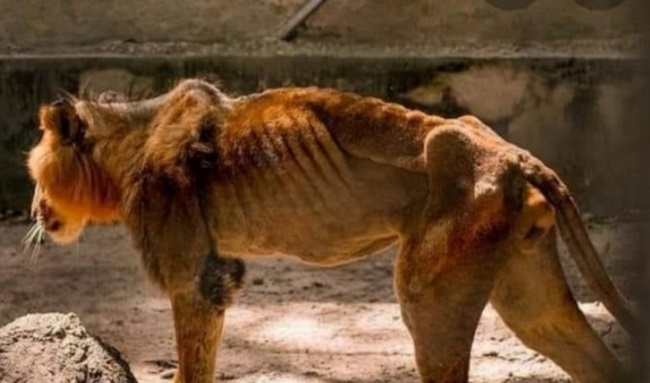
Four months ago around November 2020, there was widespread concern over the discovery of a starved lion in a zoo at Gamji creational Park Kaduna.
Recall that a visitor who went to the creational park to relax went to the zoo section only to find a starved lion on the verge of dying.
However, unknown to the workers of the park, the visitor secretly used his phone to take the footage of the starved lion and posted it on social media.
Accompanying the footage the visitor wrote, “I was so surprised. I felt so nervous and uneasy because it was my first time seeing a lion live. This is my first time in a zoo. I virtually saw them in movies, news and magazines. Actually, most of the animals in the zoo are not well-fed. They lack proper treatment or let me say-malnutrition,’’
It, however, drew the anger of Nigerians especially some charity organisations concerned about animals freedom.
At the peak of the revelations, findings revealed the management of the park hurriedly banned visitors from coming to the zoo.
It was gathered that the lion including the hyena, squirrel and crocodiles also found in the zoo were hurriedly evacuated to an unknown destination.
On Wednesday, when Tribune Online visited the park to find out whether the lion has recovered, a staff of the park who wouldn’t like to be mentioned disclosed that the lion has died two weeks after its footage went viral.
‘”Yes, I can confirm that the lion has passed on barely two weeks when its footage went viral.
“Some veterinary doctors came to take the lion for treatment later, they came with the shocking news that the lion has died as a result of some complications.
THE Commissioner of Police, Lagos Command, Mr. Hakeem Odumosu, yesterday, disclosed that policemen have been deployed to carry out 24 hours surveillance on schools and farms, to avert kidnappings and banditry in Lagos State.
The Police boss, however, lamented that some of the terrains, especially those of the farms, were not accessible by vehicles.
He said the command would liaise with the Ministry of Agriculture and the state government in purchasing motorcycles for that patrol of the farmlands. Fielding questions from journalists on the Command’s preparedness to prevent kidnap attacks on schools and farmlands, Odumosu said: “The Command has designed an Operation Order to cater for the deployment of personnel, surveillance, patrol and strict monitoring of schools and students’ activities across the state, in its bid to provide adequate security for both public and private schools in Lagos State.”
Besides, the Police boss said: “The command has also established synergy between schools, parents, communities and other security agencies in the state on the need to improve on the existing security architecture in various schools to forestall any attack or ugly incidents. “The surveillance will be extended to farmlands. Unfortunately, some of them are located in rural areas that are not motorable.
So, we have discussed with the Ministry of Agriculture that all farms must have government permits, as most of them are just farming without letting the government know what they are doing. It makes it difficult to provide security for them. “We are going to incorporate the Ministry of agriculture and traditional rulers for data of farmlands.
By the time this is put in place, we will begin to map out security strategies for them. At the moment, we are patrolling areas that are motorable. When we get the data and with the assistance of the Ministry of Agriculture and state government, we hope to use motorcycles to access the difficult terrains.”
•Gov Badaru says caretaker committee committed to holding national convention in June
By Adedayo Akinwale
The Governor of Yobe State and the Chairman of the Caretaker/Extraordinary Convention Planning Committee of the All Progressives Congress (APC), Mai Mala Buni, has revealed that the vision of the party is to rule Nigeria for 32 consecutive years.
Buni, who disclosed this at the inauguration of the strategy and contact committee held at the party secretariat Tuesday in Abuja said, this would ensure effective implementation of the party’s manifesto, improve the lives of Nigerians and, that the party remains Nigeria’s leading political party.
He stated: “The vision of the party is to provide a wheel that would drive the party to go beyond 6th, 7th and even 8th term of office to effectively implement the party manifesto, improve the lives of Nigerians and, to remain Nigeria’s leading political party.”
Buni explained that the committee was put together by the party as part of the collective drive to recover, rebuild and reposition the ruling party.
Buni said with a sense of satisfaction, the Caretaker Committee has within this period made tremendous achievements by recording genuine reconciliations and settling irreconcilable differences among critical stakeholders of the party.
According to him, “As l said earlier, if you don’t manage your crisis, your crisis will manage you. I am happy to say that the committee is running an all inclusive administration, giving all stakeholders and indeed our members the opportunity to contribute in the onerous task of rebuilding the party.
Buni noted that the committee has continuously engaged members of the party to serve in various committees thereby supporting the committee to effectively manage the crisis within the party.
The Chairman noted that the achievements recorded within this period of time were made possible with the generous support and cooperation the committee is enjoying from every member of the party.
This, Buni added, has translated into massive return of stakeholders and their supporters who had earlier jettisoned the party, adding that on the other hand, the party’s efforts in wooing members of other political parties into APC, has recorded remarkable and unprecedented successes.
He further said that another major milestone the party has recorded is the membership registration and revalidation exercise which has given every member of the party a true sense of belonging.
Buni further explained that the membership registration would provide the ruling party with the numerical strength and serve as a guide towards planning.
He stated: “Similarly, the review of the party’s constitution would take care of ambiguous positions and loopholes that have caused confusion and controversies over the years. This will make our party dynamic and to be in tune with changing times.”
The chairman pointed out that the constitution of the Strategy and Contact committee therefore, was to consolidate on the achievements in building a strong party with a solid structure that would make APC to stand the test of time.
He added: “This committee is therefore very key to our process of transition towards successful congresses and national convention and, to establish a very solid, reputable and reliable future for the party.”
Buni noted that the composition of membership of this committee was not done on a state by state basis, but it was a selection based on merit and competence.
The chairman stressed that the terms of reference for the committee include; to establish constructive engagements between critical stakeholders at various levels of the party with a view to reviving confidence and trust among party leaders.
He said it also includes conducting a need assessment survey from party members and the general public and to create a statement of vision, mission and core values of the party that will foster unity.
Buni said other terms of reference are: to develop strategies that would reposition the party in an advantaged position in the public domain; develop a timeline and framework for the implementation of the recommendations of the committee; Co-opt such members as may be deemed most suitable and submit periodic reports to the National chairman.
Speaking with journalists after the inauguration, the Chairman of the Committee, and the Governor of Jigawa State, Abubakar Badaru, said the national Caretaker Committee was committed to conducting the national convention in June despite rumoured tenure extension.
He added that his committee would do its best to increase the party’s base and its contacts and also bring in more people into the party.
Badaru stressed that those that are not happy with the party would be engaged with them also, adding that the idea is to build the party for greater strength.
The Governor however allayed the fear of Nigeria being a one-party state, saying there would always be opposition.
Asked if June was feasible for the national convention, Badaru said the caretaker Committee would be supported in all ways to ensure it would be delivered by June.
He stated: “It is very feasible. I know the national Caretaker Committee is committed to delivering in June. And we will support them and do whatever it takes to make sure we deliver by June.”
Badaru noted the constitution of the committee was important in bringing people together, understanding to ensure smooth running of the party, smooth conduct of party primaries and the convention.
He stated: “President Muhammadu Buhari has done wonderfully well. And that is why during the registration exercise, you will see people trooping in thousands into the party. Initially, we printed only 12 thousands materials but now we have gotten to 36 million. And that is not even enough. And now, we are printing more because people see what President Muhammadu Buhari has done.”
The return of Nigeria’s First Lady, Aisha Buhari, to Aso Rock Villa from the United Arab Emirates last Thursday was partly due to the ailment of a top member of the cabal in President Muhammadu Buhari’s government, Mamman Daura.
Daura has long been viewed as the leader of a powerful cabal or 'powerful kitchen cabinet' alleged to have hijacked the Buhari presidency since he came to power.
SaharaReporters learnt from Presidency sources that 81-year-old Daura, who is Buhari’s nephew, is now partially paralysed on the left side and managing his health presently in Kaduna.
SaharaReporters further gathered that the First Lady returned to the country, believing that Aso Villa was more secure with Daura out of the way and managing his health away from the State House.
It was also learnt that with Daura out of Aso Villa and less active, the power tussle in the Villa would be reduced and the place would be more conducive for her, although she still has a young man, Sabiu, alias Tunde “Idiagbon” to contend with.
Aisha returned last Thursday after spending about six months in the UAE. Buhari reportedly made her last known public appearance in September 2020 during the wedding of her daughter, Hanan.
Since then, she had conspicuously been absent from government activities and also stopped posting on social media platforms.
“Mamman Daura is sick. He is partially paralysed on the left side and managing his health in Kaduna State. It is partially the reason madam returned from Dubai because with the man out of the villa and less active, she knows she can take on Tunde Sabiu. She feels more secured,” the source stated.
SaharaReporters had on December 15, 2020, that the First Lady had been in Dubai since September after the wedding of her daughter, Hanan.
It had been also reported that the First Lady was not in a hurry to return, despite now spending over five months, as she reportedly stated that the Aso Villa was not secure for her family.
This is especially with a shooting incident which occurred in June 2020, and caused some panic among occupants of the Villa.
The First Lady and Daura’s daughter, Fatima, had an altercation in the villa in October 2019 which was videoed by the latter and later went viral.
The First Lady had admitted that she was angry in the video and went overboard because the Dauras were becoming overbearing in the Villa.
Fatima had also accused the First Lady of attacking her at the Villa.
In her reaction to the video, Aisha had said Mamman Daura's daughter, Fatima, laughed at her and mocked her inside Aso Rock.
During an interview with BBC Hausa, Aisha explained the circumstances behind the video, saying, “I was the one in that video and this person you see standing at my back are my security personnel.
“It was Fatima, the daughter of Mamman Daura that shot the video in front of my security and everybody there. She was actually recording the whole thing right in front of me and was laughing and mocking me.
“They did that because my husband sacked them from the house. He told them to get all their belongings and leave the house for my son (Yusuf) to occupy.
“I left them and wanted to get to one of the rooms but they prevented me from getting through, I left them and took another way yet I met the store locked.”
Gunmen have attacked a Police checkpoint in Agu Eze amaogudu , Abiriba, Ohafia Local Government Area of Abia State, killing three policemen...
Gunmen have attacked a Police checkpoint in Agu Eze amaogudu , Abiriba, Ohafia Local Government Area of Abia State, killing three policemen.
The dead officers were identified Inspector Austin Ugwu, Inspector Longinus Ugochukwu, PC Ama Ifeanyi.
The Deputy Governor of Abia State, Rt Hon Ude Oko Chukwu, who in company of security agents, visited the community, assured residents that the State Government will deploy all necessary resources available to ensure their protection.
Speaking to the people at Orie Akwa square in the community, Sir Oko Chukwu, who was accompanied on the visit by the state commissioner for Information, Chief John Okiyi Kalu, called for community vigilance and support to security agents.
He said, “The government is saddened by the unfortunate attack of this morning which led to the loss of lives of police officers at Agu Eze checkpoint and my boss, Governor Ikpeazu, on receiving the news asked me to come here and assure you that we will do everything possible to apprehend the perpetrators of the dastardly act and protect Ndi Abiriba and all law abiding people in the state.
“We call on you to maintain vigilance in order to fish out criminals and hoodlums who may want to come here to attack innocent people as they go about their their legitimate businesses.
“Government will give you all the necessary support and we have spoken to the security authorities to avoid indiscriminate arrests but ensure a painstaking investigation that will ensure that only those responsible for the dastardly act are brought to justice as quickly as possible.”
Chukwu, who earlier visited the crime scene, sympathized with the families and friends of the officers who lost their lives in the attacks and prayed God to give them the fortitude to bear the irreparable loss.
He also visited traditional rulers of the community and assured him of Government’s support to ensure that the perpetrators are brought to book.
He advised that a proper community vigilante and information gathering mechanism be put in place to ensure prevention of further crimes.
Responding, the Enachioken in Council, who spoke through Eze Eme Uguru Ikpoka, assured that the community would fully cooperate with security agencies to protect the people and prevent the perpetrators from escaping justice.
He called on the government to prevail on security agents not to engage in mass arrests but skillfully investigate the matter.
No fewer than 11 state governors are yet to publicly take the COVID-19 vaccine jab after taking delivery of their consignments from the National Primary Health Care Development Agency (NPHCDA), THISDAY’s investigation has revealed.
THISDAY gathered that while some of the governors asked their deputies and health commissioners to launch the vaccination without publicly taking the vaccine, others are yet to kick-start the campaign.
The governors who are yet to publicly take the COVID-19 jab include: 1 Mr. Seyi Makinde (Oyo State), 2 Chief Nyesom Wike (Rivers State), 3 Prof. Ben Ayade (Cross River State), 4 Mr. Udom Emmanuel (Akwa Ibom), 5 Mr. Samuel Ortom (Benue State), 6 Mr. Bello Matawalle (Zamfara State), 7 Mr. Yahaya Bello (Kogi State), 8 Senator Douye Diri (Bayelsa State), 9 Mr. Atiku Bagudu (Kebbi State), 10 Chief Darius Ishaku (Taraba State) and 11 Mr. Mai Mala Buni (Yobe State).
In Cross River State, the Commissioner for Health, Dr. Betta Edu, explained that Ayade was not among the first people that received the AstraZeneca COVID-19 vaccine because frontline health workers, according to the guidelines, were supposed to be the first set of people to take it.
She added that the governor had been away in Abuja.
The state received 53,840 doses of the vaccine on March 10.
In Oyo State, the Commissioner for Health, Dr. Bashir Bello, confirmed that the state received a total of 127,740 doses of the AstraZeneca brand of the vaccine but was still putting in place measures to perfect the vaccination process, especially in view of complaints in some countries, particularly European nations such as Sweden, Denmark, Norway, and France.
He said the state had put in place precautions to protect anyone vaccinated from risk.
He explained: “We, too, in Oyo State have to take some basic precautionary measures. One of the measures was that we ensure first of all, because of the potency of the vaccine, the type we got was the one that can only operate within two degree centigrade to eight-degree centigrade, which we have at our Jericho Cold Store.
“We are trying to ensure that the state modifies its own website because it is a national website for those intending to take the jabs and this has given rise to some misconceptions because some people wrongfully thought Oyo State has got the vaccine and they don’t know what we are doing.
“So, we are trying to take the precautions along with the vaccination procedure.”
The Akwa Ibom State government on Saturday officially commenced the public vaccination but the Secretary to the State Government (SSG), Dr. Emmanuel Ekuwem, kick-started the exercise on behalf of the governor.
The governor, however, told the residents of the state that the vaccine is safe, adding that no report of life-threatening side effects has so far been recorded.
The state government had on March 10, 2021, taken delivery of 69,030 doses of the AstraZeneca COVID-19 vaccines from the federal government.
In Bayelsa State, the vaccination was kicked off by the state Deputy Governor, Senator Lawrence Ewhrudjakpo, as the governor was said to be outside the state.
THISDAY also gathered that the vaccination of frontline workers and others was scheduled to be launched in Yobe State at the weekend but the exercise did not hold because Buni was in Abuja for another state function.
It gathered that since the vaccination was launched in Rivers State by the Deputy Governor, Dr. Ipallibo Banigo-Harry, Wike has not publicly taken the jab.
It was not certain if he took it privately.
In Kogi State, the governor, Bello, had said that he would not take the vaccine.
However, the state Commissioner for Health, Dr. Saka Audu, had said the state government was ready to receive 100,000 doses of the AstraZeneca vaccine.
Although the Benue State government has also launched the vaccination but Ortom and his deputy, Mr. Benson Abounu, were not present to publicly take the vaccine.
However, Ortom, who was represented by the Commissioner for Health and Human Services, Dr. Joseph Ngbea, urged the citizens to be available to take the second dose in 12 weeks.
In Zamfara State, a source at the Government House told THISDAY that “Matawalle has been away attending to security issues.”
Mrs Ahmed, in her recent reply dated March 10, 2021, responding to Mr Gambari’s request for her opinion on the NGF’s submissions, advised that the governors be ignored.
She anchored her opinion on, among other grounds, that the issue at stake was “not mere claims” but about implementation and enforcement of valid and subsisting judgments which she said were products of the judicial process.
She added that the judgment debts arose from the consultancy contracts and agreements tied to the London/Paris clubs refunds voluntarily entered into by the states and the local governments.
Mrs Ahmed added that the states and local governments took benefits of the services rendered by the contractors and consultants, and never denied in any of the courts that they engaged the judgment creditors or that the services were not rendered.
She said the NGF was a party “in most of the cases and had ample opportunity to ventilate its position”, but even “proceeded to enter consent judgments with the claimants in the cases of Hon. Ned Munir Nwoko and Panic Security and Consultancy Services.”
The minister said, in addition, that the Economic and Financial Crimes Commission (EFCC) and the State Security Service (SSS) have investigated most of the consultancy services, the contracts and the “judgments arising therefrom” and that in their reports submitted to Mr Malami, “they confirmed the validity and the legality of the contract and consultancy services.”
She also said the NGF had even started the implementation of the judgment debts by paying Mr Nwoko in part.
She added, “Finally, I wish to restate that the presidential approval for the liquidation of the judgment debts is in order and that the position canvassed by the chairman of the NGF and the request contained in his letters under reference is a subtle invitation to Mr President to use an administrative process to thwart or overturn judicial decisions and should be discountenanced in the interest of justice and obedience to the rule of law, as it will only further delay the liquidation of the judgment debts.
“Having taken benefits of the services rendered by the judgement creditors, it is only morally and legally right that the states and local government councils should pay for the services received in line with the judgement and orders of the courts.”
The contradiction between Mr Malami and Mrs Ahmed
But the claims by Mr Malami and Mrs Ahmed that the EFCC and the SSS had confirmed the validity and legality of the services rendered to the states and the local governments by the contractors and consultants appear contradictory.
The Minister of Finance, in her recent letter to Mr Gambari, claimed that the two law enforcement bodies investigated “most of the consultancy services, the contracts and the judgments” arising therefrom them, and in their report submitted to the AGF office “they confirmed the validity and legality of the contract and consultancy services.”
But in his letter dated July 17, 2020, which was received by Mr Gambari’s office on July 21, 2019, Mr Malami made reference to a “Recent EFCC report” which he said “was not initially served on his office but which “shows that the judgment creditor”, referring to Mr Iseghohi-Edwards, who is laying claim to $159million, “is not entitled to this sum”.
NGF’s last-ditch effort
Aside from the doubts expressed about the services said to have been rendered in the EFCC report referenced by Mr Malami, the anti-graft agency has also accused Mr Yari of mismanagement of the disbursed Paris Club funds.
Perhaps motivated by the EFCC report, the NGF has also called for a forensic audit of the whole indebtedness.
The NGF’s effort is reminiscent of the recent successful battle waged by Mr Malami and the EFCC in having the $10billion P&ID judgment suspended by a U.K. court after they were able to establish fraud in the agreement leading to the verdict.
Buhari’s aide, two ministers frustrating probe of suspicious N159 billion judgment debts
While top presidential aides are scrambling to start the disbursement of the judgment debts as quickly as possible, the governors, led by Governor Kayode Fayemi, are making a last-ditch effort to stop it.
By Ade Adesomoju
There is growing tension between Nigerian governors and a ring of powerful presidential aides over some $418 million (about N159 billion at the current official exchange rate of $1 to N380.5) said to be owed six individuals and entities who purportedly offered services to states and their local governments on the payment of Paris Club debts.
While the top presidential aides led by the Chief of Staff to President Muhammadu Buhari, Ibrahim Gambari, are scrambling to start the disbursement as quickly as possible, the governors, under the aegis of the Nigeria Governors’ Forum (NGF), led by Governor Kayode Fayemi of Ekiti State, are making a last-ditch effort to stop it.
PREMIUM TIMES is in possession of tens of sensitive correspondences exchanged by high-ranking players in the matter, highlighting desperate moves to begin the disbursements through the issuance of promissory notes that will be funded through deductions from states and local governments’ monthly allocations.
From documents seen by this newspaper, the moves to begin the payments are against Mr Buhari’s directive issued in January this year, and in disregard for the red flag raised by the governors about the legitimacy of the indebtedness.
The Fayemi-led NGF is demanding that the payment be suspended until a forensic audit of the indebtedness is carried out.
But Mr Gambari, who is spearheading the moves for the prompt payment of the money, is backed by the Attorney-General of the Federation (AGF), Abubakar Malami, and the Minister of Finance, Zainab Ahmed, both of whom argue that the court judgments which awarded the sums to the creditors must be hurriedly obeyed.
But among the three of them, Mr Malami is the only figure that has been in the picture since 2016 when the conversations among the top echelons of the Buhari administration about payment of government’s judgment debts started.
Mr Gambari only became a party to the matter following his appointment in May 2020 after the death of his predecessor, Abba Kyari, who died from COVID-19 complications in April 2020.
Mrs Ahmed also became involved following her appointment as finance minister after her predecessor, Kemi Adeosun, resigned in September 2018 in the wake of an NYSC certificate forgery scandal.
The deals that piled up judgment debts against states, LGs
Currently the states and local governments are, by the calculations of both the Minister of Finance, Mrs Ahmed, and Mr Malami, indebted to the tune of $418,953,670.59 (about N159 billion at the current official exchange rate of $1 to N380.5) to six individuals and entities.
The breakdown of the debts is contained in a series of letters sent separately by Mrs Ahmed and Mr Malami to the President and the office of Mr Buhari’s Chief of Staff. PREMIUM TIMES exclusively obtained copies of these letters.
The humongous debts arose from judgments passed in favour of the six claimants in four cases relating to the refund to the states and local governments, excess deductions made by the Federal Government between 1995 and 2002 to satisfy Paris and London clubs loans.
According to the two ministers, the claimants or judgment creditors were engaged by the states and local governments as consultants or contractors “in the recovery” of the London/Paris clubs refunds, as well as in the “utilisation” of the recovered funds.
They explained that the contracts and agreements were tied to the London/Paris clubs refunds, and the claimants had simply gone to court to claim their share of the money.
PREMIUM TIMES has found out how the suits were designed to succeed with little or no chance of failure.
Paris Club Refund Case: A Fait Accompli? As far back as 2013, long before the Federal Government started the disbursement of the excess deductions to the states and local governments in 2016, the Association of Local Governments of Nigeria (ALGON), in concert with some of the claimants, went to court to challenge what they described as the Federal Government’s unilateral deduction of the funds from the federation account to service the foreign debts without the consent of the third tier of governments in the country.
The 776 local governments, which were the principal plaintiffs, cleverly instituted the suit along with the “consultants” and “contractors” which they claimed had provided legal and consultancy services to help them as members of ALGON to secure the refund of the deducted money.
Some other parties were also joined as co-plaintiffs in the suit for executing projects such as “security and health care delivery” for all the local governments of the federation.
With the monetary claims in the suit tied to the refund of the London/Paris Club refunds and the Federal Government agencies, which were sued as adverse parties, success was, no doubt certain.
Between 2013 and 2018, a series of similar suits relating to the Paris and London clubs money were filed in court with ALGON and past leaderships of the NGF giving tacit support to the “contractors” and “consultants”.
At the end of the day, some of the cases were feebly defended, while others were consented to by the defendants, including past NGF leaderships and ALGON.
With little or no opposition, judgments later began to fly around with huge awards in millions of dollars issued by the courts in favour of the claimants.
In his July 17, 2020 letter to the incumbent Chief of Staff, Mr Gambari, Mr Malami, who has been consistently making a case for the payment of the claimants since 2016, said the case ordinarily should not concern the Federal Government if not that the Central Bank of Nigeria (CBN) was the custodian of the funds.
He stated, “The consultants/contractors obtained the judgments for the payment of their legal/consultancy fees which judgments were further backed up with garnishee order absolute against the Central Bank of Nigeria for the attachment of these sums.”
Mr Malami explained that the Federal Government only got involved “in these claims” because “the attachment order made against the Central Bank of Nigeria and the Federal Government being the custodian and entity disbursing the funds or making the refunds.”
Beneficiaries of judgment debts
A breakdown of the beneficiaries gleaned from different letters sent to the presidency by the AGF and the Minister of Finance reveals the identities of the six persons and entities being owed a total of $418,953,670.59, about N159 billion, at the current official exchange rate of $1 to N380.5.
The beneficiaries include a former member of the House of Representatives, politician and lawyer, Ned Nwoko, who is laying claim to $142,028,941 (about N54 billion) via a consent judgment he obtained from the Federal High Court in Abuja in the suit marked FHC/ABJ/CS/148/2017.
Three beneficiaries laying claim to $143,463,577.76 (about N54.6 billion) via a judgment of the Federal Capital Territory (FCT) High Court in the suit marked FCT/HC/CV/2129/2014 are: Riok Nigeria Ltd, Orji Nwafor Orizu, and Olaitan Bello.
From the total money, Riok Nigeria Limited has a share of $142,028,941.95 (about N54 billion), Mr Nwafor is entitled to $1,219,440.45 (about N464 million), and Mr Bello has a share of $215,159.36 (N81.7 million).
The claimant with the singular lion share is Ted Iseghoghi Edwards, who is laying claim to $159,000,000 (about 60.5 billion) through a judgment he obtained from the FCT High Court in suit number FCT/CV/1545/2015.
A firm, Panic Alert Security System Limited, owned by George Uboh, is also laying claim to $47,831,920 (about N18.2billion) based on another “consent judgment” it obtained in suit number FHC/ABJ/CS/123/2018, which was filed as recently as 2018.
‘Buhari approves $350million, but not enough’ PREMIUM TIMES understands from the letters exchanged over the matter that the $418,953,670.59 owed the six claimants is the agreed outstanding balance of the judgment debts followings series of negotiations with the claimants and the sharing of some $350million ordered to be released to the NGF by President Buhari in 2018.
Mr Buhari had approved the release of $350 million from the Excess Crude Account to the NGF then led by former Governor of Zamfara State, Abdulaziz Yari, as “legal and consultancy fee to defray third party claims arising from court judgments in respect of the Paris and London clubs refund”.
The presidential approval was based on the recommendation of the then Minister of Finance, Mrs Adeosun, via her letter dated July 5, 2018, and the details of the claims supplied by Mr Malami in his letter dated August 20, 2018, with reference number MJ/CIV/ABJ/104/17.
Mrs Adeosun’s successor, Mrs Ahmed, in a later letter dated December 23, 2019, with reference number FMF/PSSD/SH/01/VI/79, informed then Chief of Staff, Mr Kyari, that “the initial approval granted by Mr President in the sum of USD $350 million for settlement of outstanding legal/consultancy fees were not enough to accommodate the entire claims.”
Mr Malami also made a similar push, while explaining to the new Chief of Staff to the President, Mr Gambari, who took interest in the judgment debts matters shortly after assuming office.
The AGF in his letter in July 2020 with reference number HAGF/SH/2020/VOL.1/40, informed Mr Gambari that the claims in respect of the Paris and London Clubs refunds were “entitlements of judgment creditors who could not be paid from the initial sum of US$350million approved in August 2018 by the President.”
How beneficiaries are to be paid outstanding debts
A back-and-forth conversation between the offices of the Chief of Staff to the President, the Minister of Finance and the AGF on how the Federal Government should defray its judgment debts, arbitral awards and claims, including the Paris and London clubs-related judgment debts, started in 2016, about a year after Mr Buhari came to office.
Four alternative sources of funding were initially recommended at a meeting held between officials from the federal ministries of finance and justice, the Debt Management Office, the Budget Office and the Central Bank of Nigeria (CBN) on June 12, 2017.
There was also a later suggestion to draw the money from “recovered funds”.
In fact, the $350 million approved by Mr Buhari on August 29, 2018, was sourced from the Excess Crude Account.
Eventually, it was resolved before Mr Kyari died that all judgment debts owed by the government, including the Paris and London Clubs refund judgment debts, should be defrayed through the issuance of promissory notes.
Barely a month after assuming office as Chief of Staff, Mr Gambari, via a letter dated June 24, 2020, with reference number SH/COS/01/A/9090, requested the Federal Ministry of Justice to implement an earlier directive issued by Mr Buhari in 2017 for the “compilation, review, and analysis of pending judgment debts, arbitral awards and civil claims” which the ministry was aware of.
Mr Malami, in his reply dated July 17, 2020, to Mr Gambari, categorised the judgment debts and claims into three groups – Paris Club refunds-related debts; Top Priority Debts due to enforcement actions, and General Debts incurred by the Federal Government’s MDAs.
The schedules of various judgments and claims updating the list of 26 judgment debts and claims earlier generated by the Federal Ministry of Finance were attached as annexures to Mr Malami’s letter to Mr Gambari.
After receiving Mr Malami’s letter, Mr Gambari, via a letter dated July 24, 2020, requested the Minister of Finance to review the AGF letter and advise the presidency on the matter.
In her response, Mrs Ahmed, through her letter dated October 6, 2020, requested Mr Gambari to advise the president that for all categories of judgment creditors 100 per cent liquidation through the issuance of promissory notes is the most viable option.
She also advised that for debtors in Category A (Paris Club Refunds Related Debts), “equal monthly amount deductions from statutory allocation due to states and local councils over a period of 10 years” can be implemented.
‘Consent of FEC, governors not required – Malami, Ahmed’
After receiving Mrs Ahmed’s recommendation, Mr Gambari, in another letter dated October 23, 2020, raised other queries and sought to know if the states and local governments have formally signed off on the proposal of monthly deductions from their allocations for 10 years.
Responding to Mr Gambari, through a letter dated December 14, 2020, Mrs Ahmed said the consents of the judgment debtors – the states and the local governments – was not required.
She argued that “the consent of a judgment debtor (in this case the states/local governments) is not required before a valid judgment of a court of competent jurisdiction can be enforced.”
She however added that “both the former Chairman of Nigeria Governors’ Forum (NGF) and the Association of Local Governments of Nigeria (ALGON), had in 2019, given an Indemnity and No-Objection Letters authorising deductions from relevant statutory allocation to meet the Paris Club related claims, especially the claims by Riok Nigeria Ltd and Dr Ted Iseghohi Edwards.”
The minister explained further that the clearance of the states and local governments was equally not necessary to Mr Nwoko and Panic Alert Security System Ltd whose claims are based on “consent judgments between the judgment creditors and the Nigerian Governors’ Forum”.
On whether the resolution of the Federal Executive Council (FEC) or that of the National Assembly would be required for the issuance of promissory notes in respect of the Paris Club judgment debts, Mr Malami argued in separate letters to the then Chief of Staff, Mr Kyari, and Mrs Ahmed that it was unnecessary. This, the AGF argued, was because “their eventual reimbursement is not tied to the Consolidated Revenue Fund of the Federation which requires National Assembly or FEC resolutions.”
He reiterated in his letters that “the initial payment of the sum of USD$350million was charged to the Excess Crude Account” with presidential approval, warning that subjecting the new payments “to these levels of approvals will certainly call the validity of the previous payment into question.”
Buhari grants new approval
Buoyed by the arguments canvassed by Mrs Ahmed and Mr Malami, the Chief of Staff, Mr Gambari, tabled the recommendations before President Buhari via a memo dated December 18, 2020, asking for approval for “the liquidation of all three categories A, B, and C by the issuance of promissory notes and not cash payments, given the current revenue challenges.”
As earlier recommended by Mrs Ahmed, Mr Gambari urged the president to approve that for the Paris Club related judgment debts, the promissory notes should be funded “by equal monthly deductions from the statutory allocations due to the affected states and LGAs over a period of 10 years.”
The president approved the proposals in his comments on Mr Gambari’s memo on December 24, 2020.
NGF protests
On May 23, 2019, few days to the end of his tenure as Zamfara State governor, Mr Yari stepped down as the Chairman of the NGF and was replaced with Mr Fayemi, governor of Ekiti State.
This change of baton came with a change in the attitude of the NGF regarding the Paris Club judgment debts.
Although, Mr Yari’s leadership had already issued an Indemnity and No-Objection Letters authorising deductions from state and local governments’ allocations, Mr Fayemi’s NGF began a series of meetings with the president, the chief of staff, the AGF, the minister of finance and other relevant stakeholders, in their bid to stop the payments.
A meeting which Mr Buhari held with Mr Fayemi on January 8, 2021, about 15 days after the president granted approval for the payments as recommended, culminated in a new presidential directive that the proposed deductions are stopped until parties agreed on the purported debts.
On February 3, Mr Fayemi also attended a meeting chaired by Mr Gambari where the issues were tabled. Others who attended the meeting were Mr Malami and the Permanent Secretary of the Federal Ministry of Finance, who represented the Minister of Finance.
Not convinced that the Mr Gambari-led camp was on the same page with him, Mr Fayemi went ahead to communicate the new presidential directive to the President’s Chief of Staff via a letter dated February 10, 2021.
The Chief of Staff, in response, wrote a letter dated February 16, 2021, with reference number SH/COS101/B/174, to the Minister of Finance asking her to review the NGF’s submissions in relation to the earlier approval granted by the president in December.
Two days later, the National Economic Council (NEC) met on February 18, 2021, where the body endorsed the resolution of the NGF and directed that an independent forensic auditor be engaged to review all related claims pertaining to the London Paris Club refunds and other debts against states for sundry services.
But despite this, the NGF believes that there are ongoing moves to go ahead with the payments especially as the forum still cannot extract the Chief of Staff’s commitment to abide by the president’s latest directive.
Mr Fayemi, therefore, wrote Mr Gambari on March 8, 2021, stating that the NGF had noticed “that there are attempts to proceed with defraying the purported debts to some consultants who claim to have executed various services to the states in respect of the London Paris Club refunds.”
“Notable among these so-called judgment creditors are Prince Ned Nwoko (Ned Nwoko Solicitors), Prince Nicholas Ukachukwu (Riok Nigeria Limited), Dr Ted Iseghohi Edwards and Dr George Uboh (Panic Alert Security Systems PASS),” the Ekiti governor added.
Mr Fayemi expressed concerns about the development, saying “it flies in the face of the meeting convened on February 3, 2021 meeting” which was chaired by Mr Gambari.
He reminded the Chief of Staff of “the resolution of the National Economic Council (NEC) authorising an independent forensic audit”.
The governor urged Mr Gambari to advise “all parties to work within the ambit of the NEC resolution in reviewing the purported judgment debts and the approvals of Mr President conveyed in your letter dated February 16, 2021, to the Honourable Minister of Finance, in order to safeguard the integrity of the Nigerian state.”
• Proposed Refinery In Katsina Costs $2b, TAM For Old Facility $1.5b
• $1.5b Fresh Approval Higher Than 10-year Capital Allocation To Health
• TAM Three Times Higher Than 10-year Education Budget
The whopping sum of $26.5b, which the Federal Government has so far spent on the maintenance of its loss-making 445, 000 barrels/day capacity refineries, is capable of building three new refineries of the same size going by the cost analysis of refinery projects across the world.
Besides, the latest approval granted by President Muhammadu Buhari, who is also the Minister of Petroleum Resources for the rehabilitation of the 210, 000 barrels per day Port Harcourt Refinery is higher than the total capital allocation to the health sector by successive governments from 2009 to 2018.
Costing close to the $2b proposed refinery expected to be built in Katsina, Nigeria’s spending on refinery maintenance is, in fact, three times higher than the entire budgetary allocation to education between 2009 and 2018.
The Federal Executive Council (FEC), presided over by Buhari, last week approved the sum of $1.5b (about N575b), for immediate commencement of rehabilitation works on the largest refining company in the country, the 32-year-old Port Harcourt Refinery.
The Minister of State for Petroleum Resources, Chief Timipre Sylva, explained thereafter that contract for the rehabilitation was awarded to Italian firm, Tecnimont SPA, and would be executed in three phases. The first phase is expected to be completed within 28 months, Sylva said, adding that the second and third phases would be completed in 24 and 44 months respectively.
Nigeria has three refineries located in Kaduna, Port Harcourt and Warri. These assets’ installed capacity of 445, 000 bpd plummeted over the years until the facility got obsolete and currently processes zero crude, while recording massive losses.
The $1.5b approved last week for the TAM thus pushed the hitherto $25b for the same purpose to $26.5 billion. The previous figure was never refuted by the government.
Buried in corruption with series of probes at the National Assembly indicting public officials for misappropriating funds meant for TAM, documents on the financial details of previous maintenance exercises, especially since the military regime have been scanty.
A close look at some refinery projects across the world show that the country would have built about three efficient refineries if funds spent on TAM were used for the construction of new refineries, instead of continuously maintaining existing refineries, which were performing poorly despite several attempts to revive them.
The Pacifico Eloy Alfaro Refinery and Petrochemical Complex (Pacific Refinery) being constructed at El Aromo, Manta, in the province of Manabi, Ecuador is a 500, 000 barrels per day (bpd) facility, and was built for $12b. Dangote Refinery, a 650, 000 (bpd) integrated refinery and petrochemical facility is being constructed for about $15b. Kuwait is also building Al Zour Oil Refinery for $16b. The capacity of the refinery is 615,000 bpd.
With the nation’s three refineries having a combined capacity of 445, 000 bpd, the implication is that it would cost less than $8b to build a new 210, 000 bpd refinery in Port Harcourt (the same size with the existing one). It should also cost less than $8b to build a new refinery in Warri, where the existing one, which was built in 1987, has total capacity 125, 000 barrels per stream day.
The Kaduna Refinery has a nameplate refining capacity of 110, 000 barrels per day. If a similar facility were to be built in the area, it would cost less than $8b. The three refineries would therefore cost only about $24b.
Indeed, President Buhari had in 2018, signed a Memorandum of Understanding (MoU) with his counterpart from the Republic of Niger, Mahamadou Issoufou for the construction of oil pipelines, and a 150, 000 bpd capacity refinery, expected to be sited in Katsina State, and expected to receive crude oil through the pipelines from Niger’s oilfields in the Ténéré desert. The cost of the refinery and the pipeline were valued at about $2bn.
While Nigeria spends $1b yearly on health tourism as the nation’s health sector remains in a shambles, the current $15b maintenance cost for the Port Harcourt Refinery is higher than budgetary allocations to health projects by over N100b.
Between 2009 and 2018, capital allocation to the Ministry of Health stood at N478.9b. In 2009 and 2010, N50.8b and N49.99b capital allocation were budgeted for the Ministry of Health. The figure stood at N33.53bn in 2011, N57.01b in 2012, N60.08b in 2013, N49.52b in 2014, and dropped sharply to N22.68b in 2015.
In 2016, it went up to N28.65bn, rose to N55.61bn in 2017, and settled at N71.11b in 2018.
The education sector is in decline, with the country accounting for the highest number of about 23, 000 lecturers that depart the continent yearly.
Meanwhile, the $26.5b TAM is nearly three times the N3.90t allocated to the sector in the past 10 years (2009-2018) from a total budget of N55.19t.
In 2009, the budget for education was N221.19b, N249.09b in 2010; N306.3b in 2011; N400.15b in 2012; and N426.53b in 2013. It rose to N493b in 2014, went further up to N392.2b in 2015; N369.6b in 2016; N550 in 2017, and N605.8b in 2018, bringing the total figure to N3.90t.
It would also be recalled that that NNPC had reported in its monthly financial statement that about N1.47t was spent on the four refineries, between 2015 and N2020.
In 2015, about N82.82b was spent, N78.95b in 2016; N604.127b in 2017; N426.66b in 2019; N218.18b in 2019, and N64.534b expenditure was recorded from January to June 2020.
A professor of Economics, Segun Ajibola said while a lot of resources have been diverted to the TAM of the refineries, there results have never been commensurate.
He blamed the situation on poor implementation, mismanagement and lack of accountability on the part of government owned institutions.
“The expectation has always been that the refineries would either be fully privatised, or sold outright to remove government’s hand from the day to day management of the refineries. This is with a view to removing government’s inefficiency from the affairs of the refineries.
“With the approval of $1.5b to rehabilitate the refinery, one can still hope that the government is trying to enhance the value of Port Harcourt Refinery in readiness for either full privatisation, or outright sale,” Ajibola said.
The scholar insisted that the rehabilitation could be another sordid tale in years to come if the refinery returns to the traditional operational mode (operating through public ownership and management template).
Like Ajibola, other energy experts and civil society organisations do not not welcome government’s move to revamp the asset, given that since the administration came on board, it has repeatedly stated that no government funding would be spent on the asset.
In separate interviews, stakeholders express discomfort with the idea, as well as the amount budgeted for the exercise.
The Group Chairman/CEO, International Energy Services Limited, Dr. Diran Fawibe, noted that without a comprehensive rehabilitation and audit, the amount would be as good as a waste, considering the fact that the facility has failed to perform after years of maintenance.
Fawibe, a former management staff of the NNPC, warned that without proper rehabilitation and auditing of the entire facility to ensure that the liability of the facility remains very minimal, the fund could end up on the same path as the previous amounts released.
According to him, the contractor must be held by the throat for a guarantee of performance, as well as years of defect liability period, with extra spare parts at no additional cost, should the facility develop a problem after being rehabilitated.
An energy expert, Henry Adigun, does not see any sense in spending $1.5b to fix a refinery, stating that it was unfortunate for the government to resort to the option after promising to allow the private sector to run the facility on BOT.
“Where is the money going to come from? Turn around for what? What is the context? Adigun asked, adding that the move by the government was most unfortunate.
For the Director of the Centre for Democracy and Development (CDD), Idayat Hassan, Nigeria must build new refineries instead of pumping money into dead facilities, stressing that rehabilitating the Port Harcourt refinery with $1.5b was totally a misplaced priority.
“If we do a cost analysis, we should be able to see how much more we need for a new refinery. It is becoming counterproductive to try to continue to rehabilitate what is failing,” Hassan said.
“That contract is too much. You don’t need that amount of money to turn around a refinery anywhere in the world. I prefer that we build a new one,” energy expert, Madaki Ameh added.
By Alao Abiodun A GoFundMe fundraiser set up by supporters of Yoruba rights activist, Sunday Adeyemo, aka Sunday Igboho, has generated heated controversy.
The Nation had reported a blogger, Maureen Badejo, few weeks ago, set up a Gofundme page to raise £100,000 (N51.8m) to buy buses in support of Sunday Igboho’s project of ridding the South-West of killer herdsmen.
Igboho, during a virtual town hall meeting, had said he needs buses to “transport people” for his south-west tour.
“I need buses to transport people. The three vans we use were bought by me. We lost three buses that were hired on our way to Oyo,” he said.
In the now-viral video posted by Kayode Ogundamisi, a political commentator on twitter, showed there was a squabble over money between a lady and Yomi Koiki, Sunday Igboho’s spokesman.
The lady alleged N2.5 million was given to Igboho but he did not acknowledge receipt even after he admitted collecting another N6.5 million from a Yoruba group in the US.
‘’Yoruba liberation should not be a money-making venture,’’ Badejo said in the video.
She alleged Koiki failed to acknowledge N2.5m donated for “feeding” for over 2 weeks, after he allegedly described the funds as “no big deal.”
“It is an insult to say N2.5 million feeding money is not a big deal,” Badejo said.
This led to the labelling of Badejo, who raised the fund as a ‘fraudster’ which informed her petition to the fundraising platform.
Badejo reportedly gofundme to return the £46,933 raised for Igboho to donors.
Sunday Igboho’s spokesman, Koiki, could not be immediately reached for comments.
How El-Rufai Cooked Lies That Oritsejafor And I Are Boko Haram Sponsors – Goodluck Jonathan
Former President Goodluck Jonathan has stated that the All Progressive Congress in 2014 embarked on propaganda to mislead Nigerians, including claims that his government supported the Boko Haram terrorists to reduce the number of northern voters.
Jonathan noted that Kaduna State Governor, Nasir El-Rufai, particularly in August 2014, accused him and the then President of the Christian Association of Nigeria, Pastor Ayo Oritsejafor, of being Boko Haram sponsors “to spoil Islam’s name.”
Years after the accusation and a campaign to "change" the country, insecurity has worsened under the APC-led government's watch. El-Rufai and other governors are struggling to tackle insecurity in the northern region.
Jonathan said El-Rufai’s claims were both “laughable and extremely ridiculous” but his (Jonathan’s) government was determined not to pull anyone down.
The former President stated this in his book, "My Transition Hours", explaining that his government was consistently attacked and maligned to ensure the propaganda succeeded.
Excerpts from the former President’s book reads, “The President security could quickly have fired at the source of the missiles, thinking it was the insurgents. But we responded differently. I have always said it and meant it. Nothing I wanted was worth the blood of a human being, least of all, the people I had the direct charge to protect, the people I swore to serve.
“Muhammadu Buhari was in my home state and I proactively ensured that nothing of that sort happened. He was not the president and it would have been easy to return the dubious compliment. There was no shortage of courageous young men ready to carry out such a mission. We could also have denied complicity as they did, but it was not my way.
“Besides not being so base by nature, I would have reduced an office I held in trust and embarrassed my colleague and many others around the world who hold me to certain standards and values. I encouraged my supporters not to dwell on the issue. When I accepted the PDP nomination for re-elections, I had charged myself and my supporters to campaign in peace with hope in our hearts, on the facts and truth on issues and ideas, on our records of performance, not violence. Ours was a campaign of ideas.
“We put it behind us and forged ahead with a clean campaign. The opposition was steeped in negative rhetoric and slurs of all manners. We were not swayed. I campaigned consistently on what we did, what we were doing and what we could still do. My concern was for new ideas and positive ways of doing things. It was essential to purge the do-or-die mentality from our minds. It would take some time but I knew I was making headway in that direction.
“It showed by the massive drop in politically motivated assassinations. It simply vanished because the leader was not interested in killing to win.
“They raised a chorus of “Jonathan must go.” They crafted a pseudo activist image. They loaded the campaign space with a lot of unproven corruption. The propaganda exhibited by the opposition was infinitely worse than anyone they could imagine and they imagined plenty. The point was to mislead the ordinary folks against the government. It was even taken to the ridiculous extent of claiming that I was behind Boko Haram. They said I planned it to reduce the number of northern voters.
“A particular opposition politician, Nasir El-Rufai, who became the Governor of Kaduna State, went to the ridiculous extent of tweeting on August 9, 2014, that the then President of the Christian Association of Nigeria, Pastor Ayo Oritsejafor, and I were sponsors of the Boko Haram. He added that Boko Haram members were not Muslims but Christians disguised as Muslims to spoil Islam’s good name.
“Of course, it was laughable and extremely ridiculous. On the same day, at the Portcullis House in Parliament, London, El-Rufai repeated the same allegations at an event.”
Since May 2015, when President Muhammadu Buhari came into office, the Boko Haram killings has more than doubled in the country, leaving thousands of Nigerian soldiers as casualties.
There have also been more abductions and killings of women and children in the North-East as soft targets.
SaharaReporters had reported that the immediate past service chiefs, who held the military command under Buhari for about six years, spent more than N2.659trillion on military arms and ammunition between 2015 and 2019, according to records.
The N2.659trillion is outside the controversial $1billion Excess Crude Account Fund, which Buhari approved in April 2018 despite public outcry.
The $1billion was approved and released, partly because the former military chiefs influenced the National Assembly that they did not have enough funds to fight the insurgency.
Despite the humongous budgets given to the military, the insurgency has festered, leading to abductions of schoolgirls in Dapchi, Yobe State, in 2018, among other abductions of women and children, which continue to draw national and global outrage.
Jonathan’s critic, El-Rufai, and other APC commentators have for the most times remained quiet in the face of the growing insecurity which is presently manifesting in more deadly dimensions such as banditry, kidnapping and killings by herdsmen.
The pricing template released by PPPRA effectively shows the government has been paying fuel subsidy despite its denials.
As it has become clear the Nigerian government has continued to subsidise the price of petrol, a PREMIUM TIMES analysis has shown the nation may be expending a whopping N102.5 billion monthly to reduce the retail cost of petrol.
The sum is higher than the N70 billion the government budgeted for the provision of Universal Basic Education (UBEC) in the 2021 budget, as well as the N45.19 billion allocated for immunization.
This is according to a PREMIUM TIMES’ analysis of the revelations thrown up by the controversial price template released by the Petroleum Products Pricing Regulatory Agency (PPPRA) last week.
PREMIUM TIMES reported how the agency came under attacks last Thursday when it released a template indicating a huge jump in the retail price of petrol from about N160 to N212.
The decision contradicted earlier assurances by the NNPC that there will be no increment in March, prompting the government to disown it and apologise.
In a statement Friday by its executive secretary, Abdulkadir Saidu, the PPPRA said it does not “fix or announce prices”, and claimed the petroleum pricing template published on its website was not intended to cause an increase in the price of petrol.
However, previous templates released by the agency formed the basis of fuel price increase or decrease in the country.
Prior to latest controversial announcement, the PPPRA published its last template in November 2020.
In his reaction, the Minister of States for Petroleum, Timipre Sylva, also disowned the increment.
Mr Sylva said neither he nor President Muhammadu Buhari had approved the decision to increase the retail price to N212 per litre.
The NNPC also insisted its position had not changed and the PPPRA later deleted the post from its website.
New Revelation
Aside the controversies it generated, the new template released by the PPPRA also revealed details of the subsidy the Nigerian government effectively incurs.
In its pricing guide for March, the PPPRA put the wholesale margin at N4.03 per litre, administration charge at N1.23 per litre, transporters’ allowance (NTA) at N3.89 per litre, Bridging Fund cost at N7.51 per litre, and Marine transport average (MTA) at N0.15 per litre.
The agency said the expected ex-depot price for wholesale products marketers would be N206.42 per litre.
Further review of the pricing template showed the average price per ton of the commodity was put at $561.96, or N169.22 per litre, while the average freight rate coat (North-West Europe to West Africa) is $21.63 per ton, or N6.51 per litre.
With a retailers’ margin of N6.19, the new guide showed that the expected retail price would be N209.61 on the lower band and N212.61 on the upper band.
PREMIUM TIMES’ analysis showed that the difference between the N206.42/litre ex-depot price announced by the PPPRA and the N148/litre price petrol is sold to marketers by NNPC reveals a subsidy of N57.82/litre.
The amount of petrol Nigerians consume daily has been a subject of conjectures in recent years, as figures released by different agencies often conflict.
The NNPC in its operational report said Nigeria consumes about 57.4 million litres of petrol daily.
In February, the Department of Petroleum Resources, DPR, put national demand for petrol, also known as petrol, at 38.2 millionlitres daily.
Last year, the nation’s statistics bureau said Nigerians consumed 20.8billion litres of petrol in 2019, which comes to about 57.2million litres every day. NBS cited data provided by the Petroleum Products Pricing Regulatory Agency, which it said it verified.
However, PREMIUM TIMES adopted the NBS’ conservative figure of 57.2 million litres, spread across a 31-day period. This newspaper found that the government through the NNPC will be spending about N102.5bn as petrol subsidy monthly.
For years, the government denied it paid subsidy on petrol, yet it did so through the NNPC, which described the cost as “under recovery”.
Meanwhile, the cost is subject to the dynamics in the international oil market. It means that should there be an increase in the price of oil, as being projected by analysts, the subsidy cost is also bound to increase, just as a slump would also lead to reduction in subsidy cost.
Subsidy
In March 2020, amid a global oil price crash, Nigeria cut its pump price and said it had eliminated subsidies.
The government also announced a new price cap that maintained government control, but said it would allow prices to move with the market.
Nigeria’s petrol prices had been kept artificially low at N145, with subsidy eating into a huge chunk of government revenues.
But by June 2020, the NNPC recorded a N5.34 billion ($14 million) cost for fuel, raising suspicion that subsidy had not returned to the government’s books.
Until recently, the government has not come out clean on how much it injects into subsidy payment, even as the item is not contained in recent budgets.
Some Nigerians have called for the removal of subsidy, in order to enable the government invest the fund into other developmental projects. Others have however condemned calls for its removal, citing it as perhaps one of the most significant “benefits” the masses enjoy from the government. Those in the later category, such as the organised labour, have advised the government to fix the refineries before removing fuel subsidy.
Many have also expressed worry over the government’s sincerity, and wondered whether the government would indeed commit funds generated from subsidy removal into actual developmental projects.
Nigerians typically use petrol to power their vehicles, tricycles, and motorcycles, and in a country with poor electricity supply, other Nigerians in their millions power their generators with petrol.
A study supported by the British government estimated that Nigeria spent N10 trillion on subsidies from 2006 to 2018, more than the budgets for health, education or defence.
Over the years, some Nigerian politicians have been victims of sex scandals. Here is a list of some of them who were at one time or the other accused of engaging in illicit affairs.
Willy Amadi, Buhari’s Appointee, Caught In Sex Scandal Tape
The latest politician to be involved in a sex scandal is an appointee of President Muhammadu Buhari, Chief Willie Amadi.
A sex video released in January had showed Amadi in a room with two girls making out.
In the video, Amadi, a lawyer and Federal Commissioner, Imo State Office of the Public Complaints Commission, was seen in a 12-second video that captured him and the girls in a compromising position.
Few days after the video went viral, an Imo State Magistrates’ Court convicted a 20-year-old school leaver, Peter Nwoke, for superimposing a picture of Amadi onto a video of the two women to put the President’s appointee in an awkward position so he could blackmail him.
However, sources told SaharaReporters that Nwoke made the confessional statement that he had superimposed his video onto another after being threatened and promised millions of naira.
“The narrative that one Nwoke Peter edited a sex video to blackmail Amadi is false. It was well planned by Amadi and some top police officers. I was reliable informed that they promised the young boy millions of naira to cooperate with them; this was after they threatened the young man several times.
“I can’t say the exact amount that was paid now but I was told he has been paid part of it. He (Amadi) claimed it was a video from a pool side that the boy edited; tell him to show us this original video, I mean the video he claimed he took beside the pool which the guy superimposed on another.
“Like I said earlier, it was all planned to save Amadi from losing his current job as an appointee of President Buhari and his future political ambition. Imagine, this guy was arrested, investigated and sentenced to prison within nine days, not even a month, my brother, nine days. What kind of investigation was done without a forensic analysis? I pity the young boy though, he did everything under duress,” a senior police officer told SaharaReporters.
Speaking to SaharaReporters, a Lagos-based forensic expert, Gbenro Akinyomi, said an analysis of the video using an InVID software showed it was not superimposed.
“Check the video very well, there is a mirror behind the scene reflecting the true activities. The man (Amadi) recorded the video; he was involved in the act. Since he claimed it was superimposed, what about his image on the mirror in the background? Was that edited as well? The video is real,” he told SaharaReporters.
Meanwhile, a veteran Nollywood actress, Mrs. Hilda Dokubo, had demanded further investigation into the case, saying the accused might have been forced to own up to a crime.
Dokubo said the young man could not have committed such a crime because there was no technology at the time that one could use to superimpose a photo on a video or motion picture.
Bukar Abba Ibrahim, Former Yobe State Governor’s Dingy Hotel Room Escapade
In 2017, a senator and former governor of Yobe State, Bukar Abba Ibrahim, was shown in a viral video published by SaharaReporters dressing up in the presence of two women in a dingy hotel room.
Ibrahim however said that he had not committed any official wrongdoing and the video was only made public after attempts to blackmail him failed.
“This is a personal, private matter. What does my having been with a girl have to do with the public?
“You know the normal thing: people ask for unreasonable things, and if you deny them, they try to blackmail you if they have a way,” he said.
The senator further said he owed no one an explanation since he was not accused of any crime.
Ogun State Commissioner, Abiodun Abudu-Balogun’s Alleged Rape Scandal
A 16-year-old secondary schoolgirl had alleged in a video on Facebook that Abiodun Abudu-Balogun, the suspended Commissioner of Environment in Ogun state tried to rape her.
She said, Abudu-Balogun, who was a member of the House of Representatives, connived with her uncle and a teacher on December 31, 2020 to lure her to the commissioner’s residence at Ita Otu, Ogun Waterside LG, on the pretence that he would assist her secure a job as a computer operator.
The girl narrated how Abudu-Balogun allegedly fondled her breasts and tried to force himself on her when she refused to succumb.
She said when she screamed, he forced N2,000 into her hands and asked one Austin, a teacher, to take her home.
The commissioner, in a signed statement, described the allegation as “political blackmail” by those he called his “adversaries.”
“Let me state emphatically that I never attempted to sexually harass anyone,” he said.
But a statement signed by the Secretary to the State Government, Tokunbo Talabi, on Sunday, announced the commissioner’s suspension from office “pending the conclusion of an independent investigation into the allegation of sexual harassment.”
Although in two separate videos, the schoolgirl and her father, Melojuekun Monsuru, said they were no longer interested in pursuing the case, the Ogun State Police Command insisted on going ahead with the investigation, describing it as an offence against the state.
Three House Of Representatives Members’ Misadventure In The US
In 2016, the then US Ambassador to Nigeria, James Entwistle accused members of the Nigerian House of Representatives of improper conduct while on an official trip to the US.
Specifically, Entwistle accused these members of attempted rape and solicitation of prostitutes.
He made the allegation in a letter dated June 9, 2016 addressed to then Speaker of the House of Representatives, Yakubu Dogara.
The ambassador stated that the offending representatives were Mohammed Garba Gololo (APC – Bauchi), Samuel Ikon (PDP – Akwa Ibom), and Mark Gbillah (APC – Benue). The three members allegedly attempted to rape a hotel housekeeper at the International Visitor Leadership Program held in Cleveland, Ohio.
Entistle petition reads: “It is with regret that I must bring to your attention the following situation. Ten members of the Nigerian National Assembly recently travelled to Cleveland, Ohio as participants in the International Visitor Leadership Program on good governance.
“We received troubling allegations regarding the behavior of three members of the delegation to the US Government’s flagship professional exchange program.
“The US Department of State and the Cleveland Council on World Affairs received reports from employees of the Cleveland hotel where the representatives stayed, alleging the representatives engaged in the following behavior:
“Mohammed Garba Gololo allegedly grabbed a housekeeper in his hotel room and solicited her for sex. While the housekeeper reported this to her management, this incident could have involved local law enforcement and resulted in legal consequences for Representative Gololo.
“Mark Terseer Gbillah and Samuel Ikon allegedly requested hotel parking attendants assist them to solicit prostitutes.”
The honourable members, however, denied the allegations and were later cleared after an investigation by the House of Representatives Ethics and Privileges Committee.
Godswill Akpabio, Minister of Niger Delta
In 2020, former Acting Managing Director of the Niger Delta Development Commission (NDDC), Joy Nunieh, claimed that she slapped the Minister of Niger Delta Affairs, Godswill Akpabio, for sexually assaulting her.
She disclosed this during an interview with Arise TV where she said she was the only Nigerian woman who had slapped the minister. The incident, she said, happened at his guest house in Abuja.
“Why did he not tell Nigerians that I slapped him in his guest house at Apo? I am the only Ogoni woman, the only Nigerian woman that has slapped him. I slapped him because of his plan B. Since he couldn’t get me to take that money, he thought that he could come up on me,” she had said.
“He didn’t know that I’m a Port Harcourt girl. Port Harcourt girls are not moved by money…by somebody telling me that he will make me the substantive MD. Akpabio’s meetings with me were either at Apo or Meridien…Yes, I am accusing him of sexual harassment.”
But Akpabio, in a statement by Anietie Ekong, his media aide, described the allegations as “litany of lies.” It further said that Nunieh’s attacks were both personal and sponsored.
Godiya Akwashiki, Nasarawa Senator Beaten In A Hotel
A nude video alleged to be of then Nasarawa Deputy Speaker and Senator, Godiya Akwashiki, went viral in March 2019.
He was allegedly caught in the act of trying to sleep with the wife of former National Judicial Council (NJC) secretary, Danladi Envuluanza.
The images showed the lawmaker being molested in a 16-second clip in which he was stripped naked.
Another showed him seated naked in a car, with only a ripped vest on.
He was hit several times by two people, while he repeatedly said, “Sorry.”
A source close to the Envulanza family said that Akwashiki accepted the allegations and attributed it to the devil in his confessional statement to the police at the Maitama police station.
He said the lawmaker got Mrs Envulanza’s number with the intention that she would help him convince her husband to support his senatorial ambition.
“After the election, he has been calling her more often, like three to four times daily. With the way events have taken a different dimension and the fact that he has shown interest on Danladi’s wife, she warned him on two occasions,” he said.
He said despite the warning, the lawmaker still persisted in making sexual advances towards her.
He added that on the day of the incident, the lawmaker contacted Envulanza’s security detail to ask him where his boss was as at that time, The security detail told him his boss had travelled to Jos.
Not satisfied with the answer, he called Danladi’s driver to also ask about the whereabouts of his boss and of course, the driver told him that Danladi had travelled to Jos.”
“It looked like a perfect time for the devil to book an appointment with Danladi’s wife.
“He phoned her and made arrangements for her to meet him at exclusive stores supermarket where he would buy the drinks they would drink at the hotel he was taking her to,” the source said.
He said unknown to the lawmaker, Envulanza didn’t travel to Jos and was aware of the plan and had been monitoring the situation.
“It was after he picked her up and was taking her to a hotel that he was caught and beaten by some angry youths. He was then handed over to the police.
“At Maitama police station, Godiya Akwashiki confessed to have been trying to sleep with Danladi’s wife and that he was taking her to a hotel,” he said.
A mild drama happened at the federal high court when lawyers from the office of the inspector-general of police (IGP) and office of the attorney-general of the federation (AGF) appeared as prosecutors in a case concerning Ikedi Ohakim, former governor of Imo state.
The inspector-general of police (IGP) had preferred a five-count charge against Ohakim and one Chinedu Okpareke for harassing one Chinyere Amuchienwa and threatening to release her nude photos.
The arraignment of the defendants has however suffered setbacks twice owing to the absence of the former governor.
At the last adjourned date, Taiwo Taiwo, the judge, had granted an application by the prosecution to serve court processes on Ohakim at his Asokoro residence and fixed March 18 for arraignment.
When the case was called on Thursday, Bagudu Sani, a counsel from the office of the AGF, announced his appearance for the prosecution.
He said: “The office of the AGF has taken over prosecution of the case from the police via a letter dated March 17, 2021.”
“The said letter has been served on the IGP and he acknowledged receipt of same,” he said.
“We shall formally file the letter so that the court would take judicial notice of it.”
But R.F Dimka, counsel representing the IGP, raised an objection saying that the charges were filed by the IGP.
In a short ruling, the judge ordered Sani to serve the letter on all parties in the suit. He also directed all parties to address the court on the issue by filing their written addresses.
The police have filed an application before the court seeking to withdraw the charges against the defendants.
The first lady had quietly relocated abroad after Hanan, one of her daughters, got married in September.
First Lady Aisha Buhari is back in the country after spending six months in Dubai, United Arab Emirates.
The first lady had quietly relocated abroad after Hanan, one of her daughters, got married in September.
Recall that the Special Assistant to the President on Media and Publicity, the Office of the First Lady, Mr Aliyu Abdullah, had parried questions demanding Aisha Buhari's whereabouts during an interview on television.
While speaking on a Channels Television programme, Abdullahi had been asked the whereabouts of the First Lady, but he tendered an apology and said he was not on air to discuss such issue.
Abdullah, who spoke from Kaduna State, stated that the First Lady was entitled to her privacy and she could decide to answer such questions or not.
SaharaReporters had exclusively reported on December 15 that Aisha had been in Dubai, the United Arab Emirates, since September after the wedding of her daughter, Hanan, and she had therefore not been involved in any government activity.
SaharaReporters had reported that the First Lady was not in a hurry to return as she reportedly stated that the Aso Rock Villa was not secure for her family.
This came especially with a shooting incident in June, which caused panic among the Villa occupants.
The last public event the First Lady held in the country was on September 4, when a flamboyant wedding was held for President Muhammadu Buhari's daughter, Hanan, and Mohammed Turad.
DailyTrust reports the president's wife is back in the country.
EFCC Gets Court Order To Seize Properties Reportedly Linked To National Security Adviser, Monguno
SaharaReporters gathered that the EFCC had obtained an interim forfeiture order in respect of the properties linked to a former Director of Finance in the Office of the NSA, Brigadier-General Jafaru Mohammed.
Fresh facts have emerged as to how properties allegedly belonging to the National Security Adviser, Babagana Mungono, but held in proxy might be confiscated by the Economic and Financial Crimes Commission (EFCC).
SaharaReporters gathered that the EFCC had obtained an interim forfeiture order in respect of the properties linked to a former Director of Finance in the Office of the NSA, Brigadier-General Jafaru Mohammed.
In her ruling, Justice Folashade Ogunbanjo granted an ex parte application for interim forfeiture of the assets and property by the chairman of the EFCC, made on March 9.
The court ordered the publication of the interim forfeiture of the assets and invited people “who may have interest in the assets and properties listed in the schedule to show cause, within 14 days of such publication, why a final order of forfeiture to the Federal Government of Nigeria of the said assets and properties should not be made.”
The assets traced to the proxies and associates of the General include House on Plot 7, God's Own Estate, Road 1, Wamna District, Abuja; a fenced plot at No 1 Jubril Aminu Crescent, Katampe Extension, Abuja; plot at Kubwa Express, Directly opposite Abuja Model City Gate, Abuja; and a house on Block SD 22 House 2, Road 5, Kabusa Garden Estate, Abuja.
Others are No 15, 21 Crescent, 2nd Avenue, Gwarinpa Estate, Abuja; No 3 Liverpool Close, Sun City Estate, Abuja; No 52 Mainstreet, Sun City Estate, Abuja; and No 25 Osaka Street, Sun City Estate, Abuja.
However, a security source told SaharaReporters that Mohammed as the Director of Finance in the office of the NSA allegedly carried out many errands on behalf of Monguno.
“It is not a secret that the NSA had a confidante in the Director of Finance, who used proxies on the instruction of his boss to acquire those properties. It was a very close-knitted deal in the sense that it would be difficult to trace any of these properties to them.
“But with this move by the EFCC, it shows they might have some credible information at their disposal,” the source said.
He alleged that some top hierarchy in the Nigerian security architecture reported Monguno to President Buhari over the way he and Mohammed fleeced the coffers of the ONSA.
The source said, “The NSA is very skilled in presenting the holier-than-thou attitude in the public. But in truth, I think the rot in the ONSA under him is worse than that of Sambo Dasuki (ex-NSA boss). Monies were spirited out recklessly, and this prompted the military hierarchy then as it was to effect some changes in the ONSA.
“This saw to the transfer of several officers including the Director of Finance and Administration, Brigadier General Jafaru Mohammed; the Special Assistant to the NSA, Colonel AA Ibrahim and the Director Legal Intercept, SS Shehu by the army hierarchy sometime in 2020 as a means to bring sanity into the ONSA which was excessively abused."
Another top security source further corroborated this position when he stated that the NSA and his former Director of Finance and Administration indeed committed some infractions that went unnoticed by the EFCC under Ibrahim Magu.
“I am aware that this was one of the things that worked against the confirmation of Ibrahim Magu as the EFCC Chairman because the Department of State Services got wind of the dealings and subsequently made sweeping arrest that were at some point toned down because of the issues it would generate in the public,” he said.
“This new development is therefore not surprising as most of us saw it coming with the way and manner the NSA and the director of finance and administration almost ran down the ONSA. I can assure you that those properties would be forfeited to the federal government as none of them would come forward to claim ownership.
“The NSA was cut to size when he attempted to get approval for arms purchase from third party sources against the government directive of the country-to-country transaction in arms purchase. This deal was leaked by one of the former service chiefs who ensured that the president was briefed and the NSA was subsequently rebuked. Since then, there has been no love lost between them and the NSA, who uses any opportunity to launch scathing attacks on the tenure of the former service chiefs.”
An EFCC source told SaharaReporters that preliminary investigations revealed that the properties were held in proxy for Monguno.
“Those properties were acquired by the former Director of Finance and Administration in the ONSA acting on instruction from Monguno. We were able to trace the deal and all those whose names were used on behalf of the NSA.
“There is every likelihood that the court would eventually grant a final forfeiture to the federal government, which would indeed be a welcome development,” the source said.
 Travel › Missing Air Force Alpha Jet Found Crashed At Abba-Jille, Fate Of Pilots Unknown by Islie(op): 7:09am On Apr 02, 2021