MCentral's Posts
Nairaland Forum › MCentral's Profile › MCentral's Posts
1 2 3 4 5 6 7 8 9 10 (of 10 pages)
 Business › Re: Dangote Cement Bails Out Parent DIL And Refinery With $675m AFREXIM Bank Loan by MCentral(op): 7:42am On Mar 03, 2025 Business › Re: Dangote Cement Bails Out Parent DIL And Refinery With $675m AFREXIM Bank Loan by MCentral(op): 7:42am On Mar 03, 2025 |
SocialJustice:Dangote Cement was his major source of wealth and billionaire status before the refinery. |
| Business › Dangote Cement Bails Out Parent DIL And Refinery With $675m AFREXIM Bank Loan by MCentral(op): 6:58am On Mar 03, 2025 |
Dangote Cement in 2024 obtained a loan of USD675,000,000 from the African Export–Import Bank (Afreximbank) and advanced the same amount to its parent company Dangote Industries Limited (DIL) owner of a newly constructed 650,000 barrels per day refinery, calling into question related party transactions at the cement manufacturer. “A loan of USD675,000,000 obtained from Afreximbank. The loan has a grace period of 24 months, with repayments to be done in quarterly equal instalments from the end of the grace period up to the maturity period of 60months. Interest charged at Secured Overnight Financing Rate (SOFR) plus margin of 6.5% on the outstanding principal is payable quarterly. The loan is secured by an all assets debenture. This amount was advanced to Dangote Industries Limited (DIL) under similar terms and conditions,” Dangote cement said. The loan was booked under Bank loans in Dangote Cements Full Year 2024 financials which had an outstanding balance of N1.261 trillion, according to data seen by MoneyCentral. It is not known why DIL did not seek for the loan directly from a financier and put the transaction directly on its balance sheet. The transaction was flagged as a Key Audit Matter by the firms Auditors KPMG. These are matters that were of most significance in the audit of the consolidated and separate financial statements of the current period. “Refer to material accounting policies (Note 2.3.1, 2.3.2 and 4.2.6) and related disclosures (Note 18.2 and 31.2) of the separate financial statements,” KPMG said. Dangote Industries Liquidity and Debt Structure Dangote Industries (DIL) had senior secured syndicated debt of USD2.0 billion at end-2024 (largely due in 2025 and 2026) and a USD1.65 billion loan from its ultimate parent, Greenview plc, classified as on demand debt, according to Fitch. The company has also senior unsecured debt to finance capex at various subsidiary levels. Fitch Ratings last month withdrew Dangote Industries Limited’s National Long-Term Rating and senior unsecured rating of ‘B+(nga)’, while maintaining them on Rating Watch Negative (RWN), over refinancing risk related to loans used to construct its 650,000 barrels per day refinery. “The RWN reflects the uncertainty related to the group’s ability to repay or refinance maturing debt in 2025, with the earliest maturity in February 2025.,” Fitch said in a market update. Fitch said it will no longer provide ratings or analytical coverage for Dangote Industries Limited and has withdrawn them for commercial reasons. Dangote Industries has immediate debt servicing requirements related to the syndicated loan raised to finance the refinery construction within Dangote Petroleum Refinery and Petrochemicals (DPRP), which faced delays and cost overrun, Fitch said. During the nine-months 2024 period, the refinery operated at around 50% of its capacity, leaving EBITDA generation below Fitch’s previous projections. The company is in talks with its lenders to refinance the debt under new terms, which could include amendment and extension of the overall debt maturities. DIL is a major related party to Dangote Cement Dangote Industries Limited (DIL) owns 86.67 percent of Dangote Cement’s outstanding shares or 14.62 billion shares. DIL is set to receive N438.64 billion as dividends from Dangote Cement for the 2024 financial year. On 28 February 2025, a dividend of ₦30.00 (2023: ₦30.00) per share was proposed by the directors of Dangote Cement for approval at the Annual General Meeting(AGM). This will result in dividends payment of ₦502.6 billion (2023: ₦502.6billion). The dividend payment represents a 100% payout ratio (Dangote Cement recorded after-tax profit of N503.27 billion in 2024), which is odd for a company with total borrowings of N2.511 trillion and with N1.125 trillion of that amount repayable within one year https://moneycentral.com.ng/companies/article/dangote-cement-bails-out-parent-dil-and-refinery-with-675m-afrexim-bank-loan/ https://moneycentral.com.ng//wp-content/uploads/2023/06/Aliko-Dangote.jpg |
| Business › CBN Orders Bank Directors With Non-performing Insider Loans To Step Down by MCentral(op): 9:27am On Feb 18, 2025 |
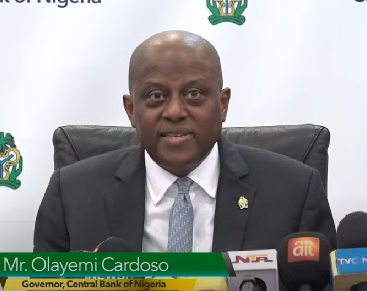
The Nigerian banking sector insiders and owners are jittery following a directive from the Central Bank of Nigeria (CBN) for Directors with non-performing insider loans to step down immediately. “Directors with non-performing inside-related facilities are required to step down immediately, from the board, while the bank should commence immediate remediation of the loans through recovery of the collaterals including the shareholdings of the affected directors,” the CBN said in a letter to all banks seen by MoneyCentral. The CBN in a letter issued to all banks yesterday February 17, 2025 titled ‘Compliance With Insider-Related Credit Limits’ ordered all banks to regularize within 180-days al insider-related facilities above the limits prescribed in Section 19 5) of the Banking and Other Financial Institutions Act (BOFIA) 2020. “Accordingly all affected individual director-related facilities should be brought within the prescribed limit of 5 percent of the bank’s paid-up capital while the aggregate insider facilities for the bank should not exceed the 10 percent paid-up capital limit,” the letter signed by Adetoa Adedeji, Acting Director of Banking Supervision said. “All insider-related loans approved by the CBN with specific timelines must be regularized within the permitted timelines.” The CBN said all banks are expected to comply with the directive effective immediately in adherence to regulatory and sound corporate governance practices. https://moneycentral.com.ng//wp-content/uploads/2024/08/Cardoso-CBN.png https://moneycentral.com.ng/companies/article/cbn-moves-against-bank-owners-directors-orders-those-with-non-performing-insider-loans-to-step-down/ |
| Politics › Re: Tinubu Reforms Driving Foreign Investors’ Confidence As Stocks Rise Yields Drop by MCentral(op): 7:58pm On Feb 17, 2025 |
Salewa97:Getting there gradually |
| Politics › Tinubu Reforms Driving Foreign Investors’ Confidence As Stocks Rise Yields Drop by MCentral(op): 5:59pm On Feb 17, 2025 |
Nigeria is attracting the confidence of foreign investors after painful reforms undertaken by its new President Bola Tinubu, which is helping to push stock prices higher and bond yields lower. “We are bullish on the Nigerian reform story,” analysts at Citigroup Inc. wrote in a note to clients. “The “naira has been stable recently, largely driven by the growing confidence of offshore investors through foreign portfolio investment inflows.” The naira suffered prolonged volatility after President Tinubu eased its peg against the dollar in 2023, alongside other reforms, but has stabilized since December. The naira has held in a narrow range between 1,470 and 1,550 per dollar since early December. Yields on Nigeria’s $1.5 billion eurobond due in 2034 have declined to 9.69%, the lowest since its early December launch. Nigeria’s sovereign risk spread has fallen to the lowest level since January 2020, erasing the premium accumulated during the pandemic and subsequent strain on its economy. The NGX All Share Index is up 4.87% year-to-date. Monthly dollar inflows into Nigeria were at $2.5 billion from foreign portfolio investment, versus the Central Bank of Nigeria’s own supply of $280 million, according to Ayo Salami, chief investment officer at Emerging Markets Investment Management Ltd. in London. Nigerian Central Bank Governor Olayemi Cardoso said last month that exchange-rate reforms that have made the naira more competitive are luring investors. Since the former Citigroup Inc. executive became governor in September 2023, the central bank has increased interest rates by 875 basis points to 27.5% to tame inflation, cleared a foreign-exchange backlog and overhauled the country’s exchange-rate policies. “We’ve found ourselves in a situation where the foreign-exchange rate has adjusted,” Cardoso said. That weakness has presented an opportunity to investors who “want to take advantage” of a currency that has become “a lot more competitive,” he said. https://moneycentral.com.ng//wp-content/uploads/2023/09/President-Tinubu.jpeg https://moneycentral.com.ng/exclusive/article/tinubu-reforms-driving-foreign-investors-confidence-as-stocks-rise-yields-drop/ |
| Business › Recapitalisaton : Access, Zenith Meet Deadline As Fidelity, FCMB Need More Time by MCentral(op): 8:47am On Feb 17, 2025 |
Two of Nigeria’s largest banks, Access Holdings and Zenith Bank, are the first to secure enough fresh capital even as Fidelity Bank, FCMB need to raise more to meet the N500 billion Central Bank of Nigeria (CBN) capital requirement for an international license. This is according to Fitch Ratings in a report on the Nigerian banking sector released Feb. 12. Fitch notes that First HoldCo, United Bank for Africa and Guaranty Trust Holding Company are taking a phased approach after recently raising capital and have received shareholder approval to begin raising more to meet the N500 billion requirement. First HoldCo’s and United Bank for Africa’s recent rights issues are also awaiting final regulatory approval. Tier-2 Lenders Fidelity, FCMB Need to Raise More Capital Fidelity Bank and FCMB Group have completed initial capital raisings but will need to raise more to maintain their international licenses, according to Fitch. “As second-tier banks, they must raise significantly more capital relative to their balance sheets than larger banks. They have extraordinary general meeting approval for this, although they could consider downgrading to a national license as they each have just one foreign subsidiary,” Fitch said. Other smaller banks like Ecobank Nigeria Limited (ENG) and Jaiz Bank needed only small capital injections to meet their requirements and have already achieved compliance. Fitch says Union Bank of Nigeria (UBN), which is also in breach of its 10% Capital Adequacy Ratio (CAR) requirement, and third-tier banks have generally been slower to raise capital. Wema Bank has shareholder approval to raise enough capital to retain its national license and plans to launch the process in April, while Coronation Merchant Bank recently received board approval. In March 2024, the Central Bank of Nigeria announced a significant increase in paid-in capital requirements (share capital plus share premium) for commercial, merchant and non-interest banks. Banks have three ways to comply – through equity injections, M&A and downgrading their licence authorisation. The capital raisings are contributing to a recovery in capitalisation from the impact of naira devaluation, which put pressure on capital ratios and increased US dollar credit concentration risks. https://moneycentral.com.ng//wp-content/uploads/2025/02/Banks-recap.png https://moneycentral.com.ng/exclusive/article/bank-recapitalisaton-update-access-zenith-meet-deadline-as-fidelity-fcmb-need-to-raise-more-capital/ |
| Business › Re: Fitch Keeps Dangote On Rating Watch Negative Over Refinery Debt by MCentral(op): 11:02am On Feb 16, 2025 |
Babangidapikin:Yea Dangote needs to diversify its dollar earnings. Majority of its earnings are for now in naira via Dangote Cement. Dangote Cement is in other countries too in Africa but those plants are mostly making losses. I feel Dangote should get into tech or AI next 1 Like |
| Business › Fitch Keeps Dangote On Rating Watch Negative Over Refinery Debt by MCentral(op): 12:04am On Feb 16, 2025 |
Fitch Ratings has withdrawn Dangote Industries Limited’s (Dangote) National Long-Term Rating and senior unsecured rating of ‘B+(nga)’, while maintaining them on Rating Watch Negative (RWN), over refinancing risk related to loans used to construct its 650,000 barrels per day refinery. “The RWN reflects the uncertainty related to the group’s ability to repay or refinance maturing debt in 2025, with the earliest maturity in February 2025.,” Fitch said in a market update. Fitch said it will no longer provide ratings or analytical coverage for Dangote Industries Limited and has withdrawn them for commercial reasons. Dangote Industries has immediate debt servicing requirements related to the syndicated loan raised to finance the refinery construction within Dangote Petroleum Refinery and Petrochemicals (DPRP), which faced delays and cost overrun. During 9M24, the refinery operated at around 50% of its capacity, leaving EBITDA generation below our previous projections. The company is in talks with its lenders to refinance the debt under new terms, which could include amendment and extension of the overall debt maturities. Dangote Industries Liquidity and Debt Structure Dangote Industries had senior secured syndicated debt of USD2.0 billion at end-2024 (largely due in 2025 and 2026 pre-reprofiling) and a USD1.65 billion loan from its ultimate parent, Greenview plc, classified as on demand debt. The company has also senior unsecured debt to finance capex at various subsidiary levels. Fitch noted that lack of tangible steps to refinance or repay the maturing debt or steps towards refinancing constituting a distressed debt exchange under its rating criteria would lead to negative rating action “We do not expect positive rating action until the company’s liquidity position substantially improves,” Fitch said. https://moneycentral.com.ng//wp-content/uploads/2023/06/Aliko-Dangote.jpg https://moneycentral.com.ng/companies/article/fitch-keeps-dangote-on-rating-watch-negative-over-refinery-debt-refinance-risk-withdraws-all-ratings/ |
| Politics › Nigeria A Top Ten Receiver Of USAID Funds In 2023 As All Staff Placed On Leave by MCentral(op): 11:09am On Feb 05, 2025 |
Nigeria was a top-10 receiver if funds from the United States Agency for International Development or USAID, which is currently under fire from President Trump and his billionaire adviser Elon Musk for waste and inefficiency. USAID funded projects in some 130 countries in fiscal year 2023, the last year for which complete data is available. The top 10 recipients in descending order were Ukraine, Ethiopia, Jordan, the Democratic Republic of Congo, Somalia, Yemen, Afghanistan, Nigeria, South Sudan and Syria. The US is the largest provider of official foreign assistance in the world, spending an estimated $70 billion altogether in fiscal year 2022, the most recent year for which data are available. USAID administers most of that money as the agency responsible for humanitarian and development assistance, which came to roughly $43 billion in fiscal year 2023. It also provides military financing for allies and partners Israel and Taiwan. Aid to support “peace and security” amounted to 18% of the total in fiscal 2022. Meanwhile, all staff of USAID around the world will be placed on administrative leave Friday and ordered to return to the US, according to a directive issued Tuesday night. As of 11:59 p.m. ET Friday, “all USAID direct hire personnel will be placed on administrative leave globally, with the exception of designated personnel responsible for mission-critical functions, core leadership and specially designated programs,” said a statement posted on the USAID website, which is back online after going dark last week. The statement said it is preparing a plan for personnel posted outside the United States “under which the Agency would arrange and pay for return travel to the United States within 30 days” and terminate “contracts that are not determined to be essential.” Trump Pauses Foreign Aid On his first day in office, Trump ordered a 90-day pause on US foreign aid. Secretary of State Marco Rubio issued waivers excepting “life-saving” support and defense assistance to military partners Israel and Egypt. Rubio has told lawmakers he may dissolve USAID as a separate agency. He said some of USAID’s missions and bureaus may be integrated into the State Department and the rest of the agency abolished. The foreign aid freeze reflects long-standing concerns within Trump’s Republican Party, reinforced by his “America First” foreign policy approach, that tax dollars are being frittered away overseas on pointless aid that does nothing to advance US interests. Rubio has repeatedly described USAID as a rogue agency. “Their basic attitude is, ‘We don’t work for anyone. We work for ourselves. No agency of government can tell us what to do,’” he told Fox News. Examples of misspent funds the Trump administration has pointed to include $50 million it says was earmarked for condoms in the Gaza Strip. Money laundering in Nigeria by USAID? Nigerian investigative journalist David Hundeyin has flagged some suspicious expenditures by USAID. which could be linked to money laundering. Since Trump‘s inauguration on January 20, at least $799,000 of US taxpayers money has been paid by USAID to recipients in Nigeria marked “UNDISCLOSED” or “MISCELLANEOUS.” At least $446,000 of these payments to “UNDISCLOSED” recipients in Nigeria was sent across 8 payments between January 29 and January 30, according to Hundeyin. “Meanwhile, you will remember that the US president ordered USAID to halt all payments on January 28. @USAIDNigeria disobeyed a DIRECT INSTRUCTION from the US president and spent the next 24 hours after the instruction furiously shelling out half a million dollars of US taxpayers money to recipients in Nigeria marked “UNDISCLOSED.” I’ll leave the implications of this to you.” In a thread on twitter Hundeyin said: “ Hi @elonmusk, here are some cut-and-dried cases of @USAIDNigeria corruption and money laundering you may want to look into. On January 16, 2025, just 4 days before @realDonaldTrump ‘s inauguration, USAID made a $3.3m payment to a vendor in Nigeria called DAI Global LLC. I looked into the payment history and saw that between August 2020 and January 2025, at least $48 million of US taxpayers’ money supposedly invested in Nigeria went to DAI Globall LLC, registered in Bethesda, Maryland.” “So I looked into @DAIGlobal‘s activities in Nigeria and it turns out to be a run-of-the-mill “Climate NGO” which organises meetings and seminars, and stages photos with politicians, and little else. Yet nearly all of its payments from USAID in Nigeria are labeled “ALL OTHER PROFESSIONAL, SCIENTIFIC, AND TECHNICAL SERVICES.” It last published an output in Nigeria in 2020. So what exactly it has reveived 48 MILLION US DOLLARS for over that period is anyone’s guess. A USAID money laundering partner? CIA front organisation? State department Nigerian slush fund? Perhaps all 3? Who knows?” https://moneycentral.com.ng/wp-content/uploads/2025/02/Rubio.png https://moneycentral.com.ng/markets/article/nigeria-a-top-ten-receiver-of-usaid-funds-in-2023-as-all-staff-placed-on-leave-globally/ |
| Crime › Re: Missing 4-year Old Boy Child In Lagos : Urgent Call For Help by MCentral(op): 9:58am On Feb 04, 2025 |
kingthreat:Good Morning all. This is to inform the public that the little boy has been found in an abandoned building close to NAHCO at Airport, Lagos. The parents are now at the police station. But it is obvious someone took him there because that location is very far from Oshodi were they reside. They are trying to speak to the kid to know if he can identify who kidnapped him and where they kept him if possible. Thank you all. 1 Like |
| Crime › Missing 4-year Old Boy Child In Lagos : Urgent Call For Help by MCentral(op): 11:09am On Feb 03, 2025 |
This is to appeal to the general public over information about a missing 4 year old boy, Williams Micheal in the Oshodi area of Lagos, Nigeria. NAME: Williams Micheal LAST SEEN ON SATURDAY FEB 1st, 2025, AROUND RESIDENCE: No 19 Oseni Ewu Street Arowojobe, Oshodi. ANY INFO PLEASE CALL PHONE: 0806 157 2078 https://moneycentral.com.ng/wp-content/uploads/2025/02/Missing-3.png https://moneycentral.com.ng/wp-content/uploads/2025/02/William-Micheal-1.png https://moneycentral.com.ng/wp-content/uploads/2025/02/William-Micheal-2.png Please mods front page. |
| Romance › Kanye West And Barely Clothed Wife Bianca Censori Leave 2025 Grammy Awards Early by MCentral(op): 4:21am On Feb 03, 2025 |
Kanye West and his wife Bianca Censori were escorted out of the 2025 Grammys Sunday by police after her naked red carpet stunt. The designer, 30, who has previously shocked with risque displays , bared it all in a completely see-through nude mesh dress, worn without underwear – much to the shock of social media and onlookers. Bianca exuded confidence as she headed to the carpet clad in a furry coat, before theatrically dropping the garment and flashing her bare derriere to photographers. She turned around to show off her topless chest and lack of underwear while West – nominated in the Best Rap Song category – leered at her nude body during the incident of indecent exposure. However, it has now been revealed the pair were asked to leave the event after turning up uninvited, and escorted out by cops after their ‘crazy stunt.’ Music industry insiders were also questioning if West’s swift exit was down to his feud with Taylor Swift. He now only follows Swift, 35, on Instagram, 16 years after a feud erupted between the pair when he stormed the stage during her VMAs speech. An insider added to Page Six the pair were ushered out after ‘the crazy outfit moment they pulled on the carpet’ which ‘was an attempt to replicate the album cover of Vultures.’ https://moneycentral.com.ng/wp-content/uploads/2023/08/Kanye-West-Wife.jpg Fans took to social media to brand the display ‘disturbing’ and say Censori should be ‘kicked out’ of the event. One wrote: Bianca Censori needs saved from that man. This is really disturbing A second typed: ‘no way bianca censori just showed up to the grammies like that she is deadass naked Others wrote: ‘it’s shocking but also so sad. that’s someone’s daughter that he’s brainwashed. https://moneycentral.com.ng/lifestyle/article/kanye-west-and-barely-clothed-wife-bianca-censori-leave-2025-grammy-awards-early/ 1 Like |
| Politics › Dangote Refinery Reduces Ex-depot Price Of Petrol To N890 On Lower Oil Prices by MCentral(op): 10:13pm On Feb 01, 2025 |
Dangote Petroleum Refinery has reduced the ex-depot (gantry) price of Premium Motor Spirit (PMS), commonly known as petrol, from N950 to N890, effective from Saturday, 1st February 2025. The Dangote Refinery said the adjustment is a direct response to the positive outlook within the global energy and gas markets, as well as the recent reduction in international crude oil prices. “As part of Dangote Refinery’s unwavering commitment to transparency and fairness, this price revision reflects the ongoing fluctuations in global crude oil markets, as highlighted in the refinery’s statement on 19th January, when a modest increase was implemented due to the previously rising international crude oil prices,” Dangote Refinery said. Dangote Petroleum Refinery firmly believes that this reduction from N950 to N890 will result in a meaningful decrease in the cost of petrol nationwide, thereby driving down the prices of goods and services, as well as the overall cost of living, with a positive ripple effect on various sectors of the economy. In addition, Dangote Petroleum Refinery called on marketers to collaborate in the effort, to ensure that the benefits of reduction in the price of petrol are passed on to the Nigerian populace. “This collective initiative will contribute to the wider economic recovery plan led by His Excellency, President Bola Ahmed Tinubu, who is dedicated to making Nigeria self-sufficient in refined petroleum products and positioning the country as a leading oil export hub,” Dangote Refinery said. https://moneycentral.com.ng/wp-content/uploads/2024/07/Dangote-Refinery-Brazil.jpg https://moneycentral.com.ng/companies/article/dangote-refinery-reduces-ex-depot-price-of-petrol-to-n890-on-lower-oil-prices/ |
| Business › Re: Did Deepseek Steal Openai Data For Its Models? Microsoft Is Investigating by MCentral(op): 3:58pm On Jan 30, 2025 |
ehikwe22:Lols human history didnt start in 1700. Have you heard of Roman empire? Arab slave trade? Mongol invasions and massacres? America were pretty much isolationist for most of their history not until WW1 and WW2. Matter of fact by WW1 the major superpower was the British empire. America was a small fry then |
| Business › Re: Did Deepseek Steal Openai Data For Its Models? Microsoft Is Investigating by MCentral(op): 6:12pm On Jan 29, 2025 |
ehikwe22:What are you yapping about? Who did the USA colonise? If you read the history of the USA well you will see they have been a force for good. If not you will either be speaking German now or be a vassal state of the Ottoman empire. Bothe were destroyed in WW1 and WW2 by the arrival of the Americans into the war. Also the epitome of intellectuality is the USA. Thats why all the major innovation is coming from there, Google, Meta, Microsoft, Nvidia etc 1 Like 1 Share |
| Business › Re: Did Deepseek Steal Openai Data For Its Models? Microsoft Is Investigating by MCentral(op): 6:09pm On Jan 29, 2025 |
MadamExcellency:Very true...especially for high tech products. |
| Business › Re: Did Deepseek Steal Openai Data For Its Models? Microsoft Is Investigating by MCentral(op): 11:21am On Jan 29, 2025 |
Babangidapikin:Please explain... |
| Business › Did Deepseek Steal Openai Data For Its Models? Microsoft Is Investigating by MCentral(op): 10:28am On Jan 29, 2025 |
Microsoft and OpenAI are investigating whether data output from OpenAI’s technology was obtained in an unauthorized manner by a group linked to Chinese artificial intelligence startup DeepSeek, Bloomberg reported. Microsoft’s security researchers in the fall observed individuals they believe may be linked to DeepSeek exfiltrating a large amount of data using the OpenAI application programming interface, or API. David Sacks, President Donald Trump’s artificial intelligence czar, said Tuesday there’s “substantial evidence” that DeepSeek leaned on the output of OpenAI’s models to help develop its own technology. In an interview with Fox News, Sacks described a technique called distillation whereby one AI model uses the outputs of another for training purposes to develop similar capabilities. “There’s substantial evidence that what DeepSeek did here is they distilled knowledge out of OpenAI models and I don’t think OpenAI is very happy about this,” Sacks said. In a statement responding to Sacks’ comments, OpenAI didn’t directly address his comments about DeepSeek. “We know PRC based companies — and others — are constantly trying to distill the models of leading US AI companies,” an OpenAI spokesperson said in the statement, referring to the People’s Republic of China. “As the leading builder of AI, we engage in countermeasures to protect our IP, including a careful process for which frontier capabilities to include in released models, and believe as we go forward that it is critically important that we are working closely with the US government to best protect the most capable models from efforts by adversaries and competitors to take US technology.” DeepSeek earlier this month released a new open-source artificial intelligence model called R1 that can mimic the way humans reason, upending a market dominated by OpenAI and US rivals such as Google and Meta Platforms Inc. The Chinese upstart said R1 rivaled or outperformed leading US developers’ products on a range of industry benchmarks, including for mathematical tasks and general knowledge — and was built for a fraction of the cost. The potential threat to the US firms’ edge in the industry sent technology stocks tied to AI, including Microsoft, Nvidia Corp., Oracle Corp. and Google parent Alphabet Inc., tumbling on Monday, erasing a total of almost $1 trillion in market value. https://moneycentral.com.ng/wp-content/uploads/2021/05/images1.jpg https://moneycentral.com.ng/companies/article/did-deepseek-steal-openai-data-for-its-models-microsoft-is-investigating/ |
| Business › Tony Elumelu, CFR Is Moneycentral’s Corporate Titan Of The Year 2024 by MCentral(op): 7:20am On Dec 24, 2024 |
Billionaire investor and philanthropist Tony Elumelu is MoneyCentral’s Corporate Titan of The Year 2024. Download the PDF Copy by Clicking below: https://moneycentral.com.ng/wp-content/uploads/2024/12/MoneyCentral-for-23rd-December-2024-2.pdf https://moneycentral.com.ng/wp-content/uploads/2024/12/Elumelu-Corporate-Titan.png https://moneycentral.com.ng/companies/article/tony-elumelu-cfr-is-moneycentrals-corporate-titan-of-the-year-2024/ |
| Politics › Chevron Paid $3.16 Billion To FIRS, NUPRC, NNPC As Taxes, Royalties In 2023 by MCentral(op): 3:14pm On Sep 27, 2024 |
Chevron Corp. paid $3.16 billion in taxes, royalties and shared oil production to Nigeria in 2023, according to figures released in a filing Tuesday, seen by MoneyCentral. The receiving agencies include the Federal Inland Revenue Service or FIRS which was paid $792.2 million by Chevron as taxes, the Niger Delta Development Commission which got $49.85 million and N20.89 million for community and social responsibility, and the Nigerian Midstream and Downstream Petroleum Regulatory Authority which received the equivalent of $156.3 million for in-kind oil production entitlements. Other payments made by Chevron include $1.67 billion oil production entitlements to the Nigerian National Petroleum Company Limited, and $462.52 million paid to the Nigerian Upstream Petroleum Regulatory Commission in form of royalties and fees. Some of the projects where the payments came from include the Bayelsa/Natural Gas/Well, Delta/Oil/Natural Gas/Well, Offshore-Gulf of Guinea/Delta/Oil/Natural Gas/Well, and Offshore-Gulf of Guinea/Ondo/Oil/Well, according to Chevron. Chevron revealed the figures for the first time under Section 1504 of the Dodd Frank Act, which was finalized in 2020 and had a publication deadline of this week. https://moneycentral.com.ng/wp-content/uploads/2020/07/Chevron.png https://moneycentral.com.ng/companies/article/chevron-paid-3-16-billion-to-firs-nuprc-nnpc-as-taxes-royalties-in-2023/ |
| Politics › Re: Experts Debunk Dangote Refinery Claims It Supplied NNPC 111m Litres Of Petrol by MCentral(op): 11:27am On Sep 18, 2024 |
Shadomaan7:The truth is that the Refinery is slowly ramping up and has no where near the capacity for PMS claimed for now. It will also not hit full capacity until 2025 year end. |
| Politics › Experts Debunk Dangote Refinery Claims It Supplied NNPC 111m Litres Of Petrol by MCentral(op): 10:58am On Sep 18, 2024 |
Reports that the Dangote Refinery has delivered 111 million litres of petrol within three days (last Sunday to yesterday), to the NNPC has been debunked as impossible by oil industry experts. Speaking to Vanguard, the Group Chief Branding and Communications Officer of Dangote Refinery, Anthony Chiejina, stated: “We have already loaded 111 million litres of petrol and the exercise is ongoing. “We are refining and have no reason not to load. So, loading is ongoing and we will continue to provide the product to the market.” Industry sources however told MoneyCentral that the Dangote brand Manager Chiejina was either misguided or uninformed about gantry loading capacity by trucks. The maximum capacity of Fuel tanker trailers in Nigeria is between 45,000 to 50,000 liters. For the Dangote Refinery to have supplied 111 million liters it means that it: “must have loaded 2,200 trucks with petrol in 3 days or 740 trucks a day with 50,000 litres capacity. That is basically impossible to achieve by road in 3 days,” another oil industry expert said. However, data seen by MoneyCentral shows that the refinery is struggling to deliver the 16.8 million litres it promised to NNPC, and only supplied 5.82 million litres through 130 trucks in 2 days. The data showed that the Gantry Loadings by trucks ex-Dangote Refinery: for Sunday 15/09/24 that NRL loaded 56 trucks equivalent to 2,486,842 litres, while on Monday 16/09/24, NRL loaded 50 trucks, equivalent to 2,221,773 litres, and AYM Shafa loaded 24 trucks equivalent to 1,120,465 litres, making a total of 74 trucks or 3,342,238 litres on Monday. Total loadings for the 2 days were then equivalent to 130 trucks or 5,829,080 litres, barely 5.9% of the 2,200 trucks needed to supply the 111 million litres claimed by the Dangote Refinery spokesman. The industry sources MoneyCentral spoke with said Chiejina needed to come clean to the Nigerian people, adding that the refinery has not supplied up to 111 million liters of petrol to the NNPC. Beyond the lack of capacity utilization at the refinery to produce PMS there is also the lack of a system to evacuate products by vessels or sea which is yet to commence, the sources said. https://moneycentral.com.ng/markets/article/experts-debunk-dangote-refinery-claims-it-supplied-nnpc-111m-litres-of-petrol-say-its-impossible/ https://moneycentral.com.ng/wp-content/uploads/2024/07/Aliko-Dangote-Refinery.jpg |
| Politics › Re: Dangote Refinery Can Meet Only 36% Of Petrol Demand With 90,000 Bpd Output by MCentral(op): 8:49am On Sep 05, 2024 |
derecho:Nigeria received close to 250,000 barrels a day in petrol imports last year, according to data from analytics firm Vortexa Ltd. Thats the data for 2023. If theres no petrol demand growth in 2024 and it stays flat then Dangote Refinery supply will be drop in bucket of demand. At least until 2025 ending. |
| Politics › Dangote Refinery Can Meet Only 36% Of Petrol Demand With 90,000 Bpd Output by MCentral(op): 8:29am On Sep 05, 2024 |
Consulting firm Energy Aspects Ltd is forecasting about 90,000 barrels a day of petrol (PMS) production for the Dangote oil refinery in the fourth quarter of 2024. At full output, the refinery is expected to be able to produce about 330,000 barrels a day (bpd) of petrol (about half of its capacity), according to Randy Hurburun, senior refinery analyst at consultancy Energy Aspects Ltd. The 90,000 bpd output will be equivalent to about 36% of Nigeria’s 2023 demand. Nigeria received close to 250,000 barrels a day in petrol imports last year, according to data from analytics firm Vortexa Ltd. This means the Refinery will not solve the problem of fuel queues currently being experienced in the country. Key to the plant’s gasoline output is a unit called a reformer, which produces blendstock for petrol. That’s started operating, with gasoline production expected to begin by the end of the week, Devakumar Edwin, Dangote Industries Ltd.’s vice president for oil and gas, said. Key to raising output further is another unit called a residue fluid catalytic cracker. The refinery will blend naphtha with reformate from the reformer to make gasoline that’s suitable for the west African market. The President of Dangote Group, Aliko Dangote, this week presented the first sample of Premium Motor Spirit (PMS), commonly known as petrol. Energy Aspects forecasts the refinery could increase petrol output to almost 250,000, but only by the second half of 2025. https://moneycentral.com.ng/companies/article/dangote-refinery-to-meet-only-36-of-nigerias-petrol-demand-as-output-put-at-90000-bpd/ https://moneycentral.com.ng/wp-content/uploads/2024/07/Dangote-Refinery-Brazil.jpg |
| Business › Nestle, Notore, Dangote Sugar Top List Of Firms With Negative Equity by MCentral(op): 9:25am On Aug 14, 2024 |
Ten listed firms including Nestle, Notore Chemicals and Dangote Sugar are technically insolvent as foreign exchange revaluation losses wiped out retained earnings leading to negative shareholder equity. Negative shareholder equity occurs when the company’s liabilities exceed its assets, and in more financial terms, the company’s incurred losses that are greater than the combined value of payments made to shareholders and accumulated earnings from previous periods. This undermines future dividend payment and there are concerns about heightened sell off of shares. https://moneycentral.com.ng/wp-content/uploads/2024/08/Firms-negative-equity.png That’s a double whammy for companies who are reeling from rising input costs, weak consumer demand, and decrepit infrastructure. Of course, the sharp devaluation of the Naira by the central bank led to a rise in the cost of settling foreign currency obligations. Manufacturers import a large chunk of their raw materials, which exposes them to currency risk. Dangote Sugar Refinery (DSR) Plc posted negative shareholders’ funds of (N64.72 billion), the first in its existence as a N193.12 billion foreign exchange revaluation loss tipped the largest producer of the sweetener into N144 billion loss after tax. The largest producer of the sweetener imports 93 percent of raw sugar needed to meet production. FT Cocoa suffered a negative shareholders’ fund of (-N3.51 billion); Nigeria Breweries Plc, (-N21.21 billion); Nestle Nigeria Plc, (N104.85 billion); P Z Cussons Plc, (-N47.16 billion); MTN Nigeria Plc, (N577.74 billion); Notore Chemical (N87.68 billion) Plc; Eterna Oil, (N1.33 billion) Plc, Japaul Paul and Oil Plc (-N397.12 million), RT Briscoe Plc, (N8.73 billion0), and Tourist Company of Nigeria Plc (-N49.91 billion). The currency devaluation and subsidy that balloon inflation rate has dealt a great blow on a fragile economy, which made some companies exit the country. The naira has depreciated against the US dollar by 69.47 percent under the current administration led by President Bola Ahmed Tinubu amid the implementation of foreign exchange reforms. The precarious situation has put the owners of these firms between a rock and a hard place and analysts who spoke to MoneyCentral said the prevailing macro uncertainties means these entities will have to raise capital which will be injected into their businesses to keep them afloat. Notore Chemicals Plc says it is seeking an equity capital injection of up to N106 billion and MTN Nigeria has renegotiated tower lease contracts to help stem impact of the FX lossess on the balance sheet. https://moneycentral.com.ng/exclusive/article/nestle-notore-dangote-sugar-top-list-of-firms-with-negative-equity/ https://moneycentral.com.ng/wp-content/uploads/2023/08/NGX.jpg |
| Politics › Low Refining Margins Is Another Headache For Dangote As Big Profits Fade by MCentral(op): 10:41am On Aug 08, 2024 |
The 650,000 barrels a day Dangote oil refinery will be ramping up just as global refining margins fall from historic highs adding to another layer of uncertainty for the $20 billion project. The refinery has operated at around 50% capacity his year and produced between 325,000 bpd to 375,000 barrels per day (bpd), but the EBITDA contribution from it has been far below analyst’s projection. “The Dangote group’s consolidated EBITDA margin is projected to dilute from 33% in 2023 to 9.1% in 2024 due to the low-margin refinery business, which began operations in February 2024 and poor utilization across the business lines,” Fitch Ratings said in a recent update when it downgraded Dangote Industries Limited (DIL). Earnings from turning crude oil into petroleum products have fallen this year, driving refineries in some parts of the world to cut production. The crack, or margin, for a typical refinery in Singapore processing regional benchmark Dubai crude ended at $3.59 a barrel in July. This is about half of where the profit margin started the year, with a peak so far in 2024 of $9.91 a barrel on Feb. 13. They surged as high as $20.4 between 2019 and 2023. Lackluster demand growth, largely reflecting China’s economic turmoil, and surging global capacity are largely the culprits. Globally, refineries will process about 900,000 barrels a day, more crude this year than they did last, according to International Energy Agency calculations. The refining industry’s problems have shown in company earnings. Chevron Corp. missed estimates largely on weaker refining. France’s TotalEnergies also fell short of estimates as a result of weakness in its refining business. Phillips 66 revised down its estimates for utilization rates and will bring forward planned maintenance. “It’s back to what was normal before all these exceptional years,” Patrick Pouyanne, chief executive officer of TotalEnergies SE, Europe’s largest refiner, said during an earnings call late last month. “Refiners know they have to come back to reality and to deliver good results with lower margins.” https://moneycentral.com.ng/exclusive/article/low-refining-margins-is-another-headache-for-dangote-as-big-profits-fade/ https://moneycentral.com.ng/wp-content/uploads/2024/07/Dangote-Refinery-Brazil.jpg |
| Politics › Sanwo-olu Gifts Voda Infrastructure N79bn Credit Guarantee As Debts Hit N2.7trn by MCentral(op): 10:21am On Aug 08, 2024 |
The Lagos State government under Governor Babajide Sanwo-Olu has provided a N79 billion credit guarantee to a little known Voda Infrastructure Management Limited, a development company appointed by the state to undertake construction of its two projects, The projects include Massey Children Hospital and Opebi Link Bridge. The guarantee is a total of NGN79 billion term loans and bond issuance obtained by Voda for the respective projects from commercial banks and bondholders. The payment obligations (including coupon, principal repayment and other charges) on the loans and bond issue are backed by irrevocable standing payment orders issued by the state as a first-line monthly deduction from its expenditure accounts domiciled with the banks and IGR accounts respectively. It is unclear why Lagos State did not issue the bonds directly and use the proceeds to fund the projects. Voda Infrastructure Management Limited led by CEO Akindeji Akinniranye, was registered some 4-years ago in September 2020, according to CAC data. The Lagos State Government’s gross debt (including contingent liabilities) increased to N2.7 trillion in March 2024, due to adverse exchange rate movement as a high portion of the state’s debt, above 53% is foreign currency (FCY) denominated. Leverage metrics have as such deteriorated and net debt to total income weakened to 1.8x in 2023 (2022: 1.6x), free cash flow (FCF) coverage of gross debt declined to 23% in 2023 from 36% in 2022, and net interest coverage reduced to 4.8x in 2023 from 6.4x in 2022, due to higher finance charge from the elevated debt. Lagos state has an ongoing plan to refinance the foreign currency loans with local debt, “We do not expect this to materialise in the near term as it will have negative consequences on the interest cover and the debt maturity profile,” GCR Ratings said in a note. https://moneycentral.com.ng/moneycentral-west/article/sanwo-olu-gifts-voda-infrastructure-n79bn-credit-guarantee-as-lagos-debts-hit-n2-7trillion/ https://moneycentral.com.ng/wp-content/uploads/2023/07/Babajide-Sanwo-Olu.jpg |
| Politics › Re: Fitch Cuts Dangote On Worsening Liquidity, Possible Default On Refinery Debts by MCentral(op): 10:32pm On Aug 06, 2024 |
Salewa97:We shall see!! |
| Politics › Fitch Cuts Dangote On Worsening Liquidity, Possible Default On Refinery Debts by MCentral(op): 10:41pm On Aug 05, 2024 |
Fitch Ratings has downgraded Dangote Industries Limited (DIL) due to what it says is the significant deterioration in the group’s liquidity position and uncertainty related to its ability to refinance maturing debt related to the syndicated loan raised to finance construction of Dangote Oil Refining Company (DORC). Further delays in meeting the funding requirements would significantly increase the likelihood of financial restructuring or default and lead to further rating downgrade, according to Fitch. “The downgrade reflects significant deterioration in the group’s liquidity position following lower than expected disposal proceeds, operational and financial underperformance compared to our prior expectations, also affected by local currency devaluation, and lack of contracted backup funding to repay its significant debt facilities maturing on 31 August 2024,” Fitch Ratings said in an update released Monday. “We view the lack of DIL’s audited accounts for 2023 as a corporate governance issue.” DIL has immediate debt servicing requirements related to the syndicated loan raised to finance the construction of Dangote Oil Refining Company (DORC). Dangote Refinery has a nominal production capacity of 650,000 barrels per day (bpd) of refined oil products, which will be sold in both the Nigerian domestic and international markets. During the First Half (1H) 2024 the refinery operated at around 50% capacity and produced between 325,000 bpd to 375,000 bpd. “The EBITDA contribution from DORC has been far below our previous projection,” Fitch said. Major currency devaluation in 2023, also caused the Dangote group to record a significant FX loss of N2.7 trillion in 2023 as the company faces a mismatch between USD denominated debt and domestic revenues. Fitch expects the devaluation to continue at a higher pace in 2024 leading to more losses. The group plans to divest a 12.75% stake in DORC in 2024. The group intends to service its significant syndicated loan maturing in August 2024 from the equity divestment. “However, timely divestment and meeting the imminent maturity is highly uncertain in our view,” Fitch said. Fitch expects DIL’s EBITDA margins in cement production to drop further in 2024 following softer retail demand for cement particularly in the Nigerian market as well as limited ability to pass on increased raw material cost to consumers. Fitch downgraded the National Long-Term Rating to ‘B+(nga)’ from ‘AA(nga)’ and senior unsecured debt rating issued by Dangote Industries Funding Plc to ‘B+(nga)’ from ‘AA(nga)’. Fitch has simultaneously placed the ratings on Rating Watch Negative (RWN). The RWN reflects uncertainty related to the group’s ability to refinance maturing debt. https://moneycentral.com.ng/exclusive/article/fitch-cuts-dangote-industries-on-worsening-liquidity-possible-default-on-refinery-debts/ https://moneycentral.com.ng/wp-content/uploads/2023/06/Aliko-Dangote.jpg |
| Politics › Lagos’ N2.1 Trillion Debt To Surge On Naira Devaluation by MCentral(op): 4:25pm On Jul 27, 2024 |
Lagos State has material exposure to foreign exchange (FX) risk as its already huge debt load is set to continue to rise in the medium term as a result of the steep devaluation of the naira. The states external debt with development lenders increased to 54% of Lagos’s direct debt at end-2023 up from 43% at end-2022, due to the fast naira depreciation since June 2023, according to Fitch Ratings. “We expect Lagos’s debt stock to keep increasing, driven by an expected over 1000 NGN/USD exchange rate over our scenarios from 900 NGN/USD at end-2023. Our scenarios consider that Lagos could hit N3 trillion of debt stock by 2026,” Fitch said in a Ratings update. The government of President Bola Tinubu, who completed a year in office on May 29, devalued the naira twice in the past year in a bid to lure investors and restore the currency’s credibility. The naira has already fallen from N951/$ at the end of December 2023 to N1,488/$ at the end of June 2024. Lagos is also exposed to higher interest rates and refinance risk as bond issuances represented 19% of its N2.1 trillion debts at end-2023. Home to 25 million residents, the Internally Generated Revenue (IGR) represented over 70% of Lagos’s N1.19 trillion operating revenue in 2023 and is driven by taxes such as personal income tax (PAYE). Fitch does not view Lagos as reliant on government transfers from the Federal Account Allocation Committee (FAAC), as statutory allocations (excluding VAT) represent less than 10% of Lagos’s operating revenue. Fitch believes that Lagos will more likely absorb possible revenue shocks by reducing its operating margin towards 35%-40% from the average 47% over the past five years. “We expect Lagos’s net adjusted debt to reach N3.6 trillion in 2028 (from N2.1 trillion at end-2023), under a scenario in which the NGN/USD exchange rate remains above 1000,” Fitch said. https://moneycentral.com.ng/markets/article/lagos-n2-1-trillion-debt-to-surge-on-naira-devaluation/ https://moneycentral.com.ng/wp-content/uploads/2024/07/Lagos-2.jpg |
| Politics › Re: Nigeria’s Passport Strength Dropped 13 Spots Since Jonathan Left Office by MCentral(op): 3:10pm On Jul 24, 2024 |
CyrusVI:The ranking, published by London-based immigration consultancy Henley & Partners, uses data from the International Air Transport Association to rank 199 passports’ access to 227 travel destinations. The last time Nigeria passport ranked relatively high was in 2014 when GEJ was in office. Now our passport rank closer to Venezuela and Yemen passports. |


 Blame Emilokan no one expect the rate to go from 500 to 1500. There is a threshold one can absorb especially when you put most of your eggs in one country .. I hope he has learnt a lesson on not just diversifying but spreading tentacles to other robust economies. It could be raining at one end of Lekki link bridge and no rain at the other side.