Rostikol's Posts
Nairaland Forum › Rostikol's Profile › Rostikol's Posts
1 2 3 4 5 6 7 8 ... 32 33 34 35 36 37 38 39 40 (of 51 pages)
 Culture › Re: The Oba Of Benin's Palace Before 1897 British Destruction - PIC by Rostikol(op): 2:55am On Jun 02, 2023*. Modified: 3:17am On Jun 02, 2023 Culture › Re: The Oba Of Benin's Palace Before 1897 British Destruction - PIC by Rostikol(op): 2:55am On Jun 02, 2023*. Modified: 3:17am On Jun 02, 2023 |
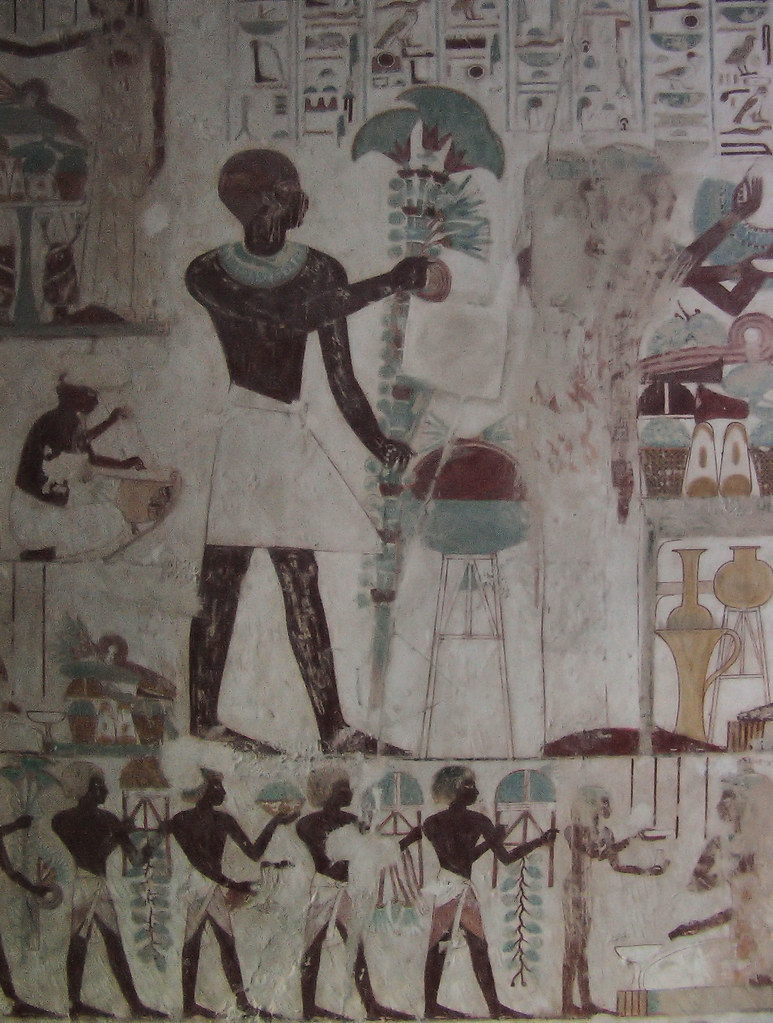
Ogene001:The original ''north Africans'' were BLACK AFRICANS. Tomb Art From Ancient Egypt https://farm1.static.flickr.com/191/444766181_8e1bbee7fb_b.jpg Pharaoh Tutunkhamun https://www.freemaninstitute.com/Gallery/Egyp059_big_copy.jpg https://www.freemaninstitute.com/Gallery/Egyp233_big_copy.jpg |
| Culture › Re: The Oba Of Benin's Palace Before 1897 British Destruction - PIC by Rostikol(op): 2:53am On Jun 02, 2023 |
Eredo Earthworks, near Ijebu, Southwest Nigeria https://i0.wp.com/refinedng.com/wp-content/uploads/2021/07/263947_10150241474093019_4994109_n-1.jpg?resize=756%2C454&ssl=1 ''The fascinating size and construction of Sungbo’s Eredo drew worldwide media attention in 1999 when Dr Patrick Darling, a British Archaeologist surveyed the site and declared his interest to preserve and make it prominent. Before this time, the Eredo was merely known outside the four walls of the Yoruba community. Fast forward to 2017, Olufeko, a Nigerian technologist led a freelance team that brought the location and its narrative back to social dialogue. Today’s Saturday Small Chops captures the sophistication of Sungbo’s Eredo Monument and some interesting facts surrounding it. Second in size only to the Great Wall of China, Sungbo’s Eredo was built between 800-1000 AD, covering 2,500 square miles with more than 500 interconnected communal enclosures. It is located in Ijebu-Ode, Ogun State, Nigeria and served as a system of the defensive wall at a time when Southern Nigeria was faced with political confrontations. The wall also served as means of unifying an area of diverse communities into a single kingdom. Often regarded as the Great Wall of the Yoruba Kingdom, the erection of the monument was partly inspired by the construction of similar walls and ditches in Western Nigeria such as earthworks around Ile-Ife, Ilesha, and the Benin Iya. Most of these walls were manually built without modern construction equipment, showing the complexity of early Nigerian society. The length of the wall consists of a 160-kilometre-long series of ramparts with unusually smooth walls and a bank in the inner side of the ditch. The ditch forms an uneven ring around the ancient Ijebu Kingdom, with the walls flanked by trees and other vegetation, making the ditch a green tunnel. Sungbo’s Eredo site reveals the early engineering innovation of a small indigenous group and captures the legacy, vision and powers of a woman that has stood the test of time.'' |
| Culture › Re: The Oba Of Benin's Palace Before 1897 British Destruction - PIC by Rostikol(op): 2:47am On Jun 02, 2023 |
12 Amazing African Inventions and Innovations That Led To World Civilization 1 Speech The first words by humans were spoken by Africans. ''Using statistical methods to estimate the time required to achieve the current spread and diversity in modern languages today, Johanna Nichols — a linguist at the University of California, Berkeley — argues that vocal language must have arisen in our species at least 100,000 years ago. Using phonemic diversity, a more recent analysis offers directly linguistic support for a similar date. Estimates of this kind are independently supported by genetic, archaeological, palaeontological and much other evidence suggesting that language probably emerged somewhere in sub-Saharan Africa during the Middle Stone Age, roughly contemporaneous with the speciation of Homo sapiens.'' http://en.wikipedia.org/wiki/Origin_of_language 2 Writing In 1999, Archaeology Magazine reported that the earliest Egyptian hieroglyphs date back to 3400 BCE which "...challenge the commonly held belief that early logographs, pictographic symbols representing a specific place, object, or quantity, first evolved into more complex phonetic symbols in Mesopotamia." Who were these original Egyptians? The Greek historian Herodotus.. described the Colchians of the Black Sea shores as "Egyptians by race" and pointed out they had "black skins and kinky hair." Apollodorus, the Greek philosopher, described Egypt as "the country of the black-footed ones" and the Latin historian Ammianus Marcellinus said "the men of Egypt are mostly brown or black with a skinny desiccated look." http://www.bbc.co.uk/worldservice/specials/1624_story_of_africa/page88.shtml In his book 'Egypt', British scholar Sir E.A. Wallis Budge says: "The prehistoric native of Egypt, both in the old and in the new Stone Ages, was African and there is every reason for saying that the earliest settlers came from the South." He further states: "There are many things in the manners and customs and religions of the historic Egyptians that suggests that the original home of their prehistoric ancestors was in a country in the neighborhood of Uganda and Punt [present day Somalia]." https://i.pinimg.com/564x/4a/70/3b/4a703be4f22ca99f45c67e4ba05b3426.jpg ''Greek historian Diodorus Siculus devoted an entire chapter of his world history, the Bibliotheke Historica, or Library of History (Book 3), to the Kushites ["Aithiopians"] of Meroe. Here he repeats the story of their great piety, their high favor with the gods, and adds the fascinating legend that they were.. the founders of Egyptian civilization, invented writing, and had given the Egyptians their religion and culture.'' (1st century B.C., Diodorus Siculus of Sicily, Greek historian and contemporary of Caesar Augustus, Universal History Book III. 2. 4-3. 3) http://wysinger.homestead.com/blackegypt101.html To summarise: "Ancient Egypt was a Negro civilisation. The history of Black Africa will remain suspended in the air and cannot be written correctly until African historians connect it with the history of Egypt. The African historian who evades the problem of Egypt is neither modest nor objective nor unruffled. He is ignorant, cowardly and neurotic. The ancient Egyptians were Negroes. The moral fruit of their civilisation is to be counted among the assets of the Black world." - Cheikh Anta Diop, The African Origin of Civilisation. https://i.pinimg.com/564x/8e/df/df/8edfdfeff02c69723959a961a6b524ea.jpg 3 Medicine ''The earliest known surgery was performed in Egypt around 2750 BC.... The Ebers papyrus (1550 BC) is full of incantations and foul applications meant to turn away disease-causing demons, and also includes 877 prescriptions. It may also contain the earliest documented awareness of tumors.. Homer (800 BC) remarked in the Odyssey: "In Egypt, the men are more skilled in medicine than any of human kind" and "the Egyptians were skilled in medicine more than any other art". The Greek historian Herodotus visited Egypt around 440 BC and wrote extensively of his observations of their medicinal practices. Pliny the Elder also wrote favourably of them in historical review. Hippocrates (the 'father of medicine'), Herophilos, Erasistratus and later Galen studied at the temple of Amenhotep, and acknowledged the contribution of ancient Egyptian medicine to Greek medicine. http://en.wikipedia.org/wiki/Ancient_Egyptian_medicine 4 Architecture The African empire of Egypt developed a vast array of diverse structures and great architectural monuments along the Nile, among the largest and most famous of which are the Great Pyramid of Giza and the Great Sphinx of Giza The pyramids, which were built in the Fourth Dynasty, testify to the power of the pharaonic religion and state. They were built for reasons that remain mysterious to modern knowledge. The size and simple design show the high skill level of African design and engineering on a large scale. The Great Pyramid of Giza, which was probably completed c. 2580 BC, is the oldest and largest of the pyramids, and is the only surviving monument of the Seven Wonders of the Ancient World. The pyramid of Khafre is believed to have been completed around 2532 BC, at the end of Khafre's reign. https://i.pinimg.com/564x/21/32/59/2132596353cacee7484fdef5947cb8df.jpg http://en.wikipedia.org/wiki/Ancient_Egyptian_architecture 5 Mathematics The invention of mathematics is placed firmly in African PRE-HISTORY. ''The oldest known possibly mathematical object is the Lebombo bone, discovered in the Lebombo mountains of Swaziland and dated to approximately 35,000 BC. It consists of 29 distinct notches cut into a baboon's fibula. Also prehistoric artifacts discovered in Africa and France, dated between 35,000 and 20,000 years old [respectively], suggest early attempts to quantify time. The Ishango bone, found near the headwaters of the Nile river (northeastern Congo), may be as much as 20,000 years old and consists of a series of tally marks carved in three columns running the length of the bone. Common interpretations are that the Ishango bone shows either the earliest known demonstration of sequences of prime numbers or a six month lunar calendar. Also, Predynastic Egyptians of the 5th millennium BC pictorially represented geometric designs. http://en.wikipedia.org/wiki/History_of_mathematics#Prehistoric_mathematics ''Numeral systems have been many and diverse, with the first known written numerals created by Egyptians in Middle Kingdom texts such as the Rhind Mathematical Papyrus. The earliest uses of mathematics were in trading, land measurement, painting and weaving patterns and the recording of time. More complex mathematics did not appear until around 3000 BC, when the Egyptians and Babylonians began using arithmetic, algebra and geometry for taxation and other financial calculations, for building and construction, and for astronomy'' http://en.wikipedia.org/wiki/Mathematics 6 Mining of minerals The oldest known mine on archaeological record is the "Lion Cave" in Swaziland, which radiocarbon dating shows to be about 43,000 years old. Much later on, the Africans of Egypt mined malachite....Quarries for turquoise and copper were also found at "Wadi Hamamat, Tura, Aswan and various other Nubian sites"..The gold mines of Nubia were among the largest and most extensive in the world, and are described by the Greek author Diodorus Siculus. He mentions that fire-setting was one method used to break down the hard rock holding the gold. One of the complexes is shown in one of earliest known maps. They crushed the ore and ground it to a fine powder before washing the powder for the gold dust. http://en.wikipedia.org/wiki/Mining#Prehistoric_mining 7 Iron Smelting Iron smelting is a form of extractive metallurgy; its main use is to produce a metal from its ore. This includes production of silver, iron, copper and other base metals from their ores. Smelting uses heat and a chemical reducing agent to decompose the ore, driving off other elements as gasses or slag and leaving just the metal behind. Early iron smelting: ''Where and how iron smelting was discovered is widely debated, and remains uncertain due to the significant lack of production finds.. [but] there is a further possibility of iron smelting and working in West Africa by 1200 BC. In addition, very early instances of carbon steel were found to be in production around 2000 years before the present in northwest Tanzania, based on complex preheating principles. These discoveries are significant for the history of metallurgy.'' http://en.wikipedia.org/wiki/Smelting 8 Religion Greek historian Diodorus Siculus. From his own statements we learn that he traveled in Egypt around 60 BC. His travels in Egypt probably took him as far south as the first Cataract. He wrote about the ''Ethiopians'' south of Egypt. "They further write that it was among them that people were first taught to honour the gods and offer sacrifices and arrange processions and festivals and perform other things by which people honor the divine. For this reason their piety is famous among all men, and the sacrifices among the Aithiopians are believed to be particularly pleasing to the divinity," 9 Laws Stephanus of Byzantium, who is said to represent the opinions of the most ancient Greeks, says: "Ethiopia was the first established country on the earth, and the Ethiopians were the first who introduced the worship of the Gods and who established laws." Quoted by John D. Baldwin, Prehistoric Nations, p. 62. 10 International Trade In 1825, Arnold Hermann Heeren (1760-1842), Professor of History and Politics in the University of Gottengen and one of the ablest of the early exponents of the economic interpretation of history, published, in the fourth and revised edition of his great work Ideen Uber Die Politik, Den Verkehr Und Den Handel Der Vornehmsten Volker Der Alten Weld, a lengthy essay on the history, culture, and commerce of the ancient Ethiopians, which had profound influence on contemporary writers in the conclusion that it was among these ancient Black people of Africa and Asia that international trade was first developed. He thinks that as a by-product of these international contacts there was an exchange of ideas and cultural practices that laid the foundations of the earliest civilizations of the ancient world. Heeren in his researches says: "From the remotest times to the present, the Ethiopians [ancient name for blacks south of the Sahara] have been one of the most celebrated, and yet the most mysterious of nations. In the earliest traditions of nearly all the..civilized nations of antiquity, the name of this distant people is found. The annals of the Egyptian priests are full of them, and the nations of inner Asia, on the Euphrates and Tigris, have interwoven the fictions of the Ethiopians with their traditions of the wars and conquests of their heroes; and, at a period equally remote, they glimmer in Greek mythology. When the Greeks scarcely knew Italy and Sicily by name, the Ethiopians were celebrated in the verses of their poets, and when the faint gleam of tradition and fable gives way to the clear light of history, the lustre of the Ethiopians is not diminished." http://wysinger.homestead.com/blackegypt101.html 11 Philosophy Philosophy is the study of general and fundamental problems, such as those connected with reality, existence, knowledge, values, reason, mind, and language. Philosophy is distinguished from other ways of addressing such problems by its critical, generally systematic approach and its reliance on rational argument. http://en.wikipedia.org/wiki/Philosophy#Ancient_philosophy Philosophy in Africa has a rich and varied history, dating from pre-dynastic Egypt, continuing through the birth of Christianity and Islam. Arguably central to the ancients was the conception of "ma'at", which roughly translated refers to "justice", "truth", or simply "that which is right". One of the earliest works of political philosophy was the Maxims of Ptah-Hotep, which were taught to Egyptian schoolboys for centuries...Ancient Egyptian philosophers made extremely important contributions to Hellenistic philosophy, Christian philosophy, and Islamic philosophy. http://en.wikipedia.org/wiki/African_philosophy ''Ancient Egyptian philosophy has been credited by the ancient Greeks as being the beginning of philosophy''. http://en.wikipedia.org/wiki/Ancient_Egyptian_philosophy 12 Art The oldest art objects in the world—a series of tiny, drilled snail shells about 75,000 years old—were discovered in a South African cave. http://en.wikipedia.org/wiki/Art |
| Culture › Re: The Oba Of Benin's Palace Before 1897 British Destruction - PIC by Rostikol(op): 2:46am On Jun 02, 2023 |
Ogene001:Illiterate. Go to bed. Benin was not involved in the slave trade, and it was banned in the kingdom. 1 Like |
| Culture › Re: The Oba Of Benin's Palace Before 1897 British Destruction - PIC by Rostikol(op): 2:41am On Jun 02, 2023 |
Ogene001:Sure. Go take your medicine. You clearly have mental issues. The names of the actual medieval artists of those images are KNOWN, such as Olfert Dapper, the 16th century Dutch visitor, one of whose drawings of Benin is up there. He wasn't a ''researcher''. He was just a visitor cum trader. |
| Culture › Re: The Oba Of Benin's Palace Before 1897 British Destruction - PIC by Rostikol(op): 2:37am On Jun 02, 2023*. Modified: 4:59am On Jun 02, 2023 |
Ogene001:So, the Europeans went to ancient Benin, and rather than simply draw what they saw, they went somewhere else where someone told them something different from the reality, and they ''painted it to sell?'' Is that what you're saying? And you based this on what you say happened in 1961, roughly 600 years AFTER the period under discussion in ancient Benin. Something is really wrong with your head. Maybe you have mental issues, so I won't attack you much again. |
| Culture › Re: The Oba Of Benin's Palace Before 1897 British Destruction - PIC by Rostikol(op): 2:30am On Jun 02, 2023 |
Ogene001:What ruins? People have built over the entire city and even expanded beyond it since 1897. What ruins do you want to see there, 130 years after? |
| Culture › Re: The Oba Of Benin's Palace Before 1897 British Destruction - PIC by Rostikol(op): 2:28am On Jun 02, 2023 |
Ogene001:Why would they do that when they could simply travel to Benin and draw what they saw there? Or you don't believe Europeans visited Benin? What exactly are you saying? 1 Like |
| Culture › Re: The Oba Of Benin's Palace Before 1897 British Destruction - PIC by Rostikol(op): 2:24am On Jun 02, 2023 |
Ogene001:There were no cameras in the 15th or 16th century, you village illiterate on drugs. They DREW what they saw instead. We are showing you what they DREW, and you're saying they are ''imagined drawings''. Village otondo. 2 Likes |
| Culture › Re: The Oba Of Benin's Palace Before 1897 British Destruction - PIC by Rostikol(op): 2:23am On Jun 02, 2023 |
Ogene001:Village dropout. They are EYEWITNESS DRAWINGS. They are not imagined. You don't come in here and tell lies, okay, you worthless wretch. 1 Like |
| Culture › Re: The Oba Of Benin's Palace Before 1897 British Destruction - PIC by Rostikol(op): 2:21am On Jun 02, 2023 |
TheSourcerer:Thanks.  |
| Culture › Re: The Oba Of Benin's Palace Before 1897 British Destruction - PIC by Rostikol(op): 2:20am On Jun 02, 2023 |
Ogene001:What Benin invented what stories? See me wahala with this mor..on. Can you even read? Of ALL the testimonies and eyewitness accounts and drawings on this thread, NOT ONE was by a person from Benin or even from Nigeria or Africa. All were from EUROPEAN VISITORS TO BENIN! Are you on drugs or something, this guy? |
| Culture › Re: The Oba Of Benin's Palace Before 1897 British Destruction - PIC by Rostikol(op): 2:14am On Jun 02, 2023 |
Ogene001:WHY? Why would EUROPEANS invent fine pictures from thin air, of the same Africans they were enslaving and discriminating against? Why would British newspapers like the Guardian feature the same images? You're just stupid. |
| Culture › Re: The Oba Of Benin's Palace Before 1897 British Destruction - PIC by Rostikol(op): 2:12am On Jun 02, 2023 |
Ogene001:EYEWITNESS PAINTINGS, you village dropout. In those days there was no camera or phone. So you recorded what you saw by DRAWING it. MUMU |
| Culture › Re: The Oba Of Benin's Palace Before 1897 British Destruction - PIC by Rostikol(op): 2:10am On Jun 02, 2023 |
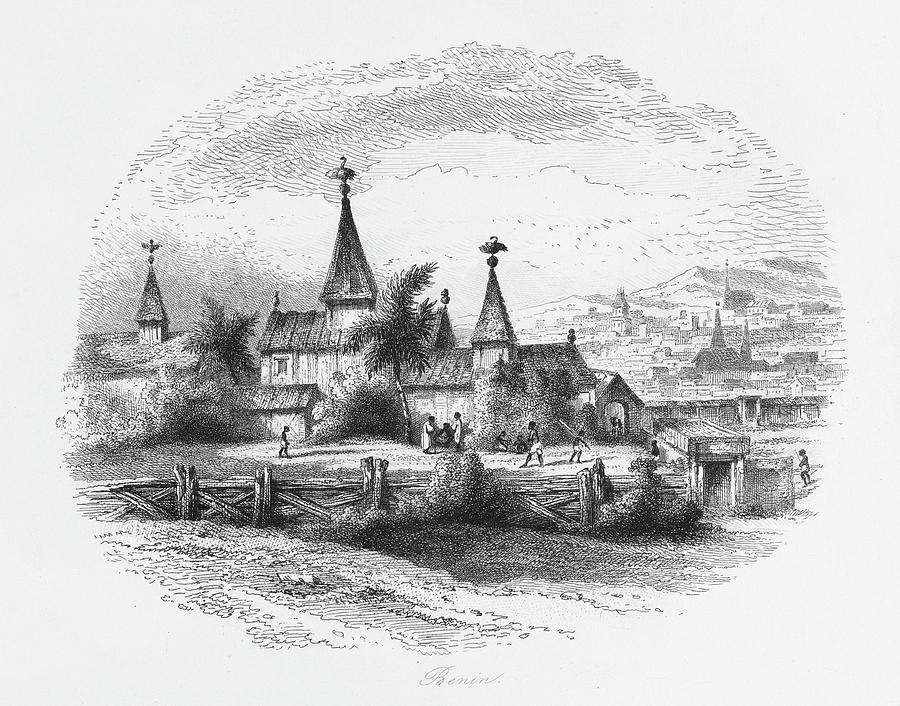
A view of the city of Benin, Nigeria, West Africa, showing numerous multi-storeyed public buildings. Eyewitness drawing from 1846, 50 years before the British invasion. Date 1846 Mary Evans Picture Library by Mary Evans Picture Library https://images.fineartamerica.com/images-medium-large-5/a-view-of-the-city-of-benin-nigeria-mary-evans-picture-library.jpg https://fineartamerica.com/featured/a-view-of-the-city-of-benin-nigeria-mary-evans-picture-library.html 2 Likes |
| Culture › Re: The Oba Of Benin's Palace Before 1897 British Destruction - PIC by Rostikol(op): 2:06am On Jun 02, 2023 |
Ogene001:That is a museum piece showing a small residence made with Benin architecture, you stupid peabrain. That doesn't mean there were no larger buildings in Benin. Damn. You're thick. |
| Culture › Re: The Oba Of Benin's Palace Before 1897 British Destruction - PIC by Rostikol(op): 2:04am On Jun 02, 2023 |
Ogene001:The eyewitness drawings of the whole city with large public buildings you said were the ''imagination'' of the artistes, shows you are an anti-African demonic person that hates his own heritage. You're cursed. Go away. That the British destroyed Benin city does not mean it did not exist, you hear? Agent of colonialists. |
| Culture › Re: The Oba Of Benin's Palace Before 1897 British Destruction - PIC by Rostikol(op): 1:59am On Jun 02, 2023 |
Ogene001:Dummy dum dum. Did the vandals have artillery, bombs, guns and canon in the 3rd Century  ? ?How the hell can you compare destruction of a city in 1897 with bow and arrow and machetes of the 3rd century? Village dropout. Go school you no gree. |
| Culture › Re: The Oba Of Benin's Palace Before 1897 British Destruction - PIC by Rostikol(op): 1:55am On Jun 02, 2023 |
A live size replical of classical Edo Architecture of Great Benin at the museum of traditional Nigerian architecture at Jos, Plateau State, Nigeria. https://i.pinimg.com/736x/b3/09/49/b30949e0858824695b752b357a74c83a.jpg 2 Likes |
| Culture › Re: The Oba Of Benin's Palace Before 1897 British Destruction - PIC by Rostikol(op): 1:46am On Jun 02, 2023 |
Ogene001:But you said it was drawn by someone imagining things that happened several centuries before. You mean to tell us you don't know anything about the artist after all? Can't you see you're a fool? Must be your LOW IQ allied to inferiority complex and low self-esteem. Disgusting, pitiful creature. 2 Likes |
| Culture › Re: The Oba Of Benin's Palace Before 1897 British Destruction - PIC by Rostikol(op): 1:42am On Jun 02, 2023 |
Ogene001:Benin city was invaded, destroyed, bombed and burnt down by British forces in 1897 following a heavy war that killed thousands of Benin people and led to the king being exiled. Are you even aware of that? What the hell do you expect to find in a city that was destroyed by bombs and canon fire over a century ago? 6 Likes 1 Share |
| Culture › Re: The Oba Of Benin's Palace Before 1897 British Destruction - PIC by Rostikol(op): 1:39am On Jun 02, 2023 |
Ogene001:Do you know the name of the drawer? When was it drawn? Tell us. Tell us the year it was drawn and by whom. 1 Like |
| Culture › Re: The Oba Of Benin's Palace Before 1897 British Destruction - PIC by Rostikol(op): 1:37am On Jun 02, 2023 |
Ogene001:VILLAGE DROPOUT. |
| Culture › Re: The Oba Of Benin's Palace Before 1897 British Destruction - PIC by Rostikol(op): 1:31am On Jun 02, 2023 |
Ogene001:Africa owes a village dropout like you absolutely NOTHING. You know NOTHING about the history of Benin. Have never studied it, and you know nothing about the Portuguese who were just one of many nations that traded with Benin. You are a village dunce with no business being on this thread. 5 Likes 1 Share |
| Culture › Re: The Oba Of Benin's Palace Before 1897 British Destruction - PIC by Rostikol(op): 1:29am On Jun 02, 2023 |
Ogene001:No it is not, you air head. If I sit down across you and draw your ugly face, am I just imagining your ugly face or am I drawing your ugly face based on my observation? Village mumu. 1 Like |
| Culture › Re: The Oba Of Benin's Palace Before 1897 British Destruction - PIC by Rostikol(op): 1:24am On Jun 02, 2023 |
Ogene001:Even the English you're speaking, you're hopeless in. ''only show Imagine scenes on 15th century'' Pitifully uneducated village dunce. ''Imagined'' by whom, when, and why, please? Frigging moro.n. 1 Like |
| Culture › Re: The Oba Of Benin's Palace Before 1897 British Destruction - PIC by Rostikol(op): 12:49am On Jun 02, 2023 |
Ogene001:Can somebody please remove this blasted illiterate from this thread? What a sad testament to how terribly our education system has deteriorated. I heard they stopped teaching History in schools for some years now. That's why we have this embarrassing caricature of an African disgracing himself here. How brainwashed to self-hatred can you be to the point where even the colonialists' own media are reporting to you about your advanced pre-colonial civilization, and you're REJECTING it, saying ''No. My ancestors were not civilized, but primitive''? I mean, it's just incredibly tragic the deep level of inferiority complex to which our people have sunk. It's actually alarming. 3 Likes 1 Share |
| Culture › Re: The Oba Of Benin's Palace Before 1897 British Destruction - PIC by Rostikol(op): 12:27am On Jun 02, 2023 |
The city was split into 11 divisions, each a smaller replication of the king’s court, comprising a sprawling series of compounds containing accommodation, workshops and public buildings – interconnected by innumerable doors and passageways, all richly decorated with the art that made Benin famous. The city was literally covered in it. The exterior walls of the courts and compounds were decorated with horizontal ridge designs (agben) and clay carvings portraying animals, warriors and other symbols of power – the carvings would create contrasting patterns in the strong sunlight. Natural objects (pebbles or pieces of mica) were also pressed into the wet clay, while in the palaces, pillars were covered with bronze plaques illustrating the victories and deeds of former kings and nobles. At the height of its greatness in the 12th century – well before the start of the European Renaissance – the kings and nobles of Benin City patronised craftsmen and lavished them with gifts and wealth, in return for their depiction of the kings’ and dignitaries’ great exploits in intricate bronze sculptures. “These works from Benin are equal to the very finest examples of European casting technique,” [/b]wrote Professor Felix von Luschan, formerly of the Berlin Ethnological Museum. [b]“Benvenuto Celini could not have cast them better, nor could anyone else before or after him. Technically, these bronzes represent the very highest possible achievement.” What impressed the first visiting Europeans most was the wealth, artistic beauty and magnificence of the city. Immediately European nations saw the opportunity to develop trade with the wealthy kingdom, importing ivory, palm oil and pepper – and exporting guns. At the beginning of the 16th century, word quickly spread around Europe about the beautiful African city, and new visitors flocked in from all parts of Europe, with ever glowing testimonies, recorded in numerous voyage notes and illustrations. Lost world Now, however, the great Benin City is lost to history. Its decline began in the 15th century, sparked by internal conflicts linked to the increasing European intrusion and slavery trade at the borders of the Benin empire. Then in 1897, the city was destroyed by British soldiers – looted, blown up and burnt to the ground.... Nowadays, while a modern Benin City has risen on the same plain, the ruins of its former, grander namesake are not mentioned in any tourist guidebook to the area. They have not been preserved, nor has a miniature city or touristic replica been made to keep alive the memory of this great ancient city. A house composed of a courtyard in Obasagbon, known as Chief Enogie Aikoriogie’s house – probably built in the second half of the 19th century – is considered the only vestige that survives from Benin City. The house possesses features that match the horizontally fluted walls, pillars, central impluvium and carved decorations observed in the architecture of ancient Benin. https://www.theguardian.com/cities/2016/mar/18/story-of-cities-5-benin-city-edo-nigeria-mighty-medieval-capital-lost-without-trace 1 Like |
| Culture › Re: The Oba Of Benin's Palace Before 1897 British Destruction - PIC by Rostikol(op): 12:26am On Jun 02, 2023 |
UK Guardian Report on Ancient Benin Benin City was also one of the first cities to have a semblance of street lighting. Huge metal lamps, many feet high, were built and placed around the city, especially near the king’s palace. Fuelled by palm oil, their burning wicks were lit at night to provide illumination for traffic to and from the palace. When the Portuguese first “discovered” the city in 1485, they were stunned to find this vast kingdom made of hundreds of interlocked cities and villages in the middle of the African jungle. They called it the “Great City of Benin”... Indeed, they classified Benin City as one of the most beautiful and best planned cities in the world. In 1691, the Portuguese ship captain Lourenco Pinto observed: “Great Benin, where the king resides, is larger than Lisbon; all the streets run straight and as far as the eye can see. The houses are large, especially that of the king, which is richly decorated and has fine columns. The city is wealthy and industrious. It is so well governed that theft is unknown and the people live in such security that they have no doors to their houses.” In contrast, London at the same time is described by Bruce Holsinger, professor of English at the University of Virginia, as being a city of “thievery, prostitution, murder, bribery and a thriving black market made the medieval city ripe for exploitation by those with a skill for the quick blade or picking a pocket”. African fractals Benin City’s planning and design was done according to careful rules of symmetry, proportionality and repetition now known as fractal design. The mathematician Ron Eglash, author of African Fractals – which examines the patterns underpinning architecture, art and design in many parts of Africa – notes that the city and its surrounding villages were purposely laid out to form perfect fractals, with similar shapes repeated in the rooms of each house, and the house itself, and the clusters of houses in the village in mathematically predictable patterns. As he puts it: “When Europeans first came to Africa, they considered the architecture very disorganised and thus primitive. It never occurred to them that the Africans might have been using a form of mathematics that they hadn’t even discovered yet.” At the centre of the city stood the king’s court, from which extended 30 very straight, broad streets, each about 120-ft wide. These main streets, which ran at right angles to each other, had underground drainage made of a sunken impluvium with an outlet to carry away storm water. Many narrower side and intersecting streets extended off them. .. “Houses are built alongside the streets in good order, the one close to the other,” writes the 17th-century Dutch visitor Olfert Dapper. “Adorned with gables and steps … they are usually broad with long galleries inside, especially so in the case of the houses of the nobility, and divided into many rooms which are separated by walls made of red clay, very well erected.” Dapper adds that wealthy residents kept these walls “as shiny and smooth by washing and rubbing as any wall in Holland can be made with chalk, and they are like mirrors. The upper storeys are made of the same sort of clay. Moreover, every house is provided with a well for the supply of fresh water”. Family houses were divided into three sections: the central part was the husband’s quarters, looking towards the road; to the left the wives’ quarters (oderie), and to the right the young men’s quarters (yekogbe). Daily street life in Benin City might have consisted of large crowds going though even larger streets, with people colourfully dressed – some in white, others in yellow, blue or green – and the city captains acting as judges to resolve lawsuits, moderating debates in the numerous galleries, and arbitrating petty conflicts in the markets. The early foreign explorers’ descriptions of Benin City portrayed it as a place free of crime and hunger, with large streets and houses kept clean; a city filled with courteous, honest people, and run by a centralised and highly sophisticated bureaucracy. ctd.. 3 Likes |
| Culture › Re: The Oba Of Benin's Palace Before 1897 British Destruction - PIC by Rostikol(op): 12:21am On Jun 02, 2023 |
15th century drawing of Benin City by ancient Dutch Visitors https://pbs.twimg.com/media/EsXcvF1W4AMtd0K.jpg 2 Likes 1 Share |
| Culture › Re: The Oba Of Benin's Palace Before 1897 British Destruction - PIC by Rostikol(op): 12:16am On Jun 02, 2023*. Modified: 12:48am On Jun 02, 2023 |
Ogene001:Ignorant, dumb airhead. So the Guardian UK just invented the entire article? Have you read a single foreign eyewitness account of Benin? You're just an uneducated dunce who came here to stink out the place with his bone-headed ignorance and inferiority complex. Get out of here. Animal. 5 Likes 2 Shares |
| Culture › Re: The Oba Of Benin's Palace Before 1897 British Destruction - PIC by Rostikol(op): 12:14am On Jun 02, 2023 |
Ogene001:You're very ignorant and stupid. The artwork is based on historical eyewitness accounts, archaeological evidence, and actual observation of the Benin moat which is is STILL IN EXISTENCE TODAY, YOU BLASTED MOR.O.N. Get lost. If you want go see the devastated palace remains, go on Google and see it. 7 Likes 3 Shares |






1 2 3 4 5 6 7 8 ... 32 33 34 35 36 37 38 39 40 (of 51 pages)