Rostikol's Posts
Nairaland Forum › Rostikol's Profile › Rostikol's Posts
1 2 3 4 5 6 7 8 ... 33 34 35 36 37 38 39 40 41 (of 51 pages)
 Culture › Re: The Oba Of Benin's Palace Before 1897 British Destruction - PIC by Rostikol(op): 12:09am On Jun 02, 2023 Culture › Re: The Oba Of Benin's Palace Before 1897 British Destruction - PIC by Rostikol(op): 12:09am On Jun 02, 2023 |
Ogene001:Ignorant airhead. If you don't know something, ASK, instead of typing ignorant rubbish. ''The Guinness Book of Records (1974 edition) described the walls of Benin City and its surrounding kingdom as the world’s largest earthworks carried out prior to the mechanical era. According to estimates by the New Scientist’s Fred Pearce, Benin City’s walls were at one point “four times longer than the Great Wall of China, and consumed a hundred times more material than the Great Pyramid of Cheops”. Situated on a plain, Benin City was enclosed by massive walls in the south and deep ditches in the north. Beyond the city walls, numerous further walls were erected that separated the surroundings of the capital into around 500 distinct villages. Pearce writes that these walls “extended for some 16,000 km in all, in a mosaic of more than 500 interconnected settlement boundaries. They covered 6,500 sq km and were all dug by the Edo people … They took an estimated 150 million hours ... to construct, and are perhaps the largest single archaeological phenomenon on the planet”. https://www.theguardian.com/cities/2016/mar/18/story-of-cities-5-benin-city-edo-nigeria-mighty-medieval-capital-lost-without-trace 5 Likes 2 Shares |
| Culture › Re: The Oba Of Benin's Palace Before 1897 British Destruction - PIC by Rostikol(op): 12:07am On Jun 02, 2023 |
Ogene001:Why are you posting this? This thread is about Benin. We're not here to discuss the Oyo Empire, so kindly get lost. 9 Likes 2 Shares |
| Culture › Re: The Oba Of Benin's Palace Before 1897 British Destruction - PIC by Rostikol(op): 12:01am On Jun 02, 2023 |
The Benin Earthworks, described as the world's largest archaeological phenomenon, built with more material than was used to build the Pyramid of Giza in Egypt. https://pbs.twimg.com/media/E6NCv2KXEAQMtzh.jpg 6 Likes |
| Culture › Re: The Oba Of Benin's Palace Before 1897 British Destruction - PIC by Rostikol(op): 11:56pm On Jun 01, 2023 |
Ogene001:It is not imagined. There are historical accounts of this. Plus there are remnants of the structure still standing today. Go on Google Earth and check out the Oba's palace. You will see it. 1 Like |
| Culture › Re: The Oba Of Benin's Palace Before 1897 British Destruction - PIC by Rostikol(op): 11:31pm On Jun 01, 2023*. Modified: 12:04am On Jun 02, 2023 |
Gbogbowa:No religion can prevent an invader with guns and bombs destroying his target. What was the 'juju' supposed to do? Turn the British bombs to ice cream? 6 Likes |
| Culture › Re: The Oba Of Benin's Palace Before 1897 British Destruction - PIC by Rostikol(op): 11:14pm On Jun 01, 2023*. Modified: 12:45am On Jun 02, 2023 |
olisaEze:If you had a working brain, you would know that it was the invading looters that led to our people ''reasoning'' the way they reason today. The people of Benin at that time were not mentally colonised christians and muslims speaking English and forming accent and greedy for money like you, bleaching your skins, straightening your hair and all sorts of rubbish you do today, having lost your moral values and sense of self-worth. So do not say that they should have been invaded just because of the way YOU are today. YOU are a product of the policy of those invaders. That is why you hate yourselves and don't even believe you are the equal of others on Earth. The invaders deliberately messed up your heads big time. You're totally different from the ancient people of Benin. In fact the way you people are today, they would struggle to believe that you are actually their descendants. Do you know that the people then built houses with no front doors? EVEN THE RICHEST PEOPLE with the BIGGEST houses. No front door. There was no need, because the idea that a person would enter your house to steal was unheard of. It just wasn't done. And not just in Benin. EVERYWHERE in what we call Nigeria today. If you don't know, go to your village and ask the elders. They will confirm it instantly. You are a totally different, lost generation, with your useless imported christian and muslim religions that allow you to be greedy, wicked criminals while pretending to be pious and godly. Now with your foreign imported garbage religions, armed robbery, corruption, kidnapping, terrorism, bigotry, fraud and other ills, are the order of the day. Una continue. Don't return to your roots. Shebi oyinbo don brainwash una say una roots dey inferior? After burning down your cities and looting your treasures, they gave you an invented white fool to worship as your ''saviour'' (Mental conditioning 101. White man becomes your god, leading to extreme racial inferiority complex and playing second fiddle to them - happily) KAI. INSULT. Tufiakwa. NSO ANI (Abomination) Useless idiots. Don't wake up. 10 Likes 1 Share |
| Culture › Re: The Oba Of Benin's Palace Before 1897 British Destruction - PIC by Rostikol(op): 10:59pm On Jun 01, 2023 |
16th Century Account of the Economy, Tax System, Business Structure and Practices of the Ancient Benin The Benin Kingdom was one of most developed states in Africa in ancient times until it was annexed by the British Empire in 1897. Founded around 1180 C.E, the people of Benin Kingdom built an advanced society and city so advanced that European historians compared it to Amsterdam in Europe. One of such descriptions: “When you go into it you enter a great broad street, which is not paved, and seems to be seven or eight times greater than Warmoes Street in Amsterdam. This street is straight, and does not bend at any point. It is thought to be 4 miles long,” ..was published by Olfert Dapper in his book Description of Africa (Naukeurige Beschrijvinge der Afrikaensche Gewesten or “Accurate Descriptions of the African Regions”) of 1668. The description from Van Nyendael’s letter and those of others who wrote about the kingdom gave an insight to their level of industrialization, tax system, business structure and business practices of the people. The industries Similar to present day Nigeria, Agriculture was one of the main industries in the kingdom and land was held by the Oba on behalf of the people. In abundance, the people produced both food and cash crops for domestic use and for export. They cultivated palm fruit, cotton, yam, maize and raised cattle and poultry. “There was a prodigious abundant Plenty of yams; which is also their most ready diet. They eat them with all manner of Edibles. Yam was so important that it was careful planted and gathered in its proper Season,” wrote Van Nyendael in his letter. He wrote that maize was also farmed in abundance and was cheaper in Benin compared to Europe because maize plants in Benin produced prodigious quantity of grain and the locals don’t consume it that much. He wrote that he never saw any rice despite seeing plenty of good swampy lands fit for rice farming. Unlike in present day Benin city and environs that made up ancient Benin, there were abundance of horses and cows in the ancient kingdom. Van Nyendael wrote, “here is no want of tame Beasts, such as Horses, Cows, Sheep, Dogs, Cats, besides Poultry, all which are equally good and cheap. The Cattle here, tho’ very small, are yet very good, especially that part of them that are edible with us, which are of good taste.” This invalidates the present day notion that only the Fulanis from Northern Nigerian traditionally raised cattle in Nigeria. There were not much fishes in the rivers around Benin city and the fish that were consumed were brought in from the Mouth of the Sea down River Benin. Agro Processing After Agriculture, the Agro processing was the next biggest industry. Before the coming of Europeans, the people of Benin were already processing palm wine, palm oil, palm kernel oil, soap, and lot more from palm tree. They produced palm kernel oil for hair and other use by roasting kernels of palm nuts. They made the best soaps in the whole of west Africa from palm oil as observed by Van Nyendael: “The Negroes here make Soap, which is better than any all over Guinea: and by reason this washes very well, the Negroes cloths are very clean. You know it is made upon the Gold-Coast with palm oil, banana leaves and the ashes of a sort of wood. The manner of making it here differs very little.” They produced wine from palm tree and women from the town then called Ardra brewed beer from maize. Textile and Dye Industry The textile industry in Ancient Benin was huge and advanced with a large part concentrated in Esan (Ishan) towns, a region known for a species of cotton called the “Ishan Cotton” (G. vitifolium). The production of cloth was widespread, and cotton growing and weaving were practiced extensively throughout the kingdom. Weaving was generally done by women in their spare time. Their cloth was not only for personal use, but for long-distance trade with other African societies, thousands of such cloths being shipped annually by the middle of the 17th century. This may have given women greater status in Benin society. Van Nyendael wrote, “that a prodigious quantity of cotton trees grow here, you may reasonably conjecture, when I tell you, that not only ail the Inhabitants are clothed with it, but they annually export thousands of woven cloth to other places” Samuel Brun, visiting in about 1614, noted that the kingdom of Benin made “very beautiful cloths, which are exported far and wide and sold”. The people also made colourful cloths using dyes. As Van Nyendael wrote, “The Inhabitants are very well skilled in making several sorts of Dyes, as Green, Blue, Black, Red and Yellow. The Blew they prepare from Indigo, which grows here abundantly; but the remaining colours are extracted from certain trees by Friction and Decoction.” Bronze Casting Industry The people of Benin were very skilled in Bronze casting. They used the lost wax process (cire perdue) for bronze production. Beeswax is modeled over a clay core, covered by an outer layer of clay, banded and dried, with muddy clay washes that fill cracks and cover the bands. The wax is melted and replaced by molten metal. Cooled, the outer clay is chipped away and the carbonized core reamed out, with the casting filed and chased. The last bellows driven furnace, with pieces of car inner tubes attached to poles pumped by human sweat. They bronze and brass goods like rings, bracelets, pendants. Many of the goods that were made were used in the export economy. The Oba of Benin however was the major consumer of Benin Bronze. Bronze is made from copper, a metal scarce enough in Benin Kingdom to be used as a currency. Copper used in Benin was imported from far countries in the form of bracelets called ‘Manillas’. These were made in the modern Holland, traded throughout West Africa as a kind of currency, and melted down by the brass workers of Benin. Bronze artwork casting was a secret trade and casting was done within palace walls of the Oba to ensure secrecy. Casters were rewarded with food, land, and maybe even wives plus the metal for casting. Although West Africans invented the smelting of copper and zinc ores and the casting of brass at least as long ago as the 10th century, they themselves did not produce enough metal to supply the casting industry of Benin city, which was used to decorate the Oba’s palace. Today, more than 2,734 of these artworks are scattered all over the world. Trade and Taxes Trade in kingdom was advanced and the people were great traders. They had had a well-established commercial and foreign relations and contact with the Mediterranean for at least 1,500 years before the Europeans arrived on the coast of West Africa. Trade with Europe was considerable. For instance, just one Dutch ship, the Olyphant, delivered 88,235 lbs of ivory and 1,337 lbs of pepper from the kingdom of Benin to the Netherlands in 1630. According to Van Nyendael, slave trade was not allowed in the city of Benin: “All Male Slaves here are Foreigners; for the Natives cannot be sold for Slaves, but are all free, and alone bear the name of the King’s slaves. Nor is it allowed to export any Male Slaves that are sold in this country, for they must stay there: But females may be dealt with at every one’s Pleasure.” Cowrie shells (Bojis) and other currencies like Manillas were used for trade and these Manillas were part of an international trading relationship. The Oba made huge revenues from his territories which are paid through the Enogies (Dukes) of Benin Kingdom and the kings of conquered territory. The leaders each knows how many Bags of Bojis he must annually raise to the King. Annual taxes for the privilege of commerce in the kingdom are paid to the Enogies so also are daily tolls and duties on foreign trades. Europeans are made pay to Customs duties on goods thy bring into Benin to the Special merchants. The king takes only a sixth of the annual provincial tax. The commoners, instead of money, delivered to the King bulls, cows, sheep, chickens, yams, palm oil and cloths. The surplus is sold the money put in the coffers. Theses tax, toll and tributes was one aspect of the economic support for both the local and central government in the kingdom of Benin. Van Nyendael wrote, “duties or Tolls on imported and exported Wares are not paid here; but everyone pays a certain Sum annually to the Governor of the Place where he lives, for the Liberty of Trading. The Viceroy sends part of it to the King; so that his Revenue being determined and settled, he can easily compute what he hath to expect annually.” Occupation and Social Welfare The Oba, the Palace Chiefs, and the Enogies, were responsible for state affairs, ranging legal, political, religious, diplomatic, security, and trade. The Edioweres (Head of Streets) and lesser office holders appointed by the Oba handled daily bureaucratic and local functions concerning commoners. These elites like in most societies have people who work for them, theses include their wives, children and slaves. Van Nyendael observed that, “there are several very rich men who live here, and attend continually at Court, not troubling themselves with either trade or agriculture, or anything else, but leaving all their affairs to their wives and slaves, who go to all the circumjacent villages to trade in all sorts of Merchandizes, or otherwise serve for daily wages, and are obliged to bring the greatest part of their gain in trade or hire to their masters.” There was the eminent class of workers who engage in very skill works. They operated in a guild system and all offered special services to the Oba and the kingdom. In return for their services, each guild was given a monopoly in its particular trade or craft. “The Handicrafts keep to their Work, without troubling themselves with the court or trade. others employ themselves in Agriculture, or some such thing, in order to get their Living.” Van Nyendael noted. There were the carpenters (Owinna, Onwina) wood and ivory carvers (Igbesanmwan), leather workers (Esohian), weavers (Owinnanido, Onwinan’Ido), pottery makers (Emakhe), iron smiths (Uleme) and brass smiths (Igun-eronmwon), etc. Another set of class of workers who gain eminence are the trade brokers who were appointed by the government to carryout trade with Europeans on behalf of the Oba because they spoke Portuguese. However, these merchants trade on borrowed capital. According to Van Nyendael, “The ordinary citizens is to loiter about whole days, till they hear of any ships being come into the river, upon which they go thither to trade with what goods they have in store: and if no ships come, they send their slaves to Rio Lagos, or other Places to buy fish, of which they make a very profitable Trade further in-land.” Women in the kingdom were very industrious and do most of the farming, cotton spinning, cloth making, Palm oil production, soap making. Most of the women were also traders trading cloths, palm oil, soaps and other products they produce mainly in markets places within their towns and those nearby. This may have given women greater status in Benin society. ''The Welfare welfare system instituted is impressive, the Oba, the Chiefs, Enogies, and all the Edioweres who are but indifferently rich subsist several Poor at their Place of Residence on their Charity, employing those who are fit for any Work, in order to help them to a Maintenance.'' ''Necessities are commonly and frequently distributed to the poor. This policy succeeded so well, that there are were no beggars or many remarkably poor people among them.'' Business Culture The people of Benin were very social, civil, conversable and very diplomatic. They dressed very neat and dresses elegantly in white cloths when they appear in public. As Van Nyendael wrote, “the Inhabitants of Great Benin are generally good-natured and very civil, from whom it is easy to obtain whatever we desire by soft means. If we make them liberal Presents, they will endeavour to recompense them doubly.” “The Habit of the Negroes here is neat, ornamental and much more magnificent than that of the Negroes of the Gold-Coast. The Rich amongst them wear first a white Calico or Cotton Cloth about One-Yard-long, and half so broad, which serves them as Drawers; over that they wear a finer white Cotton dress…there are their cloths in which they appear abroad; but at home they wear only a course Paan instead of Drawers, covered with a great painted Cloth woven here, which they wear like a Cloak.” They went as afar has to learn Portuguese which put them at advantage and helped control trade with Europe in that region of Africa. In 1553 Oba Esigie read and spoke Portuguese which he learnt as a child. In this year, an English merchant, Thomas Wyndham, was received by the Oba, who conducted trading negotiations with him in person, a practice common in the 16th century and confirmed by Portuguese reports. The people of Benin were very good in business and conducted it with integrity, one that amazed European traders that Van Nyendael had to write about it: “they are very prompt in Business, and will not suffer any of their ancient Customs to be abolished; in which, if we comply with them, they are very easy to deal with, and will not be wanting in anything on their part requisite to a good Agreement.” “Another inconvenience, which really deserves Complaint, is, that at our Arrival here, we are obliged to trust them with Goods to make Panes or Cloths of; for the Payment of which we frequently stay so long, that by reason of the advancement of the season, the consumption of our provisions, and the sickness or mortality of our men, we are obliged to depart without our Money: but on the other hand, the next time we come hither, we are sure to be honestly paid the Whole.” ... A CIVILIZED PEOPLE INDEED WERE WE. 10 Likes 4 Shares |
| Culture › Re: The Oba Of Benin's Palace Before 1897 British Destruction - PIC by Rostikol(op): 10:38pm On Jun 01, 2023 |
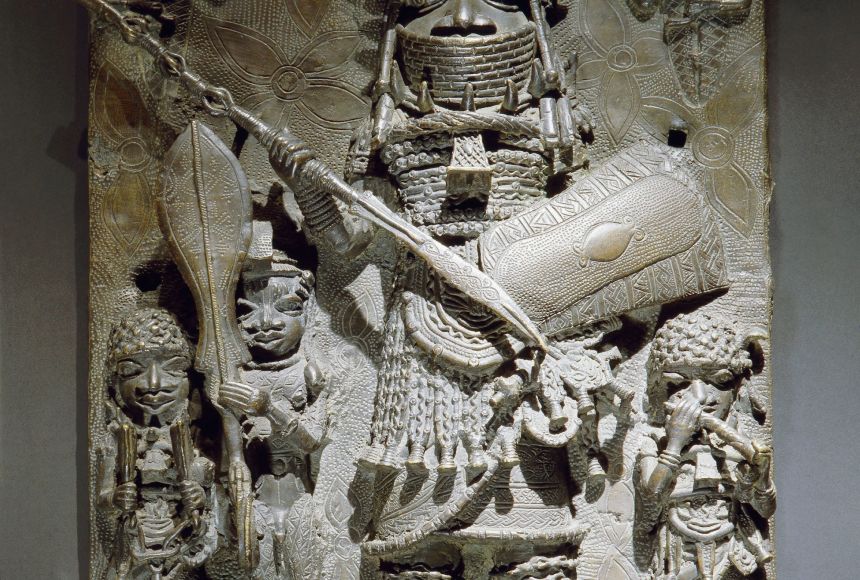
The magnificent Benin Bronzes. The British looted the palace of thousands of these bronze treasures which are now scattered in museums across Europe and America, commanding prices that range in the millions of dollars. https://images.nationalgeographic.org/image/upload/t_edhub_resource_key_image/v1638892305/EducationHub/photos/bas-relief-of-an-oba.jpg 7 Likes 2 Shares |
| Culture › Re: The Oba Of Benin's Palace Before 1897 British Destruction - PIC by Rostikol(op): 10:33pm On Jun 01, 2023 |
Kenneth4u205:Please sir, what has this got to do with Tinubu? 19 Likes 2 Shares |
| Culture › Re: The Oba Of Benin's Palace Before 1897 British Destruction - PIC by Rostikol(op): 10:24pm On Jun 01, 2023 |
Several PYRAMIDS actually stood in the palace https://i.pinimg.com/564x/9c/e2/36/9ce236985be6d00946b183deaaa7f398.jpg 3 Likes 3 Shares |
| Culture › Re: The Oba Of Benin's Palace Before 1897 British Destruction - PIC by Rostikol(op): 10:21pm On Jun 01, 2023 |
5 Likes 1 Share |
| Culture › The Oba Of Benin's Palace Before 1897 British Destruction - PIC by Rostikol(op): 10:18pm On Jun 01, 2023*. Modified: 11:09pm On Jun 01, 2023 |
This is the palace of the Oba of Benin before its destruction by British forces in 1897. The palace was built in the 13th century. It shows the traditional Benin Ikun courtyard architecture. There were a total of 209 Ikuns at the palace. The picture shows about 24, which shows you how huge the palace was. I actually checked Google Earth to investigate this, and you can see on Google Earth that the new, modern palace is there which everyone can see from the road. But on Google Earth, looking from above, you can see the interior of the palace compound, and you will STILL SEE remnants of this building, several Ikuns - around 10 or so behind the current palace. Benin city of course was described by visiting Europeans as one of the most beautiful and best planned cities on Earth, with street lighting (from palm oil fuelled steel lamps) and underground drainage, houses with paved courtyards, and even some paved streets (paved with raised, broken potsherds). Royal Palace of the Oba of Benin, dated 13th century) https://pbs.twimg.com/media/Fta7Yk7WYAA6XNG.jpg 9 Likes 5 Shares |
| Politics › Re: What Is Your Take On The Fuel Subsidy Removal? by Rostikol: 10:04pm On Jun 01, 2023 |
xx |
| Foreign Affairs › Re: Iowa Building Collapse (Pictures, Video) by Rostikol: 10:02pm On Jun 01, 2023 |
Phoenix873:Which first storey building in Nigeria? That thing the British built in Badagry in 1920 or whatever? KAI. NIGERIANS, WHO DO UNA THIS THING? So if they ask you now, a full grown man, about the first storey building in NIgeria, you will point to that house in Badagry? Do you know there are storey buildings in Kano that are nearly 1,000 years old? Do you know that Benin city, which was described in the 15th century by European visitors as one of the most beautiful and best planned cities on Earth, had multiple storey buildings and monuments before it was destroyed by British invaders in 189&? Now they've brainwashed you people to think you had no storey buldings until they came. KAI. I swear these colonialists really dealt with you peoples' heads. Its actually sad to behold. 1 Like |
| Politics › Re: Judges Order Peter Obi’s Legal Team To Go Home by Rostikol: 7:20pm On Jun 01, 2023 |
Pipapi1:Honestly. They would have wrecked this country with their incompetence. Very useless set of people. 1 Like |
| Politics › Re: Judges Order Peter Obi’s Legal Team To Go Home by Rostikol: 7:17pm On Jun 01, 2023 |
NinjaMetahuman:Hahahaha. I thought you would say Aisha Yesufu chief of staff. 🤤 2 Likes |
| Politics › Re: This Shame Is Too Much: Is There A Way To Abandon Nigeria & Change Nationality? by Rostikol: 7:07pm On Jun 01, 2023 |
proeast:Another demonic Igbo traitor. We don’t care where you go. Just go. Pleeeeeeaaaassee. You’ll be doing us all the greatest favour. 1 Like |
| Politics › Re: This Shame Is Too Much: Is There A Way To Abandon Nigeria & Change Nationality? by Rostikol: 7:01pm On Jun 01, 2023 |
Amaly:Shut up and get lost. Devil. When have you ever condemned your thieving state governors, or they did not receive their monthly allocation from Abuja? Have you asked what they did with it before attacking the FG? Are your state governors not buying multiple mansions in the USA as we speak? Stupid idiot. Don’t go and harass your own leaders robbing you blind in all the Eastern states. It is all Hausa peoples’ fault in Sokoto and Katsina. Bastards. 1 Like |
| Politics › Re: Former President Buhari’s House Interior In Katsina Causes Stir (Video) by Rostikol: 6:45pm On Jun 01, 2023 |
FreeStuffsNG:True. These Easterners are clowns. Every single state governor in the East since 1999, has nothing less than 3 mansions in the USA. It’s the very first thing they do once they get into power. Buy mansions in the US. ALL of them, without exception. That’s why these idiots here think Buhari must be like them. 60 Likes 12 Shares |
| Politics › Re: Former President Buhari’s House Interior In Katsina Causes Stir (Video) by Rostikol: 6:32pm On Jun 01, 2023 |
greatermax77:How is he pretending? That is his house. Do you think Buhari buys houses in US and London and Lekki? He’s not interested in all that crap, like your Igbo governors are. You think because YOU are rotten and corrupt, everyone else is? 73 Likes 8 Shares |
| Politics › Re: 52 Biafra Agitators Remanded For Attempting To Hoist Flag In Enugu Gov't House by Rostikol: 6:05pm On Jun 01, 2023 |
goodnessme1:Nigeria fought you because you’re criminals who went and annexed the Niger delta for your Biafra just to loot Nigeria’s oil and gas resources. That’s what your whole Biafra rubbish is about. You want to corner and loot Niger delta resources for yourselves alone, which is why you hate Nigeria. You see us as blocking your access to what your criminal brains have told you is ‘rightfully yours’. Bunch of animals. 2 Likes |
| Politics › Re: Aisha Yesufu: APC Saw Obi Was Winning, Panicked And Rigged The Election by Rostikol: 5:45pm On Jun 01, 2023 |
HIGHESTPOPORI:Abuja is filled with southerners. You no get sense? |
| Politics › Re: Aisha Yesufu: APC Saw Obi Was Winning, Panicked And Rigged The Election by Rostikol: 5:41pm On Jun 01, 2023 |
Ihateheadslamer:I just hope Tinubu is a no nonsense leader who will go after animals like you who think access to free internet gives you the right to type malicious stuff like this. And if he comes after you, or they shut down this site, what can you do but squeal like a donkey? 1 Like |
| Politics › Re: “Yes Daddy. It’s A Religious War Daddy” - Peter O by Rostikol(op): 3:43pm On Jun 01, 2023 |
tsdarkside:That’s the IPOB in him rearing it’s authoritarian head. |
| Politics › Re: “Yes Daddy. It’s A Religious War Daddy” - Peter O by Rostikol(op): 3:22pm On Jun 01, 2023 |
Rayban25:Are we sure you’re not one of the lawyers chopping his money? Thief. Barawo! |
| Politics › Re: “Yes Daddy. It’s A Religious War Daddy” - Peter O by Rostikol(op): 3:16pm On Jun 01, 2023 |
Even the judge will be looking at him somehow in that court. He’ll be thinking “what kind of foolish man is this, coming here every day and wasting his money on these useless lawyers for nothing?” If Obi is not careful, those lawyers will bankrupt him in this wild goose chase. Behind the scenes they’re probably laughing their heads off, saying “bro! See Christmas money!” |
| Politics › Re: “Yes Daddy. It’s A Religious War Daddy” - Peter O by Rostikol(op): 3:09pm On Jun 01, 2023 |
Rayban25:My friend shut up there. Is it not madness to come a DISTANT 3rd in an election, and then be going to sit down in court everyday claiming you actually WON the election? Who rigged it for Atiku to be 2nd? Mumu people. |
| Politics › Re: “Yes Daddy. It’s A Religious War Daddy” - Peter O by Rostikol(op): 3:05pm On Jun 01, 2023 |
MasterJayJay:But you yourself, reason am nau… The man is just constituting a nuisance to society at the moment. |
| Politics › “Yes Daddy. It’s A Religious War Daddy” - Peter O by Rostikol(op): 2:59pm On Jun 01, 2023 |
From religious war daddy to sitting in court demanding my manhood daddy. Which kind of foolish man is this? Abi dem swear for am? 3 Likes |




1 2 3 4 5 6 7 8 ... 33 34 35 36 37 38 39 40 41 (of 51 pages)