AfroBeatDiary's Posts
Nairaland Forum › AfroBeatDiary's Profile › AfroBeatDiary's Posts
1 2 3 4 5 6 7 8 ... 43 44 45 46 47 48 49 50 51 (of 65 pages)
 Phones › Re: I Just Got Scammed by AfroBeatDiary: 1:33am On Aug 28, 2020 Phones › Re: I Just Got Scammed by AfroBeatDiary: 1:33am On Aug 28, 2020 |
Boozah:Return the phone and use every means to collect your money! You might be buy a stolen phone or armed robbery related phone! 1 Like |
| Culture › Masquerade With Rosary Decked In Attire Singing Christian Songs by AfroBeatDiary(op): 7:59pm On Aug 23, 2020 |
What do you call this? A masquerade who goes around with a team of performing band and sings gospel music to entertain people. How do you rate his performance? We are looking to cover a live performance of this man and hear his story about what motivated him to conceive the idea. We appreciate anyone with a useful information. https://www.youtube.com/watch?v=N1uuHxWFYwE https://africandiarytv..com/2020/08/masquerade-with-rosary-decked-in-attire.html 1 Like
|
| Politics › Japp Called Out Buhari In His New Freestyle Series: Where Do We Go From Here? by AfroBeatDiary(op): 3:07pm On Aug 23, 2020 |
This is another amazing freestyle from the ongoing weekly series of Keeping Up With Japp and for this week, Japp called out Buhari asking about the state of the electioneering system if it is still the same way it is. Japp also talk about depression which is now on the high side. Below is a caption from his official twitter handle. https://f4.bcbits.com/img/a3135127770_10.jpg "When are we going to get it right? Are we ever going to get the Nigeria of our dream or is this how we'll continue the padi padi way of electioneering? Where do we go from here? Episode 3: #KeepingUpWithJapp Song: Where do we go from here? Status: Unreleased #RevolutionNow" https://twitter.com/JappOfficial/status/1296727715765157889?s=20. https://www.youtube.com/watch?v=TDSzNpvqbeY Japp is a Nigerian singer and songwriter, he does StreetlyGospel style of music, a kind of song relevant within and outside church settings. AfricanDiaryTV. https://africandiarytv..com/2020/08/keeping-up-with-japp-episode-3-where-do.html |
| Crime › Re: Trader Eating Excreta With Bread In Oyo State Caught And Arrested by AfroBeatDiary: 3:00pm On Aug 23, 2020 |
Somebody cannot even eat shit in peace again. |
| Christianity Etc › What Are You Thanking God For? by AfroBeatDiary(op): 10:26pm On Aug 19, 2020 |
Group of visually impaired artiste performing Thank God by Dagrin, what are you thanking God for? https://www.youtube.com/watch?v=QPgFII7iz9A |
| Christianity Etc › Re: Is Listening To Secular Music or Watching Movie Bad For A Christian? by AfroBeatDiary: 8:09pm On Aug 16, 2020 |
You're so correct but I guess you've not heard about JappOfficial, he does StreetlyGospel, just google StreetlyGospel by Japp, he has an EP. Missionaire: |
| Christianity Etc › Re: Is Listening To Secular Music or Watching Movie Bad For A Christian? by AfroBeatDiary: 8:07pm On Aug 16, 2020 |
Gospel music has been relegated from our airwaves, not even Sundays anymore like it used to be, the fact is that many artiste came out from the church and they are fond of repeating what their pastors said, Japp is by far the only person doing something different with his StreetlyGospel style of music, a kind of music relevant within and outside church settings. https://www.youtube.com/watch?v=LhwqD4LROU0 |
| Celebrities › Re: 10 World Famous Celebrities Who Are Nigerians by AfroBeatDiary(op): 2:27pm On Aug 10, 2020 |
This blogging is hard, walai, why is my pictures not showing nah? |
| Celebrities › 10 World Famous Celebrities Who Are Nigerians by AfroBeatDiary(op): 2:26pm On Aug 10, 2020 |
1. Chiwetel Ejiofor [img]https://pbs.twimg.com/media/EezjqS-WAAEbN29?format=jpg&name=small[/img] who starred in ’12 Years A Slave’, ‘Half of A Yellow Sun,’ ‘Secret In Their Eyes,’ among others. Chiwetel was born and bred in the U.K by his Nigerian parents from the Igbo tribe. 2. Adewale Akinnuoye-Agbaje [img]https://pbs.twimg.com/media/EezjrYEWAAA1sZC?format=jpg&name=small[/img] Adewale Akinnuoye-Agbaje is one of Nigeria’s best world famous celebrities. The former fashion model of Yoruba origin and Hollywood actor is best known for his roles in ‘The Mummy Returns’, ‘Pompeii,’ and in TV series ‘Lost’ and ‘Oz’. 3. Uzo Aduba [img]https://pbs.twimg.com/media/EezjsQ5XoAAJR8P?format=jpg&name=small[/img] Uzoamaka Nwanneka “Uzo” Aduba is an American actress who is known for her role as Suzanne “Crazy Eyes” Warren on the television series ‘Orange Is the New Black’. Her parents are both Nigerians of Igbo origin. 4. Caroline Chikezie [img]https://pbs.twimg.com/media/Eezjsj5WoAE0f0o?format=jpg&name=small[/img] Caroline was born in England to Nigerian parents but was sent to a boarding school in Nigeria at a point, in an attempt to make her abandon her dreams to become an actress. She chose acting to taking over her father’s hospital in Nigeria. 5. Nonso Anozie [img]https://pbs.twimg.com/media/EezjtPWXgAIL-Fk?format=jpg&name=small[/img] Nonso Anozie is an English actor of Nigerian descent. Apart from movies, he was cast to play in the TV series ‘Game of Thrones’ and ‘Dracula’. 7. Richard Ayoade [img]https://pbs.twimg.com/media/EezjthgWoAAEMV-?format=jpg&name=small[/img] Richard Ayoade is a British actor born to a Nigerian father and a Norwegian mother. The comedian, actor, and writer has written several award-winning stageplays in the UK. 8. Sophie Okonedo [img]https://pbs.twimg.com/media/Eezjvs4XoAABU7k?format=jpg&name=small[/img] Born to a Nigerian father and a Jewish mother, Sophie Okonedo is a British actress and singer. She has played in great movies as ‘Æon Flux’, ‘Mrs. Mandela’, ‘Skin’ and many more. 9. John Boyega [img]https://pbs.twimg.com/media/Eezjv_6WkAA0hQS?format=jpg&name=small[/img] John is a British-Nigerian who was born in London to Nigerian parents. He is best known for his 2011 film debut ‘Attack the Block’. He also played Ugwu in ‘Half of A Yellow Sun’ and ‘Star Wars: The Force Awakens.’ 10. Tracy Ifeachor [img]https://pbs.twimg.com/media/Eezjw2VXsAEhKWV?format=jpg&name=small[/img] Tracy is a British-Nigerian television and theatre actress best known for playing in the ‘Doctor Who Christmas special, The End of Time’, and TV series ‘Crossbones’. Who do you think should make the list but not in the list or who do you think is too known to be in the list? Any other observation? https://africandiarytv..com/2020/08/10-world-famous-celebrities-you-never.html |
| Christianity Etc › Re: Beirut: Church Altar Survives Explosion Despite Being Less Than A Kilometer Away by AfroBeatDiary: 3:34pm On Aug 09, 2020 |
thesicilian:Media hype nah |
| Politics › Nigerian Civil War With Biafra: The Untold Story. by AfroBeatDiary(op): 3:26pm On Aug 08, 2020 |
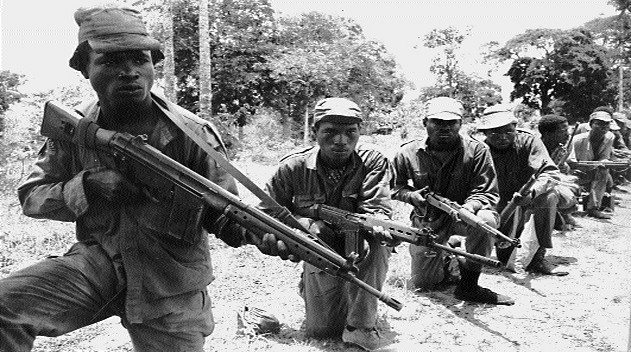
The immediate cause of the civil war may be identified as the coup and the counter coup of 1966 which altered the political equation and destroyed the fragile trust existing among the major ethnic groups. https://pbs.twimg.com/media/Ee16eutWoAAv87i.jpg Before the full-blown war, there was a military coup in 1966 (carried out by Maj. Nzeogwu which led to the death of Tafawa Belewa, among others), a counter-coup (led by Gowon, which led to the brutal murder of Aguiyi Ironsi, Fajuyi, among others) and a persecution of the Igbo people living in Northern Nigeria, forcing them to return home. Even on their way home, many of them were killed in disturbing circumstances. There have been divided opinions on the 1966 coup as some argue that corruption among the civilian ruling class pushed the military to organize the coup, while others opine that the control of oil production in the Niger Delta was also a major factor. https://pbs.twimg.com/media/Ee16d3vXoAArBPB.jpg In May 1967, the Federal Military Government divided the country into twelve states from the original four regions, but the former Eastern Region under Lt. Col Ojukwu saw the act of the creation of states by decree “without consultation” as the last straw, and declared the Region an independent state of “Biafra”. Consequently, the Federal Military Government saw this act of secession as illegal. Several meetings were held to resolve the issue peacefully without success. To avoid disintegration of the country, the central government was left with no choice but to forcefully bring back the region to the main fold. As soon as the war began, the Federal Military Government of Nigeria led by General Yakubu Gowon surrounded the Biafra territory and captured the oil rich coastal areas. The blockade imposed during the war led to severe famine such that within the two and half years (30 months) the war lasted, there were over 100,000 overall military casualties, while nearly two million civilians died from starvation, which was a deliberate policy adopted by Nigeria to bring the people on the Biafra side to their knees. At the orders of the Federal Military Government, the Nigerian federal troops marched in two divisions into Biafra on the 6th of July, 1976. Division 1 led by Col. Shuwa operated through the north of Biafra, while the second Division advanced on Nsukka which later fell on July 14 On the 9th of July, the Biafrans led by Lt. Col. Banjo retaliated by marching into the mid-western region of Nigeria across the Niger River, passing through Benin City and later stopped at Ore on August 21. https://pbs.twimg.com/media/Ee16eUbXsAAuAwt.jpg The Biafran troops captured the mid-west easily because there was little repulsion from soldiers guarding the region. This infuriated Gowon and he asked Col. Muhammad Murtala to form another division (Division 2) to drive the Biafrans out of mid-west and attack Biafra as well. The mid-west region was recaptured by the Nigerian army on the 20th of September. Enugu was made the capital of Biafra, and later when Enugu was captured in October 1967, Aba, Umuahia and Owerri served successively as the provisional capitals. https://pbs.twimg.com/media/Ee16hg7XsAArryx.jpg Within a year, the Federal Military Government captured the city of Port Harcourt and many other coastal oil facilities. The Federal Miltary Government blocked all the routes for transporting food into the Republic of Biafra which led to severe starvation. The FMG saw this as a war strategy and a way to keep Nigeria united, while many people around the world saw this as nothing but a genocide. The food flown in by foreign mercenary pilots was very little and couldn’t solve the starvation Biafra was facing. Over 2 million Biafrans died of starvation. By the end of the year 1969, it was obvious that the war will soon come to an end. The FMG launched its final operation known as “Operation Tail-Wind” on January 7, 1970. The operation was carried out by the 3rd Marine Commando Division and supported by the 1st and 2nd Infantry. Owerri was captured on the 9th of January, while Uli fell on the 11th of that same January. Aware of the hopelessness of the situation, the self- acclaimed Biafra head of state, Lt. Col. Ojukwu fled the Republic immediately with his family on the 10th of January 1970. The commander of the Biafran army, who was left with the administration of the Republic later surrendered to the Federal Government on the 14th of January, 1970, thus bringing the civil war and bloodshed to an end. The war officially ended on the 15th of January, 1970. The sudden end of the war in 1970 was a big relief to both sides and the entire world was elated when General Yakubu Gowon said there was no victor, no vanquished. His government also introduced the popular three ‘Rs’, which stood for Reconciliation, Rehabilitation and Reconstruction. https://www.youtube.com/watch?v=_ZtgBGQYfc0 At the end of the civil war, the Federal Military Government ordered that all Biafran currencies must be deposited into a bank account immediately or they would become worthless. After everyone complied with the directive, they again ordered that every former Biafran account holder will receive only the sum of 20 pounds regardless of how much they had in their account. This most Biafrans believed was an unjustified act of the civil war as heads of households were forced to rebuild their financial holdings as well as support a typically large African family with only 20 pounds. https://africandiarytv..com/2020/08/nigerian-civil-war-with-biafra-untold.html |
| Culture › The Osogbo War Of 1840. by AfroBeatDiary(op): 2:30pm On Aug 08, 2020 |
After the Fulanis systematically captured Ilorin via the treason of Afonja the Field Marshall of the Oyo empire, the fulanis together with Malian and Hausa immigrants made Ilorin their territory. They had immense assistance from some Yoruba Ilorin Muslims which led to the sacking of the old Oyo Empire in 1835. For administrative reasons, the fleeing Oyo citizens relocated the Oyo administrative centre from Oyo Ile to the present Oyo Ago. The Alaafin devolved the military power of the Oyo army into the hands of garrison commanders like Ogunmola, Kurunmi, Timi and Soun. The Fulanis had sworn to dip the sword of Jihad into the Atlantic ocean and they were still not satisfied with their victory; they wished to extend their rule deep into the heart of Yoruba land and annex the whole coastal cities of Yorubaland into the Sokoto caliphate. Thus in 1840, they set to capture Osogbo , a Yoruba town. The Fulanis, under the command of Ali , the Hausa balogun of Ilorin, laid siege on Osogbo. The fulanis got help from the Sokoto caliphate and other Arab/Tuareg mercenaries from across the sahel. The major war agenda of Sokoto caliphate was to destroy the Oyo monarchy and civilization completely before destroying all other Yoruba kingdoms for total subjugation just like the way they destroyed the Hausa civilization. The fulani army could not pass through the Ogbomoso axis and Oke Ogun axis because the Ogbomoso army led by the Soun and Kurunmi Ajadi of Ijaye had blocked and sealed off that route making it impossible for them to launch any attack from the rear. When the king of Osogbo realized that the Ilorins were too strong for the Osogbo army, he summoned the Ibadans for help. Ibadan immediately sent some auxiliaries to Osogbo under the command of Obele alias Mobitan , and Alade Abimpagun. As this force could not stop the Ilorins, another contingent was sent to Osogbo under a more experienced leader. But still the Ilorins won every battle and gained more ground. The fulanis controlled Osogbo for two years before the Oyo army led by Ibadan came to the battle field. When the Ibadans realized that the Ilorins were becoming more threatening to Yoruba land, they sent a large and stronger force under Balogun Oderinlo to crush the intruding forces and Jammas of Ilorin . When Oderinlo and his men arrived at the battlefield, they realized that things had gone worse than they thought. They could not show their faces in the open field for the fear of the Ilorin horses, and for about 20 days after their arrival at Osogbo, they could not fight outside the town thickets. Oderinlo suggested that Elepo, a brave Ibadan warrior was badly needed at the war-front. Elepo had been rejected by the war-chiefs of Ibadan for his actions at the late Agbamaja expedition. As soon as the message from Oderinlo reached Ibadan, the Bashorun wished he could send Elepo to Osogbo but could not go against the wish of other war-chiefs. The Bashorun gave Elepo a cow to worship his god, Ori , and pray for the victory of Ibadan at the war-front. At the war-front, the Ibadan could not attack the Ilorins during the day because Osogbo was practically in a plain and the Ilorin horses might have advantage of them with disastrous results. They decided to attack at dusk when the Ilorins would no longer be able to use their horses. About 2:pm, the well prepared Ibadan army left the gate of Osogbo for the battlefield. They were to keep a strict watch and arrest anyone suspected to be a spy. About a mile from the Ilorin camp, they halted and arranged the order of the attack. The Osogbo army and the earlier auxiliaries were to handle the center of the battlefield, chiefs Abitiko and Labuju were to command the right wing, Balogun Oderinlo with the rest of the Ibadan war-chiefs were to form the left wing of the army. The Ilorin camp was then attacked at midnight. The watchword was “ Elo ni owo odo? ” (How much is the ferry fare?). The reason this watchword was chosen was because the river Osun had to be crossed in entering Osogbo from the south, and anyone who could not tell this was likely to be an enemy. Stampede engulfed the Ilorin camp as the Ibadan army set it on fire. The Ilorins could not offer the slightest resistance; they were smoked with the gunpowder of the Ibadan guns. Thousands of the Sokoto caliphate soldiers were slaughtered that day and thousands sold into slavery. This attack was a success for the Ibadan. Some Ilorin war-chiefs were captured in the attack. Prominent ones were: 1. Jimba the head slave of the Emir; 2. One of the sons of Ali the commander in chief; 3. Chief Lateju; 4. Ajikobi the Yoruba Balogun of Ilorin. The first two were released while the latter two, being Yoruba by birth, were regarded as traitors and were executed. This was a huge victory for the whole of Yoruba land. After the Osogbo victory, Ibokun, an Ijesa town not far from Osogbo was taken by the Ibadans for being an ally of Ilorin. The Ibadans accused the Ijeshas, Ekitis and the Ondos for giving the fulanis free passage for their army and infantry in attacking another Yoruba town. The Ibadans then placed Ajeles on these Yoruba enclaves for the roles they played during the Osogbo war. The violent imposition of the Ajeles on this Yoruba kingdoms led to the Ekiti parapo Civil War several years later. Aare Kurunmi Kakanfo https://africandiarytv..com/2020/08/the-osogbo-war-of-1840.html 2 Likes 2 Shares
|
| Computers › Re: Did Your Computer Suddenly Stop Displaying? Here Is The Fix! by AfroBeatDiary: 2:16pm On Aug 08, 2020 |
@SendomC, how do I solve monitor going to sleep after working for a while, I've done virtually everything I could think of, screensaver, timeout, backlight etc, its a desktop pc. There is a website that said the BIOS needed to be upgraded and as a lady, i'm not that versatile in that aspect. Any help? |
| Music/Radio › Keeping Up With Jappofficial, Episode 1: Hustle by AfroBeatDiary(op): 2:05pm On Aug 08, 2020 |
JappOfficial is back with a new freestyle series titled #KeepingUpWithJapp. He said this on this twitter handle last week and made it known that he will be dropping a new freestyle video from his old and unreleased songs every Fridays in a series he called #KeepingUpWithJapp. His intention was made known after his Praise went viral recently, , below is the episode 1 titled Hustle. #HustleByJapp was originally released in 2017 in his #StreetlyGospel EP. In his tweet, Japp who is an ex Tasuedite gave a shout out to his clicks from Tai Solarin University of education as well as ChampagneBeat who we assume to be his producer. "Sometimes I forget my lyrics but my number 1 fan is always there to back me up... ❤❤@champagnebeatz❤❤ ...shout out to all my Ijagun clicks ✌, ❤❤❤to all my past, present and future fans #StreetlyGospellershttps://twitter.com/JappOfficial/status/1291787184081719299?s=20 Episode 1: Hustle verse 1. #StreetlyGospel #KeepingUpWithJapp" https://www.youtube.com/watch?v=zB4gxHG3esY https://africandiarytv..com/2020/08/keeping-up-with-jappofficial-episode-1.html
|
| Culture › The Experience Of Motherhood, "Ikunle ". by AfroBeatDiary(op): 10:37pm On Aug 07, 2020 |
Motherhood is an experience of grace that nature bestowed on every women (ABI) with the capacity to host "Erelu Ogbogbo l'ogbon ojo", but not all of them will be referred to as " Iya Omo-mother." "Ikunle " is a Yoruba esoteric concept whose essence is beyond grammatical and mental manipulation of men. The first degree Yoruba invocational child bearing position with authority and power that does not only align them with grand master of motherhood, that is rhetorically called Ile(mother Earth), but also empower them to bless every one that blessed or cursed those that stands in the way of their child progress in life, and also seeks for motherhood forgiveness, all for the love of children and humanity. Ejowo, ero ti Ikunle mo mi lara ki e ma gbemi sepe, sugbon ki e saanu mi---please, consider the child bearing pains of my mother to bless and not to curse me. Written by Yusuf Adetola kareem Picture source: unknown author(s) https://africandiarytv..com/2020/08/the-experience-of-ikunle-.html
|
| Politics › Meet Chief Koko, The Man Who Sold Nigeria To British In 1889. by AfroBeatDiary(op): 5:32pm On Aug 06, 2020*. Modified: 5:56pm On Aug 06, 2020 |
This is the story of the first oil war, which was fought in the 19th century, in the area that became Nigeria. All through the 19th century palm oil was highly sought-after by the British, for use as an industrial lubricant for machinery. Remember that Britain was the world’s first industrialized nation, so they needed resources such as oil to maintain their factories. [img]http://pbs.twimg.com/media/D8eEgWyXYAAuBCA?format=jpg&name=900x900[/img] Palm oil, of course, is a tropical plant, which is native to the Niger Delta. Malaysia’s dominance came a century later. By 1870, palm oil had replaced slaves as the main export of the Niger Delta, the area which was once known as the Slave Coast. At first, most of the trade in the oil palm was uncoordinated, with natives selling to those who gave them the best deals. Native chiefs such as former slave, Jaja of Opobo became immensely wealthy because of oil palm. With this wealth came influence. However, among the Europeans, there was competition for who would get preferential access to the lucrative oil palm trade. In 1879, George Goldie formed the United African Company (UAC), which was modelled on the former East India Company. Goldie effectively took control of the Lower Niger River. By 1884, his company had 30 trading posts along the Lower Niger. This monopoly gave the British a strong hand against the French and Germans in the 1884 Berlin Conference. The British got the area that the UAC operated in, included in their sphere of influence after the Berlin Conference. When the Brits got the terms they wanted from other Europeans, they began to deal with the African chiefs. Within two years of 1886, Goldie had signed treaties with tribal chiefs along the Benue and Niger Rivers whilst also penetrating inland. This move inland was against the spirit of verbal agreements that had been made to restrict the organisation’s activities to coastal regions. In 1886, the company name changed to The National Africa Company and was granted the charter authorised the company to administer the Niger Delta and all lands around the banks of the Benue and Niger Rivers. Soon after, the company was again renamed. The new name was Royal Niger Company, which survives, like Unilever, till this day. To local chiefs, the Royal Niger Company negotiators had pledged free trade in the region. Behind, they entered private contracts on their terms. Because the (deceitful) private contracts were often written in English and signed by the local chiefs, the British government enforced them. So for example, Jaja of Opobo, when he tried to export palm oil on his own, was forced into exile for “obstructing commerce”. As an aside, Jaja was “forgiven” in 1891 and allowed to return home, but he died on the way back, poisoned with a cup of tea. Seeing what happened to Jaja, some other native rulers began to look more closely at the deals they were getting from the Royal Nigeria Company. One of such kingdoms was Nembe, whose king, Koko Mingi VIII, ascended the throne in 1889 after being a Christian schoolteacher. Koko Mingi VIII, King Koko for short, like most rulers in the yard, was faced with the Royal Nigeria Company encroachment. He also resented the monopoly enjoyed by the Royal Nigeria Company and tried to seek out favourable trading terms, with particularly the Germans in Cameroon. By 1894, the Royal Nigeria Company increasingly dictated whom the natives could trade with, and denied them direct access to their former markets. In late 1894, King Koko renounced Christianity and tried to form an alliance with Bonny and Okpoma against the Royal Nigeria Company to take back the trade. This is significant because while Okpoma joined up, Bonny refused. A harbinger of the successful “divide and rule” tactic. On 29 January 1895, King Koko led an attack on the Royal Niger Company’s headquarters, which was in Akassa in today’s Bayelsa state. The pre-dawn raid had more than a thousand men involved. King Koko’s attack succeeded in capturing the base. Losing 40 of his men, King Koko captured 60 white men as hostages, as well as a lot of goods, ammunition and a Maxim gun. Koko then attempted to negotiate a release of the hostages in exchange for being allowed to chose his trading partners. The British refused to negotiate with Koko, and he had forty of the hostages killed. A British report claimed that the Nembe people ate them. On 20 February 1895, Britain’s Royal Navy, under Admiral Bedford attacked Brass and burned it to the ground. Many Nembe people died and smallpox finished off a lot of others by malaria. By April 1895, the business had returned to “normal”, normal being the conditions that the British wanted, and King Koko was on the run. Brass was fined £500 by the British, £62,494 (NGN29 million) in today’s money, and the looted weapons were returned as well as the surviving prisoners. After a British Parliamentary Commission sat, King Koko was offered terms of the settlement by the British, which he rejected and disappeared. The British promptly declared him an outlaw and offered a reward of £200 (£26,000; NGN12 million today) for him. He committed suicide in exile in 1898. About that time, another “recalcitrant King”, the Oba of Benin, was run out of town. The pacification of the Lower Niger was well and truly underway. The immediate effect of the Brass Oil War was that public opinion in Britain turned against the Royal Nigeria Company, so its charter was revoked in 1899. Following the revoking of its charter, the Royal Niger Company sold its holdings to the British government for £865,000 (£108 million today). That amount, £46,407,250 (NGN 50,386,455,032,400, at today’s exchange rate) was effectively the price Britain paid, to buy the territory which was to become known as Nigeria https://africandiarytv..com/2020/08/meet-king-koko-man-who-sold-nigeria-to.html?m=1 2 Likes
|
| Crime › Re: Kiki Mordi Accused Of Threatening Seyitan, D’banj’s Rape Accuser by AfroBeatDiary: 9:56pm On Jul 25, 2020 |
Twitter ehn
|
| Music/Radio › Any DJ In The House? We've Got A Soft Project For You. by AfroBeatDiary(op): 11:00am On Jul 25, 2020 |
Any DJ who is seeking career exposure and upgrade should send a DM to us to be included in our line up soft project for the rest of the year. Being a social media savvy is a plus. |
| TV/Movies › Fela Kuti Press Release On Suffering And Smiling In 1977, What Has Changed? by AfroBeatDiary(op): 10:42am On Jul 25, 2020 |
https://www.youtube.com/watch?v=njPvpqLunLE FELA ANIKULAPO KUTI speaking on the terrible living condition of the Nigerian people and how music can be used as a tool to help change the conditions of the Nigerian citizen. The interview was done on 1977 ahead of his new tune titled suffering and smiling released in 1978, since then, what has changed?https://twitter.com/NigeriaStories/status/1266989229369942016?s=19
|
| TV/Movies › Re: Dorathy, Busty BBNaija 2020 Housemate Trending by AfroBeatDiary: 11:08am On Jul 20, 2020*. Modified: 2:55pm On Jul 20, 2020 |
Since last night, this is a further proof that you guys here are one day behind. Pls subscribe to my channel www.YouTube.com/africandiarytv 1 Like |
| Politics › Re: Olu Falae: Yoruba Is The Glue Holding Nigeria Together by AfroBeatDiary: 11:25pm On Jul 14, 2020 |
Glue werey wo? |
| Sports › Re: Manchester United Fans go Spiritual In Prayer Ahead Of So'ton Match In Ke by AfroBeatDiary(op): 10:53pm On Jul 13, 2020 |
QVicky10:Last last dem still come play draw, for say dem no pray, man u for loose o |
| Sports › Manchester United Fans go Spiritual In Prayer Ahead Of So'ton Match In Ke by AfroBeatDiary(op): 9:50pm On Jul 13, 2020*. Modified: 11:05pm On Jul 13, 2020 |
In a tweet shared by a user from East African who described the scene as unfortunate about how African leave their personal problems to intercede for a foreign professional club Manchester United ahead their crucial match against Southampton. The user with the handle said Over here in Kenya, we have several problems but this mgebkuke chose to prioritise Man U, so unfortunate to be an African.https://twitter.com/ChelseaMustWin/status/1282778340080979968?s=19 https://www.youtube.com/watch?v=C1GTqLb6XKI
|
| Crime › Re: Police Rescue American ‘detained For A Year After Visiting Facebook Lover’ (pic) by AfroBeatDiary: 4:24pm On Jul 12, 2020 |
Nawa o |
| Nairaland General › See, This Life No Balance O. by AfroBeatDiary(op): 12:29am On Jul 09, 2020 |
Twitter is a home of madness but sometimes when I come across tweets like this, it sends chills into my spine, one of them is this. Can you relate?
|
| Politics › Video: Ikorodu Flooded After Light Shower, Resident Blame Government. by AfroBeatDiary(op): 12:52pm On Jul 08, 2020 |
This is an eyewitness account of the flooded Awesu area of Igbogbo Baiyeku, Ikorodu Lagos. Obviously the community was flooded after a light shower and the resident as put the blame on the government. https://www.youtube.com/watch?v=mEZKUOXpsrw Source: Eye Witness. |
| Music/Radio › Re: Femi Kuti & His Children Perform "One People, One World" by AfroBeatDiary(op): 11:03pm On Jul 06, 2020 |
haaaaaaaaa:He was the one on lead sax |





1 2 3 4 5 6 7 8 ... 43 44 45 46 47 48 49 50 51 (of 65 pages)