Anonymous6's Posts
Nairaland Forum › Anonymous6's Profile › Anonymous6's Posts
1 2 3 4 5 6 7 8 ... 77 78 79 80 81 82 83 84 85 (of 156 pages)
 Celebrities › Re: Rodney King Found Dead In A Swimming Pool by anonymous6(f): 10:47am On Jun 19, 2012 |
sad to die like that after what he has been through |
| Health › Re: Why Do People Bleach Their Skin. by anonymous6(f): 10:43am On Jun 19, 2012 |
[quote author=Idera_olu]Skin bleaching is now a trendy ideology to some. beyond doubt, some men are part of these disgraceful act. Fellow NL, can we have some discussion on the topic in question and if possible let's have some picture to educate those that may want to switch course. Please be objective with your rationale.[/quote]SKIN BLEACHING OBSESSION AROUND THE WORLD https://www.nairaland.com/804407/skin-bleaching-obsession-caribbean-us To me it is because of self hate and wanting to conform, and the stigma's dark skinned women go through; check the link out |
| TV/Movies › Hollywood Apartheid by anonymous6(op): 10:37am On Jun 19, 2012 |
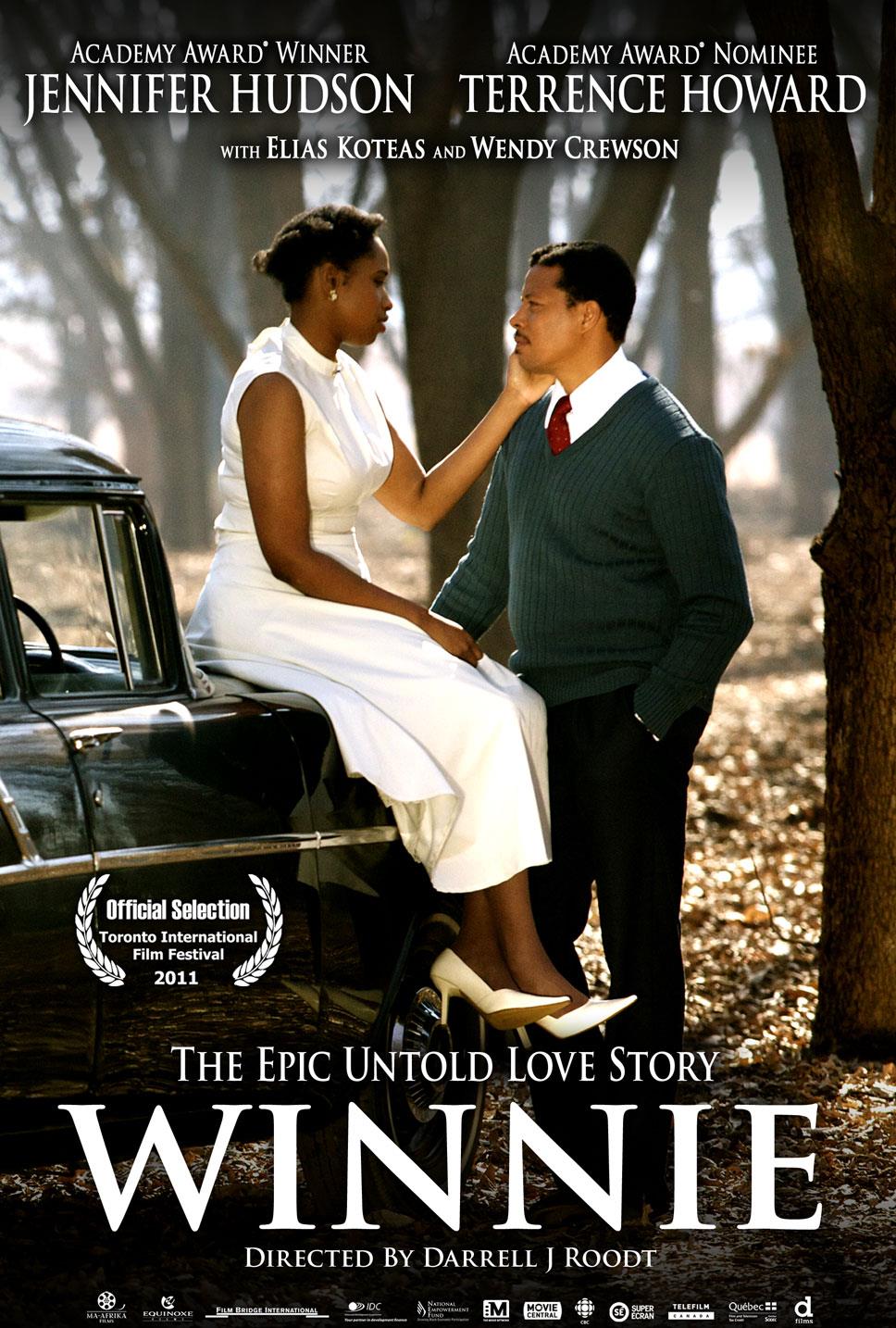
[b]"For most of the 21st Century, moviegoers have watched African-American actors play lead roles in movies about African figures and in the process push local talent to the background while a major Hollywood star basks in the spotlight. On the heels of Oscar-winning actor Morgan Freeman stepping into the enormous shoes of former South African President Nelson Mandela to portray him in the movie” Invictus,” South African director Darrell Roodt (“Sarafina!”) decided the former first lady, Winnie Madikizela- Mandela, hailed as ‘mother of the nation’ by some, life story should be next. And Oscar-winning actress/singer Jennifer Hudson would be the one to play her—setting off a media firestorm from the Creative Workers Union of South Africa (CWUSA), made up of musicians, actors, producers and writers. Oupa Lebogo, the union’s secretary general, has threatened to boycott the movie, unless the film’s producers reconsider casting Hudson, Sunday Nation reports. (The film is based on “Winnie Mandela: A Life,” (Zebra Books 2003) an unofficial biography by Anna Marie du Preez Bezdrob, which will start filming in May). “We can’t allow this to happen. We have people who can play the role far better than Jennifer.” Lebogo said. It’s not often that American films showcase African actors’ talent unless it’s in a supporting role, a trend that has dated back to the 1950s with Sidney Poitier in the international bestseller book-turned-movie “Cry, The Beloved Country.” N. Frank Ukadike, associate professor of film and African Diaspora at Tulane University, told The AFRican that the conflict extends far beyond this recent revolt. “This has been going on for a long time,” says Ukadike. “South African filmmaking is intertwining with Hollywood. Everything they want to do they see it from a Hollywood perspective.” In the process, South Africa’s own movie industry is being compromised as a result. Mabutho Sithole, the union’s president, told Times Online that “it can’t happen that we want to develop our own Hollywood, and yet we keep bringing in imports.” According to Times, South Africa has lost thousands of jobs as a result of the worldwide recession, due to high gold prices, and has deeply impacted the country’s film industry. Whereas Nigeria’s “Nollywood” movement continues to flourish; the United Nations Educational, Scientific and Cultural Organization (UNESCO) ranked Nigeria as the world’s second largest film industry in a global movie survey, India was first, for 2009. Unlike South Africa’s structural moviemaking formula that relies on movie tickets, Nigeria depends on video to attract their ever-growing audience which is the peak of the country’s film popularity as well as its multilingualism—Nigerian-produced films feature local languages and English—the driving force of its export sales. “Nigeria cinema is doing well now,” says Ukadike. “People can identify with these characters. Part of playing these roles is to be convincing because its part of their [Africans] lives. Her [Mandela] story is going to be told from a non-African point of view. The historical perspective will be downplayed.” Freeman said, while promoting the movie “Invictus” in Johannesburg, there is something discriminatory about foreign actors cast in ethnic roles when local actors are available. But, he cautioned, producers wouldn’t get the international funding if local actors were cast in leading roles. “I must say I’m not in agreement with hiring someone [international] to play a local role,” says Freeman, who was chosen by Mandela to portray him in the movie. “I understand the need for it, though.” Freeman goes on to say that “if you got a local to play Winnie, who would you sell it to outside of South Africa? That’s what they [filmmakers] go on. If you have Jennifer Hudson, you could go to a bank and say, ‘we need $40 million dollars to make the movie.’ But, based on past productions the money doesn’t get returned because movies on Africa that feature American casts tend to flop at the box office, says Kenyan actor Lenny Juma. “Look at the “Maneaters Of Tsavo,” it was shot in South Africa with American casts and it was such a flop because only an African can pull off things like accents, emotions and other aspects.” he says. Roodt said that despite local actors not getting a headlining role the production would still create 500 job opportunities for South African actors. Carole Gerster, author of “Teaching Ethnic Diversity in Film” (McFarland 2006), said there are more advantages to having a local actor play a role centered around a country. “African actors in lead roles could no doubt bring more to films about African issues and African history than African-American actors in the same roles, she says. “African actors can be true to their own understandings of historical figures and events that continue to define them and their countries.” No matter what the genre—action, romance, or thriller—movies offer a glimpse into a reality that we can identify with, because of actors ability to convey emotions that bring the story to life. Films like “Sarafina” and “Tsotsi” jump off the screen and into the minds of viewers because the actors exemplified the authenticity of the story. "[/b] http://www.africanmag.com/ARTICLE-1489-design004 |
| Celebrities › Re: "You Have To Be Trashy And Black To Get Nominated" - Michelle Rodriguez by anonymous6(op): 10:33am On Jun 19, 2012*. Modified: 5:51pm On Jun 20, 2012 |
Michelle Rodriquez [img]http://4.bp..com/-XNx8YY3ZRdY/TXEGVwQtLSI/AAAAAAAAAys/fSADHNZQBEI/s1600/Michelle%2BRodriguez.jpg[/img] |
| Celebrities › "You Have To Be Trashy And Black To Get Nominated" - Michelle Rodriguez by anonymous6(op): 10:31am On Jun 19, 2012 |
“Avatar” star Michelle Rodriguez may have stepped in the proverbial hornet’s nest with some eyebrow-raising comments she made in France recently. The outspoken actress was speaking to New York magazine's Vulture last week at an amfAR event when she offered her take on Lee Daniels’ new film “The Paperboy.” To the question of whether one of the film’s stars, Nicole Kidman, could potentially earn an Oscar for her controversial turn in the flick (she "pees" on co-star Zac Efron in one scene) Rodriguez promptly shot the possibility down. Her reason? Kidman's neither “black” nor “trashy.” "One of my friends said, 'She’s going to get nominated for an Oscar for that,’” Rodriguez said of the buzzed-about film. “I was like, 'Nah, man. She’s not black!'" "I laugh, but it’s also very sad," she added. "It makes me want to cry. But I really believe. You have to be trashy and black to get nominated. You can’t just be trashy." http://marquee.blogs.cnn.com/2012/06/01/michelle-rodriguez-on-why-nicole-kidman-wont-win-an-oscar/ |
| Celebrities › Re: Agbani Darego To Marry Timi Alaibe by anonymous6(f): 10:30am On Jun 19, 2012 |
congratulations to her |
| Culture › Re: Which Tribe In Nigeria Is "Actually" From Nigeria??? by anonymous6(f): 2:24am On Jun 19, 2012 |
[quote author=PAGAN 9JA]Everyday we hear about Yorubas claiming descent from Makkah in Saudi Arabia, Igbos claiming descent from Jews of Israel, Hausa claiming descent from Baghdad (Iraq), kanuri came from Yemen, etc. [size=32pt]So who is actually from NIGERIA  [/size][/quote]I never heard of Yoruba claiming saudi Arabia, where did that come from but I have heard of the Egyptian claim though but one thing's for sure is they were there on the land we know as Nigeria before Nigeria ever existed as a country and it is said they descended from the Nok: http://en.wikipedia.org/wiki/Nok_culture 1 Like |
| Culture › Re: Uneme: My Tribe, IS NOT Going Extinct ANYMORE! by anonymous6(f): 7:46pm On Jun 18, 2012 |
Gamine: I am from a tribe called UnemeUnless systematically everyone of the young adult generation and the old men who are polygamist in your tribe tribe starts having alot of kids to increase the population and then instill the language, I can see the instinction being stopped; so that is the only solution or your theory could be true. |
| Culture › Re: Why Is Everything Bad Termed BLACK? by anonymous6(f): 3:51pm On Jun 18, 2012 |
[quote author=V_Official®]Hopefully... I dont think we should be compared to the likes of india for now. although, we are thriving in these sectors as you've mentioned buh you shouldnt leave behind the main aim most of us (esp Nigerians) are going into business, too win at all cost. If our motivation is development, a different pictured will definitely be painted but as it is now... So help us God!!![/quote]I agree |
| Culture › Re: A Growing 'Nigerianisation' Of Ghanaian Society? by anonymous6(op): 2:32pm On Jun 18, 2012*. Modified: 3:14pm On Jun 18, 2012 |
ckkris: Is the word Nigerianisation not enough to create problems? Why is this man, I won't even cite his name, parroting the opinion of BBC? Oyinbo people say they're superior, so we leave them, to eat their superiority, and send our children to Ghana, where no one will molest them. Their own money is never enough for them. Suddenly they begin to engineer confusion, and find one nonsense man to amplify it, and one mumu anonymous to post non-existing cultural issues in Nairaland. I was taught about Ghana in Primary One, and Ghanaians have been familiar with Nigeria. If we speak any language how that one come concern oyinbo. Is it good to know more than one African language. Any evil they plan for us we reject, and return them back to sender.ok let me get this straight because I posted a article that is a cultural issue(not a non-cultural issue) on Nairaland for the fact that I am not the first person bringing this to light even though I have no part in the article and I won't be the last I am all of a sudden MUMU. Based on what you posted you are the mumu because no matter how you twist this, it is a cultural issue if Ghana WEB and Nigerian online news adds these articles unto their sites, especially since many people are still talking about this article till now on some of these sites and here on Nairaland about ghana vs. Nigerians: http://www.nigeriafilms.com/news/9056/33/a-growing-nigerianisation-of-ghanaian-society.html There must be many mumu's including the owners of Ghana web and etc because based on what you said any one who talks about this is mumu because to you it is a "non cultural issue", well it is as far as I am concerned and the author himself, which is his right, talks about the cultural issues he thinks it is a problem. You may want to even call the Op who posted this same article before me a mumu as well: https://www.nairaland.com/520508/growing-nigerianisation-ghanaian-society Next time think before you write things, and if you want respect you need to earn it because some of the things you mentioned about it being from the BBC is nutts to me as far as I am concerned, because BBC is not the ones who started this at all and have nothing to do with this what so ever because they didn't start this Ghana vs. Nigeria at all(it is up to both communities to stop the tug of war, no matter how small it is). Nobody is saying Nigerians can't school in Ghana or vice versa and that will always happen but the main issue this is a issue because I see this also mentioned on Youtube amongst Nigerians and ghanians. To me personally I have no issues with Ghanians but it doesn't change the fact of what the author brought to light, and if it is issue to the author you must be sure other have the same opinion which is a known fact. Don't insult me just because I did something I have the right to do or call me somebody used to cause a issue(which has already been a issue) based on you nuttso conspiracy theories. These are the issues that should be discussed not 24/7 on beauty threads, and etc. next time go and express you anger to the author not to me, you have a right to a opinion but if you are going to insult me, for sure you will get it right back MR MUMU CK |
| Culture › Re: The Wedding Cake by anonymous6(f): 1:08pm On Jun 18, 2012*. Modified: 5:16pm On Jun 18, 2012 |
ATMC: lol @ ur last statement. It's not about d cutting of d cake but d positions of their hands during d act. U get? Something is not right like i said before because it leaves d bride with d main task during nd afterwards in most cases.well I never thought of it that way, any way to me it is just for show or display, I don't think for the most part it is setting up the bride to be beneath the husband |
| Culture › Re: Why Is Everything Bad Termed BLACK? by anonymous6(f): 1:06pm On Jun 18, 2012 |
[quote author=V_Official®]Let me share one of the personal ways i've been trying to help this... This virus is far more than what we can all heal, we can only help our immediate environment (the ones within the reach of our power), so... i'm planning to create a club (sort of like a cult), where the members are those with utmost sincerity, high prestige, high self esteem and high integrity. we might just be 5 or less. So far we share the same aim of purification, we'll share ideas and spread systematically (more on screen than reality though)... This sickness is to widely spread to be cleanse at once, we can just help our immediate environment...[/quote]exactly, the immediate environment is what needs to be addresses, as far as I am concerned; Nigerians fix their problems as a primary goal, african american fix their problems as a primary goal, and etc. Your online club you want to start is good, start small and expand. This is one of the reasons I am glad Nigeria has their own business/entrepreneur sector, media, fashion industry, entertainment industry and etc now, they are doing what Indians are doing for their own community for a while now, not wait on the western world for help on it. |
| Culture › Re: Why Is Everything Bad Termed BLACK? by anonymous6(f): 12:49pm On Jun 18, 2012 |
DailyNews: Yes, but can't we prove them wrong? Can't stop being over conscious of money & material things as black people & work towards integrity & humanity? This keep bordering me seriously.Yes, it is possible and I predict will happen and is already happening. Blacks need to progress on their own economically, entertainment wise, academically/educatively and etc. The problem is Blacks from different communities have a different view of how that should go and try to force a mindset on other communities and each community needs to fix their immediate issues, for example I feel Black Africans need to start helping each other economically and fix our image, which is happening through people like Aliko dangote, Patrice Motsepe, stable governments. Plus I feel image wise we I feel we already started through our own media entertainment industry, which we see now in CNN and aljizerra. At the same time internal/national issues in each country in Africa needs to be addressed first before expanding beyond because the issues in like the country of Somalia internally are a strike difference from the internal issues in Nigeria or Ghana for example. You have to fix you back yard first before helping other people's backyard but that doesn't mean you don't help at all but their are limitations. When it comes to Black diasporians(Caribbeans, Black south Americans, and etc), I feel they need to fix their immediate problems and progress on their own as well. Slow and steady wins the race but I don't agree with the United States of Africa nonsense, where every country is a state and then there is one president because North Africa will have preference over the rest, and I don't think they have Africa at best at heart. I also feel african americans and Black africans need to stop getting in disagreements with each other or forcing racial mindsets on each other because it isn't necessary, it is a pure waste of time because each communities have their own issues they should worry about and put that energy in their communities. To me I have seen this personally because I am a first generation Nigerian born in America, and have seen the mindset of both communities and is totally different for the most part except for racism of course but that is just experience wise, they each community addresses it is different I have noticed. Lastly the self hate issues and love for mixed race people over our own needs to stop, especially with certain communities in Black diasporia because they are the ones I see do it the most and whites see this and use it against blacks; the only country I can let slide with this is Haiti but the rest not so much. I am not saying to hate mixed race people but they are not the future of the Black africans particularly at all, to a extent black Caribbeans as well but Africans americans well it is up to that community. |
| Culture › Re: A Growing 'Nigerianisation' Of Ghanaian Society? by anonymous6(op): 12:32pm On Jun 18, 2012 |
ckkris: Its better that thousands of Nigerian youth are in Ghanaian universities than in Europe where any fool would try to downgrade them as niggers. But this man is instigating bad blood, perhaps for well disguised religious purposes. And it wont work. He cant start any kind of haram in Ghana. And he cant do anything about Nigerians, who're too much for European racists, how much more on African soil. IGWE, Oba nla, Oba t'ogaaaaa!Cosign 100%; what the author is instigating?, I really don't know though |
| Culture › Re: A Growing 'Nigerianisation' Of Ghanaian Society? by anonymous6(op): 11:11am On Jun 18, 2012 |
queensmith: i meant to say sexuality but i wasnt sure if it will be edited.Look at how the Nigerian government banned gays vs. the Ghanian government didn't ban them, is just a example |
| Culture › Re: A Growing 'Nigerianisation' Of Ghanaian Society? by anonymous6(op): 11:04am On Jun 18, 2012 |
queensmith: i meant to say sexuality but i wasnt sure if it will be edited.We do have a more conservative society then ghanians when it comes to the movie industry, I am not saying Nigerians are perfect but they are not as ghanians when it comes to their direct sexuality in their moves, so overall they are conservative. In the Yoruba Nollywood movies industry and Kannywood you rarely see that and Nollywood movies well most of them don't have sexuality in it. examples: http://www.ghanatoghana.com/Ghanahomepage/ghana-porn-movie-adult-only-watch http://www.nollywoodgossip.net/2011/12/18/adults-only-shocking-ghana-porn-movie-video/ https://www.nairaland.com/738505/rise-x-rated-movies-ghollywood-movie http://nollywoodrave..com/2012/01/porn-fame-whores-and-ghana-movies.html |
| Nairaland General › Re: Cyber-love Scam : "Love Struck" Woman Loses Rm5mln To Online Scam by anonymous6(f): 11:02am On Jun 18, 2012 |
| Nairaland General › Re: Cyber-love Scam : "Love Struck" Woman Loses Rm5mln To Online Scam by anonymous6(f): 11:00am On Jun 18, 2012 |
| Nairaland General › Re: Cyber-love Scam : "Love Struck" Woman Loses Rm5mln To Online Scam by anonymous6(f): 10:55am On Jun 18, 2012 |
| Nairaland General › Re: Cyber-love Scam : "Love Struck" Woman Loses Rm5mln To Online Scam by anonymous6(f): 10:49am On Jun 18, 2012 |
| Nairaland General › Re: Cyber-love Scam : "Love Struck" Woman Loses Rm5mln To Online Scam by anonymous6(f): 10:45am On Jun 18, 2012 |
| Culture › Re: Why Do Nigerians Eat Bush Rat And Not House Rat? by anonymous6(f): 10:43am On Jun 18, 2012*. Modified: 5:16pm On Jun 18, 2012 |
I guess because rat carry a negative stigma with them, and one of it is disease and etc but bush meat has no stigma attached to it |
| Culture › Re: The Wedding Cake by anonymous6(f): 10:39am On Jun 18, 2012 |
ATMC: The cutting of cake is an old tradition at wedding events. Nowadays, its as though no wedding ceremony is complete without d cutting of cake. It recently cut across traditional marriage ceremony. At most weddings, a special time is reserved for d cutting of cake. At such time, witnesses are called to observe d very 'first' task the couple r embarking on. D bride holds d knife while d groom's hand rests atop d bride's nd they cut d cake. This act depicts dt d woman is 'under' the man nd so is suppose to submit to him. But on a second thought, its wrong, because it shows d woman is d one carrying out the first task with d man helping...little wonder most women dt did dt end up being d bread winner at d long run. I think d correct position should be the man's hand on d knife nd d woman's hand underneath his wrist as d help she is...I don't think any of this has to do with the cake, maybe wedding vows when they say women have to obey and all that you have a point, which is being corrected now a days but a cake, I don't think so; many women are smashing cake in their mens faces after cutting it so I don't think so. |
| Culture › Re: Why Is Everything Bad Termed BLACK? by anonymous6(f): 10:36am On Jun 18, 2012 |
I feel it is the western world after slavery that started that |
| Culture › Re: A Growing 'Nigerianisation' Of Ghanaian Society? by anonymous6(op): 10:35am On Jun 18, 2012 |
queensmith: is it westernized to enjoy sex? ghanians embrace sensuality, showing it in the movies is just their way of expressing themselves, nigerians not doing it is just another show of hypocrisy, given nigerians are promiscuous people.sorry I disagree, Ghanians don't show sensuality in their movies, maybe a few like a perfect picture but in some of their movies it is just porn(ex. Hot fork, 4play, kiss me if you can, heart of men, and etc is not sensuality). Nigerians don't do it for the most part because it is a more conservative society then ghanians. Lastly it is not only about the sexuality but in Ghanian movies their is more western flair then Ghanian flair in their movies compared to Nollywood. |
| Culture › Re: A Growing 'Nigerianisation' Of Ghanaian Society? by anonymous6(op): 12:44am On Jun 18, 2012 |
dasparrow: @PostExcellent response, took the words out of my mouth |
| Culture › Re: Hollywood Apartheid by anonymous6(op): 7:06pm On Jun 17, 2012 |
Opinions? |
| Culture › Re: Hollywood Apartheid by anonymous6(op): 2:24pm On Jun 17, 2012 |
| Culture › Hollywood Apartheid by anonymous6(op): 2:10pm On Jun 17, 2012 |
[b]" For most of the 21st Century, moviegoers have watched African-American actors play lead roles in movies about African figures and in the process push local talent to the background while a major Hollywood star basks in the spotlight. On the heels of Oscar-winning actor Morgan Freeman stepping into the enormous shoes of former South African President Nelson Mandela to portray him in the movie” Invictus,” South African director Darrell Roodt (“Sarafina!”) decided the former first lady, Winnie Madikizela- Mandela, hailed as ‘mother of the nation’ by some, life story should be next. And Oscar-winning actress/singer Jennifer Hudson would be the one to play her—setting off a media firestorm from the Creative Workers Union of South Africa (CWUSA), made up of musicians, actors, producers and writers. Oupa Lebogo, the union’s secretary general, has threatened to boycott the movie, unless the film’s producers reconsider casting Hudson, Sunday Nation reports. (The film is based on “Winnie Mandela: A Life,” (Zebra Books 2003) an unofficial biography by Anna Marie du Preez Bezdrob, which will start filming in May). “We can’t allow this to happen. We have people who can play the role far better than Jennifer.” Lebogo said. It’s not often that American films showcase African actors’ talent unless it’s in a supporting role, a trend that has dated back to the 1950s with Sidney Poitier in the international bestseller book-turned-movie “Cry, The Beloved Country.” N. Frank Ukadike, associate professor of film and African Diaspora at Tulane University, told The AFRican that the conflict extends far beyond this recent revolt. “This has been going on for a long time,” says Ukadike. “South African filmmaking is intertwining with Hollywood. Everything they want to do they see it from a Hollywood perspective.” In the process, South Africa’s own movie industry is being compromised as a result. Mabutho Sithole, the union’s president, told Times Online that “it can’t happen that we want to develop our own Hollywood, and yet we keep bringing in imports.” According to Times, South Africa has lost thousands of jobs as a result of the worldwide recession, due to high gold prices, and has deeply impacted the country’s film industry. Whereas Nigeria’s “Nollywood” movement continues to flourish; the United Nations Educational, Scientific and Cultural Organization (UNESCO) ranked Nigeria as the world’s second largest film industry in a global movie survey, India was first, for 2009. Unlike South Africa’s structural moviemaking formula that relies on movie tickets, Nigeria depends on video to attract their ever-growing audience which is the peak of the country’s film popularity as well as its multilingualism—Nigerian-produced films feature local languages and English—the driving force of its export sales. “Nigeria cinema is doing well now,” says Ukadike. “People can identify with these characters. Part of playing these roles is to be convincing because its part of their [Africans] lives. Her [Mandela] story is going to be told from a non-African point of view. The historical perspective will be downplayed.” Freeman said, while promoting the movie “Invictus” in Johannesburg, there is something discriminatory about foreign actors cast in ethnic roles when local actors are available. But, he cautioned, producers wouldn’t get the international funding if local actors were cast in leading roles. “I must say I’m not in agreement with hiring someone [international] to play a local role,” says Freeman, who was chosen by Mandela to portray him in the movie. “I understand the need for it, though.” Freeman goes on to say that “if you got a local to play Winnie, who would you sell it to outside of South Africa? That’s what they [filmmakers] go on. If you have Jennifer Hudson, you could go to a bank and say, ‘we need $40 million dollars to make the movie.’ But, based on past productions the money doesn’t get returned because movies on Africa that feature American casts tend to flop at the box office, says Kenyan actor Lenny Juma. “Look at the “Maneaters Of Tsavo,” it was shot in South Africa with American casts and it was such a flop because only an African can pull off things like accents, emotions and other aspects.” he says. Roodt said that despite local actors not getting a headlining role the production would still create 500 job opportunities for South African actors. Carole Gerster, author of “Teaching Ethnic Diversity in Film” (McFarland 2006), said there are more advantages to having a local actor play a role centered around a country. “African actors in lead roles could no doubt bring more to films about African issues and African history than African-American actors in the same roles, she says. “African actors can be true to their own understandings of historical figures and events that continue to define them and their countries.” No matter what the genre—action, romance, or thriller—movies offer a glimpse into a reality that we can identify with, because of actors ability to convey emotions that bring the story to life. Films like “Sarafina” and “Tsotsi” jump off the screen and into the minds of viewers because the actors exemplified the authenticity of the story. "[/b] http://www.africanmag.com/ARTICLE-1489-design004 |
| Celebrities › Re: "Help! South Africa Is Killing Nollywood" - Emeka Ike by anonymous6(op): 1:23pm On Jun 17, 2012 |


 Then I was listening to one of my favourite Liberian gospel artists namely Minister Eveine Natt Kamara and there is this song she sang called "I'm Blessed". In the song she sings in english for the first 1 minute 27 seconds and the rest of the song (6:29 minutes in total length) is in yoruba where the chorus is 'Ewa gbami gbe Jesu ga' (sorry if I wrote that wrong. I am not an expert in the yoruba language).

1 2 3 4 5 6 7 8 ... 77 78 79 80 81 82 83 84 85 (of 156 pages)