BruncleZuma's Posts
Nairaland Forum › BruncleZuma's Profile › BruncleZuma's Posts
1 2 3 4 5 6 7 8 ... 275 276 277 278 279 280 281 282 283 (of 456 pages)
 Celebrities › Re: Emma Nyra Shows Off Her Post-Baby Body 2 Weeks After Giving Birth To Twins by BruncleZuma: 6:28pm On Aug 30, 2018 |
 So nah France she dey? |
| Celebrities › Re: Nigerian Feminists Slam DJ Cuppy Over Her Comments On Their Movement by BruncleZuma: 3:37pm On Aug 30, 2018 |
| Dear hanties izit ya respective kpekus? 4 Likes 2 Shares |
| Health › Re: Five Health Warning Signs From Your Feet To Never Ignore by BruncleZuma: 3:22pm On Aug 30, 2018 |
2 Likes |
| Politics › Re: Saraki Declares Intention To Run For Presidency by BruncleZuma: 3:17pm On Aug 30, 2018*. Modified: 3:39pm On Aug 30, 2018 |
30 Likes 1 Share |
| Foreign Affairs › Re: See Explosive Response CNN Gave Trump On Twitter. by BruncleZuma: 2:54pm On Aug 30, 2018 |
| 1 Like |
| Food › Re: Why Nigerian Rice Is Expensive And Scarce - Fatimah Aliyu by BruncleZuma: 1:31pm On Aug 30, 2018 |
They have come again ooooo 1 Like |
| Politics › Re: Conclusion Of N4.5bn Onitsha River Port Concession Mired In Controversy by BruncleZuma: 12:04pm On Aug 30, 2018 |
| |
| Politics › Re: Deji Adeyanju: “Buhari Is Lifeless, Everyone Is Better Than Buhari” by BruncleZuma: 11:25am On Aug 30, 2018 |
| |
| Crime › Re: 57 Suspected Homosexuals Arrested In Lagos Granted Bail by BruncleZuma: 11:03am On Aug 30, 2018 |
| |
| Christianity Etc › Re: Churches Preaching Prosperity May Soon Attract Tax In Ghana by BruncleZuma: 11:00am On Aug 30, 2018 |
AnanseK:Exactly my point... 1 Like |
| Christianity Etc › Re: Churches Preaching Prosperity May Soon Attract Tax In Ghana by BruncleZuma: 10:51am On Aug 30, 2018 |
Nah so this one take lose re-election...no one goes against the "church" cabal and wins. 4 Likes |
| Sports › Re: Edidiong Odiong Wins Asian Games Women’s 200m Gold by BruncleZuma: 10:48am On Aug 30, 2018 |
| All this money-having-no-citizenship-giving Arab countries will do anything for a win. 5 Likes |
| Politics › Re: Emmy Kasbit Designed Theresa May’s Jacket She Wore In Nigeria by BruncleZuma: 10:50pm On Aug 29, 2018 |
| |
| Politics › Re: List Of Nigerians That Want To Be President In 2019 by BruncleZuma: 10:45pm On Aug 29, 2018 |
| Based on historical evidence I can postulate that two-third of the individuals on this list are working for and on behalf of APC and will honorably step down...others will be bullied into ignomy and the rest will he voted for by their immediate family members. Don't F-ing Quote Me... 14 Likes 1 Share |
| Romance › Re: After Planning Our Wedding For 3 Years,they Say I Am Not Wife Material by BruncleZuma: 10:37pm On Aug 29, 2018 |
| [img]https://media1./images/d30df4031e090f255f20300a5dca5dad/tenor.gif[/img] Simple, go on pilgrimage to Isreal, visit River Jordan and soak ya self 7 times since nah Nairaland you wan get solution from. 27 Likes |
| Education › Re: FUTA Final Year Students Sign Out In Style by BruncleZuma: 9:08pm On Aug 29, 2018 |
What is it with short girls and civil engineering? 9 Likes |
| Politics › Re: Tribunal: Fayemi Hires 35 Lawyers For Defence by BruncleZuma: 9:04pm On Aug 29, 2018 |
| |
| Crime › Re: Two Nigerian Ladies Fight In The Middle Of The Street In India. Photos by BruncleZuma: 6:45pm On Aug 29, 2018 |
| 1.3 billion people una still find way enter their go fight... |
| Politics › Re: APC Style Of Fighting Corruption And Poverty Attracted Me - Akpabio Says by BruncleZuma: 4:32pm On Aug 29, 2018 |
| |
| Celebrities › Re: Tiwa Savage: Seeing Bill Gates At One Of My Concerts Is What I Want (video) by BruncleZuma: 4:27pm On Aug 29, 2018 |
| Hanty we didnt know your post-divorce depression was this bad... 5 Likes |
| Politics › Researcher Finds 500 Different Kinds Of Corruption In Nigeria by BruncleZuma(op): 4:24pm On Aug 29, 2018 |
https://www.npr.org/assets/img/2018/08/27/nigeriacorruption-FINAL%20REV.gif Credit: Adolfo Valle for NPR Tales of corruption in Nigeria are legion. And like many analysts of the country, Matthew Page has his favorites. There's the case of the clerk at the state examinations board who was called to account for the disappearance of $100,000 in exam fees. While news accounts of her explanations varied, according to some reports, "she claimed that a magical snake had slithered into the safe and eaten the money," chuckles Page, who spent more than a decade studying Nigeria as an intelligence officer for various U.S. agencies. Then there's the mile-long "monorail to nowhere" in the city of Port Harcourt. A state governor poured $400 million into building it, says Page. Then, shortly before completion, his successor halted construction. "So, it's never run a single train." Page's amusement at such stories is tempered by concern over the larger implications – a concern widely held among Nigerians themselves. Nigeria consistently scores near the top of an annual "Corruption Perception Index" put together by the watchdog group Transparency International. And Oluseun Onigbinde — the founder of a Nigerian nonprofit that tracks his government's spending — considers corruption "an existential threat" to his country. Nigeria, says Onigbinde, "has a huge treasure chest of oil wealth. And yet we have some of the worst socioeconomic indicators – things like maternal mortality rates – in the world. Onigbinde is among the Nigerians trying to tackle the issue: His organization, called BudgIT, simplifies budgeting information on public projects so that citizens can monitor whether officials are spending the money as intended – and call them out if they don't. But such reform efforts are complicated by the sheer pervasiveness of corruption in Nigeria, says Page, who is now a fellow at several think tanks including the London-based Chatham House. The practice takes so many forms and pervades so many aspects of life in Nigeria, he explains, it's hard to put together a full picture. Now Page has proposed a way to do just that: A "taxonomy" tool that classifies each type of corruption according to the tactic employed (bribery, extortion, etc.) and the sector it's used in (agriculture, electoral politics, etc.). The result, arrived at in consultation with Nigerian experts and ordinary citizens and first published by the Carnegie Endowment for International Peace, is a compendium of more than 500 distinct species of corruption in Nigeria. NPR spoke with Page about what his taxonomy reveals and why it could be useful beyond Nigeria. (This conversation has been edited for length and clarity.) Why he's doing this for Nigeria specifically There is certainly no shortage of countries struggling with corruption, notes Page. "What I would love to see is if someone who worked in say, Uzbekistan or Brazil, saw this tool and adapted it," so other countries can be compared to Nigeria. That said, says Page, among experts on corruption it's a widely held view that "Nigeria is definitely in the premiership league of corrupt countries." "This is not because there is anything unique about Nigerians that make them more corrupt," he adds, but because of a "perfect storm" of circumstances. Nigeria's petroleum reserves mean "there's an enormous amount of money flowing into public coffers." Years of military rule prior to the return to democracy in 1999 "resulted in a hollowing out of public institutions." And there are more than 360 different ethnic groups in a nation where "the identity of being a Nigerian sometimes isn't as strong as your local identity." The result, Page says: "There's this perception among officials in Nigeria] that national government is there to divide up the booty of oil wealth." And that political culture then filters through to layers below, to the point where even local police or school teachers or receptionists at public hospitals may consider it their right to demand bribes. "It's about people monetizing their position in society so that even people with the lowest amount of authority will use that to extract a small amount." What he learned by putting this taxonomy One benefit, says Page, is that the taxonomy has pointed up a number of significant areas of potential corruption that had been largely overlooked. For instance, there's been a recent explosion in programs to help small businesses – essentially micro-grants and loans to help people in poverty launch or expand very small enterprises – selling phone cards in a market, say, or opening a hair-styling stall. "One thing that surprised me was the extent to which this has become a real black hole into which politicians can push money and really not have accountability in terms of how it's spent," says Page. This doesn't mean that microfinance isn't helping people, he adds. But in a country like Nigeria the potential for theft is enormous. "You have politicians giving these small amounts – say $5,000 [divided up among] their constituents," he says. "No one really monitors the impact. It becomes just another form of patronage. So for me it's interesting that this trend in international development has been Nigeria-ized by local politicians — turned into something that fits into their usual bad habits and undermines the point of the aid." Over the next year, says Page, he plans to home in on small business grant programs to get a better sense of the extent of waste and corruption involved. "This has given me a road map for looking at the problem in greater depth." Why he's included practices that are technically legal, such as high salaries for public officials and "white elephant" wasteful spending projects Outside of Nigeria it may seem odd – and even controversial – to label such practices "corruption" says Page. But among both scholars of Nigeria and ordinary Nigerian citizens these practices "really resonate as a form of corruption." "When so many Nigerians live on less than $2 a day, having legislators who are among the highest paid in the world – we're talking around $500,000 per year in salary and allowances [for many]– stands out as being excessive and essentially a form of corruption. It really jumps out at people as an abuse of office and a mechanism for self-enrichment." Similarly, government projects whose financial benefit seems dubious are often simply avenues for the politicians controlling them to funnel jobs to cronies and arrange for kickbacks. "They're like gateway drugs into more recognizable forms of illicit corruption like contract fraud." It's no accident, Page adds wryly, that Nigeria has no less than three separate space agencies. "Given Nigeria's many needs and challenges these agencies are obviously unwise and improper," he says. At best they are wasting public funds on civil servants without delivering much in the way of public goods. But at worse space programs are particularly ripe for corruption scams. "Because at the end of the day, unlike health or law enforcement or defense where there's a visible purpose to the spending, [spending on space projects] is out of sight and out of mind of most people." Journalists share some of the blame. "What's called 'brown envelope' journalism is a real problem," says Page. It refers to the practice of officials paying journalists or publications to run a story that is favorable to the official – or to give the journalists hush money in exchange for withholding an unfavorable piece. "It's almost a form of entrepreneurialism among journalists who are poorly paid and operating in a media landscape that is crowded and very competitive," he says. Page adds that the situation is nuanced. "I do know many of these journalists on a personal level and some are incredibly scrupulous." But he adds, it can be hard for them too. "If you're a journalist and you uncover embarrassing dirt on a politician – and it's a very target rich environment so there's a lot of dirt to be found on people in public life! – you could ... send it up to your editor. But then he could turn around and take money in exchange for quashing it." In a similar vein, says Page, there are also corrupt civil society groups that take money in exchange for organizing public demonstrations that serve the payer's interest – say supporting a politician's plan, or protesting their opponent. "There's a lot of rent-a-crowd going on in Nigeria driven by politicians. They'll basically try to co-opt non-governmental organizations." The solution to all this corruption — and how the taxonomy helps There is no easy fix, says Page. And the solution to each specific corruption must be tailored to the situation. But he says identifying all the forms in detail is an important start. "I don't want to make exaggerated claims about how this can be the magic wand to solve things. But I felt that what was really holding us back was a sophisticated understanding of the problem. So this is about creating a road map for those tasked with coming up with solutions." Source: https://www.npr.org/sections/goatsandsoda/2018/08/28/641245377/a-new-taxonomy-of-corruption-in-nigeria-finds-500-different-kinds Link to the research file:https://carnegieendowment.org/2018/07/17/new-taxonomy-for-corruption-in-nigeria-pub-76811 |
| Romance › Re: Sex Booths In Zurich, Switzerland Where Prostitutes & Customers Meet For Sex by BruncleZuma: 4:11pm On Aug 29, 2018 |
| This is what the compound interests from Abacha and Co's looting paid for...see groove. 24 Likes 1 Share |
| Pets › Re: Dog Eats Lady's Phd Certificate (Photos) by BruncleZuma: 3:50pm On Aug 29, 2018 |
| I have so many questions... |
| Pets › Re: Dog Eats Lady's Phd Certificate (Photos) by BruncleZuma: 3:50pm On Aug 29, 2018 |
|
| Politics › Re: Court Rejects Application To Halt Planned Removal Of Saraki by BruncleZuma: 3:08pm On Aug 29, 2018 |
| |
| Foreign Affairs › Re: Donald Trump Tweets About Reading Unverified Stories by BruncleZuma: 3:03pm On Aug 29, 2018 |
| |
| Politics › Re: Sacked SSS Boss, Lawal Daura, Opens Up On Siege On National Assembly by BruncleZuma: 2:51pm On Aug 29, 2018*. Modified: 5:55pm On Aug 29, 2018 |
| I can see that you're not ready to speak... [img]https://media1./images/4ca0c0148ddf3420aabebe87eaf7ceac/tenor.gif[/img] 60 Likes 4 Shares |
| Foreign Affairs › Heist In Paraguay | Police Rifles Replaced With Toy Replicas by BruncleZuma(op): 2:48pm On Aug 29, 2018*. Modified: 4:13pm On Aug 29, 2018 |
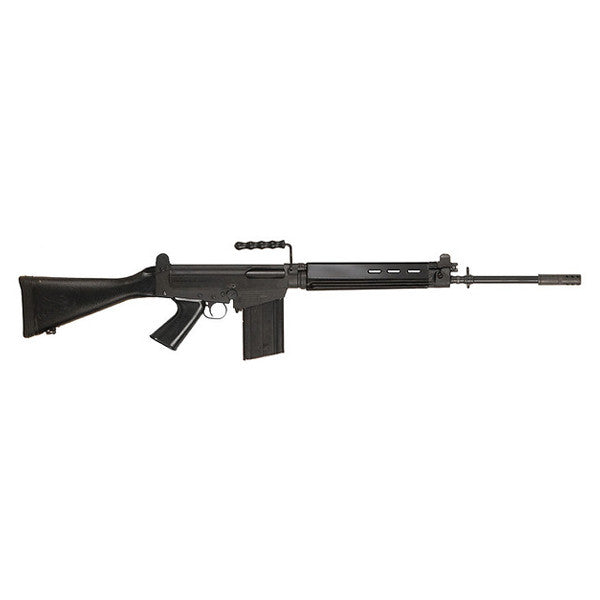
https://cdn.shopify.com/s/files/1/0276/1899/products/FN-FAL-Main-Battle-Rifle.jpg Last week, police officers in Paraguay found that at least 42 battle rifles had been stolen from their armory and replaced with toy replicas. It’s unclear if a flag with the word “BANG!” written on it popped out of the barrels. ABC Color first reported the discovery last Friday, saying officials were performing an inspection at the headquarters of the Department of Armaments and Munitions of the National Police when they found the toy rifles. More details emerged over the weekend when Paraguay’s Minister of the Interior Juan Ernesto Villamayor addressed the situation calling it, “a very serious criminal act.” According to NPR, the total number of FN FAL rifles stolen now stands at 44, with an additional 90 small arms that have gone missing. The Brazilian-made rifles were reportedly being held in storage in Capiatá because they were considered obsolete. After authorities noticed “signs of irregularities,” an inspection was carried out and part of the weapons cache had been replaced with what was said to be Airsoft replicas. ABC Color obtained a photo of one of the imposter weapons. The BBC reports that the inspection was prompted by the appearance of some of the rifles on the black market over a year ago. They reportedly sell for up to $10,000 and the stolen inventory is believed to have been smuggled into Argentina and Brazil. A report from earlier this year found that Paraguay and the U.S. are the two biggest sources of illegal foreign guns in Brazil. https://i.pinimg.com/236x/6c/97/3c/6c973cb72db8d86b8115b30b986ea148.jpg The officer in charge of the facility where the guns were stored first assumed duty in January, and according to ABC Color, he admitted that he did not personally review an inventory list presented to him by subordinates. He has now been relieved of duty. [img]https://racismandnationalconsciousnessnews.files./2008/11/police-repression-asuncion1.jpg[/img] Source:cc: Lalasticlala |
| Crime › Re: Man Brutalises His Wife, Tears Up Her Certificates After Quarrel. Photos by BruncleZuma: 2:37pm On Aug 29, 2018*. Modified: 6:47pm On Aug 29, 2018 |
dingbang:My brother some stories no good to enter public...as my grandmother go talk...make dem go carry their dirty wrapper from where dem baff 1 Like |
| TV/Movies › Re: What's Your Favourite Movie So Far This Year? by BruncleZuma: 2:15pm On Aug 29, 2018 |
theunnamed:My brother my accent no be here ooo... 1 Like |
| Crime › Re: Man Brutalises His Wife, Tears Up Her Certificates After Quarrel. Photos by BruncleZuma: 1:23pm On Aug 29, 2018 |
| Ladies and gentlemen it is now official...keep ya certificates in your parent's houses before stories that affects the mind starts to crop out. 24 Likes 1 Share |
| Travel › Re: Seven Important Points To Know Before Travelling To Dubai by BruncleZuma: 1:08pm On Aug 29, 2018*. Modified: 2:38pm On Aug 29, 2018 |
| No Be By Force To Go Dubai Lastly; - Honking your horn at other passengers is an offence... - Dissing The Emirates online is a serious offence... - Ogling their women...big no-no - No matter how much money you have you'll still be an African and an underling... 10 Likes 1 Share |




1 2 3 4 5 6 7 8 ... 275 276 277 278 279 280 281 282 283 (of 456 pages)