CraigB's Posts
Nairaland Forum › CraigB's Profile › CraigB's Posts
1 2 3 4 5 6 7 8 ... 105 106 107 108 109 110 111 112 113 (of 143 pages)
 Foreign Affairs › Re: Who Has The Strongest Military In Africa? by CraigB: 10:13pm On Aug 03, 2013 Foreign Affairs › Re: Who Has The Strongest Military In Africa? by CraigB: 10:13pm On Aug 03, 2013 |
Just look at this one: http://nigeriavillagesquare.com/features/south-africa-ripping-nigeria-off.html I had the misfortune of walking through a South African owned shop in Lagos recently. Mr. Price to be precise. I had just returned from a trip to Johannesburg and looking for cheap gifts i had forgotten to pick up for my hangers on when i returned. There was a piece of sweat shirt I had made a mental note to purchase at Mr. Price and decided to get it at the Nigerian store. This was a piece of item placed at their “priced to go” racks at N1,800 (R114.74) per piece. I have a long, retentive memory and i could still recall that this same piece of sweatshirt sells for N784.24 (R49.99) in South Africa. And if you factored in my 14% tax rebates, that sweat shirt did in fact come to me at N669.34 (R42.99). That’s some 269% increase over and above the marked prices inside South Africa. This huge price differential is typical across board on most south african owned consumer products in Nigeria. From Shoprite to Chicken Republic to Massmart (Game), Mr. Price, Woolworth and Truworths. It is a tale of undue exploitation of Nigerians by South African Businesses. Before i am crucified for being xenophobic, it is important to understand that the criticism of South African companies have persisted as a consequence of their approach to business in Nigeria, which has often been characterised as predatory and mercantilist. South Africa’s foreign policy towards Nigeria and indeed, towards all of Africa is not based on any Pan-Africanism or anti-imperialism; it is rather based on promoting South Africa’s expanding business interests on the continent. It is an expansionist agenda that South African corporations and parastatals have successfully implemented in a one-sided hegemonic relationship. As echoed by Foluso Phillips, the chairman of Lagos-based Phillips Consulting, a business consultancy of branding advisors, “There is much that South Africa can offer Nigeria, but there has been a problem of attitude and lack of trust as well as divergent objectives by both parties,… however, there must be a strong spirit of win-win, as the track record and perception makes it all look one-sided in South Africa’s favour.” Believe me, I am a fan of South African business in Nigeria. Rightly or wrongly, the economic boosts our country has experienced in various sectors of the economy, in particular, retail and telecommunication, through the interventions of South African businesses have helped to redefine the consumer experience here. They have brought healthy competitions and quality alternatives to other product offerings. They have been open about their desire to conquer the consumer market and have in turn created employment opportunities for thousands of Nigerians. They saw the potential of the middle income groups in Nigeria and positioned themselves to tap into it. My grouse however, is that this competitive positioning cannot and should not be exploitative in nature, which is exactly what is happening today. It shouldn’t happen in a market of 170 million people in which, 40% of the population describe themselves as middle income earners. This target group alone represent a market that’s still larger than the entire population of South Africa! Worse still, this should not be happening in a country that allows businesses to repatriate 100% of entire profits back to home. And it definitely shouldn’t be happening in a country that has massive disparities in incomes with it. Some comparative economic data will suffice here: Nigeria South Africa Population 170 million 52 million Gross Domestic Product $268.7 billion $375.9 billion GDP per Capita $1,657 $7,257 Exports (1st Quarter, 2012) $750 million $150 million How does it happen that the earning power of the average south african is more than 4 times that of his Nigerian counterpart and yet, Nigerians are made to pay almost 3 times for the same quality of goods. The reality is, South African companies are making a dangerous killing in Nigeria and we are helpless to do anything about it. There is evidence that South African companies have been involved in blatant profiteering and looting in Nigeria. For a very long time, MTN charges in Nigeria were the highest rates in the world for cellular phone calls. And despite its massive profits, MTN has really only created about 500 permanent jobs. Most of its employees are casual or temporary workers, and just like other South African corporations, denies all of its workers the right to join a trade union. Something that would be most unheard of in their own country. And do not be deceived by the trade surplus in Nigeria’s favour. Of the 750 million dollars worth of Nigerian exports to South Africa reported in the first three months of 2012 by The South African Revenue Service, 740 million dollars worth are made up of mineral products, mainly oil. That means, other than oil, Nigeria have absolutely no stake in South Africa’s economy. Compare that with MTN owning 52% of Nigeria’s mobile telecommunications market; franchises like Nandos, Chicken Republic and St. Elmos, etc owning 50% of the international fast food market worth US$2.5 million per annum; DSTV accounting for 90% of the viewers that watch satellite TV in Nigeria; SASOL playing major roles in Escravos with Chevron; and Entech and Broll managing prime estates and properties including the development of the Bar Beach (Eko Atlantic) and management of over 600 fuel stations and malls across Nigeria respectively. This can’t healthy. There is a reason why such unequal trade relations exist between Nigeria and South Africa. The bilateral agreements signed by both governments since 1999 allows this to happen without hinderance to operations. South African companies’ investments in Nigeria are heavily protected from any interference at any level by the Nigerian government. It is a license to grow as they please without consequence. Added to this, there are substantial tax rebates for companies operating here through agreements on eradicating double taxation. South African companies that paid tax in Nigeria are protected from paying taxes back home and can repatriate the entire profits. Now, imagine the US$5.3 billion MTN had earned after tax in the 10 years of operation from 2001 – 2011 finding its way back to the South African economy tax free! Why wouldn’t the Rand be stronger than the Naira at any level? When the foundations of this country was laid in the fight against imperialism, it was not envisioned to have it substituted with another form of neo-colonialism. The activities of South African businesses in Nigeria have been abrasive to Nigerians and the Nigerian economy. There is a siege mentality they have on this country that needs to be addressed. They have created opportunities not to develop the Nigerian economy but to exploit its resources. We experienced that with the British, endured it with the Chinese and now, it’s the South Africans that are our new colonialists. This is not the sort of relationship we should be aspiring to at this time. The sooner our government addresses these imbalances the better. ___ YOU ARE OWNED 1 Like |
| Foreign Affairs › Re: Who Has The Strongest Military In Africa? by CraigB: 10:09pm On Aug 03, 2013 |
2smooth2shout: *YAWNS and stretches*Apart from this moment, when did you mention political influence? Given that Naai-gerians are employed in these companies, feel free to answer your own question about who will lose  id1oT. id1oT.Secondly, if we take your money everyday, why exactly is "political influence" important? This is why Naai-geria is being used by every country, from China to South Africa. You people don't know how the world works. If people take your money everyday, then you're effectively done. Naai-geria is South Africa's playground, while South Africa keeps Naai-geria at bay. |
| Foreign Affairs › Re: Who Has The Strongest Military In Africa? by CraigB: 9:53pm On Aug 03, 2013 |
2smooth2shout: EMPTY. EMPTY as usual.Not as empty as the space between your ears. You practically admitted that your question is silly and chose to brand it a "metaphor" and did not explain where the metaphor is exactly. I certainly don't see it. Moving along - when did you give the order? I won't bother waiting for an answer. I did not know that you're now the international anti-terrorism treaty that we acted based on?  Is this the influence that we are talking about? South Africa continuing to take your money? ___ http://mg.co.za/article/2013-08-02-00-nigeria-seeks-sas-vehicle-expertise Plans to set up automotive manufacturing plants could prove beneficial to both countries. The trade and industry ministers of sub-Saharan Africa’s two superpowers are collaborating on the concept of the “Zagerian” car. Nigeria wants to set up its own motor industry — and it wants South Africa’s help. South Africa has agreed to share insight on its automotive production and development plan. In return, it hopes to export its components to Nigeria for a preferential rate. But major changes would need to take place before Nigeria’s motor manufacturing landscape in any way resembles that of South Africa’s. In order to create a truly “Zagerian” manufacturing scene, the Nigerians will need to increase import tariffs significantly, see a massive increase in demand for new cars, and tackle a consumer preference for imported vehicles. In the first quarter of this year, car sales in South Africa totalled 113 971. Every year, over 400 000 new cars are bought by its population of about 51-million people. In comparison, Nigeria, with a population of more than 160-million, imports a total of 50 000 new cars every year. This makes up the bulk of the new-car market in the country. There is only one local manufacturer and it has not made significant inroads into the market. That means South Africa sells more than eight times the number of new cars Nigeria does, despite Nigeria having more than triple South Africa’s population. Nigeria rose from being the 13th-biggest buyer of South African automotive exports in 2011 to the ninth-biggest buyer last year. It was South Africa’s second-biggest African customer, beaten only by Zambia. The total value of South Africa’s automotive exports to Nigeria rose from R1.3-billion in 2011 to R2.14-billion last year, according to the Automotive Export Manual published by the National Association of Automobile Manufacturers of South Africa. Last year, South Africa’s vehicle sales to Nigeria constituted almost 20% of all its automotive exports. The import factor The South African government-supported production and development plan replaced the motor industry development plan in January. It aims to increase local vehicle production by incentivising local investment and hiking up import tariffs to 20% and 25% for imported components and vehicles respectively. The South African motor vehicle market is made up almost entirely of local sales, but it has come at a cost, with some contesting that the programme has contributed R49-billion to the country’s trade deficit, Business Day reported in April. Nigeria imports 150 000 used cars every year — three times the number of new cars brought into the country — and spends $360-million dollars bringing them in, according to the National Automotive Council in Nigeria. The country’s “import-friendly” tariff policy has led to cheaper imports. “The sorry thing for Nigeria is that, while other [developing] countries were increasing their duties, Nigeria actually reduced its import duties on vehicles from 30% to between 10% and 20%, making Nigeria one of the dumping grounds for automobiles,” opined an editorial in the Leadership newspaper of Nigeria. Unlike in South Africa, where the sale of used imported cars is banned, in Nigeria motor vehicles up to 15 years old can be sold in the country. In a bid to protect the local industry, a government-mandated committee had been considering decreasing the age of allowable imports, which was originally 10 years. “But instead they increased it to 15 years,” said Dianna Games, chief executive of the South Africa-Nigeria Chamber of Commerce. “There was a bit of an outcry around that.” The allowance of older vehicle imports into the country, she said, was to enable more Nigerians to buy cars. “A five-year-old car in Nigeria is still expensive,” said Games. “The reason [the decision to allow older imports was made] was to make it more affordable. At the time the petrol price was going up, so it was a double whammy for the consumer.” But according to Leadership, other countries such as South Africa got around this by restricting low tariffs to small vehicles, “to help the middle class”. Local tastes But South African manufacturers are also up against the buying preferences of Nigerians — and according to Games, they prefer imported brands to local ones. Chief Innocent Chukwuma, the chairperson of Nigeria’s Innoson Vehicle Manufacturing — the first automobile manufacturing plant in the country — said the company is suffering from low demand from both the private and the public sectors. Chukwuma said in January that Nigerians refused to appreciate and patronise locally made vehicles. This was despite the fact that some of the cars were cheaper and of better quality than their imported counterparts. The Nigerian market is not only open to formal imports. It is bolstered by the existence of informal imports from Dubai, China and other places, said Games. These products “remain popular in Nigeria because they are priced lower, not having had to have duties and tariffs applied to their sale price”. Nevertheless, Games predicts this will change and Nigerians will seek legally imported or locally made cars as they become wealthier. “As the middle class grows, people will seek better value and proper back-up service,” she said. Both Toyota and Nissan have shown an interest in setting up operations in Nigeria, should the “Zagerian” plan get the go-ahead. The South African Revenue Service does not track car exports by brands but, according to Games, Toyota and Nissan are the two most popular exports to Nigeria from South Africa. Any preferential deal will do Preferential opportunities in Nigeria for the manufacturers will provide a valuable leg-up for entry into a highly competitive market, said Games. “This would be a great opportunity for South African auto manufacturers as the competition is stiff in the Nigerian market and any preferential deal would be useful.” The Mail & Guardian conducted a price comparison between five popular retail cars in Nigeria and South Africa. It shows that prices are generally between 4% and 15% higher in Nigeria than in South Africa, although the comparison was a snapshot rather than one that should be considered reflective of the entire market. Nevertheless, said Games, a local manufacturing capability would not necessarily translate into cheaper prices for the consumer. “The cost of production in Nigeria is very high,” said Games. “There is nothing to say that it will be cheaper to buy local cars.” And yet, despite myriad difficulties, the South African industry remains optimistic about its opportunities for involvement in the Nigerian motor market, which is “still in its infancy” but has great potential for growth, said Games. “As incomes grow, the market for goods and services is growing and that will drive demand.” Pockets of potential Norman Lamprecht, executive manager of the National Association of Automobile Manufacturers of South Africa, also saw pockets of potential. “Opportunities of mutual benefit could be pursued, especially on the automotive component side, depending on the specific models to be produced in Nigeria,” he said. To this end, the South African government is drafting another agreement of co-operation with Nigeria. Department of trade and industry spokesperson Sidwell Medupe says it is too early to disclose the timelines and how exactly this is being done. “We are assessing the best ways to collaborate,” he said. The future of the “Zagerian” car industry hangs in the balance while they do. |
| Foreign Affairs › Re: Who Has The Strongest Military In Africa? by CraigB: 9:43pm On Aug 03, 2013 |
2smooth2shout: Metaphor. donkey.. you don't need to be a genius to understand the question.A metaphor of what, exactly? You are all over the place, except where you need to be. Here is your question: 2smooth2shout: name one country that respects south africa. just one country SA can tell do and they won't hesitate.So, in other words, you aren't able to name a single country in the world that can do what you expect South Africa to do. So, in other words, this was a silly question? Why then do you continue to demand an answer? Why have you wasted our Saturday discussing a nonstarter? Oh, I know! You asked a question before engaging your brain. And now, it's backtracking time. Only, it's too late. Trust a Naai-gerian to celebrate the fact that South Africa takes your money every single day, while you try to beg for a chance to be allowed to do business in South Africa ______ http://mg.co.za/article/2013-08-02-00-nigeria-seeks-sas-vehicle-expertise Plans to set up automotive manufacturing plants could prove beneficial to both countries. The trade and industry ministers of sub-Saharan Africa’s two superpowers are collaborating on the concept of the “Zagerian” car. Nigeria wants to set up its own motor industry — and it wants South Africa’s help. South Africa has agreed to share insight on its automotive production and development plan. In return, it hopes to export its components to Nigeria for a preferential rate. But major changes would need to take place before Nigeria’s motor manufacturing landscape in any way resembles that of South Africa’s. In order to create a truly “Zagerian” manufacturing scene, the Nigerians will need to increase import tariffs significantly, see a massive increase in demand for new cars, and tackle a consumer preference for imported vehicles. In the first quarter of this year, car sales in South Africa totalled 113 971. Every year, over 400 000 new cars are bought by its population of about 51-million people. In comparison, Nigeria, with a population of more than 160-million, imports a total of 50 000 new cars every year. This makes up the bulk of the new-car market in the country. There is only one local manufacturer and it has not made significant inroads into the market. That means South Africa sells more than eight times the number of new cars Nigeria does, despite Nigeria having more than triple South Africa’s population. Nigeria rose from being the 13th-biggest buyer of South African automotive exports in 2011 to the ninth-biggest buyer last year. It was South Africa’s second-biggest African customer, beaten only by Zambia. The total value of South Africa’s automotive exports to Nigeria rose from R1.3-billion in 2011 to R2.14-billion last year, according to the Automotive Export Manual published by the National Association of Automobile Manufacturers of South Africa. Last year, South Africa’s vehicle sales to Nigeria constituted almost 20% of all its automotive exports. The import factor The South African government-supported production and development plan replaced the motor industry development plan in January. It aims to increase local vehicle production by incentivising local investment and hiking up import tariffs to 20% and 25% for imported components and vehicles respectively. The South African motor vehicle market is made up almost entirely of local sales, but it has come at a cost, with some contesting that the programme has contributed R49-billion to the country’s trade deficit, Business Day reported in April. Nigeria imports 150 000 used cars every year — three times the number of new cars brought into the country — and spends $360-million dollars bringing them in, according to the National Automotive Council in Nigeria. The country’s “import-friendly” tariff policy has led to cheaper imports. “The sorry thing for Nigeria is that, while other [developing] countries were increasing their duties, Nigeria actually reduced its import duties on vehicles from 30% to between 10% and 20%, making Nigeria one of the dumping grounds for automobiles,” opined an editorial in the Leadership newspaper of Nigeria. Unlike in South Africa, where the sale of used imported cars is banned, in Nigeria motor vehicles up to 15 years old can be sold in the country. In a bid to protect the local industry, a government-mandated committee had been considering decreasing the age of allowable imports, which was originally 10 years. “But instead they increased it to 15 years,” said Dianna Games, chief executive of the South Africa-Nigeria Chamber of Commerce. “There was a bit of an outcry around that.” The allowance of older vehicle imports into the country, she said, was to enable more Nigerians to buy cars. “A five-year-old car in Nigeria is still expensive,” said Games. “The reason [the decision to allow older imports was made] was to make it more affordable. At the time the petrol price was going up, so it was a double whammy for the consumer.” But according to Leadership, other countries such as South Africa got around this by restricting low tariffs to small vehicles, “to help the middle class”. Local tastes But South African manufacturers are also up against the buying preferences of Nigerians — and according to Games, they prefer imported brands to local ones. Chief Innocent Chukwuma, the chairperson of Nigeria’s Innoson Vehicle Manufacturing — the first automobile manufacturing plant in the country — said the company is suffering from low demand from both the private and the public sectors. Chukwuma said in January that Nigerians refused to appreciate and patronise locally made vehicles. This was despite the fact that some of the cars were cheaper and of better quality than their imported counterparts. The Nigerian market is not only open to formal imports. It is bolstered by the existence of informal imports from Dubai, China and other places, said Games. These products “remain popular in Nigeria because they are priced lower, not having had to have duties and tariffs applied to their sale price”. Nevertheless, Games predicts this will change and Nigerians will seek legally imported or locally made cars as they become wealthier. “As the middle class grows, people will seek better value and proper back-up service,” she said. Both Toyota and Nissan have shown an interest in setting up operations in Nigeria, should the “Zagerian” plan get the go-ahead. The South African Revenue Service does not track car exports by brands but, according to Games, Toyota and Nissan are the two most popular exports to Nigeria from South Africa. Any preferential deal will do Preferential opportunities in Nigeria for the manufacturers will provide a valuable leg-up for entry into a highly competitive market, said Games. “This would be a great opportunity for South African auto manufacturers as the competition is stiff in the Nigerian market and any preferential deal would be useful.” The Mail & Guardian conducted a price comparison between five popular retail cars in Nigeria and South Africa. It shows that prices are generally between 4% and 15% higher in Nigeria than in South Africa, although the comparison was a snapshot rather than one that should be considered reflective of the entire market. Nevertheless, said Games, a local manufacturing capability would not necessarily translate into cheaper prices for the consumer. “The cost of production in Nigeria is very high,” said Games. “There is nothing to say that it will be cheaper to buy local cars.” And yet, despite myriad difficulties, the South African industry remains optimistic about its opportunities for involvement in the Nigerian motor market, which is “still in its infancy” but has great potential for growth, said Games. “As incomes grow, the market for goods and services is growing and that will drive demand.” Pockets of potential Norman Lamprecht, executive manager of the National Association of Automobile Manufacturers of South Africa, also saw pockets of potential. “Opportunities of mutual benefit could be pursued, especially on the automotive component side, depending on the specific models to be produced in Nigeria,” he said. To this end, the South African government is drafting another agreement of co-operation with Nigeria. Department of trade and industry spokesperson Sidwell Medupe says it is too early to disclose the timelines and how exactly this is being done. “We are assessing the best ways to collaborate,” he said. The future of the “Zagerian” car industry hangs in the balance while they do. |
| Foreign Affairs › Re: Who Has The Strongest Military In Africa? by CraigB: 8:58pm On Aug 03, 2013*. Modified: 9:13pm On Aug 03, 2013 |
2smooth2shout: you should have at least proved your higher level of intellect by proving me wrong. ID1OTYou asked the question. I didn't. You need to prove yourself right. Which country in the world can tell another one what to do without resistance? Which country meets your very high expectations? Just give us one, before you can demand to know what countries South Africa can "tell do" without resistance. You asked a very specific question. So, don't go off on a wishy-washy tangent. Just one country. Not too many. Surely, that's not too tall an ask, non? It's not as if calling me an id1ot will suddenly make you smart. Your utterances are here for all to see. It's clear who the mentally challenged person is here. And that certainly isn't me. "Moving to [y]our backyard", while we are in your house. Wonderful. 1 Like |
| Foreign Affairs › Re: Who Has The Strongest Military In Africa? by CraigB: 8:23pm On Aug 03, 2013 |
2smooth2shout: what an ID1OTLet's see - in Naai-geria, the World Wide Web is stuck in one timezone. Ok! Very smart! It's 14h23 now. Does that fail to make sense to you, Naai-gerian? Wow! You're one smart fellow. Speaking of time, it's time to bite into a juicy steak. I'll think of you as I enjoy my lunch. Enjoy life in Logooz, loser. Chow now... |
| Foreign Affairs › Re: Who Has The Strongest Military In Africa? by CraigB: 8:16pm On Aug 03, 2013*. Modified: 8:36pm On Aug 03, 2013 |
2smooth2shout: the EU did it to make your stup1d cowardly government to legalize gay marriage without resistanceIn other words, you cannot name a single country in the world that can tell another country what to do without resistance. You simply asked the question because you enjoy being illogical. In other words, the EU is a country in Naai-geria. In other words, South Africa's being only the 7th country to legalise gay marriage in terms of south Africa's very own constitution means that South Africa was told what told what to do. When and where exactly, did such happen? In other words, all the member states of the EU have gay marriage. Makes sense, right? (Naai-gerian logic at its best, or worst, depending on how you look at it). In other words, your spewing rubbish means that you're actually the smart one? Sure, dude. We believe you. Too smooth to shout losing his cool. Too smooth to shout reaching the end of his mental capabilities. Too smooth to shout stuck in the underside of a debate. 1 Like |
| Foreign Affairs › Re: Who Has The Strongest Military In Africa? by CraigB: 7:52pm On Aug 03, 2013 |
agaugust: has anyone ever noticed on this forum that one misled s.perm collided with the wrong ovary egg in the most populous nation of africa?Now that you mention it... |
| Foreign Affairs › Re: Who Has The Strongest Military In Africa? by CraigB: 7:47pm On Aug 03, 2013 |
agaugust: update on african military rankings...As expected, whenever you lose arguments. You revert to your "Seleka" shell. There is absolutely nothing you can do about South Africa's being ranked above Naai-geria. You can cry about it. You can laugh about it. You can jump up and down. N.O.T.H.I.N.G. will change. 3 Likes |
| Foreign Affairs › Re: Who Has The Strongest Military In Africa? by CraigB: 7:44pm On Aug 03, 2013 |
souldust: we asked for his arrest and prosecution. It was a brilliant move by the govt not to have him extridited to Nigeria.And that is exactly the point. The incompetence of the Naai-gerian system, as well articulated by you. It is a variation of the same incompetence that has made what started off as a s*tupid movement fester into what BH is today. |
| Foreign Affairs › Re: Who Has The Strongest Military In Africa? by CraigB: 7:40pm On Aug 03, 2013 |
agaugust: the focus here is on military power and international influence, not infrastructural development, you mofo !As stated where, exactly? It is clear that this is economic commentary. Nowhere does it say the focus is on military power. You cannot read. And in any case, we will go with "facts" as contained in the fact book and not the opinion of some retired people. Here is the guide to the "country comparison" section of the fact book: REFERENCES :: GUIDE TO COUNTRY COMPARISONS Geography :: People and Society :: Economy:: Energy :: Communications :: Transportation :: Military :: South Africa sits at number 26 in the world. Nigeria sits at number 31 in the world. Cry about it, why don't cha? 1 Like |
| Foreign Affairs › Re: Who Has The Strongest Military In Africa? by CraigB: 6:50pm On Aug 03, 2013 |
agaugust: .Imbec1le. You're now topping off your celebration of a Chinese "loan". A neutral source that wants your oil? Sure, dude. And further, the quoted text is economic commentary. Economic commentary, dude. Further still, I don't see "best" in there. Do you? Further still, yet - now you are happy to quote US sources on Naai-geria? Good to know. We shall remember that. I ask again: are you even educated? |
| Foreign Affairs › Re: Who Has The Strongest Military In Africa? by CraigB: 6:31pm On Aug 03, 2013 |
agaugust: you soweto mofos just complained that nigerians eat their pets, dogs, goats etc. since when did animals become human beings ? why bthe complaints ? then s.hut up !Since when is the ministry of environmental affairs "the army"? Are you even educated? Never mind having an MBA, which is bollocks. So, involving border patrol soldiers and other specialists as strategic partners makes this a military offensive?  You need to find a way to mask your ignorance. The best way is to not be so loud. Have fun out there. 1 Like |
| Foreign Affairs › Re: Who Has The Strongest Military In Africa? by CraigB: 6:25pm On Aug 03, 2013 |
agaugust: why should i bother to convince a fool ? i post for nigerians to know what goes on, nairaland is a nigerian forum, you soweto guys are poachers here, you have no such intellectually stimulating form is south africa unless your european masters 'transfer some more brain technology' to you .In other words, there's no proof. No wonder the noise and the elevated levels of foaming in the mouth. Happy weekend there in Lagos, assuming this is possible at all.  |
| Foreign Affairs › Re: Who Has The Strongest Military In Africa? by CraigB: 5:09pm On Aug 03, 2013 |
I'm off to enjoy my weekend. It's almost noon. Enjoy the stinky Lagos, losers! Chow now! |
| Foreign Affairs › Re: Who Has The Strongest Military In Africa? by CraigB: 5:09pm On Aug 03, 2013*. Modified: 5:35pm On Aug 03, 2013 |
agaugust: today's early morning post repeated second time, for the deaf, dumb, and blind south african citizens.I take it - in addition to your being a loser, you also can't read. On what basis do you interpret those words to mean "number one military in Africa"? To start off with, the quoted text is clear - Sub Saharan Africa, it says. Secondly, many a country has been called "key" by the US. Thirdly, your oil is up for grabs and the US knows what it needs to do. Fourthly, when you were snubbed by Obama, you put on a sour grapes show and spoke about China (the same China that is set to steal your oil as well ). Now, you care what the US says, all of a sudden. You're like a child. Childish. Not child-like. |
| Foreign Affairs › Re: Who Has The Strongest Military In Africa? by CraigB: 4:56pm On Aug 03, 2013 |
2smooth2shout: name one country that respects south africa. just one country SA can tell do and they won't hesitate.Name one country in the world that "tells do" another and the other doesn't hesitate. Just one. D*umb Naai-gerian logic. D*umb question. The principles of diplomacy allude you. |
| Foreign Affairs › Re: Who Has The Strongest Military In Africa? by CraigB: 4:53pm On Aug 03, 2013 |
agaugust: show us weblink source of UN charter/regulations that says any countries that fight a war will be slammed with weapons importation embargo, show us that law, dummy !As soon as you show us "[a] weblink source" that says that Naai-geria's military is the best in Africa or whatever it is you're claiming. |
| Foreign Affairs › Re: Who Has The Strongest Military In Africa? by CraigB: 4:31pm On Aug 03, 2013 |
agaugust: [size=16pt]Mali Conflict: French forces begin Mali withdrawal completely...defeated together with nigerian forces, both are failures according to south africans' opinion [/size]The display of id*ocy continues. France was always poised to withdraw. France wasn't part of the latest mission, which was the baby of west African forces. Don't try to equate France's withdrawal, which was always in the offing to Naai-geria's. You don't even understand the intricacies of your own mission! |
| Foreign Affairs › Re: Who Has The Strongest Military In Africa? by CraigB: 4:25pm On Aug 03, 2013 |
agaugust: .The fake MBA strikes again! "Most", you say? Based on the fact that a foreign company has a stake in the collection of tolls through specifically located gantries? Never mind the ownership of the roads, which are always owned by the state? How can state-owned infrastructure be European? Unless you don't know what infrastructure is? You're an id*iot. |
| Foreign Affairs › Re: Who Has The Strongest Military In Africa? by CraigB: 4:24pm On Aug 03, 2013*. Modified: 6:42pm On Aug 03, 2013 |
agaugust: [size=16pt]nigerian army displays B0K0 H.ARAM weapons captured in battles[/size]Since when is what is reported indicative of victory? As soon as your military campaign stops, things will get back to where they were. Unless you're trying to tell us what your military will never stop the campaign? Unless you'll be stuck in the campaign for years? In which case, we might as well write Naai-geria off as a potential military of influence in the rest of Africa. |
| Foreign Affairs › Re: Who Has The Strongest Military In Africa? by CraigB: 4:21pm On Aug 03, 2013*. Modified: 6:45pm On Aug 03, 2013 |
agaugust: did south african army capture MEND leader in battle ?Still, you need to be thankful to SA. There's tons of comments from Naai-gerian losers stating that South Africa did what Naai-geria was too incompetent to do. Face it. Your incompetence is the sole reason why you're dealing with B Haram today. |
| Foreign Affairs › Re: Who Has The Strongest Military In Africa? by CraigB: 6:55am On Aug 03, 2013 |
Msauza: Wow!! The same US that will built your power station. The same US that flattered you by falsely branding you the most powerful military in Africa. Oh! Shame, you are such a low class to be taken for a ride by America because of your OIL.Mr Seleka is like a child. But then again, that's Naai-geria for you. |
| Foreign Affairs › Re: Who Has The Strongest Military In Africa? by CraigB: 5:08am On Aug 03, 2013 |
Naai-gerian IdiOOTs are used by everyone!! Even South Africa plays in Naai-geria A nation of foools. __________ http://telegraphng.com/2013/07/chinas-loan-to-nigeria/ The much talked about agreement between China and Nigeria to secure a $1.1 billion (about N160 billion) low-interest loan from the Asian giant to build much-needed infrastructure came to its fore recently as the Ministry of Finance broke news of the deal struck during President Goodluck Jonathan’s meeting with Chinese President Xi Jinping in Beijing on Wednesday. It is no longer news that China has made significant investments in Africa, which has played itself out with several loans to various African nations. The loan to Nigeria is the largest by the Asian giant to any country in Africa and is aimed at building roads, airport terminals in four cities, and a light-rail line for Nigeria’s capital. The narrative has thus far been told from various sources without taking into account the larger context of how Chinese banks fit into the pre-existing system. The surface benefits are quite intriguing, as the loan will costs less a lot less than IMF and World Bank sources, borrowing at a 1.5% above LIBOR (the London Inter-Bank Offered Rate, the benchmark interest rate for international finance); and has a grace period of seven years, with payment over a further twenty years, which is far longer than the European banks’ normal term of four or five years, without any grace period. It has to also be said that the most unusual feature of the line of credit is that it’s the usual Asian, oil-for-infrastructure model, used by China all over Africa and the same Japan used in China three decades before. [size=14pt]Most interestingly, however, is that the infrastructure development said to be targeted by this loan will be undertaken by Chinese state-owned companies; which is a very ingenious way to extract oil from Nigeria and at the same time provide business for state owned corporations, while creating jobs for its growing work force. [/size] According to reports, Africa’s biggest oil producer, which has a huge infrastructure deficit and has most of its citizens living in poverty, has prior to now gone into several agreements with Chinese companies, who are already building roads across Nigeria in contracts worth $1.7 billion. However, this new loan agreement will see China’s demand for crude oil produced in Nigeria rise tenfold to 200,000 barrels a day by 2015. Reports say that representatives from both countries signed five deals, including a lending agreement between China’s Import-Export Bank and the Nigerian finance ministry for the expansion of the airport terminals and an economic and technical cooperation pact following a meeting between Xi and Jonathan. |
| Foreign Affairs › Re: Who Has The Strongest Military In Africa? by CraigB: 4:59am On Aug 03, 2013 |
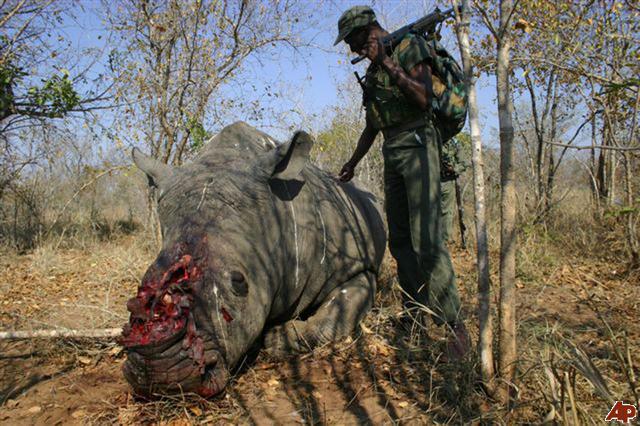
agaugust:Number one: That's a ranger. Number two: You did not put up the 2010 source because it works in South Africa's favour. Desperate loser. http://www.belfasttelegraph.co.uk/news/world-news/police-smash-rhino-poaching-ring-28560726.html |
| Foreign Affairs › Re: Who Has The Strongest Military In Africa? by CraigB: 4:56am On Aug 03, 2013 |
agaugust: Obama visited south africa, ate your food, drink your wine, he no dash you one dollar despite how president zuma bowed down for this his son's age mateIdiOOT! China gave you a loan, so that you will hire them to build your roads! Therefore, in addition to paying the loan back with interest, you will also give China your business, using Chinese money! There's no idiOOT like a Naai-gerian idiOOT. And there's no Naai-gerian idiOOT like Mr Seleka. |
| Foreign Affairs › Re: Who Has The Strongest Military In Africa? by CraigB: 11:22pm On Aug 02, 2013 |
Naai-gerian humanoids, you've been warned… http://www.washingtonpost.com/world/africa/nigerian-military-arrest-of-terrorist-leader-in-neighboring-niger-foils-regroup-for-attacks/2013/08/01/b41dee34-faa4-11e2-89f7-8599e3f77a67_story.html “The Joint Task Force wishes to alert citizens ... of the impending plans by Boko Haram terrorists to carry out massive attacks and bombings in Maiduguri metropolis and other parts of Borno State any moment from now and during the Eid al-Fitr.” That celebration on Aug. 8 marks the end of the Ramadan fasting period. |
| Foreign Affairs › Re: Who Has The Strongest Military In Africa? by CraigB: 11:20pm On Aug 02, 2013 |
http://www.philly.com/philly/news/nation_world/20130802_ap_210f667b7f3b4be5bbc98070f3b5a7a8.html KANO, Nigeria (AP) - A Christian leader says he carried three bodies from this week's multiple blasts in the northern Nigerian city of Kano to a military hospital, raising the toll to at least 27 dead. Tobias Itika of the Christian group Ohaeneze said Friday the three were not counted in a toll from two other hospitals. He said other victims were treated at an orthopedic hospital but he did not have an exact figure. Two other hospitals reported treating 20 wounded. Nigeria's military said Islamic extremists Monday night planted multiple bombs around a Kano bar thronged with people. Tuesday night, extremists killed eight people in an attack targeting teachers and Muslim clerics in northeast Nigeria. The military warned Thursday of planned "massive attacks" in an ongoing Islamic uprising centered in Nigeria's northeast. The Associated Press |
| Foreign Affairs › Re: Who Has The Strongest Military In Africa? by CraigB: 10:58pm On Aug 02, 2013*. Modified: 11:17pm On Aug 02, 2013 |
Donian007: LOLZ! You aint even capable of making mua frown. I always told you I usually laugh off your comments here, because they always depict a NOBODY always proving NOTHING!Perhaps not, Clover-Denone. But certainly capable of getting at least two empty responses in a row from you. I doubt that a NOBODY would have your fingers visit your keyboard as often as yours do after my posts. There isn't a single one of my posts you've ever been or you'll ever be able to show up. Many times you've tried. Many times you've failed. All you can do now is "LOLZ".So, still: 1. Hurt is you. 2. Backward is you. 3. Naai-gerian is you. |
| Foreign Affairs › Re: Who Has The Strongest Military In Africa? by CraigB: 7:45pm On Aug 02, 2013 |
2smooth2shout: And you must be the biggest f00l if you think your dead police can face a full blown islamic insurgency.I repeat: our police won't allow potential insurgencies to be full-blown. The only reason why BH became a full-blown insurgency is because your state is incompetent. South African police squashed potential insurgencies long before they became full-blown. So, the point about South African police facing full-blown insurgencies is mute, unless you're Naai-gerian. Don't use your Naai-gerian standards on South Africa. You need to screw your head back on...the right way this time. |
| Foreign Affairs › Re: Who Has The Strongest Military In Africa? by CraigB: 7:39pm On Aug 02, 2013 |
sambos994: Why is there a union for SANDF?Why do you think? |
| Foreign Affairs › Re: Who Has The Strongest Military In Africa? by CraigB: 7:38pm On Aug 02, 2013*. Modified: 7:53pm On Aug 02, 2013 |
2smooth2shout: dude stop being ignorant. It's the worst desease.Where did I say you haven't moved from it? I said: "Your years of military rule have served to confuse you." Now I withdraw that. You clearly aren't confused. You are just ret*rded. The South African army, I repeat, cannot point guns at South Africans simply by virtue of crime. I have already given you one link showing how the deployment was viewed. There is lots of those. Only I won't spoon-feed you. You can read, I should hope. |


1 2 3 4 5 6 7 8 ... 105 106 107 108 109 110 111 112 113 (of 143 pages)