Elijahrona's Posts
Nairaland Forum › Elijahrona's Profile › Elijahrona's Posts
1 2 3 4 5 6 7 8 9 10 11 12 13 14 (of 16 pages)
 Education › Re: Cool Facts About Nature That'll Blow Your Mind by Elijahrona(op): 1:45pm On Jan 08, 2019 Education › Re: Cool Facts About Nature That'll Blow Your Mind by Elijahrona(op): 1:45pm On Jan 08, 2019 |
jeff1607:Thanks very much |
| Crime › Re: How DSS Busted The Printing Of Fake N20 Billion Notes by Elijahrona(m): 6:55am On Jan 08, 2019 |
Wow |
| Education › Re: Cool Facts About Nature That'll Blow Your Mind by Elijahrona(op): 6:18am On Jan 08, 2019 |
femi4:Yes (ATP) � |
| Education › Re: Cool Facts About Nature That'll Blow Your Mind by Elijahrona(op): 6:17am On Jan 08, 2019 |
owen10:Thanks |
| Education › Re: Cool Facts About Nature That'll Blow Your Mind by Elijahrona(op): 9:16pm On Jan 07, 2019 |
Osasnidas:So long as respiration is involved, they inhale oxygen 24/7. It's just that the oxygen produced from photosynthesis (in the day or when light is available) exceeds the amount of oxygen consumed in respiration. |
| Education › Re: Cool Facts About Nature That'll Blow Your Mind by Elijahrona(op): 8:33pm On Jan 07, 2019 |
Affable0709:HIV will only infect immune cells and no other type of cell Tomato spotted wilt virus (TSWV) will only infect tomato plant and no other organism. That's how they roll. They select just one type or very few types of cells to infect. That's what I meant |
| Education › Re: Cool Facts About Nature That'll Blow Your Mind by Elijahrona(op): 8:07pm On Jan 07, 2019 |
IjebuWarrior:It's the sad truth. That's why am trying to change it... Making people value nature by writing about it 1 Like |
| Education › Re: Cool Facts About Nature That'll Blow Your Mind by Elijahrona(op): 5:48pm On Jan 07, 2019 |
Ajibaba101:Abi o. |
| Education › Re: Cool Facts About Nature That'll Blow Your Mind by Elijahrona(op): 2:51pm On Jan 07, 2019 |
Cc Lalasticlala Ishilove Semid4lyfe Obinoscopy |
| Education › Cool Facts About Nature That'll Blow Your Mind by Elijahrona(op): 1:40pm On Jan 07, 2019*. Modified: 2:49pm On Jan 07, 2019 |
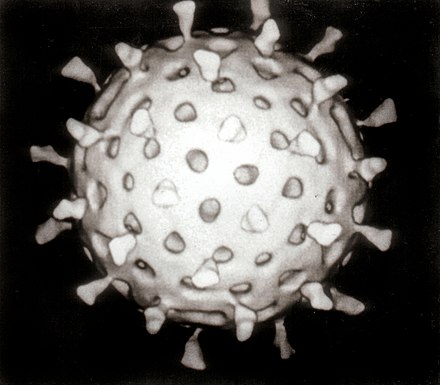
Nature of is beautiful, wonderful and cool. Learning more about nature is very satisfying. Some people though, may be unable to learn more about nature because of tight schedule and other reasons. Read this article to learn some random cool nature facts. The more you know, the happier you become. Random facts about nature. Cool nature facts to blow your mind Prepare for your mind to get blown away. There may have been some things you thought you knew in Biology. When you realize that you've been living a lie, you'll question your own existence� Plants breathe in Oxygen and breathe out carbon dioxide I remember when i was a child. Our teacher told us that animals breathe in oxygen and breathe out carbon dioxide. She told us that for plants, the process of respiration is the exact opposite of that in animals. We had to believe her because that's what everyone would say. I kept holding on to this belief until we were taught plant respiration in my 200lv. We were all surprised and didn't want to believe our lecturer when he told us that every aerobic organisms breathe the same way -oxygen inhaled and carbon dioxide exhaled. The thing is that plants also undergo photosynthesis. This means that for plants, they respire and photosynthesize. For photosynthesis to take place, there must be sunlight (or light which the plants can photosynthesize with). Photosynthesis also requires carbon dioxide to function. As the end result, photosynthesis produces nutrient (carbohydrate, energy, ATP, whatever you call it) and also produces oxygen as a bi-product. The amount of carbon dioxide taken into the plant by photosynthesis exceeds the amount of carbon dioxide taken out of the plant by respiration so during the day, we can say that more carbon dioxide is taken into the plant and more oxygen is taken out. When there's no light (at night) however, photosynthesis cannot occur so plants inhale only oxygen and exhale carbon dioxide. This means that we should not go too close to big trees at night because we'll be inhaling carbon dioxide from the plant. [img]https://2.bp..com/-FwwZ0wxK40c/XDIcZ1Qq-EI/AAAAAAAAEdA/AaY4sCFc_UIk3geOvvROyr3s1cb6CCgBwCK4BGAYYCw/s1600/Respiration%2Bin%2Bplants.jpg[/img] Plants Inhale oxygen (O2) and exhale Carbon dioxide (CO2) like every other organisms Euglena is the only animal-like and plant-like organism Euglena is under the kingdom Protista. The kingdom Protista is a kingdom characterized by unicellular eukaryotic organisms (solitary organisms with nucleus and more complex cell organelles) like Amoeba, Paramecium, etc. All the Protists organisms can be classified as animal-like or plant-like. This classification is based on how they gain nutrient. The animal-like ones gain nutrient by feeding on organic components of their environment and/or feeding on smaller organisms while the plant-like ones gain nutrient through photosynthesis (This means they have Chlorophyll). Euglena as an organism is both animal-like and plant-like. It switches to the best method of gaining nutrient with the availability of sunlight. Viruses aren't living Viruses are in the thin line between organisms and objects. For something to be classified as living, it has to have the characteristics of living things; movement, respiration, nutrition, irritability, growth, excretion, reproduction, death, etc. Viruses cannot do most of these on their own. For viruses to function, they need to be in a host cell. When outside a host, Viruses are as useful as useless. Without the organelles of its host, a virus cannot reproduce. Asides the characteristics of living organisms, viruses are very simple in structure; they're just composed of a nucleic acid (DNA or RNA, never both) inside a protein case, also having slight differences in their outside structure with regards the type. What the viruses do is that when they're inside their host, they insert their nucleic acid into the nucleic acid of their host. With this modification, the host will start producing more viruses with identical nucleic acid as the one inserted in it. When the host has expanded and cannot hold more viruses, it bursts and releases the already made new viruses into the environment. These new ones will then drift to new hosts. Trees communicate with and help each other Yes, they do communicate and with and help each other. The question now is 'how?'. Trees on their own cannot help each other but for a forest to be complete, it has to have a range of organisms from trees to other organisms like animals, protists, fungi, etc. Trees can achieve this social network with the help of fungi. Organisms in kingdom Fungi aren't photosynthetic so they gain nutrient from the environment. Saprophytes grow on dead decaying organisms. Others grow on the roots of different plants. These fungi which grow on the roots of plants may grow on thee root of one or more plants at once. They can now receive excess nutrients from the plants they're anchored on. A recent study has shown that they can also transfer nutrients from one plant to another. That is a plant with more nutrients can help a plant with less nutrients with the help of fungi. This network of the roots of different plants connected with each other though the help of fungi is called Mycorrhizal network. It is very important because taller plants get more sunlight than shorter plants. Through the help of the fungi, taller plants can help shorter plants. [img]https://1.bp..com/-jJ4FT6VZsXU/XDEGNKjRnJI/AAAAAAAAEco/WV90ztrLPJQBpq7WspkdeSbEoL-0LB7wgCK4BGAYYCw/s1600/Trees%2Bcommunicate%2Bwith%2Beach%2Bother.jpg[/img] Trees communicate with and help each other Viruses are very selective You may know different types of viruses and you may even be scared of all. The fear is normal because 'virus' is now a bad term. For a virus to function, it has to enter its host. What most people don't know is that each type of viruses have their own preferred host. 'Preferred' isn't even the right word to use. For a virus to be able to enter its host, it has to be recognized as friendly. It can be recognized by he host when its surface matches the receptor molecules of the cell. The identical nature of receptor molecules on the surface of cells is the only way organisms can be multi-cellular. If the outside structure of the virus does not match the receptor molecules of the cell, the virus won't be able to enter. This is why HIV cannot infect other cells in the body except the immune cells. Its structure matches only the receptors of human immune cells. https://upload.wikimedia.org/wikipedia/commons/thumb/f/fa/Rotavirus_Reconstruction.jpg/440px-Rotavirus_Reconstruction.jpg See the outside structure of the virus Cyanobacteria are Photosynthetic And so what? Right? Well, it may surprise you that for an organism to be a bacteria, it must be prokaryotic. A prokaryotic organism is an organism without a nucleus and one which has lesser amount of cell organelles as opposed to eukaryotic organisms. Only eukaryotic organisms have chlorophyll. Chlorophyll is a special pigment that aid in photosynthesis. Cyanobacteria however, have chlorophyll. This means it is the only bacteria, the only prokaryotic organism that can undergo photosynthesis. As a matter of fact, scientists are suggesting (with the theory of endosymbiosis) that eukaryotic organisms evolved from other prokaryotic organisms that devoured on cyanobacteria. That however will be a discussion for another day. Did you learn something new today? Please do well to share your thoughts in the comments section below. Also help me by sharing the article with your friends if you loved it. Thanks very much. Source; https://www.allbioconcerns.com/2019/01/cool-nature-facts.html 4 Likes 1 Share |
| Celebrities › Re: Drake Caught On Camera Kissing And handling The Breasts Of An Underage Girl by Elijahrona(m): 12:54am On Jan 06, 2019 |
Drake didn't do anything wrong there. He just gave her a peck when he found her age 4 Likes |
| Education › Re: Here's Why You Should Dispose The Right Way Come 2019 by Elijahrona(op): 6:22am On Dec 29, 2018 |
TheGreenLand:Cool... Thanks... We should |
| Education › Re: Here's Why You Should Dispose The Right Way Come 2019 by Elijahrona(op): 6:17am On Dec 29, 2018 |
TheGreenLand:Yes I hope so too but it starts with us setting the pace |
| Education › Here's Why You Should Dispose The Right Way Come 2019 by Elijahrona(op): 6:10am On Dec 29, 2018 |
What's your 2019 resolution? Have you ever thought of how your resolution can affect your environment? The issue of waste disposal is universal. Most people dispose their dirt the wrong way because they either don't know what could be the outcome or they simply don't care. With this article, please learn why you should not dispose your wastes wrongly and how you can dispose the right way. Why should we care about the way we dispose our wastes? [img]https://4.bp..com/-KwQlp9QT9fI/XCVUVLCMJJI/AAAAAAAAEbg/ZtnPqqrOwU0JMefH1QOcuA1GSJPaux0XgCK4BGAYYCw/s1600/Dispose%2Bthe%2Bright%2Bway.jpg[/img] See garbage affecting both plants and animals in the environment I'll give two scenarios with two options to choose from each. After each scenario, I'll explain the outcome of the option you choose to follow then you'll rethink and do the right thing. Let's get started Walking on the road You're walking on the road, you just finished consuming a snack and the waste bin is far from you. Here are some options too choose from: (1) You throw it to the ground and leave it there (it's easier to do so) or (2) You discipline yourself and hold it till you get to the waste bin (requires self control and the dirt might cause inconvenience but you've been able to dispose the right way). Let's examine the outcome of both options When you throw it away in the street, here's a few of the possible outcomes: * It remains in your street, littering your environment. It makes your environment look ugly * An animal might think it's food and eat it. The dirt, along with other toxic microbes/elements attached to it from the street, would cause illness on that animal. Who knows if the illness could be transmitted to your pets and other domestic animals. Who knows if the illness can be transmitted to you? * The dirt would find its way to the sea, blocking sunlight from reaching aquatic plants, making the sea look ugly or even poisoning some aquatic animals that think its food. * Remember that a major cause of flood in a city is blocked drainage. Guess what's blocking the drainage... The list of negative outcomes are endless. Let's now check out some positive outcomes that might happen if we decide to dispose it the right way (taking it to the waste bin) * If it's recyclable or reusable, you're reducing the amount of natural resources used to produce new ones when dispose it correctly * If it is organic, it can be used as a source of manure, bio fuel or even feed when handled properly by people who need it * You're helping both plants and animals from being suffocated and/or poisoned * You're helping your environment to be clean and safe by just disposing correctly Notice how the results of discipline and laziness are just words and opposite? Let's look at the next scenario Facing a large amount of garbage You have some wastes at home, they're becoming too much that you think the best option will be to burn them (ease of packing stress). Well, the sad truth is that a lot of people (especially in developing countries) still burn their wastes because they feel that it is the easiest way of saying bye to a large quantity of dirt. What could possibly go wrong when we burn then? * Let's start with our fellow humans. Humans, just like other organisms, require/breathe in oxygen in respiration. Normally, there's about 20% oxygen in the air. Burning would increase the amount of toxic gases in the air and reduce the amount of oxygen therefore rendering the air unbreathable for we and the humans around us. * Some of the gases released into the atmosphere are greenhouse gases (they stay in the atmosphere, store heat and are the major cause of global warming today). When we burn, we're adding to the heat of the earth. * Talking about rain, you must've heard of acid rain but very few people realise where it goes to. You see, when the rain comes to the ground, our plants take in both the water and whatever toxic element it carries as well. These plants feed us. Do you see how we're poisoning our selves? Instead of burning dirt, why not dispose it properly so you can avoid these things? Do I really need to state the outcomes of disposing it correctly instead of burning? I don't think so. Like i always said, telling people to stop doing bad is not good enough. It's good you also tell them what to do to replace the bad they've been doing. Only so is it complete. How can we dispose the right way? How do we dispose the right way? Well, I remember when I typed that the issue of waste disposal is universal. I am not so sure that the solution to waste disposal is universal (can be applied same way everywhere). The technology and zeal to dispose correctly are different from region to region. One thing is constant though, 'We're in this together'. If I dispose correctly but all my friends don't, am making no or very low impact on the environment. We can only do this when we do it together. The government and other zealous people can support as well; * Making waste bins more available * Creating factories that either recycle or only produce recyclable alternatives to non-recyclable products Creating awareness campaigns like my colleagues and I did. Read about our campaign 'Environmental issues awareness and plastic pollution campaign' * Make laws to stop burning illegally. Show people more ways they can reuse their wastes or even sell them to people that can reuse them. May I request that you consider your environment and the Earth at large in your new year resolution? Just start acting and help others act right as well. My 2019 resolution is 'consistency'. I'll keep doing what is right and showing people the way to do what is right as well. Source: https://www.allbioconcerns.com/2018/12/dispose-right-way.html |
| Politics › Re: Cross River Restores The Biggest Flag In Africa (Photos) by Elijahrona(m): 8:35pm On Dec 26, 2018 |
NaijaRoyalty:If your dog feeds better than a human, thank Buhari 1 Like |
| Nairaland General › Re: Habits That You Need To Stop In 2019 by Elijahrona(m): 11:19pm On Dec 24, 2018 |
matiandu:Exactly what I thought when I was typing it  |
| Nairaland General › Re: Habits That You Need To Stop In 2019 by Elijahrona(m): 8:50pm On Dec 24, 2018 |
Procrastination Next year, I'll also try my best to be more consistent  6 Likes 1 Share |
| Business › Where Is The S In Our Currency? by Elijahrona(op): 6:46pm On Dec 12, 2018 |
I asked Google to convert dollars to naira and when it pronounced the naira, it added S to it. Like 13,000 nairas. Then I was like 'why don't we add s to our naira in plural form?'. Dollar is dollars in plural Euro is euros in plural Cedi is cedis in plural Naira remains naira... Why?
|
| Celebrities › Re: Nosa Rex Blasts Richard Mofe-Damijo RMD Over Clems Onyeka Death by Elijahrona(m): 7:33pm On Dec 06, 2018 |
Xisnin:What if she actually takes sniper? Let's be considerate of our words 1 Like |
| Education › Microorganisms; The Good, The Bad And The Ugly. Learn About The Microbes by Elijahrona(op): 5:40am On Dec 06, 2018 |
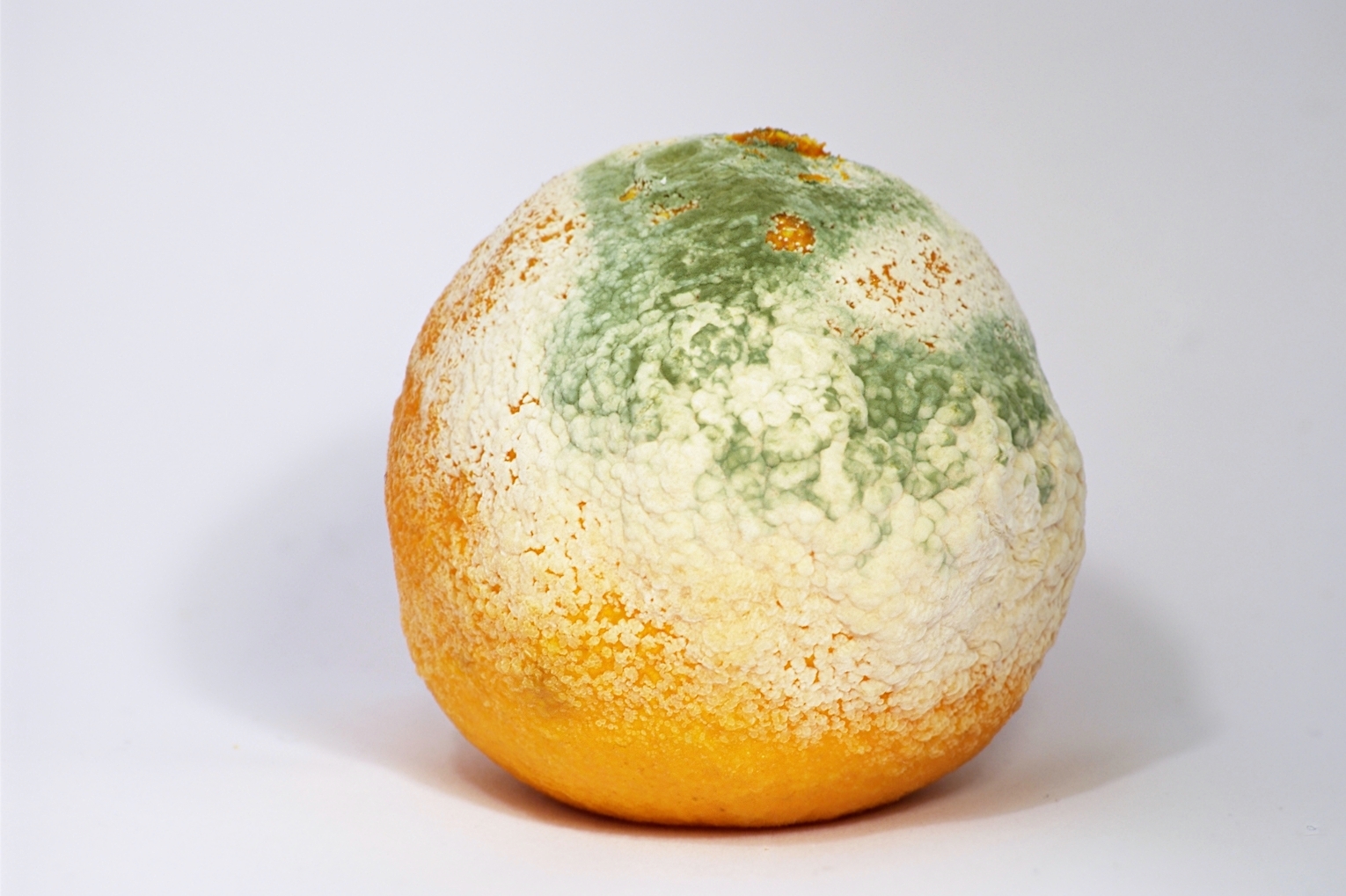
Microorganisms are very small organism that are not visible to the naked eyes. They, although very tiny, are everywhere and have large effects on their environment and other organisms. Are all microbes bad? What are some popular microbes and their importance? Read this article to know some good microbes, bad microbes and other notable microbes. Microbes 101. Introduction to the tiny world Microorganisms aren't aliens or so different from we humans or other organisms we can see. Here are a few notes about microbes: * They're just simpler and tiny organisms. * Most of them are unicellular (meaning they have just 1 cell) but some are multicellular (meaning they're made up of two or more cells) * They can be found in all kingdoms: Monera (Bacteria), Protista (Unicellular animal-like and plant-like organisms), Fungi, Plantae and Animalia. * Some can live individually while others form colonies (making them visible) * Some are free living while others depend on other organisms for survival Of course the list is endless but let's focus on classifying microbes based on their benefits or harms. The good; microbes we benefit from Diatoms These microbes are plant-like protists. They're Unicellular and like plants, they're able to manufacture their food through photosynthesis. They can be found everywhere especially in water bodies. Here are a few ways we benefit from them: * They're responsible for the production of about 20% of the Earth's oxygen each year (they release oxygen through photosynthesis) * Since they're very small, they're in the bottom of the aquatic food chain. Other organisms like juvenile (young) shrimps, octopuses and fishes eat them, larger aquatic organisms eat these juveniles, subsequently, it gets to the top of the food chain (man). * Since they number in trillions and float in water bodies, they form a blockage for sunlight (one reason why the ocean waters aren't clear) so that heat (which travels with sunlight) cannot penetrate deep into the ocean. Since water is around 70% of the Earth's surface, the role of diatoms in maintaining the temperature of the oceans affects us on land as well. The niche (role) of diatoms in the environment cannot be overemphasized. Penicillium There are different Penicillium species. These organisms under kingdom Fungi have been a breakthrough for man. They can be found in temperate regions and can also be found in damp parts of buildings. They produce a substance that stops the growth and reproduction of some bacteria like Staphylococcus. This substance which they produce, is what we call penicillin today. The discovery of penicillin started the study and production of antibiotics. If not for these organisms, who knows, a lot of people would have died because of incurable bacteria infections. You see? Microbes have medical importance as well Rhizobia These are under the kingdom Eubacteria (Monera). They can be found in the soil as either free living or in association with plants. They (when in the root of legumes) can collect nitrogen gas (N2) from the atmosphere, convert it into a simpler form of nitrogen then send it to the plant (which the plant needs for growth). Legumes like beans, peas, clover, etc. Rhizobia are especially important in the mass cultivation of such plants in places where fertilizers (to supply nitrogen to the plant) aren't available or affordable. This relationship with legumes have proven the agricultural importance of microbes. https://upload.wikimedia.org/wikipedia/commons/thumb/a/a5/Rhizobia_nodules_on_Vigna_unguiculata.jpg/440px-Rhizobia_nodules_on_Vigna_unguiculata.jpg Microbes that are beneficial to man and the environment are so much and we're grateful. Some like the Lactobacillus aid in the fermentation of milk and also breaking down of food particles during digestion. Their benefits cannot be overemphasized. The bad; microbes that harm us Clostridium tetani It is a bacteria. It is found mostly in soils worldwide. It can be free living and is very deadly when it is parasitic. It is responsible for Tetanus. Tetanus is a severe disease that children worldwide are being vaccinated against it. Its spores (reproductive part) enter our body through wounds and release toxins that cause the diseases. This bacteria is the reason why children are still vaccinated till today. It is advised that you get vaccinated if you have an injury around the lower region of your body to prevent tetanus. Plasmodium Plasmodium is a protozoa (animal-like Protista) that infects the blood of different vertebrate animals (including man) to form the malaria disease. There are different plasmodium species like P. malariae, P. ovale and P. falciparum. There is also a zoonotic species (able to infect different species) called the P. knowlesi. Plasmodium can be found in places with high humidity, temperature and rainfall. Its disease Malaria is responsible for the death over 1 million people per year especially children (according to UNICEF). Plasmodium enters into our bloodstream through infected mosquitoes. Mosquitoes breed and the young grows in stagnant water, plasmodium infects some mosquitoes through that medium and enters into our bloodstream when the mosquitoes penetrate into our skin. Molds Molds or moulds (under Fungi) are filamentous fungi (i.e they grow in filamentous colonies therefore appearing as multicellular as opposed to Unicellular yeast that grows independently). Mold is a diverse term used to refer to different species of fungi. They are decomposers (meaning they breakdown food into simpler nutrients). They are responsible for most food spoilage. They produce little spores that the wind carries so whenever you expose your food for long, the spores germinate and begin to form molds. Fungi, unlike plants, don't produce their food through sunlight so they rely on your food and other sources for nutrient. When molds are available in large quantity, they may cause serious health problems like allergies and other respiratory problems. https://upload.wikimedia.org/wikipedia/commons/a/a4/Mouldy_Clementine.jpg Other notable microbes Euglena This is kingdom Protista. It exhibits both plant-like and animal-like features. Like plants, it is able to produce it's own food through photosynthesis (in the presence of sunlight). When there is no sunlight, it feeds on green algae and other protists. Euglena can be found anywhere there is green algae (ponds, water puddle, stagnant water, etc). The ability of Euglena to generate energy like plants (autotrophic) and animals (heterotrophic) makes it notable and special. Cyanobacteria This is a plant-like bacteria. The difference between Protista and Bacteria is that protists are eukaryotes (having nucleus) while Bacteria are prokaryotes (having no nucleus). Cyanobacteria, although being a bacteria, is the only prokaryote that is able to carry out photosynthesis. Cool right? Some Cyanobacteria also fixes nitrogen from there atmosphere to become available to plants (just like Rhizobia). They're indeed notable for been the only prokaryotic autotrophs. Tardigrades Tardigrades or water bears are under kingdom Animalia. They're Unicellular and can be found literally everywhere on the Earth. What makes them notable is their nature of endurance. These organisms can exist in the hottest, coldest and most actively radioactive places on Earth, they can also survive in space. They can survive after being dehydrated and they can reduce their metabolism to below 0.01% of how it should work. Although, they don't prefer to live in such extreme conditions, their ability to endure makes them notable. [img]https://2.bp..com/-O53_MK5Fy_4/XATqtCRLRII/AAAAAAAAEZA/CgPpsCFUM2gZ9YthArcED0V9Y8PheSocgCK4BGAYYCw/s320/Tardigrades.png[/img] Reading this article, you must've realized that microbes are everywhere. Some benefit you, some harm you and you're unaffected by others. What's your favorite microbe? Original article: https://www.allbioconcerns.com/2018/12/microorganisms-good-bad-and-ugly.html ABC; All Biological Concerns |