Hopilo's Posts
Nairaland Forum › Hopilo's Profile › Hopilo's Posts
1 2 3 4 5 6 7 8 ... 46 47 48 49 50 51 52 53 54 (of 59 pages)
 Politics › Cameroon Appeals For International Military Aid To Fight Boko Haram by hopilo(op): 6:47am On Jan 10, 2015 Politics › Cameroon Appeals For International Military Aid To Fight Boko Haram by hopilo(op): 6:47am On Jan 10, 2015 |
http://www.channelstv.com/2015/01/09/cameroon-appeals-international-military-aid-fight-boko-haram/ Cameroon’s President, Paul Biya, has appealed for international military help to fight Islamist militant group Boko Haram, which during the week threatened to step up its cross-border raids into the country from Nigeria. |
| Politics › Re: Exodus About To Happen In Akwa Ibom PDP by hopilo(op): 9:17am On Jan 09, 2015 |
Nctrice:My brother if they had done what you suggested a night to primaries, nothing would have change. Akpabio had hijacked the process, delegates were ushered into the venue without accreditation and but with marked ballot papar for candidate of the governor. In Nigeria governors are powerful. With the kind of money in the state like Akwa Ibom the governor is next to God. |
| Politics › Re: Exodus About To Happen In Akwa Ibom PDP by hopilo(op): 5:50am On Jan 09, 2015 |
This should make FP please. When I watch Muazu spoke at the pdp presidential launch advising GEJ against using and dumping party members, I knew it that billions of Naira was forcing thrash from his mouth. But when he talked about equity and injustice as pdp problem, I said oh, it is a strategic way of bargaining for much more money, because there's no greater injustice than for 22 people to be rigged out in a primary filled with irregularities and these same 22 people in keeping to the faith and believe in the party process dropped 22 appeal letters to the appeal committee headed by Muazu the party chairman and for 30 days the Muazu led committee blinded by billions of akwa ibom money refuse to hear the complain of these 22 akwa ibom men and woman. Please where is equity and justice that Muazu mentioned in his speech. Well in a contest of 23 people, 22 saw something wrong and only one saw the opposite view, 22 can never be wrong. akwa ibom G22 you guys have tried your best to seek redress, please come back home! come back home!! come back home!!! The majority of akwa ibomites are waiting to receive you guys our heros. One thing is sure, no matter how painful it will be, but surely we will revenge with our votes come Febuary 14th on the presidential election day and the other elections that will follow thereafter. |
| Politics › Exodus About To Happen In Akwa Ibom PDP by hopilo(op): 5:48am On Jan 09, 2015 |
http://www.thecable.ng/mass-defection-l ooms-akwa-ibom-pdp This is not the best of times for the Peoples Democratic Party (PDP) in Akwa Ibom state, as its influential members are threatening to pull out of the party over what they described as undemocratic acts of Godswill Akpabio, the governor of the state. The aggrieved members include 22 governorship aspirants, known as G22, all the three senators from the state; the six members of the house of representatives and 14 members of the state house of assembly. Speaking at a press conference in Abuja on Thursday, the politicians, who alleged that Akpabio is using his influence to prevent the leadership of the party from looking into their petitions, threatened to pull out of the party if no action is taken by January 11. While the G22 is asking that the December 8 primary election that led to the emergence of Udom Emmanuel as the flagbearer of the party in the state be cancelled because it was fraught with irregularities, others are of the view that Akpabio has hijacked the party. Led by Nsima Ekere, the immediate past deputy governor of the state, who resigned in 2012 after falling out with Akpabio, they also accused Adamu Muazu, the chairman of the party, of conniving with their governor. Ekere said Akpabio induced each of the I, 200 delegates that voted in the governorship primaries with N1 million, paving way for the emergence of Emmanuel, who was presented with the party’s flag during the flag-off of President Goodluck Jonathan’s campaign in Lagos on Thursday. Assam Asas, a gubernatorial aspirant, accused Mu’azu of doing nothing to resolve the crisis, saying the democratic structure of the party was weak. “This party prides itself as the biggest in Africa,” he said. “But if the democratic experience in the party is weak, the democratic experience of the largest party in Africa is weak and the credibility of the elections at the grassroots becomes a problem and honestly speaking, PDP is in trouble in Akwa Ibom State due to one man dominance of the whole process,” he said. Helen Esuene, a serving senator and also a governorship aspirant, advised the PDP to look into the matter urgently, in its own interest. “Right now, our patience is running out because we have not been fairly treated at by the party,” she said. “Let it be said loud and clear that if we are put to the wall, we will definitely go to where we are needed.” For Ita Enang, the chairman, senate committee on rules and business, Akpabio has through his actions turned into “the campaign manager of the opposition in the state”. “What is urgently needed to be done by all stakeholders in Akwa Ibom state is to rescue the state from an arrest of a whole generation by just one man before the election,” he said. “Because if that is not done, voters will surely do the appropriate thing at the appropriate time during the elections.” |
| Politics › Re: Mass Defection Looms In Akwa-ibom PDP by hopilo: 5:44am On Jan 09, 2015 |
When I watch Muazu spoke at the PDP presidential launch advising GEJ against using and dumping party members, I knew it that billions of Naira was forcing thrash from his mouth. But when he talked about equity and injustice as PDP problem, I said oh, it is a strategic way of bargaining for much more money, because there's no greater injustice than for 22 people to be rigged out in a primary filled with irregularities and these same 22 people in keeping to the faith and believe in the party process dropped 22 appeal letters to the appeal committee headed by Muazu the party chairman and for 30 days the Muazu led committee blinded by billions of Akwa Ibom money refuse to hear the complain of these 22 Akwa Ibom men and woman. Please where is equity and justice that Muazu mentioned in his speech. Well in a contest of 23 people, 22 saw something wrong and only one saw the opposite view, 22 can never be wrong. Akwa Ibom G22 you guys have tried your best to seek redress, please come back home! come back home!! come back home!!! The majority of Akwa ibomites are waiting to receive you guys our heros. One thing is sure, no matter how painful it will be, but surely we will revenge with our votes come Febuary 14th on the presidential election day and the other elections that will follow thereafter. |
| Politics › Re: Mass Defection Looms In Akwa-ibom PDP by hopilo: 10:32pm On Jan 08, 2015 |
When I watch Muazu spoke at the PDP presidential launch advising GEJ against using and dumping party members, I knew it that billions of Naira was forcing thrash from his mouth. But when he talked about equity and injustice as PDP problem, I said oh, it is a strategic way of bargaining for much more money, because there's no greater injustice than for 22 people to be rigged out in a primary filled with irregularities and these same 22 people in keeping to the faith and believe in the party process dropped 22 appeal letters to the appeal committee headed by Muazu the party chairman and for 30 days the Muazu led committee blinded by billions of Akwa Ibom money refuse to hear the complain of these 22 Akwa Ibom men and woman. Please where is equity and justice that Muazu mentioned in his speech. Well in a contest of 23 people, 22 saw something wrong and only one saw the opposite view, 22 can never be wrong. Akwa Ibom G22 you guys have tried your best to seek redress, please come back home! come back home!! come back home!!! The majority of Akwa ibomites are waiting to receive you guys our heros. One thing is sure, no matter how painful it will be, but surely we will revenge with our votes come Febuary 14th on the presidential election day and the other elections that will follow will just be a bandwagon effect. |
| Politics › Re: Buhari Presidential Campaign In Uyo A Big Flop Could Not Fill A 5000 LGA Stadium by hopilo: 5:17pm On Jan 07, 2015 |
empty stands and Ameachi could not believe it. 13 Likes 1 Share |
| Politics › Re: I'll Send Corrupt Nigerians To Kirikiri Prison - Buhari by hopilo: 9:46am On Jan 07, 2015 |
The citadel of corruption is the man he gave APC flag in Akwa Ibom state. if you don't know, he is the only man that as at 2012 was giving money to his supporters with Citizen bank wraps. please check when that bank was disbanded. |
| Politics › Re: I'll Send Corrupt Nigerians To Kirikiri Maximum Prisons - Buhari by hopilo: 9:36am On Jan 07, 2015 |
The citadel of corruption is the man he gave APC flag in Akwa Ibom state. if you don't know, he is the only man that as at 2012 was giving money to his supporters with Citizen bank wraps. please check when that bank was disbanded. |
| Politics › Re: US Army War College.class Of 80.buhari's Set(pictures) by hopilo: 1:26pm On Jan 06, 2015 |
Justbright:Has he presented any of his certificate? be it PHD or FSLC 5 Likes |
| Politics › Re: US Army War College.class Of 80.buhari's Set(pictures) by hopilo: 1:24pm On Jan 06, 2015 |
Justbright:show me 1 Like |
| Politics › Re: Buhari: US War College 1980 Set Scam Exposed. by hopilo(op): 1:16pm On Jan 06, 2015 |
brutef0rce101:You can navigate the website and other US Army sites. I no go fit copy everything thing for u na. 1 Like |
| Politics › Re: APC PH Rally: Poor Crowd, Buhari Cuts Short Speech As Stadium Empties (pic) by hopilo: 1:06pm On Jan 06, 2015 |
the crowd from all the pictures posted by the supposed liar and the supposed truthsayer show that the crowd is not that encouraging. I expected a tumultuous crowd. 5 Likes |
| Politics › Buhari: US War College 1980 Set Scam Exposed. by hopilo(op): 11:32am On Jan 06, 2015 |
From my research, the US Army college runs a Faculty programs were the award, MSC in various fields. They also have a military courses for international military affiliates which they call International Fellows which a training certificate of completion is given for trained officers in various divisions like Infantry (IN), artillery (ARTY) Amoury (ARMY), Strategy and training (S&T) and others. My curiosity made me check the alumni for the 1980 set and register of the dead alumni. I can't see any name that tally with the names on the plague both on the faculty list and the International fellow list. Could it be that this plague which is not a certificate but an equivalent of a matriculation or graduation list is fake? or any serious employer can accept a graduation list in place of my certificate? compare the list below for names with 80 after their names to the list on the plague if any name correspond. http://www.usawc.org/Portals/0/docs/Magazine%202013%20Spring.pdf 1980s COL (Ret) Anthony J. Carbone, RES ‘80 . . . . . . . . . . . . . . . . . . . . . . . . . . . . . . . . . . . June 24, 2007 COL (Ret) James H. Edmonson, DCS ‘80 . . . . . . . . . . . . . . . . . . . . . . . . . . . . . . . . February 3, 2006 COL (Ret) Frank B. Fuller, Jr., DCS ‘80 . . . . . . . . . . . . . . . . . . . . . . . . . . . . . . . . . . . . May 18, 2009 MG (Ret) Richard B. Griffi tts RES ‘80 . . . . . . . . . . . . . . . . . . . . . . . . . . . . . . . . . February 12, 2013 COL (Ret) William Kahn, DCS ‘80 . . . . . . . . . . . . . . . . . . . . . . . . . . . . . . . . . . . . . . . . April 9, 2011 Col (Ret) Robert M. Ondrick, USMC, RES ‘80 . . . . . . . . . . . . . . . . . . . . . . . . . . . .January 20, 2012 COL (Ret) Graham E. Beard, M.D., RES ‘82 . . . . . . . . . . . . . . . . . . . . . . . . . . . . December 16, 2012 COL (Ret) Karl A. Giulian, DCS ‘81 . . . . . . . . . . . . . . . . . . . . . . . . . . . . . . . . . . December 31, 2012 COL (Ret) Curtis B. Reiber, DCS ‘82 . . . . . . . . . . . . . . . . . . . . . . . . . . . . . . . . . .November 20, 2012 COL (Ret) Rudolf H. Egersdorfer DCS ‘83 . . . . . . . . . . . . . . . . . . . . . . . . . . . . . . February 17, 2013 COL (Ret) John A. Thompson, DCS ‘83 . . . . . . . . . . . . . . . . . . . . . . . . . . . . . . . . . .March 19, 2006 COL (Ret) Donald K. Griffi n, RES ‘84 . . . . . . . . . . . . . . . . . . . . . . . . . . . . . . . . . . October 26, 2012 COL (Ret) Sidney A. Humberson, RES ‘84 . . . . . . . . . . . . . . . . . . . . . . . . . . . . . . October 11, 2012 Col (Ret) David B. Dingee, USAF, RES ‘86 . . . . . . . . . . . . . . . . . . . . . . . . . . . . . . February 18, 2012 BG (Ret) Oscar “Gene” Trivits, DCS ‘86. . . . . . . . . . . . . . . . . . . . . . . . . . . . . . September 29, 2012 MG (Ret) Robert L. Blevins, SRCOC ‘87. . . . . . . . . . . . . . . . . . . . . . . . . . . . . . . . . . . June 19, 2012 COL (Ret) Francis W. Montondon, RES ‘87 . . . . . . . . . . . . . . . . . . . . . . . . . . . . . December 9, 2012 BG (Ret) Joseph F. Conlon III, SRCOC ‘88 . . . . . . . . . . . . . . . . . . . . . . . . . . . . . . . . . June 23, 2009 COL (Ret) Donald P. Kerchoffner, DCS ‘88 . . . . . . . . . . . . . . . . . . . . . . . . . . . . . . .January 10, 2013 COL (Ret) Robert C. Edwards RES ‘89 . . . . . . . . . . . . . . . . . . . . . . . . . . . . . . . September 30, 2012 COL (Ret) James B. Kohnen, DCS ‘89 . . . . . . . . . . . . . . . . . . . . . . . . . . . . . . . . . . . . May 29, 2012 9 Likes 1 Share
|
| Politics › Re: US Army War College.class Of 80.buhari's Set(pictures) by hopilo: 10:18am On Jan 06, 2015 |
Some of the 1980 Buhari set that are dead. I can't see any name that tally with the names on the plague http://www.usawc.org/Portals/0/docs/Magazine%202013%20Spring.pdf 1980s COL (Ret) Anthony J. Carbone, RES ‘80 . . . . . . . . . . . . . . . . . . . . . . . . . . . . . . . . . . . June 24, 2007 COL (Ret) James H. Edmonson, DCS ‘80 . . . . . . . . . . . . . . . . . . . . . . . . . . . . . . . . February 3, 2006 COL (Ret) Frank B. Fuller, Jr., DCS ‘80 . . . . . . . . . . . . . . . . . . . . . . . . . . . . . . . . . . . . May 18, 2009 MG (Ret) Richard B. Griffi tts RES ‘80 . . . . . . . . . . . . . . . . . . . . . . . . . . . . . . . . . February 12, 2013 COL (Ret) William Kahn, DCS ‘80 . . . . . . . . . . . . . . . . . . . . . . . . . . . . . . . . . . . . . . . . April 9, 2011 Col (Ret) Robert M. Ondrick, USMC, RES ‘80 . . . . . . . . . . . . . . . . . . . . . . . . . . . .January 20, 2012 COL (Ret) Graham E. Beard, M.D., RES ‘82 . . . . . . . . . . . . . . . . . . . . . . . . . . . . December 16, 2012 COL (Ret) Karl A. Giulian, DCS ‘81 . . . . . . . . . . . . . . . . . . . . . . . . . . . . . . . . . . December 31, 2012 COL (Ret) Curtis B. Reiber, DCS ‘82 . . . . . . . . . . . . . . . . . . . . . . . . . . . . . . . . . .November 20, 2012 COL (Ret) Rudolf H. Egersdorfer DCS ‘83 . . . . . . . . . . . . . . . . . . . . . . . . . . . . . . February 17, 2013 COL (Ret) John A. Thompson, DCS ‘83 . . . . . . . . . . . . . . . . . . . . . . . . . . . . . . . . . .March 19, 2006 COL (Ret) Donald K. Griffi n, RES ‘84 . . . . . . . . . . . . . . . . . . . . . . . . . . . . . . . . . . October 26, 2012 COL (Ret) Sidney A. Humberson, RES ‘84 . . . . . . . . . . . . . . . . . . . . . . . . . . . . . . October 11, 2012 Col (Ret) David B. Dingee, USAF, RES ‘86 . . . . . . . . . . . . . . . . . . . . . . . . . . . . . . February 18, 2012 BG (Ret) Oscar “Gene” Trivits, DCS ‘86. . . . . . . . . . . . . . . . . . . . . . . . . . . . . . September 29, 2012 MG (Ret) Robert L. Blevins, SRCOC ‘87. . . . . . . . . . . . . . . . . . . . . . . . . . . . . . . . . . . June 19, 2012 COL (Ret) Francis W. Montondon, RES ‘87 . . . . . . . . . . . . . . . . . . . . . . . . . . . . . December 9, 2012 BG (Ret) Joseph F. Conlon III, SRCOC ‘88 . . . . . . . . . . . . . . . . . . . . . . . . . . . . . . . . . June 23, 2009 COL (Ret) Donald P. Kerchoffner, DCS ‘88 . . . . . . . . . . . . . . . . . . . . . . . . . . . . . . .January 10, 2013 COL (Ret) Robert C. Edwards RES ‘89 . . . . . . . . . . . . . . . . . . . . . . . . . . . . . . . September 30, 2012 COL (Ret) James B. Kohnen, DCS ‘89 . . . . . . . . . . . . . . . . . . . . . . . . . . . . . . . . . . . . May 29, 2012 1 Like |
| Politics › Re: US Army War College.class Of 80.buhari's Set(pictures) by hopilo: 10:05am On Jan 06, 2015 |
Retirees that are Alumni of US Army college get nominated for some award. But nobody seems to recognize Buhari. OUTSTANDING ALUMNUS PROGRAM Please consider nominating a graduate who you know is giving back to the nation in a major way following “retirement.” Nomination procedures and format can be found on the Foundation and Alumni website at www.usawc.org. THE BASIC REQUIREMENTS ARE: • Nominations must come from USAWC Alumni members • Nominee must be retired from the government service that was the source of USAWC attendance for at least one year • Nominee must have made signifi cant and lasting contributions through continued service to his or her community or country since retirement Previous Award Recipients GEN (Ret) Walter T. Kerwin . . . . . . . Class of 1957, Awarded 9 May 1997 COL (Ret) Roger H. Donlon, MoH . . Class of 1984, Awarded 27 May 1997 COL (Ret) George F. Qua . . . . . . . . . Class of 1979, Awarded 8 May 1998 COL (Ret) William H. Wunder . . . . . . Class of 1977, Awarded 8 May 1998 COL (Ret) George W. Aux . . . . . . . . . Class of 1964, Awarded 11 May 2001 COL (Ret) Robert S. McGowan . . . . . Class of 1971, Awarded 11 May 2001 (posth.) MG (Ret) John Russell Groves, Jr. . . Class of 1994, Awarded 30 Oct 2004 (posth.) COL (Ret) Michael A. Pearson . . . . . Class of 1993, Awarded 12 May 2006 LTG (Ret) Dave R. Palmer . . . . . . . . . Class of 1973, Awarded 22 August 2007 GEN (Ret) Frederick J. Kroesen . . . . Class of 1962, Awarded 7 December 2009 BG (Ret) Jerry L. Neff . . . . . . . . . . . . Class of 1995, Awarded 7 December 2009 COL (Ret) Buddy G. Beck . . . . . . . . . Class of 1976, Awarded 7 December 2009 GEN (Ret) Donn A. Starry . . . . . . . . Class of 1966, Awarded 2 December 2010 GEN (Ret) Gordon R. Sullivan . . . . . Class of 1978, Awarded 2 December 2010 Dr. Lewis Sorley . . . . . . . . . . . . . . . . Class of 1973, Awarded 2 December 2010 GEN (Ret) Glenn K. Otis . . . . . . . . . . Class of 1970, Awarded 12 December 2011 LTG (Ret) Arthur J. Gregg . . . . . . . . . Class of 1968, Awarded 12 December 2011 LTG (Ret) Theodore G. Stroup . . . . . Class of 1981, Awarded 12 December 2011 MG (Ret) Edward B. Atkeson . . . . . . Class of 1969, Awarded 12 December 2011 Outstanding Alums 2012 1 Like |
| Politics › Economy: Nigeria Purchasing Power 3rd In Africa, 30th In The World by hopilo(op): 11:58am On Jan 04, 2015 |
Definition: This entry gives the gross domestic product (GDP) or value of all final goods and services produced within a nation in a given year. A nation's GDP at purchasing power parity (PPP) exchange rates is the sum value of all goods and services produced in the country valued at prices prevailing in the United States. This is the measure most economists prefer when looking at per-capita welfare and when comparing living conditions or use of resources across countries. The measure is difficult to compute, as a US dollar value has to be assigned to all goods and services in the country regardless of whether these goods and services have a direct equivalent in the United States (for example, the value of an ox-cart or non-US military equipment); as a result, PPP estimates for some countries are based on a small and sometimes different set of goods and services. In addition, many countries do not formally participate in the World Bank's PPP project that calculates these measures, so the resulting GDP estimates for these countries may lack precision. For many developing countries, PPP-based GDP measures are multiples of the official exchange rate (OER) measure. The difference between the OER- and PPP-denominated GDP values for most of the weathly industrialized countries are generally much smaller.
|
| Politics › Public Debt: Nigeria 122nd In The World, Better Than US, UK. by hopilo(op): 11:30am On Jan 04, 2015 |
Public Debt Definition: This entry records the cumulative total of all government borrowings less repayments that are denominated in a country's home currency. Public debt should not be confused with external debt, which reflects the foreign currency liabilities of both the private and public sector and must be financed out of foreign exchange earnings
|
| Politics › Re: How Sufficient Electricity Is Generated In Some Countries by hopilo(op): 10:43pm On Jan 03, 2015 |
okotv:You can see that some like Canada started since 1960 to be consistent in power generation |
| Politics › Re: Electricity Generation: Nigeria 4th In Africa, 70th In The World. by hopilo(op): 10:35pm On Jan 03, 2015 |
michaelbiz: |
| Politics › How Sufficient Electricity Is Generated In Some Countries by hopilo(op): 10:33pm On Jan 03, 2015 |
1. United States Production: 4,110 (billion kWh) United States continues to get most of its electrical production from conventional thermal power plants. Most of these are coal; however, the 1990s and 2000s have seen a disproportionate increase in natural gas and other kinds of gas powered plants. 2. China Production: 3,451 (billion kWh) China has abundant energy. The country has the world's third-largest coal reserves and massive hydroelectric resources. But there is a geographical mismatch between the location of the coal fields in the north-east and north, hydropower in the south-west, and the fast-growing industrial load centers of the east and south. 3. Japan Production: 956.5 (billion kWh) In 2008, the power sources for electric energy were 27 per cent from coal, 26 per cent from gas, 13 per cent from oil, 24 per cent from nuclear power, and eight per cent from hydro power. 4. Russia Production: 925.9 (billion kWh) In 2008, the end use of electricity was 4.3 per cent of the world total. In 2008, the gross production of electricity was 5.1 per cent of the world total. The share of natural gas fuelled electricity was 48 per cent of the gross electricity production in 2008. The share of coal and peat electricity was 19 per cent of the gross electricity production. 5. Canada Production: 620.7 (billion kWh) Canada is the world's second-largest producer of hydroelectricity, which accounted for 58 per cent of all electric generation in 2007. Since 1960, large hydroelectric projects, especially in Quebec, British Columbia, Manitoba and Newfoundland and Labrador, have significantly increased the country's generation capacity. In Ontario, Canadian-designed CANDU nuclear reactors supplied more than half the provincial electricity demand in 2007. 6. Germany Production: 593.4 (billion kWh) Germany, the largest exporter of electricity with 10 per cent of the overall exports, reinforced its position as a net exporter by 20 per cent during the year 2010. Germany was in the fourth position for coal-produced power after China, the US and India. 7. France Production: 535.7 (billion kWh) In 2009, 76 per cent electricity was produced with nuclear power, 14 per cent with renewable sources and 10 per cent with fossil fuels. France has the largest share of nuclear electricity in the world in its grid. The production of nuclear power in France decreased 12 per cent in 2009 compared to 2004 equivalent to eight per cent units share less nuclear power. It was almost equal to seven per cent drop in electricity export. 8. Brazil Production: 438.8 (billion kWh) The country has the largest capacity for water storage in the world, being highly dependent on hydroelectricity generation capacity, which meets over 80 per cent of its electricity demand. This reduces the country's generation costs relative to countries with more diverse supply mixes. However, this dependence on hydropower also makes Brazil especially vulnerable to power supply shortages in drought years, as was demonstrated by the 2001-2002 energy crisis. 9. South Korea Production: 417 (billion kWh) South Korea placed a heavy emphasis on nuclear power generation. The country's first nuclear power plant, Kori Number One located near Pusan, opened in 1977. The government decision in July 2008 to increase investment in renewable energy to reduce reliance on foreign oil imports may provide incentive for conglomerates' solar plans. 10. The United Kingdom Production: 368.6 (billion kWh) By 2004, coal use in power stations had fallen by 43.6 per cent compared to 1980 levels, though up slightly from its low in 1999. From the mid 1990s new renewable energy sources began to contribute to the electricity generated, adding to a small hydroelectricity generating capacity. The UK government energy policy expects that the total contribution from renewables should rise to 10 per cent. 11. Spain Production: 300.5 (billion kWh) In 2009, Spain produced 13 per cent wind power compared to the use of electricity. The wind capacity installed at end 2010 will, in a normal wind year, produce 14.4 per cent of electricity, when the equivalent value for Germany is 9.4 per cent, Portugal 14 per cent and Denmark 24 per cent. 12. Italy Production: 289.7 (billion kWh) Italy does not have nuclear power due to a public vote. Italy voted against nuclear power after public voting in 1987 after the Chernobyl disaster. According to the National Renewable Energy Action Plan Italy will not meet its 17 per cent renewable electricity share target in 2020. 13. Mexico Production: 245 (billion kWh) Total electricity coverage in Mexico is 97 per cent, being almost 100 per cent in urban areas and around 95 per cent in rural ones. The generation sector was opened to private participation in 1992. However, the state-owned utility, is still the dominant player in the generation sector, with two-thirds of installed capacity. 14. South Africa Production: 240.3 (billion kWh) South Africa was 6. top hard coal producer in 2009. Hard coal production was 1,620 TWh in 2009 and total energy production 1,995 TWh in 2008. Coal production and use creates in South Africa coal combustion wastes, coal mine wastes and toxic coal land fires. 15. Australia Production: 239.9 (billion kWh) In Australia, green energy is accredited under the GreenPower scheme whereby all distributors are government audited bi-annually to ensure that customers are getting exactly what is described in their purchased products. In the 2009 settlement period there were 904,716 GreenPower customers Australia-wide, accounting for a total of 2,194,934 MWh of electricity generation, a 10 per cent increase over 2008. 16. Taiwan Production: 229.1 (billion kWh) The Taiwan government has been active in promoting energy efficiency, and set a target of energy efficiency of 33 per cent by 2025. The government is currently assisting 200 major energy users (companies and organizations) in implementing energy-saving measures. Taiwan is preparing for the age of high oil prices, and is proactively developing clean energy, such as solar and wind power and biofuels. The efforts would help reduce Taiwan's reliance on imported oil, while contributing to the reduction of greenhouse gases. 17. Iran Production: 212.8 (billion kWh) Iran's domestic consumption and production have steadily grown together since 1984 and it is still heavily reliant on traditional thermal energy sources of electricity, with a small fraction being produced by hydroelectric plants. Today, Iran ranks 17th-largest producer and 20th-largest consumer of electricity in the world. 18. Turkey Production: 198.4 (billion kWh) As of 2005, Turkey had the fifth-highest direct usage and capacity of geothermal energy in the world. It is stated that at least 1.5 million houses currently heated by natural gas can switch to being heated by thermal waters. 19. Saudi Arabia Production: 179.1 (billion kWh) Electricity generation is 65 per cent from oil, 27 per cent from natural gas and eight per cent from steam. A looming energy shortage requires Saudi Arabia to increase its capacity. The government has approved the construction of a $300 million dollar facility to turn waste into energy. The facility will process 180 tonnes of waste per day, producing 6MW of electricity and 250,000 gallons of distilled water. 20. Ukraine Production: 172.9 (billion kWh) Ukraine was the eighth-highest nuclear electricity producer in 2009. More than 46 per cent of domestic electricity generation was nuclear. This was second highest, with only France higher. Energoatom is the state nuclear company established in Kiev. 21. Poland Production: 149.1 (billion kWh) In 2009, Poland was world's ninth-largest hard coal producer. The country is also the second-largest coal consumer in Europe behind Germany. The Polish government has plans to reach 2,000 MW in wind power capacity and a 2.3 per cent share of wind generation in domestic energy consumption. 22. Thailand Production: 148.20 (billion kWh) In 2008, power generated from natural gas-fired power plants of the Electricity Generating Authority of Thailand, Independent Power Producers and Small Power Producers accounted for a share of 70 per cent of the total power generation. Next to natural gas were such "solid fuels" as lignite, constituting 12.6 per cent, and imported coal of which the quality is better than lignite, representing 8.2 per cent. 23. Sweden Production: 144 (billion kWh) More than a third of Sweden's energy supply depends on imports. Domestic energy production is largely limited to electricity generation using nuclear energy and renewable sources (almost exclusively hydro). Energy imports are mainly oil from Denmark, Norway and Russia, with some small quantities of hard coal imports. 24. Norway Production: 142.7 (billion kWh) Electricity generation in Norway is almost entirely from hydroelectric power plants. Norway was the first country to generate electricity commercially using sea-bed tidal power. A 300 kilowatt prototype underwater turbine started generation in the Kvalsund, south of Hammerfest, on November 13, 2003. 25. Indonesia Production: 129 (billion kWh) Although Indonesia generates 86 per cent of its electricity from conventional thermal sources (coal, gas, and oil), it was the third-largest generator of geothermal power in 2009. 26. Egypt Production: 118.4 (billion kWh) Egypt's installed generating capacity stood at 23.4 gigawatts as of 2008, with plans to further expand capacity through additional investments in natural gas, nuclear and renewable energy. 27. Venezuela Production: 113.3 (billion kWh) The main electricity source is hydropower, which accounted for 71 per cent in 2004. In 2004, Venezuela produced 70 TWh of hydropower, which accounts 2.5 per cent of world's total. At the end of 2002, total installed hydroelectric generating capacity accounted 13.76 GW with additional 4.5 GW under construction and 7.4 GW of planned capacity. 28. Argentina Production: 109.5 (billion kWh) Faced with rising electricity demand (over six per cent annually) and declining reserve margins, the government of Argentina is in the process of commissioning large projects, both in the generation and transmission sectors. To keep up with rising demand, it is estimated that about 1,000 MW of new generation capacity are needed each year. An important number of these projects are being financed by the government through trust funds, while independent private initiative is still limited. India Production: 723.8 (billion kWh) The country's annual energy production increased from about 190 billion kWh in 1986 to more than 837 billion kWh in 2010. The Indian government has set a modest target to add about 78,000 MW of installed generation capacity by 2012, which it is likely to miss. Four major economic and social drivers characterize the energy policy of India: a rapidly growing economy, increasing household incomes, limited domestic reserves of fossil fuels and the adverse impact on the environment of rapid development in urban and regional areas. |
| Politics › Re: Electricity Generation: Nigeria 4th In Africa, 70th In The World. by hopilo(op): 10:24pm On Jan 03, 2015 |
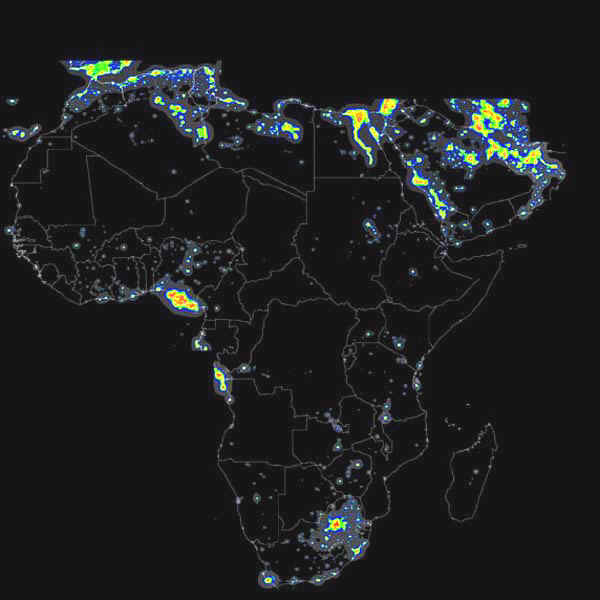
bigfrancis21:na gas flare from oil companies |
| Politics › Re: Electricity Generation: Nigeria 4th In Africa, 70th In The World. by hopilo(op): 9:52pm On Jan 03, 2015 |
ROSSIKE:na waooo. so dark. the statistics might be correct afterall |
| Politics › Re: Electricity Generation: Nigeria 4th In Africa, 70th In The World. by hopilo(op): 9:51pm On Jan 03, 2015 |
UTEWUOJO:Buhari should come with a clear road map and tell me that he will give 24/7 power to all the homes in Nigeria before he can get my vote. |
| Politics › Re: Electricity Generation: Nigeria 4th In Africa, 70th In The World. by hopilo(op): 9:47pm On Jan 03, 2015 |
seges:If you know the total number of houses in Nigeria then we can have some figures. electricity go to homes not individual. |
| Politics › Re: Electricity Generation: Nigeria 4th In Africa, 70th In The World. by hopilo(op): 9:32pm On Jan 03, 2015 |
Akainzo:So China can not even generate power to meet their population and they are number one in the world. even almighty USA |
| Politics › Re: Electricity Generation: Nigeria 4th In Africa, 70th In The World. by hopilo(op): 9:21pm On Jan 03, 2015 |
Extra information for the guy that ask for consumption rate. 1. United States Production: 4,110 (billion kWh) United States continues to get most of its electrical production from conventional thermal power plants. Most of these are coal; however, the 1990s and 2000s have seen a disproportionate increase in natural gas and other kinds of gas powered plants. 2. China Production: 3,451 (billion kWh) China has abundant energy. The country has the world's third-largest coal reserves and massive hydroelectric resources. But there is a geographical mismatch between the location of the coal fields in the north-east and north, hydropower in the south-west, and the fast-growing industrial load centers of the east and south. 3. Japan Production: 956.5 (billion kWh) In 2008, the power sources for electric energy were 27 per cent from coal, 26 per cent from gas, 13 per cent from oil, 24 per cent from nuclear power, and eight per cent from hydro power. 4. Russia Production: 925.9 (billion kWh) In 2008, the end use of electricity was 4.3 per cent of the world total. In 2008, the gross production of electricity was 5.1 per cent of the world total. The share of natural gas fuelled electricity was 48 per cent of the gross electricity production in 2008. The share of coal and peat electricity was 19 per cent of the gross electricity production. 5. Canada Production: 620.7 (billion kWh) Canada is the world's second-largest producer of hydroelectricity, which accounted for 58 per cent of all electric generation in 2007. Since 1960, large hydroelectric projects, especially in Quebec, British Columbia, Manitoba and Newfoundland and Labrador, have significantly increased the country's generation capacity. In Ontario, Canadian-designed CANDU nuclear reactors supplied more than half the provincial electricity demand in 2007. 6. Germany Production: 593.4 (billion kWh) Germany, the largest exporter of electricity with 10 per cent of the overall exports, reinforced its position as a net exporter by 20 per cent during the year 2010. Germany was in the fourth position for coal-produced power after China, the US and India. 7. France Production: 535.7 (billion kWh) In 2009, 76 per cent electricity was produced with nuclear power, 14 per cent with renewable sources and 10 per cent with fossil fuels. France has the largest share of nuclear electricity in the world in its grid. The production of nuclear power in France decreased 12 per cent in 2009 compared to 2004 equivalent to eight per cent units share less nuclear power. It was almost equal to seven per cent drop in electricity export. 8. Brazil Production: 438.8 (billion kWh) The country has the largest capacity for water storage in the world, being highly dependent on hydroelectricity generation capacity, which meets over 80 per cent of its electricity demand. This reduces the country's generation costs relative to countries with more diverse supply mixes. However, this dependence on hydropower also makes Brazil especially vulnerable to power supply shortages in drought years, as was demonstrated by the 2001-2002 energy crisis. 9. South Korea Production: 417 (billion kWh) South Korea placed a heavy emphasis on nuclear power generation. The country's first nuclear power plant, Kori Number One located near Pusan, opened in 1977. The government decision in July 2008 to increase investment in renewable energy to reduce reliance on foreign oil imports may provide incentive for conglomerates' solar plans. 10. The United Kingdom Production: 368.6 (billion kWh) By 2004, coal use in power stations had fallen by 43.6 per cent compared to 1980 levels, though up slightly from its low in 1999. From the mid 1990s new renewable energy sources began to contribute to the electricity generated, adding to a small hydroelectricity generating capacity. The UK government energy policy expects that the total contribution from renewables should rise to 10 per cent. 11. Spain Production: 300.5 (billion kWh) In 2009, Spain produced 13 per cent wind power compared to the use of electricity. The wind capacity installed at end 2010 will, in a normal wind year, produce 14.4 per cent of electricity, when the equivalent value for Germany is 9.4 per cent, Portugal 14 per cent and Denmark 24 per cent. 12. Italy Production: 289.7 (billion kWh) Italy does not have nuclear power due to a public vote. Italy voted against nuclear power after public voting in 1987 after the Chernobyl disaster. According to the National Renewable Energy Action Plan Italy will not meet its 17 per cent renewable electricity share target in 2020. 13. Mexico Production: 245 (billion kWh) Total electricity coverage in Mexico is 97 per cent, being almost 100 per cent in urban areas and around 95 per cent in rural ones. The generation sector was opened to private participation in 1992. However, the state-owned utility, is still the dominant player in the generation sector, with two-thirds of installed capacity. 14. South Africa Production: 240.3 (billion kWh) South Africa was 6. top hard coal producer in 2009. Hard coal production was 1,620 TWh in 2009 and total energy production 1,995 TWh in 2008. Coal production and use creates in South Africa coal combustion wastes, coal mine wastes and toxic coal land fires. 15. Australia Production: 239.9 (billion kWh) In Australia, green energy is accredited under the GreenPower scheme whereby all distributors are government audited bi-annually to ensure that customers are getting exactly what is described in their purchased products. In the 2009 settlement period there were 904,716 GreenPower customers Australia-wide, accounting for a total of 2,194,934 MWh of electricity generation, a 10 per cent increase over 2008. 16. Taiwan Production: 229.1 (billion kWh) The Taiwan government has been active in promoting energy efficiency, and set a target of energy efficiency of 33 per cent by 2025. The government is currently assisting 200 major energy users (companies and organizations) in implementing energy-saving measures. Taiwan is preparing for the age of high oil prices, and is proactively developing clean energy, such as solar and wind power and biofuels. The efforts would help reduce Taiwan's reliance on imported oil, while contributing to the reduction of greenhouse gases. 17. Iran Production: 212.8 (billion kWh) Iran's domestic consumption and production have steadily grown together since 1984 and it is still heavily reliant on traditional thermal energy sources of electricity, with a small fraction being produced by hydroelectric plants. Today, Iran ranks 17th-largest producer and 20th-largest consumer of electricity in the world. 18. Turkey Production: 198.4 (billion kWh) As of 2005, Turkey had the fifth-highest direct usage and capacity of geothermal energy in the world. It is stated that at least 1.5 million houses currently heated by natural gas can switch to being heated by thermal waters. 19. Saudi Arabia Production: 179.1 (billion kWh) Electricity generation is 65 per cent from oil, 27 per cent from natural gas and eight per cent from steam. A looming energy shortage requires Saudi Arabia to increase its capacity. The government has approved the construction of a $300 million dollar facility to turn waste into energy. The facility will process 180 tonnes of waste per day, producing 6MW of electricity and 250,000 gallons of distilled water. 20. Ukraine Production: 172.9 (billion kWh) Ukraine was the eighth-highest nuclear electricity producer in 2009. More than 46 per cent of domestic electricity generation was nuclear. This was second highest, with only France higher. Energoatom is the state nuclear company established in Kiev. 21. Poland Production: 149.1 (billion kWh) In 2009, Poland was world's ninth-largest hard coal producer. The country is also the second-largest coal consumer in Europe behind Germany. The Polish government has plans to reach 2,000 MW in wind power capacity and a 2.3 per cent share of wind generation in domestic energy consumption. 22. Thailand Production: 148.20 (billion kWh) In 2008, power generated from natural gas-fired power plants of the Electricity Generating Authority of Thailand, Independent Power Producers and Small Power Producers accounted for a share of 70 per cent of the total power generation. Next to natural gas were such "solid fuels" as lignite, constituting 12.6 per cent, and imported coal of which the quality is better than lignite, representing 8.2 per cent. 23. Sweden Production: 144 (billion kWh) More than a third of Sweden's energy supply depends on imports. Domestic energy production is largely limited to electricity generation using nuclear energy and renewable sources (almost exclusively hydro). Energy imports are mainly oil from Denmark, Norway and Russia, with some small quantities of hard coal imports. 24. Norway Production: 142.7 (billion kWh) Electricity generation in Norway is almost entirely from hydroelectric power plants. Norway was the first country to generate electricity commercially using sea-bed tidal power. A 300 kilowatt prototype underwater turbine started generation in the Kvalsund, south of Hammerfest, on November 13, 2003. 25. Indonesia Production: 129 (billion kWh) Although Indonesia generates 86 per cent of its electricity from conventional thermal sources (coal, gas, and oil), it was the third-largest generator of geothermal power in 2009. 26. Egypt Production: 118.4 (billion kWh) Egypt's installed generating capacity stood at 23.4 gigawatts as of 2008, with plans to further expand capacity through additional investments in natural gas, nuclear and renewable energy. 27. Venezuela Production: 113.3 (billion kWh) The main electricity source is hydropower, which accounted for 71 per cent in 2004. In 2004, Venezuela produced 70 TWh of hydropower, which accounts 2.5 per cent of world's total. At the end of 2002, total installed hydroelectric generating capacity accounted 13.76 GW with additional 4.5 GW under construction and 7.4 GW of planned capacity. 28. Argentina Production: 109.5 (billion kWh) Faced with rising electricity demand (over six per cent annually) and declining reserve margins, the government of Argentina is in the process of commissioning large projects, both in the generation and transmission sectors. To keep up with rising demand, it is estimated that about 1,000 MW of new generation capacity are needed each year. An important number of these projects are being financed by the government through trust funds, while independent private initiative is still limited. India Production: 723.8 (billion kWh) The country's annual energy production increased from about 190 billion kWh in 1986 to more than 837 billion kWh in 2010. The Indian government has set a modest target to add about 78,000 MW of installed generation capacity by 2012, which it is likely to miss. Four major economic and social drivers characterize the energy policy of India: a rapidly growing economy, increasing household incomes, limited domestic reserves of fossil fuels and the adverse impact on the environment of rapid development in urban and regional areas.
|
| Politics › Re: Electricity Generation: Nigeria 4th In Africa, 70th In The World. by hopilo(op): 9:12pm On Jan 03, 2015 |
icebeatz:Will post the amount distributed now |
| Politics › Electricity Generation: Nigeria 4th In Africa, 70th In The World. by hopilo(op): 9:01pm On Jan 03, 2015 |
Current rating for top 100 electricity producers in the world shows Nigeria 4th in Africa, 70th in the world. more work needed to reach top 5 in the world and from the history of the nation in that ranking it took them over 30 years of consistent and articulated plan to reach that peak. http://www.indexmundi.com/g/r.aspx?t=100&v=79&l=en 2 Likes 2 Shares
|
| Politics › Re: Buhari/apc Convince Me To Vote You In Area Of 24/7 Electricity. by hopilo(op): 10:16am On Jan 02, 2015 |
kestolove95:With the fight against corruption as a factor to succeed, now I want to know the time frame to achieve 24/7 power across Nigeria. I will not welcome the stories like, It is work in progress vote me again to complete the Change. Buhari show me road map to change. |
| Politics › Buhari/apc Convince Me To Vote You In Area Of 24/7 Electricity. by hopilo(op): 9:05am On Jan 02, 2015 |
It is time to be objective and not fight among ourselves as these politicians are here again for our votes. I saw this in APC/Buhari manifesto: he says he will “Generate, transmit and distribute electricity on a 24/7 basis. and I want some clarity. The ambiguity of APC and Buhari change slogan has been a concern to me. My one vote and that of my wife need an explicit road map to this change from APC and Buhari for us to cast our vote come February 2015. On electricity, I need the following clarifications from Buhari to convince me that change is coming; I want Buhari to tell me the total number of power in megawatts that Nigeria required to have constant 24/7 power in every home in Nigeria. I want him in all honesty to tell me the number of years (1 year, 2 years, 3 years or 4 years) that will take him to build the power plants that will generate and this amount of electricity. After generation, I want him to tell me the number of communities that are not connected to the national grid and the number of years it will take him to link the entire country including sambisa forest area to the national grid. I want him to also tell me the total number of transformers needed to ensure electricity is distributed to every household from Otueke in Bayelsa to Chibok in Borno and from Kaura-Namoda in Zamfara to Oshodi in Lagos. He should tell me how long it will take him to get transformers to all the communities across the entire landscape of Nigeria for effective distribution of electricity. Finally on achieving these set goals within the timeline he will provide, I want him to tell me what I will pay for the electricity to enjoy 24/7 hours power supply. I need these answers to take my stand on 2015, not war of words between him and anybody. 1 Like |
| Politics › Re: The Trouble With The Buhari Manifesto BY ABIMBOLA ADELAKUN by hopilo: 8:39am On Jan 02, 2015 |
he says he will “Generate, transmit and distribute electricity on a 24/7 basis whilst simultaneously ensuring the development of sustainable/renewable energy, by 2019. The ambiguity of APC and Buhari change slogan has been a concern to me. My one vote and that of my wife need and explicit road map to this change from APC and Buhari for us to cast our vote. On electricity, I want Buhari to tell me the total number of power in megawatts that Nigeria need to have constant 24/7 power in every home in Nigeria. I want him in all honesty to tell me that number of years that will take him to build the plants that will generate this amount of electricity. After generation, I want him to tell me the number of communities that are not connected to the national grid and the number of years it will take him to link the entire country including sambisa forest area to the national grid. I want him to also tell me the total number of transformers needed to ensure electricity is distributed to every household from Otueke in Bayelsa to Chibok in Borno and from Zamfara to Oshodi in Lagos. He should tell me how long it will take him to get transformers to all the communities across the entire landscape of Nigeria for effective distribution of electricity. Finally on achieving this set goals within the timeline he will provide, I want him to tell me what I will pay for the electricity I will consume as I enjoy 24/7 hours power supply. I need this answers to take my stand on 2015, not war of words between him and anybody. |


1 2 3 4 5 6 7 8 ... 46 47 48 49 50 51 52 53 54 (of 59 pages)