(There's a slight difference between this and the one that was shown in Nigeria. In the one shown in Nigeria, they showed the guy that was playing the game at the end).
Binatone Tv Master (1970s). I only remember the tennis game. Can't remember any other. It was a white dot going back and forth across a white line (yes, the games were in black and white). There were no cartridges, CDs or anything like that. The games were on a chip that was embedded in the console. www.nairaland.com/attachments/1714590_1pd2909976_jpgbace0e56344955b32fb8a8c3065acd57
What Eko Atlantic wrote in that piece was very simple and straight forward and it is shocking that people cannot understand something as simple as that.
1) Eko Atlantic did not call Davido an up and coming artiste. They said that he came with some up and coming artistes for a photoshoot.
2) Eko Atlantic did not say that they don't do events. They said that they are not an event centre, they are a city and therefore anybody that wants to hold an event there needs to keep to some strict rules.
3) Why did Eko Atlantic state that they are a city? Because they have existing residents and businesses and any event that is staged there could affect their residents and businesses. That's why they asked for clarification and additional information.
4) Eko Atlantic said that they are yet to get the additional information and clarification that they asked for and therefore they have not yet granted permission or denied permission to Davido.
How can this be difficult to understand when it is written in simple English??
Iamicekid: Read post wella before quoting u hear..
They didn't say that they "don't do events". They said that since Eko Atlantic is not an event centre, but a city, they have strict rules that people who want to stage events must comply with.
In October, the BBC visited the home of Umma and Amina, the widows of Ali, the potato seller who was killed at the roadblock in June.
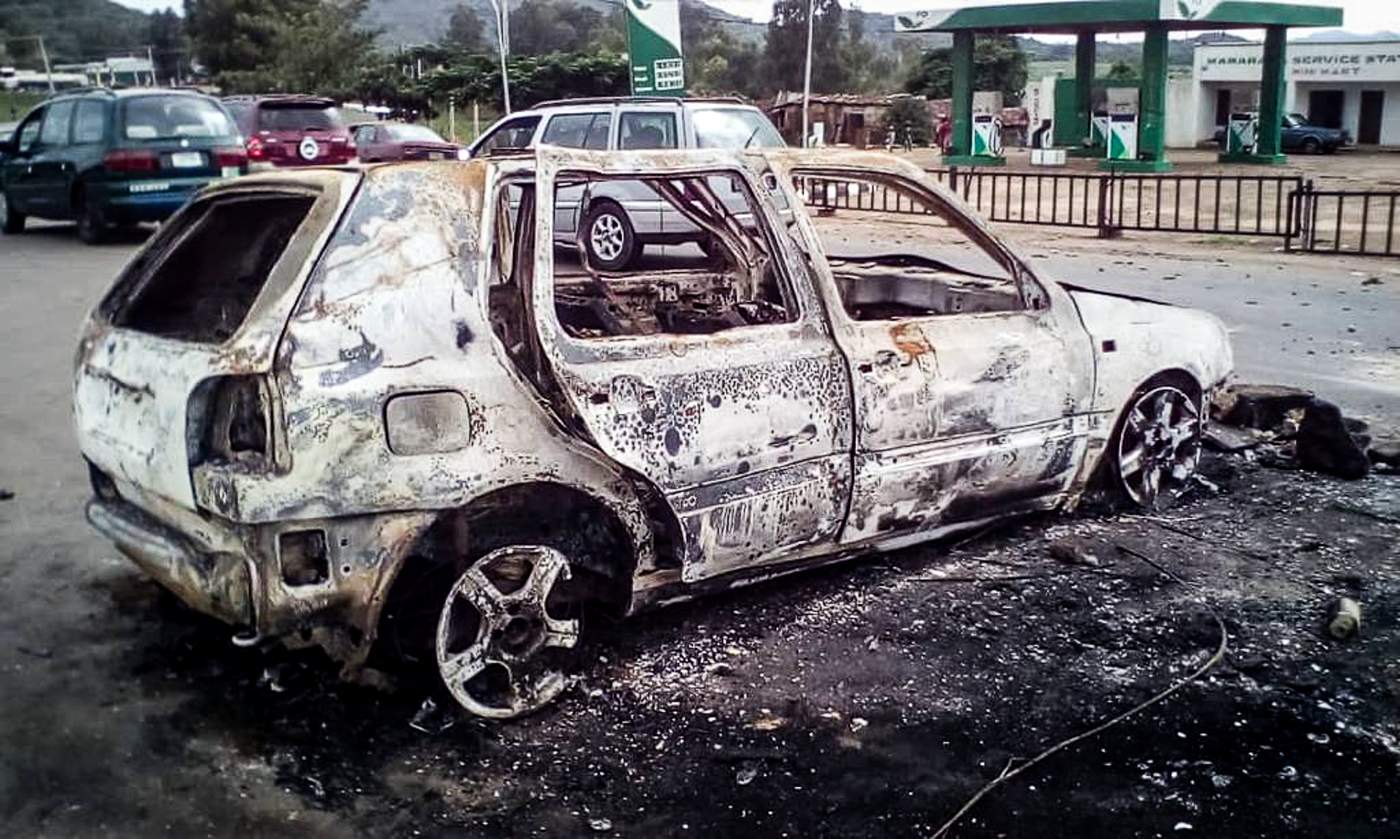
On the road into the village, at the place where Ali was dragged from his car, the tarmac was still blackened from the tyres that burned at the roadblock. There were several more spots like this, dotted around Jos South – fading reminders of the 11 men who were killed, and of that fact that, in central Nigeria, “fake news” can ignite real violence.
At first glance, Ali’s home was a picture of domestic peace. A little girl was reading through a school textbook while her brother and sister chatted among themselves. Two younger children dashed inside to fetch something. Amina sat on a makeshift stool washing clothes in a large bowl, a baby strapped to her back. Umma, Ali’s first wife, crouched in the corner washing kitchen utensils.
But the silence in the room made it clear that something was amiss. And when Umma started to talk about her husband of 20 years, she could not keep from crying.
Wiping away tears with a pink head scarf, she recalled a kind, funny, and generous man. He loved children, she said, and in addition to his own he adopted two of his nephews after his brother died. When Ali went away on business, he always came home with biscuits for the kids.
“He used to play with them so much,” Umma said, looking at the small faces huddled behind her. “If he was here, you won’t see these children around.”
Umma and Amina were getting by with help from the local community, who were horrified by Ali’s death. They were slowly trying to piece their lives back together, in the hope of peace for their region.
“You see that our child, that small one,” said Umma, glancing towards one of the young boys in the courtyard.
“Every day he talks about it, saying ‘Mummy, I am going to buy a gun and shoot those who killed my father.”
In Nigeria, the lines between misinformation and hate speech are often blurred.
What is clear is that, despite Facebook’s attempts to root out hate speech, and the efforts they are making to detect and remove false information, hundreds of inflammatory posts are slipping through the net.
Some of these posts report real atrocities, but are couched in language designed to incite ethnic hatred. Others spread false reports of killings. Many contain half-truths –rumours and insinuations that spread from phone to phone in the villages of Nigeria’s Middle Belt, unnerving communities who are already frightened by the violence of recent years.
One divisive figure operating in this murky terrain is Dr Idris Ahmed, who has been singled out by the Nigerian army as an online troublemaker.
Ahmed is a living example of the complexity of the problem facing Facebook. He is based in the UK and runs an organisation called Citizens United for Peace and Stability. He says he was born in Nigeria, has British nationality, and identifies as Fulani. But from the safety of a suburban house in Coventry, Ahmed is sowing fear in Plateau State.
“We have seen the worst of Boko Haram,” he wrote on 3 October 2018, in a post shared more than 890 times. “However, we have never seen terrorists killing innocent fellow humans and deriving pleasure in eating them up! The Berom terrorists are in a class of their own. They are the worst savage barbarians Africa has ever produced. We must WIPE-OUT the Berom terrorists, by whatever means necessary.”
The words “savage” and “barbarians” are shocking, but “terrorists” is the key term here. Ahmed has used it repeatedly when referring to the Berom, coupled with calls for them to be “wiped out”. By doing so, he couches his calls for annihilation in terms that suggest he is referring to violent political criminals and not to an entire ethnic group. He has called Berom people “terrorists” in at least nine Facebook posts this year.
There is no nationally or internationally recognised Berom terror group. And while Berom people have committed killings during Plateau State’s crisis, the Berom people as a whole are not engaged in violence.
Some of Ahmed’s followers, however, echo the dehumanising language he uses to describe Berom people. A comment below one of his posts calls for the Berom to be “wiped out” and labels them “savage and barbarian”. Another reads: “Kudos for exposing these silent killers, hope the military would respond with fire and fury and reduced them to greasy spots!”
Ahmed is not the only Facebook user to deploy divisive and violent language against Berom people. In the Hausa language, Facebook posts calling for the Berom to be “wiped out” are even more explicit. “Security forces must ignore Amnesty International and wipe out Biroms totally,” posted one Hausa user to his roughly 5,000 followers on 25 June. “They should go there with sophisticated weapons and kill all the humans, animals and even birds.”
In September this year, Ahmed used Facebook to make an unsubstantiated claim about the death of a retired general. His post insinuated the army was involved in the killing, exacerbating an already tense situation. The Nigerian army was incensed.
“We dare Dr Idris Ahmed to provide evidence to support his infantile claims,” wrote Texas Chukwu, the Nigerian army’s public relations director, in response to Ahmed’s post. He called Ahmed’s claims about the disappearance of the general “imbecilic” and “completely out of sync with reality”.
Members of the Berom ethnic group in Jos have also expressed serious concerns about the impact of Ahmed's Facebook activity.
“Idris is an element of destruction,” said Joshua Pwajok, a Berom youth leader who lives in Jos. “He has succeeded in building an army of hatred, an army among his people.”
Sam Godongs, professor of political science at Jos University, reflecting on the overall issue of hate speech and “fake news”, fears that Facebook does not understand the seriousness of the situation. “Cumulatively this is responsible for genocide,” he said. “How I wish [Facebook] were aware of the gravity of what we are facing. And if they are aware, I am wondering why they are so inactive or insensitive. We are talking of human lives.”
Facebook told the BBC it has teams which are “dedicated to preventing false news and polarisation from contributing to real world harm”, especially in countries where “it has life and death consequences”. The company said it is hiring new dedicated staff to address such issues around the world, but did not disclose any specific details regarding Nigeria.
Facebook cannot claim to be unaware of Idris Ahmed.
His account has been suspended twice, once in 2016 and again in 2017, only to be reinstated a few days later. BBC Africa Eye reported one of his posts about “wiping out” Berom “terrorists” to Facebook on 8 November. The company removed the post the following day and disabled Ahmed’s account for a third time. His second Facebook account however – which has more than 30,000 followers and on which he has also referred to “Berom terrorists” – remains active.
Ahmed did not respond to the BBC's request for a formal comment in time for publication. In a phone conversation, he described the BBC's description of his Facebook account as “grotesque” and said it did not fairly reflect his character.
“I will try to recover the [disabled] account, by making the Facebook administrators see sense,” he told his followers on 10 November. “Pray for our success,” he said.
According to the Nigerian Communications Commission, more than 100 million people now use the internet in the country – triple the number of users in 2012. Millions more are expected to go online over the next few years, and Facebook is doing its part to help Nigerians connect.
During Mark Zuckerberg's 2016 trip to Nigeria, Facebook rolled out its Free Basics service in partnership with Airtel Africa, a mobile phone network. The service gave users access to 80 pre-selected websites without having to pay for data. Among those sites was Facebook.
For millions of young people in Nigeria, the platform has become an integral part of everyday life. “It makes the world close,” said 18-year-old Denis Davou, who joined Facebook in 2015 and has 2,000 friends on the platform. “We tend to have friends around the world and we chat. We tend to know things about other countries, and they should also know about our country,” he said.
“I log in every day and I have like 3,000 friends,” said 17-year-old Pam Finna, who lives in a suburb of Jos.
Denis and Pam are sincere in their appreciation of Facebook, and their comments are in line with Zuckerberg’s stated aim of “connecting the world”.
But Denis and Pam, like many Facebook users we spoke to, admitted that they had no idea how to report the upsetting or frightening images that appeared on their phones. They belong to the Berom ethnic minority group and often see posts that vilify their people.
They are not alone in this, many young Nigerians remain unsure how to identify “fake news” or report it.
“Most people who post have no idea what they’re posting or reposting because they themselves are not media literate,” said Muhammad Bala, a professor of mass communications at Bayero University. “They don’t understand motives, they don’t understand intent, they don’t understand underflowing currents of other things.”
This lack of basic media literacy leaves them vulnerable to the kind of dangerous misinformation that is seen by thousands on Facebook in this region.
Facebook told the BBC it was addressing the issue of media literacy. The company said that, in addition to their fact-checking initiative and machine learning tools, it has recently launched an “online safety and digital literacy youth programme” with 140 Nigerian secondary schools.
But again, there is a problem of scale. Nigeria has more than 54,000 secondary schools – to say nothing of the millions of Nigerian children who are not in school at all.
“The owners of Facebook should be doing much more,” said Dr Sam Godungs, professor of political science at Jos University. “Social corporate responsibility is part of the ethics of doing business… If you allow fake news to keep generating and brewing hate, then you are invariably killing people.”
Few organisations have a better understanding of the impact of “fake news” in Nigeria than the police in Plateau State. They told the BBC they were constantly monitoring Facebook for “fake information and fictitious pictures”.
Plateau is where the Gashish massacres happened back in June, and where Ali lost his life in the reprisal attacks that followed.
“We surf Facebook as much as possible,” said spokesman Tyopev Terna Matthias, sitting at his desk in the crumbling police headquarters, which is surrounded by bomb-proof concrete bollards. Matthias has a team of 10 officers monitoring the platform for false information, he said, split between his personal office and a separate communications department.
And for these men, the burden does not end with monitoring.
Matthias recalled a recent incident in which someone called the police, alarmed by a Facebook post saying that men were on their way to attack his village. Vehicles loaded with officers were deployed to the village, where they waited for two days before concluding that the post was false.
That had happened many times, Matthias said, but the police could not risk ignoring the threats that circulated on Facebook: “Villages in Plateau are under constant attack,” he said. “So when we get this information, we take it seriously. Then we discover it's fake. It wears us down.”
Villages in Plateau are under constant attack. So when we get this information, we take it seriously. Then we discover it's fake
Jos police spokesman Tyopev Terna Matthias
In order to prevent panics like this, which drain the resources of a police force that is already over-stretched, Matthias’s men use Facebook to debunk false information whenever they find it on the platform. At times of crisis they even use their personal accounts to quash the rumours, and they call on community leaders to do the same. But the sheer volume of misinformation circulating in Plateau State is overwhelming their efforts to counteract it.
In addition to the roadblock attacks that cost Ali his life, Matthias can cite more than a dozen incidents when he believes false information on Facebook played a role in inciting murder, assault or civil unrest: a riot which damaged government property in late June 2018; a stampede in the streets of Jos following false claims of an attack; the killing of two Igbo men by a mob in September 2017.
“It causes panic,” he said. “Fake news is doing a lot of damage to our society. We pray Facebook shall listen to us and do something fast.”
The Nigerian army in Plateau State shared Matthias’s view.
Between September and October, they debunked seven false stories on Facebook. In addition to monitoring the platform, they hold regular meetings with local imams, pastors and politicians to raise awareness of the threat.
“It’s a new realm of warfare,” said Major-General Augustine Agundu, the commander of a large peacekeeping operation in the state. “[Fake news] spirals before you know what’s happening. You have to spend a lot of effort to let people know that it is false.”
Major Adam Umar, a senior information officer in the Nigerian army, said his team has set up a helpline for local people to report “fake news” and that the army is now using radio broadcasts to debunk false stories.
“It’s turning one tribe against another, turning one religion against another,” he said, days after returning from a peacekeeping mission. “It has set a lot of communities backward.”
It’s turning one tribe against another, turning one religion against another. It has set a lot of communities backward
Major Adam Umar, a senior information officer with the Nigerian army
Umar witnessed the aftermath of the massacre in Gashish in June. He, too, believes that “fake photographs” on Facebook played a role in igniting the reprisal attacks in Jos. He also recalled a similar incident that occurred last year, when Igbo and Hausa men clashed following the spread of images purporting to show an attack in the east of the country.
The country's fight against “fake news” on social media is not confined to individual police forces in Plateau State. In 2018, the Nigerian government announced a nationwide campaign to raise awareness about the problem.
Lai Mohammed, Nigeria’s minister of communications, spoke at the launch of the initiative in June. “In a multi-ethnic and multi-religious country like ours,” he said, “fake news is a time bomb.”
“Next stop: Lagos!” Facebook CEO Mark Zuckerberg posted to his account in August 2016.
It was his first trip to sub-Saharan Africa and he was excited, he said.
Who wouldn't be? Some 53 million mobile internet users are forecast to come online in Nigeria over the next seven years: a lot for a company that partly measures its success on user growth.
When Zuckerberg touched down in Lagos, there were 16 million monthly Facebook users in Nigeria. Today, just two years later, there are 24 million.
But more users means more content, and a lot of that content, according to the police in Plateau State, is false, misleading, and dangerous.
Facebook is aware of the problem, and claims to be addressing it. “Nigeria is important to us,” said Akua Gyekye, the company’s public policy manager for Anglophone West Africa, in a recent statement. “We are committed to taking our responsibility seriously in tackling the spread of false news.”
Facebook told the BBC that it is pursuing a “multi-pronged approach” to combating the spread of misinformation in Nigeria. “As well as reports from our community, we’re using machine learning tools to help find and remove inappropriate content, are investing in local partnerships, and continue to engage with Nigerian civil society, NGOs, academics and policy makers.”
At the centre of Facebook’s efforts is a scheme that it calls the “third-party fact-checking programme”. The programme is part of a worldwide approach that Facebook has already rolled out in 17 other countries.
In Nigeria, the third parties are the French news agency AFP and the non-profit organisation Africa Check. Their fact checkers will review stories that have been picked up by Facebook’s automated system for detecting false information. The system includes posts that have been flagged as false or misleading by other Facebook users.
“We know there is no silver bullet,” said the Facebook spokesperson, Akua Gyekye, “but once a fact checker rates a piece of content as false, we are able to reduce its future views by an average of 80%”
The statistic sounds impressive. But BBC Africa Eye dug deeper into Facebook’s fact-checking initiative in Nigeria, talking to insiders and experts in the field. And when we got into the detail the picture looked rather different.
So far, Facebook’s third-party fact-checking partners, AFP and Africa Check, have committed just four people full-time in Nigeria to analysing and debunking false news, on a platform that is used by 24 million Nigerians every month.
Alexios Mantzarlis, director at the International Fact-Checking Network – the body that accredits fact-checking agencies – told us that an individual fact checker might be able to complete “between 20 and 100 individual fact checks” per month. But in Nigeria, where reliable public data is hard to find, the process is often slower. Another source working for one of Facebook’s fact-checking partners, who asked not to be named, said that fact checkers sometimes debunk just five stories in a week.
“They are just dipping their toes in the water,” said Gbenga Sesan, a Nigerian digital rights activist who has met Facebook representatives to discuss the company's expansion in Nigeria. “At the end of the day, these are business people and they want to make more money,” he said.
Julie Owono, the Cameroonian director of Internet Without Borders, a digital activist group, believes that Facebook’s plans are not commensurate with the scale of the problem. “There’s a dis-proportionality between the threat and the effort put in place,” she said. “Four fact checkers?... It’s scary.”
More worrying still is that none of the four fact checkers deployed full-time by Facebook’s partners in Nigeria speaks Hausa, a language spoken by millions in the country. Facebook denied this. They told the BBC that their Nigerian fact-checking partners “support Hausa”, though what they meant by this was unclear.
The BBC analysed more than 50 recent posts written in Hausa that contain hate speech or false information – and some of them are horrifying.
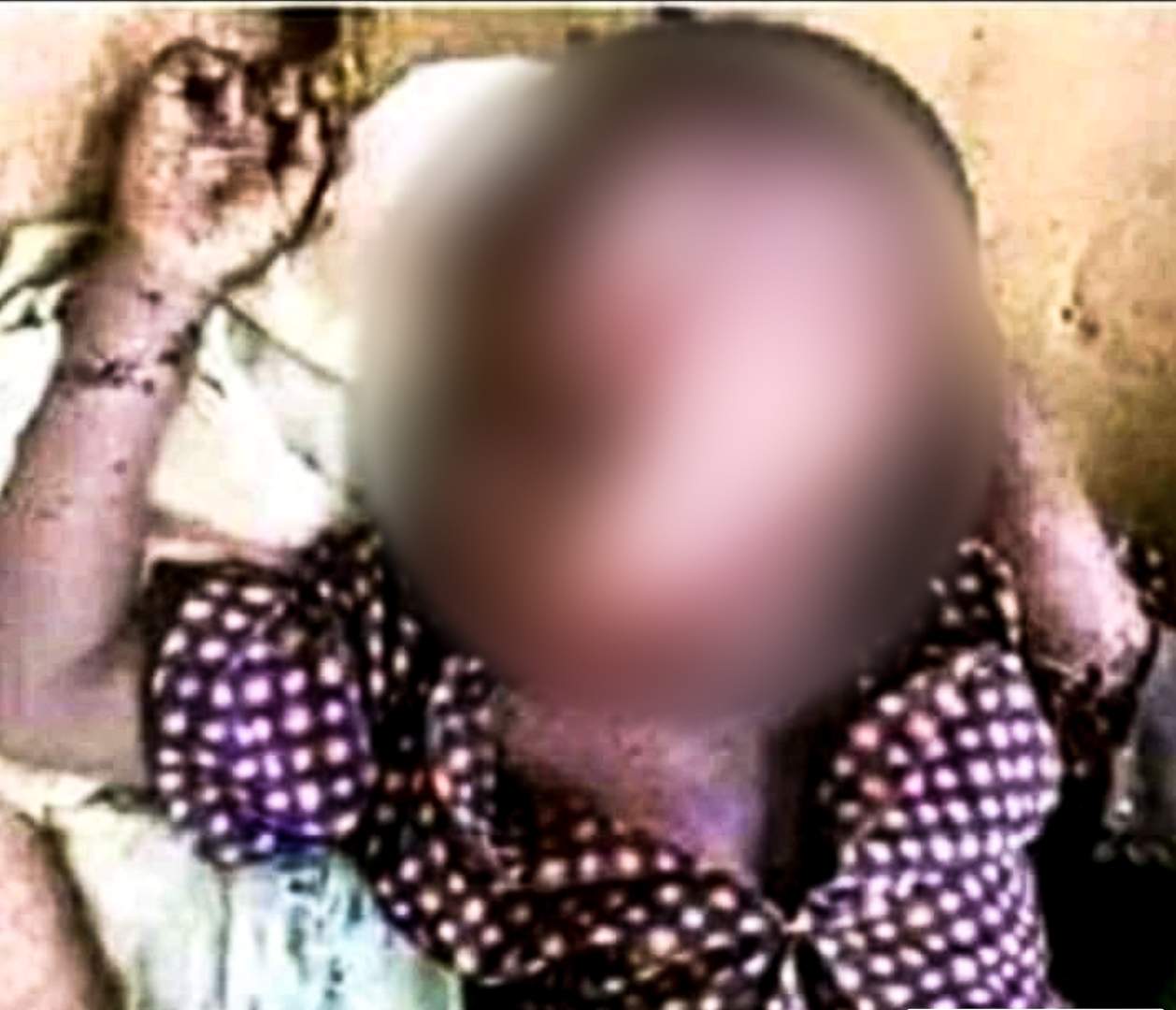
One post, for example, contains a photo of a person slumped on the ground, their skin burnt and peeling. The Hausa text reads: “This is John Okafor [an Igbo name] who tried to smoke weed using pages from the Qur’an and got burnt, instantly.”
In fact, the photograph was taken after a horrific assault on a woman accused of witchcraft in Lagos in 2014. She was reportedly burned alive and later died of her wounds.
But the facts didn’t matter to the person who created this post, and didn’t register with the people who liked it. What they saw was a story about a Christian – an ethnically Igbo Christian – displaying contempt for Islam, the predominant faith of Hausa-speaking Nigerians. It is the kind of story that, in a region already torn by ethnic and religious violence, can have dangerous consequences.
“Anything you do in the world is better when you’re with your friends,” Mark Zuckerberg said in a 2011 interview with the BBC, back in the early days of Facebook’s global expansion. “Bringing those kind of experiences to people in all these different places is really cool.”
Seven years on, Facebook’s optimism has been tempered by criticism of its role in electoral controversies in the US and the UK, and by allegations that the platform is being used to spread divisive rhetoric and false information from Cameroon to Myanmar. “Fake news is not our friend,” said an advert promoted by the company earlier this year.
In a statement to the BBC, Facebook said any suggestion that they “are not fighting abuse on Facebook in Nigeria is misleading”.
“We know we have a responsibility to keep people safe and prevent the spread of misinformation and continue to work hard to fight any abuse,” the company said.
But misinformation and graphic imagery continue to circulate on the platform.
We sent Facebook the video of the man’s head split open – the clip that was filmed years ago in Congo-Brazzaville, but which spread across Plateau State in the hours of the reprisal attacks in June this year. Facebook immediately removed the post, saying that it violated its policy on violence and graphic content.
But a quick search of Facebook the following day revealed the same distressing film in other posts, still circulating and still accompanied by the false claim that it showed a massacre in Nigeria. Since it was first uploaded to Facebook in 2012, the video has been used to whip up fear all over the continent. One user claimed it showed an attack in Kinshasa, capital of Democratic Republic of Congo. Another said it showed a Boko Haram atrocity in northern Cameroon.
Where will this video appear next? And to what ends will it be deployed?
Nigerian police say false information on Facebook is killing people
By Yemisi Adegoke and BBC Africa Eye
Nigerian police say false information and incendiary images on Facebook have contributed to more than a dozen recent killings in Plateau State - an area already torn by ethnic violence.
When BBC Africa Eye got in touch with Facebook, the company disabled the account of a man in the UK who was spreading misinformation to thousands in Nigeria.
Facebook’s third-party fact-checking partners in Nigeria have committed just four full-time fact checkers to review false information, on a platform used by 24 million Nigerians.
Chapter One FIRE AT THE ROADBLOCK
Warning: Graphic content
On 23 June 2018, a series of horrifying images began to circulate on Facebook.
One showed a baby with open machete wounds across his head and jaw. Another – viewed more than 11,000 times – showed a man’s skull hacked open. There were pictures of homes burnt to the ground, bloodied corpses dumped in mass graves, and children murdered in their beds.
The Facebook users who posted the images claimed they showed a massacre underway in the Gashish district of Plateau State, Nigeria. Fulani Muslims, they said, were killing Christians from the region’s Berom ethnic minority.
A massacre did happen in Gashish that weekend. Somewhere between 86 and 238 Berom people were killed between 22 and 24 June, according to estimates made by the police and by local community leaders.
But some of the most incendiary images circulating at the time had nothing to do with the violence in Gashish. The image of the baby, which was shared with a call for God to “wipe out the entire generation of the killers of this innocent child”, had first appeared on Facebook months earlier. The video in which the man’s head was cut open did not even come from Nigeria, it was recorded in Congo-Brazzaville nearly a thousand miles away, in 2012.
But the truth didn’t matter. The images landed in the Facebook feeds of young Berom men in the city of Jos, hours to the north of the rural district where the massacre was happening. Some of the Facebook posts suggested that the killings were happening right there in Jos, or that the inhabitants of the city were about to be attacked. Few stopped to question the claims, or to check the origin of the graphic pictures that were spreading from phone to phone.
“As soon as we saw those images, we wanted to just strangle any Fulani man standing next to us,” one Berom youth leader told the BBC. “Who would not, if they saw their brother being killed?”
The images helped to ignite a blaze of fear, anger, and calls for retribution against the Fulani – a blaze that was about to engulf a husband and father called Ali Alhaji Muhammed.
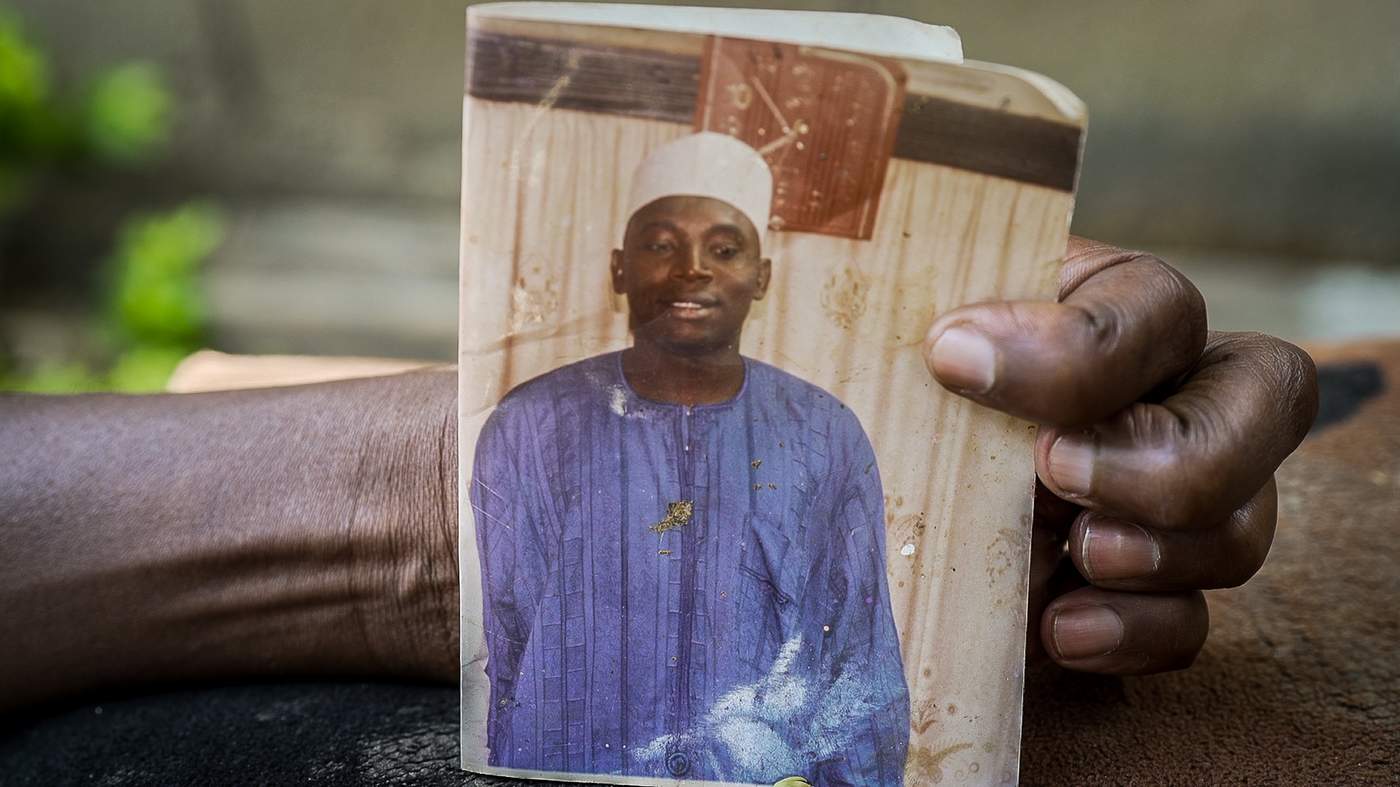
Ali was a potato seller from Jos, a city of around a million people.
On 24 June he went to a town called Mangu to meet some customers. It was a journey he’d made hundreds of times. He left shortly after morning prayers and expected to be back in time for dinner with his wives Umma and Amina and his 15 children.
On his way home in a shared taxi, Ali found the road blocked by a wall of burning tyres. A mob of Berom men armed with knives and machetes were interrogating drivers, looking for Fulani Muslims.
Ali was dragged from his car along with another male passenger. His charred remains were found three days later near the edge of the Jos-Abuja highway. His body was so badly mutilated his wives refused to see it.
Ali was one of 11 men who were pulled out of their cars and killed on 24 June.
Some were set alight. Others were hacked to death with machetes. Days later, their bodies were still being discovered across the city, dumped in ditches, behind houses and along the roadsides. Many were burnt beyond recognition.
Hostility between the Fulani and the Berom predates the rise of Facebook. But the police and the army in Plateau State are convinced that the graphic imagery and misinformation circulating on the platform on 23 June and 24 June contributed to the reprisals.
“It was the pictures, the supposed pictures that emanated from the attack [in Gashish],” said Tyopev Terna Matthias, public relations officer for the Plateau State police. “Jos South was not under attack. But because of those images they saw, the next day, roads were blocked. People died. Vehicles were burned. So many people died.”
It was not the first time Matthias had seen incendiary posts on social media followed by violence in the towns and villages of Plateau State. “Fake news on Facebook is killing people,” he said.
Because of those images roads were blocked. People died. Fake news on Facebook is killing people
Tyopev Terna Matthias, public relations officer at the Plateau State police
In the US, Asia, and Europe, Facebook has come under intense scrutiny for its role in the circulation of “fake news”. But what happens when viral misinformation is allowed to spread through areas of Africa that are already in the midst of ethnic violence? And what is Facebook doing to ensure its platform is not being used to disseminate lies, spread fear, and foment hatred in Nigeria’s troubled heartland?
BREAKING: With 'Less Than 10 Senators' Present, Senate Postpones Proceedings
by SAHARA REPORTERS, NEW YORK
Nov 13, 2018
Aduda premised his motion on the fact that 38 senators must be present to form a quorum, and at the sitting today, less than 10 senators were present. The motion was seconded by Deputy Senate President Ike Ekweremadu, but he observed that the members present were not less than 10 but less than 20.
The Senate has postponed its sitting till next week Tuesday as members are on oversight duties across the country.
At the plenary sitting on Tuesday, November 13, 2018, which began at some minutes before 11am, Senator Philip Aduda cited Order 10 and moved the motion for adjournment of the plenary.
Aduda premised his motion on the fact that 38 senators must be present to form a quorum, and at the sitting today, less than 10 senators were present.
The motion was seconded by Deputy Senate President Ike Ekweremadu, but he observed that the members present were not less than 10 but less than 20.
Speaking on the point of order raised, Senate President Bukola Saraki said: "This is in line with Order 10:3; if we do not have quorum, we need to adjourn".
He also urged senators currently on oversight function to try to complete all duties before the end of the week.
Staff and students of schools in Abuja were present at the National Assembly to observe the proceedings.
The plenary sitting was adjourned till Tuesday, November 20, 2018.
Remembrance Sunday has been a bit controversial in recent years and the controversy continues today.
1) Some Americans are angry that Donald Trump missed the wreath laying ceremony in France. Trump said that it was raining so he couldn't make it.
Some Americans say that Angela Merkel and Emanuel Macron attended the ceremony so there's no reason why Trump wasn't there.
John Kerry said that US troops fought in the rain and snow and that Trump disrespected the troops by failing to show up at the event.
Some said that Trump used taxpayer's money, government workers and equipment to travel to France, yet he didn't show up at the wreath laying ceremony and he arrived late at other ceremonies.
2) There's a battle between Britons and other nationals over the absence of Theresa May in France.
Mrs May and President Macron laid a wreath on Friday and then she travelled back to London to take part in remembrance ceremonies at home. The deputy prime minister represented her in France.
Some foreigners say that it's a shame that Mrs May was not with other world leaders in Paris, but some Britons said that she was at the Cenotaph where she should be and that no prime minister has ever missed the ceremony at the Cenotaph.
Sky Sports was heavily criticised because of audio problems when the Last Post was being played during the Sheffield derby on Friday.
There was "white noise" when it was being played and this created the impression that the crowd in the stadium were not quiet during the playing of the Last Post, i.e. it created the impression that the crowd disrespected the Last Post.
There have been controversies about the remembrance poppies in recent years. FIFA refused to permit England and Scotland players to wear poppies during a friendly match last year. The also refused to allow them to play the Last Post. Both teams wore poppies anyway and the Last Post was played. (FIFA fined both teams).
A BBC presenter was criticised because he wasn't wearing a poppy during coverage of the Remembrance Sunday service. The BBC later apologised and explained that the poppy fell from his jacket and nobody noticed it.
Some people have also refused to wear poppies because they believe that it represents war and they are pacifists. Some people have also criticised the day because they say that public figures are forced to wear poppies even when they don't want to wear them.
majamajic: yes, something like that , pls can u differentiate for me between Ramota and Akpeno in the Masquerades. I think after Christy left, the next person that played that role changed to Ramota, .
Christy Essien Igbokwe was Apena (Jegede's first wife).
I just found a clip of the original Masquerade! No, not New Masquerade, The Masquerade!
The Masquerade was shown in the late 1970s and early 1980s. It ended sometime around 1984 and was replaced with The New Masquerade.
The significant change was that Christy Essien Igbokwe, who played the role of Apena (Jegede's wife), left the show (in order to focus on her music career). In her place (in the New Masquerade), the producers created a new character called Ramota, who was Jegede's second wife.
Now I'm hopeful that I'll find the original Village Headmaster series.
2) Camilla (Duchess of Cornwall), the Queen and Kate (Duchess of Cambridge) watch the ceremony from a balcony at the Foreign and Commonwealth Office. The Queen is now too old to lay her wreath by herself.
3) Jeremy Corbyn and Theresa May
4) Prince Charles, the president of Germany and Prince Michael of Kent emerge from the Foreign and Commonwealth Office.
How to Date a Lot of Billionaires – By Sisters That Were Accused Of Blackmailing Femi Otedola.
The Matharoo sisters are controversial Canadian siblings who are known for dating rich men (particularly rich Nigerian men) and posting pictures of their lavish lifestyle on social media.
In 2016 they were arrested and charged to court for blackmailing billionaire Femi Otedola. They later fled to Canada.
In this New York Times interview they talk about what happened to them in Nigeria and give advice to girls on how to date lots of billionaires.
How to Date a Lot of Billionaires
Jyoti and Kiran Matharoo sought fame on social media by flaunting what nature — and men — gave them. Then they got locked up abroad
By Dan Levin Nov. 10, 2018
After years of romances with a series of fabulously wealthy Nigerian boyfriends, the flamboyant Canadian sisters Jyoti and Kiran Matharoo needed somewhere to store the pricey spoils of their dating careers. So they converted a bedroom in their Toronto home into a large walk-in closet that resembles a luxury boutique.
An entire wall is lined with more than 70 pairs of designer high-heeled shoes. Glass wardrobes display dozens of handbags and purses from brands like Hermès, Celine, Gucci and Saint Laurent. Equally pricey clothing drapes tightly from hangers and fills trunks stacked up to the ceiling.
There are separate drawers for belts, rings, earrings, bracelets, silver necklaces and gold ones. They own a collection of rose gold and diamond-encrusted watches easily worth several cars. And the white Mercedes-Benz sedan parked outside? It’s their third paid for by a wealthy paramour, they said.
Did they even pay for any of this stuff? “Not really, no,” said Jyoti, 34. Her sister responded similarly. “The only time I go shopping is when someone gives me their credit card,” said Kiran, 32.
Armed with this luxury haul, the Matharoos have tried to copy the modern art of idle glamour pioneered by Paris Hilton and perfected by Kim Kardashian West. They followed the playbook so effectively that they are sometimes called the “Canadian Kardashians” for their devotion to spandex bodysuits, private jet travel, Christian Louboutin and social media.
But if their reality-television muses are famous for being shamelessly rich, the Matharoos became notorious after their unapologetic pursuit of material excess backfired, exploding into a messy international scandal involving one of the world’s richest men, a salacious gossip website, stints in Nigerian and Italian custody, and a battle to clear their names with Interpol, the global police organization.
‘It All Happened So Fast’
The Matharoo sisters never intended to become a cautionary tale about the perils of social media influence. They were born and raised in Toronto, by middle-class parents who had immigrated from India. The sisters’ lives changed abruptly 10 years ago, when Jyoti, fresh out of college, met a Nigerian petroleum magnate.
“He’s not a rapper with expensive watches,” said Jyoti. “It’s generations and generations of money.”
He flew both sisters on private jets to France and Greece and eventually to Nigeria, a destination they did not disclose to their strict parents. Upon landing, a convoy of Mercedes-Benz G-Class S.U.V.s drove them to his home, a heavily marbled mansion with a pool and a litany of servants. Kiran lazed away poolside while Jyoti accompanied her lover to Kuala Lumpur, Malaysia, to play polo with a prince.
“It all happened so fast,” Jyoti said. “There wasn’t even a moment for us to be like, ‘Is this really happening?’”
Within a few months, she said, he bought her a condominium in Toronto and began giving her a monthly $10,000 stipend so she would not have to work.
This affair was not to be a forever love, though. Over the years, the sisters globe-trotted with a succession of paramours. In particular, both sisters traveled frequently to Nigeria and said that dating wealthy men there was easy. “Once they find out you have a sister, it’s over,” Kiran said. “We don’t find them. They find us.”
They also began to document their lavish adventures on social media: yachting in the Bahamas, shopping sprees in Paris and Dubai, flying on private jets and sunbathing in Saint- Tropez and Spain. In the photos, they are invariably adorned in swag — Hermès handbags, shoes by Alaïa, watches by Audemars Piguet.
Neither would say exactly how many billionaires they had dated. “If you say more than one, you’re automatically considered a gold digger,” said Jyoti, though she admitted that the number is higher than one. “I’m attracted by the power of who they are, what they do and what position they are on the Forbes billionaire list.”
Kiran described herself as an old-fashioned girl who simply likes to be courted. “If you want to date me, you have to spoil me,” she said.
In brandishing this high-end brand of pampered independence, the sisters seemed to delight in rejecting society’s expectations of women’s roles. “Marriage and alimony are acceptable, but being single and letting a guy give you things is not,” Jyoti said. “You have to own it. I don’t feel like I’m a piece of property.”
The Matharoos’ growing notoriety, fueled largely by Instagram, made them particular favorites of Nigeria’s gossip blogs, which tracked their rumored relationships with the sort of savage coverage normally reserved for troubled royals. “Indian twin-menace: Nigeria’s most promiscuous sisters,” one headline declared in 2016: “Why billionaire housewives dread them.”
The sisters received more scorn from social media commenters.
“The road to Hell is paved with Birkin bags, promiscuity, sloth, Instagram photos, and vanity,” a commenter posted on a gossip blog thread entitled “High Paid Escorts/Prostitutes: Jyoti & Kiran Matharoo.” This thread runs for 220 pages — “more than some celebrities,” Kiran said, with pride.
The Sisters Get Arrested
When the dark side of the fantasy arrived — this was in Lagos, in December 2016 — it was as sudden as it was severe.
A few days after the Matharoos had returned to Nigeria, they were awakened by a loud knocking at their hotel room door. A group of men burst in and told the women they had to come to the police station. Some of the men, who turned out to be plainclothes police officers, took photos of the sisters in their bathrobes. These soon appeared online. The sisters asked to see a warrant and a badge but got no response.
“I told them I’m going to call my embassy, but when I started dialing, one guy grabbed the phone out of my hand,” Jyoti said. “They said if we don’t get dressed, they were going to carry us out just like that.”
“We thought we were being kidnapped,” Kiran said.
At the police station, the officers kept asking if the sisters owned a gossip website that had been spreading scandalous rumors about Nigerian elites — and about the sisters themselves. This site was among the blogs that had described them as prostitutes. “We couldn’t help but laugh, because the whole thing was so ridiculous,” Jyoti said.
From there, the sisters said they were driven in a van to another police station, this one belonging to Nigeria’s Special Anti-Robbery Squad, a branch of the police notorious for corruption and using torture to extract confessions, according to a 2016 report by Amnesty International. They were taken to a dimly lit office where an officer, seated behind a wooden desk, demanded they write statements admitting that they owned the gossip website.
“The site was in Nigerian Pidgin,” Jyoti said. “We can’t speak Pidgin, so of course we refused.”
After hours of arguing, officers pushed the tearful sisters into what they described as a rat-infested jail cell filled with a dozen women, a few pieces of foam for beds and a hole in the floor for a toilet. The next day, they said, officers brought them back to their hotel room, and took their passports, electronics and Nigerian currency worth more than $11,000 from the safe.
The women were then driven to a hotel by the airport and locked in a room with bars on the windows and guards outside the door. They said some of the men demanded bribes. “It was like we were held hostage,” Kiran said.
All told, the sisters were detained for 18 days.
They were accused of cyberstalking and threatening to kidnap wealthy Nigerians, including one of Kiran’s ex-boyfriends, Femi Otedola, a politically powerful oil tycoon whose net worth was $1.8 billion in 2016, according to Forbes magazine.
While they were in detention, the sisters said the police brought them to the home of Mr. Otedola, who warned that he could have them imprisoned for 10 years — or worse — if they refused to cooperate.
Desperate to leave Nigeria, and getting no help from the Canadian Embassy, the Matharoos feared they were running out of options. Then, they said, an associate of Mr. Otedola’s arrived at their makeshift jail cell with an offer: If they apologized to Mr. Otedola on video, they could get their passports back and fly home to Canada.
“I felt this was our only chance,” Jyoti said. Standing against a wall in their room as the man’s assistant filmed, Jyoti read a confession off her phone, admitting that the pair ran the website and apologizing to Mr. Otedola and his family. The man never returned with their passports.
The video was posted online the next day and swiftly attracted international media coverage, destroying the sisters’ carefully crafted reputations as fashion-obsessed ingénues.
“We got everything we wanted by asking nicely,” Kiran said, dismissing the confession video. “Why would we ruin that?”
Kiran said Mr. Otedola was furious that she had spurned his entreaties to rekindle their relationship, and used them as scapegoats to deflect attention from the website’s embarrassing rumors. Mr. Otedola did not respond to interview requests.
About a week after they posted bail, the sisters flew to Toronto with emergency travel documents that Canadian officials issued after they determined the women faced no travel restrictions and that “there was a significant risk to their physical safety,” an immigration official said in an email. The sisters said Canadian diplomats walked them to the plane.
Back home, the Matharoos initially stayed off social media. But fed up with the public humiliation, they began speaking out to Canadian media and posting information about their detention on their lifestyle blog. “I couldn’t take it anymore,” Jyoti said. “We had to set things straight.”
Going public had devastating consequences. A few months later, in September 2017, American customs officials based at Toronto Pearson International Airport told Jyoti she could not travel to the United States because there was an outstanding warrant for her arrest.
A week later, Kiran flew to Venice, Italy, to go furniture shopping. She was waiting for her luggage at the airport when Italian customs officers locked her in a room with no food, water or explanation. “I was crying and crying,” she said. Eight hours later, officials told her that she was under provisional arrest. “They said, ‘There’s a flag on your passport from Interpol,’” she said.
She spent the next 40 days in jail, awaiting extradition to Nigeria, according to Italian court documents. European Union laws prohibit extradition to countries with poor human-rights records, so it’s likely she shouldn’t have been held at all.
But Nigeria never filed the extradition paperwork, and Kiran was allowed to fly home to Canada. (Italy’s interior ministry did not respond to requests for comment.)
Philip Adebowale, the Nigerian police official who detained the sisters in Lagos and issued the warrant that resulted in Kiran’s arrest, said that he had not colluded with Mr. Otedola and had not demanded bribes. Asked why Nigeria failed to request Kiran’s extradition, he first said the Italian police “allowed these girls to dupe them,” and then blamed bureaucratic errors. “If I sent them my boys, we would have cleared everything up,” Mr. Adebowale said.
Once Kiran returned to Canada, the sisters began pleading with Interpol to purge their names from its database of red notices (alerts akin to international arrest warrants) issued at the request of its 190 member countries.
In 2017, the agency said it issued more than 13,000 red notices, up from 1,277 in 2002. Only a small fraction of the notices are made public.
Normally, Interpol goes after murderers and drug traffickers, not women fond of posting cleavage shots on Instagram. “You can’t trust countries like Nigeria or Belarus not to misuse the criminal justice system and Interpol to advance corruption,” said Jago Russell, the head of Fair Trials International, a rights group based in London that has pushed Interpol to implement stronger safeguards.
Dressing Well Is the Best Revenge While they waited for Interpol to review their cases, the Matharoos tried to keep out of the spotlight. “We mostly just moped around lonely and depressed,” Jyoti said. “I couldn’t get myself to focus on anything until they dropped it.”
Even then, the sisters sought to capitalize on their notoriety. On some days, they would grab a camera and drive to a deserted warehouse with just enough industrial grit to be edgy. Its walls were their makeshift studio, where they would photograph each other in designer clothing to post online.
On Instagram, Jyoti hawked sponsored high heels, hair extensions and spray tans. Kiran developed an online food consulting brand. “Her recipes get around 500 screen shots on Snapchat,” Jyoti said.
Their work paid off. In June, an American man living in Dubai who followed Jyoti on Instagram contacted her about starting a fashion line. He planned to visit them in Canada, but then, in August, the sisters received a package from Interpol’s independent appeals commission.
Inside was a letter informing them that Interpol had deleted their names from its database. The Matharoos had won.
Jyoti had him book her a plane ticket to Dubai in September. “I was like, ‘Screw Toronto, I need to get out of here’,” she said.
Her flight to Dubai was sleepless, even though she had packed all her Interpol paperwork. But she landed, and no one was there to arrest her. “It’s like the notice never existed,” she said.
What began as a business trip swiftly grew into a romance, with a stay on a private island and fashion brainstorming sessions over candlelight dinners. One evening, Jyoti wore a tight orange dress she had asked Kiran — a talented seamstress — to make for the trip. Impressed, the man, whom the sisters declined to identify to protect his privacy, sent the sisters to immediately find manufacturers in Los Angeles. There, the Matharoos rekindled their love affairs with private jets and pools in Beverly Hills. Jyoti modeled on her Instagram in a neon bikini and other outfits her sister made. Direct messages started pouring into her Instagram with requests for the clothes. “I told Kiran, ‘You need to sit your ass down and start sewing,’” Jyoti said. They are now in the midst of setting up their fashion line, SPCTRMstudio.
“I’m so relieved we can get back to our normal life,” Jyoti said. But they haven’t, quite. Recently Jyoti arrived at the Toronto airport with a plane ticket to Houston, only to find herself interrogated by United States customs officials.
“They were grilling me, like, ‘So, are you a prostitute? When was the last time you had a boyfriend,’” she said. “I said, ‘I didn’t know being single was a crime.’ I was so mad. Then I started crying.”
The Matharoos also said they have been inundated with messages from women asking for guidance on finding a billionaire sugar daddy. “Surely you can shed some tips on how to become a kept woman who is still doing her thing,” read a typical message sent to Kiran’s Snapchat. For those wondering, they have some advice.
Don’t be greedy. “When he asks what kind of car you want, don’t ask for a Rolls-Royce,” Jyoti said.
Second, observe proper “jetiquette” by dressing conservatively on his Cessna. “You don’t want to look like some guy hired a hooker for a weekend,” Kiran said.
And, obviously, when he hands you thousands of dollars for a luxury shopping spree, bring him back some change.
But if their brushes with incarceration have taught the sisters any new lessons, it’s that they shouldn’t bother. Men and their money are not worth the trouble. “There’s always going to be a guy saying, ‘Let me spoil you,’ who wants to fly us somewhere,” Jyoti said. “For once we want to just focus on ourselves.”
Emmanuel Akinwotu contributed reporting from Abuja, Nigeria, and Elisabetta Povoledo from Rome.
Dan Levin covers American youth for the National Desk. He was a foreign correspondent covering Canada from 2016 until 2018. From 2008 to 2015, Mr. Levin was based in Beijing, where he reported on human rights, politics and culture in China and Asia. @globaldan
1) Kiran and Jyoti Matharoo in the Consort Bar at Toronto’s Omni King Edward Hotel. (Credit Tara Walton for The New York Times).
2) An entire wall is lined with more than 70 pairs of designer high-heeled shoes in the Matharoo sisters’ walk in closet. (Credit Tara Walton for The New York Times.
3) Kiran Matharoo holds a personalized choker from one of the six jewelry drawers the sisters share (.CreditTara Walton for The New York Times).
4) Jyoti Matharoo checks her phone in a Walmart parking lot. (CreditTara Walton for The New York Times).
 Gaming › Re: What Was The First Video Game You Ever Played? by naptu2: 6:07am On Nov 15, 2018