It seems that there are people that are not able to read and comprehend simple sentences.
This is a post that I wrote in 2023 o!
One funny person claimed that I wrote that they are not policemen. Another funny person (or maybe the same person) claimed that I wrote that regular policemen do not receive bribes. The first funny guy even claimed that I was defending the police.
People of God, can you find any of that nonsense in my post or were those people hallucinating as usual?
Dear diary, do you remember back when I was always explaining what supernumerary police was? I explained it on very many other threads as well as this one because I saw lots of funny comments. It seems like I will soon have to do the same for special constabularies.
There is a Dutch woman named Noraly Schoenmaker (aka Itchy Boots), who travels around the world on a motorcycle and she does a vlog about her travels.
She travelled through Nigeria in October. She came in from Benin Republic, travelled up to Abuja (to get a Cameroon visa) and then went from Abuja to Cameroon. Her vlog was very interesting.
She passed through a lot of checkpoints on the way and her interactions with policemen and soldiers were very interesting. Most of her interactions were positive, with the policemen and soldiers offering advice and joking with her. However, for people that don't watch her vlog, this has been overshadowed by her interaction with two special constabularies.
What are special constabularies
Community policing
There has been a long running debate in Nigeria. Some people believ that the structure of the Nigerian Police Force is wrong. They believe that it is wrong to have policemen that can be posted to any state and who live in barracks. They believe that policemen should be from the local community and live among the people (community policing), so that they'll know the community very well and know the problems in the community.
Others believe that policemen that are part of the community in that way will be biased and cannot be impartial.
Special constabulary
Professor Yemi Osinbajo believed that we should have some form of community policing and he basically championed the idea in the last administration. This led to the expansion of the Special Constabulary.
In the UK special constabulary are part-time volunteer policemen.
In Nigeria, the Special Constabulary platform was used to achieve the idea of community policing.
States were asked to nominate people to become special constables. These special constables are meant to be members of the community in which they will operate. They were given a little police training by the Nigerian Police Force and they are expected to assist regular policemen with their knowledge of the community.
It was 2 of those special constables that demanded money from Itchy Boots.
That incident backs up what I wrote on this thread some months ago. Someone advocated for community policing and said that community policemen would not be antagonistic to civilians and would not demand bribes from them. I replied that there is community policing in the United States, yet policemen are antagonistic to civilians and also demand bribes, so community policing won't solve the problem.
I have my own theory about why regular policemen were very nice to Itchy Boots, while the Special Constabularies demanded for money.
Regular policemen are more experienced and they would know that demanding money from her would get them in trouble. That would be very clear to them (note: I am not saying that there are no nice policemen. There are, but the bad eggs would also not ask Norally for money because they know that they would get in trouble).
Unfortunately many civilians see the uniformed services as an opportunity to bully people and extort money from them and I am certain that some peoole will join the Special Constabulary with that idea, yet they are not as experienced as regular policemen.
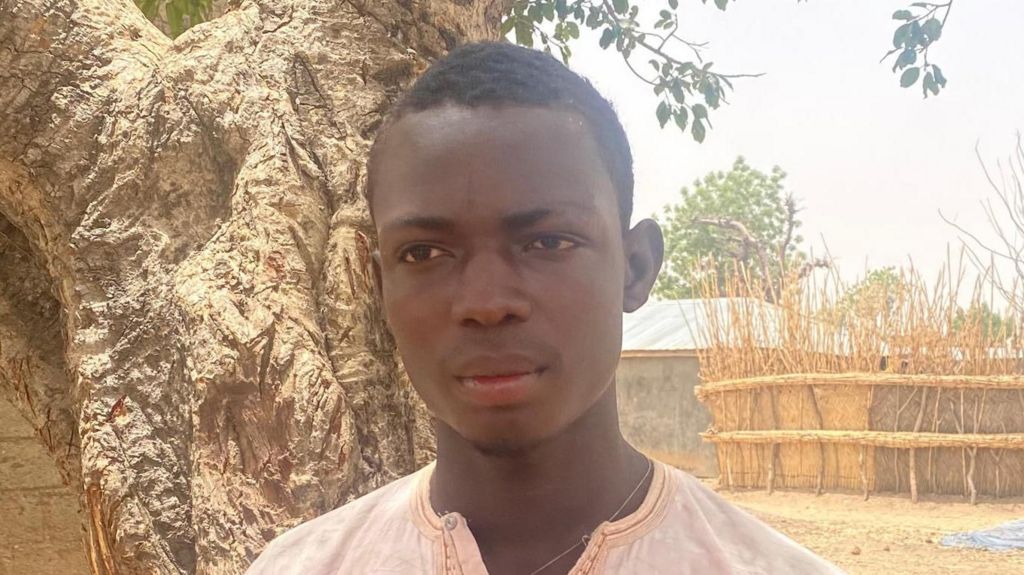
A Nigerian man has told the BBC how he managed to survive an attack on his hunting party that left 16 of his companions dead, and shocked the nation.
The group of young men, mostly in their 20s, was travelling in the back of a truck when they were stopped by vigilantes.
"They asked us to alight from the vehicle and without saying much, one of them hit our leader on the shoulder with an axe," Abubakar Shehu, 20, told BBC Pidgin.
"Then they started beating us. I was able to dodge a couple of punches and tackles and ran as far as I could.
"I fell into a ditch, got up and was able to hide in an unused property for many hours before coming out around 10pm," he said.
While hiding, he could hear the shouts and cries of his friends as they were being beaten and then burnt to death.
"I could hear all the noise from what has happening and I was scared for my life. Thankfully no-one saw me," Mr Shehu said.
He then returned to the road, where he was able to stop a truck and the driver picked him up and took him to safety.
Last week's gruesome attack on the group from northern Nigeria heightened tensions across the country. They had spent several weeks travelling in the south hunting wild animals to sell, and were going home to celebrate Eid.
Amnesty International and other rights groups have called on the authorities to make sure justice is served.
President Bola Tinubu also condemned the killings, saying that Nigerians had the right to move freely anywhere in the country. He ordered security agencies to find the killers, adding that "jungle justice" had no place in the country.
Police say they have arrested 14 people in relation to the case and many across the country will be closely following to see how the case pans out.
Relations between northern and southern Nigerians are fraught following years of clashes between northern animal herders and southern farmers over access to water and grazing land, which have left thousands dead.
Along with the lack of security across Nigeria, this is one of the reasons why residents of Uromi town in Edo state, and many others, have set up vigilante groups.
The hunters from the northern Kano state were armed with traditional rifles but they say they showed licences for these weapons when they were stopped by the vigilantes.
For the family of the victims in Toronkawa village, the cries and mourning continue more than a week after the horrific incident.
Adama Ali, the mother of one of the victims, is devastated. "I kept calling his phone but no-one was picking up," she said, tears rolling down her cheeks.
Earlier this week, Edo state governor Monday Okpebholo visited his Kano counterpart to try and ease tensions. He also paid his condolences to the victims' families and promised them compensation.
Having lost so many of its young men, the village is still in mourning as everyone knows the victims. Their families houses are full of guests paying their condolences.
The chairman of the villages' hunters association, Mustapha Usman, said nothing would please them more than seeing justice served.
Mr Shehu agrees.
"I thank God for sparing my life and bringing me back home and I pray for those that lost their lives," he said.
Magicdon: Who told you regualar policemen dont demand bribe, are you a JJc?
Is comprehension a problem?? Where did I say that regular policemen don't demand bribe.
I don't believe that this is a coincidence. In the past few days people have been quoting me and making posts that make no sense. Even a child in primary 3 will not make such posts.
From here on out I am going to completely ignore them. Responding is a total waste of my time.
I'm trying to remember the name of a show from around this time. It was a show about wildlife and the hosts were "visitors from outer space" inside a revolving sphere, the small silhouette sometimes shown moving around the film footage. The hosts were a man and his two talking puppet companions (one of whom I think was a dog).
The two episodes I remember were about Komodo dragons and buffalo (both African and American varieties).
Dear diary, do you remember back when I was always explaining what supernumerary police was? I explained it on very many other threads as well as this one because I saw lots of funny comments. It seems like I will soon have to do the same for special constabularies.
There is a Dutch woman named Noraly Schoenmaker (aka Itchy Boots), who travels around the world on a motorcycle and she does a vlog about her travels.
She travelled through Nigeria in October. She came in from Benin Republic, travelled up to Abuja (to get a Cameroon visa) and then went from Abuja to Cameroon. Her vlog was very interesting.
She passed through a lot of checkpoints on the way and her interactions with policemen and soldiers were very interesting. Most of her interactions were positive, with the policemen and soldiers offering advice and joking with her. However, for people that don't watch her vlog, this has been overshadowed by her interaction with two special constabularies.
What are special constabularies
Community policing
There has been a long running debate in Nigeria. Some people believ that the structure of the Nigerian Police Force is wrong. They believe that it is wrong to have policemen that can be posted to any state and who live in barracks. They believe that policemen should be from the local community and live among the people (community policing), so that they'll know the community very well and know the problems in the community.
Others believe that policemen that are part of the community in that way will be biased and cannot be impartial.
Special constabulary
Professor Yemi Osinbajo believed that we should have some form of community policing and he basically championed the idea in the last administration. This led to the expansion of the Special Constabulary.
In the UK special constabulary are part-time volunteer policemen.
In Nigeria, the Special Constabulary platform was used to achieve the idea of community policing.
States were asked to nominate people to become special constables. These special constables are meant to be members of the community in which they will operate. They were given a little police training by the Nigerian Police Force and they are expected to assist regular policemen with their knowledge of the community.
It was 2 of those special constables that demanded money from Itchy Boots.
That incident backs up what I wrote on this thread some months ago. Someone advocated for community policing and said that community policemen would not be antagonistic to civilians and would not demand bribes from them. I replied that there is community policing in the United States, yet policemen are antagonistic to civilians and also demand bribes, so community policing won't solve the problem.
I have my own theory about why regular policemen were very nice to Itchy Boots, while the Special Constabularies demanded for money.
Regular policemen are more experienced and they would know that demanding money from her would get them in trouble. That would be very clear to them (note: I am not saying that there are no nice policemen. There are, but the bad eggs would also not ask Norally for money because they know that they would get in trouble).
Unfortunately many civilians see the uniformed services as an opportunity to bully people and extort money from them and I am certain that some peoole will join the Special Constabulary with that idea, yet they are not as experienced as regular policemen.
KADUNA STATE POLICE COMMAND PRESS RELEASE 4TH APRIL, 2025
POLICE DISOWNS IMPOSTOR IN UNIFORM, ARRESTS SUSPECT FOR INCITING COMMENT ON SOCIAL MEDIA
The attention of Kaduna State Police Command has been drawn to a comment made on a Facebook book post credited to one Hadaina Hussaini (Dan-taki), which has been making rounds on various social media platforms with the caption “Kaduna Police Officer Threatens Retaliation Against Southerners in Uromi Killings”.
To set the record straight, Hadian Hussaini is neither a member of the Nigeria Police Force nor a personnel of Kaduna State Police Command.
It is pertinent to note that his picture captured on Police Uniform as displayed on the Social Media, which is an improper dressing, is that of him when he was a member of the Police Special Constabulary attached to Kaduna State Constabulary Office, but was dismissed from the voluntary outfit two (2) years ago due to his questionable character.
As such, members of the general public are advised to carefully observe the identity card attached to the uniform which contains the word ‘PSC/KD’ meaning Police Special Constabulary. Similarly, the pictures of him on uniform were posted on the Facebook platform two (2) years ago, prior to his dismissal.
The Suspect has been arrested and will be charged to court upon the completion of preliminary investigations in accordance to extant laws.
The State Command however wishes to state categorically that, the Nigeria Police Force is a disciplined and regimented organization committed to upholding law and order, and would not condone any form of incitement, hate speech, or threat to the peace and harmony of our dear Country.
The Commissioner of Police, CP Rabi'u Muhammad psc,mni wishes to once-again call on members of the general public to remain calm and continue to report suspicious incidents of this nature to the Police.
DSP MANSIR HASSAN,anipr Police Public Relations Officer For: Commissioner of Police Kaduna State Command
Take-It-Back Movement Condemns Cybercrime Charges Against Gombe TIB Coordinator
April 4, 2025
The Convener of the Take It Back (TIB) Movement, Omoyele Sowore, has strongly condemned the recent cybercrime charges brought against the movement’s Gombe State coordinator, Thomas Umar.
Umar is facing legal action after criticizing House of Representatives Minority Whip Ali Isa online, alleging the misuse of constituency funds.
#April7Protest: Take-It-Back Movement Sets to Hold Nationwide Protest Against Bad Governance & Free Speech Suppression April 7
April 2, 2025
The Take-It-Back Movement has announced its intention to organize a nationwide protest on April 7, 2025. The aim of this demonstration is to call attention to demand an end to crackdown on free speech and ongoing misgovernance in the country.
According to various graphics posted on the movement’s official Twitter account, supporters are urged to gather at various locations across the country on April 7, 2025.
The demonstration will be held in several cities, including Abuja, Oyo State, Jos, Borno, and others. Participants are encouraged to join the protests in their respective regions and stand in solidarity with the movement’s demands for an end to free speech suppression and misgovernance in Nigeria.
According to one of the Movement’s announcements, it reads: “Nationwide protest against bad governance and free speech suppression. Date: April 7, 2025; Time: 8:00 AM
“Convergence point: Iwo Road, Ibadan.
“The Cybercrime Act creates an environment of fear and censorship. We must #RepealCyberCrimeAct for a free Nigeria! Join the masses on 7th of April, Iwo Road, Ibadan. Join us!!”
On the 20th of February, 2025, during a global press conference held at Dover Hall in Ikeja, Lagos State, the Take It Back Movement had demanded immediate and unconditional repeal of what it described as the oppressive Cybercrime Act of 2024 being misused by the Nigerian government to oppress Nigerians.
The organization expressed deep concerns over the misuse of the cybercrime act by President Bola Tinubu’s administration and All Progressives Congress (APC) to silence opposing voices, including human rights activists, journalists and social media users.
The press conference was led by the TIB’s National Coordinator, Comrade Sanyaolu Juwon, and several other leaders from various states across the country.
The TIB Movement cited numerous cases of political persecution and targeted attacks on journalists and activists, such as Omoyele Sowore, Dele Farotimi, Olamide Thomas, Olumide Ogunsanwo, and Fisayo Soyombo, amongst others.
According to the organization, the Cybercrime Act has been systematically employed to criminalize dissent and undermine freedom of expression.
TIB’s National Coordinator Juwon said, “Looking at the chain of events, the Cybercrime Act has not been an Act about combating cybercrime.
“It is a weapon of mass suppression, a digital shackling, designed to silence Nigerians who dare to challenge the corrupt and illegitimate powers that be, including opposition voices, journalists, and young people freely expressing their opinions on TikTok and Twitter.
“Leader and founder of our organization has been repeatedly hounded using this infamous act. Dele Farotimi, Olamide Thomas, Olumide Ogunsanwo, and Fisayo Soyombo are few of the numerous victims of this repressive act.”
In response to the oppressive climate created by the Nigerian government through the Cybercrime Act, the TIB demanded the “immediate and unconditional repeal of the Cybercrime Act to safeguard the rights enshrined in the Nigerian Constitution”.
It called for an “end to the harassment and persecution of activists, journalists, and ordinary citizens under the guise of enforcing cybercrime laws.
“A call to Nigerians to resist any attempts to suppress digital spaces and promote a free platform for the expression of diverse thoughts and opinions.”
Juwon vowed that the movement would continue its fight for a Nigeria where freedom of expression is upheld as a fundamental right.
The organization noted that it is organizing a series of protests and mass demonstrations to pressure the government into repealing the controversial Cybercrime Act.
He stressed, “As a pro-people movement, we, today, declare that this Act is an affront to the fundamental rights enshrined in our constitution and a blatant violation of the freedom of expression as enshrined in the Constitution of the Federal Republic of Nigeria that is the lifeblood of any true democracy.
“This regime, which is clearly terrified by the truth, seeks to criminalize dissent, labeling every critical voice as a cybercriminal.
“We say: Enough to an Act that is not just deadly but gives the Tinubu regime excessive power to monitor and control the digital space, turning Nigeria into a surveillance state.
“Fellow Nigerians, the Cybercrime Act is a tool for silencing, oppressing, and intimidating Nigerians who report on the regime’s failures and atrocities.”
“We demand an immediate end to the persecution of activists, journalists, and citizens under the guise of Enforcing Cybercrime,” he said.
“We call on Nigerians to resist all attempts to turn our digital spaces into zones of oppression. We stand for a free digital space for all to express their thoughts.
“Accordingly, we will be calling out Nigerians for a series of protest actions, mass demonstrations until this oppressive Act is consigned to the dustbin of history.
“We will continue to fight for a Nigeria where freedom of expression is not a privilege, but a fundamental right.”
April 7 Protest: Take-It-Back Movement Requests Police Presence In Plateau State For Demonstrators
April 4, 2025
The TIB Movement’s demand for police protection underscores concerns over security during protests in Nigeria, where law enforcement responses have sometimes led to confrontations with demonstrators.
The Take-It-Back (TIB) Movement, Plateau Chapter, has notified the Plateau State Police Command of its planned peaceful protest against the Cybercrime Act scheduled for 7th April 2025 in Jos, Plateau State.
In a formal letter addressed to the Commissioner of Police, the group stated that the protest is part of a nationwide demonstration demanding the repeal of the law, which it claims has been used to suppress free speech and silence dissenting voices across Nigeria.
"As a movement committed to the defence of democracy and the fundamental rights of Nigerians, we believe that the right to peaceful assembly and freedom of expression, as guaranteed by Sections 39 and 40 of the 1999 Constitution of the Federal Republic of Nigeria (as amended), must be upheld and protected," the group wrote.
The letter further stated, "In line with our civic responsibility and in accordance with the Public Order Act, we hereby request police protection to ensure the safety of our members and the general public during the protest.
"The protest will commence at the Old Airport Junction and proceed to where the citizens seem fit before concluding at when the citizens seem fit too."
The movement reaffirmed its peaceful stance, assuring the authorities that its demonstrations had always remained non-violent.
"We have been a peaceful movement, and our demonstrations as always remain peaceful," the statement added.
The TIB Movement’s demand for police protection underscores concerns over security during protests in Nigeria, where law enforcement responses have sometimes led to confrontations with demonstrators.
The Cybercrime Act has been criticised by activists who argue that its provisions on cyberstalking and misinformation have been weaponised to target journalists, critics, and opposition voices.
Civil society groups and human rights organisations have also called for the review or repeal of sections of the law that they say threaten fundamental freedoms.
As the protest date approaches, all eyes will be on the Plateau State Police Command to see how it responds to the group’s request for security assistance.
The Take It Back Movement (TIB) is one of Omoyele Sowore's platforms. It held nationwide protests in August and October last year.
Take-It-Back Movement Demands Police Protection During April 7 Rivers State Protest
April 3, 2025
The Take-It-Back (TIB) Movement, Rivers state chapter has called for police protection during the upcoming April 7 protest in Rivers State.
This demand comes as the Take-It-Back Movement announced its plans to hold a peaceful demonstration in Rivers State, focusing on demands for the repeal of the Cybercrime Act and rejecting various “anti-people policies” enacted by President Tinubu’s regime.
The protest, which has been communicated to the state police command, aims to draw attention to the negative impact these policies have had on the people of Nigeria and emphasize the urgent need for change
In a formal notification letter sent to the Rivers State Commissioner of Police, TIB outlined key issues prompting the demonstration.
The letter, signed by TIB’s State Coordinator, Amaniye King Amaniye, the General Secretary, Damiete Erekosima and the Publicity Secretary, Andy Akpotive, the organisers emphasised their commitment to maintaining order and ensuring that the protest remains lawful.
They cited their constitutional right to freedom of expression and assembly, as enshrined in Section 40 of the 1999 Constitution of the Federal Republic of Nigeria.
“We are committed to ensuring that this protest remains peaceful, orderly, and in compliance with the laws of Nigeria.
“We also seek the cooperation of the police to provide security, just as was done during our previous protests against bad governance,” the statement read.
The Take-It-Back Movement is urging all supporters and concerned citizens to participate in the peaceful protest on April 7, as they continue to advocate for policy reforms and push back against the current regime’s actions.
As of now, authorities have not released an official statement in response to the planned demonstration. However, the nation’s attention remains focused as the day of the protest approaches, with many anticipating the opportunity to collectively demand an end to neoliberal policies, which have been pushing the nation into penury, and call for the repeal of the Cybercrime Act.
 Politics › Re: Uromi Killings: Police Arrest Fake Policeman That Threatened To Retaliate by naptu2(op): 4:36pm On Apr 05, 2025