NwaIkenga's Posts
Nairaland Forum › NwaIkenga's Profile › NwaIkenga's Posts
1 2 (of 2 pages)
 Culture › Re: Culture Of Tribal Marks In Nigeria: Marked Documentary Premiere In Abuja by NwaIkenga(m): 1:58pm On Aug 07, 2019 Culture › Re: Culture Of Tribal Marks In Nigeria: Marked Documentary Premiere In Abuja by NwaIkenga(m): 1:58pm On Aug 07, 2019 |
Thanks! |
| Culture › Re: Igbo Mythology by NwaIkenga(m): 1:56pm On Aug 07, 2019 |
www.igbocybershrine.com gives some good info |
| Culture › Re: Is The Kingdom Of Nri Really Older Than Oyo Empire? by NwaIkenga(m): 7:40pm On Aug 29, 2016 |
AjaanaOka:Would definitely love to see more information on this |
| Culture › Re: Arochukwu : Socio-cultural And Political System. by NwaIkenga(m): 12:06am On May 16, 2016 |
Goglow:This website has alot of good resources, including History & Cultural sub-sections: http://www.aronewsonline.com/ You can purchase a few excellent books about Arochukwu on this page: http://www.aronewsonline.com/?page_id=1154 |
| Christianity Etc › Everyone Has A Story by NwaIkenga(op): 10:10pm On May 13, 2016 |
http://www.aronewsonline.com/?p=896 https://www.aronewsonline.com/wp-content/uploads/2015/07/Sam-Aka.png 4-year old boy looking out through a train’s window shouted, Dad, look, “the trees are going behind; they are moving very fast” his Dad simply stared at him with so much joy and smiled! A young couple seated nearby looked at the 24-year old and thought to themselves, he’s so grown up but so childish, he must have a mental disorder for his father not to be bothered. Suddenly the young man exclaimed again; Dad, look, “the clouds are running with us” the couple could not resist and said to the old man, why don’t you take your son to a good doctor may be a psychiatrist? The old man smiled and said I just did. We are just coming from a doctor but not a psychiatrist; we are just coming from the hospital. My son was blind from birth. He just got his sight today for the very first time, his behavior may seem stupid to you, it’s more than a miracle to me. The young couple just sat down there, lost for words with a mixture of tears and shame in their eyes. Everybody on earth has a story; don’t judge people so fast or jump into conclusion about their private affairs; you don’t know where they are coming from or what they have to deal with. The truth behind their story might surprise you. Take it easy with others, even if you have a perfect life. A cruise ship met with an accident at sea. On the ship was a couple who, after having made their way to the lifeboat, they realized that there was only space for one person left. At this moment, the man pushed the woman behind him and jumped onto the lifeboat himself. The lady stood on the sinking ship and shouted one sentence to her husband. The teacher stopped and asked, “What do you think she shouted?” Most of the students excitedly answered, “I hate you! I was blind!” Now, the teacher noticed a boy who was silent throughout, she got him to answer and he replied, “Teacher, I believe she would have shouted – Take care of our child!” The teacher was surprised, asking “Have you heard this story before?” The boy shook his head, “Nope, but that was what my mum told my dad before she died to disease”. The teacher lamented, “The answer is right”. The cruise sunk, the man went home and brought up their daughter single-handedly. Many years later after the death of the man, their daughter found his diary while tidying his belongings. It turns out that when parents went onto the cruise ship, the mother was already diagnosed with a terminal illness. At the critical moment, the father rushed to the only chance of survival. He wrote in his diary, “How I wished to sink to the bottom of the ocean with you, but for the sake of our daughter, I can only let you lie forever below the sea alone”. The story is finished, the class was silent. The teacher knows that the student has understood the moral of the story, that of the good and the evil in the world, there are many complications behind them which are hard to understand. Which is why we should never only focus on the surface and judge others without understanding them first. Those who like to pay the bill, do so not because they are loaded but because they value friendship above money. Those who take the initiative at work, do so not because they are stupid but because they understand the concept of responsibility. Those who apologize first after a fight, do so not because they are wrong but because they value the people around them. Those who are willing to help you, do so not because they owe you anything but because they see you as a true friend. Those who often text you, do so not because they have nothing better to do but because you are in their heart. One day, all of us will get separated from each other; we will miss our conversations of everything and nothing; the dreams that we had. Days will pass by, months, years, until this contact becomes rare… One day our children will see our pictures and ask ‘Who are these people?’ And we will smile with invisible tears because a heart is touched with a strong word and you will say: ‘IT WAS THEM THAT I HAD THE BEST DAYS OF MY LIFE WITH’. The US Senate has passed the Obama Health Bill into law. The implementation would commence soon. This bill would require all Americans to be implanted with a Radio Frequency Identification (RFID) chip in order to access medical care. The device will be implemented on the forehead or on the arm. This is to fulfill the prophesy in the Book of Revelation 13:15-18 concerning the MARK OF THE BEAST. Are you still doubting the END TIME? Do you know that the special car which was made for Obama is known as the BEAST? Get READY. The rapture is near! Revelations 13 is being played out right before us. Many are still unaware. 1. Why is the chip being implanted exactly where the bible says it would be? Why on the hand and forehead. Why not anywhere else? 2. Why is it being connected to your bank account? Remember the Bible says you won’t be able to buy or sell without the mark 666 And guess what! The chip is connected to your financial details. What breaks my heart the most is that many people in the church will not make it if Jesus comes now? Many are unaware that the end is near. Don’t tell me that its advancement in technology or development. If any area of your life is not in sync with God’s word repent and be converted. If you miss heaven, you can never miss hell…think about it. Hell is not a pretty place; the worst part is that it is for eternity… He who has ears, let him hear what the Spirit says to the church. To read more, click http://www.aronewsonline.com/?p=896 |
| Culture › Traditional Leadership In Arochukwu: Should Any Ezeogo Live Outside His Domain? by NwaIkenga(op): 10:02pm On May 13, 2016 |
http://www.aronewsonline.com/?p=1355 https://www.aronewsonline.com/wp-content/uploads/2015/01/92.jpg In the beginning, all those who occupied traditional stools in the ancient kingdom of Arochukwu, from the Eze Aro of Arochukwu, the kindred Ezes (of Ibom Isii and Ezeagwu), to the Ezeogo of the nineteen villages and others including Eze Otusi, Eze Ezi, Eze Ekpe, Eze Akang, Eze Ekpo, Eze Oboni, et cetera, did live in their domains (in their villages) while holding such traditional titles and offices in the town of Arochukwu. None of them lived outside Arochukwu – either in the Diaspora or townships – and doing business, or carrying out other economic activities in such places while still exercising required traditional rites and functions at home (Arochukwu); and returning to their villages when the need arose. With the passage of time, however, things seem to have been changing in this regard. Maybe, these Aro traditional leaders have decided to copy the examples and what happens among other such leaders of other places who choose to live outside their domains while ‘ruling’ their communities from those places. So, some Ezeogos of some Aro villages now live outside and ‘rule’ such villages from such places. A number of villages are involved in this regard today. In this regard, Aro News went to town to get reactions of the people of Arochukwu, other people of Igbo land claim, are the bastions and custodians of Igbo traditions and cultural heritage, and therefore go ahead to emulate us (the Aros.) In Agbagwu village, an Eze Ezi who spoke to Aro News, said it was an aberration, a negation and against the traditional norms and trite practices of Arochukwu Kingdom for any traditional title holder to live outside Arochukwu while holding such offices! According to him ‘This is an abnormality, absurd and had started in the nineteen-eighties the moment Mazi Vincent Ogbonnaya Okoro was selected and presented as Eze Aro of Arochukwu in 1988. The unfortunate Eze Aro crisis led to the emergence of many abnormalities in the town of Arochukwu, some of which have persisted to this date. After the protagonists and players in the succession debacle had “messed up” Arochukwu through advertorials and disclaimers on the pages of Nigerian newspapers and the Press in general, some of them went ahead to initiate illegal and ‘abnormal’ institutions in the town. One of them was taking Aro traditional stool case then to the circular courts, while another was encouraging holders of traditional offices to live outside; and since these abnormalities started, Eze Aro Palace, as it were, has actually failed to address the issues properly, and these abnormalities have been taken as normal things today! Eze Aro Palace should have taken some concrete steps to stop the abnormalities by now; these things are not good for Arochukwu as other communities look up towards Arochukwu for guidance in traditional institutions in Igbo land. We can’t afford to disappoint them.’ Another Aro man, Mr Okereke from Amuvi, lamented the ‘Abnormal act of allowing Ezeogos to live outside their domains and still go ahead to rule their villages and carrying out traditional rites of such villages through their surrogates and what they call ‘palace secretaries’ and other persons. Since this malpractice started, things have not been the same in Arochukwu. Traditional rulers at the compound, village and Arochukwu town levels no longer discharge their expected functions in the areas of counseling, arbitrations in social disputes, imposition of necessary sanctions on erring individuals, settlement of social conflicts among villagers, proper observation of traditional rites with regard to traditional marriages, teaching of respect for elders, and training in personal conduct expected of ezi nwa Aro, et cetera. The situation is pathetic. In fact, the moment Okpamkpo Aro said they had instituted an office called “Speaker of Okpamkpo Aro” and went ahead to appoint an Enugu-based, Atani-born medic, I lamented that an abnormal thing had taken place in Arochukwu and that things had started falling apart in the town! Today, other abnormalities have followed that aberration in “Okpamkpo Speaker” appointment of an outside-living man who was never versed in the traditions and culture of Arochukwu. ‘So, any Ezeogo living outside his village is not in consonance with Arochukwu traditional norms and cultural heritage. It is abnormal. Every Ezeogo should live at home to be able to discharge his functions effectively. This is where I call on Okpamkpo, Eze Aro and Nzuko Arochukwu to take action necessary to check the abnormality in this regard now before it becomes late. During the reign of Mazi Kanu Oji (CFR) as the Eze Aro V11 of Arochukwu, no Ezeogo lived outside Arochukwu. Any Ezeogo who cannot live in Aro should not hold such office at all. The person should choose between being an Ezeogo and living at home, or live any where he chooses where he can be carrying out his economic activities and forget Ezeogo stool for those who live at home in the interest of Arochukwu. This is the right and normal thing to do.’ http://www.aronewsonline.com/?p=1355 |
| Culture › Developing Tourism Potentials In Arochukwu by NwaIkenga(op): 3:38pm On May 13, 2016 |
https://www.aronewsonline.com/wp-content/uploads/2015/06/Ben-Ezumah-2-720x600.jpg Arochukwu needs urgent help in all spheres. For a town that has been left to drift for years without requisite infrastructural development, skeptics might ask, of what need is the development of tourism? Truth is that tourism may be Aro’s saving grace now- fastest pathway to rapid and sustainable development. Poor State of Affairs: Arochukwu has more or less been a neglected town by successive governments at all levels, and most heartbreaking too, by Aro citizens themselves. Over the years, majority of Aro citizens have perfected ways of paying mere lip service to Arochukwu. And so year in, year out practically nothing gets done in spite of zillion hours of ineffectual meetings by various Aro based societies, clubs and associations. In other words, meetings are relentlessly held as a matter of idle routine, just for the sake of meetings and nothing more. It’s therefore not a surprise that all the indices for measuring human development and happiness in Aro prove abysmally negative. Provision of primary and secondary health care for the people is almost non-existent. If a town with nineteen villages and adjoining communities cannot boast of the presence of a minimum number of five resident medical doctors at any given point, then the crisis is much worse than anyone can image. Primary and secondary education for children and youth suffers from poor funding, lack of qualified teachers to non-availability of educational facilities and instructional resources. Also, the unemployment rate in Aro is far above the national average due to the absence of industrial, business or entrepreneurial activities. Mortality rate (including maternal and infant mortality) remains very high as no weekend passes without multiple funerals or ceremonies associated with them .Need add that most of the deaths are linked to lack of access to quality medicare, poor dietary patterns and poverty. Furthermore, the result of Arochukwu people’s collective inaction and negligence of their town is evidenced in the impassable internal roads in all the villages, undeveloped village markets and squares; the Civic centre project at Oror which is taken over by weeds and reptiles and now a white elephant; very low business activities, near total absence of entrepreneurial activities, very low farming activities resulting in over-dependence on other communities for food supply and non-availability of basic services that sustain human happiness and progress. There is no doubt that self-centredness and personal aggrandizement on the part of most individuals and socio-cultural organizations in Aro and the diaspora on one hand, and lack of clear vision by all the levels of leadership and followership in Arochukwu would be implicated, if critical performance appraisals were to be conducted on the town from 1970 to 2015. REMODELLING ARO AS A TOURIST DESTINATION Story in the 21st century sells like hot cake. All over the world people are eager to tell, and by so doing sell their stories. For instance, the Nelson Mandela story is a multi-million dollar industry. Thus, each year people from all over the world troop to South Africa as tourists/hearers of that story. In 2013 “over 14 million arrivals” were recorded by South Africa and that greatly boosted the local economy. Also, for centuries, Egypt has been pushing the pyramids’ story, so much so that tourism remains its main source of income. “Egypt’s income from tourism in 2014 stood at USD 7.5 billion”, and the number of tourists that visited Egypt ranged between 10-15 million.That will definitely decline in 2015 following the downing of the Russian flight over the Sinai Peninsula in November 2015. Furthermore, 98 million tourists visited Orlando, Florida to see and hear the Walt Disney story alongside the American story in 2014. In the first quarter of 2015, 54.1 million tourists had already visited placing Florida ahead of New York in terms of the most preferred tourist destination in the whole of the Northern Hemisphere. To lose sight of the importance of tourism in sustaining growth and reducing poverty especially in Nigeria that is faced with increasing dwindling crude oil prices is to act in unforgiveable error and ignorance. To read more, click http://www.aronewsonline.com/?p=1409 1 Like |
| Nairaland General › Arochukwu-ohafia Road: Health, Social And Economic Impacts On Host Communities by NwaIkenga(op): 1:28pm On May 13, 2016 |
https://www.aronewsonline.com/wp-content/uploads/2016/04/43-1000x600.jpg The 23-kilometer (14.3 miles) Arochukwu-Ohafia Road is a Federal road which runs from Ebem in Ohafia to Amuvi Village in Arochukwu Local Government Area of Abia State. Along this stretch of road lie two major towns of Ihechiowa and Ututu which form parts of the local government area, along with Abam and Isu communities with an estimated population of 169,000 people. The road, first constructed during the First Republic era, was last rehabilitated during the Second Republic administration of Alhaji Shehu Shagari. Since then, subsequent repairs by successive governments have been nothing more than grading during the dry season and filling of some potholes in the rainy season. During the Sani Abacha military regine, contract was awarded for reconstruction of the road from Ohafia to Arochukwu, under the Petroleum Trust Fund [PTF] programme headed by General Muhammadu Buhari (rtd). The contractor chose to start from the Umuahia end and work towards Arochukwu; in 1999, when work had already reached parts of Ebem Ohafia, the Obasanjo administration decided to wind down PTF and reverted this and several other road projects back to the Federal Ministry of Works. That signaled the beginning of the sufferings of the communities along this road, and those who ply it on a daily basis. The purpose of this essay is not to chronicle the story of failed political promises or abandoned road projects by contractors; rather it is to examine the health, social and economic impacts of the deplorable state of the 14.3 mile stretch of Federal road, which, under normal circumstances, should be a 30 minutes drive from Ebem Ohafia to Amuvi-Arochukwu, thus enhancing the businesses of residents of Ihechiowa, Ututu and Arochukwu communities; in fact those that use the infrastructure on a daily basis. Health implications on the road users The one hour journey from Arochukwu to Umuahia, where better health services are available, takes three hours. This results in major delays in accessing better healthcare facilities in Umuahia and Aba for emergency situations, leading to exacerbation of existing health situation and, eventually death. There is increased frequency of accidents resulting in multiple deaths and dismemberments. Aside the accidents, plying the road in the worst of seasons, especially with public transportation, may have resulted in many pregnancy miscarriages. Lack of evidence to this claim may be attributed to two reasons: one, there are no existing records; because, two, commuters have not made a correlation between the loss of a pregnancy soon after plying the road and the condition of the road itself. The dusty nature of the road in the dry season, especially immediately after grading, either results in onset of many respiratory illnesses in the most vulnerable – especially children and elderly, or compounds existing situations in many who are already suffering various kinds of respiratory ailments. Also, for the weak and elderly, plying the Arochukwu – Ohafia Road could (and do) result in muscular-skeletal displacements, including hip, knee and ankle strains and dislocation. All of these strain not only the skeletal health services available to the rural communities, but their personal budgets too, since only a few of them could afford to pay for private healthcare. To read more, click http://www.aronewsonline.com/?p=1513 |
| Culture › Aro Carnival – An Uncommon Event In Arochukwu, Attendants Commend The Organise by NwaIkenga(op): 6:49pm On Apr 27, 2016 |
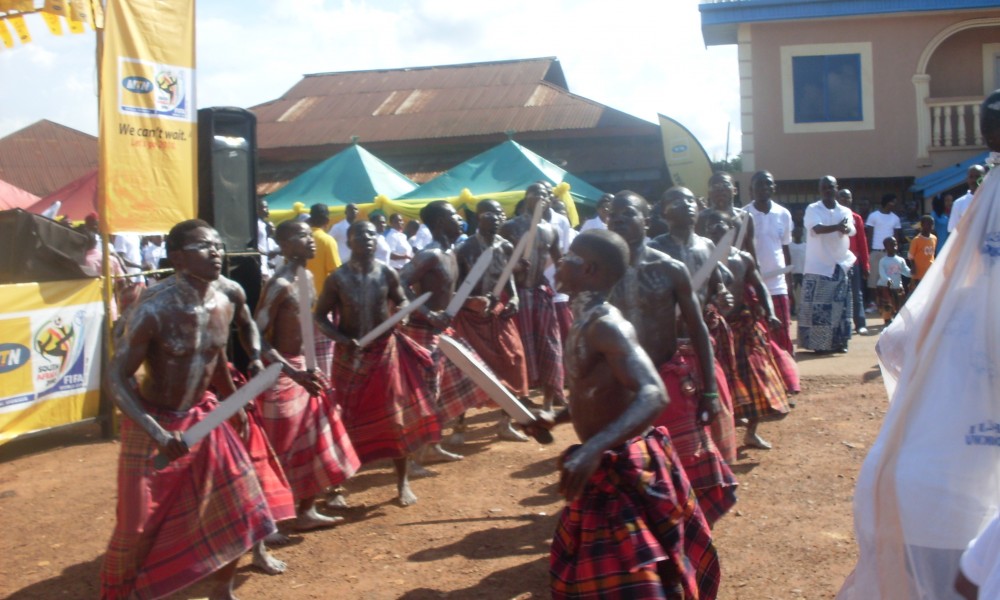
https://www.aronewsonline.com/wp-content/uploads/2016/04/Odumgbede.jpg The day was 30 December, 2015 and the event was Aro Carnival 2015, held at Mary Slessor Secondary School, Arochukwu – an event put together by a few citizens of Arochukwu under the Aro Carnival Management Committee ‘To showcase the rich cultural and tourism potentials of the ancient kingdom of Arochukwu to the world,’ according to one of the organisers, Mazi Samuel Aliche Oti (of Atani village, a retired customary court registrar and a member of the committee) on interview that day. ‘We are holding this uncommon event in Aro. We are doing it as a way of boosting our economy in Arochukwu and to showcase our cultural heritage such as Ibini Ukpabi, Osu Gwodogwodo, and to attract World Tourism Organization’s attention, and this will also expose our bad roads network to the people of the world for attention,’ Mazi Oti concluded. In his own explanation, Ugwuakuma-born Eugene Okey Imuoh, the public relations officer of the organising committee and an ace broadcaster, ‘The Aro Carnival, which started last year as packaged by the like of Mazi Ndionyemma Nwankwo (a lawyer) is supposed to showcase the rich Aro culture and tourism, which could be harnessed into money-yielding venture and spinner for the people. The event is sponsored by some well-meaning Aro sons and daughters. Through the event such things as kokoma dance and mgbede pieces of Aro cultural heritage that are now going extinct could be revived.’ Sir Uche Okorafor of Amuvi, Arochukwu, also spoke on the issue. He had applauded the attendance to the event, when compared with the number that attended the maiden edition in 2014. ‘Apart from being well-orgainsed, the event managers had provided a cooling van that contained all sorts of drink and snacks those in attendance could buy to entertain themselves and their friends.’ He had told Aro News. To read more, click http://www.aronewsonline.com/?p=1466 |
| Christianity Etc › Re: Heaven And Hell In The Here And Now. by NwaIkenga(m): 1:16am On Feb 28, 2016 |
Lovely message. Dalu |
| Culture › Igbo Mythology Lesson: Why There Are Differences In Human Skin Color by NwaIkenga(op): 5:19am On Feb 11, 2016 |
From "African Spirituality: An Anthology of Igbo Religious Myths" by Udobata R Onunwa In the distant past, Chukwu wanted to create human beings after he had created all other things in the universe. he created a man and a woman. He asked the man to marry the women and both of them lived as husband and wife. They looked very beautiful and elegant. Chukwu was happy to see them look good and strong. When he spoke to them, they responded and this gladdened Chukwu's heart. He asked them not the move out too far from the beautiful compound he lived with them. The man had a very long nose. His wife also had a long nose. That day, the Sun was not shining. The weather was cool and Chukwu asked the man and his wife to stay indoors or in a cool shade. Later the Sun came out and saw the beautiful work Chukwu had made. He went close to them and his presence hardened their bodies and darkened them. Their pointed nose became shortened and broadened. The man and his wife became very hard and strong and turned black because of the Sun's close visit to them. [img]http://www.igbocybershrine.files./2016/02/p1013991.jpg[/img] To read more, visit https://igbocybershrine.com/2016/02/10/why-there-are-differences-in-human-skin-color/ 1 Like 1 Share |
| Culture › Inyom Aro As Peace Ambassadors In Arochukwu History by NwaIkenga(op): 8:51pm On Jan 19, 2016 |
https://www.aronewsonline.com/wp-content/uploads/2015/06/Omu-Aro-Long.png Nzuko Arochukwu worldwide, on 26th December 2014, surprised Aro with a rare gift: the symbol of woman Eze Aro called Queen Mgbokwo Udo Omini – Eze Aro (1799-1825). It was a wonderful reminder indeed and Aro must appreciate Nzuko for this rare thought, which led into deep research, which made it possible for Aro to revisit its history and we thank God for all the Aro Heroines in their rich history. Like I mentioned in Arondizuogu in 2000, during the All Aro National Conference of that year, when I presented a paper on the theme ‘Debris of a great past’, every family has a hero and that heroes found in each country must have manifested from his obscure family. I went further to suggest that families must endeavour to encourage or even groom their children to perform as heroes or heroines in any given generation. Nnenne Mgbokwo Udo Omini (Eze Aro, 1799-1825) must have been compelled by Aro tradition and culture to occupy the ‘Holy throne’ when grown up and qualified men were not available. Aro elders of that period quickly found a solution in her. It happened in England when the present Queen Elizabeth occupied the throne of England just as Queen Elizabeth 1 and Queen Victoria before her. Were it now, some Aro would have gone to court – after using damaging propaganda – to contest it, to Aro ruin. Let us learn to practices traditions that make for orderly programmes and stability. I remember that the lawyers and even the judge at Ohafia High Court listened with admiration when the defending counsel in the Eze Aro tussle case included this in his defense (1988-31-5-1995). Greatness does not always come by useless violent disputes and noise, but by calculated careful plans of devoted and dedicated citizens of a country or kingdom, such as Arochukwu – particularly then! In this article, I will attempt to mention a few other heroines and through them, illustrate that from time immemorial, Aro have always loved their women and valued them at all times and in all places. Without them, it would be futile to plan for the future, which was why in those days, families with more men than women either bought slave girls or did allow their few girls to live in their families even after their parents had performed their wedding ceremonies. This is one of the occasions ‘when Uzi is allowed’. As we were growing up, we were told that after the British-Arochukwu war of 1901-1902, the British believed that majority males in Arochukwu were slaves. They decided to ask most males to return to their original homes. The exercise was so serious that most males left here into hiding in such places as the plantation in Ito, Abam, Ohafia, Ihechiowa, Isu and in the Diaspora, such as Arondizuogu, Ajalli, Afikpo, Ohuhu, Abakaliki, Ovim, Ahaba, and Ngwa, Enugu and Anambra territories. Some went beyond Igbo boundaries to Akwa Ibom and Cross River states. The women ably kept the homes and refused to disclose the hiding places of the men. My father told me that the heroine in their family was Ma Onyealu Abaa- Nnenne Oyiri Abaa, who kept Ndi Ukpabi Eze Obin in Eziukwu Agbagwu for us. He further told me that often, she toured such hiding places as Nunya, Ohuhu, Edda, Ezinnachi, Afikpo and brought daughters of her relations to Arochukwu and gave them out in marriage. Today we are proud people whose female relations and their families are found in most villages in Arochukwu. Read more at http://www.aronewsonline.com/?p=979 |
| Culture › Re: Limitations Of Infidelity Deities by NwaIkenga(m): 10:30pm On Jan 15, 2016 |
Betti001:Yes! But I honestly don't know much about them. But I'll check my resources and see what I can find. |
| Culture › ‘mazi’ Title In Arochukwu: Who Qualifies For It? by NwaIkenga(op): 8:04pm On Jan 15, 2016 |
https://www.aronewsonline.com/wp-content/uploads/2015/10/mazi-title-in-arochukwu-who-qualifies-for-it.png ‘Shut up; don’t address him as “mazi” yet,’ was an exclamatory rejection made by an elderly man to a younger man who had addressed a fellow middle-aged man sometime in the past as “mazi,” during a socio-cultural gathering at Amuvi, Arochukwu. Then suddenly, a ‘boy’ of about eighteen years told his compeer-friend at Isimkpu village that henceforth he should be addressed as ‘mazi’ because of a reason he gave to the babe. And just recently, a highly-placed, retired tutor-administrator and a socio-cultural activist in Arochukwu said openly while discussing with those around him one day that ‘A na etoru nna nta etoru n’ali Aro,’ and went ahead to warn that those who answer and abuse the title and have not done the ntoru to steer clear of the title ‘in their own interest.’ Based on the above controversy surrounding the use and abuse of the title and other incidentals, Aro News went in to ascertain from Aros who actually qualifies to bear and answer the title ‘mazi’ in Arochukwu as a bastion of Igbo trado-cultural heritage. So, Aro News went to town and spoke to some Umu Aro on the issue; and below are excerpts from some of the respondents on the issue. To see more, visit http://www.aronewsonline.com/?p=1011 1 Like |
| Culture › Re: Limitations Of Infidelity Deities by NwaIkenga(m): 8:02pm On Jan 15, 2016 |
From my understanding, its not really deities per-say, but the use of specific medicines/charms at work. And I've only heard of ones that require penetration to work. |
| Culture › Aro History by NwaIkenga(op): 7:46pm On Jan 15, 2016 |
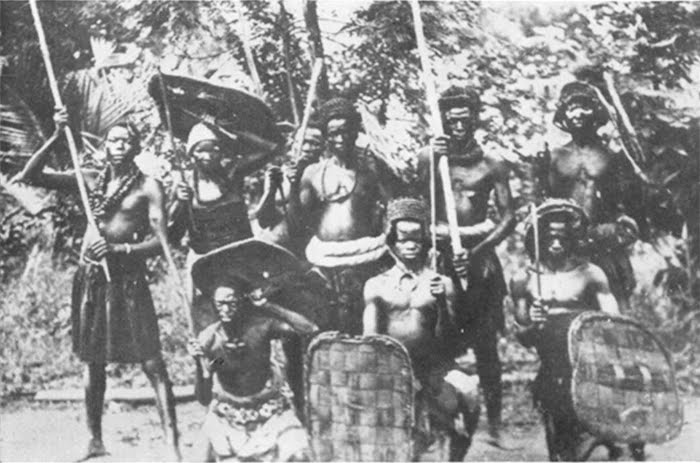
https://www.aronewsonline.com/wp-content/uploads/2015/05/Arochukwu-Warriors.jpg Arochukwu is a small town located at the Southern end of Abia State in Nigeria. The Aros, as other Igbos, migrated from the Middle East to their present location in the then Eastern Nigeria. You cannot mention Christopher Columbus who discovered America, without a short history of the Indians who owned the land. Also, in retrospect, the Aros came and won the land from the inhabitants, the Ibibios, after series of wars. These wars had a historic impact on the town. For instance, the leader of the Ibibio warriors who fought the war was captured and slain at Oror village and this is why Oror became the chieftaincy village. Amaikpe Obinkita became the center where these defeated warriors were judged. This is also why all Aro villages assemble at Obinkita during the Ikeji festival. Any village that is not represented is fined by the entire Aro. This still exists as I write. Arochukwu town has 19 villages namely: (Not alphabetically ordered.) Ugwuakuma, Agbagwu, Utughugwu, Amanmagwu, Ujari, Amasu, Ibom. (These Villages are what is known as Ime Aro). Oro, Obinkita, Amoba, Amankwu, Ugbo, Amukwa, Atani, Isinkpu, Ugwuafor, Amangwu, Asaga, and Amuvi. (These villages sums up the Amuze.) Each of these villages are characterized by their respective cultural displays. For instance, Obinkita village (landlord of all Aro) is known by their masquerades called Ekpo. Atani villages are identified by their Ugboali music, for example madam Mary Kanu. Arochukwu town is divided into three kindred: Okennachi,Ezeagwu and Ibom Isi. These villages are then merged into these three groups due to their migration from one village to another. This inter village migration not only populated Arochukwu but brought internal progression that helped split the villages into different kindred. Note also that EzeAgwu is split into two Umumna Okpara Agwu and Okpara Ezo Agwu. Read more at http://www.aronewsonline.com/?p=518 |
| Culture › The Significance Of Ikeji Aro Festival by NwaIkenga(op): 9:36pm On Jan 14, 2016 |
https://www.aronewsonline.com/wp-content/uploads/2015/10/the-significance-of-ikeji-aro-festival-1000x600.jpg Ikeji Aro is a yam festival celebrated annually to mark the harvest of new yam in Aro. Aro celebrate the festival in the month of September, at times the celebration crows into early months of October. The end of Ikeji does not mark the beginning of another farming season, as it opens a recess that leads into dry season (okochi) , when the soil becomes hard and already harvested yams are stored in the barn, the time is known as onwa ato izu ike Aro. The significance and traditional activities which accompanies the Ikeji festival that makes Ikeji Aro glamorous and unique in Igbo land are “Ikeji” categorically means harvesting of yam, which is a significant food crop among the Igbo people…it also marks the end of the year. That is why it is characterized by general grand event by people and sacrifices to Chukwu (God) for good and quality harvest. Pilgrimage is made to the Aro homeland by the Aro in the Diaspora serving as re-union between the two. In the past, this re-union served as an opportunity for reviewing the conditions of Aro in the Diaspora and for re- examining the strength of Aro influence and authority in the various Aro settlements; The Ikeji season afforded the Aro an opportunity for planning strategies for the continued growth and development of the Aro at various settlements. Authorization for the eating of the new yam is given by the Eze Aro. Until the Eze Aro makes the appropriate proclamation, new yam is not eaten by the Aro nation; Ikeji was an occasion for trooping the colors. A display of masquerades is held. The various Aro settlements send in their dances and masquerades to perform in this most colourful carnival at the Amaikpe arena. Read more at http://www.aronewsonline.com/?p=1077 |
| Culture › Re: Traditional Marriage In Aro Kingdom And Its Various Stages by NwaIkenga(op): 8:43pm On Jan 14, 2016 |
The third stage is called "Nmayi Ajuju" (Wine for questioning). This is a very important stage and one of the major aspects of Aro traditional marriage ceremony. At this stage reasonable number of people from both families and their friends may be needed. The suitor is required to provide some drinks and other related items to the bride's parents for use as evidence to ask their daughter certain questions publicly prior to any negotiation of bride price. The nature of the answers the lady gives at that public arena will surely determine whether or not the on going traditional marriage arrangements will continue or be terminated without any charge or liability on any of the parties. The drinks and the items, usually packed in two separate trays, are handed over to the bride's family by the family of the suitor. A related member of the bride's family will in turn pass on the first and second trays with their contents to the bride for her to present to her father and mother respectively. The bride will carry the first tray with its content and kneel before her father. Her father will ask her three specific questions which she must reply to very audibly. The questions usually come in this order: "My daughter, tell me who give you all these items you are presenting to me before all these people here?" The daughter answers that the items are from the man she loves. She then calls out the name of her suitor. The second question follows thus: "Why did he give you all these items to give to me?" The lady answers that the man brought the items to show his readiness to marry her. The last question follows in: "My daughter are you sure that if I eat and drink of all these with my people we would not vomit them?" And the lady will answer affirmatively that they will not vomit them. The same process is repeated accordingly with her mother. Thereafter, those items will be shared and consumed by the men and women separately in their groups in line with tradition. This question and answer session is aimed at getting the bride to confirm publicly that there would be no cause in the future that would warrant her parents to refund any bride price that would soon be paid on her. Each of her parents will in turn pray and bless their daughter. After all that, the bride's father will give her daughter a glass filled with hot wine first and later re-filled with palm wine to go and fish out from the crowd the man she said she loved to marry. All these are done to further secure a public confirmation from his daughter that it is her choice to marry her suitor. Her parents will happily accept the suitor she has brought before them and each will bless both of them jointly, wishing them fruitfulness, peace and happiness in their new life and home they will soon start together. The fourth stage is called "Nmayi Ububo". (Drinks for private discussion between the families of the suitor and the bride). At this stage not more than six core male members of each of the two families are needed. They normally retire to an inner chamber to discuss privately the terms of the marriage. Discussion may usually center on the actual bride price and when and how to pay it. It may include any help request that each party may seek from the other. After the both parties have agreed on certain terms, marriage is now assumed to have been contracted and the man may be officially allowed to take his wife home on credit if he is not yet ready to commence the remaining parts of the ceremony that will involve payment of the bride price among other activities. By that, they will all agree to defer all other activities of the traditional wine carrying rite till any other time in future when the man would be ready and able to perform them. But the husband may need somebody, a man who acts as a middle man in their marriage arrangement, to stand as a guarantor that he would surely complete the remaining events later. And his guarantor may tactfully say: "bride price debt never gets decayed; It will surely be paid at any possible future time". Because of this concession to delay bride price payment, that is why we used to see some older married women performing their full traditional wine carrying ceremony several years into their married lives. Some even do theirs only when their own daughters are about to get married. Because their own daughters are not allowed to get married traditionally beyond the level of the stage where their own marriage rite had stopped. This is an acceptable tradition in Arochukwu culture. (But these days, it is found more desirable, more convenient and even cheaper to perform all the traditional marriage rite within a short time frame or almost at the same time. Deferring payment of bride price is almost going out of fashion). Please note that at this stage of traditional marriage ceremony the lady is however regarded as 'legitimately married to the man under a special guarantee' and all children born by the lady to the family of her husband before the conclusion of all other rites of the later stages are deemed traditionally legitimate children of the indebted husband. But such a husband and his family remain an official debtor to the family of their wife until they conclusively perform all the activities of the outstanding stages of Aro traditional marriage rite. The fifth stage is called "Ihu Onu Aku" (A ceremony for an open Negotiation of the Bride Price.) These days, stages three, four, five and six are performed on the same day of the main wine carrying ceremony though separately but with activities of each lower stage flowing immediately into the activities of the next higher stage almost simultaneously. (Now recall that the bride price terms had already been privately negotiated and agreed on at the fourth stage.) And so after the inner discussions of stage four where the actual bride price is negotiated and agreed, the families will still come out to the open arena of the traditional marriage event place to negotiate the bride price as if that has not be done in the private earlier. The essence of this part of the ceremony is to give the people present at the event ample opportunity to bear witness to the negotiation and agreement of the bride price of the bride they have come to celebrate her traditional marriage. It is also to let the public know that the family of the bride has not at all flouted the acceptable Arochukwu traditional norm in bride price amount agreement. This stage will thus witness open offers and counter offers of the bride price bidding by the respective spokesman of the bride and groom families. This aspect of the ceremony may last for about five to fifteen minutes with all the jokes and humors associated with the bargains. It may start with some millions down to some hundreds of thousands of Naira until an agreement subject to confirmation by the bride's father is reached. At this point the father of the bride is called upon to declare publicly the actual bride price he would accept to give out his daughter into marriage. The father may start by declaring that his daughter is not for sale because she worths more than what money can buy. That he is here to marry her out in line with Arochukwu tradition and custom. He may add that his interest is not necessarily in money but in the peace and happiness of his daughter in the new family and community she is about to join. For that reason he would announce that the bride price on his daughter is only "Okwa Isii Aro". This translates to twelve pounds twelve shillings of the old British currency converted at Aro ever fixed exchange rate of two Naira per Pound sterling (N2/£). And this always translates to twenty five Naira,twenty kobo of Nigerian currency. In fact, this is what every true Arochukwu bride is given out at, no matter her beauty and level of education. It is our tradition. It is our culture and custom and we are proud of it. Therefore, all the extra monies one may have spent on all other items and activities relating to any traditional marriage in Arochukwu Kingdom are deemed as mere gifts and these have no place in determining the bride price to be refunded in case any divorce in future occurs. Although divorce is highly discouraged, only the twenty five naira, twenty kobo is recognised as money due and that is what will come into consideration when ever Aro traditional marriage bride price and expenditures are debated upon. The sixth and final stage is called "Ibu Nmayi Ukwu". It involves two principal activities, namely: "Ikwu ugwo isi Nwanyi" (Payment of the bride price) and "Itu Aju Nmayi" (Dropping of big pads for carrying of the main wine for use in the traditional marriage ceremony.) These two events constitute the principal ceremony of Arochukwu traditional marriage events. And for these two events to happen, six good looking women, six young men and six elderly men, all presumably from the groom's community must feature prominently at this stage. The six women, who are well dressed with Omu Aro or joji wrapper, will carry six saucer plates on their left shoulders to represent the "Okwa Isii Aro" containing in total the twenty five Naira, twenty kobo bride price. The ladies will lead the procession of the eighteen person team to the compound of the father of the bride or at the venue of the traditional marriage ceremony. These women usually proceed to the event venue with loud shouts of joy in form of praises (nkubi).The six young men carrying on their heads six big pads made of dried plantain leaves will follow the procession behind the six ladies. The six pads represent the big pads upon which six big jars of palm wine for the main wine carrying rite will rest upon. The six elderly men carrying six strong tall walking sticks will follow behind the six young men in the procession. These last six represent six strong old men from the community of the groom on a long journey in search of a good wife for their son. All these are meant to send a strong message to all that any journey to Aro traditional marriage is not a child's play at all. It is not even a one man or private affair; it is a serious affair involving young and old men and women from both families and communities. The eighteen person procession team will be received at the entrance of bride's father's house by the host family. The six ladies would be ushered into the inner chamber of the man's house where they will deliver the six plates containing the money for settlement of the bride price. The money will be counted in the presence of few selected male members of the two families. Part of the twenty five Naira, twenty kobo bride price money will be given back to the family of the groom as an assistance to them by the bride's family. Part of the balance of the bride price money will also be reserved for the family of the mother of the bride. The remaining part will be handed over to the head of the family of the bride or direct to the bride's father for further distribution among the family members as he deems fit. The six pads and the six walking sticks will be dropped in the front of the bride's father's house in two sets of four and two. A set of Four of the pads with four of the walking sticks will be dropped at the right hand side of the house and the remaining set of two pads and two walking sticks at the left side. The ones at the right hand side will remain there for a long time as evidence that the family had recently conducted a traditional marriage of one of their daughters. The ones at the left side will be taken along with part of the bride price money to the family of the mother of the bride on a date and time agreed by both families but not later than four days after the marriage was conducted. The essence of this gesture is to testify to the family of the bride's mother that their grand daughter has been given out in a marriage to another family or community. This is usually celebrated as an increase and expansion of all the families involved in the marriage. This paper tactfully did not discuss the items that are needed and provided for as gifts to the bride's family members and items for entertainments of guests at the ceremonies. Because those items usually differ from family to family and from one village to another. Official items for the activities of each stage of the ceremony also differ. But the bride price issue and "Ibu Nmayi Ukwu" paraphernalia remain inviolate and sacrosanct. Preparations, decorations and presentations of "Nwa-mgbede" (the bride) to the public are very important aspect of any Aro traditional marriage as they usually add beautiful colours to traditional marriage ceremony. In the olden days, after the fourth stage of her traditional marriage ceremony Mgbede, the bride, would be carefully prepared and kept in a fattening room for some months, well decorated and made ready for presentation to the public during the fifth and final stages when the bride price issue is settled and carrying of the main traditional marriage wine is performed. But these days where activities of stages three to six of her traditional marriage ceremony are held at same time, the Mgbede is usually prepared, decorated and presented on the same day of the main wine carrying event. Mgbede Aro is a beauty to behold and it is a huge topic of its own. 1 Like |
| Culture › Traditional Marriage In Aro Kingdom And Its Various Stages by NwaIkenga(op): 8:43pm On Jan 14, 2016 |
http://www.aronewsonline.com/?p=864 https://www.aronewsonline.com/wp-content/uploads/2015/04/58-649x600.jpg Traditional marriage in Arochukwu Kingdom is an institution of a special type, well respected and treasured; it has been in existence as long as the Aro kingdom itself. It has a lot of Aro culture and custom built up in it. Some aspects of its norm have undergone some changes and modifications with time, yet some of its most treasured practices and procedures still remain inviolable. Every adult man and woman always desire to enter into it, desirably at a reasonable youthful age. It is an institution that Aro tradition and culture recognise for legal and customary cohabitation of adult men and women (each man with his own wife or wives dwelling together) with divine mandate to procreate and populate the society. With very few exceptions, tradition always frowns at procreation outside marriage. It is regarded as a wrong thing. But time is gradually changing this view. In Arochukwu cultural setting, marriage gives high level of social respect and dignity to all men and women who are in it. Socially, marriage helps in building enduring social and cultural relationships across families and communities. There are certain rules and regulations that guide entrance into traditional marriage in Arochukwu communities. These include that traditional marriage should not hold on Nkwo market day; that valid marriage must be between two adults of opposite sex, (man and woman); these days the man is expected to be above twenty one years and the lady not less than eighteen years old; consent of the intending couple is paramount and must be secured first of all before the consent of their parents become meaningful; the intending couple must show determination to make their marriage a success. Although no one is expected to exit from marriage institution once admitted into, Aro tradition still makes some provisions for an exit as may also be found in other cultures. Divorce is a dreaded thing but sometimes it becomes a reality. (However we are not going to discuss that topic in full in this write up). Parents always encourage their children to get properly married in line with Arochukwu tradition and custom. Every entrant into marriage remains a scholar of the many likely complexities of gains and pains that marriage life may throw up even as the couples get more matured in the system. So, intending couples are usually tutored by their parents on the virtues of fidelity and morality, peace, tolerance, give and take attitude, patience, love and respect among other virtues that are sure to help them make their marriage a success. They are encouraged to remain helpful to each other and to learn to understand one another more and more in order to remain together and enjoy full benefits of marriage life. And so no reasonable spouse will wish to exit from his / her marriage except where it becomes obviously impossible to remain in it alive and safe. Although marriage is usually contracted between a man and a woman, it is not totally a private affair between the man and his wife as some people may wrongly think. Family and community interest, not interference, is always expected and respected. In Aro Kingdom, marriage is really an affair involving one family with another family and by extension one community with another. It is a desirable expansion of the families or communities that are involved in the union. And so no one man in Arochukwu cultural setting or even in other Igbo land goes alone to another family or community to marry a woman without his people following him. He must go with some matured and elderly members of his family and or community to negotiate the terms of his marriage so that those who go with him will always bear witness to the necessary marital ceremonies that ensue. This has become an acceptable proof of evidence that a marriage between an intending couple has been duly done in line with the tradition and culture of the land. Marriage in Arochukwu is also not a one day or a one time affair. It is a life time relationship and its ceremony comes up at various levels and stages which may take a reasonable time to conclude. Each stage may demand participation of certain numbers of people coming together from the two involved families to perform the required activities that will eventually take the ceremony to its expected conclusion. The ceremony of each stage displays peculiar riches of Arochukwu culture, custom and tradition. Each stage is unique in its own and nature. The Preliminary stage of any traditional marriage in Aro kingdom starts with a man or his immediate family identifying a lady the man wants to marry. When identified, the immediate family of the man will first carefully investigate the family of the lady to ensure that it is a good family to associate with. If the family of the lady is found not to be a good one to associate with, the man is discouraged from further actions. And no further step is often taken. But if the family of the lady is found to be a good one to pick a wife from and relate with, then the first stage of Arochukwu traditional marriage rite begins soon after. The first stage in Arochukwu traditional marriage ceremony usually involves only about two members of the family of the intending suitor, with or without the suitor, visiting their intended in-laws' home. They will meet the father of the intended bride with a bottle of hot drink to ask that his doors be opened to their family for discussion on their intention. This stage is called "Ikutu aka" (knocking at the door). Really not many people are involved at this stage. So the father of the intended bride with or without any member of his family will welcome the guests and accept the drink they come with. But he will announce to them that the drink they have brought to him has no consideration attached to it. That it only acts as a reminder to him to make some consultations on their mission. That he may get back to them within four to eight market days as the case may be. This given time enables the father of the lady to consult with few of his own people and also to investigate the family of the man that intends to marry their daughter to find out if the man's family is a good one to establish marital relationship with and whether their daughter will be happy there. If their findings are not satisfactory, the matter may end there. But if their findings are satisfactory, then they will send a message back to their intended inlaw to come and commence the second stage of the marriage rite at an agreed date. Every activity at this first stage is purely an indication of an intention to open discussion on marriage proposal. The second stage is called "Ihe Avuru na'Ulo"; this means that the family of the man who intends to marry a daughter of the host have come to announce that they have found something good in the house of the host. Not more than four people, preferably three men and a woman, from the family of the intending suitor will go to the family of the expected bride, desirably with the suitor, to tell them there is something very good that they have found in their family that captures their attention. To show that they are prepared and committed, they will go there officially with two kegs of palm wine, one bottle of hot drink and a sizable portion of well dried animal meat. The father of the intended bride will normally invite few members of his family to come and observe what his guests have come to say and do. In all, not more than eight people may be needed from both families. When after the father of the intended bride has welcomed and entertained his guests with traditional four Igbo cola nuts and some drinks, the leader of the guests' family would state their mission. He would declare that they have found something good in the house of the host that they are interested in and would want to have. The host would ask them to state exactly the thing they have found in his house. They would reply and call the name of the lady they have come to ask her hand in marriage. The lady whose name was mentioned would be called out by her father and told what the guests have come to say and do. He will ask her daughter whether she knows any one among the guests in their midst and if she wants him to begin discussion with them on their mission. If she confirms and gives her consent to go ahead, then another step will be taken to enter into the next stage. But if she says no and refuses to give her consent, the whole arrangement is either terminated or suspended until the girl is duly convinced. No matter what happens, no marriage is ever deemed to have been entered into at this stage. Even if the lady accepts the guests' proposal, it is still regarded as an invitation to the two families to begin serious discussions and arrangements to get the man and the woman traditionally married. Unfortunately some men do stop further activities at this level and erroneously think they have have gotten married. Some even take the women away with them without fulfilling any of the outstanding necessary Aro traditional marriage rites that are expected of them. Such men get it all wrong. They must be told they are not yet traditionally married to the women. They are only living with those women as mere concubines as they are not yet duly married to them. The consequences are very obvious. 1 Like |
| Politics › Re: Nigeria Should Learn From Libya by NwaIkenga(m): 9:14pm On Oct 02, 2014 |
http://www.veteranstoday.com/2011/10/29/21-true-facts-about-gaddafi-you-werent-told/ Libya’s tyrant Muammar Gaddafi is dead and buried but his pimps around the world don’t seem to have got the message yet. Perhaps, like some of Elvis Presley’s fans, they believe that he’s immortal and is lurking among us, maybe in a disused sewer somewhere. Be that as it may, it’s worth looking at some of the lies being peddled by these pimps, if only for a laugh – and to have some pity on these individuals. It’s bad enough being a love-vendor, but a love-vendor with limited intellect, chronic cognitive dissonance and perhaps also some literacy problems is a creature truly worthy of our pity. Here’s a selection of the Gaddafi lies still working their way around the internet, with my replies beneath each lie. In contrast to Gaddafi’s pimps, I have lived and worked in Libya for over 40 years, so I know what I am talking about . Lie #1. There is no electricity bill in Libya; electricity is free for all its citizens. This is a complete fabrication ‑ Libyans have always had to pay for utilities, including electricity. Lie #2. There is no interest on loans, banks in Libya are state-owned and loans given to all its citizens at 0 per cent interest by law. This is another fiction – Libyans have always paid interest on all loans. This includes students sent to study abroad – their “grants” are deducted from their salaries after they return home. In addition, under Gaddafi many Libyan have had to borrow money from banks, relatives and friends in order to seek medical treatment abroad, typically in Tunisia, Jordan or Egypt. This is in a oil-rich country with a small population of just six million (including at least two million foreign workers). Lie #3. Home considered a human right in Libya – Gaddafi vowed that his parents would not get a house until everyone in Libya had a home. Gaddafi’s father has died while he , his wife and his mother are still living in a tent. This is complete nonsense. It’s true that after Gaddafi’s coup in 1969 most of the corrugated iron shacks that dotted suburban areas in Libya disappeared, but that’s hardly a great achievement in a country whose population in 1969 was just 1.5 million and whose oil revenue grew at least tenfold during Gaddafi’s reign. In fact, it’s perfectly reasonable to argue that this would have happened anyway, Gaddafi or no Gaddafi, given the phenomenal growth of income from oil. And that’s not to mention the palaces Gaddafi built for himself in every city – all paid for with the Libyan people’s money. Lie #4. All newlyweds in Libya receive 60,000 Libyan dinar (50,000 US dollars) from the government to buy their first apartment and help start up a family. This is a complete fabrication. It never happened either before or during Gaddafi’s reign. In fact, a huge number of people in Libya are unable to marry because they cannot afford to rent, buy or build a home. Lie #5. Education and medical treatments are free in Libya. Before Gaddafi only 25 per cent of Libyans were literate. Today the figure is 83 per cent . Education and medical treatment have always been free, under the monarchy and during Gaddafi’s reign. However, under Gaddafi, and especially from the late 1970s onwards, if you were unlucky enough to go to a state hospital you would have had to (a) bring your own bedding, if you wanted to sleep in clean bedding; (b) get your family or friends to bring in food for you; and (c) put up with appalling standards of hygiene, including reused syringes. If you didn’t want any of this, then would have had to find the money to go to a private hospital. Lie #6. Should Libyans want to take up farming career, they would receive farming land, a farming house, equipments, seeds and livestock to kick ‑ start their farms – all for free. This is a blatant lie. It never happened at any time in Libya. Lie #7. If Libyans cannot find the education or medical facilities they need in Libya, the government funds them to go abroad for it – not only free but they get US 2, 300 US dollars per month accommodation and car allowance. Utter nonsense. See my answer to Lie # 2 above – under Gaddafi many Libyan have had to borrow money from banks, relatives and friends in order to seek medical treatment abroad, typically in Tunisia, Jordan or Egypt. This is in a oil-rich country with a small population of just six million (including at least two million foreign workers). Lie #8. In Libya, if a Libyan buys a car, the government subsidizes 50 per cent of the price. Complete nonsense. In fact, you’d be lucky to find a car to buy. Gaddafi seized all car dealerships in the late 1970s and, from there onwards, only the state very occasionally imported motor cars and sold them to the public at exorbitant prices. And that’s not all. To get to buy a car at all, you also had to pay a large bribe to one of the officials in charge of selling the state-imported vehicles. And, if you wanted to import a car privately – whatever its make and whether brand new or used – you had to pay 100-per-cent import duties (plus a bribe to get the port authorities to release the car even after you paid the import duties). Lie #9. The price of petrol in Libya is 0. 14 US dollars per litre. As with all oil producing countries, the price of petrol was lower than in Europe or Japan. But it certainly was not 0.14 US dollars per litre. It was equivalent to the price of petrol in the USA. Lie #10. Libya has no external debt and its reserves amount to 150 billion US dollars – now frozen globally. That’s true, but why should a country of vast oil revenues, six million people and almost no public expenditure have a foreign debt? In Gaddafi’s 42-year tyranny hardly any new infrastructure was built and existing infrastructure, such as roads, hospitals and schools, hardly received any investment at all. It’s also worth noting that, despite several contracts with Russian, Ukrainian and Chinese railway companies costing approximately 40 billion dollars, Libya has no railway at all. As for the reserves of 150 billion US dollars, that too is hardly surprising given the vast oil wealth and almost zero public investments. Almost all of these reserves were managed by Gaddafi’s son, Saif al-Islam, who spent the money in corrupt private dealings. The defunct dictator’s other son, Mutasim, also dipped into the country’s reserves, spending by his own admission two million dollars per month on gifts and parties for his girlfriends. Lie #11. If a Libyan is unable to get employment after graduation the state would pay the average salary of the profession as if he or she is employed until employment is found. This is a complete lie. It is estimated that at least one-third of Libyan graduates are unemployed – none received anything from the state. And Libya has no social security, so these people, like all other unemployed citizens, had to rely on family and friends for support. Lie #12. A portion of Libyan oil sale is credited directly to the bank accounts of all Libyan citizens. Rubbish! It’s simply not true. Lie #13. A mother who gave birth to a child receive 5,000 US dollars. Another figment of the imagination of Gaddafi’s pimps. It never happened. Ever! Lie #14. Forty loaves of bread in Libya costs 0.15 dollars. Bread has always been cheap – even in impoverished countries like Egypt. But the price of one (repeat, one, not 40) loaf of bread in Libya in December 2011 (i.e. before the people’s revolution) was about 0.20 US dollars. Lie #15. Twenty five per cent of Libyans have a university degree. More or less true – and 30 per cent of them are unemployed! Lie #16. Gaddafi carried out the world’s largest irrigation project, known as the Great Man-Made River project, to make water readily available throughout the desert country. That’s true. This is a prestige project that cost three times as much as originally estimated. It would have been much cheaper to develop desalinated water plants. And what happened when the “Great Man-Made River” was completed? They connected it to the country’s ageing water pipes which blew up all at the same time because of the huge increase in pressure, leaving millions in Benghazi, Tripoli and elsewhere without freshwater for months. And why weren’t the pipes renewed before connecting them to the “Great Man-Made River”? Well, money had been allocated to do this but the job was never done ‑ not one pipe was renewed? And why was that? Because Saif al-Islam Gaddafi and his brother Mutasim pocketed the money. All of it. Ten billion us dollars, in fact! Lie #17. According to the United Nations Development Programme, Libya ranked first in Africa (53 globally) on the Human Development Index ‑ ahead of Saudi Arabia at 55, Iran at 70, South Africa at 73, Jordan at 82, Egypt at 101, Indonesia at 108, India at 119, Afghanistan at 155. Go and tell that to the families of the hundreds buried alive in underground prisons in Libya, or to the loved ones of those locked up and left to die in shipping containers in ambient temperatures of 45 degrees Celsius. Or to the relatives of the 1,200 political murdered in three hours in Abu Salim prison in 1996. As for ranking 53 globally on the UN’s Human Development Index, big deal! Onlt 53, in a country of immense wealth and only six million people? Why not ranking first globally? This is an indictment of Gaddafi, his thieving family and his murderous regime. And ranking first in Africa – is that a great achievement, considering that the overwhelming majority of African countries are either super poor or ultra-corrupt? Lie #18. According to the US Energy Information Administration, “Libya has the largest proven oil reserves in Africa”. It is a measure of the intellectual calibre of Gaddafi’s pimps that they cite Libya’s oil reserves as an achievement of the defunct tyrant. Well, let me surprise them: the size of a country’s oil reserves is determined by natural phenomena spanning billions of years, not by human intervention. Lie #19. On 21 February 2011, five days after the Arab Spring broke out in Libya, Gaddafi launched a new programme to privatize all Libyan oil to every citizen of Libya, initially providing 21,000 US dollars to every Libyan from a total of 32 billion dollars in the Year 2011, so that the health, education, transport and some other ministries could be abolished and individual Libyans could use the profits of their own investments, including from oil ownership, to obtain the relevant services. This, Gaddafi said, is the best way to eliminate corruption, including the theft of Libyan oil by foreign oil companies, and to decentralize governmental power. I’ve heard this story from Gaddafi’s own mouth before ‑ in fact, once every three years or so, the last time being in early March this year, shortly after the people’s revolution began. It’s a cheap attempt to tempt people, but never materialized at any time following promises along the same lines from 1979 onwards. Besides, after 42 years of Gaddafi rule Libya is still 97 per cent reliant on oil revenue. So much for development! So, even if Gaddai were serious, what will Libyans do with all that money. The answer is simple: with zero domestic output, it would mean a several-hundred-per-cent increase in imports. We already import everything. As for the theft of Libyan oil by foreign oil companies, well, who gave these companies control of Libyan oil in the first place, and who pampered them and gave them and their staff preferential treatment over Libyan citizens? Every Libyan knows the answer to that question but let me spell it out for Gaddafi’s intellectually-challenged pimps: the answer is Gaddafi and his corrupt sons. Lie #20. The Great Man-Made River Project, begun in 1984 by Gaddafi, has been called the Eighth Wonder of the World. It supplies fresh water to the cities of Tripoli, Benghazi, Sirte and elsewhere. The US threatened to nuke this “chemical weapons factory”. Foreign companies covet the fresh water. See my answer to Lie #16 above: This is a prestige project that cost three times as much as originally estimated. It would have been much cheaper to develop desalinated water plants. And what happened when the “Great Man-Made River” was completed? They connected it to the country’s ageing water pipes which blew up all at the same time because of the huge increase in pressure, leaving millions in Benghazi, Tripoli and elsewhere without freshwater for months. And why weren’t the pipes renewed before connecting them to the “Great Man-Made River”? Well, money had been allocated to do this but the job was never done ‑ not one pipe was renewed? And why was that? Because Saif al-Islam Gaddafi and his brother Mutasim pocketed the money. All of it. Ten billion us dollars, in fact! As for foreign companies coveting the “Great Man-Made River’s” freshwater, what exactly would foreign companies do with this water? Lie #21. Muammar Gaddafi seized power in 1969 in a bloodless coup by overthrowing King Idris of Libya ‑ Idris achieved power with British backing in 1949. If we’re supposed to conclude from this that Gaddafi is a peace-loving man who only does things bloodlessly, then the defunct tyrant’s pimps are stupid beyond our wildest imagination. Gaddafi’s dismal, murderous human rights record in Libya is a matter of public record and is beyond doubt. Likewise, his murderous actions abroad are almost unparalleled. Just think of his sponsorship of drug-crazed limb amputators in Sierra Leone and Code d’Ivoire, his arming and funding of Charles Taylor’s gangsters in Liberia and his decades-long bloody meddling in Chad and Sudan, to mention but a few. Also, staging a bloodless coup in Libya in 1969 can’t have been a very hard job. Gaddafi’s colleagues arrested the crown prince and three army officers and seized the radio and TV station – one building. That was it! And there’s a sting in the tail here too. One of Gaddafi’s coup colleagues – Muhammad al-Mogaryaf, who was murdered by Gaddafi in 1972 ‑ related that at the crucial hour when some of his colleagues went to arrest the army chief, Gaddafi panicked and hid for a full four hours. Mogaryaf paid for this comment with his life. By the way, Libya’s population at that time of the coup was 1.5 million, in a country six times the size of the UK. It must have been really hard to stage a bloodless coup in such a tiny country with a super weak regime! ———————————— |
| Politics › Re: Former President , Obasanjo Goes Back To School Again ! by NwaIkenga(m): 10:02pm On Oct 01, 2014 |
seaman007: See pix of obansanjo in lecture hall hereSPAM ALERT! |
| Culture › Re: Meaning Of Nri by NwaIkenga(m): 10:35pm On Nov 20, 2011 |
Eri allegedly means manifestor and Nri is supposed to mean manifestation. |
| Culture › Re: I’m Sure, Igbo Are Descendants Of The Jews -noam Katz, Israeli Envoy by NwaIkenga(m): 4:59am On Nov 10, 2011 |
@amor4ce: If you never meant them to be taken as serious research, then why post them  @BlackLibya: The Lemba story was one that was created by the white European jews. According to their own traditions, they migrated from a place called Sana. It was the Euro-Jew that connected it to Isreal. And the so called Beta-Israel folks from Ethiopia have been demonstrated to be totally unrelated to the other "Jewish" groups |
| Culture › Re: I’m Sure, Igbo Are Descendants Of The Jews -noam Katz, Israeli Envoy by NwaIkenga(m): 1:39am On Nov 03, 2011 |
Rgp92: The "evidence" that he will present will be more far reaching comparisons of different names that have absolutely nothing to do with one anther and then attempt to use that as a basis for some type of relationship between groups of people separated by thousands of miles and years. In fact, we can play along with the game too: Pseudo-Evidence: The place called Sheba in the Bible is actually taken from Asaba. Therefore, she was an Igbo woman! Before the Europeans came, Igbos worshiped a deity called Ala, who had a symbol which was a crescent moon. Therefore, the Igbos and the Arabians are the same people. Muhammad was also Igbo! The Prophet Ezra was a shortened version of Eze Ora (King of the people)! You see, that was easy! You should add on! |
| Culture › Re: I’m Sure, Igbo Are Descendants Of The Jews -noam Katz, Israeli Envoy by NwaIkenga(m): 1:34am On Nov 03, 2011 |
From the first link: "The evidence suggests that Cain and his father-in-law Enoch (Nok) lived in what is today northeastern Nigeria. Not surprisingly there are places named after these ruler in Nigeria: Kano and Nok." amor4ce: If you think that the links you posted should be taken as "serious" anthropological research, then there's really not much left I can tell you. |
| Culture › Re: I’m Sure, Igbo Are Descendants Of The Jews -noam Katz, Israeli Envoy by NwaIkenga(m): 2:52am On Nov 02, 2011 |
amor4ce: Allah and Ala (the name for the Igbo Earth Goddess) are linguistically similar too. Are the Igbos now descendants of Arabians? Please stop with this rubbish reasoning |
| Culture › Re: What Is The Real Meaning Of Your Nairaland Username by NwaIkenga(m): 2:35am On Nov 02, 2011 |
Nwa-Ikenga means child of Ikenga, who is the god of achievement in Igbo culture. |
| Culture › Re: I’m Sure, Igbo Are Descendants Of The Jews -noam Katz, Israeli Envoy by NwaIkenga(m): 2:20am On Nov 02, 2011 |
amor4ce: I'm sorry but Enoch has absolutely nothing to do with the so called Nok people (which is not even the name that they called themselves), that is simply the name of the village where the artifacts were found. |
| Christianity Etc › Re: Africans Are Enslaved By European Religions by NwaIkenga(m): 11:58pm On Nov 01, 2011 |
I totally agree. That's why I returned back to my Odinani. Check out my blog in the sig  |
| Culture › Re: Can You Name 5 Of The "other" Languages In Nigeria? by NwaIkenga(m): 11:56pm On Nov 01, 2011 |
Oops! I didn't read all the rules, the ones I put have been said before. Ndo (sorry)! |
| Culture › Re: I’m Sure, Igbo Are Descendants Of The Jews -noam Katz, Israeli Envoy by NwaIkenga(m): 11:51pm On Nov 01, 2011 |
Tpia, what I mean is that you will never hear African Muslims claiming to be from Israel or African Christians claiming to be from Mecca. And those who are still trying to hold on to the traditions laugh at both of them. |
| Culture › Re: I’m Sure, Igbo Are Descendants Of The Jews -noam Katz, Israeli Envoy by NwaIkenga(m): 3:20am On Nov 01, 2011 |
Isn't it ironic that its only Christians who claim to be descendants of Jews and only Muslims who claim to be descendants of Arabians? |





1 2 (of 2 pages)