NwaNimo1's Posts
Nairaland Forum › NwaNimo1's Profile › NwaNimo1's Posts
1 2 3 4 5 6 7 8 ... 13 14 15 16 17 18 19 20 21 (of 506 pages)
 Celebrities › Re: Queeneth Agbor Caught A Ride-Hailing Driver Masturbating On Duty by NwaNimo1(m): 10:17pm On Aug 25, 2024 Celebrities › Re: Queeneth Agbor Caught A Ride-Hailing Driver Masturbating On Duty by NwaNimo1(m): 10:17pm On Aug 25, 2024 |
He mistook joystick for gear stick..... https://storage.ko-fi.com/cdn/useruploads/display/07f20ab2-91e8-40a0-87ae-bf42afd4bb2b_19.gif See the guys car gearstick sef.......it get as it be! 35 Likes |
| Politics › Nnpc’s N3.3 Trillion Profit Mask Deepening Crisis In Nigeria’s Economy by NwaNimo1(op): 9:28pm On Aug 25, 2024 |
The Nigerian National Petroleum Company Limited (NNPCL) recently released its 2023 Audited Financial Statement (AFS), reporting a net profit of N3.3 trillion for the fiscal year ending December 2023. This marks a significant increase of N700 billion (28%) compared to the N2.548 trillion net profit in 2022. However, while these numbers suggest progress, a closer examination reveals underlying challenges that need addressing. Overview of NNPC’s financial performance NNPC’s net profit has seen significant growth over recent years, rising from N287 billion in 2020 to N3.3 trillion in 2023. This surge is partly due to the Petroleum Industry Act (PIA) of 2021, which provided the company with a more commercial and autonomous framework. Despite this, the company’s profitability is not as robust as it seems. NNPC’s total revenue was N23.9 trillion, with a gross profit of N7 trillion and a net operating profit of N4.3 trillion. The profit before tax stood at N5.9 trillion, reflecting solid operational performance. However, with a net profit margin of 14% and an operating profit margin of 18%, it is clear that while NNPCL is generating significant revenue, high operational costs and substantial liabilities are eating into its profitability. Asset growth and liabilities NNPC’s asset base expanded dramatically from N8 trillion in 2019 to N246 trillion in 2023, largely due to the transfer of Joint Venture (JV) assets and other investments. [/b]However, this growth in assets is paralleled by a corresponding increase in liabilities, raising concerns about the company’s financial leverage and long-term sustainability. The financial statement reveals that a significant portion of NNPC’s assets are receivables, which may not be liquid, posing risks to its ability to meet short-term obligations. The current ratio of 1.1% indicates that NNPCL has just enough current assets to cover its current liabilities, underscoring the need for effective cash flow management. [b]Debt and financing arrangements NNPC’s financial structure is complex, with substantial debts and pledges. The company has pledged 67,000 barrels per day (bpd) for a $1 billion debt related to the rehabilitation of the Port Harcourt refinery under “Project Yield”. Other significant pledges include 21,000 bpd for a $950 million NEPL loan and 90,000 bpd for a $3.3 billion debt under “Project Gazelle”. These arrangements reflect NNPC’s heavy investment in infrastructure, but they also highlight its high leverage, which could limit its financial flexibility in the future. Dividend and shareholder returns A key feature of the 2023 AFS is the declaration of a final dividend of N2.1 trillion, with interim dividends amounting to N536 billion. This 80% payout ratio reflects NNPC’s commitment to returning value to shareholders, consistent with the PIA 2021 provisions. However, the high dividend payout also leaves less room for re-investment in operations or debt reduction. Furthermore, the dividend is being used to subsidize fuel importation, a move that suggests deeper systemic issues within NNPC. This decision deprives Nigerians of the potential benefits of the dividend, which could have been invested in critical sectors like infrastructure, education, or healthcare. Systemic failures and economic implications Despite the positive financial figures, NNPC has failed in several key areas. The redirection of dividends towards subsidizing fuel importation underscores a fundamental failure to generate sufficient income for the Nigerian government and its citizens. NNPC’s inability to refine petroleum products domestically, relying instead on imports, highlights a critical operational deficiency. This failure exacerbates Nigeria’s foreign exchange (Forex) crisis, as NNPC contributes significantly to the depletion of the country’s limited FX reserves by spending on fuel imports. The impact of NNPC’s inefficiency extends beyond the oil sector, contributing directly to the current economic hardship in Nigeria. The high cost of petrol, driven by the need to import rather than refine locally, has led to a spike in prices for goods and services, worsening economic conditions. NNPC’s failure to manage its refineries effectively has devastating effects on the broader economy, including the loss of potential jobs in the oil sector and the diminished value derived from Nigeria’s crude oil. Crude oil sales in Naira: Strategic shift with challenges NNPC announced that it would begin selling crude oil to the Dangote Refinery in Naira from October 1, 2024, marking a significant policy shift aimed at enhancing local currency utilization and reducing dependence on foreign exchange. While this move could stabilize the Naira and ease forex pressures, it also presents challenges. Pricing crude oil in Naira could complicate revenue management, given the volatility of the Naira exchange rate and fluctuations in the global oil market. Allegations of subsidy payments and financial transparency The 2023 NNPC AFS release has sparked controversy. Former Vice President Atiku Abubakar criticized the government’s handling of oil subsidies and accusing it of opaque governance. While NNPC’s CFO, Umar Ajiya, denies any subsidy payments over the past eight to nine years, the complexities surrounding petrol importation and pricing suggest that the issue is far from resolved. The financial statement indicates that NNPC has been managing shortfalls between the landing cost of imported petrol and the government-mandated pump price, which some interpret as an indirect subsidy. This ongoing debate over subsidy payments and the high costs of petrol importation continue to strain NNPC’s finances. NNPC’s 2023 Audited Financial Statement highlights significant achievements in profitability and asset growth, reflecting the company’s transformation under the PIA framework. However, beneath these figures lie systemic failures with far-reaching implications for the Nigerian economy. NNPC’s inability to manage its refineries, its contribution to the Forex crisis, and its role in the current economic hardship point to a management crisis that demands urgent attention. As NNPC navigates these challenges, its ability to implement strategic changes and improve operational efficiency will be crucial for sustaining its financial performance and contributing to the broader national economy. https://championnews.com.ng/nnpcs-n3-3-trillion-profit-mask-deepening-crisis-in-nigerias-economy/ |
| Family › Re: Spiritual Discipline For Families: Surehome Marriage Seminar by NwaNimo1(m): 2:18pm On Aug 25, 2024 |
Marriage Ministers......? https://storage.ko-fi.com/cdn/useruploads/display/0468342e-a87c-452a-885c-a933e39d7586_2.gif |
| Politics › Re: SSS 'arrests' ex-BBC editor, Adejuwon Soyinka (Photo) by NwaNimo1(m): 11:38am On Aug 25, 2024 |
| Politics › Re: Nutrition Supplements Stolen, Replaced With Stones In Sokoto, Says UNICEF by NwaNimo1(m): 9:29pm On Aug 24, 2024 |
42 Likes 1 Share |
| Crime › Re: Kidnappers Of The 19 Medical Students And A Doctor In Benue Caught (Photos) by NwaNimo1(m): 7:08pm On Aug 24, 2024 |
4 Likes 1 Share |
| Politics › Re: NMDPRA Exposes Filling Station That Allegedly Sold 'Air’ Instead Of Fuel (Video) by NwaNimo1(m): 6:53pm On Aug 24, 2024 |
Fuel pump dispensing fresh air? https://storage.ko-fi.com/cdn/useruploads/display/07f20ab2-91e8-40a0-87ae-bf42afd4bb2b_19.gif 1 Like |
| Politics › Re: Christian Obi: Peter Obi Condoles With Family Of FC Heartland Coach, Imo State by NwaNimo1(m): 6:31pm On Aug 24, 2024 |
Speeding in rain? https://storage.ko-fi.com/cdn/useruploads/display/c0dcc0eb-eb61-4e7b-9662-eaac67ad8238_9.gif 1 Like |
| Travel › Re: Poor Managerial & Maintenance Culture; The Sad Case Of Nigeria Airways & Okada A by NwaNimo1(m): 6:23pm On Aug 24, 2024 |
1 Like |
| Foreign Affairs › Re: Police Officer Injured In France Synagogue Blast(photos) by NwaNimo1(m): 6:20pm On Aug 24, 2024*. Modified: 8:12pm On Feb 16 |
A lone suspect...... [URL=/https://storage.ko-fi.com/cdn/useruploads/display/00a4698c-1af2-4477-a331-f1583bbbdcc1_2.gif[/IMG][/URL] [img][URL=/gif/poobedal-bl-priletel-tort-v-lico-kamKzk][IMG]https:///media/2-13-2026/kamKzk.gif[/IMG][/URL][/img] [img]https:///media/2-13-2026/kamKzk.mp4[/img] [URL=/https://i.chzbgr.com/full/5046294272/h605113B5/treadmill-tumbling[/IMG][/URL] 4 Likes |
| Family › Re: Kenny Kehinde's Girlfriend, Precious Chisom Accuses Him Of Domestic Violence by NwaNimo1(m): 4:11pm On Aug 24, 2024 |
Hunter.......Hunted! https://storage.ko-fi.com/cdn/useruploads/display/98596f1f-c3bb-4d49-8bfc-a0ec26510d9e_18.gif 8 Likes 1 Share |
| European Football (EPL, UEFA, La Liga) › Re: Brighton Vs Manchester United (2 - 1) On 24th August 2024 by NwaNimo1(m): 12:35pm On Aug 24, 2024 |
| Sports › Re: Israel Adesanya Visits Osun, To Be Honoured By Kinsmen by NwaNimo1(m): 10:52am On Aug 24, 2024 |
He got fccked-up last week by 1 oyibo savage ........ https://storage.ko-fi.com/cdn/useruploads/display/294621de-f396-42de-bbcf-84d40cc3e99a_1.gif Anyway, his skull has been measured..... 14 Likes 2 Shares |
| Politics › Re: Salaries Of Doctors & Lawmakers In Nigeria Vs In US, UK, SA & Kenya (Video) by NwaNimo1(m): 10:30am On Aug 24, 2024 |
4 Likes 1 Share |
| Politics › Re: Nigeria, A Collateral Damage, Says Burna Boy by NwaNimo1(m): 12:02am On Aug 24, 2024 |
10 Likes |
| Politics › Re: I Will Take Judiciary To Greater Heights – Acting CJN, Kekere-Ekun by NwaNimo1(m): 12:01am On Aug 24, 2024 |
1 Like |
| Crime › Re: Woman Sets Herself On Fire In Jigawa After Divorce by NwaNimo1(m): 10:01pm On Aug 23, 2024 |
4 Likes 1 Share |
| Politics › Re: OVH Acquisition: NNPC Says Tinubu Not Involved But Fails To Address Key Issues by NwaNimo1(m): 6:23pm On Aug 23, 2024 |
State capture...... https://storage.ko-fi.com/cdn/useruploads/display/294621de-f396-42de-bbcf-84d40cc3e99a_1.gif 22 Likes 2 Shares |
| Properties › Re: How Much Can Erect This Kind Of Building In Nigeria Today? (Photo) by NwaNimo1(m): 8:06pm On Aug 22, 2024 |
8 Likes 2 Shares |
| Business › Re: Oando PLC Acquires Nigerian Agip Oil Company For $783 Million by NwaNimo1(m): 7:07pm On Aug 22, 2024 |
State capture.... https://storage.ko-fi.com/cdn/useruploads/display/294621de-f396-42de-bbcf-84d40cc3e99a_1.gif 28 Likes 2 Shares |
| Politics › Re: 20 States Owe Electricity Bills – Discos by NwaNimo1(m): 6:24pm On Aug 22, 2024 |
Seize their assets na.... https://storage.ko-fi.com/cdn/useruploads/display/294621de-f396-42de-bbcf-84d40cc3e99a_1.gif 3 Likes 1 Share |
| Foreign Affairs › Re: Trinidad And Tobago Redraws Coat Of Arms To Remove Columbus’s Three Ships by NwaNimo1(m): 10:07pm On Aug 21, 2024 |
| Politics › Re: FG Criminalises Fibre Cuts, Network Sabotage 23 Years After GSM Revolution by NwaNimo1(m): 10:01pm On Aug 21, 2024 |
| Politics › Re: ₦50,000 for 32 pages, ₦100,000 for 64 pages - FG hikes Passport fees by NwaNimo1(m): 9:57pm On Aug 21, 2024 |
17 Likes |
| Politics › Re: Emir Sanusi Completes Phd In London by NwaNimo1(m): 7:53pm On Aug 21, 2024 |
Islamic law? https://storage.ko-fi.com/cdn/useruploads/display/0468342e-a87c-452a-885c-a933e39d7586_2.gif 2 Likes |
| Politics › Re: Nigerian Scholars Abroad Suffer Hardship As Authorities Fail To Pay 14 Months' by NwaNimo1(m): 10:28pm On Aug 20, 2024 |
No student in Hungary should complain of 'hunger'..... https://storage.ko-fi.com/cdn/useruploads/display/e7c9062a-8179-47e7-9e7e-5370e938f1b1_21.gif |
| Politics › Re: Wike Must Leave PDP For The Party To Survive - Edwin Clark by NwaNimo1(m): 10:14pm On Aug 20, 2024 |
3 Likes |
| Politics › Re: Osinbajo, Peter Obi Attend Democratic National Convention, Chicago, USA by NwaNimo1(m): 9:53pm On Aug 20, 2024 |
11 Likes 2 Shares |
| Politics › Re: Traditional Worshippers Demand New System Of Oath-Taking For Public Officials by NwaNimo1(m): 9:50pm On Aug 20, 2024*. Modified: 10:26pm On Aug 20, 2024 |
Swearing in with skull and bones? https://storage.ko-fi.com/cdn/useruploads/display/07f20ab2-91e8-40a0-87ae-bf42afd4bb2b_19.gif Fear go catch dem...... 57 Likes 4 Shares |
| Crime › Re: Nigerian Arrested In US Over $10 Million COVID-19 Aid Fraud by NwaNimo1(m): 9:47pm On Aug 20, 2024 |
Future APC contestant.... https://storage.ko-fi.com/cdn/useruploads/display/876f5c6b-0646-40d6-8379-83a0935b628b_3ok0t.gif 72 Likes 7 Shares |
| Politics › Nigerian Nurses’ Job Applications Blocked In US, Canada Due To NGR Government by NwaNimo1(op): 8:28pm On Aug 20, 2024 |
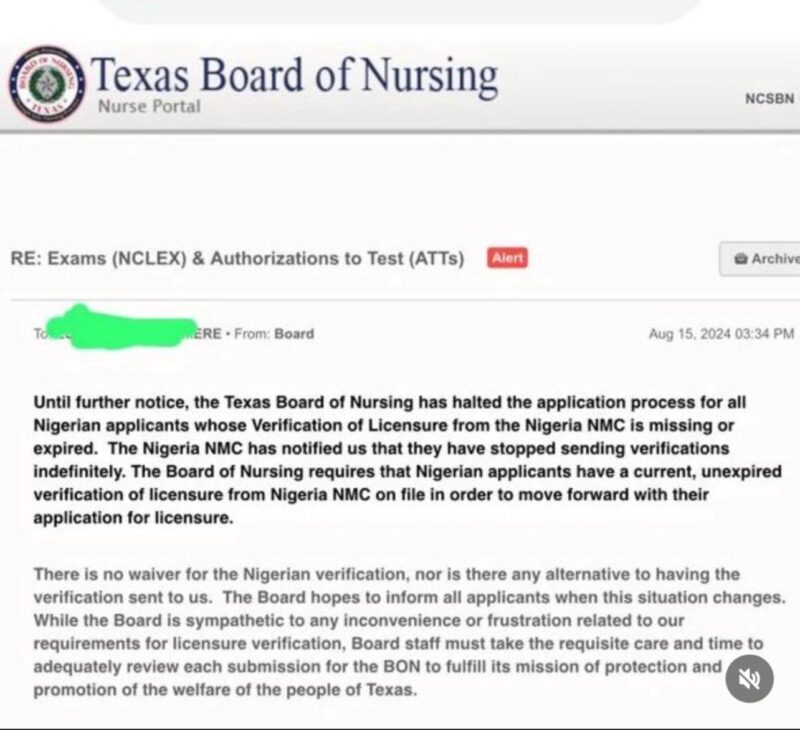
Nigerian Nurses’ Job Applications Blocked In US, Canada Due To Government’s Suspension Of License Verification The Suspension Of License Verification Services By The Nursing And Midwifery Council Of Nigeria (NMCN) Has Led To The Rejection Of Applications From Nigerian Nurses Seeking Employment Abroad. According to a report by SaharaReporters on August 16, hundreds of Nigerian nurses are currently stranded as a result of the continued closure of the NMCN’s online portal. The portal, which is essential for verifying and registering nurses as qualified practitioners in Nigeria, was initially shut down by the NMCN leadership on December 22, 2023, without any clear explanation. Despite reopening on February 7, 2024, the portal remains inaccessible, effectively halting the verification process for new nurses and leaving many in a state of uncertainty. This ongoing closure has particularly impacted nurses who applied to work in countries like the United States and Canada, with their applications being rejected due to the inability to complete the necessary license verification. The Nigerian Medical Association (NMA) has expressed deep regret over the situation, noting that numerous Nigerian nurses have been turned away globally because of the portal’s closure. The NMA has criticized the directive from the House of Representatives that instructed the NMCN to indefinitely suspend license verification services. The association warned that this decision effectively prevents Nigerian nurses from practicing abroad, equating it to a form of “mass kidnapping” that confines these professionals within the country against their will. In a statement posted on its official X handle on Monday, the NMA described the situation as an “unprecedented infringement of nurses’ fundamental human rights.” The association further condemned the directive, demanding an urgent reconsideration and urging the government to respect the rights of Nigerian citizens to either live in or leave the country as they see fit. The suspension has also affected Nigerian nurses’ applications to various international healthcare institutions. In a letter dated August 15, 2024, the Texas Board of Nursing informed a Nigerian applicant that it had halted the application process for all Nigerian candidates whose verification of licensure from the NMCN was missing or expired. The board stated that the NMCN had notified them of an indefinite suspension of verifications and emphasized that there is no alternative to having this verification on file. Similarly, Alberta Health Services (AHS) in Canada informed a Nigerian applicant that it could not proceed with offering a job until the NMCN resumed license verification services. The College of Registered Nurses of Newfoundland and Labrador also rejected a Nigerian applicant’s submission, citing their inability to log in to the applicant’s account for verification due to the NMCN’s suspension of services. https://reportafrique.com/wp-content/uploads/2024/08/71F94F40-7210-4818-879C-F83A036FFAA5-800x730.jpeg https://reportafrique.com/news/africa/nigeria/nigerian-nurses-blocked-in-us-canada/ |














1 2 3 4 5 6 7 8 ... 13 14 15 16 17 18 19 20 21 (of 506 pages)