Paulus's Posts
Nairaland Forum › Paulus's Profile › Paulus's Posts
1 2 (of 2 pages)
 Christianity Etc › Re: What Makes You Think The Bible Contradicts Itself by Paulus(m): 9:23pm On Jul 22, 2007 Christianity Etc › Re: What Makes You Think The Bible Contradicts Itself by Paulus(m): 9:23pm On Jul 22, 2007 |
[quote author=neo_welsh link=topic=66477.msg1302077#msg1302077 date=1184761301]Hello my brethren, i wonder why would anybody find the bible contradicting, but i tell you the bible can never contradicts. people that found it contracting are those that does not have the knowledge of God, the bible is a mystery to such people until they are initiated into the knowledge of God. so my brethren the bible can never contradicts.[/quote] (Quote from Neo_welsh on: July 18, 2007, 01:21 PM) "Initiated into the knowledge of God."Almost sounds if someone is joining a secret society -- Christianity doesn't "initiate." But you're right about the Bible never contradicting itself; though there are those who believe otherwise. |
| Christianity Etc › Re: Christians: Would You Prefer A Muslim Or A White Garment Partner? by Paulus(m): 9:01pm On Jul 22, 2007 |
Question: Muslim or White Garment Partner? Muslim White Garment I'm not a Christian I choose "Neither." From the way the question is asked, if one isn't a "White Garment," they're not a Christian. Aparrently, somebody has a very narrow view of Christians. Where i go to church, only the pastor wears a robe over his "duds." The focus is not on what he is wearing but on God's Word. |
| Christianity Etc › Re: Read The Holy Bible by Paulus(m): 2:44pm On Jul 22, 2007 |
Try this one: Online Parallel Bible with Commentaries |
| Christianity Etc › Re: God Is Not A Christian. by Paulus(m): 2:30pm On Jul 22, 2007 |
Redsun, How did the universe come into existence? What "hung" the celestrial bodies in space, and keeps them there? How is it that Earth has the right amount of oxygen in its atmosphere for us to live on? Why is Earth so unique, is it by chance? |
| Christianity Etc › Re: The True Name Of The Creator by Paulus(m): 12:08pm On Jul 22, 2007 |
Yeshua |
| Christianity Etc › Re: Gospel Of Barnabas: Judas Did Not Betray Jesus? by Paulus(m): 12:04pm On Jul 22, 2007 |
Gospel of Barnabas - According to Wikipedia What do we know about the "Gospel of Barnabas"? The Forgery of the Gospel of Barnabas Barnabas and the Gospels: Was There an Early Gospel of Barnabas? by R. Blackhirst Kuns, Gospel of Barnabas, true? No, it's false. Paulus |
| Christianity Etc › Re: Gospel Of Barnabas: Judas Did Not Betray Jesus? by Paulus(m): 10:43am On Jul 22, 2007 |
Kuns, The Roman soldiers carried out the sentence on Jesus Christ, not Judas; Judas committed suicide by hanging himself. By the time of the common era, Roman soldiers had "perfected" crucifying people. Pilate did not want Caesar to know that he was "friendly" with another king. The Jewish Elders went along with the soldiers to insure that Jesus did get crucified. Paulus |
| Christianity Etc › Re: What Church Do You Attend? by Paulus(m): 5:29pm On Jul 21, 2007 |
Lutheran |
| Christianity Etc › Re: Pope: Other Christians Not True Churches by Paulus(m): 10:10pm On Jul 20, 2007 |
http://pnt.biblecommenter.com/matthew/16.htm Matthew 16:18 Thou art Peter, and upon this rock I will build my church. This is the first time Jesus speaks of his church, and here, as not yet founded. Three terms are to be noted: (1) Peter, in the Greek, Petros, meaning a single stone; (2) Rock, in the Greek, Petra, which means the solid, immovable bed-rock, a great mass like a cliff, and (3) church, Greek, ecclesia, those called out, the fellowship of believers, the organized society of Christ, the kingdom of heaven on earth. There is probably no passage in the word of God that has called forth more discussion. The Papal church insists that Peter is the rock upon which Christ founded his church. The Catholic position is based upon the fact that Peter means a stone, and the Savior's language might be rendered, Thou art a stone and upon this rock I will build my church (see John 1:42). The Catholic view is untenable, for (1) The Savior does not say, Thou art a stone, and upon thee I will build, etc. or Thou art a rock, and upon this rock I will build. He changes the word in the Greek from Petros (Peter, a stone) to Petra, a rock, or ledge of rock--a solid bed-rock. (2) Every saint is a stone (see 1Pe 2:5). The Lord declares that Peter is one these living stones, made such by his confession of faith, and ready to be built into the church, the spiritual temple, formed of living stones, and built upon the rock. So is every confessor of Christ. In order to settle what the Savior does mean by the rock, we must consider Mt 16:18,19 together, and keep in mind the entire figure. This figure portrays (1) a Builder, Christ; (2) a temple to be built, composed of lively stones, the church; (3) a foundation for that temple, the rock; (4) the gates of an unfriendly city or power which shall seek its destruction, hell, or more correctly, Hades, the unseen abode of the dead, the grave; (5) a door-keeper of the church, or spiritual temple, with his keys, Peter. Peter's place in the figure is not that of the foundation, but that of the key-holder, or turnkey. The only difficulty is in settling what the Lord means by the rock. Since this rock is the foundation of the church, the central principle, the fundamental idea, we are aided to a correct decision by the teachings of the Word elsewhere. We learn [through Paul] That other foundation can no man lay than that is laid, which is Jesus Christ. This excludes Peter or any human platform (1Co 3:11). Christ is often called a stone: (1) the stone that the builders rejected (Mt 21:42 Mr 12:10 Lu 20:17); (2) the chief corner stone (Eph 2:20); (3) the stone that is the head of the corner (Mt 21:42 Mr 12:10 Lu 20:17 Ac 4:11 1Pe 2:7); (4) the spiritual rock which is Christ (1Co 10:4). Faith in Christ held in the heart, and confessed with the lips is the very foundation of the spiritual life and of the church. This constituted the fundamental difference in apostolic days between Christians and unbelievers, the church and the world. It does still. It is the essence of the teaching of the New Testament that the platform or foundation of the Christian society, the church, is this belief that Jesus is the Christ, the Son of the living God (see Mt 16:16 Joh 6:69). It is then Peter's grand confession, faith in the Spiritual Rock, the faith that lays hold of Christ, belief that he is the Anointed of God, the Divine Savior, that the Lord pronounces the rock upon which he will found his church. That this view is correct is shown by a correct understanding of the declaration. The gates of hell shall not prevail against it. The gates of Hades (Revised Version). From the gates of the city always marched forth its armies. The powers of hades are represented by its gates. Hades is not hell (Gehenna), but the unseen abode of the dead that holds the departed within its gates. Just after these words the Lord talks of his death, or entering hades. Six months later the Sanhedrin sent him to death for making the same confession Peter had just made. See Mt 26:64-67. They expected to demonstrate that the confession of his divinity which he had made was false by sending him to hades, which they supposed would hold him and prevail against the confession of the ROCK. He was sent there from the cross, but the gates of hades did not prevail, for they could not hold him, and the living Savior, rising triumphant from the tomb, was the unanswerable argument that his own and Peter's confession was a rock that could never be moved. His resurrection demonstrated that he is the Rock. Hades did not prevail. |
| Christianity Etc › Re: Gospel Of Barnabas: Judas Did Not Betray Jesus? by Paulus(m): 4:21pm On Jul 20, 2007 |
Thank you, Orikinla. |
| Christianity Etc › Re: What Do You Feel About Black Jesus? by Paulus(m): 11:57am On Jul 18, 2007 |
http://www.tektonics.org/books/snowdenprejrvw.html Book Review: A review of Frank Snowden's Before Color Prejudice by Aurelia Glenn Regarding issues of inter-ethnic, and specifically interracial relations, a commonly expressed opinion is that ‘people of different races have always hated each other.’ This view stems from projecting our current mindset into the past. Americans, with our disdain for history, are especially prone to assume that the current state of affairs has always existed. Instead of taking interracial hostility as a given, scholar Frank Snowden examines artistic, folkloric, and textual evidence to ascertain the range of attitudes that ancient peoples held about each other in Before Color Prejudice. Specifically, Snowden’s book is an exploration of ancient Greek, Assyrian, Roman, Egyptian, and Jewish attitudes toward sub-Saharan African people. Like other scholars who have examined ancient evidence (such as St. Clair Drake), he notes that, “nothing comparable to the virulent color prejudice of modern times existed in the ancient world.” Snowden mentions that ancient authors, such as the poet Virgil, often wrote in detail about the physical characteristics of the people they encountered, Africans being among those they described, as contacts between Africans and Mediterranean peoples were more common than many might suppose. Moreover, he wants to bring to our attention an often overlooked source of information: “The vast evidence of ancient art is an invaluable source of information concerning the black populations of antiquity.” To that end, he marshals an impressive collection of photographic plates of Greek, Roman, Egyptian, and Assyrian art to support his assertion. The vases, sculpture, and murals which he gathers to make his case make one wonder where all this paraphernalia was hidden (or was it under our noses all along, as many of the articles exist in Western museums). The photographs of the sphinxes and sculptures of the pharaoh Tiharka (mentioned in both Isaiah 37:9 and 2 Kings 19:9) are prime apologetic evidence. [Unwittingly, they serve the purpose that the explorer Livingstone had hoped, as he desired to explore the ancient history and culture of the peoples along the Nile, in part to prove the Bible true.] Concerning standards of physical beauty, Snowden contends that there can be a difference between people holding to a somatic norm image and racism-the former being the narcissistic perceptions of beauty common to any culture, and the latter (and more modern) notion that only one group is beautiful (and that other people confirm that assessment). He thus summarizes ancient attitudes toward the different types of physical beauty: Thus “white” was for many in the ancient world a basic element in the somatic norm image, as it has usually been in predominantly white societies. The number of implied or expressed preferences in classical literature for white beauty exceeds slightly those for black or dark beauty. About this there is nothing strange. But what is unusual was the number of those in the Greco-Roman world who rejected the norm of whiteness and openly stated their rejection. As far as the Greeks and Romans were concerned, it seems that the matter was basically one of individual preference. Such attitudes are in striking contrast to those expressed in the not-too-distant past, in which open denigration of African physical features was endemic in American society-a crumbling cultural pillar from which we are still recovering. Notes Thomas F. Gossett in Race: The History of an Idea in America, “It is striking how often one finds among intelligent and sensitive people of the period-North as well as South-crude reflections of racism. One thinks of Henry Adams’ contemptuous references to “n[**]gers” and of John Fiske’s account of a visit in 1877 to Baltimore, where he saw “elegant n[**]gers” promenading on the streets. Rayford W. Logan has studied the files of eminent magazines of the last part of the nineteenth century and found in Harpers, Scribner’s, Century, and to a lesser degree the Atlantic a fairly constant barrage of epithets applied to Negroes…” An example of such denigration was mentioned by James Loewen in Lies My Teacher Told Me, in which he mentions that when he tries to get people in all-white settings to sing a political song popular in 1864, they usually balk, replete as it is with petty negative references to body parts of black people (“ebony shins and bandy,” “blubber lips,” “bully feet to have the heels extended”). Snowden raises the question of whether symbolism regarding the color black had any significant influence in shaping Greco-Roman attitudes toward Africans. He concludes that while there were negative references toward the color black in many societies (as well as in some extra-biblical Christian writings), ancient Mediterranean peoples did not extend negative references toward black in the abstract to black people. It took the Atlantic slave trade, many centuries later, to accomplish this dubious feat. We are reminded by Snowden that initial encounters between Africans and other ethnic groups in ancient times were qualitatively different than those which occurred during the Renaissance era and the age of “Enlightenment,” which, ironically, was the period when the Atlantic trade was at its peak. Often, Africans were soldiers, even mercenaries, in various armies (as in part of Xerxes’ troops). Indeed, their fighting prowess was apparently well recognized; thus, they were often sought out for that ability. Such was apparently the case of Judah during the period of King Hezekiah (as also explained in the article in the August 1998 edition of Bible Review entitled “From the Land of the Bow”), which may be why Snowden declares, on page 45, “Kush appears conspicuously in the Old Testament as one of the great military nations of the time,” before mentioning the episodes in the Old Testament in which Kush and Kushites are mentioned (but does not provide verses in the body of the text). In addition to the general social context, Snowden notices patterns of interaction and perception between various ethnic groups within various religious contexts. For instance, worship patterns of the goddess Isis were first mentioned, in which it was noted that the cult of Isis, though most prevalent among the Egyptians and Ethiopians, spread throughout the Greco-Roman world. [b]Interestingly, Snowden mentions that the “strong bond that united blacks and whites in the common worship of Isis was reinforced by Christianity. Like the Isaic cult, Christianity swept racial distinctions aside,” and draws the conclusion that “in the early church blacks found equality in both theory and practice.” What a contrast to the present! More important, such ancient equality is an indictment of the notion that forward motion in time necessarily brings about “progress” in terms of human relations. Professor Snowden has written an important book for people of all religious backgrounds (or none at all), one in which tired, intellectually lazy assumptions about Africans and relations between people of various ethnic groups are put to rest. The reason that Romans were "racist" towards everybody else wasn't because of their skin color, it was because the Romans considered themselves civilized and everybody else were barbarians: northern Europe, Britain, etc; not skin color. [/b] |
| Christianity Etc › Re: What Do You Feel About Black Jesus? by Paulus(m): 11:43am On Jul 18, 2007 |
http://www.homestead.com/wysinger/beforecolorprejudice.html Before Color Prejudice: The Ancient View of Blacks Blacks in Antiquity: Ethiopians in the Greco-Roman Experience By Frank Snowden Professor Emeritus, Department of Classics Howard University Here's two books published by Harvard University Press to raise the spirits of anyone of African descent who feels that he or she has nothing to do with the making of Western civilization. A must for your personal library. These books are highly recommended. Buy new or used to fit your budget. According to Professor Emeritus Frank M. Snowden Jr., (AB, AM, Ph.D., ) Howard University Classicist Department --- reading of the sources, the Ethiopians "pioneered" religion, and were key to the origin and propagation of many of the customs which existed in Egypt. The Egyptians, it was argued, were descendants of the Ethiopians. Snowden states that the term Kushites, Nubians, or Ethiopians is to used in much the same way as the modern term "colored", "black, or Negro". "The experiences of Africans who reached the alien shores of Greece and Italy constituted an important chapter in the history of classical antiquity," he writes. "Using evidence from terra cotta figures, paintings, and classical sources like Herodotus and Pliny the Elder, Snowden proves, contrary to our modern assumptions, that Greco-Romans did not view Africans with racial contempt. Many Africans worked in the Roman Empire as musicians, artisans, scholars, and generals as well as slaves, and they were noted as much for their virtue as for their appearance of having a "burnt face" (from which came the Greek name Ethiopian)." The Image of the Black in Western Art, Volume One: From the Pharaohs to the Fall of the Roman Empire by Amadou-Mahtar M'Bow, Jean Vercoutter, Jean Leclant, Frank M. Snowden, Jehan Desanges, Ladislas Bugner During the fifteenth century BC, the pharaohs of the Eighteenth Dynasty established an empire extending from the Euphrates to the Fourth Cataract (Nubia). The southern conquests brought Egyptians into direct contact with black populations who continued to resist and counterattack. In the previous millennium black warriors and captives had occasionally appeared in the art of Egypt, Crete, and Cyprus. The Image of the Black in Western Art shows us, from the mid-fifteenth century to Tutankhamun's painted box depicting blacks in Egyptian art increasingly portrayed realistic and unmistakable Negroes. Click Here Professor Frank Martin Snowden Jr. (July 17, 1911- February 18, 2007) |
| Christianity Etc › Re: What Do You Feel About Black Jesus? by Paulus(m): 12:37pm On Jul 16, 2007 |
Horus, Back when I moved to Texas for work in 1979, I was told by folks around here that I had a "funny" accent; I replied to them that I thought theirs was a bit odd too. American English, different dialect. Foreigner, just about everywhere I go, I "stick" out, even around whites, I "stick" out. |
| Christianity Etc › Re: What Do You Feel About Black Jesus? by Paulus(m): 9:03am On Jul 16, 2007 |
Horus:Horus, God is all-powerful; Jesus can be any "color" His Father wants Him to be. BTW, the late Vine Deloria, jr. wrote a book back in 1972, entitled God is Red. Try telling the American Indian that their God is BLACK, Head knowledge (Facts) won't save you on the Day of Judgement, faith in Christ will. John 3:16-18; 16"For God so loved the world that he gave his one and only Son,[f] that whoever believes in him shall not perish but have eternal life. 17For God did not send his Son into the world to condemn the world, but to save the world through him. 18Whoever believes in him is not condemned, but whoever does not believe stands condemned already because he has not believed in the name of God's one and only Son. Even the Qur'an speaks against "unbelievers." |
| Christianity Etc › Re: What Do You Feel About Black Jesus? by Paulus(m): 6:31pm On Jul 15, 2007 |
Horus, Why should I answer your questions when you do not answer mine? Paulus |
| Christianity Etc › Re: What Do You Feel About Black Jesus? by Paulus(m): 6:11am On Jul 15, 2007 |
Horus, You still haven't answered my question: Who (or what) do you put your faith (or trust) in? Paulus |
| Christianity Etc › Re: What Do You Feel About Black Jesus? by Paulus(m): 10:26pm On Jul 14, 2007 |
Horus:Horus, No, you missed my comment, "Nah, even if Jesus was 'black' I would still say, 'My Lord & my God; in You I put my trust'." Horus, you must have selective eyesight because you continue to "ask" or should I say, FORCE-FEED your idea to me(& others). Do you really believe that you can enter Heaven just because you're both(?) BLACK. Jesus paid for the sins of all mankind, not just one ethnicity -- all mankind, with His blood. We can't earn eternal life. John 3:16-18; 16 For God so loved the world, that he gave his only begotten Son, that whosoever believeth in him should not perish, but have everlasting life. 17 For God sent not his Son into the world to condemn the world; but that the world through him might be saved. 18 He that believeth on him is not condemned: but he that believeth not is condemned already, because he hath not believed in the name of the only begotten Son of God. Ephesians 2:1-9; Chapter 2 [TOP] 1 And you hath he quickened, who were dead in trespasses and sins; 2 Wherein in time past ye walked according to the course of this world, according to the prince of the power of the air, the spirit that now worketh in the children of disobedience: 3 Among whom also we all had our conversation in times past in the lusts of our flesh, fulfilling the desires of the flesh and of the mind; and were by nature the children of wrath, even as others. 4 But God, who is rich in mercy, for his great love wherewith he loved us, 5 Even when we were dead in sins, hath quickened us together with Christ, (by grace ye are saved  6 And hath raised us up together, and made us sit together in heavenly places in Christ Jesus: 7 That in the ages to come he might shew the exceeding riches of his grace in his kindness toward us through Christ Jesus. 8 For by grace are ye saved through faith; and that not of yourselves: it is the gift of God: 9 Not of works, lest any man should boast. But, as you infer, the appearance is more important, Good luck on your Day of Judgement, Horus. |
| Christianity Etc › Re: What Do You Feel About Black Jesus? by Paulus(m): 10:04pm On Jul 14, 2007 |
denex:But do you follow Jesus the Christ because of the reason you gave, or because He has the words of ETERNAL LIFE? Do you believe that He died for your sins, and that He rose from the tomb, and ascended to His Father? |
| Christianity Etc › Re: What Do You Feel About Black Jesus? by Paulus(m): 9:53pm On Jul 14, 2007 |
Quote from: Horus on: May 29, 2007, 08:33 PM[b]Horus, You only gave half of the picture, what about the "color" of Jesus. From Revelation 1:15, we learn that: Revelation 1:15 Parallel Translations NASB: His feet were like burnished bronze, when it has been made to glow in a furnace, and His voice was like the sound of many waters. (NASB ©1995) GWT: His feet were like glowing bronze refined in a furnace. His voice was like the sound of raging waters.(GOD'S WORD®) KJV: And his feet like unto fine brass, as if they burned in a furnace; and his voice as the sound of many waters. ASV: and his feet like unto as if it had been refined in a furnace; and his voice as the voice of many waters. BBE: And his feet like polished brass, as if it had been burned in a fire; and his voice was as the sound of great waters. DBY: and his feet like fine brass, as burning in a furnace; and his voice as the voice of many waters; ERV: and his feet like unto burnished brass, as if it had been refined in a furnace; and his voice as the voice of many waters. WEY: His feet were like silver-bronze, when it is white-hot in a furnace; and His voice resembled the sound of many waters. WBS: And his feet like fine brass, as if they burned in a furnace; and his voice as the sound of many waters. WEB: His feet were like burnished brass, as if it had been refined in a furnace. His voice was like the voice of many waters. YLT: and his feet like to fine brass, as in a furnace having been fired, and his voice as a sound of many waters, Key-word(s): burnished bronze, glowing bronze refined in a furnace, fine brass, burnished brass, polished brass. These are the pictorial descriptions of burnished bronze: https://i35.photobucket.com/albums/d155/Spot379th/BurnishedBronze1.jpg https://i35.photobucket.com/albums/d155/Spot379th/BurnishedBronzeSteel.jpg These are the pictorial descriptions of glowing bronze refined in a furnace: https://i35.photobucket.com/albums/d155/Spot379th/BronzePour_4_FB.jpg https://i35.photobucket.com/albums/d155/Spot379th/pouringbronze.jpg These are the pictorial descriptions of fine brass: https://i35.photobucket.com/albums/d155/Spot379th/FineBrass1.jpg These are the pictorial descriptions of burnished brass: https://i35.photobucket.com/albums/d155/Spot379th/BurnishedBrass1.jpg https://i35.photobucket.com/albums/d155/Spot379th/BurnishedBrass2.jpg These are the pictorial descriptions of polished brass: https://i35.photobucket.com/albums/d155/Spot379th/PolishedBrass1.jpg https://i35.photobucket.com/albums/d155/Spot379th/PolishedBrass2.jpg Well, Horus, from looking at these descriptions that you lead us into by mentioning Revelations 1:14-15, it may be that Jesus the Christ may be a different shade than what you would like to lead us to believe. As Telly B is saying in his post #31 on: May 29, 2007, 10:14 PM, you're fishing in barren waters. Besides, you managed to overlook my comment on Jesus (had He been black): Paulus's post #72 on: Yesterday at 08:33:03 AMBut is that the real message, what do you deem more important: How Jesus the Christ looks, or or what Jesus the Christ says. (By now, we all know what you believe is the most important thing, after all, this is what most, if you're posting has been about -- is his looks) So what will you do, will you follow an appearance; or will you follow the Author of Life, with His words of eternal life? |
| Christianity Etc › Re: What Do You Feel About Black Jesus? by Paulus(m): 10:26am On Jul 14, 2007 |
Horus:[size=14pt][b] Horus, You are stereotyping, cousin. I had thought that this debate had been between sensible people but you are trying to take it to a different level. Like Hollywood is going to listen to a follower of Jesus Christ, hah. What pictures I have of Jesus, he has a brownish hue. White pictures of him IN [my] CHURCH; sorry, but I haven't seen a "white" rendition of Jesus at church. Something else, Horus, you have a hateful tone in your posting -- -- get rid of it. Have I called down "the wrath of God" on you; NO, I haven't. You, on the other hand, apparently have an axe to grind; have I personally mistreated you before we got into this debate? Unless our paths have crossed previously, you are taking your rage out on me for what someone-else has done to you. I am not to blame for what they did to you; by the same token, if a person trips me at school -- I don't blame my neighbor for what happens at school. I got a question for you, Horus -- Who (or what) do you put your faith (or trust) in? [/b][/size] |
| Christianity Etc › Re: Challenges to Christians(proof yourself) by Paulus(m): 8:34pm On Jul 13, 2007 |
doyenn, None of the prophets could forgive sins, Jesus can (& did) because only God can forgive sins; as in the woman taken in adultery, "Go and sin no more." How could Jesus do this, because HE IS THE ONLY BEGOTTEN SON OF GOD. |
| Christianity Etc › Re: What Do You Feel About Black Jesus? by Paulus(m): 7:36pm On Jul 13, 2007 |
Horus:Horus, that's one of the ways men "wear" their hair, it's not an effeminate style. Seems that you like to pull things out of context. We didn't "worship" his picture, we worship Him in our hearts. |
| Christianity Etc › Re: What Do You Feel About Black Jesus? by Paulus(m): 7:29pm On Jul 13, 2007 |
Yes, pilgrim.1., if our Lord Jesus looked like an Eskimo, Apache, Comanche, etc, -- it don't matter, it's not what He looks like; it's what He did for for all humanity. Thank you, my brother-in-Christ. |
| Christianity Etc › Re: What Do You Feel About Black Jesus? by Paulus(m): 6:10pm On Jul 13, 2007 |
Horus:The word "Christ" comes from the Greek word "Christos" which means "Anointed." The word "Messiah" comes from the Hebrew "mashyach" which means "anointed." Horus, I don't know if Mr. Joel A. Rogers had known of the Hebrew & Greek meanings of the word "anointed" but just because of the similar sounding between "Christ" and "Krishna/Chrisna" doesn't make them mean the same. Consider the words "to, too, & two:" "to" is a preposition, "too" is an adverb, and "two" is a number; all three words sound alike but they have different meanings. Many of the madonnas painted in the earliest centuries of Christ- iandom were black, according to historians, and it wasn't until the Renaissance that it became popular to give the mother of Christ the features of a Florentine maiden [a white woman]Yet, it was in Antioch that the followers of the new sect were called "Christians." Antioch on the Orontes (Greek: Αντιόχεια η επί Δάφνη, Αντιόχεια η επί Ορόντου or Αντιόχεια η Μεγάλη; Latin: Antiochia ad Orontem; also Antiochia dei Siri, Great Antioch or Syrian Antioch) was an ancient city on the eastern side (left bank) of the Orontes River located on the site of the modern city of Antakya, Turkey. Founded near the end of the 4th century BC by Seleucus I Nicator, one of Alexander the Great's generals, Antioch was destined to rival Alexandria as the chief city of the nearer East and to be the cradle of gentile Christianity. It was one of the four cities of the Syrian tetrapolis. http://en.wikipedia.org/wiki/Antioch MAAT: Are you suggesting, then, that Jesus was an Essene?Sorry, Horus (& Professor Geoghagan), this slant on Jesus Christ is not Scriptural. See "The Glory of God", , "other world saviors," I don't think so. Something else, when Jesus & his parents went to Jerusalem for his bar-mitzvah, his parents found him with the "scholars, " Luke 2:46-47; 46 And it came to pass, that after three days they found him in the temple, sitting in the midst of the doctors, both hearing them, and asking them questions. 47 And all that heard him were astonished at his understanding and answers. How did Jesus acquire the Essene training & doctrine at such a young age? [/color] MAAT: Are there parts of Jesus' life that are generally unknown to the public?Rebuttal to "The 16 Saviors" MAAT: But what is their relationship to Jesus and what evidence do you have to support it?Jesus didn't have "to develop his own spiritual talents." Have you not read in Philippians 2:6-11; 6 Who, being in very nature God, did not consider equality with God something to be used to his own advantage; 7 rather, he made himself nothing by taking the very nature of a servant, being made in human likeness. 8 And being found in appearance as a human being, he humbled himself by becoming obedient to death— even death on a cross! 9 Therefore God exalted him to the highest place and gave him the name that is above every name, 10 that at the name of Jesus every knee should bow, in heaven and on earth and under the earth, 11 and every tongue acknowledge that Jesus Christ is Lord,to the glory of God the Father. MAAT: Now that you have made these astounding revelations concerning the life of Jesus and the origins of his teachings, let us return to our original question: Was this figure of world renown a Black man? And, if so, are there any paintings, statues or icons that portray him as such?If "the original race of people in all of these areas was the Black race," how did the peoples of China, Japan, Korea, Laos, Thailand, Cambodia, Vietnam, & Indonesia get so "light?" Their features do not resemble the "Black race," your words, sir -- not mine. MAAT: Why is it that the facts that you have revealed here are unknown to the general public?[b] [url=http://books.google.com/books?id=9pWd0oZzezMC&dq=Aquarian+Gospel+of+Jesus+The+Christ+by+Levi&pg=PA3&ots=cAud9oYZz5&sig=RbWARQTEDVN-fJvACzeQSC9KX4c&prev=http://www.google.com/search%3Fq%3DAquarian%2BGospel%2Bof%2BJesus%2BThe%2BChrist%2Bby%2BLevi%26sourceid%3Dnavclient-ff%26ie%3DUTF-8%26rlz%3D1B2GGFB_enUS223US223&sa=X&oi=print&ct=result&cd=1#PPP1,M1]Aquarian Gospel of Jesus the Christ by Levi Dowling[/url] The way that this title "Aquarian Gospel of Jesus the Christ By Levi" is given seems to imply that the apostle Matthew(Levi) was the author but he wasn't; Mr. Levi Dowling was. Finally, concerning Jesus' skin "color/shade," what-ever it was, (He may have brown also) to me that's not the important thing to me, the important thing is what Jesus did for each of us; Horus, Dios, pilgrim.1, denex, folem, me, & the rest of all humanity -- He paid our debt of SIN with HIS BLOOD, and that by believing in Him, we have ETERNAL LIFE with GOD.[/b] |
| Christianity Etc › Re: What Do You Feel About Black Jesus? by Paulus(m): 8:33am On Jul 13, 2007 |
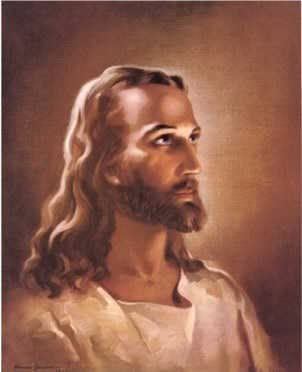
While I was born in the early 50's, and grew up in a culture that had Bibles depicting a "white" Jesu,s somehow I knew that was not true -- folks, there weren't any cameras in the first century. As for those who claim that Jesus is or was white, those people have got to be out of their mind. FYI, this is the picture that was in my parents' house: as a child I didn't know that the features were "white." https://i35.photobucket.com/albums/d155/Spot379th/Jesus_ws.jpg Our picture was done in a darker brown, and the lighter parts were in yellow-&-brown mix. Nah, even if Jesus was "black" I would still say, "My Lord & my God; in You I put my trust." |
| Nairaland General › Re: Hi, I'm Paulus: by Paulus(op): 4:43am On Jul 11, 2007 |
Why hate Nairaland? |
| Nairaland General › Re: Hi, I'm Paulus: by Paulus(op): 11:26pm On Jul 10, 2007 |
[QUOTE]Quote from: iice Quote from: Paulus on July 07, 2007, 09:27 PM Thank you, iice. How are you doing? 97xx posts, WOW! that's an impressive number, 300 more and you'll hit 10,000. Ahahahaha nor mind me oh! you'll eventually get to that number Grin[/QUOTE] Thank you, iice, your vote of confidence goes a long way. [QUOTE]Quote from: karl ken on July 08, 2007, 12:20 AM Hows US men?still know the road to your villa? Huh Huh.LOL.Never mind me. Grin Grin.So what have u been doing in US for 28 years?NGR is good now.come home.Fuel is only 70ngn per litre,diesel91.FOOd is cheap.Plenty of (Kidnapping) job opportunities.See ya. Wink[/QUOTE] [quote]Quote from: iice laughin my frozen li'l butt off Grin Grin Posted on: July 08, 2007, 12:20 AM[/QUOTE] karl, Hmm, "How are US men?" Don't know, I'm a guy -- I prefer females. "Still know the way to [my] villa?" Yes. "What have [I] been doing in US for 28 years? NGR is good now.come home." [b]Karl, I'm an American, spent 28 years working in Texas and going to school to further my education -- want to become a teacher, and teach Social Studies. Spent a previous 26 years in Pennsylvania (where I'm from originally).[/B] [I]"Come home to NGR;[/I] [B]hmmm, I don't know that way home, "[/B]  Fuel prices are about the same; food prices, possibly too. [I]Plenty of (Kidnapping) job opportunities.See ya. Wink[/I] [B]Karl, I really don't think you know my background, [/B]   |
| Christianity Etc › Re: Pastor Chris Oyakilome by Paulus(m): 10:22pm On Jul 07, 2007 |
calf, Besides listening to Pastor Chris, do you read your Bible? Where do you spend the most time, listening to Pastor Chris or reading Scriptures? |
| Nairaland General › Re: Hi, I'm Paulus: by Paulus(op): 9:27pm On Jul 07, 2007 |
Thank you, iice. How are you doing? 97xx posts, WOW! that's an impressive number, 300 more and you'll hit 10,000. |


1 2 (of 2 pages)