Rossikk's Posts
Nairaland Forum › Rossikk's Profile › Rossikk's Posts
1 2 3 4 5 6 7 8 9 10 11 12 13 14 15 16 17 (of 323 pages)
 Education › Re: FG Begins Initiative To Teach Mathematics In Yoruba Language by Rossikk(m): 1:45am On Oct 25, 2024 Education › Re: FG Begins Initiative To Teach Mathematics In Yoruba Language by Rossikk(m): 1:45am On Oct 25, 2024 |
^^^^THIS IS THE GRAND, COMPLEX, AND HIGHLY SOPHISTICATED MATHEMATICAL TRADITION THAT THIS FACELESS MONGREL OF INDETERMINATE ORIGIN IS DARING TO INSULT? THE YORUBA MATHEMATICAL TRADITION THAT IS THE VERY PROGENITOR OF MODERN COMPUTING? CAN YOU IMAGINE? 1 Like |
| Education › Re: FG Begins Initiative To Teach Mathematics In Yoruba Language by Rossikk(m): 1:34am On Oct 25, 2024*. Modified: 2:08am On Oct 25, 2024 |
BadBradley:This white man or slave of a white man is so threatened by the fact that BLACK AFRICANS INVENTED AND TAUGHT THE WORLD MATHEMATICS. See his colonized slaveboy lips like ''standardized language''. You learnt how to do everything the 'western' way, and no other methodology can suffice or adapt to modern demands because you're a brainwashed, empty-headed pea brain, with FOAM where your brain ought to be. FOR THOSE WHO WISH TO BE EDUCATED ON THE IMMENSE DEPTH AND HISTORY OF YORUBA MATHEMATICS WHICH THIS WORTHLESS SLAVE OF COLONIALISTS AND IGNORANT MENTAL MIDGET IS INSULTING, HERE IS A BRIEF AI EDUCATION. .................................................... Yoruba Mathematics: A Deep Historical Legacy and Binary System The Yoruba people of West Africa, primarily located in present-day Nigeria, have a rich and sophisticated mathematical heritage. Long before the arrival of colonial powers, the Yoruba civilization developed intricate systems of knowledge, including mathematics, which played a crucial role in their everyday life, religion, and governance. This article explores the history of Yoruba mathematics, their binary system, and recent research that highlights the complexity and depth of this ancient knowledge. Historical Context of Yoruba Mathematics The origins of Yoruba mathematics are deeply tied to the broader intellectual traditions of Africa, where mathematics was not only a tool for commerce or measurement but also deeply integrated into cultural, religious, and social systems. Mathematics was expressed through various forms, including geometric patterns in art, architecture, and textile designs, as well as in the construction of sacred spaces like the renowned Ifá divination system. Yoruba mathematical practices were heavily embedded in oral tradition, with knowledge passed down through generations by specialists, such as diviners (babaláwos) and artisans. The Yoruba system of numeration is one of the most striking aspects of their mathematical tradition, utilizing a base-20 (vigesimal) system rather than the base-10 (decimal) system familiar in much of the world today. This system is structured around multiples of 20 and reflects sophisticated counting techniques that allowed the Yoruba to perform complex calculations long before contact with European colonizers. The Yoruba Base-20 System The Yoruba counting system, known as 'ẹ̀ẹ̀rìndínlógún', is a base-20 structure that reflects both practicality and cultural significance. In this system, numbers are counted in groups of 20. For example, the number 25 is expressed as "twenty-five," and the number 35 is represented as "twenty-fifteen" ('ogún àti mẹ́fà'). This system allowed the Yoruba to conceptualize and work with large numbers with ease. The vigesimal system may seem unfamiliar, but it bears similarities to other ancient numeration systems, such as the Mayans' base-20 system. It is believed that the base-20 system developed out of the use of fingers and toes for counting. In the Yoruba tradition, numbers also have cultural and religious meanings, often tied to cosmology and divination. Yoruba Mathematics and Ifá Divination One of the most famous expressions of Yoruba mathematics is found in the Ifá divination system, a sophisticated binary-based system used to make decisions and interpret the will of deities. Ifá divination involves the casting of sacred palm nuts, which are manipulated to generate binary combinations of odd and even outcomes. These combinations, known as 'odu', are central to the process and hold symbolic, numerical, and philosophical significance. The Ifá system uses 256 'odu', which is a striking parallel to the 256 possible combinations in an 8-bit binary system. Each 'odu' is represented by a unique combination of open (odd) or closed (even) marks, which are interpreted by the babaláwo to offer guidance. This binary approach reveals the presence of sophisticated mathematical reasoning within the Yoruba cultural framework long before the formalization of binary systems in modern computing. The binary system employed in Ifá has drawn the attention of mathematicians and scholars of information theory, who see in it a highly advanced form of binary logic. The way the Yoruba encode and interpret information through these binary systems has implications for how we understand the universality of mathematical thought and its expression in different cultures. The Binary System in Ifá and Modern Computing The similarities between the Yoruba Ifá divination and modern binary logic have led to a growing body of research exploring the mathematical structures underlying Ifá. In the 1960s, African mathematician and scholar Professor William Bascom studied the Ifá system extensively, noting its parallels to binary logic. He highlighted how the Yoruba’s 256 'odu' corresponded to the binary outcomes of 8-bit strings, which form the foundation of modern digital computing. The binary logic inherent in Ifá demonstrates that mathematical thinking, especially the use of binary systems, has been present in African knowledge systems for centuries, long before it became the backbone of computers and digital technology. In Ifá, each combination of binary results offers insight into the metaphysical world, while in modern computing, binary systems form the basis of information processing and storage. While the purposes of the two systems—divination and computing—are different, the underlying logic reflects a shared mathematical principle. This underscores the fact that African civilizations like the Yoruba were not only keeping pace with mathematical developments in other parts of the world but in some cases were pioneers in using systems that would later shape global technological advancements. Recent Research on Yoruba Mathematics In recent years, scholars have begun to delve more deeply into the mathematical contributions of African societies, including the Yoruba. The interdisciplinary field of ethnomathematics has played a crucial role in recognizing the sophisticated mathematical systems embedded in African cultures, which were often dismissed or overlooked by earlier scholars. One of the pioneers in this field is Ron Eglash, an American anthropologist and mathematician, who has explored fractal patterns in African designs and architecture, including those found in Yoruba art and urban planning. Fractals, which are complex geometric shapes that can be split into parts, each of which is a reduced-size copy of the whole, are common in African design and were employed by the Yoruba in their visual and spatial arrangements. In his work, Eglash demonstrates how the recursive patterns found in African textile design, village layouts, and religious symbols reflect sophisticated mathematical principles such as self-similarity and scaling, which are key aspects of fractal geometry. The presence of these patterns in Yoruba cultural practices suggests that African mathematical thought was not only advanced but also highly integrated into daily life, spirituality, and artistic expression. Yoruba Mathematics in Art and Architecture Yoruba mathematics extends beyond numeration and divination into art, design, and architecture. Geometric patterns are a hallmark of Yoruba visual culture, found in textiles, beadwork, and carvings. These designs often exhibit symmetry, repetition, and proportionality, reflecting an intuitive grasp of mathematical concepts like balance and harmony. In Yoruba architecture, particularly in the construction of royal palaces and sacred spaces, proportionality and geometry were crucial. For example, the construction of the walls and courtyards of traditional Yoruba compounds followed specific measurements that were based on social hierarchy and cosmological beliefs. The use of geometry in these spaces was not merely decorative but had deep social and spiritual meaning, reinforcing the connection between mathematics and the sacred. The Yoruba also employed mathematical reasoning in the creation of textiles, such as 'adire' (tie-dye) and 'aso-oke' (hand-woven cloth). The complex patterns found in these textiles, including their grid-like structures, demonstrate a deep understanding of arithmetic progression and geometric arrangement. These mathematical principles were not only used for aesthetic purposes but also encoded social and religious messages. Yoruba Mathematics and Modern Education Despite the rich mathematical heritage of the Yoruba people, much of this knowledge was marginalized during the colonial period, when Western mathematical systems were imposed in African educational systems. However, there has been a resurgence of interest in traditional Yoruba knowledge, including mathematics, as part of broader efforts to decolonize education and recover indigenous intellectual traditions. Today, scholars and educators are working to incorporate traditional Yoruba mathematics into the modern curriculum, highlighting its relevance and significance. By teaching young people about the mathematical systems of their ancestors, educators hope to inspire pride in African heritage while also demonstrating the universality and diversity of mathematical thought. Moreover, modern Yoruba scholars are also exploring the application of traditional mathematical systems in contemporary problems. For example, there is growing interest in how the binary logic of Ifá could be applied to computing, decision-making algorithms, and even artificial intelligence. These efforts underscore the timeless nature of Yoruba mathematical knowledge and its potential to contribute to future technological innovations. Conclusion Yoruba mathematics, with its rich history and complex systems, stands as a testament to the intellectual achievements of African civilizations. From the base-20 counting system to the binary logic of Ifá divination, the Yoruba people developed sophisticated mathematical frameworks that were deeply integrated into their culture, religion, and daily life. Recent research has only begun to uncover the full extent of Yoruba mathematical contributions, revealing a legacy that continues to inspire scholars and educators around the world. As we look to the future, it is essential to recognize and celebrate the mathematical heritage of the Yoruba people, ensuring that this knowledge is passed down to future generations and integrated into global mathematical discourse. Yoruba mathematics not only enriches our understanding of African history but also challenges the dominant narratives of mathematical development, offering new perspectives on the universality of human knowledge. .................... 1 Like |
| Politics › This Is How The AI REVOLUTION Will Transform Nigeria Over The Next 30 Years by Rossikk(op): 11:20pm On Oct 24, 2024*. Modified: 12:04am On Oct 25, 2024 |
Unless you have been living under a rock, you should know by now that AI is where it's at. It's already impacting lives. Quick example, just a few years ago, if you wanted to start a business, you would pay a company BIG MONEY to do the feasibility studies, write you a Business Plan, do SWOT Analysis etc etc. Today, none of that is necessary. Go on AI (ChatGPT) and tell it to write you a business plan plus SWOT Analysis, plus even Competitor Analysis, Estimated Business Costs, Profit Estimates, Cash Flow requirements etc,,,,, to start any business anywhere in the world, including your village in Nigeria, and within 30 SECONDS OR LESS, it gives you the FULL SPECTRUM ANALYSIS, FREE OF CHARGE. This greatly reduces the cost, hassle, and uncertainty, of starting a business. That's just one example of the power of AI, but there are numerous...And the technology is just going to get more and more advanced to the point where it transforms the entire world for the better in multiple ways. .................. I asked AI (ChatGPT) how the AI REVOLUTION will impact Nigeria over the next 30 years. Here was the response: ............ The Transformation of Nigeria Through AI Over the Next 30 Years Artificial Intelligence (AI) is poised to revolutionize economies and societies around the world, and Nigeria is no exception. Over the next 30 years, AI will reshape the country in ways that can propel it to become one of Africa’s leading technological and economic powerhouses. From healthcare and education to infrastructure and governance, AI’s potential to enhance development is immense. This article will explore the key areas where AI is expected to make significant strides in Nigeria, along with the challenges and opportunities that come with it. 1. Healthcare Revolution One of the most promising areas where AI will have a transformative impact in Nigeria is healthcare. The country's healthcare system has long been plagued by inadequate infrastructure, limited access to quality care, and a shortage of medical professionals. AI can address many of these issues by improving diagnostic accuracy, optimizing treatment plans, and making healthcare more accessible to remote and underserved areas. AI-powered diagnostic tools, such as machine learning algorithms that can analyze medical images, will help doctors identify diseases like cancer, malaria, and tuberculosis more accurately and efficiently. For example, AI could detect anomalies in X-rays or MRIs, aiding doctors in making quicker, more accurate diagnoses, particularly in rural areas where there is a shortage of specialists. Additionally, AI-driven telemedicine platforms will enable Nigerians in remote regions to consult with doctors virtually, breaking the geographical barriers to healthcare access. Moreover, AI can help streamline drug distribution and supply chain management, ensuring that medications reach the people who need them most. This will be crucial in preventing drug shortages and ensuring timely delivery of essential medicines. 2. Education Enhancement AI will also play a pivotal role in transforming Nigeria’s education system. As the country continues to grapple with challenges such as overcrowded classrooms, teacher shortages, and outdated curricula, AI can offer innovative solutions that will make education more accessible, personalized, and effective. AI-powered educational platforms will allow students to learn at their own pace, receive personalized feedback, and access resources that are tailored to their individual learning needs. Adaptive learning technologies can adjust lesson plans in real-time based on a student's progress, ensuring that no one is left behind. This will be especially beneficial in addressing Nigeria's high dropout rates and improving literacy levels. Furthermore, AI can assist teachers by automating administrative tasks such as grading and attendance tracking, freeing up more time for them to focus on teaching. AI tutors and chatbots can provide additional support to students outside of the classroom, offering guidance and answering questions 24/7. In the long term, AI will help prepare Nigerian students for the jobs of the future by incorporating more STEM (Science, Technology, Engineering, and Mathematics) content into the curriculum. This will be crucial in developing a workforce that is skilled in emerging technologies and ready to compete in the global economy. 3. Economic Development and Job Creation While there are concerns that AI could lead to job displacement, it also presents a wealth of opportunities for job creation in Nigeria. As AI technology becomes more widespread, new industries will emerge, and with them, new employment opportunities. The key will be ensuring that Nigerians are equipped with the skills needed to thrive in an AI-driven economy. AI will enable Nigeria to automate labor-intensive processes in industries such as agriculture, manufacturing, and oil and gas, thereby increasing productivity and reducing costs. In agriculture, for example, AI-powered drones and sensors can monitor crop health, optimize irrigation, and predict yields, allowing farmers to make data-driven decisions that will enhance food security. In the manufacturing sector, AI-driven automation will enable Nigerian companies to produce goods more efficiently and at a lower cost, making them more competitive on the global stage. While this may reduce the demand for low-skilled labor, it will create a growing need for workers skilled in AI development, data analysis, and robotics. The financial services sector is another area where AI will drive significant change. AI-powered fintech solutions will expand access to banking and financial services, particularly for the unbanked population. AI algorithms can analyze customer data to offer personalized financial products, detect fraudulent transactions, and streamline loan approval processes, thereby driving financial inclusion. 4. Governance and Anti-Corruption Efforts AI will also have a profound impact on governance in Nigeria. The country's long-standing challenges with corruption, inefficiency, and bureaucratic red tape can be mitigated through AI-driven solutions. By automating administrative processes and introducing transparency into government operations, AI can reduce opportunities for corruption and increase accountability. AI-powered systems can track government spending, flag suspicious transactions, and provide real-time monitoring of public projects. This will help curb corruption, which has long hindered Nigeria’s development. In addition, AI can be used to streamline public services such as issuing passports, processing tax returns, and managing voter registration, making these processes more efficient and less prone to fraud. Moreover, AI can assist in data-driven policymaking by analyzing large datasets to provide insights on areas such as poverty reduction, healthcare needs, and infrastructure development. This will enable the Nigerian government to make more informed decisions and implement policies that are tailored to the needs of the population. 5. Infrastructure and Urban Development AI will play a crucial role in shaping Nigeria’s infrastructure and urban development over the next three decades. As Nigeria's urban population continues to grow, AI-driven smart city technologies will be essential in managing the complex challenges of urbanization, such as traffic congestion, waste management, and energy consumption. AI-powered traffic management systems can analyze real-time data from sensors and cameras to optimize traffic flow, reduce congestion, and improve public transportation. Smart energy grids, powered by AI, can ensure more efficient use of energy resources and reduce wastage, helping Nigeria to achieve its renewable energy goals. In addition, AI will facilitate better urban planning by analyzing data on population growth, housing demand, and infrastructure needs. This will enable city planners to design more sustainable and livable cities, ensuring that Nigeria’s rapid urbanization is managed in a way that benefits all citizens. 6. Challenges to Overcome While the potential for AI to transform Nigeria is immense, there are several challenges that must be addressed for the country to fully realize the benefits of this technology. One of the most significant challenges is the digital divide. A large portion of Nigeria's population still lacks access to reliable internet and modern technology, which will be essential for AI adoption. Ensuring widespread access to digital infrastructure will be crucial in preventing certain regions and communities from being left behind. Additionally, there is a need for significant investment in education and skills training to prepare the Nigerian workforce for an AI-driven economy. Without the necessary skills, many Nigerians risk being displaced by automation, exacerbating inequality. Finally, concerns around data privacy, cybersecurity, and ethical AI use must be addressed. As AI becomes more integrated into Nigerian society, it will be essential to establish clear regulations to ensure that AI is used responsibly and in a way that benefits all citizens. Conclusion Over the next 30 years, AI has the potential to revolutionize Nigeria across multiple sectors, driving economic growth, improving governance, and enhancing quality of life. While challenges remain, with the right investments in infrastructure, education, and regulatory frameworks, Nigeria can harness the power of AI to build a more prosperous and equitable future. The transformation brought about by AI will not only impact Nigeria but could also position the country as a leader in the global AI landscape. |
| Investment › Re: White House Thanks FG For Releasing Binance Executive On Humanitarian Grounds by Rossikk(m): 9:57pm On Oct 24, 2024 |
jmoore:''Disgracing Nigeria''? That's your INFERIORITY COMPLEX talking. Do you know that a 92 felony convicted criminal fraudster and rapist, is currently on a major party ticket to be the next US president? Does that ''DISGRACE AMERICA'' in your view, or do you still feel like a SLAVE to them regardless of such a RANCID DISGRACE? 6 Likes |
| Education › Re: FG Begins Initiative To Teach Mathematics In Yoruba Language by Rossikk(m): 9:44pm On Oct 24, 2024 |
BadBradley:LOOK AT THIS EMPTY HEAD. BLACK AFRICANS INVENTED MATHEMATICS OVER 35,000 YEARS AGO, AND EXPORTED IT TO THE REST OF THE WORLD. WE ARE THE OWNERS OF MATHEMATICS. YORUBAS HAVE A HIGHLY SOPHISTICATED MATHEMATICAL SYSTEM DATING BACK THOUSANDS OF YEARS. YORUBA BINARY MATHEMATICS WAS EVEN SAID TO HAVE BEEN STOLEN BY THE WEST TO CREATE THE COMPUTER SYSTEMS WE USE TODAY, WHICH ARE BASED ON BINARY MATHEMATICS. https://www.youtube.com/watch?v=JQML7hhZdH4 1 Like |
| Education › Re: FG Begins Initiative To Teach Mathematics In Yoruba Language by Rossikk(m): 9:39pm On Oct 24, 2024 |
NewDea4:So studying mathematics in your traditional language is 'stupid'? You clearly need therapy and redemption from your disgusting self-hatred. 1 Like |
| Education › Re: FG Begins Initiative To Teach Mathematics In Yoruba Language by Rossikk(m): 9:37pm On Oct 24, 2024 |
| Phones › Re: Phone Users, Am I The Only One Experiencing This Scary Thing by Rossikk(m): 6:25pm On Oct 24, 2024 |
Marshall1077:The place we call ‘Heaven’ is actually the FUTURE, in which everything is driven by AI and advanced Quantum Computing. If you have ever read the accounts of near-death experiencers, and compare them with ChatGPT projections for the year 5,000 or thereabouts, it is the EXACT SAME WORLD. |
| Foreign Affairs › Re: Kamala Harris Calls Donald Trump A Fascist (Video) by Rossikk(m): 5:25pm On Oct 24, 2024 |
SpatialKing:The top generals who served with him, including his former White House Chief of Staff, have called him a FASCIST who must NEVER be allowed into the White House again. His own Vice President Mike Pence has said he is erratic, dangerous and unstable, and cannot he allowed to preside over the world’s largest nuclear arsenal. He has also promised to terminate the US Constitution, and send the military to round up his political opponents and critics. He is also a convicted criminal on 92 felonies. IF THIS IS THE ANIMAL YOU WANT AS PRESIDENT OF THE USA, YOU ARE SICK IN THE HEAD AND NEED HELP. 9 Likes 3 Shares |
| Politics › Re: Our National Anthem Is So Beautiful! My Goodness! by Rossikk(op): 5:11pm On Oct 24, 2024 |
Sharpsharp00123:Look, one thing these guys need to understand is that Nigeria is the greatest country in Africa, and WILL surely get better in the years ahead. We are called the Giant of Africa for a reason. We are a brilliant people. Go on social media platforms and see everyone from Jamaicans to Americans to Koreans to Germans showing love for Nigeria 🇳🇬, whether it’s our food, our music, our films, our pidgin English, our accent, fashion, Everything. There’s something spiritual about it. Our name is written in the stars. ⭐️ ✨ |
| Politics › Re: Could Computers And Robots Become Conscious? If So, What Happens Then? by Rossikk(m): 5:00pm On Oct 24, 2024 |
maryambby:AI is what will change the world. In addition to Quantum Computing. The world in the next 20 to 30 years will see huge improvements as a result of AI especially. Nigeria will be an African powerhouse in AI and Quantum Computing in the coming years. Very interesting time to be alive. If I were to advise any young man today on their career, I will say “MOVE INTO AI or QUANTUM COMPUTING”. 1 Like 1 Share |
| Foreign Affairs › Re: Kamala Harris Calls Donald Trump A Fascist (Video) by Rossikk(m): 4:29pm On Oct 24, 2024 |
He is worse than a fascist. He’s a demon pretending to be human. In fact he’s not even pretending to be human. He’s just a demon in human form. 18 Likes 7 Shares |
| Politics › Re: Our National Anthem Is So Beautiful! My Goodness! by Rossikk(op): 4:17pm On Oct 24, 2024 |
nedu666:You don’t speak for them, so SHUT UP. This thread is for NIGERIANS, not IPOB outcasts like you. 1 Like |
| Politics › Re: Our National Anthem Is So Beautiful! My Goodness! by Rossikk(op): 4:15pm On Oct 24, 2024 |
EmperorCaesar:My brother, can you imagine? |
| Politics › Re: Our National Anthem Is So Beautiful! My Goodness! by Rossikk(op): 3:42pm On Oct 24, 2024 |
| Politics › Our National Anthem Is So Beautiful! My Goodness! by Rossikk(op): 3:41pm On Oct 24, 2024 |
This was so emotional.. Magnificent anthem. I’m not surprised it was reintroduced. It holds so much power. https://www.youtube.com/watch?v=zVEjTNe2US0?si=spSVbPYSQoydBI0U 1 Like |
| Politics › Re: Bianca Ojukwu Should Have Rejected Appointment, She Will End Up Being Messed Up by Rossikk(m): 10:52am On Oct 24, 2024 |
I laugh in Hausa. Somebody that is already counting dollars. 6 Likes |
| Politics › Re: Nigeria Orders 24 Italian Fighter Jets For $618 Million by Rossikk(op): 10:13am On Oct 24, 2024 |
Biodun556:Why? We have many other fighter jets. It can’t all be one model nau… 24 is okay for that model. |
| Politics › Re: Nigeria Orders 24 Italian Fighter Jets For $618 Million by Rossikk(op): 10:12am On Oct 24, 2024 |
Biodun556:No wahala. We don’t need F16 for now. We are not fighting Russia or Iran. |
| Politics › Re: Nigeria Orders 24 Italian Fighter Jets For $618 Million by Rossikk(op): 7:57am On Oct 24, 2024 |
Zulu11zulu:Mr Man, Nigerian Airforce jets are for BOTH internal and external conflict arenas. Wherever the threat is coming from, we are there. A country of our stature needs to be combat-ready at all times, with top-level equipment. We are not Benin Republic or Ghana. 3 Likes 1 Share |
| Politics › Re: Nigeria Orders 24 Italian Fighter Jets For $618 Million by Rossikk(op): 7:52am On Oct 24, 2024 |
I was doing some research the other day and discovered that Ghana hasn't got even 1 fighter jet in their Airforce. Just some training aircraft and a couple of transport planes they have. I wonder how they expect to defend themselves if somebody invades them tomorrow. I'm sure that short president of theirs will run to Abuja to beg for our military to come and save them. 3 Likes 2 Shares |
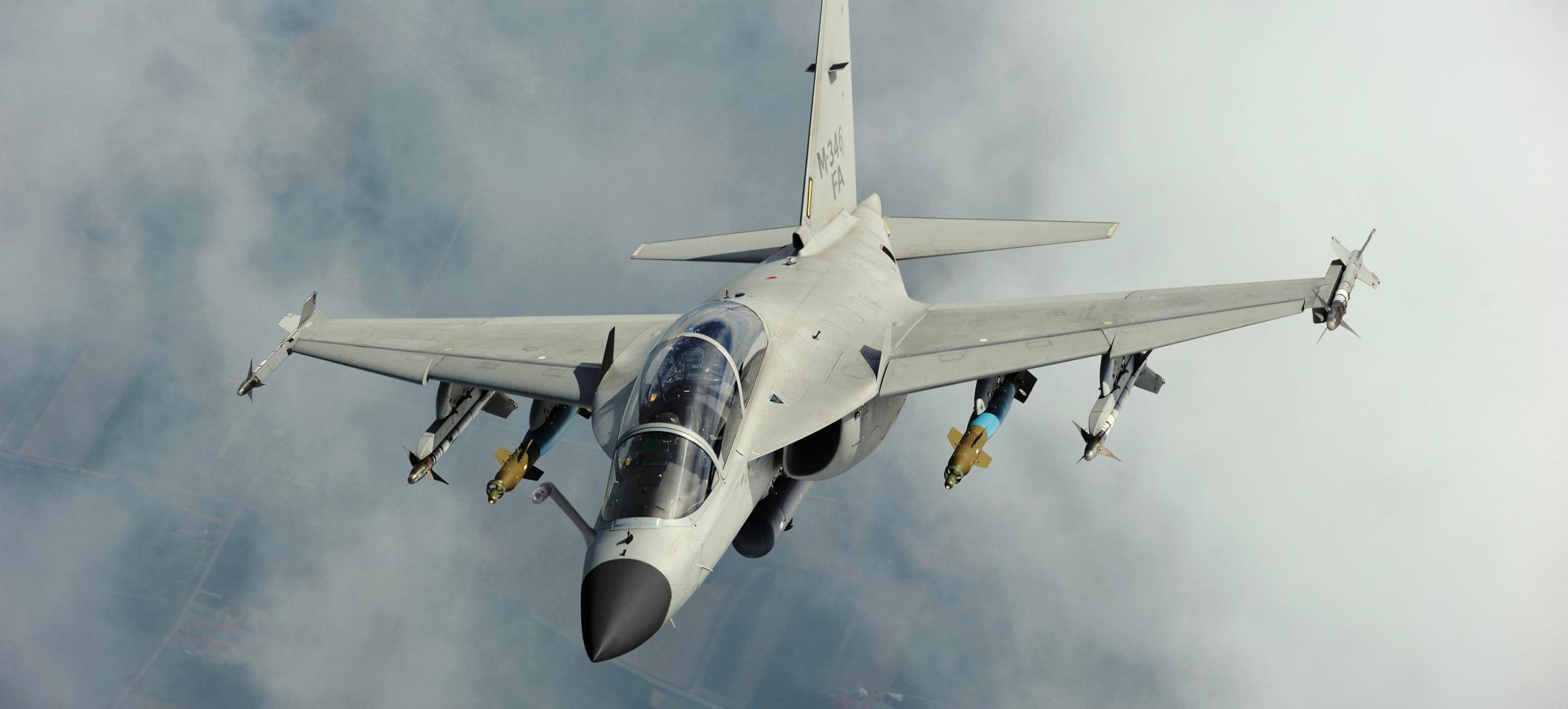
| Politics › Nigeria Orders 24 Italian Fighter Jets For $618 Million by Rossikk(op): 7:46am On Oct 24, 2024 |
Nigeria Orders 24 M-346 Italian Fighter Jets For $618 Million https://aircraft.leonardo.com/o/adaptive-media/image/17992632/h_959/Defence%20Aircraft%20-%20SP%20M-346FA_foto1.jpg https://www.janes.com/images/default-source/news-images/fg_2705696-jdw-1183.jpg https://cdn.jetphotos.com/full/5/611947_1693571657.jpg https://africa.businessinsider.com/local/lifestyle/nigeria-approves-dollar618-million-loan-to-purchase-fighter-jets/xh9e7e9 1 Like 1 Share |
| Politics › Re: Nigerians Hail Tinubu For Sacking Uju-Ken Ohanenye, Appointing Bianca Ojukwu by Rossikk(m): 7:12pm On Oct 23, 2024 |
legitnow1:Ojukwu is a big name in Nigeria. Don’t forget he was buried in national honours. The Tinubu administration actually executed a political masterstroke here. 1 Like 2 Shares |
| Politics › Re: AI Chatgpt Foresees Africa’s Future Power, Nigeria Including. (video) by Rossikk(op): 7:07pm On Oct 23, 2024 |
Topman7:Nice 😀 |
| Politics › Re: Nigerians Hail Tinubu For Sacking Uju-Ken Ohanenye, Appointing Bianca Ojukwu by Rossikk(m): 6:57pm On Oct 23, 2024 |
Bobloco:If Tinubu sacked himself and Peter Obi took over, give me ONE MAJOR POLICY REVERSAL he would make. JUST ONE. 1 Like |
| Politics › Re: AI Chatgpt Foresees Africa’s Future Power, Nigeria Including. (video) by Rossikk(op): 6:50pm On Oct 23, 2024 |
IFECHIGCON:Did we all start the same time and in the same way? No. So be patient. Our turn will come. This is what the AI projection is telling you, based on billions of calculations it has made. |
| Politics › Re: Nigerians Hail Tinubu For Sacking Uju-Ken Ohanenye, Appointing Bianca Ojukwu by Rossikk(m): 6:40pm On Oct 23, 2024 |
Ojukwu’s wife? Wow. That’s a big one. That’s political maturity by Tinubu, in his role as a leader whose job is to unify the nation. Good one. 1 Like 1 Share |
| Politics › Re: AI Chatgpt Foresees Africa’s Future Power, Nigeria Including. (video) by Rossikk(op): 6:35pm On Oct 23, 2024 |
hedonido:AI sees wayyyyy beyond Tinubu. It operates by hundreds of billions of parameters from thousands of years ago till today, and projects forward based on that.. 2095 is 70 years’ time. So try and use your head. |
| Politics › Re: AI Chatgpt Foresees Africa’s Future Power, Nigeria Including. (video) by Rossikk(op): 3:10pm On Oct 23, 2024 |
This is what I keep telling people. Stay positive! I had also seen this future for Nigeria and Africa at large, even before AI projected it. And yes, AI knows ALL our problems today, a BILLION TIMES more than any of you, and yet it’s predicting THIS future for the African continent, based on its current development pace. Fantastic video.😊 |
| Politics › AI Chatgpt Foresees Africa’s Future Power, Nigeria Including. (video) by Rossikk(op): 2:56pm On Oct 23, 2024 |
Beautiful… Target 2095. Interesting Future For Nigeria Also Mentioned…. ChatGPT projects that Nigeria by 2095 will be a world powerhouse in Quantum Computing. We can see the signs of that today with Lagos being the tech startup and ICT capital of Africa. Enjoy the video..😊 https://www.youtube.com/watch?v=UbcMQMiqoIA?si=kdIal7fKYxE09GBO |
| Family › Re: Man Sold Family Land To Play Bet (Video, Photos) by Rossikk(m): 10:22am On Oct 23, 2024 |
treatise:Oga what does eating have to do with heaven nah? |
| Family › Re: Man Sold Family Land To Play Bet (Video, Photos) by Rossikk(m): 10:17am On Oct 23, 2024 |
illicit:This country is so funny 😂 I’m sure the guy must have been thinking that he will just hammer. 2 Likes |