Rossinky's Posts
Nairaland Forum › Rossinky's Profile › Rossinky's Posts
1 2 3 4 5 6 7 8 9 10 11 (of 11 pages)
 Celebrities › Re: Valentine: Omotola Jalade-ekeinde And Husband, Matthew Ekeinde Out On A Date by Rossinky: 11:49pm On Feb 15, 2020 Celebrities › Re: Valentine: Omotola Jalade-ekeinde And Husband, Matthew Ekeinde Out On A Date by Rossinky: 11:49pm On Feb 15, 2020 |
Slawormir:Why do you have to use this ugly racist terminology all the time? Is someone paying you to do that here? 1 Like |
| Foreign Affairs › Re: Trump Admits He Sent Rudy Giuliani To Ukraine After Denying It by Rossinky: 11:46pm On Feb 15, 2020 |
chatinent:Leave ''politicians'' out of it. This is about Trump, not ''politicians''. Mr sense. |
| Politics › Re: Mike Pompeo Visits Africa, Skips Nigeria by Rossinky: 11:33pm On Feb 15, 2020 |
chosenwan1:No, YOU go and read your FUTURE. By 2050, Nigeria, currently Africa's largest economy, is projected to become the 3rd most populous nation on earth, after China and India. That alone will make Nigeria a massive investment destination for world finance. The US knows this. YOU DON'T KNOW, because you don't research anything, and are full of self-hate and inferiority complex. The US has every reason to consider Nigeria as a growing rival. If you think their policy makers consider Senegal or Togo, or wherever Pompeo is going, as being more 'important' than Nigeria, that just shows you, like your fellow IPOB wastrels, know nothing about world affairs and geopolitics. 1 Like |
| Politics › Re: Mike Pompeo Visits Africa, Skips Nigeria by Rossinky: 11:27pm On Feb 15, 2020 |
BigBankBlack:You sound crooked. 1 Like |
| Foreign Affairs › Re: Did An Author From The 1800s Predict The Trumps, Russia And America's Downfall? by Rossinky: 11:23pm On Feb 15, 2020 |
Even the Book of Daniel predicts Trump. 2 Likes |
| Politics › Re: Mike Pompeo Visits Africa, Skips Nigeria by Rossinky: 11:17pm On Feb 15, 2020*. Modified: 11:58pm On Feb 15, 2020 |
Agboriotejoye:You are a crooked person and a liar from hell. It was in your fairytale Fox News alternative reality that the Democrats said that. They only impeached him because he was scratching his craw craw head abi? Worthless liar. It's amazing how Trump's propensity to LIE has infected his supporters, even in Nigeria, in their quest to defend him. What jazz does that guy use on you people? Why do you have to LIE to defend him? |
| Politics › Re: Mike Pompeo Visits Africa, Skips Nigeria by Rossinky: 11:10pm On Feb 15, 2020 |
Boogyman25:Millions of Americans are living hand to mouth, and many are homeless, sleeping under the bridge, while Trump gave a massive tax cut to the billionaire classes. The job growth figures are LOWER than what was achieved by Obama's administration. So if Trump deserves to be impeached for something ALL world leaders do, how about Buhari that has shielded several of his inner circle who have been caught in one corruption case or the other. I don't want to be extreme but this comment is foolish.Errmm...''all world leaders'' do NOT extort and bribe foreign leaders to manufacture evidence against their political opponents so as to rig elections. You are extremely foolish, and a crook, to make such an idiotic claim. This is what watching Fox news has done to you. It has turned you into a moral wreck and an imbec.ile who now accepts and excuses executive criminality. 1 Like |
| Politics › Re: Mike Pompeo Visits Africa, Skips Nigeria by Rossinky: 11:05pm On Feb 15, 2020 |
Realtalk20:You can't handle the truth, huh? Slave-minded dunce. The Trump you worship won't even let you through the door because as a black person, he considers you subhuman. Olodo rabata. |
| Politics › Re: Mike Pompeo Visits Africa, Skips Nigeria by Rossinky: 11:02pm On Feb 15, 2020 |
BigBankBlack:I don't need no fcking US visa! It is because of US visa that you will ignore your conscience and support a criminal in the White House? You are an utter disgrace, with your morals in the gutter like Trump. 1 Like |
| Politics › Re: Mike Pompeo Visits Africa, Skips Nigeria by Rossinky: 10:50pm On Feb 15, 2020 |
ContractKiller:They were PROTECTING the whistle blower which is required by law. What the hell is wrong with you? Why should whistleblowers be exposed?What then is the point of being a whistleblower? Nancy Pelosi and Eric Schiff even made it illegal for anyone to mention his name on social media.Stop being dumb. How can they make it illegal to mention them on social media? Under what law? Can Pelosi make laws? You just swallow any rubbish they feed you on Fox news. You no get brain? Trump on the other hand used his Executive privilege just like other Presidents including Obama have used it to protect themselves when under investigation. Are you saying it is wrong for Trump to use executive privilege but Obama can do it?STOP TALKING RUBBISH. If Buhari was under investigation for crimes and he used ''executive privilege'' to block witnesses from testifying, while threatening whistleblowers on twitter and sacking those government workers who testify against him, HOW WOULD YOU REACT? WOULD YOU DEFEND HIM? Hell no! You would abuse him all day and call him every name under the sun! So how is it ok for Trump to do that? Talking rubbish about Obama that left power 4 years ago! Stop watching Fox News and being stupid. That is the propaganda network Trump uses to carry out his criminal activities, while they cover for him. Obama did not commit any of the crimes Trump committed, and never blocked witnesses from testifying against him in any trial, or threaten whistleblowers, so comparing the two is absolute stupidity and ignorance. |
| Culture › Re: When Our Fathers Ruled In Egypt by Rossinky(op): 2:03am On Feb 15, 2020 |
Cousin9999:It's only regarding a reference to the ancient meaning of Ethiopia. It's no great secret, so no biggie. You can find the info anywhere. |
| Culture › Re: When Our Fathers Ruled In Egypt by Rossinky(op): 1:48am On Feb 15, 2020*. Modified: 2:09am On Feb 15, 2020 |
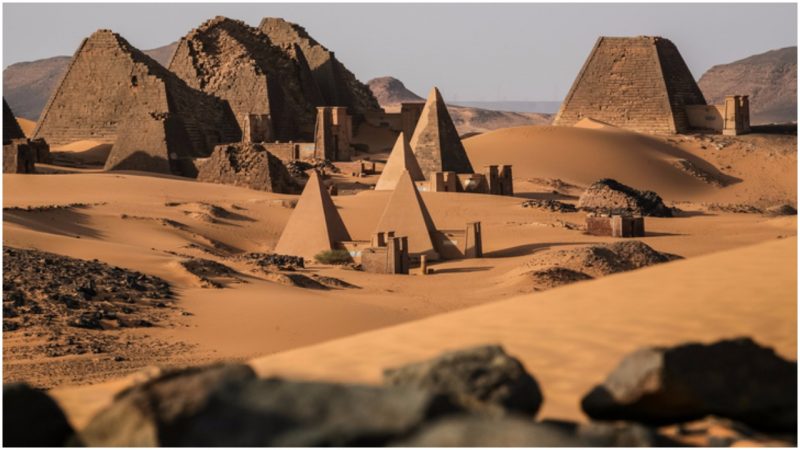
Cousin9999:The 'Ethiopia' of that era was a much bigger and vaster territory in Africa South of the Sahara than the 'Ethiopia' of today though. As stated in Wiki, ''In ancient times the name Ethiopia was primarily used to refer to the modern day nation of Sudan which is based in the Upper Nile valley and located south of Egypt, also called Kush, and then secondarily in reference to Sub-Saharan Africa in general.'' https://en.wikipedia.org/wiki/History_of_Ethiopia Ethiopia in relation to Egypt is very similar to modern Britain in relation to the USA. British people, their laws, knowledge, and political system, were deployed to America, and used to build a bigger, richer version of Britain itself, in a land of more abundant resources. Very similar to the Ethiopia - Egypt connection. Just as Britain pioneered in the industrial revolution, building the first modern aircraft, ships etc, only to be overtaken by the USA in latter years, so did ancient Ethiopia pioneer in science, medicine, architecture, which was then taken to the next level by Egypt. A vivid example of this the Sudan Pyramids, beautifully designed, but smaller in size than the latter pyramids built in Egypt by the mighty pharaohs. Pyramids of Sudan (Ancient Ethiopia) https://www.thevintagenews.com/wp-content/uploads/2017/11/sudan.jpg Pyramids of Egypt https://www.history.com/.image/t_share/MTU3ODc5MDg2NDMxODcyNzM1/egyptian-pyramids-hero.jpg |
| Culture › Re: When Our Fathers Ruled In Egypt by Rossinky(op): 12:12am On Feb 15, 2020 |
yanabasee:Egypt was a black nation. So the ''slaves'', the Pharaohs, the aristocracy, and everyone else there was black. What is your issue? 1 Like |
| Politics › Re: Mike Pompeo Visits Africa, Skips Nigeria by Rossinky: 12:02am On Feb 15, 2020*. Modified: 3:44am On Feb 15, 2020 |
Pompeo skips Nigeria. THANK GOODNESS. Nigeria does NOT need Pompeo in Nigeria. In AMERICA, Pompeo is regarded as Trump's criminal enabler in that tyrant's drive to destroy the rule of law and accountability. The Trump regime has ZERO CREDIBILITY in the comity of nations, and Nigeria does not need to associate herself with it. Just last week, the increasingly corrupt US Senate voted to ACQUIT Trump of clear criminal conduct, after blocking witnesses to his crimes from testifying in his impeachment trial. Yes. They actually BLOCKED witnesses from testifying in a TRIAL. They said ''we don't want to hear the evidence''. Then they acquitted him. Is that what you call a government? They have NOTHING to teach Nigeria. America is in trouble, and need to save themselves from their rapidly declining nation, led by an imbecilic crook and madman. Trump is a demented DICTATOR, and the sooner the world is rid of him the better. 56 Likes 12 Shares |
| Culture › Re: When Our Fathers Ruled In Egypt by Rossinky(op): 11:53pm On Feb 14, 2020 |
slivertongue:Reading your history is not a 2 minute issue. |
| Culture › When Our Fathers Ruled In Egypt by Rossinky(op): 10:41pm On Feb 14, 2020*. Modified: 2:35am On Feb 15, 2020 |
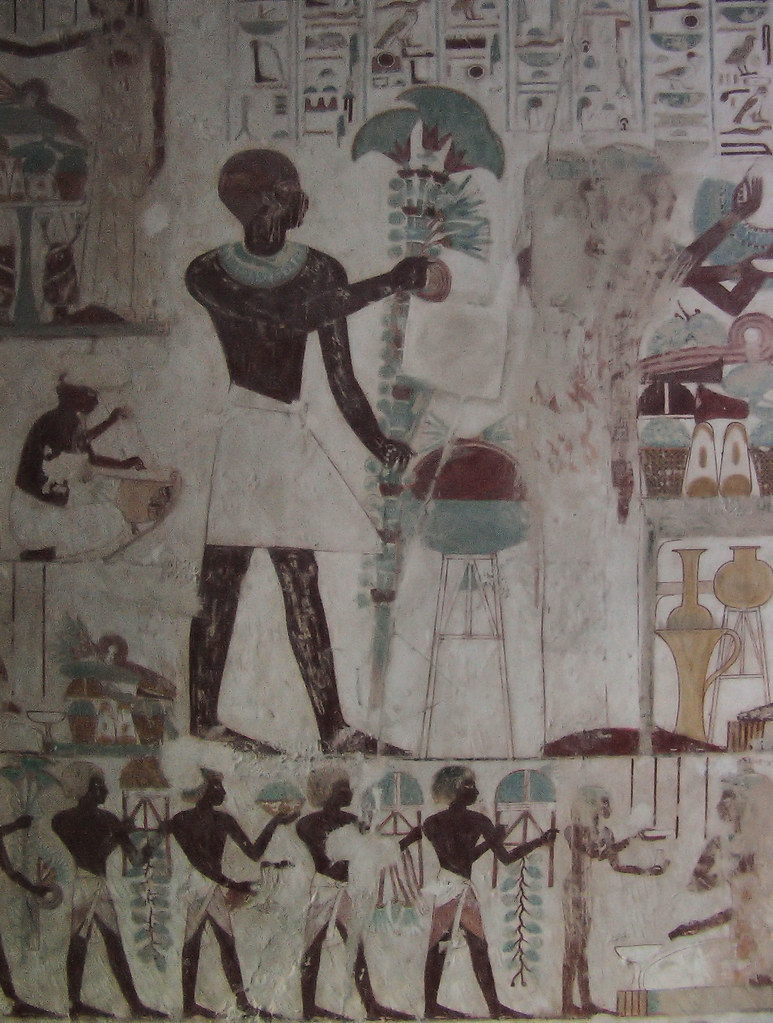
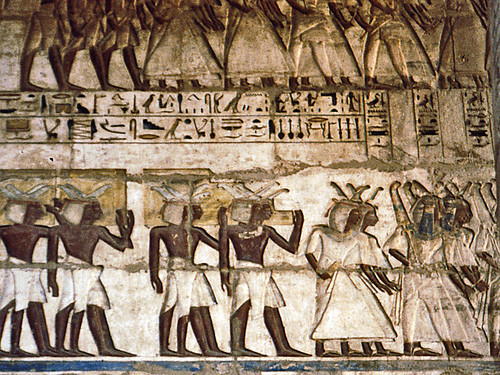
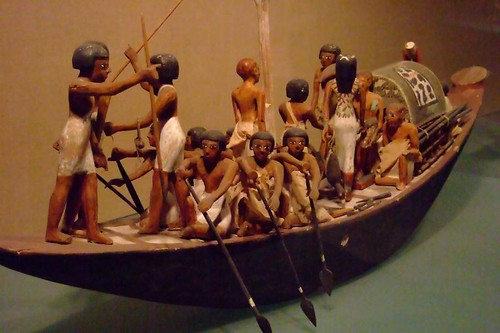
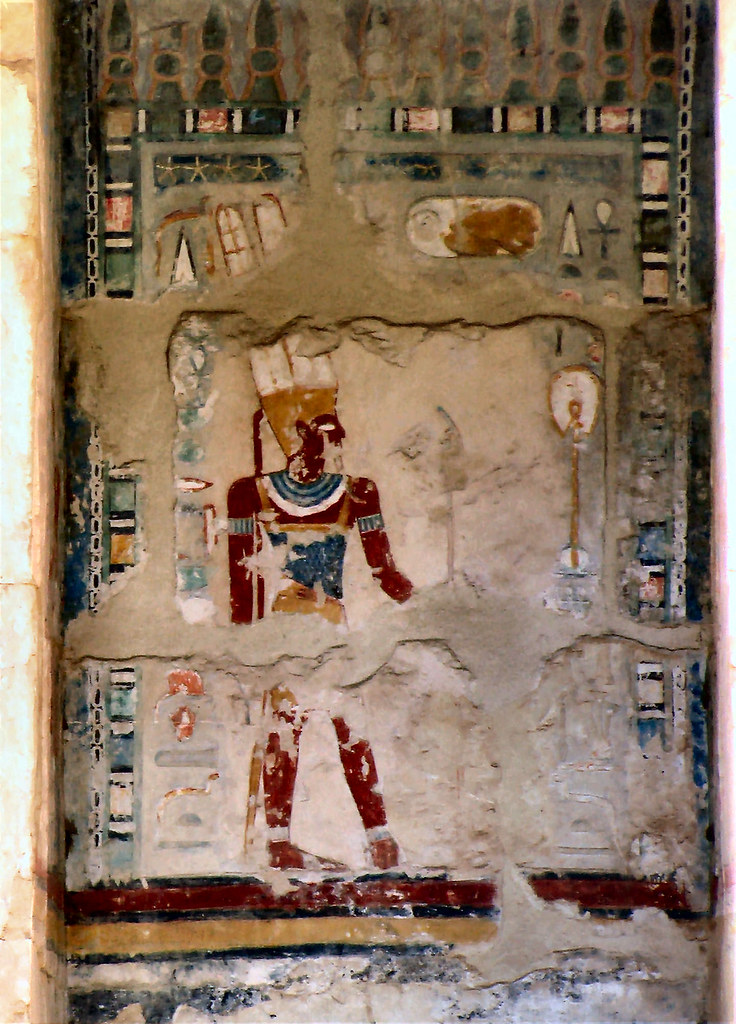
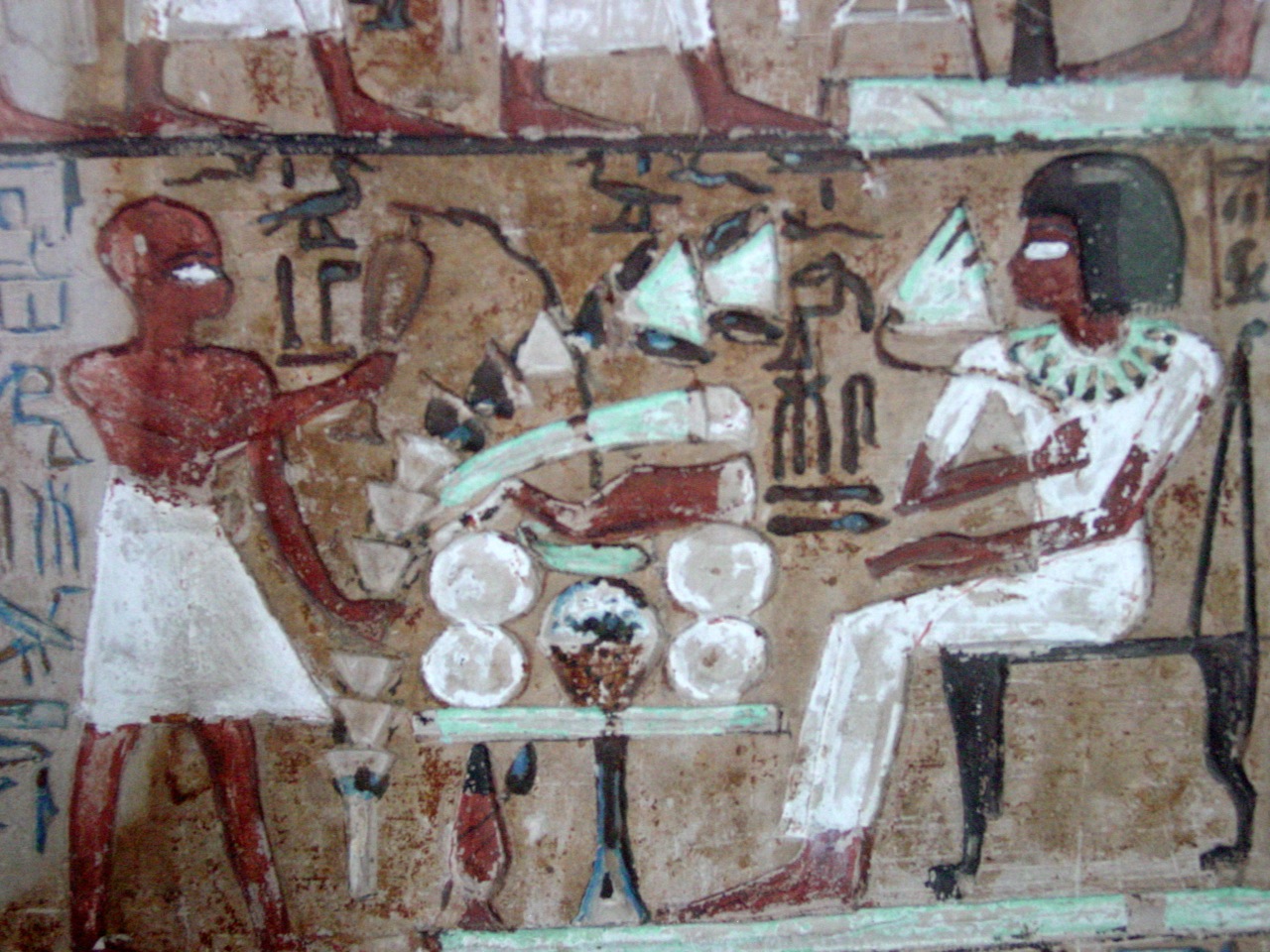
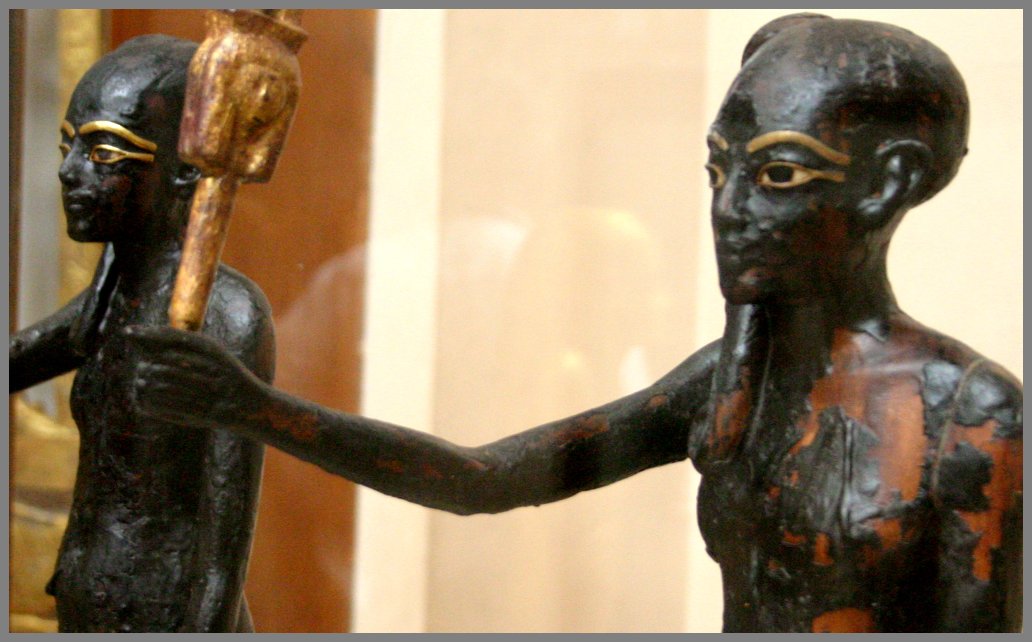
Our ancestors were COMMANDERS of North Africa and THE ''MIDDLE EAST''. WE RULED EGYPT FOR OVER 3000 YEARS. Egypt, a black African civilization, was the most dominant power in that region for THOUSANDS of years. There was no such place as the ''MIDDLE EAST'' in antiquity. That region was really just an outpost of African dominance that came to be later peopled by wandering Asiatic tribes. The ''MIDDLE EAST'' is a British-coined term which arose with colonialism in 1850. Tomb Art From Ancient Egypt, circa 3000 BC, showing clear black African populace and monarchy. https://farm1.static.flickr.com/191/444766181_8e1bbee7fb_b.jpg https://farm3.static.flickr.com/2287/2427222727_2b968b30a7.jpg?v=0 https://farm2.static.flickr.com/1086/1312007949_fda711d28d.jpg?v=0 https://farm1.static.flickr.com/127/352054517_b7e9e03a48_b.jpg https://farm4.static.flickr.com/3164/2440794279_20d51b3835_o.jpg https://farm3.static.flickr.com/2133/2273030538_b6d6c345a9_o.jpg THE DOCUMENTARY EVIDENCE Note: All of Africa South of the Sahara was known to the ancient Greeks as ''Ethiopia''. Famous Greek historian, Diodorus of Sicily From his own statements we learn that he traveled in Egypt around 60 BC. His travels in Egypt probably took him as far south as the first Cataract. "They (the Ethiopians) say also that the Egyptians are colonists sent out by the Ethiopians, Osiris ["King of Kings and God of Gods] having been the leader of the colony . . . they add that the Egyptians have received from them, as from authors and their ancestors, the greater part of their laws." Diodorus's declared intention was to trace the origins of the cult of Osiris, alias the Greek Dionysus also commonly known by his Roman name Bacchus. The Homeric Hymn "To Dionysus" locates the birth of Dionysus in a mysterious city of Nysa "near the streams of Aegyptus" ...and much of Book 3 of the Bibliotheka Historica is devoted to the intertwined histories of Dionysus and the god-favored Ethiopians whom he believed to be the originators of Egyptian civilization. [emphasis added] (1st century B.C., Diodorus Siculus of Sicily, Greek historian and contemporary of Caesar Augustus, Universal History Book III. 2. 4-3. 3) Diodorus devoted an entire chapter of his world history, the Bibliotheke Historica, or Library of History (Book 3), to the Kushites ["Aithiopians"] of Meroe. Here he repeats the story of their great piety, their high favor with the gods, and adds the fascinating legend that they were the first of all men created by the gods and were the founders of Egyptian civilization, invented writing, and had given the Egyptians their religion and culture. (3.3.2). "Now they relate that of all people the Ethiopians were the earliest, and say that the proofs of this are clear. That they did not arrive as immigrants but are the natives of the country and therefore rightly are called authochthonous is almost universally accepted. That those who live in the South are likely to be the first engendered by the earth is obvious to all. For as it was the heat of the sun that dried up the earth while it was still moist, at the time when everything came into being, and caused life, they say it is probable that it was the region closest to the sun that first bore animate beings". Diodorus continues regarding the ancient black Africans south of the Sahara: "They further write that it was among them that people were first taught to honor the gods and offer sacrifices and arrange processions and festivals and perform other things by which people honor the divine. For this reason their piety is famous among all men, and the sacrifices among the Aithiopians are believed to be particularly pleasing to the divinity," "The Aithiopians say that the Egyptians are settlers from among themselves and that Osiris was the leader of the settlement. The customs of the Egyptians, they say, are for the most part Aithiopian, the settlers having preserved their old traditions. For to consider the kings gods, to pay great attention to funeral rites, and many other things, are Aithiopian practices, and also the style of their statues and the form of their writing are Aithiopian. Also the way the priestly colleges are organized is said to be the same in both nations. For all who have to do with the cult of the gods, they maintain, are [ritually] pure: the priests are shaved in the same way, they have the same robes and the type of scepter shaped like a plough, which also the kings have, who use tall pointed felt hats ending in a knob, with the snakes that they call the asp (aspis) coiled round them." "There are also numerous other Aithiopian tribes [i.e. besides those centered at Meroe]; some live along both sides of the river Nile and on the islands in the river, others dwell in the regions that border on Arabia [i.e. to the east], others again have settled in the interior of Libya [i.e. to the west]. The majority of these tribes, in particular those who live along the river, have black skin, snub-nosed faces, and curly hair". (Diodous Siculus, Bibliotheke, 3. Translated by Tomas Hagg, in Fontes Historiae Nubiorum, vol. II: From the Mid-Fifth to the First Century BC (Bergen, Norway, 1996)) Aristotle (384-322 B.C.E.) Greek philosopher, scientist, and tutor to Alexander the Great. Aristotle is said to have written 150 philosophical treatises. In one, he wrote, "Too black a hue marks the coward as witness Egyptians and Ethiopians and so does also too white a complexion as you may see from women, the complexion of courage is between the two." (Physiognomics, Vol. VI, 812a) Aristotle makes reference to the hair form of Egyptians and Ethiopians: "Why are the Ethiopians and Egyptians bandy-legged? Is it because the bodies of living creatures become distorted by heat, like logs of wood when they become dry? The condition of their hair supports this theory; for it is curlier than that of other nations, and curliness is as it were crookedness of the hair." (Physiognomics, Book XIV, p. 317) Apollodorus, the Greek philosopher, described Egypt as "the country of the black-footed ones", and the Latin historian Ammianus Marcellinus said "the men of Egypt are mostly brown or black with a skinny desiccated look." https://www.bbc.co.uk/worldservice/africa/features/storyofafrica/3chapter5.shtml The evidence of Lucian (Greek writer, 125 B.C.) is as explicit as that of the previous writers. He introduces two Greeks, Lycinus and Timolaus, who start a conversation: Lycinus (describing a young Egyptian): "This boy is not merely black; he has thick lips and his legs are too thin . . . his hair worn in a plait behind shows that he is not a freeman." Timolaus: "But that is a sign of really distinguished birth in Egypt, Lycinus, All freeborn children plait their hair until they reach manhood. It is the exact opposite of the custom of our ancestors who thought it seemly for old men to secure their hair with a gold brooch to keep it in place." (Lucian, Navigations, paras 2-3) Herodotus (circa 400 bc) (Known to western historians as the Father of History) Herodotus also asserted that "the names of nearly all the gods came to Greece from Egypt . . . for the names of all the gods have been known in Egypt from the beginning of time . . . It was the Egyptians too who originated, and taught the Greeks . . . ceremonial meeting, processions and liturgies . . . The Egyptians were also the first to assign each month and each day to a particular deity, and to foretell the date of a man's birth, his character, his fortunes, and the day of his death . . . The Egyptians, too have made more use of omens and prognostics than any other nation. . ." [This holds true till today. Africans, especially NIGERIANS, majority of whom descend from ancient Egyptians, ''have made more use of omens and prognostics (or juju for short  ) than any other nation.''] ) than any other nation.''](Herodotus, The Histories, 149-150; 152; 159). ''There can be no doubt that the Colchians are an Egyptian race.... My own conjectures were founded, first, on the fact that they are black-skinned and have woolly hair, which certainly amounts to but little, since several other nations are so too. But further and more especially, on the circumstance that the Colchians, the Egyptians, and the Ethiopians, are the only nations who have practised circumcision from the earliest times. The Phoenicians and the Syrians of Palestine themselves confess that they learned the custom of the Egyptians. And the Syrians who dwell about the rivers Thermodon and Parthenius, as well as their neighbors the Macronians, say that they have recently adopted it from the Colchians. Now these are the only nations who use circumcision, and it is plain that they all imitate herein the Egyptians. With respect to the Ethiopians, indeed, I cannot decide whether they learned the practice of the Egyptians, or the Egyptians of them (it is undoubtedly of very ancient date in Ethiopia). But that the others derived their knowledge of it from Egypt is clear to me, from the fact that the Phoenicians, when they come to have commerce with the Greeks, cease to follow the Egyptians in this custom, and allow their children to remain uncircumcised.'' (Herodotus, The Histories, Book 2:104) The opinion of the ancient writers on the Egyptians is more or less summed up by French Egyptologist Gaston Maspero in The Dawn of Civilization (1894), when he says, "By the almost unanimous testimony of ancient historians, they [the Egyptians] belong to an African race which first settled in Ethiopia on the Middle Nile: following the course of the river they gradually reached the sea." The German scholar, Eugen Georg, in his book The Adventure of Mankind (1931) p. 121, tells us about the ". . . world-wide dominance of Ethiopian representatives of the black race. They were supreme in Africa and Asia. In upper Egypt and India they erected mighty religious centers and mastered a perfect technique in the molding of bronze --- and they even infiltrated through Southern Europe for a thousand years." In his book Egypt, British scholar Sir E.A. Wallis Budge says: "The prehistoric native of Egypt, both in the old and in the new Stone Ages, was African and there is every reason for saying that the earliest settlers came from the South." He further states: "There are many things in the manners and customs and religions of the historic Egyptians that suggests that the original home of their prehistoric ancestors was in a country in the neighborhood of Uganda and Punt." (Some historians believe that the biblical land of Punt was in the area known on modern maps as Somalia.) Stephanus of Byzantium, who is said to represent the opinions of the most ancient Greeks, says: "Ethiopia was the first established country on the earth, and the Ethiopians were the first who introduced the worship of the Gods and who established laws." Quoted by John D. Baldwin, Prehistoric Nations, p. 62. Arnold Hermann Heeren (1760-1842), Professor of History and Politics in the University of Gottengen and one of the ablest of the early exponents of the economic interpretation of history, published, in the fourth and revised edition of his great work Ideen Uber Die Politik, Den Verkehr Und Den Handel Der Vornehmsten Volker Der Alten Weld, a lengthy essay on the history, culture, and commerce of the ancient Ethiopians, which had profound influence on contemporary writers in the conclusion that it was among these ancient Black people of Africa and Asia that international trade was first developed. He thinks that as a by-product of these international contacts there was an exchange of ideas and cultural practices that laid the foundations of the earliest civilizations of the ancient world. Heeren in his researches says: "From the remotest times to the present, the Ethiopians have been one of the most celebrated, and yet the most mysterious of nations. In the earliest traditions of nearly all the civilized nations of antiquity, the name of this distant people is found. The annals of the Egyptian priests are full of them, and the nations of inner Asia, on the Euphrates and Tigris, have interwoven the fictions of the Ethiopians with their traditions of the wars and conquests of their heroes; and, at a period equally remote, they glimmer in Greek mythology. When the Greeks scarcely knew Italy and Sicily by name, the Ethiopians were celebrated in the verses of their poets, and when the faint gleam of tradition and fable gives way to the clear light of history, the lustre of the Ethiopians is not diminished." The French writer Constantin-François Volney (1757-1820), in his important work, The Ruins of Empires, extends this point of view by saying that the Egyptians were the first people to "attain the physical and moral sciences necessary to civilized life." In referring to the basis of this achievement he states further that, "It was, then, on the borders of the Upper Nile, among a Black race of men, that was organized the complicated system of worship of the stars, considered in relation to the productions of the earth and the labors of agriculture; and this first worship, characterized by their adoration under their own forms and national attributes, was a simple proceeding of the human mind." Volney's Ruins; or, Meditation on the Revolutions of Empires, Boston, J. Mendum, 1869 Lady Lugard, wife of British Governor-General of Colonial Nigeria, Lord Lugard, was a renowned historian and academic Flora Shaw's (alias Lady Flora Lugard) book, A Tropical Dependency: An Outline of the Ancient History of the Western Sudan With an Account of the Modern Settlement of Northern Nigeria (1900) is an extraordinary look at the history of Africa, which she gathered from countless sources, and one would imagine a great deal of it came from the British Library and from the archives of the Times of London, for whom she had for many years been the Foreign Political Correspondent. She had always been known to be an intensive researcher into her subject matter, and one wonders at the months and probably years she put into this undertaking, which became the reference work for so many future books on Africa. This book was first published 120 years ago showing the detail and descriptive power, and the greatness that Africa once was. Lady Lugard argues that: "When the history of Negroland comes to be written in detail, it may be found that the kingdoms lying towards the eastern end of Sudan (classical home of Ancient Ethiopians) were the home of races who inspired, rather than of races who received, the tradition of civilization associated for us with the name of ancient Egypt. For they cover on either side of the Upper Nile between the latitudes of ten degrees and seventeen degrees, territories in which are found monuments more ancient than the oldest Egyptian monuments. If this should prove to be the case and civilized world be forced to recognize in a black people the fount of its original enlightenment, it may happen that we shall have to revise entirely our view of the black races, and regard those who now exist as the decadent representatives of an almost forgotten era, rather than as the embryonic possibility of an era yet to come." "The fame of the ancient Ethiopians (ancient Kushites) was widespread in ancient history. Herodotus described them as the tallest, most beautiful and long-lived of the human races, and before Herodotus, Homer, in even more flattering language, described them as the most just of men, the favorites of the gods. The annals of all the great early nations of Asia Minor are full of them. The Mosaic records allude to them frequently; but while they are described as the most powerful, the most just, and the most beautiful of the human race, they are constantly spoken of as Black, and there seems to be no other conclusion to be drawn than at that remote period of history, the leading race of the Western World was a Black race." Lady Lugard/Flora Shaw Lugard, Asa G. Hilliard, III, A Tropical Dependency: An Outline of the Ancient History of the Western Sudan With an Account of the Modern Settlement of Northern Nigeria, Black Classic Press (1996) http://wysinger.homestead.com/blackegypt101.html |
| Culture › When We Ruled Egypt by Rossinky(op): 6:44am On Feb 14, 2020 |
Our ancestors were COMMANDERS of North Africa and THE ''MIDDLE EAST''. WE RULED EGYPT FOR OVER 3000 YEARS. Egypt, a black African civilization, was the most dominant power in that region for THOUSANDS of years. There was no such place as the ''MIDDLE EAST'' in antiquity. That region was really just an outpost of African dominance that came to be later peopled by wandering Asiatic tribes. The ''MIDDLE EAST'' is a British-coined term which arose with colonialism in 1850. Tomb Art From Ancient Egypt, circa 3000 BC, showing clear black African populace and monarchy. https://farm1.static.flickr.com/191/444766181_8e1bbee7fb_b.jpg https://farm3.static.flickr.com/2287/2427222727_2b968b30a7.jpg?v=0 https://farm2.static.flickr.com/1086/1312007949_fda711d28d.jpg?v=0 https://farm1.static.flickr.com/127/352054517_b7e9e03a48_b.jpg https://farm4.static.flickr.com/3164/2440794279_20d51b3835_o.jpg https://farm3.static.flickr.com/2133/2273030538_b6d6c345a9_o.jpg THE DOCUMENTARY EVIDENCE Note: All of Africa South of the Sahara was known to the ancient Greeks as ''Ethiopia''. Famous Greek historian, Diodorus of Sicily From his own statements we learn that he traveled in Egypt around 60 BC. His travels in Egypt probably took him as far south as the first Cataract. "They (the Ethiopians) say also that the Egyptians are colonists sent out by the Ethiopians, Osiris ["King of Kings and God of Gods] having been the leader of the colony . . . they add that the Egyptians have received from them, as from authors and their ancestors, the greater part of their laws." Diodorus's declared intention was to trace the origins of the cult of Osiris, alias the Greek Dionysus also commonly known by his Roman name Bacchus. The Homeric Hymn "To Dionysus" locates the birth of Dionysus in a mysterious city of Nysa "near the streams of Aegyptus" ...and much of Book 3 of the Bibliotheka Historica is devoted to the intertwined histories of Dionysus and the god-favored Ethiopians whom he believed to be the originators of Egyptian civilization. [emphasis added] (1st century B.C., Diodorus Siculus of Sicily, Greek historian and contemporary of Caesar Augustus, Universal History Book III. 2. 4-3. 3) Diodorus devoted an entire chapter of his world history, the Bibliotheke Historica, or Library of History (Book 3), to the Kushites ["Aithiopians"] of Meroe. Here he repeats the story of their great piety, their high favor with the gods, and adds the fascinating legend that they were the first of all men created by the gods and were the founders of Egyptian civilization, invented writing, and had given the Egyptians their religion and culture. (3.3.2). "Now they relate that of all people the Ethiopians were the earliest, and say that the proofs of this are clear. That they did not arrive as immigrants but are the natives of the country and therefore rightly are called authochthonous is almost universally accepted. That those who live in the South are likely to be the first engendered by the earth is obvious to all. For as it was the heat of the sun that dried up the earth while it was still moist, at the time when everything came into being, and caused life, they say it is probable that it was the region closest to the sun that first bore animate beings". Diodorus continues regarding the ancient black Africans south of the Sahara: "They further write that it was among them that people were first taught to honor the gods and offer sacrifices and arrange processions and festivals and perform other things by which people honor the divine. For this reason their piety is famous among all men, and the sacrifices among the Aithiopians are believed to be particularly pleasing to the divinity," "The Aithiopians say that the Egyptians are settlers from among themselves and that Osiris was the leader of the settlement. The customs of the Egyptians, they say, are for the most part Aithiopian, the settlers having preserved their old traditions. For to consider the kings gods, to pay great attention to funeral rites, and many other things, are Aithiopian practices, and also the style of their statues and the form of their writing are Aithiopian. Also the way the priestly colleges are organized is said to be the same in both nations. For all who have to do with the cult of the gods, they maintain, are [ritually] pure: the priests are shaved in the same way, they have the same robes and the type of scepter shaped like a plough, which also the kings have, who use tall pointed felt hats ending in a knob, with the snakes that they call the asp (aspis) coiled round them." "There are also numerous other Aithiopian tribes [i.e. besides those centered at Meroe]; some live along both sides of the river Nile and on the islands in the river, others dwell in the regions that border on Arabia [i.e. to the east], others again have settled in the interior of Libya [i.e. to the west]. The majority of these tribes, in particular those who live along the river, have black skin, snub-nosed faces, and curly hair". (Diodous Siculus, Bibliotheke, 3. Translated by Tomas Hagg, in Fontes Historiae Nubiorum, vol. II: From the Mid-Fifth to the First Century BC (Bergen, Norway, 1996)) Aristotle (384-322 B.C.E.) Greek philosopher, scientist, and tutor to Alexander the Great. Aristotle is said to have written 150 philosophical treatises. "Too black a hue marks the coward as witness Egyptians and Ethiopians and so does also too white a complexion as you may see from women, the complexion of courage is between the two." (Physiognomics, Vol. VI, 812a) Aristotle makes reference to the hair form of Egyptians and Ethiopians: "Why are the Ethiopians and Egyptians bandy-legged? Is it because the bodies of living creatures become distorted by heat, like logs of wood when they become dry? The condition of their hair supports this theory; for it is curlier than that of other nations, and curliness is as it were crookedness of the hair." (Physiognomics, Book XIV, p. 317) The evidence of Lucian (Greek writer, 125 B.C.) is as explicit as that of the previous writers. He introduces two Greeks, Lycinus and Timolaus, who start a conversation: Lycinus (describing a young Egyptian): "This boy is not merely black; he has thick lips and his legs are too thin . . . his hair worn in a plait behind shows that he is not a freeman." Timolaus: "But that is a sign of really distinguished birth in Egypt, Lycinus, All freeborn children plait their hair until they reach manhood. It is the exact opposite of the custom of our ancestors who thought it seemly for old men to secure their hair with a gold brooch to keep it in place." (Lucian, Navigations, paras 2-3) Herodotus (circa 400 bc) (Known to western historians as the Father of History) Herodotus also asserted that "the names of nearly all the gods came to Greece from Egypt . . . for the names of all the gods have been known in Egypt from the beginning of time . . . It was the Egyptians too who originated, and taught the Greeks . . . ceremonial meeting, processions and liturgies . . . The Egyptians were also the first to assign each month and each day to a particular deity, and to foretell the date of a man's birth, his character, his fortunes, and the day of his death . . . The Egyptians, too have made more use of omens and prognostics than any other nation. . ." [This holds true till today. Africans, especially NIGERIANS, majority of whom descend from ancient Egyptians, ''have made more use of omens and prognostics (or juju for short ) than any other nation.''](Herodotus, The Histories, 149-150; 152; 159). ''There can be no doubt that the Colchians are an Egyptian race. Before I heard any mention of the fact from others, I had remarked it myself. After the thought had struck me, I made inquiries on the subject both in Colchis and in Egypt, and I found that the Colchians had a more distinct recollection of the Egyptians, than the Egyptians had of them. Still the Egyptians said that they believed the Colchians to be descended from the army of Sesostris. My own conjectures were founded, first, on the fact that they are black-skinned and have woolly hair, which certainly amounts to but little, since several other nations are so too. But further and more especially, on the circumstance that the Colchians, the Egyptians, and the Ethiopians, are the only nations who have practised circumcision from the earliest times. The Phoenicians and the Syrians of Palestine themselves confess that they learned the custom of the Egyptians. And the Syrians who dwell about the rivers Thermodon and Parthenius, as well as their neighbors the Macronians, say that they have recently adopted it from the Colchians. Now these are the only nations who use circumcision, and it is plain that they all imitate herein the Egyptians. With respect to the Ethiopians, indeed, I cannot decide whether they learned the practice of the Egyptians, or the Egyptians of them (it is undoubtedly of very ancient date in Ethiopia). But that the others derived their knowledge of it from Egypt is clear to me, from the fact that the Phoenicians, when they come to have commerce with the Greeks, cease to follow the Egyptians in this custom, and allow their children to remain uncircumcised.'' (Herodotus, The Histories, Book 2:104) The opinion of the ancient writers on the Egyptians is more or less summed up by French Egyptologist Gaston Maspero The Dawn of Civilization (1894), when he says, "By the almost unanimous testimony of ancient historians, they [the Egyptians] belong to an African race which first settled in Ethiopia on the Middle Nile: following the course of the river they gradually reached the sea." The German scholar, Eugen Georg, in his book The Adventure of Mankind (1931) p. 121, tells us about the ". . . world-wide dominance of Ethiopian representatives of the black race. They were supreme in Africa and Asia. In upper Egypt and India they erected mighty religious centers and mastered a perfect technique in the molding of bronze --- and they even infiltrated through Southern Europe for a thousand years." In his book Egypt, British scholar Sir E.A. Wallis Budge says: "The prehistoric native of Egypt, both in the old and in the new Stone Ages, was African and there is every reason for saying that the earliest settlers came from the South." He further states: "There are many things in the manners and customs and religions of the historic Egyptians that suggests that the original home of their prehistoric ancestors was in a country in the neighborhood of Uganda and Punt." (Some historians believe that the biblical land of Punt was in the area known on modern maps as Somalia.) Stephanus of Byzantium, who is said to represent the opinions of the most ancient Greeks, says: "Ethiopia was the first established country on the earth, and the Ethiopians were the first who introduced the worship of the Gods and who established laws." Quoted by John D. Baldwin, Prehistoric Nations, p. 62. Arnold Hermann Heeren (1760-1842), Professor of History and Politics in the University of Gottengen and one of the ablest of the early exponents of the economic interpretation of history, published, in the fourth and revised edition of his great work Ideen Uber Die Politik, Den Verkehr Und Den Handel Der Vornehmsten Volker Der Alten Weld, a lengthy essay on the history, culture, and commerce of the ancient Ethiopians, which had profound influence on contemporary writers in the conclusion that it was among these ancient Black people of Africa and Asia that international trade was first developed. He thinks that as a by-product of these international contacts there was an exchange of ideas and cultural practices that laid the foundations of the earliest civilizations of the ancient world. Heeren in his researches says: "From the remotest times to the present, the Ethiopians have been one of the most celebrated, and yet the most mysterious of nations. In the earliest traditions of nearly all the civilized nations of antiquity, the name of this distant people is found. The annals of the Egyptian priests are full of them, and the nations of inner Asia, on the Euphrates and Tigris, have interwoven the fictions of the Ethiopians with their traditions of the wars and conquests of their heroes; and, at a period equally remote, they glimmer in Greek mythology. When the Greeks scarcely knew Italy and Sicily by name, the Ethiopians were celebrated in the verses of their poets, and when the faint gleam of tradition and fable gives way to the clear light of history, the lustre of the Ethiopians is not diminished." The French writer Constantin-François Volney (1757-1820), in his important work, The Ruins of Empires, extends this point of view by saying that the Egyptians were the first people to "attain the physical and moral sciences necessary to civilized life." In referring to the basis of this achievement he states further that, "It was, then, on the borders of the Upper Nile, among a Black race of men, that was organized the complicated system of worship of the stars, considered in relation to the productions of the earth and the labors of agriculture; and this first worship, characterized by their adoration under their own forms and national attributes, was a simple proceeding of the human mind." Volney's Ruins; or, Meditation on the Revolutions of Empires, Boston, J. Mendum, 1869 Flora Shaw's (alias Lady Flora Lugard) book is an extraordinary look at the history of Africa, which she gathered from countless sources, and one would imagine a great deal of it came from the British Library and from the archives of The Times of London, for whom she had for many years been the Foreign Political Correspondent. She had always been known to be an intensive researcher into her subject matter, and one wonders at the months and probably years she put into this undertaking, which became the reference work for so many future books on Africa. This book was first published 100 years ago showing the detail and descriptive power, and the greatness that Africa once was. Lady Lugard argues that: "When the history of Negroland comes to be written in detail, it may be found that the kingdoms lying towards the eastern end of Sudan (classical home of Ancient Ethiopians) were the home of races who inspired, rather than of races who received, the tradition of civilization associated for us with the name of ancient Egypt. For they cover on either side of the Upper Nile between the latitudes of ten degrees and seventeen degrees, territories in which are found monuments more ancient than the oldest Egyptian monuments. If this should prove to be the case and civilized world be forced to recognize in a black people the fount of its original enlightenment, it may happen that we shall have to revise entirely our view of the black races, and regard those who now exist as the decadent representatives of an almost forgotten era, rather than as the embryonic possibility of an era yet to come." "The fame of the ancient Ethiopians (ancient Kushites) was widespread in ancient history. Herodotus described them as the tallest, most beautiful and long-lived of the human races, and before Herodotus, Homer, in even more flattering language, described them as the most just of men, the favorites of the gods. The annals of all the great early nations of Asia Minor are full of them. The Mosaic records allude to them frequently; but while they are described as the most powerful, the most just, and the most beautiful of the human race, they are constantly spoken of as Black, and there seems to be no other conclusion to be drawn than at that remote period of history, the leading race of the Western World was a Black race." Lady Lugard/Flora Shaw Lugard, Asa G. Hilliard, III, A Tropical Dependency: An Outline of the Ancient History of the Western Sudan With an Account of the Modern Settlement of Northern Nigeria, Black Classic Press (1996) http://wysinger.homestead.com/blackegypt101.html |
| Culture › Re: Yoruba Hebrew Heritage by Rossinky: 5:31am On Feb 14, 2020*. Modified: 6:37am On Feb 14, 2020 |
macof:WE WERE COMMANDERS OF THE ''MIDDLE EAST'', you conditioned man. Egypt, a black African civilization, was the most dominant power in that region for THOUSANDS of years. There was no such place as the ''MIDDLE EAST'' in antiquity. That region was really just an outpost of African dominance that came to be later peopled by wandering Asiatic tribes. The ''MIDDLE EAST'' is a British-coined term which arose with colonialism in 1850. Tomb Art From Ancient Egypt, circa 3000 BC, showing clear black African populace and monarchy. https://farm1.static.flickr.com/191/444766181_8e1bbee7fb_b.jpg https://farm3.static.flickr.com/2287/2427222727_2b968b30a7.jpg?v=0 https://farm2.static.flickr.com/1086/1312007949_fda711d28d.jpg?v=0 https://farm1.static.flickr.com/127/352054517_b7e9e03a48_b.jpg https://farm4.static.flickr.com/3164/2440794279_20d51b3835_o.jpg https://farm3.static.flickr.com/2133/2273030538_b6d6c345a9_o.jpg THE DOCUMENTARY EVIDENCE Note: All of Africa South of the Sahara was known to the ancient Greeks as ''Ethiopia''. Famous Greek historian, Diodorus of Sicily From his own statements we learn that he traveled in Egypt around 60 BC. His travels in Egypt probably took him as far south as the first Cataract. "They (the Ethiopians) say also that the Egyptians are colonists sent out by the Ethiopians, Osiris ["King of Kings and God of Gods] having been the leader of the colony . . . they add that the Egyptians have received from them, as from authors and their ancestors, the greater part of their laws." Diodorus's declared intention was to trace the origins of the cult of Osiris, alias the Greek Dionysus also commonly known by his Roman name Bacchus. The Homeric Hymn "To Dionysus" locates the birth of Dionysus in a mysterious city of Nysa "near the streams of Aegyptus" ...and much of Book 3 of the Bibliotheka Historica is devoted to the intertwined histories of Dionysus and the god-favored Ethiopians whom he believed to be the originators of Egyptian civilization. [emphasis added] (1st century B.C., Diodorus Siculus of Sicily, Greek historian and contemporary of Caesar Augustus, Universal History Book III. 2. 4-3. 3) Diodorus devoted an entire chapter of his world history, the Bibliotheke Historica, or Library of History (Book 3), to the Kushites ["Aithiopians"] of Meroe. Here he repeats the story of their great piety, their high favor with the gods, and adds the fascinating legend that they were the first of all men created by the gods and were the founders of Egyptian civilization, invented writing, and had given the Egyptians their religion and culture. (3.3.2). "Now they relate that of all people the Ethiopians were the earliest, and say that the proofs of this are clear. That they did not arrive as immigrants but are the natives of the country and therefore rightly are called authochthonous is almost universally accepted. That those who live in the South are likely to be the first engendered by the earth is obvious to all. For as it was the heat of the sun that dried up the earth while it was still moist, at the time when everything came into being, and caused life, they say it is probable that it was the region closest to the sun that first bore animate beings". Diodorus continues regarding the ancient black Africans south of the Sahara: "They further write that it was among them that people were first taught to honor the gods and offer sacrifices and arrange processions and festivals and perform other things by which people honor the divine. For this reason their piety is famous among all men, and the sacrifices among the Aithiopians are believed to be particularly pleasing to the divinity," "The Aithiopians say that the Egyptians are settlers from among themselves and that Osiris was the leader of the settlement. The customs of the Egyptians, they say, are for the most part Aithiopian, the settlers having preserved their old traditions. For to consider the kings gods, to pay great attention to funeral rites, and many other things, are Aithiopian practices, and also the style of their statues and the form of their writing are Aithiopian. Also the way the priestly colleges are organized is said to be the same in both nations. For all who have to do with the cult of the gods, they maintain, are [ritually] pure: the priests are shaved in the same way, they have the same robes and the type of scepter shaped like a plough, which also the kings have, who use tall pointed felt hats ending in a knob, with the snakes that they call the asp (aspis) coiled round them." "There are also numerous other Aithiopian tribes [i.e. besides those centered at Meroe]; some live along both sides of the river Nile and on the islands in the river, others dwell in the regions that border on Arabia [i.e. to the east], others again have settled in the interior of Libya [i.e. to the west]. The majority of these tribes, in particular those who live along the river, have black skin, snub-nosed faces, and curly hair". (Diodous Siculus, Bibliotheke, 3. Translated by Tomas Hagg, in Fontes Historiae Nubiorum, vol. II: From the Mid-Fifth to the First Century BC (Bergen, Norway, 1996)) Aristotle (384-322 B.C.E.) Greek philosopher, scientist, and tutor to Alexander the Great. Aristotle is said to have written 150 philosophical treatises. "Too black a hue marks the coward as witness Egyptians and Ethiopians and so does also too white a complexion as you may see from women, the complexion of courage is between the two." (Physiognomics, Vol. VI, 812a) Aristotle makes reference to the hair form of Egyptians and Ethiopians: "Why are the Ethiopians and Egyptians bandy-legged? Is it because the bodies of living creatures become distorted by heat, like logs of wood when they become dry? The condition of their hair supports this theory; for it is curlier than that of other nations, and curliness is as it were crookedness of the hair." (Physiognomics, Book XIV, p. 317) The evidence of Lucian (Greek writer, 125 B.C.) is as explicit as that of the previous writers. He introduces two Greeks, Lycinus and Timolaus, who start a conversation: Lycinus (describing a young Egyptian): "This boy is not merely black; he has thick lips and his legs are too thin . . . his hair worn in a plait behind shows that he is not a freeman." Timolaus: "But that is a sign of really distinguished birth in Egypt, Lycinus, All freeborn children plait their hair until they reach manhood. It is the exact opposite of the custom of our ancestors who thought it seemly for old men to secure their hair with a gold brooch to keep it in place." (Lucian, Navigations, paras 2-3) Herodotus (circa 400 bc) (Known to western historians as the Father of History) Herodotus also asserted that "the names of nearly all the gods came to Greece from Egypt . . . for the names of all the gods have been known in Egypt from the beginning of time . . . It was the Egyptians too who originated, and taught the Greeks . . . ceremonial meeting, processions and liturgies . . . The Egyptians were also the first to assign each month and each day to a particular deity, and to foretell the date of a man's birth, his character, his fortunes, and the day of his death . . . The Egyptians, too have made more use of omens and prognostics than any other nation. . ." [This holds true till today. Africans, especially NIGERIANS, majority of whom descend from ancient Egyptians, ''have made more use of omens and prognostics (or juju for short ) than any other nation.''](Herodotus, The Histories, 149-150; 152; 159). ''There can be no doubt that the Colchians are an Egyptian race. Before I heard any mention of the fact from others, I had remarked it myself. After the thought had struck me, I made inquiries on the subject both in Colchis and in Egypt, and I found that the Colchians had a more distinct recollection of the Egyptians, than the Egyptians had of them. Still the Egyptians said that they believed the Colchians to be descended from the army of Sesostris. My own conjectures were founded, first, on the fact that they are black-skinned and have woolly hair, which certainly amounts to but little, since several other nations are so too. But further and more especially, on the circumstance that the Colchians, the Egyptians, and the Ethiopians, are the only nations who have practised circumcision from the earliest times. The Phoenicians and the Syrians of Palestine themselves confess that they learned the custom of the Egyptians. And the Syrians who dwell about the rivers Thermodon and Parthenius, as well as their neighbors the Macronians, say that they have recently adopted it from the Colchians. Now these are the only nations who use circumcision, and it is plain that they all imitate herein the Egyptians. With respect to the Ethiopians, indeed, I cannot decide whether they learned the practice of the Egyptians, or the Egyptians of them (it is undoubtedly of very ancient date in Ethiopia). But that the others derived their knowledge of it from Egypt is clear to me, from the fact that the Phoenicians, when they come to have commerce with the Greeks, cease to follow the Egyptians in this custom, and allow their children to remain uncircumcised.'' (Herodotus, The Histories, Book 2:104) The opinion of the ancient writers on the Egyptians is more or less summed up by French Egyptologist Gaston Maspero The Dawn of Civilization (1894), when he says, "By the almost unanimous testimony of ancient historians, they [the Egyptians] belong to an African race which first settled in Ethiopia on the Middle Nile: following the course of the river they gradually reached the sea." The German scholar, Eugen Georg, in his book The Adventure of Mankind (1931) p. 121, tells us about the ". . . world-wide dominance of Ethiopian representatives of the black race. They were supreme in Africa and Asia. In upper Egypt and India they erected mighty religious centers and mastered a perfect technique in the molding of bronze --- and they even infiltrated through Southern Europe for a thousand years." In his book Egypt, British scholar Sir E.A. Wallis Budge says: "The prehistoric native of Egypt, both in the old and in the new Stone Ages, was African and there is every reason for saying that the earliest settlers came from the South." He further states: "There are many things in the manners and customs and religions of the historic Egyptians that suggests that the original home of their prehistoric ancestors was in a country in the neighborhood of Uganda and Punt." (Some historians believe that the biblical land of Punt was in the area known on modern maps as Somalia.) Stephanus of Byzantium, who is said to represent the opinions of the most ancient Greeks, says: "Ethiopia was the first established country on the earth, and the Ethiopians were the first who introduced the worship of the Gods and who established laws." Quoted by John D. Baldwin, Prehistoric Nations, p. 62. Arnold Hermann Heeren (1760-1842), Professor of History and Politics in the University of Gottengen and one of the ablest of the early exponents of the economic interpretation of history, published, in the fourth and revised edition of his great work Ideen Uber Die Politik, Den Verkehr Und Den Handel Der Vornehmsten Volker Der Alten Weld, a lengthy essay on the history, culture, and commerce of the ancient Ethiopians, which had profound influence on contemporary writers in the conclusion that it was among these ancient Black people of Africa and Asia that international trade was first developed. He thinks that as a by-product of these international contacts there was an exchange of ideas and cultural practices that laid the foundations of the earliest civilizations of the ancient world. Heeren in his researches says: "From the remotest times to the present, the Ethiopians have been one of the most celebrated, and yet the most mysterious of nations. In the earliest traditions of nearly all the civilized nations of antiquity, the name of this distant people is found. The annals of the Egyptian priests are full of them, and the nations of inner Asia, on the Euphrates and Tigris, have interwoven the fictions of the Ethiopians with their traditions of the wars and conquests of their heroes; and, at a period equally remote, they glimmer in Greek mythology. When the Greeks scarcely knew Italy and Sicily by name, the Ethiopians were celebrated in the verses of their poets, and when the faint gleam of tradition and fable gives way to the clear light of history, the lustre of the Ethiopians is not diminished." The French writer Constantin-François Volney (1757-1820), in his important work, The Ruins of Empires, extends this point of view by saying that the Egyptians were the first people to "attain the physical and moral sciences necessary to civilized life." In referring to the basis of this achievement he states further that, "It was, then, on the borders of the Upper Nile, among a Black race of men, that was organized the complicated system of worship of the stars, considered in relation to the productions of the earth and the labors of agriculture; and this first worship, characterized by their adoration under their own forms and national attributes, was a simple proceeding of the human mind." Volney's Ruins; or, Meditation on the Revolutions of Empires, Boston, J. Mendum, 1869 Flora Shaw's (alias Lady Flora Lugard) book is an extraordinary look at the history of Africa, which she gathered from countless sources, and one would imagine a great deal of it came from the British Library and from the archives of The Times of London, for whom she had for many years been the Foreign Political Correspondent. She had always been known to be an intensive researcher into her subject matter, and one wonders at the months and probably years she put into this undertaking, which became the reference work for so many future books on Africa. This book was first published 100 years ago showing the detail and descriptive power, and the greatness that Africa once was. Lady Lugard argues that: "When the history of Negroland comes to be written in detail, it may be found that the kingdoms lying towards the eastern end of Sudan (classical home of Ancient Ethiopians) were the home of races who inspired, rather than of races who received, the tradition of civilization associated for us with the name of ancient Egypt. For they cover on either side of the Upper Nile between the latitudes of ten degrees and seventeen degrees, territories in which are found monuments more ancient than the oldest Egyptian monuments. If this should prove to be the case and civilized world be forced to recognize in a black people the fount of its original enlightenment, it may happen that we shall have to revise entirely our view of the black races, and regard those who now exist as the decadent representatives of an almost forgotten era, rather than as the embryonic possibility of an era yet to come." "The fame of the ancient Ethiopians (ancient Kushites) was widespread in ancient history. Herodotus described them as the tallest, most beautiful and long-lived of the human races, and before Herodotus, Homer, in even more flattering language, described them as the most just of men, the favorites of the gods. The annals of all the great early nations of Asia Minor are full of them. The Mosaic records allude to them frequently; but while they are described as the most powerful, the most just, and the most beautiful of the human race, they are constantly spoken of as Black, and there seems to be no other conclusion to be drawn than at that remote period of history, the leading race of the Western World was a Black race." Lady Lugard/Flora Shaw Lugard, Asa G. Hilliard, III, A Tropical Dependency: An Outline of the Ancient History of the Western Sudan With an Account of the Modern Settlement of Northern Nigeria, Black Classic Press (1996) http://wysinger.homestead.com/blackegypt101.html |
| Travel › Re: Debunking The Myths Of Living Abroad by Rossinky: 4:38am On Feb 14, 2020*. Modified: 4:58am On Feb 14, 2020 |
KendrickAyomide:You sure? Loads of qualified Nigerian graduates in low-paid jobs in the UK, bro. Many work in security, warehouse jobs, or drive cabs, and it's not really their fault. It's not as if they haven't applied for professional jobs. They just don't get called in for interview. But they are always looking to better their condition, so they tend to progress eventually. Many just save up and start their own business at some point, or retrain in some professional field with job guarantees, and do pretty well. You have guys who studied say civil engineering at uni, couldn't get jobs in the field after graduation, worked odd jobs, and then did a short course (with job guarantee) in book keeping, or IT support, or project management, and voilla! Life don change for dem.. 8 Likes |
| Culture › Re: What Were The Original Food Crops In Africa by Rossinky: 1:01am On Feb 14, 2020 |
babasolution:As far back as 40,000 years ago, ancient Africans were building ships. The main reason Africans did not fully develop their seafaring in recent centuries in comparison to Europe was the absence of specific types of trees, tall and sturdy enough to build larger ship hulls, unlike what was commonly available in Europe and the US. |
| Culture › Re: What Were The Original Food Crops In Africa by Rossinky: 12:35am On Feb 14, 2020 |
HallaDaTruth:Only one source of carbs... |
| Culture › Re: Yoruba Hebrew Heritage by Rossinky: 12:11am On Feb 14, 2020 |
Olu317:Thanks for the knowledge you're sharing bro. I wouldn't bother too much with maceof. He's been like this for a long time, and I've had my own battles with him. It's like reasoning with a brick wall. He doesn't want to hear anything about Africa beyond the 'mud hut illiterate villagers who did nothing' narrative. He doesn't study or research anything with regard to African history, least of all from African historians or sources. He isn't really worth your time. Just give us the info abeg. 1 Like |
| Travel › Re: Nigeria Orders 50 Brand New Airbus Aircraft For Green Africa Airways by Rossinky(op): 11:35pm On Feb 13, 2020 |
Nbote:You're the one who looks like he can't handle English, with that drivel you typed up there. |
| Politics › Re: What Happened To The $43M Found In Ikoyi by Rossinky: 11:26pm On Feb 13, 2020 |
ThisCouldBeUs:It went back into the treasury. What's your problem? Stop this illiteracy please. Every agency, be it state or federal has a TREASURY. Recovered stolen monies are returned to the treasury. They don't sit with the money and say, ''Oh now that we've got this stolen money back, what do we do with it?? Oh let's see. We'll build this road and build that bridge, and build this flyover, and that school''. And then voila!! Two years later they'll point and say ''See! Here's what we've done with the stolen 43 million dollars!'' It simply doesn't work like that!!!! |
| Culture › Re: What Is Your Language Term For 'Narcissist'? by Rossinky(op): 10:36pm On Feb 13, 2020*. Modified: 12:15am On Feb 14, 2020 |
Nigeria is home to millions of narcissists and manipulators who prey on others and rely on their victims' general decency (which they consider a weakness), to keep them ensnared in their web of lies and dominance. Many, including yours truly, have dealt with narcissists, and have not known what to term the condition existing among such people up till we discovered the term narcissism, and studied it. And instantly related the traits described therein to the personalities we connected to them. Your dad, mum, sister, brother, wife, husband, friend, etc, could be a narcissist, if nothing you do ever seems to please the person, and he/she always seems to have a 'flaw' on your part to point out, or publicly mock you, and when confronted, claim they were ''only joking'', and that you are 'overreacting' etc (this is called gaslighting - a tactic of making you doubt yourself/reality/judgement) etc etc. A narcissist believes they are inherently superior to you, and will react very badly if you challenge that belief in some way. They will try to return you to that space of inferiority to them by some comment or behaviour/action. To return to 'balance'. They will fake anger in order to intimidate you, if you refuse a particular request or manipulation. They feel entitled to your compliance. Narcissists never apologise, and never admit they were wrong on any issue. If they do so, it is a pretence to gain something. Narcissists have no EMPATHY. Empathy is the ability to put yourself in another person's shoes and feel their pain/stress in a given situation. Narcissists lie, and lie, and lie.... They feel no moral need to tell the truth at all if it suits them to lie or exaggerate. The best way to deal with narcissists according to experts is to go NO CONTACT. When you do so, be prepared for the narcissist to smear your image among others. That's a price you must pay for breaking free from them, as they can't handle rejection. But it's a price well worth it, to preserve your sanity and to protect your soul. |
| Culture › What Is Your Language Term For 'Narcissist'? by Rossinky(op): 10:27pm On Feb 13, 2020 |
I'm a keen studier of narcissism. Is there a term for this phenomenon in any African language? By the way, it is VITAL that you understand what narcissism is before you can attempt to answer this one. Cheers guys. https://www.helpguide.org/articles/mental-disorders/narcissistic-personality-disorder.htm https://en.wikipedia.org/wiki/Narcissism |
| Travel › Re: Nigeria Orders 50 Brand New Airbus Aircraft For Green Africa Airways by Rossinky(op): 10:14pm On Feb 13, 2020 |
Nbote:And the Nigerian company is from Planet Jupiter abi? If it's a bad thing now, I'm sure you'll be happy to call it Nigeria. Rubbish. 2 Likes |
| Travel › Re: Nigeria Orders 50 Brand New Airbus Aircraft For Green Africa Airways by Rossinky(op): 9:38pm On Feb 13, 2020 |
FINALLY, we get to challenge Ethiopian Airlines for who owns the African skies. |
| Travel › Nigeria Orders 50 Brand New Airbus Aircraft For Green Africa Airways by Rossinky(op): 9:30pm On Feb 13, 2020 |
. . Nigeria Orders 50 Brand New Airbus Aircraft For Green Africa Airways https://www.eturbonews.com/wp-content/uploads/2020/02/0a1-69.jpg Wall Street Journal Report: European plane maker Airbus SE is close to securing a deal for around 50 aircraft from a Nigerian startup airline that previously announced plans to buy Boeing 737 MAX jets, according to people familiar with the plans. The deal between Airbus and Green Africa Airways could be announced as soon as Thursday, one of the people said. The carrier would buy Airbus A220 planes, which seat about 130 passengers. https://www.wsj.com/articles/airbus-nears-deal-with-nigerias-green-africa-for-100-a220s-11581571923 Green Africa Signs MoU For 50 Airbus A220-300 Aircraft by Joanna Bailey February 13, 2020 The world has been watching the development of Green Africa Airways with great interest, and now it seems like the Lagos, Nigeria based carrier is getting serious about expansion. The airline has today signed a Memorandum of Understanding (MoU) for no less than 50 Airbus A220-300 aircraft to add to its fleet over the next few years. Airbus says this is the largest ever order from the African continent, and indeed one of the biggest orders for the A220 in general. Founder and CEO of Green Africa Airways, Babawande Afolabi, commented on the order in a press release sent to Simple Flying, saying, “Together with Airbus, we are incredibly proud to announce the largest order ever for the A220 from the African continent. The Green Africa story is a story of entrepreneurial boldness, strategic foresight and an unwavering commitment to using the power of air travel to create a better future”. https://simpleflying.com/green-africa-a220-order/ |