StayTrue's Posts
Nairaland Forum › StayTrue's Profile › StayTrue's Posts
1 2 (of 2 pages)
 Romance › Re: Have The Youths Become Sexually Depraved? by stayTrue: 11:01pm On Feb 17, 2023 Romance › Re: Have The Youths Become Sexually Depraved? by stayTrue: 11:01pm On Feb 17, 2023 |
I beg to differ. The youth of today are actually undersexed (especially among male population). Statistics and scientific research have shown. I am a scientist and I base my conclusions on raw data. The more correct post should probably be: The Youths of Today are Sexually Deprived. In the past generations 15 year olds were sexually active (or married). And usually by the age of 34 were usually grandmas. This is still the case in very rural areas. But today we still have 25 year old virgin boys in large numbers. Don't let the loud -mouthed, behind-the-keyboard braggarts fool you. 13 Likes 1 Share |
| Webmasters › Re: I Am A Pharmacy Student Struggling To Break Into The World Of Coding by stayTrue: 9:43pm On May 24, 2021 |
nullbyte:Thank you sir. Please, the course version on the torrent site quoted was only 3.14GB in size. Is it 1 Like |
| Politics › Re: Fiscal Sustainability Rankings Of The States In Nigeria By Budgit by stayTrue: 1:51pm On Oct 16, 2017*. Modified: 2:07pm On Oct 16, 2017 |
All these little children commenting without understanding analytics and statistics sef. LET ME EXPLAIN WHAT THE CHART MEANS. 1. This means if a state (A) spends N3m per month and has N15m in reserve. If money stops coming in it would last for 15÷3= 5 months without reducing its spending. However if another state (B) spends N30m per month but has N90m in reserve it would only last 90÷30= 3 months under same condition or else would have to reduce spending to stretch funds longer. 2. You can see that State B is richer than State A but on this chart State A would rank higher. Even though State B performs better and probably takes better care of its residents than State A. Because 5 months is greater than 3 months. 3. This chart is not measuring IGR or wealth but funds to expenditure ratio. I don't even expect lagos to rate so high self. I was expecting northern states to lead chart because they do practically little development with their funds. 4. What it shows is which states could continue at same pace without reducing spending if no money comes in again. It is an analytical tool for policy making and most street people won't understand or necessarily need to. 15 Likes 4 Shares |
| Politics › Re: The Tyranny Of Consensus by Prof. Pius Adesanmi (pics) by stayTrue(op): 9:19pm On May 31, 2017 |
greenermodels:Prof. Pius Adesanmi is a University Professor in Canada and very out spoken about making Nigeria a great country. |
| Politics › The Tyranny Of Consensus by Prof. Pius Adesanmi (pics) by stayTrue(op): 8:42pm On May 31, 2017 |
The Tyranny of Consensus By Pius Adesanmi https://thesummary.com.ng/media/k2/items/cache/75fd05304ffe20c7ba1c71c3808b50cc_XL.jpg I congratulate the President, the President's supporters, and the Presidency. They have achieved a feat that President Trump and his handlers can only dream of: a consensus of silence and avoidance. President Trump and his handlers have been heehawing to their hearts' content, they have not been able to foist a consensus of silence and avoidance of issues on the American populace. Nobody is silent on Russia; nobody is avoiding talking about Jared Kushner, General Flynn, etc. The rightwing media and the conservative machinery have been on steroids. All in vain. The right to query, the right to ask questions, the right to expression are still on display in the American public sphere because they are indissociable from the right to be human. Once you relinquish these rights, you are a thing. Resisting the sort of blackmail and intimidation that would make you slide into silence and consensus is therefore a critical foundation of your humanity. The last time I heard about President Buhari, Sahara Reporters was whispering that Mrs. Aisha Buhari had gone to London. Only Sahara Reporters has dared to retain the right to whisper. Aside this detail, nothing. Silence. People have been so intimidated, so blackmailed by the President's supporters who claim that the exercise of one's civic duty to query, to question, to demand answers about the President's condition, is tantamount to treason. Everybody is thus silent. Nobody wants to be labelled inhuman by these hordes so the nation has slumped into silence and avoidance. However, this is an argument that the intimidators must not be allowed to win, hence defying them or cracking coconuts on their heads must now be seen as part of your civic obligation to Nigeria. If you allow compatriots to intimidate you into silence about your own President, you are finished. You cannot ask because they say you are inhuman. You cannot ask because they say you lack empathy. You cannot ask because they say you wish him dead. The only allowable utterance: pray for the President. I warn you that you must resist jejune blackmail and assert your right to query. I warn you that you must swat petty intimidation and send your voice on patriotic errands of critique. It is your right to know. It is your duty to ask and ask again. What is the status of the President? Who is paying? If we are paying, how much have we paid thus far? Is he in any condition to continue when he returns? Why is resignation taboo? You have to keep asking these questions and make the Presidency and the merchants of consensus uncomfortable. That is your higher duty to Nigeria. The emotion of the blackmailers and the personality cultists is of no moment. How they feel is their own funeral. We are talking Nigeria here. The other day, Babatunde Rosanwo was on Oluwakayode Olumide Ogundamisi's [/i]show with Lauretta Onochie and Aisha Yesufu. My most important takeout from the show, apart from Rosanwo's brilliant performance of his duty to country and fatherland, is the phone-in from one slowpoke who accused Aisha Yesufu of daring to touch [i]"a no-go area" - by calling for the President's resignation in her now viral video. A no-go area? There is something that some citizens have decided that their compatriots cannot say about the President's obligations to them in a democracy? Whenever I see Babatunde Rosanwo and Kayode Ogundamisi, I will crack a coconut on their heads for allowing that stupid statement to pass without commentary. I thought they were going to educate the fellow who phoned in. "Mr President, resign" is not a no-go area in a democracy? Every citizen has the right to that utterance. Every citizen must also recognize your own right to say: "Mr President, do not resign." Then we state our respective positions and see who has superior logic. It is true that there are callow carping, diseducated misanthropes who, blinded by ethno-religious animus, are openly rooting for the President's death. I have no opinion about such fringe lunatics because I opine only about human beings. However, it is just as odious, just as atrocious to exploit the depravity of such characters as a basis for deligitimizing those who are exercising their right to query and inquire; those who demand accountability and information as a right. You cannot use the position of marginal misanthropes as a basis to intimidate and blackmail those are raising legitimate questions about the President. When you are constantly blackmailing and intimidating and silencing, when all you allow your fellow citizens to do is to pray for the President, failing to do which they are evil, inhuman, and lacking empathy, I'm afraid you are no different from the misanthropes. You are just being tyrannical in a different way. Resist blackmail. Resist intimidation. Every day the President is away, exercise your right to ask questions. Keep pressing. Keep querying. Source:https://www.facebook.com/padesanmi/posts/10154857215341715 |
| Politics › Re: Ghosts Of Biafra And The Nigerian Condition by stayTrue(op): 1:17pm On May 31, 2017 |
[quote author=niceprof post=57054161] Uncle, must you comment if you have nothing meaningful to contribute? cc. Lalasticlala cc. mynd44 |
| Politics › Ghosts Of Biafra And The Nigerian Condition by stayTrue(op): 1:00pm On May 31, 2017*. Modified: 7:59pm On May 31, 2017 |
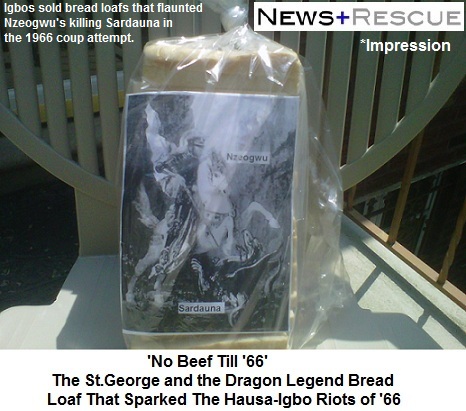
Ghost of Biafra and The Nigerian Condition by Femi John A. https://cdn1.dailypost.ng/wp-content/uploads/2015/11/Kanu-protest3.jpg Transforming a Mule into a Stallion Nigeria, like all African states, was clumped together by European interests for the sole purpose of exploitation of natural and, maybe, human resources, without any real consideration for sovereign cultures and future interests of natives. The original design was never for meaningful development or any spectacular greatness - just exploitation. "Get in there and get the resources out quickly". Somehow, even after decades of independence, that had not changed much. Just that the colonial interest is now replaced by personal interests of politically-exposed persons. Long story short, the people who have to grapple with the post-colonial realities have not found a way to make the Nigerian state work - which is sad. Every Nigerian is, therefore, a victim. North or South. At home or in diaspora. Their country could have been way ahead of Malaysia and Singapore in terms of development. However, no meaningful analysis of the Nigerian condition can emerge without placing the Biafra phenomenon in the mixing bowl - given its contribution to the debacle of the Nigerian state. The Real Biafra Story The crises began when a bunch of young army officers, on a whim, decided they could do a better job running the country than the incumbent political class. Interestingly, almost all these guys were from a particular region of the country - The East. They plotted a bloody coup which killed political and military leaders from every other region except, curiously, from the East. Evidentially - it didn’t only look like it was tribally motivated - it WAS tribally motivated. Some reports even have it that ‘heroic’ symbols of the coup leader, Nzeogwu- standing over the dying body of the Sardauna were brandished on bread in jubilation by some people of Nzeogwu’s tribe (Easterners) who lived up north. https://newsrescue.com/wp-content/uploads/2012/06/nzeogwu-sardauna-bread-loaf.jpg Although the coup plotters were later captured, another army officer of an Eastern extraction, Aguiyi Ironsi took over the reigns of power, disbanded the political machinery, suspended the Nigerian constitution, scrapped Federalism and established the Unitary government in a brazen move to consolidate power. Thus, the unfortunate chapter of military rule crept into Nigeria’s history. It was at this point that Nigeria lost, in one fell swoop, the institution of stable democracy for a long time - only to be regained at great costs after 30 long years. True Federalism has, since then, been lost, despite years of clamoring for it by many. But that’s not even the deal-breaker. Wait for it. In what became another miscalculated and evidential tribal move, Aguiyi Ironsi sent the captured coup plotters to safety in prisons located in the East. Tensions were high. The atmosphere was charged. The Northern part of the country quickly degenerated into killing fields. Non-indigenes, especially Igbos were slaughtered in thousands in what would be infamously called the 1966 Progrom. Wagon-loads of Igbo corpses from the North were shipped by rail to the East. Nigeria was only six years into independence. And it was a mess already. Within six months, army officers of Northern extraction quickly organized a ‘revenge’ coup and killed Aguiyi Ironsi who was considered an ‘accomplice through benefit' of the Nzeogwu's coup. And from here Nigeria’s history tumbled rapidly into the dark valleys of Biafran civil war, extensive military rule, desecration of the institutions of government, barefaced tribal nepotism, religious intolerance and overall mediocre national condition from which Nigeria is yet to recover. Indeed, there were no victors after the Biafran war. But there were vanquished. Both sides lost, not so much because of the war itself but, because the handlers of the country, for 5 decades since, failed to do what smart post-conflict nations do - own the story. Taking the fight out of it. The Nigerian state should have owned the Biafra story. Nazi Germany’s Holocaust, Rwanda’s Tutsi genocide and even South Africa’s Apartheid were, probably, more gruesome than the Nigerian Biafran war. But those other nations found healing, moved on and even became the better for it. Why? Because, the process of healing starts with i. open, honest communication, ii. accepting the facts of the crisis, iii. having a unified official narrative of the event and iv. seeking mutual redemption in forgiveness. Nigeria chose a different path. As if we underestimate the capacity of the human heart to forgive and heal in the face of honest, sympathetic and open communication. The nation failed to implement rigorous attempt to weed out bitterness and heal post-trauma victims, from both sides, on a national scale. The Ghost of Biafra Those children whose uncles and grandfathers died in the war are now men. They were raised in Nigerian schools where no mention of the civil war was made in their classrooms. No official narrative in their school curriculum. Only foreboding silence. And a quiet wish that all would somehow forget the past. And that they should also consider themselves lucky to be considered Nigerians at all. It is in this kind of silence that rumours thrive, wounds fester, hate grows and hurts decompose into spontaneous violent rage. The axe may forget but the tree always remembers. Curious about their own history, they are left with only unofficial accounts of the war which are usually bitter versions. The kind that dehumanizes the people on the other side of the conflict. Conspiracy theories and the typical “we-are-the-heroes-they-are-the-villains" mythology. Attempts by independent reports were, often, vigorously opposed by the state. And not until recently did one-sided accounts like Achebe’s ‘There was Once a Country’ and Adechie’s ‘Half of a Yellow Sun’ crept into mainstream - even, then, not without a fight from the handlers of the Nigerian state. The ghosts of Biafra are in town, not so much because of the ills of the 1967 civil war, but because no one was smart enough to openly address the pains and set the nation on the path of permanent healing, true nationalism and enviable greatness. Already, all sorts of opportunists are positioning to milk the situation for political and financial advantage - which is typical of the Nigerian condition. Even, at its peak, the Boko Haram crisis in the North East became a deliberately prolonged money-spinner for opportunists who incidentally were supposed to be officially responsible for its speedy resolution. Maybe the idea of secession would have made much sense 4 decades ago, but now it is only a reversal and distraction for the nation, especially today when the world is seeking to come together to solve big problems. But people who are hurting have no capacity for rationality. Hurting people can only seek to hurt others - not minding if they are sabotaging their own destiny in the process. It is only after the pain is addressed that rationality crawls back into the equation. Layers of Lessons Maybe it is time we learnt from other nations who survived and grew past bloody conflicts. First, they have a unified narrative of the conflict taught in all their schools - thus, opening channels for honest discussions and leaving no room for conspiracies. Secondly, such weighty defining events have a distinct spot on their national calendar - a day to reflect on lessons learnt and appreciate how people hurt and heal. That is what Germany does, and Rwanda and South Africa, and other smart nations that successfully turned their ashes and scars into something beautiful. Five decades after, the Ghost of Biafra is finally out in the street with its middle finger stuck up defiantly in the face of the Nigerian state. It’s obvious we need far more wisdom to handle this than when we first bred it. Source: https://www./ghost-biafra-nigerian-condition-femi-john-a-?published=t |
| Celebrities › Re: Photo Of Seyi Law At The National Stadium For Protest by stayTrue: 1:46pm On Feb 06, 2017 |
0b10010011:Are you saying the govt agencies should start killing people? Sir, you are EVIL. Very evil.  |
| Programming › Re: Please Any Php/mysql Developers Whatsapp Group Out There? by stayTrue: 10:30am On Dec 05, 2016*. Modified: 7:56am On Sep 05, 2017 |
enasgreat:. |
| Programming › Re: Please Any Php/mysql Developers Whatsapp Group Out There? by stayTrue: 10:29am On Dec 05, 2016*. Modified: 7:56am On Sep 05, 2017 |
Pls add up |
| Politics › Re: Fatima Buhari: N100,000 Paid As Bride Price At Her Wedding by stayTrue: 7:50am On Oct 30, 2016 |
This is good news o. Abeg bachelors when ur father inlaw to be bring long list for bride price just tell them: Hian... even a whole Nigeria president's daughter na 100k dem take carry her go, who are u? Obama? |
| Crime › See Why BH Is Not The Worst Terror In Northern Nigeria! by stayTrue(op): 10:41am On Sep 14, 2016 |
Last week, I attended a seminar organised by the Centre for Democratic Development and Training (CEDDERT) in Zaria where research findings on the senseless massacre and destruction emanating from the dreaded Kuyanbana forest was presented by Massoud Omar and Abubakar Siddique Mohammed. The forest links communities in Birnin Gwari in Kaduna State, Dansadau in Katsina State and Sabuwa in Zamfara State. A significant number of criminal gangs initially focused on cattle rustling have made the forest their home from where they wreck havoc on the three communities. Most of the cattle in the area have already been rustled and Nigeria is facing the threat of a significant decline in availability of beef. As is well known, 90% of our beef comes from Fulani pastoralists and their cattle have become a magnet of attacks by the gangs located within the Kuyanbana Forest. From cattle rustling, the gangs have moved into kidnapping and mass killings of innocent villagers. Victims from the three communities were at the seminar to give testimonies of their plight. The village head of Yar Galidima in Dansadau for example gave detailed accounts on how the gangsters descended on the village and killed 130 people including three of his children. That was not the end of the story, they came back to demand for more money as protection against further attacks. The bandits then ordered the communities not to farm this rainy season. Today, 40% of the community have simply given up and fled the area. Some of the gangsters have now settles in one of the villages where they have set up a generator and organise regular discos with the sex workers they have imported. About six weeks ago, the Nigeria army organised a major security operation in the Dansadau area of Zamfara State and that became a disaster for the neighbouring communities in Kaduna State. The gangs simply went back into Kuyanbana forests and descended on communities in Birnin Gwari Local Government. The Sarkin Fulani of Gundi was at the Seminar to explain how his family lost over 500 cattle to the gangs. They came to him to explain that they took his cattle and would return them if he paid them one million Naira, he paid and they refused to return the cattle. Families in Gundi cannot sleep in the houses due to constant raids – they go into the bush to sleep and drug children with Benelyn cough syrup so they do not cry and attract the marauders to where they were hiding. The most harrowing story was that of girls kidnapped by the gangs and used as sex slaves. After about six months, the gangs returned the girls with two rams for each one and asked their parents to use the rams for the naming ceremonies when the girls deliver. I simply cannot see higher forms of cruelty. In some of the communities, there is a cold war between the Hausa and the Fulani with the Hausa suspecting the gangs were composed mostly of Fulani young men and turning and attacking Fulani residents in the area. Rural banditry is turning significant parts of rural areas in Northern Nigeria into a regime of terror as looting, rape and arson becomes the regular routine. Between Gusau and Dansadau, there were over three thousand Fulani settlements with cattle and most of them have been basically destroyed as they lose their grazing land and cattle. Former Governor Yerima of Zamfara State was said to have given out a lot of the land to big farmers thereby squeezing out the pastoralists. Subsequently, the gangs came in to take much of what was left. As the researchers explain, there is no “ancestral land” for the Fulani so their grazing lands can be given out with impunity. Markets have been severely affected as the gangs regularly attack traders in cattle and grain in places like Birnin Gwari. After incessant attacks by highway bandits, traders started using bank transfers through the two banks in the town. The gangs attacked and burnt the banks insisting that there must be a return to cash transactions. As the gangs get stronger, they are now taxing communities on a regular basis and attack the communities that resist their authority. The research project is very important because it provides evidence that the type of rural banditry occurring in the North Central and Southern parts of the country is also occurring in the North West although a lot of it does not get reported in the media. The problem therefore is a national one and cannot addressed through massive troop movements similar to what occurred in Zamfara State. What is important is the local communities have a lot of intelligence on the criminal gangs and by working with them; security agencies can start mopping up the criminals. More studies are necessary to accurately describe and analyse the reality of these conflicts. Much of the available information about them is inaccurate, one-sided, deliberately misleading or does not give an accurate account of their genesis, causes, nature and patterns. This, by implication, means that any effort to address these conflicts, before further, adequate and reliable information is obtained, will only succeed in treating the symptoms rather than resolving the long term problems that have given rise to them, as well as working out how to heal wounds and take all the affected communities and the rest of the country forward in unity, peace and prosperity. The office of the National Security Adviser (NSA) should set up a committee to study the conflicts in Birnin Gwari, Dansadau and Sabuwa as well as similar conflicts in other parts of the country, before decisions are taken to resolve them. The problem of rural banditry is not only in Nigeria but also in other parts of West and Central Africa. Our regional institutions therefore need to develop regional approaches to takling the problems. I salute the researchers for taking the risks of going into these dangerous terrains to construct for us narratives on the breakdown of rural peace and the rise of criminality in our society. Dr. Jibrin Ibrahim is Senior Fellow at Abuja-based Center for Democracy and Development Source: "Forests that Kill and Destroy: Rural Banditry in Northern Nigeria" Deepening Democracy Column, Daily Trust, 12th September 2016 |
| Politics › Re: Is Buhari Mythology Shattered? by stayTrue(op): 5:27pm On Aug 07, 2016 |
blackpanda:@Blackpanda: You don't know me sir. But let me help your ignorance. I am neither Anti-Buhari nor Pro-GEJ. I am strictly Pro-Nigeria. And I believe both guys are not what Nigeria need today. The Simple Answer: It's time the millions of young Nigerians formed their own political party/movement and decide the future of their own children because at this rate of unintelligent leadership... there may be no tomorrow. @ALL: You aren't as young as you think... your mates are ministers in Dubai, running parliments in Canada and charting progressive policies in Germany & Norway. If you're above 24 years and you still think you are a boy/girl and expecting handouts... you are the real problem of Nigeria. People like Buhari have no business running Nigeria in 21st century if people like you and me take our responsibility seriously. Simple! |
| Politics › Re: Is Buhari Mythology Shattered? by stayTrue(op): 11:53pm On Aug 06, 2016 |
Adminisher! Like seriously?! Facts do not support your position sir. 5 Likes |
| Politics › Is Buhari Mythology Shattered? by stayTrue(op): 11:25pm On Aug 06, 2016*. Modified: 11:46pm On Aug 06, 2016 |
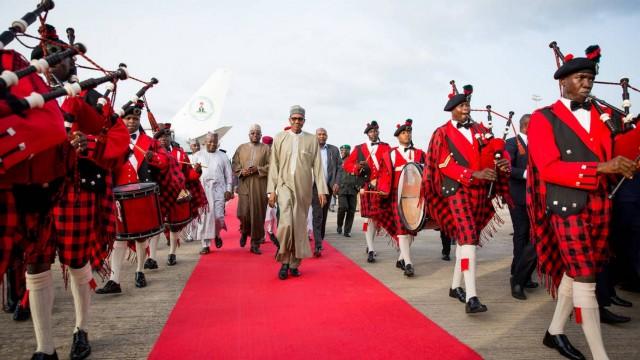
The reality of leadership has exploded the illusion of Buhari’s messianic abilities and exposed him as a prisoner of power – in other words, as just another politician. -M.E.O (Professor of African History at Vanderbilt University, USA) https://africanarguments.org/wp-content/uploads/2016/08/buhari-myth-2-e1470308737864.jpg Having been carried to the presidency on a wave of optimism last year, President Muhammadu Buhari’s time in office has been characterised by a trio of crises: an economy on the brink of recession; escalating militancy in the Niger Delta; and worsening power supply. As the economy has imploded, the only bright spots in Buhari’s first 15 months have been modest gains in the struggle against corruption and the fight against Boko Haram. The president took amidst a flurry of flamboyant promises, some of them so fantastical and unnecessary that many wondered why Buhari would wrap – and trap – himself in such unsustainable obligations. Elections are about promises, but the now ruling All Progressives Congress (APC) got caught up in its own rhetoric and refused, against all economic indicators, to alter its pledges. As a result the party came to power preoccupied with managing expectations instead of the country. The unpreparedness that plagued the early months of the Buhari administration – exemplified by the fact it took seven months to name a cabinet – reflected its inability to bear the weight of promises made. And the sense of disillusionment that has now enveloped swathes of Nigeria stems from this unnecessary self-burdening as well as the government’s failure to articulate a compelling vision. In the course of his short time in office, Buhari’s image as an ascetic and empathetic figure has disappeared, and he has shown a disturbing lack of initiative, creativity and new thinking in government, belying his inspiring pre-election rhetoric. In momentous elections last year, Nigerians voted the incumbent out of power for the first time ever as millions enthusiastically put their faith in Buhari to transform the country. But sadly, it seems that the optimistic narrative about the former military leader and his first stint of power in 1983-5 these voters were buying into was little more than a myth. Broken promises Buhari campaigned on a platform of ending waste and restoring probity, efficiency, and transparency. But when opportunities have presented themselves for him to underscore his professed opposition to the profligacy of the 16-year rule of the now-opposition Peoples Democratic Party (PDP), Buhari has failed to seize them. To begin with, Buhari went back on his pledge to sell off some of the ten aircraft that make up the presidential fleet. That reversal may seem trivial, but it proved to be the start of a more brazen disregard for promises made. For a president whose calling card was transparency and personal integrity, Buhari’s attempt to abandon his promise to publicly declare his assets within his first hundred days in office was perplexing. The president’s media team tried to disavow, dilute, and postpone the promise before sustained public pressure forced him to fulfill it. Yet the released document was a mere summary of his assets, not the declaration form he had submitted to the Code of Conduct Bureau. His reluctance and continued failure to make the full form public feeds a perception that the president is insincere. Earlier this year, this feeling deepened as bureaucrats and the president’s own kitchen cabinet crafted a budget choked full of scandalous allocations to the presidency, ministries and government agencies, including hundreds of millions of Naira for a zoo in the presidential palace and a vice-presidential library budget larger than the library budgets of all but two federally funded higher institutions. When the news broke, Buhari fumed and threatened to punish those he claimed had “padded” the budget with extraneous and unjustified items. But curiously, the presidency’s spokespeople defended the budget and the punitive action never materialised. A few senior civil servants were redeployed and the final budget still contained many questionable allocations. Recently, perceptions of the president’s commitment to the ideals on which he ran for the presidency have been further undermined as two illegal recruitment scandals have unfolded in quick succession: one at the Central Bank, the other at the Federal Inland Revenue Service (FIRS). In both, prominent APC figures and government officials were accused of using their influence to award positions to supporters without due process. In the Central Bank scheme, the president’s own nephew was among the beneficiaries. And in the FIRS scandal, a leaked list contained several individuals linked to “Baba” and “Mama”, codenames that the muckraking news website, Sahara Reporters, speculates refer to the president and his wife. Buhari has yet to refute this allegation, nor has he commented on the allegations around fraudulent recruitment. Meanwhile, the president’s chief-of-staff, Abba Kyari, has been accused, along with other prominent officials, of blocking investigations into the fraudulent affairs of Sahara Energy, a local oil company reported to have skimmed billions of dollars off Nigeria’s oil revenues. And the Chief of Army Staff, General Tukur Buratai, and Minister of Internal Affairs, General Abdulrahman Danbazzau, have also been implicated in scandals, with documentary evidence emerging of them acquiring multi-million-dollar real estate well beyond their legitimate incomes. The presidency continues to back them and has not ordered an investigation. Lost lustre Along with this drip-drip of scandal and inexplicable inaction, Buhari has added numerous broken promises in other areas. During the campaign, the president vowed never to raise the price of petrol, to revamp domestic oil refining capacity, and reduce the price of fuel at the pump, an item upon which the price of everything else hinges in Nigeria’s petrol-driven economy. Buhari also promised never to devalue the naira, thumping his nose at pragmatic counsel that argued the currency should not be artificially propped up at a time when Nigeria’s foreign exchange earnings had dwindled. But the president has since broken both promises, raising the price of petrol from N85 to N145 a litre, and allowing the Nigerian Central Bank to float the Naira against major currencies. Inflation, which had already eclipsed all projected baselines due to the government’s restrictions on foreign exchange and arbitrary import restrictions, has soared. This eventuality was perhaps inevitable, but the question many are asking is: why did Nigerians have to go through a year of painful economic restrictions, stagnation and inflation only for the government to embrace the pragmatic path of currency devaluation it earlier rejected? This unexplained U-turn reeks of confusion, indecision, and experimentation on the part of the government. Nigeria seems to have become one giant economic laboratory where Buhari and his economic managers are lurching awkwardly from one idea to another in the hope that one of them works – all at the expense of a Nigerian people increasingly impoverished in an environment of policy uncertainty and outmoded economic measures. As a candidate for the presidency, Buhari was renowned for his ascetic lifestyle and austere simplicity. But as president, this image is in peril too. Despite his pledge to put an end to health tourism, he recently spent (as the presidency confirmed) £6 million ($8 million) of Nigeria’s money at a time of revenue squeeze to treat an ear infection in London. From the heights of modesty, Buhari has descended into self-indulgence and now resembles an ostentatious stereotype of the self-absorbed African autocrat. When he returns from his overseas trips, he is welcomed back to the country with elaborate and expensive airport ceremonies complete with military parades, Scottish kilts, and bagpipes that remind one of Idi Amin’s outlandish neo-imperial buffoonery. No one thought that we would be seeing this re-enactment in 2016, let alone by a president with a reputation for being a simple man of the masses. In his election campaign, Buhari also presented a conciliatory, even self-deprecatory, demeanour. Yet this image as an avuncular and wise statesman has been undone by his blustery, self-righteous anger in office, as he has taken a law-and-order, take-no-prisoners approach to all problems – even those requiring tact and negotiating acumen. When the Nigerian army massacred hundreds of Shiites in Zaria, the president waxed belligerent and blamed the victims for creating “a state within a state”, provoking the army, and bringing calamity upon themselves. It took Buhari several weeks after the Agatu massacre in March to issue, through his media team, a tepid statement devoid of compassion. And his only response to date to the killing of unarmed Biafra agitators by the armed forces was to dismiss their agitation without even a word about the impropriety of confronting unarmed demonstrators with maximum military force. Furthermore, before Niger Delta militants demonstrated their sophisticated ability to destroy surface, subterranean, and underwater oil pipelines, the president was threatening a scorched earth response to their renewed insurgency and ordering a military invasion of communities suspected to be harbouring the militants. Buhari and the Murtala mythology In The Trouble with Nigeria, Chinua Achebe’s little analytical book on Nigeria’s socioeconomic and political dysfunction, the great author writes about Murtala Mohammed, Nigeria’s military ruler in the mid-1970s who was assassinated only six months into his regime. By time of his demise, Achebe contends, the messianic aura that once surrounded Murtala had already begun to wane, but the late leader was, to quote commentator Chris Ngwodo, “immortalized by an early death or saved by martyrdom from eventual odium.” Murtala, according to Achebe, did not live long enough to commit the inevitable errors of military men who try to manage a complex society with a regimented military philosophy. Instead, he suggests that Murtala’s premature death elevated him to a mythical status, generating a rarely-challenged or scrutinised nostalgia that fetishised his tough, anti-corruption stance. Like Murtala, Buhari ruled only for a short time in his first stint in power from 1983-5, during which he made some errors common to military leaders. But he did not rule long enough to fully prove himself either competent or incompetent and for the full effect of his draconian policies to manifest. As a result, even though some celebrated his ouster, many others were ambivalent and yearned for the order and discipline – real and imagined – that Buhari’s military regime brought after years of chaotic civilian rule. This feeling intensified during the corrupt regime of Ibrahim Babangida, Buhari’s successor, as some Nigerians who had hated being corralled and infantalised by Buhari’s soldiers and policies came to believe that a strong man might be what Nigeria needed after all. Buhari was reimagined in the public consciousness, his regime mythologised as a rare period of competent governance, and as time passed, many began to wonder aloud what Nigeria would be like if Buhari’s military regime had not been overthrown. Perhaps, some suggested, Nigeria would be another South Korea and corruption would be a thing of the past. An elastic myth of counterfactual assumptions was born around the military man. And this myth, which papered over his misdeeds and deficiencies, grew further as Nigeria continued to struggle, including from 1999 to 2015 as the PDP frittered away the country’s resources. Goodluck Jonathan’s misrule magnified Buhari’s mythical competence, whitewashed his inadequacies, and finally enabled his victory in last year’s elections. With Buhari improvising aimlessly and looking confused and ill-prepared in office, some supporters are now saying that it would have perhaps been better if he had never won. That, they argue, would have preserved the myth of his competence, which is now unravelling. It would have enabled him to remain the philosopher and custodian of political morality they imagined him to be, a transcendental figure unmoored to and above the messy contestations of politics and the complicated art of governance that he has failed to master. These disheartened individuals lament the fact that political exigencies, the intricacies of power, and elite manipulations have soiled Buhari’s reputation, exploded the illusion of his messianic abilities, and exposed him as a prisoner of power – in other words, as just another politician. For if his second stint in power has proven anything so far, it is that. If Buhari has done well in combating Boko Haram and corruption, however incomplete and imperfect these efforts are, his record on the economy overshadows all else. After little more than a year, the wondrous myths around Buhari and his first spell in office have been shattered. In their place, realisations about his economic rigidity and lack of thoughtful policymaking – then as now – are re-emerging. 9 Likes |
| Properties › Re: Guys! Are Amac Lands Recertified At Agis Or Aacstris? by stayTrue: 11:54am On Jul 19, 2016 |
NaMe4:So true, at bolded. Many AMAC officials are hustlers who run shady deals. One has to be very careful around there. Especially with documents. |
| Properties › Re: Abuja Land With Verifiable AMAC & FCDA papers For Sale by stayTrue(op): 5:42am On Jul 19, 2016*. Modified: 11:09am On Aug 11, 2016 |
I am happy to announce that I have sold the portion of land and the deal has been successfully concluded. Thank you |
| Properties › Re: Need A Genuine Land Or House In Abuja With Verifiable C Of O? by stayTrue: 9:22am On Jul 14, 2016*. Modified: 8:01am On Sep 05, 2017 |
GOING! GOING!! ... 1 PLOT FOR GRABS NOW @ LUGBE, ABUJA Size: 100 by 50 (800 sq.mtrs) Complete Allocation Documents: AMAC Papers and FCDA R of O Guarantee: Sight papers and verify at AMAC office & FCTA/AGIS b4 payment. Location: Lugbe, Airport Road, Abuja Nearby: Conoil, Voice of Nigeria, Asso Residential Estate, FIRS complex, New Dunamis 70,000 seater church complex, River Park Estate. Price: #2.5m Call Now: SMS/Whatsapp Only: email: john.nirana@gmail.com Serious buyers only, please. MODIFIED: SOLD! SOLD!! SOLD!!! Thank you! |
| Properties › Abuja Land With Verifiable AMAC & FCDA papers For Sale by stayTrue(op): 1:46pm On Jul 11, 2016*. Modified: 11:08am On Aug 11, 2016 |
SOLD! SOLD!! SOLD!!! Thank you. |
| Properties › Re: How To Protect Yourself When Buying A House In Nigeria. by stayTrue: 1:27pm On Jul 11, 2016*. Modified: 8:00am On Sep 05, 2017 |
1 PLOT FOR GRABS NOW, LUGBE, ABUJA 1 full plot of land: 100 by 50 (800 sq.mtrs) With Complete Allocation Documents: AMAC Allocation and FCDA R of O Sight papers and confirm at AMAC office & FCTA/AGIS. Location: Lugbe, Airport Road, Abuja Nearby: Conoil, Voice of Nigeria, Asso Residential Estate, Dunamis 70,000 seater church complex, River Park Estate, etc. Price: N2.5m Call now: Serious buyers only, please. MODIFIED: SOLD! SOLD!! SOLD!!!Thank you! |
| Properties › Re: Mortgage Facility In Abuja Through (aso Savings And Loan) by stayTrue: 8:56am On Jun 29, 2016 |
I need more details pls.
john.nirana@gmail.com |
| Car Talk › Re: Caption These Photos Of Accidents Between German And Japanese/ Chinese Vehicles by stayTrue: 6:58pm On Jun 14, 2016 |
hrhjnr:Yeah. A rugged 406 for the matter. Lol |
| Politics › Re: June 12: Osun Declares Monday Public Holiday; Lagos, Ogun, Oyo Did Not by stayTrue: 6:48am On Jun 12, 2016 |
And source? |
| Politics › Re: Free Dasuki, Defreeze Tompolo’s Bank Accounts, Militants Tell Goverment by stayTrue: 6:48am On Jun 12, 2016 |
ok. But OP abeg reformat your post.
thanks. |
| Politics › Re: President Goodluck Jonathan and Corruption - Femi Orebe by stayTrue: 6:46am On Jun 12, 2016 |
 |
| Phones › Re: Zenith Bank Suspends Use Of Naira Cards For International Transactions by stayTrue: 6:45am On Jun 12, 2016 |
 |


1 2 (of 2 pages)