AfroBlue's Posts
Nairaland Forum › AfroBlue's Profile › AfroBlue's Posts
1 2 3 4 5 6 7 8 ... 40 41 42 43 44 45 46 47 48 (of 75 pages)
 Foreign Affairs › Jamaica, Trinidad Commemorate 50 Years Of Independence by AfroBlue(op): 3:43am On Aug 06, 2012 Foreign Affairs › Jamaica, Trinidad Commemorate 50 Years Of Independence by AfroBlue(op): 3:43am On Aug 06, 2012 |
Caribbean Independence Jamaica, Trinidad commemorate 50 years of independence By Jacqueline Charles http://www.miamiherald.com/2012/08/05/v-fullstory/2929787/jamaica-trinidad-commemorate-50.html#storylink=cpy Welcome home! - Mayor greets Jamaicans home for Ja50 http://www.jamaicaobserver.com/news/Welcome-home----Mayor-greets-Jamaicans-home-for-Ja50_12169096#ixzz22jKcBUcz |
| Sports › Re: Usain Bolt Wins Gold In Men's 100m At 2012 Olympics by AfroBlue(m): 3:40am On Aug 06, 2012 |
| Foreign Affairs › Re: Saudi Royal Family Is Jewish by AfroBlue(m): 3:37am On Aug 06, 2012 |
@Goloss I remember reading an article on your topic. THE SAUDI DYNASTY: FROM WHERE IS IT? AND WHO IS THE REAL ANCESTOR OF THIS FAMILY? http://saudhouse.tripod.com/history.html |
| Foreign Affairs › Paris Villa Of Equatorial Guinea Leader's Son Obiang Seized-bbc by AfroBlue(op): 6:45pm On Aug 05, 2012 |
Paris Villa Of Equatorial Guinea Leader's Son Obiang Seized-BBC http://www.bbc.co.uk/news/world-africa-19120379 https://saharareporters.com/sites/default/files/imagecache/news-page-images-480-wide/page_images/news/2012/theodorin.jpg https://news.bbcimg.co.uk/media/images/62028000/jpg/_62028209_obiangvilla.jpg |
| Foreign Affairs › Re: When Will America Stop Disturbing World Peace? by AfroBlue(m): 6:43pm On Aug 05, 2012 |
| Education › Re: Black Africans vs African Americans In Academics by AfroBlue(m): 10:58am On Aug 05, 2012 |
babsjnr: but why do western media always covered up they sh*t and exposed others countries.Huh? Tale Of Two Americas: Ribbon Of Inequality http://blog.alexanderhiggins.com/2012/08/04/tale-americas-ribbon-inequality-159771/ https://www.youtube.com/watch?v=uGhDkAV_IT8 US Cities Going Bankrupt http://www.indybay.org/newsitems/2012/07/19/18717804.php |
| Education › Re: Black Africans vs African Americans In Academics by AfroBlue(m): 8:39am On Aug 05, 2012 |
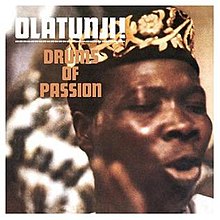
May the great African ancestors that came to the U.S. to help with the global freedom struggle rest in perfect peace. http://en.wikipedia.org/wiki/Babatunde_Olatunji https://upload.wikimedia.org/wikipedia/en/thumb/3/30/Babatunde_Olatunji_Drums_of_Passion.jpg/220px-Babatunde_Olatunji_Drums_of_Passion.jpg Education Olatunji received a Rotary scholarship in 1950 and was educated at Morehouse College in Atlanta, Georgia, Social activism Olatunji was known for making an impassioned speech for social justice before performing in front of a live audience. His progressive political beliefs are outlined in The Beat Of My Drum: An Autobiography, with a foreword by Joan Baez, (Temple University Press, 2005). He toured the American south with Rev. Martin Luther King Jr and joined King in the march on Washington. When he performed before the United Nations General Assembly, Soviet Premier Nikita Khrushchev took off his shoes and danced. Later, he was one of the first outside performers to perform in Prague at Václav Havel's request. On July 21, 1979, he appeared at the Amandla Festival along with Bob Marley, Dick Gregory, Patti LaBelle and Eddie Palmieri, amongst others. Morehouse College is a private, all-male, liberal arts, historically black college located in Atlanta https://upload.wikimedia.org/wikipedia/en/thumb/a/a4/Morehouse_college_seal.png/200px-Morehouse_college_seal.png Established 1867 http://en.wikipedia.org/wiki/Morehouse_College https://upload.wikimedia.org/wikipedia/commons/thumb/d/dc/Kwame_Nkrumah_%28JFKWHP-AR6409-A%29.jpg/220px-Kwame_Nkrumah_%28JFKWHP-AR6409-A%29.jpg http://en.wikipedia.org/wiki/Kwame_Nkrumah October 1935 Nkrumah sailed from Liverpool to the United States and enrolled in Lincoln University in Pennsylvania. He graduated with a BA in 1939, and received a Bachelor of Sacred Theology in 1942. Nkrumah earned a Master of Science in education from the University of Pennsylvania in 1942, and a Master of Arts in philosophy the following year. While lecturing in political science at Lincoln he was elected president of the African Students Organization of America and Canada. As an undergraduate at Lincoln he participated in at least one student theater production and published an essay on European government in Africa in the student newspaper, The Lincolnian During his time in the United States, Nkrumah preached at black Presbyterian Churches in Philadelphia and New York City.[7] He read books about politics and divinity, and tutored students in philosophy. Nkrumah encountered the ideas of Marcus Garvey and in 1943 met and began a lengthy correspondence with Trinidadian Marxist C.L.R. James, Russian expatriate Raya Dunayevskaya, and Chinese-American Grace Lee Boggs, all of whom were members of a US based Trotskyist intellectual cohort. Nkrumah later credited James with teaching him 'how an underground movement worked'. Nkrumah's association with these radicals drew him to the attention of the FBI and he was under surveillance by early 1945. He arrived in London in May 1945 intending to study at the LSE.[7] After meeting with George Padmore, he helped organize the Fifth Pan-African Congress in Manchester, England. Then he founded the West African National Secretariat to work for the decolonization of Africa. Nkrumah served as Vice-President of the West African Students' Union (WASU). Nkrumah's association with left wing radicals meant that he was watched by Special Branch whilst he was in England between 1945 and 1947. Lincoln University (LU) is the United States' first degree-granting historically black university. https://upload.wikimedia.org/wikipedia/en/9/97/Lincoln_University_logo.png Established April 29, 1854 Lincoln University (LU) is the United States' first degree-granting historically black university. |
| Jobs/Vacancies › Re: Dangote Group: Graduate Trainee Driver Job Vacancies by AfroBlue(m): 2:02pm On Aug 02, 2012 |
AjanleKoko: . . . and we were colonized by the UK.The U.S. is still the Queen Mum's colony(secretly) also. |
| Jobs/Vacancies › Re: Dangote Group: Graduate Trainee Driver Job Vacancies by AfroBlue(m): 1:55pm On Aug 02, 2012 |
Many graduates in the U.S. wait on tables in restaurants, do menial jobs, work in retail until something opens up on a higher level, or until they save enough capital to start their own business. Same with Chinese grads. Unemployed graduates in the U.K. sit on their arses and do nothing because of the class/caste mental system. Don't be ashamed to take a humble position in an dynamic organization and grow your skills. Drivers need managers, managers need dispatchers and logistic personnel. Fleet service need parts inventory managers. |
| Foreign Affairs › Re: In Senegalese Shoe Capital, Chinese Not Welcome by AfroBlue(op): 12:15pm On Aug 02, 2012 |
Chanchit: This chinese guys are really pulling strings o, even America/ Europe are not being left out of the take over, they even produce fake tobacco.. Very soon, we will catch those their athlets, i know they are on something funny... real talk ..... A Chinese Group Plans To Construct A 200 Acre "China City" In Michigan A Chinese group known as "Sino-Michigan Properties LLC" has bought up 200 acres of land near the town of Milan, Michigan. Their plan is to construct a "China City" with artificial lakes, a Chinese cultural center and hundreds of housing units for Chinese citizens. Essentially, it would be a little slice of communist China dropped right into the heartland of America. http://www.rightsidenews.com/2012051016200/life-and-science/culture-wars/chinese-cities-coming-to-america.html This "China City" would be located about 40 minutes from both Detroit and Toledo, and it would be marketed to Chinese business people that want to start businesses in the United States. Unfortunately, this is not just an isolated incident. In fact, Chinese companies have been buying up land and businesses all over the country in recent years. There has even been talk of establishing "special economic zones" inside the United States modeled after the Chinese city of Shenzhen. It was inevitable that the Chinese were going to do something with the trillions of dollars that they have made flooding our shores with cheap products. Now they are rapidly buying up pieces of America, and many of our politicians are welcoming them with open arms. |
| Foreign Affairs › Re: In Senegalese Shoe Capital, Chinese Not Welcome by AfroBlue(op): 11:45am On Aug 02, 2012 |
https://ww4.hdnux.com/photos/14/36/67/3272191/3/628x471.jpg In this photo taken on Tuesday, July 31, 2012, a shoemaker works on traditional handmade slippers, with examples for sale, right, in the village of Ngaye Mekhe in Senegal. It has taken generations for cobblers in this village to perfect the pointy-toed slippers once favored by local kings, and now considered an indispensable fashion accessory of well-dressed Senegalese men. It only took months for the Chinese to copy and mass produce the local design, making them out of plastic instead of leather and selling them for a quarter of the price. Photo: Rukmini Callimachi https://ww1.hdnux.com/photos/14/36/70/3272192/3/628x471.jpg In this photo taken on Tuesday, July 31, 2012, shoemaker Mactar Gueye, whose grandfather once made slippers for local kings, demonstrates his technique in traditional handmade slippers in the village of Ngaye Mekhe in Senegal. It has taken generations for cobblers in this village to perfect the pointy-toed slippers once favored by local kings, and now considered an indispensable fashion accessory of well-dressed Senegalese men. It only took months for the Chinese to copy and mass produce the local design, making them out of plastic instead of leather and selling them for a quarter of the price. Photo: Rukmini Callimachi / AP https://ww3.hdnux.com/photos/14/36/70/3272194/3/628x471.jpg In this photo taken on Tuesday, July 31, 2012 handmade slippers are on display for sale in the village of Ngaye Mekhe in Senegal. It has taken generations for cobblers in this village to perfect the pointy-toed slippers once favored by local kings, and now considered an indispensable fashion accessory of well-dressed Senegalese men. It only took months for the Chinese to copy and mass produce the local design, making them out of plastic instead of leather and selling them for a quarter of the price. Photo: Rukmini Callimachi / AP |
| Foreign Affairs › In Senegalese Shoe Capital, Chinese Not Welcome by AfroBlue(op): 11:42am On Aug 02, 2012 |
I know some will disagree with me but, Beware of Greeks(Chinese) bearing gifts! In Senegalese shoe capital, Chinese not welcome RUKMINI CALLIMACHI https://ww3.hdnux.com/photos/14/36/67/3272190/3/628x471.jpg In this photo taken on Tuesday, July 31, 2012, a shoemaker works on traditional handmade slippers, with examples for sale, right, in the village of Ngaye Mekhe in Senegal. It has taken generations for cobblers in this village to perfect the pointy-toed slippers once favored by local kings, and now considered an indispensable fashion accessory of well-dressed Senegalese men. It only took months for the Chinese to copy and mass produce the local design, making them out of plastic instead of leather and selling them for a quarter of the price. Photo: Rukmini Callimachi / AP NGAYE MEKHE, Senegal (AP) — It has taken generations for cobblers in this village to perfect the pointy-toed slippers once favored by local kings, and now considered an indispensable fashion accessory of well-dressed Senegalese men. It only took months for the Chinese to copy and mass produce the local design, making them out of plastic instead of leather and selling them for a quarter of the price. The Senegalese government has so far not regulated the import of Chinese-made replicas of local crafts, so the most prominent shoemakers of Ngaye Mekhe have come up with their own retaliation: They are refusing to sell their slippers to Chinese visitors. "If I see a Chinese person, I put my hand up like this," said Mactar Gueye, his palm open, in the universal gesture for stop. "It's not that I'm afraid of them. I just won't sell to them." In a veiled swipe at China's role in Africa, U.S. Secretary of State Hillary Rodham Clinton told a university audience in Senegal on Wednesday that the U.S. will tie investment to human rights and sustainable development. Though she did not mention China by name, it's clear that Africans are being asked to ponder their relationship with China, which recently became the continent's main trading partner. Trade between the two sides hit a record $166 billion last year, a threefold increase since 2006, while direct investment is $14.7 billion, Chinese Commerce Minister Chen Deming said earlier this month. In almost every nation on the continent, China has undertaken major public works projects from the presidential palace in Guinea, to a $100 million hydroelectric dam in Gabon, to paving close to 140 miles (220 kilometers) of roads in Congo. But the investment usually comes with strings attached, with infrastructure traded for access to Africa's vast mineral wealth as well as its marketplaces. It's been an especially raw deal for the continent's dwindling artisans — not just its slipper makers but also the weavers of Ghana's ceremonial kente cloth, as well as the dyers of the vibrant wax prints worn by West African women, which have been copied and sold for less by China. Brothers Mactar and Moussa Gueye, whose grandfather made the slippers worn by the kings of the local Cayor kingdom, said their first encounter with China was at a trade fair in Senegal's capital, Dakar, in 1998. A Chinese trader approached their stand and admired their shoes, returning several times to look though never buying anything, said Mactar Gueye. Not long after, a group of Chinese buyers traveled to Ngaye Mekhe. The town, with a population of 25,000, is often called Senegal's "shoe capital" because the shoemakers here display their slippers on racks on either side of National Highway No. 1. "They told me they were interested in buying our product. They lied. By the end of the year, the market was flooded with my design — only made in plastic by the Chinese," said 46-year-old Mactar Gueye. If the slippers made in this Senegalese town sell for no less than $20, the Chinese replicas sell for $4. And if it takes a master craftsman here around a day to sew one of his creations, the Chinese can make them by the thousands in factories in Asia, sending them in containers to Senegal's port. "Our government should have protected us," says the eldest of the three brothers, 53-year-old Moussa Gueye. "The knockoffs, they come in through the port, right? So why don't our authorities control what comes in? "What bothers me is these are people who never buy anything here, they only come to sell," he says. Then he adds: "I take that back. They never buy anything that is above ground," he said. "Only what is under our soil." In a speech on relations with Africa earlier this month, Chinese Vice Foreign Minister Zhai Jun hit back at critics of China's growing influence in Africa and denied that China is practicing a new form of colonialism, saying China's economic backing is giving African countries options they never had under a Western-led world order. During her speech in Dakar, Clinton never mentioned China by name, saying the United States is committed to "a model of sustainable partnership that adds value, rather than extracts it" from Africa, language that many interpret as a jab at China's infrastructure-for-minerals model of investment. For the continent's craftsmen, China's ever-growing footprint has been hard to battle. At the HLM market in Dakar, women weave through the stalls displaying the latest African prints — except that almost none of them is made in Africa anymore. Oumar Thiam, the accountant of a bustling store, has a Yahoo inbox dotted with emails from vendors whose names appear in Mandarin characters. His shop has only ever sold Chinese knockoffs of African waxprint fabrics. "They are very similar to the original. If there's a difference, it's in the quality, but it's so much cheaper," he said. Africa expert Peter Pham says that just in northern Nigeria, a quarter-of-a-million jobs have been lost in the textile industry. "Certainly these cheaper products make it affordable for more people, but at the same time, it has eviscerated the manufacturing sector in Africa," says Pham, who is the director of the Africa Center at the Washington-based Atlantic Council. "They can't beat the price of the Chinese knockoffs." Back in Ngaye Mekhe, the workshop of the Gueye brothers is still operating at full tilt, despite the onslaught of fake slippers. The brothers made their first slippers at the age of 10, learning from their grandfather. Since then, their shoes have been worn by a Senegalese president and their client list reads like a Who's Who of the country's ruling elite. They have managed to stay in business, because the upper crust of Senegalese society appreciates the difference in quality, and is willing to spend extra for their double-lined, soft-leather shoes, mounted on high-end rubber and ranging in color from cherry red to sable gray. The pointy-toed slippers are typically worn by Senegalese men on special occasions, like baptisms or weddings. They are also the footwear of choice on Fridays, when men don flowing robes and head to the mosque, leaving the slippers in long rows on the curb outside. The toll on the roughly 1,500 other shoemakers here has been hard to weather, and many artisans say they are struggling to pass on the craft to their sons, who no longer see a future in it. Besides slippers, they have diversified and are now also making sandals as well as loafers. The shoemakers sit on the side of National Highway No. 1, next to their pearly-white and ruby-red creations that grace their outdoor racks. Besides not selling to the Chinese, the Gueye brothers have another tactic. The copied shoes have soles that come off after a few months. "The best part is people then bring me these shoes, the Chinese shoes! And ask me to fix them," scoffs Mactar Gueye. "My rule is I don't let the Chinese buy my shoes. And I won't fix any Chinese babooshes," he says, using the local word for slippers. "This is about our survival." ___ Associated Press writers Krista Larson in Dakar, Senegal; Saleh Mwanamilongo in Kinshasa, Congo; and Yves Laurent Goma in Libreville, Gabon contributed this report. |
| Foreign Affairs › Re: Trinidad And Tobago's Emancipation Day by AfroBlue(op): 6:11am On Aug 02, 2012 |
[img]http://www.guardian.co.tt/sites/default/files/field/image/PRESIDENT%20N%20PM.png[/img] PM announces: T&T, Nigeria to collaborate on energy projects Nigerian President Dr Goodluck Ebele Azikiwe Jonathan waves to the crowd at the beginning of the Emancipation procession on Independence Square, Port-of-Spain, yesterday. Dr Jonathan was accompanied by Prime Minister Kamla Persad-Bissessar, right, and chairman of the Emancipation Support Committee, Khafra Kambon, left. PHOTO: NICOLE DRAYTON http://www.guardian.co.tt/news/2012-08-02/pm-announces-tt-nigeria-collaborate-energy-projects 'Promised land for the black man' http://www.trinidadexpress.com/news/_Promised_land_for_the_black_man_-164690996.html |
| Foreign Affairs › Re: Trinidad And Tobago's Emancipation Day by AfroBlue(op): 4:41pm On Aug 01, 2012 |
https://www.panafricanfestival.org/wp-content/themes/esctemplatte/images/intro-image.png http://www.panafricanfestival.org/ Welcome to Emancipation Support Committee The Emancipation Support Committee of Trinidad and Tobago is an African organization, which for the last 20 years, has been commemorating Emancipation with public lectures, trade shows, concerts and processions. Without a doubt, the commemoration of Emancipation in 2012 marks a significant milestone in the celebrations which contribute positively to the country’s international image. Not only is it our 20th anniversary but it is also the 50th anniversary of the independence of Trinidad and Tobago. Our goals today and in the future extend beyond building pride and image enhancement https://demo.qamarulzaman.com/esc/wp-content/uploads/2012/07/1.jpg https://demo.qamarulzaman.com/esc/wp-content/uploads/2012/07/8.jpg https://demo.qamarulzaman.com/esc/wp-content/uploads/2012/07/4.jpg https://demo.qamarulzaman.com/esc/wp-content/uploads/2012/07/2.jpg https://demo.qamarulzaman.com/esc/wp-content/uploads/2012/07/7.jpg https://demo.qamarulzaman.com/esc/wp-content/uploads/2012/07/schedule_of_events_2012_3.jpeg |
| Foreign Affairs › Trinidad And Tobago's Emancipation Day by AfroBlue(op): 12:08pm On Aug 01, 2012 |
Trinidad and Tobago's Emancipation Day Trinidad and Tobago's Emancipation Day is celebrated to mark the end of slavery for Africans in the British Caribbean on August 1, 1838, and has been observed as a national holiday in Trinidad and Tobago since 1985, while Jamaica attained independence from Great Britain in 1962. On August 1, 1985, Trinidad and Tobago became the first country in the world to declare a national holiday to commemorate the abolition of slavery. http://www.trinidadandtobagonews.com/forum/webbbs_config.pl/noframes/read/1171 http://en.wikipedia.org/wiki/Emancipation_Day Emancipation Day is celebrated in many former British colonies in the Caribbean and areas of the United States on various dates in observance of the emancipation of slaves of African origin. It is also observed in other areas in regard to the abolition of serfdom or other forms of servitude. Welcome to Breaking News Trinidad and Tobago Wednesday, August 01 2012 @ 07:02 AM AST Minister Peters' Emancipation Day address [img]http://news.co.tt/public_html/images/articles/20120730132358958_1.jpg[/img] The following is the address delivered by the Honourable Winston 'Gypsy' Peters, Minister of Community Development at the Ministry's Emancipation Day celebrations at its Head Office on Jerningham Avenue, Belmont on Monday July 30, 2012. All protocols observed. A very pleasant good afternoon and I hope you have enjoyed the programme so far. This Emancipation Celebration commemorates 178 years since the Emancipation Proclamation was read on steps of the Treasury Building right here in Port of Spain. And today at the Ministry of Community Development, we celebrate that historic event which brought an end to our African ancestors being treated as property. In the 21st Century it may be hard for us to imagine that humans, our own ancestors were bought and sold as property, forced to provide free labour, held against their will and deprived of all human rights. And it is for those reasons – underscored by the long and bitter struggle for the liberation of these ancestors – that this celebration bears much significance. I must extend my thanks to the Planning Committee for putting together this important commemoration highlighted by the performances of the Tongalani Durmmers and Zakiya Gill. And we are pleased to have been educated by the very learned Brother Apechoe Mutope. Can we give them a round of applause please? Let me add by saying, Emancipation Day does not only celebrate Liberation; it is also an occasion for revival - an occasion where each and every one of us renew our conviction to lead purposeful lives and chart a common future. And therefore, today we celebrate self-determination. This celebration of Emancipation Day as an event was officially introduced to the world in 1985 by our nationals of Trinidad and Tobago spearheaded by NJAC and Makandal Daaga. The official recognition of this day then led to a wave of Emancipation commemoration in Jamaica, Guyana, Turks and Caicos and even as far off as Ghana. Trinidad and Tobago has led the way among people of African ancestry rekindling their pride in the hard-fought struggle for economic, spiritual and psychological liberation wherever they might be in the world. As we mark this August celebration, we must also remember that throughout this month we also celebrate our nation’s 50th year as an independent nation. The contributions of the descendants of Africans, along with myriad of people who have settled in our islands, have built a strong, resilient nation, embracing all of its peoples. So once again I thank you for your participation in today’s celebration and may we all use Wednesday August 1st as a day of reflection as we move onward towards the quest of even greater tomorrows. Let us constantly emphasize to the children of the Africans in Trinidad and Tobago that it was the positive struggle by our fore-parents that brought us success as a people. And it was neglect and abandonment of that struggle by succeeding generations that brought us to where we are today. And it is only re-connection with that positive history of struggle that will see the rise of the African once again. Thank you. May God continue to bless us all and may God bless our nation. --------- CREDITS: Photo courtesy the Ministry's Communications Unit |
| Celebrities › Re: Snoop Dogg Is Now Snoop Lion, Says He Is Bob Marley Reincarnated by AfroBlue(m): 11:54am On Aug 01, 2012 |
gegee: obviously jamaican weed is stronger than californian weedcorrect ... blessed sensimilla .... one of the best herbs on planet earth https://forum.grasscity.com/photopost/data/501/bud_resize.jpg |
| Sports › Re: London 2012: Meet Team Nigeria by AfroBlue(m): 1:13pm On Jul 30, 2012 |
Let's play put a face or pic to the names of these dedicated world class athletes. I'll do the first section. Please join in. 100m Women 1. Blessing Okagbare [img]http://elpasotimes.typepad.com/.a/6a00d83451c9c869e201310f9aec2a970c-800wi[/img] 2. Gloria Asumnu [img]http://t2.gstatic.com/images?q=tbn:ANd9GcTCZzFC6CKTViJiPoggoHi59688ONVfJxAqJl03sdnAUS6X-gnOuvem9C8_oQ[/img] 3. Lawretta Ozoh https://www.athletics-africa.com/sites/default/files/styles/large/public/field/image/okagbare_and_milama_benin2012.jpg |
| Foreign Affairs › Re: Answers Of An Alien From Andromeda - Nibiru - Elenin - Events by AfroBlue(op): 12:36pm On Jul 30, 2012 |
| Foreign Affairs › Re: Answers Of An Alien From Andromeda - Nibiru - Elenin - Events by AfroBlue(op): 6:09am On Jul 30, 2012 |
| Christianity Etc › Re: Answers Of An Alien From Andromeda - Nibiru And Events by AfroBlue(op): 6:06am On Jul 30, 2012 |
| Romance › The 375 Rules Of A Gentleman by AfroBlue(op): 6:27am On Jul 27, 2012 |
A good read, especially for those always posting dem relationship wahala issues. Study hard young ones so you can find your soul mate, keep each other happy, and grow old together! The 375 Rules of a Gentleman http://therulesofagentleman.tumblr.com/textformat/ https://www.galloimages.co.za/Preview/1142209/gi_0300276.jpg https://www.visualphotos.com/photo/2x4588145/Senior_African_couple_eating_breakfast_BLD036780.jpg |
| Foreign Affairs › Johannesburg Wahala! by AfroBlue(op): 5:38am On Jul 27, 2012 |
Warning,rough story! The murders so brutal they shocked even South Africa http://www.dailymail.co.uk/news/article-2179171/Walkerville-family-murders-Horrific-death-boy-12-drowned-boiling-water-robbers-raped-mother.html |
| Politics › Re: EXCLUSIVE: Nigeria’s Biggest Oil Fraudsters; The Worst Subsidy Scam Ever by AfroBlue(m): 12:29pm On Jul 26, 2012 |
supplement ...... BN Hot Topic: If Your Father is a Corrupt Politician, Will You Disown Him? http://www.bellanaija.com/2012/07/26/bn-hot-topic-if-your-father-is-a-corrupt-politician-will-you-disown-him/ |
| Foreign Affairs › Re: Ghana's President Atta Mills Is Dead!! by AfroBlue(m): 8:28pm On Jul 24, 2012 |
there is some strong conspiracy theory postings on ghanaweb.com 1 Like |
| Foreign Affairs › Re: Ghana's President Atta Mills Is Dead!! by AfroBlue(m): 8:08pm On Jul 24, 2012 |
Comments from Ghanaweb http://www.ghanaweb.com/GhanaHomePage/NewsArchive/artikel.php?ID=245667&comment=0#com 1 Like |
| Celebrities › Re: New Pictures Of Tonto Dike by AfroBlue(m): 4:32am On Jul 24, 2012 |
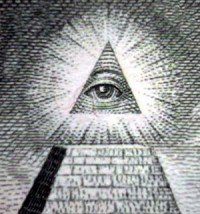
hammedkola: wait oh!...which one be one eye wey she dey cover?...hmmmm, illuminati or fashion?gbam All-Seeing Eye Symbolism https://vigilantcitizen.com/wp-content/uploads/2009/08/allseeingeye.jpg allseeingeye You only need to look at a couple of Lady Gaga pictures or videos to notice that she is constantly hiding one of her eyes. Most people will simply interpret this as ”a cool thing to do” or a “fashion statement”. Those who have passed the 101 of Illuminati symbolism know that the All-Seeing Eye is probably its most recognizable symbol. The gesture of hiding one eye, usually the left one, goes way back in occult orders. Here’s an explanation of the origin of the Eye of Horus. Horus, the sun of Osiris and Isis was called ‘Horus who rules with two eyes’. His right eye was white and represented the sun: his left eye was black and represented the moon. According to the myth, Horus lost his left eye to his evil brother, Seth, who he fought to avenge Seth’s murder of Osiris. Seth tore out of the eye but lost the fight. The eye was reassembled by magic, by Thoth, the god of writing, the moon and magic. Horus presented his eye to Osiris, who experienced rebirth in the underworld. -Dictionary of the Occult http://vigilantcitizen.com/musicbusiness/lady-gaga-the-illuminati-puppet/ |
| Car Talk › Re: Picture Of The Latest Mode Of Transportation In Nigeria by AfroBlue(m): 11:33am On Jul 22, 2012 |
9ja Trendsetters Copenhagen Journal Commuters Pedal to Work on Their Very Own Superhighway https://graphics8.nytimes.com/images/2012/06/26/world/video-copenhagen-bikes/video-copenhagen-bikes-articleLarge.jpg A Green Light for Copenhagen's Cyclists: A new initiative in Copenhagen aims at building miles of bicycle highways that offer cyclists a safer and faster way to commute. http://www.nytimes.com/2012/07/18/world/europe/in-denmark-pedaling-to-work-on-a-superhighway.html?pagewanted=all Bike-Sharing, Promised for Late July, Is Delayed http://www.nytimes.com/2012/07/17/nyregion/new-yorks-bike-share-program-delayed.html https://graphics8.nytimes.com/images/2012/07/17/nyregion/BIKE/BIKE-articleInline.jpg |
| Computers › Re: 'Inye': Made In Nigeria Tablet PC By Saheed Adepoju by AfroBlue(m): 12:19pm On Jul 21, 2012 |
20 July 2012 Last updated at 04:49 ET Nigeria's low-cost tablet computer http://www.bbc.co.uk/news/world-africa-18895366 |
| Foreign Affairs › Re: Who's Greater - Mugabe (Who Took His Peoples Land Back) Or Mandela (Who Didn't) by AfroBlue(m): 11:40am On Jul 21, 2012 |
In Zimbabwe Land Takeover, a Golden Lining Zimbabwe’s Black Farmers Faring Better After Land Upheavals http://www.nytimes.com/2012/07/21/world/africa/in-zimbabwe-land-takeover-a-golden-lining.html?pagewanted=2&hpw&pagewanted=all https://graphics8.nytimes.com/images/2012/07/21/world/africa/21Zimbabwe/21Zimbabwe-articleLarge.jpg |
| Foreign Affairs › Britain’s Longest-serving Black Newspaper Barred From Olympic Stadium by AfroBlue(op): 2:56pm On Jul 19, 2012 |
ACCESS DENIED: Voice readers furious over Olympic snub Online support grows for Britain's longest-serving black newspaper VOICE READERS have rallied around Britain’s longest-serving black newspaper after it was denied a media pass to the Olympic Stadium http://www.voice-online.co.uk/article/access-denied-voice-readers-furious-over-olympic-snub |
| Foreign Affairs › Re: Only Ghanaian Rule Can Save West Africa by AfroBlue(m): 6:35am On Jul 18, 2012 |
SmoothCrim: Could be a good book. DO you understand what growth means. You make mistakes, learn from it, and move on rather than cyclical misery! Ghanaian rule now!!!!!!!I may purchase and read it. How Africans Lost Power ‘In The World’ http://www.ghanaweb.com/GhanaHomePage/NewsArchive/artikel.php?ID=167965 |









1 2 3 4 5 6 7 8 ... 40 41 42 43 44 45 46 47 48 (of 75 pages)