AfroBlue's Posts
Nairaland Forum › AfroBlue's Profile › AfroBlue's Posts
1 2 3 4 5 6 7 8 ... 43 44 45 46 47 48 49 50 51 (of 75 pages)
 Christianity Etc › Re: Pastor Sign-Fireman "Heals" Enebeli Elebuwa by AfroBlue(m): 1:04pm On May 31, 2012 Christianity Etc › Re: Pastor Sign-Fireman "Heals" Enebeli Elebuwa by AfroBlue(m): 1:04pm On May 31, 2012 |
| Foreign Affairs › Re: Afro 'The occupation Video' by AfroBlue(m): 5:31am On May 31, 2012 |
[b]Hot global story. It also happened in the state of Connecticut in the northern part of the country earlier this year. There may be a new potent form of LSD drug out on the street. I was on that bridge a few months ago riding my bicycle but turned around and decided not to go over to the beach. Miami was much more dangerous in the early 80's during the cocaine wars. There were body bags everywhere. The coroner had to rent frozen meat trucks to store all the bodies. Documentary provided below. I also thought about you and hoped all was well when that drama happened in Nairobi earlier this week. The zombie's girlfriend speaks up. Girlfriend: Face-eating man was drugged — or cursed <--voo doo/juju http://www.miamiherald.com/2012/05/30/v-fullstory/2824778/girlfriend-face-eating-man-was.html#disqus_thread _________________________________________________________________________________________ Man accused of cannibalism held on $1 million bond Daniel Tepfer, Staff Writer Updated 11:02 p.m., Wednesday, February 1, 2012 http://www.ctpost.com/local/article/...#ixzz1w8mBc31P BRIDGEPORT -- Wednesday's brief arraignment hearing was Tyree Lincoln Smith's first appearance in a Connecticut court since he was arrested and charged with hacking a homeless man to death with an ax and cannibalizing the victim's body ___________________________________________________________________________________________ Cocaine Cowboys Cocaine Cowboys The sordid history of drug trafficking in Miami is sodden with seemingly endless quantities of dope, money, and corpses. http://topdocumentaryfilms.com/cocaine-cowboys/[/b] |
| Foreign Affairs › Re: Afro 'The occupation Video' by AfroBlue(m): 10:37am On May 30, 2012 |
hi ms. pendo, i don't seem to recall the vid. the situation in that particular section of the world remains precarious. this five hour vid does a great job of focusing on the origins of the power structure in the area. ring of power https://www.youtube.com/watch?v=BwnWni9HLEY Israeli Jewish man says Zionism is the cause of the problems https://www.youtube.com/watch?v=p2mTgq-jw8M An orthodox jewish man in Israel talks about how his grandparents, who lived in the holy land since before Israel was established, used to be friends with the muslims in the area. They were "like brothers." They used to "babysit each others kids". He says the problem isn't judaism or jews or muslims, but that the problem is zionism. more info http://iamthewitness.com/ |
| Politics › Nigeria's President Jonathan 'must Act Over Fuel Scam' by AfroBlue(op): 6:39am On May 29, 2012 |
Funny, the u.k. colonial masters and yankees are crying about 9ja corruption but they are the biggest yahoo countries. Nigeria's President Jonathan 'must act over fuel scam' http://www.bbc.co.uk/news/world-africa-18238973 https://news.bbcimg.co.uk/media/images/60544000/jpg/_60544005_014690958-1.jpg |
| Politics › Re: An Open Letter To The Nigeria Child by AfroBlue(m): 3:12am On May 28, 2012 |
true talk Blackberry Thieves caught at Oshedi this morning! [img]http://www.naijapals.com/modules/naijapals/nigeria?action=dlattach&topic=108669.0&attach=38596&image[/img] https://www.youtube.com/watch?v=endGvrPUmj4 |
| Politics › Re: U.S Delivers Damning Verdict On GEJ’s Anti-corruption War by AfroBlue(m): 3:08pm On May 26, 2012 |
The big picture listen & learn Coast to Coast: Urgent Warning From Lindsey Williams 21.5.2012 - 4/4 - Financial Crisis Special Lindsey Williams - Coast to Coast AM 21.5.2012 Ordained Baptist minister Lindsey Williams shared his contention that the collapse of the dollar is being orchestrated. According to his "elite" sources, we should be on the lookout for signs that a collapse is imminent. These indicators include a crack in the derivatives market, currency & trade wars, as well as a 1% rise in interest rates. He suggested that people "secure their assets immediately," which means to get out of all paper, and invest in gold and silver (which he was told will be used to back the new world currency https://www.youtube.com/watch?v=eDl9-YSN1OQ |
| Politics › Re: U.S Delivers Damning Verdict On GEJ’s Anti-corruption War by AfroBlue(m): 2:28pm On May 26, 2012 |
1 Like |
| Foreign Affairs › Re: (GHANA) Racism At Novotel? by AfroBlue(op): 5:33pm On May 24, 2012 |
[b]circa 2011 Nov 01, 2011 at 1:17pm 'Whites-only' club in Ghana closed down https://kitnes.net/1_188398/300..1.636098.jpg The Government of Ghana has closed down a ‘racist’ whites-only restaurant turned night club at Osu in Ghana's capital, Accra. Citi News confirmed the existence of the outfit on Tuesday after it broke as a rumour on social networking site facebook a couple of days ago. The place is being run by Atlantic Lobster and Dolphins Limited and owned by two Italians, Marco Ranaldi and Salvatore D’azeo. Locals have alleged that the place accepts only whites and blacks are turned away. According to the deputy minister of Tourism, Mr. Agyenim-Boateng, government decided to close down the place because it was in violation of the laws of Ghana. He added that the facility was registered to be used as a restaurant and not as a club and directed the owners of the facility to acquire the proper license to be able to run the place for that dual purpose. “We are going to close your place down because you are in violation of our laws," the minister said. "We want you to do what is right and proper. You have to show complete and total respect for our laws." "You have to go to the Ghana Tourists Authority and get this place licensed. In its current form this obviously is a restaurant, which is veiled as a club. So for now you would not be able to operate the way you have done. ” Meanwhile, Elizabeth Okuro, a half Ghanaian-half Nigerian, who visited the club recently told Citi News that she was told in the face by the manager of the facility that she could not register as a member of the club because she is not White. A very furious Okuro is calling on Ghanaians to boycott Atlantic Lobster and Dolphins Limited since according to her the activities of the club smacks of racism which must not be tolerated in Ghana. She has created a facebook page to champion that cause. She, however, added that she would consider aborting the campaign against the patronage of the place if the owner who made racial comments against her comes out to apologise. Meanwhile, owners of the Atlantic Lobster and Dolphins Limited have denied that the club is promoting racism. Owner D’azeo said he is married to a Ghanaian woman and cannot be deemed as a racist, adding that his comment to Elizabeth was only a joke. By: Kobina Welsing/Citifmonline. com 'Whites-only' club in Ghana closed down __________________ [/b] |
| Foreign Affairs › (GHANA) Racism At Novotel? by AfroBlue(op): 5:27pm On May 24, 2012 |
[b] (GHANA) Racism At Novotel? https://photos.peacefmonline.com/photos/news/201205/703818090_620738.jpg Staff of the four-star Novotel Hotel in Accra have been grumbling about what they say are the discriminatory directives of their new Belgian General Manager, Mr. Marc Frère. Their grumbles are over what they see as racist directives they have been asked to implement at the hotel following the hotel’s ban on parties by Ghanaian parents to celebrate birthdays of their children at the hotel with the excuse that the GM and his wife swim in the pool and would want to have their privacy when doing so. Again, while the hotel has barred the large Ghanaian clients of the hotel who troop in to use the hotel’s swimming pool which had hitherto been opened to the public to walk-in, pay and swim anytime, with the same excuse that the GM and his wife swim in the pool and would want to have their privacy when doing so, the pool, staff say, remain open to non-resident white friends of the General Manager who use the facility without even paying. Management of the hotel have also directed staff to inform inquisitive Ghanaian clients who would seek to find the rationale for the new directives, that swimming at the Hotel’s pool is now based on an UD$800 annual registration fee. In simple words, if you want to be a user of Novotel’s swimming pool, you would have to fork out $800 (about GHC 1,520) per annum. Meantime, staff of the house-keeping department in charge of cleaning the hotel’s bedrooms, are also grumbling about the treatment of casual workers who are paid below the minimum wage without their social security being paid. The workers are paid 0.50 pesewas per room they clean at the hotel. Hotel staff told this paper the new GM’s directive has negatively impacted the finances of the hotel. Efforts to speak to Mr. Frère since last Thursday have failed. He reportedly went on three –day leave after multimedia broadcasting network’s radio station, Asempa FM, broadcast of impending crisis at the hotel. He was billed to resume Wednesday (yesterday) but as of press time we were told he was unavailable for comment. The hotel’s management was also unwilling to comment officially in his absence. Workers however told this paper that while Ghanaian workers were celebrating May Day this year, kitchen staff of Novotel went on a sit-down strike because the GM told them he would not allow those who could not participate in the May Day Parade to be given T-shirts with Novotel’s logo's on it because the T-shirts were too expensive to purchase. http://business.peacefmonline.com/news/201205/114451.php[/b] |
| Romance › Re: Kenyan Women Are The Best by AfroBlue(m): 7:07am On May 24, 2012 |
| Business › Re: Walmart Nigeria: Good Or Bad Idea? (Ngozi Okonjo-Iweala) by AfroBlue(m): 1:53pm On May 22, 2012 |
https://i.neoseeker.com/n/6/factory_workers_chinese.jpg [img]http://shardsofchina.files./2012/03/china-economy-working-class-production-line.jpg[/img] https://www.snowscut.com/Images/factory.jpg.png [img]http://philebersole.files./2012/03/nike-sweatshops.jpg[/img] This week in slavery https://www.shanghaiist.com/attachments/shang_peijin/chinaslaveminesfactory.jpg chinaslaveminesfactory.jpgThe recent rescue of 31 slaves from a brickworks factory in Shanxi province last week shocked the entire country, and with good reason—these people were forced to work under what are, for the 21st century, unthinkably inhuman conditions. But for an estimated one thousand children still trapped in the mountains of Shanxi, the nightmare continues. But now, people are fighting back. 400 Chinese fathers sent out a cry for help on the internet, hoping for information that would help them recover their kidnapped sons. They scraped enough money together to rescue some of the children, mostly those that, like the men, were Henanese. The slave children from other provinces have not been as lucky. An editorial (in Chinese) asks the question of where the responsibility for all this lays. The kids were forced to work 14 hour days without rest. Their meals consisted solely of mantou (steamed buns) and cold water, and had to be finished in fifteen minutes. They slept in a locked room, on the floor, with thugs and dogs patrolling the outside. And they did this in a factory that was 20 miu big and in plain sight from the neighboring villages. The question is not why this situation exists, but why and how it could have existed this long. 1.5 years—that's how long those people were in there before being rescued. Of course, the answers aren't too hard. First, it's hard to find out where your child might be. There are thousands of such factories and mines in the area. Secondly, there is non-cooperation or even interference from the local authorities. The 400 fathers said in their internet posting that local police often held an attitude of the kidnappings happened in Henan—go report it there. If a father managed to find his child, only that child would be freed—meaning, again, each father would have to individually find their child. Considering this, it's really no wonder that they decided to band together and issue a plea for help on the internet. The only way that the situation could get any worse is if the slave-drivers are the authorities, which was virtually the case with Wang Binbin, the owner of the factory, who is the son of Caosheng Village Party secretary. Other reports we've read indicate that the rooms where the slaves slept was destroyed and the thugs and dogs have all disappeared. Hongdong prefecture, where the factory was located, has offered an official apology and given each rescued worker a whopping 1000 yuan in compensation. The original "price" of each slave is 500 yuan. |
| Business › Re: Walmart Nigeria: Good Or Bad Idea? (Ngozi Okonjo-Iweala) by AfroBlue(m): 1:49pm On May 22, 2012 |
Recently posted this information on another thread. no country can compete with products being produced by slave labor. Tell China to stop slave labour http://www.winnipegfreepress.com/opinion/westview/tell-china-to-stop-slave-labour-138701239.html Canadian Prime Minister Stephen Harper, on his trade mission to China next week, should ask China to stop exporting the products of slave labour to Canada and to shut down its extensive network of slave labour camps. He should propose an arrangement with China to attempt to ensure that this happens. China engages systematically in forced labour in all forms of detention facilities -- prisons that house sentenced criminals, administrative detention for those not yet charged, and "re-education through labour" camps. Near Slave Labor Sweat Shops in China Lead to Worker Suicides http://www.firstthings.com/blogs/secondhandsmoke/2010/06/30/near-slave-labor-sweat-shops-in-china-lead-to-worker-suicides/ Apple (and America’s) Chinese Slave Labor Problem http://www.financialsense.com/contributors/karl-denninger/2012/01/23/apple-and-america-chinese-slave-labor-problem# https://www.youtube.com/watch?v=yF8jUDzz5bE |
| Politics › Re: Stop Importing Generators – Ajagu by AfroBlue(m): 6:09am On May 22, 2012 |
| Business › Re: Walmart Nigeria: Good Or Bad Idea? (Ngozi Okonjo-Iweala) by AfroBlue(m): 6:01am On May 22, 2012 |
Walmart - High Cost of Low Prices 1:37:37 - 6 years ago What are the low prices of Walmart costing not only America, but the entire world? http://video.google.com/videoplay?docid=-3836296181471292925 |
| Business › Re: Walmart Nigeria: Good Or Bad Idea? (Ngozi Okonjo-Iweala) by AfroBlue(m): 5:57am On May 22, 2012 |
The Real Roots Of Wal-Mart <---research it, link not functioning http://blockyourid.com/~gbpprorg/judicial-inc/84Walton_funding.htm The Robsons Were Slave Traders The Robson family's real surname was Robelsky – they were English slave traders that settled in Savannah. This area was for the super-rich of the time. They were slave traders, rum-runners, tobacco traders, gun-runners, etc This Is No Different Than The Robel/Robson Plantation Two hundred years ago, Ephraim Robelsky sent his slave traders to Africa, brought back black slaves, and sold them like cattle. Today, Harold Johnson has no health insurance, gets no overtime, and if he merely mentions a union, then he is out of a job. |
| Romance › Think Like A Man by AfroBlue(op): 5:00am On May 21, 2012 |
Funny & philosophical  Think Like a Man https://www.youtube.com/watch?v=lb2Iq2FBBvc https://cdn01.cdn.justjared.com/wp-content/uploads/headlines/2012/04/think-like-a-man-box-office.jpg |
| Politics › Re: Nigeria, China Disagree Over Anti-dumping Pact................. by AfroBlue(m): 12:29pm On May 17, 2012 |
https://i.neoseeker.com/n/6/factory_workers_chinese.jpg [img]http://shardsofchina.files./2012/03/china-economy-working-class-production-line.jpg[/img] https://www.snowscut.com/Images/factory.jpg.png [img]http://philebersole.files./2012/03/nike-sweatshops.jpg[/img] This week in slavery https://www.shanghaiist.com/attachments/shang_peijin/chinaslaveminesfactory.jpg chinaslaveminesfactory.jpgThe recent rescue of 31 slaves from a brickworks factory in Shanxi province last week shocked the entire country, and with good reason—these people were forced to work under what are, for the 21st century, unthinkably inhuman conditions. But for an estimated one thousand children still trapped in the mountains of Shanxi, the nightmare continues. But now, people are fighting back. 400 Chinese fathers sent out a cry for help on the internet, hoping for information that would help them recover their kidnapped sons. They scraped enough money together to rescue some of the children, mostly those that, like the men, were Henanese. The slave children from other provinces have not been as lucky. An editorial (in Chinese) asks the question of where the responsibility for all this lays. The kids were forced to work 14 hour days without rest. Their meals consisted solely of mantou (steamed buns) and cold water, and had to be finished in fifteen minutes. They slept in a locked room, on the floor, with thugs and dogs patrolling the outside. And they did this in a factory that was 20 miu big and in plain sight from the neighboring villages. The question is not why this situation exists, but why and how it could have existed this long. 1.5 years—that's how long those people were in there before being rescued. Of course, the answers aren't too hard. First, it's hard to find out where your child might be. There are thousands of such factories and mines in the area. Secondly, there is non-cooperation or even interference from the local authorities. The 400 fathers said in their internet posting that local police often held an attitude of the kidnappings happened in Henan—go report it there. If a father managed to find his child, only that child would be freed—meaning, again, each father would have to individually find their child. Considering this, it's really no wonder that they decided to band together and issue a plea for help on the internet. The only way that the situation could get any worse is if the slave-drivers are the authorities, which was virtually the case with Wang Binbin, the owner of the factory, who is the son of Caosheng Village Party secretary. Other reports we've read indicate that the rooms where the slaves slept was destroyed and the thugs and dogs have all disappeared. Hongdong prefecture, where the factory was located, has offered an official apology and given each rescued worker a whopping 1000 yuan in compensation. The original "price" of each slave is 500 yuan. |
| Politics › Re: Nigeria, China Disagree Over Anti-dumping Pact................. by AfroBlue(m): 12:04pm On May 17, 2012 |
no country can compete with products being produced by slave labor. Tell China to stop slave labour http://www.winnipegfreepress.com/opinion/westview/tell-china-to-stop-slave-labour-138701239.html Canadian Prime Minister Stephen Harper, on his trade mission to China next week, should ask China to stop exporting the products of slave labour to Canada and to shut down its extensive network of slave labour camps. He should propose an arrangement with China to attempt to ensure that this happens. China engages systematically in forced labour in all forms of detention facilities -- prisons that house sentenced criminals, administrative detention for those not yet charged, and "re-education through labour" camps. Near Slave Labor Sweat Shops in China Lead to Worker Suicides http://www.firstthings.com/blogs/secondhandsmoke/2010/06/30/near-slave-labor-sweat-shops-in-china-lead-to-worker-suicides/ Apple (and America’s) Chinese Slave Labor Problem http://www.financialsense.com/contributors/karl-denninger/2012/01/23/apple-and-america-chinese-slave-labor-problem# https://www.youtube.com/watch?v=yF8jUDzz5bE |
| Politics › Re: What Nigeria Means To Me - My Story As A Detribalised Nigerian by AfroBlue(m): 8:30am On May 14, 2012 |
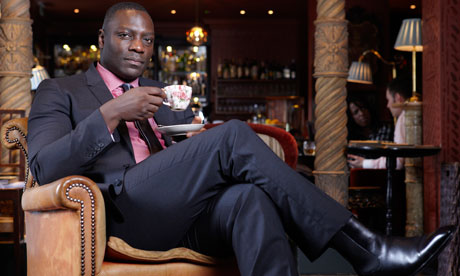
Addendum https://static.guim.co.uk/sys-images/Observer/Pix/pictures/2012/5/10/1336647396523/Adewale-Akinnuoye-Agbaje-008.jpg [b]Adewale Akinnuoye-Agbaje: 'I didn't want to be black. So I joined the skinheads…' The name Adewale Akinnuoye-Agbaje is not one that slips easily off the tongue but it's worth mastering because we're likely to be hearing a lot more of it in the future. Followers of the wilfully perplexing American fantasy series Lost may recall its owner as Mr Eko, the former drug lord turned fake priest who was killed by the Man in Black, otherwise known as the Monster. Or perhaps not. Some will know him as Simon Adebisi, the intimidating African convict in the cult HBO prison series Oz; others may recognise his contributions to films such as Congo and The Bourne Identity; and no doubt his role as an American spy in the forthcoming BBC-HBO series Hunted will further raise his profile. But it may well be as the screenwriter and film director of his own life story that Akinnuoye-Agbaje becomes a name to remember. Armed with an Annenberg Film Fellowship grant, Akinnuoye-Agbaje has been working on the film for several years, developing the story at the Sundance Institute Directors and Screenwriters Labs. A read-through of the script by a cast including David Harewood and Marc Warren became one of the most talked about events at the recent Sundance London festival. Entitled Farming, it refers to the practice of handing out children to informal fostering that many Nigerian parents followed in 1960s and 1970s Britain. Akinnuoye-Agbaje was one such case. In 1967, when he was six weeks old, his parents – a Nigerian couple studying in London – gave him to a white working-class couple in Tilbury, then a fiercely insular dockside community. Six months later, the Tilbury dockers led strikes in support of Enoch Powell. Akinnuoye-Agbaje hopes to start shooting the film later this year. It's a neo-Dickensian tale of hardship, abandonment and solidarity, a kind of black Oliver Twist for the postwar immigration era. Now a powerfully built 44-year-old man, he recalls the vulnerability of his childhood with such a generous mixture of humour and understanding that it's difficult to keep in mind that he came through circumstances that would have crushed the strongest of spirits. At times his foster parents had 10 or more African children living with them, including Akinnuoye-Agbaje's two sisters. "It was a strange relationship," he recalls of his feelings for his foster parents. "It was one of love because that's all that I knew, and that's what love is: you accept people for what they are. If I'm honest, it was very tough. My father was a lorry driver, very rarely at home. The house was run by my mother, and because there were 10 or so kids, there was no time for individual attention. It was about survival. It was about where the next meal was coming from. We had to go out and nick things to get it. So there wasn't any love in the sense of hugs or anything like that: there was just no room for it. The only haven I had was sleeping behind the sofa in the corner of the room – that was where I could get some kind of peace." If it was crowded and chaotic within the home, outside the young boy was in constant danger of physical attack from local kids who, encouraged by their parents, nurtured a violent fear of blacks. He learned to feel the same way himself, running away from the black sailors who occasionally visited the docks from far-off locations. "I just remember being petrified," he says. "It was as if they were the bogey man to us. Fish and chips and corned beef, that's what I knew. Do you know what I mean?" As far as the chips and corned beef go, only too well. But the rest is less easy to imagine. Such was his eagerness to fit in that, although his skin clearly told another tale, he thought of himself as white. And if his sense of self wasn't already damaged enough, he knew nothing of his African parents until one day, when he was eight, they turned up out of the blue and took him back to Nigeria. "It felt like a kidnap," he says, "and it rendered me mute for about nine months. I couldn't speak the language, and if I spoke English I was abused for it. It was quite a culture shock: brutal. I was so traumatised and afraid that I stopped speaking and my [birth] parents thought there was something wrong with me, thought I was possessed. They tried various indigenous ways to deal with it, and when they didn't work they sent me home, back to Tilbury, but kept my sisters there." You wonder where the authorities were while young Adewale was being treated like some human missile, fired back and forth between continents. If his natural parents were not prepared to bring him up, it didn't help that his foster parents were ill-prepared. "There was a lot of ignorance in the family," he says as a neutral observation rather than a complaint. "I don't think they were racist; they were ignorant. They didn't know that we had to put cream on our skin because the skin is for warmer climates and it turns ashy in the cold. They didn't know they had to put cream in our hair. They didn't know we had a different smell from Caucasians and we were persecuted because of it. They were just raising us as they would a white kid, but there were differences, marked differences, and I learned about that as I started to grow up." This was a different time, of course, when social services maintained a more remote involvement in childcare arrangements and there was much less appreciation of cultural distinctions. In the 1980s there came an identity backlash. Fostering, and especially adoption, were made far more stringent in relation to children from minority backgrounds. A policy of cultural and ethnic determinism was instituted that left many children, who might otherwise have found loving homes, in care because no suitable racial match could be found. Identity and adoption are complex issues with no easy fit-all answers. But then Akinnuoye-Agbaje doesn't have any easy answers to offer. "It's a significant question: should black people only adopt black children, and white people white children? My film doesn't judge in that sense. It makes you aware of the possible dangers but if there's anything to be gleaned from this story it's that if one is from a certain culture and then fosters someone from another culture, one should really take the time to learn about that other culture because there will come a point when the child will need to know about whence it came." As relieved as young Adewale was to return to Tilbury as a nine-year-old, he had also learned something about his background, and it disturbed him. For the first time he was aware of being on the outside and looking in, and realising that he was not the same as his foster parents, despite their insistence that he was. "Now I had a reference point and that really highlighted my cultural identity crisis," he says. "I wanted to assimilate and go back to the abnormal normality I knew. I wanted to wash off the experience of Africa but obviously I couldn't because that's who I was. As much as I wanted to deny it, it was plaguing me, and I was reminded by the images coming through the TV, people on the streets and in the end my family in the house." The more he tried to blend in, the more he was rejected. After a year in Africa his skin was darker, which made him yet more conspicuous among the white population. Reluctant to go out, he was issued with an ultimatum by his foster father: either he fight in the street or he would have to fight in the house. With little choice, he learned to defend himself and also to attack others. As he became a teenager he grew into a well-built young man with a reputation for violence. "It was a time of standing up and standing your ground or running, and there wasn't anywhere to run in Tilbury. The local skinhead gang really ran the streets. They made my life – and anyone's who was a shade darker than pale – a misery." There's a natural human tendency to dramatise our backgrounds, embellish challenges and exaggerate difficulties, and actors are certainly not immune to the impulse. But there's no bravado or sentimentality in Akinnuoye-Agbaje's manner. Instead he displays a passionate and perhaps cathartic desire to explain, not least because what took place next requires some explanation. He became a skinhead. He didn't just adopt the haircut and clothes but the racist attitudes too. He fought alongside his new skinhead comrades, who treated him at first like some brutalised pet to be unleashed in battle. "I was like a little dog that followed them around," he says. "When a child wants to be accepted," he explains, "he'll do anything. And if it means you're getting a certain amount of notoriety from a fight, that's what you'll do. If all you've known is racism, abuse and persecution, then all of a sudden you're getting some recognition, that's your new drug. That's what you want. By the time I was 16 I was someone to reckon with. I was so eager to repudiate any connection with any immigrant race I would go above and beyond. I was desperate to belong to something. That was my drive as a teenager." He became a bully and a thief and seemed set to pursue a life of crime and dysfunctionality. Unable to cope and worried that he would become a disruptive influence on the other children in her care, his foster mother got in touch with his birth parents. At 16 he was once again removed from Tilbury, this time not to Africa but to a boarding school in Surrey, paid for by his parents – his father was a qualified barrister with a lucrative practice in Nigeria. The relationship with his birth parents had not improved in the intervening years. He was a street kid who spoke a raw cockney dialect, and they were two professionals, unwilling to acknowledge responsibility for what they had inflicted on their child. "It was hell on earth," he says, shaking his head at the memory. "It was really the most bizarre thing. I was like, 'Eff off, you wog'. They were total strangers to me, and there was no marrying the two worlds of Tilbury and Africa. No way." Such was the disorienting shock of boarding school, with its unsettling silence and atmosphere of academic expectation, that the overwhelmed teenager, now confronted with his own self-hatred, attempted suicide. He couldn't turn back but didn't know how to go forward. He found it hard to concentrate and he struggled to understand what he was being taught. But gradually, with the help of a girlfriend and a fellow student, he began to accept his heritage, and he also learned how to study, going on to gain a law degree from King's College, London. He was and remains grateful to his birth parents for eventually providing an education but he never forged a close relationship with them. His birth father is now dead, as are his two foster parents, whom he thinks of as his real parents. "They were the ones who raised me, for good and bad," he says. He stayed close to them right up until their deaths. While at university he worked in a clothes shop where, in turn, he was introduced to modelling. That took him around the world and eventually to Hollywood, and the cast of the film Congo. The instant he started acting, he knew it was his vocation. "I realised that the sum total of my life added up to this: my rough upbringing, because when they said 'Action!', I had plenty; and the analytical focus and determination of legal study – you need all of that to be an actor," he says, breaking into a broad and knowing grin. "And obviously my natural charisma and showy self, because you've got to be star inside." Akinnuoye-Agbaje is indeed a star inside and out, but the hardest and most triumphant role he'll ever play is the one he was handed by his parents as a baby of just six weeks.[/b] http://www.guardian.co.uk/film/2012/...ew?INTCMP=SRCH |
| Politics › Re: When Yaradua Wakes Up by AfroBlue(m): 6:24pm On May 09, 2012 |
[b]Yar'adua Wake Up! Nigeria Is Boiling Posted: May 9, 2012 - 15:16 By Obinna Akukwe Yar’adua , Nigeria’s fourth democratically selected president. Yar’adua , Nigeria’s most unassuming president. Yar’adua , Nigeria’s most frail president. Yar’adua , Nigeria’s most educated president . Yar’adua , Nigeria’s only president with leftist ideology. The manner of your exit equals the manner of your entrance. Mysterious appearance and mysterious disappearance. State Governors Peter Odili, Donald Duke, Sam Egwu, Ahmed Makarfi, even Jerry Gana and Rochas Okorocha were all in the presidential race of 2007 and from nowhere you appeared through Obasanjoic abracadabra and became the ruling party flag bearer. All the presidential aspirants except Rochas and Jerry were commandeered to genuflect before His Royal Ota majesty and accept the native intelligence that brought you to power. The ensuing presidential do or die abracadabra raised to power two made you the choice of the entire Nigerians while your Buhari opponent was left to weep the second time. Yar’adua , the first thing you did as president elect was to denounce the process that brought you to power while still clinging to the stolen mandate. You were the first president in Nigeria to ever admit that the road to victory was as fraudulent as fraud itself. However the Justices of the Supreme Court by their majority judgment felt that you actually had typhoid fever when you admitted that the election was fraudulent. Yar’adua you were the first president in Nigeria to declare your asset. You weren’t materialistic but your wife Turai was the direct opposite of you .During your regime the praise of Turai was the arrival of favour. Emirs, Igwes, Obas, Professors, High Chiefs, Ex this and Ex that all bowed down to Her Majesty Turai before being qualified to share in the national cake. Yar’adua , you weren’t corrupt but during your regime , the newest cabal in the country, the Nigeria Governors Forum manipulated your rule of law mantra and begun the process of liquidating the foreign reserves which godfather Obasanjo left behind. Yar’adua your Seven Point Agenda has been replaced by the Transformational agenda and Vision 20; 2020 and Nigerians are anxiously waiting and praying for the transformation. All those cabals who held the nation hostage while you were sick have been thrown into the dustbin by your brother Goodluck and replaced by another set of cabal. Your godfather Obasanjo have been frustrated out of the PDP as the Chairman of BOT and the assistant godfather Babangida have been sidelined and marginalized by the same party that he goes about the globe complaining. Yar’adua you weren’t confrontational but you could not suffer fools hanging around your political space. On your way to Brazil you gave the military high command order that before you finish your first breakfast in Brazil they would have wiped off Boko Haram from your Presidency or you sack all of them from the service. Of course before you finished brushing your teeth to taste the sumptuous ala-cart before the breakfast table in Brasilia, the army high command have finished wiping off the then Boko Haram and handed their leader to the notorious Nigerian police. Yar’adua you weren’t an economist but you never trusted the economic theories of the all knowing western economists. They forced you to increase fuel price by ten naira but immediately their convoy left the gates of the state house you hastily reversed yourself and reduced it by five naira to the fury of the western economists. Yar’adua your godfather Obasanjo , just like Shehu your late brother, never believed in rule of law but rule of power and money but you defied their philosophy and introduced the rule of law mantra into the Nigerian polity. You obeyed court orders and asked your Ministers, Ambassadors and Heads of Parastatals to do the same. Yar’adua why did you leave live this? The nation you left behind is now a mess and civil war is looming. Let me intimate you of events tat occurred in your absence. The first lady, Patience is still very powerful but not as powerful as your wife. The power Turai once wielded has been split between Patience, Ngozi, Diezani and stella-Oduah. The 2011 presidential election was still fraudulent but not as fraudulent as the one supervised by professor Maurice and Dr Abel. The Governors Forum cabal you couldn’t checkmate have checkmated your younger brother Goodluck. They have collectively defecated fuel subsidy, corruption and Boko Haram on the transformational agenda your brother promised Nigerians. Yar’adua , while you got the Boko Haram extremists hunted and chased into Chad and Sudan your Goodluck brother have continued to play snooker with them until they now have annexes in his state house, national assembly, judiciary and police force. Yar;adua you started the amnesty programme for the Niger Delta militants and established a ministry for the interest of Niger delta but your brother have not been able to establish a negotiable link with the Boko Haram militants. Yaradua the James Ibori which you shielded from prosecution for helping you with funds for the presidential election have now been jailed in Britain for money laundering charges. Yaradua ,the latest is that the fuel subsidy bill which was N384 billion naira in 2009, the year you went to that Saudi hospital where they finished you off, by 2011 the subsidy bill had skyrocketed to N1.7 trillion naira and the culprits are walking freely and threatening Brimstone. Yaradua, some elder statesmen have left to join you in that place. Have you met with them. Dim Odumegwu Ojukwu, the Ezeigbo Gburugburu died and was given the most celebrated burial in the history of Africa. From London to Zungeru, Lagos to Enugu thousands gathered to pay homage to the Lion of Biafra. Dr Matthew Mbu and Professor Sam Aluko also died and were accorded respects. Yar’adua, your brother Goodluck isn’t an economist either but he got so carried away by the economic theories of western capitalists that he added eighty naira to the same fuel price you removed five naira. Yar’adua , the rule of law mantra have died .Twenty protesters were killed around the country because they gathered to occupy empty square hitherto inhabited by beggars and mentally deranged to complain that they are hungry and need food on their table. Yar’adua wake up. You have slept enough! The northern politicians wished you death with the evil permutations that they will use the zonal formula to ascend your exalted throne where food is N1billion naira annually. However your brother Goodluck thought them lessons on silence and subterfuge and dribbled them to political irrelevance. Out of frustration they have sworn to make the nation ungovernable for your brother until he reverts back to the zoning formula and allows them to complete your tenure and your brother is presently helpless. He prefers to hide in the villa like goggled Sanni and occasionally escape for meetings of African Union. Yar’adua wake up now before civil war starts in Nigeria. Your tenure remains one year. Move round your former residence in the villa and chase away those people wining and dining from five pm while distracting your brother from giving us the needed fresh air. Yar’adua wake up! You’ve slept enough! Wake up! Wait! Did I hear that revered Christian leaders like Archbishop John Onaiyekan, Bishop David Oyedepo, Pastor Emmanuel Kure and Professor Yusuf Obaje prayed with you days before your death? That’s a problem. If they did then they must have administered the Sacrament of Extreme Unction to you. This revered Sacrament is administered only to people at the point of death so that the Almighty will receive them unto paradise. If they administered it then Yar’adua you better stay where you are because that place is better than your former residence in Aso Villa. [/b][/size][size=8pt][/size][size=8pt][/size][size=8pt] |
| Foreign Affairs › Cape Town; In A Divided City, Many Blacks See Echoes Of White Superiority by AfroBlue(op): 9:11pm On Apr 11, 2012 |
https://graphics8.nytimes.com/images/2012/03/23/world/23CAPETOWN2/23CAPETOWN2-articleLarge.jpgPer-Anders Pettersson for The New York Times Black and mixed-race commuters go to a taxi and train station. Many nonwhites live in distant townships In a Divided City, Many Blacks See Echoes of White Superiority By LYDIA POLGREEN CAPE TOWN — For countless foreign visitors, Cape Town is an indelible symbol of the beauty and promise of post-apartheid South Africa. Beyond its gorgeous scenery and great wines, its very logo — an outline of majestic Table Mountain superimposed over a rainbow — emphasizes its historic mix of races and cultures, and its most famous resident, Desmond Tutu, is revered as a symbol of tolerance, inclusiveness and forgiveness. But for many black South Africans, this city represents something very different: the last bastion of white rule. “No matter how famous/rich u r, ur still a 2nd class citizen if ur Black in Cape Town,” Lindiwe Suttle, a singer and performance artist, wrote in a Twitter challenge to Helen Zille, the white leader of the party that governs this city. After the post drew a chorus of support from black celebrities and others in the echo chamber of Twitter, Ms. Zille shot back, “What complete nonsense.” But that was hardly the last word. The Twitter battle, which broke out a few months ago and featured dueling hashtags (#capetownisracist and a countercampaign, #capetownisawesome), has given way to soul-searching in this city of 3.5 million people at the southern tip of Africa: Does this nation’s celebrated rainbow end where the mountain meets the sea? This is the only major metropolis in South Africa where black people are not the majority, and it remains deeply divided. The particularly harsh legacy of apartheid as it was carried out here has left especially deep scars that still demarcate the geography: whites in the city center and its mountainside inner suburbs, nonwhites in the distant townships on the Cape Flats. Apartheid policies effectively barred blacks from living or even working in the city, giving so-called colored, or mixed-race, people, today the city’s largest ethnic group, priority over blacks for jobs and housing. Beyond history, there is present-day politics. Western Cape is the only one of the country’s nine provinces not run by the governing African National Congress. It is run by Ms. Zille’s Democratic Alliance, which grew out of the white anti-apartheid movement but ultimately came to include remnants of the old National Party that created apartheid. In a speech last year in a black township near Cape Town, South Africa’s president, Jacob Zuma, said the city had an “extremely apartheid system,” according to local newspaper reports on his remarks. The African National Congress is trying to win the province, and the Democratic Alliance has dismissed the assertion that Cape Town is racist as a political ploy. “It is labeled a racist city by the A.N.C. because it is the only metro in the country they don’t control,” said Patricia de Lille, the mayor of Cape Town. The city government is trying hard to change what Ms. de Lille calls “the spatial development of apartheid.” It has renamed two major boulevards in honor of Nelson Mandela, South Africa’s first black president, and Helen Suzman, an ardent white opponent of apartheid. The two streets converge in the center of the city, a merger meant to symbolize the hope of integration. But a study completed by researchers at the University of Cape Town in December 2010 found that black residents saw few business opportunities for themselves in Cape Town, and that companies struggled to recruit and retain them. It concluded that in Western Cape, “African people are almost always less successful than white people in moving up career paths, creating an ‘ebony ceiling’ effect.” The office is not the only place where blacks feel unwelcome. Many of the more exclusive Atlantic coast beaches, which used to prohibit blacks, still tend to attract almost entirely whites, reinforcing the divide. “I hate going to Camps Bay because everyone there is white,” said Yoliswa Dwane, referring to an upscale seaside suburb on the Atlantic coast that was once reserved for whites. “You don’t get the perception that this is an integrated country.” The discrimination black South Africans describe experiencing here is not the iron-fisted kind that marked the apartheid era. It is more subtle and sometimes hard to pin down. Some report being told that there are no tables available at an empty restaurant, or no cars at a well-stocked rental car office. Others recount being warned by white neighbors not to slaughter animals for festive occasions, or being mistaken for a prostitute simply for having drinks in a bar full of white patrons. And in a city where economic inequality yawns wide, class has in some ways become a proxy for race. Osiame Molefe, a journalist, recently wrote about being turned away from a nightspot. “The third (and final) time I was turned away from Asoka, a bar and lounge in Kloof Street, a representative of the establishment wrote, ‘I can inform you that Asoka does not have a racist door policy! We will be the first to admit that our policy is based on class and superficiality — unfortunately that is what our regulars expect and want. And realistically this is the unfortunate reality of the society we live in!’ ” Left unsaid is how, exactly, one determines “class.” It is hard to reconcile Cape Town’s deep racial divides today with its history as one of the biggest melting pots in the world. Beginning in the 17th century, the Dutch East India Company brought slaves and prisoners from Mozambique and Madagascar, as well as from India and Indonesia. These groups intermarried. White blood inevitably entered the gene pool, too. In the 17th and 18th centuries, racial barriers existed but were not terribly rigid, historians say. “Pigmentation wasn’t an absolute barrier to changing your station,” said Vivian Bickford-Smith, a historian at the University of Cape Town. “There was a saying: ‘Money whitens.’ ” One of the Cape’s earliest governors, Simon van der Stel, was of mixed race. But by the end of the 19th century, pseudoscientific attitudes about race had come into vogue, along with the popular notion of a hierarchy among races, with black Africans at the bottom. When the National Party came to power in 1948 and declared its new policy of apartheid, the separation between the races was etched in stone. People who lived in mixed communities like District 6 near the center of the city were forced from their homes and moved to desolate, segregated towns and townships on the Cape Flats, far from the city. Blacks were so unwelcome in Cape Town that it was often assumed that no blacks were actually from the city. Geoffrey Mamputa’s family has been in Cape Town since the middle of the 19th century, but people still ask him where his home is, even though blacks in the city outnumbered whites by almost two to one in a 2007 count. “When I say I am from Cape Town, the response is always, ‘No black person is from Cape Town,’ ” Mr. Mamputa said. “African people add to the discrimination in the sense that they see themselves as outsiders. They are creating that sense that we don’t belong here.” The racial tensions grew deeper as colored people received preferential treatment, part of a divide-and-rule strategy. During the 1970s and ’80s, when the fight against apartheid heated up, many colored people rejected the label, choosing to think of themselves as black. Students and professors at the University of the Western Cape, which the apartheid government had designated as a colored institution, used this self-identification to reject apartheid’s labeling. “One of the responses to the imposition of race categories is to reject racial categories,” said Suren Pillay, a professor at the university. But that moment was short-lived. In 1994, the colored vote in Western Cape largely went to the National Party, the architect of apartheid. And today, on the campus of the University of the Western Cape, a kind of voluntary segregation has re-emerged, with like sticking by like. “There is not a lot of mixing,” said Nokwanda Khanyile, 21, a business student from Durban. “The coloreds stick to themselves. The whites, too.” Like many young black people, Ms. Khanyile would not consider remaining in Cape Town to pursue a career in business. “Cape Town is racist,” she said. “Everybody knows that.” https://graphics8.nytimes.com/images/2012/03/23/world/23CAPETOWN1alt/23CAPETOWN1alt-popup.jpg Cape Town’s racial divisions are reflected in places like restaurants. https://graphics8.nytimes.com/images/2012/03/23/world/africa/23capetown-map/23capetown-map-articleInline-v2.jpg Apartheid left deep scars that still demarcate Cape Town more photos http://www.nytimes.com/slideshow/2012/03/23/world/africa/20120323CAPETOWN.html |
| Romance › Re: Why Did I Get "BANNED" In The Politics Section? by AfroBlue(m): 9:00pm On Apr 11, 2012 |
bittyend: I don't even know, I just discovered I can post on the section anymore.You might have to go make friends and plea your case with the real big Oga http://www.facebook.com/osewa |
| Romance › Re: Why Did I Get "BANNED" In The Politics Section? by AfroBlue(m): 8:25pm On Apr 11, 2012 |
@Op You must have offended the wrong tribe or board Oga. How long is your ban on that board? |
| Politics › Re: US Lashes At FG For Accuses Them For Allowing Boko Haram To Grow by AfroBlue(m): 12:15pm On Apr 11, 2012 |
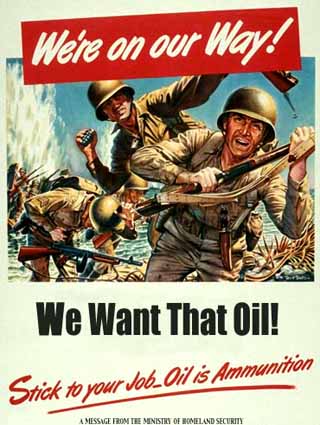
A long read that basically says get ready to welcome AFRICOM into 9ja Nigeria: Fertile Ground for Balkanization April 10, 2012 http://www.blacklistednews.com/Nigeria%3A_Fertile_Ground_for_Balkanization/18890/0/38/38/Y/M.html https://www.safecom.org.au/images/want-oil.jpg https://www.cosmosmith.com/images/uncle_sams_oil2.jpg |
| Politics › Re: Minister Farrakhan On Corruption In Nigeria by AfroBlue(m): 3:47am On Apr 11, 2012 |
Got another strong vid for yall from the late 50's http://video.google.com/videoplay?docid=6140647821635049109 http://en.wikipedia.org/wiki/The_Hat..._Hate_Produced The Hate That Hate Produced is a television documentary about the Nation of Islam. It was produced in 1959 by Mike Wallace and Louis Lomax. Public reaction The Hate That Hate Produced shocked many of the millions of people who watched it.[12] Most white people had never heard of the Nation of Islam before, and many were stunned to learn that some black people had such strong feelings toward white people.[13] For many white viewers, it was the first time they learned there was a radical black alternative to the Civil Rights Movement.[9] Some African Americans could not believe that black people were saying such things out loud, but more than a few agreed with it.[14] The number of people attending Nation of Islam meetings increased significantly,[7] and the group's membership doubled to 60,000 within weeks after the broadcast.[15][16][17] The Hate That Hate Produced catapulted Malcolm X to national attention. Although he had rarely been mentioned in the mainstream press before the program went out,[18] Malcolm X soon became a frequent participant in television debates on race-related issues and one of the most sought-after speakers on college campuses across the United States |
| Politics › Re: Over 20 Killed As Explosion Rocks Sadauna Crescent, Kaduna by AfroBlue(m): 7:09pm On Apr 08, 2012 |
reminder Nigeria: Targeted for Destruction For Those Who Have Ears to Hear By Gordon Duff, Senior Editor http://www.veteranstoday.com/2011/11/14/nigeria-targeted-for-destruction/ |
| TV/Movies › Scandal Dirty Little Secrets by AfroBlue(op): 3:59pm On Apr 08, 2012 |
Hopefully this plays for you. Synopsis, Ashy goes into business to protect the rich and powerful https://i.huffpost.com/gen/505010/thumbs/s-SCANDAL-large.jpg https://media.kansascity.com/smedia/2012/04/06/12/41/IsfK1.St.81.jpg Kerry Washington stars as Olivia Pope in the new ABC TV series "Scandal" New TV series “Scandal” based on real-life ‘fixer’ http://www.kansascity.com/2012/04/07/3540054/new-tv-series-scandal-based-on.html#storylink=cpy Scandal Dirty Little Secrets http://www.hulu.com/watch/348057/scandal-dirty-little-secrets http://uverseonline.att.net/tv/show/scandal 'Scandal' Episode 2 Sneak Peek: A Very Juicy Exclusive Scene From ABC's New Show http://www.huffingtonpost.com/2012/04/06/scandal-episode-2-sneak-peek_n_1406263.html |
| Foreign Affairs › Re: Is China A Threat To World Peace And Security? by AfroBlue(m): 4:38am On Apr 08, 2012 |
China Buys Inroads in the Caribbean, Catching U.S. Notice http://www.nytimes.com/2012/04/08/world/americas/us-alert-as-chinas-cash-buys-inroads-in-caribbean.html?pagewanted=all https://graphics8.nytimes.com/images/2012/04/08/world/JP-CARIBBEAN-2/JP-CARIBBEAN-2-articleLarge.jpg Tourists and locals enjoying the view at a restaurant and bar in Nassau, a beneficiary of China's largess. More Photos » http://www.nytimes.com/slideshow/2012/04/05/world/americas/20120406-CARIBBEAN.html * |
| Business › Re: How China Creates Jobs, A Lesson For Nigeria by AfroBlue(m): 4:36am On Apr 08, 2012 |
China Buys Inroads in the Caribbean, Catching U.S. Notice http://www.nytimes.com/2012/04/08/world/americas/us-alert-as-chinas-cash-buys-inroads-in-caribbean.html?pagewanted=all https://graphics8.nytimes.com/images/2012/04/08/world/JP-CARIBBEAN-2/JP-CARIBBEAN-2-articleLarge.jpg Tourists and locals enjoying the view at a restaurant and bar in Nassau, a beneficiary of China's largess. More Photos » http://www.nytimes.com/slideshow/2012/04/05/world/americas/20120406-CARIBBEAN.html * |








1 2 3 4 5 6 7 8 ... 43 44 45 46 47 48 49 50 51 (of 75 pages)