AfroBlue's Posts
Nairaland Forum › AfroBlue's Profile › AfroBlue's Posts
1 2 3 4 5 6 7 8 ... 53 54 55 56 57 58 59 60 61 (of 75 pages)
 Politics › Re: Jonathan: We Can’t Continue Subsidy With Borrowed Funds by AfroBlue(m): 4:10pm On Jan 04, 2012 Politics › Re: Jonathan: We Can’t Continue Subsidy With Borrowed Funds by AfroBlue(m): 4:10pm On Jan 04, 2012 |
| Politics › Re: How To Make Private Refineries Viable by AfroBlue(m): 4:07pm On Jan 04, 2012 |
| Politics › Re: Names Of Nigerian Corrupt Politicians,party And Their Loot. by AfroBlue(m): 4:06pm On Jan 04, 2012 |
| Foreign Affairs › Re: New India Spring Uprising On The Horizon by AfroBlue(op): 6:04am On Jan 03, 2012 |
I feel ya on the R world!igbo2011: Niggaz Are Scared of Revolution [flash=400,400] https://www.youtube.com/watch?v=kb-lYMyI54w?version=3&feature=player_detailpage[/flash] [img]http://1.bp..com/-DBbVJk5_C_c/TqcFBhGltHI/AAAAAAAAAZY/DsvgMQlF6e0/s1600/French_Guillotine.jpg[/img] https://www.marxist.com/images/stories/art/beethoven_guillotine.jpg In 1793 King Louis of France was executed by the Jacobins https://www.animationplayhouse.com/misc1-21.gif |
| Car Talk › Re: Petrol @ 97 Naira Per Litre ( Petrol Saving Tips For Your Cars & Suvs ) by AfroBlue(m): 5:19am On Jan 03, 2012 |
Excellent observation. Many around the world have taken to pedal power, I myself being one.Joey82: Bike Commuting By the Numbers Compared to Americans, Europeans are way out in front http://health.usnews.com/health-news/family-health/articles/2008/08/04/bike-commuting-by-the-numbers Cycling surges in the land of the automobile http://www.bbc.co.uk/news/world-us-canada-11415660 Cycling London - Urban Commuting by Bike http://cycling-london..com/ Bicycle Commuting Incentives: US v UK | Commute by Bike http://www.commutebybike.com/2010/11/19/bicycle-commuting-incentives-us-v-uk/ Help me make my longer cycle commute more fun http://www.guardian.co.uk/environment/green-living-blog/2010/sep/22/help-longer-cycle-commute-fun |
| Politics › Re: B Haram Saga; The Real Truth About Islam.(quoted Facts From Ancient History) by AfroBlue(m): 10:20pm On Jan 02, 2012 |
More real truth BH Boyz must have missed some lessons http://quran.com/5/82 You will surely find the most intense of the people in animosity toward the believers [to be] the Jews and those who associate others with Allah ; and you will find the nearest of them in affection to the believers those who say, "We are Christians." That is because among them are priests and monks and because they are not arrogant. http://www.scribd.com/doc/9665/What-Does-the-Quran-Say-About-Christians In the Qur'an, Christians are often referred to as among the "People of the Book,"i.e. people who have received and believed in previous revelation from God'sprophets. There are verses that highlight the commonalities between Christians and Muslims, and other verses that warn Christians against sliding towardspolytheism in their worship of Jesus Christ. Commonalities: "Surely those who believe, and those who are Jews, and the Christians, and the Sabians -- whoever believes in God and the Last Day and does good, they shall have their reward from their Lord. And there will be no fear for them, nor shall they grieve" (2:62, 5:69, and many other verses).", and nearest among them in love to the believers will you find those who say,'We are Christians,' because amongst these are men devoted to learning and men who have renounced the world, and they are not arrogant" (5:82)."O you who believe! Be helpers of God -- as Jesus the son of Mary said to the Disciples, 'Who will be my helpers in (the work of) God?' Said the disciples, 'Weare God's helpers!' Then a portion of the Children of Israel believed, and aportion disbelieved. But We gave power to those who believed, against their enemies, and they became the ones that prevailed" (61:14 |
| Romance › Re: Lebron James Bites D'banj's Romance Style by AfroBlue(op): 5:17pm On Jan 02, 2012 |
| Foreign Affairs › Re: New India Spring Uprising On The Horizon by AfroBlue(op): 8:45am On Jan 02, 2012 |
Team Anna defends black flag protest against Manmohan https://www.thehindu.com/multimedia/dynamic/00880/INDIA_CORRUPTION_PR_880811e.jpg Team Anna on Sunday defended the black flag protest against Prime Minister Manmohan Singh in Amritsar saying it was a reflection of people’s demand for a strong Lokpal. “Showing black flags is within the law. Hence it is a legitimate protest,” Team Anna member Kiran Bedi told PTI when asked whether she approved of the protest against the Prime Minister. Dr. Singh was shown black flags by anti-corruption crusader Anna Hazare’s supporters as he came out of Golden Temple after offering prayers in the New Year. Another Team Anna member Shazia Ilmi denied that the protesters were activists of India Against Corruption (IAC), which is spearheading the agitation demanding the enactment of a strong Lokpal law. “I don’t think it was done at the behest of Team Anna but it is a reflection of what people feel and think. I guess this is the result of people’s mood as they want a stringent anti-corruption law and this is being not done,” Ms. Ilmi told a television channel. Ms. Ilmi warned that other political parties may have to face such situations in future too as people are angry at the developments. Mr. Hazare had last week called off all programmes against a “weak” Lokpal Bill and said he will campaign against the Congress in the elections to the five states in the next two months. A meeting of Team Anna to chart the future course of action of the movement was to be held on Monday in Ralegan Siddhi but was cancelled as Mr. Hazare was hospitalised with chest congestion and other ailments. Keywords: Anti-Manmohan protest, black flag protest, Anna Hazare, Kiran Bedi, Team Anna http://www.thehindu.com/news/national/article2766236.ece |
| Foreign Affairs › Re: New India Spring Uprising On The Horizon by AfroBlue(op): 8:43am On Jan 02, 2012 |
The Lekki Toll demonstrations were encouraging.igbo2011: |
| Foreign Affairs › Re: Do You Believe Aliens Exists? by AfroBlue(m): 8:26am On Jan 02, 2012 |
https://www.rumormillnews.com/pix3/video-6a2.jpg Sunday, January 1, 2012 Message from the Galactic Federation 1/1/12 Ascension Earth 2012 Discussions concerning all matters of humanity's ascension into a higher dimensional existence culminating in 2012. http://www.ascensionearth2012..com/ |
| Romance › Re: Lebron James Bites D'banj's Romance Style by AfroBlue(op): 8:14pm On Jan 01, 2012 |
@mashnino Yeah playa that's the one, he also bought a piece of Liverpool football club LeBron James buys part of England’s Liverpool soccer club http://probasketballtalk.nbcsports.com/2011/04/06/lebron-james-buys-part-of-england%E2%80%99s-liverpool-soccer-club/ LeBron James and Savannah Brinson are engaged at New Year’s Eve party in Miami Pair have been dating since high school and have two children BY BERNIE AUGUSTINE NEW YORK DAILY NEWS Read more: http://www.nydailynews.com/sports/basketball/lebron-james-savannah-brinson-engaged-year-eve-party-miami-article-1.999457#ixzz1iEcrUl7Y [img]http://assets.nydailynews.com/polopoly_fs/1.999456.1325441864!/img/httpImage/image.jpg_gen/derivatives/landscape_485/image.jpg[/img] |
| Romance › Re: Lebron James Bites D'banj's Romance Style by AfroBlue(op): 8:10pm On Jan 01, 2012 |
Your boy will be in the Big Apple soon. http://www.mohitsrecords.com/dbanj-and-mohits-dbanj-live-in-nyc/ https://www.mohitsrecords.com/wp-content/uploads/2011/12/dbanj-NY3-540x607.jpg D'Banj and Mo'hits - "  'Banj Live in NYC" Tickets 'Banj Live in NYC" Ticketshttp://www.livenation.com/DBanj-and-Mohits-DBanj-Live-in-NYC-tickets/artist/1673523 United States & Canada (1) FEB 19 SUN Irving Plaza powered by Klipsch New York, NY 08:00 PM MsDarkSkin: |
| Romance › Re: ???????????????????? by AfroBlue(m): 8:00pm On Jan 01, 2012 |
@mg215 Don't forget to check out the honeys in East Africa. Quite a few stunners in this vid, especially at 2:31, 2:44, and 3:44 Nairobi's Beautiful Girls [flash=300,300] https://www.youtube.com/watch?v=O6rXCP_opJA?version=3&feature=player_detailpage[/flash] |
| Romance › Lebron James Bites D'banj's Romance Style by AfroBlue(op): 3:46pm On Jan 01, 2012 |
This thread could have gone in several sections but thought it appropriate to post on the Romance board since art imitates life and vice versa. Show of hands of the NL ladies. How many of you woke up this New Years morning with a brand new wedding engagement ring? Lebron James Proposes To Savannah http://necolebitchie.com/2012/01/01/lebron-james-proposes-to-savannah/#more-173096 It was a New Years Eve dinner and celebrations for King James 27th Birthday last night, however it was Lebron’s long-time girlfriend Savannah who walked away with the biggest gift. An engagement ring! Party guests that included Queen Latifah, Jessica White, Gabrielle Union, Dwyane Wade and more watched in awe as Lebron dropped to one knee and asked Savannah for her hand in marriage just after midnight Read more: Lebron James Proposes To Savannah | Necole Bitchie.com https://necolebitchie.com/wp-content/uploads/2012/01/Lebron-on-one-knee-2.jpg [flash=400,400] https://www.youtube.com/watch?v=7KhxmAD74Ck?version=3&feature=player_detailpage[/flash] |
| Foreign Affairs › New India Spring Uprising On The Horizon by AfroBlue(op): 1:44pm On Jan 01, 2012 |
Too much to cut and paste, the bot will delete it. https://www.davidicke.com/images/stories/December201195/innocentkashmiriinhumanely-mykashmir.jpg India. The Plight of the Rural and Urban Poor: In a Land of Facades, Mark the First Signs of an Indian Spring Saturday, 31 December 2011 08:00 http://globalresearch.ca/index.php?context=va&aid=28411 [img]http://globalresearch.ca/coverStoryPictures2/28411.jpg[/img] |
| Foreign Affairs › In A Land Of Facades, Mark The First Signs Of An Indian Spring by AfroBlue(op): 5:04pm On Dec 31, 2011 |
India. The Plight of the Rural and Urban Poor: In a Land of Facades, Mark the first Signs of an Indian Spring by John Pilger [img]http://globalresearch.ca/coverStoryPictures2/28411.jpg[/img] When the early morning fog rises and drifting skeins from wood fires carry the sweet smell of India, the joggers arrive in Lodi Gardens. Past the tomb of Mohammed Shah, the 15th century Munghal ruler, across a landscape manicured in the 1930s by Lady Willingdon, wife of the governor-general, recently acquired trainers stride out from ample figures in smart saris and white cotton dhotis. In Delhi, the middle classes do as they do everywhere, though here there is no middle. By mid-morning, children descend like starlings. They wear pressed blazers, like those of an English prep school. There are games and art and botany classes. When shepherded out through Lady Willingdon’s elegant stone gateway, they pass a reed-thin boy, prostrate beside the traffic and his pile of peanuts, coins clenched in his hand. When I was first sent to report India, I seldom raised my eyes to the gothic edifices and facades of the British Raj. All life was at dust and pavement level and, once the shock had eased, I learned to admire the sheer imagination and wit of people who survived the cities, let alone the countryside -- the dabbawallahs (literally “person with a box”), cleaners, runners, street barbers, poets, assorted Fagans and children with their piles of peanuts. In Calcutta, as it was still known during the 1971 war with Pakistan, civil defence units in soup-plate helmets and lungis toured the streets announcing an air-raid warning practice during which, they said, “everybody must stay indoors and remain in the face-down position until the siren has ceased to operate”. Waves of mocking laughter greeted them, together with the cry: “But we have no doors to stay inside!” When the imperial capital was transferred to Delhi early last century, New Delhi was built as a modernist showpiece, with avenues and roundabouts and a mall sweeping up to the viceroy’s house, now the president’s residence in the world’s most populous democracy. If the experience of colonialism was humiliating, this proud new metropolis would surely be enabling. On 15 August, 1947, it was the setting for Pandit Nehru’s declaration of independence “at the midnight hour”. It was also a façade behind which the majority hoped and waited, and still wait. This notion of façade is almost haunting. You sense it in genteel Lodi Gardens and among the anglicised elites and their enduring ambiguity. In the 1990s, it became a wall erected by the beneficiaries of Shining India, which began as a slogan invented by an American advertising firm to promote the rise of the Hindu nationalist BJP-led government. Shorn of Nehru’s idealism and paternalism, it marked the end of the Congress Party’s pretence of class and caste reconciliation: in other words, social justice. Monsanto and Pizza Hut, Microsoft and Murdoch were invited to enter what had been forbidden territory to corporate predators. India would serve a new deity called “economic growth” and be hailed as a “global leader, apparently heading “in what the smart money believes is the right direction” (Newsweek). India’s ascent to “new world power” is both true and what Edward Bernays, the founder of public relations, called “false reality”. Despite a growth rate of 6.9 per cent and prosperity for some, more Indians than ever are living in poverty than anywhere on earth, including a third of all malnourished children. Save the Children says that every year two million infants under the age of five die. The facades are literal and surreal. Ram Suhavan and his family live 60 feet above a railway track. Their home is the inside of a hoarding which advertises, on one side, “exotic, exclusive” homes for the new “elite” and on the other, a gleaming car. This is in Pune, in Maharashtra state, which has “booming” Bombay and the nation’s highest suicide rate among indebted farmers. Most Indians live in rural villages, dependent on the land and its rhythms of subsistence. The rise of monopoly control of seed by multinationals, forcing farmers to plant cash crops such as GM cotton, has led to a quarter of a million suicides, a conservative estimate. The environmentalist Vandana Shiva describes this as “re-colonisation”. Using the 1894 Land Acquisition Act, central and state governments have forcibly dispossessed farmers and tribal peoples in order to hand their land to speculators and mining companies. To make way for a Formula One racetrack and gated “elite” estates, land was appropriated for $6 a square metre and sold to developers for $13,450 a square metre. Across India, the communities have fought back. In Orissa State, the wholesale destruction of betel farms has spawned a resistance now in its fifth year. What is always exciting about India is this refusal to comply with political mythology and gross injustice. In The Idea of India, wrote Sunil Kjilnani, “The future of western political theory will be decided outside the west.” For the majorities of India and the west, liberal democracy was now diminished to “the assertion of an equal right to consume [media] images”. In Kashmir, a forgotten India barely reported abroad, a peaceful resistance as inspiring as Tahrir Square has arisen in the most militarised region on earth. As the victims of Partition, Muslim Kashmiris have known none of Nehru’s noble legacies. Thousands of dissidents have “disappeared” and torture is not uncommon. “The voice that the government of India has tried so hard to silence,” wrote Arundhati Roy, “has now massed into a deafening roar. Hundreds of thousands of unarmed people have come out to reclaim their cities, their streets and mohallas. They have simply overwhelmed the heavily armed security forces by their sheer numbers, and with a remarkable display of raw courage.” An Indian Spring may be next. https://www.davidicke.com/images/stories/December201195/innocentkashmiriinhumanely-mykashmir.jpg |
| Foreign Affairs › Re: The Lawsuit That Could End The Gangster Rule Of Western Civilization by AfroBlue(op): 5:35am On Dec 31, 2011 |
[flash=400,400] https://www.youtube.com/watch?v=Wc_O6oXFuVg?version=3&feature=player_detailpage[/flash] 911 Why it was done Benjamin Fulford https://www.youtube.com/watch?v=Wc_O6oXFuVg Benjamin Fulford Update - AFRadio last night -audio Date: Friday, 30-Dec-2011 10:20:44 Host of Strange Universe, Sean David Morton had Benjamin Fulford on the first hour of his show 12/29/2011. What do the Globalists have planned for 2012? http://www.americanfreedomradio.com/archive/Strange-Universe-32k-122911.mp3 |
| Politics › Re: *~ Gbawe Voted The Politics Section Poster Of The Year *~ Congratulations by AfroBlue(m): 9:55am On Dec 30, 2011 |
Congrats Brother Gbawe, it's a pleasure to read you analysis of news and topics. hip hip hip hip hip hip hooray https://www.thenetng.com/wp-content/uploads/2011/12/A-Toast-For-Tee-A-2-copy.jpg |
| Politics › Re: Congratulation, Gbawe by AfroBlue(m): 9:54am On Dec 30, 2011 |
Congrats Brother Gbawe, it's a pleasure to read you analysis of news and topics. hip hip hip hip hip hip hooray https://www.thenetng.com/wp-content/uploads/2011/12/A-Toast-For-Tee-A-2-copy.jpg |
| Foreign Affairs › Re: Drug Gangs Strike Back In Rio’s ‘pacified’ Slums by AfroBlue(op): 9:40am On Dec 30, 2011 |
@MRbrownJAY I almost envy you for living in one of the best economies in the world right now, and we won't mention the women again. The have been buying up Miami recently. Miami Has a Hearty Oi (Hello) for Free-Spending Brazilians http://www.nytimes.com/2011/12/28/us/miami-courts-free-spending-brazilians.html?_r=1&scp=1&sq=miami&st=cse |
| Politics › Re: Former Acn Councillor Killed By Stray Bullet by AfroBlue(m): 9:30am On Dec 30, 2011 |
Stray bullet kills ACN chieftain in Lagos Published on 30 December 2011 with 0 comments [Post a Comment] Mansur Oladunjoye Stray bullet on Wednesday night killed an Action Congress of Nigeria (ACN) politician, Sulaimon Aremu Ekun while separating mother and daughter engaged in a scuffle on Lagos Island, Lagos state. An eyewitness account told Daily Champion that the bullet may have been fired by Policemen attached to the nearby Central Bank of Nigeria (CBN). A source (names withheld) told our reporter that Ekun was returning from the mosque after Ishah (night prayer) and was deep into separating the woman from her wayward daughter at Obadina/Obe streets junction when he suddenly held his stomach and slumped forward. The source told our reporter that the woman who also saw blood oozing out from Ekun’s eyes, ear, mouth and head immediately shouted emo wo leyi; egba mi o (what strange thing is this; please people come to my aid) took to her heels with her daughter too taking another way to flee the scene. "He held his head and complained of something hitting him on the head and before any help could come, he has started bleeding from eyes skull, ear and mouth", the witness revealed. Sympathizers who were attracted by the shouting later gathered to take the dying politician to the nearby General Hospital on Island where they sought emergency medical attention. It was there that they were asked to go to the X-ray centre at Ajegunle area where a bullet was discovered lodged in his skull. However, Daily Champion reliably learnt that the sympathizers and relatives were directed to the State University Teaching Hospital (LASUTH) Ikeja for proper and better medical attention, only for Ekun to die on the way. A family member who spoke with our correspondent on the ground of anonymity disclosed that, "After the X-ray, he was taken back to General hospital, Lagos around 2.30am where he was referred back to Lagos State University Teaching Hospital, Ikeja, but unfortunately, he died before we got there." The remains of Sulaiman were later taken to the Lagos Island Local Government secretariat at Freeman Street for prayer before been buried at Okesuna burial ground, according to the Muslim rites. The Chairman Obadina Community Development Association (CDA), Alhaji Raheem Adeniji described the incident as tragedy, dispelling the contrary rumour making round that he must have been attacked spiritually. Also, the Chairman of Pashi/Willoughby CDA, Alhaji Ibrahim Oladapo described late Sulaiman as gentle person who served the community with honesty during his two-term tenure as councillor. He also called on the Police on Island to probe the mystery surrounding Hon. Sulaiman’s death, especially when it was discovered that there was bullet inside his skull. Late Sulaiman, aged 47years was the immediate past councillor of Ward B3 in Lagos Island Local government under the leadership chairman Lookman Ajose was survived by aged mother, senior and junior brothers/sisters, two wives and children. http://www.champion.com.ng/displaycontent.asp?pid=15266 |
| Foreign Affairs › Re: Jamaica's Opposition People's National Party Wins Election by AfroBlue(op): 9:27am On Dec 30, 2011 |
https://www.jamaicaobserver.com/assets/7492115/Holness-portia-29_w445.jpg https://gallery.jamaica-gleaner.com/gallery/cache/jlp-mass-meeting-naggo-head/naggoheadjlpn20111226gt_595.jpg https://gallery.jamaica-gleaner.com/gallery/cache/jlp-mass-meeting-naggo-head/naggoheadjlpr20111226gt_595.jpg https://gallery.jamaica-gleaner.com/gallery/cache/pnp-mass-meeting-naggo-head/pnpj20111222ws_595.jpg |
| Foreign Affairs › Re: Jamaica's Opposition People's National Party Wins Election by AfroBlue(op): 9:26am On Dec 30, 2011 |
Jamaica's Opposition Wins Elections in a Landslide KINGSTON, Jamaica (AP) — On Jamaica's rutted streets, the complaints have been chronic — home ownership is out of reach for most wage earners, the cost of electricity has skyrocketed, water service regularly fizzles out and decent jobs are scarce. Fed up with chronic hard times, voters in this debt-wracked Caribbean nation on Thursday threw out the ruling party and delivered a landslide triumph to the opposition People's National Party, or PNP, whose campaign energetically tapped voter disillusionment especially among the numerous struggling poor. The win marks a remarkable political comeback for former Prime Minister Portia Simpson Miller, who was Jamaica's first female leader during her year-and-a-half-long first stint in office that ended in 2007. The 66-year-old known affectionately as "Sista P" reached out to Jamaicans as a champion of the poor with a popular touch. "She cares about the ghetto people," said Trishette Bond, a twenty-something resident of gritty Trench Town who wore an orange shirt and a bright orange wig, the color of Simpson Miller's slightly center-left party, which led the island for 18 years before narrowly losing 2007 elections. As word of her election win emerged Thursday night, PNP supporters shimmied and shouted in the capital, Kingston, and motorists honked horns in celebration as they tore down the streets. "I am humbled as I stand before you and I wish to thank the Jamaican people for their love, for their support and for giving the People's National Party and the leader of the party her own mandate," she said, after receiving hugs from numerous candidates, some crying. Simpson Miller defeated Prime Minister Andrew Holness, who at 39 is Jamaica's youngest leader and leads the center-right Jamaica Labor Party. Holness said the defeat will prompt a time of introspection and reflection for party leaders to examine what went wrong. "I wish the new government well. We hope for the benefit of the country that they will do a good job," said Holness, who warned during the campaign that an opposition win would scare away foreign investment and dash hopes of economic progress. While official results have not been released, elections director Orrette Fisher told The Associated Press that preliminary results showed Simpson Miller heading to victory. "Based on the margins, it appears safe to say" that Simpson Miller's party won, Fisher said shortly after Jamaican newspapers and broadcasters called the election for the PNP. He expected his office to release the official count and breakdown of parliamentary seats on Saturday. News station TVJ said Simpson Miller's People's National Party won 41 seats in parliament and Holness's Jamaica Labor Party 22. Simpson Miller is beloved by her supporters for her folksy, plainspoken style. She became Jamaica's first female prime minister in March 2006 after she was picked by party delegates when P.J. Patterson retired as leader. But she was tossed out of office a year later in a narrow election defeat. This time around, she has pledged to lift debt-wracked Jamaica out of poverty, secure foreign investment, and create jobs. Specifics are few, however. Her party will face deep economic problems in this island of 2.8 million people, with a punishing debt of roughly $18.6 billion, or 130 per cent of gross domestic product. That's a rate about 10 percentage points higher than debt-troubled Italy's. Veteran opposition lawmaker Omar Davies said one of the first things the People's National Party will do is get "a true assessment of the state of the economy," a dig at Holness' party which was accused of rarely providing citizens with a clear picture of the island's dire fiscal straits. Holness, who became prime minister two months ago after Bruce Golding, Jamaica's leader since 2007, abruptly stepped down in October amid anemic public backing, won his parliamentary seat with 54 percent of the vote. Simpson Miller has been a stalwart of the People's National Party since the 1970s. She was first elected to Parliament in 1976 and became a Cabinet member in 1989. Partisans have long admired Simpson Miller as a Jamaican who was born in rural poverty and grew up in a Kingston ghetto, not far from the crumbling concrete jungle made famous by Bob Marley. During her brief tenure as prime minister, her support waned amid complaints she responded poorly to Hurricane Dean and was evasive about a scandal regarding a Dutch oil trading firm's $460,000 payment to her political party leading up to 2007 elections. The two top candidates' different styles were clear while they cast their votes. Holness is largely seen as unexciting, but bright and pragmatic. He whisked into the voting center in the middle class area of Mona, barely interacting with voters. After being heckled by an opposition partisan, he said he was "very confident" of a Labor victory and departed after taking three questions from reporters. By contrast, Simpson Miller hugged and chatted with supporters at a school in Whitfield Town and told election workers to help struggling elderly voters. Her party, which experimented with democratic socialism in the 1970s, is still perceived as more focused on social programs than the slightly more conservative Labor. There are no longer stark ideological differences between the two clan-like factions that have dominated Jamaican politics since the onetime British colony began self-rule in 1944. Jamaica became independent within the British Commonwealth in 1962. ___ Associated Press Writer Howard Campbell in Kingston contributed to this report. Report to mo |
| Foreign Affairs › Jamaica's Opposition People's National Party Wins Election by AfroBlue(op): 9:21am On Dec 30, 2011 |
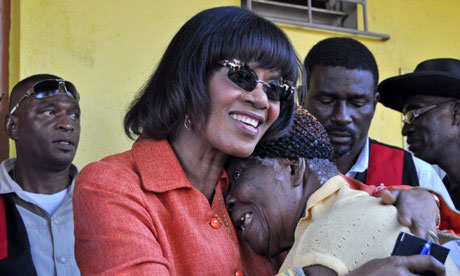
Jamaica's opposition People's National Party wins election Voters in Jamaica gave the country's first female leader Portia Simpson Miller a second chance to govern the island. https://static.guim.co.uk/sys-images/Guardian/About/General/2011/12/30/1325219851920/Jamaicas-prime-minister-P-006.jpg Jamaica's first female prime minister and the leader of the left-leaning People's National Party (PNP) Portia Simpson Miller hugs a supporter following election victory. Photograph: Ratiba Hamzaoui/AFP/Getty Images Jamaica's opposition capitalised on discontent over the economy to return to power on Thursday, as voters gave the country's first female leader a second chance to govern the island. Supporters of former Prime Minister Portia Simpson Miller, 66, shimmied and shouted in the capital, Kingston, as they heard that the centre-right government of Prime Minister Andrew Holness had been defeated and their candidate had staged a dramatic political comeback in general elections. Holness, Jamaica's youngest prime minister at 39, said the defeat will prompt a time of introspection and reflection for party leaders to examine what went wrong. "I wish the new government well," Holness told reporters. "We hope for the benefit of the country that they will do a good job." While official results have not been released, elections director Orrette Fisher told the Associated Press that preliminary results showed Simpson Miller heading to victory. "Based on the margins, it appears safe to say" that Simpson Miller's party won, Fisher said shortly after Jamaican newspapers and broadcasters called the election for her slightly left-leaning political faction. He expected his office to release the official count and breakdown of parliamentary seats on Saturday. News station TVJ said Simpson Miller's People's National Party won 41 seats in parliament and Holness's Jamaican Labor Party 22. Simpson Miller is beloved by her supporters for her folksy, plain spoken style and is re referred to affectionately as "Sista P" and "Comrade Leader." She became Jamaica's first female prime minister in March 2006 after she was picked by party delegates when P.J. Patterson retired as leader. But she was tossed out of office a year later in a narrow election defeat. On Thursday, she thanked her supporters at party headquarters in Kingston, where more than a thousand elated partisans decked out in the party's colour of orange swayed to reggae and soul tunes, waved flags and clapped hands. "I am humbled as I stand before you and I wish to thank the Jamaican people for their love, for their support and for giving the People's National Party and the leader of the party her own mandate," she said, after receiving hugs from numerous candidates, some crying. Her party will face deep economic problems in this island of 2.8 million people, with a punishing debt of roughly $18.6 billion, or 130% of gross domestic product. That's a rate about 10 percentage points higher than debt-troubled Italy's. Veteran opposition lawmaker Omar Davies said one of the first things the People's National Party will do is get "a true assessment of the state of the economy," a dig at Holness' party which was accused of rarely providing citizens with a clear picture of the island's dire fiscal straits. Holness, who became prime minister two months ago after Bruce Golding, Jamaica's leader since 2007, abruptly stepped down in October amid anemic public backing, won his parliamentary seat with 54% of the vote. Political commentator Patrick Bailey said Holness, who was a respected education minister before becoming prime minister, shouldn't be blamed for the loss. "In fact, he is the one who made it competitive for the JLP," Bailey said. Simpson Miller has been a stalwart of the People's National Party since the 1970s. She paints herself as a champion of the poor and was first elected to Parliament in 1976 and became a Cabinet member in 1989. Partisans have long admired Simpson Miller as a Jamaican who was born in rural poverty and grew up in a Kingston ghetto, not far from the crumbling concrete jungle made famous by Bob Marley. During her brief tenure as prime minister, her support waned amid complaints she responded poorly to Hurricane Dean and was evasive about a scandal regarding a Dutch oil trading firm's $460,000 payment to her political party leading up to 2007 elections. After she was defeated in 2007 elections, she remained leader of the People's National Party, setting the stage for a political comeback. The two top candidates' different styles were clear while they cast their votes. Holness is largely seen as unexciting, but bright and pragmatic. He whisked into the voting centre in the middle class area of Mona, barely interacting with voters. After being heckled by an opposition partisan, he said he was "very confident" of a Labor victory and departed after taking three questions from reporters. By contrast, Simpson Miller hugged and chatted with supporters at a school in Whitfield Town and told election workers to help struggling elderly voters. Her party, which experimented with democratic socialism in the 1970s, is still perceived as more focused on social programs for the poor than the slightly more conservative Labor. There are no longer stark ideological differences between the two clan-like factions that have dominated Jamaican politics since the one-time British colony began self-rule in 1944. Jamaica became independent within the British Commonwealth in 1962. She has inspired some hope for a young, struggling nation fed up with chronic hard times. "She cares about the ghetto people," said Trishette Bond, a twenty-something resident of gritty Trench Town who wore an orange shirt and a bright orange wig to show her allegiance to the People's National Party. Voting photos http://www.jamaicaobserver.com/news/MORE-PHOTOS--Election-2011 https://www.jamaicaobserver.com/assets/7496234/DSC_3191.jpg |
| Foreign Affairs › Re: Drug Gangs Strike Back In Rio’s ‘pacified’ Slums by AfroBlue(op): 7:46pm On Dec 29, 2011 |
[img]http://im.media.ft.com/content/images/505392be-31ec-11e1-9be2-00144feabdc0.img[/img] According to a study by Mr Henrique de Cristo, 16.6 per cent of Rio’s population, or more than 1m people, live under the drug warlords outside the control of the government. Their average income is about one-third of that of regular neighbourhoods, murder rates are nearly twice as high and teenage pregnancies are five times higher. “When you are a teenager, between 12 and 15 years old, you have two choices here – continue your education or join the traficantes [traffickers],” says Leandro Lima, a local journalist and native of Rocinha. “Soldiers” in the drug gangs can earn $1,000 a week, a small fortune compared to what most youths earn, he says. There is also a racial divide. More than half of the population of the favelas is black, compared with less than 7 per cent elsewhere. Activists allege favela residents receive worse treatment from the Rio police, who killed one person for every 23 they arrested in 2008 – compared with one for every 37,000 in the US, according to Human Rights Watch. Conditions improve markedly after the favelas are pacified. The scheme first caught global attention a year ago when Rio’s elite paramilitary force, the Police Special Operations Battalion, or Bope, was filmed driving gangsters from Rio’s giant Complexo do Alemao favela. While local populations still distrust the police, Mr Henrique de Cristo says they support the presence of the UPPs – police posts set up in pacified slums and occupied by officers trained in community policing after Bope has pulled out. The challenge is how to expand and sustain the UPP scheme. Bope says it has pacified only 19 out of 130 gang-controlled favelas and is aiming to get to 40 by 2014. But some question whether Rio has the resources: by some estimates, the city would need to increase its police force by more than half to occupy all the drug lords’ territory. The strains of not deploying enough police are already visible in Rocinha, the locals claim. Although the state governor says Rocinha will receive a UPP next year, for the moment it will have to make do with patrols by Bope. Residents claim life was more secure under the ADA, the gang that ruled Rocinha and which prohibited theft. Fabiana França, the six-months-pregnant owner of a small clothes shop down one of Rocinha’s dark alleyways, says a neighbour was recently assaulted and had her Christmas bonus stolen. “Safer? No, it’s less safe! All the police go home about 8pm or 9pm,” she says. “I’ve now put up bars on my windows where I live.” |
| Foreign Affairs › Drug Gangs Strike Back In Rio’s ‘pacified’ Slums by AfroBlue(op): 7:46pm On Dec 29, 2011 |
Drug gangs strike back in Rio’s ‘pacified’ slums By Joe Leahy and Samantha Pearson in Rocinha, Rio de Janeiro [img]http://im.media.ft.com/content/images/3fbf845a-316d-11e1-aeec-00144feabdc0.img[/img] Members of the special police unit Bope during a raid on a favela in Rio de Janeiro The staff at Ricardo Eletro were pulling down the shutters on their electronics store after a frantic day serving pre-Christmas shoppers when the gunmen appeared. Thiago Marinho, manager of the store, which is on the main road of Rocinha, one of Rio de Janeiro’s most notorious favelas, or slums, stood by helplessly as the five bandits stole money, mobile phones and other electrical goods. This kind of attack was not meant to happen any more. Paramilitary police invaded Rocinha in November, driving out the armed drug traffickers who had controlled the area for decades. “They weren’t even wearing hoods,” says Mr Marinho of his assailants. “Rocinha is huge. There just aren’t enough police now to look after the place. Two other little shops were robbed, too.” A sprawl of shacks on a mountain overlooking Rio’s posh Ipanema and Leblon beach districts, Rocinha is the latest favela to come under the city’s “police pacification unit”, or UPP, programme. Aimed at recovering the large areas of Rio controlled by drug gangs with names such as Amigos dos Amigos (Friends of Friends) or Comando Vermelho (Red Command), the scheme is seen as crucial to Rio’s plan to host the football World Cup final in 2014 and the Olympics two years later. Thanks partly to the UPP programme, murders have fallen from 35 per 100,000 inhabitants in metropolitan Rio in 2008 to an estimated 26.7 last year – close to the national average, according to the Sangari Institute, which tracks homicides in Brazil. “This is a policy that society itself has adopted,” Rio’s state governor Sérgio Cabral recently told Brazil’s O Globo news network. “Once society has adopted a policy, no politician can roll it back.” But even Mr Cabral knows that rooting out Rio’s entrenched “narco-dictatorships” is a gargantuan task. The problem dates from the 1970s, when Brazil’s former military rulers jailed common criminals and leftwing guerrillas alongside each other. On their release, the criminals adopted guerrilla-style tactics and began occupying territory. “The idea was to have this red wave to take over the city and set up an alternative state – but then cocaine came into the picture,” says Pedro Henrique de Cristo, consultant to the UN-Habitat programme aimed at reintegrating Rio’s favelas. |
| Romance › Re: Who Should Push The Shopping Cart? by AfroBlue(m): 4:39pm On Dec 29, 2011 |
Whoever wants to bend their elbow and use fork or spoon. |
| Politics › Re: Obama's Records Are Terrible by AfroBlue(m): 3:23pm On Dec 29, 2011 |
The borrower is slave to the lender(banks). When you are in debt to another, you enter into a slave/master relationship with your creditor. (Proverbs 22:7) Obama to ask for debt limit hike: Treasury official [img]http://s1.reutersmedia.net/resources/r/?m=02&d=20111227&t=2&i=551600884&w=460&fh=&fw=&ll=&pl=&r=BTRE7BQ16SV00[/img] WASHINGTON | Tue Dec 27, 2011 11:33am EST (Reuters) - The White House plans to ask Congress by the end of the week for an increase in the government's debt ceiling to allow the United States to pay its bills on time, according to a senior Treasury Department official on Tuesday. The approval is expected to go through without a challenge, given that Congress is in recess until later in January and the request is in line with an agreement to keep the U.S. government funded into 2013. The debt is projected to fall within $100 billion of the current cap by December 30, when the United States has $82 billion in interest on its debt and payments such as Social Security coming due. President Barack Obama is expected to ask for authority to increase the borrowing limit by $1.2 trillion, part of the spending authority that was negotiated between Congress and the White House this summer. Under the agreement struck in August during the showdown over the government's debt limit, the cap is automatically raised unless Congress votes to block the debt-ceiling extension. Lawmakers have 15 days within receiving the request to vote, which is largely symbolic because the president can veto it and Congress would be unlikely to muster the two-thirds majority to override it. Moreover, the U.S. House of Representatives also is in recess until January 17. The deal called for raising the debt ceiling by $2.1 trillion to serve the nation's borrowing needs into 2013 and also included mandatory cuts to the federal budget deficit. Since then, the extension has been increased twice by a total of $900 billion. The debt limit currently stands at $15.194 trillion and would increase to $16.394 trillion with the request. (Reporting By Margaret Chadbourn; Editing by Chizu Nomiyama) POLITICS |
| Foreign Affairs › Re: (proverbs 22:7) by AfroBlue(op): 3:20pm On Dec 29, 2011 |
2012 Budget Breakdown by sectors (Defence is the biggest) Budget Breakdown per Daily Trust President Goodluck Jonathan, this afternoon, presented the proposed 2012 budget to the joint session of the National Assembly. https://www.nairaland.com/nigeria/topic-824151.0.html |
| Foreign Affairs › (proverbs 22:7) by AfroBlue(op): 3:15pm On Dec 29, 2011 |
The borrower is slave to the lender(banks). When you are in debt to another, you enter into a slave/master relationship with your creditor. (Proverbs 22:7) Obama to ask for debt limit hike: Treasury official [img]http://s1.reutersmedia.net/resources/r/?m=02&d=20111227&t=2&i=551600884&w=460&fh=&fw=&ll=&pl=&r=BTRE7BQ16SV00[/img] WASHINGTON | Tue Dec 27, 2011 11:33am EST (Reuters) - The White House plans to ask Congress by the end of the week for an increase in the government's debt ceiling to allow the United States to pay its bills on time, according to a senior Treasury Department official on Tuesday. The approval is expected to go through without a challenge, given that Congress is in recess until later in January and the request is in line with an agreement to keep the U.S. government funded into 2013. The debt is projected to fall within $100 billion of the current cap by December 30, when the United States has $82 billion in interest on its debt and payments such as Social Security coming due. President Barack Obama is expected to ask for authority to increase the borrowing limit by $1.2 trillion, part of the spending authority that was negotiated between Congress and the White House this summer. Under the agreement struck in August during the showdown over the government's debt limit, the cap is automatically raised unless Congress votes to block the debt-ceiling extension. Lawmakers have 15 days within receiving the request to vote, which is largely symbolic because the president can veto it and Congress would be unlikely to muster the two-thirds majority to override it. Moreover, the U.S. House of Representatives also is in recess until January 17. The deal called for raising the debt ceiling by $2.1 trillion to serve the nation's borrowing needs into 2013 and also included mandatory cuts to the federal budget deficit. Since then, the extension has been increased twice by a total of $900 billion. The debt limit currently stands at $15.194 trillion and would increase to $16.394 trillion with the request. (Reporting By Margaret Chadbourn; Editing by Chizu Nomiyama) POLITICS |
| Politics › Re: Any Practical Steps To Defeat Terrorism In Nigeria? by AfroBlue(m): 3:10pm On Dec 29, 2011 |
Start with defeating the looters of the national and state treasuries that are living it up in Dubai. |









1 2 3 4 5 6 7 8 ... 53 54 55 56 57 58 59 60 61 (of 75 pages)