Gbawe's Posts
Nairaland Forum › Gbawe's Profile › Gbawe's Posts
1 2 3 4 5 6 7 8 ... 183 184 185 186 187 188 189 190 191 (of 460 pages)
 Foreign Affairs › Re: Please Let Nelson Mandela Depart Peacefully by Gbawe: 8:26pm On Mar 29, 2013 Foreign Affairs › Re: Please Let Nelson Mandela Depart Peacefully by Gbawe: 8:26pm On Mar 29, 2013 |
[quote author=ndu_chucks]I don't believe you can show that I insulted her hero. I have a right to my opinion.[/quote]I bet you are the sort who used to put bugs in people's shoes when young? In school you probably got caned regularly for mischief-making? Ndu Chucks, why do you like looking for wahala so much? |
| Foreign Affairs › Re: Please Let Nelson Mandela Depart Peacefully by Gbawe: 8:21pm On Mar 29, 2013 |
Aigbofa: Why don't you just tell her you love her instead of insulting her hero? Is that how you woo girls these days?When I read from Ndu Chucks, I always think of those Nigerians flush with petrodollar, bored out of their brains and just happy to ferment mischief and wind everyone up to amuse themselves. Oni jogbon eniyan ni Ndu Chucks.  |
| Politics › Re: Mokola Flyover Bridge, Ibadan. Pics.. by Gbawe: 8:12pm On Mar 29, 2013 |
django1: The best thing a governor can do in Nigeria is to not do anything. People won't have cause to be asking you how much it cost to do what you do.I just don't get some Nigerians. Is it that suffering has turned many into dark souls who are forever given to complaining and focusing on the negatives? Governors who are doing nothing right now are not being asked silly questions anyone can gain answers to if really interested. These SW Governors are delivering some much needed infrastructural projects with some projects even being first of its kind yet there is never discussions on the benefits of these project. Instead, all we hear are bitter, disgruntled sound bites when zero motion, infrastructure-wise, was the case in the past. |
| Politics › Re: Jonathan To Eliminate Power Outage By 2012 by Gbawe: 8:03pm On Mar 29, 2013 |
lakhadimar: INSECURE9IGERIAN WHERE ARE YOU? THIS IS ONE OF THE MANY LIES YOUR MENTOR BEAF SPLASHED ALL OVER NAIRALAND LAST YEARBusy running away faster than Usain Bolt |
| Foreign Affairs › Re: Please Let Nelson Mandela Depart Peacefully by Gbawe: 7:39pm On Mar 29, 2013 |
sweetcheecks: Look I would rather have you not know or care about Mandela than show your care in this mannar. Let me repeat this, most SA's do not know or care about Achebe that is the truth. You can also stop your care for Mandela if you want but that is not an insult. Why should anyone care about someone they doI can see you have issues and just want to come here and fight Nigerians. Have you actually read my contribution here? What is wrong with you? Look, If you claim you and most South Africans don't care about Achebe then good for you. You have made your point and can leave issues as they are. Many of us do not agree with OP but you clearly want an argument with everyone that is why you seem to want to join issues with every poster here. |
| Foreign Affairs › Re: Please Let Nelson Mandela Depart Peacefully by Gbawe: 7:21pm On Mar 29, 2013 |
Aigbofa: What a bizarre thread. How can anybody who is not Mandela's immediate family or doctor speculate on his condition. And if he is still responding to treatment, why in the name of God should that be stopped?That is Ndu Chucks for you. Too much 'Ashe ju'. He will never accept correction either. Can I speculate about his own ailing relative like that while insinuating him and his sibling are keeping the ill family member alive for "selfish" reasons? |
| Foreign Affairs › Re: Please Let Nelson Mandela Depart Peacefully by Gbawe: 7:17pm On Mar 29, 2013 |
sweetcheecks: You are the first to be all emotional butyour people are the ones who make insulting statements first. Anyhow where was Achebe insultedLook, I am only telling you to direct your issues against the guilty Party and not Nigerians or her respected icons. I don't see how what you wrote below is not disrespectful: We did not know or care what was up with him.Why would you say that if a cultured person? I.e speak feudally and as if it is good for any African to spitefully claim he/she is not interested in one of the greatest icons of the continent? There is nothing, no provocation at all, any South African can say that will make me say similar i.e "We did not know or care what was up with Mandela". Respect and affection for Mandela, for correctly 'calibrated' Africans, is above Nationalism and feudalism. If you don't get it, then feel free to think it is a good thing to say you don't care about respected Africans who have done wonderful things for our continent as a whole and made us all proud regardless of our nation of origin. You will notice some of us do not agree with the OP and we have made this known so stop the ugly generalisation against Nigerians. |
| Politics › Re: Defining The Afropolitan by Gbawe(op): 7:07pm On Mar 29, 2013 |
http://www.msafropolitan.com/afropolitan Afropolitan Quotes |
| Politics › Re: Defining The Afropolitan by Gbawe(op): 6:59pm On Mar 29, 2013 |
berem: Oh now i understand! these people are more of celebrities than Afropolitans. or are both the same?They are the celebrity faces of what an Afropolitian is. An Afropolitan, simplistically, is anyone who is an academically and professionally successful 'citizen of the world' with an African background they are proud of and identify with passionately. In fact, one thing many Afropolitans will have in common is the passion for Africa that draws them into collaborative endeavours/association with the continent regardless of where they live. Afropolitan is simply a witty and thematic spin of cosmopolitan. |
| Politics › Re: Defining The Afropolitan by Gbawe(op): 6:50pm On Mar 29, 2013 |
http://www.guardian.co.uk/books/2013/mar/22/taiye-selasi-interview-ghana-must Taiye Selasi: 'I'm very willing to follow my imagination' |
| Politics › Re: Defining The Afropolitan by Gbawe(op): 6:44pm On Mar 29, 2013 |
http://www.guardian.co.uk/books/2013/mar/22/taiye-selasi-afropolitan-memoir Taiye Selasi on discovering her pride in her African roots |
| Politics › Re: Defining The Afropolitan by Gbawe(op): 6:40pm On Mar 29, 2013 |
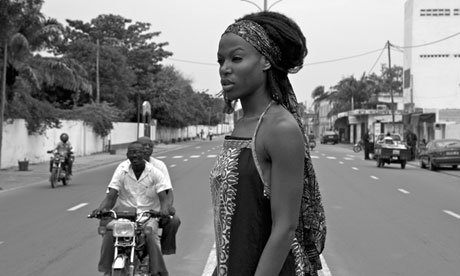
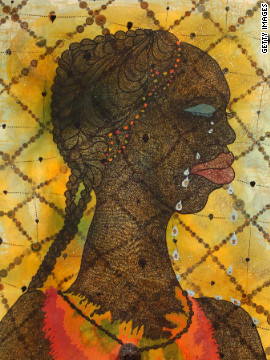
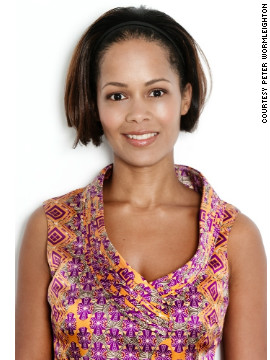
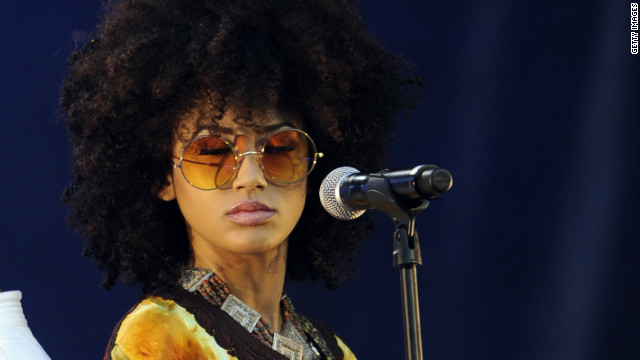
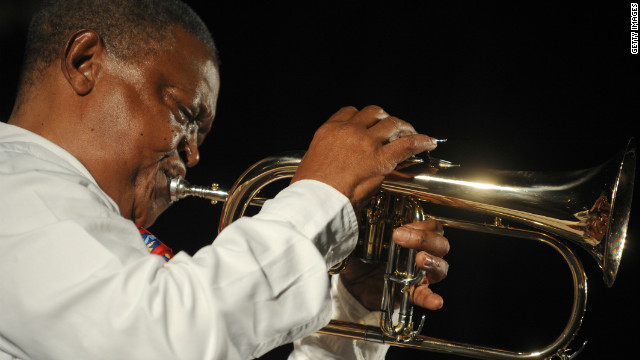
https://i2.cdn.turner.com/cnn/dam/assets/120215112101-chris-ofili-no-woman-no-cry-vertical-gallery.jpg Artist Chris Ofili was born in Manchetser, England to Nigerian parents. His work has drawn inspiration from a research trip to Zimbabwe. He is a former winner of Britain's prestigious Turner Prize for art, and his works include "No Woman, No Cry," pictured. https://i2.cdn.turner.com/cnn/dam/assets/120216094136-hazel-aggrey-orleans-vertical-gallery.jpg London-based fashion designer Hazel Aggrey-Orleans was born in Germany to a German mother and Nigerian father, and grew up in Lagos, Nigeria. She says her colorful designs reflect her multi-cultural background and global travels. https://i2.cdn.turner.com/cnn/dam/assets/120215111818-andy-allo-horizontal-gallery.jpg Andy Allo is a Cameroonian singer and guitarist who's now based in the United States. She has performed with Prince and produces what she describes as "alter-hip-soul. https://i2.cdn.turner.com/cnn/dam/assets/120215113307-hugh-masekela-horizontal-gallery.jpg Now 72 years old, South African musician Hugh Masekela proves you don't have to be young to be an Afropolitan. "Hugh Masekela is definitely Afropolitan," says Brendah Nyakudya, editor of Afropolitan magazine. "He has traveled the world but has come back and lives in Soweto with his people." |
| Politics › Re: Defining The Afropolitan by Gbawe(op): 6:35pm On Mar 29, 2013 |
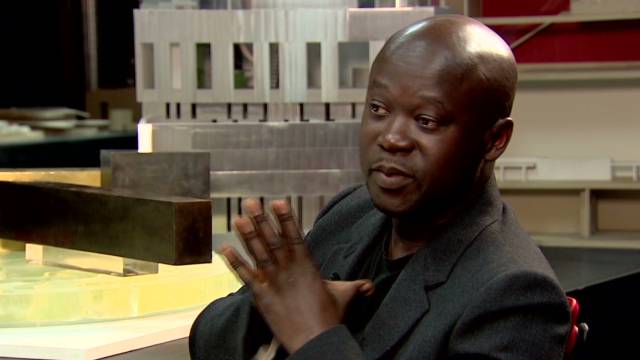
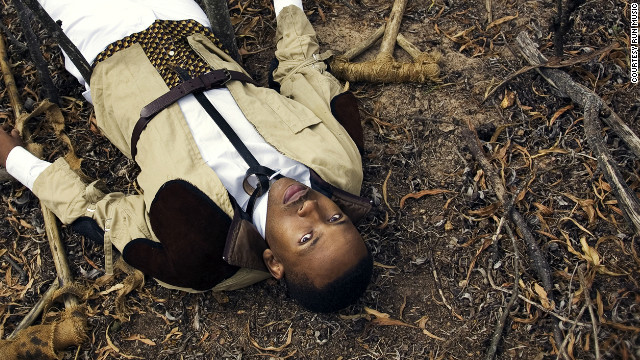
https://i2.cdn.turner.com/cnn/dam/assets/111103125024-african-voices-david-adjaye-buildings-00005330-horizontal-gallery.jpg David Adjaye is one of the world's most sought-after architects. Born in Tanzania to Ghanaian parents he is now based in London. https://i2.cdn.turner.com/cnn/dam/assets/120215111633-spoeke-mathambo-horizontal-gallery.jpg South African vocalist and producer Spoeke Mathambo has pioneered a kind of "township tech" that incorporates elements of electro, house and dubstep. His tunes can be heard on discerning dancefloors around the world. https://i2.cdn.turner.com/cnn/dam/assets/120215104805-andrade-horizontal-gallery.jpg Singer Mayra Andrade is a true globetrotter. Born in Cuba, raised in Cape Verde, she has also lived in Senegal, Angola and Germany, and now lives in Paris. Her jazzy bossa nova ballads are winning her fans all over the world. |
| Politics › Re: Defining The Afropolitan by Gbawe(op): 6:34pm On Mar 29, 2013 |
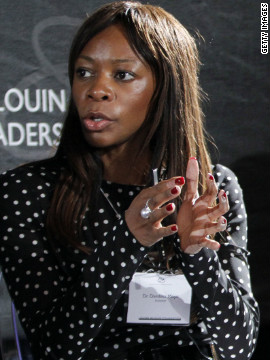
http://edition.cnn.com/2012/02/17/world/africa/who-are-afropolitans/index.html Young, urban and culturally savvy, meet the Afropolitans By Mark Tutton, CNN February 17, 2012 -- Updated 1151 GMT (1951 HKT) Time Magazine has listed economist Dambisa Moyo as one of the "100 most Influential People in the World." Born in Zambia, Moyo went to university in the UK and the United States. Her books "Dead Aid" and "How the West was Lost" have been controversial and influential. HIDE CAPTION https://i2.cdn.turner.com/cnn/dam/assets/120215114610-dambisa-moyo-2-vertical-gallery.jpg Dambisa Moyo STORY HIGHLIGHTS The term "Afropolitan" is often used to refer to young Africans with a global outlook The editor of Afropolitan magazine says: "I've kind of been raised by the world" Social media has been key to the movement, says blogger Minna Salami Movement is associated with a certain cool and a style influenced by Arise magazine (CNN) -- Young, urban and culturally savvy, meet the Afropolitans -- a new generation of Africans and people of African descent with a very global outlook. Something of a buzzword in the diaspora, the term "Afropolitan" first appeared in a 2005 magazine article by Nigerian/Ghanaian writer Taiye Selasi. Selasi wrote about multilingual Africans with different ethnic mixes living around the globe -- as she put it "not citizens but Africans of the world." Now the term has spread, used not just by New York hipsters and in trendy European capitals but in Africa's own multicultural megacities. But just who are these Afropolitans? Brendah Nyakudya is the editor of Afropolitan magazine, produced in South Africa. A Zimbabwean based in Johannesburg, who has lived in London, she has the kind of international background that typifies an Afropolitan. "I have African roots but I've kind of been raised by the world, and that's helped form my identity," she says. See also: Congo's designer dandies [size=14pt]An Afropolitan is someone who has roots in Africa, raised by the world, but still has an interest in the continent and is making an impact.[/size] Brendah Nyakudya, editor Afropolitan magazine Her magazine is aimed at successful urban 30-somethings -- intelligent, upwardly mobile and politically aware -- most of whom she says can be described as Afropolitans. "An Afropolitan is someone who has roots in Africa, raised by the world, but still has an interest in the continent and is making an impact, is feeding back into the continent and trying to better it," according to Nyakudya. She also believes the term can apply to non-Africans. "We like to think that it doesn't matter where you were born, if you find yourself on the continent and you love the continent, that makes you an Afropolitan," says Nyakudya. But for some people the term isn't so easy to define. Tolu Ogunlesi is a Nigerian journalist who is based in Lagos. He studied for his Masters degree in England and last year chaired a debate at London's V&A museum on what it means to be an Afropolitan. He says it's a problematic term and its meaning is hard to pin down. "It's one of those words that people invest with their own meanings, people interpret it as they want," he says. "Some people dismiss the concept entirely, saying there's nothing that people who are called Afropolitans share in common -- what they have in common is superficial." He feels the term is too often applied only to those living in the diaspora. "It's a problematic term because it's supposed to combine (the words) African and cosmopolitan," says Ogunlesi. "What it should mean is an African person in an urban environment, with the outlook and mindset that comes with urbanization -- people who live Lagos, Nairobi, and have this world-facing outlook. "But people who consider themselves Afropolitan are not here in the continent, they are out there in the global capitals." See also: Sounds of the Sahara Minna Salami, who blogs as Msafropolitan, is a true global citizen. Born in Finland to a Nigerian father and a Finnish mother she has lived in Nigeria, Sweden, Spain and New York, and now lives in London. She agrees that some people see Afropolitanism as existing only outside Africa, but says that, in reality, it applies just as much to people living in the continent. Some people have interpreted it as a diaspora movement but it absolutely isn't. Minna Salami - msafropolian "Some people have interpreted it as a diaspora movement but it absolutely isn't," she says. "When you go back to the original term 'African and cosmopolitanism,' Africa has very many cosmopolitan cities ... and in those cities you have art scenes and music and all kinds of creativity that's influenced by cosmopolitanism." For her it's a movement that is politically aware and has an obligation to correct decades of Africa being misrepresented as a "dark, failing continent." "Afropolitans are a group of people who are either of African origin or influenced by African culture, who are emerging internationally using African cultures in creative ways to change perceptions about Africa," Salami says. Salami adds that social media has been key to the movement, creating global citizens who are in tune with the same cultural trends and political issues. Ogunlesi agrees. He says that while ordinary Nigerians don't define themselves as Afropolitans, the prevalence of the internet and satellite television means young Nigerians do have a global outlook and are exposed to much of the same pop culture as youngsters all over the world. And social media also means that the coolest in contemporary African culture is quick to travel around the world. African and Africa-influenced pop culture is a key part of the movement. Afropolitanism implies a certain type of cool, with an aesthetic influenced by African style magazine Arise and a soundtrack provided by anyone from Nigerian musician Femi Kuti to South African "township tech" producer Spoeke Mathambo. But Nyakudya insists that to be a true Afropolitan takes more than a multi-cultural background and the right record collection -- it means having a commitment to making the continent a better place. She says: "From philanthropic work to trying to lobby for political reform there's a lot that needs to be done in Africa and if you're going to call yourself an Afropolitan you need to show what you're doing to deserve to be called an Afropolitan." |
| Politics › Re: Defining The Afropolitan by Gbawe(op): 6:30pm On Mar 29, 2013 |
http://en.wikipedia.org/wiki/Afropolitan Afropolitan |
| Politics › Defining The Afropolitan by Gbawe(op): 6:25pm On Mar 29, 2013*. Modified: 6:49pm On Mar 29, 2013 |
Any Afropolitans here? http://www.ariselive.com/articles/defining-the-afropolitan/95788/ DEFINING THE AFROPOLITAN |
| Foreign Affairs › Re: Please Let Nelson Mandela Depart Peacefully by Gbawe: 6:08pm On Mar 29, 2013 |
sweetcheecks: Why is it only Nigerians that are so eager to bid Mandela farewell when his people still would like to have him with themLook, two wrongs don't make a right. Don't come here and insult Achebe. OK? I don't know why Africans always get in the gutter like this. I can understand you may be angry at some perceived insult against Mandela but cool it and refrain from disrespecting a great Nigerian respected the world over. You can address utterances you don't like while still respecting the great Africans we have throughout the continent. Whether Nigerian, South African or Malawian, these men have done enough to command the respect of every sensible and cultured African. |
| Politics › Re: Development Agenda For Western Nigeria (DAWN) - Progress Report by Gbawe: 5:55pm On Mar 29, 2013 |
[quote author=ndu_chucks]Where are the usually talkative and bright SWers like Uncle Gbawe and others? One wouldn't expect you all to shy away from this important topic.[/quote] Iwo omo oni Ijogbon yi. Otun ti de ibi? The essential character and aim of the DAWN initiative may be intangible if you are not of the 'disposition' to understand what DAWN is. To that extent you may miss its on-the-ground application. The essence of the DAWN initiative is aptly encapsulated in the quotes below from the speech by Governor Ajimobi.http://www.oyostate.gov.ng/this-is-the-dawn-of-integrated-south-west-nigeria/ The key to integration and development among states that made up the erstwhile Western region is emphasis on quality leadership and collaboration among the states. In the course of integration, we must look at areas of cooperation among states and share benefits of states’ comparative advantages. The most important, and I dare say, the most formidable, of the strands of integration that we seek must be economic integration.If you were not too given to a mischievous focus on the SW, you will note the above ideas, very simple in reality, being practised albeit intangibly. When, for example, Ogun conceded land to Lagos for agriculture, and you were on the thread arguing vacuously, what did you think that was about if not a deliberate drive to aid economic integration and cooperation? There are planned inter-State projects that owe their conception to this new dedication to integration, oneness and a SW beginning to think essentially as one expanded single State. Is it till you see DAWN hospitals, DAWN university and DAWN bridges you will appreciate what DAWN is about? I know Nigerians like pictures and identifiable edifices but DAWN is more an idea to drive progress leveraging on mutual cooperation and interdependence. You will appreciate this is going on if not given perambulating back and forth obdurately. 3 Likes |
| Foreign Affairs › Re: Please Let Nelson Mandela Depart Peacefully by Gbawe: 5:29pm On Mar 29, 2013 |
[quote author=ndu_chucks]Have we met? you say I'm not a doctor, but would it be OK with you if I were a cattle rearer?  It takes a special kind of rationalism to realize that the current steps being taken medically, are more, in the best interest of family members who are afraid to lose the man, than in the interest of Mandela himself.[/quote]I only hazard a guess you are not a doctor because of what you said that pays homage more to the sort of conspiracy theory Doctor themselves refute vehemently and feel is an insulting submissions going against everything their profession is about. Technology has changed us so much to the point of having robbed us of the joy of dying peacefully. [b]They patch the organs of our aged parents and grand parents, keep them on drugs with painful side effects until they die without experiencing the joy of dying [/b]peacefully.As for your take that Mandela is being kept alive to please his family, well let us just say I don't think it is sensible to speculate so ungraciously. |
| Politics › Re: Jonathan To Eliminate Power Outage By 2012 by Gbawe: 5:10pm On Mar 29, 2013 |
Pukkah: Where are we on this? Oga Pukkah, you wicked no be small I hear the new date is now 2014. |
| Foreign Affairs › Re: Please Let Nelson Mandela Depart Peacefully by Gbawe: 5:03pm On Mar 29, 2013 |
[quote author=ndu_chucks]I don't know why you are being over dramatic about my opinion and implying that I am being disrespectful of the man and his family. Earlier today, Zuma, speaking for Madela's family and SA, appeared to agree with the suggestion that South Africa should prepare for Mandela’s eventual death. “Is this a time for us to be aware of what is inevitable?” asked the BBC's Lerato Mbele. “Well, I would imagine so,” replied Zuma. So Oga, my posts are based on compassion, respect, and nothing more. I am still of the opinion that they should let the man be and stop the drugs. Very powerful drugs are required to treat lung infections especially of a 94 year old patient with a history of Tuberculosis.[/quote]I am not being "over dramatic" as you put it. Merely showing you, as someone who believes in "live and let live", that you cannot speak as if things are not being done in the best interest of the man when he is surrounded by many who care about him and would , in no way, condone the man suffering unnecessarily . That is disrespectful to his family. Just accept that. You are no doctor and you are certainly not a family member privy to his medical record. What is this then in aid of? Just pray for him, or wish Mandela the best, and leave it at that. Even if the end is near, the right thing will be done till he is gone. Ultimately, you cannot be about his best interest more than his direct family who are always around him. |
| Foreign Affairs › Re: Please Let Nelson Mandela Depart Peacefully by Gbawe: 4:57pm On Mar 29, 2013 |
Andre Uweh: It's true.My brother, there is an arrogant and disrespectful perversion to discussing these things forcefully when , even as he is a global icon, Mandela will have very competent family members around him who love him dearly and will make the best choice for the man assuming the man himself can no longer do so. One thing that makes man considerate is the notion of him humbly knowing his place. Mandela is an international icon but also a family man with many loved ones around him. We cannot assume so many people who love him are making the wrong choices for him and only our dear Ndu Chucks gets it. Who would take kindly to me or you , from a position of ignorance, telling them they are not making the right medical choices for their elderly relative? Do we have more claim to Mandela than his direct family to be second-guessing their decision making? 1 Like |
| Foreign Affairs › Re: Please Let Nelson Mandela Depart Peacefully by Gbawe: 4:41pm On Mar 29, 2013 |
[quote author=ndu_chucks]Painful Euthanasia is exactly the option being employed by the so-called medical intervention. The side effects of the drugs administered to treat his lung infections could actually cause more pain and ultimately kill Mandela. His 94 year old body is no longer capable of fighting these side effects without causing pain. The pain killers which will be prescribed to him will essentially keep him dazed and doped up, to the point of not recognizing his family members and being unable to communicate with them. They should stop all treatments and let the man at peace.[/quote]Look, this man is a much loved international icon. You may care about him but not more so than his family and many competent friends and associates around him who want the absolute best for Mandela. It is insulting to suggest you get what is going on but Mandela himself, and all his many loved ones around him, do not. Please respect the man, his family and the fact that, difficult as it may be for all to witness, the best is probably being done for Mandela. Do you even know what you are saying? Mandela is being kept in a painful, drug-induced comatose state and only you Ndu Chucks get that? Can I, as an uninformed outsider not privy to all information, arrogantly pass the same 'not-doing-your-best' judgement against you and your siblings regarding an ailing relative you love far more than I ever can? Would I not insult you and your family doing that? What point are you making that, if true, those who surround him and love him dearly would not have responded to? 2 Likes |
| Foreign Affairs › Re: Please Let Nelson Mandela Depart Peacefully by Gbawe: 3:45pm On Mar 29, 2013 |
Oga Ndu Chucks, it is a difficult one. The man is indeed old. We are all fond of him and wish him the sort of rest only the very best should experience. Nonetheless, he cannot really be in pain and discomfort while treatment is deliberately deferred. Painful Euthanasia, by deliberate lack of medical intervention, can simply never be an option in Madiba's case. I don't think anyone is "drugging" him. |
| Politics › Re: Alamieyeseigha: Still Wanted In The UK - Envoy by Gbawe: 3:18pm On Mar 29, 2013*. Modified: 3:34pm On Mar 29, 2013 |
texazzpete: I can help you with this...he IS one of the resident GEJ apologists.My brother, what makes their sort even more despicable is the fact they have nil investment in the continent they claim to love so much. Nada. Zilch. At the root of their rants is failure in the diaspora they blame on 'whitey'. I know them well. Sad, frustrated losers with total charisma bypass. Ask them when they set foot on the African continent last or when they are even planning to go. Sad tossers. If some of us do not know the truth on the ground then we may well fall for the antics of these racist fools. As things stand, they are the biggest waste of space conceivable. Outstanding, brave and upright Africans are getting involved and doing real things yet these racist losers, failures and cowards stay in the diaspora making the same noise they have made on different Nigerians blogs for the past 10 years without so much as setting foot in the continent or even improving the life of one single African over the years they have pathetically spammed various African discussion forums with their toxic, worthless, paranoid and racist messages. These fools are not worth anyone's time because they are losers. The inspirational Africans are those confident and secure in themselves. They are determined to succeed and have no time for excuses in an increasingly globalised world where merit and talent is gradually becoming the defining factor. |
| Politics › Re: Alamieyeseigha: Still Wanted In The UK - Envoy by Gbawe: 11:36pm On Mar 28, 2013*. Modified: 12:05am On Mar 29, 2013 |
ROSSIKE: Come on go and park your backside somewhere. Mr Businessman and investor. What is the nature of your business? What are you investing in? Why are you afraid to tell us? Idiaatttt. I bet it's something detrimental to the economy, hence your hiding it.You better sit your azz somewhere and chill you silly empty barrel. You are totally irrelevant and a waster drifting in the wind. Don't make a f00l of yourself and be exposed for the silly fantasist, empty noise maker, loser and dreamer you have always been. A word is enough for the wise. |
| Politics › Re: Massive Construction Going On In Ogun State (Pictures) by Gbawe: 11:51am On Mar 27, 2013 |
More example of the work of the governor with comments from real stakeholders and primary users of the State: http://www.facebook.com/photo.php?fbid=524736167536418&set=a.414047528605283.107568.414038215272881&type=3&theater Health in Ogunstate: One of the ongoing 9 secondary health care centers being constructed by the Ogunstate govt in each of the 9 federal constituencies. |
| Politics › Re: Massive Construction Going On In Ogun State (Pictures) by Gbawe: 11:45am On Mar 27, 2013 |
Pataki: This is the Politics section. No one cares if you are male or female. In as much as you drop a contribution here, be ready to either be applauded for an intelligent comment or be ridiculed for disgracing yourself.You should ignore those with nothing to say. They want to take the thread in a certain direction. My brother, just like you pointed out sarcastically earlier, I guess what is shown below is not massive construction. It is a "bicycle path". Honestly, some should just go and work on their own mental health instead of coming here to show the entire world they are damaged good. Stakeholders and users of a State are expressing joy at[b] unprecedented[/b] development they are seeing and you who should be minding your own business, in your state thousands of kilometres away, is castigating them. Welcome to Nigeria the home of many sick 'puppies' with unresolved issues. http://sphotos-h.ak.fbcdn.net/hphotos-ak-prn1/148156_525859924090709_237547943_n.jpg https://sphotos-h.ak.fbcdn.net/hphotos-ak-prn1/148156_525859924090709_237547943_n.jpg |
| Politics › Re: Massive Construction Going On In Ogun State (Pictures) by Gbawe: 11:35am On Mar 27, 2013 |
This is why it is important to ignore non-important haters and those who are not stakeholders. Their bitter and negative comments are only reflections of their frustration. Below are the submission of genuine stakeholders regarding the Ibara flyover delivered by the Amosun government. Good folks can listen to folks like that or entertain the bitter and hate-motivated vituperations of those who have no connections at all to the SW. http://www.facebook.com/photo.php?fbid=560258540650847&set=a.414047528605283.107568.414038215272881&type=3&theater https://sphotos-d.ak.fbcdn.net/hphotos-ak-ash4/398980_560258540650847_1570985532_n.jpg View 1 more comment Olashile Kehinde God bless Nigeria. God bless me @ u 24 януари в 10:25 Onabolu Adebayo Onabolu We must not say it in public, but the truth is that democracy is helping Nigeria to move forward 24 януари в 11:39 Kanji Ojelade This is really commendable. I still believe there is need to develop the outskirts of the City. Let new infrastructures be established toward Ibadan, Ijebuode/Owode axis of the state. God Bless you all, God Bless our foremost state. 24 януари в 20:45 · 1 Kehinde Joseph Kashimawo This is a welcome development, but hope the structures will be well maintained. D pedestrian crossing needs to show the stop line for the traffic. Hope attention be focused on adequate and uninterrupted water supply. 25 януари в 08:57 Semiu Ogunwolu The Egbas in America even saw it before us in Nigeria!. Amosun is determined to do all that, we will continue to pray for him and have plans to join him so that he will have good hands to hand over to, for consistency in the developments of Ogun state. 26 януари в 05:07 · 1 Zents Kunle Sowunmi The oracle is happy with this development. |
| Politics › Re: Massive Construction Going On In Ogun State (Pictures) by Gbawe: 11:26am On Mar 27, 2013 |
I remember mentioning the foundation-laying ceremony for this last year. Now at 90% completion. These are the sort of things informed folks rate Amosun for i.e plans and commissioning becoming reality. https://www.facebook.com/photo.php?fbid=578059755537392&set=pb.414038215272881.-2207520000.1364379880&type=3&theater The 90% complete advanced four technical workshops for heavy duty trucks at the mechanic village Obada Oko to be fitted with advanced technical equipment. Powered by TATA. Ogun Standard. God bless Ogun State |
| Politics › Re: Massive Construction Going On In Ogun State (Pictures) by Gbawe: 11:16am On Mar 27, 2013 |
AjanleKoko: You'd find out that most of the complainants are not from the South West, don't live in any of the SW states, and are just complaining for the sake of complaining.Indeed. Positive news and development should always be celebrated by all secure and balanced people. Yet it is those not from the SW who appear most bitter and most rabidly hateful on these sort of thread. If they could they would probably demand OP be hanged merely because, as a stakeholder is allowed to do, he expresses joy at development he is witnessing. These hateful posters don't realise that balanced folks can discern that it is not the OP who has a problem. It is those who show inferiority complex, neurosis and malevolent obsession with others with how, like white on rice, they are quick to jump on anything concerning the SW 24/7 with nothing but hateful and derisive contributions. |
| Politics › Re: Massive Construction Going On In Ogun State (Pictures) by Gbawe: 11:07am On Mar 27, 2013 |
Geomac: I think you are right. I visited a friend in Lagos last weekend, we drove to his new project site in Ijoko. The road from Sago - Ijoko - Agbado was horrible. Anybody in that axis can confirm.It will take time. The entire State cannot be developed at once given that funds are not limitless. Nonetheless, a good plan, anyone interested can gain access to, is in place and being followed. https://www.facebook.com/OgunIndicator/timeline The construction of pre cast drainage is ongoing at the 6 lane Ejinrin - Oluwalogbon junction in IjebuOde which will also have a flyover bridge to ease the traffic at the round about. Quality at its peak. Ogun Standard. God bless Ogun State |


 You should also be on something if you think I am insulting him when I say they must bury their hero and leave Mandela alone. We never commented on Achebe and never disrespected him but tgis rubbish that ia being written here is an altimate insult more especally when the old man is fighting for his life. What kind of thread is this anyway? Asking a loved family elder to be euthanased like an animal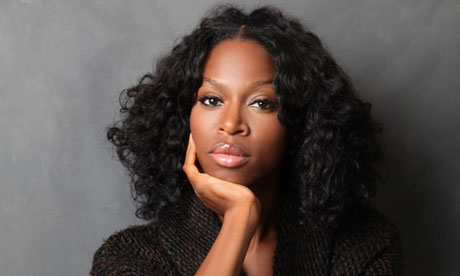



1 2 3 4 5 6 7 8 ... 183 184 185 186 187 188 189 190 191 (of 460 pages)