 Politics › Re: Babajide Sanwo-Olu Live On Morning Digest With Jimi Disu @ 9am Today. by naptu2(op): 9:12am On Jan 29, 2019 |
Jimi Disu tries to pin him down on rumours of Ambode's impeachment. Sanwoolu said that he also heard about it yesterday night, like anyone else |
| Politics › Re: Babajide Sanwo-Olu Live On Morning Digest With Jimi Disu @ 9am Today. by naptu2(op): 9:09am On Jan 29, 2019 |
Jd: When did you know that there was a vacancy?
Sanwo: When APC declared a contest for the primary.
Jd: But there's a tradition that governors get 2nd term
Sanwo: There were many people that wanted to run. I know about 6 people that wanted to run |
| Politics › Re: Babajide Sanwo-Olu Live On Morning Digest With Jimi Disu @ 9am Today. by naptu2(op): 9:09am On Jan 29, 2019 |
Dr Hamzat wanted to run and I told him that I could be his deputy |
| Politics › Re: Babajide Sanwo-Olu Live On Morning Digest With Jimi Disu @ 9am Today. by naptu2(op): 9:08am On Jan 29, 2019 |
It's a conversation I had with my children.
We always talk about what's going on in the country.
They are millenials (in their 20s) and we talk about things, they say, but daddy, you've been in the system and you can contest |
| Politics › Re: Babajide Sanwo-Olu Live On Morning Digest With Jimi Disu @ 9am Today. by naptu2(op): 9:07am On Jan 29, 2019 |
When did it occur to you that you want to be governor |
| Politics › Re: Babajide Sanwo-Olu Live On Morning Digest With Jimi Disu @ 9am Today. by naptu2(op): 9:07am On Jan 29, 2019 |
Ground rules. |
| Politics › Re: Babajide Sanwo-Olu Live On Morning Digest With Jimi Disu @ 9am Today. by naptu2(op): 9:05am On Jan 29, 2019 |
How is the campaign?
It's taking its toll.
I've almost lost my voice. |
| Politics › Re: Babajide Sanwo-Olu Live On Morning Digest With Jimi Disu @ 9am Today. by naptu2(op): 9:05am On Jan 29, 2019 |
Sanwo-Olu is in the studio with Dr Hamzat |
| Politics › Re: Babajide Sanwo-Olu Live On Morning Digest With Jimi Disu @ 9am Today. by naptu2(op): 9:04am On Jan 29, 2019 |
We are live. |
| Politics › Re: Babajide Sanwo-Olu Live On Morning Digest With Jimi Disu @ 9am Today. by naptu2(op): 6:55am On Jan 29, 2019 |
FirstSamurai:
I like that.
Hope it's made frontpage They all did. See the 3rd post on this thread. |
| Politics › Re: Babajide Sanwo-Olu Live On Morning Digest With Jimi Disu @ 9am Today. by naptu2(op): 6:54am On Jan 29, 2019 |
|
| Politics › Re: Babatunde Fashola Live On "The Discourse" With Jimi Disu @ 2pm Today. by naptu2(op): 6:51am On Jan 29, 2019 |
|
| Politics › Re: Babatunde Gbadamosi Live On Morning Digest With Jimi Disu @ 9am Today by naptu2(op): 6:51am On Jan 29, 2019 |
|
| Politics › Re: Obafemi Hamzat Live On Morning Digest With Jimi Disu by naptu2(op): 6:51am On Jan 29, 2019 |
|
| Politics › Re: Jimi Agbaje Live On The Discourse Today At 2pm. by naptu2(op): 6:50am On Jan 29, 2019 |
|
| Travel › Re: LASG Announces Road Closure Ahead Of Lagos Marathon by naptu2(op): 6:43am On Jan 29, 2019 |
They've set up the distance markers on Admiralty Way and Lekki-Ikoyi Bridge. |
| Politics › Re: Babajide Sanwo-Olu Live On Morning Digest With Jimi Disu @ 9am Today. by naptu2(op): 3:01am On Jan 29, 2019 |
Tags: johnie obyback. |
| Politics › Re: Babajide Sanwo-Olu Live On Morning Digest With Jimi Disu @ 9am Today. by naptu2(op): 2:29am On Jan 29, 2019 |
|
| Politics › Re: Babajide Sanwo-Olu Live On Morning Digest With Jimi Disu @ 9am Today. by naptu2(op): 2:28am On Jan 29, 2019*. Modified: 9:06am On Jan 29, 2019 |
Contact the show and send in your questions. Call 08091914913, 08092345913 (whatsapp), and 08092220913 SMS: 33056 Tweet @LagosTalks913 and tag @jimidisu Listen live online here http://www.lagostalks.com/listen-live or download the Lagos Talks 913 app on the Android store 
|
| Politics › Babajide Sanwo-Olu Live On Morning Digest With Jimi Disu @ 9am Today. by naptu2(op): 2:28am On Jan 29, 2019 |


|
| Travel › LASG Announces Road Closure Ahead Of Lagos Marathon by naptu2(op): 8:25pm On Jan 28, 2019 |
TRAFFIC ADVISORY: LASG Announces Road Closure Ahead Of Lagos Marathon; See Alternative Routes
Ahead of the forthcoming Access Bank Lagos Marathon scheduled to hold on Saturday, February 2, 2019, for about 12 hours, the government through the Lagos State Traffic Management Authority (LASTMA) has announced that there will be closure of some major roads for the event.
According to LASTMA, some parts of Lagos will be closed to vehicular and human traffic for the safety of thousands of runners, hundreds of thousands of cheering fans and millions of Lagosians.
As a result, motorists are urged to seek alternative routes planned to ease the movement of Lagosians and thousands who would want to join us at the Eko Atlantic finish point.
Below is the list of alternative routes for motorists to use during the marathon.
· All vehicles from Ikeja and environs headed to Victoria Island MUST go through Ikorodu Road.
· All vehicles from Badagry, Mile 2 and environs going to Victoria Island MUST go through Apapa and Orile to link the Eko Bridge to Victoria Island.
· Residents of Lagos Mainland, Surulere and environs MUST avoid Masha Area and National Stadium but can link Victoria Island through Iponri/Iganmu, Eko Bridge then unto Victoria Island.
· Vehicles coming from Ibadan, Mowe and environs can link Victoria Island through Ojota, Ikorodu Road, Eko Bridge to Victoria Island.
· Vechicles from Okota MUST go through Mile 2 to Orile, Eko Bridge to Victoria Island.
Vehicle from Sango-Otta going to Victoria Island MUST go through Mushin, Funso Williams Avenue (Western Avenue), Eko Bridge to Victoria Island.
· Vehicles Coming from Epe, Ajah, Lekki and environs must use the Alternative Route to Victoria Island. Ikoyi residents going to the mainland can use the Alfred Rewane (Kingsway Road) link to Osborne then to the Mainland.
Meanwhile, the following roads will be totally or partially closed for the duration of the marathon.
A. Total closure of the Third Mainland Bridge from 6.45am to 2pm
B. Alaka Road Service lane will be closed from 5.00am to 7.30am
C. National Stadium to Ojuelegba, Dormanlong Bridge. Onipanu Obanikoro and Anthony will be closed from 6.00am to 8.00am
D. From Anthony ,Charley Boy Bus Stop to Oworoshoki Will be closed from 6.30am to 8.30am
From Adekunle Junction linking the Third Mainland Bridge will be closed from 7.00am to 2pm. https://insidemainland.com/2019/01/28/traffic-advisory-lasg-announces-road-closure-ahead-of-lagos-marathon-see-alternative-routes/
|
|
|
|
| Politics › Re: Babatunde Fashola Live On "The Discourse" With Jimi Disu @ 2pm Today. by naptu2(op): 6:54pm On Jan 28, 2019 |
 Muttleylaff, Muttleylaff, Muttleylaff. Anyway, I retired from having long arguments on the Internet in 2014, but I have 2 related questions for you and then I'm done with the thread. 1) In your opinion, was there anything that Jakande did wrong when he was governor (no ifs and buts) and can you explain what that thing was? 2) In your opinion, was there anything that Fashola did right when he was governor (no ifs and buts) and can you explain what that thing was? Take care. |
|
| Politics › Re: Babatunde Fashola Live On "The Discourse" With Jimi Disu @ 2pm Today. by naptu2(op): 3:19pm On Jan 28, 2019 |
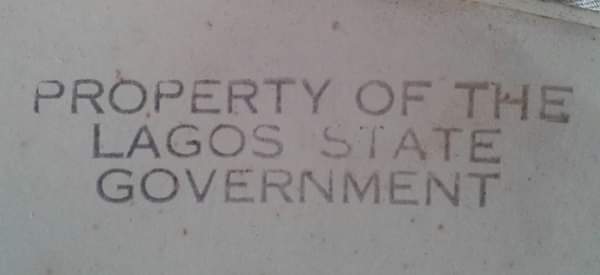
luvmijeje here is the text book (I forgot that I had uploaded a picture of the book somewhere else on the Internet).
All you needed to do to get the books (as a student of a Lagos State school) was to present a photocopy of your parents' tax clearance certificate. 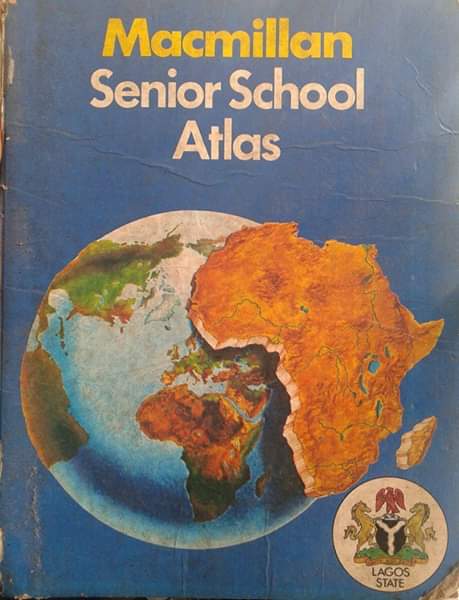
|
| Politics › Re: Emir Sanusi Visits President Buhari In Aso Rock by naptu2: 2:55pm On Jan 28, 2019 |
otipoju:
That short man is barefooted. Ambassador Kazaure |
|
| Politics › Re: Babatunde Fashola Live On "The Discourse" With Jimi Disu @ 2pm Today. by naptu2(op): 12:44pm On Jan 28, 2019 |
luvmijeje:
Time for confession..... I wasn't born in 1983 nor 1985. So I can't make an objective rebuttal.
But during my time on earth, Fashola was and still remains the best governor of my lifetime.
List five things that makes Lateef Jakande far better than Fashola and I'll list 10 things Fashola have done to revitalize Lagos State. @ part in bold. I witnessed it and I wrote this in 2014. (I still have the text book and I'll post a picture of it when I get home). naptu2:
Lagos State has always been blessed with very good governors. In my view, the best are:
Mobolaji Johnson (Itoikin Bridge, planning the Ring Road system [including Eko and 3rd Mainland bridges], Badagry Expressway, etc)
Lateef Jakande (LTV, Lekki Expressway, Lasu, Low Cost Housing Estates, etc)
Raji Rasaki (Adiyan Waterworks, completion of 3rd Mainland Bridge [Babangida ordered his secretary not to allow Rasaki into his office again, because Rasaki was always disturbing him about the 3rd Mainland Bridge], Lagos Horizon Newspaper, Opebi-Oregun Link Bridge, etc)
Mohammed Buba Marwa - Eko FM, LASUTH, Direct Labour Agency [which patched the roads that were left in a state of disrepair by Mr. No Bitumen ], Marwa Gardens, Eko FM, Operation Sweep
Bola Tinubu (Lasambus, BRT, Kai, Office of The Public Defender, Lagos Emergency Points, Millenium Schools, Lasuth, LASTMA, reconstruction of roads that were left in a state of disrepair by Mr. No Bitumen and patched by Governor Marwa, etc).
Raji Fashola (Okota-Itire Link Bridge, Lekki-Ikoyi Link Bridge, Lasu-Iba Road, Lasmi Cabs, Traffic Radio, LRT, Lagos HOMS, expension and modernisation of the Lekki Expressway, Lagos State Security Trust Fund, etc)
Governors Otedola, Akhigbe (Ikeja flyovers), Mudashiru (rehabilitation of Jakande schools), Kanu, Lawal and Ukiwe also did well. I won't rate them as the best, but I'll say they did very well.
The lone exception is Colonel Olagunsoye Oyinlola (Mr. No Bitumen) who did absolutely nothing. He sat and watched as Lagos roads became filled with ginormous craters, hills and valleys. Awolowo Road was an eyesore at this time.
However, if you tell some people that Governor Johnson did a lot, they will direct your attention to Eko Court and the armed robbery edict. If you tell them that Governor Rasaki was an action governor, they will remind you of Maroko and Ilado. If you tell them that Marwa was very popular, they will tell you that he served Abacha, that Operation Sweep killed many innocent people and they will ask you where he got the money with which he started his airline (some will even tell you that he was one of the people that delivered the parcel bomb to Dele Giwa's house and they will also remind you about Bagauda Kaltho's death). If you tell them that Tinubu transformed Lagos from the huge refuse dumps and bad roads of the 1990s to a clean place with smooth roads, they will tell you that Tinubu owns the whole of Lagos. If you tell them that Fashola brought back sanity to Oshodi and continued the progress started by Tinubu, they will tell you that Fashola is elitist.
But the argument that I find most fascinating and which was revived upper Sunday, is the debate about the tenure of Lateef Kayode Jakande (LKJ).
I believe that Baba Kekere is one of the best governors that Lagos has ever had (you'll see why in a minute), but I also acknowledge his flaws. However, it's very difficult for most people to assess him objectively. They either love him dearly or hate him passionately.
LKJ implemented the progressive/welfarist manifesto of the UPN to the letter. The LSTC was still running at the time that Jakande was governor and he converted some of the LSTC buses (including some of the air conditioned buses) into Scholars Bus, buses that were specifically designated to convey primary and secondary school children to and from school for free.
He utilised the Lagos State Development and Property Corporation (LSDPC) to build low cost houses/flats, which low and medium income people could buy via a mortgage scheme (they paid back in instalments over a 10-25 year period).
Jakande endeared himself to the people by using his private car, a Toyota Crown (or was it a Cressida?) as his official car, rather than one of the long wheel base mercedes limousines that were common at the time. (He used that same car as his official car when he became Minister of Works in the Abacha Government, but his motorcade looked funny to me because the official Peugoet 505 Evolution that was meant to be his official car was often driven behind the Toyota).
Governor Jakande revived the Lagos Metroline plan which had been abandoned by the previous military government. The system had been originally planned by United Nations experts that were advising the Federal Government in the 1960s, but successive governments were not serious about it. Governor Jakande was very serious about it and the right of way had already been demarcated by the time he was removed from office.
He established the Lagos Television (LTV), the only state tv station (the previous state and regional tv stations had been taken over by the Federal Military Government in the mid-1970s). The NPN controlled Federal Government quickly established a youth oriented tv station on the exact same frequency (NTA2 Channel 5) and LTV was eventually forced to move to Channel 8 (it was forced to move again in the 1990s, when the Federal Government reserved the VHF frequency band for only Federal Government owned stations. It eventually settled on Channel 35).
He also established Lasu, a multi-campus university that was modelled after the University of California multi-campus system.
But, the most controversial policy of the government (and the policy that was the subject of Sunday's debate) was the education policy.
The Federal Military Government had taken over private primary and secondary schools in the 1970s. Part of the reason for the take over was the fear that most of these schools were, in one way or another, controlled by foreign organisations and people, such as foreign missionaries and that it was dangerous to leave the education of Nigerian children in the hands of foreigners. These primary and secondary schools were handed over to the states by the Federal Government (the Federal Military Government also took over regional/state owned universities and still owns and manages those universities today).
Governor Jakande decided that every child must attend school, that they (and their parents) must spend little or nothing to get an education and that this must be done on budget (that is, the government must also not overspend in order to achieve this). So the government created numerous schools (I don't think any government in the history of Lagos has created as many schools as Jakande did).
The scholars buses ferried children to and from school free of charge and the government also reached agreements with publishers to supply books to the schools at no cost to the students.
I took some of those books from one of those students at that time and below are pictures of one of those books.
https://scontent-amt2-1.xx.fbcdn.net/hphotos-xpa1/v/t1.0-9/fr/cp0/e15/q65/1012094_1511277972462838_2974985295233809545_n.jpg?efg=eyJpIjoiYiJ9&oh=2261f8aefb131b9f3a02188db6486551&oe=5790D7D5
https://scontent-b-mxp.xx.fbcdn.net/hphotos-xap1/t31.0-8/10548854_1511278609129441_3277182517401698560_o.jpg
You can see that it has the Seal of the Lagos State Government on it. This notice is stamped on some of the pages of the book - "Property of the Lagos State Government. Not for sale" (the notice on the pages of another book reads - "Property of the Lagos State Government of the Federal Republic of Nigeria. Not for sale" ). The name of the particular school was also stamped on the books and it was a huge offence to sell those books.
One of my favourite parts of the policy and one that was hated by many students, is the part that was known as Center. Basically, students from schools in a particular area or neighbourhood would congregate at a centre in which they would be taught woodwork, home economics and other hands on subjects.
So, how can anyone have a problem with this policy?
1) Multiple schools: - Remember that most of these schools were seized from their original owners, most of whom were european missionaries. The missionaries believed in total, all-round education. They believed that it was important to educate the mind, body and soul. So most of those schools had large football fields, cricket pitches, basketball and tennis courts, chapels and mosques and even swimming pools. They also had farms for agricultural science and facilities for music, arts and drama.
Jakande was determined to get as many people as possible into school, so he built new classroom blocks on those sports facilities. Several schools were built in the same compound. You had "Government College, School 1", "Government College, School 2", "Government College, School 3" (sounds like a nollywood movie, doesn't it?) and so on and so forth. Many of the schools (classroom blocks) were built so close to each other that they were poorly ventilated. If you go round Lagos, you'd see a lot of these schools that were established between 1980 and 1982.
Someone complained, "What kind of schools were those? They had no laboratories, no sports facilities, no libraries, just blocks of badly built classrooms".
The original owners and ex-students of these schools were also very upset that their school compounds were being broken up in this manner (a visit to Igbobi College or Maryland Comprehensive Secondary School will give you an idea of what happened. The Aunty Ayo School system was divided into 3 schools!).
2) The buildings: - The quality of the new buildings was also another source of concern. I watched a documentary on Jakande's birthday, in which the project coordinator explained what happened. Jakande told her that he wanted X number of classrooms built at Y amount. She went, did her study and came back and told him that it was impossible. He replied that he had faith in her and he knew that she could do it and restated that he wanted X number of classrooms built at Y amount. That she should find out where she can make savings. So she went back and made some adjustments. Rather than using glass window panes, they used wood. They made other similar adjustments and were able to build X number of schools for Y amount.
This was one of the things that infuriated people the most. One of my friends on Sunday complained that, "I can never like that guy. I don't know why people are trying to whitewash and launder his image. That guy built chicken sheds in my school and called them classrooms!"
Many of those classroom blocks were very basic. Some had no coat of paint, some had wooden windows, no fans, no electricity, etc.
Governor Mudashiru, who took over from Jakande, had to spend a lot of money to upgrade some of the classroom blocks.
3) Interview: - Like I said earlier, the missionairies and the colonial government believed in total education. They believed that they should not only educate the mind, but that they should also develop the body, social skills, behaviour and spiritual needs of the child. So there were sports activities, plays, musical performances, etc.
Thus, prospective students were interviewed and investigated to determine their suitability, not only academically (which would have been determined by the entrance examinations), but also in terms of character.
Jakande's policy dictated that school districts were divided into catchment areas. Principals of secondary schools had to accept students from specified primary schools in their catchment areas (so long as the student passed the G2 primary school leaving certificate exam [one of the easiest exams you could ever take). It was also very difficult for the principals to expel these students, except the student failed promotion exams twice.
The result was that many unruly students were admitted into these schools. Discipline broke down. It became quite normal to read stories in the newspapers about students beating up teachers and even principals. This was also one of the reasons why the old Principals Cup Competition was suspended. Extreme violence often accompanied these football matches. Secondary school students went to school and football matches with axes (known as UTC), cutlasses and other dangerous weapons.
4) Carrying capacity: - The policy led to a dramatic increase in school enrollment and this put a huge strain on facilities (despite the rapid increase in schools and classrooms). Most schools, pre-1979, had a student-class ratio of 25 or 30 students per class. This changed during the Jakande era and it was not unusual to see classrooms with 60 to 100 students.
5) Shift system and boarding facilities: - Jakande's aim was to provide education to as many people as possible, so it was very strange that he abolished the shift system.
Pre-1979, people who were unable to get an education when they were younger and those who could not make it into the regular morning session because of space constraints, could enroll in the evening school system. Most schools had both a morning and an evening session (usually using the same school buildings, but sometimes using separate buildings). Jakande abolished that system and the morning session became the only session. For example, the facilities that were used for St Gregory's College's evening session became the Government College Victoria Island (GoCoVi). The shift system was initially created by the civillian and military governments of the 1960s, when the launched "universal education" policies. The facilities overstretched the existing facilities, so they had to introduce a shift system.
Jakande also abolished the boarding school system. The government planned to demolish the hostels and build classroom blocks where the hostels previously stood.
Now, certain families have a tradition of attending the legacy schools in Lagos. The legacy schools include:
CMS Grammar School, Methodist Boys High School, Methodist Girls High School, Anwar-Ul Islam Model College (formerly Ahmadiyya College and before that, it was known as Saka Tinubu), Anwar-Ul Islam Girls High School (formerly Ahmadiyya Girls College), St Gregory's College, Holy Child College, Baptist Academy, Kings College, Queens College, St Finbarr's College, Our Lady Of Apostles Secondary School, Maryland Comprehensive Secondary School, Aunty Ayo International School, etc. (All of these schools, except Kings and Queens College, were taken over by the State Government. Aunty Ayo was divided into 3 and 2 of the schools were taken over by the State, while one remained private).
I know a family which has had at least one member in a particular school every decade since the 1920s. I know another family in which the tradition is so strong that the children are brought back to Lagos, from wherever they are in the world, to attend a particular school (or its sister school). These families were very angry at the way that Jakande was "destroying" "their" schools. The Catholic Archbishop of Lagos, Anthony Okogie, launched scathing attacks against Jakande in the newspapers. He also instituted several lawsuits against the Lagos State Government. The families made several attempts to stop the LASG's attempt to "destroy" their schools. The Old Boys of Igbobi College stopped funding the school at a point, because they were depressed by what was happening to it.
It became an insult to be referred to as a Jakande boy or Jakande girl (they were synonymous with the word "thug" ) or for someone to say that you attended a Jakande school.
However, like my other friend would point out, this policy enabled many people who would probably have been uneducated and a problem to society, to get an education, get a job, feed their family/be independent and contribute to Nigeria's development. Cricket pitches, football fields, etc are a small price to pay in exchange for that. |
| Politics › Re: Babatunde Fashola Live On "The Discourse" With Jimi Disu @ 2pm Today. by naptu2(op): 6:57am On Jan 28, 2019 |
|
|


