PhysicsQED's Posts
Nairaland Forum › PhysicsQED's Profile › PhysicsQED's Posts
1 2 3 4 5 6 7 8 ... 11 12 13 14 15 16 17 18 19 (of 154 pages)
 Politics › Re: Wole Soyinka's Interview About Chinua Achebe by PhysicsQED(m): 12:17am On May 23, 2013*. Modified: 2:51am On May 23, 2013 Politics › Re: Wole Soyinka's Interview About Chinua Achebe by PhysicsQED(m): 12:17am On May 23, 2013*. Modified: 2:51am On May 23, 2013 |
ACM10: I'm amazed that some folks are fixated on Nobel prize as a yardstick to measures the success of Achebe in the field of African literature. A prize that is often heavily influenced by politics. Albert Einstein was awarded the Nobel prize in Physics for his least influential work in theory of relativity after many years. One European historian said that he would have been ignored by the Nobel committee because of his pacifist stance during the first world war.Actually, Einstein won the Nobel prize for "his services to Theoretical Physics, and especially for his discovery of the law of the photoelectric effect." They didn't state outright what they meant by "his services to Theoretical Physics" but it should be obvious that they were alluding to his work on Brownian motion, the quantum theory of light, and the special and general theories of relativity. Relativity was probably not mentioned outright only because of the lack of really definitive evidence for it at the time. As for the mass-energy equivalence formula, Einstein didn't actually prove that relation successfully in the general case (see this article by Hans Ohanian on his mistakes: http://arxiv.org/ftp/arxiv/papers/0805/0805.1400.pdf) and there was no strong experimental proof of that fact in 1922. 1 Like |
| Politics › Re: Wole Soyinka's Interview About Chinua Achebe by PhysicsQED(m): 12:03am On May 23, 2013 |
DerideGull: Achebe would have been the first living being to have rejected the Nobel Prize crap which greets your miserable morning. I have personal respect for Wole Soyinka but he would have been a basement figure if he tried to cut his niche as an author instead of dramatist.Jean-Paul Sartre refused the Nobel prize in literature in 1964. |
| Politics › Re: Wole Soyinka's Interview About Chinua Achebe by PhysicsQED(m): 12:01am On May 23, 2013*. Modified: 12:25am On May 23, 2013 |
ACM10: Soyinka is heavily biased, you are biased too, everybody commented with some tint of bias. The fact that Soyinka gave such interview is regretful. Doubling down to call Achebe "a celebrated storyteller" is as low as he can get. That term alone deprived Achebe of his contribution to African and indeed the world intellectual development.I think you're reading a negative connotation into the word "storyteller" which isn't always there. Achebe praised Adichie as being "a new writer endowed with the gift of ancient storytellers" and he praised the craft and role of the storyteller himself in this interview from 1989: ACHEBE: What I mean is, I look at the world, at the way it is organized, and it is inadequate. Whichever direction I look, I don’t see a space I want to stay in. On our own continent, there are all kinds of mistreatment. The most recent, for instance, is the dumping of the toxic wastes from the industrialized world in Africa. . . .Excerpt from: Moyers, Bill. A World of Ideas New York: Doubleday, 1989. http://chisnell.com/APEng/BackgroundNotes/Achebe/Achebe%20as%20Storyteller.aspx http://www.yesmagazine.org/people-power/remembering-chinua-achebe-nigeria-master-storyteller |
| Politics › Re: Wole Soyinka's Interview About Chinua Achebe by PhysicsQED(m): 3:38am On May 21, 2013 |
c.fours:I dislike Hemingway both as an individual and as a writer, but I should point out that Hemingway's writing style (terse, understated, and simple descriptions) is widely admired by some in the West. That doesn't mean there aren't better authors that don't have a minimalist style because I think there are many, but it should be noted that there really isn't some sort of widespread negative perception of his style among critics. Likening his work to Hemingway's was probably just what it appeared to be - a simple comparison - and not some sort of underhanded insult. |
| Culture › Re: Nri is NOT The Oldest Kingdom In Nigeria? by PhysicsQED(m): 3:05am On May 21, 2013 |
Hey Pleep, what culture is that object in your profile pic from and what is it supposed to represent? I assume that it's supposed to be a mask of either an animal or a human with tusks, right? No offense (in case it's something you made yourself), but I think it looks very strange. |
| Politics › Re: Wole Soyinka's Interview About Chinua Achebe by PhysicsQED(m): 2:56am On May 21, 2013 |
rhymz: Yeah right, tell that to a 15-16yr old kid that just wanted to read a simple book on our political history only to find out that he was always trying to make out the meaning of every word, sentence and phrase used. Abeg I no wan get headache because of Wole Soyinka jor!If you couldn't understand the opening parts of the book (the first 50 or so pages) at 15 or 16 years old, you possibly just weren't as good a reader back then when you were that age. I'm not being insincere when I say the opening parts are not complex nor are they verbose. If you had said the last parts of 'ibadan-lagos' or parts of 'kaduna 68' and 'kaduna 69' were too complex (although not even very verbose, really) for you to understand, then I wouldn't have thought you never tried to read it. But I'll definitely take your word for it that you did attempt to read it - I was just surprised to see the opening parts described as being somehow too hard to understand. 1 Like |
| Car Talk › Re: Mercedes-benz E-class Coupé - Pictures by PhysicsQED(m): 11:29pm On May 20, 2013 |
ebamma: why the honda accord look?Yeah. It looks ordinary, and not really like a luxury vehicle. |
| Culture › Re: Interesting Images From Precolonial And Early Colonial Africa by PhysicsQED(op): 10:46pm On May 20, 2013 |
Didn't think wikipedia would have any interesting images, but they actually had a few: https://upload.wikimedia.org/wikipedia/commons/5/5c/Djenne_Fortier_407.jpg Postcard 407 by Edmond Fortier. A house in Djenné, Mali with a Toucouleur–style facade. Date: 1906 Source: Djenné, il y a cent ans (1995) by Bernard Gardi, Pierre Maas, and Geert Mommersteeq https://upload.wikimedia.org/wikipedia/commons/7/74/Djenne_Fortier_414_cropped.jpg Postcard 414 by Edmond Fortier. A street in Djenné, Mali in 1906 showing houses with Toucolor–style facades Date: 1906 Source: Djenné, il y a cent ans (1995) by Bernard Gardi, Pierre Maas, and Geert Mommersteeq |
| Culture › Re: Benin Art And Architecture by PhysicsQED(m): 10:31pm On May 20, 2013 |
^ No. I didn't forget. I just got sufficiently busy that I couldn't keep to the time frame I said I would. But I definitely will post the images I came across and close out the thread. |
| Culture › Re: Nri is NOT The Oldest Kingdom In Nigeria? by PhysicsQED(m): 10:28pm On May 20, 2013*. Modified: 12:29am On May 21, 2013 |
pleep: Physics what is that building in your profile pic?I'm not really sure. I saw it on a page somewhere on tumblr after I had seen it somewhere else previously and I saved the image just because it looked cool. I'm not sure such a building/structure like what's in that photo really exists. It could just be a viral image or a screenshot from a viral video promoting some movie or game. I remember that several years ago when the game "Shadow of the Colossus" came out for PS2, some viral videos were posted on the internet to hype up the game, but there was no indication that all the footage in the video was all computer generated or even that it was specifically for that game, so there was some confusion about whether some of what was depicted in the video was real or not. This could be the same kind of thing - fake images to promote some movie or game. But then again, some indigenous peoples in North and South America did build homes in hills and cliffs, so it could also be something real. |
| Culture › Re: Nri is NOT The Oldest Kingdom In Nigeria? by PhysicsQED(m): 10:21pm On May 20, 2013 |
Findingmyroots: The first oba of Benin(oba eweka) first son name was Ovbi ikimme(Obi Ikeme). Till today the king of asaba and onitsha goes by Obi not Oba. He was told by his father to migrate east(home) because of an incident he had with his mothers family (probably practicing Igbo tradition). He died in today's asaba and his children(4 of them) continued the journey across the Naija Bridge(with the help of igalas), then formed Onitsha. Till today in Onitsha there are 4 villages founded by the 4 children (3 boys 1 girl) & two villages by the igalas. The others are arochukwu. Findingmyroots: Oba eweka's brothers were Agulu(oldest), Nri, Attah(igala) & Igbo. Till today, there is a town naned after oba eweka, called Oba, Anambra state(google it). Oba(Edo) was the fourth among the siblings. There father was Eri. Eri can be found in the bible among with his two younger brothers who also migrated to southeastern Nigeria from Egypt. There names was Aroli(arochukwu) & Areli (numbers 26:16-17). Till to date there is a town in Anambra state called Agulueri, named after Eri first son Agulu. I attached a photo of the lineage. Southeastern Nigeria is the land of the lost Jews who fled egypt. Hope you learned something. Including those in Benin who bear Igbo(political name) last names such as: Okoro, Ugo, Osakwe, osadebe, echejille etc.Ease up on the hashish. It seems it's turning your brain to mush. 5 Likes |
| Politics › Re: Wole Soyinka's Interview About Chinua Achebe by PhysicsQED(m): 10:19pm On May 20, 2013 |
rhymz: I know how many times I tried reading Wole's book, "The Man Died", I got bored just after few pages of trying to understand exactly what he was trying to communicate in the book: I found myself trying to understand every paragraph of the verbose sentences and phrases he kept on churning out to the point I just had to drop it, as much as I tried.The Man Died is not particularly verbose, and certainly the opening parts of the book ('a letter to compatriots' and the first parts of 'ibadan-lagos') are neither verbose nor particularly complex writings that one has to make real effort to decipher. Did you really attempt to read it? 1 Like |
| Politics › Re: Wole Soyinka's Interview About Chinua Achebe by PhysicsQED(m): 10:10pm On May 20, 2013 |
Very interesting interview. I thought this comment was particularly interesting, especially given the discussions and arguments on this thread: Wole Soyinka: What they are doing now – and I urge them to end it shame-facedly – is to confine Chinua’s achievement space into a bunker over which hangs an unlit lamp labeled “Nobel”. Is this what the literary enterprise is about? Was it the Nobel that spurred a young writer, stung by Eurocentric portrayal of African reality, to put pen to paper and produce Things Fall Apart? This conduct is gross disservice to Chinua Achebe and disrespectful of the life-engrossing occupation known as literature. How did creative valuation descend to such banality? Do these people know what they’re doing – they are inscribing Chinua’s epitaph in the negative mode of thwarted expectations. I find that disgusting. 1 Like |
| Culture › Re: African Medieval Military Systems Pre-colonial by PhysicsQED(m): 10:04pm On May 20, 2013*. Modified: 8:06pm On Jul 26, 2013 |
Opia was just a general term for a cutlass in parts of southern Nigeria. I don't know if that specific shape of sword is what was indicated by that word. However the (non-ceremonial) sword used by the Benin soldiers that one sees in the art was called umozo. 1 Like |
| Culture › Re: Nri is NOT The Oldest Kingdom In Nigeria? by PhysicsQED(m): 4:38am On May 11, 2013*. Modified: 10:31pm On May 11, 2013 |
Findingmyroots: It has been said that the first oba of Benin was an Igbo man that was angry with his Igbo family.This has only been said by clowns on the internet. His name, Oba Eweka (1180). Eweka (Iweka) in Igbo means anger abounds.It does not matter what Iweka means in Igbo since Eweka wasn't Igbo, but I should note that "anger abounds" is a bizarre meaning for a royal name or even for a regular personal name. Many believe the king that they found at Igbo Ukwu was oba eweka's grandfather (Nri).Who are these "many"? There are little to no similarities between Nri and Benin's monarchies. Anyway, given the possible Igala roots of the Nri, this could be like claiming Igala ancestry for Benin's monarch, an idea which there is also no evidence to support. Also, it has been said that oba Eweka went to war with his Igbo family (kingdom) which led to the destruction of the kingdom.A family is a kingdom? He went to war with his family? He destroyed his kingdom of origin? How do people even come up with this stuff? After oba Eweka won the war, he migrated west and married a Yoruba woman. Many are unaware that the name "Oba" is also an Igbo Ozo title.It's amazing that you registered pretty much just to post this nonsense. I've looked through your post history and you posted this same kind of stuff earlier in another thread as well. This desperation to claim Benin must be due to some great admiration toward Benin's past or its reputation. Or why not extend these claims to other kingdoms (besides Igala, which some other people have already done)? Why not go out of your way to try and claim Kwararafa, Calabar, Nembe, etc.? Why try to connect specifically to Benin? I think the cause could only be a great deal of admiration (even if not admitted openly) for the history/achievements of that particular kingdom (Benin). And stop and actually think about the implications of what you're claiming. If one accepts this claim (about Oba Eweka being Igbo), then that means that: a) after this supposed "Igbo man who was angry with his family", Eweka, settled in Benin, the culture and capabilities of the Edo people allowed him and his successors to build up an impressive and sophisticated kingdom whose influence stretched for hundreds of miles beyond the kingdom in virtually all directions and which is still admired and studied by people from around the world today. b) but the unknown Igbo kingdom from which he supposedly originated was not able to survive one civil war (or 'family war') nor was it able to come near the achievements of the Edo kingdom that he settled in. Neither this unknown Igbo kingdom from which he supposedly originated nor any of its offshoots was able to build a "Benin kingdom" equivalent or come close to doing so. When viewed objectively, this fantasy scenario of yours would reflect well on the Edo, but wouldn't reflect well on the Igbo. I think the problem here is that you're so desperate to attach your ethnic group to what is considered prestigious or influential, that you don't even realize that the scenario you've come up with wouldn't even make your ethnic group look good if it were true, but instead would have the opposite effect. Maybe you should just stick to finding your roots instead of worrying about the roots of others. 4 Likes |
| Culture › Re: Maps Of Kingdoms, Peoples, States, And Cities In Africa Through Time by PhysicsQED(m): 9:24am On May 07, 2013*. Modified: 9:51am On May 07, 2013 |
TerraCotta: To explain a little further, the history of societies like Ife/Ufe, Idah, Benin/Udo, etc. are as separate from their governments and elites as the history of Nigeria is separate from the claims of Governor Glover, Balewa, Azikiwe, Obasanjo or Goodluck Jonathan, in my view. Obviously political elites and their decisions have a tremendous impact, but we can't take their official versions of history, diplomacy, warfare and policy as fact. They're likely embellished, exaggerated, massaged or outright fabricated due to political pressures and needs, either ancient or current.I think that you may have accepted Patrick Darling's Udo thesis uncritically, given your "phantom capital" comment from earlier. From what I can tell, Darling's basic thesis has been around since the mid 1980s (almost 30 years) and yet it doesn't have even a single endorsement (not even Bondarenko endorses it, he just notes what Darling believes and uses some of Darling's information/claims for his own idea/theory) from anybody significant in the study of any aspect of Edo culture or Benin history and there is a very good reason for this. The thesis is just not credible. I will comment at length on what the problems are with Darling's various claims tomorrow or the next day, but for now, I have to get some sleep. Bondarenko's paper and his (and Roese's) theories have their own problems as well, although these are generally not as severe as the problems with Darling's claims (some of which they rely on for their own theories), and I'll comment on a few of the issues I see with their theory as well in a day or two. |
| Culture › Re: Maps Of Kingdoms, Peoples, States, And Cities In Africa Through Time by PhysicsQED(m): 9:04am On May 07, 2013*. Modified: 10:58am On May 10, 2013 |
TerraCotta: He struggles with the same issues any native-born scholar does; how to separate your pride in heritage from the truth of history. If we accept all these royalist charters and legends as true without critically parsing them, we're doing ourselves a disservice and making it that much harder for future researchers to separate myths and legends from the true historical timeline.I'm not sure this criticism applies very well to Egharevba. I think it was actually this absence of significant bias and his objectivity that made Bradbury make it a point to specifically praise his integrity and made Ryder praise the value of his work (in a preface to the book Dawn to Dusk: Folktales from Benin by the late Prince Iro Eweka, Ryder gives his opinion on Egharevba's work as an aside). There are other "native born historians" from Africa whose work strikes me as having more issues with truth, objectivity or neutrality and which seem more inclined to writing in a grandiose style and apotheosizing certain specific people and events, even despite the huge historical value of their work. But Egharevba? Egharevba wrote about more than the monarchy or the historical events of the kingdom (especially in his other publications) - some of his publications touch on laws, customs, etc. of the Edo. And he also didn't blindly glorify the monarchy - in fact, he might have unintentionally sold its grandeur short in his main book. (This is not really a criticism, as I have a huge amount of respect for Jacob Egharevba, but just a personal opinion of mine - if one only reads Egharevba's book but never sees the art and/or reads some of the written documents from Europeans, one could have a hard time grasping just what the level of development of the kingdom was at its peak.) Now I don't think it's accurate to call Egharevba's work a "royalist charter" because it does not seem (at least to me) to simply be about royalist elevation, but a mostly dispassionate retelling of important remembered events. His work talks of regicide/assassination (the death of Ezoti), a disloyal and scheming official (the Oliha during Esigie's time) getting into a dispute with the king - supposedly over a woman (at least, according to Egharevba's publication). It talks about a supposedly ruthless prince who is accused of murdering some of his relatives in order to secure his ascendance to the throne (prince Okpame, who later became Ozolua), who is then banished, and later, after being invited back to become king, embarks on a series of conquests and becomes so obsessed with continuing his conquests while king that this own army becomes tired of the constant warfare and his most trusted general betrays him while they are out on a campaign to subdue a rebellion in Uzea (in the Esan area), leading to his death. It mentions a king (Obanosa) who becomes jealous of one popular and charismatic nobleman and develops a rivalry with him, which even leads to the king having a drawn out dispute with his mother, the Iyoba (Iye Oba) at the time. It talks about rival princes whose clashes over who inherits the throne (Ezuwarha and Kuoboyuwa) lead to their both being murdered around the same time (poisoning) by their opposing sides. It mentions a crippled king (Oba Ohen) who is killed by the people for having his Iyase (a very high ranking official, practically second-in-command to the king) unjustly murdered. It mentions one particular king committing excessive human sacrifices in honor of his deceased mother and this king being hated and then practically abandoned by the people for this act. It mentions a high ranking official (the Iyase Ode) successfully intimidating and eventually warring with his king, who has to seek outside help to fend him off and eventually subdue him. And so on and so forth. It's all in there in his work and there are even some other less than glorious details which I didn't even mention here. This is not to say that he does not give the kingdom, its royalty, its warriors, and other notable figures their just due or give them praise, because he does when mentioning people or events that would merit praise, but given how inglorious some of the details mentioned above appear, I think it's not an accurate representation to suggest that Egharevba merely wrote a "royalist charter." How many "royalist charters" would bother to present the very unpleasant or less glorious information right alongside the pleasant or glorious information so dispassionately/frankly and matter-of-factly without resorting to euphemisms, excuses or rationalizations? Also, I think if you read the book (or read it again), and then checked the number of incidents and claims in Egharevba's book that were confirmed by other sources (archaeology being one of them) and later scholarship, then you might understand the strong praise that Bradbury, Ryder, and others (including Bondarenko and Roese) had/have for the historical worth of his work. Additionally if you read his main book (or read it again, if you already have) you might notice something else about the tone and style of the book - there is often a kind of straightforward, casual innocence or naivete in the way it presents some information that may be unpleasant/inglorious or which has obvious supernatural aspects involved. There's little to no explaining away of bad deeds or attempts to logically/rationally decode the meanings of events/stories that involve any seemingly supernatural element. This aspect is actually a positive attribute of the work (although it may not look like it at first), because it means the author is most likely much more concerned with repeating a summary of the information he was told than he is with polishing the appearance/perception of certain historical figures or events. |
| Culture › Re: Maps Of Kingdoms, Peoples, States, And Cities In Africa Through Time by PhysicsQED(m): 8:30am On May 07, 2013*. Modified: 7:07am On May 08, 2013 |
TerraCotta: ; there were 31 Ogisos before the Oba dynasty from Ife (although his original work cited only one mythological Ogiso, Igodo, if I remember correctly).a) Egharevba's original publication focused heavily on the "second dynasty" of kings, and very little on the Ogiso - not even much on that first one (Igodo) that he mentioned actually. I think in his original work, he gave Igodo about a sentence or two or maybe even a short paragraph and then moved on. When Egharevba first wrote his book I doubt that he consulted with the man who was Chief Ogiamien (or his immediate and extended family members) at the time - at least I've never actually seen his name among the names of the people Egharevba consulted for information (a few of them are known and have been mentioned in some publications). If he had, I don't think he would have given such short shrift in his Short History to that pre-Eweka period in his first version of the book. I'm not going to elaborate on that beyond saying that the reason he (the Ogiamien) would or could have known much more is because his famous ancestor was the man who tried to rule and set himself up as king in the interregnum period after the Ogiso dynasty, but was rejected by the people. Such a man or some members of his family would have had important information about his ancestors and that era, but some of the relevant information about such a time is probably lost by now. Anyway, I doubt that it's the case that simply because Egharevba didn't originally write it in the very first publication that he wrote, that his later informants who gave him more information were all completely wrong or lying. Sure that could certainly be the case, and there is no reason to take every later revision by Egharevba as being totally accurate, but it could also be the case that they weren't lying at all but just genuinely trying to remember the details that they knew about that era and gave him whatever information that they could. Also, it's not exactly surprising that he presented the least amount of information about the era that was furthest back in time and more information about less distant times in his earliest publication, and added whatever new information he learned later on. I doubt that he's the first historian to do that - it is easier to find out more about the recent past than the very distant past, after all. Also the idea that he came up with the information himself or exaggerated it himself sounds implausible for reasons I'll elaborate on immediately below. But first, to correct what you wrote above I should state the facts more accurately: Egharevba published the first version of the book in 1933, published an English translation of it in 1934, and in 1936, only two years later, he gave a list of 15 Ogisos that ruled for about 2 and half to 3 centuries. I believe it is more likely that this was just his attempt to incorporate what his sources told him than rather than some "exaggeration agenda" on his part, and at worst it was probably a failure to verify or cross check with many other informants to see if they actually agreed with the 15 figure or to see if all of those 15 kings were all actually ruling successively at the same area rather than some of them ruling separate areas simultaneously. But I don't see some deliberate exaggeration agenda at work there. Another author, Osaren S.B. Omoregie, in a lecture/article he presented called "The Evolution of Benin" in 1982 at a national conference hosted by Nigeria's National Commission for Museums and Monuments, added the other names to make 31, although I haven't ever read the lecture to see if he actually gave the names of his informants/sources for these other names. Later, Prince Ena Basimi Eweka, who published a book on Benin in 1989, seems to have incorporated the additional names that Omoregie mentioned (maybe he was at Omoregie's lecture in 1982?) to publish the longer list in a book for the first time. I don't recall what the specific names were that were added to Egharevba's 15, but if there was anybody whose credibility I would call into question, it would only be Omoregie's, mostly because I still haven't seen what his sources were and because I tend to be skeptical of certain things that he writes, not Egharevba, who showed no signs, in my opinion, of carrying out some king list exaggeration agenda. b) On the validity of the names themselves as indicating real people rather than mythological characters, it is interesting that one of those additional names he gave (Ere), apart from Igodo, was also mentioned independently by European anthropologists in other sources - European academic journals and other publications (where the name is slightly misspelled) that it is unlikely that Egharevba would have been familiar with, had access to, or ever even heard of in 1936. And the name of a son of an Ogiso that Egharevba mentioned was also mentioned independently in another source (the name is slightly misspelled, as often happens in early European renderings of African names, but is clearly the same name as the one Egharevba gives). If Egharevba was merely pulling it out of thin air, I'd be interested in knowing how he independently stumbled upon the same names of Ogisos and sons of Ogisos or how the European writers stumbled upon slightly misspelled versions of those names which Egharevba would supposedly have just made up. More importantly, none of these people (the named Ogisos) figure prominently in real Bini mythology, but instead figure only in historical accounts or historical legends/fables. Egharevba not mentioning more than one Ogiso in his first publication really doesn't matter because he was not the "official" historian of Benin despite the perception of him as such (he was the best historian and made an enormous and invaluable contribution, but that's not the same as being an actual official historian of a court, palace, kingdom or a people) in some publications, and one of the Ogisos that was mentioned in Egharevba's 1936 publication that was not mentioned in the 1934 publication, Ere, was so significant that his memory had already been invoked in the names of historical figures from the precolonial period, long before Egharevba was born: Eresoyen (an 18th century king) Erediauwa (a 19th century prince of Benin, who later became Oba Osemwende) The names of Eresoyen and Erediauwa are mentioned in publications from the late 19th century (king lists). Whether Egharevba had published his first book in 1933, translated it in 1934, but hadn't figured out who Ere or other Ogisos were until 1936 wouldn't matter because the kings of the kingdom he was writing about certainly knew who that Ogiso was before Egharevba was around. Also, the descriptions of all of these figures in both Egharevba's account and that of the European sources is clearly not merely mythological. Perhaps, you're only taking part of Bondarenko's interpretation (but it is very clear from Bondarenko's publications that even he does not think the Ogiso are merely mythological but just that a lot of the stories from certain sources that surround them have a mythological appearance or flavor) or you are relying on Bradbury's perception of them as semi-mythological. Bradbury was not under the impression that they were merely mythological, as his publications make clear - see The Benin kingdom and the Edo-speaking peoples of south-western Nigeria (1957) - he characterized them as "semi-mythological," no doubt because of some of the fantastic elements in some of the stories about them, but did not say they were merely mythological characters. |
| Culture › Re: Maps Of Kingdoms, Peoples, States, And Cities In Africa Through Time by PhysicsQED(m): 7:52am On May 07, 2013*. Modified: 6:18am On May 08, 2013 |
TerraCotta: Ewuare conquered "201 towns"To be accurate, Egharevba actually wrote "201 towns and villages," so what is written here is actually a misquotation. If he was exaggerating he would have said "201 cities" or "201 kingdoms!"  a) 201 was/is clearly a symbolic number in Edo culture - it was/is a kind of expression or numerical figure of speech which basically means or signifies "an immense amount" or "a huge quantity," which Egharevba either didn't feel the need to indicate was a symbolic figure or which he may have assumed his Edo readers would understand as just symbolizing a very large amount. One will actually see the number (201) pop up multiple times in different sources relating to Benin except in different contexts (sometimes its towns or villages, sometimes it's dance steps in ceremonies, sometimes its other things), and different events relating to different people. It just means a great amount, but the number also might have some sort of religious/mystical significance (it's already been documented by other scholars that there are multiple numbers that have/had some sort of mystical association in Edo tradition). I think Egharevba assumed his Edo readers of the time would already know what "201" signified so he didn't leave a footnote for the uninitiated. Of course an average Edo youth today, in the post-colonial era, would probably be just as uninitiated (unless they took the time to find out about it, as I did), so the claim might get repeated literally even by some naive modern Edo people as if "201" were some sort of exact number of his conquests. b) But hypothetically speaking, since we're on this issue of 201, why would it automatically be an "exaggeration" if one were to (wrongly) interpret it literally? There's actually nothing impossible about literally conquering "201 towns and villages" over a period of more than 30 years if you have a larger and more powerful army than other surrounding groups, have a very ingenious, aggressive and warlike leader (Ewuare) and have a lot of time on your hands. He did rule for over 3 decades and spent a lot of that time on war, so I don't see how it's so implausible that his "town conquest count" (as if anyone was keeping count) was in the triple digits. However, let's raise the stakes of difficulty slightly, and then see if things still sound so impossible. Now even though 201 is just a symbolic figure (which may have some mystical significance) that the Edo of the past used to signify some very large amount, let's assume that it is to be taken literally, and let's examine whether it's possible to conquer that many places in a few decades. And let's make things even harder by requiring that no villages are included and that all that is conquered are full fledged towns (having at least 1,000 inhabitants - several countries around the world today use either 1,000 or 2,000 as their yardstick for what constitutes a town, but of course the truth is that what would have been considered a "town" in the past was probably a little smaller - especially with there being smaller overall populations and fewer places with significant/high population density). Now let's make things even harder and cut short the length of the reign attributed to Ewuare by Egharevba - even though there is no compelling reason to do so. Let's just assume on a whim that it was shorter than the more than three decades he is usually said to have reigned. Let's give him only 25 years on the throne to carry out those conquests. Furthermore, let's assume - although there's no real reason to do so - that Ewuare lost as many as one-fourth of his attempts at conquering a new town, and after losing, his army would move on to the next town to conquer it or attempt to conquer it. In other words, let's make the claim even harder to satisfy and assume Oba Ewuare lost as much as 25% of all his conquest attempts, even though this would hardly fit in with the kind of success attributed to him in the stories lionizing him. Now to successfully conquer 201 towns (assuming a 1/4th loss rate), he would have to attempt to conquer nearly 270 towns. That would require invading about 11 towns a year for 25 years. Now to invade 11 towns in a year, he would have to have to invade a new town every 33 days. Is invading a new town every 4 and a half to 5 weeks and being successful in 75% of these invasions somehow outside the realms of possibility for an aggressive leader with a moderately large main army (in the low tens of thousands - anywhere from 20,000 to 40,000 soldiers) at his command who is expanding constantly/frequently? I don't see why it would be. Even if we do assume that these 201 places are all full fledged towns of that time (at least 1000 inhabitants, although I doubt that very many places in Nigeria in the mid 1400s would have actually have had such large populations in one area), I still don't see how it's such an impossible feat. c) In another instance of this sort of thing in his most important publication, Egharevba says that Ozolua fought and won "no less than 200 battles" (once again, who was keeping count as the battles were happening? This "200", "201" stuff is a figure of speech) in subduing rebellious towns, conquering new towns and expanding the reaches of the kingdom. But is the general idea conveyed by Egharevba about Ewuare and Ozolua's military expansionism really inaccurate? Not likely. And in the case of the (likely time of) Oba Ozolua's reign, we even have independent confirmation of some of what Egharevba was writing about - the first European source (Portuguese - Duarte Pereira) that mentions Benin's wars says explicitly that the kingdom is 'usually at war with its neighbors' and this source is from a time (late fifteenth/very early 16th century) when Ozolua is held to have reigned. If a kingdom is 'usually" at war with its neighbors and this state of affairs persists for two or even three decades, then the battle victory count or the "town conquest count" could be quite high for the ruler of that kingdom if his troops are successful. These stories about certain specific warrior kings like Ewuare and Ozolua warring very frequently and expanding widely that we see in the "native born" accounts are not merely exaggeration, especially with there being independent written confirmation from outside sources in some cases (late fifteenth and early 16th century documents), and especially considering the more glaring fact that there is no way that Benin could have had all the well documented influence and power in the wider region which the precolonial documents suggest in that time without these leaders carrying out the sort of wars of territorial expansion attributed to them. d) I don't have a professional/academic interest in history, but I suggest that if anyone reads Egharevba's publications for research or for some other professional/academic reason, that person should try and find somebody knowledgeable (much more knowledgeable than me) about the culture and customs of the place and people whose history they are reading about, so they don't end up confused about what is actually indicated. That's what some (but definitely not all) of the foreign scholars who have published articles and books on Benin have clearly done. They have gone to Benin and other places in Edo state to actually ask for elaboration about certain things (that were only covered briefly by Egharevba or other Edo people who wrote about the kingdom), from informants who are still engrossed in the some of the traditional ways of life and/or who have heard a lot about the stories, traditions and history of different important places, people and events. With some notable exceptions (Bondarenko being one of them), many of those foreign scholars (people like Bradbury, Nevadomsky, Ben-Amos, etc.) didn't just read something and start guessing at what is meant without asking an opinion of or explanation from people from the culture about what a statement or story really means (although they still sometimes make errors/mistakes anyway). Since some of the foreign scholars - and some of them have already noted in publications what the manner of the use of "201" and "200" was by the Edo - have actually gone and obtained first hand information on the typical use of those numbers (as a number meant to represent a very large amount), I think Nigerian researchers who have similar questions about issues in Egharevba's work should do the same thing. |
| Culture › Re: Maps Of Kingdoms, Peoples, States, And Cities In Africa Through Time by PhysicsQED(m): 7:22am On May 07, 2013*. Modified: 7:02am On May 08, 2013 |
TerraCotta: Egharevba is prone to these traditional exaggerationsYou are certainly welcome to your opinions of his work, but I would be careful about making assumptions about intent or authorial tendencies/inclinations without first having a fuller picture of the man and his work. One of the tasks that Egharevba had in undertaking his project to document the history of his people was to sort myth and exaggeration from history and on many issues he performed absolutely brilliantly. I would go as far as to say that a great percentage of what the wider world knows about the basic contextual meanings (although not necessarily the specifics/finer details) not only of some of the archaeological features of Benin but also much of the Benin art today - that is, the basic/general idea of who many of these figures were, and what they were doing in the art, and why - is due to Egharevba's several decades of research on the culture and history of Benin. The understanding of the art is definitely not all due to him, and many other researchers have uncovered much more information in later studies, but his contribution is immense and invaluable. Now the fact is, we have no idea how many fanciful stories Egharevba may have discarded until he was left with his final product. He may have heard many more things that are far more unbelievable than anything he ever wrote down and published, and he may have excluded these things, while at the same time hearing certain amazing and detailed things over and over again about specific figures (Ewuare, Esigie, Idia, Akenzua I, etc.) and events and deciding that there was some historical truth to some of those stories, and thus kept them and presented them basically in the form that they were given to him, without trying to beautify them, rationalize them, or to cut out all that he personally thought was too unbelievable or fanciful. I don't know if that was actually his approach and I have no way of knowing, but it's certainly what I would do if I were in the same position - I wouldn't alter the raw "data" too much but present it mostly as it is given and then let others make up their minds about the quantity of truth therein or leave future generations to sort the legend from the truth. But at the same time, those who think he was too prone to exaggeration really have little to go on to show that he was actually prone to such exaggerations and wasn't just accurately recording the general idea of the significance of the individuals or events that he was informed about by those he asked for information. Also, I think an important distinction should be made between whether or not Egharevba was prone to "traditional exaggerations" and whether or not the very traditional people in the early colonial era - some of whom were not highly educated by modern standards - that he was getting information from were prone to expressing real truths and events in remembered stories that sometimes come across as mythological or legendary or sometimes even unbelievable, some of these accounts being oral accounts about figures or events from many centuries ago. If we see some supernatural or unrealistic elements in Egharevba's main book, they sometimes (but not always) mean or imply something else (a few later scholars have uncovered some of these implications through more research) and only have that form because of the sources he had to rely on or because he innocently accepted some of the stories he obtained from people who he felt were knowledgeable and included summaries of their accounts in his main book. |
| Culture › Re: Maps Of Kingdoms, Peoples, States, And Cities In Africa Through Time by PhysicsQED(m): 7:01am On May 07, 2013*. Modified: 8:18pm On May 07, 2013 |
TerraCotta: For me, this is the exact type of imperial exaggeration I wouldn't take seriously. Ewuare almost certainly wouldn't have made it to the Congo.How and why? What contemporary evidence do we have?Well, I said it was indeed an exaggeration in some aspects, but I'm not sure how going to the Congo would have been some kind of impossibility just because it is several hundreds of miles away. Lagos is 250 miles from Benin City, and Allada is 350 miles from Benin City, yet people from Benin traveled to Lagos and at least one ambassador from Allada went to Benin. Also, Ghanaian sailors (using large indigenous boats/canoes) from the Gold Coast/modern Ghana sailed to as far away as Angola by sailing along/close to the coast centuries ago in the 1500s (see "The Canoe in West African History" (1970) by Robert Smith) and they may have been doing so before the 16th century, so maybe when Ewuare was wandering in exile while his brother was ruling he hitched a ride on a boat somewhere.  But on a serious note, the part I was saying was an exaggeration was the idea that any one person could have traveled basically everywhere in, or to "all parts" of, all of those countries back then without it taking them many decades of uninterrupted traveling. However, the idea that these other countries could have been reached from Nigeria and a small area of these countries, probably along the coast, could have been briefly explored by someone who wanted to explore them is not somehow impossible to me. The distance between Ghana and Angola is greater than between southern Nigeria and the coast of Congo, after all, and if Ewuare was even half as ingenious as he is portrayed to be in those stories, I don't see what would have been so hard about building one big indigenous boat like the Ghanaians/Gold Coasters did and/or hiring some Gold Coast people and taking a tour of the Congo coastal areas either as an exiled wandering prince or a full fledged king with a lot of supplies at his disposal. Basically I was mentioning the possibility that travels, migrations, etc. could have established contacts between these somewhat distant African societies that I mentioned at an even earlier time than Oba Orhogbua's foray into Lagos and without the Portuguese facilitating such contact. You don't agree with that, and that's fine - it's a perfectly valid point of view and of course it's reasonable to take a cautious view in the absence of evidence (although if it happened, it would probably be hard to find any evidence of his visiting/traveling there, given the probable dates). But what I mentioned was merely speculation on my part, not an assertion that it was necessarily true. The letter suggests that people from Benin were making trouble in the Kongo. The letters from Spanish viceroys in Latin America around the same period complain about Jellofes (Wolofs) making trouble in Hispaniola and Mexico. Why? Because they were enslaved under horrific conditions and they were a warrior people prone to military action. I don't think that complaint is substantive proof of a Benin military presence. I think that's a royal complaining about unruly and rebellious foreigners likely sold to him by the Portuguese.Maybe you were unable to view the preview page I included as a hyperlink in that post, but if you could view the page shown from the hyperlink, you would see that the book makes a mention not only of slaves, but specifically of free men from the same place causing trouble there at a later date (1541) alongside some Portuguese "adventurer" (troublemaker?), and of course the first group of troublemakers from Benin mentioned in 1526 may have had some slaves among them, but if there were any slaves it is certainly not mentioned there. If there were free men in the 1541 group of troublemakers mentioned in that source, there could certainly have been many of such people in the 1526 group or they could have all been free. Even if they had come there via the Portuguese (which I said is still the most likely cause, in my opinion) and not through other means of transportation or by foreknowledge of the existence of the place through pre-Portuguese contacts, it still wouldn't necessarily mean they were slaves, since we know that Africans went on some voyages with Europeans in capacities other than as slaves. I included a link to that particular book because I thought the relevant part would be easily accessible/viewable, but I guess you couldn't see it. The information about contact between some people from the kingdom of Benin and the kingdom of Kongo is really from Alan Ryder's book (Benin and the Europeans), where it was first published, but of course Ryder's book cannot be previewed on Google Books. Anyway, if I recall correctly (it's been a while since I read the book), Alan Ryder's mention of a few Kongo-Benin contacts does not provide evidence for anything like pre-Portuguese contact like what is suggested by the mention of Ewuare's travels in Egharevba's book, but I wouldn't assume that such contacts should automatically be ruled out just on the basis of the distance involved. Also I did not suggest a Benin "military presence" in Congo. I think you may have misread what I wrote there. It seems clear (at least to me, upon re-reading what I wrote there) that I was talking about exploration and establishing contacts with/knowledge of far away places. |
| Culture › Re: Maps Of Kingdoms, Peoples, States, And Cities In Africa Through Time by PhysicsQED(m): 6:49am On May 07, 2013*. Modified: 7:19am On May 08, 2013 |
TerraCotta: Again, not the first time a group will claim descent or affiliation with a prestigious neighboring group. The Ewe claim to have come from Ife by way of Ketu. Keep in mind that Ife and Ketu trasitions dont claim any specific dominion or ancestry over the Ewe and the Ewe are obviously an independent language and culture group. So why would they claim this? In my opinion, for the same reasons Christian Nigerians see their roots in Israel and Muslim ones see their roots in Saudi Arabia. A few more years and we may start to unearth cultural links with China, Malaysia and other emerging economic/political powers. In the book "Making The Town" about the history of Accra, there's a long discussion about the Beninois and Lagosian origins of certain quarters in the city (now James Town) that are now 'Ga'. These people were enslaved and brought there by Portuguese merchants. They were called "Alladas" which over the years became 'Alatas'. That's now a common term for Nigerians or anyone from east of Ghana. The descendants of these people would certainly prefer a prestigious origin in Benin than the more ignoble truth. I'm not saying this explains the claims but it's another possibility to be aware of.What you wrote here, is obviously quite plausible as an explanation. I agree that this alternative explanation may explain the Benin claims (although not all of those claims are really about origin). But on the Ketu issue, there may be a better explanation for the Ketu-Ewe story than mere prestige claiming. Perhaps the founders of Ketu came from Ife (or at least somewhere near Ife) and met some Ewe people in the area they settled in and they absorbed some of them and drove others out: "The town [Ketu] was conquered from an aboriginal population of Aja or Ewe extraction. In Ghana, many Ewe groups continue to trace their migration to the ancient city of Ketu." - Anselme Guezo, "From Dahomey to Benin: Exorcising the Ghosts of Memory in a West African State", from Society, State, and Identity in African History (2008), p. 384 And this link (pp. 24-27 of the book The Akpinis and the echoes of German and British colonial overrule: An archaeological investigation of Kpando, Ghana) mentions some connections of the Ewe with the Ketu area: http://books.google.com/books?id=UozFJWHRm04C&pg=PA24 (I'm too lazy to type out what is written there.) Possibly, Ewe people who would have absorbed some of the Ketu Yoruba culture or lived in the (now Yoruba dominated) Ketu area and interacted with some of the Ketu Yorubas (before migrating to a non-Yoruba controlled area or any freer and uninhabited area further west) might have learned of Ife and gleamed some idea of its importance or details about it from these interactions. The Ife stories could have spread among other Ewe who had never been near Ketu through interactions with some of the Ewe refugees who were fleeing the Ketu area. The Ewe-Ketu claims seem to me to likely be a memory of a real event where some Ewe people left the area that they originally occupied after Ketu Yorubas expanded into and then took over that area. It doesn't seem that they are really claiming Ketu Yoruba ancestry but mostly just claiming to have previously lived in Ketu or in the Ketu area. |
| Culture › Re: Maps Of Kingdoms, Peoples, States, And Cities In Africa Through Time by PhysicsQED(m): 5:52am On May 07, 2013*. Modified: 5:06am On May 08, 2013 |
TerraCotta: The issue of contact isn't the dispute though.The issue isn't contact, but the dates of contact, how far west this contact went, and whether in certain places, it could have been more than just contact. This is mostly just speculation on my part, of course. The problem is the interpretation or inspiration for the link. Other scholars (John Thornton among them in "Africa and Africans in the Making of the Atlantic World" ) cite a writer named De Sandoval as evidence that Lucumi (Yoruba) was the court language throughout this region during this period, and that political leaders in places like Allada preferred to speak it to their own language. A creative scholar could extrapolate from these points that Benin conquered all the way to Allada but imposed Yoruba as the language of court all the way down the coast. Is it possible? Absolutely. It's again not too likely in my book. The logical answer would be to consider the source mistaken or misinformed by someone who had some political stake in exaggerating the Yoruba linguistic link.1. I own that book by Thornton and I've read it. What you've written there does not seem to be an accurate account of what Thornton wrote. He stated (in chapter 7, 'African cultural groups in the Atlantic world') that Yoruba was being used as one of multiple lingua francas in the wider region, not as a court language throughout the region. These are two different things. He also notes in chapter 8, 'Transformations of African culture in the Atlantic world', that creole versions of European languages, especially Portuguese, were used for trade and as lingua francas on the Atlantic coast of Africa. Also, Thornton's claim about Benin's soldiers and administrators going as far west as Allada is that Benin's expansion played an "integrating role" and "created a cultural unity" between different groups in a part of the wider region. 2. I don't think you read in Thornton's book that he claimed "political leaders in places like Allada preferred to speak Yoruba to their own languages". Perhaps you got that from another source or perhaps you're mixing up Allada with another place mentioned in Thornton's book. If not, please post the statement of Thornton's in the book that states this, or if the source of this statement about Allada (and places like Allada) isn't Thornton, you can just indicate that. 3. Assuming there were "many Yoruba in the Benin court" as Thornton extrapolates from the possibly exaggerated/inaccurate (as you suggested) information from Alonso de Sandoval (which claims that the king at the time used them because they were foreigners so he could punish them if they erred without encountering interference/trouble from any relatives), I don't see how that would touch on the issue of administrative languages of courts - if one looks at the precolonial and early colonial documents for Benin all one sees are Edo names for titled palace officials and every palace association, title or ceremony documented in the colonial era and earlier is also Edo. I certainly can't detect any trace of an administrative Yoruba language in any of the mentions of the Benin palace societies, ceremonies and officials that were published in any of the earliest accounts. As far as language it probably wouldn't matter if someone from Owo or Akure or Ilaje or some other place in Yoruba land that Benin had connections to was being employed in the palace. There is one Owo tradition of a certain Owo prince going to Benin to learn some administrative styles/concepts that Benin used and then bringing them back to Owo (this is mentioned in the section on Owo in the book Yoruba: Nine Centuries of Art and Thought), so a group of people from Owo, large or small, serving in the Benin palace is not somehow implausible or that unlikely, but what I don't see is what bearing it has on the question of court languages, especially since the administrative/court terms (such as Edaiken (Edayi n'Iken), which takes the form Idaniken in Owo) that they may have learned directly from the Benin court are all Bini words or Yorubaized versions of Bini words. Since one of the groups of "Lucumies" (Yorubas) - those from Owo - that oral tradition suggests may have gone to learn some administrative practices/systems at the Benin court, actually have Bini words in their court systems, it would be hard to see how Benin was spreading Yoruba as an administrative language in a further away land when it was spreading Bini words for use in administration to some neighboring Yorubas much closer to Benin. The point is, I don't see how the use of "foreign Lucumies" would suggest the use of Yoruba as an administrative language when the one oral tradition we have which clearly comments on this idea (use of Yorubas from states that were tributary to Benin in the Benin palace), is from a group (Owo 'Lucumies') who instead seem to have spread Bini words and administrative concepts back to their home kingdom. I think the assumption that the few Yorubas, or Yoruba princes from tributary polities who came to the Benin palace wouldn't learn to speak Edo, but instead would speak the various Yoruba dialects from their various areas, may be based more on modern Nigerian politics (where the Bini/Edo are not politically powerful/influential) than on the historical reality and what the surviving evidence suggests. 4. If one assumes that Thornton was claiming what you thought he was (even though I don't see how one can extract that from what Thornton actually wrote) about "court languages", I don't think that the hypothetical scenario you suggested about what a "creative scholar" could extrapolate from the available information could be plausible, because we know from actual history that the Edo did not impose any languages upon anybody they conquered or made tributary, but that a few Edo (Bini) words, phrases, concepts, etc. could be found among some (but not all) of those groups. The loose relationship/control between Benin and the places it had or considered as tributary are already well known (I believe R.E. Bradbury had a specific observation about this in one of his publications, but unfortunately, I don't have the book that I think the relevant quote is in with me right now) so I'm not sure how the scenario you posted could ever come about. I mean, if there were a single instance of Benin going so far as imposing a whole "administrative language" or "court language" on anybody, even despite what we know (about the looser administration/control it had on places that were conquered or tributary), then maybe this would "absolutely" be a plausible argument that a creative scholar could make, but since there isn't such an instance or anything in the history of Benin's administration of its outlying territories that suggests such, then it's an argument that a creative scholar could make only if that scholar was not familiar with or acquainted with the dynamics of Benin's influence upon and control of places that were tributary. People like Sandra Greene have talked about these broad generalizations and the problem of substantiating them. Ambassadors were detained at courts all the time. If this were proof of dominion over foreign entities though, then we'd have to revise a whole series of histories to reflect this. We'd have to accept that 1970s Iran was an imperial power in America because they held American diplomats hostage there, for instance.I don't think this comment accurately interprets/represents my original comment that you quoted. Maybe if you re-read what I wrote and then re-read your comment, you'll see that it does not correspond to what I said. I speculated that they were being held hostage because the king of Benin was either in negotiations with those other polities over something (exchanging hostages as insurance was a standard practice in some medieval/feudal societies around the world, as I mentioned earlier), or was holding them prisoner because he had a hostile attitude to those places and was planning something against them, or was just keeping them prisoner because they were useful in some way (perhaps for geographical knowledge). I did not say that Benin had leverage or dominion over Allada and Labadi in 1538 because Benin had two hostages. I was saying it clearly implied contact. The point was about Benin having contact with places further west than Lagos even before the Benin war camp in Lagos. I didn't make a claim of Benin dominion over Allada or Labadi in the 16th century or imply/suggest that. The example you gave of the hostile detainment of American diplomats by Iran would be an example that would actually better fit my speculation/conjecture that the detainment of the Labadi and Allada ambassadors was evidence of hostility to those places on the part of the king of Benin. But of course, as I said before, there could have been no real hostility at the time and the king might just have thought they could be useful in some way so he was holding them there. |
| Foreign Affairs › Re: Vintage Jet Fighter Crashes And Explodes In Madrid by PhysicsQED(m): 3:45am On May 07, 2013 |
That's unfortunate. Hopefully injuries/deaths were minimal. |
| Culture › Re: Maps Of Kingdoms, Peoples, States, And Cities In Africa Through Time by PhysicsQED(m): 3:38am On May 07, 2013*. Modified: 4:51am On May 08, 2013 |
TerraCotta: This claim cites Robin Law but I'm not aware of any Benin provenance for these two towns. I'd be open to being corrected.Law's article is "Trade and Politics behind the Slave Coast: The Lagoon Traffic and the Rise of Lagos, 1500-1800" (1983) On Idole, Ado, and Ikpokia, Law writes: "In the seventeenth century the main focus of European trade moved west again, to the kingdom of Allada, and perhaps in response Benin military operations were extended west of Lagos. Although Benin tradition remembers Lagos as the most westerly dependency of Benin,52 local traditions on the coast indicate that Benin authority reached much further west. The traditions of the towns of Ado and Ipokia, in the hinterland of Badagry, connect their origins with Benin,53 and there are recollections of a Benin colony which once existed still further west, at Idole, near Porto Novo.54 This extension of Benin authority west of Lagos is confirmed by contemporary European sources, which show that in the late seventeenth century Benin was in conflict with Allada. A Dutch account of Allada in I670 actually describes it as tributary to Benin,55 but this is perhaps merely an exaggeration or misunderstanding of the gift-giving which normally accompanied diplomatic exchanges. A French account published in 167I reports more credibly that Allada marched in the east with Benin, and was often at war with it.56 The account of the French trader Jean Barbot, written in 1688, states that the boundary between Allada and Benin was a river which ran from Allada to the coast at Offra, in the vicinity of Godomey.57 This statement, however, is difficult to fathom. The River Weme, which runs into the coastal lagoon east of Godomey, might well have formed the eastern boundary of Allada inland, but at the coast itself Allada authority certainly extended much further east, to include the town of Apa, on the southern bank of the coastal lagoon.58 If Barbot's informants told him that Allada was separated from Benin by the river which ran by Offra, it seems probable that they meant to refer to the coastal lagoon itself, which would indeed have separated the Allada province based on Apa, to the south of the lagoon, from the Benin colonies of Idole, Ado and Ipokia to the north." These are the citations for this paragraph in the article: 52 Egharevba, Short History, 82. 53 Peter Morton-Williams, 'The Oyo Yoruba and the Atlantic trade, I670-I830', J. Hist. Soc. Nigeria iii, (I964), 30. 54 R. L. V. Wilkes & W. G. Wormal, 'Intelligence Report on the Central Awori Group in Ikeja and Badagri Districts of the Colony' (1934, in National Archives, Ibadan, CSO. 26/29979), 5. 55 'Short memoir on trade within the present limits of the charter of the West India Company', I670, in Albert Van Dantzig, Dutch documents relating to the Gold Coast and the Slave Coast (Coast of Guinea) I680-I740 (Legon, cyclostyled, I971), I. 56 'Suite du journal du Sieur d'Elbee', in J. de Clodore, Relation de ce qui s'est passe dans les Isles et Terre-ferme de l'Amerique pendant la derniere guerre avec l'Angleterre et depuis en execution du Traitte de Breda (4 vols, Paris, I67I), III, 557, 558. 57 Barbot, 'Description des Cotes', I 39; cf. idem, Description of the Coasts, 345. Barbot also notes elsewhere that 'the island which the maps call Ichoo', i.e. Lagos, was a dependency of Benin: 'Description des Cotes', I49. Barbot never visited Allada, Lagos or Benin but he appears to have been at Whydah to the west in I682. 58 Apa is described as a 'province' of Allada in Archives Nationales, Paris (hereafter AN): C. 6/25, Du Colombier to Compagnie de Guinee, I6 April I7I5. Dapper, Naukeurige beschrijvinge, I 5, states that Allada extended east as far as 'Acqua', which is probably also Apa. I found a small part of Peter Morton-Williams' 1964 article in the JHSN (his article is cited in that article by Law above that mentions Ikpokia and Ado) that states that Ipokia was founded by people from a Benin colony. I don't have the full article, but found a relevant part: "Benin founded colonies along the shore - of these, Lagos is of course best known, but the town of Ado (the Yoruba form of Edo, i.e. Benin) north of Badagri was, so its traditions imply, also a Bini foundation or at least got its crown from it; and Ipokia, west of the River Yewa and only thirteen miles ENE of PortoNovo, claims to have been founded from Opo Bini (the Benin colonies), though it was at the beginning of the nineteenth century, if not earlier (Clapperton), subject to Oyo. I am unable at present even tentatively to assign dates to this penetration by Benin, but Snelgrave seems to have been aware of it. . ." - Peter Morton-Williams I've read that article from Law before, but I did not mention the quote from Law's article earlier because this mainly talks about the 17th century, and I was speculating about possible further exploration or contacts in the early 16th century or earlier. I don't think the presence of some Benin elements operating in the Dahomey/Republic of Benin coastal area in the 17th century well after the establishment of Benin's influence in Lagos is really contested, but what I was more interested in and was speculating about was the early 16th century. Incidentally, Law mentions Römer, Benin, and Accra in footnote 38 in that article; "There is some suggestion of Benin interest in the lagoon area to the west in contemporary records already in the first half of the sixteenth century. A report of 1539 states that the king of Benin then held prisoner ambassadors sent to him by the rulers of 'Arida and Labida',37 of which the first is almost certainly Allada, to the west of Lagos, while the second is presumably Labadi, a settlement on the Gold Coast just east of Accra.38 These diplomatic contacts may be presumed to have operated through canoe-borne communication along the coastal lagoons, but unfortunately nothing is recorded of the context of these exchanges. 37 Ryder, Benin, 73. 38 It is noteworthy that tradition current on the Gold Coast in the mid-eighteenth century claimed that the rulers of the Accra area had in early times been appointed from Benin: L. F. Roemer, Tilforladelig efterretning om Kysten Guinea (Copenhagen, 1760), 112-17. Accra tradition current in the late nineteenth century does not seem to have retained any recollection of this Benin connexion, though an origin from east of the Volta was claimed: cf. C. C. Reindorf, History of the Gold Coast and Asante (2nd edn, reprinted Accra, I 966), 21, 41, 47. " TerraCotta: The name 'Ado' brings up other issues about the origins of the name Benin/"Ado"/Udo/Edo that are worth discussing in another post as well. Where do these terms come from and what might they tell us with a critical reading?Regarding the names question, I think one has to actually ask many people from the places involved and obtain the majority opinion on the meaning/origin of the name before one can engage in a "critical reading" of the names. Forming opinions, even ones formed through critical analysis, without doing any real in-depth searching for additional and possibly more useful/direct information might just lead one astray. Also, you seem to believe (or maybe I'm reading too much into those backslash marks) that Udo is some dialectical variant of or altered version of the word Edo or vice versa - that one of them is an alteration/corruption of the other. In the language spoken by both groups (the Bini of Benin City and the Bini of Udo) there is no confusion between the vowels "U" and "E" and the two are not close in pronunciation. U's do not change to E's or vice versa in Edo, the way I's and U's sometimes swap places in Yoruba names. Now to discuss the names: a) Ado, or at least the Ado that we're talking about, is an altered pronunciation of Edo by Yorubas and Igalas (who also called Edo as "Ado" in the past), and that town (Ado) referenced earlier was near a Yoruba area from what I've read about the description of its location. I doubt that the original pronunciation of the name would have been maintained. b) On Edo, in one very popular tradition (and this is the tradition that was incorporated in a later edition of Jacob Egharevba's book), Edo was claimed to be the name of a servant who saved Oba Ewuare's life and Oba Ewuare named the kingdom after him out of gratitude. The name also appears as the name of one of the first three Obas of Lagos (the first three had Edo names - Aisikpa/"Ashipa", Edo/"Ado", and Guobaro/"Gabaro" ). It's possible that the name (Edo) became less popular as a personal name among the Edo (Bini) to avoid confusion with the name of the larger ethnic group and kingdom. The fact that Edo was a personal name would lend some weight to the story of Egharevba's, but I am wary of accepting that story automatically. I do have my doubts about this Oba Ewuare and "Edo" story though. Granted, Ewuare would have had a pretty much deity-like authority among the populace of the kingdom at that time, and if he had simply said, "you'll now all call yourselves and this land 'Edo' in honor of this one man", then they would have certainly done it, but I still am not so convinced that it is merely a personal name applied to a larger ethnic group. I don't think that's how the names of the vast majority of ethnic groups actually come about. So although it's clear that Edo is an "Edoid" personal name, it's not certain to me that the ethnic group name did necessarily only come about during Oba Ewuare's time. c) Regarding Udo, I'm sure that like the word Edo, it has meanings in many African and non-African languages, since it is a simple three letter, two-syllable word, but I haven't bothered to look into what the people of Udo say the origin of the name is. Maybe the next time I'm in Nigeria, and I visit some people that our family knows there (Udo), I'll try and ask around for the meaning of the name, but that might be a while from now. Even if it's a long time from now, when I'm no longer posting on this forum, I'll still eventually find out for my own personal edification. Interestingly enough, Udo is an Edoid personal name as well. There may be some sort of connection there. d) "Benin" could be from "Ile-Ibinu" as Egharevba suggested, or as some writers have suggested, it could be from "Birnin" the Hausa term for a moated or walled area/town - assuming there were some northern contacts/traders (Nupe? Or Nupe and Igala?) from central Nigeria who started calling the place that and then the name caught on - since Benin was walled/moated, or it could be from "Ubini" which is supposedly what the Itsekiri called the place. Whatever the origin, I don't think there is usually much significance in what exonyms different groups of people use for other groups or places. |
| Foreign Affairs › Re: The D.R Congo CNN Does Not Want You To See (pics) by PhysicsQED(m): 2:48am On May 07, 2013 |
Hmmm. . . |
| Culture › Re: Maps Of Kingdoms, Peoples, States, And Cities In Africa Through Time by PhysicsQED(m): 2:43am On May 07, 2013*. Modified: 4:33am On May 08, 2013 |
TerraCotta: Again, I don't know the certain answers to these issues. If you think the conventional explanations are factual/satisfactory, i dont have a problem with that. Is it possible that great Benin warriors conquered Ijebu, retreated in a period of decline, and were replaced by great Oyo warriors who also skulked off when their military prowess was waning? Yes. It's entirely possible and that's the way various historians present the timeline right now. My position of skepticism is to ask a) what someone has to gain by their claims and b) how are these claims validated by outside/third-party records? Duarte Pacheco Pierera wrote the earliest account of a visit to Ijebu in 1502 and makes no mention of a Benin influence. Ijebu oral traditions do not recongize either group's influence. Compare this with Lagos or Onitsha, re: Benin or Dahomey and Nupe/Borgu re: Oyo. Pierera was accurate in his ethnic catalogue of the area (from Lagos to Urhobo to Ijo etc). Why not mention this issue? Perhaps he missed the reign of Ozolua by a few years (this would fall into the 16th century time frame you propose) or perhaps the Benin court made an exaggerated claim to their Portuguese trading partners to bolster their assumed sphere of influence. The Danish source you quoted already shows signs of this by claiming Benin's limits reach the Gambia. It's not impossible either, but it's unlikely for a number of reasons I won't go into here. However, you can absolutely see the utility of such claims in a trading relationship.1. a) Right, but the earliest written claim about any kind of Benin authority over Ijebu only appears in European records in the writings of the Dutch, not the Portuguese. So if Benin had any authority over Ijebu or claimed such during the period when there was great interaction with the Portuguese (the 16th century), rather than the Dutch (17th century), they either didn't mention it, or the proselytizing Portuguese didn't care to ask about that or write it down. There is also little information on any other areas Benin had as tributaries from the Portuguese documents throughout that whole century - or even the names of the specific neighboring groups one early Portuguese souce (the same Duarte Pacheco Pereira) claims Benin was "usually at war with". b) I don't see how removing or adding kingdoms from their "tributary list" (or as some would have it, "boasting list" ) would have changed the overall perception of their status/power by their trading partners considering that the perception of Benin as an important place in the area or potential good trading partner in the early documents does not seem to be dependent on how big their sphere of influence was claimed or perceived to be but on what they have to trade. Or is there some quote you've come across where the influence of the kingdom in the wider region is commented upon favorably by a European writer in the context of assessing the worthiness of the kingdom (Benin) as a profitable or reliable trading partner?c) If those sort of claims were all about bragging and telling tall tales to look grand and powerful, why even bother listing any places closer to the coast (along with tributary kingdoms in the interior) that the Europeans, whether Portuguese, Dutch, or any other group might have been able to visit to see if they really were tributary? (The Portuguese did visit Ijebu on more than one occasion - this is mentioned in Robin Law's article on Lagos that is mentioned below) Why not just claim power over a vast network of tributary kingdoms extremely far into the interior that no European can verify except through weeks of traveling blindly in the interior and somehow stumbling on these kingdoms themselves? These are rhetorical questions by the way. d) And although this may seem counter-intuitive - because it is normal for kingdoms to self-aggrandize - I'm also a little skeptical of the idea that the Benin court made really exaggerated claims about its own influence or power to the Portuguese (or even the Dutch). In previous posts, haven't we actually been discussing and alluding to reports from the Portuguese, which they got from Benin informants, which clearly place that Pope-like "Hooguanee/Ogane" ruler above them in the hierarchy that existed at the time and one of which also suggests that there is another (militarily) strong power ("Licasaguou," i.e. the king of either Oyo or Nupe - although I have stumbled upon one reference in Ade Ajayi and Crowder's History of West Africa which suggests that "Licasaguou" is a spelling/version of "Tlika-Saguou," a title found in the Mandara kingdom) besides Benin in the wider region? If it was all about boasting to the Portuguese, why not just claim to be the overlord of everyone and anything significant and just not bother to volunteer information about other important states in the interior? The already documented honesty of the Benin informants in these two instances seems to belie the idea that they would just lie blindly before Europeans about the extent of their territory or power for trade benefits, so I'm skeptical of the idea that their claims about territory or power can easily be dismissed as mostly just bragging. e) On Pereira, like other early (16th century) Portuguese sources on southern Nigeria, his descriptions don't exactly strike me as being completely thorough or extremely informative as far as including information about all the tributary states, political connections, etc. like some of the later sources do. Of course that's just my opinion, but I think his descriptions of specific places don't go into the kind of detail that would allow us to know much about the actual histories, customs, and connections of the places that he mentions in the way that Dapper's compilation of information is able to. And of course, Duarte Pereira could have simply written about the place too early - the invasion and/or conquest could have come a few years later than when he wrote, while still being an event that happened in Oba Ozolua's reign. f) Furthermore, I'm not sure the logic of your reference to Pereira there is really consistent with your skepticism of, or rejection of, the claim in Dapper's work. Is it that the Portuguese sources are somehow more credible than the Dutch sources? Or that if Peirera had written something similar to what Dapper's sources wrote, then you actually would have accepted that Ijebu was tributary? Or are you saying that every place that was tributary would have automatically volunteered that information (about who they were tributary to) to the first Europeans that showed up on their doorstep? g) As an additional point, although it has not been brought up yet, I should note that I am a bit puzzled by the perception that exists in some accounts I have come across that because Ijebu was a powerful kingdom at times that it could not be have been conquered by or made tributary to another powerful kingdom, whether Benin or Oyo. I know this isn't entirely what you're saying - you're really saying that any Benin influence or indications of previous authority there are not acknowledged anywhere in Ijebu tradition - but I have seen this explanation of "it was too powerful for a conquest to have happened" given before (such as by Robert Smith in his section on Ijebu in his book Kingdoms of the Yoruba, or from others on this forum) and I can't make any sense of this claim so I think I should note the problems with such an explanation before it might be brought up again as if it were a legitimate objection. Benin (a powerful kingdom) was almost conquered by the Igala, Igala (a powerful kingdom in their area) was conquered by Benin, and later by the Jukun. Allada/Ardra was conquered by Dahomey, Dahomey was conquered by Oyo, Oyo had once been conquered by Nupe in the past, etc. All of these conquests and almost conquests suggest to me that being a powerful kingdom was not some sort of guarantee of safety against being conquered by another powerful kingdom and I find the argument that such a conquest could not have happened based on a kingdom being powerful (such as the argument made by Smith) to be a weak argument. And once again, I'm not saying that you're making this particular argument, I'm just saying that's it's a factor that should be set aside as having no real weight or relevance in considering whether the claim is true or not. h) I think the evidence of past connections is obvious from other information that has nothing to do with what Dapper's sources were told in the early or mid-17th century or what Egharevba was told in the early 20th, so I'll refer to other sources that mention other evidence of connections besides the conquest/tributary claims of Dapper's sources and Egharevba's sources: pp. 117-120 and p. 241 of Yoruba: Nine Centuries of Art and Thought pp. 178-181 of Benin: Kings and Rituals Even if one ignores what Dapper's sources were told in the early or mid-17th century, and ignores what Egharevba was told in early 20th, one would still see the same obvious signs of connections or influences between the two places and nobody seems to have missed these influences so of course we can't pretend they didn't exist. And I don't think these are the only sources which discuss Benin and Ijebu connections. I've come across mention of connections in a few other publications besides these before. The two sources that I actually did list above go into more detail than I would want to attempt to summarize, and I wouldn't be able to summarize them if I wanted to because I don't have these books with me all the time or anything (and I don't have them with me where I'm at right now). So I can't look over them to recall and summarize their contents, but I remember from a previous discussion when I did have those books with me that these sources mention the Benin-Ijebu connections and they touch on more than just the alleged tributary relationship. i) Now, to summarize what I've written above, although I'm not necessarily pushing for the validity of the claim, I don't think the explanations I've come across for the tributary claim not being true are really very strong: "It's not mentioned in early Portuguese documents" - But Portuguese documents over most of that entire century are very vague at best concerning details about places that are tributary to Benin or the relationships or connections between most of the different polities in Nigeria that they were aware of and/or visiting at the time. "The Benin court informants were dishonest about their power in the region so that they could look important and gain European attention and trade advantages" - But on two different occasions different Benin informants went out of their way to elevate another far away king unknown to the Portuguese above themselves and on one of these occasions also mentioned a militarily powerful king in the same wider region who lived much further in the interior. Also, I'm not sure how exactly Benin's trade at Ughoton with the Portuguese (which died down for reasons that have already been noted by historians - reasons which clearly have to do with practical considerations, not ideas about what Benin's power was) could really have been improved by claiming a whole bunch of other kingdoms or one particular kingdom as tributaries without actually having a greater amount of goods/valuable trade items to show for it. "Ijebu was a powerful kingdom, therefore. . ." - This was addressed above, the "too powerful" stuff suggested by Smith and in a few other places makes very little sense. If Oyo can fall to another kingdom, if Dahomey can fall, if Igala can fall, etc., I don't see the relevance of this fact. I'm not saying that you're saying this, but I read this sort of statement from some other people the last time this Benin-Ijebu issue was brought up (by shymmex) and I couldn't understand the relevance of that point then and probably wouldn't understand it now, so I might as well explain my view of this point before it is possibly brought up again. "The influence or connections are not acknowledged, therefore they don't actually exist and never existed. . ." - See the references I listed above for evidence of Benin-Ijebu connections. Should the fact that certain people decide to ignore the connections/influences have any bearing on whether or not they actually exist/existed? I don't think so. Now the Benin side claimed/claims these connections came about through some sort of earlier conquest or military victory, and that may be completely incorrect, but I think that if we want to establish that the claim is incorrect we need alternative/better explanations for any connections and also stronger arguments against the claim. Hopefully you have a completely different/distinct argument for why the Benin-Ijebu claim is implausible or false that isn't just a variation/combination of the ones that I commented on immediately above. 2. I'm not sure what relevance the example of the Danish source has to the issue of Benin courtiers possibly exaggerating the range of their kingdom's influence/power for the supposed benefits in trade it would bring them. The Danish source (Roemer) did not get his exaggerated claims about Benin's former territory from Benin or any Benin informants. Roemer did not set in foot in Benin, as his original document makes very clear, even in just the translated excerpts from it. He got his information from a local informant in the Accra area and from that Englishman who once traded at the Benin river and who did not have a particularly high view of Benin's power and level of organization - this same Englishman felt Benin's capital city and its government was no better than that of any of the ordinary kings in the Gold Coast (this English man might have visited Benin in the early 1700s, as the article I posted a link to earlier suggests, which was a period immediately following Benin's major civil war, when Benin was a much weaker kingdom and lost much of its influence or authority over other polities). Roemer was in a part of Accra and was listening to the nostalgic tales of one of the coastal inhabitants about the greatness of the rule of the Benin viceroys who he (the informant - an elderly Accran nobleman named Noyte) alleged used to have control in that particular area and Roemer goes into brief detail about their claims - including descriptions of the accoutrements and weapons of the supposed Benin viceroys and their descendants in the Accra area. The description of their appearance (red garments, horsetails on headgear, using assegais/lances, carrying swords which they valued as symbols of prestige) seems to slightly match the depictions of certain Benin war commanders and nobles in some of the Benin art and the descriptions of Benin warriors and nobles in other written accounts - suggesting that either the Accran informant had legitimate information about how Benin officials dressed that they based on the appearance of real "Benin viceroys" and their descendants that had been in their area, or Roemer obtained such information from the Englishman or other unnamed European sources (who had seen such people in Benin city or an outlying section of the kingdom) and dishonestly suggested that the Accran claimed to have knowledge of viceroys who used to wear the same attire in the Accra area. As for the territory claim itself, I would imagine that the Accran told him that Benin's territory used to stretch to the Gambia river (a ridiculous claim, of course) if he was somehow aware of where Gambia was, because of the apparent nostalgic and romanticized view about the supposed Benin viceroys, not because of any mischief or guile on Roemer's part, although it is also possible Roemer himself could have been the source of his own exaggerations, but I doubt that the anonymous Englishman could have been told about the "Gambia river" (or maybe he misidentified the river that he was told about) by anyone he met in Benin, since I don't see how they (the people of Benin) could have understood where exactly Gambia was or how far away the Gambia river was located relative to Benin. My point was basically in line with that of the authors of that paper - that even though some of the wilder exaggerations are clearly false, such as the Gambia river claim - there is also an element in there that does not seem to merely be a fanciful claim, and may have a basis in reality. That is, although the claims about the extent of Benin's territory as told to Roemer by that Gold Coast man or as possibly invented by Roemer were false, it doesn't mean the claim that there were Benin viceroys and/or soldiers there at some point is necessarily entirely false. Now certainly, there is no compelling evidence for the truth of the idea and the Accran may have been trying to associate with a state that was considered prestigious (although not claiming a Benin origin, but just claiming that Benin viceroys had authority there in the past). But that's why I admitted I didn't believe everything about the claim and had also seen no corroboration from other sources such as any mention of the idea in Edo tradition (although, of course, I don't have even half knowledge of all of Edo tradition either). It was speculation. But I'll speculate even further: We read in various publications about how in the late 15th to early 16th century Benin-Portuguese trade, the Portuguese initially bought some slaves from the Benin kingdom and resold these people at a large profit to some inhabitants of the Gold Coast (among other places) in the early 1500s. But is it possible that other people (who were free men) might have later gone there from Benin (either on the boats of the Portuguese, or through some other coastal land route from the east, or along the coast in indigenous boats/large canoes) as settlers or mercenaries or guards? And might this explain the claims of these Accrans to Roemer about those Benin viceroys and their descendants who used to have authority in the area in the past and who wore red garments, wore horsetails on their hats or helmets, carried assegais/lances and kept certain swords as symbols of prestige? These are rhetorical questions. I'm just letting you know what my line of thought is for there possibly being some truth to the idea of Benin viceroys there even in the midst of certain exaggerations in Roemer's account. It would only take some free men of high rank accompanying the Portuguese and their newly acquired slaves to Ghana or a few people using large canoes to transport themselves along the coast (traders came from as far away as Ghana to western Nigeria (Lagos, specifically) using canoes in the 17th century, as the Law article on Lagos mentions in one part of the article) in order to plant some of the so called "viceroys" from Benin in the Gold Coast. I don't think there's any compelling evidence that such things happened, but it's not outside the realms of possibility, and I was willing to speculate about it. |
| Culture › Re: Maps Of Kingdoms, Peoples, States, And Cities In Africa Through Time by PhysicsQED(m): 12:59am On May 07, 2013*. Modified: 2:44am On May 08, 2013 |
ezeagu: These claims may have confused the Igala prime ministers, Asadu/Achadu, who are supposedly of Igbo descent, although I do not know where from.I don't see what relevance this comment has to the post from me that you quoted. Perhaps you could go into more detail about what you're saying here. I didn't comment on the ancient ethnic origin of the kingmakers (Achadu), but on whether any Igala kings or any Igala traditions claimed descent from Nri. To the best of my knowledge, none of them did, but Ehret's book would make one think that they did (yet he doesn't go into detail about his sources or reasoning for reaching his conclusions). Now if the original Idah dynasty, from before the Benin and Jukun connections, did happen to be of Nri origin or at least claimed to be of Nri origin (although I haven't seen the evidence for this), it may have had something to do with a preexisting link/connection between the Igala people and the Nri people. My point was that Ehret should have included the mentions of the Nri supposedly having an Igala origin, even if he didn't agree with this idea, if he was going to talk about the connection at all. |
| Culture › Re: Maps Of Kingdoms, Peoples, States, And Cities In Africa Through Time by PhysicsQED(m): 12:51am On May 07, 2013 |
TerraCotta: I'd like to see your responses. If it's too detailed to fit in here, let me know and you can email it. I would have elaborated much more on sources and ideas in my post but it wouldn't fit this conversational tone too well.I'd actually prefer responding on a place like this forum for the simple ease of editing mistakes or clarifying mistakes that it offers. If a person sends an email and they unintentionally write a wrong date, or mix up a reference, or commit a bunch of spelling or grammatical errors, that person can't edit the already sent email but instead has to start spamming the other responder with follow up emails. Here all one has to do is edit, or make an additional short clarification post. And no, I don't think the responses will really be too detailed, just a bit long. I thought you would have already seen it, but it cites a variety of sources on the origins and development of Benin that directly contradict the current Oba's preferred narrative (re: Ekaladerhan etc). Some of these sources are collected from older Benin royal sources in the early part of the 20th century who presumably would have known of Oba Akenzua II's version if it were current/believed at that time (I recognize of course that it might have been omitted for other reasons, but I think it's logical to ask about the first time the story became widely known). The archaeological evidence also offers clues and suggestions re: the "phantom capital" called Udo that also don't match current royal myths of origin at Benin. I say all this because I think it's a useful example of the political/'court' manipulation (perhaps 'interpretation' is a less loaded word) of heritage. I am not singling out Benin in this regard, since the current court myths at Ife, Oyo, Ijebu (and to lesser extent Ilesha, Ado, Lagos etc.) show signs of similar distortion and for many of the same likely reasons.I'll comment on this post a little later when I comment on some related comments from your earlier post. |
| Culture › Re: The Conquest of Nigeria: What Went Wrong? by PhysicsQED(m): 11:50pm On May 06, 2013 |
Nsikelelo: Ok so let me explain my points more clearly,I happen to be Zulu and I know a lot about my history because we were taught about all the events that led to the Ndebele people being forced to flee the Zulu kingdom. When Shaka came into power he had a clear vision on what he wanted the Zulu soldiers known as amabutho in isiZulu to be like,he pushed amabutho akhe(he's soldiers)to the limit and killing anyone who didn't meet he's so called warrior status,the Ndebele general you speak of refused to use Shakas war tactics due to their horribly vicious mentality not only that but Shaka would also force amabutho akhe to do things like dance on collected thorns and run some 20 kilometers in a day and in doing so all those who couldn't achieve these kind of acts were simply murdered,He may have been a great king but he was also very ruthless,the Ndebele were groups of people who felt that they were in danger of becoming Shakas next victims so they fled Zulu land and went up to the north today known as the Limpopo province,as for the languages being different lol trust me my friend when my girlfriend who is Ndebele speaks isiNdebele I scratch my head in confusion because it just doesn't make much sense to me,and the whole british making up numbers story,you see the thing is Shakas war strategy known as izimpondo zenkunzi(bull horns) had the soldiers around the opposition in the shape of bull horns and this shape would cover a large distance,the next step would be to close down the horns meaning attack from all angles but there's a catch you musn't get spotted untill you are a near few yards away making sure your opponents don't have much time to think of what to do.So thinking of Shakas war tactics which king Cetshwayo used against the british would have been more of an ambush style of attack so when your ambushed you don't really have much time to make out what's happing.Boer and baSotho fought the Zulu not the Ndebele,hopefully I have shared more light to my original post.a) The Ndebele I was talking about (the 'Northern Ndebele') are in modern day Zimbabwe, not the Limpopo province of South Africa. b) So every fight between the Zulu and the British involved an ambush? |
| Culture › Re: The Bloodiest Battles In African Histroy by PhysicsQED(m): 10:58pm On May 06, 2013 |
Pleep, read pp. 60-64 of this book: http://www.scribd.com/doc/66436883/Empires-of-Medieval-West-Africa-Ghana-Mali-and-Songhai Or read pp. 68-73 of this newer edition of that book: http://www.scribd.com/doc/120862776/Conrad-David-C-Empires-of-Medieval-West-Africa-Ghana-Mali-And-Songhay-Rev-Ed\\ ^ The Moroccan army had reasonably good/effective firearms for that time, not the useless arquebus. |
| Culture › Re: Interesting Images From Precolonial And Early Colonial Africa by PhysicsQED(op): 6:11pm On Apr 28, 2013 |
[img]http://images.nypl.org/index.php?id=1267700&t=w[/img] Brick-making. (1897) Image Details Image Title : Brick-making. Additional Name(s) : Dubois, Félix, b. 1862 -- Author Item/Page/Plate : p. 149 Source : Timbuctoo the mysterious / by Felix Dubois; translated from the French by Diana White ... Source Description : xi, 377 p. : ill., maps, plans ; 23 cm. Subjects and Names Brick industry Bricks Djenné (Mali) Dubois, Félix Malians |


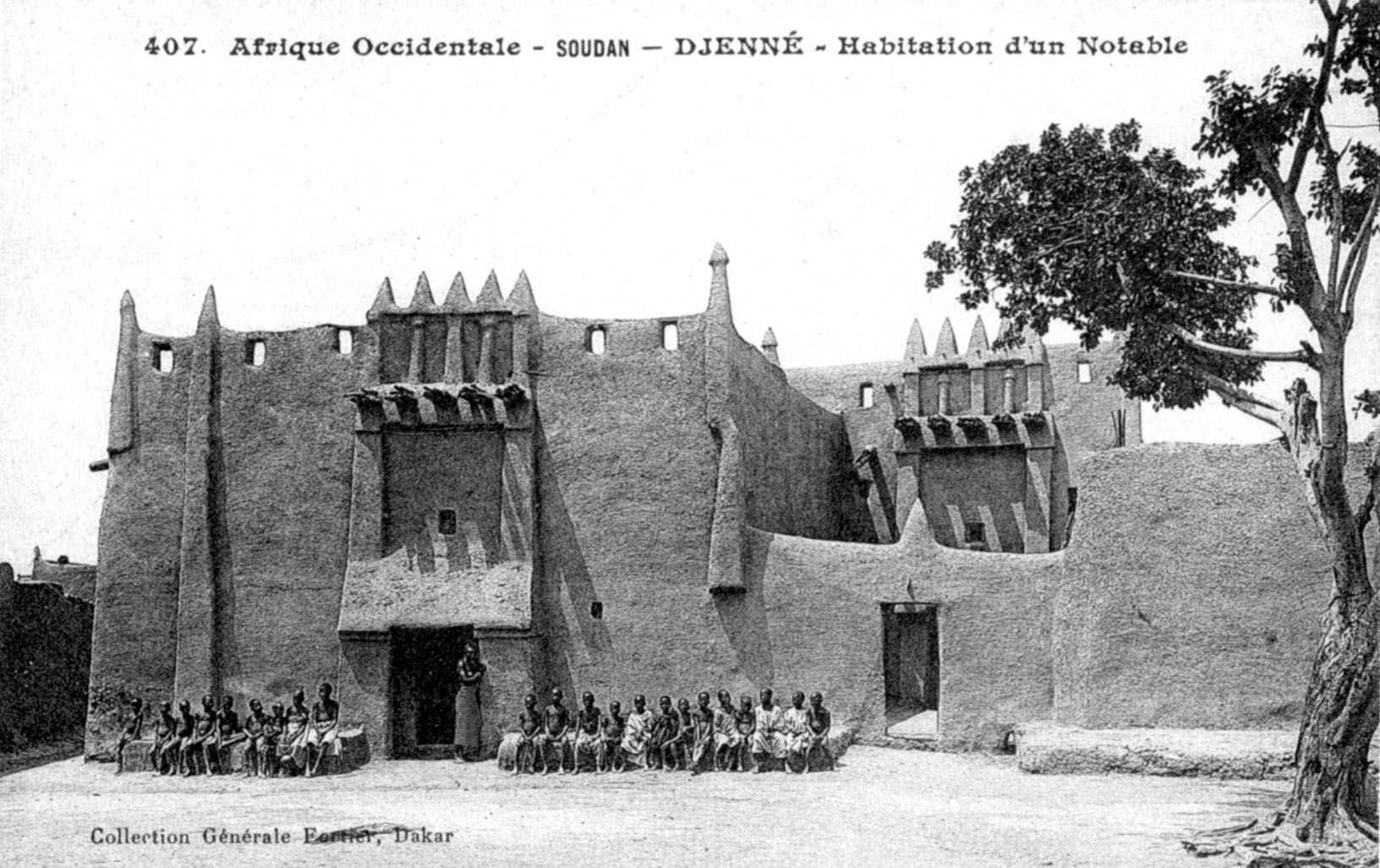

1 2 3 4 5 6 7 8 ... 11 12 13 14 15 16 17 18 19 (of 154 pages)