RandomAfricanAm's Posts
Nairaland Forum › RandomAfricanAm's Profile › RandomAfricanAm's Posts
1 2 3 4 5 6 7 8 9 10 11 12 13 14 15 16 17 (of 18 pages)
 Culture › An Account Of The Dispersal Of People Across The Sahale Around The Fall Of Kanem by RandomAfricanAm(op): 1:42am On Nov 16, 2013 |
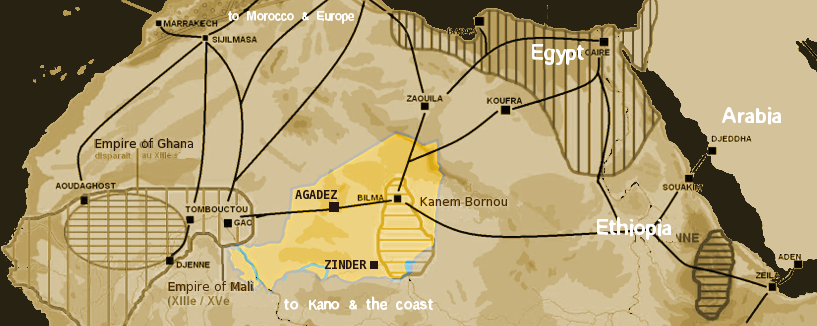
An account of the Dispersal of people across the sahale during the fall of kanem https://www.experts4africa.com/newsletter/june2012/june06-images/June6-Newsletter_mail_clip_image001.jpg People Have been in the sahale-Saharan area since around the aqualithic /green Saharan period. https://i1079.photobucket.com/albums/w513/Amunratheultimate/Misc/SpreadoftheSaharanculture.jpg https://www.kcl.ac.uk/ImportedImages/Schools/SSPP/Geog/drake/megalakes1.jpg The occupation of the Sahara was one that shared certain material culture commonalities throughout such as barbed harpoons for fishing and wavy lined pottery for storage. [img]http://openi.nlm.nih.gov/imgs/rescaled512/2515196_pone.0002995.g007.png[/img] [img]http://mathildasanthropologyblog.files./2008/08/ten-pot.jpg[/img] https://i1079.photobucket.com/albums/w513/Amunratheultimate/Misc/WavylineanddottedwavylinesitesintheNileValleyandtheSahara-SahelBelt01.jpg As the Sahara began to dry out the people began to be pushed out of and mashed between, the desert and forest belt in what is now called the Sahale. Even though most of the occupants were dispersed from the Sahara specific trade routes would be maintained across it till relatively modern times. Ancient https://www.egypt-tehuti.org/graphics/map-africa-trade-routes.gif Modern https://img252.imageshack.us/img252/4862/saharamap.jpg Between those two times came first the Garamantes of the Saharan Fezzen (southern Libya/northern Chad) and the Sao people of the Saharan lake chad(Northern Cameron/Southern Chad). Secondly Kanem rose in the Sahale along the trade rout [img]http://upload.wikimedia.org/wikipedia/commons/b/b7/Niger_saharan_medieval_trade_routes.PNG[/img] The Garamantes (probably from Berber language: igherman; meaning: cities[citation needed] or igarraman; meaning: saints, holy/sacred people) were a Saharan people who used an elaborate underground irrigation system, and founded a prosperous Berber kingdom in the Fezzan area of modern-day Libya, in the Sahara desert. They were a local power in the Sahara between 500 BC and 700 AD. There is little textual information about the Garamantes. Even the name Garamantes was a Greek name which the Romans later adopted. Available information comes mainly from Greek and Roman sources, as well as archaeological excavations in the area, though large areas in ruins remain unexcavated. Another important source of information is the abundant rock art, which often depicts life prior to the rise of the realm. The Garamantes were probably present as tribal people in the Fezzan by 1000 BC. They appear in the written record for the first time in the 5th century BC: according to Herodotus, they were "a very great nation" who herded cattle, farmed dates, and hunted the "Ethiopian Troglodytes", or "cave-dwellers" who lived in the desert, from four-horse chariots.[4] Roman depictions describe them as bearing ritual scars and tattoos. Tacitus wrote that they assisted the rebel Tacfarinas and raided Roman coastal settlements. According to Pliny the Elder, Romans eventually grew tired of Garamantian raiding and Lucius Cornelius Balbus captured 15 of their settlements in 19 BC. In 202, Septimius Severus captured the capital city of Garama.[5] Near East in 600 AD, showing the location of Garamantes before the Arab conquest. By around 150 AD the Garamantian kingdom (in today's central Libya (Fezzan), principally along the still existing Wadi al-Ajal), covered 180,000 square kilometres in modern-day southern Libya. It lasted from about 400 BC to 600 AD. The decline of the Garamantian culture may have been connected to worsening climatic conditions, or overuse of water resources.[6] What is desert today was once fairly good agricultural land and was enhanced through the Garmantian irrigation system 1,500 years ago. As fossil water is a non-renewable resource, over the six centuries of the Garamantian kingdom, the ground water level fell.[citation needed] The kingdom declined and fragmented. The Sao The Sao were an African civilization that flourished from ca. the sixth century BCE to as late as the sixteenth century CE. The Sao lived by the Chari River south of Lake Chad in territory that later became part of Cameroon and Chad. They are the earliest people to have left clear traces of their presence in the territory of modern Cameroon.[1] Sometime around the 16th century, conversion to Islam changed the cultural identity of the former Sao. Today, several ethnic groups of northern Cameroon and southern Chad but particularly the Kotoko claim descent from the civilization of the Sao. Rise and decline The Sao civilization may have begun as early as the sixth century BCE,[6] and by the end of the first millennium BCE, their presence was well established south of Lake Chad and near the Chari River.[7] The city states of the Sao reached their apex sometime between the ninth and fifteenth centuries CE.[7] The Sao's demise may have come about due to conquest, Islamization, or both.[8] Traditional tales say that the Sao west of Lake Chad fell to "Yemenites" from the east. These invaders made several unsuccessful attempts to conquer the Sao before finally succeeding by resorting to trickery. If true, the newcomers may have been Arab Bedouin or Sayfuwa raiders coming from the east who moved into the region in the fourteenth century .[9] Although some scholars estimate that the Sao civilization south of Lake Chad lasted until the fourteenth or fifteenth century, the majority opinion is that it ceased to exist as a separate culture sometime in the 16th century subsequently to the expansion of the Bornu Empire.[10] The Kotoko are the inheritors of the former city states of the Sao.[11] Culture Little is known about the Sao's culture or political organisation: They left no written records and are known only through archaeological finds and the oral history of their successors in their territory.[5] Sao artifacts show that they were skilled workers in bronze, copper, and iron.[8] Finds include bronze sculptures and terra cotta statues of human and animal figures, coins, funerary urns, household utensils, jewellery, highly decorated pottery, and spears.[12] The largest Sao archaeological finds have been made south of Lake Chad. Ethnic groups in the Lake Chad basin, such as the Buduma, Gamergu, Kanembu, Kotoko, and Musgum claim descent from the Sao. Lebeuf supports this connection and has traced symbolism from Sao art in works by the Guti and Tukuri subgroups of the Logone-Birni people.[13] Oral histories add further details about the people: The Sao were made up of several patrilineal clans who were united into a single polity with one language, race, and religion. In these narratives, the Sao are presented as giants and mighty warriors who fought and conquered their neighbors. https://25.media.tumblr.com/tumblr_mat9jefbcd1rqkjy0o2_500.jpg https://cfsafricanhistory.wikispaces.com/file/view/250px-Afrika-Kanem-Bornu-1.png/93389476/250px-Afrika-Kanem-Bornu-1.png The Kanem Empire The Kanem Empire(ca. 700 - 1376) was located in the present countries of Chad, Nigeria and Libya.[2] At its height it encompassed an area covering not only much of Chad, but also parts of southern Libya (Fezzan) and eastern Niger, northeastern Nigeria and northern Cameroon. The history of the Empire is mainly known from the Royal Chronicle or Girgam discovered in 1851 by the German traveller Heinrich Barth Origins The empire of Kanem began forming around AD 300 under the nomadic Tebu-speaking Kanembu. Also, the first african empire. According to the Girgam, the Kanembu were forced southwest towards the fertile lands around Lake Chad by political pressure and desiccation in their former range. The area already possessed independent, walled city-states belonging to the Sao culture. Under the leadership of the Duguwa dynasty, the Kanembu would eventually dominate the Sao, but not before adopting many of their customs. War between the two continued up to the late 16th century. One theory proposes that the lost state of Agisymba (mentioned by Ptolemy in the middle of the 2nd century AD) was the antecedent of the Kanem Empire. Duguwa Dynasty (Kanembu) Kanem was located at the southern end of the trans-Saharan trade route between Tripoli and the region of Lake Chad. The Kanembu eventually abandoned their nomadic lifestyle and founded a capital around 700 AD under the first documented Kanembu king ("mai"  known as Sef of Saif. The capital of N'jimi (the word for "south" in the Teda language) grew in power and influence under Sef's son, Dugu. This transition marked the beginning of the Duguwa Dynasty. The mais of the Duguwa were regarded as divine kings and belonged to the ruling establishment known as the Magumi. Despite changes in dynastic power, the magumi and the title of mai would persevere for over a thousand years. Sayfawa Dynasty The major factor that influenced the history of the state of Kanem was the early penetration of Islam. North African traders, Berbers and Arabs, brought the new religion. In 1085, a Muslim noble by the name of Hummay removed the last Duguwa king Selma from power and thus established the new dynasty of the Sefuwa. The introduction of the Sefuwa dynasty meant radical changes for the Kanem Empire. First, it meant the Islamization of the court and state policies. Second, the identification of founders had to be revised. After the 13th century, the empire began associating Mai Sef with the legendary Yemenite hero Sayf ibn Dhi Yazan. Hence, it became customary to call the new ruling dynasty the Sayfawa instead of the Sefuwa. Islam and Kanem Islam offered the Sayfawa rulers the advantage of new ideas from Arabia and the Mediterranean world, as well as literacy in administration. But many people resisted the new religion, favouring traditional beliefs and practices. When Hummay had assumed power on the basis of his strong Islamic following, for example, it is believed that the Duguwa/Sefuwa began some kind of internal opposition. This pattern of conflict and compromise with Islam occurs repeatedly in Chad's history. By the 12th century, the Sayfawa ruled all over Kanem. At the same time, the Kanembu people drew closer to the new rulers and increased the growing population in Njimi. Even though the Kanembu became the main power base of the Sayfawa, Kanem's rulers continued to travel frequently throughout the kingdom and especially towards Bornu, west of lake Chad. Herders and farmers alike recognized the government's power and acknowledged their allegiance by paying tribute. Mai Dunama Dabbalemi Kanem's expansion peaked during the long and energetic reign of Mai Dunama Dabbalemi (ca. 1221–1259), also of the Sayfawa dynasty. Dabbalemi initiated diplomatic exchanges with sultans in North Africa and apparently arranged for the establishment of a special hostel in Cairo to facilitate pilgrimages to Mecca. During his reign, he declared jihad against the surrounding tribes and initiated an extended period of conquest. After consolidating their territory around Lake Chad, the Fezzan region (in present-day Libya) fell under Kanem's authority, and the empire's influence extended westward to Kano (in present-day Nigeria), eastward to Ouaddaï, and southward to the Adamawa grasslands (in present-day Cameroon). However, he also destroyed the national Mune cult and thus precipitated widespread revolt culminating in the uprise of the Tubu and the Bulala. The former could be quenched but the latter continued to linger on and finally led to the retreat of the Sayfuwa from Kanem to Bornu c. 1380. Dabbalemi devised a system to reward military commanders with authority over the people they conquered. This system, however, tempted military officers to pass their positions to their sons, thus transforming the office from one based on achievement and loyalty to the mai into one based on hereditary nobility. Dabbalemi was able to suppress this tendency, but after his death, dissension among his sons weakened the Sayfawa Dynasty. Dynastic feuds degenerated into civil war, and Kanem's outlying peoples soon ceased paying tribute. Fall of Kanem After the death of Dunama II, Kanem quickly fell into a downward spiral. By the end of the 14th century, internal struggles and external attacks had torn Kanem apart. Sao Resurgence Between 1342 and 1352, the Sao, who had dominated Kanem prior to the Zaghawa, killed four mais in battle. The proliferation of mai claimants to the throne led to a series of internecine wars. Bulala Invasion The death knell of Sayfawa power in Kanem was dealt by the Bulala, invaders from the area around Lake Fitri to the east. By 1376, the Bulala had driven the Sayfawa from their capital. By 1388, they had taken Kanem altogether. The Kanuri were forced back into their nomadic ways and migrated west of Lake Chad, eventually establishing a new empire in Bornu. [img]http://africanlegends.files./2011/12/kanem_bornu-court-ca-1700.jpg[/img] . . . . Continued below 1 Like |
| Culture › Re: Endangered African American Musical Instruments by RandomAfricanAm(op): 11:02am On Nov 15, 2013 |
Ok, now that we've done folk country and blues lets move on to Jazz ........(gospel is next) https://www.youtube.com/watch?v=xAIwPaRfk0c https://www.youtube.com/watch?v=OrCPWgtlbZ4 https://www.youtube.com/watch?v=hsOtZyfOdWU https://www.youtube.com/watch?v=Bvy2S7Lgmk0 https://www.youtube.com/watch?v=Pey8BtJt1QE https://www.youtube.com/watch?v=-OYd88oRK5A https://25.media.tumblr.com/ee566af388e410bd62479ca435fb7255/tumblr_mnrpc87MQ91qzktxuo1_500.jpg Congo Square is an open space within Louis Armstrong Park, which is located in the Tremé neighborhood of New Orleans, Louisiana, just across Rampart Street north of the French Quarter. The Tremé neighborhood is famous for its history of African American music. In Louisiana's French and Spanish colonial era of the 18th century, slaves were commonly allowed Sundays off from their work. They were allowed to gather in the "Place des Nègres", "Place Publique", later "Circus Square" or informally "Place Congo" [2] at the "back of town" (across Rampart Street from the French Quarter), where the slaves would set up a market, sing, dance, and play music. https://cdn2-b.examiner.com/sites/default/files/styles/article_large/hash/de/69/de6920e20be984e7d9bcca25eada7bae.jpg?itok=s2u42ISS The tradition continued after the city became part of the United States with the Louisiana Purchase. As African music had been suppressed in the Protestant colonies and states, the weekly gatherings at Congo Square became a famous site for visitors from elsewhere in the U.S. In addition, because of the immigration of refugees (some bringing slaves) from the Haitian Revolution, New Orleans received thousands of additional Africans and Creoles in the early years of 19th century. They reinforced African traditions in the city, in music as in other areas. Many visitors were amazed at the African-style dancing and music. Observers heard the beat of the bamboulas and wail of the banzas, and saw the multitude of African dances that had survived through the years. https://medianola.org/uploads/Congo_Square_African_String_Instrument_Latrobe-1365704090.jpg https://upload.wikimedia.org/wikipedia/commons/9/9c/Congo_Square_African_Drum_1819_Latrobe.jpg Townsfolk would gather around the square on Sunday afternoons to watch the dancing. In 1819, the architect Benjamin Latrobe, a visitor to the city, wrote about the celebrations in his journal. Although he found them "savage",[2] he was amazed at the sight of 500-600 unsupervised slaves who assembled for dancing. He described them as ornamented with a number of tails of the smaller wild beasts, with fringes, ribbons, little bells, and shells and balls, jingling and flirting about the performers' legs and arms. The women, one onlooker reported, wore, each according to her means, the newest fashions in silk, gauze, muslin, and percale dresses. The males covered themselves in oriental and Indian dress and covered themselves only with a sash of the same sort wrapped around the body. Except for that, they went naked. One witness noted that clusters of onlookers, musicians, and dancers represented tribal groupings, with each nation taking their place in different parts of the square. The musicians used a range of instruments from available cultures: drums, gourds, banjo-like instruments, and quillpipes made from reeds strung together like pan flutes, as well as marimbas and European instruments such as the violin, tambourines, and triangles. White Creole composer Louis Moreau Gottschalk incorporated rhythms and tunes he heard in Congo Square into some of his compositions, like his famous Bamboula, Op. 2. As harsher United States practices of slavery replaced the more lenient French colonial style, the slave gatherings declined. Although no recorded date of the last slave dances in the square exists, the practice seems to have stopped more than a decade before the end of slavery with the American Civil War. In the late 19th century, the square again became a famous musical venue, this time for a series of brass band concerts by orchestras of the area's "Creole of color" community. Toward the end of the century, the city of New Orleans officially renamed the square as "Beauregard Square" in honor of Confederate General P.G.T. Beauregard. While this name appeared on some maps, most locals continued to call it "Congo Square". In 2011, the New Orleans City Council officially voted to restore the traditional name Congo Square.[3] In the 1920s New Orleans Municipal Auditorium was built in an area just in back of the Square, displacing and disrupting some of the Tremé community. In the 1960s a controversial urban renewal project leveled a substantial portion of the Tremé neighborhood around the Square. After a decade of debate over the land, the City turned it into Louis Armstrong Park, which incorporates old Congo Square. Starting in 1970, the City organized the New Orleans Jazz & Heritage Festival and held events annually at Congo Square. As attendance grew, the city moved the festival to the much larger New Orleans Fairgrounds. In the late 20th century and early 21st century, Congo Square has continued to be an important venue for music festivals and a community gathering place for brass band parades, protest marches, and drum circles. https://www.youtube.com/watch?v=KC_3A3Nlkv0 https://www.youtube.com/watch?v=tTBzSEhwcqI https://www.youtube.com/watch?v=3Orzx9gAXVM Congo Square [img]http://4.bp..com/-cZDtnulNhL4/T21V49-cHxI/AAAAAAAADEA/N_zs4iMrHl4/s320/Armstrong+park+art+%25282%2529.JPG[/img] |
| Webmasters › Re: How Do I Upload A Video On Nairaland by RandomAfricanAm: 11:51pm On Nov 14, 2013 |
| Culture › Re: Endangered African American Musical Instruments by RandomAfricanAm(op): 2:19pm On Nov 14, 2013 |
After this much we might as well push forward from Africa and the early sources on threw the rest of the U.S. diasporan music I'm going to move on to the blues: https://www.youtube.com/watch?v=XIj1wyK1cPI https://www.youtube.com/watch?v=025QQwTwzdU https://www.youtube.com/watch?v=3lJVRxeiy3o https://www.youtube.com/watch?v=Oms6o8m4axg https://www.youtube.com/watch?v=sxC04N23U3o |
| Culture › Re: What Does The Igbo Notion Of "Your Personal CHI" Represent? by RandomAfricanAm(op): 3:20am On Nov 14, 2013*. Modified: 3:50am On Nov 14, 2013 |
macof: Chi is just like Ori in yoruba. infact it is OriHey thanks for the contribution and Yes, I mentioned that about Yoruba Ori twice above(See: posts 14 and 15) The basis of Igbo Spirituality is the concept of “Chi.” Similar to the “Ori” of the Yoruba, and the “Ka” of Ancient Egyptians, Chi was the fundamental force of creation.That's why I took a detour and started to post about the Chi Antecedent Ka and was/am going to add the Chi peer Ori next(I was looking to see if there was some parallel among the Seerer ethnic group and there spiritual practices). This gives a means to discuses the topic of the Chi from an African context instead of having to rely on "foreign" concepts such as the "Guardian angel". That said it's nice that you affirmed what I ended up going to naturally in my admittedly basic investigations of the Ka and that is topics dealing with cognition. To be more specific "Neural top down control of physiology" or using cultural/spiritual cues to "trick/activate/train" the mind into giving beneficial internal responses. That said that seems to be only one manifestation but it is one example that's a practical application into everyday life which is the main thrust of what this thread is getting at. What observable phenomena does (x) spiritual practice account for? |
| Culture › Re: Complaints And Notice Thread. Be Serious! by RandomAfricanAm: 2:54am On Nov 14, 2013 |
@fulaman Thanks again for help with the ban and my apologizes for "stalking"(for lack of a better word) you to other rooms. Given that I was banned from the culture board I couldn't use this tread as a means to get unblocked. **Unlike most I don't have multiple accounts** |
| Culture › Re: What Does The Igbo Notion Of "Your Personal CHI" Represent? by RandomAfricanAm(op): 2:45am On Nov 14, 2013*. Modified: 6:46pm On Nov 14, 2013 |
(Continued from above) . . . . Definitions, effects, and ethics A placebo has been defined as "a substance or procedure… that is objectively without specific activity for the condition being treated".[11] Under this definition, a wide variety of things can be placebos and exhibit a placebo effect. Pharmacological substances administered through any means can act as placebos, including pills, creams, inhalants, and injections. Medical devices such as ultrasound can act as placebos.[13][14] Sham surgery,[15][16][17] sham electrodes implanted in the brain,[1] and sham acupuncture, either with sham needles or on fake acupuncture points, have all exhibited placebo effects.[18] Bedding not treated to reduce allergies has been used as a placebo to control for treated bedding.[19] The physician has even been called a placebo;[20] a study found that patient recovery can be increased by words that suggest the patient "would be better in a few days", and if the patient is given treatment, that "the treatment would certainly make him better" rather than negative words such as "I am not sure that the treatment I am going to give you will have an effect".[21] The placebo effect may be a component of pharmacological therapies: Pain killing and anxiety reducing drugs that are infused secretly without an individual's knowledge are less effective than when a patient knows they are receiving them. Likewise, the effects of stimulation from implanted electrodes in the brains of those with advanced Parkinson's disease are greater when they are aware they are receiving this stimulation.[22] Sometimes administering or prescribing a placebo merges into fake medicine. The placebo effect has sometimes been defined as a physiological effect caused by the placebo, but Moerman and Jonas have pointed out that this seems illogical, as a placebo is an inert substance that does not directly cause anything. Instead they introduced the term "meaning response" for the meaning that the brain associates with the placebo, which causes a physiological placebo effect. They propose that the placebo, which may be unethical, could be avoided entirely if doctors comfort and encourage their patients' health.[11] Ernst and Resch also attempted to distinguish between the "true" and "perceived" placebo effect, as they argued that some of the effects attributed to the placebo effect could be due to other factors.[23] The placebo effect has been controversial throughout history. Notable medical organizations have endorsed it,[24] but in 1903 Richard Cabot concluded that it should be avoided because it is deceptive. Newman points out the "placebo paradox", – it may be unethical to use a placebo, but also unethical "not to use something that heals". He suggests to solve this dilemma by appropriating the meaning response in medicine, that is make use of the placebo effect, as long as the "one administering… is honest, open, and believes in its potential healing power".[8] Another possible resolution of the ethical dilemma might come from the "honest placebo" effect found in a 2010 study[4] carried out by researchers in the Program in Placebo Studies at the Harvard Medical School, where patients with irritable bowel syndrome experienced a significant beneficial effect even though they were told the pills they were taking were placebos, as compared to a control group who received no pills. Although the placebo effect and theories on its underlying mechanisms are mostly understood in terms of human psychology, studies have also indicated that non-human animals such as dogs can also have symptoms reduced by placebo treatments.[25] Mechanism of the effect The placebo effect is highly variable in its magnitude and reliability and is typically strongest in measures of subjective symptoms (e.g., pain) and typically weak-to-nonexistent in objective measures of health points (e.g., blood pressure, infection clearance).[citation needed] A 2001 meta-analysis of clinical trials with placebo groups and no-treatment groups found no evidence for a placebo effect on objectively measured outcomes and possible small benefits in studies with continuous subjective outcomes (particularly pain).[10] A 2004 follow-up analysis found similar results and increased evidence of bias in smaller trials that calls into question the apparent placebo effect on subjective outcomes.[31] Because the placebo response is simply the patient response that cannot be attributed to an investigational intervention, there are multiple possible components of a measured placebo effect. These components having varying relevance depending on study design and the types of observations.[32] While there is some evidence that placebo interventions can alter levels of hormones[33] or endogenous opioids,[34] other prominent components include expectancy effects, regression to the mean,[35][36] and flawed research methodologies. Expectancy and conditioning The placebo effect is related to the perceptions and expectations of the patient; if the substance is viewed as helpful, it can heal, but, if it is viewed as harmful, it can cause negative effects, which is known as the nocebo effect. In 1985, Irving Kirsch hypothesized that placebo effects are produced by the self-fulfilling effects of response expectancies, in which the belief that one will feel different leads a person to actually feel different.[37] According to this theory, the belief that one has received an active treatment can produce the subjective changes thought to be produced by the real treatment. [b]Placebos can act similarly through classical conditioning, wherein a placebo and an actual stimulus are used simultaneously until the placebo is associated with the effect from the actual stimulus.[38] Both conditioning and expectations play a role in placebo effect,[39] and make different kinds of contribution. Conditioning has a longer-lasting effect,[40] and can affect earlier stages of information processing.[41] The expectancy effect can be enhanced through factors such as the enthusiasm of the doctor, differences in size and color of placebo pills, or the use of other interventions such as injections. In one study, the response to a placebo increased from 44% to 62% when the doctor treated them with "warmth, attention, and confidence."[42] Expectancy effects have been found to occur with a range of substances. Those that think that a treatment will work display a stronger placebo effect than those that do not, as evidenced by a study of acupuncture.[43][44] Because the placebo effect is based upon expectations and conditioning, the effect disappears if the patient is told that their expectations are unrealistic, or that the placebo intervention is ineffective. A conditioned pain reduction can be totally removed when its existence is explained.[45] It has also been reported of subjects given placebos in a trial of anti-depressants, that "Once the trial was over and the patients who had been given placebos were told as much, they quickly deteriorated."[46] A placebo described as a muscle relaxant will cause muscle relaxation and, if described as the opposite, muscle tension.[47] A placebo presented as a stimulant will have this effect on heart rhythm, and blood pressure, but, when administered as a depressant, the opposite effect.[48] The perceived consumption of caffeine has been reported to cause similar effects even when decaffeinated coffee is consumed,[49][50] although a 2003 study found only limited support for this.[51] Placebos represented as alcohol can cause intoxication[52] and sensorimotor impairment.[53] Perceived ergogenic aids can increase endurance,[54] speed[55] and weight-lifting ability,[56] leading to the question of whether placebos should be allowed in sport competition.[57] Placebos can help smokers quit.[58] Perceived allergens that are not truly allergenic can cause allergies.[59] Interventions such as psychotherapy can have placebo effects.[60]pp 164–173 The effect has been observed in the transplantation of human embryonic neurons into the brains of those with advanced Parkinson's disease.[61] Because placebos are dependent upon perception and expectation, various factors that change the perception can increase the magnitude of the placebo response.[/b] For example, studies have found that the color and size of the placebo pill makes a difference, with "hot-colored" pills working better as stimulants while "cool-colored" pills work better as depressants. Capsules rather than tablets seem to be more effective, and size can make a difference.[62] One researcher has found that big pills increase the effect[63] while another has argued that the effect is dependent upon cultural background.[64] More pills,[65] branding,[66] past experience,[67] and high price[68] increase the effect of placebo pills. Injection[69] and acupuncture[18] have larger effect than pills. Proper adherence to placebos is associated with decreased mortality.[70] Motivation may contribute to the placebo effect. The active goals of an individual changes his/her somatic experience by altering the detection and interpretation of expectation-congruent symptoms, and by changing the behavioral strategies a person pursues.[71][72] Motivation may link to the meaning through which people experience illness and treatment. Such meaning is derived from the culture in which they live and which informs them about the nature of illness and how it responds to treatment. Research into the placebo treatment of gastric and duodenal ulcers shows that this varies widely with society.[11] The placebo effect in treating gastric ulcers is low in Brazil, higher in northern Europe (Denmark, Netherlands), and extremely high in Germany. However, the placebo effect in treating hypertension is lower in Germany than elsewhere.[73] Social observation can induce a placebo effect such when a person sees another having reduced pain following what they believe is a pain reducing procedure.[74] The placebo effect can work selectively, under the influence of various psychological factors. If a placebo cream is applied on one hand with the expectation that it is an analgesic, it will reduce pain only in that hand and not elsewhere on the body.[75] If a person is given a placebo under one name, and they respond, they will respond in the same way on a later occasion to that placebo under that name but not if under another.[76] Placebo effect and the brain Functional imaging upon placebo analgesia shows that it links to the activation, and increased functional correlation between this activation, in the anterior cingulate, prefrontal, orbitofrontal and insular cortices, nucleus accumbens, amygdala, the brainstem periaqueductal gray matter,[77][78][79] and the spinal cord.[80][81][82][83] These changes can act upon the brain's early stages of information processing: Research using evoked brain potentials upon painful laser pulses, for example, finds placebo effects upon the N2–P2, a biphasic negative–positive complex response, the N2 peak of which is at about 230 ms, and the P2 one at about 380 ms.[41] They occur not only during placebo analgesia but after receiving the analgesic placebo (the areas are different here, and involve the medial prefrontal cortex, posterior parietal cortex and inferior parietal lobule).[84] Different areas in the higher brain have different functions. The prefrontal involvement could be related to recalling the placebo and maintaining its cognitive presence in a "self-reinforcing feedback loop" (during pain an individual recalls having taken the placebo and reduced pain reinforces its status as an analgesic).[85] The rostral anterior cingulate cortex (rACC) and its subcortical connectivity could be related to the expectation of potential pain stimuli[86][87] The higher brain works by regulating subcortical processes. High placebo responses link with enhanced dopamine and mu-opioid activity in the circuitry for reward responses and motivated behavior of the nucleus accumbens, and, on the converse, anti-analgesic nocebos responses were associated with deactivation in this part of the brain of dopamine and opioid release.[78] (It has been known that placebo analgesia depends upon the release in the brain of endogenous opioids since 1978.[88]) Such analgesic placebos activation changes processing lower down in the brain by enhancing the descending inhibition through the periaqueductal gray[78] on spinal nociceptive reflexes, while the expectations of anti-analgesic nocebos acts in the opposite way to block this.[80] The brain is also involved in less-studied ways upon nonanalgesic placebo effects: *Parkinson's disease: Placebo relief is associated with the release of dopamine in the brain.[89] *Depression: Placebos reducing depression affect many of the same areas that are activated by antidepressants with the addition of the prefrontal cortex[90][91] *Caffeine: Placebo-caffeinated coffee causes an increase in bilateral dopamine release in the thalamus.[92] *Glucose: The expectation of an intravenous injection of glucose increases the release of dopamine in the basal ganglia of men (but not women).[93] *Methylphenidate: The expectation of intravenous injection of this drug in inexperienced drug users increased the release of dopamine in the ventral cingulate gyrus and nucleus accumbens, with this effect being largest in those with no prior experience of the drug.[94] Present functional imaging upon placebo analgesia has been summarized as showing that the placebo response is "mediated by "top-down" processes dependent on frontal cortical areas that generate and maintain cognitive expectancies. Dopaminergic reward pathways may underlie these expectancies".[95] "Diseases lacking major 'top-down' or cortically based regulation may be less prone to placebo-related improvement".[96] Brain and body The brain has control over the body processes affected by placebos. Pain, motor fatigue, and fever are directly organized by the brain[citation needed]. Other processes usually regulated by the body such as the immune system are also controlled indirectly through the sympathetic and parasympathetic nervous system[citation needed]. Research upon conditioning in animals shows the brain can learn control over them[citation needed]. In conditioning, a neutral stimulus saccharin is paired in a drink with an agent that produces an unconditioned response. For example, that agent might be cyclophosphamide that causes immunosuppression. After learning this pairing, the taste of saccharin by itself through neural top-down control created immunosuppression, as a new conditioned response.[97] Such conditioning has been found to affect a diverse variety of not just basic physiological processes in the immune system but ones such as serum iron levels, oxidative DNA damage levels, and insulin secretion. This work was originally done on rats, however the same conditioning of basic physiological processes can also occur in humans[citation needed]. Recent reviews have argued the placebo effect is due to top-down control by the brain for immunity[98] and pain.[99] Pacheco-López and colleagues have raised the possibility of "neocortical-sympathetic-immune axis providing neuroanatomical substrates that might explain the link between placebo/conditioned and placebo/expectation responses."[98]:441 A recent fMRI study has shown that a placebo can reduce pain-related neural activity in the spinal cord, indicating that placebo effects can extend beyond the brain.[100] Evolved health regulation [b]Evolutionary medicine identifies many symptoms such as fever, pain, and sickness behavior as evolved responses to protect or enhance the recovery from infection and injury. Fever, for example, is an evolved self-treatment that removes bacteria or viruses through raised body temperature. These evolved responses, however, also have a cost that depending upon circumstances can outweigh their benefit (due to this, for example, there is a reduction in fever during malnutrition or late pregnancy). According to the health management system theory proposed by Nicholas Humphrey, the brain has been selected to ensure that evolved responses are deployed only when the cost benefit is biologically advantageous. To do this, the brain factors in a variety of information sources, including the likelihood derived from beliefs that the body will get well without deploying its costly evolved responses. One such source of information is the knowledge the body is receiving care and treatment. The placebo effect in this perspective arises when false information about medications misleads the health management system about the likelihood of getting well so that it selects not to deploy an evolved self-treatment.[101][/b] https://www.youtube.com/watch?v=OMbsGBlpP30 |
| Culture › Re: What Does The Igbo Notion Of "Your Personal CHI" Represent? by RandomAfricanAm(op): 3:52pm On Nov 13, 2013 |
We're still chasing dat Bush meat to put on da table ...The religious and/or magic rituals and procedures probably had a powerful placebo effect, which were likely seen as proof of their effectiveness. ...Placebo A placebo (/pləˈsiboʊ/ plə-SEE-boh; Latin placēbō, "I shall please"[2] from placeō, "I please" is a simulated or otherwise medically ineffectual treatment for a disease or other medical condition intended to deceive the recipient. Sometimes patients given a placebo treatment will have a perceived or actual improvement in a medical condition, a phenomenon commonly called the placebo effect.In medical research, placebos are given as control treatments and depend on the use of measured deception. Common placebos include inert tablets, vehicle infusions, sham surgery,[3] and other procedures based on false information.[1] However, placebos can also have a surprisingly positive effect on a patient who knows that the given treatment is without any active drug, as compared with a control group who knowingly did not get a placebo.[4] In one common placebo procedure, however, a patient is given an inert pill, told that it may improve his/her condition, but not told that it is in fact inert. Such an intervention may cause the patient to believe the treatment will change his/her condition; and this belief may produce a subjective perception of a therapeutic effect, causing the patient to feel their condition has improved — or an actual improvement in their condition. This phenomenon is known as the placebo effect. Placebos are widely used in medical research and medicine,[5] and the placebo effect is a pervasive phenomenon;[5] in fact, it is part of the response to any active medical intervention.[6] Archie Cochrane suggested in 1972[7] "It is important to distinguish the very respectable, conscious use of placebos. The effect of placebos has been shown by randomized controlled trials to be very large. Their use in the correct place is to be encouraged […]" The placebo effect points to the importance of perception and the brain's role in physical health. However, the use of placebos as treatment in clinical medicine (as opposed to laboratory research) is ethically problematic as it introduces deception and dishonesty into the doctor-patient relationship.[8] The United Kingdom Parliamentary Committee on Science and Technology has stated that: "...prescribing placebos... usually relies on some degree of patient deception" and "prescribing pure placebos is bad medicine. Their effect is unreliable and unpredictable and cannot form the sole basis of any treatment on the NHS."[3] Since the publication of Henry K. Beecher's The Powerful Placebo [9] in 1955, the phenomenon has been considered to have clinically important effects.[10] This view was notably challenged when, in 2001, a systematic review of clinical trials concluded that there was no evidence of clinically important effects, except perhaps in the treatment of pain and continuous subjective outcomes.[10] The article received a flurry of criticism,[11] but the authors later published a Cochrane review with similar conclusions (updated as of 2010).[12] Most studies have attributed the difference from baseline until the end of the trial to a placebo effect, but the reviewers examined studies which had both placebo and untreated groups in order to distinguish the placebo effect from the natural progression of the disease.[10] However these conclusions have been criticized because of the great variety of diseases—more than 40—in this metastudy. The effect of placebo is very different in different diseases. By pooling quite different diseases the results can be leveled out. The placebo effect points to the importance of perception and the brain's role in physical health... Neural top down control of physiology. . . . . . Continued below |
| Culture › Re: What Does The Igbo Notion Of "Your Personal CHI" Represent? by RandomAfricanAm(op): 10:40am On Nov 13, 2013 |
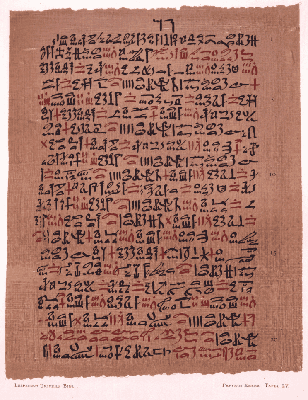
The idea that there was something securing the physical and mental activities of man arose in Egypt and elsewhere during prehistory. The ka (or internal ka) was believed to be one of those entities. Many ancient Egyptian words, such as "think about" and "thought" have the same basic root as the word for ka, as do other words such as "magic" and "enchant"., reflecting the supernatural essence of the ka.Heka Heka (/ˈhɛkə/; Egyptian: Ḥkȝ; also spelt Hike) was the deification of magic in Egyptian mythology, his name being the Egyptian word for "magic". According to Egyptian writing (Coffin text, spell 261), Heka existed "before duality had yet come into being." The term "Heka" was also used for the practice of magical ritual. The Coptic word "hik" is derived from the Ancient Egyptian. Heka literally means activating the Ka, the aspect of the soul which embodied personality. Egyptians thought activating the power of the soul was how magic worked. "Heka" also implied great power and influence, particularly in the case of drawing upon the Ka of the gods. Heka acted together with Hu, the principle of divine utterance, and Sia, the concept of divine omniscience, to create the basis of creative power both in the mortal world and the world of the gods. As the one who activates Ka, Heka was also said to be the son of Atum, the creator of things in general, or occasionally the son of Khnum, who created specific individual Ba (another aspect of the soul). As the son of Khnum, his mother was said to be Menhit. The hieroglyph for his name featured a twist of flax within a pair of raised arms; however, it also vaguely resembles a pair of entwined snakes within someone's arms. Consequently, Heka was said to have battled and conquered two serpents, and was usually depicted as a man choking two giant entwined serpents. Medicine and doctors were thought to be a form of magic, and so Heka's priesthood performed these activities. Egyptians believed that with Heka, the activation of the Ka, an aspect of the soul of both gods and humans, (and divine personification of magic), they could influence the gods and gain protection, healing and transformation. Health and wholeness of being were sacred to Heka. There is no word for religion in the ancient Egyptian language, mundane and religious world views were not distinct; thus Heka was not a secular practice but rather a religious observance. Every aspect of life, every word, plant, animal and ritual was connected to the power and authority of the gods.[1] In ancient Egypt, medicine consisted of four components; the primeval potency that empowered the creator-god was identified with Heka, who was accompanied by magical rituals known as Seshaw held within sacred texts called Rw. In addition Pekhret, medicinal prescriptions, were given to patients to bring relief. This magic was used in temple rituals as well as informal situations by priests. These rituals, along with medical practices, formed an integrated therapy for both physical and spiritual health. Magic was also used for protection against the angry deities, jealous ghosts, foreign demons and sorcerers who were thought to cause illness, accidents, poverty and infertility. Medicine and doctors were thought to be a form of magic, and so Heka's priesthood performed these activities.What Is Ancient Egyptian Medicine? Ancient Egypt (3300BC to 525BC) is where we first see the dawn of what, today, we call "medical care". The Egyptian civilization was the first great civilization on this planet. Egyptians thought gods, demons and spirits played a key role in causing diseases. Many doctors at the time believed that spirits blocked channels in the body, and affected the way the body functioned. Their research involved trying to find ways to unblock the "Channels". Gradually, through a process of trial and error and some basic science, the profession of a "doctor of medicine" emerged. Ancient Egyptian doctors used a combination of natural remedies, combined with prayer. Unlike prehistoric peoples, ancient Egyptians were able to document their research and knowledge, they were literate and could read and write; they also had a system of mathematics which helped scientists make calculations. Documented ancient Egyptian medical literature is among the oldest in existence today. The ancient Egyptians had an agricultural economy, organized and structured government, social conventions and properly enforced laws. Their society was stable; many people lived their whole lives in the same place, unlike most of their prehistoric predecessors. This stability allowed medical research to develop. In this society, individuals were relatively wealthy, compared to their ancestors, and could afford health care. They had temples, priests and rituals in which deceased people were mummified. In order to mummify you have to learn something about how the human body works. In one mummification process, a long hooked implement was inserted through the nostril, breaking the thin bone of the brain case, allowing the brain to be removed. A significant number of priests became medical doctors. Ancient Egyptian doctors knew that the body had a pulse, and that it was associated with the function of the heart. They had a very basic knowledge of a cardiac system, but overlooked the phenomenon of blood circulating around the body - either because they missed it, or thought it did not matter, they were unable to distinguish blood vessels, nerves, or tendons. The ancient Egyptians were traders, and travelled long distances, coming back with herbs and spices from faraway lands. Their relatively high standard of living gave them free time, which they could use for observing things and thinking about them. Medical research involves patience and observation. The Channel Theory and how the Gods impacted on human health The Channel Theory - this came by observing farmers who dug out irrigations channels for their crops. They believed that as in irrigation, channels provided the body with routes for good health. If the channels became blocked, they would use laxatives to unblock them. They thought the heart was the center of 46 channels - types of tubes. To a certain extent, they were right, our veins, arteries, and even our intestines are types of tubes. However, they never came to realize that these channels had different functions. The Gods were the creators and controllers of life, the Egyptians thought. They believed conception was done by the god Thoth, while Bes, another god, decided whether childbirth went smoothly. Blockages in the human "channels" were thought to be the result of the evil doings of Wehedu, an evil spirit. The channel theory allowed medicine to move from entirely spiritual cures for diseases and disorders, towards practical ones. Many medical historians say this change was a major turning point, a breakthrough in the history of medicine. Doctors gave "good" and "bizarre" medical advice Some recommendations made by physicians were fairly sound - they advised people to wash and shave their bodies as measures to prevent infections. They told people to eat carefully, and to avoid unclean animals and raw fish. Some of their practices were bizarre, however, and most likely did more harm than good. Several medical prescriptions contained animal dung, which might have useful molds and fermentation substances, but were also infested with bacteria and must have caused many serious infections. Ancient Egyptian medicine was highly advanced for its time Egyptian doctors were sought after by kings and queens from faraway lands because they were considered as the best in the world. Archeologists have found Papyri (thick paper-like material produced from the pith of the papyrus plant) where Egyptians had documented a vast amount of medical knowledge. They found that they had fairly good knowledge about bone structure, and were aware of some of the functions of the brain and liver. The Ebers Papyrus (Papyrus Ebers) These are medical documents which are thought to have been written around 1500 BC, and most likely include retranscribed materials dating back to 3400 BC. It is a 20-meter long scroll, which covers the equivalent of approximately 100 pages. The Ebers Papyrus, along with the Edwin Smith Papyrus, are the oldest preserved medical documents in existence. https://upload.wikimedia.org/wikipedia/commons/c/c5/Papyrus_Ebers.png The Ebers Papyrus explaining the best treatment for asthma Georg Moritz Ebers (1837-1898), a German novelist and Egyptologist, discovered this medical papyrus at Thebes (Luxor) in 1873-74. It is now in the Library of the University of Leipzig, Germany. The Ebers Papyrus was has over 700 remedies and magical formulae, as well as scores of incantations aimed at repelling demons which cause disease. However, it also has evidence of sound scientific procedures. The authors wrote that the center of the body's blood supply is the heart, and that every corner of the body is attached to vessels. The functions of some organs appear to have been overlooked, while the heart was the meeting point for vessels which carried tears, urine, semen and blood. The Book of Hearts, a section of the Ebers Papyrus, described in great detail the characteristics, causes, and treatment for such mental disorders as dementia and depression. It appears they viewed mental diseases as a combination of blocked channels and the influence of evil spirits and angry Gods. There is even a section on family planning, contraception, how to tell if you are pregnant, and some other gynecological issues. They wrote about skin problems, dental problems, diseases related to the eyes, intestinal disease, parasites, and how to surgically treat an abscess or a tumor. The ancient Egyptians clearly knew how to set broken bones and treat burns. Below are some quotes from the Ebers Papyrus (adapted into familiar modern day phrases: *From the heart there are vessels to all four limbs, to every part of the body. When a doctor, Sekmet priest or exorcist place their hands on any part of a person's body, they are examining the heart, because all vessels come from the heart. The heart is the source, and speaks out to every part of the body. *When we breathe in through our noses, the air enters our hearts and lungs, and then the entire belly. *The nostrils have four vessels. Two of them provide mucus while the other two provide blood. *The human body has four vessels which lead to two ears. Into the right ear enters the "breath of life", while into the left ear the "breath of death" enters. *Baldness is caused by four vessels to the head. *All eye diseases originate from four vessels in the forehead which provide the eyes with blood. *Two vessels enter a man's testicles and provide them with semen. *The buttocks have two vessels which supply them with vital nutrients. *Six vessels reach the soles of our feet. *Six vessels lead to our fingers, through our arms. *The bladder is connected to two vessels. They supply it with urine. *The liver is supplied with liquid and air via four vessels. When they overfill the liver with blood, they cause many diseases. *The lungs and spleen are connected to four vessels, which like the liver, are supplied with liquid and air. *The liquid and air that come out of the anus come from four vessels. The anus is also exposed to all the vessels that exist in the arms and legs when they are overflowing with waste. Egyptian doctors were adept at some basic surgical procedures Egyptian physicians were trained and good at practical first aid. They could successfully fix broken bones and dislocated joints. Basic surgery, meaning procedures close to the surface of the skin (or on the skin) was a common and well learnt skill. They knew how to stitch wounds effectively. They did not, however, perform surgery deep inside the body. They had no effective anesthetics, only antiseptics. Performing surgery deep inside a human body would have been impossible. They had excellent bandages, and would bind certain plant products, such as willow leaves, into the bandages for the treatment of inflammation. Circumcision of baby boys was common practice. It is hard to tell whether female circumcision existed; there is one mention, but several experts believe the text has not been translated properly. Egyptian doctors said there were three types of injuries: *Treatable injuries - these were dealt with immediately. *Contestable injuries - these were deemed not to be life-threatening, i.e. the doctor believed the patient could survive without his intervention. Patients would be put under observation. If they survived, the doctor would decide in his own time whether to intervene. *Untreatable ailments - the meaning is clear; the doctor would not intervene. https://upload.wikimedia.org/wikipedia/commons/thumb/4/4b/Ancient_Egyptian_medical_instruments.jpg/256px-Ancient_Egyptian_medical_instruments.jpg Ancient Egyptian inscriptions illustrating bone saws, scales, lances, dental tools, suction cups, knives and scalpels Surgeons had an array of instruments, such as pincers, forceps, spoons, saws, containers with burning incense, hooks and knives. Prosthetics did exist, but archeologists say they were probably not that practical and were used either to make deceased people look more presentable during funerals, or were simply for decorative purposes. Ancient Egyptian public health The aim of public health is to protect the community from the spread of disease, and too keep everybody as healthy as possible. The provision of water so that people can wash themselves, their animals and their homes is a vital part of preventing the spread of disease. Cleanliness was an important part of Egyptian life; however, it was promoted for social and religious reasons, and not health ones. Their homes had rudimentary baths and toilets. Personal cleanliness and appearance were an important part of life; many even wore make-up around their eyes to protect from disease. Most people used mosquito nets during the hot months - we cannot know whether this was to protect against malaria and other diseases, or simply because they did not want to be bitten. Priests washed themselves and their clothing and eating utensils regularly. But they did it for religious reasons. Although hygiene practices did help protect their health, this was not their reason. Cleanliness was an appeal to their gods. There was no public health infrastructure as we know of today, with sewage systems, proper medical care and public hygiene. Magic and religion to treat illnesses Everyday life in Egypt involved beliefs and fear of magic, gods, demons, evils spirits, etc. Luck and disaster were caused by angry celestial beings or evil forces. They believed that if illnesses and physical and mental disorders were partly caused by supernatural forces, then magic and religion were required to deal with them and treat people. Anthropologists, archeologists, and medical historians say there did not appear to be a clear difference between a priest and a doctor in those days. Many healers were priests of Sekhmet, and used science as well as magic and incantations when treating people. (Sekhmet was an Egyptian warrior goddess). The religious and/or magic rituals and procedures probably had a powerful placebo effect, which were likely seen as proof of their effectiveness. Some treatments used products or herbs or plants that looked similar to the illness they were treating, this is known as simila similibus (similar with similar). This practice has existed all over the world, even in modern alternative medicine (homeopathy, treating like with like). In Egyptian times ostrich eggs were used to treat a fractured skull. The medical profession had a structure and a hierarchy The earliest ever record of a physician was Hesy-Ra, 2700 BC, who was "Chief of Dentists and Doctors" to King Dioser. The first female doctor was probably Peseshet 2400 BC, who was known as the supervisor of all female doctors. The top doctors worked in the royal court. Below them there were inspectors who would supervise the proper actions of doctors. There were specialists, such as dentists, proctologists, gastroenterologists, and ophthalmologists. A proctologist was called "nery phuyt" which means "shepherd of the anus". |
| Culture › Re: What Does The Igbo Notion Of "Your Personal CHI" Represent? by RandomAfricanAm(op): 7:55am On Nov 13, 2013 |
Still throwing material on the bench The basis of Igbo Spirituality is the concept of “Chi.” Similar to the “Ori” of the Yoruba, and the “Ka” of Ancient Egyptians, Chi was the fundamental force of creation.The Ancient Egyptian Ka Understanding conceptual ideas related to ancient Egypt thought can be difficult, and there is little more complex than the ideas surrounding the ka. Yet the ka was a most important concept in ancient Egyptian religion. Indeed, the name of Egypt itself is probably derived, though Greek, from the ancient name for the capital city, Memphis, which was Hut-ka-Pteh, or "House of the Ka of Ptah". The word, ka, was expressed by a hieroglyph depicting two upraised arms, which was usually the symbol of an embrace, the protection of a man by his ka, or a sign of praise, although other interpretations are possible. The ka hieroglyph sometimes appears on offering tables in place of representations of actual offerings, and in its basic sense of life-power, the sign may appear in apposition with the ankh or some other sign. Unfortunately, the concept of the ka has no exact analogues in European culture and so it is difficult to identify the ka with more familiar concepts. Hence, there are many interpretations that are frequently ambiguous and often unsatisfactory. One will frequently see the term translated as "soul" or "spirit", the ka was much more than that. During very ancient times, the ka may have indicated male potency, and in all periods it is used as a term for the creative and sustaining power of life. https://www.touregypt.net/images/touregypt/ka2.jpg Importantly, the ka needed continuing nourishment in order to survive and offerings of food and drink were made to it. Eventually, the offerings themselves began to be regarded as being imbued with the ka's life-power, and the plural kau was used to mean "food offerings" This broad diversity in the meaning of the term ka is responsible for a wide variety of uses for the sign. A distinction must be made between the internal and external ka, as well as between the royal and the human ka, because these concepts could be very different. The idea that there was something securing the physical and mental activities of man arose in Egypt and elsewhere during prehistory. The ka (or internal ka) was believed to be one of those entities. Many ancient Egyptian words, such as "think about" and "thought" have the same basic root as the word for ka, as do other words such as "magic" and "enchant"., reflecting the supernatural essence of the ka. There was also a reproductive role of the ka, but its connection to the thought process is not as clear. It is another part of what the ancient Egyptians considered to be a part of mankind's existence, the ba, which was usually related to the mind. Thus, in the literary work, "Dispute of a Man with his Ba", confusion of thought is described as a dialogue with the ba. Nevertheless, the word hmt, meaning to "think or "to act three together", lends support to the idea that the ka was also considered to be involved in the thought process. The ka could be thought by the ancient Egyptians to designate individual human traits such as character, nature, temperament or disposition. And since one's character has so much to do with one's life, ka could also refer to destiny or providence. Yet, considering the ka as a kind of universal vital force is too abstract. https://www.touregypt.net/images/touregypt/ka3.jpg The idea of personifications were readily adopted in ancient Egypt. Hence, the Egyptian mind transformed this spiritual idea into a certain being, which we can refer to as the external ka. Apparently this form of the ka was primarily associated with the placenta, considered the twin of a man, and was born with him. Hence, scenes of the king's birth depict Khnum forming the royal baby and his ka on a potter's wheel. At the same time, to "go to one's ka" meant to die, even though the ka continued to live on after the body itself died, and was then supreme. In fact, priests who served in the funerary cult were called hemu-ka or "ka servants". Within Old Kingdom pyramid temples, New Kingdom royal tombs and the temples dedicated to the gods, there are many representations of the ka accompanying the king, either as a personified ka sign or even in human form with the ka sign on its head. The ka hieroglyph holds the serekh with the Horus name of the king, while the ka itself holds an ostrich feather, the symbol of world order or ma'at, in one hand, and a long staff with a finial shaped like the king's head in the other hand. Hence, the royal ka is related to the Horus name describing the presence of that god in the king. This shows the dual nature of the king, which combines divine and mortal components. His divinity is realized through the ka. The relationship between the royal ka and Horus is apparent in its identification with Harsiese in the New Kingdom.. Unlike the royal ka, the human ka was never represented as a separate figure, because any representation itself is the ka. This explains the indifference of Egyptian artists to rendering individual features. They did not reproduce the portrait of an individual, but that of his ka, who was eternally youthful and in perfect shape. During the Old Kingdom, the pictures created in private tombs created an entire world for the ka. They are an exact, although incomplete, copy of the earthly world. Only the people and objects essential for the owner are shown. Being a reproduction of everyday life, this "Doubleworld" is surprisingly realistic. There is nothing supernatural about it, including the gods. Every tomb formed its own doubleworld, and their total did not merge into an aggregate next world. The idea of the ka was a dominating concept of the next life in the Old Kingdom. In a less pure form, it continued into the Middle Kingdom, and thereafter lost much of its importance, although the ka always remained the recipient of offerings. Ib (heart) An important part of the Egyptian soul was thought to be the Ib (jb), or heart. The Ib[1] or metaphysical heart was believed to be formed from one drop of blood from the child's mother's heart, taken at conception.[2] To ancient Egyptians, the heart was the seat of emotion, thought, will and intention. This is evidenced by the many expressions in the Egyptian language which incorporate the word ib, Awt-ib: happiness (literally, wideness of heart), Xak-ib: estranged (literally, truncated of heart). This word was transcribed by Wallis Budge as Ab. In Egyptian religion, the heart was the key to the afterlife. It was conceived as surviving death in the nether world, where it gave evidence for, or against, its possessor. It was thought that the heart was examined by Anubis and the deities during the Weighing of the Heart ceremony. If the heart weighed more than the feather of Maat, it was immediately consumed by the monster Ammit. Sheut (shadow) A person's shadow or silhouette, Sheut (šwt in Egyptian), is always present. Because of this, Egyptians surmised that a shadow contains something of the person it represents. Through this association, statues of people and deities were sometimes referred to as shadows. The shadow was also representative to Egyptians of a figure of death, or servant of Anubis, and was depicted graphically as a small human figure painted completely black. Sometimes people (usually pharaohs) had a shadow box in which part of their Sheut was stored. Ren (name) As a part of the soul, a person's ren (rn 'name') was given to them at birth and the Egyptians believed that it would live for as long as that name was spoken, which explains why efforts were made to protect it and the practice of placing it in numerous writings. For example, part of the Book of Breathings, a derivative of the Book of the Dead, was a means to ensure the survival of the name. A cartouche (magical rope) often was used to surround the name and protect it. Conversely, the names of deceased enemies of the state, such as Akhenaten, were hacked out of monuments in a form of damnatio memoriae. Sometimes, however, they were removed in order to make room for the economical insertion of the name of a successor, without having to build another monument. The greater the number of places a name was used, the greater the possibility it would survive to be read and spoken. Ba The 'Ba' (bꜣ) was everything that makes an individual unique, similar to the notion of 'personality'. (In this sense, inanimate objects could also have a 'Ba', a unique character, and indeed Old Kingdom pyramids often were called the 'Ba' of their owner). The 'Ba' is an aspect of a person that the Egyptians believed would live after the body died, and it is sometimes depicted as a human-headed bird flying out of the tomb to join with the 'Ka' in the afterlife. In the Coffin Texts one form of the Ba that comes into existence after death is corporeal, eating, drinking and copulating. Louis Žabkar argued that the Ba is not part of the person but is the person himself, unlike the soul in Greek, or late Judaic, Christian or Muslim thought. The idea of a purely immaterial existence was so foreign to Egyptian thought that when Christianity spread in Egypt they borrowed the Greek word psyche to describe the concept of soul and not the term Ba. Žabkar concludes that so particular was the concept of Ba to ancient Egyptian thought that it ought not to be translated but instead the concept be footnoted or parenthetically explained as one of the modes of existence for a person.[3] In another mode of existence the Ba of the deceased is depicted in the Book of Going Forth by Day returning to the mummy and participating in life outside the tomb in non-corporeal form, echoing the solar theology of Re (or Ra) uniting with Osiris each night.[4] The word 'bau' (bꜣw), plural of the word ba, meant something similar to 'impressiveness', 'power', and 'reputation', particularly of a deity. When a deity intervened in human affairs, it was said that the 'Bau' of the deity were at work [Borghouts 1982]. Ka The Ka (kꜣ) was the Egyptian concept of vital essence, that which distinguishes the difference between a living and a dead person, with death occurring when the ka left the body. The Egyptians believed that Khnum created the bodies of children on a potter's wheel and inserted them into their mothers' bodies. Depending on the region, Egyptians believed that Heket or Meskhenet was the creator of each person's Ka, breathing it into them at the instant of their birth as the part of their soul that made them be alive. This resembles the concept of spirit in other religions. The Egyptians also believed that the ka was sustained through food and drink. For this reason food and drink offerings were presented to the dead, although it was the kau (kꜣw) within the offerings that was consumed, not the physical aspect. The ka was often represented in Egyptian iconography as a second image of the king, leading earlier works to attempt to translate ka as double. Akh The Akh (Ꜣḫ meaning '(magically) effective one'),[5] was a concept of the dead that varied over the long history of ancient Egyptian belief. It was associated with thought, but not as an action of the mind; rather, it was intellect as a living entity. The Akh also played a role in the afterlife. Following the death of the Khat (physical body), the Ba and Ka were reunited to reanimate the Akh.[6] The reanimation of the Akh was only possible if the proper funeral rites were executed and followed by constant offerings. The ritual was termed: se-akh 'to make (a dead person) into an (living) akh.' In this sense, it even developed into a sort of ghost or roaming 'dead being' (when the tomb was not in order any more) during the Ramesside Period. An Akh could do either harm or good to persons still living, depending on the circumstances, causing e.g., nightmares, feelings of guilt, sickness, etc. It could be evoked by prayers or written letters left in the tomb's offering chapel also in order to help living family members, e.g., by intervening in disputes, by making an appeal to other dead persons or deities with any authority to influence things on earth for the better, but also to inflict punishments. The separation of Akh and the unification of Ka and Ba were brought about after death by having the proper offerings made and knowing the proper, efficacious spell, but there was an attendant risk of dying again. Egyptian funerary literature (such as the Coffin Texts and the Book of the Dead) were intended to aid the deceased in "not dying a second time" and becoming an akh. Relationships Ancient Egyptians believed that death occurs when a person's ka leaves the body. Ceremonies conducted by priests after death, including the "opening of the mouth (wp r)", aimed not only to restore a person's physical abilities in death, but also to release a Ba's attachment to the body. This allowed the Ba to be united with the Ka in the afterlife, creating an entity known as an "Akh" (ꜣḫ, meaning "effective one" .Egyptians conceived of an afterlife as quite similar to normal physical existence — but with a difference. The model for this new existence was the journey of the Sun. At night the Sun descended into the Duat (the underworld). Eventually the Sun meets the body of the mummified Osiris. Osiris and the Sun, re-energized by each other, rise to new life for another day. For the deceased, their body and their tomb were their personal Osiris and a personal Duat. For this reason they are often addressed as "Osiris". For this process to work, some sort of bodily preservation was required, to allow the Ba to return during the night, and to rise to new life in the morning. However, the complete Akhu were also thought to appear as stars.[7] Until the Late Period, non-royal Egyptians did not expect to unite with the Sun deity, it being reserved for the royals.[8] The Book of the Dead, the collection of spells which aided a person in the afterlife, had the Egyptian name of the Book of going forth by day. They helped people avoid the perils of the afterlife and also aided their existence, containing spells to assure "not dying a second time in the underworld", and to "grant memory always" to a person. In the Egyptian religion it was possible to die in the afterlife and this death was permanent. The tomb of Paheri, an Eighteenth dynasty nomarch of Nekhen, has an eloquent description of this existence, and is translated by James P. Allen as: Your life happening again, without your ba being kept away from your divine corpse, with your ba being together with the akh ... You shall emerge each day and return each evening. A lamp will be lit for you in the night until the sunlight shines forth on your breast. You shall be told: "Welcome, welcome, into this your house of the living!" |
| Culture › Re: What Does The Igbo Notion Of "Your Personal CHI" Represent? by RandomAfricanAm(op): 6:54am On Nov 13, 2013 |
[size=24pt] I'm going to throw some material on the "work bench" [/size] Igbo Spirituality 101 by Onyii Anyiwo The spiritual system of Ndi Igbo (the Igbo people) is one of the oldest on Earth. The roots of Igbo spirituality is the same as the roots of every other African one; that is, in Africa. Igbo spirituality predates Islam, Christianity, Judaism and every other -ism that one can think of. If there are any similarities between the traditional practices of the Igbo and those of other religions, it is because they were borrowed from our ancestors, and not the other way around. The ancient spirituality of the Ndi Igbo, like most other traditional African spiritual systems, has been misunderstood and demonized unjustly. Evangelical churches, with the help of Nollywood movies, have helped to paint a negative picture of traditional Igbo spirituality that dates back to the arrival of the Europeans in Alaigbo (Igboland). It is quite unfortunate that most of the people who condemn Igbo spirituality do not know much about it, and base their most of their information from the lies of the very same people who wanted to destroy it and everything about our culture. While all the misconceptions about the traditional practices cannot be corrected in one article, this introduction to Igbo Spirituality will help clear a few things up. The basis of Igbo Spirituality is the concept of “Chi.” Similar to the “Ori” of the Yoruba, and the “Ka” of Ancient Egyptians, Chi was the fundamental force of creation. Everyone and everything has a Chi. Ndi Igbo, like other Africans, worshiped one Creator, who is known by many names: Obasi Dielu (The Supreme God), Chi di ebere (God the merciful), Odenigwe (The Ruler of Heavens), etc. The two most popular names for Supreme Being used in Alaigbo were Chukwu and Chineke. The dominant name, Chukwu, which is a combination of the Igbo words “Chi” and “Ukwu”, literally means “The Big Chi”, and shows that Igbos believed that the Supreme Being was omnipresent and all-pervading. Chineke, which most people translate as “God the Creator” actually has a deeper meaning. Chi is the masculine aspect of God and Eke is the feminine aspect. Ndi Igbo knew that it took male and female to create life, so the Creator of everything would have to encompass both parts. Because Ndi Igbo believed that everything in it had a chi, they also gave names to the Chi found in nature (the Alusi). The Alusi of the sky was known as Igwe. The Alusi of the yams (the most important crop of Ndi Igbo) was called Ahiajoku. The Alusi of the Sun was called Anyanwu. The most important of the forces of Nature was Ani, which was the feminine force that presided over the Earth. The Alusi were not limited to natural forces; metaphysical and supernatural forces and principles also had their own names and attributes. Ikenga was the Alusi of strength and Agwu was the Alusi of wisdom and healing. Each Alusi had its invididual personality and function, but they all were still parts of Chukwu. The Ndiichie (esteemed ancestor spirits) also held a high place in traditional Igbo society. Elders have always been revered in Igbo society, and even more so after they passed onto Be Mmuo (the land of the spirits). The Nddichie would often be consulted to offer advice to their descendants and appeal to the Alusi on their behalf. Ndi Igbo have never worshiped their ancestors, only venerated them, which is no different then what Catholics do to their saints or what every country does to its national heroes. Respect and honor for the Nddichie was shown in one way by pouring of libations while chanting incantations. Ndi Igbo believed in the concept of reincarnation, and felt that the Nddiichie often reincarnated back on Earth. In fact, all Mmadu (human beings) were believed to reincarnate seven or eight times, and that depending on your karma, one either ascends or descends into another spiritual plane. The personal relationship between God and Man in Igbo spirituality is as close as it can get. Ndi Igbo did not believe that they were separate from their Creator, and felt that the Chi that resided within them kept them connected. Igbo felt that their Chi was unique and personal and served as a guide and protector to them. A person’s destiny was also guided by their Chi. Those with a strong Chi would have prosperity, good health and good fortune, while those with a weak Chi would be prone to sickness, poverty and bad luck. Even though the Igbo are largely Christian now, their traditional spiritual beliefs still live on. Along with these beliefs, a fundamental part of Igbo philosophy was “Biri Ka'm Biri” (live and let live). Ndi Igbo did not believe in fighting wars over religion. In their view, everybody should be able to worship God as they see fit. If there is any lesson from Igbo spirituality that we must not forget, it is this one. 1 Like |
| Culture › Re: What Does The Igbo Notion Of "Your Personal CHI" Represent? by RandomAfricanAm(op): 5:37am On Nov 13, 2013 |
Math correction: Force vector = <Eke 1final Chi Eke 1Initial ,Eke 2final Chi Eke 2Initial ,Eke 3final Chi Eke 3Initial , ....Eke xfinal Chi Eke xInitial > That is wrong, while Chi is depicted as an operator on Eke the above should have described an arithmetic operation on the end results of "Chi la Eke" to detect the extent of change that has occurred. I got the statement of change confused with the checking of that change. Stating change -->Chi(Eke) = Chi(Eke 1Initial ) Checking change -->Chi(Eke) - Eke = Chi(Eke 1Initial ) - Eke 1Initial Correct notation: Force vector = <Chi(Eke 1Initial ) - Eke 1Initial ,Chi(Eke 2Initial ) - Eke 2Initial,Chi(Eke 3Initial ) - Eke 3Initial , ....Chi(Eke xInitial ) - Eke xInitial > Note to self: (thinking out loud) "Chi la Eke" --> "Chi () Eke" --> Chi(Eke) = o () Eke = o(Eke) --> generic predestination on allotted element Chi((Eke_1 X, Eke_1 Y, Eke_1 Z, Eke_1 rotation, Eke_1 pitch, Eke_1 yaw),(Eke_2 X, Eke_2 Y, Eke_2 Z, Eke_2 rotation, Eke_2 pitch, Eke_2 yaw)) |
| Culture › Re: Spains Scars From 800 Years Of "Moorish" Colonisation...(odd / Interesting Read) by RandomAfricanAm(op): 7:06pm On Nov 12, 2013 |
You have good taste in threads   . If your up for a currently on going interesting read I suggest you try https://www.nairaland.com/1501884/what-does-igbo-notion-personal#19487182 . That said maybe I should tend to this topic with pictures of moors in spain along with those weird festivals the Spanish have each year where they dress up in black face(not all of them) to commemorate kicking out the moors. [size=24pt] Fiesta de Moros y Cristianos [/size] https://blog.ilovecostablanca.com/wp-content/uploads/2012/04/Moros-y-Cristianos-en-Alcoy.jpg [img]http://2.bp..com/-vs6LZ-cYCX0/TxBgW52YG-I/AAAAAAAABLg/5V_qO1Q-p4M/s1600/DSC_0061+copia.jpg[/img] [img]http://fiestas.edreams.es/images/2009/02/moros-y-cristianos-alcoy1-420x315.jpg[/img] https://www.pagina66.com/wp-content/uploads/2013/04/Bodas-Alcoy-Fiestas-de-moros-y-cristianos-2013-30.jpg [size=24pt] V.S [/size] [img]http://www.xn--espaaescultura-tnb.es/export/sites/cultura/multimedia/galerias/propuestas_culturales/moros_cristianos_alcoy_t0300884.jpg_1306973099.jpg[/img] https://marioschumacher.com/wp-content/uploads/2012/10/Fiestas-de-Moros-y-Cristianos-Calpe.jpg The Moors' last sigh Slaughter by the sea By CHRIS WRIGHT | July 7, 2011 https://cache.thephoenix.com/secure/uploadedImages/The_Phoenix/News/This_Just_In/main_tji_elcampello480.jpg On a recent Saturday night, as Americans prepared for fireworks in celebration of a long-ago battle for independence, the Spanish seaside town of Moraira was gearing up for a holy war. It took place, as always, on the town's main beach, and it involved women and children, as well as bare-chested men. As tourists, we headed down to watch the Christians kick the hell out of the Muslim invaders — again. Each year, communities up and down Spain's Costa Blanca hold what they call Fiesta de Moros y Cristianos — a spirited, multi-day celebration of the Reconquista. For locals, the story is a familiar one, if not strictly historically faithful: Muslims invade Spain in the early hours of the eighth century; in 1492, the Spanish kick the troublemakers out. In reality, the Moorish period was an age of art, science, and religious tolerance in Spain, but that doesn't matter. It's the bloody expulsion that Moraira's celebrants are interested in. The occasion is marked with parades, dancing, and the wholesale purchase of fake blood. This year's rehashing of the story began when a rabble of grumpy-looking Moors overran a small hill near the beach. The Christians didn't respond in earnest until the following evening, when they filed onto the sand carrying banners and swords, kitted out in period costume, applauded by the inhabitants of a temporary bleacher. The opposing armies hollered at each other for a while, in Spanish, an exchange that seemed to amount to: "Get off our hill!" "No!" At one point, a marauding horseman rode around setting fire to market stalls, only the stalls wouldn't catch, and the marauding devolved into frustrated fiddling, the kind you see over an uncooperative barbecue grill. After more shouting, the combatants began firing fake guns at each other, the noise of which caused some of the children in the audience to weep. The kids' discomfort intensified as a man paraded around with another man's head on a pike. It wasn't a real head, but try telling that to a two-year-old. Soon, corpses littered the ground. Never mind that one of the dead could be seen checking his watch, it was an unsettling spectacle, and not only for the pre-schoolers. "Yes, um, well," remarked a middle-aged woman named Jan, from Chicago, who was seated in the front row. "I'm not sure we'd see anything like this at home." When the subject of American Civil War re-enactments was raised, the woman frowned and said something about "the whole 9/11 thing," before being drowned out by another volley of gunfire. What Jan-from-Chicago seemed to be getting at was this: in her part of the world, the notion of Christian armies beating the bejesus out of Muslim armies has uncomfortable political connotations. Not so for a young local man named Tomas, who came to watch the battle from the nearby town of Benissa. "This is not politics," he said. "It is historical." I didn't stay to watch the end of the fight. My own little girl appeared to have been slightly traumatized by the sight of the dripping, disembodied head, and I already knew how it ended. As we walked away, fireworks streaked into the sky, crackling triumphantly. The small hill had been retaken. Mission accomplished. Moros y Cristianos (Spanish: [ˈmoɾos i kɾisˈtjanos]) or Moros i Cristians (Valencian: [ˈmɔɾoz i kɾistiˈans]) literally in English Moors and Christians, is a set of festival activities which are celebrated in many towns and cities of Spain, mainly in the southern Valencian Community. According to popular tradition the festivals commemorate the battles, combats and fights between Moors (or Muslims) and Christians during the period known as Reconquista (from the 8th century through the 15th century). The festivals represent the capture of the city by the Moors and the subsequent Christian reconquest. The people that take part in the festival are usually enlisted in filaes or comparsas (companies that represent the Christian or Moor legions). The festivals last for several days, and feature parades with bombastic costumes loosely inspired by Medieval fashion. Christians wear fur, metallic helmets, and armor, fire loud arquebuses, and ride horses. In contrast, Moors wear ancient Arab costumes, carry scimitars, and ride real camels or elephants. The festival develops among shots of gunpowder, medieval music, and fireworks, and ends with the Christians winning a simulated battle around a castle. -Wikipedia |
| Culture › Re: What Does The Igbo Notion Of "Your Personal CHI" Represent? by RandomAfricanAm(op): 6:03pm On Nov 12, 2013*. Modified: 6:20am On Nov 13, 2013 |
I think I see what you're trying to do, and it's got my attention. Developing a function model for Chi could prove very interesting.Well, actually I was/am just genuinely interested in the topic after briefly coming across it a couple times during my daily readings. If I'm being overly technical it's because of my engineering/software background and the **intellectual tools** that come with it. I.E that's just how I describe things.(Now that's not to dismiss what we've done so far ...that's just me explaining the rational behind it) Thanks for indulging my curiosity! Hey and who knows maybe something interesting will come out of this brain/cultural dive . Chi works within a dualistic system as one of two coalescent elements (or maybe "principles" is a better word). The other element/principle within this dualistic system is Eke. Eke can best be described as the allotment principle. Like Chi, Eke is a complex concept. It involves the notions of division, creation, will and reproduction. In traditional understanding, these two coalescent principles are realized as a single phenomenon called ChilekeMy knee jerk reaction is to think in terms of... 1.Eke being the allotment of the physical/material world. 2.Chi being the operations performed on the physical world 3.Chileke being the culmination of the two I.E --> Chi(Eke) = Operation(material) Chi(Eke) = Eke Chi Eke = Variable Operator Variable = X + Y = 3 + 3 = 6 Chi(Eke) = Eke Chi Eke = Variable Operator Variable = male intercourse Female = ChinenyeN intercourse ifyalways = baby Taking my above statement of... Note to self: If the CHI is an element of the driving force I can assume there are other parallel elements/components that work in tandem with the CHI in the cosmic order.I would change it to... Note to self: If the CHI is Force = "Force that drives all cosmic order" Force = Predestined order(allotted element 1 , allotted element 2 , allotted element 3, ....allotted element x) Force = Chi(Eke 1, Eke 2, Eke 3, ....Eke x) Force vector = <Eke 1final Chi Eke 1Initial ,Eke 2final Chi Eke 2Initial ,Eke 3final Chi Eke 3Initial , ....Eke xfinal Chi Eke xInitial > Etymologically, Chileke is "Chi la Eke", which literally translates to "Chi and Eke" ("Predestination and Allotment", for the sake of this discussion). The nature of Chi and Eke's interaction within this dualistic system is quite unique in that it is not characterized by any form of contrast or opposition, as tends to be the case with dualism in some other philosophical systems. So rather than contrast and opposition, Chi and Eke's interaction is characterized by what can only be rightly described as a kind of interdependence and causality (i.e. Chi implicates Eke, just as Eke implicates Chi). This coalescent interdependence gives us that cosmic order. Simply put, it is Chi and Eke's interrelationship that is the very same driving force I mentioned earlier.Well I think we are given a tool kit to represent such a set up. [img]http://www.math.buffalo.edu/mad/PIX2/oyibo_gabriela2003.gif[/img] Gabriel A. Oyibo Grand Unified Theorem: Discovery of the Theory of Everything and the Fundamental Building Block of Quantum Theory Nova Science Publishers, Inc. New York ISBN 1-59033-835-9 (Hardcover) Chapter one 1 ...Now, if you're looking to develop a model for Chi, then you'd have to do it within this dualistic system. It would also have to read as some sort of self-sustaining, causal dualism. That is be the only way to accurately represent Chi (both on the cosmic and personal level). ...This is where I get kinda iffy 1. Reconciling the influence of personal Chi and/or cosmic Chi in the description put forth above Force = Chi(Eke 1, Eke 2, Eke 3, ....Eke x) Force vector = <Eke 1final Chi Eke 1Initial ,Eke 2final Chi Eke 2Initial ,Eke 3final Chi Eke 3Initial , ....Eke xfinal Chi Eke xInitial > Again my knee jerk is to look back at a previous post Great CHI(Earth CHI, Moon CHI, Sun CHI, etc, etc) Earth CHI = (Village CHI 1, Village CHI 2, Village CHI 3) Village CHI = (Lineage CHI 1, Lineage CHI 2, Lineage CHI 3) Lineage CHI = (Family CHI 1, Family CHI 2, Family CHI 3) Family CHI = (Personal CHI 1, Personal CHI 2, Personal CHI 3 ) Personal CHI(X, Y, Z) --> Personal CHI(Health, ambitions, wealth,??,??,??) --> **Knee jerk** --> Personal CHI(Eke 1, Eke 2, Eke 3, ...Eke x) ^ That fit quite elegantly actually ...hmm ?! The Great Chi would be depicted as a recursive culmination of "smaller" personal Chi. I'll think on it. 2. This one gets me because acts such as "division, creation, will and reproduction" indicates not only allotment but operation ...independent of Chi which is (For now) assumed by me to be the operating principle. Eke as creator independent of Chi seems manageable since we don't know how the material world came into being ...just that it is recognizably ordered. |
| Culture › Re: Endangered African American Musical Instruments by RandomAfricanAm(op): 3:14pm On Nov 08, 2013 |
https://media.npr.org/assets/img/2011/08/23/a_daniiel-jatta-2011-10_wide-49bc9e189e619d9aa2ea74fe538f3e42161bbc6c-s40-c85.jpg Daniel Laemouahuma Jatta is a Jola scholar and musician from Mandinary, Gambia, who pioneered the research and documentation of the akonting, a Jola folk lute, as well as the related Manjago folk lute, the buchundu, in the mid-1980s. Prior to Jatta's work, these instruments were largely unknown outside the rural villages of the Senegambia region of West Africa. Contribution to knowledge of West African music In the 1960s, scholars and writers began to seriously examine the traditional music of West Africa in their search for the roots of the blues, jazz, and the other music forms that had emerged in the African diaspora. However, in this quest there was very little study and documentation of West African stringed instruments done other than in the overall context of general musical and cultural traditions. For the most part, the only stringed instruments to receive specific attention were those of the griots, such as their plucked lutes (e.g. the Mande ngoni, the Wolof xalam, the Fula hoddu, the Soninke gambare, and the kora (the 21-string harp-lute of the Mandinka griots). Griots are male members of hereditary music and word artisan castes found in certain West African Islamized peoples with similar tripartie caste systems. The griot phenomenon is limited to the various peoples of the Mande language family - some 53 related ethnic groups, such as the Bamana (or Bambara), Mandinka, Malinke, Susu, Soninke, and so on - as well as the non-Mande Wolof, the western Fulas or Fulani (Fula: Fulɓe; French: Peuls), Songhai (also Songhay), Sereer, Lebu, and Tukulóor.) In 2000, Jatta presented his research findings and introduced the Jola akonting at the Third Annual Banjo Collectors Gathering, an annual international conference of the foremost collectors and scholars of 19th and early 20th century banjos. The annual Banjo Collectors Gatherings also serve as the principal forums for the presentations of new research on the banjo's history and organology. Jatta's presentation, in which he performed on the akonting and showed film footage of other Jola musicians playing the instrument, made for quite a sensation. Up until that point, the conventional wisdom was that the wooden-bodied plucked lutes exclusive to the West African griots, such as the Mande ngoni and the Wolof xalam, were the archetypes for the earliest forms of the banjo, first made and played by enslaved West Africans in the New World, from the 17th century on. Jatta's proposition that gourd-bodied non-griot folk and artisan lutes - like the Jola akonting (Senegal, Gambia, Guinea-Bissau), the Manjago buchundu (Gambia, Guinea-Bissau), the Gwari kaburu (Nigeria), and the Frafra koliko (Ghana), to name but a few - were the more likely candidates was revolutionary. Since then, many museums around the world have updated their collections to include the akonting and other members of the West African folk/artisan lute family, while banjo historians and ethnomusicologists have begun to broaden the range of their focus to include these instruments as well those used by griots. "My father was born with this instrument," Laemouahuma Daniel Jatta says. "This is part of our history." 2 Likes |
| Culture › Re: African Americans in Africa (I find the claim AA don't go to Africa funny) by RandomAfricanAm(op): 5:33am On Nov 08, 2013 |
African Americans visting... Ghana(part 2) https://www.youtube.com/watch?v=DCmzn3ZYE4M https://www.youtube.com/watch?v=yI217KkmnYk https://www.youtube.com/watch?v=7BsGVEjIrEs https://www.youtube.com/watch?v=1VNj2E5mdWk https://www.youtube.com/watch?v=ibseuRwGFFU I have to say Ghana does a damn good job in accommodating the diaspora.(Iain sa'in it's perfect but still...) |
| Culture › Re: What Does The Igbo Notion Of "Your Personal CHI" Represent? by RandomAfricanAm(op): 4:42am On Nov 08, 2013*. Modified: 7:04am On Nov 08, 2013 |
Also does ones personal CHI apply to effecting the world/system outside of the individual it's "assigned to"? Example: If running a race would you... 1.call on your CHI to make you run faster? 2.call on your CHI to make the other person run slower? 3. Both 1 and 2 #1 would indicate that the personal CHI is applied inside the system of the individual(Augments what the individual already has control over) #2 would indicate that the personal CHI is applied outside the system of the individual(Augments what the individual doesn't have control over) #3 would indicate that the personal CHI is applied both inside & outside the system of the individual(Augments all systems for the individual) |
| Culture › Re: What Does The Igbo Notion Of "Your Personal CHI" Represent? by RandomAfricanAm(op): 7:51pm On Nov 07, 2013*. Modified: 7:20am On Nov 08, 2013 |
Getting warm! Quick breakdown/draft of what you wrote... Instead, "chi" (though very personal) is an intrinsic element of the force that drives all cosmic order .1st layer. Observation of phenomena: Phenomena that you hear, see, smell, touch, taste around you. So it's associated phenomena is identified as being an "element of the force that drives all cosmic order" Note to self: If the CHI is an element of the driving force I can assume there are other parallel elements/components that work in tandem with the CHI in the cosmic order. Force = "Force that drives all cosmic order" Force = (element 1 , element 2 , element 3, ....element x) Force = (CHI, element 2, element 3, ....element x) Force vector = <CHIfinal - CHIInitial ,element 2final - element 2Initial ,element 3final - element 3Initial , ....element xfinal - element xInitial > At the personal level, "chi" is both a guide and a tool.2nd layer (A). Knowledge/crafting: Acknowledgement and/or incorporation of said phenomena to meet some need.  not enough info yet 1. ...It can set you up to do well, and also be your complete undoing.2nd layer (B). Spirituality/relating: Assigning some level of importance based on the phenomena's relation/place in life. not enough info yet(After looking back at #2) I take it that the CHI has no rationality associated with it? Example: A rolling rock doesn't roll over your foot because it rationally came to the conclusion it doesn't like your shoes. A rolling rock rolls over your foot because of internal"cosmic forces" set into motion by external"cosmic forces"(gravity, ground topography,etc.) I'm going to make up a simple "cosmic order" as an idea scratch pad. Cosmic order = ( F(X+G(Y+H(Z))),F(GX+(Y+H(Z))),F(X+G(Y+H(Z))) ) = Great CHI Great CHI(Earth CHI, Moon CHI, Sun CHI, etc, etc) Earth CHI = (Village CHI 1, Village CHI 2, Village CHI 3) Village CHI = (Lineage CHI 1, Lineage CHI 2, Lineage CHI 3) Lineage CHI = (Family CHI 1, Family CHI 2, Family CHI 3) Family CHI = (Personal CHI 1, Personal CHI 2, Personal CHI 3 ) Personal CHI(X, Y, Z) --> Personal CHI(Health, ambitions, wealth, , , )How far off am I? 1 Like |
| Culture › Re: What Does The Igbo Notion Of "Your Personal CHI" Represent? by RandomAfricanAm(op): 5:54pm On Nov 06, 2013 |
(hears silence) Ok, let me try it another way . 1.Is the "CHI" suppose to be the "subconscious mind"(I hate that phrase by the way)? 2.Is the "CHI" an abstraction of the notion of luck? 3.Is it both 1 & 2? 3.Under what circumstance would you "call on" your "CHI"? 4.If driving home while sleepy & you said to self "stay awake, just stay awake until I get home." would that be communicating with the "CHI"? Hopefully that's more straight forward Thanks 1 Like |
| Culture › What Does The Igbo Notion Of "Your Personal CHI" Represent? by RandomAfricanAm(op): 9:02am On Nov 02, 2013*. Modified: 10:30am On Nov 07, 2013 |
In the spirit of "African solutions for African problems" I've been looking at various "traditional" political systems. Lately my science background has lead me to also start looking at various spiritual systems. Now that might sound odd so let me provide a little background... Context: From my studies of history prior to any formal notion of science or religion you have...(Note: this is a loose definition) 1st layer. Observation of phenomena: Phenomena that you hear, see, smell, touch, taste around you. Which leads to... 2nd layer (A). Knowledge/crafting: Acknowledgement and/or incorporation of said phenomena to meet some need. What is this phenomena? What caused this phenomena? What can I do with this phenomena? I can use this phenomena to do[insert task]. etc. 2nd layer (B). Spirituality/relating: Assigning some level of importance based on the phenomenas' relation/place in life. Is this phenomena Good or bad? How do I feel about this phenomena? What is my relationship to this phenomena? How should I treat this phenomena? Splitting apart at... 3rd layer. Science/engineering: Understanding and/or incorporation of said phenomena to meet some need. Exactly how does this phenomena work? and... 4th Layer. Religion: Formally organizing spirituality into a specific ridge uniform order. All these different phenomena ultimately came from some one/place and who or whatever caused them should be the sole recipient of all related acknowledgement and importance. That acknowledgement must come in the form of acts A, B, C, etc. etc. Now I stated the above to say this, I'm primarily interested in the 1st and 2nd layer. The Idea of the CHI has to come from the observation of some observable phenomena I'm just trying to get an idea of what it could be. ChiSorry about the Wikipedia quote I use wikipedia for a quick breath first search. I go to other sources for depth https://go.developer.ebay.com/sites/default/files/2135_figure5.png OK now two things: Chi determines a person’s successes, misfortunes, and failures throughout his/her lifetime. It serves as an intermediary between mmadu and Chukwu. The Igbo believe that their success in life is determined by their Chi, and that no human can rise past the greatness of his or her own Chi. and The Igbo know that the Almighty Chukwu (God) cannot be manipulated in any way. Our lot is etched on the palm of our hands as destiny. One can’t decode it, but one can derail it. Chi, the personal godly guardian, can be coerced to help here: “Onye kwe chi ya ekwe” (whoever believeth, achieveth). These two seem to be the most useful parts. is the Chi suppose to be the observation of the effects of autonomous mental cognition? Example: 1.If I open the fridge and think "no I don't want that chicken I had some last night. So I'll eat some soup" That's deliberate mental cognition. As in I actively reasoned out what I was going to eat. 2.If I keep working on whatever I'm doing even though I'm hungry until someone comes home and cooks That's autonomous mental cognition. As in my brain autonomously picked up on the pattern that the person I live with cooks when they get home so I don't even think to cook. That autonomous mental cognition and the effects of it would have far reaching effects on every aspect of a persons life. It can keep a person alive by autonomously recognizing a bad situation or bringing fortune by recognizing an opportune time to make a move. Thoughts please? 1 Like 1 Share |
| Culture › Re: Did West Africans Reach The New World? Afrocentric Fantasy Or A New Beginning? by RandomAfricanAm: 10:11am On Oct 26, 2013 |
[quote author=*Kails*]Looool nah kid we wont go there Its just thread topic have become redundant and the section as a whole is not as educational as it once was, (randomAA was right). topics get derailed, ppl attention seeking, drama etc. fula is trying his best tho. I will give him that. But enough of that. Take u care bro.[/quote] KidStranglehold: OMG!!! How did I ever miss this postAww shucks. Thanks peoples ... hmm, just for that I'll put on my quality cap for a post. Reply to My Critics by Ivan Van Sertima An attack on my thesis that Africans made contact with America before Columbus in two major pre-Christian periods (circa 1200 b.c. and circa 800 b.c.) in addition to the Mandingo contact period (1310/1311 A.D.) has been circulated in advance to hundreds of subscribers to a journal, Current Anthropology. Copies of this attack by Bernard de Montellano, Warren Barbour and Gabriel Haslip-Viera were also sent out to African-American scholars, some of whom were cited in the attack, dishonestly titled "Van Sertima’s Afrocentricity and the Olmecs." The title’s emphasis is meant to suggest that all revisions of African history by so-called "Blacks" belong to a common school, radiate from a common brain, and are cast in the same "racialist" hue and mode. This circular, which precedes my new book, REPLY TO MY CRITICS (scheduled to appear in Sept), seeks to highlight the brazen and malicious lies, slanders and misrepresentations that characterize this attack. Let it be noted that I was invited to respond to this attack but was forced to withdraw. The editor, after verbally agreeing that I could reprint my commentary, after the issue of the Journal appeared, did a dramatic about-turn when pressed to sign a written agreement to back up his word. He wrote that I could only reprint my "commentary" (15 pages) if I also reprinted the attack on me (50 pages) since "they form a unit." To feel the full absurdity of this, just imagine the Jewish Defense League being forced to republish an extended Nazi-type attack on their positions in order to republish a brief response to such a slanderous attack. LIE ONE: - "Van Sertima’s expedition allegedly sailed or drifted westward to the Gulf of Mexico where it came in contact with inferior Olmecs. These individuals created Olmec civilization." - De Montellano, Barbour and Haslip-Viera. THE TRUTH: As far back as 1976, I made my position on this matter very clear. I never said that Africans created or founded American civilization. I said they made contact and all significant contact between two peoples lead to influences. "I think it is necessary to make it clear - since partisan and ethnocentric scholarship seems to be the order of the day - that the emergence of the Negroid face, which the archeological and cultural data overwhelmingly confirm, in no way presupposes the lack of a native originality, the absence of other influences or the automatic eclipse of other faces"-p. 147 of "They Came Before Columbus." See also Journal of African Civilizations, Vol 8, No. 2, 1986 "I cannot subscribe to the notion that civilization suddenly dropped onto the American earth from the Egyptian heaven." LIE TWO: None of the early Egyptians and Nubians looked like Negroes. "They have long, narrow noses..." "Short, flat noses are confined to the West African ancestors of African-Americans." Again, "there is no evidence that ancient Nubians ever braided their hair. This style comes from colonial and modern Ethiopia." THE TRUTH: Narrow noses have been found among millions of pure-blooded Africans. We can see this among the Elongated and Nilotic types. My critics know nothing about the variants of Africa, ancient or modern. All the six main variants of the African have been found in the Egyptian and Nubian graves. For examples of ancient braided Nubian hair, see Frank Snowden’s "Before Color Prejudice, " As for Egypto-Nubians only having narrow noses, see Egyptian pharaohs in Vol 10 and 12 of the JAC and major Nubian pharaohs in Peggy Bertram’s essay (JAC, Vol.12) -Ushanaru, Plate 8, p 173; Taharka as the god Amun from Kawa Temples, Plate 9, p. 173; Shabaka, Plate 12, p. 176. Tanwetamani, Plate 16, p. 180. To say that these are narrow noses is to exhibit a colossal ignorance of African types in ancient Egypt and Nubia. The agenda behind this is to bolster their case that they could not have been models for any of the Olmec stone heads. LIE THREE; Modern Egyptians look exactly as they did thousands of years ago. The composition of the Egyptian has not changed over the last 5000 years. Invasions by the Assyrians, Persians, Greeks, Arabs and Romans left them looking the same today as in the dawn of history. THE TRUTH: This is a hasty misreading of the work of scholars like A.C. Berry, R. J. Berry and Ucko who point out that there is a remarkable degree of homogeneity in this area for 5000 years. What a superficial reading of this fails to note is that the period ends with the close of the native dynasties BEFORE the invasions of the Assyrian, Persian, Greek, Roman and Arab foreigners LIE FOUR: Faced with the startlingly Negroid features of some of the Olmec stone heads, my critics try 4 ways out: (a) They are "spitting images of the native;" (b) they appear dark because some of them were carved out of dark volcanic stone; (c) some were made of white basalt which turned dark over time; (d) ancient Egyptians and Nubians were remote in physiognomy from sub-Saharan Negroes and none of them could have been models for any of the "Negro-looking" heads. Having said all that, they then claim that "races are not linked to specific physiognomic traits." THE TRUTH: No need to shoot them down on this. They turned the gun on themselves. LIE FIVE: Nothing African has been found in any archeological excavation in the New World. THE TRUTH: In the drier centers of the Olmec world - at Tlatilco, Cerro de las Mesas and Monte Alban - the Polish craniologist, Andrez Wiercinski, found indisputable evidence of an African presence. The many traits analyzed in these Olmec sites indicated individuals with Negroid traits predominating but with an admixture of other racial traits. This is what I have said. The work of A. Vargas Guadarrama is an important reinforcement of Wiercinski’s study. He found that the skulls he examined at Tlatilco, which Wiercinski had classified as Negroid, were "radically different" from other skulls on the site, bearing indisputable similarities to skulls in West Africa and Egypt. LIE SIX: Van Sertima presents no evidence that a New World cotton (gossypium hirsutum var. punctatum) was transferred from Guinea to the Cape Verde in 1462 by the Portuguese and there is no hard proof that West Africans made a round trip to America before Columbus. THE TRUTH: I cited evidence in 12 categories to establish Mandingo voyages to the New World circa1310/1311 A.D. This included eyewitness reports from nearly a dozen Europeans, even Columbus himself, metallurgical, linguistic, botanical, navigational, oceanographic, skeletal, epigraphic, cartographic, oral, documented and iconographic evidence. With regard to New World cotton in Africa before 1462, Stephens spoke in two tongues to pacify isolationist colleagues. LIE SEVEN: My critics claim that I said the bottle gourd came in with Old World voyagers. THE TRUTH: I was at pains to point out that this is ONE PLANT THAT COULD DRIFT TO AMERICA WITHOUT THE LOSS OF SEED VIABILITY. "Bottle gourds got caught in the pull of currents from the African coast and drifted to America across the Atlantic. Thomas Whitaker and G.F. Carter showed that these gourds are capable of floating in seawater for 7 months without loss of seed viability" - "They Came Before Columbus, " 204. They indulge in an even more vicious dishonesty with regard to cotton, claiming that I said "Old World cottons came into America with a fleet of Nubians circa 700 B.C." I never linked cotton transfer to Nubian contact. LIE EIGHT: My critics admit "we cannot unequivocally date the heads" but they single out one which they say Ann Cyphers confidently dated about 1011 B.C. Note the date! This is 200 years AFTER the Egyptian contact period c. 1200 B.C. Yet they claim that the dating of this one head proves "Negro-looking heads" were being carved, mutilated, and buried prior to 1200 B.C. THE TRUTH: The stone heads could not have been buried before they were carved. LIE NINE: Egyptians stopped building pyramids "thousands of years" before 1200 B.C. No relationship whatever exists between Old World/New World pyramids. THE TRUTH: Enormous obelisks, calling for the same complex engineering skills of the pyramid age were built at Karnak as late as 1295 B.C. A pyramid was also built as Dashur circa 1700 B.C. Bart Jordan, the mathematical child prodigy, to whom Einstein granted special audience, established startling coincidences between Old World and New World pyramids. He agrees with me that "The overwhelming incidence of coincidence argues overwhelmingly against a mere coincidence." LIE TEN: My critics claim that I have trampled upon the self-respect and self-esteem of native Americans and they have come forward to champion their cause. THE TRUTH: My people (for I am part Macusi and part African) would be horrified to have, as champions of our cause, De Montellano, Barbour, and Haslip-Viera, who disgrace us with the charge that "native Americans would have sacrificed and eaten the Africans if they came." -Early America Revisited by Ivan Van Sertima, 1998 Cranial study of skulls found among/around Olmec sites. http://www.worldcat.org/title/anthropological-study-on-the-origin-of-olmecs/oclc/15160532 Copy of select material  make of it what you will) http://olmec98.net/wercinski.pdf I repeat... The problem isn't some rogue "afrocentric", it's an inability to properly acquire, categorize, & process information . Before you can even begin to talk about someone's politics we have to talk about can they differentiate between simple concepts like truth, fact, interpretation, and presentation.(each of which are not equal in weight)Prime Example: WTF is this IntroductionThe claim of "Afrocentrism" is a scape goat for people unable to articulate the real problems. And to drive it home one last time... Without going too deep the problem is rarely with facts. The problem is usually with (mis)interpreting facts. Ascribing that problem to a boogieman term like "afrocentric" lets their intellectual missteps off the hook, validates those missteps by ascribing them as a philosophical view, and piles unnecessary baggage on an as stated "...rather "by the book", mundane, and conservative notion..." 1 Like |
| Culture › Re: African Americans in Africa (I find the claim AA don't go to Africa funny) by RandomAfricanAm(op): 12:30am On Oct 18, 2013*. Modified: 1:15am On Oct 18, 2013 |
African Americans visting... Ethiopia (part 2) https://www.youtube.com/watch?v=2qJbtmjWo54 https://www.youtube.com/watch?v=Igw93u2sfvI https://www.youtube.com/watch?v=PZ1tDfiu4ks History[edit]-Wikipedia |
| Culture › Re: The Kongo Kingdom...A underrated Kingdom by RandomAfricanAm: 9:12pm On Oct 17, 2013 |
Wulfruna: i noticed that too, bruv!Thank you! I'm sitting here reading old ethnography books and came across old congo info I could possible put down in this thread. When I come here I'm like wait a min(sniff sniff hmm) ...WTF the deal! Who dropped a dooky in here?  |
| Culture › Re: The Kongo Kingdom...A underrated Kingdom by RandomAfricanAm: 3:13pm On Oct 17, 2013 |
Time out: (I have a question) I've been out of the loop for awhile but it seems something in the air has changed. I remember when this first started we were talking about(as in most cultural topic) general information for the sake of knowledge. There seems to be a hint of politics shoved into the fray were people "got something to prove" to some other person. Am I missing something or what? |
| Culture › Re: Endangered African American Musical Instruments by RandomAfricanAm(op): 10:02pm On Oct 15, 2013 |
I've been listening to sahelian music all day.Say what! Man, Let me dig into my youtube "western sahara" vault(I've been meaning to post these at some point) She really goes in about a quarter ways through https://www.youtube.com/watch?v=2PNgVzIL0yg https://www.youtube.com/watch?v=TbLwBmday6E Now compare that to... https://www.youtube.com/watch?v=Xuf_4ufHwU0 I want to make a dedicated post about Mauritanian and western Sahara music so I'll end it off with a lil bluesy Tuareg music https://www.youtube.com/watch?v=uUS0-0Fv7c8 |
| Culture › Re: Ratchetness Is The New Kenyan Norm by RandomAfricanAm: 8:27pm On Oct 15, 2013 |
That was hard to watch: Western chauvinism and feminism ... one of the worst things to hit African people since Slavery & Colonialism. https://www.youtube.com/watch?v=TU1isJvsTCw?rel=0 |
| Culture › Re: African Americans in Africa (I find the claim AA don't go to Africa funny) by RandomAfricanAm(op): 1:48am On Oct 15, 2013 |
| Webmasters › Re: How Do I Upload A Video On Nairaland by RandomAfricanAm: 2:55pm On Oct 13, 2013 |
Test embed of a google book <iframe frameborder="0" scrolling="yes" style="border:0px" src="http://books.google.com/books?id=kodQCIMCGT8C&lpg=PA36&ots=c-6mutfjLn&dq=african%20blacksmith%20gun%20repair&pg=PA35&output=embed" width=500 height=500></iframe> [flash] <iframe frameborder="0" scrolling="yes" style="border:0px" src="http://books.google.com/books?id=kodQCIMCGT8C&lpg=PA36&ots=c-6mutfjLn&dq=african%20blacksmith%20gun%20repair&pg=PA35&output=embed" width=500 height=500></iframe> [/flash] <flash> <iframe frameborder="0" scrolling="yes" style="border:0px" src="http://books.google.com/books?id=kodQCIMCGT8C&lpg=PA36&ots=c-6mutfjLn&dq=african%20blacksmith%20gun%20repair&pg=PA35&output=embed" width=500 height=500></iframe> </flash> [flash] "http://books.google.com/books?id=kodQCIMCGT8C&lpg=PA36&ots=c-6mutfjLn&dq=african%20blacksmith%20gun%20repair&pg=PA35&output=embed" [/flash] <flash> "http://books.google.com/books?id=kodQCIMCGT8C&lpg=PA36&ots=c-6mutfjLn&dq=african%20blacksmith%20gun%20repair&pg=PA35&output=embed" </flash> |
| Culture › Re: Original Image Of America Statue Of Liberty-photo by RandomAfricanAm: 1:52am On Oct 13, 2013*. Modified: 2:18am On Oct 13, 2013 |
Good story over all. Statue of liberty blurb Starting around 2:00 https://www.youtube.com/watch?v=DtHlkLFGBw4 Finishes the story here https://www.youtube.com/watch?v=oy-zzq3FPVw 1 Like |


 Been following thread. Enjoying all the stuff about a fascinating Central African kingdom.... Then suddenly it was all about slave statistics and which Diasporic Black looks 'Angolan/Kongolese'