RandomAfricanAm's Posts
Nairaland Forum › RandomAfricanAm's Profile › RandomAfricanAm's Posts
1 2 3 4 5 6 7 8 ... 13 14 15 16 17 18 (of 18 pages)
 Culture › Re: Do You Think I Have Destroyed The Culture Section? by RandomAfricanAm: 6:35am On Apr 21, 2013 |
Rather in form or function, by design or by chance... I see it for what it is and keep it moving https://www.youtube.com/watch?v=5Y7kZH3-o88 https://www.youtube.com/watch?v=UHnUFpCeGxQ https://www.youtube.com/watch?v=gW4S9bJtAt4 https://www.youtube.com/watch?v=hqNOTOVBAYM |
| Culture › Re: Ethiopian Music And Culture by RandomAfricanAm: 8:00pm On Apr 20, 2013 |
Ethiopian jazz by GiGi : Mengedegna withTabla Beat Science I love her voice! https://www.youtube.com/watch?v=W7Bvv-88vx8 ethiopian traditional dance/music(Intro to 1 of 15 All ethnic groups shown) I'll post other parts later. https://www.youtube.com/watch?v=n2INokAG1sM?list=PL776CFF1AC52ECA06 |
| Foreign Affairs › Re: Deadliest Black/African Warriors!!!! by RandomAfricanAm: 6:50pm On Apr 20, 2013 |
[img]http://2.bp..com/-kRh_9mcV3Jo/T8EuMF8mxXI/AAAAAAAAA7w/kMhnyI7MpF0/s1600/Henrique%2BDias%252C%2Bo.s.t.%252C%2B80x100cm%252C%2B2012.jpg[/img] Henrique Dias(1605-1662) (You have to connect the dots) https://i43.photobucket.com/albums/e372/Babitonga/mh-e604-02g.jpg NEGRO SLAVES, as military leaders, have played an important part in the present political alignment of the New World. Toussaint L’Ouverture and Dessalines weakened the power of France in the Caribbean, and thereby brought about the sale of the Mississippi Valley to the United States; Vicente Guerrero drove the Spaniards from Mexico and his antislavery policy caused Texas to enter the American Union; and Henrique Dias broke the power of the Dutch in South America, thus making easier the rise of the English-speaking peoples in North America. Dias lived nearly a century and a half before Toussaint L’Ouverture. Though Toussaint probably never heard of him, the great Haitian could well have used him as a model. Also born a slave and of unmixed Negro parentage, Dias, without military training and almost illiterate, defeated two of Holland’s ablest generals trained in the best schools of Europe. One of these was the celebrated Count Maurice of Nassau, brother of Frederick Henry, King of Holland. Dias was born at Pernambuco, Brazil. Holland was then the World’s leading power. With mastery of the seas, she was crowding out Portugal, her leading rival, from the markets of the world. She had a monopoly on all the trade in the region south of the Tropic of Cancer, that is, Central and South America, Africa, India, the Philippines, and Australia. The English tried to capture some of this trade, but the Dutch defeated them in several battles, even sailing up the Thames and burning shipping. The Dutch, having secured a foothold in North America in what is now the state of New York, decided to gain another in South America. Selecting Brazil, which had been Portugal’s for more than a century, they landed there with a powerful force under Count Maurice and easily defeated the Portuguese. At Porto Calvo Count Maurice defeated Count de Bonjola, Portuguese commander, and made himself master of all northern Brazil. Portugal dispatched a powerful fleet with a large army to Brazil, but on the voyage across, the plague killed more than 3000 soldiers. The remainder were forced to land in Africa, where still more died. When the expedition arrived in Brazil it was easily beaten by the Dutch. Of the ninety-three ships that started from Portugal only two ever returned. “These victories,” say D’Urban and Mielle, “so inflated the courage of Count Maurice that he began to regard Brazil as a theatre too small for the exercise of his valor.” The Brazilians, now forced to live under Dutch rule, longed for freedom, and revolted under two of their leaders, Vieyra and Negreiros, but their scanty forces were easily beaten by Count Maurice in every fight. It was at this seemingly hopeless juncture that Dias entered the fight as a leader. Hitherto he had been only a common soldier. As such he had distinguished himself, however. At Iguarussa early in the struggle, with only thirty-five other black men, he had turned the tide of battle in favor of the Portuguese. In I635 he had been among the prisoners captured by the Dutch at Fort Buen Jesus, but the Dutch, taking him for a slave of one of the white prisoners, had guarded him loosely and he had escaped. Rejoining the Portuguese, he had again distinguished himself at Porto Calvo, June 9, 1639. In this battle, in which the Portuguese were surrounded by the Dutch, Dias, with only eighty black men, fought his way to liberty through the ranks of the enemy. When the Dutch had captured all of northern Brazil, Dias went south where the Portuguese were still resisting and offered his services to the governor, Mathias de Albuquerque. While here, he saw that the Indians were fighting under their own leader. Why, he asked, should not the blacks do likewise? He suggested this idea to the governor, who gave him permission to raise a corps of slaves and free Negroes. Enlisting 500 of them, he trained them thoroughly and went off to meet the hitherto victorious Count Maurice. At Arecise he defeated him with great loss. In ten successive battles he repeated this success, inspiring all, white and black, by his example. King Philip IV of Portugal, in recognition of these services, placed him over all the other black men and mulattoes in the colony, and gave him the highest decoration, the Order of Christ, together with a salary sufficient to maintain his rank. Count Maurice was recalled and the leading Dutch commander of that period, Count Sigismond, took his place. Portugal, at the same time, sent out her ablest general, Baretto de Menenes, with a large fleet, but this, like the other, also met disaster. The Dutch destroyed it and captured Menenes. Count Sigismond, with a greatly strengthened force, assailed Pernambuco and captured it after defeating all the Portuguese leaders, including Dias. Once again, however, Dias rallied the black men, and meeting Count Sigismond in one of the most stubborn engagements of that war of twelve years, defeated him. With his seasoned European troops, Count Sigismond attacked Dias twice with impetuosity and twice Dias beat him off with incredible valor. Dias now besieged the Dutch general in Pernambuco. Sigismond made a sortie, hoping to surprise him, but the latter, ever vigilant, made a counterattack and pursued the Hollanders to the gates of the town, killing nearly all of them. Dias’ greatest exploit was the capture of Cinco Pontus. This was an apparently impregnable fortress near Pernambuco, which commanded the whole city and neighborhood. It was well provisioned and garrisoned by an army of 50o0 men, and protected by high, massive walls and deep and wide ditches with twelve feet of water. As provisions were supplied by the Dutch ships, it was impossible to reduce the fort by famine. Each attack upon it was immediately punished by a bombardment of the town and the surrounding Brazilian territory. Dias decided to capture this fortress and sent his plan of attack to the commander-in-chief, who thought so well of it that he gave Dias a free hand. ” Tomorrow,” assured Dias, “you shall see our flag waving OVer the fortress of Cinco Pontus.” Bidding his men take only’ their knives and pistols and a tightly-bound bundle of wood each, he left for thc fort at two o’clock in the morning. In the dark the}’ arrived at their destina. tion undisturbed. Silently’ and rapidly’ they threw the wood in to the deep trench, making an easy passage over the water, then with this same wood piled against the wall, they climbed over easily into the fort, Dias leading. The garrison was asleep. Before it could be aroused Dias had gained the greater part of the fortress. The Dutch, rallying, resisted desperately. Dias received a wound, which shattered the bones of his left arm above the wrist. Learning that it would take some time to adjust the bones and arrange the dressing, he bade the surgeon cut off the hand. “It is of less consequence to me than a few moments’ time just now,” he said, laughing grimly. “The five fingers on this other hand will be worth that many hands.” This done, he rushed into the thickest of the fight, and although the Dutch had the advantage of artillery and rifles, he defeated them, capturing the garrison with its stores of provisions and ammunition. When the smoke cleared the Portuguese flag was floating over the battlements, as Dias had promised. Menenes, the commander-in-chief, could hardly believe the good news. Seeking out Dias, who was lying on a camp bed weak from loss of blood, he overwhelmed him with praise. Dias was taken to Portugal at the command of King John IV, who received him with great distinction and bade him ask for anything he wished. Dias, thinking of his men first, asked that the regiment be perpetuated and that pensions be given his soldiers. Later a town called Estancia was built near Pernambuco for them at the king’s orders. In addition, hc raised Dias to the nobility and struck a medal depicting the capture of the fortress in his honor. Driven out of Pernambuco, the Dutch finally yielded, with peace restored, Dias, who was as modest as he was brave, kept in the background. Others pushed themselves forward and he and his brave men were soon forgotten. Worse, Brazil, impoverished by’ the long war, reduced them to slavery’ again on an even more oppressive scale. The Indians, who had also played a very important role in victory, were treated even worse and were once again raided by slave hunters. Dias lived seventeen years longer and died in neglect and poverty at Pernambuco June 8, 1662. His memory, however, was perpetuated in a regiment composed entirely of Negroes, which lasted until the Brazilian Civil War of 1835. It was commanded by the descendants of Dias and up to that time did not “ally itself with the whites, wishing thus to perpetuate the memory of a race which is honored in the colony.” French, Spanish, and Portuguese encyclopedias speak in highest terms of Dias. Pinheiro Chagas has written a short sketch of his life. Several Italian writers of the seventeenth century have also praised his bravery and his military skill, among them Brandano, who has devoted considerable space to him. According to the Abbd Gregoire: To cleverness in military tactics and in strategy, he joined the most audacious courage and disconcerted the Dutch generals. In a battle -when the superiority of some of his soldiers began to fail, he threw himself into the midst of them, shouting: “Are these the valiant companions of Henrique Dias?” His speech and his example infused them with new vigor, and the enemy that already believed itself victorious he charged with an impetuosity that forced it to turn back and dash precipitately for the town. Dias forced Arrecife to capitulate; Pernambuco to yield, and destroyed entirely the Dutch army. The American Brigadier-General A. S. Burt, in his appraisal of the Negro as a soldier, says: The story of Dias’ organization of a black regiment ofiicered entirely by men of his own race, his brilliant campaigns against the Butch, make one of the important chapters in the history of the Western hemisphere; for this man emancipated his country from the hard hand of a stubborn, masterful race; and his countrymen have deservedly placed him in the class with Bolivar. Washington and Toussaint L’Ouverture, the great liberators and founders of states in the Western world. In resources, Brazil is one of tile richest and most highly favored countries. It is as large as the United States and France combined. Had this immense territory remained in the power of Holland, the Dutch might have been strong enough to retain New York and other parts of New England. In short, but for Dias there might not have been a United States, or, at best, a less powerful one. (ConnectING the dots) REFERENCES Another important Negro leader against the Dutch in this strugle was General Luiz Barbalho Bezerra, who for his services was made Governor of Rio de Janeiro by the King of Spain. Barbalho fared better than Dias, very likely because he was born in Portugal, and though a Negro, was looked on as white. He died in 1644. Source: "Worlds great men of color" volume 2 page171-176 [img]http://1.bp..com/_iVWwo-SrylE/TMW_R_-aVaI/AAAAAAAAAP4/n1SFG6LlUxk/s1600/henrique+dias.JPG[/img] https://www.youtube.com/watch?v=xR0FX3vbSA8 |
| Foreign Affairs › Re: Deadliest Black/African Warriors!!!! by RandomAfricanAm: 4:24pm On Apr 20, 2013*. Modified: 4:59pm On Apr 20, 2013 |
Now why was John horse(1812?-1882) able to go into mexico? (You have to connect the dots, these aren't isolated events) [img]http://faculty.washington.edu/qtaylor/images/guerrero_vincente.gif[/img] Guerrero, Vicente (1783-1831) Vicente Guerrero was born in the small village of Tixla in the state of Guerrero. His parents were Pedro Guerrero, an African Mexican and Guadalupe Saldana, an Indian. Vicente was of humble origins. In his youth he worked as a mule driver on his father’s mule run. His travels took him to different parts of Mexico where he heard of the ideas of independence. Through one of these trips he met rebel General Jose Maria Morelos y Pavon. In November 1810, Guerrero decided to join Morelos. Upon the assassination of Morelos by the Spaniards, Guerrero became Commander in Chief. In that position he made a deal with Spanish General Agustin de Iturbide. Iturbide joined the independence movement and agreed with Guerrero on a series of measures known as “El plan de Iguala.” This plan gave civil rights to Indians but not to African Mexicans. Guerrero refused to sign the plan unless equal rights were also given to African Mexicans and mulattos. Clause 12 was then incorporated into the plan. It read: “All inhabitants . . . without distinction of their European, African or Indian origins are citizens . . . with full freedom to pursue their livelihoods according to their merits and virtues.” Subsequently, Guerrero served in a three person “Junta” that governed the then independent Mexico from 1823-24, until the election that brought into power the first president of Mexico Guadalupe Victoria. Guerrero, as head of the “People’s Party,” called for public schools, land title reforms, and other programs of a liberal nature. Guerrero was elected the second president of Mexico in 1829. As president, Guerrero went on to champion the cause not only of the racially oppressed but also of the economically oppressed. Guerrero formally abolished slavery on September 16, 1829. Shortly thereafter, he was betrayed by a group of reactionaries who drove him out of his house, captured and ultimately executed him. Guerrero’s political discourse was one of civil rights for all, but especially for African Mexicans. Mexicans with hearts full of pride call him the “greatest man of color.” Sources: Theodore G. Vincent, The Legacy of Vincente Guerrero: Mexico’s First Black Indian President (Gainesville: University Press of Florida, 2001); Lane Clark, “Guerrero Vicente,” Historical Text Archive. <http://historicaltextarchive.com/sections.php?op=viewarticle&artid=563 > When the general Manuel Gómez Pedraza won the election to succeed Guadalupe Victoria as president, Guerrero, with the aid of general Antonio López de Santa Anna and politician Lorenzo de Zavala,[2] staged a coup d'état and took the presidency on 1 April 1829.[3] The most notable achievement of Guerrero's short term as president was ordering an immediate abolition of slavery[4] and emancipation of all slaves. During Guerrero's presidency the Spanish tried to reconquer Mexico however the Spanish failed and were defeated at the Battle of Tampico. Battle of Tampico One year after the Battle of Mariel, there was a new attempt at reconquest by Spain, from Cuba, confirming the suspicions of the Mexican authorities. Spain appointed Gen. Isidro Barradas, who left the port with 3,586 soldiers with the name "Spearhead Division" and on July 5, went to Mexico. The fleet consisted of a flagship, called the Sovereign, two frigates, two gunships and 15 transport ships, each commanded by Admiral Laborde. On July 26, 1829 the fleet arrived in Cabo Rojo, near Tampico (State of Tamaulipas), and from there began its operations on 27 trying to land 750 troops and 25 boats. The expedition began their advance towards Tampico while the boats were moored at the Pánuco River. The Battle of Pueblo Viejo, which developed between 10 and September 11, 1829 marked the end of the Spanish conquest attempts in Mexico. General Isidro Barradas signed the capitulation of Pueblo Viejo, in the presence of generals Antonio Lopez de Santa Anna, Manuel Mier y Teran and Felipe de la Garza.[10] Finally On December 28, 1836, Spain recognized the independence of Mexico under the treaty Santa Maria-Calatrava, signed in Madrid by the Mexican Commissioner Miguel Santa Maria and the Spanish state minister Jose Maria Calatrava.[11][12] Mexico was the first former colony whose independence was recognized by Spain; the second was Ecuador on February 16, 1840. After his death, Mexicans loyal to Guerrero revolted, driving Bustamante from his presidency and forcing him to flee for his life. Picaluga, a former friend of Guerrero, who conspired with Bustamante to capture Guerrero, was executed. Honors were conferred on surviving members of Guerrero's family, and a pension was paid to his widow. In 1842, Vicente Guerrero's body was returned to Mexico City and interred there. https://www.youtube.com/watch?v=tCe4K_UeFQ8 https://www.youtube.com/watch?v=MrzYvLiYO20 1 Like |
| Foreign Affairs › Re: Deadliest Black/African Warriors!!!! by RandomAfricanAm: 10:43am On Apr 20, 2013*. Modified: 10:59am On Apr 20, 2013 |
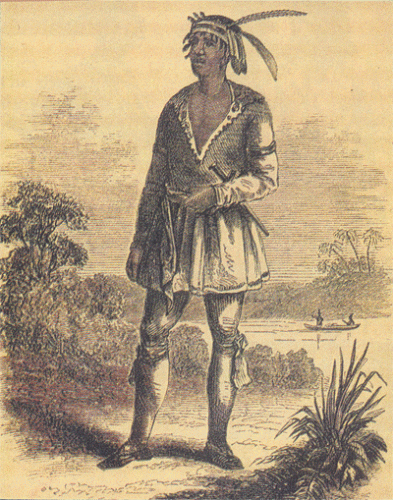
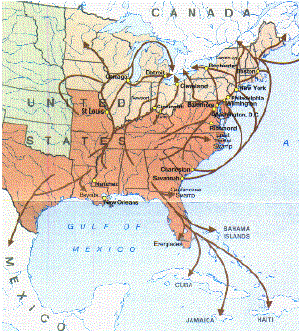
John Horse (1812?-1882) https://www.blackpast.org/files/blackpast_images/horse_john.gif Image Ownership: Public Domain John Horse, also known as Juan Caballo, John Cowaya, or Gopher John was the dominant personality in Seminole Maroon affairs for half a century. He counseled Seminole leaders, served as an agent of the U. S. government, and became a Mexican Army officer. He served the Seminole Maroons as warrior, diplomat, and patriarch, and represented their interests in Washington, D.C. and Mexico City. He fought against the United States, the French, and Indians and survived three wars, four attempts on his life, and the grasp of slavehunters. Little is known of John Horse’s early years but by 1826 he was living in his owner’s village near Tampa Bay. During the Second Seminole War, 1835-42, he initially led Maroons against U.S. forces in Florida, but offered the promise of freedom, he agreed to surrender and relocate west with the Seminoles in March 1837. By 1840, John Horse had married Susan July, the daughter of a Seminole Maroon guide and interpreter. Fearing that his family, and his fellow Maroons would be reenslaved, Horse entered into an alliance with disaffected Seminoles and left Indian Territory in November 1849 for northern Mexico. Naming Horse’s followers Mascogos, the Mexicans in 1852 gave the Maroons, Seminoles, and a band of Southern Kickapoos separate land grants at Nacimiento to establish military colonies. In exchange for land, tools, and livestock, the immigrants agreed to fight against Apache and Comanche raiders. The Mexican authorities viewed John Horse as the undisputed head of the Mascogos and referred to him as El Capitán Juan Caballo. During the summer of 1870, John Horse and many of the Mascogos returned to the United States and settled near Fort Duncan, Texas. In August, the able-bodied men enrolled in the U.S. Army as a new unit that came to be known as the Seminole Negro Indian Scouts. John Horse, however, never served with the scouts. After a failed assassination attempt against him by white Texans, Horse again led the Mascogos into Mexico. He died there in 1882 while on a mission to represent them before Mexican president Porfirio Diaz. Sources: Daniel F. Littlefield, Jr., Africans and Seminoles: From Removal to Emancipation (Westport, Connecticut: Greenwood Press, 2001), and Kevin Mulroy, Freedom on the Border: The Seminole Maroons in Florida, the Indian Territory, Coahuila, and Texas (College Station: Texas A& M Press, 1993). https://www.youtube.com/watch?v=5E0j8xgxjTY (Video below) Story starts after the music at 1:15 https://www.youtube.com/watch?v=UX3ky13VPyA https://www.youtube.com/watch?v=dsi8R_d3hzQ?list=PLECC63C2CBA8272B6 I'm not sure how every African from the south along with arrivals from hati who escaped into florida magicaly became "gullah" https://www.shelbycountyhistory.org/schs/blackhistory/images/undergrndrrmap.gif but it gets the point across so... 2 Likes |
| Culture › Question For Any Igbo Here by RandomAfricanAm(op): 2:18pm On Apr 19, 2013 |
Go to 4:50-5:30 in the video Is this instrument or tune an igbo one? I here music like that when I watch nigerian traditional village movies. https://www.youtube.com/watch?v=k4AX2wZAiWs Thanks |
| Culture › Somali Nomadic Culture by RandomAfricanAm(op): 9:30am On Apr 19, 2013 |
| Culture › Endangered African American Musical Instruments by RandomAfricanAm(op): 8:47am On Apr 19, 2013 |
https://www.youtube.com/watch?v=RfGU5_CUhyc https://www.youtube.com/watch?v=5l0lb3SZAgk https://www.youtube.com/watch?v=kmYMhaZgQgc https://www.youtube.com/watch?v=nGnrnHYh59g 2 Likes |
| Culture › Re: Do Somalis,ethiopians And Eritreans Consider Themselves As Whites? by RandomAfricanAm: 2:12pm On Apr 17, 2013*. Modified: 2:26am On Apr 18, 2013 |
@KidStranglehold This topic has gone on waaay to long. This is just going in a circle and you're chasing. Please, just finish it off and stop playing with your food. I've seen at least two nonsense topics along these lines. Below I've framed the remaining argument now just deal the death blow so it can be stickied for any future references. This conversation has 3 core components - (here is the wood to make the coffin): 1.Somali(horners) are geneticaly not related to other Africans. They are geneticaly related to [insert outside group here] 2.All Africans(other) have a phenotype different from Somali(horners) therefore Somali(horners) are not geneticaly related to Africans 3 All Somali(horners) have a phenotype same as/similar to each other therefore Somali(horners) are not geneticaly related to other Africans Problems with this line of logic - (here are the nails to seal it together): 1.Misunderstanding of the difference in what's "genetically determined" V.S "heritable" 2.Misunderstanding of Correlation vs. Causation (implied causal relation between phenotype & personality) 3.Propogation of colonial era "true negro" & "hamitic hypothesis" myths/themes This conversation has 3 core components - (here is the wood to make the coffin) 1.Somali(horners) are geneticaly not related to other Africans. They are geneticaly related to [insert outside group here] Right here the argument gets boxed into Africa. Because somali cluster to other Africans. RandomAfricanAm: https://www.africanamericanculturalcenterpalmcoast.org/historyafrican/somalidnabig.jpg2.All Africans(other) have a phenotype different from Somali(horners) therefore Somali(horners) are not geneticaly related to Africans Right here the argument gets boxed into Somalia. Because other groups outside the horn has the same phenotype. somalia9: while there is no gene that is called negroid. KidStranglehold: LMAO!!! What a fail argument...Stop trying to act like I am trying to compete with horners when horners are not even the lightest Africans...The Khoisan people take that title. KidStranglehold: ROFLMAO!!!By do that you're making it worse for yourself.3. All Somali(horners) have a phenotype same as/similar to each other therefore Somali(horners) are not geneticaly related to other Africans At this point any position can only survive in Somalia itself amongst somali. Any other assertions run into points 1 & 2. All you have to do is simply point out somali with so a called "negroid" phenotype and the position dies on the spot ...unless someone gets board and wants to argue with themselves in a tight Tight TIGHT circle that is points 1-3. Problems with this line of logic: - (here are the nails to seal it together) 1.Misunderstanding of the difference in what's "genetically determined" V.S "heritable" ...But while the Fundamental Principle seems intuitively plausible, it is either irrelevant to the Herrnstein-Murray argument, or simply false. To see the problem, we need first to understand that the term "genetic" has two senses. In the next section, I describe those senses in some detail: to put the point schematically for now, "genetic" can mean either genetically determined or heritable. Once that distinction is in place, the problems for the Principle follow. Again, to put the point schematically for now: if "genetic" is used to mean genetically determined, then IQ is not genetic, and the Principle is therefore irrelevant. If "genetic" is used to mean heritable, then IQ is genetic but the Principle is false. In neither case, however, does the Principle support the Bell Curve's claim about genetic differences in IQ. Two Senses of "Genetic" To understand The Bell Curve's fallacy, we need to distinguish two concepts: the ordinary idea of genetic determination and the scientific concept of heritability, on which all Herrnstein's and Murray's data rely. Genetic determination is a matter of what causes a characteristic: number of toes is genetically determined because our genes cause us to have five toes. Heritability, by contrast, is a matter of what causes differences in a characteristic: heritability of number of toes is a matter of the extent to which genetic differences cause variation in number of toes (that some cats have five toes, and some have six). Heritability is, therefore, defined as a fraction: it is the ratio of genetically caused variation to total variation (including both environmental and genetic variation). Genetic determination, by contrast, is an informal and intuitive notion which lacks quantitative definition, and depends on the idea of a normal environment. A characteristic could be said to be genetically determined if it is coded in and caused by the genes and bound to develop in a normal environment. Consequently, whereas genetic determination in a single person makes sense - my brown hair color is genetically determined - heritability makes sense only relative to a population in which individuals differ from one another - you can't ask "What's the heritability of my IQ?" For example, the number of fingers on a human hand or toes on a human foot is genetically determined: the genes code for five fingers and toes in almost everyone, and five fingers and toes develop in any normal environment. But the heritability of number of fingers and toes in humans is almost certainly very low. That's because most of the variation in numbers of toes is environmentally caused, often by problems in fetal development. For example, when pregnant women took thalidomide some years ago, many babies had fewer than five fingers and toes. And if we look at numbers of fingers and toes in adults, we find many missing digits as a result of accidents. But genetic coding for six toes is rare in humans (though apparently not in cats). So genetically caused variation appears to be small compared to environmentally caused variation. If someone asks, then, whether numbers of toes is genetic or not, the right answer is: "it depends what you mean by genetic." The number of toes is genetically determined, but heritability is low because genes are not responsible for much of the variation. Conversely, a characteristic can be highly heritable even if it is not genetically determined. Some years ago when only women wore earrings, the heritability of having an earring was high because differences in whether a person had an earring were "due" to a genetic (chromosomal) difference. Now that earrings are less gender-specific, the heritability of having an earring has no doubt decreased. But neither then nor now was having earrings genetically determined in anything like the manner of having five fingers. The heritability literature is full of cases like this: high measured heritabilities for characteristics whose genetic determination is doubtful. For example, the same methodology that yields 60 percent heritability for IQ also yields 50 percent heritability of academic performance and 40 percent heritability of occupational status. Obviously, occupational status is not genetically determined: genes do not code for working in a printed circuit factory. More significantly, a child's environment is often a heritable characteristic, strange as this may seem. If degree of musical talent is highly heritable and if variation in the number of the child's music lessons depends on variation in musical talent, then the number of music lessons that a child gets may be heritable, too, despite not being genetically determined. In fact, recent studies of heritabilities of various features of childrens' environments show substantial heritabilities for many environmental features - for example, the "warmth" of the parents' behavior toward the child. Even number of hours of TV watched and number and variety of a childs' toys shows some heritability. If this seems unintelligible, think of it this way: variation in these environmental properties is in part due to variation in heritable characteristics of the child, and so the environmental characteristics themselves are heritable. Readers of The Bell Curve often suppose that a heritable characteristic is one that is passed down in the genes, but this identification is importantly flawed. The number and variety of a child's toys is not passed down in the genes. Heritability is a matter of the causation of differences, not what is "passed down" .... How Heritability Misleads about Race Ned Block Department of Philosophy NYU Kittles and Keita (2004) also note the vast genetic diversity of Africans, and how similar looking people may not possess the same DNA pattern. A DNA lineage may also include people who do not look the same outwardly. "Individuals with the same morphology do not necessarily cluster with each other by lineage, and a given lineage does not include only individuals with the same trait complex (or 'racial type'). Y-chromosome DNA from Africa alone suffices to make this point. Africa contains populations whose members have a range of external phenotypes. This variation has usually been described in terms of 'race' (Caucasoids, Pygmoids, Congoids, Khoisanoids). But the Y-chromosome clade defined by the PN2 transition (PN2/M35, PN2/M2) shatters the boundaries of phenotypically defined races and true breeding populations across a great geographical expanse. African peoples with a range of skin colors, hair forms and physiognomies have substantial percentages of males whose Y chromosomes form closely related clades with each other, but not with others who are phenotypically similar. The individuals in the morphologically or geographically defined 'races' are not characterized by 'private' distinct lineages restricted to each of them." (S O Y Keita, R A Kittles, et al. "Conceptualizing human variation," Nature Genetics 36, S17 - S20 (2004) 2.Misunderstanding of Correlation vs. Causation (implied causal relation between phenotype & personality) I.E. A persons' behavior isn't caused by their phenotype https://www.youtube.com/watch?v=5zyruPbgxyM 3.Propogation of colonial era "true negro" & "hamitic hypothesis" myths/themes outdated phrases like "sub saharan black african negroid type" ...are nothing more then sad, obvious, potentialy deadly, and OUTDATED attemps to restrict the phenotype of Africans to a "true negroid" look or pretend Africans aren't in all four corners of Africa. In its harmless state the fula ethnic group were refered to as "whites" & kenyan burial remains are rediculously called a "mediterranean type". Now in it's deadly form Tutsi were "hamites"(black skinned whites  ) and Hutus were "true negros" which led to rwanda genocide of 750,000 +/- Tutsi. At the same time the notion that Amazigh are "white Berber/Arabs" and those others are "black Africans" leaves Amazigh to struggle alone up north against Arabs who want to project an Arab society by not letting Amazigh teach/propagate their indiginous African language and culture. The trick is that deliniating an area (geneticly, phenotypicaly, or geographicaly) doesn't mean areas outside aren't related or even the same. Example: appalachia is a designated region of the U.S but just as "American". Likewise Amazigh are just as "African" as anyone else with a culture, language, & DNA(paternal) indiginous to Africa. They also have an archetectural complex common to the North, South, East, and West of the sahara Perpetuating the notion of a culturaly, historicaly, geneticaly(PN2clade) seperate "Sub saharen african" is simply false. Fight someone else about the blackness or negroidness(I say get the basics down 1st) @KidStranglehold If that's not enough base material for you to finish this silly argument off then I don't know what to tell you. Now If the argument was simply "Somali are their own cultural ethnic group. If you want to open trade relations for things somali have for sale or open a defense agreement fine. Otherwise please don't bother us" that would be a whole other ball game. If people want to be left along so be it. But when false scentific statements are made about genitcs and such in an attempt to add weight to an argument; that has to be called out for what it is. As a matter of fact culture has more of a determining effect on your life, kids life, how you look(fat/skinny), environment, what environment your kids inherit, etc. then pretty much anything else. I'd mention that way before genetics or phenotype. |
| Culture › Re: Do Somalis,ethiopians And Eritreans Consider Themselves As Whites? by RandomAfricanAm: 12:08pm On Apr 16, 2013 |
| Culture › Re: The Negative Aspect Of Respect In African Culture by RandomAfricanAm: 12:02pm On Apr 16, 2013 |
...As a Yoruba person and indeed an African, unquestionable respect for elders is a fundamental feature of our culture, which every child was born, taught and grows up with. |
| Culture › Re: The Negative Aspect Of Respect In African Culture by RandomAfricanAm: 2:35am On Apr 16, 2013 |
1.Man those people have fancy cloths and gadgets! 2.Hmm... I notice they worship this jesus christ fellow and other people who don't worship the jesus don't have da fancy 3.I got it ...I'll worship this jesus fellow so I can also have fancy cloths and gadgets! -Correlation vs. Causation https://www.youtube.com/watch?v=5zyruPbgxyM https://www.youtube.com/watch?v=lbODqslc4Tg https://www.youtube.com/watch?v=8B271L3NtAw |
| Culture › Re: The White Manz' Perception Of Black Beauty Is Different From The Black Manz by RandomAfricanAm: 10:41am On Apr 13, 2013 |
The guy who made the 50 best black stars "or whateever" was some random internet person named cmart514 who logged on to imdb and made a list. Heck if you wanted to you could do the same thing. Anyway... . Have you not seen KING magazine before? https://www.everybodysucksbutus.com/wp-content/uploads/2009/04/gabrielleunion.jpg https://www.everybodysucksbutus.com/wp-content/uploads/2009/04/buffboddy.jpg https://www.everybodysucksbutus.com/wp-content/uploads/2009/04/buffie.jpg https://www.everybodysucksbutus.com/wp-content/uploads/2009/04/free.jpg https://www.everybodysucksbutus.com/wp-content/uploads/2009/04/gomezpreston.jpg https://www.everybodysucksbutus.com/wp-content/uploads/2009/04/horizongroup.jpg https://www.everybodysucksbutus.com/wp-content/uploads/2009/04/jessicawhite.jpg https://www.everybodysucksbutus.com/wp-content/uploads/2009/04/kelly.jpg https://www.everybodysucksbutus.com/wp-content/uploads/2009/04/kitoy.jpg https://www.everybodysucksbutus.com/wp-content/uploads/2009/04/twins.jpg I appologise for all the dead horses & bald asians  |
| Culture › Spains Scars From 800 Years Of "Moorish" Colonisation...(odd / Interesting Read) by RandomAfricanAm(op): 8:33am On Apr 12, 2013 |
Excerpt from... The Interference of al-Andalus Spain, Islam, and the West by Hishaam D. Aidi Of the African American volunteer fighters who heeded the call of the Communist International in 1936 and went to battle Franco’s fascist forces in the Spanish civil war, most were galvanized not only by socialist and anti-imperial ideals but also by a Pan-Africanist consciousness that prized Islamic Spain as a glorious era when African civilization extended into Europe. Inspired by Spain’s Moorish past, these black fighters hoped to rescue tolerant, pluralist Spain from the gathering flames of European fascism. Many were thus stunned by Franco’s use of Moorish troops in his anticommunist “crusade,” by the rabid anti-Muslim racism of the Republican forces, and, more broadly, by how the Moor and Spain’s historic relations with the Islamic world figured so centrally in a civil war fought ostensibly for domestic reasons. African American soldiers were so appalled by the hatred of Moors on the Republican side, that some — especially those who were mistaken for Moroccans and shot at by fellow Republican troops — contemplated quitting and returning to the United States. Langston Hughes was particularly intrigued by the racial dynamics of Spain’s “Moorish question.” “I knew that Spain once belonged to the Moors, a colored people ranging from light dark to dark white,” he wrote. “Now the Moors have come again to Spain with the fascist armies as cannon fodder for Franco. But, on the loyalist side, there are many Negroes of various nationalities in the International Brigades. I want to write about both Moors and Negroes.”1 [b]The question of Moorish influence and the so-called Black Legend, regarding Spain’s oriental and African genealogy that had allegedly left the Spaniards a “sensual and inferior race,”2 have preoccupied Spanish intellectuals for centuries, pitting those who proudly or lamentingly concede Islamic influence in Spain and Hispanic civilization against those who deny such vestiges and, in the words of the novelist Juan Goytisolo, prefer to believe in a “clean-shaven Hispanic civilization” (“la afeitada civilizacion hispana”) free of Semitic influence. The memory of the “intrusive” Moorish presence lies deep in the Spanish psyche. And at critical moments in Spanish history — in 1898 with the collapse of the empire, in the 1930s during the Spanish civil war and its aftermath, in the late 1970s with the end of Francoism and the democratic transition, and in 1986, with Spain’s accession into the European Union — the country has gone through moments of painful self-examination about its “qualified Westernness,”3 pondering if it was the eight-hundred-year Muslim presence and Spain’s subsequent cultural and ethnic hybridity that kept the country mired in poverty and despotism as the rest of Europe progressed.[/b] The war on terror, the Iraq war, and the 3/11 attacks on Madrid, along with increasing clandestine migration from North Africa and disputes with Morocco over Spanish enclaves in that country’s northern coast, have revived what in Spain is historically called the “Oriental question”: what it means to be so close to the Arab world, and Europe’s “shield” against Islam. The attacks of 3/11 triggered much public agonizing about Spain’s being caught in the cross fire of a clash of civilizations (“in the eye of the hurricane,”4 as one journalist put it), between a strident, retaliatory Western nationalism that seeks to spread democracy in the Middle East and a militant Islamism that targets Spain for partaking in the war on Iraq and views the Iberian Peninsula as a long-lost Islamic dominion, to be regained the way Zionism repossessed Palestine millennia after its loss. [b]The international political situation after 9/11 and 3/11 has brusquely resurrected questions about Spain’s location between Africa, the Orient, and the Western world, with the epoch known as “al-Andalus” appearing at the center of discordant historiographies and “imaginative geographies.” The historian María Jesús Viguera Molins has noted the “conflictual” nature of the “historiography of al-Andalus,” with Spanish historians at different periods of their nation’s history either romanticizing or denigrating the Moorish era; the influence of contemporary politics on their writing was such that, as she put it, myth risks replacing history and the present risks displacing the past.5 Liberal historians often romanticized al-Andalus, while conservative historians saw the Muslim presence as an interruption, an “interference” in an essentially Spanish nation and course of history. Over the past century, imperialism, decolonization, and the Palestinian-Israeli conflict have polarized interpretations of al-Andalus even outside Spain, with Left-leaning writers across the West adulating the tolerance of Granada and the role of Moorish culture in sparking the Renaissance, but with conservatives seeing the Moors as “enemies of learning” whose insidious influence doomed Iberia (and southern Italy) to centuries of “cultural backwardness.”[/b] I begin this essay by discussing Spain’s centuries-old disquiet about the “Islamic interregnum” and show how at critical historical moments, intellectuals have revisited the Oriental question from varying ideological standpoints. Focusing on the twentieth century, I examine how the Spanish state has mobilized the country’s Islamic past and maneuvered the Spanish political and geographic imagination to use the country’s proximity to North Africa for different political purposes: to justify colonial incursions into Africa; to rally African and Arab states against the United States, Great Britain, and France after World War II; to demand membership in the European Union by underscoring Spain’s historic role keeping Muslim hordes off Western soil. The Spanish state’s mobilization of history and manipulation of geography richly illustrates Edward Said’s argument about the political power of “imaginative geographies” and how the hardy, seemingly ageless, entities we know as “Europe,” “the West,” and “the Orient” are, at bottom, “ideological confections” whose contents and borders are shaped by conflicting state interests and nationalisms.6 Since 9/11 and 3/11, Spain is again a country facing two directions: searching for a place in the Western world and trying to define its relationship to the Orient, a process that requires the country to reexamine its ties to its historic others — Jews and Moors, two peoples who now have their own states and nationalisms. After Franco’s death, the Spanish state began to reassess the dictatorship’s historic amity with the Arab world and hostility toward Israel, and its leaders are still trying to negotiate a place between American and European approaches to the Orient and their differing visions of the Jew’s and the Arab’s relationships to the West. The current crisis has fractured Spain politically, producing different political blocs, each with a different vision of the country’s position in the West, its relationship with the Orient, and of the Muslim’s and Jew’s places within the Spanish nation. Hughes’s depiction of Spain as an ideological battleground and a country with profound racial and cultural anxieties holds true seven decades hence. Al-Andalus and the Rise of the West The dispute over Moorish influence in Spain touches not only on the issue of Islam in the formation of modern Spain but on broader, equally uncomfortable questions of Spain’s position in Europe and the role of Islamic Spain in the formation of Europe and the rise of Western civilization. Did Andalusia, as claimed by many historians, and Arab and Muslim nationalists, serve as a conveyer of knowledge from the classical worlds of Islam and ancient Greece to Europe above the Pyrenees? Was Islamic Spain an era of cultural efflorescence that helped spark the Renaissance? Historians have bitterly contested this perspective, maintaining that Islamic Spain was neither as tolerant nor as oriental as its champions claim, nor did it have the impregnating cultural influence on the rest of Europe. The Western philosophers who developed the idea of “Europe” drew a continuous line from ancient Greece through Rome right up to the Renaissance, largely ignoring the role of the Judeo- Islamic centers of learning in Andalusia or Sicily that had translated and contributed to the classical heritage “rediscovered” by these modern thinkers. The ascending Christian Europe was defining itself against the Orient, principally the Arab-Muslim world, and European nationalists were not going to acknowledge a cultural debt to their main adversary. Spain, which had been occupied by Muslims, has been the least willing to acknowledge any substantive Islamic cultural influence. But the possibility of “cultural borrowing” and “reactive adaptation” that may have occurred between 711 and 1609,7 after which the remaining Moriscos of Alpujarras were expelled, has bedeviled Spanish historians for centuries. If between the eighth and eleventh centuries historians portrayed “the Moor” as invariably brutal and menacing, writers from the eleventh to the sixteenth centuries began to romanticize the Islamic epoch and produce a literature of “Maurophilia.”8 In the late nineteenth and early twentieth centuries, Spanish historians began to acknowledge the achievements of Islamic Spain, but insisted that this was the work of people who may have been outwardly oriental but were still ethnically and biologically “Spanish”; Spain, to these scholars, was the product of an unbroken cultural continuity whose origins could be traced back as far as the ancient Celtiberian past. The debate about the Orient’s role in Spain’s formation has been most personified by the acrimonious exchange between the historians Américo Castro and Claudio Sanchez-Albornoz. Castro celebrated Spain’s mixed ancestry, arguing that Spanish cultural identity arose in the Middle Ages through the symbiosis of Muslim, Jewish, and Christian elements; Sanchez-Albornoz saw Muslim Spain as an “interruption” to an eternal “Spanish” continuum. Castro argued, in his influential España en su historia, written in exile after Spain’s fall to the fascists, that Spain was not an “eternal” entity but one that came into being after the Muslim invasion of 711 and the interaction of what he called the “three castes” — Christians, Jews, and Muslims. Castro celebrated Spain’s hybridity, emphasizing that Andalusia’s tricultural heritage had influenced figures like Cervantes and, in crossing the Pyrenees, affected the thought of numerous European philosophers.9 In España, un enigma historico, Sanchez-Albornoz replied to Castro that the latter had overstated the impact and misunderstood the nature of the contact between Muslims and Christians, which was fundamentally conflictive and not amenable to positive and creative cultural exchange. He maintained that most of the components of “Spanish” culture are either idiosyncratic or consist of Roman, Gothic, and elements of non- Semitic provenance. [b]If Castro viewed 711 as momentous in the birth The Interference of al-Andalus 71 of Spain’s hybridity, Sanchez-Albornoz saw the Moorish invasion as a national disaster and the principal cause of his homeland’s entrapment in despotism and economic backwardness. He argued that twelve centuries have gone by, and Spain has still not been able to overcome that “tragic” and “fateful” moment of 711. The prolonged military struggle against Islam had drained Spain’s economy and held the country back from the rest of Europe: “Slow-witted, barbaric Africa . . . twisted and distorted the future fate of Iberia, and took it down a path, which cost Spain dear.”10 Sanchez-Albornoz insisted, though, somewhat contradictorily that Islam affected but did not modify Spain; his homeland must not be viewed as a nation with a “hereditary defect,” the “base offspring of a corrupt father,” “an offshoot of Islam,” or “diseased because of an Oriental virus.” Spain is in fact a member of Europe, and in the Middle Ages created and conveyed a vibrant civilization to the rest of Europe, but its sacrificing to shield Europe from the onslaughts of Islam and Africa left it an intolerant and impoverished society.11[/b] Curiously, both Castro and Sanchez-Albornoz saw Spanish imperialism as a response to Islamic expansionism, if not a direct Islamic influence. Castro argued that the myth of Santiago Matamoros (St. James the Moor killer) and his shrine in Compostela, which played a crucial ideological role in the Reconquista of Spain and the conquest of the New World, was itself an Islamic influence, in that it essentially mimicked the idea of a “warrior-prophet” like Muhammad with a shrine and pilgrimage center like Mecca. Castro underlines the importance of this myth in the dialogue between Christian Spain and Europe beyond the Pyrenees, and in the emergence of a European identity, since all over Western Europe Santiago’s shrine was seen as a Christian Mecca (“to face the Mohammedan Kaaba”) and led to the forging of a common European self against a common adversary.12 These arguments about Spanish militarism being a necessary response to jihad, the Spanish Inquisition as a “necessary evil,” the cult of Santiago as the patron saint of “fortress Spain,” and Spain as protector of Europe against Islam have been made by different Spanish leaders in varying political contexts, from Franco’s forays into Morocco to Spain’s participation in the Iraq war. Franco and the Colonial Imagination [b]The Spanish-American War of 1898 and the loss of Cuba, Puerto Rico, and the Philippines at a time when European powers were seizing territories in Africa had profound political repercussions in Spain and generated much agonizing about the country’s lesser position in Europe. After 1898 Spain would shift its attention to the European front, and to Africa where it would attempt to carve out a small empire to make up for its lost possessions in the Caribbean, beginning a long-standing practice of trying to dominate North Africa to gain acceptance in the West. The liberal prime minister Conde de Romanones put it bluntly in his memoirs, “Morocco was for Spain her last chance to keep her position in Europe.”13 Joaquin Costa, a noted “Africanist,” as government experts on North Africa were called, and one of the strongest proponents of regeneracionismo, post- 1898 economic and political regeneration, would explain the 1898 defeat and loss of empire in terms of the Black Legend (“the Africa that has invaded us”), yet still argue that Spain should lay claim to some territory in Africa, since colonizing that continent, specifically Morocco, was crucial to his nation’s return to glory.14 Throughout the twentieth century, Spain would try to establish control over Morocco — or at least over the frontier with Morocco — to gain acceptance in Europe, where, paradoxically, it was excluded and seen as backward because of its historic ties to North Africa.[/b] When Miguel Primo de Rivera became leader of Spain in 1923, the anticolonial struggle in northern Morocco was raging, and the “Moroccan question” was one of the most pressing and divisive political issues. Franco, however, adamantly opposed a withdrawal from Morocco and, during the Spanish civil war, would oddly make Spain’s Islamic past and colonial presence in Morocco central to the fascist cause against the “infidel” Republicans. Franco, who had learned Arabic while crushing the Moroccan rebellion in 1921, would lead tens of thousands of Moroccan mercenaries (“tropas mulatas”) in what the generalissimo described as his crusade against the “Red, atheist Republic.” Franco defended the use of Moroccan troops, saying the fascist side was defending Christian values in an alliance with Muslim believers against the “godless” communists. Moorish troops were in fact often baptized before going into battle. If the fascists used the Moroccans both as cannon fodder and as psychological weapons, the Republicans, in turn, revived the centuries-old cry of “Moros en la costa!” (“Moors on the Coast!”), warning of the savage, sexually rapacious Moorish invaders “awaited by virgins in paradise” and describing their side as defenders of Europe against el Oriente.15 |
| Culture › Re: The Kongo Kingdom...A underrated Kingdom by RandomAfricanAm: 1:46am On Apr 05, 2013 |
Section VII-Of Contracts. Contracts may be enumerated as follows:-Those between the King and his neighbours, those between prince and King, those between prince and prince, those between prince and Kongo Zovo, and those between individuals. [1. Bark of NKASA.] Treaties or contracts between Kings are brought about by a third party or mutual friend, who acts as intermediary and witness. Between the King or prince and his inferior, the inferior gives the superior a present, and in the presence of witnesses "claps his hands," "Kalambala nkele maluango nkici." On the creation of a market a gun is buried, and an agreement made that no arms of any sort may be brought there, and this is done in the presence of witnesses. Between individuals no contract is legal unless made in the presence of witnesses. These compacts are known by the words Nkaka or Nkankano. The one thing in all these compacts that is essential is that witnesses shall be present, and when it is proposed to cancel a contract the contracting parties buy "malafu" (palm wine) in equal quantities, but deposited in one bottle or other vessel, and then in the presence of witnesses drink and agree to cancel the compact. But in the case of one of the parties refusing to annul the contract, the matter is taken before two or three chiefs or princes and talked out. In the event of the dispute arising out of inequality of service rendered, the division of profits is rearranged, or the contract declared then and there null and void. All goods, Bima, are freely bought and sold except men, Bantu, the sale of men being a family affair. A sale becomes definite after the transaction has been accomplished in the presence of witnesses, and the seller has " blessed it." He lifts his hands to his arm-pits, and then throws them out towards the buyer, and breathes or blows over the thing sold. This is called Ku vana mula, to give the breath, and is equivalent to saying " God bless thee." Mbongo Masandi (or a piece of grass cloth measuring in length, including fringe, 45 centimetres, and about 25 centimetres in breadth) has been in use as money from time immemorial, although at present it may be said to be out of use, the French coinage gradually taking its place. Four of these small mats were wrapped in one bundle, Vili, and five of these bundles (20 mats) were called Milele Mbongo I Tanu. Ten bundles (40 Vili) Mbongo Fula. One hundred Mbongo Fula (4,000 Vili) were called Kama Mbonga. This was the price of a little slave of about five years of age. This equalled 8 fathoms of cloth,. or about 16 yards, or four francs, that is to say, 1 Vili was equivalent to .001 centime. The white traders' cloth is now doubled in 12 folds; three folds equals 1 long or "cortado"; and 4 longs or cortados form a piece of cloth sold for two francs. That is to say, one piece of 8 yards 21 inches wide is doubled into 12 folds or 24 laps. Native custom allows the letting out on hire of men as of things. A native in need of labour might seek a large slave owner and hire slaves or others for the sum of five longs, the duration of the service not being definitely settled. Should one of these slaves die during the service, the hirer had to pass before the fetishes and declare that he had had no hand in his death. Under these circumstances he would pay the owner 20 longs. But if he had wilfully caused the death of the slave, he would have to pay 5 to 10 slaves in his place according to his wealth. The price of the grown slave was 5 times Kama Mbongo or 40 fathoms of cloth Kama Buta. This payment was called Ku Futa Li Bumi. (To pay that which is wasted.) Slaves; are termed children of the "cloth", or Muana Ntu "the son of the head," in reference to the slave as the carrier). The owner is not expected to force a slave to do that which is wrong (Lu Kasu), but if he does the slave must do it, as his master has the right to kill him if he does not, and is himself responsible for the slave's action. The domestic servants of a rich man are called Bavinji. A father may ask a friend to take his son as servant and teach him all he knows. Such a boy is called Xileci. The head boy or steward is called Xileci Xi Busu. There is no lending at interest in our sense of the word. Where a man borrows goods he must pay back double the amount borrowed, no matter for how long a time he has owed them. Unless a certain date for the return of the goods is mentioned, the debt may continue for years. The writer knows of one case where a debt was 15 years old. A man may lease his cattle to another under the following recognised conditions:-First increase goes to the owner; of the second the caretaker takes a female; of the third a male, the fourth goes to the owner. A man may commission another to carry on trade for him. He gives him exact instructions, paying him half the profits, but exacts from him or his family any loss incurred. The sender is responsible to the family for any evil that may overtake the one sent provided that it cannot be shown that the evil was the consequence of his own folly. A man on leaving the country may commission his friend to act for him, but the service requested must be mentioned to the man commissioned in the presence of witnesses, and he may only act for him in that particular instance or on that occasion. No procuration to act generally for another is ever given. A present is given to one so acting for another, where no profit can be expected. The act or service accomplished and the profits shared or present given, ends the commission. The family being responsible, no general procuration is needed, for it rests with them always as a matter of fact. In the event of a time for the repayment of a debt having been fixed, the creditor asks for payment, and if this is put off or refused he has the right to arrest anyone belonging to the debtor's family. This person is held until the matter has been publicly settled by palaver in the courts of law, when, the debt being paid, the prisoner is set at liberty. The person thus arrested is not necessarily of the same family as the debtor, but he should be of a family in the same princedom or province, that is some one living not very far from the debtor. This captive receives payment from the debtor quite apart from the creditor, but as the result of the judgment of the same palaver. And this is the only form of security for the payment of a debt which the native law provides for. 2 Likes |
| Culture › PAN-AFRICAN MOVIE ROOM: Screening & Discusion Of Cultural Depictions In Movies by RandomAfricanAm(op): 10:48pm On Apr 04, 2013*. Modified: 6:55am On Apr 06, 2013 |
This room is for viewing and discussing cultural depictions of African peoples throughout the world by way of thier depiction in film. This room is not about how much you like the movie, the production quality, etc That belongs in the TV/Movie section of Nairaland. The movie is simply a vecter for disseminating information Similar to how a photo is used to aid disscusion. Format: I will put up one movie to watch so that feedback can be given. This time only, I put up multiple movies to give an idea of the scope of when I mean when I say "PAN-AFRICAN" After it's been discussed We'll go to another movie. Region: Southern African Country: South Africa Name: White Wedding https://www.youtube.com/watch?v=2TjlG5HHESU?list=PL9A76A8FAEAD33C91 Region: African Diaspora Country: Brazil Name: Atabaque Nzinga https://www.youtube.com/watch?v=glIplhm-kPs?list=PL9A76A8FAEAD33C91 Region: African Diaspora Country: Jamaica Name: One Love https://www.youtube.com/watch?v=O3S81ieC81U?list=PL9A76A8FAEAD33C91 Region: African Diaspora Country: United states Name: Beloved https://www.youtube.com/watch?v=FUhXd4OVph4?list=PL9A76A8FAEAD33C91 Note: I'm going to post them now, go back and rewatch them, then add my take on the culture depicted in the movies when I'm done Lets make this a good thread ...Enjoy! |
| Culture › Re: The Kongo Kingdom...A underrated Kingdom by RandomAfricanAm: 8:26pm On Apr 04, 2013 |
Section VI.-Of Successions, Gifts, and Wills. On hearing of the death of a person all his relations come to "weep." The wife of the deceased delivers the key of the house, where the wealth is, to the man she knows in the absence of any will to be the rightful inheritor. These are -1. The brother of the deceased by the same mother. 2. Then the nephew by his sister. 3. The relations of his mother. 4. Failing these, his child. The wife he has loved and esteemed the most is the guardian of his wealth and the keeper of the key, but she inherits nothing. The natural inheritor cannot repudiate his succession; he must take over the debts, not being able to renounce the inheritance. When about to bury the deceased the inheritor plants a sword in the ground, before the assembled guests, and asks if there is anything more to be paid by him on behalf of the deceased. Any creditor present then goes up to the sword and placing his hand upon it declares that the deceased owes him money or goods, and that he will give particulars of the debt later on. These are considered as proved. Any creditor claiming his money after that must bring his witnesses, and be prepared to substantiate the debt. The wife generally knows all about the debts of her husband. The wife mourns for her husband (or did) for 18 to 24 months after death; the burial of her husband often taking place about that time. The members of the family generally help to pay the expenses of the ceremonies in connection with the death of the Kongo Zovo; they then stay with the inheritor or disperse to the families of their mothers. They inherit nothing from the Kongo Zovo except by will. A man may give away his property during his life, or make his verbal will in the presence of his wife and witnesses. He will call his slaves and tell them that they have been given to so-and-so. Or he may call his children and let them choose their slaves or goods. But this is seldom done, and only to spite the family of his people who may have behaved badly to him. The gift is made in the presence of witnesses, and is revocable until the death of the giver, if it is to take effect only after death. But a simple gift between the living is irrevocable. There are no special forms to be observed when a will is made; it is held to be written in the heart of the wife who has the key. The wife and the witnesses are the executors of the will. The family will often make the widow pass before their fetishes and swear that she is keeping nothing back. They sometimes go further and force her to take "casca"[1] as a test of her honesty. There can be no revocation of the last will, the matter rests with the wife and witnesses once the husband is dead. |
| Culture › CULTURAL REVIEW: South African PAC Liberiation Ideology 1959 by RandomAfricanAm(op): 1:52am On Apr 04, 2013 |
Questions: 1.To what extent do you feel the priorities of the past (mentioned below) are still in play? 2.To what extent have those priorities been realized or do you feel the ball has been dropped? Context: - in his opening address to the 1st conference of the PAC in April 1959 in regard to the position of South Africa in relation to the rest of Africa, Sobukwe referred to Padmore’s book, Pan Africanism or Communism (From Protest to Challenge, v.3, p. 513): “Discussing the future of Afrika, Padmore observes that ‘there is a growing feeling among politically conscious Africans throughout the continent that their destiny is one, that what happens in one part of Afrika to Africans must affect Africans living in other parts’. “We honour Ghana as the first independent state in modern Afrika which, under the courageous nationalist leadership of Dr. Nkrumah and the Convention People’s Party, has actively interested itself in the liberation of the whole continent from White domination, and has held out the vision of a democratic United States of Afrika. We regard it as the sacred duty of every African state to strive ceaselessly and energetically for the creation of a United States of Afrika, stretching from Cape to Cairo, Morocco to Madagascar. “The days of small, independent countries are gone. Today we have, on the one hand, great powerful countries of the world; America and Russia cover huge tracts of land territorially and number hundreds of millions in population. On the other hand the small weak independent countries of Europe are beginning to realise that for their own survival they have to form military and economic federations, hence NATO and the European market. “Besides the sense of common historical fate that we share with the other countries of Afrika, it is imperative, for purely practical reasons that the whole of Afrika be united into a single unit, centrally controlled. Only in that way can we solve the immense problems that face the continent.” |
| Culture › CULTURAL TALKS: Whats The Real Story On University Cults/fraternities In Nigeria by RandomAfricanAm(op): 8:09pm On Apr 03, 2013 |
Shedding light on...: Cults in Nigerian Universities Question: I'm curious, what's the real story on the culture of university cults/fraternities in Nigeria? Context: https://www.youtube.com/watch?v=S9jaiJJbKd8?version=3&hl=en_US |
| Culture › Re: The Myth About Wall Geckos by RandomAfricanAm: 6:41am On Apr 01, 2013*. Modified: 7:06am On Apr 01, 2013 |
**From the Raampa script used in the senegambia** Interpretations frequently presuppose require cultural understandings The pictograph representing a gecko is https://phoenicia.org/imgs/drimgs/dr1_html_m1abb5089.jpg (062sf.jpg). But simply knowing it represents a gecko will not help interpret a raampa message. The cultural belief about geckos is that they are a sign of bad luck. We were told, “The gecko is the worst evildoer that God created. If it cries at night it predicts good rains but if it lays eggs continuously it predicts poor rains. It is a sign of bad luck; it is taboo to kill one.” Therefore if the pictograph of a gecko is used in a message, the context will indicate if it stands for a prediction of a poor or a good rainy season, or impending bad luck, etc. Does anyone in Senegal understand these marks? Our fieldwork revealed that the same tradition or system of pictographic writing and communicating reached across six language groups. Time and resources did not allow us to contact other groups, but all the groups we included in our fieldwork did indeed use the same system. We even found that a message written by a man from one language group could be read accurately by a man from a completely different language group. The language groups we found that used the raampa pictographs were: 1.Saafi-Saafi (srr *) – Senegal, Niger-Congo language family, Atlantic branch 2.Serer-Sine (srr) – Senegal, Niger-Congo language family, Atlantic branch 3.Pular (fuf) – (Fula) Senegal and Guinea, Niger-Congo language family, Atlantic branch 4.Hassaniyya (mey)—Mauritania, Afro-Asiatic language family 5.Mandinka (mnk) (Mandingue) – Senegal and Guinea, Niger-Congo language family, Mande branch 6.Pulaar (fuc) (Toucouleur/Tukulor) – Senegal and Mauritania, Niger-Congo language family, Atlantic branch Read more: The discovery of the raampa pictographic writing in the Senegambia, West Africa http://phoenicia.org/Discovery_Raampa_Pictography_Senegambia.html Observation: The more African history and anthropology I read along with interactions from people still on the continent; the more I see that at some point in the past the different ethnic groups start to converge. Seemingly being only a couple of ethnic groups ...or different groups under one bigger ethnic umbrella. If I had to quess I'd say 1.the drying of the sahara 2.fights with muslims 3.each fall of west African empires(ghana,mali,songhai) dispersed alot of related(culturaly) people. Odd part is I never here people of a particular ethnic group discuse what ethnic group the founder of their ethnic group came from ...but when you look in the literature the big piture starts to open up. If for no other reason then people in north west Africa tend to mention when groups to the south appeared or you can match up the founding of an ethnic group in south/west Africa with a big event in the north/west Africa. |
| Culture › Re: Complaints And Notice Thread. Be Serious! by RandomAfricanAm: 4:51am On Apr 01, 2013 |
odumchi: The spambot usually targets members who have a history of making multiple/lengthy posts in relatively short period of time. As everything in this world, the spambot isn't perfect. The best way to avoid being targeted is to avoid copying and pasting lengthy chunks of information, and keeping a few minutes in between posts. If you are targeted, simply make a complaint here and I will unban you and reveal your hidden post(s). It's not the most efficient method, but we'll have to manage for the meantime.Request: Can you please unhide my comment again. Forum Room: It happened again in the same room as before. Circumstance: This time I added a fourth part of the five planned then got banned for attempting to edit a previous post right after. Basically if I add a long post and do **anything** at all right after I'm banned. Thank you |
| Culture › Re: The Kongo Kingdom...A underrated Kingdom by RandomAfricanAm: 8:18pm On Mar 30, 2013 |
Section V.-Concerning Property. The best general idea that can be given of the native theory concerning property is given in their own words (Li kanda li ami) "my family," literally Kanda means to make straight, to tighten-Nkanda equals skin, i.e., the natural part of man, or that part which he has in common with animals. As the saying goes, Muntu nkanda, xibula nkanda, muntu ua vioka mu ku bula mbembo. Man is of skin, the cattle are skin, man is only superior by speech. The right of property is derived through the mother, the planter, to the Great Uncle the giver of all good gifts, Mbunzi, the W. wind, the rain giver, one of the Bakici baci or primeval " powers " on earth. The Bavili have no word in their language to express proprietor or property. The nearest expression for proprietor is Fumu Bima, the chief or prince of all things. He may possess (Baka vua) money or goods (Mbongo) or things (Bima) or even land, Ci, but as Fumu ci, the land chief, he is the head of a family holding the land in trust for his people; while a possessor of goods is really a man who is only the temporary owner of things that belong to his Fumu. Both kinds of goods, movable and immovable, have their uses, but one remains (Ci, i.e. the land), the other gets used up (Ma). The difference may be best explained by the words themselves, thus Ci has the meaning of primeval matter, the earth (Nci), while the primeval Ma or Mad equals water. Wherever labour is implied the possessor has the right of the disposal of its fruits, or that part of it which his Fumu has given back to him or allowed him to keep. A man trades, the part allotted to him is his. The woman plants, that part which remains after feeding her husband and paying the tithes to the Fumu may be said to be hers. The plantation is hers on this understanding. That is to say, all sources of wealth carry their responsibilities with them, and all goods are rather in trust than actual possessions. The right of usufruct is granted to the Kongo Zovo by the Prince, or to the individual by the Kongo Zovo, on demand, and this may be for him and his descendants so long as they exist as a family, but no use or habitation gives a man the right to ownership. This usufruct may have been granted in the first place by right of birth, as a reward for service rendered, or on payment by a rich man on the extinction of the family on whose land he has been living. And just as the king of the country may depose the prince of the province, so the prince may take away this usufruct from a rebellious Kongo Zovo. The Kongo Zovo in his turn may revoke the usufruct of land or goods enjoyed by the individual. Usufruct may be established by inheritance, gift, loan, and permission, on land, water, cloths, goods, fruit of the soil. The Kongo Zovo has the use of the land and water for his family; in return for this (1) he must help the prince in his wars with armed men; (2) all leopards killed on the land must be sent to the prince; (3) the head and a leg of the antelope, the wild ox, and the pig killed must also be sent to him; (4) the backbone of any whale washed ashore, the heads of the sea fishes called Bafu, Ntala, Nqueci, Mbili, Mbuta, Muenji, Tobo; the water pig Ngulu Maci, and a small basket of fish from each net, must also be sent to the prince; (5) his women also must send him one-fifth of the palm nuts, and a basket of pea nuts and Indian corn harvested; (6) the rich man or Esina living upon the property is expected to give the prince a feast and presents every year. In return for a gift of cloths or the loan of goods the recipient is expected to be at the beck and call of the one who gives, although he has no right to claim service. The receiver calls this man "my friend who gives me cloths to wear every day." U yukana yami u kalila u mpuika nlele kada xilumbu. Those who are permitted to cut down the palm nuts or reap any of the unplanted fruits of the soil are rewarded by a certain share in the profits of their sale. The usufruct comes to an end by the will of the prince, the Kongo Zovo, or the individual, although it is granted generally to the recipient and his successors so long as they exist and behave themselves. I have explained the duty of the individual to the Kongo Zovo, and of the Kongo Zovo to the Prince; there remains that of the Prince to the King. Maluango, as prince of the province of Buali, enjoys the same revenue as the princes of the other provinces, but as King he sends his messages to the princes to demand their aid in any emergency. He demands men in case of war, goods in case of need when one of the " powers " or Bakici baci have to be appealed to. The Prince must send him the skins of all animals killed, three pieces of chalk, 100 longs (or 50 francs goods), three saga ngo, and three mbongo lu tumbu or native money mats. Roads running from the villages through the lands granted to the Kongo Zovo to the main roads are called Nzila Zi Nyawna, and are of a private nature, that is to say a stranger may be asked if met where he is going to, and if his reply is satisfactory he is allowed to proceed, if not he is asked to go by the public road, or Nzila Ivanga Nzambi, or God-created road. These latter roads cross at Buali, the sacred and central province of the Bavili or Luango. The east road leads to the country of the Batetchi, and is called Nzila Xintetchi, the west leading to the sea, Nzila Mbu, the south, Nzila Kakongo, the north road, Nzila Balumbu. These are partof the public lands, as are also the sacred groves (Bibila), lakes, lagoons, rivers, bush, and ownerless lands. Fishing, hunting, trees, native string, reeds, and the fruit of the soil not planted by the hand of man are common to the natives of the country. The King holds the whole country in trust from God, through the "powers," for the use of the people. White men may on certain conditions become users of the land and that which grows on it. The white man wishing to occupy land applies to the Kongo Zovo, who marks off the land put aside for his use. The white man then compensates the Kongo Zovo for his loss of use of the land, and the family for loss of use of the trees, etc. In the meantime the Kongo Zovo has warned the prince, who sends his Mafuka, Maxienji, and Mangova to visit the white man and witness the act of self-sacrifice on the part of the Kongo Zovo. They supply the white man with an interpreter, to whom they give the title of Mafuka or messenger. This man watches the interests of the white man and the prince conjointly. When the white man has returned the prince's messengers with small presents and has settled down a little, the prince, accompanied by his Mambuku, Mamboma, Mafuka, Maxienji, and Mangova and followers, comes to visit him officially. The white man has to supply these six personages with chairs or stools, and should place upon the prince's chair a piece of checked cloth called the cloth of law. The prince then bestows the land upon the white man and his successors. Thereupon the white man takes a position in the country equivalent to the Kongo Zovo, but instead of paying the prince in flesh and fish or the products of the soil, pays the prince so much in goods half yearly or yearly, as well as a certain small percentage on the produce he buys. |
| Culture › Re: A CULTURE IN FOCUS: Ibibio woman in war time by RandomAfricanAm(op): 9:44am On Mar 30, 2013 |
Two interesting parts from above "...Though the exact meaning of the ritual chants has now been lost, the idea underlying the ceremonies is indicated by the actions accompanying the song, as, for instance, when the sacred boughs are drawn over that part of the body regarded as the seat of virile energy, with the avowed purpose of withdrawing the spirit of fertility into the leaves. Before interment, small portions of the body are also cut away and placed, together with the sacred leaves, in earthen pots never before used. These are wrapped up in the garments of the celebrants, and borne forth by them in silence, to be secretly interred in farm or byre, or hidden away in holes dug beneath the hearth or bridal bed. p. 208 The reason that knowledge of such rites must be kept alike from men and maidens of the tribe is said to be that this secret was among those entrusted to women in the days when woman, not man, was the dominant sex, and that these were not disclosed at the time when males were initiated into the mysteries of the secret societies, because it had been revealed that on the guarding of this secret depended the strength of the tribe. Were the rites once disclosed the power of the juju would be broken, few or no babes would be born, farms and herds would yield but scanty increase, while the arms of future generations of fighting men would lose their strength and hearts their courage--until the Ibibio people were either enslaved or had vanished from the face of the earth. ..." "...During our last leave in England we had the privilege of talking over those primitive customs and beliefs which seemed to us of special interest with so great an authority as Dr. Wallis Budge, of the British Museum. Among other incidents he listened to that above given, and when the little account was finished pointed out the striking similarity between this still surviving rite and the strange story of the origin of Horus--that seed of life and love snatched by the widowed Isis from death itself. Indeed, were the account of this Ibibio rite given in full detail it might almost seem as though intended as a re-enactment of the ancient tragedy of the Nile, when the mighty goddess Isis found the body of the slaughtered Osiris, and by her knowledge of the mysteries of birth and death "the Great Mother" wrung a p. 209 new life from out the very jaws of desolation and despair. ..." |
| Culture › A CULTURE IN FOCUS: Ibibio woman in war time by RandomAfricanAm(op): 9:20am On Mar 30, 2013*. Modified: 4:54am On Apr 01, 2013 |
WOMAN IN WAR TIME IN war time, even now, strong women on both sides act as scouts. They know that they will not be killed, so go before the main body fearlessly spying upon the enemy. As soon as the first sign of the latter is seen they cry out to warn their own men, and then run aside so as not to be in the way. At times a band of Amazons comes across and captures a single foeman. Then these women, usually so gentle and kindly, seem to change their whole nature. They fall upon the luckless man, bind, and often cruelly wound him; then hand him over in triumph to be slain by the men of their own party. Perhaps the most important service rendered by the women of the tribe in time of war is the carrying out of the secret rites decreed by ancient law for the burial of a warrior. As much as could be learnt of the matter from the men of the tribe is thus recorded: "When a man in the prime of life is cut off in battle, the body is carried home to the dead man's town by wedded women who are his next of kin. No man may touch the corpse. Weeping and singing sad songs, it is borne by their gentle hands to a place of thick bush called owok afai--the forest of those p. 206 slain by sudden death. . . . No maiden may be present at these rites; only to wives may such sad mysteries be revealed." 1 Later, an ancient woman was induced to confide to me part at least of these strange rites. I had not intended to publish them, nor, indeed, much of the information already incorporated in the foregoing account. Certain English scientists, however, of the highest distinction, have been good enough to point out that the matter is not without ethnological interest, and also that it is most improbable that this little study will ever reach those in any way concerned. Save for one detail, therefore, all that could be gleaned on the subject is given here. After the bodies of dead warriors have been borne into the shadows of that part of the forest set aside for this purpose, they are gently laid upon beds of fresh leaves, high piled to form a last couch, not far from the place where an open grave has been prepared. Young boughs are next picked from sacred trees, the names of which, unfortunately, my informant could not be persuaded to reveal. These boughs are drawn over the bodies of the slain amid low, wailing chants and fast-falling tears. The chants are said to contain a prayer that the virility of the warrior thus cut off in the pride of life and strength may not be lost, but rather should go forth to bless with increase the hearths, farms and byres of his own townsfolk. My informant explained that she was only able to give vaguely the meaning of the chants sung on p. 207 such occasions, since these have been handed down in a tongue so old as to be practically forgotten in the present day. It is a matter of great regret to us that the expense of transport in countries such as this, where all impedimenta must be borne upon carriers' heads, had hitherto kept us from adding a phonograph to the already somewhat long list of scientific apparatus which we are in the habit of carrying about with us. Lady Frazer, who has herself rendered such inestimable services to science, had urged us to do so, and had we but been able to follow her advice it might have been possible to secure records of these old songs, the chance to obtain which may in all probability never occur again. Alas! "Our Lady Poverty" is a hard task-mistress, and often places a stern veto upon the garnering of much of the rich harvest which, in Africa, lies on every hand awaiting gleaning. Though the exact meaning of the ritual chants has now been lost, the idea underlying the ceremonies is indicated by the actions accompanying the song, as, for instance, when the sacred boughs are drawn over that part of the body regarded as the seat of virile energy, with the avowed purpose of withdrawing the spirit of fertility into the leaves. Before interment, small portions of the body are also cut away and placed, together with the sacred leaves, in earthen pots never before used. These are wrapped up in the garments of the celebrants, and borne forth by them in silence, to be secretly interred in farm or byre, or hidden away in holes dug beneath the hearth or bridal bed. p. 208 The reason that knowledge of such rites must be kept alike from men and maidens of the tribe is said to be that this secret was among those entrusted to women in the days when woman, not man, was the dominant sex, and that these were not disclosed at the time when males were initiated into the mysteries of the secret societies, because it had been revealed that on the guarding of this secret depended the strength of the tribe. Were the rites once disclosed the power of the juju would be broken, few or no babes would be born, farms and herds would yield but scanty increase, while the arms of future generations of fighting men would lose their strength and hearts their courage--until the Ibibio people were either enslaved or had vanished from the face of the earth. During our last leave in England we had the privilege of talking over those primitive customs and beliefs which seemed to us of special interest with so great an authority as Dr. Wallis Budge, of the British Museum. Among other incidents he listened to that above given, and when the little account was finished pointed out the striking similarity between this still surviving rite and the strange story of the origin of Horus--that seed of life and love snatched by the widowed Isis from death itself. Indeed, were the account of this Ibibio rite given in full detail it might almost seem as though intended as a re-enactment of the ancient tragedy of the Nile, when the mighty goddess Isis found the body of the slaughtered Osiris, and by her knowledge of the mysteries of birth and death "the Great Mother" wrung a p. 209 new life from out the very jaws of desolation and despair. 1 At present there seems little danger of a falling off in numbers among Ibibios, for the greatest pride of both men and women is to become the parents of many children. The head chief of Oyubia, Enyenihi by name, has a family of thirty, all of whom he proudly claims as his own offspring. Large as the number seems, however, it is quite outdone by the crowd of children which surrounds many chiefs. Akpan Udaw Ibomm of Ikotobo, for instance, who died in 1913, had a hundred and sixty sons and daughters, of all of whom he claimed to be the actual father. Ofeok Oyo of Ikua Ita too, who has only lately died, was the mother of twenty fine children. Yet, almost to the day of her death she carried herself as straight and well and was as tall and good to look upon, according to native ideas, as many a woman who had borne but a single babe. Indeed the Ibibios and neighbouring peoples would seem to be a standing contradiction to the theory that polygamy tends to restrict the race. We were informed on the authority of Mr. John Bailey, a well-known native Government official, who was present when Sir Claude Macdonald went up to Afikpo, on the Cross River, that one chief p. 210 alone brought ninety sons to salute the Chief Commissioner! True it is that the distinguished administrator himself, whose memory is held in grateful remembrance by European and native alike throughout the length and breadth of the colony for whose prosperity he did so much, thinks that nineteen would be a more probable number to give; but owing to the marriage customs and rules as to family membership it is by no means impossible that one chief should be able to produce the number stated. Among some of the more civilised Efiks of Calabar the growth of the family seems to have been restricted, to a certain extent, from motives of vanity on the part of the women, who fear that much child-bearing might spoil their beauty. Yet, even here, there does not seem to be cause for anxiety as to the danger of racial suicide. The late Chief Esonta of Old Town, for instance, had forty-five wives, who, between them, are said to have borne him a hundred and sixty children! Chief Essien Etim, who died in 1910, and was a well-known Calabar chief, is stated to have had ninety-nine sons and daughters. After his death, a dispute arose as to the distribution of the property, and the family marched into Court to lay the matter before His Honour Judge Weber. It was fortunate that the disagreement was only among themselves, so that litigation did not extend to another family of like or superior size. Another well-known chief, Efa Etung Effion by name, had sixty wives and ninety-five piccans; while Chief Abassi Okun Abassi of Creek Town had a mere p. 211 thirty-five to show; but then he had only seven wives all told! The aforementioned numbers are given on the authority of Chief Daniel Henshaw. To a certain extent large families may be accounted for by the custom which, on the death of a chief, caused the wives to be divided out among sons and brothers, who henceforth assumed towards them the position formerly held by the deceased; care being taken that a woman should not thus be given to her own son. Before death a man usually "makes his will," under which term is included the disposal of his wives and female dependents. The women of the household are called before him on his death-bed, and he there and then decides to which relative each should be given. Often in this way a grown woman is allocated as "wife" to a small boy of eight or nine years old. In such a case all children which she may bear to other men, while the child-husband is growing up, are looked upon as his. So that, supposing some half-dozen women are bequeathed in this manner to a boy of eight, the latter on reaching the age of twelve might easily find himself titular "father" of a dozen or more children. A case illustrating such a "marriage" came before the Native Court at Idua Oron. In this the plaintiff, Akon Abassi, stated on oath: "My former husband died and left behind him a young brother of about ten years of age. According to his will I was betrothed to the latter, but as I was over twenty years old and already a mother I asked the parents of the child-husband to receive back their dowry, because the boy was too young for me." p. 212 A similar case occurred at the same sitting in which a woman named Kadu claimed divorce from a small boy, Affion Usuk Inyi by name. In the course of her evidence the plaintiff stated: "About six and a half years ago I came out of the Fatting-house and was married. Not long afterwards my husband died, and I was told to become the wife of a boy about twelve years of age. I am now almost twenty-five years old, and therefore summon the defendant to receive back his dowry and set me free, as the child is too young to be my husband." Many cases are known, however, in which young and attractive women have refused the advances of other wooers, and preferred to wait until the youth, to whom they have been given by the Will of their late husband, should be of sufficient age to wed them. Footnotes 206:1 "By Haunted Waters." P. Amaury Talbot. 209:1 Since writing the above, it has been our good fortune to have the opportunity of studying the customs of Ibo and New Calabari women. It would seem that the lives of these latter are ruled, even more markedly than those of their Ibibio sisters, by rites of which nothing may be revealed to the males of the tribe, or indeed, to any man. As an instance may be mentioned the secret rites carried out by every New Calabari widow during the seven days of mourning following the death of her husband. These strange ceremonies entail almost incredible self-denial, pain and discomfort on the unfortunate celebrants, but, according to unanimous testimony, no word of what transpires on such occasions has as yet reached male ears. |
| Culture › Re: A CULTURE IN FOCUS: Origin Of Hausa Nation And Conversion To Mohammedan Religion by RandomAfricanAm(op): 9:10am On Mar 30, 2013 |
(continued) But many among his people did not follow him, only a few among them followed him. The rest remained and continued to perform great deeds in Kano. Their descendants are found (and) known in Kano until to-day, till people called them seraphs, but surely they were not seraphs, they were just Arabs. Of a truth Abdulkarimu has set up a judge in Kano, and one to lead in prayers, and one to slaughter (live stock), and one who was to instruct the youths in the Koran, and one to call (them) to prayer. He made lawful for them that which Allah had made lawful, and forbade that which Allah had forbidden. When he returned to go to Umaru lbunulasi he gave him an account of what they had asked him about. And Umaru lbunulasi was silent (on the subject) till he returned to go to the Caliph and then he sent an answer to it (the question) after six months had elapsed. He made lawful for them half of it, half he made unlawful. But Abdulkarimu did not return to Bornu after his return to their (his, Abdulkarimu's) town or to Kano. Thus (also) Umaru Ibunulasi, but he ruled over Egypt after his return home. Now the remainder of the towns were coming in, half of them to Kano in order to know about the (new) religion, and half also to Katsina, until the creed filled all Hausa-land. Now the Kibi country, speaking of them, they refused (to adopt) the Mohammedan religion, they continued in their paganism. They persisted in it. Their kings, (these) were their names, Barbarma, Argoji, Tabariu, Zartai, Gobari, Dadafani, Katami, Bardo, Kudamdam, Sharia, Badoji, Karfa, Darka, Gunba, Katatar, Tamu. All these refused the Mohammedan creed after his advent into the land of the Hausas. Then at the time when Zaidu came to the throne [then] he became a Mohammedan and those who were with him. The Kabi country became Mohammedan up to the time of Bata-Musa. These were the kings of Kabi under the Mohammedan régime. The first of them was Zaidu, (then) Muhamadu, Namakata, Sulaimana, Hisrikoma, Abdulabi, Dunbaki, Alia, Usmanu, Chisgari, Barbarmanaba, Muwashi, Muhamadu-Karfi, Bata-Musa. After them Fumu ruled. He turned Mohammedanism into paganism. These were they who became pagans. The first of them (was) Fumu, (then) Kautai, Gunba, Sakana-Murtamu, Kanta, Rataini, Gaiwa, Gado, Masu, Chi-da-gora, Gaban-gari, Maikebe, Marshakold, Lazimu, Mashirana, Makata. These were they who all continued in paganism. At the time when Kanta ruled he revived the Mohammedan religion (and) inquired of the learned men the contents of (their) books, He established the faith in his time and in that of them who followed him, till the whole of the Kabi country became Mohammedan. These were their names, Kantahu, Gofe, Dauda, Hamidu, Sulaimana, Mali, Ishaka, Muhamadu-Nashawi, Amuru, Muhamadu-Kabe, Kantanabaiwa, Muhamadu-Shifaya, Hamidu. All these continued in the Mohammedan faith. When Barbarma, became king he changed the Mohammedan religion (and) became a pagan. Pagranism lasted up to the time of Hudu. He was the one Usmanu the son of Fodio made war against. He drove him out (and pursued him) till he slew him near to Kebi. Buhari the son of Abdu-Salimi, he it was who slew him. He was the king of Jega. His family are its kings till to-day. It is finished. But as for Kano in (it) the faith continued after his, Abdulkarimu's, return (home). The faith continued to increase always with force and power. And it lasted on such footing for many years until the time of Mainamugabadi. It was he who changed the order of things Abdulkarimu had set up. He set at naught the law (of Mahomed), he made the kingship all powerful, he disregarded the Mohammedan faith, he exalted fetish worship, and was arrogant. He surpassed (all his predecessors in evil). Instructors endeavoured to instruct him, but their admonitions were of no avail against him, but he increased in pride. He was vainglorious. He continued thus till he died. His brother Kunbari reigned in his stead and followed in his ways. He too continued in this (evil) till the time of Kunfa. He also spread paganism and evildoing- It was he who married 1,000 maidens. He instructed (people) to prostrate themselves and put earth on their heads before saluting him. He said, let not him whose name happened to be the same as that of his parents be called so, but (let him be called) by some sobriquet. He completely destroyed the creed, he sold free men, he built a palace, the one which the kings of Kano enter to-day. He did what he wished. And it was so with all the people of Kano except a very few, speaking of them, they kept to the Mohammedan faith, they were not powerful, only the Kano people did not know how to make beer, except a few among them, men in outlying villages. Thus they did not eat any animal that had died a natural death. They removed the clitoris of their women, they covered their heads with a veil. They did nothing else but this. They continued in such (conduct) until learned men were found in Kano, who had renounced the world, who feared Allah. (Of these learned men one) his name was Muhamadu-Zari. He stood up and preached. Rumfa paid no heed to whatever admonitions he admonished them. But they planned to kill him, till at last they did kill him in the night by slaying him from behind, in the road to the mosque, and he lay (there) murdered, cast aside, till dawn. He was buried about eight in the morning. His grave is known in Kano, it is visited and watched over, he was called 'the Kalgo man', blessings are sought by prayers being made for him. Then Abdulahi-Sako stood up (to proclaim the creed) after him. He was admonishing them but they paid no heed to him, except some people of no importance, but those in authority did not hear. And they frightened him so that he fled to the outlying towns in order to instruct the people of the lesser towns. Then the king sent one to seize him. They seized him, and continually flogged him till he was brought before (the king). He was (by this time) in and died after a few days. His grave is known, (it lies) behind the rock (known as) I the single rock', but it is not visited or watched over. And so it came to pass that paganism existed till the time of Muhamadu-Alwali. It was he Usmanu, the son of Fodio, made war on, after he had ruled in the kingdom for seventeen years. He (Usmanu-dan-Fodio) drove him out and his men, he fled in the direction of the country on the right and none know where he settled till this day, (some) say Barnabarna (some) say it was not there. The learned men said that from the coming of Abdulkarimu till the coming of Usmanu, the son of Fodio, there were seventy-six kings. All their graves have remained in the town of Kano, but two of them, that of Bawa and Muharnadu-Alwali, are in Katsina. The creed continued after the return of Abdulkarimu. The faith continued to grow always and took firm hold. Men from Gobir continued to come to Katsina and were adopting the Mohammedan faith with (in all) truth and earnestness, they embraced it, all together. The faith took hold among them also as it had taken hold in Katsina. And so it was until the time of Agarga. He was the first who changed the state of things that Abdulkarimu had established in Katsina. Instructors (strove) to admonish him. He heard not. He remained in his heathenism till he died. Kaura ruled the kingdom, and (then) his son; he followed the path his father had taken. Paganism continued till the time of Wari-mai-kworia. It was he who did evil and was most arrogant. He married 1,000 maidens. He embraced evil (and) did not cease. He sought for (a) medicine in order that he might go on living in the world and not die, till (at last) a certain wizard deceived him, saying he would never die, That doctor did for him what he did from (his knowledge of) medicines. This king gave him much wealth, it was said one hundred slaves, one hundred female slaves, a hundred horses, a hundred black robes, and a hundred cattle, cows and bulls a hundred, and a thousand rams, and a thousand goats. He gave him robes which could not be counted by reason of their number, and things of this description, Allah he know (what all). In his reign two learned men made their appearance in Katsina, men who renounced the world (and) who feared Allah. The name of one was Muhamadu Ibnumusina, the name of the other also was Muhamadu Dunmurna. Each one among them gave instruction, (such) instruction as enters into the heart. He did not hear them. Then they made them afraid in order to dissuade them from preaching. They did not desist. The kings also did not pay any attention till these learned men died. In Katsina their graves are known till to-day, where young and old visit and guard, and at which blessings are sought by prayers for them. Now Wari-mai-kworia, speaking of him, he lived eight years after he had had the medicine made for him to prevent his dying. He died the ninth year after (taking) it. When he died a quarrel about the kingdom arose among the king's sons. Half were slaying the other half until about 1,000 men were killed in the town of Katsina among both free men and slaves. Then the younger brother of Wari ruled after slaying the son of Wari. He again continued in heathenism. (And) heathenism continued in Katsina till the reign of Bawa-Dungaimawa. It was he Usmanu, the son of Fodio, drove out of Katsina, he and his men, they went to Maradi, they settled there until to-day. His descendants continue to make war on the descendants of Usmanu, the son of Fodio, till to-day. But the (men of) Gobir assembled together and continued in the faith and dwelt in it till the reign of Babari. He was the first who changed the true faith, it became lax, he exalted (and) set up paganism (and) was arrogant. The preachers (of the faith) preached to him but he would not receive (their instructions), but persisted in his heathenism till he died. Bachira ruled over the kingdom, he did what his predecessor had done, he added to the evil he had done, and the harm, the foam from the wave of heathenism rose in the land of Gobir, its kings were proud. They sold free men, they acted as they wished until report had it that every king that ruled married one hundred maidens. But (the only redeeming point was) they did not know how to make beer, except a few among them, (and) they did not eat animals that had died a natural death, but when they greeted (their kings) hey poured earth over their heads, they served idols. (Some) who cleaved to the faith were (still) among them, at that time only a few (and) without power or influence among them. And they continued thus till the time of Bawajan-gwarzo. He went on (living) in heathenism. He was arrogant till a learned man was found in his reign, one who had fled from the world, one who served Allah. He was called Alhaji-jibrilu. It was said, speaking of him, he went from Gobir, he came to Mecca and performed the pilgrimage and resided (away) there twenty years. It was said he lived in Egypt eighteen years. He stayed in Mecca two years, and then returned to Gobir. He instructed them each new day and night, in secret and openly. They refused the thing (message) he brought and thought to kill him. All the kings of Hausa(land) plotted to slay him. They could not. The malamai were in Kalawa at that time, but they could not speak from their (store) of knowledge for fear of the chiefs. Only Alhaji-Jibrilu, speaking of him, he stood (fast) in (his) preaching and strove openly (and) they were not able to kill him. He could not, however, prevent them (doing) the evil they dwelt in. And they continued in evildoing and heathenism in this reign. (Then) Usmanu, the son of Fodio, was born at the time when Alhajijibrilu died. Usmanu, the son of Fodio, began to preach little by little till (the time when) Bawa-jan-gwarzo died. His brother Yaakubu reigned in his stead. Then Usmanu proclaimed (his) preaching openly till he did what (all the world knows) he did (and) finished. We have drawn the history to a close. Allah, he is the one who knows all. It is finished. The salvation and blessing of Allah be upon the prophet. Amen. |
| Culture › A CULTURE IN FOCUS: Origin Of Hausa Nation And Conversion To Mohammedan Religion by RandomAfricanAm(op): 9:06am On Mar 30, 2013*. Modified: 5:01am On Apr 01, 2013 |
A SHORT HISTORY, PURPORTING TO GIVE THE ORIGIN OF THE HAUSA NATION AND THE STORY OF THEIR CONVERSION TO THE MOHAMMEDAN RELIGION. In the name of Allah the Compassionate, the Merciful, and may the peace of Allah be upon him, after whom there is no prophet. This is the history of the Hausa (nation). It has been familiar to every one from the time of their grandfathers and grandmothers, (and) is a thing which has been handed down from the malamai (learned men) and these elders. Any account other than this one is not authentic. If a questioner ask of you (saying) I Where did the Hausa people have their origin?' Say (to him) 'Truly their origin was (from) the Barebari and Northerners'. And this is the account of how this came to pass. The king of Bornu had a horse with a golden horn. This horse did not neigh just at any time, but only on Fridays. If it neighed you would say it was a tornado. It was hidden away in a house. Now the king had a son. He (the son) continually gave him who looked after the horse money and robes in order that (he might persuade him) to bring his horse out, and they should come, and he should mate the horse with his mare. And it was always thus. (And) one day the man who was looking after the (king's) horse took (it) the horse out and brought it. The king's son too took his mare out. They went into the forest and the mare was covered. Now the king has (had) previously said that whoever was seen (with) a foal from this horse at his house, he would have his throat cut. Things remained at this, (and) one day the mare gave birth, (and nothing happened) till the colt grew up, (when) one day the king's horse neighed, then the young horse answered. And the king said, 'At whose ever house they see it let (that person) be killed (lit. be cut), and do not let him be brought before me.' Then the councillors scattered (to make search) in the town. They were searching for the young horse. And they came to the house of the king's son, and behold as it were the king's horse with its golden horn. Then the councillors said, 'The king has said we must come with you.' Then the king's son lifted his sword. He cut down two men, the remainder were scattered. Then he saddled up the young horse. He mounted. The king ordered he should be seized and brought (before him). The whole town mounted their horses (and) followed him. They did not come up with him. He has gone his way. The king, moreover, has given orders that his own horse is not to be mounted, and if not his horse, then there was not the horse to overtake him. The king's son (rode) went on and (eventually) dismounted in the country of Daura. He saw the daughter of the king of Daura, she possessed the town. He stayed with her. And one day she said she wanted him in marriage and he too said he loved her. So they married. The king's daughter became with child. She bore a child, a son. She weaned it. She was again with child (and) bore a girl. And that was the origin of the Hausa nation. The Barebari and Daura people were their ancestors. But the Mohammedan religion, as far as that is concerned, from Bornu it came. Hausas and Barebari and whatever race (you can name) in the West were at first in early times pagans. Then the maalamai (scribes) said that this is what happened. There was a certain man away there at Bornu from among the children of their royal house, his name (was) Dalama. When he came to the throne he was called Mainadinama, the meaning of that is, 'a chief more powerful than any other.' After he had reigned for some months then he sent a messenger to the Caliph. Now at this time Abubakari Sidiku, the blessing of Allah be upon him, he was Caliph. You have seen the beginning of his being sent, referring back to that man (Mainadinama), was that he was hearing about Mohammedanism before he succeeded to the kingdom. Behold the name of his envoy whom he sent, his name was Gujalo. At the time when the envoy came he found the Caliph's attention occupied with a war. He said nothing to the envoy. All he said was, 'Remain here.' Then he did not again remember his words because his mind was so occupied with words of the war of the father of the twins. The messenger remained there till the messenger died. After three months and a few days then the Caliph Abubakari Sidiku he too died. After some months Umaru Ibunuhutabi was set up. He was the Caliph after Abubakari Asidiku. Then he called to mind the report of the envoy and his death. Then they held a consultation, they his friends who remained. They joined their heads about the question of sending an envoy to Bornu. Umaruasi was sent with manuscripts of the Koran. It was said the writing of Abdulahi the son of Umoru the Caliph, and turbans and a sword and spears and shields and the kingly fez and such things and plates; all these presents from the Caliph to Mainadinama. When the envoy drew near he sent to them one to acquaint them of the news of his coming. The king of Bornu and his men mounted their horses and met him afar off. When he (the envoy) entered his town, then he bound the turban on him, he was established in his right to the kingdom, he was given the name of the king of Bornu, he (the king) gave him everything he was told to give him, because of the presents which he (the envoy) had been sent with for him. He lived among them. He was instructing them (the people of Bornu) in the creed of Allah and the names of His messengers, may the salvation and trust of Allah be assured to them. They continued to honour him, to the extreme that honour could be carried. They sought a blessing (by eating) the remains of his meals and his food and from the spot (he) set his feet. Half of them were seeking blessing from the mucus from his nose and his spittle (by rubbing it on their persons). They were climbing the roofs in order to see him. They also sought blessing by touching his robes and his slippers and his whip, until it was even said they looked for a blessing from his beasts, and the remains of their fodder and their dung. Now he wrote manuscripts for them in the writing of his own hand, the blessed one. He lived amid such works up to the very end of (his) sojourn (and this went on) till he was informed that, 'Other owners of (another) land are behind you (and) are wishing for the Mohammedan religion, should they see you they would follow you.' He did not give (this report) credence until he had sent one to spy out (the land), his name is unknown. He (the spy) went and travelled over Hausa-land. He made secret inquiries, he heard they were praising the Mohammedan faith and that they wished for it. He returned and gave Umaru Ibunuasi the news. Umaru lbunuasi told his people. He said they must go (and preach the Mohammedan religion). They agreed. Then he made preparations. He sent Abdulkarimu-Mukaila to Kano. About 300 men, Arabs, followed him. When Abdulkarimu was near to them (the people of Kano) then he sent one to inform them. He (the messenger) came and said, 'Tell them the envoy of the envoy has come.' When he came to them he told them what (message) he had been sent with. They believed him, they received the thing which he had brought. Now at this time Kano was an unenclosed town but not a walled town, the name of the men (man) at Kano (was) Muhamadu Dajakara at the time when Abdulkarimu alighted amongst them. He (Abdulkarimu) wrote them books in the writing of his own hand, the blessed one, because he had not come to them bringing books from Umaru Ibunu(l)asi. And thus it has come to be reported that every one who wished to be able to write well let him set out towards Bornu and remain there (till he had learned to write) and then return (home). But Abdulkarimu continued to instruct them the laws of Allah and the commands of the law until they made inquiries about things which were not (to be found) in Arabia. He did not know what answer to give them. Then he said to them to leave the matter open till he returned (to Arabia). Among the things they were asking about were panthers, and civet-cats, and rats, and servals, and tiger cats, and such like (whether clean or unclean). He lived with them (many) months (and) every day instructed them well in the Koran and the Traditions, till at length he was informed, 'There is another town near this town, it is called Katsina, should the people of the town see you they would believe you and him who sent you.' When he heard (them speak) thus, then he made ready, He set out himself to go to it (the town). When they got news of his coming, then they met with him afar off. When he alighted among them he taught them about what (he had come) to instruct them in. He instructed one who was to write books for them. It was said, speaking of him, he did not write the Koran with his own hand, and because of this the Kano people surpass the Katsina in their knowledge of the Koran till to-day. Then, after the completion of his work at Katsina, he went back, going to Kano, (and) remained there a short time. Then when he thought of returning to go to Bornu he said to them, 'Shortly I shall return to you with the answer to what you were asking about.' Then he rose up and went away. (to be continued) |
| Culture › Re: Drop Your Suggestions For Improving The Culture Section by RandomAfricanAm: 7:38am On Mar 30, 2013 |
souldust: why dont you just creat a separate section for black americans or african americans which ever name they want to be known. This can give us living down here and have never been to the US before an oppurtunity to get to know them better. So that the gulf created between us by the ocean can be closed up.African American works fine for me. I'd be glad to have an African American section or better yet simply a Diaspora section(no need to separate people anymore then they already are) That aside 1. Please relax the spambot I'm afraid to post anything for fear of being banned. I have zero clue if I'm crossing the line or not when I post. It's basically a tossed coin if I'm banned for a day or not and to add insult to injury it hides my post then bans me(which means I waisted my time gathering cultural info) 2. Provide an avenue for haveing a hidden post reinstated, Thank you! |
| Culture › Re: Complaints And Notice Thread. Be Serious! by RandomAfricanAm: 9:18pm On Mar 29, 2013 |
Helllo, Issue: What are best practices for not being hit by the spambot? (post length, post frequency, etc) Context: I just started useing this site after lurking for a couple months. I really like the group here and decided to add to the culture section. I am contributing to the "Kongo a kingdom underrated" topic put up by kidstranglehold (see: url below) I split my contribution up into 5 post but it only lets me post 3, removes the 4th, and bans me from the site for a day. Summury: I want to continue contributing but i'm afraid anything I do will result in a mysterious ban. I can't stick to the posting rules setup by the spambot if I don't know what they are. Help https://www.nairaland.com/1235003/kongo-kingdom...a-underrated-kingdom |
| Culture › Re: The Kongo Kingdom...A underrated Kingdom by RandomAfricanAm: 8:05pm On Mar 28, 2013 |
Section III.-Concerning Relationship. The different kinds of relationship are as follows:- 1. Their own children. Bana bana na veka. 2. The children of their elder brother. Bana ba ya yandi. 3. Their brother's children. Bana ba nkawmba andi. 4. Children of their uncle. Bana ba mama'ndi nkaci. 5. Children of their grandparents. Bana ba buta kak'andi. 6. Children of the father's sister. Bana ba nkaci. 7. Children of his nephew. Ntekulu u buta muana nkaci. 8. The children in pawn. Buti ci xivili i vanina. 9. The bought slaves. Ndongo i sumba. 10. The children of slaves. Bana ba xifula. The native law does not adopt the distinction of our civil law between legitimate, and natural children recognised by the father or otherwise. Birth sanctifies the child, and, as the child of its mother, it may become the inheritor of its uncle's property. As regards the general rule of succession it is not the eldest son but the wisest that inherits the property. But where the father of a family has been neglected by his relations, he sometimes takes his revenge on them by dividing his property among his children while he is yet alive. The mother has no property of her own, but is the guardian of that of her children, and should they die this goes to her family. Both the father and mother watch over the interests of their children, and can punish them. The mother alone has the right to pawn her child, but she must first consult the father, so that he may have the chance of giving her goods to save the pledging. The father cannot pledge his child. The brother can pawn his sister, or the uncle his niece, the mother being dead. But the father being alive the uncle must go first to him to give him the chance of helping him out of the difficulty by means of a loan of goods. If the uncle is what they call a bad man, the father will call witnesses to see the cloth that he is lending the uncle who would pawn his child, he takes up a kernel of the palm nut in their presence and drops it into his box; which being interpreted means that he has bought his daughter. Until this debt is paid to the father the uncle cannot raise the wind on that child again. A person is never free from being pawned in this way. Parental authority is really never lost, for the father has always the right to ransom the child, who never ceases to look to him as its father. But as the child often settles down in the village of its pawnee and becomes the parent of children, the amount needed to ransom it increases in proportion to the child's offspring. The debtor has to pay double the amount he borrowed and so much for every child. Even then the child may elect to remain where it is. A child or children bereft of all family ties may be adopted by one of the father's friends, who calls it or them (Muana bika wali) the child my friend left. Under this kind of artificial parentage the adoptor can neither sell nor pawn this child, nor has he any hold on its earnings; it is a work of love and honour, but he looks to the gratitude of the child to make it up to him in some way or other. |
| Culture › Re: The Kongo Kingdom...A underrated Kingdom by RandomAfricanAm: 7:35am On Mar 26, 2013*. Modified: 8:19pm On Mar 30, 2013 |
Section IV.-Of Guardianship, of Emancipation, and Prohibition. The French law recognises four kinds of guardianship: 1 That of the survivors of the fathers and mothers. 2. That by will conferred by the fathers or mothers dying last. 3. That of the next of kin. 4. That which is disposed of by a meeting of the family. The Bavili recognise six forms of guardianship, in order: 1 The grandfather. Xinkaka xi andi. 2. The father's family. Xitata. 3. The mother's father. Xinkaka xibuta. 4. The mother's family. Mama ci andi. 5. The father's friend. U,yukani tatitu. 6. The guardian appointed by the family. Nandi u yonzola muana u bika vumbi. The guardian acts as a father to the child, but cannot touch its property, for, as already shown, that belongs to the mother's family. He is paid by the family upon delivering up the child according to his deserts,-whatever he asks for if all has turned out well, with little except shame if badly. The family are the judges as to the time when the child shall be taken from its guardian, and that is generally when the child has grown up to manhood or womanhood. As the child's pro-father all that it has- earned is his, or as much thereof as he likes to take. |
| Culture › Re: The Kongo Kingdom...A underrated Kingdom by RandomAfricanAm: 7:35am On Mar 26, 2013 |
Section III.-Concerning Relationship. The different kinds of relationship are as follows:- 1. Their own children. Bana bana na veka. 2. The children of their elder brother. Bana ba ya yandi. 3. Their brother's children. Bana ba nkawmba andi. 4. Children of their uncle. Bana ba mama'ndi nkaci. 5. Children of their grandparents. Bana ba buta kak'andi. 6. Children of the father's sister. Bana ba nkaci. 7. Children of his nephew. Ntekulu u buta muana nkaci. 8. The children in pawn. Buti ci xivili i vanina. 9. The bought slaves. Ndongo i sumba. 10. The children of slaves. Bana ba xifula. The native law does not adopt the distinction of our civil law between legitimate, and natural children recognised by the father or otherwise. Birth sanctifies the child, and, as the child of its mother, it may become the inheritor of its uncle's property. As regards the general rule of succession it is not the eldest son but the wisest that inherits the property. But where the father of a family has been neglected by his relations, he sometimes takes his revenge on them by dividing his property among his children while he is yet alive. The mother has no property of her own, but is the guardian of that of her children, and should they die this goes to her family. Both the father and mother watch over the interests of their children, and can punish them. The mother alone has the right to pawn her child, but she must first consult the father, so that he may have the chance of giving her goods to save the pledging. The father cannot pledge his child. The brother can pawn his sister, or the uncle his niece, the mother being dead. But the father being alive the uncle must go first to him to give him the chance of helping him out of the difficulty by means of a loan of goods. If the uncle is what they call a bad man, the father will call witnesses to see the cloth that he is lending the uncle who would pawn his child, he takes up a kernel of the palm nut in their presence and drops it into his box; which being interpreted means that he has bought his daughter. Until this debt is paid to the father the uncle cannot raise the wind on that child again. A person is never free from being pawned in this way. Parental authority is really never lost, for the father has always the right to ransom the child, who never ceases to look to him as its father. But as the child often settles down in the village of its pawnee and becomes the parent of children, the amount needed to ransom it increases in proportion to the child's offspring. The debtor has to pay double the amount he borrowed and so much for every child. Even then the child may elect to remain where it is. A child or children bereft of all family ties may be adopted by one of the father's friends, who calls it or them (Muana bika wali) the child my friend left. Under this kind of artificial parentage the adoptor can neither sell nor pawn this child, nor has he any hold on its earnings; it is a work of love and honour, but he looks to the gratitude of the child to make it up to him in some way or other. |
| Culture › Re: The Kongo Kingdom...A underrated Kingdom by RandomAfricanAm: 7:34am On Mar 26, 2013 |
Section II.-Marriage. We find the highest form of marriage to be that of Monogamy. That is to say Princesses whose offspring may become the future rulers of the kingdom, may not have more than one husband, whom she has the right to choose. He may be already married or not, but once selected he must put away his other wives and become the slave of the princess, who has the power of life and death over him. But when she dies this man inherits all her property. Maluango so long as he is simply Nganga NVUMBU[1] may have as many wives as he pleases, but once he has been crowned Maluango he is supplied with one wife, a princess of Ngoio (Cabinda in Kakongo) and must put away the others. The people generally are polygynists, but there is a line drawn between the first wife and the others. The first is called Nkaci Ntete, the second and others Nkaci Sialila. A concubine is called Ndâia Xicinsu. An unchaste woman Ndumba. Polyandry has not the legal character that it has among certain primitive peoples. With regard to Polygyny and its effect upon the condition of the woman, it is true that, apparently, certain women have always existed in this country who object very strongly to sharing a husband with others, and such are said to be bad women or women of spirit, Muntu 'Mbi. But as a rule the first wife asks her husband for women to help her in her work, and such a woman is called a good woman or creature, Muntu 'Mbote. There are constant quarrels among these wives, but the husband refuses to take sides, and would be looked upon as a fool if he interfered. Should the injured woman in these disputes appeal to an outsider or judge, as an arbitrator, he will refuse to have anything to do with it. She has no appeal in these matters. Mankind generally treats the affair with indifference. Should a man promise to marry a girl, she can make him pay very heavily for breach of promise if he has touched her; if not, she can only slang and shame him. The man, however, cannot claim anything from the woman who breaks off an engagement, but she gets a bad name. If the woman whom the man desires to marry is past the age of puberty and is able to judge for herself as to a man's parts, the man will first address himself to her. If the girl is still a child he goes to her father and mother in the first place. The proposal made, the father and mother discuss the matter. [1. High priest.] If they can find no objection to the young man and they think it well to allow their daughter to marry, they accept the young man's offer. The young man then approaches his own parents and if they do not object, the mother, who keeps her son's savings for him, gives him the goods necessary to present to his future father and mother-in-law. These goods are given to the girl's parents in order to give the man a hold upon them in case they supply him with a worthless article as a wife. It covers their responsibility, which is a very great one, and gives the father the right on the other hand, after returning the exact amount presented, to take his daughter away from the husband, should he turn out to be a beast and ill-treat her. There are two "marriage bundles": (1) Bukali in the olden days, 20 longs (say 10 francs) but now 100 longs and one demijohn of rum (say 60 francs). (2) Mpakete, in the olden days 10 longs, but to-day consisting Of 50 longs and one demijohn of rum, 1 coat, 1 counterpane, 1 hat, 100 longs to mother's relations, and a present of 50 longs to the bride. Certain families may not intermarry, as those of Xibanga and Maluango. Intertribal marriages were once totally prohibited, but to-day marriages take place although the offspring of such unions are looked upon much in the same prejudiced light by the Bavili as the offspring of black and white races are looked upon by the Europeans. A woman who cannot plant is not allowed by her parents to marry. A known fool will not be accepted, and sickness is a bar. The goods bestowed on the parents of the proposed wife are called goods for marriage, Bindele Bi Kukwela, and not goods for barter, nor can the marriage be properly termed a marriage by purchase. The goods are accepted as a gage, or pledge, not as purchase money. The "Bundle" having been given to the assenting parents, when the time comes or the girl arrives at the age of puberty, the bridegroom sends money to the parents so that the girl may be placed in the "paint house," where she undergoes certain rites of purification. The father's women folk then take the girl to the water and the Tukula or red paint is beaten off her with pliant switches or twigs. Then she is dressed and adorned with leg and arm rings of brass, necklaces of coral and other ornaments and taken to the expectant bridegroom. The dancing and singing that has commenced after the washing maybe continued during the whole night. The husband gives certain presents to the father's relations who have brought him his bride. The next morning the husband presents his wife with a white handkerchief. Then the women again come and present the couple with food. The husband makes them a return present and the bride returns to her father's house. The husband then sends his father and mother to his father-in-law with a present to ask him to send him his wife. The father-in-law marks a day for her return to her husband, and gives certain presents to the father and mother of the husband, who return to their village. Upon the day mentioned the father-in-law takes his daughter back to his son-in-law with a present. Then in the presence of the husband's father and mother he exhorts him to follow in his good father's footsteps, then turning to his daughter he gives her good advice and hands her over finally to her husband. The married couple now. have two fathers and two mothers to whom they owe obedience and whom they must treat equally as members of one family, helping them all as children are expected to help their parents. Should the woman be guilty of adultery the man may forgive his wife the first offence, but on the second occasion he will return her to her father, who must return the " pledge " money given to him. Should he discover the guilty man he may ask what indemnity he likes, and that man has to pay the fine even if he has to pawn himself as a hostage. The first time the husband is caught by the wife he may be forgiven, but the next time the wife reports the matter to her husband's parents, and the man must pay. She may leave him for a time, but generally comes back to him. If not, and should it happen that the father finds her another husband, the pledge goes to her first husband. But the husband cannot make her father give back the original pledge. The. wife has no claim on the woman who has committed adultery with her husband. The male adulterer pays the fine, the husband alone inflicts it, and the amount is generally about equal to the pledge, but the actual amount rests with the husband. As regards the duties of married persons, the woman plants, cooks, carries wood, and draws water; the man looks after the religious and fetish rites of the family, closely allied to the treatment of his sick relations, and their burial, finds his wife in dress, fish, the chase, palm nuts, etc., builds her house and cuts the bush where she may have decided to plant. Divorce.-Apart from the causes already mentioned, long absence and non-support bring about divorce or dissolution of marriage. In this case the wife, after having waited, say twelve months, for the return of her husband, seeks his father and mother and puts the situation before them. They advise her, and if they give their consent she goes back to her father and may re-marry. Upon the reappearance of the first husband the "pledge" is returned to him. So that divorce is looked upon as a family matter. In the event of the parties being unable to agree, the father returns the " pledge " and they are free to marry again. If the children are very young they go with the mother, but the daughters remain with the mother in any case, while the sons when old enough to do without the mother's care go to the father. The father has to do his part in sustaining the children. |