 Politics › Re: My 100 Days Covenant With Nigerians – Muhammadu Buhari by scribble: 10:21pm On Jan 19, 2015 |
We rebuke thee
Na tinubu help you write all this format Abi
Nigerians against Yahoo Yahoo 
|
| Politics › Re: IBB Releases Buhari's Results by scribble(op): 10:18pm On Jan 19, 2015 |
killuminati:
madness and stupidity runs in your mother's blood obviously. Na me first like your post Hehehe Muntulu like you |
| Politics › Re: (PIC) See What Gov.fayose Did. Fayose Now Trending On Twitter by scribble: 8:54pm On Jan 19, 2015 |
I think that th man has cautioned Nigerians and some Nigerians will take caution. |
| Politics › Re: IBB Releases Buhari's Results by scribble(op): 8:36pm On Jan 19, 2015 |
All these views...no front page
Seun, ishilove, lalasticlala
Cant we have humour in politics or una dey fear d normal lynching? |
| Politics › Re: "I Have No Regrets, Buhari Cannot Live Upto 75 Years - Fayose by scribble: 7:09pm On Jan 19, 2015 |
MalcoImX:
How do we end this problem then? If a man of 100 years put his name in the ballot, at best what you can do is to complain - the constitution does not exclude him. i agree there needs to be a constitutional limit on age of who can be president in this youthful country as ours |
| Politics › Re: "I Have No Regrets, Buhari Cannot Live Upto 75 Years - Fayose by scribble: 6:04pm On Jan 19, 2015 |
MalcoImX:
Yo scrib, what's the alternative? My brother I am afraid of an illiterate in power who is approaching the time when a mans mental functioning begins to fade Jonathan can take decision Buhari will be at the mercy of Tinubu, Fashola, Amaechi, Okorocha, Kwankwaso and some other powerful Northern elements. I prefer a GEJ and I pray God makes the alternative impossible. By 2019 I should be a multi multi millionaire by HIS grace and then they can even give it to a 95 year old didirin if they want I shall just migrate to saner climes |
| Celebrities › Re: Who’ll Marry Me – Cossy Seriously Searching For A Husband (PHOTOS) by scribble: 5:23pm On Jan 19, 2015 |
if she is looking for an intelligent kinda husband then she should not consider Buhari 
|
| Politics › Re: "I Have No Regrets, Buhari Cannot Live Upto 75 Years - Fayose by scribble: 5:16pm On Jan 19, 2015 |
75 is even a bit of a stretch if he is to be elected
Tinubu the master strategist
Thank God its GEJ till 2019 |
| Politics › Re: IBB Releases Buhari's Results by scribble(op): 5:09pm On Jan 19, 2015 |
iamodenigbo1:
This guy you are damn funny thank you my comedic adventure all started when I learned APC were going to bring this senior citizen to contest election and i thought to myself well damn I am even funnier than these guys |
| Politics › IBB Releases Buhari's Results by scribble(op): 4:48pm On Jan 19, 2015 |
What really went down in Minna....in photos.... 


|
| Politics › Re: Daily Prayers For President GEJ And Team GEJ 2015 by scribble: 3:35pm On Jan 19, 2015 |
AMEN |
| Politics › Re: what happens if a President-elect dies before taking oath of office? by scribble: 3:18pm On Jan 19, 2015 |
Some people will azonto. Others will etighi. 
|
| Celebrities › Re: Ini Edo And Mike Godson Are Dating (Photos) by scribble: 3:00pm On Jan 19, 2015 |
Hoe
But I thought she was for akpabio |
| Politics › Re: General Buhari Responds To Fayose controversial Advert In Punch Newspapers by scribble: 2:55pm On Jan 19, 2015 |
Continue speaking English to support terrorists, Nigerians will never allow blood mongers to hold sway in this God's own country san316:
I will say this point blank and to hell with any negro that will quote me to yan some sentimental bull crap.
PDP should continue BUT they must not complain when the killings start up north because real BLOOD will flow. Northerners don't react on the pages of newspapers, they react on the streets and when they do; HEADS WILL ROLL. People will come out and abuse them by calling them savages and illiterates. yes they are illiterates but they know what respect is. that is why if they or their culture and religion is disrespected, they react Appropriately and FULLY.
Fayose keep it up, Igbos, keep supporting. when it happens, GMB will condemn it, GEJ will condemn but those who are gone cannot tell the tales with their eyes open. 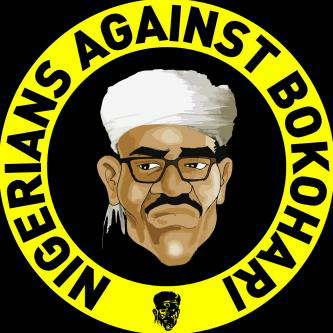
|
| Politics › Re: General Buhari Responds To Fayose controversial Advert In Punch Newspapers by scribble: 2:53pm On Jan 19, 2015 |
There was nothing wrong with the advertisement
More of this please 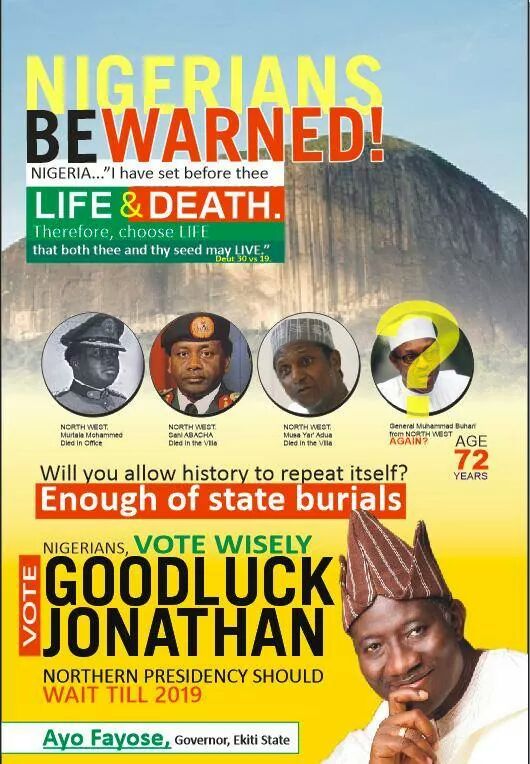
|
| Politics › Re: See What Shehu Shagari Said About GEJ by scribble: 5:09am On Jan 19, 2015 |
Vote Jonathan |
| Politics › Re: FG Reduces Price Of Petrol To 87 Naira Per Litre by scribble: 12:45am On Jan 19, 2015 |
tuncy:
Ignorant PDP/GEJite be like YES, good strategy to campaign...
Have you noticed these guys(GEJITE) are dumb and don't read?
"At a crude oil price of $47/barrel, import price (cost and freight) of petrol is N64.41/litre (exchange rate of N171.36 advised by PPPRA) and landing cost is N74.41 (inclusive of N1.28 trader's margin). This is lower than the ex-depot price of N81.51 (the difference between the landing cost and the ex-depot price is paid as subsidy). If you add bridging of N5.85, retailer's margin of N4.60 and transporter's margin of N2.99, the total cost is N87.85. Technically, there is no more subsidy on petrol. Analysts predict a fall below $40 before end of Q1. Will our government further reduce the pump price in line with the fall in crude oil price?" No they dont have to. Nigerians can afford petrol. They should take whatever extra they make at the pump and use it to develop Nigeria like they've been doing. |
| Business › First Bank CEO Emerges 2014 SUN Banker Of The Year by scribble(op): 12:38am On Jan 19, 2015 |
Bisi Onasanya, the Group Managing Director/Chief Executive Officer FirstBank, has been named The Sun Banker of the Year in The Sun Awards 2014, in recognition of the several initiatives he championed to position FirstBank as a leading financial services group in Sub-Saharan Africa, whilst promoting the growth of the African Financial Services Industry as a whole. The Sun also congratulated Mr. Onasanya for the Bank’s big ticket transactions in the course of the year, especially the issue of a USD 450 million subordinated Tier 2 debt, the largest subordinated Eurobond ever issued by any Nigerian financial institution. Mr. Femi Adesina, Managing Director/Editor-in-Chief of The Sun Newspaper during a courtesy visit to Mr. Onasanya noted that the management of The Sun were impressed with FirstBank’s growth to enviable heights under the leadership of Mr. Onasanya, with its total assets now at over $30.3billion. Responding, Onasanya thanked the management of The Sun for the special award, stating the award would be a further inspiration for FirstBank to continue to partner with Nigerian businesses committed to the socio-economic development of the country. http://www.theheraldng.com/first-bank-ceo-emerges-2014-sun-banker-year/
|
| Politics › Re: Idriss Deby Of Chad Deploys Troops To Capture Nig’s Baga Wtout Gej's Permission by scribble: 12:17am On Jan 19, 2015 |
Falsehood
It was public knowledge when Boko Haram caused them to flee Baga and now they are returning |
| Politics › Re: Jonathan Has Lost Moral Right To Govern Nigeria - Adamu Ciroma by scribble: 12:14am On Jan 19, 2015 |
Ciroma is senile sha
HE admits he didnt want Jonathan to take over in 2010
He wanted a Northerner abi....abeg go and sleep
What business would oritsejafor have with qurans and holy books?
Oh he knows it is because they are using these text to brainwash the poor in their region to give their daughters as suicide bombers to boko haram yh? |
| Politics › Re: FG Reduces Price Of Petrol To 87 Naira Per Litre by scribble: 12:12am On Jan 19, 2015 |
Bamz:
Scribble,
I see what you did there 
Nigerians are smarter than you think. They will vote for who they well please. thanks buddy but buhari baba oyoyo would never be quick witted enough to get that kind of inside joke inside joke as per for people with school certificate earned and not purchased |
| Politics › Re: Jonathan Has Lost Moral Right To Govern Nigeria - Adamu Ciroma by scribble: 12:07am On Jan 19, 2015 |
Mallam Adamu 'borntorule' Ciroma We have been waiting for you When you proclaimed you would make Nigeria ungovernable for Jonathan, little did you know almighty God is bigger than you and your linemen scheming Wait and see how God will deliver the victory to Jonathan |
| Politics › Re: Revealed: American Based Firm Sponsoring APC Campaign by scribble: 11:21pm On Jan 18, 2015 |
Amaechi funding AKPD with Rivers money Tinubu funding AKPD with Lagos money Is this the CHANGE you want Nigerians? Noooooooooooooooooooooooooooooooooooooooooooooooooooooooooooooooooooooooooooooooooooooooooooooooooooooooooooooooooo!  
|
| Politics › Re: FG Reduces Price Of Petrol To 87 Naira Per Litre by scribble: 11:06pm On Jan 18, 2015 |
BabaO2:
NO, why are u not knowledgeable like Jonathan. Give the KUDOS to FASHOLA, he was the first person in Nigeria to flag it. But because of their impunity ways of doing things, they refused to implement it immediately. Fashola is too old to advise Jonathan |
| Politics › Re: FG Reduces Price Of Petrol To 87 Naira Per Litre by scribble: 11:02pm On Jan 18, 2015 |
Fourwinds:
it pains me a lot of Nigerians seems not educated. someone is thowing reminants on d floor u see dem shouting praises... it is better for me to earn #30000 with my sweat dan be bought by dese useless politicians. One day I will die and dey too will die thereafter judgement some people believe in Jonathan without being bought, before being bought.... there was NO NEED for financial inducement Do you know there are some Nigerians that hate APC/opposition simply because of all the trash they talked about Jonathan since day 1? Nigerians are a complex people, its not just about for and/or against....people are real people. |
| Politics › Re: FG Reduces Price Of Petrol To 87 Naira Per Litre by scribble: 10:34pm On Jan 18, 2015 |
Fourwinds:
#10 reduction u are shouting from goal post to goal post. do u think Nigerians are dummy in dis present age.? it is only gullible Nigerians dat will rejoices. prices of oil/ barrel use to be $110 to $112 now it is $48 . what is d percentage decrease compare to d reduction in fuel price ur government has just made. dis is a nonsense of a new year do you know how many gullible Nigerians we have in Nigeria ok just Nairaland...go to Romance section, they are probably doing Bromance with GEJ over this development now. Take it or leave it, it is finished. Buhari should just go to Texas and buy a ranch with the rest of the money Tinubu and Amaechi will give him. He should see the cows in USA, big strong cows. Not like the ones we have in Nigeria. 

|
| Politics › Re: Gbagauns: President Jonathan’s Grammatical Blunders During His Campaign Speeches by scribble: 10:28pm On Jan 18, 2015 |
anonimi:
Thanks for PROMTLY and quickly rebuffing the empty PROPAGANDA of the Association of Pretending Crooks, APC before it confuses the minds of our impressionable people further.
Please keep it up.
Kai Buhari!!!
#Liberate-Lagos my brother it is a labour i have to undertake for my beloved country can u just imagine this frog hopping around Aso Villa 
|
| Politics › Re: FG Reduces Price Of Petrol To 87 Naira Per Litre by scribble: 10:24pm On Jan 18, 2015 |
Absoj:
2011 kwa! slip of teeth slip of teeth |
| Politics › Re: FG Reduces Price Of Petrol To 87 Naira Per Litre by scribble: 10:16pm On Jan 18, 2015 |
it is finished Jonathan has won the 2015 elections this gist is so official and powerful the CEO of Nairaland had to come and check it himself second to last row, third from right  

|
| Politics › Re: Odds Favour Jonathan In Forthcoming Elections – American Think Tank, Brookings I by scribble(op): 10:08pm On Jan 18, 2015 |
|
| Politics › Re: Odds Favour Jonathan In Forthcoming Elections – American Think Tank, Brookings I by scribble(op): 10:08pm On Jan 18, 2015 |
Foresight Africa: Top Priorities for the Continent in 2015 (1)
The 2015 Presidential Elections in Nigeria: The Issues and Challenges
The year 2015 will be an eventful one for the more than one billion people living in Africa. China, Africa’s largest trading partner, will hold the 6th Forum on China-Africa Cooperation; the Post-2015 Development Agenda will chart a new course for global responses to poverty, among other priorities for the region; West Africa will begin its recovery from the devastating Ebola crisis; and the continent’s largest economy, Nigeria, will face a defining presidential election (along with more than 15 other countries). Many of these milestones will bring opportunities for Africa to redefine its relationships with global partners and strengthen its voice on the world stage. Others will present obstacles to the continent’s steady march towards peace, security, and economic and human development. Since 2010, the Brookings Africa Growth Initiative has asked its scholars to assess the top priorities for Africa in the coming year. This year, AGI’s experts and colleagues continue this tradition with Foresight Africa 2015, which presents a series of briefs on the critical issues and key moments for Africa over the next 12 months. It is our hope Foresight Africa 2015 will start a dialogue and ultimately support sound policy for sustained economic growth and development for the people of
Africa.
The Priority
The 2015 presidential election in Nigeria—the fifth since 1999 when the military handed over power to elected civilians—will be the first time that the opposition will have a realistic chance of wresting power from the ruling People’s Democratic Party (PDP). All things being equal, it will be a two-horse race between the ruling PDP and the main opposition party, the All Progressive Congress (APC)—the party formed in February 2013 from a merger of three ethnically and regionally based political parties. Before the emergence of the APC, opposition parties were mostly fragmented along regional and ethnic lines, making it impossible for them to mount a credible challenge to the ruling PDP.
WHY IS IT IMPORTANT?
The emergence of a viable opposition coincides with a period of great tension between north and south, arising from the decision of President Goodluck Jonathan to contest the 2011 elections, a decision that has made many northerners feel cheated of their turn in producing the president and that induced some violence. With President Jonathan, a southern Christian, contesting again and very likely facing a northern Muslim candidate, the elections will have implications not just for north-south relations but also for the survival of the country’s democracy.
Nigeria is the continent’s biggest economy and most populous country, and so instability in Nigeria could have dire economic impacts for the region. Similarly, with the number of internally displaced people from the Boko Haram conflict estimated at about 650,000 as of August 2014 (The Guardian 2014), a mismanaged election could trigger post-election violence that will exacerbate the refugee crisis both internally and at the regional level. For instance, it has been estimated that the Boko Haram conflict has led to more than 100,000 Nigerians seeking refuge in Niger’s Diffa region since the beginning of 2014. It is also estimated that there are 44,000 Nigerian refugees in Cameroon and 2,700 in Chad (Baiyewu 2014). Ironically, the neighboring countries where Nigerians are seeking refuge from the Boko Haram conflict are already quite poor and have severe socioeconomic challenges of their own.
The fault lines of region, ethnicity and religion run deep in Nigeria. Virtually every part of the country has an institutionalized memory of in jury or feelings of injustice, which they often feel will be best addressed if one of their own wields power at the center, preferably as the president. Similarly, there is a pervasive fear that the president of the country will abuse the powers of his office to privilege his region, ethnicity or religion—if not to punish or deliberately disadvantage others.
To allay fears of domination, most Nigerian political parties have written or unwritten zoning and power rotation arrangements in which the parties agree that key offices and candidates should be produced by designated sections of the country for a certain number of years. For instance, under the PDP’s arrangements, former President Olusegun Obasanjo, a Yoruba from the southwest, served for two terms of four years before power was “returned” to the north. The north’s “turn” was, however, interrupted after Obasanjo’s successor, Umaru Yaradua, a Muslim from Katsina state, died in office in 2010 and was succeeded by then-Vice President Jonathan.
This result shortened the north’s “turn” in power and extended the south’s—frustrating many northerners. In 2011, influential people in the north argued that Jonathan should serve out only Yaradua’s remaining first term in office and not contest those presidential elections.
However, Jonathan did run and won—triggering post-election violence in the north in which an estimated 800 people lost their lives (Human Rights Watch 2011). Jonathan’s supporters have a contrary argument.
For them, in the 39 years between the times the country gained independence in 1960 and the inauguration of the Fourth Republic in 1999, the north ruled the country for about 35 of them and should therefore be patient for that “historical injustice” to be redressed first.
Nigeria is sometimes described as a country that runs on two unequal wheels. In 2013, the Russian investment bank Renaissance Capital produced a report titled, “Nigeria Unveiled,” which painted the picture of Nigeria’s economy as moving on two wheels—a thriving south with rising income, lower unemployment and better educated citizens, and a much poorer, less educated and struggling north (Atuanya 2013). Based on this economic imbalance, the north’s dominance of power before 1999 was justified as a lever to balance the south’s economic advantage. Thus, for some, since the south has held the presidency for 12 of the 15 years of civilian rule since 1999 means that the north has lost its leverage in the north-south equation. Muhammadu Buhari—a Muslim and former military head of state with cult following in the north—was chosen as APC’s presidential candidate.
The election is therefore likely to witness an intense politicization of the Muslim-Christian divide and the north-south dichotomy in the country, which will add to the already existing tension in the country.
APC strategists are banking on a combination of votes from the populous northwest (18 million votes), northeast (11 million votes) and southwest (13.5 million votes) for victory. Based on this calculation, the APC, after choosing Buhari from the northwest as its presidential candidate, also chose Professor Yemi Osinbajo, a Christian from the southwest, as its vice presidential candidate. What remains to be seen, however, is whether Bola Tinubu – a former governor of Lagos State who played a pivotal role in the formation of the APC and is considered to be the party’s strongest mobilize in the southwest – will be very enthusiastic in delivering the battleground southwest to the APC during the elections. Tinubu indicated his interest in being the party’s vice presidential candidate but being a Muslim like Buhari, the party’s strategists felt that a Muslim-Muslim ticket might offend Christians and cement the PDP’s labeling of the APC as an Islamic party.
The greatest strength of the ruling PDP is its “power of incumbency,” and all the institutional support that goes with it. Not only does it have federal resources to use as patronage, it also controls key institutions like the police, the army and the anti-corruption agencies like the Economic and Financial Crimes Commission, which could be used to harass political enemies. Furthermore, of the 36 states in the country, the PDP has 21 governors while APC has 14. The PDP also holds comfortable majorities in both the House of Representatives and the Senate.
Similarly, money plays a very important role in Nigerian politics—in campaigning, media reach and vote buying (which is a common practice in Nigerian elections). Where the voters are sufficiently animated by a certain cause, the role of money in influencing the outcome of an election will be muted. However, in places where the election is close, the role of money, especially in vote buying and other material inducements such as distribution of bags of rice, wrappers or motorcycles, will become quite important.
Jonathan’s supporters argue that—despite Boko Haram—the country is thriving: The economy continues to grow and—with the rebasing of its GDP—became the largest economy in Africa and the 26th largest in the world. Jonathan’s supporters also point to his success in containing the Ebola virus, which earned him commendations from countries and institutions around the world. For his critics however, his incompetence is reflected in the high unemployment rate, which worsened from 12 percent in 2006 to 24 percent in 2011 (Premium Times 2013), general insecurity in the country and the deepening suspicion among the different ethnic groups.
Former President Olusegun Obasanjo in fact accused Jonathan of being a polarizing figure who promotes clannishness, “For you to allow yourself to be ‘possessed,’ so to say, to the exclusion of most of the rest of Nigerians as an ‘Ijaw man’ is a mistake that should never have been allowed to happen,” an angry Obasanjo wrote in an 18-page letter to the president (Adoyi 2013).
Opinions on Jonathan’s approach to Boko Haram vary wildly as well: His critics cite terrorism as more evidence of his incompetence. On the other hand, his supporters claim that the terrorism is actually evidence of a siege laid on his administration by powerful politicians from the Muslim north aiming for it to fail.
There is a consensus that the performance of the electoral umpire, the Independent National Electoral Commission (INEC), has improved in terms of the transparency and logistics of the electoral processes under its current chairman, the northerner Professor Attahiru Jega. However, the INEC continues to be viewed with a great deal of suspicion by all sides.
The APC has many times insinuated that INEC is being manipulated by the PDP-controlled federal government. In fact, the APC declared it had lost confidence in Jega to conduct credible elections shortly after the 2013 gubernatorial elections in Anambra State, which were marred by late or non-arrival of voting materials and which was won by a party allied with the PDP (Olatunji 2013). Jega has already been accused of planning to rig the 2015 election when he suggested creating more polling booths, most of which were to be put in the north (Nigerian Tribune 2014).
Perceptions of the neutrality of INEC will be crucial in the acceptance of the outcome. However, if the country’s electoral history is anything to go by, the outcome of the elections will be contentious, irrespective of the opinion of the election observers.
After suffering a wave of defections to the APC last year, including five of its governors, the PDP seems to have rebounded strongly. In the battleground southwest, for instance, the party won recent governorship elections in Ekiti state and got the governor of Ondo State to defect from the Labor party to the PDP.
The party is especially strong in the south-south (where Jonathan comes from), the southeast and among Christians in the north. Again, while the PDP remains weak in the Muslim north, it has gained new influential members who decamped from the APC including the former governors of Kano State and Borno State. And, of course, the PDP has the power of incumbency.
The APC gets much of its strength from tapping into anti-Jonathan sentiments in the Muslim north and grievances among the Yoruba who feel that the Jonathan administration has ignored them in key political appointments. Allegations of corruption against top PDP officials will be powerful ammunition in the hands of the APC, especially with the choice of Buhari, widely seen as not corrupt, as the party’s presidential candidate. The party is, however, a fragile one that seems united only in its quest to wrest the presidency from Jonathan or to have power “returned” to the north. Though the election is expected to be very competitive, the odds still favor President Jonathan.
Given the centrality of political power in Nigeria, the election—just like almost all elections in Nigeria—will be highly contentious and the losing side is likely to blame its fate on rigging.
Post-election violence is therefore likely in the north if the APC loses while renewed militancy in the restive Niger Delta is likely if Jonathan does.
A main source of concern will be if the elections become stalemated for a prolonged period or if the scale of post-election violence gets beyond a certain threshold. In these scenarios, we may have to keep an eye on some military adventurists who may be tempted to use the opportunity to cause trouble—especially if the Boko Haram challenges remains intractable.
How can the country avoid the scenario of the 2015 elections leading to the implosion of the country, given how high the stakes are? Despite several more outlandish theories that Nigeria will disintegrate in 2015, chances are that the elections will come and go and the country will remain with its political problems largely unresolved (Adibe 2014). The country is a master at teetering on the precipice: It has survived major crises, including a civil war (1967-1970). Hanging on a cliff without falling over may indeed be the country’s comfort zone.
To minimize the chances of the elections leading to chaos and violence, a number of pre- and post-election arrangements are imperative.
These include updating and double checking the electoral register at least one month before the polling day. The electoral commission should also develop robust early warning systems in areas where there are likely to be logistical problems and where pre- or post-election violence are likely to occur. Credible local and international observers must be allowed to monitor the elections to ensure that the entire electoral processes are transparent. Well-trained security personnel should be deployed in volatile areas to prevent or stop outbreaks of violence.
In the longer term, Nigeria should also devise more effective strategies for dealing with the crises in its nation-building processes, which have led to virtually every section of the country feeling marginalized or alienated from the Nigeria project. The country should also continue to explore more effective means of dealing with the Boko Haram terrorism just as it needs to find the necessary political will to embark on reforms that will make the electoral processes less contentious.
By Brookings Institute-USA, 12/01/2015 http://www.brookings.edu/~/media/Research/Files/Reports/2015/01/foresight%20africa/nigeria%20elections%20adibe.pdf |
| Politics › Odds Favour Jonathan In Forthcoming Elections – American Think Tank, Brookings I by scribble(op): 10:08pm On Jan 18, 2015 |
The Brookings Institute, a private nonprofit organization devoted to independent research and innovative policy solutions has said that next month’s Presidential elections would likely swing in favour of the incumbent President Goodluck Jonathan even as it predicted failure for the main opposition party, All Progressives Congress (APC).
Part of a report released by the institute on January 12th reads
The APC gets much of its strength from tapping into anti-Jonathan sentiments in the Muslim north and grievances among the Yoruba who feel that the Jonathan administration has ignored them in key political appointments. Allegations of corruption against top PDP officials will be powerful ammunition in the hands of the APC, especially with the choice of Buhari, widely seen as not corrupt, as the party’s presidential candidate. The party is, however, a fragile one that seems united only in its quest to wrest the presidency from Jonathan or to have power “returned” to the north. Though the election is expected to be very competitive, the odds still favor President Jonathan.
The report says that post-election violence would be likely a certainty as the losing side would allege rigging and said the North would be the focal point of the violence.
Given the centrality of political power in Nigeria, the election—just like almost all elections in Nigeria—will be highly contentious and the losing side is likely to blame its fate on rigging.
Post-election violence is therefore likely in the north if the APC loses while renewed militancy in the restive Niger Delta is likely if Jonathan does.
A main source of concern will be if the elections become stalemated for a prolonged period or if the scale of post-election violence gets beyond a certain threshold. In these scenarios, we may have to keep an eye on some military adventurists who may be tempted to use the opportunity to cause trouble—especially if the Boko Haram challenges remains intractable.
The institute in the report also prescribed some measures for minimizing or preventing post-election violence in the country.
To minimize the chances of the elections leading to chaos and violence, a number of pre- and post-election arrangements are imperative.
These include updating and double checking the electoral register at least one month before the polling day. The electoral commission should also develop robust early warning systems in areas where there are likely to be logistical problems and where pre- or post-election violence are likely to occur. Credible local and international observers must be allowed to monitor the elections to ensure that the entire electoral processes are transparent. Well-trained security personnel should be deployed in volatile areas to prevent or stop outbreaks of violence.
The full report is reproduced here: |


