AfroBlue's Posts
Nairaland Forum › AfroBlue's Profile › AfroBlue's Posts
1 2 3 4 5 6 7 8 ... 25 26 27 28 29 30 31 32 33 (of 75 pages)
 Celebrities › Re: Tonto Dikeh Shares Photo Of Herself And Her Man In Bed by AfroBlue(m): 2:20pm On Jan 14, 2015 Celebrities › Re: Tonto Dikeh Shares Photo Of Herself And Her Man In Bed by AfroBlue(m): 2:20pm On Jan 14, 2015 |
justscorch:please kiss and tell man .... how was it/she?  . |
| Celebrities › Re: Tonto Dikeh Shares Photo Of Herself And Her Man In Bed by AfroBlue(m): 2:15pm On Jan 14, 2015 |
kennygee:good question, seems like she gets dumped regularly. guys must quickly tire of looking at the devils face http://lindaikeji..com/2012/11/tonto-dikeh-inspires-fan.html [img]http://3.bp..com/-bMcm6G9j0Xk/UKvDPt3KZnI/AAAAAAAA-6k/tCwHOZtpwCk/s1600/..........0.jpg[/img] https://www.nairaland.com/1088531/photo-tonto-dikeh-pain-she www.nairaland.com/attachments/867977_tonto_dikeh_gets_tatooed_yeoal_jpg17aa0d6a8fbe6493340b2184feee9c16 . |
| Foreign Affairs › Buyout Group Helios Raises Record $1bn Africa Fund by AfroBlue(op): 9:18am On Jan 12, 2015 |
[b]Possibly stormy economic weather ahead if commodity prices continue to slide downward. Be vigilant with your financial focus and goals. Buyout group Helios raises record $1bn Africa fund Javier Blas, Africa Editor [img]http://im.ft-static.com/content/images/82876126-8db6-4236-a0eb-ad71f3ad5433.img[/img] Tope Lawani, co-founder of Helios Investment Partners The first $1bn-plus Africa-focused private equity fund has been raised by Helios Investment Partners, a London-based group founded almost a decade ago by a pair of Nigerian-born dealmakers. The record size of the fund signals the growing appetite for a continent that until a few years ago had been largely ignored by global investors. Africa still attracts a tiny proportion of the world’s private equity money, even compared with other emerging regions, notably Asia and Latin America. But interest has increased recently, buoyed by strong economic growth. After stagnating for two decades, African gross domestic product per capita has surged almost 40 per cent since 2002, fuelled by high commodity prices, the rise of a small consumer class, and cheap Chinese loans. The strong growth has encouraged regional and international private equity groups. US buyout group Carlyle last year launched a nearly $700m fund to invest in the region, while US rivals KKR and Blackstone have also struck regional deals. Dealmaking among companies in the sub-Saharan region has been strong during the past year as investors bet on growth. Recent transactions include an alliance between brewer SABMiller and Coca-Cola; the entry of French insurer Axa in Nigeria and a large merger in the retail sector in South Africa. Helios plans to wrap up fundraising for its latest vehicle at $1.1bn — the maximum that it promised it would take from investors. About 60 per cent of the new fund has come from existing investors. It is the third fund that Helios has raised since it was established in 2007. Tope Lawani, Helios co-founder, said in an interview with the Financial Times that the size of the capital rising and the participation of pension funds and sovereign wealth funds was a sign that “private equity in Africa is maturing”. Until now, wealthy families and entrepreneurs have been quicker than institutional investors such as pension funds to see the appeal of Africa. Although more institutional investors are pouring money into private equity funds for Africa, some remain worried about their exit strategy as capital markets in the region — particularly stock exchanges — are still in their infancy, with the exception of South Africa and, to a lesser extent, Morocco, Nigeria and Kenya. Buyout groups raised $3.3bn for Africa funds in 2013, the latest year with full data, compared with a peak of $4.7bn in 2007, according to estimates by EY, the consultancy. The arrival of new investors to Africa coincides, however, with economic trouble in the region as commodities prices tumble and countries brace for the impact on capital flows of an anticipated increase in US interest rates. Mr Lawani said that in the near term many African countries were going to suffer an “adverse impact” on their currencies as capital flew back to the US. “We are witnessing sharply lower commodities prices and it is reasonable to expect African currencies to lose value against the dollar,” he said. But he claimed that the downturn would turn into an opportunity for investors holding large amounts of US dollars, such as Helios. “It is an excellent time to invest: asset values are going to come down,” he said. Helios held the previous record for the biggest private equity fund in Africa, which it raised in 2011, at $908m. Earlier this year, Edmond de Rothschild amassed $530m for its first buyout fund focused on deals in the continent. In 2012, Sir Bob Geldof, the musician and campaigner for aid to Africa, raised $200m for his 8 Miles fund focused on the continent.[/b] |
| Foreign Affairs › Re: Terror In Paris: Suspects Involved In Hostage Drama (live) by AfroBlue(m): 6:59pm On Jan 10, 2015 |
more thoughts to ponder. there's deep levels to this drama ... Who ordered the attack against Charlie Hebdo? While many French react to the attack against Charlie Hebdo denouncing Islam and demonstrating in the streets, Thierry Meyssan points out that the jihadist interpretation is impossible. While it would be tempting for him to see it as an Al Qaeda or Daesh operation, he envisages another, much more dangerous hypothesis. http://wakeupfromyourslumber.com/who-ordered-the-attack-against-charlie-hebdo/ |
| TV/Movies › Re: Movie: 30 Days In Atlanta (Nollywood Movie) by AfroBlue(m): 5:50pm On Jan 10, 2015 |
trailers are still up. i can't wait to see the entire film. https://www.youtube.com/watch?v=QvSN7R5wcyk https://www.youtube.com/watch?v=QboN7quqLi8 |
| Foreign Affairs › Re: Breaking: Burkina Faso President Announces His Resignation by AfroBlue(m): 11:40am On Jan 09, 2015 |
3 month old breaking news?  31 October 2014 Last updated at 22:14 ET Burkina Faso general takes over as Compaore resigns http://www.bbc.com/news/world-africa-29851445 |
| Politics › Re: A Police Station In Benue State (picture) by AfroBlue(m): 11:39am On Jan 09, 2015 |
dp . |
| Politics › Re: Gambia - Coup Attempt By Insurgents From US, Germany & UK by AfroBlue(m): 11:20am On Jan 09, 2015 |
[b]as already mentioned in this thread i also think there was western government involvement and possibly an South African mercenary outfit. Africom is now negotiating with Spain to either build or extend a base contract. Gambia coup plan has echoes of Hollywood farce Javier Blas, Africa editor [img]http://im.ft-static.com/content/images/4861c9f6-599b-4d95-9ef2-a5ccdb90af39.img[/img] Yahya Jammeh, president of Gambia Code names, conspiracies and a dead of the night attack on an African president. It may sound like the plot of a low-budget Hollywood film, but it happened in real life in Gambia, a tiny and poor nation in west Africa. A small group of Americans with eight M4 semi-automatic rifles, two pairs of night vision goggles and black military style uniforms, allegedly decided to overthrow Yahya Jammeh, the authoritarian and eccentric president of the smallest country on the African mainland. Google Maps satellite images, with written notes signalling “guard” posts, were their main intelligence asset. A manifesto titled, “A Charter Transition from Dictatorship to Democracy” inspired them. Their budget was, however, that of a low-budget thriller, not a Hollywood blockbuster. The gang allegedly numbered 18-20 people and spent $220,798 on the attack, including $4,000 on two sniper “Barret” .50 calibre rifles that the accountant who compiled their expenses said were “not really necessary, but could be very useful”. Each men had $4,000 to cover costs while they were in Gambia. But the coup attempt failed and this week, US federal prosecutors charged a Texas businessman with conspiring with a former US Army sergeant and others to orchestrate an attack in Gambia on the last two days of 2014. The attack echoes a bygone era in Africa when mercenaries tried to overthrow governments in small African countries. The last such attack happened more than a decade ago. In 2004, Mark Thatcher, the son of the late UK prime minister Margaret Thatcher, received a suspended sentence in South Africa for his role in a coup attempt against the government of Teodoro Obiang of Equatorial Guinea. But it was Bob Denard, a former French soldier and mercenary, who for years epitomised the soldier-of-fortune-led coup in small corners of Africa. In the Comoros Island alone, he led four attempts between 1975 and 1995 — two of them were successful. The leaders of the alleged gang in Gambia did not have the pedigree of Denard, however. US authorities accuse Cherno Njie, a 57-year-old US citizen of Gambian descent who made a small fortune in the housing industry in Texas, of bankrolling the coup. Mr Njie, who expected to become president, and Papa Faal, a 46-year-old former US sergeant, face charges of violating the US Neutrality Act by “conspiring to make an expedition against a friendly nation” and another count of conspiracy to posses a firearm, according to a criminal complaint filed in Minnesota. Nr Njie and Mr Faal could not be reached for comment. Gambian officials have publicly blamed Mr Faal, Lamin Sanneh, an exiled former head of the presidential guard, and seven others for the attack. [img]http://im.ft-static.com/content/images/0e1a101e-9740-11e4-9636-00144feabdc0.img[/img] Gambia locator map What might have led Mr Njie to organise the coup, as alleged, is unclear. Ebrima Sankareh, editor in chief of the The Gambian Echo & Tribune, a newspaper for the Gambian diaspora in the US, describes him as “a very quiet and serious fellow with a very sharp intellect, unassuming, attentive, calm and calculating, but equally shrewd”. In a profile about him published in November, he described Mr Njie as having a “penchant for . . . political discourse”. Mr Faal’s possible motivations are even less clear. But an author with the same name and the same military background, self-published a book A Week Of Hell two years ago about Gambia’s coup of 1981. Preparations began in August, when Mr Njie allegedly started recruiting men for his plan, according to a US criminal complaint. On December 3, a small group of about 10-12 men flew via South African Airways to Dakar in Senegal and from there they made their way overland to Gambia. A spreadsheet seized by the FBI appears to depict the prices of various weapons and logistical support [img]http://im.ft-static.com/content/images/a17b7184-9751-11e4-845a-00144feabdc0.img[/img] A spreadsheet seized by the FBI appears to depict the prices of various weapons and logistical support They planned to ambush the president and convince the head of the Gambian army to “stand down and support the change in leadership”, it is alleged. Gambia’s poorly equipped army numbers fewer than 3,000 soldiers. “They hoped the president would surrender, but were willing to shoot him if he fired at them,” Nicholas Marshall, an FBI special agent, said in an affidavit. But the president never got the chance to surrender — he had left the country to celebrate New Year. As in other mercenary-led coups in Africa, the target was a dictator. Mr Jammeh has run Gambia with an iron fist since he seized power in a coup more than two decades ago. He is known for his authoritarian rule and eccentric beliefs. In 2007, he claimed that he had found herbal cures for HIV and personally administered his treatment to patients. The following year he vowed to execute any gay person discovered in Gambia. In 2013, Gambia pulled out of the Commonwealth, the organisation that groups together mostly former territories of the British empire, following criticism over the country’s human rights record. Mr Jammeh called it “neocolonial”. "They hoped the president would surrender but were willing to shoot him if he fired at them" - Nicholas Marshall, FBI special agent Tweet this quote With Mr Jammeh out of the country, the conspirators opted for a different plan. They split into two teams, codenamed “Alpha” and “Bravo”, and hid in the woods near the palace. In rented cars, they approached State House. But, instead of fleeing, the soldiers responded with heavy fire. Within minutes, the members of the Alpha team were dead while the Bravo group had run for safety. The 160 members of the Gambian army who supposedly agreed to support the coup never showed up. Mr Faal told the FBI that he “fled the scene and took refuge in a nearby building, removed his body armour, boots and military-style clothing and changed into clothes obtained from a man in the building”. Within days, he had surrendered himself to the US authorities in the embassy in Dakar. He apparently identified Mr Njie in a photograph shown to him by US investigators. [img]http://im.ft-static.com/content/images/9e605d34-9751-11e4-845a-00144feabdc0.img[/img] Among the documents were also annotated Google satellite images of where the attempted coup took place When the FBI searched houses owned by Mr Njie in Lakeway and Austin, Texas, they found a document describing what appears to be his vision for Gambia. Handwritten notes contained the following questions: “Do you have a budget?”, “How many troops do you have?”, “What is your plan after a takeover?” and, finally, “What is the transition period for a return to civilian rule?” In the end, Mr Njie did not need an answer to the final question — Mr Jammeh remains in power. This week, the president-cum-dictator responded to the coup by firing several ministers. “This was not a coup. This was an attack by a terrorist group backed by some powers,” he said. Related Topics United States of America [/b] |
| Romance › Re: 5 Real Reasons Why Nigerian Men Patronize Prostitutes by AfroBlue(m): 6:18pm On Jan 08, 2015 |
the trade is legal in a lot of countries around the globe ...full list in the link below This page details 100 countries' policies on prostitution, brothel ownership, and pimping. These countries were chosen in order to be inclusive of major religions, geographical regions, and policies towards prostitution. Taiwan and Scotland were included in the country listings for China and the United Kingdom, respectively, in accordance with the country listings and population estimates provided in the Central Intelligence Agency (CIA) World Factbook and the US State Department’s listing of independent states in the world. Whenever possible, we have included government documents regarding prostitution such as laws, court decisions, employment information, etc. under the name of the country. While reasonable efforts have been made to assure the accuracy of the data provided, do not rely on this information without first checking an official edition of the applicable law. http://prostitution.procon.org/view.resource.php?resourceID=000772 Percentage of Countries with Legal, Illegal, and Limitedly Legal Prostitution (of the 100 countries) https://prostitution.procon.org/files/1-prostitution-images/countries-with-legal-illegal-limited-prostitution-2014.jpg Population (total # and % of total) of Countries with Legal, Illegal, and Limitedly Legal Prostitution (of the 100 countries) https://prostitution.procon.org/files/1-prostitution-images/population-with-legal-illegal-limited-prostitution-2014.jpg 1 Like |
| Romance › Re: 5 Real Reasons Why Nigerian Men Patronize Prostitutes by AfroBlue(m): 5:33pm On Jan 08, 2015 |
SeverusSnape:and don't forget about the D S L's  http://mcscooby..com/2015/01/meet-superstar-o-afrocandy-without.html . 1 Like |
| Business › Re: Fed Govt: We Didn’t Squander External Reserve by AfroBlue(m): 3:36pm On Jan 08, 2015 |
niyyie:the same entity that owns most of the central banks, the world bank, and the BIS. Complete List of BANKS Owned/Controlled by the Rothschild Family “Give me control over a nations currency, and I care not who makes its laws” – Baron M.A. Rothschild ROTHSCHILD OWNED & CONTROLLED BANKS: Afghanistan: Bank of Afghanistan Albania: Bank of Albania Algeria: Bank of Algeria Argentina: Central Bank of Argentina Armenia: Central Bank of Armenia Aruba: Central Bank of Aruba Australia: Reserve Bank of Australia Austria: Austrian National Bank Azerbaijan: Central Bank of Azerbaijan Republic Bahamas: Central Bank of The Bahamas Bahrain: Central Bank of Bahrain Bangladesh: Bangladesh Bank Barbados: Central Bank of Barbados Belarus: National Bank of the Republic of Belarus Belgium: National Bank of Belgium Belize: Central Bank of Belize Benin: Central Bank of West African States (BCEAO) Bermuda: Bermuda Monetary Authority Bhutan: Royal Monetary Authority of Bhutan Bolivia: Central Bank of Bolivia Bosnia: Central Bank of Bosnia and Herzegovina Botswana: Bank of Botswana Brazil: Central Bank of Brazil Bulgaria: Bulgarian National Bank Burkina Faso: Central Bank of West African States (BCEAO) Burundi: Bank of the Republic of Burundi Cambodia: National Bank of Cambodia Came Roon: Bank of Central African States Canada: Bank of Canada – Banque du Canada Cayman Islands: Cayman Islands Monetary Authority Central African Republic: Bank of Central African States Chad: Bank of Central African States Chile: Central Bank of Chile China: The People’s Bank of China Colombia: Bank of the Republic Comoros: Central Bank of Comoros Congo: Bank of Central African States Costa Rica: Central Bank of Costa Rica Côte d’Ivoire: Central Bank of West African States (BCEAO) Croatia: Croatian National Bank Cuba: Central Bank of Cuba Cyprus: Central Bank of Cyprus Czech Republic: Czech National Bank Denmark: National Bank of Denmark Dominican Republic: Central Bank of the Dominican Republic East Caribbean area: Eastern Caribbean Central Bank Ecuador: Central Bank of Ecuador Egypt: Central Bank of Egypt El Salvador: Central Reserve Bank of El Salvador Equatorial Guinea: Bank of Central African States Estonia: Bank of Estonia Ethiopia: National Bank of Ethiopia European Union: European Central Bank Fiji: Reserve Bank of Fiji Finland: Bank of Finland France: Bank of France Gabon: Bank of Central African States The Gambia: Central Bank of The Gambia Georgia: National Bank of Georgia Germany: Deutsche Bundesbank Ghana: Bank of Ghana Greece: Bank of Greece Guatemala: Bank of Guatemala Guinea Bissau: Central Bank of West African States (BCEAO) Guyana: Bank of Guyana Haiti: Central Bank of Haiti Honduras: Central Bank of Honduras Hong Kong: Hong Kong Monetary Authority Hungary: Magyar Nemzeti Bank Iceland: Central Bank of Iceland India: Reserve Bank of India Indonesia: Bank Indonesia Iran: The Central Bank of the Islamic Republic of Iran Iraq: Central Bank of Iraq Ireland: Central Bank and Financial Services Authority of Ireland Israel: Bank of Israel Italy: Bank of Italy Jamaica: Bank of Jamaica Japan: Bank of Japan Jordan: Central Bank of Jordan Kazakhstan: National Bank of Kazakhstan Kenya: Central Bank of Kenya Korea: Bank of Korea Kuwait: Central Bank of Kuwait Kyrgyzstan: National Bank of the Kyrgyz Republic Latvia: Bank of Latvia Lebanon: Central Bank of Lebanon Lesotho: Central Bank of Lesotho Libya: Central Bank of Libya Uruguay: Central Bank of Uruguay Lithuania: Bank of Lithuania Luxembourg: Central Bank of Luxembourg Macao: Monetary Authority of Macao Macedonia: National Bank of the Republic of Macedonia Madagascar: Central Bank of Madagascar Malawi: Reserve Bank of Malawi Malaysia: Central Bank of Malaysia Mali: Central Bank of West African States (BCEAO) Malta: Central Bank of Malta Mauritius: Bank of Mauritius Mexico: Bank of Mexico Moldova: National Bank of Moldova Mongolia: Bank of Mongolia Montenegro: Central Bank of Montenegro Morocco: Bank of Morocco Mozambique: Bank of Mozambique Namibia: Bank of Namibia Nepal: Central Bank of Nepal Netherlands: Netherlands Bank Netherlands Antilles: Bank of the Netherlands Antilles New Zealand: Reserve Bank of New Zealand Nicaragua: Central Bank of Nicaragua Niger: Central Bank of West African States (BCEAO) Nigeria: Central Bank of Nigeria Norway: Central Bank of Norway Oman: Central Bank of Oman Pakistan: State Bank of Pakistan Papua New Guinea: Bank of Papua New Guinea Paraguay: Central Bank of Paraguay Peru: Central Reserve Bank of Peru Philip Pines: Bangko Sentral ng Pilipinas Poland: National Bank of Poland Portugal: Bank of Portugal Qatar: Qatar Central Bank Romania: National Bank of Romania Russia: Central Bank of Russia Rwanda: National Bank of Rwanda San Marino: Central Bank of the Republic of San Marino Samoa: Central Bank of Samoa Saudi Arabia: Saudi Arabian Monetary Agency Senegal: Central Bank of West African States (BCEAO) Serbia: National Bank of Serbia Seychelles: Central Bank of Seychelles Sierra Leone: Bank of Sierra Leone Singapore: Monetary Authority of Singapore Slovakia: National Bank of Slovakia Slovenia: Bank of Slovenia Solomon Islands: Central Bank of Solomon Islands South Africa: South African Reserve Bank Spain: Bank of Spain Sri Lanka: Central Bank of Sri Lanka Sudan: Bank of Sudan Surinam: Central Bank of Suriname Swaziland: The Central Bank of Swaziland Sweden: Sveriges Riksbank Switzerland: Swiss National Bank Tajikistan: National Bank of Tajikistan Tanzania: Bank of Tanzania Thailand: Bank of Thailand Togo: Central Bank of West African States (BCEAO) Tonga: National Reserve Bank of Tonga Trinidad and Tobago: Central Bank of Trinidad and Tobago Tunisia: Central Bank of Tunisia Turkey: Central Bank of the Republic of Turkey Uganda: Bank of Uganda Ukraine: National Bank of Ukraine United Arab Emirates: Central Bank of United Arab Emirates United Kingdom: Bank of England United States: Federal Reserve, Federal Reserve Bank of New York Vanuatu: Reserve Bank of Vanuatu Venezuela: Central Bank of Venezuela Vietnam: The State Bank of Vietnam Yemen: Central Bank of Yemen Zambia: Bank of Zambia Zimbabwe: Reserve Bank of Zimbabwe Reference: Educate Yourself; - See more at: http://humansarefree.com/2013/11/complete-list-of-banks-ownedcontrolled.html#sthash.t6cwUr8e.dpuf 1 Like |
| Fashion › Re: Miss Nigeria USA 2015 Contestants by AfroBlue(m): 2:57pm On Jan 08, 2015 |
Chris Brown's brand new song all my b****** got real hair Tyga - Ayo ft. Chris Brown (Official) (Explicit) https://www.youtube.com/watch?v=50jzKk6V070 https://bellanaija.cdn.ng/wp-content/uploads/2012/12/Chris-Brown-Lagos-Social-Media-December-2012-BellaNaija008-600x600.jpg http://www.bellanaija.com/2012/12/23/chris-brown-shuts-it-down-at-his-lagos-concert-his-performance-with-wizkid-the-mega-mansion-where-he-stayed-more/ |
| Politics › Re: The Dangers Of Gmos : Nigeriand Should Be Concerned by AfroBlue(m): 12:33am On Jan 08, 2015 |
[b]update, Monsanto may be making political progress in neighboring Ghana. Farmers In Africa Face Legal Penalties For Planting Crops Under New “Monsanto Law” January 5, 2015 by John Vibes https://cdn11.trueactivist.com/wp-content/uploads/2015/01/monsantograss1-400x219.jpg Monsanto is one of the largest multinational corporations in the world and is also one of the most ruthless. Behind the false image of innocence created by their lawyers and public relations, this company is as evil as they come. Thousands of lawsuits have been filed against this corporate giant worldwide, but because of their incredible wealth and political connections they are usually able to settle out of court for large sums and pay off the media so their crimes are not exposed to the public. Their current goal is to completely dominate the whole agriculture industry using their genetically modified food and seeds. Monsanto’s genetically modified seeds only produce one plant cycle, what this means is that once a seed has sprouted there will be no more seeds produced by this plant. If their plan works, which it is, farmers will have no choice but to buy every seed for every crop directly from the Monsanto Corporation. To make matters even worse, Monsanto has used their political pull and financial backing to take independent farmers to court for using their own seeds! This is a measure that the company and their supporters have been pushing for all over the world for a number of years. India was one of the first places on Earth to adopt these types of policies, and in recent years there has been a surge in suicides among farmers as a result. Forcing GMO seeds on farmers has also not been proven to be beneficial in any way, in fact, most farmers would reject GMO products if they had the choice. Now the company is moving their way into a number of territories in Africa, infiltrating local governments and forcing them to implement their controversial farming laws. In Ghana, for example, the national parliament is due to vote on the government’s “Plant Breeders Bill,” which would heavily control and regulate farming practices that people have been using for generations. Farmers would no longer be allowed to swap or breed seeds under these new laws, and even collecting seeds could be considered a crime. The new bill has become known as the “Monsanto Law,” because Monsanto is the patent holder who would be taking these farmers to court for violating the so-called intellectual property of seeds and crops. The new law in Ghana has been heavily protested by many farmers and citizens, but the government is insisting that it is necessary for them to steer the market according their needs. “This system aims to compel farmers to purchase seeds for every planting season,” Duke Tagoe of Food Sovereignty Ghana said. “The economic impact on the lives of farmers will be disastrous,The origin of food is seed. Whoever controls the seed control the entire food chain,” he added. Activists had a short-lived victory back in November when the national parliament put the issue on the back burner for a second reading, but now they are awaiting news on the pending legislation. John Vibes writes for True Activist and is an author, researcher and investigative journalist who takes a special interest in the counter culture and the drug war. Trending on the Web Recommended for you Read More: http://www.trueactivist.com/farmers-in-africa-face-legal-penalties-for-planting-crops-under-new-monsanto-law/ _______________________________ Big Owner of Monsanto Shares: Does Bill Gates Want Population Control? http://naturalsociety.com/big-owner-monsanto-shares-bill-gates-depopulation-agenda-exposed/ Bill Gates Dodges Questions on Why He Owns 500,000 Shares of Monsanto http://naturalsociety.com/bill-gates-dodges-questions-owns-500000-shares-of-monsanto/ [/b] |
| Foreign Affairs › Re: Ukraine; ‘regime Change 101.’ America’s Soft Power Technique by AfroBlue(m): 11:45pm On Jan 07, 2015 |
| Foreign Affairs › Re: Russia, The United States, Oil And Power Play by AfroBlue(m): 11:43pm On Jan 07, 2015 |
| Foreign Affairs › Royal Dutch Shell Agrees £55m Nigeria Oil Spill Settlement by AfroBlue(op): 4:37pm On Jan 07, 2015 |
alright then, don't everybody rush-rush back to the village to share in this modest bounty Royal Dutch Shell agrees £55m Nigeria oil spill settlement [img]http://im.ft-static.com/content/images/fa3d40c6-95a4-11e4-b3a6-00144feabdc0.img[/img] Christopher Adams and William Wallis Royal Dutch Shell is to pay tens of millions of pounds in compensation to 15,000 Nigerian fishermen affected by two huge oil spills. The out of court deal, believed to be the biggest of its kind, ends a three year legal battle. The Anglo-Dutch oil company has agreed payouts averaging £2,000 each to the fishermen in the Bodo region of the Niger delta, as part of a compensation package worth £55m for what it called two “highly regrettable” spills in 2008. The deal settles a lawsuit brought against Shell in London over leaks in the Bomu-Bonny pipeline that caused environmental damage to rural coastal settlements of 49,000 people living in 35 villages, many of whom are subsistence farmers and fishermen. The agreement is thought to be the biggest out of court settlement related to a Nigerian oil spill and the first time thousands of individual Nigerians will receive direct compensation for one. Some 15,600 people, including 2,000 children, will within weeks receive payments averaging £2,200 each, a sum equivalent to more than 30 times the minimum monthly wage in Nigeria, where 70 per cent of the population live below the poverty line. The rest of the agreed £55m compensation package will go to the community. Shell Petroleum Development Company of Nigeria (SPDC), a Shell subsidiary, had admitted liability for spills of 4,000 barrels caused by operational failures but later withdrew those estimates, conceding that they underestimated the extent of the leaks. Leigh Day, lawyers representing the claimants, said 500,000 barrels had leaked, damaging 600,000 hectares of mangrove swamp. It alleged that the spills were so devastating that the local fishing industry almost ground to a halt and said Shell had originally offered just £4,000 to the entire Bodo community before the villagers sought legal action in London. Although it welcomed the outcome, the law firm said it was “deeply disappointing that Shell took six years to take the case seriously”. Mutiu Sunmonu, managing director of SPDC, said it was “pleased” to have reached agreement and clean-up work would begin soon. Human rights group Amnesty International called the settlement “an important victory for the victims of corporate negligence”. But some activists were disappointed that the case did not go to court where it could have set a legal precedent for settlements of this kind within the UK legal system involving spills that have occurred abroad. “This way they lose the legal precedent but the UK court system is still delivering what is by far the biggest payout so far,” said Joseph Hurst-Croft, executive director of the Stakeholder Democracy Network, which works with communities in the Niger Delta. “This is one spill. It is a big one. But if they are liable for one spill what are they liable for over the years? If I was a shareholder I would be factoring in future liabilities,” he said. A 2011 report by the UN Environment Programme, following a survey of Ogoniland, where Shell began producing oil in Nigeria in the 1950s, said it would take 25-30 years to treat legacy spills in the area. It provided a detailed account of the environmental destruction in the region and the damage to the livelihoods of its inhabitants as a result of oil spills. Implementation of the report’s recommendations, however, has stalled while the mechanics of the clean-up are worked out and the proportion of funds to be paid by the Nigerian government and oil companies including Shell are agreed, according to a senior Nigerian official. UNEP recommended a figure of $1bn to cover the first five years of the operation. The Nigerian official said the Leigh Day settlement provided an important precedent at a time when activists in Nigeria were working on putting together similar compensation cases. There have been thousands of oil spills in the Niger delta over the years, albeit of varying scale, under different operators and in many cases as the result of sabotage and oil theft. Shell agrees Nigeria oil spill deal Press AssociationPress Association – 13 hours ago https://uk.news.yahoo.com/shell-agrees-nigeria-oil-spill-deal-000141847.html#DIKqdzm Shell has agreed a multi-million pound payout to thousands of people in Nigeria hit by "devastating" oil spills. The oil giant says a £55 million settlement has been reached with the Bodo community of fishermen and farmers in the Niger Delta following "two highly regrettable operational spills in 2008". Lawyers representing 15,600 claimants due to receive over £2,000 each say the agreement is the first of its kind. They believe it is also one of the largest payouts to an entire community following devastating environmental damage and say the case should act as "a template for Shell in future cases in Nigeria and in the other countries in which it operates". The settlement was announced by Shell's Nigerian subsidiary, the Shell Development Company of Nigeria (SPDC), and ends a three-year legal battle in London which was due to culminate in a trial later this year. An SPDC statement said the £55m included an individual payment to each claimant who accepted the agreement in compensation for losses arising from the spills. Those personal payouts total £35m, and the remaining £20m will be paid "for the benefit of the Bodo community generally". Mutiu Sunmonu, managing director of SPDC, said: "From the outset, we've accepted responsibility for the two deeply regrettable operational spills in Bodo. "We've always wanted to compensate the community fairly and we are pleased to have reached agreement." But Bodo lawyers said it was "deeply disappointing that Shell took six years to take this case seriously and to recognise the true extent of the damage these spills caused". Shell suggested earlier settlement efforts failed because compensation claims had been grossly exaggerated. The SPDC says clean-up work was delayed by "divisions within the community", but would now begin soon. It also says parts of Bodo where oil spills occurred are suffering from the "scourge" of oil theft, illegal refining and sabotage. Mr Sunmonu called for action by the Nigerian government and bodies like the United Nations to solve the problem and prevent future spills. He said: "We urge all those with influence, including Bodo community leaders and NGO groups, to support this effort." Today's settlement was welcomed by London-based law firm Leigh Day which acted for the Bodo community. Leigh Day said in a statement that the settlement package compensated "15,600 Nigerian fishermen and their community after it was devastated by two massive oil spills in the Niger Delta in 2008 and 2009". Each member of the community affected will receive "approximately 600,000 Nigerian naira (£2,200) paid into their individual bank accounts over the next few weeks". The lawyers say the minimum wage in Nigeria is 18,000 Nigerian naira a month, and 70% of the population live below the poverty line. They state: "The total cost of the compensation package agreed with Shell is £55m, being split £35m for the individuals and £20m for the community, and is thought to be one of the largest payouts to an entire community following environmental damage. "It is the first time that compensation has been paid following an oil spill in Nigeria to the thousands of individuals who have suffered loss." Martyn Day, from Leigh Day, said: "We came to a provisional agreement with Shell just before Christmas. I immediately then travelled out with a team of 20 to meet with our clients to see if they were happy with the deal. "We were able to see 15,400 of them (98%) in eight days. "In the week before Christmas, I personally met with around 800 clients and I don't think I have ever seen a happier bunch of people. Every single one of the clients we met has said yes to the deal." But Mr Day added: "Whilst we are delighted for our clients, and pleased that Shell has done the decent thing, I have to say that it is deeply disappointing that Shell took six years to take this case seriously and to recognise the true extent of the damage these spills caused to the environment and to the those who rely on it for their livelihood. "We hope that in future Shell will properly consider claims such as these from the outset and that this method of compensation, with each affected individual being compensated, will act as a template for Shell in future cases in Nigeria and in the other countries in which it operates." Chief Sylvester Kogbara, chairman of the Bodo Council of Chiefs and Elders, said: "For now, the Bodo community is very happy that this case has been finally laid to rest. "The hope is that this will forge a good relationship with Shell for the future, not only with the Bodo people but with all the Niger Delta communities that have been impacted in the same way as us." Chief Kogbara said his community hoped that Shell "will take their host communities seriously now" and follow the recommendations of the UN Environment Programme (UNEP) for the clean-up of the whole of Ogoniland, an area polluted for decades by the oil industry. Leigh Day described Bodo as a fishing town set in the midst of 90 sq km of mangroves swamps and channels, "the perfect breeding ground for fish and shellfish". The surrounding rural coastal settlement consists of 31,000 people in 35 villages, the majority of whom are subsistence fishermen and farmers. Leigh Day says experts confirmed that the oil spills destroyed thousands of hectares of mangrove - "the largest man-made disaster of this sort ever seen". [/b] 1 Like |
| Business › Re: Shell To Pay 0ut $83 Mln To Settle Nigeria Oil Spill Claims by AfroBlue(m): 2:57pm On Jan 07, 2015 |
[b]abeg...front page news! Royal Dutch Shell agrees £55m Nigeria oil spill settlement [img]http://im.ft-static.com/content/images/fa3d40c6-95a4-11e4-b3a6-00144feabdc0.img[/img] Christopher Adams and William Wallis Royal Dutch Shell is to pay tens of millions of pounds in compensation to 15,000 Nigerian fishermen affected by two huge oil spills. The out of court deal, believed to be the biggest of its kind, ends a three year legal battle. The Anglo-Dutch oil company has agreed payouts averaging £2,000 each to the fishermen in the Bodo region of the Niger delta, as part of a compensation package worth £55m for what it called two “highly regrettable” spills in 2008. The deal settles a lawsuit brought against Shell in London over leaks in the Bomu-Bonny pipeline that caused environmental damage to rural coastal settlements of 49,000 people living in 35 villages, many of whom are subsistence farmers and fishermen. The agreement is thought to be the biggest out of court settlement related to a Nigerian oil spill and the first time thousands of individual Nigerians will receive direct compensation for one. Some 15,600 people, including 2,000 children, will within weeks receive payments averaging £2,200 each, a sum equivalent to more than 30 times the minimum monthly wage in Nigeria, where 70 per cent of the population live below the poverty line. The rest of the agreed £55m compensation package will go to the community. Shell Petroleum Development Company of Nigeria (SPDC), a Shell subsidiary, had admitted liability for spills of 4,000 barrels caused by operational failures but later withdrew those estimates, conceding that they underestimated the extent of the leaks. Leigh Day, lawyers representing the claimants, said 500,000 barrels had leaked, damaging 600,000 hectares of mangrove swamp. It alleged that the spills were so devastating that the local fishing industry almost ground to a halt and said Shell had originally offered just £4,000 to the entire Bodo community before the villagers sought legal action in London. Although it welcomed the outcome, the law firm said it was “deeply disappointing that Shell took six years to take the case seriously”. Mutiu Sunmonu, managing director of SPDC, said it was “pleased” to have reached agreement and clean-up work would begin soon. Human rights group Amnesty International called the settlement “an important victory for the victims of corporate negligence”. But some activists were disappointed that the case did not go to court where it could have set a legal precedent for settlements of this kind within the UK legal system involving spills that have occurred abroad. “This way they lose the legal precedent but the UK court system is still delivering what is by far the biggest payout so far,” said Joseph Hurst-Croft, executive director of the Stakeholder Democracy Network, which works with communities in the Niger Delta. “This is one spill. It is a big one. But if they are liable for one spill what are they liable for over the years? If I was a shareholder I would be factoring in future liabilities,” he said. A 2011 report by the UN Environment Programme, following a survey of Ogoniland, where Shell began producing oil in Nigeria in the 1950s, said it would take 25-30 years to treat legacy spills in the area. It provided a detailed account of the environmental destruction in the region and the damage to the livelihoods of its inhabitants as a result of oil spills. Implementation of the report’s recommendations, however, has stalled while the mechanics of the clean-up are worked out and the proportion of funds to be paid by the Nigerian government and oil companies including Shell are agreed, according to a senior Nigerian official. UNEP recommended a figure of $1bn to cover the first five years of the operation. The Nigerian official said the Leigh Day settlement provided an important precedent at a time when activists in Nigeria were working on putting together similar compensation cases. There have been thousands of oil spills in the Niger delta over the years, albeit of varying scale, under different operators and in many cases as the result of sabotage and oil theft. Shell agrees Nigeria oil spill deal Press AssociationPress Association – 13 hours ago https://uk.news.yahoo.com/shell-agrees-nigeria-oil-spill-deal-000141847.html#DIKqdzm Shell has agreed a multi-million pound payout to thousands of people in Nigeria hit by "devastating" oil spills. The oil giant says a £55 million settlement has been reached with the Bodo community of fishermen and farmers in the Niger Delta following "two highly regrettable operational spills in 2008". Lawyers representing 15,600 claimants due to receive over £2,000 each say the agreement is the first of its kind. They believe it is also one of the largest payouts to an entire community following devastating environmental damage and say the case should act as "a template for Shell in future cases in Nigeria and in the other countries in which it operates". The settlement was announced by Shell's Nigerian subsidiary, the Shell Development Company of Nigeria (SPDC), and ends a three-year legal battle in London which was due to culminate in a trial later this year. An SPDC statement said the £55m included an individual payment to each claimant who accepted the agreement in compensation for losses arising from the spills. Those personal payouts total £35m, and the remaining £20m will be paid "for the benefit of the Bodo community generally". Mutiu Sunmonu, managing director of SPDC, said: "From the outset, we've accepted responsibility for the two deeply regrettable operational spills in Bodo. "We've always wanted to compensate the community fairly and we are pleased to have reached agreement." But Bodo lawyers said it was "deeply disappointing that Shell took six years to take this case seriously and to recognise the true extent of the damage these spills caused". Shell suggested earlier settlement efforts failed because compensation claims had been grossly exaggerated. The SPDC says clean-up work was delayed by "divisions within the community", but would now begin soon. It also says parts of Bodo where oil spills occurred are suffering from the "scourge" of oil theft, illegal refining and sabotage. Mr Sunmonu called for action by the Nigerian government and bodies like the United Nations to solve the problem and prevent future spills. He said: "We urge all those with influence, including Bodo community leaders and NGO groups, to support this effort." Today's settlement was welcomed by London-based law firm Leigh Day which acted for the Bodo community. Leigh Day said in a statement that the settlement package compensated "15,600 Nigerian fishermen and their community after it was devastated by two massive oil spills in the Niger Delta in 2008 and 2009". Each member of the community affected will receive "approximately 600,000 Nigerian naira (£2,200) paid into their individual bank accounts over the next few weeks". The lawyers say the minimum wage in Nigeria is 18,000 Nigerian naira a month, and 70% of the population live below the poverty line. They state: "The total cost of the compensation package agreed with Shell is £55m, being split £35m for the individuals and £20m for the community, and is thought to be one of the largest payouts to an entire community following environmental damage. "It is the first time that compensation has been paid following an oil spill in Nigeria to the thousands of individuals who have suffered loss." Martyn Day, from Leigh Day, said: "We came to a provisional agreement with Shell just before Christmas. I immediately then travelled out with a team of 20 to meet with our clients to see if they were happy with the deal. "We were able to see 15,400 of them (98%) in eight days. "In the week before Christmas, I personally met with around 800 clients and I don't think I have ever seen a happier bunch of people. Every single one of the clients we met has said yes to the deal." But Mr Day added: "Whilst we are delighted for our clients, and pleased that Shell has done the decent thing, I have to say that it is deeply disappointing that Shell took six years to take this case seriously and to recognise the true extent of the damage these spills caused to the environment and to the those who rely on it for their livelihood. "We hope that in future Shell will properly consider claims such as these from the outset and that this method of compensation, with each affected individual being compensated, will act as a template for Shell in future cases in Nigeria and in the other countries in which it operates." Chief Sylvester Kogbara, chairman of the Bodo Council of Chiefs and Elders, said: "For now, the Bodo community is very happy that this case has been finally laid to rest. "The hope is that this will forge a good relationship with Shell for the future, not only with the Bodo people but with all the Niger Delta communities that have been impacted in the same way as us." Chief Kogbara said his community hoped that Shell "will take their host communities seriously now" and follow the recommendations of the UN Environment Programme (UNEP) for the clean-up of the whole of Ogoniland, an area polluted for decades by the oil industry. Leigh Day described Bodo as a fishing town set in the midst of 90 sq km of mangroves swamps and channels, "the perfect breeding ground for fish and shellfish". The surrounding rural coastal settlement consists of 31,000 people in 35 villages, the majority of whom are subsistence fishermen and farmers. Leigh Day says experts confirmed that the oil spills destroyed thousands of hectares of mangrove - "the largest man-made disaster of this sort ever seen". [/b] |
| Car Talk › Re: Photo: Warri Billionaire Ayiri Emami's Toys On Display by AfroBlue(m): 2:46pm On Jan 07, 2015 |
i don't/can't hate the broda's success, i appreciate. one day i may walk in his shoes. Rolls-Royce stresses brand value as sales purr ahead Andy Sharman, Motor Industry Correspondent The head of Rolls-Royce has stressed the need to maintain the British motoring brand’s exclusivity, after reporting a fifth consecutive year of record car sales. In 2014, the BMW-owned business delivered 4,063 vehicles to customers, a 12 per cent increase on the prior year. Sales have now more than quadrupled since 2009. But Torsten Müller-Ötvös, chief executive of the luxury carmaker, said there was an implicit cap on production that would limit output to its current UK capacity of about 6,000 vehicles. [img]http://im.ft-static.com/content/images/8d2ecc2c-1cdf-4082-ac4a-9c20114765c5.img[/img] “We are not pushing volume,” he said on Monday. “That is a clear priority. We are always building one car less than we can sell.” Most super-luxury carmakers managed to escape the worst ravages of the financial crisis and have since enjoyed a resurgence of demand in the US and emerging markets. That was demonstrated in September when Rolls-Royce sold 30 bespoke Phantom saloons to the Hong Kong entrepreneur, Stephen Hung, for his new Macau gaming complex — known as the world’s most extravagant hotel and casino. But it is also a time of change for many high-end motor manufacturers. Italian marque Ferrari is set to be spun off, partly through a New York-listing by its parent Fiat Chrysler Automobiles, and is considering lifting its production cap of about 7,000 vehicles. Aston Martin, the British high-end carmaker is also looking to raise finance and develop new models, such as a sport utility vehicle — a highly popular and lucrative category. Meanwhile, Rolls-Royce rival Bentley, which is set to launch its own SUV in 2016, is considering plans for a sporty two-seater. Rolls-Royce is also evaluating whether to produce a 4x4, in what would be a big departure for a company that currently produces only three saloon-style models. A decision is due later this year. “We will only do it if it is really right; if it is a true Rolls-Royce,” said Mr Müller-Ötvös. But he stressed that the historic brand would never enter lower-priced categories. “It’s poison for exclusivity; it’s poison for the brand,” he said. Rolls-Royce again sold more cars in the €200,000-plus “super-luxury” category than any other manufacturer in 2014. Demand has been driven — particularly in the US, Rolls-Royce’s biggest market — by the Wraith, a fastback coupé that has captured the attention of “self-drivers”. By contrast, 80 per cent of Phantom sales are to chauffeur-driven customers. Sales in North America rose 30 per cent in 2014, 20 per cent in the Middle East and 40 per cent in Europe. This demand enabled the company to create 200 jobs in 18 months at its UK headquarters. Rolls-Royce now plans to create a new technology and logistics centre at Bognor Regis, which is due to open next year. |
| Foreign Affairs › Re: Asia's Billionaires See Fastest Wealth Growth: Report by AfroBlue(op): 2:40pm On Jan 07, 2015 |
let's try this again without the almighty nl bot zapping this entry. looks like the 1% had a very good year .....again. Rolls-Royce stresses brand value as sales purr ahead Andy Sharman, Motor Industry Correspondent The head of Rolls-Royce has stressed the need to maintain the British motoring brand’s exclusivity, after reporting a fifth consecutive year of record car sales. In 2014, the BMW-owned business delivered 4,063 vehicles to customers, a 12 per cent increase on the prior year. Sales have now more than quadrupled since 2009. But Torsten Müller-Ötvös, chief executive of the luxury carmaker, said there was an implicit cap on production that would limit output to its current UK capacity of about 6,000 vehicles. [img]http://im.ft-static.com/content/images/8d2ecc2c-1cdf-4082-ac4a-9c20114765c5.img[/img] “We are not pushing volume,” he said on Monday. “That is a clear priority. We are always building one car less than we can sell.” Most super-luxury carmakers managed to escape the worst ravages of the financial crisis and have since enjoyed a resurgence of demand in the US and emerging markets. That was demonstrated in September when Rolls-Royce sold 30 bespoke Phantom saloons to the Hong Kong entrepreneur, Stephen Hung, for his new Macau gaming complex — known as the world’s most extravagant hotel and casino. But it is also a time of change for many high-end motor manufacturers. Italian marque Ferrari is set to be spun off, partly through a New York-listing by its parent Fiat Chrysler Automobiles, and is considering lifting its production cap of about 7,000 vehicles. Aston Martin, the British high-end carmaker is also looking to raise finance and develop new models, such as a sport utility vehicle — a highly popular and lucrative category. Meanwhile, Rolls-Royce rival Bentley, which is set to launch its own SUV in 2016, is considering plans for a sporty two-seater. Rolls-Royce is also evaluating whether to produce a 4x4, in what would be a big departure for a company that currently produces only three saloon-style models. A decision is due later this year. “We will only do it if it is really right; if it is a true Rolls-Royce,” said Mr Müller-Ötvös. But he stressed that the historic brand would never enter lower-priced categories. “It’s poison for exclusivity; it’s poison for the brand,” he said. Rolls-Royce again sold more cars in the €200,000-plus “super-luxury” category than any other manufacturer in 2014. Demand has been driven — particularly in the US, Rolls-Royce’s biggest market — by the Wraith, a fastback coupé that has captured the attention of “self-drivers”. By contrast, 80 per cent of Phantom sales are to chauffeur-driven customers. Sales in North America rose 30 per cent in 2014, 20 per cent in the Middle East and 40 per cent in Europe. This demand enabled the company to create 200 jobs in 18 months at its UK headquarters. Rolls-Royce now plans to create a new technology and logistics centre at Bognor Regis, which is due to open next year. |
| Family › Re: Separation Is Imminent In My Marriage. by AfroBlue(m): 11:15pm On Jan 04, 2015 |
let this be a lesson to all the young single nairalander men. leave those beer parlor Jezebels just where you found them. 99.9% of the time you can't turn a ash_awo into a loving housewife . butt pads, mouth, and fisticuffs 6 Likes |
| Celebrities › Re: Oge Okoye Shares New Year Photo In Happy Mood Amidst Husband-Snatching Drama by AfroBlue(m): 2:44pm On Jan 02, 2015 |
his lost, chick has a decent career and can do what most men like and enjoy. [img]http://1.bp..com/-kGDa6m245D8/T_wXRIIgywI/AAAAAAAAAYc/FFDmNIK5jFo/s320/oge11.jpg[/img] [img]http://2.bp..com/-JqL7GaGUpHw/T_wXUsulMnI/AAAAAAAAAYk/RZkQOZmj8FQ/s320/oge12.jpg[/img] |
| Foreign Affairs › US Lifts 40-year Ban On Oil Exports by AfroBlue(op): 3:22am On Jan 02, 2015 |
[b]How things change!!!!! US lifts 40-year ban on oil exports Published time: December 31, 2014 11:11 Edited time: December 31, 2014 12:49 https://cdn.rt.com/files/news/35/71/70/00/12.si.jpg The US has decided to lift a ban on crude oil exports introduced in the 1970’s. The Obama administration is allowing several companies to start exporting raw materials beginning next August. The US Commerce Department’s Bureau of Industry and Security (BIS) has authorized several energy companies to export so-called ultra-light oil, as stocks in the United States have increased following the development of shale deposits. Supplies can start as early as August, although initial volumes are likely be small. Although the US Department of Commerce stressed "the policy on the export of raw materials hasn’t changed", other market players are also likely to ask the authorities for licenses. Last spring BIS allowed the Pioneer Natural Resources Co and Enterprise Products Partners LP to export treated concentrate. Around two dozen energy companies have asked the BIS for clarification on permissible exports, the requests had been laid aside until Tuesday. The Department of Commerce is working on export regulations that will cover the entire industry. READ MORE: US renewables, shale - other victims of slumping oil The new rules envisage that after minimal processing ultra-light oil will be classified as ‘petroleum products’ and thus the ban on it will be lifted. https://rt.com/files/news/35/71/70/00/27.jpg According to the estimates of the Brookings Institution in Washington, in 2015 the US will be able to sell abroad about 700,000 barrels of oil daily. The US imposed the ban on oil exports in 1973 in response to the embargo by Arab countries. Since then, US companies could export refined oil (gasoline, diesel) but not the raw material. However, in recent years the prices on ultra-light US oil fell below the cost of conventional oil and producing companies began to actively lobby for a lifting of the ban. READ MORE: Crude price drop triggers major layoffs in US oil industry World oil prices have slumped by almost 50 percent in 2014 from $115 dollars a barrel in July to below $60. The price for Brent crude fell to $55.96 at 15:30 MSK Wednesday, its lowest since 2008. The export of crude oil from the United States could mean a further decline in global oil prices. Crude price drop triggers major layoffs in US oil industry http://rt.com/usa/217959-us-oil-industry-prices/ https://cdn.rt.com/files/news/35/36/70/00/12.si.jpg[/b] |
| Foreign Affairs › Re: Chemtrails The Secret War by AfroBlue(op): 11:09pm On Dec 23, 2014 |
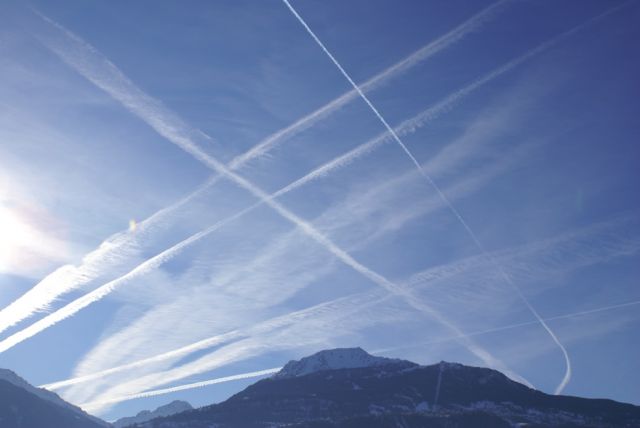
They Are Killing Us With Chemtrails In Switzerland!!!! (Stunning Pictures) http://www.pakalertpress.com/2014/09/15/they-are-killing-us-with-chemtrails-in-switzerland-stunning-pictures/?utm_source=feedburner&utm_medium=email&utm_campaign=Feed%3A+pakalert+%28Pak+Alert+Press%29 https://beforeitsnews.com/contributor/upload/367504/images/Capture%20d%E2%80%99e%CC%81cran%202014-08-22%20a%CC%80%2016_54_19.jpg A SECRET CHEMTRAIL PILOT SPEAKS (CHILLING) Date: Tuesday, 16-Dec-2014 16:37:05 When I consider all that is happening on our world today, I like to remind myself that the solutions we will need to overcome our challenges will be spiritual in nature. Anger and cynicism do not contain the potential to transcend or heal as love does. We are spiritual sovereigns. This video was shared with me today and it was just uploaded on You tube. The video is 11 minutes. Its worth a view and of forwarding to your list. Although a man I know once connected to "the agency" told me a few months ago that chemtrails are not what we should be worrying about right now, that there are other threats far more dire, I do feel that waking up the public remains an important task, given how asleep many still are. This video seems to add some new elements to chemtrail research and study and its far more complex than I had realized. Watch here: Our answers to the problems we face are spiritual in nature. Can we dream a new dream based on our co-creative ability to imagine a cleaner, freer world? God is still in control of Its Universes. ~StarTet https://www.youtube.com/watch?v=lZaD-H_j3pU |
| Family › Re: Your Views On This Pls. by AfroBlue(m): 10:47pm On Dec 23, 2014 |
How to: Catch your Boyfriend Cheating - With an Iphone https://www.youtube.com/watch?v=6EtMLrHSYEM Best Way to Track Cheating Spouse, Cell Phone Tracking , Track Cell Phone Location https://www.youtube.com/watch?v=bhGUR1Luk7A 1 Like |
| Foreign Affairs › Chemtrails The Secret War by AfroBlue(op): 10:34pm On Dec 23, 2014 |
[b]a subtitled documentary so put your reading glasses on. Chemtrails the secret war https://www.youtube.com/watch?v=U-5VnMIiKPY Published on Dec 21, 2014 “ This documentary is dedicated to everyone who wants to fight for truth and life on planet Earth. Let's stand up and defend our rights ! " Antonio and Rosario Marciano http://www.tanker-enemy.eu/scie-chimi... Antonio and Rosario Marciano administrators of the Italian website TANKER ENEMY produced the film : “ Chemtrails the secret war ”. This HD documentary film is the first Italian professional film on illegal geo-engineering aka chemtrails. It has been realized thanks to many friends and collaborators. For years this issue has been denied and mocked but the chemical spraying of our sky is still going on ! This documentary analyses, in a scientific and rigorous approach the main characteristics of this issue. The weather manipulation is only a collateral aspect of the phenomenon. In September 2014, Jacques Daidié, a French activist, went to Italy and met Antonio and Rosario Marciano, well-known Italian activists against geo-engineering. The French translation is born from this meeting and has been realized by several members of the French association “Ciel voilé”, (www.cielvoile.fr). We thank him warmly and all those who have contributed to the translation: Jacques, Dominique from Avignon, Mary from Monteux, Sebastien from St Firmin in Valgaudemard and Danielle from Gap. All our gratitude to “Sky Watch Geneva”, on Facebook, for the English translation. www.cielvoile.fr Category Nonprofits & Activism License Standard YouTube License [/b] |
| Foreign Affairs › Re: Two New York Police Officers Shot Dead by AfroBlue(m): 3:54am On Dec 21, 2014 |
| Celebrities › Re: Sizzling Pictures Of Laura, Linda Ikeji's Sister (Photos) by AfroBlue(m): 3:32am On Dec 21, 2014 |
hot bleach cream and brazilian hur |
| Foreign Affairs › Re: Insiders Looted Gold Worth $200b From South African Reserve Bank by AfroBlue(op): 6:31pm On Dec 20, 2014 |
guess who made the list .....scroll down.... Complete List of BANKS Owned/Controlled by the Rothschild Family “Give me control over a nations currency, and I care not who makes its laws” – Baron M.A. Rothschild [img]http://4.bp..com/-HjV-crm2jjk/Uotg45VD3_I/AAAAAAAAIWg/mv7RzQs4B5w/s640/rothschild.png[/img] ROTHSCHILD OWNED & CONTROLLED BANKS: Afghanistan: Bank of Afghanistan Albania: Bank of Albania Algeria: Bank of Algeria Argentina: Central Bank of Argentina Armenia: Central Bank of Armenia Aruba: Central Bank of Aruba Australia: Reserve Bank of Australia Austria: Austrian National Bank Azerbaijan: Central Bank of Azerbaijan Republic Bahamas: Central Bank of The Bahamas Bahrain: Central Bank of Bahrain Bangladesh: Bangladesh Bank Barbados: Central Bank of Barbados Belarus: National Bank of the Republic of Belarus Belgium: National Bank of Belgium Belize: Central Bank of Belize Benin: Central Bank of West African States (BCEAO) Bermuda: Bermuda Monetary Authority Bhutan: Royal Monetary Authority of Bhutan Bolivia: Central Bank of Bolivia Bosnia: Central Bank of Bosnia and Herzegovina Botswana: Bank of Botswana Brazil: Central Bank of Brazil Bulgaria: Bulgarian National Bank Burkina Faso: Central Bank of West African States (BCEAO) Burundi: Bank of the Republic of Burundi Cambodia: National Bank of Cambodia Came Roon: Bank of Central African States Canada: Bank of Canada – Banque du Canada Cayman Islands: Cayman Islands Monetary Authority Central African Republic: Bank of Central African States Chad: Bank of Central African States Chile: Central Bank of Chile China: The People’s Bank of China Colombia: Bank of the Republic Comoros: Central Bank of Comoros Congo: Bank of Central African States Costa Rica: Central Bank of Costa Rica Côte d’Ivoire: Central Bank of West African States (BCEAO) Croatia: Croatian National Bank Cuba: Central Bank of Cuba Cyprus: Central Bank of Cyprus Czech Republic: Czech National Bank Denmark: National Bank of Denmark Dominican Republic: Central Bank of the Dominican Republic East Caribbean area: Eastern Caribbean Central Bank Ecuador: Central Bank of Ecuador Egypt: Central Bank of Egypt El Salvador: Central Reserve Bank of El Salvador Equatorial Guinea: Bank of Central African States Estonia: Bank of Estonia Ethiopia: National Bank of Ethiopia European Union: European Central Bank Fiji: Reserve Bank of Fiji Finland: Bank of Finland France: Bank of France Gabon: Bank of Central African States The Gambia: Central Bank of The Gambia Georgia: National Bank of Georgia Germany: Deutsche Bundesbank Ghana: Bank of Ghana Greece: Bank of Greece Guatemala: Bank of Guatemala Guinea Bissau: Central Bank of West African States (BCEAO) Guyana: Bank of Guyana Haiti: Central Bank of Haiti Honduras: Central Bank of Honduras Hong Kong: Hong Kong Monetary Authority Hungary: Magyar Nemzeti Bank Iceland: Central Bank of Iceland India: Reserve Bank of India Indonesia: Bank Indonesia Iran: The Central Bank of the Islamic Republic of Iran Iraq: Central Bank of Iraq Ireland: Central Bank and Financial Services Authority of Ireland Israel: Bank of Israel Italy: Bank of Italy Jamaica: Bank of Jamaica Japan: Bank of Japan Jordan: Central Bank of Jordan Kazakhstan: National Bank of Kazakhstan Kenya: Central Bank of Kenya Korea: Bank of Korea Kuwait: Central Bank of Kuwait Kyrgyzstan: National Bank of the Kyrgyz Republic Latvia: Bank of Latvia Lebanon: Central Bank of Lebanon Lesotho: Central Bank of Lesotho Libya: Central Bank of Libya Uruguay: Central Bank of Uruguay Lithuania: Bank of Lithuania Luxembourg: Central Bank of Luxembourg Macao: Monetary Authority of Macao Macedonia: National Bank of the Republic of Macedonia Madagascar: Central Bank of Madagascar Malawi: Reserve Bank of Malawi Malaysia: Central Bank of Malaysia Mali: Central Bank of West African States (BCEAO) Malta: Central Bank of Malta Mauritius: Bank of Mauritius Mexico: Bank of Mexico Moldova: National Bank of Moldova Mongolia: Bank of Mongolia Montenegro: Central Bank of Montenegro Morocco: Bank of Morocco Mozambique: Bank of Mozambique Namibia: Bank of Namibia Nepal: Central Bank of Nepal Netherlands: Netherlands Bank Netherlands Antilles: Bank of the Netherlands Antilles New Zealand: Reserve Bank of New Zealand Nicaragua: Central Bank of Nicaragua Niger: Central Bank of West African States (BCEAO) Nigeria: Central Bank of Nigeria Norway: Central Bank of Norway Oman: Central Bank of Oman Pakistan: State Bank of Pakistan Papua New Guinea: Bank of Papua New Guinea Paraguay: Central Bank of Paraguay Peru: Central Reserve Bank of Peru Philip Pines: Bangko Sentral ng Pilipinas Poland: National Bank of Poland Portugal: Bank of Portugal Qatar: Qatar Central Bank Romania: National Bank of Romania Russia: Central Bank of Russia Rwanda: National Bank of Rwanda San Marino: Central Bank of the Republic of San Marino Samoa: Central Bank of Samoa Saudi Arabia: Saudi Arabian Monetary Agency Senegal: Central Bank of West African States (BCEAO) Serbia: National Bank of Serbia Seychelles: Central Bank of Seychelles Sierra Leone: Bank of Sierra Leone Singapore: Monetary Authority of Singapore Slovakia: National Bank of Slovakia Slovenia: Bank of Slovenia Solomon Islands: Central Bank of Solomon Islands South Africa: South African Reserve Bank Spain: Bank of Spain Sri Lanka: Central Bank of Sri Lanka Sudan: Bank of Sudan Surinam: Central Bank of Suriname Swaziland: The Central Bank of Swaziland Sweden: Sveriges Riksbank Switzerland: Swiss National Bank Tajikistan: National Bank of Tajikistan Tanzania: Bank of Tanzania Thailand: Bank of Thailand Togo: Central Bank of West African States (BCEAO) Tonga: National Reserve Bank of Tonga Trinidad and Tobago: Central Bank of Trinidad and Tobago Tunisia: Central Bank of Tunisia Turkey: Central Bank of the Republic of Turkey Uganda: Bank of Uganda Ukraine: National Bank of Ukraine United Arab Emirates: Central Bank of United Arab Emirates United Kingdom: Bank of England United States: Federal Reserve, Federal Reserve Bank of New York Vanuatu: Reserve Bank of Vanuatu Venezuela: Central Bank of Venezuela Vietnam: The State Bank of Vietnam Yemen: Central Bank of Yemen Zambia: Bank of Zambia Zimbabwe: Reserve Bank of Zimbabwe Reference: Educate Yourself; - See more at: http://humansarefree.com/2013/11/complete-list-of-banks-ownedcontrolled.html#sthash.t6cwUr8e.dpuf |
| Foreign Affairs › Insiders Looted Gold Worth $200b From South African Reserve Bank by AfroBlue(op): 6:26pm On Dec 20, 2014 |
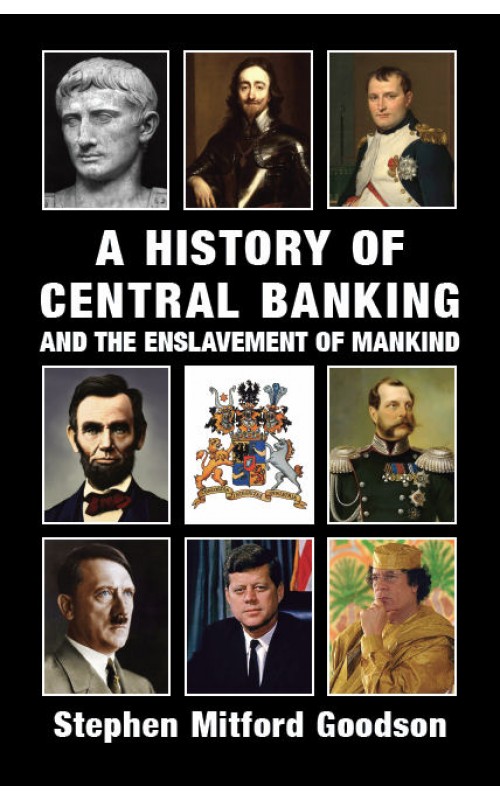
[b]have any of you avid NL news and blog readers come across this information? sounds like juicy fiction but who really knows. Insiders Looted Gold Worth $200b from South African Reserve Bank November 25, 2014 https://henrymakow.com/upload_images/goodson.jpg Stephen Goodson has written a hair raising account of criminal activities at the South African equivalent of the Federal Reserve. As a former Director, he is in a position to know. by the New Economic Rights Alliance (of South Africa) http://www.newera.org.za/ A whistle-blower has revealed the truth about the South African Reserve Bank. "Inside the South African Reserve Bank - It's Origins and Secrets Exposed" is a fascinating and must-read book. Most people have no idea what the purpose of the Reserve Bank is. It's high time they learned the truth. Author, Stephen Goodson, paints the South African Reserve Bank as an insidious institution full of back-handing, back-stabbing, corrupt, power hungry psychopaths... (pretty much like any other bank!) Goodson is a former Director of the Reserve Bank and, according to his book: It is absolutely clear that the Board of the Reserve Bank has absolutely no idea how the money creation process works. In other words, they do not actually understand that, when a commercial bank creates a loan or an overdraft, the customer spends the money into existence. In other words, a bank loan creates brand new money. https://henrymakow.com/upload_images/Gill%2BMarcus%2BXXX%2Bhigh%2Bres.jpg The scandal of Gill Marcus, a Jew, left, the former Governor of the SARB, is both alarming and disturbing. After selling sandwiches in London, she studied economics and went to work for our Reserve Bank. She was so awful, that she was instructed to clear her desk in 2004 and leave the building. She was fired. However after secretly following [her predecessor] Tito Mboweni around, she created a black-list of all his ill-deeds. Later, she reappeared as Governor of SARB under mysterious circumstances. Gill Marcus immediately removed the requirement that all Reserve Bank meetings must be transcribed and recorded. She shredded documents and changed the voting rights of shareholders. Then she introduced changes that would phase out the "old guard" and amended the rules to allow only herself to appoint new candidates. Finally, she secretly allowed a Swedish company to print South Africa's banknotes, while the local printing facility stood idle. This was a disaster. R800,000m worth of bank notes were put into circulation that did not even come close to meeting the required printing standards. Shortly afterwards, R360million worth of banknotes had to be destroyed because they were "accidentally" printed with the same serial numbers. Since then, for secrecy reasons, the same company is still responsible for producing many of South Africa's banknotes. Kruger Rands have been found to be 5% short of the stated gold content. SilverDoctors.com stated that this was likely to be a skimming operation by the South African Reserve Bank. If you purchased Kruger Rands after 2010, we suggest that you have them tested. 300 tonnes of gold valued at over R300 billion was stolen from the SARB, with the help of insiders as part of a bigger looting exercise valued at a massive R2.25 trillion. A third of our foreign currency reserves are looked after by a single bank: JP Morgan, a bank who's reputation and skulduggery goes sickeningly deep. 90% of our gold reserves are kept at the Bank of England. When Germany asked the Federal Reserve bank of the US for their gold back, they only returned a very small portion of what was agreed - and it turned out that the gold returned was fake. The story seems almost too incredible to be true, could it be the same with our gold reserves? This is just another day at the office for the banksters. The question is... where is South Africa's gold now? Not in the hands of the people that mine it, that's for sure. [Author] Stephen Goodson left SARB under claims that he was a "holocaust denier" with bad press associated with him. He dedicates an entire chapter to this topic in his book, which does not interest NewERA at all. We are far more interested in the research and insight behind the banking system. It is greatly sad that such a topic is brought up, as we feel it is completely unnecessary and inconsequential to the real message behind the book. According to Goodson, the solution to this problem, at least in part, is the creation of a People's Bank. This bank does not allow money to be created out of nothing by a bank then loaned to the government at interest. Instead, the government issues its own currency based on our ability and requirements to develop. This kind of bank is not new. It has been created several times in the past with incredible success. However, each time such a bank was created, either the bank was mysteriously closed down, or its country was bombed. When a conventional Central Banking system is put in place, economic hell soon follows. Until the people of South Africa understand the history and lies behind the banking system, and have the humility to admit that we have been misinformed by a skewed economic education system, then we will never see economic freedom. Order the book on Amazon, but don't expect delivery from our current postal system. Rather contact the author directly here: abolishusury@sonicmail.co.za. [The book is also available online from alibris] ---- Thanks to "AB" for sending this! Related- Marcus Stepped Down Nov. 14 at end of her Five Year Term White Luciferians Still Run South Africa Also by Stephen Goodson: A History of Central Banking and the Enslavement of Mankind - See more at: http://henrymakow.com/2014/11/insider-exposes-south-african-central-bank.html#sthash.55C5skc6.dpuf [/b] ___________________________________________________ First Comment from JG: The Bank of England ( House of Rothschild) is the world's Central Bank of all Reserve Banks around the globe that are actively involved in international trade.This is why the British Pound will always have more value than any other currency on the commercial world markets regardless of the state of England's economy.The Bank of England is a sovereign entity that is not under the British Parliament's jurisdiction or control. In plain English, " YOU CAN'T BEAT THESE PEOPLE"! There are too many nations today like India, China, and Russia that think the Bank of England and it's Reserve Bank conglomerates don't believe in gold. This is a laughable assumption because they own majority of the world's gold. Who do you think owns the gold and diamond mines in South Africa? And where, and by whom, is the price of gold set? Go ahead and stock up on silver and gold as a hedge.They can crash the price of metals also as you are witnessing right now. If you think you're going to escape their stranglehold on your currency by going with an independent nationalized currency good luck with that also. What happens when the foreign Reserve Banks banks don't recognize your currency as a viable exchange for goods? A nationalized "debt free" currency today can only be successful if your nation is not dependent on foreign imports to survive. And, in the high tech global economy that would almost be impossible. Dan replies to JG: The older I get the more it irritates me to see comments such as this JG who screams, "YOU CAN'T BEAT THESE PEOPLE!" Of course you can't if that's your attitude. There has never been a power on earth that didn't meet its match. Plus, bankers, more than anyone else, use bluff constantly. For the simple reason that they do not run a legitimate business, they run a criminal scam, a confidence game, which is a conveyor belt of all wealth in the world into their pockets leaving nothing for the rest of the world's people. Simply put, a con only works as long as enough people are conned. How long does JG think these never-lift-a-finger-except-to-count-money, fat ass do-nothings will last when enough have-nothings, just above starving, get the picture? The world's not far off from that at this moment. JG needs to go to some non "western" web sites and take a look at the real world. Even westerners are fed up. Western Europeans are, en mass, on the verge of getting rid of those controlling their U.S. serving, on-the-take governments. All the hundred dollar bills in the world are not going to keep the criminal banker-owned west going much longer. Bribery doesn't work forever. Especially when the bribes only go to those in political office. Already, in Ukraine, there are soldiers who quit killing other Ukrainians for the criminals running Kiev and changed sides. The business people of all Europe want the U.S. and the totally stupid sanctions, which hurt Europe much more than Russia, gone. The U.S. and its NATO are no match militarily for any nation bigger than Iraq. Queers and women make a lousy army. Putin has flat out told the U.S. that they are not getting novorussia. That Russia will never allow their attempted genocide of the Russian speaking Ukrainians. The U.S. has no clue what to do next. They are NOT going to get the eastern Ukraine's minerals so Biden's son might as well forget that fortune. The western elites everywhere outside the U.S., Canada and maybe a few others, are hanging on by their teeth. Anyone who doesn't see that the big western bankers, Rothschilds included, are shitting their pants over BRICS and the deals being made, one after the other, leaving them and the dollar on the outside looking in, isn't looking. The dream world in the west is about to turn into a nightmare and, frankly, it can't happen soon enough. A Rothschild agent for every lamp post sounds good to me. Some years back, when Putin jailed the Jewish crook who had stolen Russia's oil resources and took back the resources he was told by the criminal that he couldn't do that because they had been given to Rothschild. Does Rothschild have them or does Russia? |
| Foreign Affairs › Re: Israelis Chant: "Niggers Go Home" With Isis-style Flag by AfroBlue(m): 11:12am On Dec 15, 2014 |
More Evidence Confirms Israel is Supporting ISIS Terrorists By Luke Rudkowski In this video Luke Rudkowski talks about the latest developments in the Middle East that bring to light many contradictions; like Israel treating injured Islamic terrorists, ISIS caught with huge stockpiles of Israeli weapons, and Israel bombing Assad's interests in Syria for the fifth time in 18 months against international law. Dots are connecting to possible World War. https://www.youtube.com/watch?v=S2UogUfSwTI |
| Celebrities › Re: Omotola’s Bombshell: I Have Been Tempted Many Times To Cheat On My Husband by AfroBlue(m): 10:40pm On Dec 14, 2014 |
Ilekeh:i've been a fan of sexy since Nollywood's ' Games Women Play, and Blood Sisters'. yes, the alleged word is in order. https://odili.net/news/source/2011/feb/21/vanguard/images/Omotola-21%5B1%5D.jpg?width=300 [img]http://www.nigeriafilms.com/image.aspx?img=Y29udGVudC9jb250ZW50L29tby1zZXh5LWFuZC1ha29uLmpwZ3w2NjA=[/img] Omo Sexy and Akon https://i.ytimg.com/vi/3VdE7Tx4TR0/hqdefault.jpg https://www.nigeriagoodnews.com/wp-content/uploads/2013/06/akon_omotola1.png |







1 2 3 4 5 6 7 8 ... 25 26 27 28 29 30 31 32 33 (of 75 pages)