AfroBlue's Posts
Nairaland Forum › AfroBlue's Profile › AfroBlue's Posts
1 2 3 4 5 6 7 8 ... 28 29 30 31 32 33 34 35 36 (of 75 pages)
 Christianity Etc › Re: Addition Of More Floors To Synagogue Guest House Was Illegal -lagos State Gov't by AfroBlue(m): 12:04pm On Sep 19, 2014 Christianity Etc › Re: Addition Of More Floors To Synagogue Guest House Was Illegal -lagos State Gov't by AfroBlue(m): 12:04pm On Sep 19, 2014 |
news and pics of the rescue does the steel bar look up to code and engineering specs for this size structure? [img]http://ts2.mm.bing.net/th?id=HS.276316497307&pid=1.7[/img] https://ww1.hdnux.com/photos/32/16/56/6876044/5/628x471.jpg Nigeria: Church obstructed rescue, lives lost Associated Press By MICHELLE FAUL 21 minutes ago https://news.yahoo.com/nigeria-church-obstructed-rescue-lives-lost-081813166.html JOHANNESBURG (AP) — Church officials prevented rescuers from extricating victims at the site of a six-story building collapse, leading to a loss of lives, Nigeria's emergency agency said Friday. Most victims were South African, according to the South African government, which said at least 67 South Africans died and 17 appear to be missing in the rubble of the six-story building that had a shopping mall on the ground floor and guest rooms above. Ibrahim Farinloye, spokesman for the Nigerian Emergency Management Agency told The Associated Press that the building at televangelist T.B. Joshua's Synagogue, Church of All Nations, collapsed at 12:44 p.m. on Friday but rescuers did not get full access until after 5 p.m. on Sunday. He said rescue workers were on the scene by 1:50 p.m. Friday and that as they were waiting, they were told that at least three people were trapped nearby. The rescuers saved them, Farinloye said. But church officials prevented rescuers from getting further access, he said. "Some of us were even attacked (by church members). We wanted to ask the military to deploy to force access for us, but there were many foreigners at the church and we did not want to create an international incident," Farinloye said in a telephone interview. Church members also were hostile to journalists and smashed at least one television camera. T.B. Joshua could not immediately be reached for comment. At a televised service on Sunday, he urged his congregants not to be hostile to rescue workers and the media. In a tweet he said "Hard times may test me, they cannot destroy me. To withstand hard times, stand with Christ." Eighty bodies were recovered and 131 survivors were found by the time the rescue operation ended at 3:35 p.m. Thursday, Farinloye said. The last survivor was rescued from the debris on Tuesday, and had only a dislocated hand, Farinloye said. He said rescuers lost the two or three critical hours immediately after a disaster when most lives are saved. Farinloye said they only were allowed to carry out full rescue operations after Lagos state Gov. Babatunde Fashola met Sunday at the disaster site with Joshua, also called "The Prophet." According to a state government statement, Fashola told him: "What you need to understand now is that this place is now an accident scene, and so all your staff must leave this place. We need to take control of this place and let people who are trained to do this job do so." South Africa flew a team into Lagos to help identify victims and console and help survivors. South African Foreign Affairs spokesman Clayson Monyela told the AP the process of identifying victims will be lengthy and might involve getting fingerprints and DNA from family members. "I think there will have to be a further investigation into what happened and how the church responded, but for now our focus is on helping families identify bodies and see that the injured are attended to," Monyela said. https://i.ytimg.com/vi/ujThLKZOVm8/0.jpg https://static.sify.com/cms/image/ojtpJ1hjgacbj.jpg https://ww1.hdnux.com/photos/32/16/56/6876036/5/628x471.jpg |
| Foreign Affairs › Re: Asia's Billionaires See Fastest Wealth Growth: Report by AfroBlue(op): 4:48am On Sep 19, 2014 |
final section, nice piece of international investigative reporting... But then there came a reminder to China’s powerbrokers that, even if they were wary of Pa, they needed him. In October 2007, the same month that China’s Communist party convened for its leadership conclave, Angola’s Block 18 started pumping oil. Sinopec enjoyed a share of the crude – but only because it had secured an interest in the block through its joint venture with Pa’s Queensway group and Angola’s state oil company. “Sinopec saw it as a short-term joint venture to get in, but then [Sinopec] realised they were locked in,” says Alex Vines, who, as head of the Africa programme at the UK’s Chatham House think-tank, has interviewed Chinese oil executives during years of research into the Queensway group. All of the oil rights that the Angolan authorities have subsequently granted to Sinopec have been awarded to this joint venture. [img]http://im.ft-static.com/content/images/5f5af9a6-1dde-11e4-b927-00144feabdc0.img[/img] Robert Mugabe in 2013©Getty Robert Mugabe in 2013: in April this year Pa’s seven names were added to the US list of people subject to sanctions for supporting the Zimbabwean regime Block 18 was just the beginning. China Sonangol, the Queensway group’s partnership with Angola’s state oil company, was granted direct and indirect stakes in a dozen more Angolan oil prospects, becoming a partner to Total of France, Eni of Italy and ConocoPhillips of the US among others. It became the conduit for crude cargoes sent to China as repayments for multibillion-dollar finance packages, the terms of which were closely guarded. China’s ambassador in Angola told American officials that China International Fund’s Hong Kong-based owners – a reference to Pa’s Queensway network – had developed a “close relationship” with President Dos Santos, according to a 2009 US diplomatic cable published by WikiLeaks. Isaías Samakuva, leader of Unita, the former rebel group that is now the main opposition party, echoes those who describe China Sonangol as “a government within a government”. “I think it is the key to all the support that is given to Mr Dos Santos, to his rule,” he told me. I asked how that support for the regime worked. “We can only speculate. Everything is in the dark.” The use of offshore tax havens helps to maintain that darkness. In 2012, the network’s stakes in China Sonangol and in China International Fund were switched from a Hong Kong holding company to a vehicle called Magic Wonder Holdings, company filings show. Scant public information is available about this company beyond its address: a PO box in the British Virgin Islands. The same address is used for World Noble Holdings, which is named as the sole owner of another Hong Kong company, of which Lo Fong-hung and Manuel Vicente have both served as directors. Its ownership and purpose are unclear but it adds to the corporate secrecy that shrouds the Queensway group. "Having learnt how to juggle his allegiances in China and Africa, Pa took the model he had honed in Angola and began to export it – in particular, to pariah states" Flush with oil revenue, Pa’s allies in the Dos Santos regime have in recent years tightened their grip on Angola’s 20 million people. Some opponents have been slung in jail, others beaten with iron bars; human rights groups say elections are manipulated to favour the ruling party. Angola rivals Nigeria as Africa’s biggest oil producer and Luanda is a forest of cranes but, while the presidential coterie has grown fabulously wealthy, UN analysis indicates that few countries have done a worse job of turning economic growth into improved living standards for the many. Pa emerged from his travails of 2007 strengthened. Angola bailed out China International Fund’s infrastructure undertakings. The FT has found no public record of any fallout from the insider-trading investigations in Hong Kong and China in relation to China International Fund. Beijing realised that it had little choice but to work with Pa; Chinese companies recommenced doing business with the Queensway group. From his beachhead in Angola, Pa set about expanding his empire at a dizzying pace. . . . Having learnt how to juggle his allegiances in China and Africa, Pa took the model he had honed in Angola and exported it – in particular, to pariah states where few others dared to tread. In the middle of 2009, Pa and Lo turned up in Guinea, a destitute west African nation rich in untapped minerals where a military junta had seized power. Mahmoud Thiam, then mining minister, recalls challenging the pair to demonstrate that they were as well connected as they claimed. “If you are so close to Manuel Vicente, come back with him,” Thiam said. Three days later, Pa landed in Conakry, Guinea’s ramshackle capital, with Vicente, Thiam recalls. The junta needed funds badly. Thiam said Pa promised a $30m “goodwill gesture” and the money was promptly transferred to Guinea, earmarked for emergency public spending. Discussions began on a $7bn deal under which China International Fund would build infrastructure in exchange for mineral rights. It was unveiled days after troops slaughtered more than 150 opposition demonstrators at the national stadium in September 2009. Pa was undeterred. Thiam told me the company provided $100m to prop up the junta’s finances. Shortly after the massacre, Beijing sought to distance itself from China International Fund. “The Chinese government has nothing to do with its business operations,” a Chinese foreign ministry spokesman told reporters. But within months, a Chinese state-owned locomotive company was exporting trains to Guinea in conjunction with the company. Sam Pa’s Guinea deal unravelled after an assassination attempt forced the junta’s leader into exile and elections in 2010 returned power to civilians. “Since I came to power, Sam has not been to Guinea,” Alpha Condé, Guinea’s president, told me in November. Yet China International Fund has combined the mining permits it was granted under the junta with those of Bellzone, a London-listed mining junior, forming a joint venture. In 2012, both companies secured rights to supply iron ore to Glencore, the Swiss commodity trader. Pa is constantly on the move. In the first months of this year, the jet he is believed to use touched down in Hong Kong, Singapore (where China Sonangol has a base), Mauritius, Madagascar, the Maldives, Luanda, Harare, Jakarta and Beijing, according to public flight records. He has large sums at his disposal. A ledger of Queensway group payments published in a ruling by the Hong Kong high court last year records a HK$11,700,000 ($1.5m) “cash advance” by China International Fund to “Mr Sam” in 2009. Other entries refer to Queensway group dealings in Tanzania, Nigeria and North Korea. [img]http://im.ft-static.com/content/images/1b96d2bc-1dde-11e4-b927-00144feabdc0.img[/img] 23 Wall Street, the former JPMorgan building in New York now owned by China Sonangol That court ruling also offered a glimpse of the Queensway group’s techniques in courting African governments. Weighing testimony in a dispute involving Wu Yang, a Chinese businessman who claimed he had not been paid some $40m in dividends for helping to broker the Queensway group’s original oil deal, the Hong Kong judge wrote that the profits were being used to “curry favour” in Angola. And the ledger of payments suggested similar tactics elsewhere. According to the ledger, in 2009, the year that China International Fund secured mining rights in Mozambique, a Queensway group company made a “loan for project” worth $300,000 to Antonio Inacio Junior – the name of Mozambique’s ambassador in Beijing. The ambassador did not respond to a faxed request for comment; China Sonangol, in its letter, declined to answer questions about the loan. As journalists and activists have added more pieces to the Queensway puzzle, Washington has taken an interest in Sam Pa – not least because, in 2008, China Sonangol bought one of the most celebrated pieces of Manhattan real estate, the former JPMorgan building at 23 Wall Street. In April this year, Pa’s willingness to deal with despots began to catch up with him: the US Treasury added his seven names to the list of those subject to sanctions because they are deemed to be active supporters of Robert Mugabe’s regime in Zimbabwe. The US did not disclose its specific reasons. But in 2012, the British anti-corruption group Global Witness had published a report based on what it said were leaked Zimbabwean intelligence documents showing that Pa had been allowed to export diamonds from the military-controlled Marange fields after he furnished Mugabe’s secret police with 200 vehicles and $100m. (Following the Global Witness report, lawyers for China International Fund said the company had provided funds to the Zimbabwean government for “legitimate business reasons”, denied having funded the secret police and said the Queensway-linked company that had been granted a Marange diamond concession had deemed it unviable and had exported “not a single carat”.) US sanctions freeze the US assets of targeted people and companies and prohibit Americans from doing business with them. But because Pa is formally only an adviser to Queensway companies, his presence on the sanctions list will not necessarily curtail the group’s activities. New deals have followed. During President Vladimir Putin’s visit to China in the wake of Russia’s annexation of Crimea, Pa signed a deal for China International Fund to work on a new Metro line in Moscow. Through a decade of deal-making, Sam Pa has demonstrated resilience. “He still has the Rolodex, he still knows how to get close to elites in fragile states and, most importantly, he knows how to operate under the radar and just beyond the reach of law enforcement,” says J R Mailey, one of the authors of a 2009 US congressional report on the Queensway group, which coined its name, and who is preparing a second report on the group at the Pentagon’s Africa Center for Strategic Studies. China’s arrival has sent a frisson of possibility through Africa. But some sense danger. Lamido Sanusi, until recently the reformist governor of Nigeria’s central bank, has warned that, in embracing its Chinese suitors, “Africa is now willingly opening itself up to a new form of imperialism”. Sam Pa is a creature of the era of globalisation, fusing state, corporate and personal power in ways that recall an older age. Two seasoned African mining executives I spoke to – one in Angola, another in Zimbabwe – likened the Queensway empire to Cecil Rhodes, the British colonialist-cum-mining magnate who suborned southern Africa in pursuit of its riches more than a century ago. “It’s like Rhodes,” said one, “trying to conquer Africa all over again.” ------------------------------------------- tom.burgis@ft.com Tom Burgis is a reporter on the FT’s investigations desk and a former correspondent in Johannesburg and Lagos. His book on African oil and mining, ‘The Looting Machine’, is due to be published next year by HarperCollins and PublicAffairs. Additional reporting by Julie Zhu in Hong Kong and Lynn Davis Photographs: AP; Getty; Eric Nathan; Bloomberg; Business Wire; Reuters; Noor Bank |
| Foreign Affairs › Re: Asia's Billionaires See Fastest Wealth Growth: Report by AfroBlue(op): 4:41am On Sep 19, 2014 |
con't ....... In late 2003, Royal Dutch Shell put up for sale its half of an Angolan oil venture with BP. The prospect, known as Block 18, was shaping up to be a prodigious offshore discovery and it attracted rival bidders. Vicente decided that, rather than let the stake pass directly to another foreign oil company, Sonangol would exercise its right to buy it for itself and bring in partners of its own choosing. “We looked for a partner in China to join us and to get that stake and that’s why we formed this company.” Most news reports at the time simply recorded that, in late 2004, Sonangol acquired Shell’s stake in partnership with Sinopec, granting the giant state-owned oil company its first taste of Angola’s crude. Favouring a Chinese company made sense: Beijing had agreed its initial $2bn loan to Angola just months earlier. But there was more to the deal than met the eye. In August 2004, months before the Block 18 deal was completed, a new company was registered in Hong Kong. It was called China Sonangol International Holding Limited. Another company – also registered to an address at 88 Queensway, Hong Kong – was allocated 70 per cent of China Sonangol’s shares. It was owned by two of Pa’s associates and a Chinese businessman who says he helped broker the deal. The remaining 30 per cent stake was allocated to Sonangol, the Angolan state oil company over which Manuel Vicente presided. It was Pa’s nascent Queensway group – not, at first, Sinopec – that was the prime mover in the Block 18 transaction. “They got the loan, we paid Shell,” Vicente told me. “It was, let’s say, 800-something [million dollars]. And after that, later on … we called Sinopec.” When the deal for Shell’s Block 18 stake was completed, the new owner was a company called Sonangol Sinopec International – ostensibly no more than a partnership between state-owned oil companies from Angola and China. But Angola’s interest was held not directly by the state oil company but by China Sonangol, its joint venture with Pa’s Queensway network. In 2007, the crude started to flow. By 2010, according to a valuation by Sinopec, the Queensway group’s interest in Block 18 was worth $960m. Today, the project produces 180,000 barrels of oil a day, one-tenth of Angola’s output. [img]http://im.ft-static.com/content/images/41dd46ea-1dd4-11e4-b927-00144feabdc0.img[/img] The shoreline in Luanda, Angola’s capital, where heavy-lifting cranes serve as reminders of the country’s booming oil industry Pa had planted the Queensway flag in Africa. Mirroring Beijing’s tactics, he offered infrastructure packages to complement resources deals. In 2005, China International Fund, another company registered to the Queensway address but this time wholly owned by Pa’s associates, raised $2.9bn for projects ranging from a new airport in Luanda to drainage works, according to the Angolan finance ministry. Much of the work was farmed out to Chinese state-owned groups. With his crude and contracts, Pa had put himself in lockstep with China’s advance into Africa. But soon he would face a crisis that would bring his fledgling corporate empire to the brink of disaster. . . . When he set out to make his fortune, Sam Pa’s principal ally was a thoroughbred member of China’s ruling class. Lo Fong-hung is a petite woman with dark hair worn in a bob. According to people who have met her, she exudes authority. When she appeared on Hugo Chávez’s weekly television show in 2004, during a trip to Latin America to scout for deals with Helder Bataglia, the Venezuelan leader declared that she was the daughter of a Chinese general. She is married to Wang Xiangfei, a former professor of finance at China’s elite Renmin University, who held several top posts at China Everbright Group during 23 years at the state-owned finance house. He has also sat on prestigious Chinese boards, as well as holding positions in Queensway companies. A western businessman who dined with Lo, Pa and their subordinates in Hong Kong recalls: “She didn’t give off any impression other than a sense of power. She just sits there and listens. Sometimes things are whispered to her.” Mahmoud Thiam, the former Guinean mining minister, says: “Everything indicated that [Pa] was the boss. But you got the sense that if he wanted to get rid of Lo, he could not.” Lo owns 30 per cent of the shares in New Bright International Development, the company at the apex of the Queensway group’s corporate structure. The remaining 70 per cent of New Bright’s shares are held by a woman called Veronica Fung. She lacks the credentials of Lo and Wang but she has one important relationship – to Pa himself. Fung’s sole recorded role in business prior to the formation of the first Queensway companies was as a partner in a Hong Kong business venture with Pa. She has been described in press reports and by people who have studied the Queensway group as Pa’s wife or girlfriend, a proxy for his interests. (In its letter to the FT, China Sonangol declined to clarify their relationship; other representatives of companies at the Queensway address, including Fung, Lo and Wang, did not respond to questions from the FT.) None of Pa’s aliases appears in the shareholder registers filed by Queensway companies. Indeed, their lawyers insist he is not formally an employee, merely an adviser, even though he has been described by Dubai’s government as the chairman of China Sonangol and by Sierra Leone’s presidency as the vice-chairman of China International Fund. (China Sonangol, in its letter to the FT, said that Pa is not the chairman of the company – that position is held by the head of Sonangol.) Pa’s ability to put on a display of top-level access in Beijing has been crucial in persuading African rulers that he was a man with the clout to pull off the big deals. In 2004 he struck his first Angolan oil deal, followed a year later by China International Fund’s infrastructure contracts. But then came 2007. That was a year of upheaval within the Chinese elite, as factions tussled ahead of the Communist party’s five-yearly leadership transition. The head of Sinopec, the state oil company that the Queensway group had brought to Angola, was forced to resign amid a corruption scandal. Zeng Peiyan, the vice-premier whom Helder Bataglia recalled meeting in Beijing with Sam Pa and Manuel Vicente, retired. Pa’s fortunes appeared to be on the wane. There were signs of alarm in Beijing about the freewheeling style with which he had amassed business interests with ties to Chinese state-owned groups. When China International Fund’s slew of infrastructure projects in Angola ran short of funds in 2007 and stalled – potentially imperilling Chinese relations with a country that was fast becoming a vital oil supplier – the Ministry of Commerce in Beijing warned Chinese companies to steer clear. According to state media and leaked correspondence, securities regulators in China and Hong Kong launched probes into suspected insider trading related to a $5bn Angolan construction contract awarded by China International Fund to a Chinese engineering group. |
| Foreign Affairs › Re: Asia's Billionaires See Fastest Wealth Growth: Report by AfroBlue(op): 4:36am On Sep 19, 2014 |
^^^^^^^^^ pt 2 Pa has not responded to requests for comment on this story. On two occasions in phone conversations, he promised, in accented English, to call back but never did. I tracked down representatives from Queensway companies in Harare, Conakry and Luanda but they declined interview requests. In May, I visited the shimmering office tower at 88 Queensway in Hong Kong where the companies are registered. I was informed by company personnel that no one would speak to me and was told to leave. Jee Kin Wee, head of legal for China Sonangol’s arm in Singapore, responded to several emails but did not address questions about the interconnections between companies that bear China Sonangol’s name. A detailed list of questions to Jee from the FT triggered a three-page letter on company letterhead, signed China Sonangol. The letter responded specifically to four of the 52 questions raised by the FT. China Sonangol, in its response, said: “Due to confidentiality agreements and our legitimate desire for privacy, which private companies are entitled to, we will not be providing you with any additional information than is necessary [sic]. We do however reserve our rights to pursue legal remedies if you repeat or publish defamatory statements.” The letter adds: “We are not a listed company and the Law does not require us to disclose all our business dealings in the same manner as listed companies.” Beijing and its African allies have been at pains to portray their relationship as one of mutual upliftment. China has built roads, railways and bridges. China-Africa trade increased tenfold over the past decade to $200bn annually. According to Fitch Ratings, in the decade to 2010, loans to African countries by China’s main state bank for overseas finance reached $67bn, outstripping African lending by the World Bank. Washington this week sought to reassert its influence with a White House summit for African leaders, many of whom have been wooed by Chinese largesse. Yet the story of Pa and the Queensway group exposes another side of China’s dealings in Africa – one that heralds not a new dawn but the risk of perpetuating past misrule. . . . There are differing and incomplete accounts of Sam Pa’s past. It appears that he was born in mainland China in 1958 and moved to Hong Kong as a child. A Chinese national, he also holds Angolan citizenship. He has two children. Hong Kong corporate records show that in the 1990s he was involved in business ventures that fizzled out. Around the turn of the millennium, after reforms that began in 1978 kick-started the Chinese economy, President Jiang Zemin launched a “go out” policy. China’s state-owned companies were sent forth in search of natural resources, markets for Chinese goods and construction projects for Chinese labourers. Africa was ripe with potential for all three. But it was unfamiliar terrain for Beijing’s mandarins. They needed go-betweens who could open doors in African capitals – a once-in-a-generation opportunity for men and women with the connections, guile and appetite for risk to harness their fortunes to China’s desire for African treasure. Pa possessed both devotion to the cause and, despite an occasionally explosive temper, the charm to forge ties with decision makers. “He’s a very serious and intense individual at times,” Mahmoud Thiam, a former UBS banker who worked with Pa when Thiam was Guinea’s mining minister, told me. “He has a very ideological view about the role China should play in the world. But he can joke and be personable.” In early 2003, Pa arrived for a meeting at the Lisbon office of Helder Bataglia. Bataglia was born in Portugal but grew up in Angola, where he became one of the biggest private investors before widening his interests into other frontier markets. Bataglia recalls that Pa said he wanted to form a joint venture to hunt for deals in South America and Africa. “Listen, it’s fantastic,” Bataglia replied. “We would like to help because China is very important to the development of these continents. But we need to know more about you.” So, Bataglia told me in an interview this year, Pa took him to China. The delegation was received in the protocol area of Beijing’s airport, Bataglia recalls. Pa laid on official dinners and meetings with representatives of China’s state-owned companies. “They [said] exactly what Pa said to us: ‘Let’s co-operate because we lack experience in this field.’” In a land where personal connections are everything, Bataglia was left in no doubt as to the strength of his new acquaintance’s credentials: “Of course I thought Sam worked for the government.” But it was not so straightforward. I asked Bataglia what he had gathered about Pa’s past. “His background, I thought, was in the secret services – that he had a mission now to expand China into the world.” Pa offered few details, referring only to his time in “the service”, Bataglia recalls. [img]http://im.ft-static.com/content/images/e68562ac-1dd1-11e4-b927-00144feabdc0.img[/img] Private investor Helder Bataglia, who formed a partnership with Pa to seek deals in South America and Africa According to a person who has been close to African intelligence agencies and arms dealers for years and who asked not to be identified, Pa was working for the external branch of Chinese intelligence as early as the 1980s. This person recalls encountering Pa during this period, while he was operating under another name. “All his life he’s worked in Chinese intelligence,” this person says. “Sam is a big player in arms in Africa. Oil, diamonds and weapons go together. Everyone who was in intelligence at that time, they went into business.” Impressed by Pa’s ability to open doors in China, Bataglia agreed to form a partnership with him and the band of associates he had begun to assemble. After first seeking energy and infrastructure deals in South America, they turned their attention to Angola. After three decades of on-off civil war fuelled by oil, diamonds and superpower rivalry, Angola lay in ruins. As the forces of José Eduardo dos Santos – Angola’s president since 1979, four years after independence from Portugal – finally ground down the Unita rebels, he appealed for funds to aid reconstruction. Western donors were wary of extending funds to a regime with a reputation for corruption. Dos Santos needed an alternative. He looked east. Pa found himself in the right place at the right time. "By cultivating Vicente and Sonangol, Pa opened a gateway to the inner circle of the regime that has Africa’s rising oil power firmly in its grasp" Pa appears to have amassed African contacts during his years in Chinese intelligence. “Sam told me that 10 or 15 years ago he was in Angola,” Bataglia recalls, referring to their first meetings in 2003. “In that time, to go to Angola, it must be for official purposes.” Pa told Bataglia that he had met Dos Santos but did not elaborate on his Angolan mission. The intelligence veteran told me that Pa was involved in Chinese arms sales to Dos Santos’s government in the later years of the civil war. I could not substantiate what role, if any, Pa played, in part because even some of the best-informed experts on the arms trade regard Chinese arms sales in Africa as opaque. By the end of the Angolan civil war in 2002, Dos Santos’s emissaries were laying the groundwork for a multibillion-dollar pact that would be China’s first megadeal in Africa. Cheap Chinese credit to be repaid in oil would fund roads, railways and housing, a resources-for-infrastructure bargain that experts would come to call “Angola Mode” as it was replicated elsewhere. Angola would emerge as China’s biggest supplier of crude after Saudi Arabia. China’s deal with Angola was billed as a pact between two states. But in the shadows, a parallel deal had taken shape, melding private interests with state power. As the diplomatic channels between Luanda and Beijing deepened, Helder Bataglia and Sam Pa had the connections in both capitals to carve out a role for themselves as go-betweens. Bataglia says he was content to help bring the two nations together to hasten Angolan reconstruction and that his partnership with Pa lapsed soon thereafter. Before then, though, he and Pa had returned to Beijing in late 2003. Bataglia recalls that they were granted an audience with Zeng Peiyan, a vice-premier who would become the outward face of China’s relationship with Angola when he flew to Luanda in 2005 and signed agreements for Sino-Angolan co-operation in everything from technology to minerals. Bataglia recalls that when he and Pa met Zeng in Beijing, their delegation had an extra member – Manuel Vicente, the urbane head of Angola’s national oil company, Sonangol. (Pa did not respond to questions about this meeting; Vicente declined to answer them; Zeng could not be reached.) Vicente is a chunky, affable man. But beneath his cheery demeanour is a tough negotiator who drives a hard bargain with the foreign oil companies that have spent tens of billions of dollars to tap Angola’s crude. When I interviewed him in 2012 at Luanda’s hilltop presidential enclave, he had recently been promoted to a powerful new post in charge of economic co-ordination. Before long, he would be vice-president, tipped as a potential heir to Dos Santos. In Vicente’s 12 years in charge of Sonangol, it had become the continent’s most formidable homegrown oil company – and, in the words of Paula Roque, an Angola expert writing for South Africa’s Institute for Security Studies, the “chief economic motor” of a “shadow government controlled and manipulated by the presidency”. That motor has plenty of fuel: when, in 2011, the International Monetary Fund discovered a $32bn discrepancy in Angola’s national accounts, it said the bulk of the missing funds had flowed through Sonangol on Vicente’s watch. By cultivating Vicente and Sonangol, Pa opened a gateway to the inner circle of the regime that has Africa’s rising oil power firmly in its grasp. [img]http://im.ft-static.com/content/images/813546be-1dd2-11e4-b927-00144feabdc0.img[/img] Manuel Vicente, Angola’s vice-president and the former head of Sonangol, Angola’s national oil company, whose fortunes he transformed during his 12-year stewardship |
| Foreign Affairs › Re: Asia's Billionaires See Fastest Wealth Growth: Report by AfroBlue(op): 4:26am On Sep 19, 2014 |
hot off the newswires China in Africa: how Sam Pa became the middleman By Tom Burgis with Demetri Sevastopulo in Hong Kong and Cynthia O’Murchu in London For a decade, Sam Pa has opened doors for Beijing in Africa. But his story reveals a troubling side to China’s ambitions. An FT investigation by Tom Burgis [img]http://im.ft-static.com/content/images/d4dc7b66-1f17-11e4-9d7d-00144feabdc0.img[/img] Clockwise from bottom left: Angolan oil drilling; Sam Pa in May 2014; 88 Queensway, Hong Kong; port in Conakry, Guinea; uncut African diamonds On his way home from Nelson Mandela’s memorial service in December, Ernest Bai Koroma, the president of Sierra Leone, stopped off in Angola to discuss an investment in his war-scarred nation. Fellow guests in the dining room of a golden skyscraper in the centre of Luanda, one of the towering edifices that an oil boom has raised above the slums of Angola’s capital, observed Koroma in rapt conversation with the Chinese man seated to his right. The short 56-year-old had a receding hairline and a neat goatee beard. He wore a black suit, a red tie and rectangular spectacles. He goes by at least seven names and keeps a lower profile than the Chinese dignitaries who have visited African capitals to trumpet Beijing’s burgeoning alliance with a continent whose oil and minerals have helped feed China’s phenomenal economic growth. Most commonly, he is known as Sam Pa. Over the past decade, Pa has risen from obscurity to clinch deals across five continents worth tens of billions of dollars. He has helped to build from scratch a sprawling network of companies linked by common owners, directors and a registered address at 88 Queensway in Hong Kong. Those who have followed the network’s evolution have dubbed it the “Queensway group”. The group is in business with BP, Total and the commodity trader Glencore; it boasts interests stretching from Indonesian gas and oil-refining in Dubai to luxury apartments in Singapore and a fleet of Airbus jets; it is active in North Korea and Russia. It comprises a web of private and offshore companies underpinning two main enterprises: China Sonangol, which is principally an oil company (although it also owns the former JPMorgan building opposite the New York Stock Exchange on Wall Street) and China International Fund, an infrastructure and mining arm, whose flag flies above the entrance to Luanda’s golden skyscraper. To resource industry insiders who have encountered it, Pa’s multinational operation is both a “ghost” and “a heck of an empire”. That empire has its foundations in Africa, where the Luanda skyscraper serves as its resplendent base. Pa is not listed as a shareholder or director of any Queensway company but he does act as the network’s representative in meetings with presidents, sheikhs and tycoons. He has garnered power and wealth by making himself a middleman in China’s courtship of Africa – the development that has transformed the politics and prospects of the world’s poorest continent more dramatically than anything since the end of the cold war. Chinese officials have repeatedly denied any link between their government and the Queensway group’s activities in Africa. But a Financial Times investigation, based on corporate records, leaked documents and interviews on four continents, has established that Pa and his associates have connections to powerful interests in Beijing, including Chinese intelligence and state-owned companies. The Queensway network has played a pivotal role in advancing China’s African quest. Sam Pa signing an oil refinery deal in Dubai, September 2013©Noor Bank [img]http://im.ft-static.com/content/images/f0de2b26-1ddb-11e4-b927-00144feabdc0.img[/img] Sam Pa signing an oil refinery deal in Dubai, September 2013 Queensway group companies have made themselves a partner of choice for the repressive regimes that control some of Africa’s most resource-rich states, where corruption traps millions in poverty while their rulers amass extraordinary wealth – from Robert Mugabe’s Zimbabwe and a murderous junta in Guinea to the corrupt petro-states of Angola and Nigeria. It is a strategy that this year earned Pa a place on a US sanctions list. |
| Jokes Etc › Re: Which Of These Books Would You Buy First by AfroBlue(m): 12:24pm On Sep 18, 2014 |
'How we rounded up and sent all looters to the evil forest' By the NL e-anti corruption team |
| Foreign Affairs › Re: Asia's Billionaires See Fastest Wealth Growth: Report by AfroBlue(op): 12:03pm On Sep 18, 2014 |
supplement ... Thu, Sep 18, 2014, 6:49AM EDT Tycoon buys 30 Rolls-Royces for Macau hotel Associated Press By KELVIN CHAN September 17, 2014 4:17 AM https://l2.yimg.com/bt/api/res/1.2/m903RjZBFY7l8jNlLyxuoQ--/YXBwaWQ9eW5ld3M7Zmk9ZmlsbDtoPTYzOTtweW9mZj0wO3E9NzU7dz05NjA-/http://media.zenfs.com/en_us/News/ap_webfeeds/1b6ac03a9df8ed245f0f6a706700d9f3.jpg In this Tuesday, Sept. 16, 2014 photo provided by Rolls-Royce Motor Cars, Louis XIII Holdings Ltd. Chairman Stephen Hung, left, poses with Rolls-Royce Motor Cars CEO Torsten Mueller-Oetvoes at the Rolls-Royce's headquarters in Goodwood, Britain. Hung, a Hong Kong tycoon, placed the biggest ever order for Rolls-Royce cars, agreeing to buy 30 Phantoms for $20 million for a luxury resort he’s building in the global gambling capital of Macau. Hung and Rolls-Royce executives signed the deal Tuesday at the company’s Goodwood factory. (AP Photo/Rolls-Royce Motor Cars, Mark Bramley) HONG KONG (AP) — A Hong Kong tycoon has placed the biggest ever order for Rolls-Royce cars, agreeing to buy 30 Phantoms to chauffeur guests at a luxury resort he's building in the global gambling capital of Macau. Stephen Hung's $20 million purchase surpasses the 14 Phantoms bought by Hong Kong's Peninsula Hotel in 2006. Hung and Rolls-Royce executives signed the deal Tuesday at the company's Goodwood factory in England. The Extended Wheelbase Phantoms will be used for guests at Hung's "ultra-luxury" Louis XIII hotel, which is scheduled to open in early 2016. Rolls-Royce said two of the cars will be the most expensive Phantoms ever commissioned, complete with "gold-plated accents" on the outside and interior. Louis XIII Holdings Ltd. said it will pay the automaker a $2 million deposit, $3 million more by the end of the year and the remaining $15 million when the cars are delivered in the first half of 2016. The Phantom's base price in Britain is about 450,000 pounds ($734,000) including taxes, a company spokesman said, though prices vary by market and many buyers order custom features that push prices much higher. Customers have been known to spend more than $1 million on bespoke models. With casino revenues of $45 billion last year, Macau is the world's most lucrative gambling market, outpacing the Las Vegas Strip seven times over. After authorities ended a casino monopoly a decade ago, newly wealthy mainland Chinese high rollers started pouring in to wager at glitzy new resorts built by foreign operators such as Las Vegas Sands Corp. and Wynn Resorts. However, the boom is beginning to fade as Chinese President Xi Jinping's corruption crackdown starts to bite, putting a dampener on lavish spending by officials and other wealthy Chinese. Macau's gambling revenues fell 6 percent in August, the third straight month of annual decline after five years of uninterrupted growth. Hung, a former investment banker, is known for his flamboyant style and the resort looks to be the flashiest of the wave of expansion projects now under construction in the tiny Chinese territory near Hong Kong. Named after the French king who started building the famed Palace of Versailles, the resort will boast a 20,000 square foot (1,860 square meter) villa billed as the world's "most extravagant" hotel suite that will reportedly cost $130,000 a night. Hung has even enlisted a descendent of Louis XIII to help with the hotel's design, based on French Renaissance and Baroque styling. ______ Online: Louis XIII: http://www.lxiii.com Follow Kelvin Chan at twitter.com/chanman https://www.bmwblog.com/wp-content/uploads/Rolls-Royce-phantom-extended-wheelbase-04-655x569.jpg [img]http://ts2.mm.bing.net/th?id=HN.608024591809642832&pid=1.7[/img] [img]http://ts3.mm.bing.net/th?id=HN.608050292891716408&pid=1.7[/img] https://www.bmwblog.com/wp-content/uploads/Rolls-Royce-phantom-extended-wheelbase-01-750x500.jpg |
| Foreign Affairs › Asia's Billionaires See Fastest Wealth Growth: Report by AfroBlue(op): 4:55am On Sep 18, 2014 |
FYI Asia's billionaires see fastest wealth growth: report https://l1.yimg.com/bt/api/res/1.2/lNEMswn7iVd7xJ.FzPsE3g--/YXBwaWQ9eW5ld3M7Zmk9ZmlsbDtoPTc3NztweW9mZj0wO3E9NzU7dz05NjA-/http://media.zenfs.com/en_us/News/afp.com/3dca7d2286e4c1a8d3d709c3381cae010a36e0ad.jpg Asia's billionaires led by Chinese tycoons enjoyed the fastest increase in their wealth this year compared to their peers in the rest of the world, a report said Wednesday. The combined wealth of Asia's billionaires grew 18.7 percent from last year to $1.41 trillion, said the report by Wealth-X, a research firm specialising in ultra-high net worth individuals, and Swiss bank UBS. Asia added 52 new US-dollar billionaires so far this year, bringing the region's total to 560, with China accounting for 33, or 63.5 percent, of the new entrants to the exclusive club. Although Asia was in third place behind Europe and North America in terms of the total number of billionaires, those from Asia recorded the fastest growth in wealth of any region in the world. Asia accounted for 30 percent of the net increase in global billionaire wealth in 2014, the report said. It said the number of billionaires worldwide rose 7.0 percent from the previous year to a record 2,325 -- an increase of 155. Their combined wealth reached $7.3 trillion, up 12 percent. Europe topped the rankings with 775 billionaires, followed by North America with 609, while the Middle East with 154 billionaires came in fourth place behind Asia. "The rise of Asia as a global economic powerhouse has already started, and the performance of the region's billionaires illustrates just how strong the region is and how many opportunities for wealth accumulation it offers," the report said. Most of Asia's billionaires made their fortune from within the region mainly from real estate and industrial conglomerates. Only 11 percent of them have amassed their wealth through finance, banking and investment, a percentage "much lower than in other regions," the report added. Asian billionaires are also the youngest worldwide, with the average age at 61, with only 13 percent having fully inherited their wealth. Within Asia, China has the most number of billionaires at 190, followed by India (100), Hong Kong (82), Japan (33) and Singapore (32). Taiwan was in sixth place with 29, followed by South Korea (21), Indonesia (19) and Thailand (17). The Philippines rounded up Asia's top 10 with 13 billionaires. Relative to population, Hong Kong topped the list in Asia with 11.2 billionaires per one million people, followed by Singapore with 5.8 billionaires per one million people, the report said. Hong Kong and Singapore were ranked fourth and sixth, respectively, worldwide in terms of the number of billionaires relative to population. |
| Politics › Re: Here Comes Imperialist America!!! by AfroBlue(m): 4:47am On Sep 18, 2014 |
don't know if this is true of typical conspiracy theory US Department of Defence (USAMRIID) & Tulane University Released This Bio- Airborne Ebola/Lassa Hybrid in Sierra Leone Posted By: Susoni [Send E-Mail] Date: Wednesday, 17-Sep-2014 12:14:18 The links will work at this addy: http://zeitgeist77./2014/08/03/us-department-of-defence-usamriid-tulane-university-released-this-bioengineered-airborne-ebolalassa-hybrid-in-sierra-leone/ The primary Ebola strain being spread right now (as their are 2) was bioengineered by the US Department of Defense (via USAMRIID) & Tulane University with the knowledge/help from pharma/biotech giants such as Monsanto, Alnylam, Bristol-Myers Squibb, Merck, Pfizer and a much smaller pharma company based out of Canada called Tekmira. A known Ebola strain from Central-Africa was used as the base, and was bioengeneered to become a new hybrid respiratory illness (a combination of Ebola Virus & Lassa Hemorrhagic Fever, weaponized via Tulane University & USAMRIID at Fort Detrick) making it become a genetic variant of the original strain. This bioengineered hybrid allowed for airborne human-to-human transmission, an extended incubation period (to increase spread/threat), and a slightly toned down virility (to have the ideal initial wanted mortality rate (~40%)). http://www.rumormillnews.com/cgi-bin/forum.cgi?read=316774 1 Like |
| Politics › Re: Q & A : What Happens If Scotland Leaves The Union ? by AfroBlue(m): 4:27am On Sep 18, 2014 |
Big banks are threatening to pull out of Scotland. City of London vs. Scottish Independence Scotland has a long and noteworthy history of banking. Money, savings and investing is entrenched in the culture and society. Edinburgh is the fourth largest financial centre in Europe (after London, Frankfurt and Paris). Much of this reputation has arisen from its history of innovation over the last three hundred years. The Bank of Scotland, established in 1695, one year after the Bank of England by an Act of the Scottish Parliament, illustrates the prevailing attitude to the creation of money in that era. A list of banking innovations is a useful background of Scottish banking activities. The City of London is the granddaddy of financial empires. Anglophiles are eager to point out all the achievements of expanding civilization and exporting the dominant economic model that the British Empire established in the colonial period. Control of indigenous cultures has been a dominant objective within the commonwealth association. Scotland knows this lesson better than most. Therefore, news report at Banks Threaten To Leave Scotland If People Vote For Independence, is totally consistent in the world of high power politics. "Some of the biggest banks in Scotland are threatening to leave if the people there vote for independence from Britain. In a move designed to pressure the people of Scotland to stay within the UK, the Royal Bank of Scotland and Lloyds Banking Group have said they will relocate if Scotland votes for independence in an upcoming referendum." - See more at: http://www.batr.org/corporatocracy/091714.html#sthash.msIiB3qA.dpuf https://www.batr.org/sitebuildercontent/sitebuilderpictures/Independence-Map.jpg |
| Foreign Affairs › The Magnificent African Cake: Scramble For Africa by AfroBlue(op): 4:22pm On Sep 15, 2014 |
Just found an 30 year old vintage documentary on European colonialism and other history. Section on 9ja starts at about the 18 minute mark in episode six. https://i.ytimg.com/vi/irDWdqOvjVA/mqdefault.jpg AFRICA: A Voyage of Discovery in HD: The Magnificent African Cake - Episode 6/8 - Scramble for Africa https://www.youtube.com/watch?v=irDWdqOvjVA the whole series http://www.youtube.com/channel/UCLabE-2ZiM-FOPR8CL4Qmtg https://ecx.images-amazon.com/images/I/51B2Hr3ZGtL._SY300_.jpg AFRICA a Voyage of Discovery with Basil Davidson http://www.amazon.com/AFRICA-Voyage-Discovery-Basil-Davidson/dp/B002NS5JTY Editorial Reviews Better known as Africa: Story of a Continent. This 4 vhs set is the original release from 1984. The New York Times dubbed this series "...a stunning piece of work...a winner...in part, because it's host, Basil Davidson is an enthusiast." Davidson, the British author of more than 30 books about Africa, says "Now that we know more about Africa's past, we see that it tells a story both long and remarkable." The story is unfolded on location all over this fascinating continent, showing life as it is today, plus archive footage and dramatized reconstructions. Program 1 Different But Equal, Program 2 Mastering The Continent, Program 3 Caravans of Gold, Program 4 Kings and Cities, Program 5 The Bible and The Gun, Program 6 The Magnificent African Cake, Program 7 The Rise of Nationalism and Program 8 The Legacy. |
| Business › Nigeria's Growing Number Of Female Oil Bosses by AfroBlue(op): 6:12am On Sep 11, 2014 |
courtesy of bbc news 10 September 2014 Last updated at 19:29 ET Share this page Nigeria's growing number of female oil bosses By Orin Gordon BBC Business reporter https://news.bbcimg.co.uk/media/images/77479000/jpg/_77479088_ujuifejika.jpg Catherine Uju Ifejika is one of Africa's few female oil industry bosses The oil and gas industry is still overwhelmingly male, with surveys showing that the executive boardrooms of petroleum companies are mostly a boys' club. In Nigeria, a number of well-financed businesswomen are aiming to change the picture there. The Petroleum Minister Diezani Alison-Madueke is a powerful figurehead for them. "The fact that two of the biggest cabinet positions in Nigeria, petroleum and finance, are held by women, show how far we have come," she told a recent meeting in Vienna, referring to the other prominent female member of the cabinet - Finance Minister Ngozi Okonjo-Iweala. "We are there not because we are women. We are there because of our competence as managers." Yet as surveys make clear, women managers are still in the minority in the world's oil and gas companies. Laura Manson-Smith, a consulting partner at PricewaterhouseCoopers, says the representation picture is dismal. "I was surprised at how low the percentage of female directors was [in oil and gas firms around the globe] - 11%, most of them are in non-executive positions, 1% of executive board seats are held by women." https://news.bbcimg.co.uk/media/images/77479000/jpg/_77479089_amyjadesimi.jpg "'People trust women more," says Ladol's Amy Jadesimi Offshore drilling Nigeria, the world's 14th-largest oil producing country with 2.4 million barrels a day, has taken steps to open up its oil industry to locals, a policy known as "indigenisation." Now a handful of female entrepreneurs are hoping to build on that, by increasing women's stake in the industry. Continue reading the main story “Start Quote You have to have a watertight proposal, make a good financing case and be confident in your pitch” Amy Jadesimi Ladol "When we were growing up we only had Margaret Thatcher," says Amy Jadesimi, the managing director of Ladol, a petroleum services company based in Lagos. Dr Jadesimi, a thirty-something former Goldman Sachs analyst, medical doctor and MBA says that today, "woman are taking for granted, that of course a woman can reach the highest levels of society". Ladol has turned a site reclaimed from a swamp and an industrial wasteland into a $500m (£300m) port facility to support offshore drilling operations, including ship repair, maintenance, engineering and construction. It is planning a second phase of expansion that will take the investment to $1bn. "Nobody had done what we'd done before across the whole of West Africa," says Dr Jadesimi. Catherine Uju Ifejika is chairman and chief executive of the Britannia U Group, a group of oil and gas companies. Her business bought a stake in a major oil and gas field, Ajapa. The reserves, according to Britannia, are worth $4.3bn. "You men, you don't even know how to boil water or where the children's school uniforms are," she jokes. "We are able to hold your homes together, and we are beginning to translate that into boardroom jobs, and then owning companies. In six years I have formed seven companies." She says 70% of her staff are men, "and they're not used to having a woman as a chairman or chief executive - a woman, a black woman, a black African woman." https://news.bbcimg.co.uk/media/images/77499000/jpg/_77499784_home1_ship-repair.jpg Ladol plans to invest up to $1bn developing port facilities in Lagos Thinking big https://news.bbcimg.co.uk/media/images/77499000/jpg/_77499788_451803198.jpg Oil accounts for 95% of Nigeria's foreign exchange revenues. And though it supplies only 15% of the country's GDP ($522bn) it is the most symbolic industry. Continue reading the main story “Start Quote In Africa we really don't have information about gender issues” Winihin Ayuli-Jemide Lagos-based entrepreneur Winihin Ayuli-Jemide, a Lagos-based entrepreneur and former lawyer, is a leading advocate of research on women in business and government. She argues that one of the reasons South Africa was the dominant economy in Africa for so long is that South African women have been deeply involved in businesses of all sizes. "They dominate the low capital businesses, the 'informal sector' such as manufacturing knitwear, tie and dye and homemade food for sale in municipal markets." "At the level of small to medium enterprises, they're well ingrained and established." She wants Nigerian women to think bigger - and to investment in areas such as oil and gas. "When I was working for a large investment company in the City of London, the other woman on the board was the human resources director," said Jennie Paterson, founder of the financial consulting firm Fraser Whitley. "I think we need to encourage women to have a broader executive skillset." Containers in the main Nigerian seaport in Lagos Oil accounts for 95% of Nigeria's foreign exchange revenues Women 'are trusted more' Yewande Sadiku is chief executive of the Lagos-based financing firm Stanbic IBTC Capital. She says that the lenders providing loans to Nigerian and other African women too often had a limited outlook. They only think women are good customers for micro-finance loans, she argues. "[This mentality] says, let's give them lots of small loans, 50,000 to 100,000 naira, ($300 to $700), so they can run small businesses and feed their families," she says. "Raising funds is difficult, but to be honest, people trust women more," Amy Jadesimi laughs. "You have to have a watertight proposal, make a good financing case and be confident in your pitch." A series of studies by McKinsey titled Women Matter, found that companies with a higher proportion of female executives showed stronger financial performance than those with no women in top positions. The study showed that women tended to apply certain "leadership behaviours" more than men. They included people development, setting expectations and rewards and acting as role models. Winihin Ayuli-Jemide welcomes these studies. "In Africa we really don't have information about gender issues", she said. "Nothing on how we are doing in the economy." "In oil and gas, women are emerging. There is a business case for it." http://www.bbc.com/news/business-29127436 |
| Business › Re: Dubai Company Buys N48bn Stake In Dangote Cement by AfroBlue(m): 6:11pm On Sep 09, 2014 |
ibedun: Mugun people of Nigeria.sshhh, not so loud, don't wake up the masses. let the big boys have their fun. Corrupt Nigerian Leaders Paint Dubai Red - Politics - Nairaland https://www.nairaland.com/822466/corrupt-nigerian-leaders-paint-dubai |
| Business › Re: Dubai Company Buys N48bn Stake In Dangote Cement by AfroBlue(m): 10:55am On Sep 09, 2014 |
Good strategic business move, airport runways need mega tons of cement. Dubai pushes ahead on world's biggest airport plan https://l1.yimg.com/bt/api/res/1.2/ND.fVrFT9nShDl.02GnSbQ--/YXBwaWQ9eW5ld3M7Zmk9ZmlsbDtoPTQ4NDtweW9mZj0wO3E9NzU7dz05NjA-/http://media.zenfs.com/en_us/News/ap_webfeeds/8b82ab1d5b061c235f0f6a70670027d8.jpg DUBAI, United Arab Emirates (AP) — Dubai's ruler has endorsed a $32 billion expansion plan for the city's second airport that aims to make it the world's biggest, the emirate's airport operator said Monday in the latest sign that the Middle East's brash commercial hub is determined to move on from its 2009 financial crisis. The approval sets in motion a vast building project that will boost capacity exponentially at the airport known as Al Maktoum International at Dubai World Central. Backers envision it will eventually handle more than 200 million passengers per year. The first phase of the expansion alone aims to build enough runway and terminal space to handle 120 million passengers a year and 100 mammoth Airbus A380 double-decker jets at any given time. https://www.wired.com/images_blogs/autopia/images/2009/03/24/6607_hires_tiff1.jpg The world's busiest airport, Hartsfield-Jackson Atlanta International Airport, handled 94.4 million people last year. Paul Griffiths, chief executive of state-backed airport operator Dubai Airports, said he aims to have the first phase of the expansion complete in six to eight years. That part of the project includes adding two new runways and two large concourses housing dozens of aircraft gates each. "It's a very aggressive time scale ... but I think that we have a track record here of doing remarkable things in a remarkably challenging time frame," Griffiths said in his office at the city's main airport, Dubai International. https://l3.yimg.com/bt/api/res/1.2/poOF1vqQKb4Icxsevj.Tkg--/YXBwaWQ9eW5ld3M7Zmk9ZmlsbDtoPTY0ODtweW9mZj0wO3E9NzU7dz05NjA-/http://media.zenfs.com/en_us/News/ap_webfeeds/4a2920e55a8d1a235f0f6a7067005da2.jpg FILE - In this Thursday, July 1, 2010 file photo, Sheik Mohammed bin Rashid al-Maktoum Prime Ministe … As later phases are completed, the new airport will eventually boast five parallel runways spaced far enough apart so they can all be used at the same time, and have enough gates for hundreds of wide-body planes. Dubai World Central opened for cargo flights in 2010 with a single runway in the desert south of central Dubai. It received its first passengers in October at a single terminal that is mainly used by smaller airlines and low-cost carriers. The currently larger Dubai International ranked as the world's seventh busiest airport last year, handling 66.4 million passengers. It too is being expanded, with a new concourse expected to open next year. Griffiths says Dubai needs to expand to keep pace with the rapid growth of airline traffic into the emirate. Much of the increase comes from hometown airline Emirates, the region's largest carrier and the world's biggest user of both the A380 and Boeing 777 long-haul jets. Emirates is expected to move its hub to the new airport shortly after the first expansion phase is complete, freeing up space in the older airport for the well over 100 other airlines that already operate from it. Griffiths is confident Dubai will be able to generate the funding needed to complete the project given the importance of aviation to Dubai's economy. Officials say the industry contributes $22 billion annually to the local economy and supports some 250,000 jobs. "The aviation sector has demonstrated that there is a very compelling economic case to suggest creation of further capacity is a very sensible thing to do," Griffiths said. "I'm sure that the government will come up with the appropriate funding to make the project a reality." Dubai is still recovering from the effects of its financial crisis, which sent property prices plunging and forced it to accept a multibillion-dollar bailout from neighboring Abu Dhabi. The local economy has bounced back strongly since, though Dubai and its state-linked companies still carry tens of billions of dollars in debt. The International Monetary Fund has warned of the possibility of another property bubble forming, and analysts question how Dubai can make good on the debt it still owes. "There are still plenty of reasons to think that the emirate's debt problems are far from over," Jason Tuvey, an analyst at London-based Capital Economics, wrote in a research note last week. That has not stopped officials from announcing plans for headline-grabbing projects reminiscent of the pre-crisis boom. On Sunday, a property development company controlled by Dubai ruler Sheik Mohammed bin Rashid Al Maktoum laid out plans for a $2.7 billion theme park and resort complex near the new airport and the site of the World Expo that Dubai is due to host in 2020. The expansion of the new airport is unlikely to be ready by the time the Expo kicks off, Griffiths said. |
| TV/Movies › Re: Is Nse Ikpe Etim Nigeria's Best Actress? by AfroBlue(m): 6:34pm On Sep 08, 2014 |
she's in my top ten.... posted her interview on NL a few years ago https://www.nairaland.com/797729/dad-bought-me-first-bra#9493104 It wasn’t until you did the movie, Reloaded Yeah, it was not until Reloaded. I got into the character; I imagined how some married women would react in such situation. I have never being married but I just imagined how they would react from my line as a woman. I pictured it as a situation whereby it is the woman that owns most of the money. That’s why it hurt her that much. You know, sometimes women love so much they won’t let go, and sometimes they love so much they have to let go so that the person can be happy. So, the character was a strong woman. I don’t even know how I got into the character, because I just got the script few weeks to production and I was just coming back. I don’t even know how I managed to interpret the role perfectly. Photos From The Set Of Mildred Okwo & Rita Dominic’s New Movie “the Meeting” - TV/Movies - Nairaland https://www.nairaland.com/807367/photos-set-mildred-okwo-rita#9593602 |
| Romance › Re: After Telling Him The Truth He Hated Me Forever. by AfroBlue(m): 12:49am On Sep 08, 2014 |
i heard ken got married  Ken Okonkwo shocker! I'm strong sexually for 24 hours Written by: Entertainment Express Nigeria [img]http://starconnectmedia.files./2013/03/kenneth-okonkwo71.jpg[/img] So when I married my wife, I told her if she knows what is best for her she should not tell any of her pals. https://e-expressnigeria.com//uploads/lthumb/kenenth_okownkwo.png |
| Foreign Affairs › Check Out Newly Crowned Miss Haiti 2014 by AfroBlue(op): 11:18pm On Sep 07, 2014 |
we love the Afro  https://l3.yimg.com/bt/api/res/1.2/YR0hPMZMGeruVBzBLyszZQ--/YXBwaWQ9eW5ld3M7Zmk9ZmlsbDtoPTY2MjtweW9mZj0wO3E9NzU7dz05NjA-/http://media.zenfs.com/en_us/News/ap_webfeeds/78c13139387a0b235f0f6a706700441c.jpg Haitian businesswoman, Carolyn Desert 25, greets the public after being crowned during Miss Haiti at the Karibe hotel in Petion-Ville, Haiti, Sunday, Sept. 7, 2014. Desert will participate in the upcoming Miss World competition in London in December. She also will serve as Haiti’s ambassador for the next year on trips sponsored by the country’s tourism ministry. (AP Photo/Dieu Nalio Chery) Haitian businesswoman, 25, crowned Miss Haiti 2014 https://l.yimg.com/os/152/2012/04/21/image001-png_162613.png By DANICA COTO PORT-AU-PRINCE, Haiti (AP) — The crowd was already chanting her name before 25-year-old restaurant owner Carolyn Desert was crowned Miss Haiti 2014 Sunday in Port-au-Prince. She steadied the crown, decorated with crystals and tiny mirrors, as she acknowledged the standing ovation at the Karibe Convention Center and repeated a vow she'd made earlier in the competition: "I'm going to support the youth. I'm going to support women. I'm going to support the poor." Desert, a freelance writer and the owner of a Mexican restaurant in the upscale Petionville district of Port-au-Prince, is known for supporting artists and helping impoverished children. She was a favorite from the beginning. Her wide smile earned her a "most photogenic" award, and her eloquent response during the competition's question-and-answer segment made the crowd of more than 400 people erupt in applause. She said Haitian women have more to offer than looks: "Perseverance, courage, resilience." Desert was one of only two women in a group of 21 participants who competed with closely cropped hair, a decision that had been fiercely debated by Haitians on radio and in social media, with some criticizing competitors for choosing to wear hair extensions or straightening their hair instead of embracing their natural hair. Desert will participate in the Miss World competition in London in December. She also will represent the country on trips sponsored by the country's tourism ministry. Among those cheering for Desert were 16 girls from the Restavek Freedom Foundation, which helps rescue child slaves in Haiti. Volcy Manoucheca, 16, told The Associated Press that she has been living at the foundation's home for the past three years and has always enjoyed watching beauty pageants on TV. "I like the way they train, the way they speak, and I like that they move up in society," she said of competitors. https://l1.yimg.com/bt/api/res/1.2/i0v3LBjpkk4bjRCAM8rd9Q--/YXBwaWQ9eW5ld3M7Zmk9ZmlsbDtoPTYwODtweW9mZj0wO3E9NzU7dz05NjA-/http://media.zenfs.com/en_us/News/ap_webfeeds/45ba0d9738780b235f0f6a7067007872.jpg Haitian-born model and Hollywood actor Jimmy Jean-Louis, left, congratulates Haitian businesswoman, Carolyn Desert 25, center with crown, during the 2014 Miss Haiti beauty pageant at the Karibe hotel in Petion-Ville, Haiti, Sunday, Sept.7, 2014. https://l2.yimg.com/bt/api/res/1.2/ANdXsLs_G1m0xPndQd1rhw--/YXBwaWQ9eW5ld3M7Zmk9ZmlsbDtoPTY0MDtweW9mZj0wO3E9NzU7dz05NjA-/http://media.zenfs.com/en_us/News/ap_webfeeds/dacbb12f38810b235f0f6a706700b01c.jpg https://l2.yimg.com/bt/api/res/1.2/1huQoyz.Ur8X6LbGUqrABQ--/YXBwaWQ9eW5ld3M7Zmk9ZmlsbDtoPTY0MDtweW9mZj0wO3E9NzU7dz05NjA-/http://media.zenfs.com/en_us/News/ap_webfeeds/4090284138820b235f0f6a7067009961.jpg https://l2.yimg.com/bt/api/res/1.2/8f5JZV6_udkZ8WGsbUNU4g--/YXBwaWQ9eW5ld3M7Zmk9ZmlsbDtoPTY0MDtweW9mZj0wO3E9NzU7dz05NjA-/http://media.zenfs.com/en_us/News/ap_webfeeds/efa05f2c38840c235f0f6a7067003ae9.jpg https://l.yimg.com/bt/api/res/1.2/piGfl95rc7dhhXZ6RTPzlw--/YXBwaWQ9eW5ld3M7Zmk9ZmlsbDtoPTY0MDtweW9mZj0wO3E9NzU7dz05NjA-/http://media.zenfs.com/en_us/News/ap_webfeeds/8281f1ae38820b235f0f6a7067003f51.jpg https://l2.yimg.com/bt/api/res/1.2/jdbMgAKY7gG45cHFfR2MUA--/YXBwaWQ9eW5ld3M7Zmk9ZmlsbDtoPTYzOTtweW9mZj0wO3E9NzU7dz05NjA-/http://media.zenfs.com/en_us/News/ap_webfeeds/44c304b438260a235f0f6a706700183a.jpg https://l.yimg.com/bt/api/res/1.2/AAGHCE4VmRfLKq76DV56NQ--/YXBwaWQ9eW5ld3M7Zmk9ZmlsbDtoPTgwMDtweW9mZj0wO3E9NzU7dz0xMjAw/http://media.zenfs.com/en_us/News/ap_webfeeds/c687ee76386e0b235f0f6a7067001355.jpg https://l3.yimg.com/bt/api/res/1.2/xQV52BUzhMvFd8Qx7kl5jQ--/YXBwaWQ9eW5ld3M7Zmk9ZmlsbDtoPTgwMDtweW9mZj0wO3E9NzU7dz0xMjAw/http://media.zenfs.com/en_us/News/ap_webfeeds/199104df387c0b235f0f6a7067003106.jpg https://l3.yimg.com/bt/api/res/1.2/r9qFI.BPQkYh6KHw1Yk.vQ--/YXBwaWQ9eW5ld3M7Zmk9ZmlsbDtoPTgwMDtweW9mZj0wO3E9NzU7dz0xMTcw/http://media.zenfs.com/en_us/News/ap_webfeeds/b388212838760b235f0f6a706700587f.jpg https://l1.yimg.com/bt/api/res/1.2/6bFTrfJ_oZxqQP0_SS5AFQ--/YXBwaWQ9eW5ld3M7Zmk9ZmlsbDtoPTgwMDtweW9mZj0wO3E9NzU7dz0xMTk5/http://media.zenfs.com/en_us/News/ap_webfeeds/010b3597380e09235f0f6a7067009bdf.jpg https://l.yimg.com/bt/api/res/1.2/2TPECOxCmmXLPz89wfN6RQ--/YXBwaWQ9eW5ld3M7Zmk9ZmlsbDtoPTgwMDtweW9mZj0wO3E9NzU7dz0xMjQ1/http://media.zenfs.com/en_us/News/ap_webfeeds/662e6dd438790b235f0f6a706700c2e3.jpg https://l.yimg.com/bt/api/res/1.2/o6CHKO4VtC28oQWwaQAW5w--/YXBwaWQ9eW5ld3M7Zmk9ZmlsbDtoPTgwMDtweW9mZj0wO3E9NzU7dz0xMTk5/http://media.zenfs.com/en_us/News/ap_webfeeds/4ecfcb8e381b0a235f0f6a706700d890.jpg https://l2.yimg.com/bt/api/res/1.2/rKMtO.w677RWxKSQMGU0QQ--/YXBwaWQ9eW5ld3M7Zmk9ZmlsbDtoPTYzOTtweW9mZj0wO3E9NzU7dz05NjA-/http://media.zenfs.com/en_us/News/ap_webfeeds/6f763ed538730b235f0f6a70670066dd.jpg A contestant walks during 2014 Miss Haiti beauty pageant at Karibe hotel in Petion-Ville, Haiti, Saturday, Sept. 6, 2014. Government officials, diplomats, musicians and even the son of President Michel Martelly attended the pageant, which cost $120 per person. [img][/img]http://l2.yimg.com/bt/api/res/1.2/wLnM3ET.HrZa.XyieMAkDA--/YXBwaWQ9eW5ld3M7Zmk9ZmlsbDtoPTY0MDtweW9mZj0wO3E9NzU7dz05NjA-/http://media.zenfs.com/en_us/News/ap_webfeeds/94a2a50238800b235f0f6a7067000cac.jpg A competitor takes a peeks at the the public during the opening of 2014 Miss Haiti pageant at the Karibe hotel in Petion-Ville, Haiti, late night Saturday, Sept. 6, 2014. https://l2.yimg.com/bt/api/res/1.2/VwlXvuOiWon9nGU_kmzBgA--/YXBwaWQ9eW5ld3M7Zmk9ZmlsbDtoPTY0MDtweW9mZj0wO3E9NzU7dz05NjA-/http://media.zenfs.com/en_us/News/ap_webfeeds/566a19c8382d0a235f0f6a7067007708.jpg A competitor gets her makeup done before the start of the 2014 Miss Haiti pageant at the Karibe hotel in Petion-Ville, Haiti, Saturday, Sept. 6, 2014 http://news.yahoo.com/haitian-businesswoman-25-crowned-miss-haiti-2014-183416024.html |
| Music/Radio › Re: Female Rappers That Made My Childhood: Have They Retired? by AfroBlue(m): 2:14pm On Aug 29, 2014 |
50calibre: Who's forgotten Remy from Terror Squad cliquema was recently released Remy Ma celebrates freedom with trip to the gentleman's club The LIT NYC Gentleman's Club in Astoria billed the night as a homecoming for the Grammy nominated rapper https://assets.nydailynews.com/polopoly_fs/1.1914913.1408879997%21/img/httpImage/image.jpg_gen/derivatives/article_970/remy25n-7-web.jpg?enlarged https://assets.nydailynews.com/polopoly_fs/1.1914914.1408879998%21/img/httpImage/image.jpg_gen/derivatives/article_970/remy25n-6-web.jpg?enlarged https://assets.nydailynews.com/polopoly_fs/1.1914915.1408880000%21/img/httpImage/image.jpg_gen/derivatives/article_970/remy25n-5-web.jpg?enlarged https://assets.nydailynews.com/polopoly_fs/1.1914916.1408880001%21/img/httpImage/image.jpg_gen/derivatives/article_970/remy25n-1-web.jpg?enlarged |
| Foreign Affairs › Nigerian American Entrepreneur Opens New Restaurant In New England by AfroBlue(op): 7:31pm On Aug 27, 2014 |
Something positive from diaspora for NL readers Zeke's Bar and Grill opens in Bridgeport Keila Torres Ocasio Updated 11:57 pm, Tuesday, August 26, 2014 https://ww3.hdnux.com/photos/31/66/13/6775530/3/628x471.jpg Owner Paul Osakwe stands in the dining room at Zeke's Bar and Grill, which opened recently on Barnum Ave., in Bridgeport, Conn. Aug. 26, 2014. Photo: Ned Gerard https://ww2.hdnux.com/photos/31/66/13/6775533/3/628x471.jpg A bacon-cheese burger with onion rings, and double glazed baby back ribs served with macaroni and cheese, and corn bread, at Zeke's Bar and Grill, which opened recently on Barnum Ave., in Bridgeport, Conn https://ww3.hdnux.com/photos/31/66/13/6775534/3/628x471.jpg BRIDGEPORT -- As the general manager of Ruby Tuesday in the Trumbull Westfield mall, Paul Osakwe often thought about the lack of similar types of restaurants in Bridgeport. The city, he noted, is known for its authentic cuisine and unique eateries, but not for attracting a lot of national-chain restaurants. "If you go around Bridgeport most of the restaurants are bars, soul food or Spanish food," he said. So Osakwe, who lives in Norwalk, decided to give the city the next best thing. He opened Zeke's Bar and Grill -- named after his son -- at 1450 Barnum Ave., near the People's United Bank branch. "We're like an Applebee's and Ruby Tuesday all mixed into one," he said. "I took what I thought they did the best and I mixed it together." The 100-seat full-service restaurant serves steak and chicken dishes, pastas, burgers, salads, seafood and pizza. The ribs, Osakwe said, are a signature item and made with a Hennessy-infused barbecue sauce. A half rack with two sides goes for $14. Sides include homemade macaroni and cheese, mashed potatoes, collard greens and onion rings, among others. "I wanted you to feel like you were at a chain restaurant," he said, of his decision to make the space bright and airy with red leather booths and a large 35-seat bar. Cocktails cost just $4 and happy hour, which features half price appetizers at the bar, runs from 4 to 9 p.m. Osakwe, a Nigeria native, started his career as a 16-year-old dishwasher for a Pizza Hut restaurant. He soon became a second cook in restaurants in New York, where he grew up, and his career in the restaurant business took off. "I enjoyed the idea of preparing something from nothing and serving it to people," he said. "And as a manager I enjoyed the orchestration of a dining room." He said he chose the Barnum Avenue location because of its proximity to the proposed P.T. Barnum train station and Bridgeport Hospital, which has plans to expand its footprint. "Bridgeport is due its turn," he said. "I think it's a good time to sign a long-term lease and wait." And Osakwe has done just that by signing a 15-year lease for the location, with an option for a 15-year extension. He paid for the first three years up front. Karen DelVecchio, executive director of the Bridgeport Chamber of Commerce, said restaurateurs are increasingly seeing the benefit of moving into Bridgeport, especially the downtown. "It does seem like there is great potential for restaurants here in the city," she said. Although she hadn't been to Zeke's, DelVecchio said there are a few good restaurants nearby. "Obviously the people that are opening this restaurant see the potential for more and think there's a need for it," she said. Osakwe sees the potential for not just his restaurant, but for the city as a whole. "Bridgeport is an up-and-coming area," he said. "It's about to undergo the gentrification that Harlem went through." For more information about Zeke's Bar & Grill call 203-870-9960 or visit http://www.zekesbarandgrill.com/. ktorres@ctpost.com, 203-330-6321, http://twitter.com/ktorresbpt http://www.ctpost.com/news/article/Zeke-s-Bar-and-Grill-opens-in-Bridgeport-5713980.php#photo-6775534 |
| Celebrities › Re: 50 Cent Reponds Blasts Floyd Mayweather Jr. by AfroBlue(m): 12:48pm On Aug 22, 2014 |
the video 50 Cent responds to Floyd Mayweathers comments on him, Nelly and T.I. https://www.youtube.com/watch?v=6dll50EexgM |
| Politics › Re: Tinubu And Fashola Clapping Admirably For The "Clueless One". by AfroBlue(m): 3:16pm On Aug 20, 2014 |
i remember the eko dedication ceremony Nigerians Report Online: February 2013 [img]http://2.bp..com/-myqiKebK69Q/USepXETM7YI/AAAAAAAAibI/29yo4e6EYYE/s400/EKO+1.jpg[/img] 5 Likes |
| Foreign Affairs › London Among Europe’s Least ‘liveable’ Cities, According To Index by AfroBlue(op): 6:58am On Aug 20, 2014 |
good info to research if you're planning on making a move to London town. London among Europe’s least ‘liveable’ cities, according to index By Kate Allen [img]http://im.ft-static.com/content/images/695ef99a-5105-439c-8e3a-b110a3636876.img[/img] London may be a global property hotspot, but social instability has a negative impact London is the world’s hottest city for international home buyers – and yet it has become one of the least appealing places to live in Europe, according to new figures. A torrent of cash has poured in to the British capital’s property market in the past couple of years from all over the world. But London is the third worst European city in which to live, according to the Economist Intelligence Unit’s annual liveability index. Only Lisbon and Athens are less attractive places, it found. The index looks at a number of factors that affect living conditions, including stability, healthcare, environment, education and infrastructure. London has become a haven for money from around the world, with at least £122bn of UK property now held by offshore companies. As a result, house prices are growing rapidly, increasing by nearly 20 per cent in the past year according to official data published on Tuesday. Despite this huge demand from international buyers, London is a less attractive place to live than Detroit or Reykjavik, the EIU researchers found. US banks recently revealed that they are making plans to move staff from London to Dublin if Britain votes in favour of exiting Europe in a referendum after next year’s general election. They will find the city does not only offer economic attractions but is more liveable than London too. Jon Copestake, an EIU analyst, said that London had slid down the index’s rankings in recent years because of a rise in social unrest. He cited stability as the main factor making London less attractive to live in over the past half-decade. This category measures crime and the threat of terrorism, civil unrest, war or conflict. In particular, Mr Copestake said, London had become less liveable because of the 2011 riots. He described them as “a fairly big event. It’s very hard to remember something like that occurring before.” He also expressed concern at the possibility of a recurrence. “The threat of that repeating itself is reflected in the [liveability] scores,” he said. London also sees regular demonstrations such as the annual Mayday protests, which further contributed to its poor security score. London’s move downwards reflects a wider trend in global security, Mr Copestake said. “The decade of the Noughties was hallmarked by terror attacks, but now in this decade it is much more about social instability,” he said. Mr Copestake cited the Arab Spring in 2011-13, the military coup in Thailand earlier this year, ongoing civil wars in Syria and Ukraine, the recent increase of violence in the Palestinian territories and Israel and rioting in the US city of Ferguson as examples of the trend. “Civil unrest is very much the big global stability threat now,” he said. Other European cities which have been downgraded by the EIU due to stability threats include Athens, which had widespread street battles during the eurozone crisis of 2010-12, and Madrid, which was hit by unrest last year and earlier this year as the government tried to impose economic reforms. London’s score was also hit by its transport infrastructure, which is poor and overcrowded compared to many other European cities, the researchers found. On a positive note, London scored “almost perfectly” on cultural availability, Mr Copestake said, adding that “the cities that tend to do the best [in the liveability index] tend to be the most boring cities”. “The things that make a city exciting, such as diversity, may also be the things that create instability,” he said. |
| Foreign Affairs › How The US Military Took Over The African Continent | Interview With Kambale Mus by AfroBlue(op): 3:53am On Aug 09, 2014 |
only a ten min vid ..... How the US Military Took Over the African Continent | Interview with Kambale Musavuli Abby Martin speaks with Kambale Musavuli, national spokesperson for Friends of the Congo, discussing the 2014 Africa Summit and the backlash against US policy in the African continent. https://www.youtube.com/watch?v=UY9cdVtwUhQ?list=UU2Xd902w9u5_2oa7SHFSvZw |
| Politics › Re: Obama And Wife With President Jonathan by AfroBlue(m): 1:00pm On Aug 06, 2014 |
good chop chop on the menu Obama welcomes African leaders for unusual dinner View gallery http://news.yahoo.com/obama-welcomes-african-leaders-unusual-dinner-021009435--politics.html The menu featured a largely American-style dinner with hints of Africa sprinkled throughout each of the four courses. Guests dined on chilled spiced tomato soup and socca crisps, which are made of chick peas; chopped farm-stand vegetable salad using produce from the first lady's garden; and grilled dry-aged Wagyu beef served with chermoula, a marinade used in North African cooking, sweet potatoes and coconut milk. Dessert was cappuccino fudge cake dressed with papaya scented with vanilla from Madagascar. American wines were also on the menu. Award-winning singer Lionel Richie was on hand to provide the after-dinner entertainment. https://wherela.com/wp-content/uploads/2013/01/lamb-shank.jpg |
| Education › Re: Campus Prostitution: A Growing Concern In Nigeria by AfroBlue(m): 8:18pm On Aug 03, 2014 |
zboyd: Responder, either you're in denial or you're a participant.it is now very overt and prolific as you already mentioned .. On Seeking Arrangement and Other Sugar Daddy Sites, Coeds Brave Risks to Find Rich Men http://www.miaminewtimes.com/2013-06-27/news/seeking-arrangement-sugar-daddy/full/ https://media.miaminewtimes.com/seeking-arrangement-sugar-daddy.8900943.87.jpg Seeking Arrangement is the leading Sugar Daddy dating site where over 3 million members fuel mutually beneficial relationships on their terms. https://www.seekingarrangement.com/ Over 3 Million Members Form the largest online community in the world for sugar daddies, sugar mommies, and sugar babies. |
| Foreign Affairs › Re: An American Woman Rewarded For Stealing by AfroBlue(m): 2:31am On Jul 28, 2014 |
stormybucci: tanx 4 xpantiating buh shuld have jst kept ur bleeping mouth shut or better still open a thread on dis topic.... mtcheewyou mad? |
| Foreign Affairs › Re: An American Woman Rewarded For Stealing by AfroBlue(m): 1:40am On Jul 28, 2014 |
more info ... https://assets.nydailynews.com/polopoly_fs/1.1494079.1382546541%21/img/httpImage/image.jpg_gen/derivatives/landscape_635/shoplifter24n-1-web.jpg Jessica Robles (right) was caught shoplifting at a Miami-area grocery store. She said she was trying to take the food to feed her children. http://www.ynaija.com/aww-how-touching-police-officer-catches-woman-stealing-food-for-her-children-buys-her-groceries/ Police Officer Buys $100 Worth Of Groceries For Woman Caught Shoplifting Food Published on Oct 24, 2013 Late last month, Jessica Robles of Miami, Florida was desperate enough for food that she visited a supermarket, filled her cart with $300 worth of groceries, and attempted to leave without paying. Robles was stopped by Vicki Thomas, a 23-year police veteran of the Miami-Dade Police Department. Instead of arresting Robles, Thomas spent $100 of her own money on groceries for Robles and gave her family a ride home. Cop Buys $100 Worth Of Groceries For Struggling Mother, Cop Buys Groceries For Woman Caught Shoplifting, Police Officer Vicki Thomas Buys Groceries For Hungry Mom Cop Buys $100 Worth Of Groceries For Struggling Mother https://www.youtube.com/watch?v=ebqSMvah698 https://media2.abc15.com//photo/2013/10/23/KNXV_Vicki_Thomas_20131023074553_640_480.JPG |
| Foreign Affairs › Re: From Africa To FIU, Young Leaders Find Some Inspiration by AfroBlue(op): 12:02am On Jul 28, 2014 |
update ...... Obama to Rename Africa Program for Nelson Mandela WASHINGTON — Jul 27, 2014, 4:11 PM ET By DARLENE SUPERVILLE Associated Press Associated Press A program designed to foster a new generation of young African leaders will be renamed after former South African President Nelson Mandela, the White House said Sunday. President Barack Obama, who has said he was one of the untold millions of people around the world who were inspired by Mandela's life, is set to announce the name change at a town hall-style event on Monday in Washington with several hundred young leaders from across sub-Saharan Africa. The youngsters are participating in the inaugural Washington Fellowship for Young African Leaders, part of the broader Young African Leaders Initiative that Obama launched in 2010 to support a new generation of leadership there. The fellowship is being renamed as a tribute to Mandela, who died last December at age 95. Obama announced the fellowship during a stop in South Africa last summer. It connects young African leaders to leadership training opportunities at top U.S. universities. In remarks at Monday's event, Obama also was announcing new public-private partnerships to create more programs for young African leaders, including four regional leadership centers across Africa, online classes and other resources, the White House said. Mandela spent 27 years in jail under apartheid, South Africa's former system of white minority rule, before eventually leading his country through a difficult transition to democracy. In 1994, he became the first democratically elected leader of a post-apartheid South Africa. This week's events with the next generation of young African leaders are a lead-in to the inaugural U.S.-Africa Leaders Summit, being held Aug. 4-6 in Washington. About 50 African leaders are expected to attend what the White House says will be the largest gathering any U.S. president has held with African heads of state and government. ——— Follow Darlene Superville on Twitter: http://www.twitter.com/dsupervilleap https://www.ap.org/Images/Superville_Darlene_2008_jpg.jpg |
| Islam › Re: Happy Eid-Ul-Fitr by AfroBlue(m): 6:57am On Jul 27, 2014 |
already posted ... the link Controversy in Nigeria over sighting of new moon to mark end of Ramadan July 27, 2014Featured News, NewsPremium Times http://www.premiumtimesng.com/news/165631-controversy-in-nigeria-over-sighting-of-new-moon-to-mark-end-of-ramadan.html#sthash.5UfNsgZs.dpuf PREMIUM TIMES also consulted popular moonlighting website, www.moonsighting.com, which compiles reports of moonsighting all over the world. In a detailed report Sunday morning, the website said: “Moon is not possible to be seen anywhere in the world” on Saturday, July 26. “Moon is not expected to be seen in almost the whole world except with difficulty in South America, and with ease in Polynesian Islands, where there are not many Muslims reporting moonsighting. There is small possibility in South Africa but only experienced observers may see it.” It added, “The Astronomical New Moon is on Saturday July 26, 2014 at 22:42 UT. There is no possibility of moonsighting on that day. On July 27, the moon can be seen with difficulty in South America, but can easily be seen in Polynesian Islands. However, there are not many Muslims reporting moonsighting. On July 28, the moon can easily be seen in almost the whole world, except Northern Asia and Europe.” https://i0.wp.com/media.premiumtimesng.com/wp-content/files/2014/07/Crescent_Moon_Visibility_Sunday_July_27.gif?resize=560%2C289 https://i0.wp.com/media.premiumtimesng.com/wp-content/files/2014/07/Crescent_Moon_Visibility_Saturday_July_26.gif?fit=860%2C800 |
| Foreign Affairs › From Africa To FIU, Young Leaders Find Some Inspiration by AfroBlue(op): 11:16pm On Jul 26, 2014 |
Good stuff. FLORIDA INTERNATIONAL UNIVERSITY From Africa to FIU, young leaders find some inspiration By Jeffrey Pierre Under an Obama administration initiative, 25 young African leaders learned public administration and other skills at FIU. https://media.miamiherald.com/smedia/2014/07/25/20/42/1e3AyK.St.56.jpeg Scholars discuss leadership goals in their roles back home in Africa as part of President Obama's Washington Fellowship for Young African Leaders training at Florida International University on Thursday, July 24, 2014. The visiting scholars receive leadership training that will help them in their work advocating for human rights, access to education and water sanitation, among other issues. After six weeks at Florida International University, Danbala Garba leaves with much more than good memories. The Nigerian human rights advocate plans to return and redouble his efforts on behalf of those seeking justice. “I intend to work harder and fight through the court, now more than ever,” said Garba, 32. “I’ve been triggered by what I’ve learned here.” https://youngafricanleaders.state.gov/meet-the-fellows-danbala-garba/ Garba was among 25 young African leaders who spent six weeks at FIU as part of an Obama administration program to groom the next generation of leaders on the continent. The group left FIU on Saturday and plans to meet later in the day with Obama in Washington. [img]http://news.fiu.edu/wp-content/uploads/Danbala-Garba.jpg[/img] http://news.fiu.edu/2014/07/a-lawyer-drawn-to-prisoners-rights-a-portrait-of-yali-washington-fellow-danbala-garba/79469 FIU was the only university selected in Florida to host the 25 young leaders between the ages of 25 and 35. They were selected from throughout sub-Saharan Africa for the Washington Fellowship for the Young African Leaders Initiative (YALI), which was created in 2010. The administration selected 500 Africans and assigned them to universities throughout the United States. FIU received 25 based on those interested in public management. The program focused on young people for a reason: Nearly one in three Africans are between the ages of 10 and 24, and about 60 percent of the continent’s population is below the age of 35, according to a State Department report. Kwezi Kondile, a South African fellow, says engaging the youth is a problem he knows all too well. At 26, Kondile is an economic development consultant for McKinsey & Company in South Africa, but in his spare time, he works with an advocacy group called InkuluFreeHeid, a youth-led NGO, to foster social cohesion and democracy. Specifically, he oversees a project called the National Youth Engagement where he and other youths work with senior leaders on national development policy. In South Africa’s post-apartheid reconstruction state, Kondile says “with the youth right now, there’s a lot of apathy,” which he works to reverse. The average age of a South African leader is 63, compared to 19 for the population, Kondile said. “We have a young continent,” he said. “But what are we doing with these youths? How are we creating opportunities so we can ensure the continuity of our development?” Each fellow — their backgrounds range from public health to agriculture — work or aspire to serve in all levels of government, the private sector and for non-governmental organizations. Harriet Yayra Adzofu works as a psychiatric nurse with the Accra Psychiatric Hospital in Ghana and has hosted health talks to spread awareness of the stigma attached to those with mental disorders. “When I tell people I work with those with mental disorders, they look at me with a third eye,” said Adzofu, 28. “People say you have to be crazy to work with crazy people.” With the skills and networks she has built through the fellowship, Adzofu says YALI is a major resource for her future plans. “I plan to start an NGO when I get back,” she said. “I already have some people on board.” Many of the fellows say they applied for the program, still little-known in the U.S. and Africa, to improve their skills. At a farewell reception on Thursday, the fellows heaped praise on Susan Webster, the director of training and international research initiatives at FIU, who quarterbacked efforts to bring them to the university. In her 12 years with the university, Webster has been part of the Training and International Research Initiative, which helps minorities to excel in various fields. “FIU is near and dear to my heart,” said Webster, a 1987 graduate of FIU. “This program says a lot about who we are as a university.” Many fellows said the university’s “Worlds Ahead” slogan also speaks to why they were attracted to YALI. Kondile says he takes pride in having grown up in Eastern Cape — just 40 miles from where Nelson Mandela was born — and in growing up in a family with deep political ties that taught him the importance of being socially active. His family even participated in the Truth and Reconciliation Commission, which was set up as part of the transition from apartheid to enable victims and perpetrators to come to terms with the country’s past. Kondile attended Obama’s town hall in Johannesburg in 2013, where he talked about the initiative. Intense security prevented him from shaking the president’s hand, but he left eager to get involved because he wanted to give back to his country and the next generation. “I consider myself an African first and a South African second,” he said. “If Africa doesn’t benefit, South Africa doesn’t benefit.” https://media.miamiherald.com/smedia/2014/07/25/20/42/1cadvz.St.56.jpeg Kwezi Kondile, age 26, from South Africa, far left, passes the yarn to a fellow scholar during a web building activity where the leaders pass the yarn to a peer they wish to recognize and appreciate for their contributions to the group as part of President Obama's Washington Fellowship for Young African Leaders training at Florida International University https://media.miamiherald.com/smedia/2014/07/25/20/42/18d3oB.St.56.jpeg Theresia Numbi, age 27, cq, from Tanzania, in center, speaks to her fellow leaders during a web building activity where the leaders pass the yarn to a peer they wish to recognize and appreciate for their contributions to the group. https://media.miamiherald.com/smedia/2014/07/25/20/42/cf2aC.St.56.jpeg Young African leaders participate in a web building activity where the leaders pass the yarn to a peer they wish to recognize and appreciate for their contributions to the group https://media.miamiherald.com/smedia/2014/07/25/20/41/1hOTl4.St.56.jpeg https://media.miamiherald.com/smedia/2014/07/25/20/42/6Wnhx.St.56.jpeg https://media.miamiherald.com/smedia/2014/07/25/20/42/1cqjfH.St.56.jpeg https://media.miamiherald.com/smedia/2014/07/25/20/41/rFCrV.St.56.jpeg https://media.miamiherald.com/smedia/2014/07/25/20/42/ZVFex.St.56.jpeg https://media.miamiherald.com/smedia/2014/07/25/20/42/e46jp.St.56.jpeg https://media.miamiherald.com/smedia/2014/07/25/20/42/1q8rCg.St.56.jpeg |
| Foreign Affairs › Alien Agenda V: World Zionists Play Russian Roulette With Alien Ets by AfroBlue(op): 8:26am On Jul 23, 2014 |
it reads like science fiction but good info to try and digest Alien Agenda V: World Zios Play Russian Roulette With Alien ETs by Preston James Ph.D http://www.veteranstoday.com/2014/0...ionists-play-russian-roulette-with-alien-ets/ Have Ruling Super-elite Deviants set up a Secret Cell of Nuclear Weapon Scientists to covertly and quickly develop advanced Nuclear Devices they can then deploy to depopulate America by 90%, in order to avoid a threatened 100% Depopulation ” Reset” by Alien ETs which would include themselves? Note: This article is written for retired military and Intel with advanced knowledge of Space War matters and Alien ET visitors. If you have not examined all the evidence of such matters that was presented in previous Secret Space War articles, you are probably wasting your valuable time reading this and it will seem like nonsense to you. You are not allowed to know this information by the Powers That Be (PTB). They don’t really care what you believe as long as it is plausibly deniable, but they have taken extreme measures to make sure you cannot know these things for sure by controlling the USG, the Judiciary, the Major Mass Media and the Educational System. The particular Alien ET group which allegedly made this Ultimatum in the first place which was communicated to this exclusive group by a spokesman is believed to be the Dracos. This Ultimatum was reported by an insider and corroborated by another. https://www.veteranstoday.com/wp-content/uploads/2014/07/Georgia_Guidestones-e1289416857266.jpg Georgia Guidestones which allegedly recite the Alien Agenda for Planet Earth in eight different languages and contain the “New Ten Commandments” that Alien ETs plan to institute after their Global Population Reduction or “Reset.” |
| Foreign Affairs › Reptilians And The Council Of 13 by AfroBlue(op): 11:53am On Jul 20, 2014 |
good reading .... Reptilians And The Council Of 13 anunnaki conspiracy by Stewart A. Swerdlow IN5D.com Excerpts from Blue Blood, True Blood: Conflict & Creation The leader of the Earths Illuminati is called the "Pindar". The Pindar is a member of one of the 13 ruling Illuminati families, and is always male. The title, Pindar, is an abbreviated term for "Pinnacle of the Draco", also known as the "Penis of the Dragon". Symbolically, this represents the top of power, control, creation, penetration, expansion, invasion, and fear. The holder of this rank reports to the purebred Reptilian leader in the inner Earth. www.riseearth.com/2014/07/reptilians-and-council-of-13.html [img]http://4.bp..com/-UfxtkDPfqfQ/U8mFVLkEH1I/AAAAAAAAd6g/gCtgbU7bGzI/s320/reptilian.jpg[/img] The Pindar is represented by the gold cap on the pyramid. The next layer, or "eye", on the pyramid represents the 13 ruling families. They are as follows: Rothschild (Bauer or Bower) - Pindar Bruce Cavendish (Kennedy) De Medici Hanover Hapsburg Krupp Plantagenet Rockefeller Romanov Sinclair (St. Clair) Warburg (del Banco) Windsor (Saxe-Coburg-Gothe) [img]http://3.bp..com/-wgdnUKSyKtw/U8lPFFSR6xI/AAAAAAAAd6E/gzPC85006XQ/s640/c300.jpg[/img] [img]http://1.bp..com/-ReAzgcUAqnU/U8lVTMZQKDI/AAAAAAAAd6Q/lNp0NuvO1T8/s640/lemuria-atlantis.jpg[/img] |


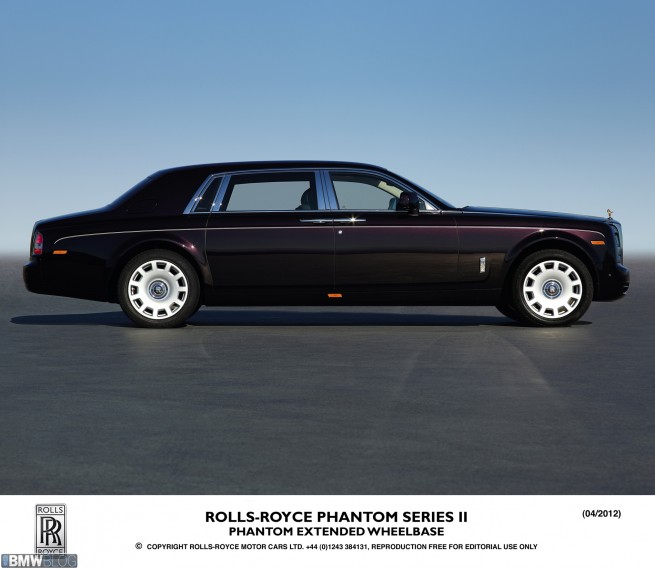
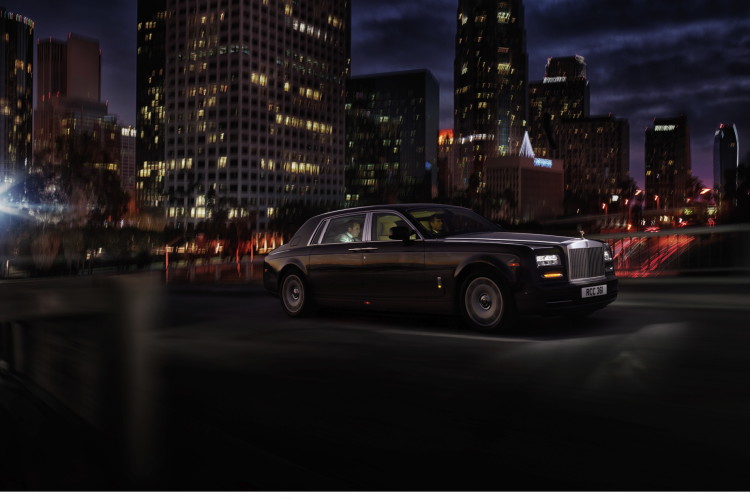





1 2 3 4 5 6 7 8 ... 28 29 30 31 32 33 34 35 36 (of 75 pages)