AfroBlue's Posts
Nairaland Forum › AfroBlue's Profile › AfroBlue's Posts
1 2 3 4 5 6 7 8 ... 47 48 49 50 51 52 53 54 55 (of 75 pages)
 Politics › Re: Here Are 6 Ways You Can Develop Nigeria's Economy by AfroBlue(m): 3:39am On Mar 06, 2012 Politics › Re: Here Are 6 Ways You Can Develop Nigeria's Economy by AfroBlue(m): 3:39am On Mar 06, 2012 |
Another one. Teaches you how to use your subconscious mind to achieve goals Think and Grow Rich http://en.wikipedia.org/wiki/Think_and_Grow_Rich https://upload.wikimedia.org/wikipedia/en/thumb/e/e9/Think_and_grow_rich_original_cover.jpg/200px-Think_and_grow_rich_original_cover.jpg http://soilandhealth.org/03sov/0304spiritpsych/030413.Hill.Think.and.Grow.Rich.pdf |
| Politics › Re: Here Are 6 Ways You Can Develop Nigeria's Economy by AfroBlue(m): 3:36am On Mar 06, 2012 |
An guaranteed learning classic! The Richest Man in Babylon by George S. Clason. TABLE OF CONTENTS. First Published in 1926. http://www.ccsales.com/the_richest_man_in_babylon.pdf The Richest Man in Babylon (book) http://en.wikipedia.org/wiki/The_Richest_Man_in_Babylon_%28book%29 |
| Politics › Re: Here Are 6 Ways You Can Develop Nigeria's Economy by AfroBlue(m): 3:31am On Mar 06, 2012 |
Knowledge already supplied Build New Solar/wind Generated Houses In Nigeria. https://www.nairaland.com/nigeria/topic-40917.0.html Learn How To Design And Install Solar Power Electrical Systems https://www.nairaland.com/nigeria/topic-98124.0.html Solar Energy Generating Systems In Nigeria (advantages) https://www.nairaland.com/nigeria/topic-696905.0.html Solar Energy - All You Need To Know https://www.nairaland.com/nigeria/topic-387851.0.html Practical Training On Solar Power Inverter System https://www.nairaland.com/nigeria/topic-147558.0.html Free Manual On Abc Of Solar Power Technology, All You Need To Know About Solar https://www.nairaland.com/nigeria/topic-272396.0.html |
| Politics › Re: Here Are 6 Ways You Can Develop Nigeria's Economy by AfroBlue(m): 6:24pm On Mar 05, 2012 |
| Health › Incredible 70-year-old Who Defies Aging Process by AfroBlue(op): 6:18pm On Mar 05, 2012 |
Incredible 70-year-old who defies aging process 'My fountain of youth': Incredible 70-year-old who defies ageing process with vegan diet of home-grown vegetables and rainwater By Victoria Wellman Last updated at 8:20 AM on 2nd March 2012 When Annette Larkins goes out with her husband of 54 years, people assume she is his daughter. The image of health, vitality and youth with a petite size four frame and a line-free face, Mrs Larkins is in fact 70 years old. The resident of Miami-Dade County, Florida, attributes her youthful looks to her raw vegan diet and grows almost everything she eats in the garden she refers to as her 'fountain of youth'. https://www.livingfoodfilms.com/photos/jpg/pg14.jpg http://www.dailymail.co.uk/femail/article-2108935/Annette-Larkins-vegan-diet-Woman-70-defies-ageing-process-vegetables-rainwater.html Seventy Year Old Annette Larkins Looks Forty on Raw Vegan Diet http://sportyafros.com/nutrition/seventy-year-old-annette-larkins-looks-forty-on-raw-vegan-diet/ https://www.youtube.com/watch?v=ANt4RIFnJH4 |
| Politics › Re: North Ready For Nigeria’s Breakup–junaid Mohammed by AfroBlue(m): 8:09pm On Mar 04, 2012 |
The Dr. has potent ideas. Remember reading this interview a few months ago. The SUN Interview: "This Government Is Entirely Illegitimate, As It Came As A Result Of Rigging And Massive Abuse Of Power"-Dr Junaid Mohammed Posted: October 9, 2011 - 14:42 https://saharareporters.com/sites/default/files/page_images/interviews/2011/Junaid_Mohammed.jpg?1318167487 Dr. Junaid Mohammed the Sunnewonline.com Russian trained medical doctor, Junaid Mohammed is one of the very few fearless northern politicians around. He speaks his mind without minding whose ox is gored. The former national chairman of the Peoples’ Salvation Party (PSP), once described late President Umaru Yar Adua’s medical report tendered by the Presidency as a fraud, In this interview with Saturday Sun in Kano, speaks on sundry issues. Did you, by chance, listen to the President’s October 1 speech? No; I didn’t bother. Why not? It’s owing to a number of reasons. One, you have to believe in the legitimacy of a government and a leader before you really spare time to listen to what he has to say. If you believe, as I do, that this government is entirely illegitimate, as it came as a result of rigging and massive abuse of power by the party, the PDP, and the security services, you will know that this man, who is president today, and the man he succeeded as well as the one his predecessor succeeded have no business to be in government and that is why I did not bother to listen to his speech. It is surprising to hear you say that the government is illegitimate when observers, both local and international, adjudged the 2011 general elections as one of our best so far. What, therefore, is the basis for your conclusions? Well, first and foremost, you have to be privileged to witness more than one election before you adjudge one as one of the best so far. Many of the observers that you are trying to talk about were never present in the previous elections in Nigeria; so, how can you say, on the basis of what they have told you, that election was the best we have had in this country? In the first place, who is the best judge of free and fair election among the foreign observers, who came here for one week or two and the people of Nigeria, who are here? I have been a participant in this game long before Goodluck or anybody who is in government today and I can tell you that election we had was the worst in the history of this country. And no matter what the America, the British, the Europeans or the EU says or anybody else, I know, in my own lifetime, there was no election that was as bad as the last 2011 elections. So, take my word for it. Why should I take your word when other notably Nigerians have also adjudged the election as one of our bests? Well, it will interest you to know that I am first, a political leader of a national party, registered by INEC, PSP; I have been a participant in politics. I have led parties that have won elections in Nigeria. I have observed elections in other countries, not only in Africa, but also in other parts of the world. Am telling you that the observers were nothing but sham. The assessment was a disgrace. If you bother to look at what was behind their own approval of the election, you will find out that, in fact, every one of those countries who came out and said that the election was free and fair was merely echoing the national interest and pronouncement of their home government. EU countries knew that the election was a sham. In private, when we discussed with some of them, they admitted that the election was full of lapses, but in public they tell the world that it was the freest election in the history of this country. And when you ask them, how many elections they have observed in Nigeria, they keep quite. So, the whole business of election observation is nothing but a sham. It is a fraud in which we are cheated and the citizens of their own countries are also cheated because it is a multi-billion dollar business in the name of democracy. Now, if we in the country are not happy with the election, if we in the country notice our own people died, who is a foreigner, an American or European, to come and tell us that the election was the freest or the best? How many elections are worth the life of one individual? And how many thousands of people were killed in the cause of the campaign, in the cause of the election itself and the tragedy, which followed after? Go and tell the people of Kaduna State that the election was the best in the history of Nigeria and see what you get. About 17 governors today cannot live in peace in their own state capitals; they are living in Abuja, and you are here telling me the election was the best and the freest. Now that you are coming to specifics, what were those lapses you noticed that perhaps, some of us are not aware of? Experience in government has shown that you win or lose an election or you have a free and credible election when you organise a good registration system. The INEC registration system was a disgrace. It was incompetent. It was supposed to involve machines, which were, in fact, unconstitutional and when they did, you find out that almost all the machines failed everywhere in Nigeria. If you don’t have a credible voters’ register, you can never have a free and fair election. Secondly, the first election was so bad, so riotous, and so useless that INEC itself was forced to cancel it. In cancelling the election, they did not think that it would have effect on the subsequent elections and that they would not have enough time to conduct the first election, then allow a lapse of seven days before the next election. They had to rush and bring the election forward, in a way that would have been unthinkable because having conducted one election, and then coming another three days to conduct the next election is nonsense, especially in a country where the vast majority of the people live in the villages and they are illiterates. So, so much for your incredible election often applauded by your so-called foreign observers, because when Nigerians who are educated talk to me about foreign observers, I detect a sense of inferiority complex. Who are they to declare your election as free and fair, when you yourself know the situation? And after the election itself, you know what happened in places like Kaduna and others. After that, we are now seeing the result of the collusion between the judiciary and the PDP. You the media will tell us that the judiciary is the last hope of the common man. But now, the Nigerian judiciary is the worst in the world. It is only in the Nigerian judiciary that you see judges, from Supreme Court, down to other courts, go and solicit for bribes from two sides in litigation, I mean from the complainant and the defendant. So, what are you saying? To have free and fair election, we need more than a credible register; we need more than a credible INEC. We also need a good judiciary that believes in the rule of law. Not chief judges, including Supreme Court judges, who are accused of taking bribes. So, for the 2011 polls, there was no prevailing background that allows for free and fair election. It is not the seven-day event. The exercise must be conducted according to certain rules. Democracy must be respected. There must be respect for the rule of law before you have a credible election. And don’t ever believe that anybody who comes here to observe election is doing so because he loves you. He is here because he is protecting his own national interest. They are only after our oil and other resources. Away from 2011 election, Nigeria is 51. You were an active player in the second republic. Looking at the North, what do you think could have gone wrong, putting side by side the politics in the Second Republic and what we have today? Why must you single out the North for comment? Well, I want to look at the North first before we look at Nigeria. You are a leader in your own right. Your comment on this will not be out of place. Well, I think the North was shortchanged in more ways than one. Firstly, the North was victim of its own naivety that politics can be played in a very holistic manner, that we can provide the necessary nucleus for building a greater and better Nigeria. This was the dream of our First Republic leaders, the Sardauna, Ahmadu Bello, Aminu Kano, J. S. Tarka and so on. But what has become clear is that the hope of our northern leaders was misplaced and a number of the people who are supposed to have been participants in the game took a lot of things for granted. What are those things they took for granted and what do you mean when you say the North is shortchanged? You do not play politics unless you know who you’re dealing with. If you don’t know the character of the person you are playing politics with, you are bound to be disappointed. Now, the North started the struggle for independence at a comparative disadvantage, with a very few schools, very few so-called educated people. We were left behind because the missionaries did most of their works down South and the Middle Belt and we didn’t want to give the impression that we wanted to delay independence for the country because we wanted to hold back. Now, when independence came, we decided to adopt an attitude of live and let’s live, allow the southerners occupy those areas where they have comparative advantage; we also believed that they will be sensible enough to realise that the country cannot be built if other sections of the country are marginalised or are disadvantaged. So, our attitude was to do whatever we can to make sure that the country is a fair playing field for all. And that was where we were greatly mistaken. And the same mistake continued repeating itself. When we came to the Second Republic, it was the northerners who insisted that we will have this system of rotation and zoning, which was then the main mantra of the NPN. And they practised it. Unfortunately, when it came to the PDP, which is a bastardised version of both the NPN and NPC of the first and second republics, the party was able to attract some of the worst characters, the most unfavourable characters in our national life; people who have no sense of honour, people who came into politics because they want to make money. People who don’t care about the next party, their neighbour or even the next zone; they are only after themselves; people who are not ashamed to lie and people who are northerners but believe that the South has advantage because the South has this ‘safe’ money, and that when you get into politics, the first thing you do is to take care of yourself and your relations and all that. And through nepotism, you will take care of your own children. You will steal government money and then you lie to the people. That is the operating mantra of the PDP, as a party today and these are people who call themselves democrats. If you are not in the same cult with them, nobody expects you to win a free and fair election or to be participant in a free and fair election process. I know nobody in the PDP who can be described as a democrat. These are people who want power and they want to get it at all costs, no matter the price to them, to the country or the people. This is the kind of thing we have. Now, if the northerners had played the kind of game, which is prevalent in the South – power for themselves and what have you – I can assure you that Nigeria would have been history now. The northerners played fair and at the end of the day they were very badly rewarded. Now henceforth, or in another dispensation, I don’t believe anybody can convince the North that some of the people who are playing politics now are trustworthy. Nobody will believe that. And if northern leaders, who are to come, play that kind of game, they are going to be rudely shocked. The coming of Obasanjo in 1999 is a major chapter in our history because Obasanjo could never have won an election and he still cannot win an election. Our generals brought him in: Ibrahim Badamasi Babangida, TY Danjuma, Aliyu Gusau and Abdulsalami Abubakar. He couldn’t have organised a party. He couldn’t have won any form of election. They brought him, used their own resources and the resources of the treasury of Nigeria to form and fund a party called PDP. What is happening today is the direct result of that terrible tragedy of their own action. I think the four of them owe this nation an apology for the way they brought out Obasanjo from prison and gave him a comprehensive pardon and formed the PDP and used resources from the treasury to finance the PDP. Here is the result. Now, talking about northern leaders and the rest of us, one of those you said should apologise to Nigeria is being touted as a possible replacement for the current NSA. What do you think, especially as it amounts to recycling northerners in government? Now, this brings me back to what I asked you when you talked about the North. What you are talking about the North recycling old leaders applies to the South also. I recall vividly that the people I knew or read about during the First Republic are still active and they are still the movers and shakers in the politics of the South. So, what makes you think that we can be different when we are doing politics in the same country within the same constitutional borders? Now, to come back to the question, I call it recycling garbage. In the first place, the people we are talking about did not get their first appointment on merit; they got it from purely political and nepotistic considerations and for every time they got recycled back into government, the logic behind it wasn’t merit, wasn’t because national interest was at stake, but it is because somebody has a brainwave, to say so and so is bad and only so and so person is competent to fix it. That is an insult to the people of Nigeria. You cannot tell me that in nation of 150 million people, only one person of mediocre disposition is the one who can be the National Security Adviser. That is utter nonsense; it is counter-intuitive, and it is against justice to reappoint one person to a particular position six times. Supposing this man drops dead tomorrow, because he is already over 70, does it mean that there would be no individual to help tackle the security challenges of today? And are you telling me that if we are in this mess today, and he is a member of the governing party, he has served in this administration, then he leaves and nobody else can do his job? It is wonderful how you people in the media too argue over this issue. Is it sane to argue that only one man has the answer to our security challenges? I think it is sickening. And I want to use this opportunity to call on the media too, to please help us raise the level of the debate. At any rate, when he served previously, was he any different from the others? This is, however, not to say that the current National Security Adviser is doing any better. If anything, the man is a national disgrace and an international laughing stock. He is a man with the lousiest track record in the army when he served and now you make him the National Security Adviser only because he is an Ijaw man; he comes from the same tribe with the President. Is that not the most irresponsible way to pick a man who will help confront the challenges of today? When you give appointment to somebody who is your own tribal man, not because he is competent, then you can see why we will never have a peaceful situation in this country. Now, the job of National Security Adviser in the country has nothing to do with domestic security, the man deals with international security; that is the security of the entire nation. He has nothing to do with police or Boko Haram or OPC or the militants in the Niger Delta. See how the office has now been turned into a joke. It’s a thing for serious concern. I say so because the office is now seen as money making outfit; if you want to make money easily, go and be the National Security Adviser or get involved with the SSS or the police. It is only in Nigeria you can get this kind of nonsense. Most of the people who do the job in Nigeria are people who are basically illiterate, at least those who occupy that position cannot write a single paragraph in English and when they relate with other security personnel at that level, their foreign counterparts, they will laugh at us. Most of them, who had occupied that position, with exception of one fine General, don’t read newspapers; they don’t watch television. They are not literate with the Internet, in this day and age. They rely on rumours and that is what has now been elevated as national security policy. If you decide to recycle garbage six times, good luck to you, because nothing will improve as far as good representation is concerned. These people believe in money and they are there to be rich, own hundreds of houses in Abuja and other parts of the country, have plenty of money, both in naira and foreign currencies, with which they also settle potential trouble makers. How they operate is, if Boko Haram is making noise, go and find half a million dollars, give them and they will keep quiet; if Gani Adams and others are making noise, go and give them money, they will keep quiet. If the boys in the Niger Delta are making noise, go tell them ‘look under amnesty, we will buy houses for all their leaders in Abuja, pay the school fees of their children and make sure they have fantastic homes and they will drink Champaign to bed every day;’ that is what happens. But when you have a determined enemy, the one that is determined to make trouble, this kind of appeasement will not work. Those who are determined, who are educated, will not be bought. There is always in every society, someone who cannot be bought and I believe those who are making trouble in Nigeria today cannot be easily bought. If you were in the president’s shoes, will you keep all the security chiefs you have? My dear friend, the president was never forced to appoint the people he appointed. I don’t think any nobody is forcing him to keep them in the positions they are now. When you are making political appointments based on sentiments and not on merit, you also live with the consequences of failure. When you look at the history of how these people were appointed, we know what I mean. I just mentioned the issue of Andrew Azazi, who was appointed merely because he is a tribesman of the president. The president himself did not know him, but he is an Ijaw man; he was good. Let me look at the other places, and you will appreciate why we are in this terrible mess. The DG of the SSS, the current DG was appointed after nine of his seniors were eased out to make room for him. His qualification: he comes for the Niger Delta and the PDP and the president have made a determination that the DG SSS must come from the Niger Delta, whether the Niger Delta has a good candidate or not. So, if you remove the nine most senior officers in addition to the other DG, the former DG, to make room for one man, who is the most junior out of the lot, just to have somebody from Niger Delta as the DG, SSS, you can see why we are in a mess. Next, we move to the police. The IG of the police comes from nearby Jigawa State, but they had to retire six DIGs above him, one of who comes from the same town with him. Some of the other AIGs, who were senior to him were also given the option to retire; you can see if we had also allowed that, there would have been at least nearly 20 people, all of who are senior to the IG who have to serve under him or retire. Most of them chose to go. Now are you surprised that the police are in a terrible mess? That is the real issue; the competent people have been eased out and that is why we are where we are today. The Chief of Army Staff was appointed when we have over 30 generals ahead of him. His qualification is that he is married to the first cousin of the first lady; this is the only qualification. Is Jonathan the only one guilty of the picture you are trying to paint? No, don’t get me wrong. You know I will not spare any of them. The previous one, Dambazau, was appointed over and above a more qualified person, also a fellow northerner (name withheld) who is his senior. Yar’Adua appointed him. When Jonathan came in, he also appointed even the worst candidate from further lower down, who was a Brigadier General and here is what we have today. Are you surprised that we are in the mess? You didn’t appoint people on the basis of their ability to deliver; you appointed them because you had in mind the forthcoming election. That is how the appointment was made. The DG SSS, the Inspector General of police, the Chief of the Army and the Air Force and some of the heads of paramilitary were appointed based on this. So, who is fooling who? We are behaving like children, my dear. You know something you don’t want and you sit on it and then when you see war, you now start crying like a baby. The president himself said the system has collapsed. The question you are supposed to ask him is who presided over the collapse? Under whose watch is this collapse evident? Yar’Adua was not my idea of a president for Nigeria, but my dear, Yar’Adua was 10 million times better than this character we now have as president. At least we know Yar’Adua was an invalid, with his blind ambition and that of his wife, which caused them his life. If I were in the situation Yar’Adua found himself, I would have refused to be president. My personal feeling is irrelevant, if you give a job I cannot do, I say my friend, I cannot do this one. But, there are people in Nigeria who prepared to eat and die. If you provide them the opportunity to make money, they will do that, even if it means keeping the money for others to enjoy or to be stolen. That is the tragedy of our country. And it is not something that can be undone by one man. Even if the president wants to do it alone, he cannot do it. The appointments are made on a kind of conspiracy between the governors and the president. Governor nominates the candidate; he gets an appointment, whether he is fit or not. Majority of the ministers today are people who cannot deliver as local government chairmen. So, why are you asking this? While they were being nominated where were you, the media? Look, don’t get me wrong, Yar’Adua was not better. He appointed a boy who could not pass through the Economics department in Bayero, Kano here, a department that was adjudged the weakest then, as Economic Adviser. I mean he was expelled from Bayero. But I insist, as bad a Yar’Adua was, he was 10 million times better that this character we have now. In all of these, what is the way out? First and foremost, you have to clear the present government and clear the PDP, the ruling party. But next time you get opportunity to form party, allow them to be formed naturally, with the people who belong together. With the kind of madness and insanity we have in the PDP, where no two people speak alike, no two people think alike, no two people care about the country, you can never run a country. If it means suspending our democracy at least for a number of years, so that we can have credible party system, let us begin from there. Nigerians must learn to be patient, not to be patient with corruption, which is the argument being advanced now. We have to be patient, to make sure that we have parties, which have ideologies, which have core beliefs and when we have those kinds of parties we can play politics. At the moment, we have nothing of the kind. About a week or so ago, some Ijaw leaders put an advertorial in the newspapers accusing northern leaders of using Boko Haram to destabilise the Jonathan’s government… That is nonsense. In fact, I will not even dignify that with a comment. If one wants to destabilise Jonathan you need more than just a bunch of those boys. Mark you, the North is over 90 million out of the 150 million Nigerians. So, I don’t know what is there to destabilise. As far as I am concerned, Jonathan is presiding over a discredited system. He does not need to be destabilised. He will destabilise himself together with the PDP. The PDP did very well to destabilise this president, so nobody needs to bother him. They don’t have a party; they don’t have a government. The pillars he thought were going to be useful to him to emerge as the president and to run the government successfully are nowhere to be seen; it’s everybody unto himself, God for us all; that is what the PDP is all about. They have their own phobia, and that statement may just have come from the Presidency itself, because underground they have their ways of doing some of these things and making them look as if they are coming from the outside. Earlier, you talked about getting rid of the government… (Cuts in) yes! I repeat, get rid of the government. How? Anyhow. Including through revolution? Anyhow; In fact, I will welcome a revolution in Nigeria, because we are overdue for revolution in Nigeria. By definition, Lenin said, a revolutionary situation ‘is a situation whereby those who are governing cannot govern and yet they are unwilling to make way for those who will govern.’ That is what we call a classical revolutionary situation. Clearly, this government is incompetent. They are in no position to run this country. Only God is maintaining this country. And not only that they are incompetent, and cannot govern; they don’t want to give way to others to come. This is a classical revolutionary situation. When we have situation like this, the question is who will bell the cat? Who had the guts to organise the young men because I am old now. I am 62. I am no more a young man; so who will organise the young men to demand their right and if they don’t get, they bring down the government. We are overdue for revolution. If you are afraid of revolution, maybe you have something to be afraid of. I have nothing to be afraid of about revolution, even though I know, again, in the history of revolution situation, many people who are innocent get killed and that is what a revolution is all about; some people will die, but the vast majority of others will have their freedom and the country will have a new and fresh start and tackling its own problems, including the security challenges we are talking about now. So, there is nothing wrong with revolution. Countries that I respect have had revolution. The British have had revolution. America has had revolution; the French too and many others. What is wrong with us having revolution here? Unless, of course, you belong to those who are stealing government money or you have something to hide, then of course you should be afraid of revolution, because after the revolution, there is what we call revolutionary justice; they will get you and shoot you and there are many people that if we shoot in Nigeria, Nigeria will be a better place. In fact, if you shoot 500 people, Nigeria will be a much better place and God will forgive you. There was serious mistrust over 2011 election, between the North and the South. As a northerner, what do you think about 2015? Again I don’t like you labelling me a northerner. Am I not a Nigerian? I am a Nigerian, please, mind your word. Look, there was too much mistrust as a result of the dishonourable conduct of the PDP, especially Obasanjo and the rest of the people, as a result of this zoning of a thing. In the first place, I never believed in zoning, or rotational politics. So, if they get themselves into cull-de-sac, good luck to them, because the country will be better off, by allowing all the sections of the country to elect their own leaders. The country will also be better off if the PDP, as a result of zoning and rotation policy collapses. Nigeria will be better off tremendously if the PDP ceases to exist as a political party, but that is not the issue. Now, whether there is mistrust between the North and the South, between the East and the North is not my business. First, we have to create the institutional framework for the conduct of free and fair elections and make sure that those who are good emerge as the leaders of the country. I don’t lose sleep because of zoning or rotation policy. I told many northerners in the PDP, who are my personal friends, that this thing cannot last; they thought I was joking. Here we are today. Where is the zoning policy? Dead! Where is the rotation policy? Dead! So, what makes you think that Nigeria can only be governed only on the basis of zoning and rotation? It will never be governed. So, if they feel they can go ahead and bring some tricks out of the bag with which to govern Nigeria, or they think that once they have zoning and rotation policy, they can go ahead and be good party and bring good governance, good luck to you. But those who emerge as a result of zoning and rotation have delivered nothing from 1999 to date. The country has been walking from one crisis to another, from economic crisis to security crisis. Even before 2015, Goodluck has announced that he wants one-term Presidency of seven or six years, after he has finished his turn. Don’t tell me he has promised; everybody in the PDP has promised lies. So, definitely if you make a promise with the PDP, you should know that that promise is meant to be broken. Now, Goodluck wants to contest in 2015 and he also wants six-year single term. He has already had three years plus four, making seven and another six. Now, even if we have a system of inheritance, whereby you are born to be the king of Nigeria, I cannot justify having this man as Nigeria’s leader; a do-nothing leader, a know-nothing leader and he wants 13 years. How will this country be after 13 years of Jonathan Goodluck? What would you tell Nigerians on the 51st independence anniversary celebration? Am not sure Nigerians will be happy with what I have to say, but I will say it nonetheless. The way and manner this government cowardly refuses to celebrate our independence anniversary is a massive and disgraceful climb-down. It is, in fact, a submission to evil and to darkness; it is also an admission, by them, that they are not fit to do the job. They are not fit to lead this country, because I remember that even at the height civil war from 1967 to 1970, Nigeria never missed the opportunity of celebrating its own national anniversary, because it is like a birthday to us. Even if you don’t celebrate with funfare, you celebrate it with prayers. This is a disgraceful regime, a disgraceful presidency, a disgraceful government brought about by a disgraceful party. May God shorten their stay and may God shorten the agony of the people of Nigeria. I urge Nigerians to pray for deliverance from God and to allow this country to restore itself, restore its honour and occupy its own position in the comity of nations. That is all I can say. But I see no hope of peace in this country, as long as this government, this INEC, this security service is in charge of our destiny. May God disband them and the sooner, the better. Originally publisher by The SUN Newspapers |
| Politics › Re: Here Are 6 Ways You Can Develop Nigeria's Economy by AfroBlue(m): 8:02pm On Mar 04, 2012 |
@Dr. Igbo2011 Great info with titanium solid ideas. I saw the thread yesterday but neglected to post a bump up thread or pay an complement to this important lucid thinking. 1. Buy Nigerian clothes 2. Go to tourism in Nigeria. 3. Watch Nigerian sports leagues 4. Invest in Nigeria 5. Buy Nigerian products 6. Buy Nigerian art ___________________________________________________________ Supplement (Authors fail to mention looted assets parked offshore) Nigeria: A Marshall Plan for Nigeria, By Nigeria By Witney Schneidman and Mwangi Kimenyi, 29 February 2012 guest column Will President Goodluck Jonathan be successful in managing Nigeria's myriad challenges and achieve his goal of transforming the country into a modern and prosperous nation? Jonathan made a positive first impression. Plucked from relative obscurity to be vice president to an enigmatic and ailing President Umaru Yar'Adua, Jonathan moved deftly to seize the reins of power. Once he became president following Yar'Adua's death, he acted decisively to install his own cabinet. Jonathan was subsequently elected president with a clear mandate in elections that observers described as among the most successful in the country's 50 years of independence. He has overseen an amnesty program that has significantly diminished the insurgency in the oil-producing Niger Delta. He appointed some very talented and experienced individuals to office. Economic growth was 7.4 percent in the third quarter of 2011, according to the World Bank. Over the last several months, however, Jonathan has appeared to falter. With deadly attacks on the United Nations headquarters in Abuja, Christian churches and targets throughout the north attributed to Boko Haram, a radical Islamist sect, the Nigerian government initially seemed incapable of responding effectively. The recent shake-up of the army high command was overdue. However, the perception of Jonathan's ineptness deepened last month when his government announced the removal of a popular but expensive fuel subsidy that led to violence and work stoppages throughout the country. While the government and labor unions ultimately struck a deal to reduce the subsidy, Jonathan's administration was put on the defensive. Underlying the security threat posed by Boko Haram in the north and the bungled handling of the oil subsidy is a vast deficit of trust between the Nigerian government and people. There is little confidence among average Nigerians that any decisions made by the political elite will be independent of rent-seeking and corruption. Observers question whether Jonathan can tackle the economic, ethnic, social and religious problems in the north while moving forward on economic reforms. However, Goodluck Jonathan is not the first leader to face challenges of seemingly overwhelming proportions. One can look at the history of the United States to find similar parallels. During his first term, President Franklin Roosevelt inherited the Great Depression in which one in four adults were out of work, an equal number were underemployed and nearly 50 percent of America's children did not have adequate food, shelter or medical care. Roosevelt responded with the New Deal which sought to provide relief for the unemployed and poor, recovery of the economy and reform of the financial system to prevent another depression. More recently, in the late 1980s, as Harvard's Ezra Vogel writes in Deng Xiaoping and the Transformation of China, the Beijing government nearly collapsed under the pressures of high inflation and the failure of martial law following the Tiananmen Square tragedy. The Chinese government's sense of desperation was further heightened by the fall of the Soviet Union and Eastern Europe and the demise there of Communist rule. Deng responded in early 1992 by setting out on his "Southern Journey" in which he challenged the provinces in the south to catch up with the "four dragons" of Hong Kong, Singapore, South Korea and Taiwan within 20 years. His commitment to rapid reform and opening up China to the global economy in a time of national uncertainty set China on its path of unprecedented economic growth and modernization. Nigeria does not face an existential threat from within but like Roosevelt and Deng, Jonathan faces some very difficult choices. Two years ago, the respected American diplomat and former ambassador to Nigeria, Princeton Lyman, warned that Nigeria faced "irrelevance" in Africa and as a strategic partner due to its poor track record on governance, transparency and inclusive economic development. Since then President Jonathan has raised the possibility that Nigeria's future can be different. The government, however, needs to respond convincingly in key areas, especially in the north where more than 75 percent of the people live below the poverty line. Therefore, the Jonathan administration should consider initiating a development program for the north reflective of the Marshall Plan that led to the reconstruction of Europe after World War II. Officially known as the European Recovery Program, the Marshall Plan re-imagined governance and reconstruction in war-ravaged Europe. It was designed by the U.S. together with European governments to remove obstacles to create jobs, rebuild industries and return prosperity to the region. Northern Nigeria needs a transformative development initiative specifically tailored to the region's circumstances. A well-crafted program that has the support of Abuja and the northern state governments should be a national priority. The program's success would be dependent on the participation of all Nigerians, including the public and private sectors, education institutions and civil society, especially religious and cultural leaders. Nigeria's key partners, the United States, the European Union and China, would also have a stake in the program's success. Despite these challenges, Nigeria will continue to move forward. Morgan Stanley projects that the country's economy will overtake South Africa's by 2025, making it the largest on the continent second only to Egypt. The more pressing question is whether the government will be able to create an equality of opportunity for all Nigerians and a deeper sense of national unity and patriotism. The late President Yar'Adua, a northerner, helped to resolve a security and economic quagmire in the southern Niger Delta. President Jonathan, from the southern state of Bayelsa, has an opportunity to initiate a similar process in the north. For Nigeria, the stakes are high but with Jonathan's leadership the prospects for genuine progress are encouraging. Witney Schneidman, a former Deputy Assistant Secretary of State for African Affairs in the U.S. government, is now special adviser at the Africa Growth Initiative at the Brookings Institution in Washington, D.C. Mwangi Kimenyi is the director of the Africa Growth Initiative. |
| Crime › Bride In Police Net Over Groom’s Murder by AfroBlue(op): 9:14pm On Mar 03, 2012 |
Bride in police net over groom’s murder Written by Isa Sa’idu, Kaduna Saturday, 03 March 2012 05:00 A newlywed bride is in police custody in Kaduna over the murder of her groom by persons suspected to be hired assassins. Malam Abdullahi S. Abba, 37, retired to bed on the night of Monday, February, 27, 2012, hale and hearty. Unknown to him and other members of his family, however, death was lurking. He was killed in mysterious circumstances by people suspected to be hired assassins during the early hours of Tuesday, February, 28. Abba got married on Saturday, 18th February, 2012. Exactly nine days after the marriage, some yet-to-be identified people traced him to his Kakieye residence, stabbed him severally and assaulted him with clubs, leading to his death. Weekly Trust gathered from residents of Kakieye, including two of Abba’s younger brothers, Sale and Umar, that he was killed when he went out of his house to answer knocks on his gate. When Weekly Trust visited Kakieye town, younger brother of the late groom, Mallam Sale S. Abba, recounted how the incident happened. “It is only investigation that would reveal the circumstances that led to the demise of my brother,” Sale said, “but we have begun to get some clues from those who heard when my brother was being killed. It is true that my brother only got married to his bride, Hajara, 13 days ago. It is also true that Hajara was against the marriage. My deceased brother doesn’t know that she was against the idea of marrying him. We came to know this after his demise, that her family forced her into the marriage.” Sale continued: “Apart from that, some youths of the area who heard his wailing while he was being killed, said they overheard a female voice querying the killers, asking ‘I didn’t ask you to kill him, I only asked you to deal with him.’ One of the courageous youths that came out from his room, Suleiman Nuhu, said he saw a lady in a veil coming back from the scene of the murder and he flashed her with his torchlight and even asked her what she was doing outside at that time of the night. According to him, the lady said she was looking for her husband. Nuhu was invited by the police and he gave that statement.” Sale said the corpse of his brother was found by the side of an electric pole, close to a neighbour’s gate. The corpse had several cuts, he said. “From what we gathered, there were knocks on his gate and he went out but never returned. The bride confirmed this, saying they were together when he went out. She also confirmed that she heard his wailing but she thought that it was a dog so therefore she did not bother.” Our investigation revealed that Hajara, 18, has told the police, in her statement that she actually went out to look for her husband when he did not return. But she told the police that she has nothing to do with the murder of her husband. Hajara’s father, Mallam Danlami Muhammad, lives near Shika Dam, Zaria. He said he would allow investigation to reveal the innocence of his daughter. “But if she is guilty of murder, I am ready to accept whatever decision that the law takes. If she the court says she should be killed, I don’t even want to see her corpse,” Malam Muhammad said. Our checks revealed that during the 9 days that Hajara spent in her matrimonial home, she had quarrelled with her husband about six times. One Sha’aibu Muhammad, who is married to Hajara’s elder sister, was said to have mediated in the quarrel about five times, while his wife, Hajara’s sister, anchored the last reconciliation meeting on the night of Monday, February 27. Hajara, according to our findings, has severally told the mediators that she married her late husband against her wishes. However, Hajara has told the police that she is in love with her husband and his murder has nothing to do with their relationship as husband and wife. Spokesperson of Kaduna State Police Command, DSP Aminu Lawal, confirmed the incident, saying that the police are investigating the circumstances that led to the murder. Hajara is right now at the Criminal Investigation Department (CID) of the Kaduna State Police Command after she was transferred from the Tudun Wada Zaria police division, where she was questioned, initially. Until the police are through with their investigation, the murder of Abba and those behind it will continue to garner speculations. |
| Politics › Re: Buy Nigeria: Law Makers Approve Innoson Vehicles For Official Use by AfroBlue(m): 8:53pm On Mar 03, 2012 |
https://www.innosongroup.com/innosonmotors/mid-thb/truck.jpg https://www.innosongroup.com/innosonmotors/thb/truck1.jpg INNOSON VEHICLE IVM 1021A Main Performance parameters Bus model IVM1021A Seat number 2 + 3 Overall dimensions (mm) L x W x H 4920 x 1690 x 1630 Wheel base(mm) 3025 Track width(mm) 1374 / 1930 Engine model JM491Q - ME Exhaust standard Europe III Displacement 2237 Max power (Kw/rpm) 76/4200 ~ 4600 Max torque (Nu/rpm) 193 / 2200 ~ 2800 Fuel Gasoline Fuel tank capacity (L) 60 Drive line type 4 x 2 F. R. |
| Politics › Re: Why We Can’t Build Refinery In Nigeria-shell by AfroBlue(m): 8:30pm On Mar 03, 2012 |
US Supreme Court Will Hear Shell Nigeria Abuse Case http://www.afripol.org/afripol/item/510-us-supreme-court-will-hear-shell-nigeria-abuse-case.html The justices said they would hear an appeal by a group of Nigerians who argue they should be allowed to proceed with their lawsuit accusing the oil company of aiding the Nigerian government in human rights violations between 1992 and 1995. The plaintiffs, families of seven Nigerians who were executed by a former military government for protesting Shell's exploration and development, sought to hold the company liable under a 1789 U.S. law called the Alien Tort Statute. |
| Politics › Drugs Ravaging Lives Of Nigerian Youths by AfroBlue(op): 8:07pm On Mar 03, 2012 |
Drugs ravaging lives of Nigerian youths :Lizard dung, sewage on list of abused substances : ‘6m bottles of cough syrup bought daily’ Written by Hussain J. Ibrahim, Shehu Abubakar, Solomon Chung, Amina Alhassan, Adie Vanessa Offiong, Imabong Esu, Abuja, Christiana T. Alabi & Maryam Ahmadu-Suka, Kaduna Saturday, 03 March 2012 05:04 https://weeklytrust.com.ng/images/resized/images/stories/cough%20syrup_267_200.jpg More Nigerian youths are becoming drug addicts, while Nigeria gradually graduates from a drug consuming nation to a drug producing one. Weekly Trust reports Despite efforts being put by Nigerian Drug Law Enforcement Agency (NDLEA) operatives towards fighting the menace of illicit drugs production, circulation, marketing and consumption, more people are being recruited daily by drug barons to serve as couriers just as many more, especially youths are increasingly becoming addicted to assorted drugs. In Abuja, the nation’s capital, many youths, mainly from well-to-do homes are increasingly joining the ‘big boys club’ that abuse drugs such as heroin and cocaine. Other form of drugs like Indian hemp, which is commonly produced in Nigeria and others like methamphetamine, syrups and tablets with codeine capable of intoxicating are mostly found in military barracks, schools, motor parks and even with local traders that sell provisions in kiosks. Assorted illicit drugs that include mainly Indian hemp and amphetamine were recovered from suspects arrested within the FCT by the NDLEA. Other drugs like cocaine, heroin and some pharmaceutical products on the restricted list found in custody of unauthorized or wrong persons were also recovered. A convicted drug addict who served his two-year jail term at the Central Prison in Benin City before relocating to Abuja after his release, Mr. Godswill Akatagbo told Weekly Trust that Abuja is a potential haven for illicit drugs after Lagos and Port Harcourt. Though Akatagbo refused to say whether or not he is still into illicit drugs deal, he gave an insight into the business in the nation’s capital. “Majority of drug consumers in Abuja are young men and women who are mostly from well-to-do families. They sometimes come to a place near Sheraton Hotel and Towers, Abuja to buy 3 or 4 wraps of cocaine that cost N2,500 each. You cannot count the number of teens that come around to buy cocaine. There are a few advanced men and women but majority of the customers are the young ones. Some agents even hawk drugs. The mobile agents sell on commission.” Akatagbo’s observation on the increase in drugs deals in Nigeria was confirmed by Nigeria’s country representative of the United Nations Office on Drugs and Crime (UNODC), Ms. Mariam Sissoko when she said that the International Narcotic Control Board (INCB) has identified smuggling of amphetamine-type stimulants as a new threat in Africa. She said most methamphetamine intercepted on illicit markets in East Asia was found to have originated from West Africa with Nigeria standing the risk of becoming a hub for methamphetamine smuggling. Chairman of the National Drug Law Enforcement Agency (NDLEA), Ahmadu Giade expressed concern over the emergence of illegal laboratories for the production of illicit drugs. He said that the NDLEA had discovered two clandestine laboratories installed for the illicit production of methamphetamine in Lagos. The first laboratory was discovered in July 2011 and two Nigerians are currently being prosecuted while the second laboratory was detected in February this year. Three Bolivians and a Nigerian are currently under investigation in respect of the latter. According to the head of clinical services, Drug and Alcohol Treatment Education and Rehabilitation Unit at Federal Neuropsychiatric Hospital in Kaduna, Dr. Ebiti Williams, over 6million bottles of codeine are sold on a daily basis in the North-West part of the country. National Drug Law Enforcement Agency (NDLEA) report of 2010 also shows that over 11% of people in the North-West zone use drugs. He also said due to the rise in drug addiction, young people make use of cough syrups to make themselves high. “We have had few newspaper reports where people kill owners of pharmacy shops or chemists because they refused to sell codeine to them,” he said. In the northern part of the country, according to the doctor, younger people abuse prescription drugs almost much more than what is referred to as illicit drugs. He disclosed that majority of patients who visit their facility are those who use combination of substances. “We don’t have people that use single substance; some take cocaine, heroin, codeine, cannabis and alcohol at the same time,” he said. Speaking on what addicts benefit, he said that they derive a ‘high’ from the drugs while some said it makes them feel very elated; it makes some have a sense of happiness and often times make them forget about their problems or challenges while it inspires others to write, sing, draw and do so many other things. On what the drug does to the system, Dr. Ebiti stated that the human brain usually rewards a person in a particular manner. He noted that the drugs affect the reward system of the brain to the extent that when they don’t get the drug, it begins to affect them. Presently now, in the whole of Kaduna State and many other states in the country, there are no treatment places for those who use substances. The Federal Neuro-psychiatric Hospital, he said can only take about 30 persons which he said is incredibly small compared to the hundreds of thousands of people that would require treatment in the state. According to Amina Duniya, a sociologist and psychologist, there are different kinds of drugs including the hard drugs and the prescribed drugs. “When you abuse any of them, it becomes drug abuse. When we talk of drug abuse, it could be the hard drugs including cocaine, weed among others and when we talk about prescribed drugs we mean codeine even though it’s meant for medication some people use it for something else,” she explained. She said, “Recently, I went to a pharmacy to buy drugs and a boy just came in and asked for Codeine and he was given; right in front of me, he shook the bottle and drank the whole bottle after he finished he asked for water and left. It was surprising that the pharmacy attendants did not even see anything wrong with what the boy did.” Mr. Pius Akuchi, a psychologist with the Federal Medical Centre, Makurdi said, “Most cases of drug abuse and addiction start with peer group pressure. Such people are usually influenced by their peers. Psychologically, if they don’t participate in what their peers are doing, they feel unfulfilled.” He is critical of private rehabilitation centres, saying, “Those private rehabilitation houses springing up across the country, most of them don’t have full-fledge and complete structure of professionals. This is because of the cost implication of hiring the line of professionals, psychiatrist, psychologists, social workers and other staff. Some of them do forget the scientific aspect of handling the cases of the patients, they tend to make it solely spiritual, by embarking on prayers, fasting etc, or they will say it is witchcraft etc.” Dr. Michael Amedu a Senior Registrar at the Psychiatry Department, Ahmadu Bello University Teaching Hospital, Zaria explained that drug addiction is a case peculiar with people between the ages of eighteen and twenty. Though there are cases recorded of people younger and older than this age range. He explained that these substances referred to as volatile substances or inhalants could be fumes from petrol, glue, nail polish, paint, chemicals to dilute paints, bases of gutters, codeine in some medicines, and other such agents. “Addicts inhale these directly or pour them on pieces of clothing which they put over their noses and inhale. They also pour the substances in waterproof bags,” he said. “Also in locations like factories where the concentration of such chemicals are high addicts sit in the room and simply inhale the chemicals.” A herbal and medical practitioner in Abuja, Dr. Adewusi Oyawoye said, “With what we see every day, Nigeria might soon top the list of countries with the highest intoxicants because everyday these youths come up with new and easy ways to go about intoxicating themselves. Because there are laws restraining people from abusing some of these drugs, these kids have resorted to using lizard dung and gadagi (a substance resembling tea leaves) which are normally easy and cheaper to afford. It is believed to be the poor man’s alternative to cocaine. Lizard excrement is used in a variety of ways. Some prefer it as part of a cocktail produced from Robin Blue Powder, the popular fabric brightener, as well as medicinal herbs and seeds from a fruit called Zaqami, a quick-acting substance that puts the user in a daze 30 minutes after ingestion.” According to users, lizard excrement produces a strong effect when mixed with Robin Blue. That effect is said to be similar to the one produced by a heavy consumption of whisky. The white portion of the droppings is a killer drug. When inhaled or taken orally they cause rapid rise in blood levels, producing an effect akin to the intensity produced by an intravenous injection. The feeling produced also resembles inebriation. Dr. Oyawoye said, “What we need to do as a society is to put hands together to see that we can curb some of these intoxicants that have become irresistible to some humans in the society. There is a huge cost in social, health and economic terms if we do not bring a halt to these activities of our youths in the society.” |
| Politics › Re: Lagos To Ban Okada, Fashola’s Committee Endorses Plan by AfroBlue(m): 7:59pm On Mar 03, 2012 |
Day trader was killed in robbery-gone-wrong Written by Ahmed Mohammed, Bauchi Saturday, 03 March 2012 05:00 Fear and confusion ensued following the murder of Ustaz Iliyasu Aliyu, a rising businessman on Saturday February 18, in his shop on Ahmadu Bello Way, Bauchi’s capital, by suspected armed robbers. On that fateful day at about 6pm, Ustaz, a father of four, was hale and hearty, selling in his shop located a few meters to the Zone 12 office of the Assistant Inspector General of Police (AIG) Bauchi. The trader was attending to customers when three armed men who came on a motorcycle, wearing masks stormed his shop, shooting up sporadically to scare people away. Afterwards, they shot him at a close range and left at full speed without anyone knowing which direction they took. Neighbors, relatives and customers of the late Iliya Ustaz told Weekly Trust separately that when the gunmen scared people and chased everybody away, two of them entered the ever-busy shop, one of the men stood outside and kept vigil while the other two entered and asked Ustaz to surrender all the money with him which he willingly did. The heavily armed men also ordered Ustaz and his attendants to lie flat on their stomach, after which they broke bottles of drinks kept outside the shop and threatened to kill anyone who did not cooperate. The witnesses said after carting the sales money Ustaz had made since morning, the robbers also stole a bundle of recharge cards containing different networks which he was said to have bought that morning. According to the eyewitness, the men of the underworld had finished robbing Ustaz and had turned to leave, climbed their motorcycle parked opposite the shop when someone shouted “thieves”, “thieves”, an action that infuriated the robbers. They reportedly made a swift U-turn, pulled out an AK47, shot Ustaz at close range on the chest once and resorted to firing shots in the air before making their brisk escape on their motorcycle. The trader died instantly. Policemen from the Bauchi State Police Command headquarters on Yandoka road took his corpse to a hospital where he was certified dead. Ustaz who was about 37 years old has been buried according to Islamic rites. The public relations officer of the Bauchi state police command, Mohammed Barau, described the attackers as one done by armed robbers, adding that the police is investigating the matter expressing hope that the suspects would be apprehended. Ibrahim Ali, younger brother to the deceased said almost three weeks after his brother’s death, details adding that the police told the family that they are still investigating. Usman Kabir, one of his customers described the late trader as a very hardworking and dedicated businessman who does not compromise on customers’ needs. Evelyn Orji who works at a café not far from Ustaz’s shop, said she heard gunshots and thought it was members of the Boko Haram who had struck. “Everyone was afraid to come out. We heard more gunshots later we heard that it was Ustaz that was killed in front of his shop. It is really a sad thing. I am really feeling bad because Ustaz was a very good man and there is virtually no daily needs that you will look for that you will not find in his shop.” This was the third time between December 2010 and February 2011 that gunmen on a motorbike robbed residents of Bauchi State in their shops, the first incident took place at Railway, the second on Jahun Road near old Musaba junction where they killed two people. The late Iliya Ustaz is the third and latest victim of such attacks. http://weeklytrust.com.ng/index.php?option=com_content&view=article&id=8641:day-trader-was-killed-in-robbery-gone-wrong-&catid=41:news&Itemid=30 |
| Politics › Re: Lagos To Ban Okada, Fashola’s Committee Endorses Plan by AfroBlue(m): 7:52pm On Mar 03, 2012 |
Messengers of death: Okada tightens grip on cities Friday, 02 March 2012 20:35 *Fast, handy but with death and broken bones on the trail By Richard Ihediwa, Uche Nnorom (Makurdi), Edwin Olofu (Kano), Sam Egwu (Lokoja) Francis Iwuchukwu (Lagos) and Nankpah Bwakan (Jos) They are everywhere and they share almost the same mentality; reckless, hasty, hungry for a fight and“ready to die”. “Okada”, “Yan Achaba”, “Going”, “Akaueke” (Cross River), “Inaga” (South East states). Commercial motorcyclists are now holding the nation with an iron grip which they are not ready to relax. Presently, the Okada population in the country is placed at a conservative 20 million. They provide fast and urgent services but on their trail are tales of death and broken bones. Every year, thousands of Nigerians are either sent to their early graves or crippled in accidents involving commercial motorcycles. Apart from accidents, some operators have become criminals involving in armed robbery, bag snatching, political violence ritual killings and other violent crimes. Largely, many of them have become merchants and messengers of death. On the whole, among Okada operators, there appears to be a general sense of recklessness tinged with vivid frustration, anger and resentment to the society that breeds them. Across the nation, an ordinary Okada operator appears to have a bottled up resentment and is ready to fight at the slightest provocation. Currently there is a growing army of operators daring even to ply on major highways even in major cities like Lagos, Kano, Kaduna, Aba, Port Harcourt, Makurdi, Onitsha where they struggle for space with automobile and criminals leaving behind tyre prints of blood, tears and anguish. The use of motorcycles as means of commercial transportation became popular in the early 1980 beginning with rural roads. It however experienced a boost in the 19990’s with government support especially as people engage them due to their ability to get to destinations faster than taxis and buses. Currently, there are moves by the authorities to put a check in their activities but with their sheer population and prevailing economic situation breeding an ever growing army of unemployed youths, most of the checks have turned to be a case of binding the leviathan with wool thread. The situation has been blamed on a number of factors. Unemployment is key factor as it has aggravated the general sense of frustration due to the economic problems in the nation. Also there are the factors of sheer criminality and poor upbringing. Almost all the okada operators in the country took up the job out of frustration following their inability to get other well paid jobs. While some are university and high school graduates, others are stack illiterates forming an army of annoyed section of the society that appears to be seeking its pound of flesh on the system in their own bid to survive. There are cases of gang beatings where okada riders take on and beat up other road users during accidents. Fights have been known to flare up in rioting and setting of vehicles on fire. Most accidents involving okada operators arise from recklessness, though operators will always blame other road users for misdemeanour. In many parts of the country okada riders are not licenced or trained. They make their commercial debut after a few hours of training sessions with frustration and quest to hit the days target as the principal driving force. This is especially for those who rented the motorcycles and must have to balance daily sums ranging from N400 to N600 depending on the city and condition of the bike. There are also cases of drunk and drugged riding in many parts of the country. In Kano, there is no gainsaying the obvious that okada has come to stay and is not ready to leave. Popularly known as “Yan achaba” in the state, their population strength runs into hundreds of thousands. Some people insist that Kano is the headquarters of Okada in Nigeria, maybe followed by Lagos. Apparently because of inadequate numbers of taxis and busses in the state, commuters have found the achaba their most convenient means of reaching their respective destinations and this demand has triggered the influx of more motorcycle dealers and achaba riders into Kano metropolis in particular. Good as the services of the achaba riders appear, preponderance of opinions by residents of Kano still think they have brought more sorrows than happiness. Reports from the city shows that most of the operators are reckless and don’t obey traffic rules. Some of them do so under the influence of drugs including marijuana and sniffing of rubber solution used by vulcanisers to patch tubes Currently hospitals and healing homes in the state are replete with injured persons from accidents involving achaba. Many of them are lucky to be alive as such accidents have led to the death of thousands in the state. A trip to Kwanar yan Daddawa, a settlement in the outskirts of Kano where renowned traditional orthopedics operate have tales of broken bones and death of victims of achaba accidents. A bone setter in the settlement, Malam Usman Garba, revealed that most of the people he attends to on a daily basis are victims of achaba accidents. “On a daily basis we normally receive up to ten cases of accidents Sometime we don’t even have where to keep them”, he stated. In Kano acaba riders have a very formidable unity and in most cases rally round members in case of accidents even if their member is wrong. There have been situations where innocent motorists have been forced to pay for damages even when the achaba is at fault in accidents. Environmental and health experts have equally raised concern over the smoke the motorcycles emit which is causing pollution that is dangerous to human beings and the environments. However, with the involvement of some achaba riders in criminality coupled with the wave of attack by members of the dreaded Sect Boko Haram using motorbikes, it appears that the days of achaba in Kano metropolis are numbered. Already, their movements have been restricted by the curfew six to six curfew imposed by the state government. The story is the same in Benue state where okada is having iron grip on major cities including, Makurdi, the state capital. Apart from accidents resulting from reckless riding, there is an increase in the rate of crimes ranging from armed robbery to rape and ritual killings involving okada riders in the state. At the Federal Medical Center, Makurdi as well as several bone setting homes in the state, many of the patients are victims of okada accident. Some of the patients who spoke to Peoples Daily Weekend at the Makurdi Medical Center thanked God that they were alive and blamed their ordeals on the recklessness of the okada riders. Some of them recounted that the riders usually would not heed to instruction to be more careful on the road as they were usually high as a result of drugs and alcohol. A patient Peter Agbo narrated how he fractured his leg in motorbike accident. According to him, “I took okada to go to my house at Wadata and suddenly on the way, I heard a big bang and the bike went off the road and I hit my leg on an electric pole. I could not move anymore and had to be lifted up by passers-bye. Nothing happened to the okada man but for me I had to end up first in the hospital. I almost lost my leg in that accident caused by over speeding and negligence on the part of the okada rider”. Another problem associated with okada in the state is the rising cases of murder, car and phone theft, cultism and rape traced to operators. There have been reported cases of secret murders and rape by suspects said to be okada riders who take advantage of the late hours to commit these atrocious and abominable acts. However, some okada operators accosted in Makurdi by Peoples Daily Weekend faulted the claims that all okada riders were reckless and do not obey traffic rules. It was also been observed that some of them were either graduates or school drop outs who could not secure gainful employment and so decided to opt for the job to make a living. Such would not want to be included as reckless and criminally minded persons. One of the operators, Mr. Francis Okpe said, “I am a family man with children and dependants. I graduated from Benue State University but was unable to get a good job so I decided to take to okada riding to cater for my family and my aged parents”. Okpe said since there were no functional industries and companies, it was better for him to do okada job instead of engaging in political thuggery and other crimes “There are no companies or industries in this State that can engage us so rather than get involved in political thuggery or armed robbery, it is better to ride Okada and take care of my family”. Another rider Gideon Akumba said he was a farmer but had to abandon the farm for Okada job due to lack of incentives like fertilizers and other farm chemicals from government. “I enjoyed farming but there was no encouragement anywhere. I was not making profit so I decided to quit and resorted to Okada riding. Government should provide employment for the youths and support those who are artisans or farmers to develop”, Akumba advised. Due to the problems there are moves by the state government to ban okada operation in the state. Already a gradual restriction of activities has started. However, while some indigenes of the state supported the idea others argue that they are very important especially for those who could not afford taxis in the night. In Kogi state, it is also a tale of tears, blood and death as okada tighten grip on major town including the state capital, Lokoja. Peoples Daily Weekend check reveals an influx of okada into the state capital following their sack in some major districts of neighbouring Federal Capital Territory (FCT), Abuja. The increase has also rubbished the checks and regulations put in place by the state. Like in other cities, okada operators are responsible for most accidents especially in Lokoja metropolis. Also in the state there have been cases of armed robbery and other violent crimes involving okada operators. Currently, okada has led to the death of many innocent young men. One of such was a young man, Sheidu Shaibu a graduate of Kogi state University who took up okada operation following the inability to get a gainful employment. Sheidu died recently following injuries he sustained in an accident. Lamenting, his mother, Madam Rekiyetu Shaibu of number 112, Ibaji quarters, Lokoja, blamed government for not providing employment to his son and his likes, a situation which has forced them to take up dangerous jobs like commercial motorcycle operation. Another victim of okada accident, Mr. Ogboyi said he lost his son and wife to an okada accident which occurred in Okene, another town in Kogi where he was serving under the Okene district of the Power Holding Company of Nigeria (PHCN). He said his son was conveying his own mother from market when in an attempt to avoid a headlong collision with another okada, ran into a vehicle which crushed them instantly. Police sources in the state confirmed that scores of innocent citizens are either killed or crippled on daily basis in okada accidents. In its bid to minimise the accidents, the police in the state recently introduced some safety measures including compulsory registration of bikes and use of safety gears as well as stringent enforcement of traffic regulations. The police had also tightened up security especially against criminals operating with bikes and reports have it that this has reduced spate of criminality involving okada operators. In Plateau state, the government is already taking steps to ban commercial motorcycle business with the flagging off distribution of 500 tri-cycles, 100 mini cabs and 14 buses to ease transportation problem within Jos. The story is the same in Lagos and other southern states such as Rivers, Anambra, Enugu, Owerri and Aba among others. In Lagos, workers prefer the use of okada to get to their places of work early. It is also the major and more convenient means of transport in certain inner areas that are not accessible with buses and taxis. Also okada has been made very popular because of the perennial traffic congestion in the city as the operators can meander through the traffic and get the passenger to his destination faster. However, the state has had its own share of the hazards associated with okada ranging from horrible accidents to violent crimes especially armed robbery, ritual killings and kidnapping. Reports show that the number of victims of okada accidents in Lagos is on geometric progression with hospital and orthopedic homes replete with victims. Report presented by Lagos Governor Babatunde Fashola showed the state had about 1039 reported okada accidents between October and November 2011 with Ikeja, the state capital recording total of 179 cases within the period. The governor said about 346 robbers were arrested on okada. Fashola noted that out of 2911 traffic violations between October and November in Lagos state, 1908 involved okada operators. According to Fashola, who spoke while inaugurating a 32-man security committee to review the activities of commercial motorcycle operators in the state, “from our investigation in the last two months, what we see in terms of accidents, alone, from LASUTH to Ikeja, we had 179 cases of accidents, within October and November alone, out of that 179, 170 of the victims were passengers. “At the Toll Gate Emergency centre, we had 41 accidents reported there on okada, all these reports are just for two months. In the combined reports from 20 government hospitals that we monitored over the last two months in October and November, we had 1039 accident cases of okada accidents. Now with regard to crime, between January and now 346 robbers were arrested on okada." An investigation at the National Orthopedic Hospital, Igbobi shows that at the Intensive Care Unit, most of the patients who are on admission are victims of okada accidents. Officials at the hospital said an average of five to ten patients are brought in daily with injuries resulting from okada accidents. The situation in Lagos is worsened by the traffic population and the refusal of the riders to adhere to restrictions. Riders in Lagos dare to ride on super highways even against traffic resulting in horrible accidents in the state. Owing to the spate of criminality involving commercial cyclists, the state government, in its first reaction, banned okada from plying the Government House Road in Alausa. The riders, for about three or four months, complied with the directives, but after sometime, due to noticeable lapses in terms of enforcement on the part of the security agents, the order became ineffective. The government’s restriction order was trailed by criticism as commuters opined that for such an order to be effective, the government has to provide alternatives. A commercial motorcycle rider Akinwale Aderibigbe, who spoke with Peoples Daily Weekend, said though he is aware of the fact that the highway restriction is for his benefit, he cannot help but ply the route which he said yield more money due to the preponderance of passengers. On the argument that people who ride okada are unemployed, Fashola said “but that is not acceptable, it’s not an excuse, there is no excuse for crime, any government that takes itself seriously must reduce crime to the barest minimum.” Already the state has come out with laws to regulate activities of commercial motorcyclists in the state. The regulation among others bar the carrying of loads, carrying of under aged passengers prohibition of sound systems, restriction of operation beyond 8.pm and 10.pm in designated areas. The law also bars the carrying of pregnant women, school age children, women with children on their backs and riding against traffic among others. Some of those who patronise okada operators frowned at the ban insisting it would compound the plight of commuters in the nation's commercial capital. Their complaint is hinged on the perennial traffic gridlock which makes commuting within the city very cumbersome. Also some Okada operators who spoke with Peoples Daily Weekened, wondered why the government should ban their operations when it has done little or nothing to provide jobs for the multitude of Okada riders. They also blamed the government for leaving the roads unattended to, a situation that has made most of them unmotorable, hence people prefer to use motor-bikes to wade through the pot-hole ridden roads. In Abuja, the nation’s capital, though there are strict restrictions in the use of okada in the city center, the riders are having very strong grip of the satellite town swith stories of death, broken bones and criminality on their trails. Okada accidents are everyday occurrences in the satellite towns. Recently, in Kubwa, Abuja’s foremost satellite town, a baby strapped on her mother’s back atop an okada fell off and was immediately crushed to death by a vehicle. Currently there appears to be no regulations on the use of okada in Abuja satellite towns even when some of them are as busy as some state capitals if not busier. On the whole, the phenomenon of commercial motorcyclists has become a problem that require strategic solution principal among which is the revamping of the economy. Unless such is done, it will continue to be the same tale of death and anguish across the nation. http://www.peoplesdaily-online.com/news/national-news/31427-messengers-of-death-okada-tightens-grip-on-cities |
| Politics › Re: Picture Of Slums In The Usa by AfroBlue(m): 7:28pm On Feb 26, 2012 |
[flash=500,500] https://www.youtube.com/watch?v=aktLRiWXfqg?version=3&feature=player_detailpage[/flash] |
| Politics › Re: Picture Of Slums In The Usa by AfroBlue(m): 7:24pm On Feb 26, 2012 |
[flash=400,400] https://www.youtube.com/watch?v=1hhJ_49leBw?version=3&feature=player_detailpage[/flash] |
| Politics › Re: Gej Missing From London Conference For Somila by AfroBlue(m): 10:50am On Feb 24, 2012 |
| Politics › Re: African-americans Now Want To Be Called Blacks by AfroBlue(m): 4:30pm On Feb 22, 2012 |
[b]Update, story on the Oreo (sellout) that wants to diminish his African roots. https://media.miamiherald.com/smedia/2012/02/21/19/35/1eUoYi.St.56.jpg Gibre George started a Facebook page called 'Don't Call Me African-American." Read more here: http://www.miamiherald.com/2012/02/21/v-print/2653580/facebook-page-challenges-how-blacks.html#storylink=cpy https://cdn.blisstree.com/files/2009/06/oreo-live.jpg https://media.miamiherald.com/smedia/2012/02/21/19/35/1khyky.St.56.jpg Facebook page challenges how blacks define themselves By AUDRA D.S. BURCH In the quiet of his Miami home late one night, Gibré George yielded to something that had been bothering him for almost as long as he has lived in South Florida. So he sat before his laptop and typed the words that he felt: Don’t Call Me African-American. The Facebook page with the provocative sentiment summed up a moment of racial and ethnic clarity for George and, perhaps, a shifting consciousness for others. For more than a year, the page sat idle — among countless other Internet identity declarations — liked, disliked and commented on mostly by a circle of friends. Then, almost as quickly as you can point and click, the page burst onto the larger social media radar, offering an open, instant public forum to discuss how people of color define themselves in an America more diverse than ever before. “I was just trying to express my personal feelings. I prefer to be called American, but if you must further define me, then use the term black or person of color. The term African American just doesn’t settle right in my stomach because it’s not accurate,” said George, 38, a party promoter who holds regular events in Hollywood and Miami Beach (For Oyibos)[/b] . “I am not in anyway disavowing my African heritage, but if you are going to call me African American, then call white people Euro-Americans. That would make the playing field even.” In creating the page, admittedly on a whim, George — who also has Caribbean roots — stepped squarely into the national discourse of how and what Americans of African descent should be labeled, a debate that has raged from the earliest days of race classifications when America lived in black and white. George and his page appeared in an Associated Press article earlier this month distributed nationally, fueling the discussion on websites, blogs and radio. Before long, the BBC was calling for an interview about the usage of the African American versus black. Along the way, the page generated almost 2,200 likes and an online conversation that took on a life of its own. ‘PIVOTAL MOMENT’ “We are at this pivotal moment where some people believe we are losing the complexity and the diversity of the African diaspora by calling ourselves African American, that it is not a broad enough term to include the range of blacks living in America,” said James Peterson, director of Africana Studies and associate professor of English at Lehigh University in Pennsylvania. “This conversation is.gathering steam now and is a by-product of diversity.” In South Florida, a mosaic of ethnicities, the Black Affairs Advisory Board had been discussing whether to change its name a few years ago. The group is planning to sponsor a workshop this year to explore cultural differences within the African diaspora. “We were trying to find a way to be more inclusive because we have so many blacks here who are from different countries,” director Retha Boone-Frye said. “The term we developed was Black World Community, which does a better job of covering people from here or Jamaica or Bahamas or Haiti or Nigeria.” Peterson said the term African Americans, popularized a quarter-century ago, pertains to blacks in the United States whose lineage is tied to American slavery, considered the historical starting point of the group. But to some like George, that description does not adequately cover immigrants or Caribbean blacks living in the U.S. whose narrative, culture and path is different, even though many also descended from slaves. The term was created as an upper-case nod to both the new and former homelands, similar to Irish-American or Italian-American. AN ALTERNATIVE It was also an alternative to the term black, which had grown out of the pride of the Civil Rights Movement and, later, the Black Power movement but then took on a host of negative connotations within popular culture. “Black was an early classification centuries ago — and seen as derogatory — that whites used to describe people of color. People later fought to have the term colored used and when that got bad, they didn’t use it anymore. The black power movement in many ways reclaimed the term black and it became powerful, and then it also became negative,” said Anne H. Charity Hudley, associate professor of education, English and linguistics and Africana studies at The College of William & Mary. “Then came African American, a term that was supposed to encompass the diaspora. The social message was we are all together and that is where our strength comes from. But some want to be identified closer to their origin, which is where you see the tension.” The issue of self-identification came into focus again when the nation elected its first black president, the son of parents from Kenya and Kansas, and a steady stream of black immigrants continues to drive the issue. ‘LARGER ISSUE’ “The larger issue is that over the years, people of the African diaspora lost the right to name themselves,’’ said Charity Hudley, co-author of the forthcoming Oxford Handbook of Sociolinguistics. “It’s not really about what is right or wrong but how people see and think of themselves, which is a personal choice.’’ That may resonate particularly in South Florida, where immigrants from Jamaica, Haiti, the Bahamas and other nations make up one of the nation’s largest concentration of Caribbean immigrants. To George, the term African American, however noble in its creation, dismisses his father and the half of his family tree that comes from St. Lucia. He grew up in New York in a home dominated by the West Indian culture. Because of his brown complexion, he was often referred to as African American. It wasn’t until he moved to South Florida in the early 1990s, where people often define themselves by nationality, that he began to think about how he identified himself. “Every one of us has to deal with how we define ourselves. When I was thinking about that, I thought American first. And while I understand the terms that are used to refer to us, I think they are outdated,” he said. “Black or person of color is a modern reflection of who we are.” [/b] |
| Foreign Affairs › Re: Support The Relief Efforts In Haiti by AfroBlue(m): 12:39pm On Feb 18, 2012 |
HAITI: The Macoutification of Martelly’s Power Martelly Mustering Haitian-American Hit Squad in Miami? http://www.globalresearch.ca/index.php?context=va&aid=29352 [img]http://www.globalresearch.ca/coverStoryPictures2/29352.jpg[/img] HAITI On eve of carnival, political crisis looms in Haiti As Haitians prepare to celebrate pre-Lenten carnival, a looming political crisis is raising concerns among the country’s foreign friends. Read more here: http://www.miamiherald.com/2012/02/17/v-fullstory/2647547/on-eve-of-carnival-political-crisis.html#storylink=cpy |
| Romance › Re: Whats The Strategy? by AfroBlue(m): 5:06pm On Feb 17, 2012 |
@Op Don't play the field if you are already blessed with a good woman. Karma is a B*tch. |
| Foreign Affairs › Blacks Had No Claim To 40% Of Sa - Mulder by AfroBlue(op): 5:02pm On Feb 17, 2012 |
Land ownership phuckery in South Africa. Blacks had no claim to 40% of SA - Mulder [img]http://www.iol.co.za/polopoly_fs/iol-pic-feb16-pieter-mulder-1.1235317!/image/1605775634.jpg_gen/derivatives/box_300/1605775634.jpg[/img] Freedom Front Plus leader Pieter Mulder. Photo: Sarah Makoe February 15 2012 at 10:36pm By Richard Davies Cape Town - Freedom Front Plus leader Pieter Mulder gave the hornet's nest of land ownership a sharp political poke in Parliament on Wednesday. He suggested that black “Bantu-speaking” people had no historical claim to 40 percent of the country. “Africans in particular never in the past lived in the whole of South Africa,” he said during debate in the National Assembly on last week's State of the Nation address. Mulder's remarks provoked an angry buzz from ruling party benches, which rose in pitch when he then explained: “There is sufficient proof that there were no Bantu-speaking people in the Western Cape and north-western Cape.” These areas formed 40 percent of South Africa’s land surface, he told MPs. Mulder serves in President Jacob Zuma's Cabinet as deputy agriculture minister. He was responding to the president's statement in his address on Thursday, that the willing-buyer willing-seller option had “not been the best way to address” land redistribution. Mulder said the question of land ownership was an emotional issue that had caused many wars. In the South African context, Bantu-speaking people had moved down the continent from Africa's equatorial regions, while Europeans had moved up from the Cape. They had met at the Kei River, in the present-day Eastern Cape. “There are also differences of opinion about the influence of the Difaqane on land ownership. Read the diaries of the Voortrekkers about what they found when they moved into the interior,” he told MPs. The Sotho word Difaqane - in Zulu, Mfecane - is the term used by historians for a period of internecine warfare involving various tribal groups in the interior of southern Africa during the early to middle 19th century. Mulder took issue with land ownership figures cited by Zuma in his address. “The president quotes in his address the department of rural development’s figures on land reform. “According to these, white people possessed 87 percent of the land, and the government had reached only eight percent of its 30 percent (land reform) target. I seriously differ from these figures. “How does the department calculate the eight percent? There isn’t a completed land audit against which we could correlate these facts.” The Development Bank of South Africa calculated in 2001 that 44 percent of the country's land belonged to whites, 20 percent to blacks, nine percent to coloured people and one percent to Asians. “The way in which the department has calculated the 30 percent and eight percent figures creates the impression that they are setting themselves up to fail.” Mulder said he seriously differed with the claim that white people had stolen land. Referring to Zuma's remarks on the willing-buyer willing-seller option, he said that, in plain language, this meant the government now believed in the nationalisation of agricultural land. However, anyone who had dealt with land reform knew the problem was not with the willing-buyer-willing-seller principle. “The problem is the disastrous way land reform is being applied. There are many letters on my desk from white commercial farmers, who have offered their land to the department and received no reply.” There were also many letters from white commercial farmers who had concluded sales agreements with the department and gone bankrupt three years later because the department had not paid them out. Mulder asked why the department of rural development did not buy farms in the Kalahari and Karoo. “In the Karoo and Kalahari, huge farms are available. Why does the department not buy some of that land to reach their 30 percent quicker? These semi-desert lands are, however, added to the 87 percent propaganda percentage as white land.” Mulder said he hoped there would come a time when both white and black commercial farmers did not have to look for opportunities elsewhere in Africa. “I dream of white and black commercial farmers who do not have to go to Africa for opportunities. The children who were born in 1994 are 18 years old this year and can vote. They only know an ANC government,” he said. “There is no reason why such a child should not be able to buy a farm or obtain a bursary, just because he or she is white. Yet this is still happening.” Mulder's speech proved too much for Defence Minister Lindiwe Sisulu, who, after he finished speaking, leapt to her feet and demanded to know whether it was parliamentary for a member “to blatantly distort history”. Speaker Max Sisulu dismissed this, saying it was a point of information, not a point of order. - Sapa http://www.iol.co.za/news/politics/blacks-had-no-claim-to-40-of-sa-mulder-1.1235318 |
| Romance › Re: The Kind Of Lady That Makes Married Nigerian Men Forget Their Wives! by AfroBlue(m): 5:49pm On Feb 16, 2012 |
Check out Bro getting a lap dance in the club. Action starts @ 1:30 of Vid.  Must Watch- Inside club Dancing and stunt [flash=400,400] https://www.youtube.com/watch?v=hEkVZFggt28?version=3&feature=player_detailpage[/flash] |
| Foreign Affairs › Devastated Nigeria Pays Horrific Price To Ensure Profits Of Big Oil by AfroBlue(op): 12:02pm On Feb 16, 2012 |
[b]As Gas Fires Burn, Devastated Nigeria Pays Horrific Price to Ensure Profits of Big Oil Tue, 02/07/2012 - 22:52 — Bruce A. Dixon https://blackagendareport.com/sites/www.blackagendareport.com/files/imagecache/feature400/nigeria_ravaged.jpg A Black Agenda Radio commentary by BAR managing editor Bruce A. Dixon Big Oil ranks among the most profitable enterprises on earth. But capitalist corporations don't pay their own costs – these are borne by the people and their environments. Few have paid a higher price than the oil-producing regions of Nigeria, now among the most devastated and toxic wastelands on the planet. As Gas Fires Burn, Devastated Nigeria Pays Horrific Price to Ensure Profits of Big Oil A Black Agenda Radio commentary by BAR managing editor Bruce A. Dixon Since its nominal independence from Britain in the 1960s, the West African nation of Nigeria has been the scene of a vast, murderous and ecocidal wave of corporate crime. The leading culprits are the continuing corporate criminal conspiracies of Big Oil, including Shell, Texaco, Mobil, Conoco, BP, Total, and others, aided by a succession of compliant military and civilian governments, armies and police forces. The job of capitalist corporations is to maximize profits by externalizing, or shedding their costs onto other entities, and Big Oil has been massively successful in Nigeria. With most of Nigeria's oil concentrated in the Niger Delta and offshore, Big Oil has extracted conservatively at least $600 billion, more likely trillions in profits. Big Oil's costs are borne by the people, the lands and the waters of Nigeria's oil producing regions, which they have transformed into an impoverished and toxic wasteland where fishermen can't fish, where farmers can't farm, where the very rain and air are poisonous and the water undrinkable, where hospitals, electricity and schools are mostly unavailable. The oil producing regions are crisscrossed by a network of high-temperature, high-pressure, ill-maintained and chronically leaking pipes which annually spill an amount comparable to what BP's Deepwater Horizon disaster did in the Gulf of Mexico. Nigerians have paid this price every year for more than a generation. But unlike the Deepwater Horizon disaster, homicide and ecocide committed by Big Oil in West Africa gets little notice in the world's media. A December Shell/BP oil spill that the criminals claim was only 40,000 barrels was virtually ignored outside West Africa. A separate offshore gas fire, which initially killed two workers when a rig exploded, has turned a region of open water into a lake of fire up to 1400 degrees Farenheit that is burning well into its second month. While Chevron oil officials claim it will be another month before efforts to put out the fire are successful, even more nearby communities are finding their water undrinkable, their air unbreathable, and local clinics thronged with environmentally induced diseases and disorders. The profits of Big Oil in West Africa, which now supplies nearly a fifth of US oil imports, has and continue to poison millions of Africans. It has turned their crops, their waters, their environment and even their children into sacrifices on the altar of corporate profit. And this horrendous price is only to bring the oil out of the ground and onto the world market, not the cost of burning it and adding its carbon to the atmosphere, but costs which are also paid by someone other than Big Oil. The long term survival of West Africa, and of humanity will only be ensured when we stop paying the homicidal and ecocidal cost of Big Oil. We believe that day is coming. For Black Agenda Radio, I'm Bruce Dixon. Find us on the web at www.blackagendareport.com. Bruce A. Dixon is managing editor at Black Agenda Report, and a member of the state committee of the Georgia Green Party. Contact him at bruce.dixon(at)blackagendareport.com.[/b] |
| Foreign Affairs › For London Youth, Down And Out Is Way Of Life by AfroBlue(op): 11:22am On Feb 16, 2012 |
| Foreign Affairs › Re: Konza: Where Africa's Silicon Savanah Begins by AfroBlue(m): 11:16am On Feb 16, 2012 |
Highly impressive project. Thanks for posting! Hopefully land speculators and global bankers don't drive up property prices. Also, be aware if the IMF or World Bank is involved. Going into debt to these vultures is a big no-no. Konza technology park gets a boost from fresh zoning http://www.businessdailyafrica.com/Corporate+News/Konza+technology+park+gets+a+boost+from+fresh+zoning/-/539550/1327602/-/g7uh2r/-/ [flash=400,400] https://www.youtube.com/watch?v=OQkvRRLd8YM?version=3&feature=player_detailpage[/flash] |
| Celebrities › Re: Top Igbo Hottie Of 2012 by AfroBlue(op): 7:59pm On Feb 15, 2012 |
https://i2.listal.com/image/3309193/600full-adaora-akubilo.jpgMobinga: |
| Celebrities › Top Igbo Hottie Of 2012 by AfroBlue(op): 7:01pm On Feb 15, 2012 |
Mucho props Igbolanders!  Yeah, I know this is politics section. How about some successful Igbo beauty politics for you? You know this Ibo Princess had to manage heavy [b]industry politics [/b]to get this level of exposure. Nigerian-American Model Adaora Akubilo featured in Sports Illustrated’s 2012 Swimsuit Issue – Photos http://www.bellanaija.com/2012/02/15/nigerian-american-model-adaora-akubilo-featured-in-sports-illustrateds-2012-swimsuit-issue-photos/ https://cdn.bellanaija.com/wp-content/uploads/2012/02/Adora-Lauch-188x600.jpg https://cdn.bellanaija.com/wp-content/uploads/2012/02/Adaora-BellaNaija-SI-2012-1-399x600.jpg www.nairaland.com/attachments/220747_ADAORA_igboMODEL_jpgc7874066810591aff6fa4dfddd86ab83 https://cdn.bellanaija.com/wp-content/uploads/2012/02/Adaora-BellaNaija-SI-2012-6-600x400.jpg |
| Politics › Re: Bianca Ojukwu Expresses Her Disappointment At Ohanaeze Over Late Visit by AfroBlue(m): 6:42pm On Feb 15, 2012 |
Will one of you news junkies refresh my memory. Wasn't Bianca in the arms of her young suitor in 9ja land when her husband crossed over in London? Didn't she thank GEJ for arranging her transport to the U.K.? Give Afro some real talk. |
| Politics › Re: Power Sector: American Energy Trade Delegation In Nigeria Today by AfroBlue(m): 11:03am On Feb 15, 2012 |
[b] Disquiet as Diezani Institute Radical Reforms in Petroleum Sector http://www.thisdayonline.com/ 14 FEBRUARY 2012 A series of measures recently initiated by the Minister of Petroleum Resources, Mrs. Diezani Alison-Madueke, towards government's efforts to sanitise operations in Nigeria's oil and gas sector threatens to ruffle age-long relaxed feathers in the sector. Chineme Okafor writes on the composition and expectations of these sweeping measures Renowned American business magnate who is often regarded as one of the most successful investors in the world and chairman of Berkshire Hathaway, Warren Buffett once said: "In a chronically leaking boat, energy devoted to changing vessels is more productive than energy devoted to patching leaks." Buffet's quote on the need for constant modification of aspects of human endeavors that have frequently failed to yield desired results may have spurred the Federal Government to initiate sweeping measures to sanitise operations in Nigeria's oil and gas sector, which have over the years been described as been shady and beneficial to few operators to the detriment of the larger Nigerian people. However, the measures, which have come in different forms has been announced by the Minister of Petroleum Resources, Mrs. Diezani Alison-Madueke, within the last couple of weeks, did not come without some form of pressure from Nigerians who had in condemnation of the recent policy of deregulation of the country's downstream petroleum sector demanded for swift and precise reform in the sector without prejudice; government in acceptance of existing ills in the sector, agreed to instigate far-reaching actions that could in due time change the course of Nigeria's petroleum industry. In the wake of the agitation for change, Alison-Madueke inaugurated committees and special taskforces that will superintend government's intentions to clean up the sector.  She constituted and inaugurated a special taskforce on the passage of the Petroleum Industry Bill (PIB) led by Senator Udoma Udo Udoma, a sub-technical committee for the PIB led by Director General of the Department of Petroleum Resources (DPR), Mr. Osten Olorunsola; and the twin committee is expected to work with the office of the petroleum minister, Attorney General of the Federation (AGF) and Minister of Justice to produce a new copy of the PIB for presentation to the National Assembly within the shortest possible time. They will also liaise with executive arm of government and National Assembly to facilitate the passage of the PIB into law, as well as consult with various stakeholders to ensure that CSOs, organised labour and the media are carried along in support for the transmission of PIB for the greater benefit of the people of Nigeria. Swiftly, the minister also moved to combat sharp practices in the Nigeria National Petroleum Corporation (NNPC), when she set up a special task force on governance and controls at NNPC and other parastatals within the ministry. The 11-man task force on governance and controls in the NNPC is headed by Mr. Dotun Sulaiman, a renowned management consultant and expert in organisational development, enterprise transformation and business process re-engineering. Just when it became widely insinuated that government was paying lip-service to its vow to reform the petroleum sector with the composition of committees which were purportedly perceived to be compromised, Alison-Madueke went on to announce the composition of a committee to probe into all petroleum upstream and downstream revenue due to the Federal Government in the last few years. The taskforce, which was set up with thematic terms of reference that include but not limited to: "Working with consultants and experts to determine and verify all petroleum upstream and downstream revenues including taxes and royalties due and payable to the Federal Government of Nigeria, take all necessary steps to collect all debts due and owing and to obtain agreements and enforce payment terms by all industry operators." It will be headed by former Chairman of the Economic and Financial Crimes Commission (EFCC), Mallam Nuhu Ribadu, assisted by former Head of Service (HoS), Mr. Steve Oronsanye and 19 others. Reportedly, Ribadu who was the Presidential candidate of the Action Congress of Nigeria (ACN) in the last presidential elections has accepted to serve on the 21-man petroleum revenue special taskforce, a decision that was widely welcomed albeit dissent from his political affiliation. Again, Alison-Madueke announced the constitution of a 22-man national refineries special taskforce, headed by former Minister of Finance, Dr. Kalu Idika Kalu and former Managing Director of Unipetrol, Mallam Yusuf Alli as its alternate chairman. They are mandated to produce a diagnostic report on the operations, finances, efficiency of Nigeria's four main refineries situated in Port Harcourt, Warri and Kaduna, at the same time, review all licenses issued for new refineries in Nigeria and their operational, technical, and financial readiness. Considering the essence of the reform measures to Nigeria's economic quest, it will be instructive to highlight specific responsibilities of the different taskforces and committees so far set up by Alison-Madueke in this regard: Udo Udoma Udo Special Taskforce on the Passage of PIB Bill The taskforce which comprise Senator Udoma Udo Udoma as its chairman, Hon. Chibudom Nwuche, Senator Tunde Ogbeha, M.T Liman, Abdullahi Gumel, Ibrahim Dikko and Comrade Peter Esele, amongst others as members, will be expected to work in harmony with a technical sub-committee which will be charged with reviewing all former versions of the bill and come out with a draft within the next 30 days. Their thematic responsibility as specified by Alison-Madueke, include amongst others; working with the technical committee and the office of the petroleum minister, Attorney General of the Federation (AGF) and Minister of Justice to produce a new copy of the bill for presentation to the National Assembly within the shortest possible time. They will also work with the National Assembly to facilitate the passage of the PIB into law, consult with various stakeholders to ensure that CSOs, labour and the media are carried along in terms of support for the transmission of PIB into law. The Dotun Sulaiman-led Committee on Good Governance and Controls The minister said at the inauguration of the committee that: "The governance and controls taskforce, which we are inaugurating today, is central to our strategy for reform and change within the NNPC and the various parastatals of the ministry of petroleum resources." She noted that the terms of reference of the committee include designing a new corporate governance code for ensuring full transparency, good governance and global best practices in the NNPC and other parastatals, design a blueprint for separating policy from operations in NNPC and other parastatals and eliminate all rent-seeking opportunities and arbitrage in the NNPC system. Alison-Madueke also requested the committee to develop a blueprint for professionalism in the parastatals and design a roadmap for transition into the Petroleum Industry Bill (PIB) regime. The 21-Man Petroleum Revenue Special Taskforce In furtherance of the desire of government to heed to the yearning of Nigerians for an accountable and transparent petroleum industry, Alison-Madueke set-up the committee to be headed by Ribadu, one-time anti-graft chief. The taskforce have terms of reference that include: "Working with consultants and experts to determine and verify all petroleum upstream and downstream revenues including taxes and royalties due and payable to the Federal Government of Nigeria, take all necessary steps to collect all debts due and owing and to obtain agreements and enforce payment terms by all industry operators." They will also design a cross debt matrix between all agencies and parastatals of the Federal Ministry of Petroleum Resources, develop an automated platform to enable effective tracking, monitoring and online validation of income and debt drivers of all parastatals and agencies of the ministry. Their assignment will also lead them to work with world- class consultant to integrate systems and technology across the production chain to determine and monitor crude oil production and exports, ensuring at all times the integrity of payments to the Federal Government of Nigeria and submit monthly report for ministerial review and further action. National Refineries Special Taskforce The taskforce which was set up in Abuja by Alison-Madueke, is chaired by Kalu with the mandate to produce a diagnostic report on the operations, finances, efficiency of Nigeria's four main refineries situated in Port Harcourt, Warri and Kaduna. According to a statement that was signed by the Permanent Secretary in the Ministry of Petroleum Resources, Sheikh Goni Musa, the taskforce is also expected to review all licenses issued for new refineries in Nigeria at the same time assessing their operational, technical, and financial readiness. They will also design investment models with a road map to Nigeria's self-sufficiency in local production of petroleum products. These timelines and milestones are expected to be ready for consideration within the next 60 working days. So far, what seemed to have started gradually is beginning to snowball into a force that may prove essential in repositioning the country's oil and gas sector. The composition of the committees and taskforces has been variously commended even in the midst of criticism. Accordingly, people like Ribadu, Udoma, Kalu and Sulaiman stand to add bite to government's efforts, but it remains to see how well the raging 'Tsunami Diezani' will sweep off the mess in Nigeria's oil and gas sector. THISDAY understands that the colouration of the minister's reform agenda is blowing a wind of discontent in the sector but in her word: "Government is bent on carrying out these reforms and I think we can all see the need for transformation and change, it's obvious we are beginning a new phase of transformation in our petroleum industry as we turn a new page. We have listened to the voices of Nigerians over the last few weeks as they spoke in unison asking for accelerated reforms in Nigeria's oil and gas industry." She further added: "And these are reforms we had already began to put in place over the last few months, we want to anchor them very critically on the PIB which as we all know is the most critical piece of legislation to have come out of the oil and gas industry in the last 50 years or so." At the recent inauguration of the taskforce on PIB, Alison- Madueke told the Udo Udoma Udo committee: "I think it goes without saying that as eminent citizens with great knowledgeand wide experience, the entire country and ourselves are all expecting that you use your wisdom gained over many years of professionalism and services and of course your good offices to ensure that all perspectives are brought to bear in the making of this historic piece of legislation with great potential for the transformation of our oil industry and the nation."[/b] |


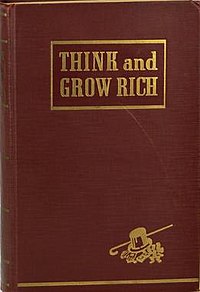



1 2 3 4 5 6 7 8 ... 47 48 49 50 51 52 53 54 55 (of 75 pages)