 Politics › Re: NAQS Laments Loss Of $80m On Hibiscus Export Within Two Years by Blue3k2(op): 6:15am On Nov 16, 2019 Politics › Re: NAQS Laments Loss Of $80m On Hibiscus Export Within Two Years by Blue3k2(op): 6:15am On Nov 16, 2019 |
Dr Isegbe disclosed that the implementation of the work plan stands at 90 per cent. He called on all stakeholders to rally round NAQS to push the work plan to the finish line. Does this mean you'll be exporting to Mexico by 2020? |
| Travel › Re: Eastern Rail Operations: NRC Loses N1.04bn In 5yrs by Blue3k2(op): 5:33am On Nov 16, 2019*. Modified: 6:07am On Nov 16, 2019 |
There's been no major updates for the past year. The FG concessioned the narrow guage lines to Transnet to rehab. NRC should've got this narrow gauge concession taken care of by now. The government should focus on making more money moving cargo. NRC making more than previous years revenue but it could be better. 
|
| Travel › Eastern Rail Operations: NRC Loses N1.04bn In 5yrs by Blue3k2(op): 5:18am On Nov 16, 2019 |
The Nigerian Railway Corporation (NRC) has been losing at least N208 million each year since 2014 in its eastern rail line, by far the most lucrative route, investigations have proven. The eastern rail corridor connects Port Harcourt in the Niger Delta – passing through Aba, Umuahia, Uzuakoli, Enugu, Makurdi before terminating at Maiduguri in the north-eastern Borno State near border with Chad Republic.
In the last five years, the corporation has lost not less than N1.04 billion on the eastern rail line, due to non-operation. The NRC has total route-km of 3,528km as of 2007. The western line which connects Lagos Nguru, Yobe State covers a distance of 1,126km.
Findings showed that an eight-coach train running from Port Harcourt to Aba, Umuahia, Uzuakoli to Enugu makes not less than N2 million per trip. Since the train was making two trips a week from Port Harcourt, it would make N4 million weekly; multiplied by 52 weeks a year, the NRC would realise N208 million; across the five years it has not operated, the corporation lost N1,040 billion.
Olusoji Osidipe, the eastern wing district manager of NRC office in Enugu, confirmed to our correspondent hat the railway has not operated in the zone for the past five years. He said it was as a result of vandalization of the rail lines at certain portions by unknown individuals.
He blamed the vandals for apparently not understanding the economic importance of rail transport, and its quick impact in boosting the economic development of an area hosting the rail line or station.
Further investigations revealed that apart from Osidipe’s rail-track vandalization claim, the long disuse of the rail lines by NRC predisposed them for the vandals to have easily made away with rail parts. But a major issue we found out was that many parts of the rail lines between Aba and Enugu and beyond have gone sorely bad. Some rail bridges have been weakened due to non-servicing by NRC, and need urgent reconstruction, if not outright replacement. Also, some portions of the rail-track have had the soil around it washed away by sheet erosion. They need urgent reconstruction before train can pass on them comfortably.
The reason why Nigeria Railway Corporation abandoned the Port Harcourt – Aba – Enugu rail line immediately after the last administration five years ago could not be understood by some workers and officials of the corporation who spoke with our correspondent, but preferred not to be mentioned in the press.
Contract to rehabilitate the rail line from Port Harcourt to Makurdi was awarded during the last administration to Eser West African Company Limited by the administration of former president, Goodluck Johnathan. The company was said to have largely completed the contract by 2014, and train operations began from Port Harcourt, Aba, Umuahia, Uzuakoli, passing Enugu to Makurdi.
Osidipe rather called on the villagers along the rail tracks to assist the NRC in monitoring the rail-tracks from being tampered with by the vandals.
He also appealed to the Federal Government to make a law that would prohibit buying and selling of railway materials from iron melting companies without clearing from the NRC; insisting that it would be one of the measures to stop rail lines vandalization in many parts of the country.
The NRC eastern wing district manager Osidipe also said erosion and landslide have equally gravely affected many areas of the rail tracks in the eastern district, and confirming the weakness of some of the rail bridges.
Many also adduced that NRC’s decision to suddenly stop usage of the eastern district rail line that opened it up for eventual vandalization, since this had not happened in the past. Many yet question why the sudden stoppage without giving any reason.
Business activities along the sub-stations have equally stopped abruptly. Petty traders and hawkers who operated along the rail route have been forced out of business, with special reference to Aba – Umuahia – Uzuakoli – Enugu rail corridor where railway-propelled small-scale business was a big commercial avenue. All this is gone. Today, the Enugu Railway Station, the biggest rail terminus east of the Niger, wears a forlorn look. The entire environment looks eerie. Old unserviceable rail coaches litter everywhere around the station and the rail tracks.
Meanwhile, the east line rail line failure apart, all the federal roads in the south-east are gone. The Enugu–Port Harcourt expressway, Enugu–Onitsha federal highway, Umuahia–Ikot-Ekpene–Itu–Calabar, Owerri–Onitsha, Okigwe–Owerri, Orlu–Ekwulobia–Awka highways are death traps. Transport fares on the roads have hit new highs, thereby further raising food prices in the zone. Source: https://www.businessamlive.com/nigerian-railway-loses-n1-04bn-in-5yrs-on-eastern-rail-operations/amp/
|
| Politics › Re: NAQS Laments Loss Of $80m On Hibiscus Export Within Two Years by Blue3k2(op): 11:26pm On Nov 15, 2019 |
Aren't there experts that can fumigate the storage area. After that they just have store food better. It's been two years what's the issue. |
| Politics › NAQS Laments Loss Of $80m On Hibiscus Export Within Two Years by Blue3k2(op): 11:15pm On Nov 15, 2019 |
Nigeria lost 80 million dollars, an equivalent of 28.8 billion naira in the last two farming seasons due to the lull in the export of Hibiscus flower (zobo), the Director-General of Nigeria Agricultural Quarantine Service (NAQS), Dr Vincent Isegbe, has said.
In a chat with journalists, on Thursday, in his office in Abuja, Dr Isegbe lamented that ‘’the lingering ban on the export of the product to Mexico, the largest importer of Nigerian hibiscus has had the effect of freezing one of Nigeria’s most significant foreign revenue streams in the agricultural sector.’’
He explained that Mexico suspended the export of Hibiscus flowers from Nigeria in 2017, on account of the presence of a storage pest in some cargoes which originated from our country.
Since then, NAQS, which is the lead agency responsible for facilitating international trade in Nigerian agricultural commodities, is working hard to reopen the gateway of the Mexican market to Nigerian Hibiscus as soon as possible.
According to him: ‘’We are desperate to achieve the resumption of export to our largest Hibiscus trading partner. Thousands of jobs are at stake too.
“We have developed a work plan in consultation with relevant stakeholders across the value chain (namely, Hibiscus farmers, suppliers, transporters and cleaners) to serve as a pathway to regaining Nigerian access to the Mexican market.
“This work plan aims to get everyone on the same page in the interest of achieving industry-wide compliance with the applicable export grade standards for Hibiscus.’’
Dr Isegbe disclosed that the implementation of the work plan stands at 90 per cent. He called on all stakeholders to rally round NAQS to push the work plan to the finish line. Source: https://tribuneonlineng.com/naqs-laments-loss-of-80m-on-hibiscus-export-within-two-years/ |
| Politics › Chinese Firm Supports Construction Of Trans-saharan Highway Project In Nigeria by Blue3k2(op): 3:16am On Nov 13, 2019 |
Chinese engineering firm on Monday said it will continue to support the ongoing construction of the trans-Saharan highway within the Nigerian territory, with timely completion of its road project in the central part of the country.
The trans-Saharan highway project is a continental-scale infrastructure that passes through six African countries, namely Algeria, Chad, Mali, Niger, Nigeria, and Tunisia. It has an objective to contribute to the development of commercial exchanges through roads and promote regional integration in Africa.
Handling an important part of the project in Nigeria, the China Harbor Engineering Company (CHEC) said it is paying serious attention to the development for which it is handling the expansion of 5.4km Abuja-Keffi expressway and dualization of Keffi-Akwanga-Lafia-Makurdi road in central Nigeria.
Speaking to Xinhua on the sidelines of a two-day 70th session of the Trans-Sahara Road Liaison Committee (TRLC), Zhang Wenfeng, the managing director of CHEC in Nigeria, described the ongoing project as one that would "beef up the international connection to all regions in Africa".
With a contractual construction period of 36 months, 15 percent of the project funds are raised by the Nigerian government, and 85 percent are provided by the Export-Import Bank of China.
"The project will be directly connected to the West African coastal road, west to Ghana, Côte d'Ivoire, and so on, through Lagos, and north to Niger; countries such as Algeria through Kano and east to countries such as Cameroon and Chad through Calabar," Zhang said.
Not only does the project improves the transportation circumstances in Nigeria, but also assembles a large international interconnection road network among West Africa, Central Africa, and North Africa, substantially enhancing the road conditions within the region, the Chinese senior executive said.
Meanwhile, most parts of the trans-Saharan highway project jointly constructed by the six aforementioned African countries have been asphalted so far, accounting for a total of 80 percent of the entire project, a Nigerian official said on Monday.
At the opening of the TRLC session, which is overseeing the progress of the project, Babatunde Fashola, Nigeria's works and housing minister, said "it is very useful for every African to be aware of the existence of a trans-African highway plan which seeks to connect the whole of Africa right from Cape Town up to Tunisia, either by driving through the East African border, or the West African border or through the center of Africa."
According to the minister, with a total of 9 highways at different stages of connection, the road connects 74 urban centers and 60 million people across the six countries. The project has a total stretch of 4,500km on the route linking Algiers in Algeria to Lagos in Nigeria.
Three of those highways pass through the territory of Nigeria, and the project would be finished soon, Fashola said.
In attendance at the meeting were representatives of all the countries, as well as the Secretary-General of the TRLC, Ayadi Mohammed.
The idea of a trans-Sahara highway was proposed in 1962, with construction of sections in the Sahara starting in the 1970s. Source: http://www.china.org.cn/business/2019-11/12/content_75398522.htm
|
| Politics › Ondo Deep Seaport: Akeredolu Set To Receive Implementation Plan From Spanish by Blue3k2(op): 3:38pm On Nov 12, 2019 |
A Spanish firm, Ocean Infrastructure Management (OIM) and its Nigerian partner, Franchise and Business Solutions Limited (FBS) will on Thursday hold a high level interaction with Ondo State Governor, Arakunrin Rotimi Akeredolu in Akure over the Ondo Deep Seaport project.
The meeting with the Governor will also witness the presentation and adoption of the Project Implementation Plan for the Deep Seaport spelling out milestones and timelines for the completion of the multibillion dollars project.
Consultant to Ondo State Government on the Deep Seaport Project, Amiable Consultancy and Logistics Services Limited, said in Lagos weekend that the project has continued to enjoy the interests of international investors from various parts of the world.
The Managing Director/Chief Executive of Amiable Consultancy and Logistics Services, Ms. Aina Egharevba, said the deep seaport, being championed by Governor Akeredolu, would open up the economy of Ondo State and create job opportunities for up to 20,000 people in the coastal areas of the state.
Egharevba, who is a former Executive Director, Marine and Operations of Nigerian Ports Authority (NPA), said some key milestones, including the preparation of the port feasibility study; conducting preliminary surveys such as the bathymetric/hydrographic survey and geotechnical survey; soil resistivity test, Met-Ocean studies; and topographic survey for the deep seaport have been successfully achieved.
She said the feasibility study and conceptual master plan for the new port have been approved by the Nigerian Ports Authority (NPA).
Egharevba said the visiting Spanish team will also carry out a review of key project issues and establishing common understanding of the project objectives with officials of the Ondo State Development and Investment Promotion Agency (ODIPA).
“After this meeting, we will be moving to the next crucial stage, which is the development of the Outline Business Case (OBC) and Final Business Case (FBC) for this all important project. We are committed to working with officials of the Ondo State Government to realize the full vision of the Governor for the deep seaport,” she said.
Speaking earlier this year after accompanying President Muhammadu Buhari on an investment drive trip to The Netherlands, the Ondo State Governor had said that the Ondo Deep Seaport project is an investment in the future of the state.
“We are doing things for the generation to come. I have always believed that there should be a beginning. We have started; there is no going back.
“I was privileged to travel with President Buhari to The Netherlands. We went on a boat and visited the ports. I told him, if anything like this must happen in Nigeria, it must be in Ondo State. Not only that, the President has said it most of the times that he knows that Ondo is the right place for a deep-sea port.
“We should not play politics with everything. It is not our making but providence has put us where we are today. Where we are today, is the best place to have a deep-sea port.
“Ours, as a state, is to prepare the ground and show the feasibility and bankability. Can Ondo State do it? No, Ondo State cannot build or own a port. But there are many people who are willing to invest.
“The Chinese, Dutch, and others are interested because this will be a West African port; not just for the country. It is not that we are looking for money to build a port but we are looking for investors and they will invest here,” the Governor had said in Akure during the presentation of the report of the consultants to the State Executive Council and stakeholders of the coastal communities early this year. Source: https://leadership.ng/2019/11/12/ondo-deep-seaport-akeredolu-set-to-receive-implementation-plan-from-spanish-firm/ |
| Politics › China Threatens To Suspend Mambilla Power Plant Funding Over Legal Disputes by Blue3k2(op): 4:26pm On Nov 11, 2019 |
The Chinese government has asked the federal government to settle the legal dispute over the $5.8 billion Mambilla power project or it would not provide funds for the project.
The China Gezhouba Group Corporation of China (CGGCC) and China Geo-Engineering Group Corporation (CGGC) had in 2006 won the bid for a joint venture to execute the hydropower project with a proposed capacity of 3,050 megawatts.
But in 2003, the Federal Ministry of Power had awarded the build, operate and transfer (BOT) contract of the project to Sunrise Power and Transmission Company Limited (SPTCL), a local content partner.
In November 2012, a general project execution agreement (GPEA) was signed with SPTCL.
According to The Cable, the power ministry in November 2017 signed another engineering, procurement and construction (EPC) contract with Sinohhydro Corporation of China, CGGCC and CGGC to form a joint venture for the execution of the project, excluding SPTCL.
As a result, SPTCL filed a suit against the federal government and its Chinese partners at the International Chamber of Commerce (ICC) in Paris, France, over an alleged breach of contract.
The Chief Executive Officer of SPTCL, Leno Adesanya, claimed the company had spent millions of dollars with financial and legal consultants to raise about $6 billion for the execution of the project, yet the company has suffered a lot over the years “through improper administrative interruptions and interventions”.
Due to the ongoing legal tussle, Nigeria risks $2.3 billion fine over the proposed 3,050-megawatts facility.
In a letter dated September 18 and addressed to the Minister of Power, Mr. Sale Mamman, the Project Manager for the Chinese partners, He Yongjun, said the China Exim Bank, which is expected to provide 85 per cent of the joint funding, will not finance the project until the legal issues are resolved.
“The Chinese government is showing a positive attitude towards the Mambilla Project. However, according to financing policy of China, the Export-Import Bank of China cannot provide loans to a project with legal disputes, which is the main reason why the project has not entered into substantive financing negotiations so far,” Yongjun said.
“On 5th September, 2019, Yang Jiechi, Special Representative of President Xi Jinping informed the Nigerian President and Commander-in-Chief, President Muhammadu Buhari, that unless the legal dispute is resolved, conforming out of court settlement funding for the loan will not be accessed.
“A meeting shall be organised by the Ministry of Power for negotiation between the relevant authorities of the Nigeria government, SUNRISE, and the members of the EPC Contractor JV to resolve the legal disputes through amicable negotiations so as to let the plaintiff withdraw the lawsuit.
“Should such negotiation fail, if the Nigeria government considers that the arbitration result is beneficial to the Nigeria government, it is suggested that the judicial department of Nigeria (Attorney General) issue a formal legal paper to the Chinese authority confirming that the legal dispute has no effect on the Mambilla Project.
“And the Nigeria government requests China to start project financing negotiation as soon as possible, financing of the Mambilla Project cannot be stagnant due to legal disputes,” it added. Source: https://www.thisdaylive.com/index.php/2019/11/11/china-threatens-to-suspend-mambilla-power-plant-funding-over-legal-dispute/
|
| Politics › Re: Ghana Has So Much Electricity That It Is Costing $450m A Year by Blue3k2(op): 1:25pm On Nov 11, 2019 |
EVarn:
That is a nice development,why are the people against it? From what I read they're disappointed in the government handling of power sector. I guess there's areas that need their attention domestically. |
| Politics › Re: Northern States Must Eradicate Almajiri System - Kaduna State Commissioner Baba by Blue3k2(op): 1:23pm On Nov 11, 2019 |
Bump |
| Politics › Re: Northern States Must Eradicate Almajiri System - Kaduna State Commissioner Baba by Blue3k2(op): 6:49pm On Nov 10, 2019 |
According to her, most of the children taken off the street recently by her ministry were discovered to be from states other than Kaduna. Lol they're waiting for BBC documentary before they spring into action. Sanusi is right when he says this practice is parental neglect. It continues because the states refuse to prosecute or regulate. Muslims in other countries send their kids to a madrasa to learn Islam not the streets. |
| Politics › Northern States Must Eradicate Almajiri System - Kaduna State Commissioner Baba by Blue3k2(op): 6:31pm On Nov 10, 2019*. Modified: 6:52pm On Nov 10, 2019 |
The Kaduna State Commissioner for Human Service and Social Development, Hajiya Hafsat Baba, on Tuesday, called on the 19 northern states to come up with a strong policy to successfully eradicate the almajiri system in the region.
Baba made the call in Kaduna while defending her ministry’s budget before the House of Assembly Committee on Human Services and Social Development, according to the News Agency of Nigeria.
She noted that for the almajiris to be completely off the streets, policies needed to be put in place to eradicate the menace.
Baba stated, “It is the responsibility of the entire 19 northern states to come up with a policy that will take care of this menace.
“Kaduna State might succeed in the eradication, but then, there will be an influx of almajiris from neighbouring states into Kaduna again.”
According to her, most of the children taken off the street recently by her ministry were discovered to be from states other than Kaduna.
“Presently the ministry is trying to identify the state of origin of each child so that they can be taken back to their various homes, because most of them still need parental care,’’ she said.
Speaking on the budget, she said the priority of the ministry was human capital development.
The commissioner stated, “With a critical look, one realises that we are in every ministry, because the ministry stands for women, children, people with disabilities and also the youth. So, inevitably, we are in every ministry.” Source: https://punchng.com/northern-states-must-eradicate-almajiri-system/amp/Front page: lalasticlala mynd44 |
| Politics › Re: Ghana Has So Much Electricity That It Is Costing $450m A Year by Blue3k2(op): 5:01pm On Nov 10, 2019 |
Finance minister Ken Ofori-Atta, who will present the 2020 budget next week, has warned that the sector’s “unsustainable” liabilities may amount to $12.5bn — about a fifth of GDP — by 2023 from about $2.5bn in January. Im surprised nobody is talking about the debt projections by the finance minister. That's pretty crazy considering the debt to gdp is already high. They better get these deals worked out. vaxx2:
Ghana also export to ivory coast as well..... Ghana new industry will soon take it over as more industry are springing up under the initiative of 1 district 1 factory. program. There is plan underway to construct bauxite refinery which Ghana has in abundance . that alone can consume over 2000 megawatt. if goverment plans work , the overcapacity will not be a problem. I wasnt sure about the ivory coast since I only saw one article state it. Anyway these factories better start up asap then. Has the Bauxite refinery been finalized? Can you clarify if their making aluminum oxide or aluminum. |
| Politics › Re: Ghana Has So Much Electricity That It Is Costing $450m A Year by Blue3k2(op): 4:30pm On Nov 10, 2019 |
EVarn:
Ghana should look towards exporting more of the excess power generated to west African neighbors; Liberia, Sierra Leone, Ivory Coast, and Togo. They already export to Burkina Faso, Benin and Togo. Their Vice president announced plans to export to Niger and Mali. The ghanaians i thr comment section dont like that idea. It's interesting to see they're skipping Nigeria. 
|
| Politics › Re: Ghana Has So Much Electricity That It Is Costing $450m A Year by Blue3k2(op): 4:01pm On Nov 10, 2019*. Modified: 4:27pm On Nov 10, 2019 |
Ghana’s energy losses stem from a combination of the liabilities for excess supplies, slow customer payments, under-recovery of costs and even government ministries and agencies’ unpaid lighting bills If you're over producing why not export the excess. I read they already export to Togo, Benin and Burkina Faso. Why is it always government not paying power bills. They wont learn to pay bills till you cut off the lights. |
| Politics › Ghana Has So Much Electricity That It Is Costing $450m A Year by Blue3k2(op): 3:56pm On Nov 10, 2019*. Modified: 4:13pm On Nov 10, 2019 |
Accra — Ghana has too much power and gas, and that’s a bad thing for government finances.
With capacity that’s almost double the country’s peak demand needs, Ghana’s electricity utility has to pay independent producers about $450m every year for energy that it doesn’t need or use. This adds to the sector’s liabilities, which are the biggest debt threat to a nation that seven months ago completed its 16th bailout programme with the International Monetary Fund.
Finance minister Ken Ofori-Atta, who will present the 2020 budget next week, has warned that the sector’s “unsustainable” liabilities may amount to $12.5bn — about a fifth of GDP — by 2023 from about $2.5bn in January.
“Financing of the energy sector is going to be a key risk going forward in terms of debt sustainability,” Cobus de Hart, chief economist for west, central and North Africa at NKC African Economics in SA said by phone. While Ghana is doing well to keep expenses under control, “debts keep rising at a much faster pace”.
Debt origin
Ghana’s energy losses stem from a combination of the liabilities for excess supplies, slow customer payments, under-recovery of costs and even government ministries and agencies’ unpaid lighting bills, said David Vilar Ferrenbach, an Accra-based energy-sector specialist at the World Bank.
From 2020, excess gas supplies could add as much as $850m per year to the liabilities, Ofori-Atta said in July. That’s as delivery deals from additional supplies are due to start even though producers including Tullow Oil and a venture between Eni and Vitol already deliver sufficient volumes from local fields.
Ghana’s current state of overcapacity “arose out of an uncoordinated approach, plunging the energy sector into a financial crisis,” he said.
At stake
The energy sector’s shortfall for 2019 is expected to be $1.3bn, according to Ofori-Atta. While the government is not directly responsible for shouldering all of this, it often needs to help the power utility to cover these losses.
The IMF forecasts the debt stock will reach 63% of GDP at the end of December, from 51% in January. Not all of that is due to the energy contracts. A bailout of the banking sector has also added to the debt as investors fear a repeat of excessive spending in the run-up to elections, of which the next is scheduled for December 2020.
“The risk of additional contingent liabilities and continued revenue underperformance represents some of the sovereign’s main credit challenges,” Elisa Parisi-Capone, a vice-president at Moody’s Investors Service, said in e-mailed response to questions. The company assesses Ghana’s debt at six steps below investment grade. Total debt was $39.1bn at the end of July, according to the Bank of Ghana.
Government’s steps
The power losses contributed to the 5.2-billion cedis (R13.95bn) that Afori-Atta added to Ghana’s debt stock in July to prevent the government from breaching its budget-deficit ceiling. A month later, he started talks with independent power producers to restructure their agreements, a move that the industry fiercely resists. While initially saying the talks would take three months, there has been little progress and Ofori-Atta now says he’s unsure when they will conclude. That raises the risk that the payment obligations will continue in 2020.
“There’s always room to negotiate if there’s a good solution for both parties,” Vilar Ferrenbach said. “They have to negotiate case by case. A blanket solution” won’t work, he said.
The government must also restart a process to find a private operator for the power-distribution network after it terminated an earlier agreement.
Ghana’s dollar bonds have returned 1.7% since Ofori-Atta’s announcement in July that he will renegotiate deals with private producers, lagging African peers that have returned an average of 2%.
“There’s additional risk to the budget,” said Yvonne Mhango, head of research for sub-Sahara Africa at Renaissance Capital in Johannesburg. “It’s going to be a challenging time for them given that it’s going to be the year of the election, and there are constraints in terms of what they’ll like to achieve while at the same time trying to meet debt obligations.”
Bloomberg Source: https://www.businesslive.co.za/bd/world/africa/2019-11-10-ghana-has-so-much-electricity-that-it-is-costing-450m-a-year/
|
| Business › Re: Nigeria: Low Milk Supply Hits Kano Yoghurt Plant by Blue3k2(op): 2:17pm On Nov 10, 2019 |
The herders have to rush with the milk so that it doesn't spoil using motorcycles. When it gets here, we carry out our analysis then we pasteurize it or we distribute it to hawkers. • Do these herders have refrigerators to keep their raw milk even if they could wait for truck to transport it? if the milk isnt good enough to pasteurized why is good enough to beresold to hawker? |
| Politics › Re: NIS Registers 3,704 irregular migrants Migrants In Oyo by Blue3k2(op): 8:00pm On Nov 07, 2019 |
“All regular and irregular migrants must register before Jan. 11, 2020 deadline and anyone that failed to register within this period risk N500,000 fine or three months imprisonment or both,” Abdullahi said. Lol you're going to fine or jail illegal migrants on top deporting them? This going to be interesting to watch. Lets hope Nigeria is just blowing hot air. |
| Politics › NIS Registers 3,704 irregular migrants Migrants In Oyo by Blue3k2(op): 7:54pm On Nov 07, 2019 |
The Nigeria Immigration Service (NIS), Oyo State Command, says it has so far registered 4,506 migrants since the commencement of e-migrant registration in the state on Aug. 30.
It would be recalled that the Federal Government had issued a January 2020 deadline for all foreigners in Nigeria to register.
The NIS Comptroller in the state, Saleh Abdullahi, disclosed this on Wednesday in an interview with News Agency of Nigeria (NAN) in Ibadan.
Abdullahi said the turnout of migrants in the state on a daily basis was highly impressive.
“Infact, we registered 140 migrants per day and we have registered a total of 4,506 migrants so far comprising of 802 regular and 3,704 irregular migrants.
“Regular migrants are those with valid papers to live in Nigeria, that is those with ECOWAS Resident Card or Resident Permit while irregular are those without valid papers to live in Nigeria.
“All regular and irregular migrants must register before Jan. 11, 2020 deadline and anyone that failed to register within this period risk N500,000 fine or three months imprisonment or both,” Abdullahi said.
The state comptroller said that the only challenge faced currently by the command was that it only has one centre throughout the state where the registration is taking place.
Abdullahi said the command in order to register all the migrants in the state before the deadline now closed by 8 p.m. instead of 4 p.m. and sometime work on Saturday.
“We have Division Immigration Officer (DIO) whose duty is to educate the migrants on the importance of e-migrant registration so that they can come to the state command to register before the deadline.
“We pledged to register all the migrants within this window period,” the comptroller said. Source: https://www.pulse.ng/news/local/nis-registers-4506-migrants-in-oyo/4vdhh6x.amp |
| Business › Re: Nigeria: Low Milk Supply Hits Kano Yoghurt Plant by Blue3k2(op): 3:38pm On Nov 07, 2019 |
"So what I am telling you is that it is only in this facility that we have chiller. We do not have cooling van or cooling tank that we can use to transport fresh milk to up-takers in Zaria. We use taxi service to transport our products that is why we are yet to go into mass production," Usman added. Man what a glaring oversight. The plant should've bought the refrigerated trucks or contracted out the collection. Do they expect these guys to transport their 500 liters of milk via motor cycle? At least this presents a good business opportunity for anyone who wants to do business with them. 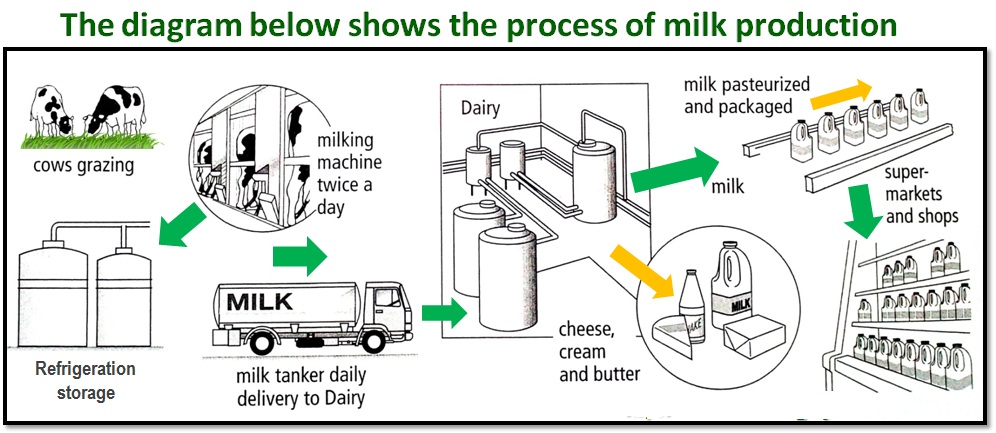
|
| Business › Nigeria: Low Milk Supply Hits Kano Yoghurt Plant by Blue3k2(op): 3:33pm On Nov 07, 2019 |
Weeks after the official commissioning of a milk processing plant by the Minister of Agriculture and Rural Development, Alhaji Mohammad Sabo Nanono, at Tassa village in Dawakin Kudu Local Government Area of Kano State, Daily Trust has gathered that the facility is yet to commence operation due to low supply of milk.
The mini milk processing plant was built by the federal government in support of individual initiative aimed at mitigating numerous challenges nomadic herders encounter on daily basis in the course of their ancestral business. It was inaugurated on Saturday, October 26, 2019.
However, when Daily Trust visited the plant recently, it observed that the facility is currently grappling with low supply of cow milk to facilitate take-off and full operation.
OVER 5,000 NIGERIAN MEN HAVE OVERCOME POOR BEDROOM PERFORMANCE SYNDROME DUE TO THIS BRILLIANT DISCOVERY
For the over three hours that Daily Trust was at the site, only five people supplied the firm with a few litres of the product.
According to findings, the 500,000 litre capacity milk processing plant was built to produce pastuerised yoghurt as well as serving as a conduit point for uptake of fresh milk by other milk processing companies within the state and beyond.
Speaking, the chairman, Kano Diary and Livestock Husbandry Cooperative Union, Malam Usman Abdullahi Usman, said the facility had already started its phase 1 operation which entailed collection of fresh milk for onward distribution to up-takers.
He added that the plant is hoping to start the second phase which is full production of yoghurt and many other dairy products very soon.
Usman however noted that many cattle rearers around the area were not aware that the facility had started skeletal operation.
Our reporter learnt that at the moment, the collected milk is forwarded to small-scale processors in the city as a way of building and retaining customers.
Usman told our reporter that the facility received supply from clusters of cattle herders from different herder communities around the state with their major supplies coming from Falgore forested region.
Kano dairy cooperative is an umbrella body of over 70 registered clusters.
Speaking about the motive that necessitated the establishment of the plant, Usman said. "This place was opened to produce hundred percent fresh cow milk yoghurt, then part of the plan is to sell it raw to up-takers. We process it into sweetened yoghurt. We intend to do 'fura da nono' then butter, these four are the major products we intend to produce from here."
He said at the moment, any quantity collected at the plant was sold to up-takers, some of whom came from Zaria in Kaduna State.
He said the milk they collect from Falgore would be pasteurised into yoghurt.
Usman also said the plant was test-run only once, a day after its official commissioning where about 500 litres of fresh cow milk was pasteurised into yoghurt which is currently on sale in their shops in various locations within the city.
"Apart from this place, we have our outlets. So after we pasteurize here we take the product to our outlets for sale. We have outlet at Kwanar Dawaki. So this is just a centre for milk collection. We sell fresh milk to up-takers from here.
Thirdly, it is a centre for pasteurizing and production of yoghurt which we have not started in large volume yet.
Usman identified lack of cooling system for fresh milk as another major constraint the facility is battling.
He said for optimum operation to be achieved at the plant, there must be a chain of cooling system from the farm to the up-takers.
"From the 'ruga' to this facility, we do not have cooling system. The herders have to rush with the milk so that it doesn't spoil using motorcycles. When it gets here, we carry out our analysis then we pasteurize it or we distribute it to hawkers.
"So what I am telling you is that it is only in this facility that we have chiller. We do not have cooling van or cooling tank that we can use to transport fresh milk to up-takers in Zaria. We use taxi service to transport our products that is why we are yet to go into mass production," Usman added.
Also commenting, the ward head of Yan' Barau village, Ciroma Hassan, lauded the federal government and the management of the company for the project, saying it would go a long way in solving many problems confronting nomadic herders.
He said courtesy of the project, many nomadic children have now enrolled in school to acquire western and religious education while the women who usually hawked milk in the city now have better economic ventures to do.
He called on all Fulani nomadic groups to embrace the initiative to better their lives and the future of their children.
Weeks after the official commissioning of a milk processing plant by the Minister of Agriculture and Rural Development, Alhaji Mohammad Sabo Nanono, at Tassa village in Dawakin Kudu Local Government Area of Kano State, Daily Trust has gathered that the facility is yet to commence operation due to low supply of milk.
The mini milk processing plant was built by the federal government in support of individual initiative aimed at mitigating numerous challenges nomadic herders encounter on daily basis in the course of their ancestral business. It was inaugurated on Saturday, October 26, 2019.
However, when Daily Trust visited the plant recently, it observed that the facility is currently grappling with low supply of cow milk to facilitate take-off and full operation.
For the over three hours that Daily Trust was at the site, only five people supplied the firm with a few litres of the product.
According to findings, the 500,000 litre capacity milk processing plant was built to produce pastuerised yoghurt as well as serving as a conduit point for uptake of fresh milk by other milk processing companies within the state and beyond.
Speaking, the chairman, Kano Diary and Livestock Husbandry Cooperative Union, Malam Usman Abdullahi Usman, said the facility had already started its phase 1 operation which entailed collection of fresh milk for onward distribution to up-takers.
He added that the plant is hoping to start the second phase which is full production of yoghurt and many other dairy products very soon.
Usman however noted that many cattle rearers around the area were not aware that the facility had started skeletal operation.
Our reporter learnt that at the moment, the collected milk is forwarded to small-scale processors in the city as a way of building and retaining customers.
Usman told our reporter that the facility received supply from clusters of cattle herders from different herder communities around the state with their major supplies coming from Falgore forested region.
Kano dairy cooperative is an umbrella body of over 70 registered clusters.
Speaking about the motive that necessitated the establishment of the plant, Usman said. "This place was opened to produce hundred percent fresh cow milk yoghurt, then part of the plan is to sell it raw to up-takers. We process it into sweetened yoghurt. We intend to do 'fura da nono' then butter, these four are the major products we intend to produce from here."
He said at the moment, any quantity collected at the plant was sold to up-takers, some of whom came from Zaria in Kaduna State.
He said the milk they collect from Falgore would be pasteurised into yoghurt.
Usman also said the plant was test-run only once, a day after its official commissioning where about 500 litres of fresh cow milk was pasteurised into yoghurt which is currently on sale in their shops in various locations within the city.
"Apart from this place, we have our outlets. So after we pasteurize here we take the product to our outlets for sale. We have outlet at Kwanar Dawaki. So this is just a centre for milk collection. We sell fresh milk to up-takers from here.
Thirdly, it is a centre for pasteurizing and production of yoghurt which we have not started in large volume yet.
Usman identified lack of cooling system for fresh milk as another major constraint the facility is battling.
He said for optimum operation to be achieved at the plant, there must be a chain of cooling system from the farm to the up-takers.
"From the 'ruga' to this facility, we do not have cooling system. The herders have to rush with the milk so that it doesn't spoil using motorcycles. When it gets here, we carry out our analysis then we pasteurize it or we distribute it to hawkers.
"So what I am telling you is that it is only in this facility that we have chiller. We do not have cooling van or cooling tank that we can use to transport fresh milk to up-takers in Zaria. We use taxi service to transport our products that is why we are yet to go into mass production," Usman added.
Also commenting, the ward head of Yan' Barau village, Ciroma Hassan, lauded the federal government and the management of the company for the project, saying it would go a long way in solving many problems confronting nomadic herders.
He said courtesy of the project, many nomadic children have now enrolled in school to acquire western and religious education while the women who usually hawked milk in the city now have better economic ventures to do.
He called on all Fulani nomadic groups to embrace the initiative to better their lives and the future of their children. Source: https://www.dailytrust.com.ng/low-milk-supply-hits-kano-yoghurt-plant.html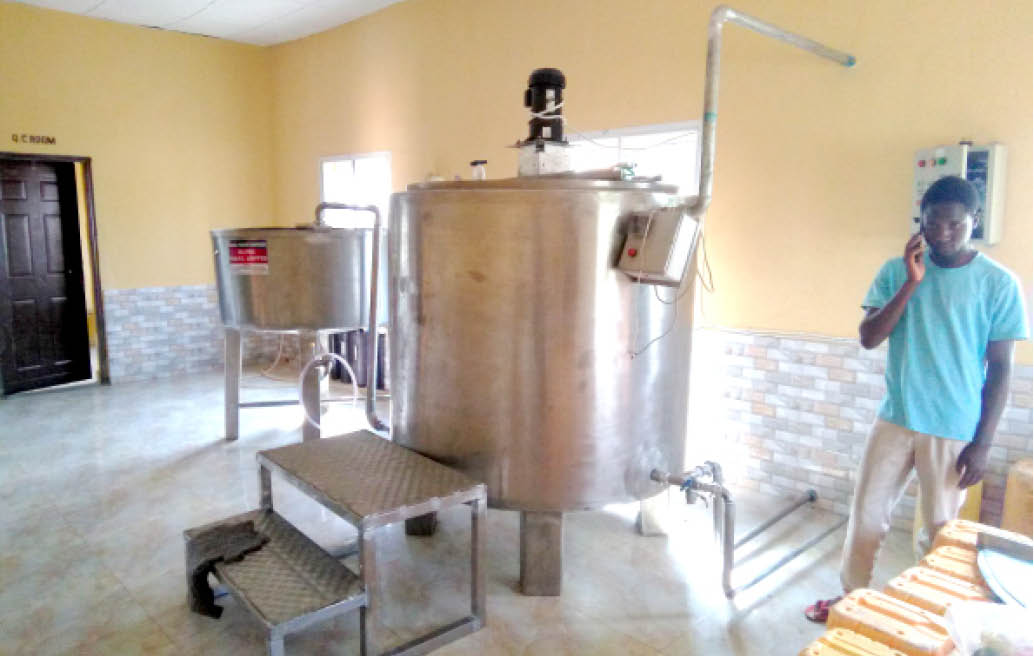
|
| Politics › Re: Ajaokuta: Global Steel, FG Prepare For Fresh Legal Battle by Blue3k2(op): 3:40pm On Nov 02, 2019 |
Bump |
| Politics › Re: Kaduna Dry Port: Nigeria Losing 100,000TEUs Cargo To Benin Annually by Blue3k2(op): 1:53am On Nov 02, 2019 |
He expressed fears that the action of the Shipping Companies might be aimed at sabotaging the success of the Dry Port. Lol that's a paranoid and immature worldview. There's probably alot of factors that influence their business decisions. The cost and clearing at Nigerian ports compared to Benin's is the bigger factor. Trains would help hence why both Nigeria and Benin are racing connect to Niger. “Our recent closure of our borders with them, has turned them against us. Infact they almost mobbed us during our recent visit to that country to explain to them why they should use the Kaduna Dry Port.” Lol tell them you come in peace. |
| Politics › Kaduna Dry Port: Nigeria Losing 100,000TEUs Cargo To Benin Annually by Blue3k2(op): 1:38am On Nov 02, 2019 |
Though it is more economical for Nigeria’s neighbouring landlocked country, Niger Republic to be transiting her imports through the Kaduna Dry Port or Kano Inland Container Terminal (ICD), the country has continued to patronise the Benin seaport which is over 1500 kilometers to Maradi, Niger’s southern Commercial hub.
This development, President of Association of Nigerian Licensed Customs Agents (ANLCA), Hon Iju Nwabunike disclosed, is costing the country loss of over 100,000TEUs (Twenty-foot equivalent unit)of container traffic annually (67,000 twenty foot containers and 18,000 forty foot containers).
He disclosed that the revenue loss to Nigeria as a result is heavy because Benin is paying huge transport cost for transporting her transit cargoes from the Cotonue Port to Maradi.
Nwabunike, who spoke in a recent interactive session with maritime journalists in Lagos tagged: ‘AMJON Monthly Roundtable’, organised by the Association of Maritime Journalists of Nigeria, disclosed that it will be extremely cheaper for Niger to transit her cargoes from the Kaduna Dry Port (about 250 kilometers to Mardi) or Kano ICD (about 150 kilometers to Maradi); than from the Cotonue Seaport which is over 1,500 kilometers to Maradi.
Nwabunike, who is also a Director of ICNL, operators of the Kaduna Dry Port, regretted that since the Dry Port was inaugurated with much fanfare by President Muhammadu Buhari in January 2018, it has been confronted with several challenges including ineffective rail transporting system and poor state of the roads from Lagos to Kaduna.
He, however, said that the most daunting challenge is the failure of the Shipping Companies to in line with global standards, start to send cargoes directly to the Dry Port and add the cost of land transportation from Lagos to the Dry Port, in the tariff chargeable on the cargo. He expressed fears that the action of the Shipping Companies might be aimed at sabotaging the success of the Dry Port.
Meanwhile, the Kaduna Dry Port is a port of origin and port of destination with full paraphernalia of all government agencies involved in the cargo import and export processes.
Nwabunike further warned that unless the Kaduna Dry Port is up and running effectively soonest, Nigeria would lose forever the over 100,000TEUs Niger’s transit cargoes as Benin Republic has already commenced construction of 1500 kilometers Standard Gauge rail line from Cotonue Port to Maradi, Niger Republic.
According to him, over 800 kilometers of the new Cotonue-Maradi rail line has been completed.
“When that rail line is completed, it will reduce the cost of transportation of cargoes from Cotonue to Maradi.” He said the only advantage we have over Benin is to snatch the Niger transit cargo traffic from them is the low cost of transportation we offer to Niger Shippers. “Otherwise, they are more emotionally attached to Benin which is their fellow French speaking nation than to us.”
He added that to make the bad situation worse: “Our recent closure of our borders with them, has turned them against us. Infact they almost mobbed us during our recent visit to that country to explain to them why they should use the Kaduna Dry Port.” Source: https://www.newtelegraphng.com/2019/10/kaduna-dry-port-nigeria-losing-100000teus-cargo-to-benin-annually/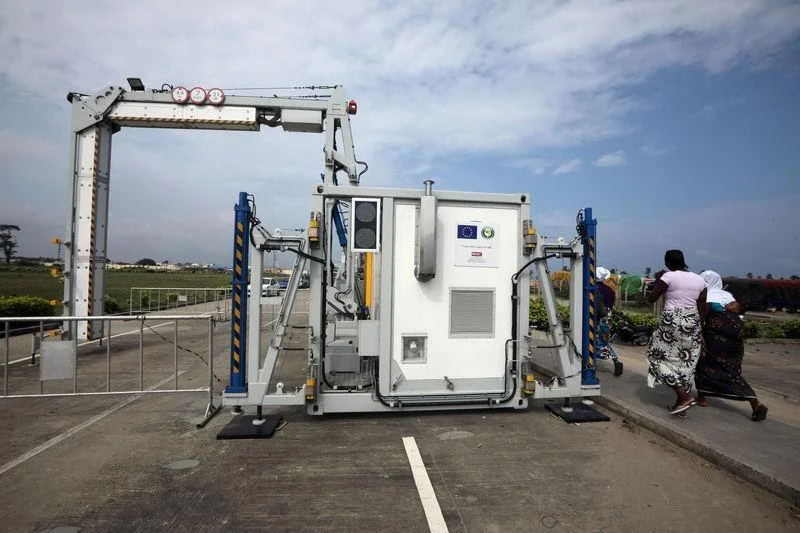

|
| Politics › Re: Ajaokuta: Global Steel, FG Prepare For Fresh Legal Battle by Blue3k2(op): 5:00pm On Nov 01, 2019*. Modified: 3:40pm On Nov 02, 2019 |
“These people (GSHL), they are not our friends, they don’t want Nigeria to produce steel and they have successfully done it over the years.
“As it where, they are preparing to go back to some court abroad to embarrass Nigeria but I’m sure the country is capable of meeting them at this point and we will not surrender our sovereignty to some individuals.” Lol its never Nigeria fault. Its always a global conspiracy. We'll see if Nigeria can beat them in court or just factor then into plans. Their concession well expire eventually. |
| Politics › Ajaokuta: Global Steel, FG Prepare For Fresh Legal Battle by Blue3k2(op): 4:43pm On Nov 01, 2019 |
Ihuoma Chiedozie, Abuja
There were indications on Thursday that Global Steel Holdings Limited, the company involved in the botched concession of Ajaokuta Steel Company Limited, was preparing for a fresh legal battle with the Federal Government over the control of the Nigeria’s steel mill.
The Minister of Mines and Steel Development, Olamilekan Adegbite, dropped the hint of the impending legal battle while inspecting the National Iron Ore Mining Company at Itakpe, Kogi State.
NIOMCO was reportedly ceded to the GSHL after the breakdown of the concession of Ajaokuta Steel to the Indian company for a 10-year period.
There are signs that the Federal Government has also backed out of the renegotiated concession agreement which allowed the GSHL to retain NIOMCO, as provisions were made for the iron ore mining company in the 2020 budget.
Also, Adegbite inspected NIOMCO and Ajaokuta Steel Complex on Thursday as part of plans by the Federal Government to revive the two long abandoned national assets.
The Federal Government recently entered a fresh agreement with Russia for the completion of Ajaokuta and stakeholders in the steel industry believe that the steel complex cannot function without NIOMCO.
Speaking during the inspection on Thursday, the minister declared that the ‘concession modification agreement’ with the GSHL did not make any sense, and vowed that Nigeria would keep both Ajaokuta Steel and NIOMCO.
He insisted that Nigeria would not surrender her sovereignty to ‘individuals’.
Although he did not mention the GSHL, he said the company did not want Nigeria to produce steel.
Disclosing that the company was preparing for another legal battle with Nigeria in a foreign court, he said the Federal Government was prepared for the fight.
The minister said, “As it where, Aladja (steel mill) has already been privatised and sold but Ajaokuta and Itakpe are still in government hands and will produce to the benefit of the people of Nigeria, no matter whose ox is gored.
“These people (GSHL), they are not our friends, they don’t want Nigeria to produce steel and they have successfully done it over the years.
“As it where, they are preparing to go back to some court abroad to embarrass Nigeria but I’m sure the country is capable of meeting them at this point and we will not surrender our sovereignty to some individuals.”
It would be recalled that Global Steel Holdings Limited, an Indian company, won the concession of the Ajaokuta steel mill for 10 years but the agreement was revoked when the Federal Government accused the firm of asset stripping, a development that led to a court case between the two parties.
To resolve the matter, NIOMCO was reportedly ceded to the GSHL for the remaining period of the concession in line with an agreement reached during mediation talks.
It is not yet clear whether a fresh legal battle would affect the new agreement entered between the Federal Government and Russia for the completion of Ajaokuta.
Earlier on Thursday, while showing the ministers of Mines and Steel Development around the company’s facilities, the acting Sole Administrator of NIOMCO, Augustus Nkechika, had stressed that Ajaokuta could not work without the iron ore mining company. Source: https://punchng.com/ajaokuta-global-steel-fg-prepare-for-fresh-legal-battle/ |
| Politics › Re: National ID Card Is Free, But Only 19% Nigerians Are Registered – Official by Blue3k2(op): 3:41pm On Oct 20, 2019 |
Racoon:
 Only 700 000 Nigerians out of 180M have registered for NIMC cards? Everyone speaking on behalf of goverment under this regime are all liars Only 700 000 Nigerians out of 180M have registered for NIMC cards? Everyone speaking on behalf of goverment under this regime are all liars Where's the lie? Reread the paragraphs carefully this time.. only over 37 million Nigerians of the estimated 200 million population are registered, Mrs Dagabana said. we have over 700,000 cards that are lying there in our offices, that the owners have not come to claim. |
| Politics › Re: National ID Card Is Free, But Only 19% Nigerians Are Registered – Official by Blue3k2(op): 3:07pm On Oct 20, 2019 |
“As I’m telling you now, we have over 700,000 cards that are lying there in our offices, that the owners have not come to claim.
“Because when you registered with us you provide a contact number and email address.
“We have spent money sending SMS to the numbers that were provided for us. This wouldn't be an issue if you people just mailed out these cards. Instead of spending money texting just send automated email and spend that cash with NIPOST. |
| Politics › National ID Card Is Free, But Only 19% Nigerians Are Registered – Official by Blue3k2(op): 3:03pm On Oct 20, 2019 |
Less than 20 per cent of Nigerians are registered in the National Identity Database of the National Identity Management Commission (NIMC), an official has said.
This is despite the registration and collection of the ID cards being free, Hadiza Dagabana, the Acting Director-General of NIMC said in an interview with the News Agency of Nigeria.
Established by the NIMC Act No. 23 of 2007, the agency, according to its website, has the mandate to “establish, own, operate, maintain and manage the National Identity Database in Nigeria, register persons covered by the Act, assign a Unique National Identification Number (NIN) and issue General Multi-Purpose Cards (GMPC) to those who are citizens of Nigeria as well as others legally residing within the country.”
Since its establishment, however, and despite several years of trying to convince Nigerians to register, only over 37 million Nigerians of the estimated 200 million population are registered, Mrs Dagabana said.
This number of registered is less than half the 84 million who registered for the 2019 general elections. This is despite that unlike the voter registration, the NIMC registration is not restricted to people 18 years and above.
Uncollected ID cards
Mrs Dagabana also said that of those who have registered, over 700,000 are yet to collect their National e-ID cards.
She urged all concerned applicants, who are yet to collect their cards, to request for their Identity card nationwide, or request for its transfer if they have moved to a new location.
She called on enrolees, who have changed location in which they registered for the National Identification Number (NIN) to apply for the transfer of their National e-ID card.
The official said that the process allows successful enrolees to request for the transfer of their National e-ID Card to any NIMC Registration and Card Collection Centre of their choice for collection.
Mrs Dagabana said that the transfer request could be made from any of the NIMC Registration and Card Collection Centres nationwide, other than where the individual enrolled for the National Identification Number.
Reasons for Non-collection
Speaking on possible reasons for non-collection of the e-ID Cards, the official explained that some people who have registered either relocated from the locations where they enrolled, or have changed the phone numbers they provided at the point of enrolment into the National Identity Database (NIDB).
“As I’m telling you now, we have over 700,000 cards that are lying there in our offices, that the owners have not come to claim.
“Because when you registered with us you provide a contact number and email address.
“We have spent money sending SMS to the numbers that were provided for us.
“Some people have moved, some have changed their numbers, they have not come to our database to update their numbers, so how are we going to know that you have changed your numbers?’’ she said.
Mrs Dagabana, therefore, called on such persons to visit any NIMC office closest to them to request for a card transfer form, which they would fill and submit to the state coordinator or local government supervisor for processing.
Corruption In System
Speaking on corruption within the identity management system, Mrs Dagabana advised Nigerians to always follow due process and report cases of extortion while trying to collect their National Identity Cards.
Mrs Dagabana, who spoke at the NIMC office in Abuja, said that the report circulating that the commission demands money for the collection of ID cards is ‘fake news’.
She said that the commission was established by law to carry out identity management, and therefore, advised Nigerians who have registered to go and obtain their ID-cards free of charge.
According to her, we have currently established 164 locations for the national identity management registration processes at both federal and state levels.
“The standard is to have an enrolment centre within a population of 50,000 people. When we enrol, the first thing a person is issued is that National Identification Number that is mandatory for us to issue and we issue it free of charge
“We do not charge for enrolment and issuance of national identification number, we have received reports from some locations and schools where some individuals have approached them asking them to pay a thousand or five hundred or five thousands naira for them to enrol their students. That is not from NIMC.
“We would encourage any person that is approached to pay money to please write to the DG NIMC and submit those complaints or go our website and report those kinds of incidents and it would be dealt with
“We will encourage Nigerians that were approached to make sure they take information of those people, maybe their picture, number, or verifiable contact number of those people, so that we will be able to trace those persons and act accordingly.
“Nigerians also should support us and be our watchdog to make sure that we deliver our services according to the rules and regulations of the land.”
Role of NIN
The official also said it is not mandatory for any person to go about with national ID-cards, saying the world had gone past people carrying cards.
She noted that people should always take note of their National Identification Number (NIN), which is the number encrypted on the card to avoid any problem.
Mrs Dagabana said the commission has also made its services easy for everyone to access.
“If you want to re-issue or retrieve your NIN, dial *346# with the phone number you gave us on your database. With just N20, you will get back your identification number,” she said.
She said that the Commission is partnering with other development-based organisations to promote funding of digital identity management.
She listed the World Bank and European Union (UN) to be among other key development agencies under the UN Sustainable Development Goals assisting the commission.
“Identity management is one of the key points in development goals, and we are working towards achieving targets,” she said.
Curbing Exam Malpractice
Mrs Dagabana also said the adoption of the National Identification Number (NIN) as criteria for all examinations in the country will tackle malpractices such as impersonation.
She said although registration for NIN has already started at the Primary School level of education across the country, it should be encouraged to further enhance confidence in the nation’s examination system.
According to her, doing so will help to stop impersonation, adding that registration processes for NIN should become mandatory before enrolment for public examinations.
PREMIUM TIMES reported how the Joint Administration and Matriculation Board (JAMB) announced that from next year, applicants sitting for its tertiary-entrance examinations must have a national identification number.
In the case of JAMB, there are issues, there was impersonation and they were looking at way to remedy those issues and mitigate those issues, Mrs Dabagana said.
“The only way you can identify a person sitting for JAMB examination, is with his identification number issued by JAMB.
“The communication is before you go and register for JAMB make sure you have your national identification number (NIN) because that is what will identify you.
“And you know the beauty of that is the moment JAMB and all other educational stakeholders meet and decide to use NIN that means from that period up to the time you get your any certificate in your life that NIN will be attached to you
“So, if you get your ID that is what will tie you to all the things you do in your life,” she said.
She, however, explained that the rules are slightly different for people below 16 years old.
“For those categories of persons under 16, we tie their enrolment – because their biometrics is not yet fully formed – with the identity of their parent or guardian.
“It is only that when you fully reach 16 years, you come back and your fingerprints are taken.
“But any Identity card you get from day one if you are going today and you are taken to register, we register you it is that ID for life.”
According to her, your NIN must be attached to whatever certificate you get; then if you have your ID-card, it will be tied to everything you do as Nigerian.
Mrs Dagabana decried inadequate investment in the operations of her commission and urged the federal government to prioritise identity management to achieve the desired goals. Source: https://www.premiumtimesng.com/news/headlines/358580-national-id-card-is-free-but-only-19-nigerians-are-registered-official.html |
| Foreign Affairs › Re: Pipeline Through Benin An Attractive Crude Export Option For Landlocked Niger by Blue3k2(op): 4:10am On Oct 19, 2019 |
The first phase of construction requires an investment of $4 billion between 2019 and 2021. The total through completion is expected to be $7 billion, the presidency said.
Oil accounts for 4% of GDP in Niger. By 2022, it's expected to represent 24%, according to the government. Benin should look to buy the oil so they're not zo dependent on Nigerian oil. |
| Politics › Re: FG To Clamp Down On Irregular Migrants In 2020 by Blue3k2(op): 2:32am On Oct 19, 2019 |
He, however, lamented loss of N18 billion the service had incurred over the Public Private Partnership (PPP) arrangement it had with some private companies.
Babandede said the agreements were signed on behalf of the NIS by Ministry of Interior. Take your complains to Aregbesola or Buhari. What can the Senate do to help? |
| Politics › Re: FG To Clamp Down On Irregular Migrants In 2020 by Blue3k2(op): 11:31pm On Oct 18, 2019 |
Over 2,100 migrants registered so far at the NIS HQ. Im estimating we could see 50k foreigners registering. Im interested to see the nationalities of these aliens. |


