Bukster's Posts
Nairaland Forum › Bukster's Profile › Bukster's Posts
 Sports › Re: Ayodele Ikuesan Wants To Run For Nigeria After Winning Medals For France by bukster(op): 7:17pm On Aug 25, 2015 Sports › Re: Ayodele Ikuesan Wants To Run For Nigeria After Winning Medals For France by bukster(op): 7:17pm On Aug 25, 2015 |
silvermania:A sliver medal is still a medal How many medals did Nigeria again in the last Olympics? https://i.imgur.com/5wErgHI.png With her help Nigeria now has a higher chance of winning a medal in the female 4 x 100 relay along with Blessing Okagbare 10 Likes |
| Sports › Ayodele Ikuesan Wants To Run For Nigeria After Winning Medals For France by bukster(op): 6:54pm On Aug 25, 2015 |
https://cdn.akamai.thisdaylive.com/0bef99d6-acf5-4e2c-9779-8fa02ba3fcd4/assets/240815F-Ayodele-Ikuesan.jpg?maxwidth=400&maxheight=540http://www.thisdaylive.com/articles/athletics-french-born-ikuesan-opts-to-represent-nigeria/218363/ 1 Like |
| NYSC › Re: 10 Reasons Why Nysc Should Be Voluntary by bukster(f): 3:52pm On Aug 25, 2015 |
As long as our country remains divided then the NYSC program is always necessary. I believe the program should be improved upon so that it would be more useful for graduating students but it shouldn't be made voluntary or scrapped. |
| Politics › Re: You Need To See What Gov Rochas Okorocha Said About Biafra Yesterday(must See) by bukster(f): 5:06pm On Aug 20, 2015 |
Mckennedy:Fashola deported beggars irrespective of their tribe. Many Yoruba beggars also got sent back to their home state. He is not the first governor to do something like this and he won't be the last. The FCT also deported beggars back to their home state back in 2011 https://www.nairaland.com/704764/beggars-deported-back-states-abuja The Anambra state government also deported non-indigenous Okada riders from the state https://www.nairaland.com/2409385/anambra-govt-chase-non-indigene-okada Deportation of homless people and beggars is not just something that is only done in Nigeria but other parts of the world. Homeless people put a strain on the resources of a state or country without adding anything back. Mayor Michael R. Bloomberg defended a city program to send homeless families out of New York on planes, trains and buses on Wednesday, saying it “saves the taxpayers of New York City an enormous amount of money.”I agree that what the Yoruba doctor did and said was inexcusable but all ethnic groups have their bad eggs and a while group of people that number more than 30 million shouldn't be judged by the actions of one person. |
| Politics › Re: Aregbesola's Daughter Shakirat's Wedding (Photos) by bukster(f): 4:00pm On Aug 18, 2015 |
ttemmi:That's true. People can't even see her and they're already calling her ugly. 1 Like |
| Politics › Re: The Forgotten Army Of WWII: West Africa’s Soldiers In Burma by bukster(op): 5:00pm On Aug 17, 2015 |
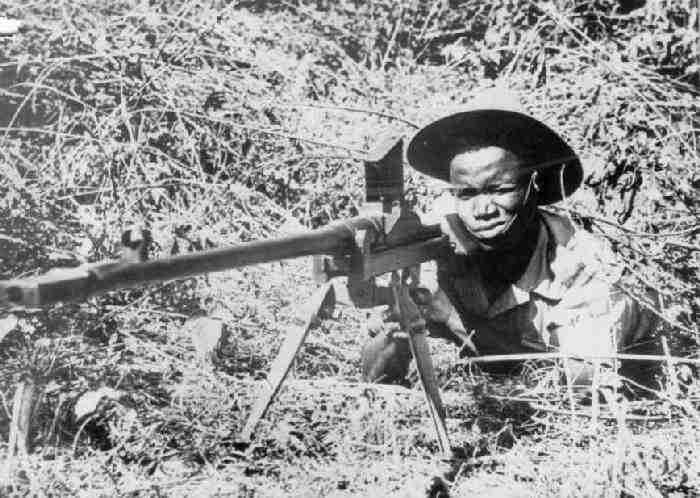
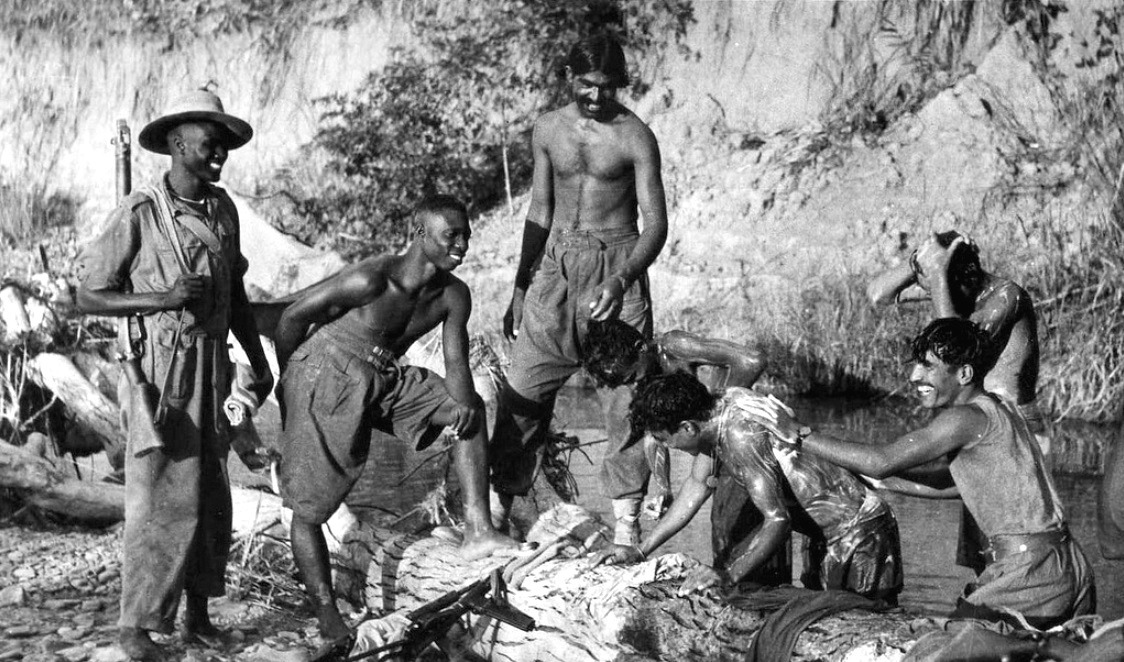
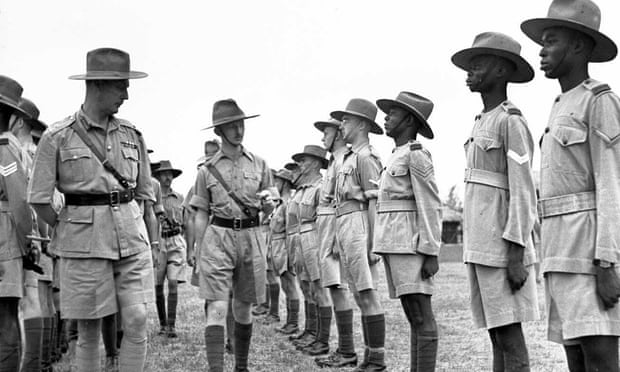
More pictures [img]https://blackfilmcenterarchive.files./2012/10/burma-boy-map.jpg[/img] trip from Nigeria to Burma https://www.barbaric.com.ng/wp-content/uploads/2015/08/Soldiers_of_the_11th_East_African_Division_crossing_the_River_Chindwin_by_ferry_before_moving_towards_the_village_of_Shwegyin_Burma_December_1944._SE923.jpg East African Division https://upload.wikimedia.org/wikipedia/commons/2/27/IND_003714_Battlefield_on_Scraggy_Hill_at_Shenam.jpg Battlefield on Scraggy Hill at Shenam [img]http://archived.thisisafrica.me/data/thumb/abc_media_image/7000/7542/w430.68de7.jpg[/img] Soldier training https://histclo.com/imagef/date/2007/08/ww2-sl43s.jpg Sierra Leonean recruit in 1943 https://ww2today.com/wp-content/uploads/2014/02/K-7403s.jpg Doctors tend to an inured soldier in an improvised operating theatre in 1944 https://ww2today.com/wp-content/uploads/2012/01/african-troops-in-Burma.jpg Troops from the East African division on the road to Kalewa [img]https://upload.wikimedia.org/wikipedia/commons/0/0a/West_African_Chindits,_Operation_Thursday.jpg[/img] Troops of the Nigerian Regiment, 3rd West African Brigade (Thunder), boarding an RAF Dakota https://41.media.tumblr.com/5c4f5731af43b0361ca964456e03e59d/tumblr_mt116jAjzm1spwf52o1_1280.jpg Nigerian soldiers of the 81st (West Africa) Division and Indian soldiers of the Indian XV Corps bathe in a stream during the Burma Campaign. https://nsibidiinstitute.org/wp-content/uploads/2015/08/TG_Owen-WWII_1508_1.jpg |
| Politics › The Forgotten Army Of WWII: West Africa’s Soldiers In Burma by bukster(op): 8:08pm On Aug 16, 2015 |
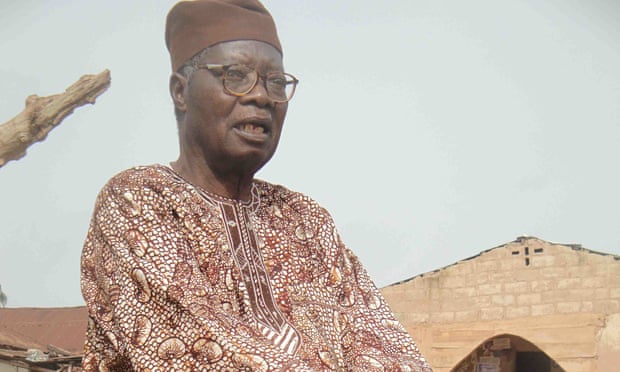
https://i.guim.co.uk/img/static/sys-images/Observer/Pix/pictures/2015/8/15/1439649772749/Isaac-Fadoyebo-009.jpg?w=620&q=85&auto=format&sharp=10&s=16059d32c57e64484f1f5df9e02aad59 [size=5pt]Isaac Fadoyebo in his home village in Nigeria in 2011, the year before his death. Photograph: Barnaby Phillips[/size] A few months before he was shot as an enemy soldier in its sweltering jungles, 16-year-old Nigerian Isaac Fadoyebo had never even heard of Burma. The journey that led him there began in a fit of youthful exuberance when he ran away from his village in south-western Nigeria and signed up to fight for Britain in the second world war. He joined an estimated 100,000 others from Britain’s colonies of Gambia, Ghana and Sierra Leone who sailed from west Africa’s creek-lined coast around the Cape of Good Hope, then onwards to Burma. There, Japanese soldiers ambushed his platoon and Isaac was left for dead behind enemy lines. What happened next captures not just the personal bravery of one man and the strangers into whose midst he was catapulted, but shines a light on a forgotten front of the war. The ripple effects of the south-east Asian conflict radiated from Burma’s Rohingya Muslim minority, whose persecution today is a direct legacy of the war, to the returning west African soldiers who later started the region’s march towards independence. Alongside Nigeria’s own inability to remember its war dead, it’s also a story of Britain’s often-neglected debt to its colonial soldiers, and how two British men helped to resuscitate that legacy. Even in Britain, the 81st and 82nd divisions – the Allies’ west African force – were known as the “forgotten army” as all eyes became fixed on the threat of Nazism much closer to home. The eight in 10 west Africans in those divisions in Burma were a forgotten contingent within the forgotten army. Now Fadoyebo was to become one of its dead. It was monsoon season in Burma, a time of mosquito-filled heat and lashing rains. Too weak to move, he lay bleeding in the tropical forest 6,000 miles from home and waited for the end. Seventy years after the event, there’s still disbelief about a remarkable chapter in Nigeria’s history. “But for my grandfather being involved, I never would have been able to put into perspective the fact that Nigeria was in the war,” said Fadoyebo’s grandson, Ayo, a human resources worker in Lagos. “I knew Nigerians fought, but it was so distant I couldn’t place how it affected me as a Nigerian.” It was a feeling common even at the time. In countless villages such as the sleepy hilltop one of Owo, where Fadoyebo lived, the bloodshed had been a distant thing rumbling on in remote lands. There were vague rumours that Hitler wanted to invade Nigeria itself, to plunder its mineral wealth. But the tentacles of the far-flung battles reached Owo when a recruitment truck rolled into the bushes in December 1941. Among the curious onlookers was Fadoyebo, a tall, well-built teenager. The colonial officer’s exhortations to fight for the empire didn’t rouse him; instead, he sensed a chance to escape the sleepy backwater, earn money and see the world. Fadoyebo’s tale from there might have been lost to history were it not for the efforts of British journalist Barnaby Phillips, who chronicled the astonishing story that was about to unfold in his lucid, exquisitely detailed book Another Man’s War. In 2011, Phillips took time off from working in Athens and began researching the “Burma Boys” in London’s Imperial War Museum. The addition of east African recruits swelled Britain’s colonial army to a 500,000-strong force. But Phillips noticed something rare when he began reading the available literature. Buried in the hundreds of books, he chanced upon a slim novel by a man called Isaac Fadoyebo. “It was called A Stroke of Unbelievable Luck and was a beautiful, 70-page manuscript by a Nigerian who not only survived an extraordinary experience, but put it all down in writing,” Phillips said, still sounding amazed at his own good fortune. That was down to David Killingray, an English professor specialising in imperial history. He’d received the handwritten manuscript – Fadoyebo’s only one – in 1989. “I immediately realised this was extraordinary, and set about getting it published,” he said. Several hundred copies languished in a handful of academic and military libraries for years. Fadoyebo’s story began on the morning of 2 March 1944, when his platoon was eating breakfast on a steep bank of Burma’s Kaladan river. Suddenly they came under ferocious attack from the Japanese, who were expertly trained in jungle warfare. Men fell around Fadoyebo and a bullet pierced his thigh. He dropped down in anguish. “He knew what was coming. The Japanese, take a prisoner? A white man, like Captain Brown, perhaps, but a black man? No chance,” Phillips writes in an opening that transports readers viscerally to the scene. The final shots never came, perhaps because the Japanese believed he would succumb to his wounds. Another soldier, David Kagbo, was also wounded in the field. Fadoyebo crawled to him, and they waited together as death stalked them. https://i.guim.co.uk/img/static/sys-images/Guardian/Pix/pictures/2015/8/15/1439650225995/b70b914b-7341-4f6d-b5bc-c05dd413d522-1020x612.jpeg?w=620&q=85&auto=format&sharp=10&s=1c6d85323b88ecd1e7316369edd0e912 Recruitment of Nigerian troops in 1943. Photograph: Courtesy of Jill Hopwood But the rustling in the reeds turned out to be villagers bringing food. Isaac’s stroke of unbelievable luck was going down in a village of Bengali Muslims, known as Rohingya, who sided with the British. For weeks, they brought sustenance, sometimes every other day, sometimes longer if fighting was particularly fierce. Eventually, a farmer named Shuyiman helped the two men limp to his home. There, at risk of death, he sheltered the two strangers until British forces broke through again in December. Their rescuers knew them only by Muslim names they adopted in deference to the villagers: Isaac was Suleman and David was Dauda. Fadoyebo never forgot his saviours. “God sent them to save me,” he would always say later. “He had an unquantifiable desire to know what had happened to Shuyiman’s family. He talked about them all the time,” Ayo said. A call from a stranger six decades later proved to be another stroke of good fortune. After chancing on his memoirs, Phillips had spent weeks in an effort to track down Fadoyebo. “I was so worried. I thought he wouldn’t be able to understand me, he’d be deaf, he wouldn’t be able to catch my English over the phone,” he said, explaining the moment he finally found a working phone number for Fadoyebo. “I gave this long speech about who I was, what I wanted to do and so on.” There was a long pause on the other end. Then a deep voice replied: “Mr Phillips, when are you coming to Nigeria?” That began a friendship between the two until, moved by his friend’s pleas, Phillips journeyed to Burma in hope of finding Shuyiman’s family and passing on the thanks the veteran had longed to give for decades. It’s difficult not to worry about how quickly history can fade in Nigeria. Official western accounts long played down the contribution of Africans in the Asian campaign – allied commander General Slim never thanked the 14th Army, of which they were part – and few young Nigerians know of it. “As children we didn’t go to the village very often; if we had we would have known about it,” said Ayo, who said his grandfather never talked about his wartime experiences until the call from Phillips. During an extended visit to the village in 2002, a cousin introduced Ayo to everyone by declaring: “This is the grandson of Baba Solja [Old Soldier].” “As soon as he said that, no further explanation was needed. It was established who I was,” Ayo said. Nigeria’s military still has 81st and 82nd divisions in honour of the veterans, but celebrations of VJ Day are invariably muted. “We celebrate second world war veterans at every opportunity. Just like any other Nigerian soldier who dies serving, their children have been awarded scholarships and other welfare packages,” said spokesperson Rabe Abubakar. Next to the neatly manicured second world war graves in a cemetery partly maintained by the Commonwealth War Graves Commission in downtown Lagos are the litter-strewn, unkempt grounds that house the government-run memorials for Nigerian peacekeepers in the 1990s. At least one man’s memories were properly looked after. In a documentary he made later, Phillips travels across wide expanses of jewel-green fields dotted with crumbling temples in Burma’s Rakhine state. It’s a risky journey, given the turmoil affecting Rohingya Muslims there, and there’s every chance that the village where Fadoyebo was rescued has been razed. Phillips eventually finds the right location – the story of the two African men is part of local folklore. Watched by chattering monkeys, Shuyiman’s family struggle to hold back tears as he delivers Fadoyebo’s letter. “His real name is Isaac Fadoyebo and he wants you to know he thinks of your mother and father and sister every day,” Phillips begins, himself tearful. Photographs of Fadoyebo are passed round. The women clutch them to their chests. One man blinks furiously. Another woman covers her hand with her face and sobs. “We’ve thought of him for so long,” she says, wiping her eyes with her headscarf. Being able to thank those who sheltered him meant Fadoyebo was at peace even when old age sent him to hospital in 2013. Incapacitated in bed, he discussed attending his grandson’s wedding when he got better, and picking up a wartime medal that the government had promised. “I’m fine, don’t worry. I’ll pick up the medal when I’m out of the hospital,” he told Ayo just before he died on 9 September. Two days later, the medal that had been 68 years in coming finally arrived. https://www.youtube.com/watch?v=DWIHOIZVZtE some images from the youtube clip https://i.imgur.com/le4LveN.png https://i.imgur.com/UFjNMvJ.png https://i.imgur.com/CzvXccN.png https://i.imgur.com/hCARNb9.png https://i.imgur.com/JDd5QWM.png https://i.imgur.com/VZ39XBB.png https://i.imgur.com/cbRVmsh.png https://i.imgur.com/8tTv18C.png https://i.imgur.com/VQuDuBf.png https://i.imgur.com/wgO87CY.png https://i.imgur.com/M24k8G2.png https://i.imgur.com/cDUBUfY.png |
| Politics › Re: “keep Off Nigeria!”- Workers Tell Walmart by bukster(f): 1:45pm On Aug 15, 2015 |
They have a point. Wal-Mart strategy is to come into a new market with low prices to bankrupt smaller markets and stores. When those other stores have shut down because all of heir customers have moved to Wal-Mart, they increase their prices exponentially and customers would have no choice but to go there because there are no other stores around. Wal-Mart is also known for treating their employees like craps and paying workers very low wages and since there is no such thing as minimum wage in Nigeria, I'm expecting it to be very very low. 2 Likes |
| Politics › Re: Cult Groups, Fulani Herdsmen Kill 761 In Seven Months by bukster(f): 1:39pm On Aug 15, 2015 |
PENCILLER:Are cows worth a human life?!? I can't believe you are actually comparing the two. Even if someone kills a cow accidentally or on purpose, there are saner ways for that to be dealt with instead of with all out rampart killings. This is not propaganda but hard facts. If the Fulani herdsmen were not so aggressive and deadly, fewer people would be killed. 2 Likes 1 Share |
| Politics › Re: Nigerian States And What They Produce by bukster(f): 7:45am On Aug 13, 2015 |
finniblinks:How is Wikipedia reliable when anyone can easily change the data on it? I could just go there and write that Nigeria's GDP was $1trillion if I wanted to but that doesn't make it true. I am posting the original source which is what the Wikipedia page cites. The source I was using comes directly from the Nigerian government. 3 Likes |
| Politics › Re: Nigerian States And What They Produce by bukster(f): 7:28am On Aug 13, 2015 |
thewarrior72:Please stop spreading falsehood Anambra GDP- $6.8B Oyo GDP- $16.1B Ogun GDP-$10.5B Ondo GDP-$8.4B Osun GDP-$7.3B Source: http://services.gov.ng/states The only state with a lower GDP than Anambra in the SW in Ekiti. 6 Likes |
| Politics › Re: Nigerian States And What They Produce by bukster(f): 7:05am On Aug 13, 2015 |
sukkot:This is not true. Palm oil is said to be healthier than many other types of oil. Palm oil is a cash crop and it is becoming more valuable as of late because it is being used to make chocolate. It is Malaysia's main export and their GDP per capita is higher than Nigeria's. 1 Like |
| Politics › Re: Julius Berger Begins Road Construction Works In Rivers After 8yrs by bukster(f): 11:47pm On Aug 11, 2015 |
I don't understand the hype over Julius Berger  They are too expensive which means that it would cost more for them to do less work and in the end, less roads will be constructed. Their work is good but there are other companies that do just as good work for less money. I would use JB for important bridges but less expensive companies for roads. |
| Politics › Re: Nigeria Beats Deadline In HIV, Maternal Mortality Targets For Millennium Goals by bukster(op): 6:48pm On Aug 10, 2015 |
SimpleVili:Yes it's great to see progress in Nigeria. Even though nothing positive ever seems to be happening, Nigeria has been improving since the end of the military era Democracy>>>>> Military rule |
| Politics › Nigeria Beats Deadline In HIV, Maternal Mortality Targets For Millennium Goals by bukster(op): 10:48pm On Aug 09, 2015 |
Lagos — Ahead of the September 2015 target date of the Millennium Development Goals (MDGs), the Federal Government said Nigeria has attained the targets on HIV/AIDs and Maternal Mortality in the global development goals. This was revealed by the Director/Secretary of Programmes in the Office of the Senior Special Assistant to the President on MDGs, (OSSAP-MDGs), Ogenyi Ochapa, at the sensitization and workshop on transition from Millennium Development Goals, MDGs to Sustainable Development Goals, SDGs and the 2015 MDGs Report for Conditional Grant Scheme to Local Governments' Technical Assistants and Zonal Technical Officers, held in Abuja. According to a statement issued by the Media Consultant to OSSAP-MDGs, Ochapa started that since Nigeria commenced the implementation of the MDGs in 2006, appreciable progress has been recorded, particularly in the areas of health, water, gender equality, reduction in the spread of HIV/AIDs, the prevalence of hunger and global partnership. The statement also hinted that Nigeria had over two years before the deadline attained the Hunger Target in Goal 1, with the Food and Agricultural Organisation honouring the country for the achievement in Rome. Ochapa, who noted that, while the final MDGs exit Report, which will contain the actual achievement in the implementation of MDGs is still being collated, stated that the Maternal Mortality Ratio (MMR) has dropped from 1,000 per 100,000 live births in 1990 to 243 per 100,000 live births in 2014 indicating success in the attainment of the target. "In 1990, the Maternal Mortality Ratio (MMR) was estimated as 1,000 per 100,000 live births; in 2008, this figure decreased to 545 and in 2012, the figure was 350. The 2014 MMR figure stands at 243 per 100,000 live births, which means that this Target has been achieved." Ochapa also added that: "Nigeria's HIV prevalence decreased from a figure of 5.8 to 4.1 in 2010. This falling trend satisfies the criteria for the attainment of Target 6.A. In addition, the percentage of the population using improved drinking water sources increased from 57% in 2004 to 62.2% in 2014. Until recently, due to debt forgiveness negotiated from the Paris Club, the debt-export ratio was as low as 0.4. There has also been remarkable improvement in teledensity and Internet penetration." According to the Director/SOP MDGs, Nigeria has also recorded huge success in the areas of universal primary enrolment, gender parity in education, reduction in child mortality. "Specifically, Nigeria has reduced by half the population of those who suffer from hunger way ahead of the 2015 deadline. The Primary Six Completion Rate improved to 88% in 2012 from a baseline of 82% in 2004 but declined to 74% in 2014. Nigeria has achieved the gender parity targets at primary and secondary education levels with the national average Gender Parity Index (GPI) being 1. Our under-five mortality rate declined from 157 per 1,000 live births to 89 per 1,000 live births in 2014. The 2012 infant mortality rate of 61 per 1,000 live births declined slightly in 2014 to 58." "These findings are being detailed in the Exit MDGs Country Report which is at the moment nearing completion. As you are aware, Nigeria published its first MDGs Country Report in 2006. The 2006 country Report presented a preliminary assessment of the progress made towards the achievement of the eight MDGs. The second and third Reports produced in 2010 and 2013 respectively, provided in-depth analytical reviews of progress recorded and actions required for attaining the MDGs. The 2015 MDGs Report is like none other, as it will present trends in MDGs progress over the years as well as end-point statuses. This document will draw on lessons learnt from the implementation of the MDGs Agenda and make recommendations critical for the successful implementation of the Sustainable Development Goals framework in Nigeria," Ochapa stated. It could be recalled that the process of framing a successor to the MDGs has just been completed with the formulation of 17 SDGs and 169 Targets. At the 70th session of the UN General Assembly in September 2015, heads of State and Government will adopt a declaration on the SDGs. The final outcome document was finalized on the 1st of August. The SDGs is a more robust framework and it seeks to foster inclusive development whilst addressing the economic, environmental and social aspects of sustainable development in a more universal way. source: http://allafrica.com/stories/201508090060.html |
| Agriculture › Re: We Must Go Back To Agriculture As Oil Revenue Shrinks - Buhari by bukster(f): 2:19pm On Aug 08, 2015 |
bushdoc9919:Nigeria needs to be able to feed it's own population and lessen the reliance on foreign imports. I agree with you that industrialization is more important and brings in more money but that takes time. If we want to start building factories to produce goods, we need to have stable electricity. Until we have that, industrial factories would be too expensive to maintain. |
| Celebrities › Re: Most Beautiful Girl In Lagos 2015 Releases Stunning New Photos by bukster(f): 1:27pm On Aug 08, 2015 |
Her dresses are beautiful But I agree, she's not the most beautiful girl in Lagos  1 Like |
| Politics › Re: Video: Angry Biafran Youths Destroying The Nigerian Flag by bukster(f): 4:51am On Aug 08, 2015 |
I went to Youtube to check out the comments and all I saw was people writing how much they hate Buhari. Criticism of governments should always be encouraged but Buhari has never done anything personally wrong against them so I'm not exactly sure why there is so much hate Most of the people in the video and those commenting on that video on YouTube are a bunch of useless fools who clearly have nothing better to do. 5 Likes |
| Fashion › Re: Before & After: Girl Bleaches Skin And Abuses Dark-skinned Girls..lol by bukster(f): 6:37am On Aug 05, 2015 |
iamrealdeji:There are many beautiful dark skinned women. Our very own Agbani Darego who is still the only Nigerian to win Miss World and come close to winning Miss Universe https://thelightnews.com/wp-content/uploads/2014/11/Agbani-Darego-love-of-my-life.jpg There are also many very dark-skinned south Sudanese beauties https://41.media.tumblr.com/1ffe8917ff8b32a8759d228112ebb265/tumblr_mwnjh64v8g1qkkonqo1_540.jpg There are plenty of darker skinned beautiful black women but too many Nigerians and this includes both men and women are hung up in the idea that fair-skinned = beautiful. There are many beautiful fair-skinned black people and there are just as many dark-skinned beautiful black women.
|
| Politics › Re: Why Islamic Scholars Are Silent On Boko Haram, By Governor Kashim Shettima by bukster(f): 3:02pm On Jul 27, 2015 |
quickly:That's not true. Indonesians and Malaysians are Muslim and they are Asians. There are 27 million Chinese Muslims living in China today which is more than many fully Muslim countries. There are about 40 million Chinese Christians living in China and even more who live abroad. More than 29% of South Korea's population is Christian and almost 100% of the Philippines population is Christian. I don't know why you say that Nigerians have forsaken our culture when it is simply not true. How many countries today do citizens still wear their native clothes regularly? How many countries are there where people still do their traditional weddings instead of just the imported white wedding? |
| Culture › Re: Is This A Beauty Contest? - Northern Girls by bukster(f): 6:55pm On Jul 24, 2015 |
Dollyak:People want what they can't have. Having big lips, big ass and dark skin is rare for white people which is why so many get surgery to make their lips and ass bigger and tan themselves even when it causes skin cancer. In Nigeria most people have flatter noses and bigger lips so people without those features are rare which is why those features are considered a sign of beauty. Just because someone wants a pointier nose doesn't mean they're trying to be like a white person. There are plenty of black people especially in East Africa with pointy noses. Why is is that when white people want stereotypical black features we do not accuse them of trying to look black but when the case is in reverse, we say that black people are trying to look white? 2 Likes |
| Music/Radio › Re: Me And My Canadian Friend Did A Dance To "Show You The Money" By Wizkid by bukster(f): 3:07pm On Jul 16, 2015 |
Good dancing. I was impressed  1 Like |
| Politics › North Cameroon Bans Burkas And Face Coverings by bukster(op): 9:47pm On Jul 15, 2015 |
YAOUNDE, Cameroon (AP) — Cameroon's north region has banned women from wearing burkas and face-covering veils after suicide bombings by females in burkas killed at least 14 people in a northern town on Sunday, a government official said Wednesday. The region has also banned Muslims from meeting in large groups without permission, as the end of Ramadan nears, said Midjiyawa Bakari, governor of Cameroon's Far North Region. "No one suspected them and that is why we have ordered women to stop wearing veils and the police and military to arrest all women wearing veils," he said of the Sunday attacks. It was first reported that two bombs were planted, but President Paul Biya has announced that investigations found the explosions were launched by two women wearing burkas. "We are also systematically checking all vehicles, and controlling all luggage and the population should collaborate because there is a serious security threat to our nation," said governor Bakari. The Islamic extremist group Boko Haram has been launching attacks across Nigeria's borders, and then retreating. The militants also attacked Fotokol, in Cameroon across the border from Nigeria's Borno state, in February and scores were killed and churches and mosques were burned. Troops from Cameroon and Chad are fighting Nigeria's Islamic extremists in several communities on Cameroon's border with Nigeria. Cameroon has arrested dozens accused of promoting radical ideology and collaborating with Nigeria's Boko Haram. Imam Hamaounde Abba of Mora in the Far North Region protested the ban, saying for those who wear the veil it's not a choice. About 20 percent of the 22 million people living in Cameroon are Muslim, 40 percent are Christians and the rest hold traditional beliefs, according to Cameroon's National Institute of Statistics. source: http://www.usnews.com/news/world/articles/2015/07/15/northern-cameroon-announces-ban-on-burkas-and-face-veils |
| Politics › Re: [TICK TOCK] How Iran’s Deal Could Blow Nigeria’s Economy Apart by bukster(f): 3:07pm On Jul 15, 2015 |
slinkky:The only alternative source of revenue is diversification of economy and increased taxation which no one will be happy about. 1 Like |
| Politics › Re: "Settling Our Differences With Igbos": What Yorubas Think, - A Rejoinder by bukster(f): 2:52am On Jul 15, 2015 |
Largas:Almost everyone that you mentioned came to power through a bloodless coup. Only 1 Nigerian head of state's have ever been killed after the civil war. Murtala Muhammad whose killer was promptly assassinated. Abachas's death is still officially considered a heart attack but the unofficial reason is that he was murdered by Indian prostitues. Despite the amount of coups that Nigeria has been through, after the civil war, military governments tried to avoid killing off the leaders they took over from in order to avoid the mistakes that led to the civil war. 1 Like |
| Politics › Re: Lets Settle Our Differences, Igbo Group Tells Lagosians by bukster(f): 1:34pm On Jul 14, 2015 |
NgeneUkwenu: |
| Politics › Re: Poverty Level Rises To 72%, Says NLC by bukster(f): 12:28pm On Jul 13, 2015 |
Fixing the energy sector will create so many jobs and solve a lot or Nigeria's problems. |
| Politics › Re: Suicide Bombs: Muslims Kick As Army, Police Frisk Women In Hijab, Burka - Punch by bukster(f): 5:53pm On Jul 12, 2015 |
Common sense should be used in conjunction with religion. The bible says thou shalt not lie but I would gladly lie if it meant I was doing so to protect someone's life. I understand that modesty is very important for Muslims but there are many ways to be modest without using those long hijabs and niqabs that currently pose a security risk. If Muslim women do not want to be searched they can try and wear shorter scarves that still cover their necks and hair at least until the Boko Haram attacks are over. |
| Family › Re: She Wants Court Marriage, He Wants Traditional Marriage, She Say He Does Not.... by bukster(f): 7:50pm On Jul 10, 2015 |
Amaka needs to stick to her what she said. I can't personally marry a guy that refuses to get a court marriage. |
| Politics › Re: Enugu In Deep Riot Against Boko Haram Suspects by bukster(f): 1:16pm On Jul 10, 2015 |
dedollarman: |
| Politics › Re: See What An Igbo Man Can Do? Photo by bukster(f): 3:46am On Jul 09, 2015 |
Wow that's really cool! |
| Politics › Re: The knight Of The Country Of Western Nigeria Goes To Dead Military Men by bukster(f): 4:01am On Jul 08, 2015 |
 |