 Politics › In Nigeria, Yam Prices Soar, And Culture Suffers by GodHatesBigots(op): 10:17pm On Nov 25, 2021 Politics › In Nigeria, Yam Prices Soar, And Culture Suffers by GodHatesBigots(op): 10:17pm On Nov 25, 2021 |
[img]https://foreignpolicy.com/2021/11/25/yams-nigeria-festivals-holiday/[/img]
In 2002, a single yam tuber cost an average of 37 cents in Nigeria. At the start of 2021, a single tuber went for an average of $3.90—a 954 percent increase, even running ahead of the country’s overall 739.4 percent inflation in 19 years. A plant that for centuries suggested wealth, power, and prosperity has become unaffordable, at least in whole tubers, for vast numbers of the poor.
As inflation continues to plague the Nigerian economy, and the middle class continues to slide further down the economic ladder, staple items are being sold in smaller and smaller amounts for people who can’t afford to buy the whole thing. From shampoo sold in one-use sachets to cereal in tiny boxes, slicing up items for the poor or the rapidly fading middle class is becoming the norm. Pound for pound, this is more expensive—but if you can’t afford to buy the whole bottle and still urgently need to wash your hair, immediate affordability is what matters. Even some luxury goods have jumped onto this bandwagon; in 2019, the liquor brand Baileys unveiled the option to purchase a single shot of Baileys Delight in a sachet that resembles a condiment packet.
But it’s the yam whose slicing cuts deepest at the heart of Nigerian food culture. Chinua Achebe called it the “king of crops,” and in many Nigerian traditions the tuber is at the heart of not only the daily diet but also the language of wealth and power. The yam, especially in traditional parts of the southeast, was mostly planted, tended, and harvested by men, and it suggested prosperity and masculinity. Yams were contained in standing barns, built to proudly display wealth and prominently positioned in farms.
The wholeness of the yam was part of its appeal. But in Nigerian markets today, yam, like so many other goods, is being sold in slices to those who can no longer afford the whole plant.
Increased demand and a lack of efficient transport networks have led to shortages and increased prices—especially in areas far from the heartlands of yam production in the Middle Belt, such as Enugu in the southeast and Rivers in the far south.
In the capital, Abuja, which is closer to the Middle Belt, a tuber costs around 1,000 naira (about $2) while in the southeast, 181 miles away in Enugu State, sellers say it costs about 1,700 naira, almost double the price.
“A lot of yam-sellers in Rivers state buy yam from the North and Middle Belt,” said Osi Kelvin, who sells yam in Port Harcourt, the southern state’s capital. Kelvin said that yams are also split and sold pre-sliced in some of the rural markets around the state. “This is to aid affordability, especially among the lower class who cannot afford a whole tuber,” he said.
Slicing up yams for sale isn’t new—but it’s become more common as times have gotten harder. As well as its ritual significance, the yam is simply a vital part of the Nigerian diet. According to a 2008 report by the Food and Agriculture Organization, Nigeria produces about 35 million metric tons of yam, valued at about $5.7 billion, making Nigeria the largest producer of yam in the world.
Yam, for a lot of Nigerians, is a low-effort, high-reward meal, mostly because it can be cooked in so many different ways. “It is like the first law of thermodynamics—yam can be converted from one form to another. You can boil, fry, or pound it,” said Bushra Abdulmalik, a food scientist. “Yam can be processed to make yam flour, fried yam chips, yam balls, and even starch.”
Yam prices were not traditionally a high concern, because families were growing their own yams. But as urbanization grew and wealth became more about real money and less about yams, barns started to become extinct, and the men who would once have planted yams went looking for new opportunities in the city.
“People are not farming, period,” said Odi Lagi, an Igbo cultural enthusiast. “Urbanization and development eroded a lot of it. Farming is hard, but the terrain in Eastern Nigeria makes it twice as hard.”
The rising prices are cutting into long-standing celebrations.
For instance, for the Igbo of southeastern Nigeria, one of the country’s largest ethnic groups, the New Yam Festival is the heart of the traditional ritual year. The festival is usually held in August, symbolizing harvest season. Igbos roast the newly harvested yams, and entertainment is usually centered on wrestling, dance, and costumed processions known as masquerades—mostly carried out by men’s societies. Women have their own August Meeting, where they return to the villages to discuss leadership and communal responsibilities.
This is an expensive obligation, and the economic downturn has made it worse. “August is the month for harvest and New Yam festivals. It is a period of great mobilization among the Igbo,” said Lagi, who has declared herself “queen of yam festivals.” “But Igbos also feel obligated to travel for the Christmas festivities. This means two different expenses in a year, making it unsustainable in the face of Nigeria’s constant economic downturn.”
The traumatic legacy of the Biafran War (1967-1970), in which largely Igbo Eastern Nigeria attempted to leave the country, reshaped the agricultural landscape and made yam farming a rarer and costlier business.
“What Biafra did was force Igbos to come home and invest at home,” Lagi said. “What this means is that now, every Igbo man and woman in Nigeria or abroad comes home to build a mansion in their village [using money from life in the city], leaving the lands remaining for farming too far away, uphill, and on very lonely and dangerous pathways. Who wants to go there?”
“Christianity is perhaps a cheaper alternative compared to traditional worship,” said Father Paul, an Anglican priest in Enugu state who asked that his second name not be used. “Christianity has fewer festivities and no need for the kind of sacrifice that could put a dent in pockets,” he suggested, citing examples of such traditional worship practices as offering sacrifices of yams, goats, and even cows to deities.
“A family in my village who were custodians of some of the cultural artifacts spanning a hundred years burnt those artifacts because they had ‘found God,’” Lagi said. “This caused a hold on those cultural activities before they resumed again.”
One consequence of conversion to missionary faiths like Christianity or Islam is a complete dissociation from cultural activities like the New Yam Festival.
“As a Christian, you cannot be involved in traditional worship or activities that have any relationship with idol worship,” Father Paul said. “And, sometimes the New Yam Festival is symbolic of traditional worship, as it includes libations and masquerade dances.”
Dissociation from cultural activities is even stronger among younger Nigerians. “You mustn’t even contribute monetarily toward festivities with idol worship elements,” said Ogonna Anyaji, an Igbo native and sociologist. “As part of the traditions of the New Yam Festival, you cannot eat newly harvested yam unless the festival has been completed. But I eat my yams as soon as they hit the market,” she said. “There’s obviously a conflict of interest where both beliefs cannot coexist.”
The Igbo aren’t the only ones to center the yam. For the Tiv people of Benue state in north-central Nigeria, yams, apart from being one of their most prominent crops, are also a key component of dowries.
“Yams are at the epicenter of our food system in Tivland,” said Su’eddie Vershima Agema, a Tiv writer. “While we don’t have a formal New Yam Festival like the Igbos do, it still forms a strong part of everything we do—from daily meals to feasts.”
But ultimately, festivities can be abandoned when times get tough. And yams, like everything else, can be sliced up.
“Nigerians are practical people,” Anyaji said. “And cultural festivals is at the bottom of a very long list an average Nigerian thinks about.”
Zainab Onuh-Yahaya is a journalist and law grad. She writes from Abuja, Nigeria. Her work has featured in Business Insider, the Republic Journal, Huck Magazine, Teen Vogue, and elsewhere.
https://foreignpolicy.com/2021/11/25/yams-nigeria-festivals-holiday/ |
|
| Politics › Re: Buhari, Ojukwu, Orji Kalu And Babangida In Throwback Photo by GodHatesBigots(m): 8:42pm On Nov 25, 2021 |
Are we supposed to celebrate ? Rejoice ? Dance ? Or what ? |
| Romance › Re: Finding The Perfect One by GodHatesBigots(m): 12:10pm On Nov 24, 2021 |
I am happy to marry 3 more wives between 30-35 years to help with the situation.  |
| Crime › Re: Jabin Godspower Okpako Jailed In US In A Nearly $1.9M Money Laundering Scheme by GodHatesBigots(m): 11:38am On Nov 24, 2021 |
Penguin2:
Name checkers are confused 
No one knows if Okpako is Igbo, Yoruba or Hausa |
|
| Crime › Re: Ritualists Kill 11-Year-Old Almajiri In Bauchi, Remove His Brain (Graphic Pics) by GodHatesBigots(m): 2:33pm On Nov 22, 2021 |
I hate Nigeria |
| Politics › Re: Nigeria Tilting From Failed State To Point-of-no-return” – US Council by GodHatesBigots(op): 2:13pm On Nov 22, 2021 |
veryLoudsilence:
God does hates bigots. The report was earlier published back in June, now you bring it back up to add to our hard times. The west also claimed Nigeria will break Back in 2015. We determine our destiny, not anyone else. If you so wish, lay back from your comfort and keep publishing negativity, real Nigerians are determined to mend our home, the only home we have.
You may choose to make constructive criticisms, proffering solutions, suggesting ways forwards to help the situation. Buhari will do and Go, Nigeria shall remain for us to continue rebuilding and aspire for utopia. Nigeria is FVCKED. Igbos are not REAL NIGERIANS. Keep up with the day dreaming though  |
| Politics › Re: Biography of IPOB's New Lawyer, Dr Onyechi Ikpeazu (SAN) by GodHatesBigots(m): 12:24pm On Nov 22, 2021 |
Tingotoe:
No lawyer on Earth can save that worthless terrorist in our zoo cage Before you call MNK a terrorist you MUST accept that Buhari, Malami and Garba Shehu are low life terrorists in high places. These evil hitlers have presided over the massacre and genocide of tens of thousands of Nigeria, Next time engage your primitve brain before taking crap. Oh yes, Nigeria is a ZOO - fact  |
| Politics › Re: Buhari Has Borrowed ‘destinies’ Of Nigerians Away— Archbishop Odutemu by GodHatesBigots(m): 12:19pm On Nov 22, 2021 |
BlackfireX:
My friend will you keep quiet ...you are insulting a whole president of Nigeria...giant of Africa Giant of ZILCH |
| Politics › Nigeria Tilting From Failed State To Point-of-no-return” – US Council by GodHatesBigots(op): 3:58am On Nov 22, 2021 |
….Says country is in its last phase
The United States Council on Foreign Relations and the Harvard Kennedy School, yesterday, warned that Nigeria is moving from a failing State to the point-of-no-return under President Muhammadu Buhari, having shown all the signs of a failed nation.
The organisation, which made the disclosure in a research finding it released through its senior fellow and former US Ambassador to Nigeria, John Campbell and the founding Director, Harvard Kennedy School’s Programme on Intrastate Conflict and President Emeritus, World Peace Foundation, Robert Rotberg, said Nigeria is currently in its final phase, from which it would eventually collapse.
The organisation further stated that their position was not based on emotion or the fancy of using pejorative words to describe the situation, but on “a body of political theory developed at the turn of this century and elaborated upon, case-by-case, ever since”.
Its report, published on foreignpolicy.com on Thursday, said Nigeria has since moved from being a weak State to “a fully failed State,” having manifested all the signs of a failed country, including the inability of the government to protect the citizens, large-scale violence and festering insurgency.
According to them, President Muhammadu Buhari admitting that the Federal Government has lost control of the situation is the first step towards the restoration of stability, warning that Nigeria’s failure as a State comes with negative consequences for peace and security in the West African sub-region as well as Europe and the US.
The report further stated: “There are four kinds of nations: the strong, the weak, the failed, and the collapsed. According to previously published research estimates, of the 193 members of the United Nations, (UN), 60 or 70 are strong— the nations that rank highest in the listings of Freedom House, the human rights reports of the U. S. State Department, the anti corruption perception indices of Transparency International, and so on.
“There are three places that should be considered collapsed: Somalia, South Sudan, and Yemen. Eighty or 90 U.N. members are weak. Weakness consists of providing many, but not all, of essential public goods, the most important of which are security and safety. If citizens are not secure from harm within national borders, governments cannot deliver good governance (the essential services that citizens expect) to their constituents.
“All failed States harbor some form of violent internal strife, such as civil war or insurgency. Nigeria now confronts six or more internal insurrections and the inability of the Nigerian State to provide peace and stability to its people has tipped a hitherto very weak State into failure. According to political theory, the government’s inability to thwart the Boko Haram insurgency is enough to diagnose Nigeria as a failed State; but there are many more symptoms. At a bare minimum, citizens expect their States to keep them secure from external attack and to keep them safe within their borders”.
“Nigeria now appears to have reached the point of no return. Indeed, few parts of Nigeria are today fully safe”, the report added.
https://www.voiceoflibertyng.com/state-of-the-nation-nigeria-tilting-from-failed-state-to-point-of-no-return-us-council/ 
|
| Politics › Re: Nigeria Is Very Important To World Democracy Says Secretary Anthony Blinken by GodHatesBigots(m): 7:34pm On Nov 21, 2021 |
triple996:
Ipob members will not sleep 2day Why ? Lol |
| Politics › Re: Nigeria Is Very Important To World Democracy Says Secretary Anthony Blinken by GodHatesBigots(m): 7:33pm On Nov 21, 2021 |
DEM ALL CRAZY DEMOCRACY USA STYLE WITH BOMBS, BULLETS AND BLOOD SHED. |
| Politics › Re: Northern Minority Tribe Lady Expresses Opinion On 3 Major Tribes Of Nigeria by GodHatesBigots(op): 7:20pm On Nov 21, 2021 |
ygowon:
My own opinion is that the hausa-fulani, Igbo and Yoruba are different people being forced to stay together for the benefits of a few.
Differences in language, culture and style of living is the major problem why Nigeria can never be better. Since I was born, I have been hearing e go better, e go better but things keep getting worse.
These differences among Nigerians is the barrier to the growth of Nigeria. This can be likened to the reason why God made the languages different when the people with one language worked together to build close to heaven according to the Bible. This shows how easy it will be for a country of fewer tribes to grow faster.
Divide Nigeria, simple! But there are 250 ethnic groups in Nigeria, dividing is not so easy ... |
| Politics › Washing Our Dirty Linen In Public - Igbos Businessmen Answer This Question by GodHatesBigots(op): 7:18pm On Nov 21, 2021 |
. |
| Politics › Northern Minority Tribe Lady Expresses Opinion On 3 Major Tribes Of Nigeria by GodHatesBigots(op): 7:06pm On Nov 21, 2021 |
I am from the minorities. I've lived with the Igbos all my live and still do. I grew up with the Hausas as my closest neighbours and friends and I have friends who are Yorubas.
Many of my favorite people are Igbo e.g Chimamanda Adichie but mehn, are they loud and raucous. Lol. That aside, the Igbos are a people whose drive to “make it” has benefited the country and at the same time given them a bad name. This bad name comes from their reputation of being shady business partners who don't have integrity and their poor customer relationship. A typical Igbo business man cares nothing for you once your money has entered his pocket. Yes, there are Igbo business men who have integrity but in general, Igbo business men need to do better considering that many Nigerians would create their opinion of the Igbo people based on their dealings with Igbo business men since they are everywhere. That notwithstanding, I love the Igbos for their determination to succeed despite the odds and their ability to stick to their goals until they attain success. This determination is the reason nollywood is what it is today and the reason many Nigerians can afford new dresses and shoes(thanks to ABA boys). I also love them for their patriotism to the Igbo nation though I do wish it isn't done at the detriment of Nigeria.
The Hausa-Fulanis wrongly thought of by many as an all Muslim ethnic group is considered the largest ethnic group in the country. While the Fulani's are predominantly nomads, the Hausa's like the Igbos are also business inclined but unlike the Igbos, the average Hausa business man is known to speak the truth even to the detriment of his business. This explains why most Nigerians would rather do business with them hence their rise to power. People from minority tribes like Plateau state, before the recent spate of violence, trusted the Hausa's so much, they could entrust their lives and livelihood in their hands and sleep soundly. But you should know that there are dishonest Hausa people that I myself have encountered. maybe it is these dishonest people among who are currently causing a surge in the distrust of the Hausa-Fulani nationwide. I've told my Hausa-Fulani friends that their failure to call out the few among them who kill and maim for whatever reason is a sign of acquiescence but I digress. I love the Hausa-Fulanis for their simplicity and their ability to be grateful for little. The Hausa-Fulani have a high sense of the dignity of a job and do not consider any job to be beneath them. This is an attitude all Nigerians can learn from.
The Yorubas are known down here in the north for their “kolo-kolo”(there's no English word that can capture this word but we could go with shiftiness). Known nationwide for their love for education as well as “owambe”(parties), the Yorubas are perhaps the most diverse because they are in business, education, healthcare, artisanship, etc. I love the Yorubas for their rich culture and their ability to sustain the Yoruba language despite being the most educated ethnic group.
As a whole, I think each of these major tribes feels superior to to the other and thus entitled. We see this in national politics. I think they sometimes forget that Nigeria belongs to every Nigerian. Most importantly, I think each of this major ethnic group tends to be more interested in promoting its interest at the national level than the interest of Nigeria and this shouldn't be.
There you go, that's my opinion of the Hausa-Fulani, Igbo and Yoruba people of Nigeria.
P.S: There are always exceptions to any generality.
https://qr.ae/pGmUEa |
|
|
|
|
|
| Politics › Re: Kanu's Only Crime Is Asking Ibos To Leave Country Destroyed By Fulani Jihadists by GodHatesBigots(m): 2:52pm On Nov 20, 2021 |
ba7man:
The radio broadcasts Nnamdi Kanu used to spread hateful messages is a direct replica of the method used to vilify the Tutsi during the Rwandan civil war.
Saying those kind of messages in a beer parlour isn't the same as broadcasting it on radio. It's treason and punishable by death.
If i were Buhari, I'll have him jailed for life to pass a strong message to any other clown that had plans to follow Kanu's footsteps. He was not preaching hatred against any tribe, and yes he sometimes went too far with his insults and threats, but you cannot compare him with say, ISWAP, Boko Haram or even the genocidal End Sars uniformed miscreants. Nigerians derserve their leaders and sometimes I want them to suffer more so that their brains will kick start with common sense. |
|
|
|
|
| Politics › Re: Surrendered Repentant Boko Haram Terrorists Go On Violent Riot Over Cow Meat by GodHatesBigots(op): 11:35am On Nov 20, 2021 |
greypencils:
People that the government should put in a gas chamber and smoke to death are here dragging cow meat with government. Not their fault, Buhari's government is made up of pussies, from the president himself to his fucking BMCs like MannaBBQ, all old smelling bleeped up pussies. Gas chamber ?? |
| Politics › Surrendered Repentant Boko Haram Terrorists Go On Violent Riot Over Cow Meat by GodHatesBigots(op): 4:34pm On Nov 18, 2021 |
Hundreds of Nigerian Boko Haram jihadists who are being held in a camp after surrendering to the military rioted on Wednesday to demand the right to slaughter cows for meat, sources said.
The riot prompted residents in the northeast city of Maiduguri to lay siege to the camp, wielding swords, daggers and clubs, and threatening to kill anyone who left the facility, security sources and locals told AFP.
The incident illustrated the sensitive task authorities face in re-inserting former fighters back into communities that have often suffered from years of attacks and kidnappings during a 12-year Islamist insurgency.
The army presents the surrender of hundreds of Boko Haram fighters and families in recent months as a sign of success in ending the conflict centred in northeast Borno State, but many residents still see them as a security risk.
Around 250 Boko Haram members, including women and children, staged a violent protest in the Gidan Taki outskirts of the city, smashing windows and doors and threatening to move out of the camp if their demand was not met, the sources and residents said.
“The Boko Haram inmates went on a rampage this morning, breaking doors and windows and even attempted to leave the camp,” said Konto Garga, a member of an anti-jihadist militia that helps the army.
According to the Nigerian military, 18,000 Boko Haram fighters and their families have surrendered to the army following the death in May of their leader Abubakar Shekau.
Shekau blew himself up to avoid capture during infighting with the rival Islamic State West Africa Province (ISWAP) faction in his Sambisa forest enclave.
ISWAP split from Boko Haram in 2016 to become a dominant group in Nigeria with ties to the so-called Islamic State.
Many Maiduguri residents fear jihadists are surrendering not out of remorse, but in desperation to escape ISWAP rivals who were executing Boko Haram militants for refusing to yield to the group.
Security threat
The protesting jihadists, who have been in the camp since August, were demanding authorities hand them the cow they are provided daily to slaughter themselves instead of being provided with the beef from the abattoir, the sources said.
“People living in the area came out with locally made weapons and vowed to kill any one of the protesters who stepped out of the camp,” militia member Garga said.
“The people still see them as a security threat,” said Garga, who was among security personnel sent to prevent the jihadists from leaving.
Gidan Taki resident Usman Bunu said people in the area do not believe the surrenders are sincere and the protest only confirmed their suspicions.
“They still consider anyone not in their fold as an infidel, which is why they want to be allowed to slaughter their cow themselves,” Bunu said.
“Had they come out of the camp we would not have hesitated in finishing them all because we know how dangerous they are,” he said.
The threat by the armed residents and reinforcement of security personnel ended the riot and the inmates returned to their quarters, Bunu said.
The riot was the second in the camp, with a similar one over the same demand in September, militia leader Babakura Kolo said.
The Boko Haram inmates have been unruly since they arrived in the camp, constantly quarrelling with his men guarding the camp, and accusing them of looking at their wives, Kolo said.
“They still have Boko Haram mentality and openly insult our men as agents of the infidel government,” Kolo said. https://guardian.ng/news/surrendered-nigeria-jihadists-riot-in-tense-northeast/[/quote] 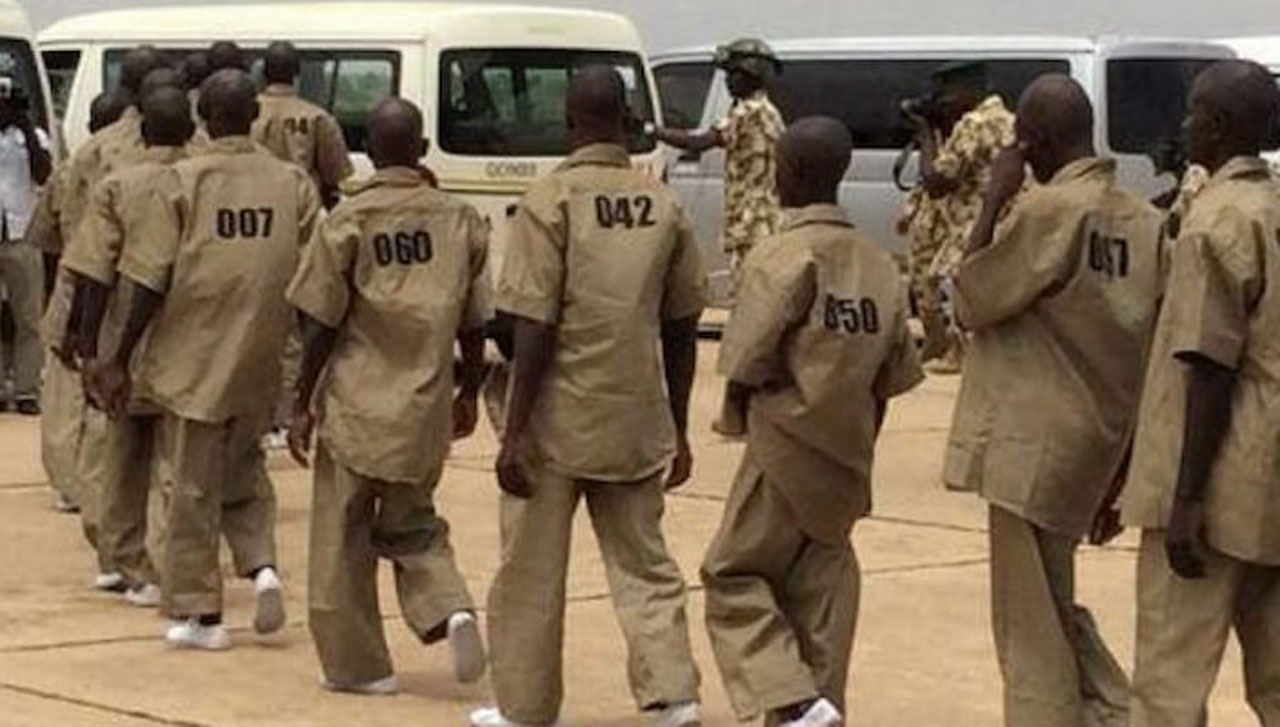
|
| Foreign Affairs › US Force 'ready To Respond' To Ethiopia Crisis by GodHatesBigots(op): 5:11pm On Nov 14, 2021 |
|
| Health › Why Is It Important To Know Your Genotype And Blood Group Compatibility by GodHatesBigots(op): 12:54pm On Nov 12, 2021 |
BloodtypeIn this blog post we will look at the definition of the words genotype and blood group and why it is important to know your genotype and your blood group compatibility. We will also look at the tests used to determine genotype and blood types and which tests are offered by Bridge Clinic.
What is a Genotype?
A genotype is the entire genetic constitution of an individual, i.e. the genetic makeup of an organism or group of organisms with reference to a single trait, set of traits, or an entire complex of traits. In a nutshell: your genotype is your complete heritable genetic identity; the sum total of genes transmitted from parent to offspring.
There are four hemoglobin genotypes (hemoglobin pairs/formations) in humans: AA, AS, SS and AC (uncommon). SS and AC are the abnormal genotypes or the sickle cells. We all have a specific pair of these hemoglobin in our blood which we inherited from both parents.
Why it’s Important to Know Your Genotype
Knowing one's hemoglobin genotype before choosing a life partner is important because there may be compatibility issues which could have devastating effects when it comes to conception.
Individuals with sickle cells experience severe pains in body parts where oxygen flow is compromised due to blockage in the blood vessels.
- AA can marry anybody
- AS is better off with AA
- AS and AS, AS and AC are too risky
- Two sickle cells = avoid conception
Types of Hemoglobin Genotype Tests
Newborn Screening | Diagnostic Testing | Carrier Testing | Prenatal Testing | Preimplantation Testing | Predictive and Presymptomatic Testing | Forensic testing
What is a Blood Group and Type?
To classify blood, antibodies and inherited antigenic substances on the surface are evaluated.
There are four blood GROUPS:
-Type A (marker A)
-Type B (marker B)
-Type AB (blood cells have both A and B markers)
-Type O (blood cells have neither A or B markers)
An Additional Marker in Blood: Rhesus factor
This is simply a protein that may be present on the surface of red blood cells. Some people have it and others don’t. If you have it, your blood type is further classified as positive; if you don’t, your blood type is further classified as negative. It is just a genetic difference (e.g. blue VS green eyes) and nothing to worry about. Therefore present Rhesus factor = Positive. No Rhesus factor = Negative.
Blood Types
O- No A or B Marker
O+ No A or B Marker + Rhesus factor (One of the Two Most Common Types)
A- A Marker Only
A+ A Marker but No B Marker + Rhesus factor (One of the Two Most Common Types)
B- B Marker Only
B+ B Marker but No A maker + Rhesus factor
AB- A and B Markers Only
AB+ All 3 Types of Markers: A, B and Rhesus factor
Why it’s Important to Know Your Blood Group Compatibility
It is important to know your blood type if you need a blood transfusion or if you want to donate blood. It also plays a role in determining paternity. Before a blood transfusion takes place it must be established that the donor’s blood type is compatible with the recipient’s blood type. The combination of certain antibodies (proteins protecting the body) can be harmful or even lead to fatal symptoms if antibodies perceive foreign cells as a threat. It is our immune systems’ way of protecting us.
Types of Blood Test
Complete Blood Count (CBC) | Blood Chemistry Tests | Blood Enzyme Tests | Blood Tests to Assess Heart Disease Risk.
Tests Offered by Bridge Clinic
1. HB ELECTROPHORESIS: Hemoglobin Electrophoresis Test (Code: HELEC P)
Hemoglobin is a protein that transports oxygen. Hemoglobin abnormalities, caused by genetic mutations, can result in certain diseases or disorders. This test is therefore used to detect abnormal forms and/or relative amounts of hemoglobin.
Why is this test done?
- Diagnose a blood disorder if symptoms suggest it
- Routine checkup as part of a blood test during a physical
- Screen for genetic conditions, e.g. sickle cell anemia, before conceiving.
- Monitor existing conditions
Bridge Clinic as also offers PGD and PGS. Preimplantation genetic diagnosis (PGD) can be performed during in vitro fertilisation (IVF) to choose embryos without certain diseases/conditions. Additionally, some chromosomal abnormalities can be picked up during a preimplantation genetic screening (PGS).
2. Blood Type Test: ABO/RH (Code 1125 P)
During a blood type test, blood is tested for blood group antigens (ABO) and/or the Rh antigen. This test is done to:
1. Ensure the right blood type is used for transfusions
2. Check if two people could be blood relatives
3. Check a pregnant woman’s blood type
https://www.thebridgeclinic.com/blog/why-is-it-important-to-know-your-genotype-and-blood-group-compatibility |
| Politics › Re: UK An ‘enabler’ Of Corruption, Nigerian Anti-sleaze Tsar Tells Boris Johnson by GodHatesBigots(op): 11:42am On Nov 12, 2021 |
I agree with the Prof Sadiq Isah Radda |
| Politics › UK An ‘enabler’ Of Corruption, Nigerian Anti-sleaze Tsar Tells Boris Johnson by GodHatesBigots(op): 11:41am On Nov 12, 2021 |
The UK is an “enabler” of corruption, an adviser to the Nigerian president says, in a sharp rebuke to Boris Johnson’s rejection of widespread sleaze.
The prime minister hit back at warnings that the UK is sliding into dishonest practices – following the Owen Paterson and Geoffrey Cox controversies – by declaring: “The UK is not remotely a corrupt country.”
But the claim has been ridiculed by Nigeria’s anti-corruption tsar, who pointed to a broken promise to crack down on the super-rich buying homes through secret offshore companies.
Prof Sadiq Isah Radda branded London “the most notorious safe haven for looted funds in the world today” – and warned of the impact on his own country and continent.
“There are no thieves without receivers. Without safe havens for looted funds, Nigeria and Africa will not be this corrupt,” he told the investigative website Finance Uncovered.
In 2016, David Cameron’s government promised transparency legislation to unmask the true owners of UK properties bought using offshore companies.
The Registration of Overseas Entities Bill would have required the beneficial owner of a property-owning offshore company to be registered with Companies House, the UK’s business registry.
It was hailed by the government as a “major step forward in tackling dirty money and safeguarding the reputation of the UK’s business environment” – but has yet to be passed.
Meanwhile, Mr Johnson rejected calls for action made in the 2018 Russia report, in which the Commons intelligence committee warned of London becoming a “laundromat” for illicit Russian cash.
The government has also been criticised for setting up a network of freeports, despite criticism that they will open the door to corruption – the reason why the EU is outlawing them.
Last week, the chair of the Committee on Standards in Public Life, Jonathan Evans, warned of the sleaze rows: “We could slip into being a corrupt country.”
In the interview, Prof Radda challenged Johnson to deliver on the stalled anti-corruption law, telling him to “do better by matching words with concrete actions”.
“UK law allows the global elite to loot their countries and rush to London. No wonder London swims in other people’s blood and sweat,” he warned.
“As a country and as a people, corruption has done monumental damage to us and we have to bring a stop to it. Safe havens, such as London, as well as their governments, have to support and help Nigeria. The muted response by British politicians suggests complicity.
“The practice under UK law where anyone buying a house or apartment can hide their identity from public records that are submitted to the Land Registry, if they purchase the property through a company registered in an offshore secrecy haven, is very disappointing, disturbing and contradictory.”
In his comments, at the Cop26 climate summit, Mr Johnson argued: “I genuinely believe that the UK is not remotely a corrupt country, nor do I believe that our institutions are corrupt.
“We have a very, very tough system of parliamentary democracy and scrutiny, not least by the media.”
https://www.independent.co.uk/news/uk/politics/boris-johnson-corruption-nigeria-russia-b1956086.html |


