To be honest, the African fighters are not looking to fight. Once they get a Visa to fight, they will abandon their base and cross the border into Poland as a refugee and then from there to maybe Germany or the UK. People are not stupid anymore.
Northernblood5: African soldiers are not disciplined enough.
This is a careful war between two blood brothers.
African soldiers may go to war front with Dicks not Gun, raping anything in sight and hiding when big boys comes to shoot. I know blacks very well. If they are caught and panel set up to punish them, they will cry Racism scooping sympathy back home "Chai, people that went to fight for Ukraine are suffering racism, it is not fair"
You cant blame them, nobody wants randy ratatatata unhinged soldiers.
alabo1: Keep believing social media Junk and don't open your eyes to the truth. The second millitary power on earth is Russia. In terms of Nuclear assets and capabilities she is number 1. Why don't you ask yourself why NATO and in fact every western power including your almighty US has made it clear they will never be involved millitarily in Ukraine?
Russia will get what it wants. Nothing can stop that. In fact they are using restraint to ensure minimal casualties. They have met all their strategic objectives which is taking over the eastern seaboard of Ukraine where all the warm sea ports are. Final objective is Odessa. Those who understand geopolitics know what I am talking about. Keep listening to CNN and blab rubbish.
Just in, Russia supply convoy destroyed. Russia super power - LMAO
'They Don't Want To Cause Panic': As War In Ukraine Rages, Russians Begin Grieving Over Dead Soldiers
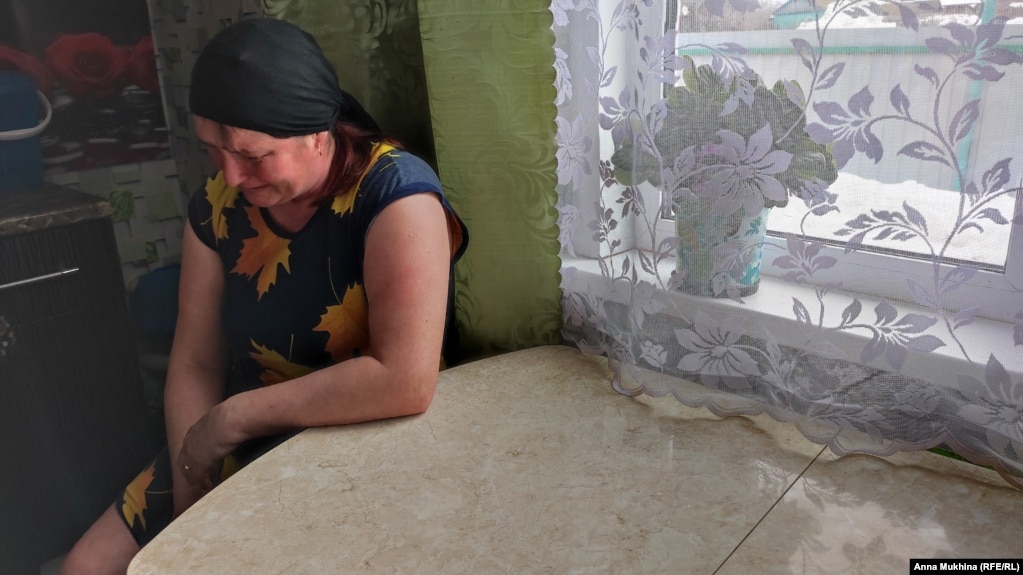
OZYORNOYE, Russia -- The cemetery here is shrouded in snowdrifts and silence. Near the end of the central alley, a freshly dug grave draped in plastic sheeting opens out under a birch tree.
It is the grave of Maksim Khanygin, born and raised in this village west of the Volga River city of Saratov. But his body is not here -- and may not be laid to rest before Russia's war in Ukraine is over.
A conscript, Khanygin died in the early hours of Russia's invasion of Ukraine on February 24 -- the day before his 22nd birthday.
"Everyone is asking, 'When? When? When?,'" Khanygin's grandmother Natalya told RFE/RL, referring to the funeral plans.
"But we don't know when. A military representative came and said they will not bring my grandson home until after the 'special operation' is finished," she said, the wording the Russian authorities use -- and are pressuring all Russians to use -- to refer to the unprovoked war that has killed thousands of soldiers and Ukrainian civilians. "They don't want to cause panic."
Over the past eight years or so, funerals of soldiers and mercenaries have drawn what for President Vladimir Putin's government is unwelcome attention to deaths in the wars in Syria and in eastern Ukraine, where Moscow claimed to have had no troops before the new invasion, despite copious evidence to the contrary.
Following the massive new escalation, with Russian forces targeting cities across much of Ukraine, the government said nothing about Russian casualties for days and then announced on March 2 that 498 Russian soldiers had been killed and 1,597 injured.
Ukrainian officials have said more than 9,000 Russian servicemen have been killed or wounded in the fighting. It is not possible to confirm these figures independently. The Conflict Intelligence Team (CIT), a Russian-based open-source-monitoring group, has estimated Russia's war dead at about 700.
"But that doesn't mean the number isn't larger," CIT analyst Ruslan Leviyev told RFE/RL's North Caucasus Service. "It might be 1,000 or even 2,000."
Ukraine has not given casualty figures for its own military, but its emergency service said on March 2 that more than 2,000 civilians had been killed since the invasion began. Reports Of Deaths Arriving
Word of Khanygin's death came to his family in Ozyornoye on February 25, when the head of the regional military office called his mother, Lyudmila Khangyina, with the news.
"During the day on Friday, my youngest grandson, Fyodor, came running to me and shouted: 'Grandma, come quickly. Mama has fainted. Maksim is dead!,'" Natalya said.
Written notification came shortly afterward.
By the next day, the whole village had heard the news. They brought money and flowers, and hung wreathes around town. The director of the collective farm where Lyudmila works helped secure a burial plot and paid to erect a cross.
Reports of soldiers being killed have begun slowly accumulating in Russia.
Ilynur Sibratullin, a soldier from the city of Nizhnekamsk in Tatarstan, north of Saratov on the Volga, was killed in Ukraine on February 26. A plane carrying his body arrived in Tatarstan on March 2, and he was, in keeping with Muslim custom, buried the same day.
On March 3, a veterans' group reported the death in combat near the Ukrainian port city of Mariupol of Major General Andrei Sukhovetsky, one of Russia's most decorated and experienced combat officers.
The same day, the governor of the Novosibirsk region, Andrei Travnikov, confirmed the deaths of two unidentified soldiers from his region.
On March 2, local authorities said on Instagram that 31-year-old Ali Batyrov, a native of the settlement of Batazhnoye in the southwestern region of Astrakhan, was killed in Ukraine on February 28. He held the rank of major, had been wounded and decorated in Syria, was a battalion commander, and left behind a widow and children.
The same day, officials in the Selenginsky district of Buryatia reported the death in Ukraine of Lieutenant Ilya Semyonov, who was also a veteran of the war in Syria, where Russia has given government forces crucial military support since 2015.
The day before, Astrakhan region Governor Igor Babushkin confirmed the death in Ukraine of a local soldier named Arman Narynbayev.
Officials in the North Caucasus republics have also confirmed the deaths of about a dozen servicemen.
Galina Zinoviyeva lives in the village of Nizhny Ures, in Tatarstan. She hasn't heard from her serviceman son, 21-year-old Maksim, since January 28, when he reported that he had arrived in Belarus for exercises. He was due to return to his home base on February 20 -- the last scheduled day of the drills in Belarus, which lies north of Ukraine and has been a staging ground for the Russian invasion.
"We are in a state of uncertainty," she told RFE/RL's Idel.Realities. "Where is Maksim now? Why doesn't he call?" Robert Coalson, Idel.Realities, Siberia.Realities, and RFE/RL's North Caucasus Service contributed to this report
Keegan: Now you find it so hard to contain yourself and endure the bombing and shelling of Ukraine by the Russians. If you are not mad like other deranged America asslickers on Nairaland you will understand that Yoruba Muslims, Igbo Jews, Ijaw Christians, Hausa-Fulani Muslims opinions on the ongoing war are nothing but waste of valuable time, exercise in futility. So tell me why all of you are so much serious about it? Oh, I gerrit you don't want the conflicts to degenerate further, you don't want WW3 abi. Your fears cannot prevent it, mine cannot as well, only God not even Putin and Biden can.
Bring world war 3 on, let us reset the world and start from scratch -
HitbackIIback: My brave brother no fight me go fight herdsmen, bandits or BH abi na kidnappers your strength dey for. Ukraine or Russia no my problem but just know that some fights are avoidable. Read in between the lines Ukraine president is regretting it big-time that's the truth. The West paint it like an instantaneous military support will be there but they have told him NATO no fit enter this box ring he openly express his disappointment... Am not a pro-Russia or Anti- Ukraine... Na d president body language I dey read no come fight me abeg
10 days and a major military world power is yet to capture a major city ? The Russian army is overrated.
HitbackIIback: Na all these kind of write up and talk make this Ukraine president make this huge mistake and deeply the man is regretting it. Don't encourage him again. Let him withdraw from this war and save his country
Why are you so angry that a sovereign nation is defending itself against an aggressor ? Is your IQ so low that you cannot understand why an independent country has the right to self-determination and self defence ?
Hector served two violent tours in Iraq as a United States Marine, then got out, got a pension and a civilian job, and thought he was done with military service. But on Friday, he boarded a plane for one more deployment, this time as a volunteer in Ukraine. He checked in several bags filled with rifle scopes, helmets and body armor donated by other veterans.
He is one of a surge of American veterans who say they are now preparing to join the fight in Ukraine, emboldened by the invitation of the country’s president, Volodymyr Zelensky, who earlier this week announced he was creating an “international legion” and asked volunteers from around the world to help defend his nation against Russia.
Ukraine’s minister of foreign affairs, Dmytro Kuleba, echoed the call for fighters, saying on Twitter, “Together we defeated Hitler, and we will defeat Putin, too.”
Hector said he hoped to train Ukrainians in his expertise: armored vehicles and heavy weapons.
“A lot of veterans, we have a calling to serve, and we trained our whole career for this kind of war,” he said. “Sitting by and doing nothing? I had to do that when Afghanistan fell apart, and it weighted heavily on me. I had to act.”
All across the United States, small groups of military veterans are gathering, planning and getting passports in order. After years of serving in smoldering occupations, trying to spread democracy in places that had only a tepid interest in it, many are hungry for what they see as a
“It’s a conflict that has a clear good and bad side, and maybe that stands apart from other recent conflicts,” said David Ribardo, a former Army officer who now owns a property management business in Allentown, Pa. “A lot of us are watching what is happening and just want to grab a rifle and go over there.”
After the invasion, he saw veterans flooding social media eager to join the fight. Unable to go because of commitments here, he has spent the past week acting as a sort of middle man for a group called Volunteers for Ukraine, identifying veterans and other volunteers with useful skills and connecting them with donors who buy gear and airline tickets.
“It was very quickly overwhelming, almost too many people wanted to help,” he said. In the past week, he said he has worked to sift those with valuable combat or medical skills from people he described as “combat tourists, who don’t have the correct experience and would not be an asset.”
He said his group has also had to comb out a number of extremists.
Fund-raising sites such as GoFundMe have rules against collecting money for armed conflict, so Mr. Ribardo said his group and others have been careful to avoid specifically directing anyone to get involved in the fighting. Rather, he said, he simply connects those he has vetted with people who want to donate plane tickets and nonlethal supplies, describing his role as being “a Tinder for veterans and donors.”
A number of mainstream media outlets, including Military Times and Time, have published step-by-step guides on joining the military in Ukraine. The Ukrainian government instructed interested volunteers to contact its consulates this week.
Several veterans who contacted the consulates this week said they were still waiting for a response, and believed staff members were overwhelmed.
On Thursday, Mr. Zelensky claimed in a video on Telegram that 16,000 volunteers had joined the international brigade, though it is unclear what the true number is. The New York Times was not able to identify any veterans actively fighting in Ukraine.
The outpouring of support is driven, veterans said, by past experiences. Some want to try to recapture the intense clarity and purpose they felt in war, which is often missing in modern suburban life. Others want a chance to make amends for failed missions in Iraq and Afghanistan, and see the fight to defend a democracy against a totalitarian invader as the reason they joined the military.
To an extent not seen in past conflicts, the impulse to join has been fueled partly by an increasingly connected world. Americans watching real-time video in Ukraine can, with a click, connect to like-minded volunteers around the globe. A veteran in Phoenix can find a donor in London with unused airline miles, a driver in Warsaw offering a free ride to the border and a local to stay with in Ukraine.
Of course, war is rarely as straightforward as the deeply felt idealism that drives people to enlist. And volunteers risk not only their own lives, but also drawing the United States into a direct conflict with Russia.
“War is an unpredictable animal, and once you let it out, no one — no one — knows what will happen,” said Daniel Gale, who lost a leg in Iraq before going on to teach leadership for several years at the U.S. Military Academy at West Point and retiring as a lieutenant colonel. He said he understood the urge to fight but said the risk of escalation resulting in nuclear war was too great.
“I just feel heartsick,” he said. “War is terrible and the innocent always suffer most.”
The risk of unintended escalation has led the U.S. federal government to try to keep citizens from becoming freelance fighters, not just in this conflict, but for centuries. In 1793, President Washington issued a Proclamation of Neutrality warning Americans to stay out of the French Revolution. But the efforts have been uneven, and often swayed by the larger national sentiment. So over the generations a steady stream of idealists, romantics, mercenaries and filibusters have taken up arms, — riding with Pancho Villa in Mexico, ferrying arms to Cuba, battling communists in Africa and even trying to establish new slave states in Central America.
The civil war in Spain just before the start of World War II is the best-known example. More than 3,000 Americans joined what became know as the Lincoln-Washington Battalion, to fight with the elected leftist government against fascist forces.
At the time, the United States wanted to avoid war with Europe, and stayed neutral, but the Young Communist League rented billboards to recruit fighters, and members of the establishment held fund-raisers to send young men overseas.
That effort, now often romanticized as a valiant prelude to the fight against the Nazis, ended badly. The poorly trained and equipped brigades made a disastrous assault of a fortified ridge in 1937 and three-quarters of the men were killed or wounded. Others faced near starvation in captivity. Their leader, a former math professor who was the inspiration for the protagonist in Ernest Hemingway’s novel “For Whom the Bell Tolls” was later captured and most likely executed.
On Thursday, the Russian Defense Ministry spokesman, Igor Konashenkov, told the Russian News Agency that foreign fighters would not be considered soldiers, but mercenaries, and would not be protected under humanitarian rules regarding the treatment of prisoners of war.
“At best, they can expect to be prosecuted as criminals,” Mr. Konashenkov said. We are urging all foreign citizens who may have plans to go and fight for Kyiv’s nationalist regime to think a dozen times before getting on the way.”
Despite the risks — both individual and strategic — the United States government has so far been measured in its warnings. Asked during a news conference this week what he would tell Americans who want to fight in Ukraine, Secretary of State Antony J. Blinken pointed to official statements, first issued weeks ago, imploring U.S. citizens in the country to depart immediately.
He said: “For those who want to help Ukraine and help its people, there are many ways to do that, including by supporting and helping the many NGOs that are working to provide humanitarian assistance; providing resources themselves to groups that are trying to help Ukraine by being advocates for Ukraine and for peaceful resolution to this crisis that was created by Russia.”
That has not dissuaded a number of veterans who are all too familiar with the risks of combat.
James was a medic who first saw combat when he replaced another medic killed in fighting in Iraq in 2006. He did two more tours, in Iraq and Afghanistan, seeing so much blood and death that 10 years after leaving the military he still attends therapy at a veteran’s hospital.
But this week, as he watched Russian forces shell cities across Ukraine, he decided that he had to try to go there to help.
“Combat has a cost, that’s for sure; you think you can come back from war the same, but you can’t,” James said in a phone interview from his home in Dallas, where he said he was waiting to hear back from Ukrainian officials. “But I feel obligated. It’s the innocent people being attacked — the kids. It’s the kids, man. I just can’t stand by.”
Chase, a graduate student in Virginia, said that he volunteered to fight the Islamic State in Syria in 2019 and felt the same urgency for Ukraine, but he warned against simply going to the border without a plan.
In Syria, he said he knew well-meaning volunteers who were detained for weeks by local Kurdish authorities because they arrived unannounced. He arranged with Kurdish defense forces before arriving in Syria. There he spent months as a humble foot soldier with little pay and only basic rations.
Tactically, as an inexperienced grunt, he said, he was of little value. But to the people of northeastern Syria, he was a powerful symbol that the world was with them.
“I was a sign to them that the world was watching and they mattered,” he said.
A few months into his time in Syria, he was shot in the leg, and eventually returned to the United States. He came home and worked for a septic tank company, then got a job writing about used cars. When he saw explosions hitting Ukraine this week, the part of him that went to war three years ago reawakened.
“Everything here is just kind of empty and it doesn’t seem like I’m doing anything important,” he said in an interview from an extended-stay hotel in Virginia where he is living. “So I am trying to go. I don’t think I have a choice. You have to draw the line.”
I was a supporter of IPOB until they started extra judicial killings in the South East, spreading lies and supporting a genocidal dictator called Putin. No difference between Buhari and Putin.
The indigenous people of Biafra are ardent advocates for the self determination of indigenous groups to choose their own fate for the sake of peace and prosperity.
IPOB is also against the constant slaughter of Igbo people by the murderous Nigerian army and terrorist herdsmen, so they formed ESN to counter this unwanted violence in their towns and cities. This was a good thing.
However a large number of IPOBIANS are hypocrites because they are against the self determination of Ukraine and instead support Russia in their murderous invasion of a sovereign nation with all the destruction and death involved. They have posted false and doctored videos of Putin supporting Biafra and even gone as far as campaigning for the support of Russian troops and their allies in their genocide. These videos of Putin supporting Biafra have been proven to be lies and have nothing to do with Biafra.
IPOB members and supporters keep disgracing Igbos on social media with their unhinged logic, stark lies and support for racists such as Trump and dictators such as Putin. The violence they have unleased in Igbo land is second to none and we are all suffering because of it. IPOB is not strategic, composed, balanced or pragmatic. They are emotional, impulsive, abusive and incoherent liars.
It is time for IPOB to transform itself into an intellectual power house and re-strategise in order to achieve its goals which are noble and healthy for the freedom and improvement of the Igbo race and others. IPOB must also invest in the re-education of our youth with history, logic and truth.
Stop the hypocrisy and lies, it is making all of us look bad.
Fears of coming economic collapse and near-totalitarian repression, both effects of the war in Ukraine, are prompting an exodus of young people.
BERLIN – “I am so ashamed. It is unbelievable.” Yekaterina, 30, from Moscow, is on the cusp of leaving Russia.
The cause, she said, is president Vladimir Putin’s invasion of Ukraine, a war she does not support conducted by means which horrify her. “I am afraid of the coming international isolation,” she said.
Yekaterina is one of potentially thousands of Russian citizens who want to emigrate in the near future. The women fear a coming economic collapse brought on by Western sanctions and near-totalitarian repression, all brought on by a brutal war they did not choose. The men fear the same, with the additional worry of being conscripted to fight in what increasingly looks like a military quagmire in Ukraine.
Quite where they will go, many would-be emigrants do not know. Russian citizens require a visa to travel to most Western countries. In any case, much of the West has closed its airspace to Russian planes. Two popular options are Georgia and Armenia, relatively free former Soviet states that allow Russians visa-free entry and are already home to sizeable populations of anti-Putin Russians. Yekaterina says she may go to the Caucasus, after which she hopes to work in Israel and gain citizenship. “There are not many choices,” she said.
There also isn’t much time: rumours abound that the borders will soon close and that Putin will impose martial law. Already reports are emerging of border guards treating people they suspect of fleeing the country with suspicion, in some cases turning them back. Some flights to destinations such as Tel Aviv are being turned back, possibly because the planes are sanctioned. Still, routes out of the country are closing fast.
Alexei, 29, has already been in Yerevan, the Armenian capital, for a few days. He spent three years in military school but says he does not support the actions of the Russian army in Ukraine. Armenia was one of the few options open to him once he decided to flee. “I feel like I’ve slipped through the net,” he said.
 Foreign Affairs › Ukraine - Russian Soldiers Inluding Three Commanders Killed As City Recaptured by IhateYouMan(op): 11:54pm On Mar 07, 2022