Isalegan2's Posts
Nairaland Forum › Isalegan2's Profile › Isalegan2's Posts
1 2 3 4 5 6 7 8 ... 130 131 132 133 134 135 136 137 138 (of 185 pages)
 Politics › Re: Great Speeches In African And Black History by isalegan2(op): 2:34pm On May 22, 2011 Politics › Re: Great Speeches In African And Black History by isalegan2(op): 2:34pm On May 22, 2011 |
ROBERT MANGALISO SOBUKWE (1924 - 1978) The State of the Nation. Address by R. M. Sobukwe, on "National Heroes' Day," August 2, 1959 Mr. Speaker Sir, Sons and Daughters of Afrika. Just over three months ago, on the 6th April, we met in the Communal Hall in Orlando, Johannesburg, to launch the ship of freedom—the Pan-Africanist Congress. On that historic day the African people declared total war against white domination, not only in South Africa but throughout the continent. On that day there entered into the maelstrom of South African politics an organisation dedicated to the cause of African emancipation and independence; an organisation committed to the overthrow of white supremacy and the establishment of an Africanist Socialist Democracy. Oppressed versus Oppressor It is just over three months that the Pan Africanist Congress has been born, but within that short space of time she has successfully pinpointed the basic assumptions in our struggle, namely that:— 1. The illiterate and semi-literate masses of the African people are the key to, the core and cornerstone of the struggle for democracy in this country. 2. African nationalism is the only liberatory creed that can weld these masses who are members of heterogeneous tribes into a solid, disciplined and united fighting force; provide them with loyalty higher than that of the tribe and give formal expression to their desire to be a nation. 3. The struggle in South Africa is part of the greater struggle throughout the continent for the restoration to the African people of the effective control of their land. The ultimate goal of our struggle, therefore, is the formation of a United States of Afrika. These pronouncements have struck a responsive chord in the hearts of the Sons and Daughters of the land, and awakened the imagination of the youth of our land while giving hope to the aged who for years have lived in the trough of despair. Indeed, the aged can now truly say: "Lord now lettest Thou thy servant depart in peace, according to Thy will: For mine eyes have seen Thy salvation." The issues are clear-cut. The Pan-Africanist Congress has done away with equivocation and clever talk. The decks are cleared, and in the arena of South African politics there are today only two adversaries: the oppressor and the oppressed; the master and the slave. We are on the eve of a continental showdown between the forces of evil and the forces of righteousness; the champions of oppression and the champions of freedom. Realising this, the oppressor is panic-stricken and is making feverish preparations for a last-ditch stand in defence of white supremacy. On the other hand, the forces of freedom are gathering strength from day to day, disciplining, nerving and steeling themselves for the imminent struggle. Afrika for Africans Once again, as in 1949, the African people are waiting expectantly and eagerly the emergence of a bold and courageous programme from the Pan Africanist Congress, an organisation that has its roots among the masses, and whose leadership comes from their loins. Not only has the Pan Africanist Congress succeeded in raising the eyes of our people above the dust of immediate conflict to the genuine democracy that lies beyond the stormy sea of struggle, but it has imparted a meaning and a purpose to their struggle. The African people, therefore, are awake! They are waiting, waiting eagerly and expectantly, waiting for the call, the call to battle, to battle for the reconquest of the continent of Afrika which for over 300 years has been the love-peddler of the philanderers and rakes of western capitalism. I ZWE LETHU I AFRIKA (Africa must come back)—that is the cry ringing throughout the continent. Afrika for the Africans. (A democratic rule of an African majority.) IZWE LETHU I AFRIKA! Those are the words that spell the doom of white supremacy in Afrika. Position in the Continent Throughout the continent of Afrika the struggle is being relentlessly waged against the historical anachronisms of imperialism, colonialism and white supremacy. Precious African blood is flowing in Algeria, where the Sons and Daughters of Afrika, under the courageous leadership of Ferhat Abbas of the government of Free Algeria are paying the supreme sacrifice for the recovery of the destroyed shrines. Greater and greater efforts are being made by the independent countries of Afrika to mould, shape and assert the African personality, and to lay the foundations for a United States of Afrika. Just recently the heads of the States of Ghana, Guinea and Liberia met in conference to discuss methods of furthering the cause of Pan Africanism. In Tanganyika, Nyerere is fighting for the revision of the multi-racial constitution imposed on the African people by imperialist Britain, and is pressing for the practical application of a non-racial democratic principle of "one man one vote". In Uganda, as our Bulletin stated, "British imperialism is locked in mortal combat with African nationalism." In Central Afrika tension is going high, and there is clear evidence that in the struggle between Kamuzu Banda and Roy Welensky, Banda will emerge triumphant. In fact, the signs are that not only Nyasaland but also Northern Rhodesia as well, will secede from the unholy federation of Welensky and Lennox-Boyd. South Africa Throughout Afrika, then, the forces of white supremacy are in retreat before the irresistible march of African nationalism. This is the era of African emancipation. Afrika holds the stage today. For the first time, positive action is being taken by the world against the inhuman policies of South Africa's white settler foreign minority governments. And the countries that have taken the lead in this worldwide boycott of South African goods are the countries of Afrika and those governed by people of African descent. And in South Africa, what is the position? Well you all know, that there has been talk from certain quarters of "hitting the nationalists in the stomach." We would have used the word "belly", but responsible, moderate leaders, you see, do not use such ugly words. There was such talk then, and lists were prepared. But immediately one so-called "nationalist concern" made certain sectional trade union concessions, it was no longer a nationalist controlled firm, and its products were no longer nationalist products. The old meaningless stunts are still being used by certain quarters. But there is a boycott of beerhalls launched by the courageous women of Durban—a movement originating from the masses and controlled by them. Nobody doubts its success. The evidence is there for all to see. If their "friends" do not interfere with the Durban women they will undoubtedly achieve their goal—acquiring for the African in Durban the status of human beings. There is also the potato boycott which, while commanding the active support of all persons because of the atrocities perpetrated by white farmers against African convict labourers, has unfortunately been handled by the quarters aforementioned. The result has been that these quarters which fear the militancy of the African people more than they loathe oppression, are hoping and praying that the boycott will fizzle out before they are compelled to call it off. What of the Pan Africanist Congress? We are met here today to commemorate our national Heroes' Day. We are, today, going down the corridor of time and renewing acquaintance with the heroes of Afrika's past—those men and women who nourished the tree of African freedom and independence with their blood; those great Sons and Daughters of Afrika who died in order that we may be free in the land of our birth. We are met here, today, to rededicate our lives to the cause of Afrika, to establish contact, beyond the grave, with the great African Heroes and to assure them that their struggle was not in vain. We are met here, Sons and Daughters of our beloved land, to drink from the fountain of African achievement, to remember the men and women who begot us, to remind ourselves of where we come from and to restate our goals. We are here to draw inspiration from the heroes of Thaba Bosiu, Isandlwana, Sandile's kop, Keiskama Hoek, Blood River and numerous other battlefields where our forefathers fell before the bullets of the foreign invader. We are here to draw inspiration from the Sons and Daughters of Afrika who gave their all to the cause and were physically broken in the struggle. We are met here, Sons and Daughters of Afrika, to take a trowel in our right hand and a shield and sword in our left, to commence the tremendous task of rebuilding the walls of Afrika. We are gathered here, today, to reiterate our resolve to declare total war against the demi-god of white supremacy. We are here to serve an ultimatum on the forces of oppression. We are here to say Afrika must be free. We are here to make an appeal to African intellectuals and businessmen, African urban and rural proletariat, to join forces in a determined, ruthless, relentless and total war against white supremacy. We say to waverers and fence-sitters, choose now, tomorrow may be too late. Choose now, because very soon we shall be saying, with biblical simplicity, that He who is not with us is against us. PAN AFRICANIST CONGRESS Programme The decks are cleared. The battle must be joined. Therefore, Sons and Daughters of the soil, in the name of the National Working Committee of the Pan Africanist Congress, I announce the STATUS CAMPAIGN—a campaign which once launched will not be called off until our goal is achieved. This is an unfolding and expanding campaign, involving the political, economic and social status of the African. It is all-embracing and multi-frontal, but is itself part of our unfolding and expanding dynamic nation-building Programme. Details of the campaign have already been circulated to all regions, with specific instructions that Branches be encouraged to discuss the campaign freely and frankly. I shall, therefore, not outline the campaign here, but shall deal instead with the objectives of this campaign. Mental Revolution We have stated in the past, in all our documents, that whatever campaign is launched by any liberatory movement worth the name, must at all times be related to the ultimate objectives and must assist in building the fighting capacity of the masses. Now for over three hundred years, the white, foreign, ruling minority has used its power to inculcate in the African a feeling of inferiority. This group has educated the African to accept the status quo of white supremacy and Black inferiority as normal. It is our task to exorcise this slave mentality, and to impart to the African masses that sense of self-reliance which will make them prefer self-government to the good government preferred by the A.N.C.'s leader. It must clearly be understood that we are not begging the foreign minorities to treat our people courteously. We are calling on our people to assert their personality. We are not hoping for a change of heart on the part of the Christian oppressor. We are reminding our people that they are men and women, with children of their own and homes of their own, and that just as much as they resent being called "kwedini" or"mfana" or"moshemane" by us—which is what "boy" means—they must equally resent such terms of address by the foreigner. We are reminding our people that acceptance of any indignity, any insult, any humiliation is acceptance of inferiority. They must first think of themselves as men and women before they can demand to be treated as such. The campaign will free the mind of the African and once the mind is free, the body will soon be free. Once white supremacy has become mentally untenable to our people, it will become physically untenable too, and will go. I am absolutely certain that once the STATUS CAMPAIGN is launched, the masses will themselves come forward with suggestions for the extension of the area of assault—and once that happens, the twilight of white supremacy and the dawn of African independence in this part of the continent, will have set in. Soft Campaign: Certain quarters have accused us of being concerned more with our status, with being addressed as "Sirs" and "Mesdames" than with the economic plight of the African people. Our reply is that such accusations can come only from those who think of the African as an economic animal—a thing to be fed—and not as a human being. It is only those who have been herrenvolkenised by their herrenvolk environment, people who have no idea whatsoever of the African personality, who can expect us to be lick-spittles in order to get more crumbs from the oppressor. Others again, have said that we have chosen a soft campaign, without any risks, because we fear to challenge apartheid totally. Let it be clear that we are not fighting just apartheid. We are fighting the whole concept of white supremacy. And we are fully aware of the nature and size of our task. And we will not shirk it. Right from the beginning of the campaign, the leaders will be in front. They will picket the concerns that are to be boycotted. And they will do so under our slogan of "no bail, no defence, no fine." And that slogan will not be changed until we land on the shores of freedom and independence. Clarion call: We therefore call first of all on the members of the Pan-Africanist Congress who are the hard core, the advance guard that must lead the struggle and on the African people in general. All of them, without exception, must wait for the call. They will be kept informed of every step we take. And when the call comes, we expect them to respond like a disciplined people. There is plenty of suffering ahead. There is plenty of suffering ahead, [sic] The oppressor will not take this lying down. But we are ready. We will not go back. Come what may. This campaign will be maintained, unfolded and expanded until Masiza's question is answered: " Koda kube nini Nkosi Zonke izizwe zisinyasha pantsi kweenyawo?" (Until when, oh Lord, will all nations trample us under foot)—until we can answer "no more". We will go on, Sons and Daughters of Afrika, until in every shanty, in every bunk in the compounds, in every hut in the deserted villages, in every valley and on every hill top, the cry of African freedom and independence is heard. We will continue until we walk the streets of our land as free men and free women, our heads held high. We will go on until the day dawns when every person who is in Afrika will be African and a man's colour will be as irrelevant as is the shape of his ears. We will go on, steadfastly, relentlessly and determinedly until the cry of "Afrika for the Africans, the Africans for humanity and humanity for God" becomes a reality; until government of the Africans by the Africans for the Africans is a fait accompli. We will not look back. We will not deviate, and as the heat of oppression mounts we shall become purer and purer, learning new lessons, and leaving all the dross of racialism and similar evils behind to emerge as a people mentally and physically disciplined, appreciative of the fact that: There is only one man in the world, And his name is All men. There is only one woman in the world, And her name is All women. Sons and Daughters of Afrika, we are today on the threshold of a historic era. We are about to witness momentous events. We are blazing a new trail, and we invite you to be, with us creators of history. Join us in the march of freedom. March with us to independence. To independence now. Tomorrow the United States of Afrika. IZWE LETHU!! http://www.sahistory.org.za/pages/library-resources/speeches/1959_nationaddres-sobukwe.htm [img]http://t0.gstatic.com/images?q=tbn:ANd9GcQyn7jeyG_bdxw4u6bZg23FzFqZMfYARtz1jhOjG4Mh3wV0Zpdu[/img] More: Inaugural Convention of the PAC, April 4-6, 1959 - "Opening Address" by R. M. Sobukwe http://www.sahistory.org.za/pages/library-resources/speeches/1959_pac-convention-sobukwe.htm A short video on the political imprisonment of Robert Sobukwe [flash=420,380] https://www.youtube.com/watch?v=5I_lF4kK4Mk[/flash] https://www.youtube.com/watch?v=5I_lF4kK4Mk Note: In the video, the narrator discussed the physical and mental repercussions of being in solitary confinement and the state in which Sobukwe was after his prison release into home arrest. Despite the negative circumstance described by the well-meaning and sympathetic narrator, there is also some info* that Sobukwe used his solitary time to forward his education, earning multiple diplomas and eventually obtaining a law degree and practising as a lawyer until his death from lung cancer. I see him not as a tragic figure, but as a courageous man. * http://en.wikipedia.org/wiki/Robert_Sobukwe One Settler One Bullet! 1980s Rallying Cry of Azanian People's Liberation Army (APLA), the armed wing of the Pan Africanist Congress (PAC) 1 Like |
| Politics › Re: Great Speeches In African And Black History by isalegan2(op): 8:06am On May 22, 2011 |
Kwame Nkrumah: I Speak of Freedom, 1961 Kwame Nkrumah (1909-1972) was the leader of Ghana, the formerBritish colony of the Gold Coast and the first of the European colonies in Africa to gain independence with majority rule. Until he was deposed by a coup d'état in 1966, he was a major spokesman for modern Africa. For centuries, Europeans dominated the African continent. The white man arrogated to himself the right to rule and to be obeyed by the non-white; his mission, he claimed, was to "civilise" Africa. Under this cloak, the Europeans robbed the continent of vast riches and inflicted unimaginable suffering on the African people. All this makes a sad story, but now we must be prepared to bury the past with its unpleasant memories and look to the future.All we ask of the former colonial powers is their goodwill and co-operation to remedy past mistakes and injustices and to grant independence to the colonies in Africa…. It is clear that we must find an African solution to our problems, and that this can only be found in African unity. Divided we are weak; united, Africa could become one of the greatest forces for good in the world. Although most Africans are poor, our continent is potentially extremely rich. Our mineral resources, which are being exploited with foreign capital only to enrich foreign investors, range from gold and diamonds to uranium and petroleum. Our forests contain some of the finest woods to be grown anywhere. Our cash crops include cocoa, coffee, rubber, tobacco and cotton. As for power, which is an important factor in any economic development, Africa contains over 40% of the potential water power of the world, as compared with about 10% in Europe and 13% in North America. Yet so far, less than 1% has been developed. This is one of the reasons why we have in Africa the paradox of poverty in the midst of plenty, and scarcity in the midst of abundance. Never before have a people had within their grasp so great an opportunity for developing a continent endowed with so much wealth. Individually, the independent states of Africa, some of them potentially rich, others poor, can do little for their people. Together, by mutual help, they can achieve much. But the economic developmentof the continent must be planned and pursued as a whole. A loose confederation designed only for economic co-operation would notprovide the necessary unity of purpose. Only a strong political union can bring about full and effective development of our natural resources for the benefit of our people. The political situation in Africa today is heartening and at the same time disturbing. It is heartening to see so many new flags hoisted in place of the old; it is disturbing to see so many countries of varying sizes and at different levels of development, weakand, in some cases, almost helpless. If this terrible state of fragmentation is allowed to continue it may well be disastrous for us all. There are at present some 28 states in Africa, excluding the Union of South Africa, and those countries not yet free. No less than nine of these states have a population of less than three million.Can we seriously believe that the colonial powers meant these countries to be independent, viable states? The example of South America, which has as much wealth, if not more than North America, and yet remains weak and dependent on outside interests, is one which every African would do well to study. Critics of African unity often refer to the wide differences in culture, language and ideas in various parts of Africa. This istrue, but the essential fact remains that we are all Africans, and have a common interest in the independence of Africa. The difficulties presented by questions of language, culture and different political systems are not insuperable. If the need for political union is agreed by us all, then the will to create it is born;and where there's a will there's a way. The present leaders of Africa have already shown a remarkable willingness to consult and seek advice among themselves. Africans have, indeed, begun to think continentally. They realise that they have much in common, both in their past history, in their present problems and in their future hopes. To suggest that the time is not yet ripe for considering a political union of Africa is to evade the facts and ignore realities in Africa today. The greatest contribution that Africa can make to the peace of the world is to avoid all the dangers inherent in disunity, by creating a political union which will also by its success, standas an example to a divided world. A Union of African states will project more effectively the African personality. It will command respect from a world that has regard only for size and influence.The scant attention paid to African opposition to the French atomic tests in the Sahara, and the ignominious spectacle of the U.N. in the Congo quibbling about constitutional niceties while the Republic was tottering into anarchy, are evidence of the callous disregard of African Independence by the Great Powers. We have to prove that greatness is not to be measured in stockpiles of atom bombs. I believe strongly and sincerely that with the deep-rooted wisdom and dignity, the innate respect for human lives, the intense humanity that is our heritage, the African race, united under one federal government, will emerge not as just another world bloc to flaunt its wealth and strength, but as a Great Power whose greatness is indestructible because it is built not on fear, envy and suspicion, nor won at the expense of others, but founded on hope, trust, friendship and directed to the good of all mankind. The emergence of such a mighty stabilising force in this strife-worn world should be regarded not as the shadowy dream of a visionary, but as a practical proposition, which the peoples of Africa can, and should, translate into reality. There is a tide in the affairs of every people when the moment strikes for political action. Such was the moment in the history of the United States of America when the Founding Fathers saw beyond the petty wranglings of the separate states and created a Union. This is our chance. We must act now. Tomorrow may be too late and the opportunity will have passed, and with it the hope of free Africa's survival. From Kwame Nkrumah, I Speak of Freedom: A Statement of African Ideology (1961) http://www.fordham.edu/halsall/mod/1961nkrumah.html Ghana Independence Speech, 1957 [flash=360,320] https://www.youtube.com/watch?v=joBjzivBKz4[/flash] https://www.youtube.com/watch?v=joBjzivBKz4 The United States of Africa [flash=360,320] https://www.youtube.com/watch?v=foDlCCudcsE[/flash] https://www.youtube.com/watch?v=foDlCCudcsE |
| Politics › Re: Great Speeches In African And Black History by isalegan2(op): 7:35am On May 22, 2011 |
Audio (parts 1&2) of speech in opening post, MLK's final speech: I've Been To The Mountaintop, Memphis, 1968: [flash=360,320] https://www.youtube.com/watch?v=C2EnnclLMX4[/flash] https://www.youtube.com/watch?v=C2EnnclLMX4 [flash=360,320] https://www.youtube.com/watch?v=ySGDMdQaDA0[/flash] https://www.youtube.com/watch?v=ySGDMdQaDA0 Note: The closing sentence in audio part 2 appears to be from another speech. It is evident where the original speech ends. Looks like the video poster exercised his editing rights to tack on the ending of the "I Have A Dream" speech. |
| Politics › Re: Great Speeches In African And Black History by isalegan2(op): 7:15am On May 22, 2011 |
[quote author=Kilode?! link=topic=672198.msg8369731#msg8369731 date=1306042628]"I'm speaking as a victim of this American system. And I see America through the eyes of the victim. I don't see any American dream; I see an American nightmare" -Malcom Omowale X I'm not a Malcolm X expert, But I've read a fair amount of his work and a few other works on his liberation struggle. Malcolm X was a freedom fighter, but I will also argue that his greatest conflict was against his own personal beliefs. On his politics, Personally, I think every revolution needs a Malcolm X as much as they need an MLK. They were both struggling for the same things with different tools. We must also realize that Malcolm was a product of the harsh American system, his progression from an hardcore angry revolutionary to a milder fighter after his cathartic Mecca and African pilgrimages shows an ability to confront the issues around him, learn and honestly decide on what part to take. I specifically like that aspect of his history as I know it. I know he invites passionate reactions, but hey, he's neither Ghandi nor MLK and he's not perfect, but we cannot deny that he was passionate about his beliefs. BTW, I think if Macolm and MLK had lived much longer, African-Americans would've been able to make better use of the gains of that civil rights era. another topic So Isale, what's your "strong opinion" about Brotha Malcom? he was not a good muslim? he kept his wife in purdah?  j/k[/quote]I previously hinted at my "shocking" opinions about Malcolm in my home thread. I'll link it j/k[/quote]I previously hinted at my "shocking" opinions about Malcolm in my home thread. I'll link it On Malcolm, I am not an ardent scholar of his either. Succinctly, I see a lifelong con artist. A decade or so ago, primarily through the works of Spike Lee and a backlash from young Black Americans due to the disaffection at the dearth of true firebrand Black leaders, there was a resurgence of the legend and myth of the X. Despite pronouncements to the contrary, I do not see him as being at the level of an MLK. As a scholar, a speaker of a genuine correctly motivated leader. I look at him, and I'm sorry, I see a lifelong con artist and self-promoter. There is doubt his house was firebombed by the people he accused; he may have done it himself - provide proof to the contrary. At one point, he portrayed himself as a concerned moralistic leader who was simply trying to expose the failings of Elijah Muhammad with regard to inappropriate relationships that Malcolm claimed the man was having with females in the NOI - something Malcolm went about publicising in a truly unimaginable way; come to find out, Malcolm himself was having a relationship with one of those women. I have a lot of doubts about him. I don't buy into the hype. The only thing I know is the dude didn't shoot himself, but he was a media hound before the term even came into being. I'll let you digest that. The big one is too big and might give you a coronary. (God forbid!) I'll see how you deal with the above before I drop it on ya. BTW, I know you were kidding, but I don't question his adherence to the NOI version of Islam, and I have no feelings about his marital life; I don't know if he kept Betty in purdah though. There were issues with one of their children, and later, her child who ended up setting a fire that eventually resulted in the death of Betty. You didn't say what you thought about the speech, Ballot or Bullet. |
| Politics › Re: Great Speeches In African And Black History by isalegan2(op): 5:13am On May 22, 2011 |
Thanks for all your contributions. Some feedback/discussion might shed more light on some of the featured speakers, and the impact of their speech(s). [quote author=Kilode?! link=topic=672198.msg8366785#msg8366785 date=1305993186]The Ballot or the Bullet by Malcolm X April 3, 1964 Cleveland, Ohio Mr. Moderator, Brother Lomax, brothers and sisters, friends and enemies: I just can't believe everyone in here is a friend, and I don't want to leave anybody out. The question tonight, as I understand it, is "The Negro Revolt, and Where Do We Go From Here?" or What Next?" In my little humble way of understanding it, it points toward either the ballot or the bullet. . .[/quote]I am ambivalent about Malcolm X. I am curious to know your thoughts on him, Kilode, seeing as you posted two of his speeches. What I have to say may shock you. lol. I read the above, The Ballot or the Bullet, and have strong opinions about it. But I wish to wait till you're around before I tackle it. I don't want to post and give you ample time to hit me hard.  To All: Please keep the great speeches coming.  1 Like |
| Politics › Re: Great Speeches In African And Black History by isalegan2(op): 4:58am On May 22, 2011 |
- |
| Politics › Re: How To Get GEJ And Others On Nairaland. by isalegan2: 1:43am On May 22, 2011 |
Seun:https://www.nairaland.com/nigeria/topic-507123.0.html Page 3 |
| Politics › Re: How To Get GEJ And Others On Nairaland. by isalegan2: 11:46pm On May 21, 2011 |
Seun:https://www.nairaland.com/nigeria/topic-664067.0.html |
| Politics › Re: Great Speeches In African And Black History by isalegan2(op): 8:16pm On May 21, 2011 |
Oh! Heck Yeah! Now we're talking. |
| Politics › Re: Great Speeches In African And Black History by isalegan2(op): 6:55pm On May 21, 2011*. Modified: 6:37pm On Mar 24, 2013 |
What It Means to be Colored in Capital of the U.S. delivered 10 October 1906, United Women's Club, Washington, D.C. By Mary Church Terrell Thank you very much. Washington, D.C., has been called "The Colored Man's Paradise." Whether this sobriquet was given to the national capital in bitter irony by a member of the handicapped race, as he reviewed some of his own persecutions and rebuffs, or whether it was given immediately after the war by an ex-slaveholder who for the first time in his life saw colored people walking about like free men, minus the overseer and his whip, history saith not. It is certain that it would be difficult to find a worse misnomer for Washington than "The Colored Man's Paradise" if so prosaic a consideration as veracity is to determine the appropriateness of a name. For fifteen years I have resided in Washington, and while it was far from being a paradise for colored people when I first touched these shores it has been doing its level best ever since to make conditions for us intolerable. As a colored woman I might enter Washington any night, a stranger in a strange land, and walk miles without finding a place to lay my head. Unless I happened to know colored people who live here or ran across a chance acquaintance who could recommend a colored boarding-house to me, I should be obliged to spend the entire night wandering about. Indians, Chinamen, Filipinos, Japanese and representatives of any other dark race can find hotel accommodations, if they can pay for them. The colored man alone is thrust out of the hotels of the national capital like a leper. As a colored woman I may walk from the Capitol to the White House, ravenously hungry and abundantly supplied with money with which to purchase a meal, without finding a single restaurant in which I would be permitted to take a morsel of food, if it was patronized by white people, unless I were willing to sit behind a screen. As a colored woman I cannot visit the tomb of the Father of this country, which owes its very existence to the love of freedom in the human heart and which stands for equal opportunity to all, without being forced to sit in the Jim Crow section of an electric car which starts form the very heart of the city– midway between the Capital and the White House. If I refuse thus to be humiliated, I am cast into jail and forced to pay a fine for violating the Virginia laws, As a colored woman I may enter more than one white church in Washington without receiving that welcome which as a human being I have the right to expect in the sanctuary of God, Unless I am willing to engage in a few menial occupations, in which the pay for my services would be very poor, there is no way for me to earn an honest living, if I am not a trained nurse or a dressmaker or can secure a position as teacher in the public schools, which is exceedingly difficult to do. It matters not what my intellectual attainments may be or how great is the need of the services of a competent person, if I try to enter many of the numerous vocations in which my white sisters are allowed to engage, the door is shut in my face. From one Washington theater I am excluded altogether. In the remainder certain seats are set aside for colored people, and it is almost impossible to secure others, With the exception of the Catholic University, there is not a single white college in the national capitol to which colored people are admitted, A few years ago the Columbian Law School admitted colored students, but in deference to the Southern white students the authorities have decided to exclude them altogether. Some time ago a young woman who had already attracted some attention in the literary world by her volume of short stories answered an advertisement which appeared in a Washington newspaper, which called for the services of a skilled stenographer and expert typewriter, The applicants were requested to send specimens of their work and answer certain questions concerning their experience and their speed before they called in person. In reply to her application the young colored woman, received a letter from the firm stating that her references and experience were the most satisfactory that had been sent and requesting her to call. When she presented herself there was some doubt in the mind of the man to whom she was directed concerning her racial pedigree, so he asked her point-blank whether she was colored or white. When she confessed the truth the merchant expressed, deep regret that he could not avail himself of the services of so competent a person, but frankly admitted that employing a colored woman in his establishment in any except a menial position was simply out of the question, Not only can colored women secure no employment in the Washington stores, department and otherwise, except as menials, and such positions, of course, are few, but even as customers they are not infrequently treated with discourtesy both by the clerks and the proprietor himself, Although white and colored teachers are under the same Board of Education and the system for the children of both races is said to be uniform, prejudice against the colored teachers in the public schools is manifested in a variety of ways. From 1870 to 1900 there was a colored superintendent at the head of the colored schools. During all that time the directors of the cooking, sewing, physical culture, manual training, music and art departments were colored people. Six years ago a change was inaugurated. The colored superintendent was legislated out of office and the directorships, without a single exception, were taken from colored teachers and given to the whites, Now, no matter how competent or superior the colored teachers in our public schools may be, they know that they can never rise to the height of a directorship, can never hope to be more than an assistant and receive the meager salary therefore, unless the present regime is radically changed, Strenuous efforts are being made to run Jim Crow cars in the national capital, Representative Heflin, of Alabama, who introduced a bill providing for Jim Crow street cars in the District of Columbia last winter, has just received a letter from the president of the East Brookland Citizens’ Association “indorsing the movement for separate street cars and sincerely hoping that you will be successful in getting this enacted into a law as soon as possible.” Brookland is a suburb of Washington. The colored laborer’s path to a decent livelihood is by no means smooth. Into some of the trades unions here he is admitted, while from others he is excluded altogether. By the union men this is denied, although I am personally acquainted with skilled workmen who tell me they are not admitted into the unions because they are colored. But even when they are allowed to join the unions they frequently derive little benefit, owing to certain tricks of the trade. When the word passes round that help is needed and colored laborers apply, they are often told by the union officials that they have secured all the men they needed, because the places are reserved for white men, until they have been provided with jobs, and colored men must remain idle, unless the supply of white men is too small, And so I might go on citing instance after instance to show the variety of ways in which our people are sacrificed on the altar of prejudice in the Capital of the United States and how almost insurmountable are the obstacles which block his path to success, It is impossible for any white person in the United States, no matter how sympathetic and broad, to realize what life would mean to him if his incentive to effort were suddenly snatched away. To the lack of incentive to effort, which is the awful shadow under which we live, may be traced the wreck and ruin of score of colored youth. And surely nowhere in the world do oppression and persecution based solely on the color of the skin appear more hateful and hideous than in the capital of the United States, because the chasm between the principles upon which this Government was founded, in which it still professes to believe, and those which are daily practiced under the protection of the flag, yawn so wide and deep. http://www.americanrhetoric.com/speeches/marychurchterellcolored.htm pdf: http://www.americanrhetoric.com/speeches/PDFFiles/Mary%20Church%20Terrell%20-%20Colored%20in%20the%20US.pdf |
| Politics › Re: Great Speeches In African And Black History by isalegan2(op): 6:36pm On May 21, 2011 |
LYNCH LAW IN AMERICA OUR country's national crime is lynching. It is not the creature of an hour, the sudden outburst of uncontrolled fury, or the unspeakable brutality of an insane mob. It represents the cool, calculating deliberation of intelligent people who openly avow that there is an "unwritten law" that justifies them in putting human beings to death without complaint under oath, without trial by jury, without opportunity to make defense, and without right of appeal. The "unwritten law" first found excuse with the rough, rugged, and determined man who left the civilized centers of eastern States to seek for quick returns in the gold-fields of the far West. Following in uncertain pursuit of continually eluding fortune, they dared the savagery of the Indians, the hardships of mountain travel, and the constant terror of border State outlaws. Naturally, they felt slight toleration for traitors in their own ranks. It was enough to fight the enemies from without; woe to the foe within! Far removed from and entirely without protection of the courts of civilized life, these fortune-seekers made laws to meet their varying emergencies. The thief who stole a horse, the bully who "jumped" a claim, was a common enemy. If caught he was promptly tried, and if found guilty was hanged to the tree under which the court convened. Those were busy days of busy men. They had no time to give the prisoner a bill of exception or stay of execution. The only way a man had to secure a stay of execution was to behave himself. Judge Lynch was original in methods but exceedingly effective in procedure. He made the charge, impaneled the jurors, and directed the execution. When the court adjourned, the prisoner was dead. Thus lynch law held sway in the far West until civilization spread into the Territories and the orderly processes of law took its place. The emergency no longer existing, lynching gradually disappeared from the West. But the spirit of mob procedure seemed to have fastened itself upon the lawless classes, and the grim process that at first was invoked to declare justice was made the excuse to wreak vengeance and cover crime. It next appeared in the South, where centuries of Anglo-Saxon civilization had made effective all the safeguards of court procedure. No emergency called for lynch law. It asserted its sway in defiance of law and in favor of anarchy. There it has flourished ever since, marking the thirty years of its existence with the inhuman butchery of more than ten thousand men, women, and children by shooting, drowning, hanging, and burning them alive. Not only this, but so potent is the force of example that the lynching mania has spread throughout the North and middle West. It is now no uncommon thing to read of lynchings north of Mason and Dixon's line, and those most responsible for this fashion gleefully point to these instances and assert that the North is no better than the South. This is the work of the "unwritten law" about which so much is said, and in whose behest butchery is made a pastime and national savagery condoned. The first statute of this "unwritten law" was written in the blood of thousands of brave men who thought that a government that was good enough to create a citizenship was strong enough to protect it. Under the authority of a national law that gave every citizen the right to vote, the newly-made citizens chose to exercise their suffrage. But the reign of the national law was short-lived and illusionary. Hardly had the sentences dried upon the statute-books before one Southern State after another raised the cry against "negro domination" and proclaimed there was an "unwritten law" that justified any means to resist it. The method then inaugurated was the outrages by the "red-shirt" bands of Louisiana, South Carolina, and other Southern States, which were succeeded by the Ku-Klux Klans. These advocates of the "unwritten law" boldly avowed their purpose to intimidate, suppress, and nullify the negro's right to vote. In support of its plans the Ku-Klux Klans, the "red-shirt" and similar organizations proceeded to beat, exile, and kill negroes until the purpose of their organization was accomplished and the supremacy of the "unwritten law" was effected. Thus lynchings began in the South, rapidly spreading into the various States until the national law was nullified and the reign of the "unwritten law" was supreme. Men were taken from their homes by "red-shirt" bands and stripped, beaten, and exiled; others were assassinated when their political prominence made them obnoxious to their political opponents; while the Ku-Klux barbarism of election days, reveling in the butchery of thousands of colored voters, furnished records in Congressional investigations that are a disgrace to civilization. The alleged menace of universal suffrage having been avoided by the absolute suppression of the negro vote, the spirit of mob murder should have been satisfied and the butchery of negroes should have ceased. But men, women, and children were the victims of murder by individuals and murder by mobs, just as they had been when killed at the demands of the "unwritten law" to prevent "negro domination." Negroes were killed for disputing over terms of contracts with their employers. If a few barns were burned some colored man was killed to stop it. If a colored man resented the imposition of a white man and the two came to blows, the colored man had to die, either at the hands of the white man then and there or later at the hands of a mob that speedily gathered. If he showed a spirit of courageous manhood he was hanged for his pains, and the killing was justified by the declaration that he was a "saucy nigger." Colored women have been murdered because they refused to tell the mobs where relatives could be found for "lynching bees." Boys of fourteen years have been lynched by white representatives of American civilization. In fact, for all kinds of offenses--and, for no offenses--from murders to misdemeanors, men and women are put to death without judge or jury; so that, although the political excuse was no longer necessary, the wholesale murder of human beings went on just the same. A new name was given to the killings and a new excuse was invented for so doing. . . . In the case of the boy and girl above referred to, their father, named Hastings, was accused of the murder of a white man. His fourteen-year-old daughter and sixteen-year-old son were hanged and their bodies filled with bullets; then the father was also lynched. This occurred in November, 1892, at Jonesville, La. Indeed, the record for the last twenty years shows exactly the same or a smaller proportion who have been charged with this horrible crime. Quite a number of the one-third alleged cases of assault that have been personally investigated by the writer have shown that there was no foundation in fact for the charges; yet the claim is not made that there were no real culprits among them. The negro has been too long associated with the white man not to have copied his vices as well as his virtues. But the negro resents and utterly repudiates the efforts to blacken his good name by asserting that assaults upon women are peculiar to his race. The negro has suffered far more from the commission of this crime against the women of his race by white men than the white race has ever suffered through his crimes. Very scant notice is taken of the matter when this is the condition of affairs. What becomes a crime deserving capital punishment when the tables are turned is a matter of small moment when the negro woman is the accusing party. But since the world has accepted this false and unjust statement, and the burden of proof has been placed upon the negro to vindicate his race, he is taking steps to do so. The Anti-Lynching Bureau of the National Afro-American Council is arranging to have every lynching investigated and publish the facts to the world. . . . Excerpted from: Ida B. Wells-Barnett "Lynch Law in America," The Arena 23.1 (January 1900): 15-24, Chicago, Illinois, USA http://courses.washington.edu/spcmu/speeches/idabwells.htm [img]http://t2.gstatic.com/images?q=tbn:ANd9GcRISWiUD_spxWpDZlGw0hX1TQYm-zWoDDbIBIRP9BKfJsbeXlzI5w[/img] IDA B. WELLS BARNETT (1862 - 1931) (My favorite African-American woman, ever. If only I believed in reincarnation.) . . . Wells attended the Freedmen's School Shaw University, now Rust College in Holly Springs. She was expelled from Rust College for her rebellious behavior and temper after confronting the President of the college. During her time at college, on a visit to her grandmother in Mississippi Valley, she received word that her hometown of Holly Springs had been hit by the Yellow Fever epidemic.[citation needed] When she was 16, both Wells' parents and her 10-month old brother, Stanley, died of yellow fever during a epidemic that swept through the South.[2] At a meeting following the funeral, friends and relatives decided that the six remaining Wells children would be sent to various foster homes. Wells was devastated by the idea and, to keep the family together, dropped out of high school and found employment as a teacher in a black school. She was determined to keep her family together, even under the difficult circumstances. Her grandmother, Peggy Wells, along with other friends and relatives as well, stayed with the children during the week while she was away to teach; without this help she would have not been able to provide for the family. She used teaching as a way to support herself and her family, however she didn’t have a passion for it. She thought it was unfair that white teachers were making $80 a month when she was only making $30. This had caused her to find an interest in racial politics and improving education of blacks. . . . On May 4, 1884, a Chesapeake and Ohio Railroad Company train conductor ordered Wells to give up her seat on the train and move to the smoking car, which was already crowded with other passengers. At the time, the Supreme Court had just struck down, in the Civil Rights Cases (1883), the federal Civil Rights Act of 1875, which banned racial discrimination in public accommodations. Several railroad companies were able to continue legal racial segregation of their passengers. Wells protested and refused to give up her seat, 71 years before Rosa Parks. The conductor and two other men dragged Wells out of the car. When she returned to Memphis, she immediately hired an African American attorney to sue the railroad. Wells became a public figure in Memphis when she wrote a newspaper article, for "The Living Way," a black church weekly, about her treatment on the train. Excerpt from Wiki: http://en.wikipedia.org/wiki/Ida_B._Wells [img]http://t3.gstatic.com/images?q=tbn:ANd9GcRTHKRmzqdk7TzfIDBbLXf5kGLPqM7t7c0-tIQT2dky_7RhIldQ[/img] Letter from Frederick Douglass Dear Miss Wells: Let me give you thanks for your faithful paper on the lynch abomination now generally practiced against colored people in the South. There has been no word equal to it in convincing power. I have spoken, but my word is feeble in comparison. You give us what you know and testify from actual knowledge. You have dealt with the facts with cool, painstaking fidelity and left those unclothed and uncontradicted facts to speak for themselves. Brave woman! you have done your people and mine a service which can neither be weighed nor measured. If American conscience were only half alive, if the American church and clergy were only half christianized, if American moral sensibility were not hardened by persistent infliction of outrage and crime against colored people, a scream of horror, shame and indignation would rise to Heaven wherever your pamphlet shall be read. But alas! even crime has power to reproduce itself and create conditions favorable to its own existence. It sometimes seems we are deserted by earth and Heaven yet we must still think, speak and work, and trust in the power of a merciful God for final deliverance. Very truly and gratefully yours, FREDERICK DOUGLASS Cedar Hill, Anacostia, D.C., Oct. 25, 1892 [img]http://t1.gstatic.com/images?q=tbn:ANd9GcRw5c1AjEAk2--uHSMtZL4AwU5IQRZgY8lFn-am-FmAkKq3ODXiZQ[/img] |
| Nairaland General › Re: Buzugee/Nairaland, So I Want To Talk About Living Abroad by isalegan2(op): 4:29pm On May 21, 2011 |
A January 2011 article in Guardian UK: Patrice Lumumba: the most important assassination of the 20th century The US-sponsored plot to kill Patrice Lumumba, the hero of Congolese independence, took place 50 years ago today https://static.guim.co.uk/sys-images/Guardian/About/General/2011/1/17/1295258576770/patrice-lumumba-007.jpg Patrice Lumumba became the first prime minister of the Democratic Republic of the Congo in 1960, and was killed in 1961. Photograph: EPA Patrice Lumumba, the first legally elected prime minister of the Democratic Republic of the Congo (DRC), was assassinated 50 years ago today, on 17 January, 1961. This heinous crime was a culmination of two inter-related assassination plots by American and Belgian governments, which used Congolese accomplices and a Belgian execution squad to carry out the deed. Ludo De Witte, the Belgian author of the best book on this crime, qualifies it as "the most important assassination of the 20th century". The assassination's historical importance lies in a multitude of factors, the most pertinent being the global context in which it took place, its impact on Congolese politics since then and Lumumba's overall legacy as a nationalist leader. For 126 years, the US and Belgium have played key roles in shaping Congo's destiny. In April 1884, seven months before the Berlin Congress, the US became the first country in the world to recognise the claims of King Leopold II of the Belgians to the territories of the Congo Basin. When the atrocities related to brutal economic exploitation in Leopold's Congo Free State resulted in millions of fatalities, the US joined other world powers to force Belgium to take over the country as a regular colony. And it was during the colonial period that the US acquired a strategic stake in the enormous natural wealth of the Congo, following its use of the uranium from Congolese mines to manufacture the first atomic weapons, the Hiroshima and Nagasaki bombs. With the outbreak of the cold war, it was inevitable that the US and its western allies would not be prepared to let Africans have effective control over strategic raw materials, lest these fall in the hands of their enemies in the Soviet camp. It is in this regard that Patrice Lumumba's determination to achieve genuine independence and to have full control over Congo's resources in order to utilise them to improve the living conditions of our people was perceived as a threat to western interests. To fight him, the US and Belgium used all the tools and resources at their disposal, including the United Nations secretariat, under Dag Hammarskjöld and Ralph Bunche, to buy the support of Lumumba's Congolese rivals , and hired killers. In Congo, Lumumba's assassination is rightly viewed as the country's original sin. Coming less than seven months after independence (on 30 June, 1960), it was a stumbling block to the ideals of national unity, economic independence and pan-African solidarity that Lumumba had championed, as well as a shattering blow to the hopes of millions of Congolese for freedom and material prosperity. The assassination took place at a time when the country had fallen under four separate governments: the central government in Kinshasa (then Léopoldville); a rival central government by Lumumba's followers in Kisangani (then Stanleyville); and the secessionist regimes in the mineral-rich provinces of Katanga and South Kasai. Since Lumumba's physical elimination had removed what the west saw as the major threat to their interests in the Congo, internationally-led efforts were undertaken to restore the authority of the moderate and pro-western regime in Kinshasa over the entire country. These resulted in ending the Lumumbist regime in Kisangani in August 1961, the secession of South Kasai in September 1962, and the Katanga secession in January 1963. No sooner did this unification process end than a radical social movement for a "second independence" arose to challenge the neocolonial state and its pro-western leadership. This mass movement of peasants, workers, the urban unemployed, students and lower civil servants found an eager leadership among Lumumba's lieutenants, most of whom had regrouped to establish a National Liberation Council (CNL) in October 1963 in Brazzaville, across the Congo river from Kinshasa. The strengths and weaknesses of this movement may serve as a way of gauging the overall legacy of Patrice Lumumba for Congo and Africa as a whole. The most positive aspect of this legacy was manifest in the selfless devotion of Pierre Mulele to radical change for purposes of meeting the deepest aspirations of the Congolese people for democracy and social progress. On the other hand, the CNL leadership, which included Christophe Gbenye and Laurent-Désiré Kabila, was more interested in power and its attendant privileges than in the people's welfare. This is Lumumbism in words rather than in deeds. As president three decades later, Laurent Kabila did little to move from words to deeds. More importantly, the greatest legacy that Lumumba left for Congo is the ideal of national unity. Recently, a Congolese radio station asked me whether the independence of South Sudan should be a matter of concern with respect to national unity in the Congo. I responded that since Patrice Lumumba has died for Congo's unity, our people will remain utterly steadfast in their defence of our national unity. • Georges Nzongola-Ntalaja is professor of African and Afro-American studies at the University of North Carolina at Chapel Hill and author of The Congo from Leopold to Kabila: A People's History • http://www.guardian.co.uk/global-development/poverty-matters/2011/jan/17/patrice-lumumba-50th-anniversary-assassination |
| Politics › Re: Great Speeches In African And Black History by isalegan2(op): 4:22pm On May 21, 2011 |
buzugee:  You okay this Saturday afternoon? A link would be nice sha. [quote author=Kilode?! link=topic=672198.msg8366466#msg8366466 date=1305989360]^^ Lumumba! One of my worthy ancestors. I will post Omowale Malcolm X when I get a minute. We celebrated his birthday 2 days ago. Good thread Isale![/quote]Thank you! I'm reading your X speech post right now.  I knew you wouldn't disappoint. |
| Politics › Re: Great Speeches In African And Black History by isalegan2(op): 3:03pm On May 21, 2011*. Modified: 5:12pm On Apr 16, 2013 |
(1959) Patrice Lumumba, African Unity and National Independence By 1959 Patrice Lumumba was the most prominent nationalist and independence leader in the Congo.* His fame was also spreading beyond the nation's boundaries as reflected in this speech given at the closing session of the International Seminar organized by the Congress for the Freedom of Culture held at the University of Ibadan in Ibadan, Nigeria.* The speech, given on March 22, 1959, appears below.* I thank the Congress for Freedom and Culture and the University of Ibadan for the kind invitation they extended me to attend this international conference, where the fate of our beloved Africa being discussed. It has been most gratifying to me to meet here a number of African ministers, men of letters, labor union leaders, journalists, and international figures interested in the problems of Africa. It is through these person-to-person contacts, through meetings of this sort, that African leaders can get to know each other and draw closer together in order to create that union that is indispensable for the consolidation of African unity. In fact, the African unity so ardently desired by all those who are concerned about the future of this continent will be possible and will be attained only if those engaged in politics and the leaders of our respective countries demonstrate a spirit of solidarity, concord, and fraternal collaboration in the pursuit of the common good of our peoples. That is why the union of all patriots is indispensable, especially during this period of struggle and liberation. The aspirations of colonized and enslaved peoples are everywhere the same; their lot too is the same. Moreover, the aims pursued by nationalist movements in any African territory are also the same. The common goal is the liberation of Africa from the colonialist yoke. Since our objectives are the same, we will attain them more easily and more rapidly through union than through division. These divisions, which the colonial powers have always exploited the better to dominate us, have played an important role — and are still playing that role — in the suicide of Africa. How can we extricate ourselves from this impasse? In my view, there is only one way: bringing all Africans together in popular movements or unified parties. All tendencies can coexist within these parties bringing all nationals together, and each will have its say, both in the discussion of problems facing the country and in the conduct of public affairs. A genuine democracy will be at work within these parties and each will have the satisfaction of expressing its opinions freely. The more closely united we are, the better we will resist oppression, corruption, and those divisive maneuvers which experts in the policy of “divide and rule” are resorting to. This wish to have unified parties or movements in our young country must not be interpreted as a tendency toward political monopoly or a certain brand of dictatorship. We ourselves are against despotism and dictatorship. I wish to draw everyone’s attention to the fact that it is the height of wisdom to thwart from the very outset any possible maneuvers on the part of those who would like to profit from our apparent political rivals in order to set us against each other and thus delay our freeing ourselves from the colonialist regime. Experience proves that in our African territories the opposition that certain people create in the name of democracy is often not inspired by a concern for the common welfare; a thirst for glory and the furthering of personal interests are the principal if not the only, motives for this. It is only when we have won the independence of our countries and when our democratic institutions are stabilized that the existence of a pluralist political system will be justified. The existence of an intelligent, dynamic and constructive opposition is indispensable in order to counterbalance the political and administrative action of the government in power. But this moment does not appear to have arrived yet, and dividing our efforts today would he to render our country a disservice. All our compatriots must be persuaded that they will not serve the general interest of the country if they are divided or if they foster such divisions, any more than they would serve it by balkanizing our country and partitioning it into weak little states. Once the territory was balkanized, it would be difficult to achieve national unity again. Calling for African unity arid then destroying its very foundations is hardly proof of a genuine desire for such unity. In the struggle that we are peacefully waging today to win our independence, we do not intend to drive Europeans out of this continent or seize their possessions or persecute them. We are not pirates. On the contrary, we respect individuals and the rights of others to well-being. The one thing we are determined to do — and we would like others to understand us is to root out colonialism and imperialism from Africa. We have long suffered and today we want to breathe the air of freedom. The Creator has given us this share of the earth that goes by the name of the African continent; it belongs to us and we are its only masters. It is our right to make this continent a continent of justice, law, and peace. All of Africa is irrevocably engaged in a merciless struggle against colonialism and imperialism. We wish to bid farewell to the rule of slavery and bastardization that has so severely wronged us. Any people that oppresses another people is neither civilized nor Christian. The West must free Africa as soon as possible. The West must examine its conscience today and recognize the right of each colonized territory to freedom and dignity. If the colonialist governments promptly understand our aspirations, we will negotiate with them, but if they stubbornly insist on considering Africa their possession, we will be obliged to consider the colonizers the enemies of our emancipation. Under these circumstances, we will regretfully cease to be friends with them. I hereby publicly take it upon myself to thank all those Europeans who have spared no effort to help our peoples improve their lot. All humanity will be grateful to them for the magnificent mission of humanization and emancipation they are carrying out in certain parts of Africa. We do not want to cut ourselves off from the West, for we are quite aware that no people in the world can be self-sufficient.* We are altogether in favor of friendship between races, but the West must respond to our appeal. Westerners must understand that friendship is not possible when the relationship between us is one of subjugation and subordination. The disturbances that are occurring at present in certain African territories will continue to occur if the administrative powers do not put an end to the colonial regime. This is the only possible path to genuine peace and friendship between African and European peoples. We have an imperative need for financial, technical, and scientific aid from the West aimed at rapid economic development and the stabilization of our societies. But the capital our countries need must be invested in the form of mutual aid between nations. National governments will give this foreign capital every sort of guarantee it wishes. The Western technicians to whom we make an urgent appeal will come to Africa not to dominate us but to serve and aid our countries. Europeans must recognize and come to accept the idea that the liberation movement that we are engaged in throughout Africa is not directed against them, nor against their possessions nor against their persons, but purely and simply against the regime of exploitation and enslavement that we are no longer willing to tolerate. If the agree to put an immediate end to this regime instituted by their predecessors we will live in friendship and brotherhood with them. A twofold effort must be made to hasten the industrialization of our various regions and the economic development of the country. To this end, we address an appeal to friendly countries to send us an abundance of capital and many technicians. The lot of black workers must be appreciably improved. The wages they earn at present are clearly insufficient. The dire poverty of the working classes is the source of many of the social conflicts that exist at present in our countries. Labor unions have a great role to play in this regard, the role of protectors and educators. It is not enough merely to demand a raise in wages; there is also a great need to educate workers in order that they may become conscious of their professional, civic, and social obligations, and also acquire a clear conception of their rights. On the cultural plane, the new African states must make a serious effort to further African culture. We have a culture all our own, unparalleled moral and artistic values, an art of living and patterns of life that are ours alone. All these African splendors must be jealously preserved and developed. ‘We will borrow from Western civilization what is good and beautiful and reject what is not suitable for us. This amalgam of African and European civilization will give Africa a civilization of a new type, an authentic civilization corresponding to African realities. Efforts must also be made to free our peoples psychologically. A certain conformism is noticeable on the part of many intellectuals, and its origins are well known. This conformism stems from the moral pressures and the reprisals to which black intellectuals have often been subjected. The minute they have told the truth, they have been called dangerous revolutionaries, xenophobes, provocateurs, elements that must he closely watched, and so on. These moves to intimidate us and corrupt our morals must cease. We need genuine literature and a free press that brings the opinion of the people to light, rather than more propaganda leaflets and a muzzled press. I hope that the Congress for Freedom and Culture will aid us along these lines. We hold out a fraternal hand to the West. Let it today give proof of the principle of equality and friendship between races that its sons have always taught us as we sat at our desks in school, a principle written in capital letters in the Universal Declaration of the Rights of Man. Africans must be just as free as other citizens of the human family to enjoy the fundamental liberties set forth in this declaration and the rights proclaimed in the United Nations Charter. The period of racial monopolies is now at an end. African solidarity must take concrete form in facts and acts. We must form a bloc in order to demonstrate our brotherhood to the world. In order to do so, I suggest that governments that have already won their independence give every possible aid and support to countries that are not yet independent. In order to further cultural exchanges and the rapprochement of French-speaking and English-speaking countries, the teaching of both French and English should be made compulsory in all African schools. A knowledge of both these languages will put an end to the difficulties of communication that French-speaking and English- speaking Africans encounter when they meet. This is an important factor for their interaction. Territorial barriers must also be done away with so that Africans may travel freely between the various African states. Scholarships should also be set up for students in the dependent territories. I want to take advantage of the opportunity here offered me to pay honor publicly to Dr. Kwame N’Krumah and Mr. Sekou Touré for having succeeded in liberating our brothers in Ghana and Guinea. Africa will not be truly free and independent as long as any part of this continent remains under foreign domination. I conclude my remarks with this passionate appeal: Africans, let us rise up! Africans, let us unite! Africans, let us walk hand in hand with those who want to help us make this beautiful continent a continent of freedom and justice! Sources:Jean Van Lierde ed., Lumumba Speaks: The Speeches and Writings of Patrice Lumumba, 1958-1961 (Boston: Little, Brown and Company, 1972) http://www.assatashakur.org/forum/shoulders-our-freedom-fighters/42970-collected-speeches-writings-patrice-lumumba.html ~ ~ More on Lumumba: Patrice Lumumba: the most important assassination of the 20th century The US-sponsored plot to kill Patrice Lumumba, the hero of Congolese independence, took place 50 years ago today http://www.guardian.co.uk/global-development/poverty-matters/2011/jan/17/patrice-lumumba-50th-anniversary-assassination 1 Like 1 Share |
| Politics › Re: Great Speeches In African And Black History by isalegan2(op): 2:32pm On May 21, 2011*. Modified: 5:09pm On Apr 16, 2013 |
[quote author=peter_tosh link=topic=672198.msg8364754#msg8364754 date=1305966934]MAN KNOW THYSELF Marcus Garvey . . . we have developed few men who are able to understand the strenuousness of the age in which we live. . . . Where can we find in this race of ours real men. Men of character, men of purpose, men of confidence, men of faith, men who really know themselves? . . . So few of us can understand what it takes to make a man - the man who will never say die; the man who will never give up; the man who will never depend upon others to do for him what he ought to do for himself; the man who will not blame God, who will not blame Nature, who will not blame Fate for his condition; but the man who will go out and make conditions to suit himself. . . . If 400,000,000 Negroes can only get to know themselves, to know that in them is a sovereign power, is an authority that is absolute, then in the next twenty-four hours we would have a new race, we would have a nation, an empire, - resurrected, not from the will of others to see us rise, - but from our own determination to rise, irrespective of what the world thinks . . .[/quote]Wow! Awesome speech! That Garvey was a prince, nay, a King amongst men, I tell ya. Thanks for posting it. Please post more. I hope this thread will be informative and inspirational to our readers. |
| Nairaland General › Re: Buzugee/Nairaland, So I Want To Talk About Living Abroad by isalegan2(op): 4:36am On May 21, 2011 |
[flash=360,320] https://www.youtube.com/watch?v=Oqyso5_TVvo[/flash] [flash=360,320] https://www.youtube.com/watch?v=cP7xEoGYjZU[/flash] [flash=360,320] https://www.youtube.com/watch?v=gGQlZ4b9RRM[/flash] [flash=420,380] https://www.youtube.com/watch?v=GPmZ5TFKlwU[/flash] You gotta watch the last clip. I couldn't find the 22min episode in full. "Bad Moon Rising' episode from Everybody Loves Raymond. I prefer the title "Ladies Days" myself. |
| Politics › Great Speeches In African And Black History by isalegan2(op): 3:35am On May 21, 2011 |
MLK's final speech: . . . the world is all messed up. The nation is sick. Trouble is in the land; confusion all around. That's a strange statement. But I know, somehow, that only when it is dark enough can you see the stars. And I see God working in this period of the twentieth century in a way that men, in some strange way, are responding. Something is happening in our world. The masses of people are rising up. And wherever they are assembled today, whether they are in Johannesburg, South Africa; Nairobi, Kenya; Accra, Ghana; New York City; Atlanta, Georgia; Jackson, Mississippi; or Memphis, Tennessee -- the cry is always the same: "We want to be free." And another reason that I'm happy to live in this period is that we have been forced to a point where we are going to have to grapple with the problems that men have been trying to grapple with through history, but the demands didn't force them to do it. Survival demands that we grapple with them. Men, for years now, have been talking about war and peace. But now, no longer can they just talk about it. It is no longer a choice between violence and nonviolence in this world; it's nonviolence or nonexistence. That is where we are today. And also in the human rights revolution, if something isn't done, and done in a hurry, to bring the colored peoples of the world out of their long years of poverty, their long years of hurt and neglect, the whole world is doomed. Now, I'm just happy that God has allowed me to live in this period to see what is unfolding. And I'm happy that He's allowed me to be in Memphis. I can remember -- I can remember when Negroes were just going around as Ralph has said, so often, scratching where they didn't itch, and laughing when they were not tickled. But that day is all over. We mean business now, and we are determined to gain our rightful place in God's world. And that's all this whole thing is about. We aren't engaged in any negative protest and in any negative arguments with anybody. We are saying that we are determined to be men. We are determined to be people. We are saying -- We are saying that we are God's children. And that we are God's children, we don't have to live like we are forced to live. Now, what does all of this mean in this great period of history? It means that we've got to stay together. We've got to stay together and maintain unity. You know, whenever Pharaoh wanted to prolong the period of slavery in Egypt, he had a favorite, favorite formula for doing it. What was that? He kept the slaves fighting among themselves. But whenever the slaves get together, something happens in Pharaoh's court, and he cannot hold the slaves in slavery. When the slaves get together, that's the beginning of getting out of slavery. Now let us maintain unity. . . Excerpted from: Martin Luther King, Jr "I've Been to the Mountaintop" delivered 3 April 1968, Mason Temple (Church of God in Christ Headquarters), Memphis, Tennessee http://www.americanrhetoric.com/speeches/mlkivebeentothemountaintop.htm 1 Like |
| Nairaland General › Re: Buzugee/Nairaland, So I Want To Talk About Living Abroad by isalegan2(op): 2:54am On May 21, 2011 |
DK, I was talking about you here. https://www.nairaland.com/nigeria?topic=624742.msg8055907#msg8055907. I kinda feel bad now, but not totally. |
| Nairaland General › Re: Buzugee/Nairaland, So I Want To Talk About Living Abroad by isalegan2(op): 1:09am On May 21, 2011 |
An average production of the late Sikiru Ayinde Barrister's life story. [flash=400,360] https://www.youtube.com/watch?v=28jHywvvVL4[/flash] https://www.youtube.com/watch?v=28jHywvvVL4 |
| Nairaland General › Re: Buzugee/Nairaland, So I Want To Talk About Living Abroad by isalegan2(op): 1:05am On May 21, 2011 |
dayokanu:To be honest, I have heart palpitations trying to talk to you or read you.  You'll take that however you want, I know. You'll take that however you want, I know. So, how are you? You travel quite a bit, you said, the other day. Didn't know that about you. |
| Nairaland General › Re: Buzugee/Nairaland, So I Want To Talk About Living Abroad by isalegan2(op): 12:44am On May 21, 2011 |
What in the world is this? 2010, really? https://www.youtube.com/watch?v=ZbTqKJHU5pI So many comments come to mind, but none of them politically correct. I have bitten my tongue. I'm good. I made it to the 7th minute sha. |
| Romance › Re: Describe Your Current Girlfriend/boyfriend In One Word. by isalegan2: 12:25am On May 21, 2011 |
Imaginary |
| Nairaland General › Re: Buzugee/Nairaland, So I Want To Talk About Living Abroad by isalegan2(op): 12:18am On May 21, 2011 |
AjanleKoko:I was trying to play some music to entertain you and relieve all our your stress but I'm not sure what'chu like and . . .WHERE DID YOU GO?!  Anyway, just please don't have a heart attack o. Life is crazy like that, but it gets better. Or so they say. They prob lied though.  |
| Nairaland General › Re: Buzugee/Nairaland, So I Want To Talk About Living Abroad by isalegan2(op): 11:28pm On May 20, 2011 |
[flash=460,380] https://www.youtube.com/watch?v=twkh0YiInPM[/flash] |
| Nairaland General › Re: Farewell Message To nairaland. by isalegan2: 7:00am On May 20, 2011 |
MzDarkSkin:What is your major, if you don't mind me asking? |
| Jokes Etc › Re: The Igbo Casket Maker. by isalegan2: 6:05am On May 20, 2011 |
AHILARIOUS. Just take out the tribal references if it offends you. 1 Like 1 Share |
| Nairaland General › Re: Buzugee/Nairaland, So I Want To Talk About Living Abroad by isalegan2(op): 4:53am On May 20, 2011 |
Doc Martin series. Just saw a rerun of the episode below - The Family Way. This is a really neat show. A lot more hits than misses. A 10min teaser: [flash=500,400] https://www.youtube.com/watch?v=BFJ2kE9MK4U[/flash] You should be able to watch the 45min episode free here: http://www.mefeedia.com/tv/27372454 Other links with the same episode: http://www.seesaw.com/TV/Drama/p-14052-Doc-Martin http://www.amazon.com/The-Family-Way/dp/B003ITMIGO/ref=pd_vodsm_B003ITMIGO http://www.hulu.com/watch/118452/doc-martin-the-family-way |
| Nairaland General › Re: Buzugee/Nairaland, So I Want To Talk About Living Abroad by isalegan2(op): 3:14am On May 20, 2011 |
The wave of anti-immigrant fervor swept through Georgia and they now have their own Arizon-type laws to show for it. It hasn't taken effect yet, since a number of maverick lawyers and other civil rights and immigrant interest groups are mounting a challenge to it. What can I say? Here's a post I made for immigrant job-seekers who may be confronted with obstacles as a result. https://www.nairaland.com/nigeria/topic-589689.96.html#msg7583778 Georgia Gives Police Added Power to Seek Out Illegal Immigrants By ROBBIE BROWN Published: May 13, 2011 ATLANTA — Gov. Nathan Deal of Georgia on Friday signed into law one of the nation’s toughest immigration measures, empowering local police officers to question certain suspects about their immigration status. The law is similar to measures in Arizona and Utah that have drawn legal challenges and economic boycotts. Mr. Deal, a Republican, said he would have preferred a comprehensive immigration overhaul from the federal government. “Illegal immigration is a complex and troublesome issue, and no state alone can fix it,” he said. “We will continue to have a broken system until we have a federal solution. In the meantime, states must act to defend their taxpayers.” The law takes effect July 1. Already, civil rights groups, including the American Civil Liberties Union and the Southern Poverty Law Center, say they are considering lawsuits against Georgia. Business groups, including the state Chamber of Commerce, have raised fears that the law will diminish tourism. In Arizona and Utah, court injunctions have delayed carrying out the laws while their constitutionality is determined. One of the Georgia law’s authors, Matthew L. Ramsey, a Republican state legislator, said the measure was written to withstand legal challenges. Lawmakers set clear guidelines on when the police are allowed to request a suspect’s immigration status, he said. The law allows state and local police officers to request immigration documentation from criminal suspects and, if they do not receive it, to take the suspects to jails, where federal officials could begin the deportation process. “States don’t have the legal authority to deport. We don’t have the legal authority to secure our borders,” Mr. Ramsey said. "But our goal is, within a constitutional framework, to eliminate incentives for illegal aliens to cross into our state." The law also creates stricter requirements for businesses hiring workers and harsher punishments for anyone who harbors or employs an illegal immigrant. There are 425,000 illegal immigrants in Georgia, the seventh most of any state, the Pew Hispanic Center estimates. Two other Southern states, Alabama and South Carolina, are also considering similar immigration bills that are expected by many experts to pass this year. Tom Smith, a finance professor at Emory University, said Georgia businesses were bracing for the impact. Some studies suggest that that Arizona’s law has cost the state as much as $250 million in convention business, he said. “People are looking at the history in Arizona and thinking, ‘Could a law in Georgia have the same impact?’ ” Professor Smith said. “We’re waiting to see whether that will happen in Georgia now.” http://www.nytimes.com/2011/05/14/us/14georgia.html?_r=1&ref=immigrationandemigration |
| Nairaland General › Re: Buzugee/Nairaland, So I Want To Talk About Living Abroad by isalegan2(op): 2:48am On May 20, 2011 |
| Nairaland General › Re: Buzugee/Nairaland, So I Want To Talk About Living Abroad by isalegan2(op): 3:04am On May 19, 2011 |
[flash=400,360] https://www.youtube.com/watch?v=wHNBGocRJt8[/flash] https://www.youtube.com/watch?v=wHNBGocRJt8 [flash=400,360] https://www.youtube.com/watch?v=-7Ms8ISRJDI[/flash] https://www.youtube.com/watch?v=-7Ms8ISRJDI [flash=400,360] https://www.youtube.com/watch?v=s0XFOghqoHU[/flash] https://www.youtube.com/watch?v=s0XFOghqoHU |
| Nairaland General › Re: Buzugee/Nairaland, So I Want To Talk About Living Abroad by isalegan2(op): 2:41am On May 19, 2011 |
[flash=400,360] https://www.youtube.com/watch?v=7vly1vNdx78&NR=1[/flash] https://www.youtube.com/watch?v=7vly1vNdx78&NR=1 [flash=400,360] https://www.youtube.com/watch?v=BjtoyA5YrHU[/flash] https://www.youtube.com/watch?v=BjtoyA5YrHU |


 The pressure is killing me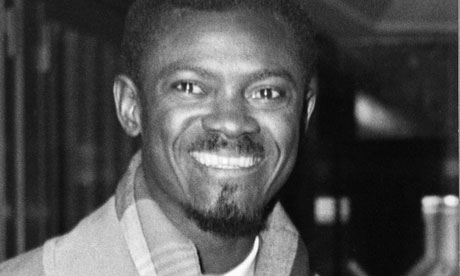
1 2 3 4 5 6 7 8 ... 130 131 132 133 134 135 136 137 138 (of 185 pages)